Top stories in your community and around the world noted by Algonquin Times journalists
Ann Saratu Balogun
Photos:
April 1, 2026 Revised: April 1, 2026 10:06pm
Local
CTV: April Fools’ Day brought a wave of light-hearted pranks from Ottawa institutions.
Museums and city services joined in with humorous announcements, including the Canadian Agriculture and Food Museum promoting “donkey yoga” sessions and the Canadian Museum of Nature claiming the discovery of a new “Canadian Wolf Bird.”
These playful posts offered some levity as several costs rose in Ottawa with the start of the new month.
National:
CBC News: Canada Post is moving ahead with the plan to end home deliveries for about four million addresses.
The Crown corporation says it will turn the remaining home-delivery locations into community mailboxes, apartment boxes or rural delivery points.
The changes stem from last fall’s declaration that Canada Post could face an “existential crisis” with billions of dollars of losses.
Shifts are expected to happen over the next nine years, with the bulk of it expected in the next three to four years, as part of a broader modernization plan which also includes retail network changes.
International
Global News: Surging gas prices tied to the Iran war are prompting a growing number of Canadians to look at purchasing electric vehicles instead.
Prices have risen 47 cents per litre over the past month to around $1.77 per litre.
Searches on pre-owned car platform Clutch have grown 54 per cent since the start of the conflict.
Experts say cheaper models and federal rebates are making the switch feel more realistic, but high prices are still the biggest issue, with nearly six in 10 potential buyers saying they can’t get past the upfront cost.
Top stories in your community and around the world noted by Algonquin Times journalists
Madelene Mcneely
Photos:
March 31, 2026 Revised: March 31, 2026 10:45pm
Local
Ottawa Citizen:The National Arts Centre will broadcast the April 1 launch of the Artemis II on its glass tower.
The event is free to the public. The first launch window opens at 6:24 p.m., but the mission is not guaranteed to launch on time.
Artemis II will be a 10-day mission that aims to send four astronauts around the moon.
Jeremy Hansen will be aboard as the first Canadian, and first non-American, to participate in a lunar mission.
National
CTV News: Canada Post says it’s moving ahead with the plan mandated by the federal government in the fall which could permanently end door-to-door mail delivery.
This decision could affect four million addresses, converting door-to-door delivery into community mailboxes.
In late September of last year, the minister of government transportation, public works and procurement announced that Canada Post was facing an “existential crisis” with billions of dollars worth of losses.
International:
Global News: U.S. President Donald Trump says countries upset with high fuel prices should “go get your own oil” as Iran maintains its chokehold on the Strait of Hormuz.
Trump, who has vacillated between insisting there is progress in diplomatic talks with Iran and threatening to widen the war, shared footage of an attack on Isfahan.
Spot prices of Brent crude, the international standard, hovered around US $106 a barrel, up more than 45 per cent since the war started Feb .28.
Algonquin College students launch a new campaign in hopes of raising money for the Ottawa Community Immigrant Services Organization
Pedro Mendez
Photos: Pedro Mendez
March 31, 2026 Revised: March 31, 2026 2:55pm
Photo: Pedro Mendez
Brain Matos Rodriguez, an Algonquin College Level 2 public relations student.
ACPR students are promoting several student-led events to raise money for Ottawa Community Immigrant Services Organization during their Culture2Culture campaign.
The Algonquin College public relations program (ACPR) has been running charity events for over 40 years and has raised nearly $600,000 for a multitude of different causes. The main purpose is to provide experience at Algonquin College for future professional public relations workers.
OCISO strives to raise money for refugees and immigrants to help them to integrate in the communities. They also strive towards promoting connection between communities by being inclusive. Those services have supported nearly 10,000 clients each year since 1978.
“OCISO helps people from the beginning of their journey to Canada all the while until they no longer need their services,” said Justin Lemoine, a second-level public relations student. “OCISO has a goal that we share in the ACPR program and that is to make sure that newcomers and immigrants can feel welcomed and connected.”
On March 19, Algonquin PR students held press conferences to promote the events in support of the Culture2Culture campaign.
One group decided to host a trivia night called Trivia Throwback at Cassette, located at 2257 Baseline Rd.
Simon Delgaty, a second-level PR student working on the Trivia Throwback event, explained that the goal of the Culture2Culture charity campaign is to highlight the importance of having diverse cultures.
“”Our goal as an event would be to raise $450 and conservatively to sell between 30 to 50 tickets,” he said.
B2B (Bridge2Belonging) Fest will be a block party-style event with local vendors and live DJs performing. The event will be hosted at Club SAW, 67 Nicholas St. on April 12 from 4 p.m. to 9 p.m.
Comedy for a Cause and will be held at the Cultures Comedy Club and will feature eight different comedians.
“This event brings people together through humour while supporting programs that help individuals and families feel at home in Ottawa,” said Isabella White, a second-level PR student and one of the comedy event organizers.
The Voice of Ottawa variety show will be held on April 2 at the Bridge Public House.
“We will be hosting a variety show featuring local musicians, poets and as well comedians at the Bridge Public House down on Donald Street,” said Brandi Fournier, a second-level public relations program student and one of the event organizers. “They each will get 10-to-15 minutes to showcase any original stand-up comedy they have done, any original song they have preformed as well any beautiful poetry.”
The tickets for each event will be on Eventbriteand the information about all seven events and the campaign is on the campaign website.
Top stories in your community and around the world as noted by Algonquin Times journalists
Ellie Hazelwood
Photos:
March 31, 2026 Revised: March 31, 2026 1:38pm
Local
CTV News: The Ontario government released its annual list of public servants who made over $100,000 last year.
Many of those listed in Ottawa are medical staff, first responders and managers.
National
CTV News: Federal public servants could be eligible for early retirement under a new program.
The Early Retirement Incentive Program allows employees to retire early without pension reduction based off of their years of service.
“The Early Retirement Incentive Program is proceeding with an emphasis on voluntary, structured options to retire early with clarity and predictability,” Treasury Board President Shafqat Ali said.
International
CBC News: Artificial intelligence “fruit slop” stories are getting millions of views on TikTok and Instagram.
The AI fruit stories draw viewers from dramatic storylines filled with betrayal and romance. The creators started basing their stories off of reality TV shows, earning even more views.
“It’s absurd, it’s brain rot,” digital strategist Fana Yohannes said. “It is a contagious format.”
From drums pounding to feet stomping, the ARC was filled with proud heritage and culture singing loud
Tyrell Taylor
Photos: Tyrell Taylor
March 31, 2026 Revised: March 31, 2026 10:10am
Photo: Tyrell Taylor
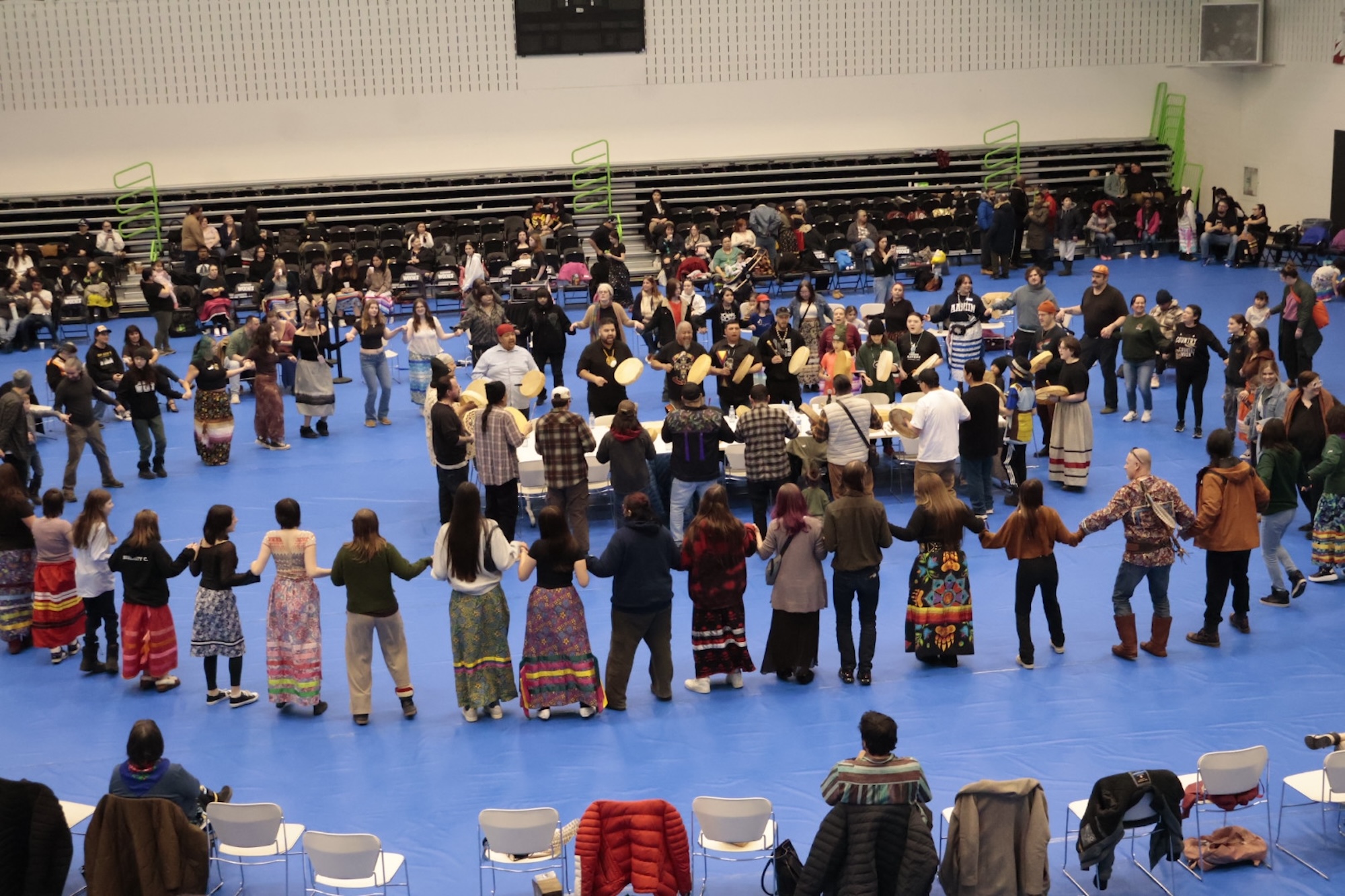
People dancing hand in hand in a circle as drummers sing.
The Mamidosewin Centre and Algonquin Students’ Association brought a round dance to the Jack Doyle Athletics and Recreation Centre on March 27 to celebrate Indigenous culture.
Round dances are a time of celebration and remembrance of those who’ve passed. The ceremony begins and ends with a smudging, which serves as both blessing and a chance to thank the Creator for the land and all it provides.
“Smudging is a form of cleansing,” said RandyKakegamick, one of the emcees for the night.
“Weask for things, we ask for guidance, we ask for help for when we’re in mourning,” said Kakegamick. “When that smoke burns, all those questions and all those talks go into the smoke and when the smoke rises, the eagle would take those messages. The eagle is our messenger because he flies highest to the Creator and he’ll pass along those messages to him.”
Round dancesaren’t just for celebrating and remembering. They are also a time of bringing the community together, reconnecting and enjoying time together.
“Round dances are extremely important to Indigenous communities. It’s where we gather, it’s where we communicate,” said Anita Tenasco, the director of Indigenous initiatives at Algonquin College. “It’s where we celebrate our cultures, our diversity, where we meet people, it’s where we reconnect with friends and colleagues.”
Anita Tenasco standing in front of the drumming circle before the round dance begins. Photo credit: Tyrell Taylor
Dave Hookimaw was the stickman of the night. The stickman’s job is to choose which singer they want the nightto start off with. Thechosen singer would then walk around the circle, pickingothersthey would like backup from.
Hookimaw, a singer himself, believes that singing is more than just a personal calling, but also a spiritual one.
“It was a spirit that came into my heart and soul. It moved me and that’swhat I wanted to do ever since,” said Hookimaw.
Round dances originated as a way of honouring loved ones who have passed away by celebrating their life and helping them on the journey to the next life.
“At times the drummers would sing a song about honouring someone’s life and recalling that this person is no longer with us here on earth, but they have gone back to the Creator,” said Tenasco. “Allowing people to grieve, kind of like to heal and not to forget the person but to build strength to carry on.”
Alongside singing and dancing, vendors were also there selling Indigenous art, ranging from beadings and drawings to dreamcatchers.
Beaded earrings crafted by Samiah Stevens and Delilah Bosum. Photo credit: Tyrell Taylor
“I’m such a creative person so it really fuels me. It makes me happy and specificallybead work wheneverI’mbeading, I feel really connected to my culture and it really grounds me,” said JazimineRemillard, owner of Jazmine Sky Beading.
“Round dances are critical to our well-being and in anAnishinaabeg culture it’s part of mino-bimaadiziwin,” said Tenasco. “The good life, a healthy life, a balance life, a life that focuses on not only the individual but the family or collective.”
Arts & Entertainment | Featured Hero | Featured Story | Home Feature | Home Hero
Loss of power on March 17 left some people confused and shook up
Ellie Hazelwood
Photos: Ryan Harkness
March 30, 2026 Revised: March 30, 2026 3:27pm
Photo: Ryan Harkness
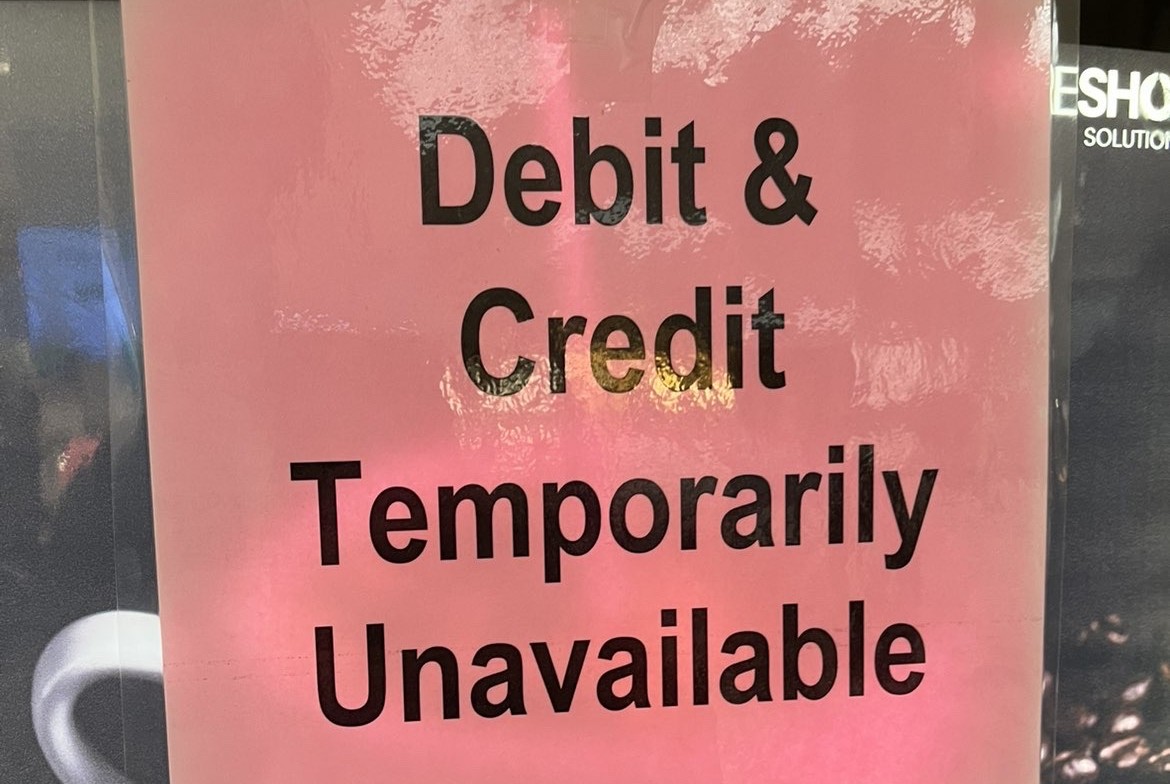
A sign about the debit and credit machines going down, due to the power outage.
Students were rattled on March 17 when the power went out at Algonquin College during a blustery winter day, forcing the school to cancel classes.
Environmental Canada issued warnings about cold temperatures, ice and strong wind.
Around 27,000 customers across eastern Ontario lost power, according to to Hydro Ottawa’s outage map. The outage reached parts of western Quebec as the day went on.
The power flickered numerous times during early morning classes at Algonquin College, finally completely going out around 9:30 a.m.
Students found the dark atmosphere unsettling at first.
Those living in residence woke up with the lights going on and off which made them scared and confused.
“The power outage that took place (March 17) was traumatic for me,” said Tye Rhode, second-year graphic design student who lives in residence. “I woke up at about 9 a.m. The lights were flickering on and off. I was a little bit spooked at first. I realized all of the stuff in my fridge and freezer was going to go bad, if the power didn’t come back on soon. I was scared about that, and I didn’t know what to do. Power was out, Wi-Fi was out, I couldn’t do any work. The power was out everywhere. It was really creepy, but really cool too.”
Most classrooms have projectors and computers necessary for course activities. The college cancelled classes when the power outage dragged on for hours.
The sinks in the bathroom weren’t working and neither were the hand driers.
Starbucks was forced to close during the outage because the employees were unsure of what else to do.
“I was working when it went, so we weren’t really sure what was going on, because it flickered on and off a couple times, before it actually turned off,” Starbucks employee Abigail Gilmore said. “Once it actually went out, we were unsure of what to do. We were waiting around for almost two hours before we got a decision to close the store.”
Cafeteria workers also had to make some changes. The debit machines and registers went down in the cafeteria and students could only pay with cash.
It was a chance for the 67’s to take an advantage in the series and they did exactly that as they were able to seize victory over the Frontenacs
Scott Crowell
Photos: Scott Crowell
March 29, 2026 Revised: March 29, 2026 9:34pm
Photo: Scott Crowell
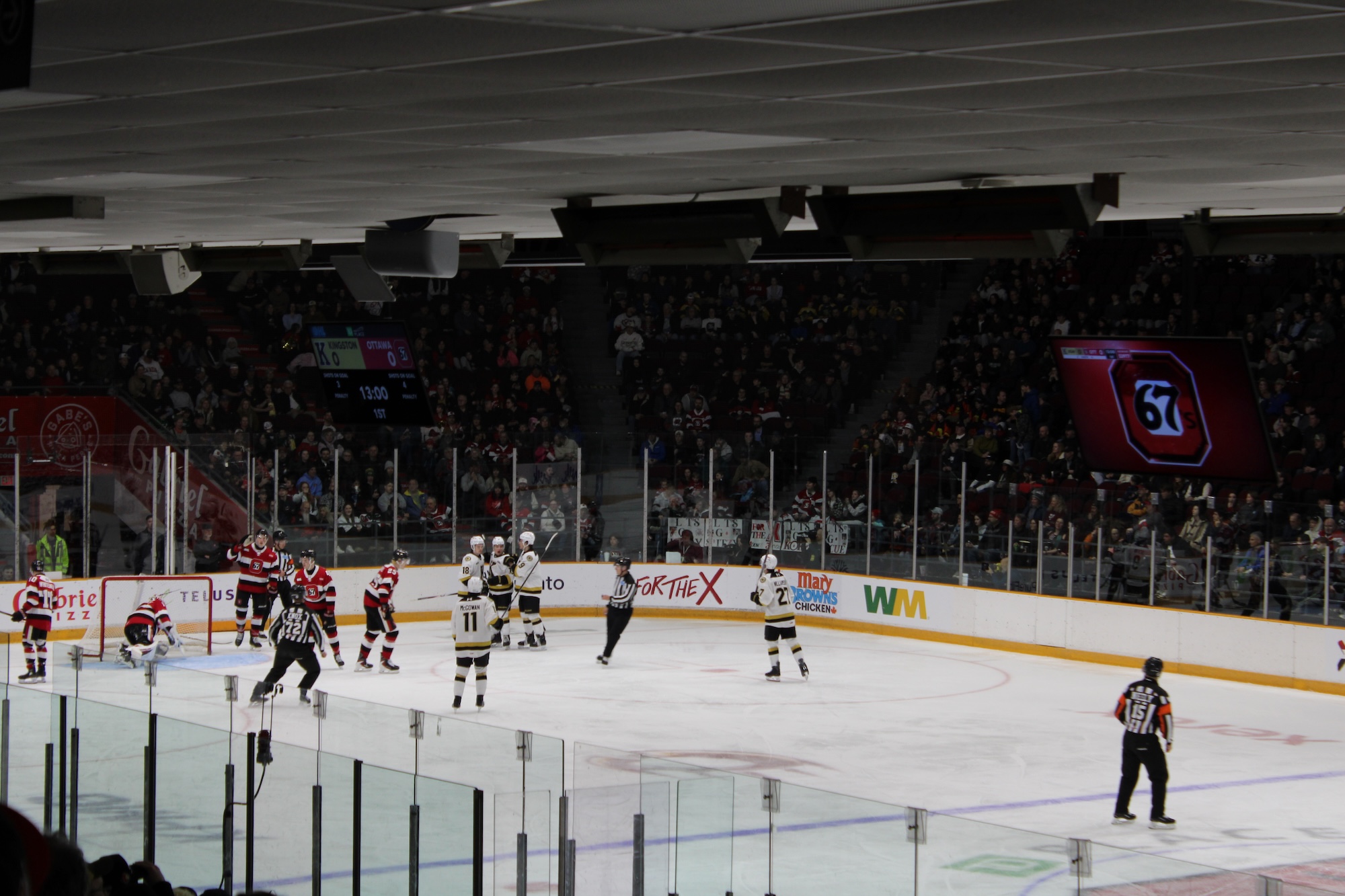
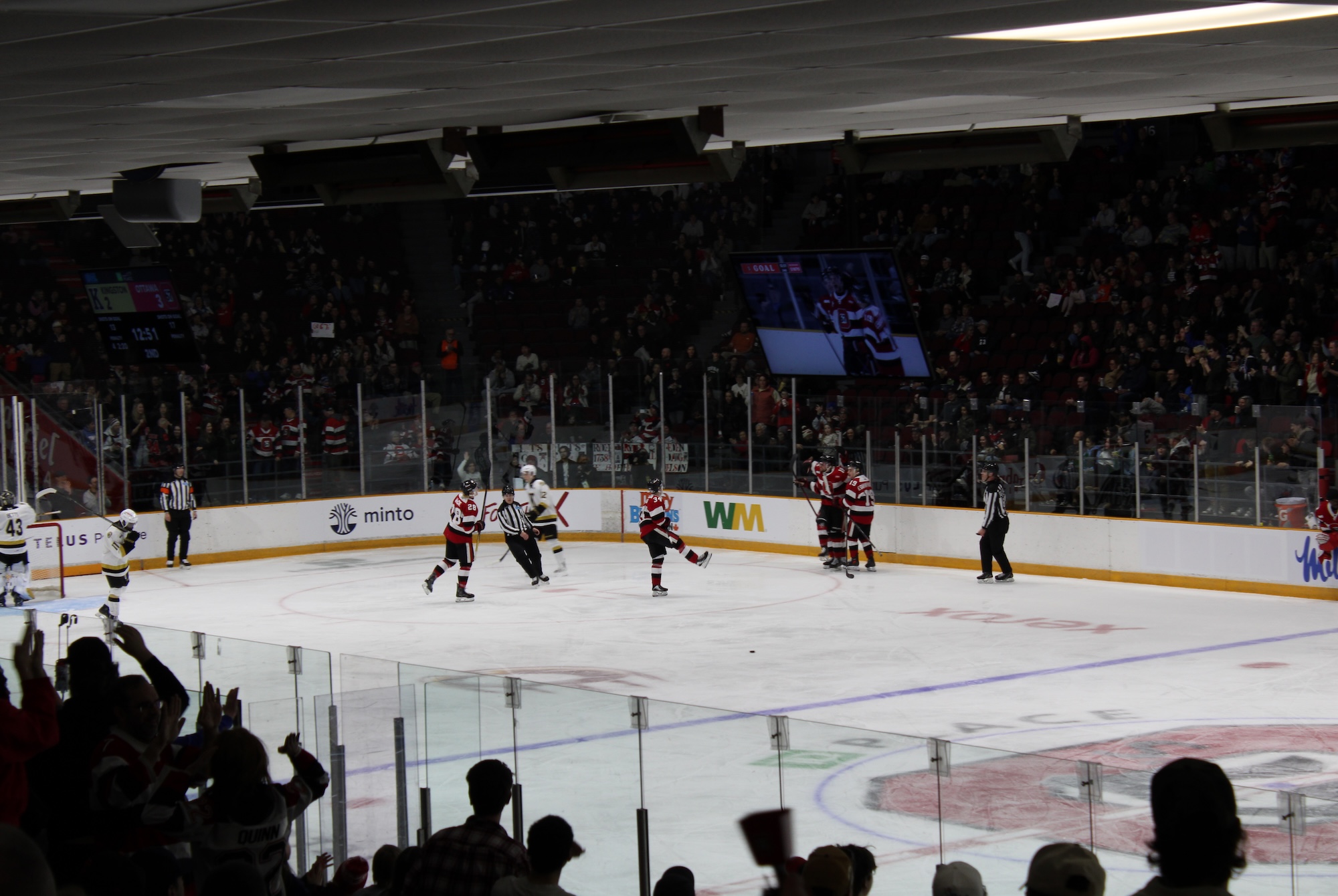
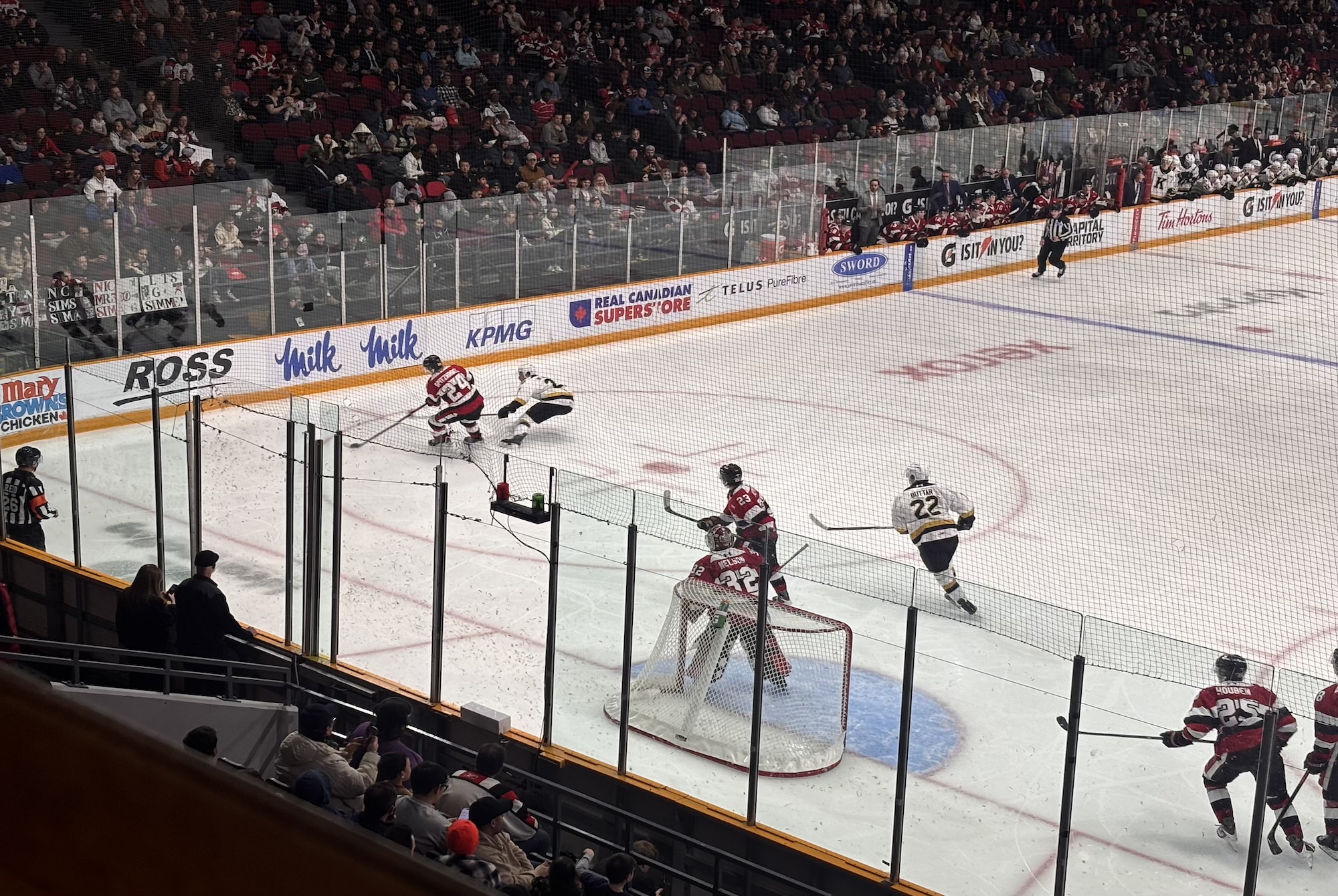
67's forward Nic Sima (left) and Nic Whitehead (middle) celebrate Jasper Kuhta's (right) goal during Game 2 of Round 1 on March 29, 2026 at TD Place.
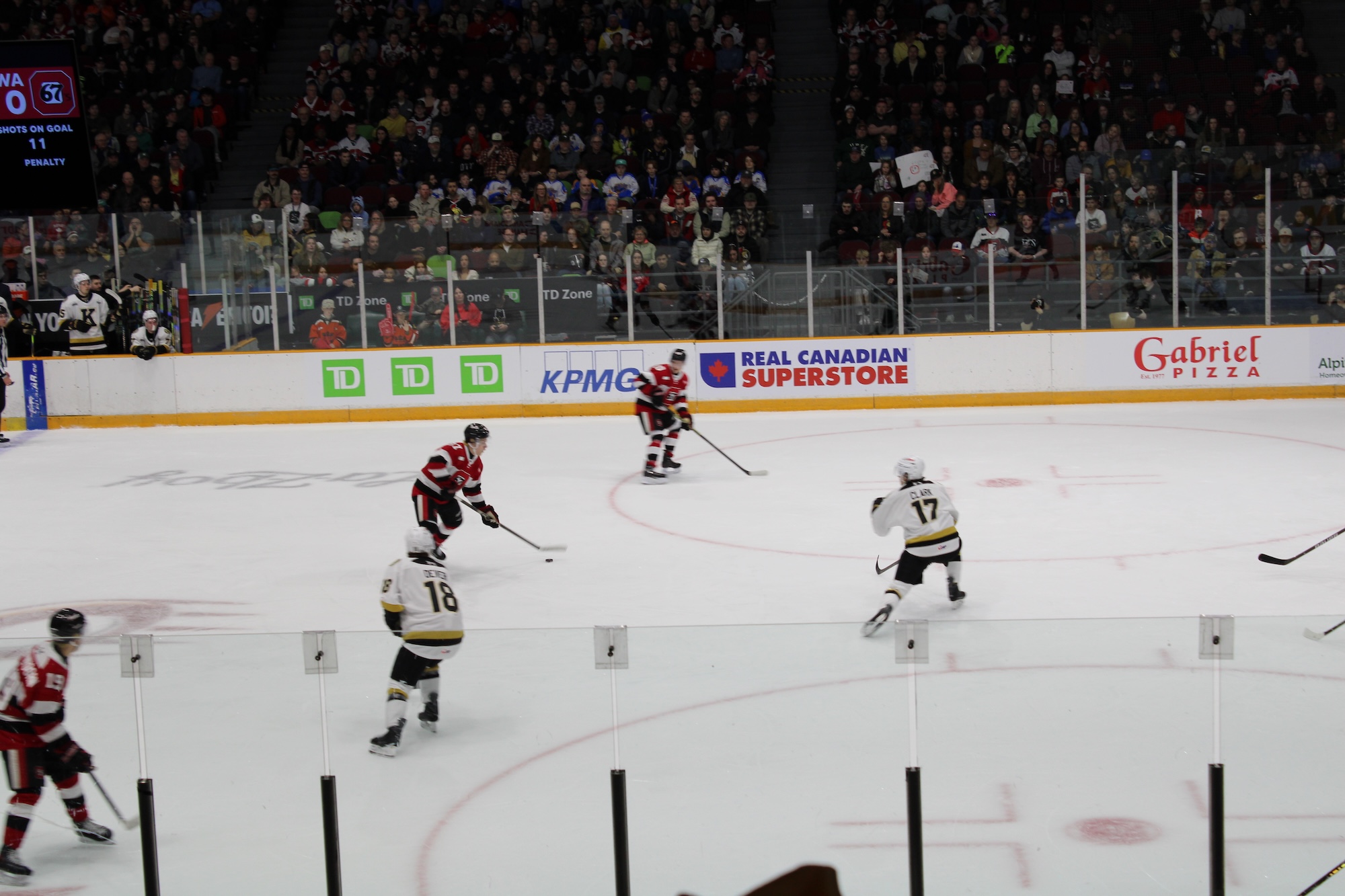
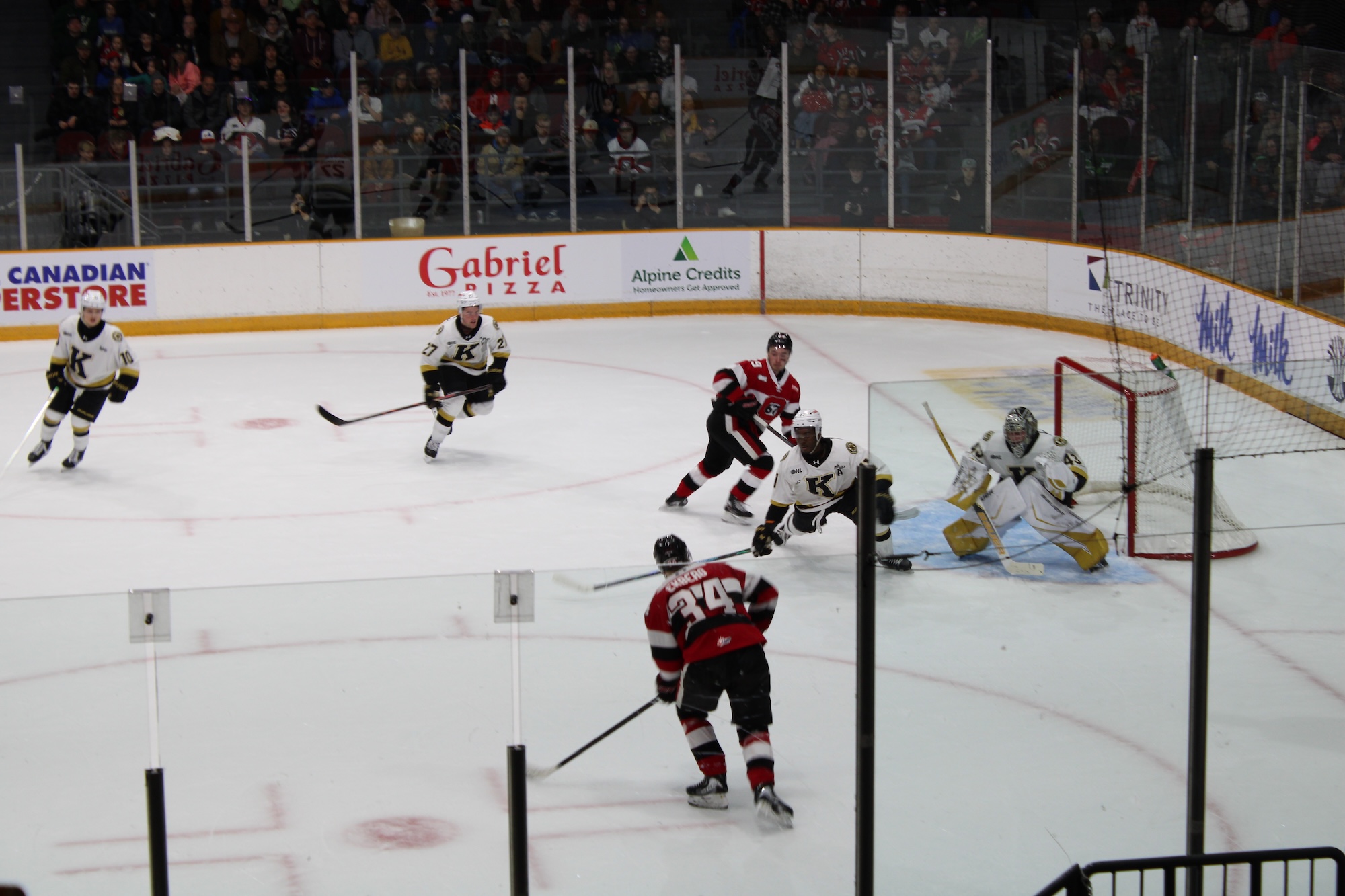
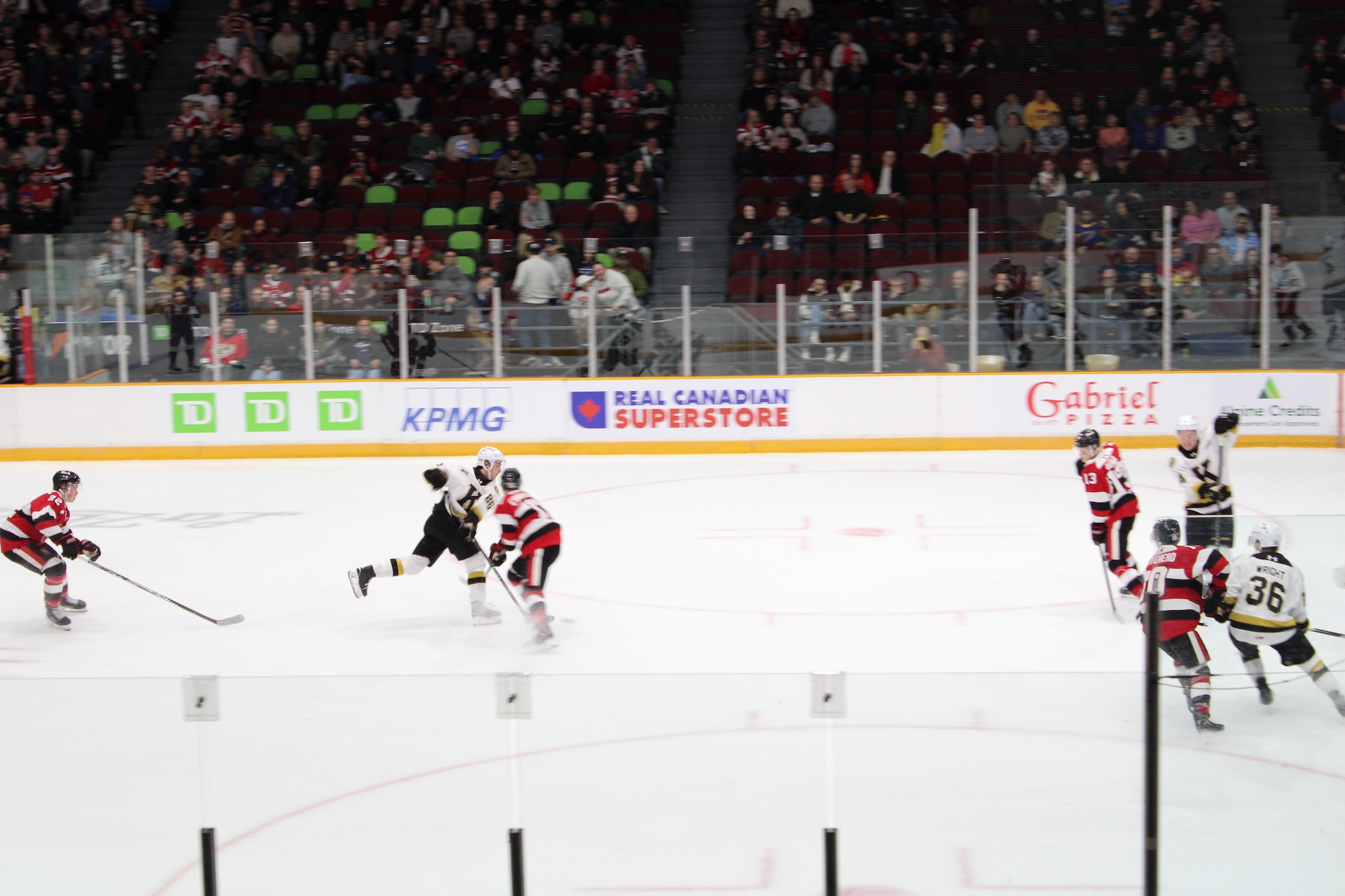
The first period had no shortage of action right from the opening puck drop for Game 2 of the first round of the playoffs between the Ottawa 67’s and Kingston Frontenacs on March 29 at TD Place.
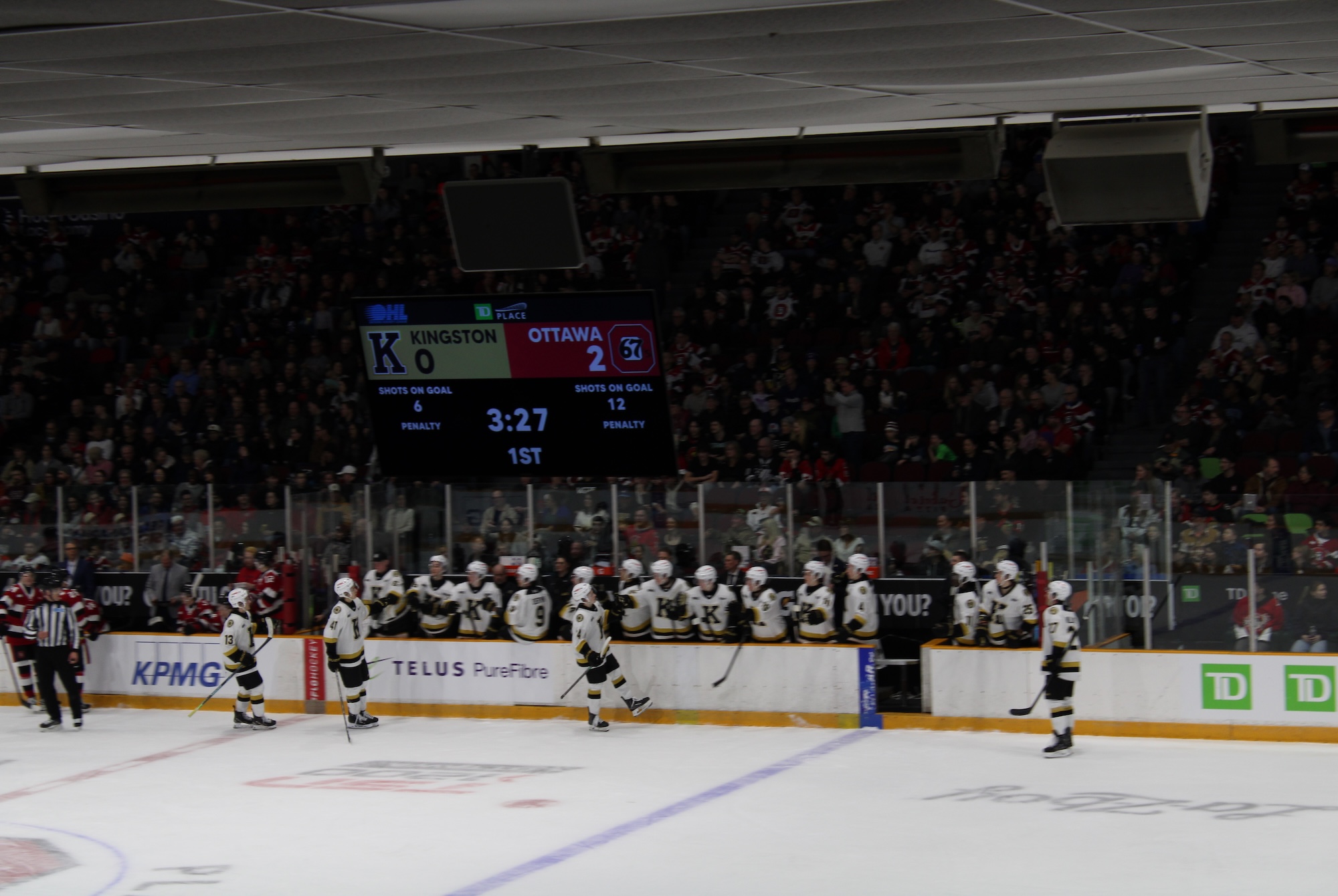
Kingston’s Alex McLean broke the ice in Game 2 after a broken play with the puck landing right on his stick and he buried it to make it 1-0 Kingston seven minutes into the game. The assists were from Jack Dever and Kieren Dervin.
Kingston's Alex McLean celebrates the opening goal with teammates at TD Place on March 29, 2026 during Game 2 of Round 1 series. Photo credit: Scott Crowell
67's forward Thomas Vandenberg prepares to score during Game 2 on March 29, 2026 at TD Place. Photo credit: Scott Crowell
Jasper Kuhta, Ottawa’s leading regular season goal scorer, had his first OHL playoff goal, giving the 67’s their first lead of the game as he potted a juicy rebound from Nic Sima’s shot to make it 2-1 Ottawa at 17:31 of the first. The secondary assist went to David Bedkowski for his follow-up pass.
It was 2-1 Ottawa after 20 minutes, Shots were 19-4 in favour of the 67’s.
Filip Ekberg weighs his options during first period of Game 2 on March 29, 2026 at TD Place. Photo credit: Scott Crowell
Shaan Kingwell scored his first OHL playoff goal which extended the 67’s lead to 3-1. He stepped in with the puck and put it over the left shoulder of Gavin Betts. The assists were from Thomas Vandenberg and Kaleb Dietsch at 6:35 of the second. That was Kingwell’s first goal since last Dec. 28.
Thomas Vandenberg didn’t give up as he scored his second of the game to give the 67’s a three-goal lead. He dug deep in from of the net and poked it past Gavin Betts to make it 4-1 Ottawa. Assists were from Nic Whitehead and Jasper Kuhta at 7:41 of the second period.
Kingston pulled Gavin Betts after the fourth goal. Betts finished the night with 21 saves on 25 shots with four goals allowed before getting yanked. Matthew Minchak replaced Betts in net.
Shots were 31-12 after 40 minutes in favour of Ottawa.
Aleks Kulemin cut the 67’s lead to two with a power-play goal that he redirected from a Vann Williamson point shot in from the slot. It was reviewed twice but was deemed a good goal as it was decided to be under the crossbar a 1:26 into the third period. The secondary assist was from Alex McLean.
Kingston scored again cutting to one as Alex Misiak stepped into a shot off the face-off win from Tomas Pobezal and blew it blocker side on Ryder Fetterolf a 3:59 into the third period.
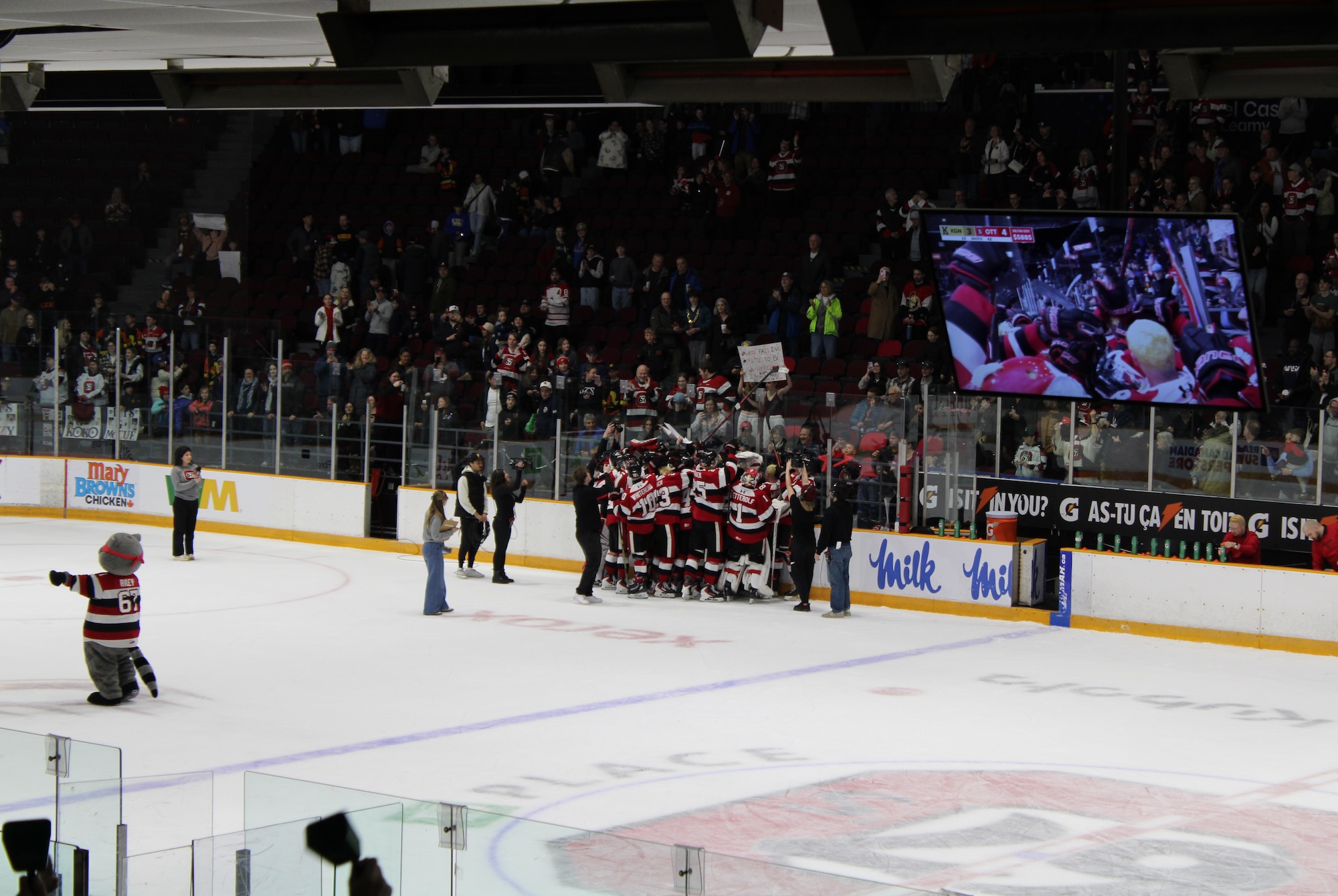
Kingston pushed hard for the tying goal with the net empty and the extra attacker but could not convert. Ottawa held on to take the hockey game 4-3 and take a 2-0 lead in the series as they head to Kingston.
Ottawa 67's rip off X number two on boards at TD Place on March 29, 2026 after a Game 2 victory. Photo credit: Scott Crowell
Ottawa 67’s defenseman David Bedkowski said the defence adjusted after allowing two quick goals in the third.
“Yeah, I think avoiding panic and trusting our game, like I said before, not sitting back, just continuing to play our game and have that belief in ourselves that we can make plays and continuing to play hard as well,” said Bedkowski.
Bedkowski also noted how instrumental home ice advantage was in the first two games of the series as they head to Kingston.
“It’s huge, our are fans are incredible. It’s such an amazing atmosphere, to walk out there you know I think the count was 5,000 but it feels more full than that and they’re unreal, every big play, every hit, you know not even the goals you know they’re on their feet and it’s such an incredible atmosphere and you can’t mimic those moments,” said Bedkowski.
67’s goaltender Ryder Fetterolf faced under 10 shots at the halfway point of the second. He said he has ways to stay warm.
“Yeah, just you know keep skating to the boards and back, just reset and treat every face-off you know whether it’s in my zone or not, like they are gonna come at me and I do a couple of skating patterns and keep my head into it,” said Fetterolf.
Ottawa 67’s assistant coach Paul Stoykewych said the team is looking to get less on the penalty sheet as they go to Kingston.
“For sure, for sure, I mean you look at the penalties we’ve taken, you never want to put the referee in a situation where it’s either you know he has to make a call or he doesn’t, again, we’re willing to play right on that line. We got to be aggressive. We, you know, we got to initiate, um, so there’s going to be times where we’re gonna take a few penalties,” said Stoykewych.
Ryder Fetterolf pointed out the team’s expectations as the series shifts to Kingston.
“I mean we definitely expect, you know, to be a lot of energy there, they’re going to bring their good game. We’re just going to keep playing how we are, obviously we’re up two so we know what we’re doing, and, you know, not get satisfied because that’s not what we want to do,” said Fetterolf.
It wasn’t the prettiest but the Ottawa 67’s were able to secure a Game 1 win in a hard-fought battle that saw feistiness and grit
Scott Crowell
Photos: Scott Crowell
March 29, 2026 Revised: March 29, 2026 10:03am
Photo: Scott Crowell
Ottawa 67's rip celebrate at TD Place on March 27, 2026.
Game 1 of the Ottawa 67’s OHL playoffs began with a big and gutsy 7-4 win over the Kingston Frontenacs. There were so many elements to the hockey game that made it such that hard fought battle.
The first period was a very physical and high tempo start to the series which is the first between the two teams since 1981. From puck drop when Ottawa’s Teddy Spitznagel laid a huge hit which set the game’s tempo right from the hop.
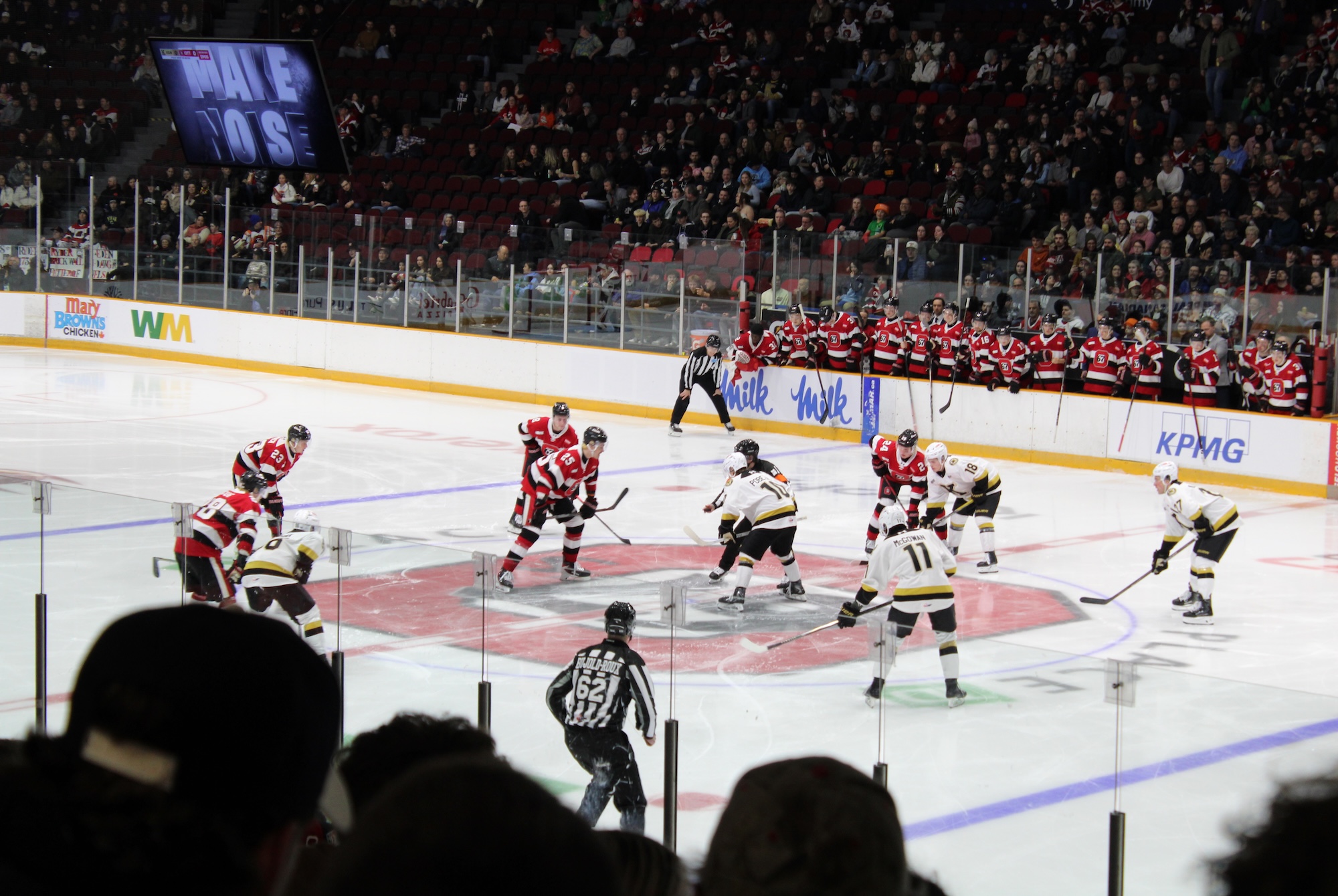
Tomas Pobezal (Kingston) takesthe opening face-off against Zach Houben at TD Place on March 27, 2026. Photo credit: Scott Crowell
Zach Houben (Ottawa) carried that heavy energy and physicality with a heavy fight with Andre Mondoux (Kingston). Houben had the crowd absolutely pumped up as he threw his hands in the air, at 3:44 of the first.
67’s forward Filip Ekberg started the scoring in the series as he put home a rebound off a beautiful shift from the first line to make it 1-0 Ottawa at 5:58. The assists came from Frankie Marrelli and Cooper Foster.
Filip Ekberg scores the opening goal at TD Place on March 27, 2026 during Game 1. Photo credit: Scott Crowell
Things continued getting chippy in the first as David Bedkowski was absolutely dumped from behind by Kingston’s Nolan Snyder. Ottawa’s Kaleb Dietsch responded and fed rights to Snyder who immediately turtled and was ejected from the game. Dietsch was given a game misconduct and match penalty for fighting.
Kingston wasn’t going down without a fight as 67’s defenceman Kohyn Eshkawkogan bobbled the puck in the 67’s defensive end which allowed Kingston’s Nolan Snyder to grab the puck and go in all alone and score on the backhand past Ryder Fetterolf to cut the 67’s lead to 2-1 at 16:33. The lone assist from Robin Kuzma on the goal.
Kingston’s Nolan Snyder and teammates celebrate with the bench after scoring a goal on March 27, 2026 at TD Place. Photo credit: Scott Crowell
Ottawa’s Filip Ekberg double-dipped in the goal department as he received a backdoor pass from Spencer Bowes to restore the Ottawa’s two goal lead just 1:29 into the second period to make it 3-1.
Kingston forward Tomas Pobezal cut the 67’s lead back to one again as he received a cross ice pass from Alex Misiak. He walked in and blew it by Fetterolf at 4:42 to make it 3-2 Ottawa. The other assist was from Matthew Henderson.
Kingston's Alex Misiak makes a pass attempt on March 27, 2026 in Game 1 of the playoffs at TD Place. Photo credit: Scott Crowell
Kingston defender Lukas Moore put his team behind the eight ball as he took two separate minors for holding on Ekberg and roughing Ekberg after the whistle on the way to the box.
Nic Sima made Lukas Moore pay as he re-directed a puck in the slot from Filip Ekberg who had his third point of the night on the first half of the four-minute power-play to make it 4-2 Ottawa at 7:09 of the second. Kohyn Eshkawkogan had another assist.
Nic Sima scores a power-play goal at TD Place on March 27, 2026 during Game 1 of the first-round series. Photo credit: Scott Crowell
Kingston responded right back again as Will Bishop cut to the 67’s lead to 4-3, as he walked in and ripped a top shelf shot over Fetterolf at 12:15, with assists by Riley Clark and Matthew Frost.
Kingston struck again as Riley Clark just 11 seconds after Will Bishops goal was unmarked at the left circle and went glove side on Ryder Fetterolf to tie the hockey game at four. The secondary assist was from Nolan Buttar.
The scrappiness continued as Cooper Foster (Ottawa) and Tomas Pobezal (Kingston) dropped the gloves right at the Kingston net after a whistle and did more tying each other up than throwing punches at 13:52 of the second.
67’s defenceman David Bedkowski broke the tie when he stepped into the play and received a great pass from Spencer Bowes, ripping it top right corner on Gavin Betts to make it 5-4 Ottawa with 30 seconds left in the second period. Nic Whitehead had the secondary assist.
67’s captain Cooper Foster capitalized on the power play to extend the lead to two once again as he received a pass from Nic Whitehead in the bumper position and blew it past Gavin Betts to make it 6-4 67’s at 13:08 of the third period. The secondary assist was from Kohyn Eshkawgoan.
The 67’s got into some penalty trouble in the dying minutes of the hockey game as Shaan Kingwell and David Bedkowski both took penalties with under five minutes left and sent Kingston on a five-on-three power-play. However, Connor Bewick sent the puck 180 feet down the ice for a shorthanded empty net goal to put the game away at 19:22. Jasper Kuhta had the secondary assist.
Ottawa leads the best-of-seven series 1-0. Shots finished 31-30 in favour of Kingston. Ryder Fetterolf saved 27 of 31 and got the win for his team in his playoff debut. Game 2 goes Sunday at 3 p.m. at TD Place.
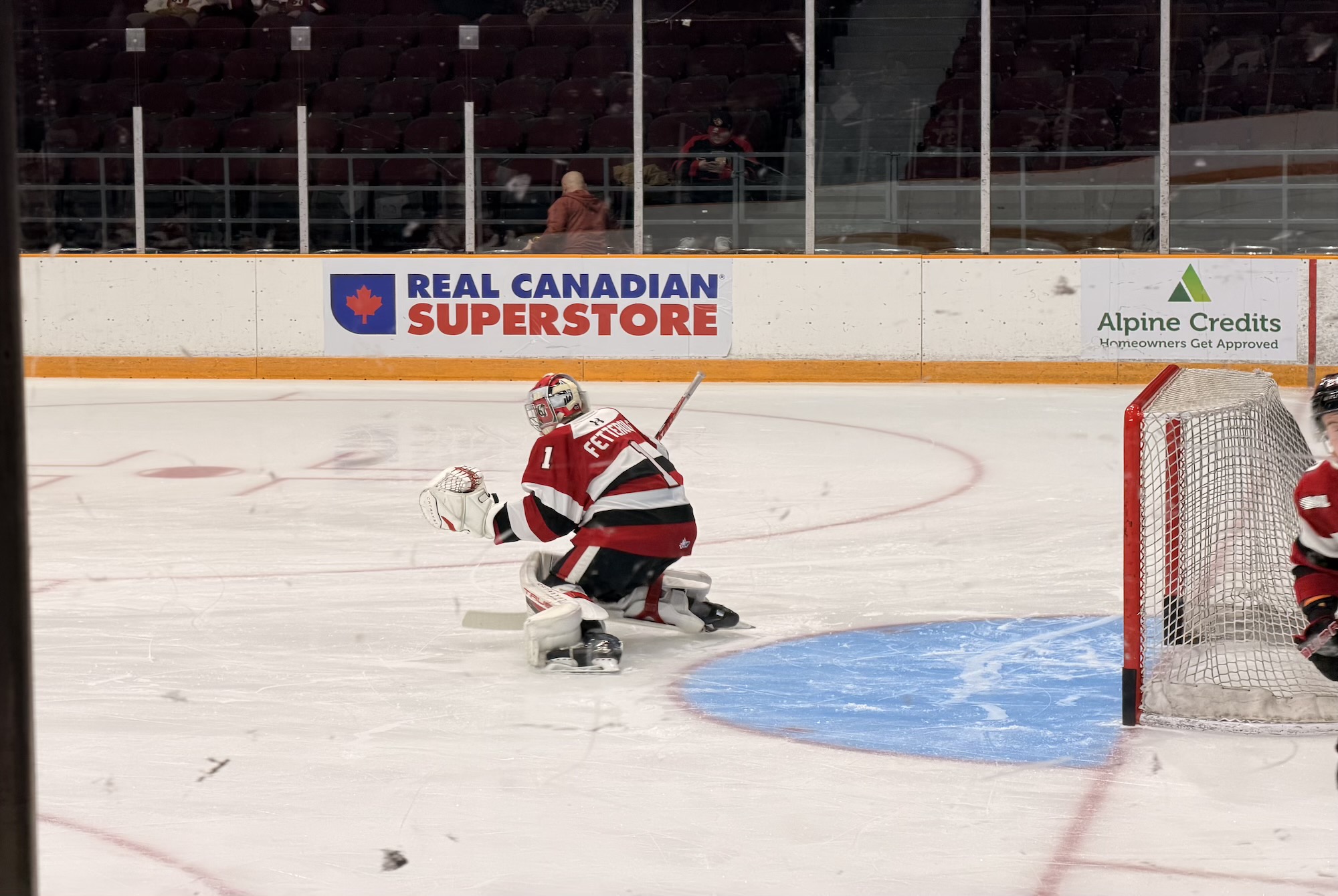
Ryder Fetterolf takes warmups in preparation for game one at TD Place on March 27, 2026. Photo credit: Scott Crowell
67’s forward Spencer Bowes spoke on the message head coach Dave Cameron gave to the group heading into Game 1.
“He’s just telling us, it’s gonna be a lot harder, a lot quicker, faster and pretty much like just keep it simple and play our game, stay tight and be structured,” said Bowes.
67’s forward Filip Ekberg, who had three points in the game including two goals, spoke on the mindset heading into Game 2.
“I mean, just keep sticking with it but I think 10 minutes in the second we played a little bit not as sort of game as we should be, but we came back after that and we scored some goals,” said Ekberg.
67’s head coach Dave Cameron spoke highly of goaltender Ryder Fetterolf’s first playoff game.
“I thought he battled nerves early on. I thought he was one of the young guys that battled originally on but played through it and I think he was like all the other guys that battled I thought were really good,” said Cameron.
Cameron also spoke on what he wanted his rookie to know going into Game 1 with pressure on them.
“There’s nothing you could say that gets them over, it’s like pressure, you can’t practise pressure. You have to really experience it, and you can’t slice it and dice it throughout,” said Cameron.
As the Ottawa 67's gear up for the OHL playoffs and prepare for a deep run, there are many things to look at
Scott Crowell
Photos: Scott Crowell
March 27, 2026 Revised: March 27, 2026 10:05am
Photo: Scott Crowell
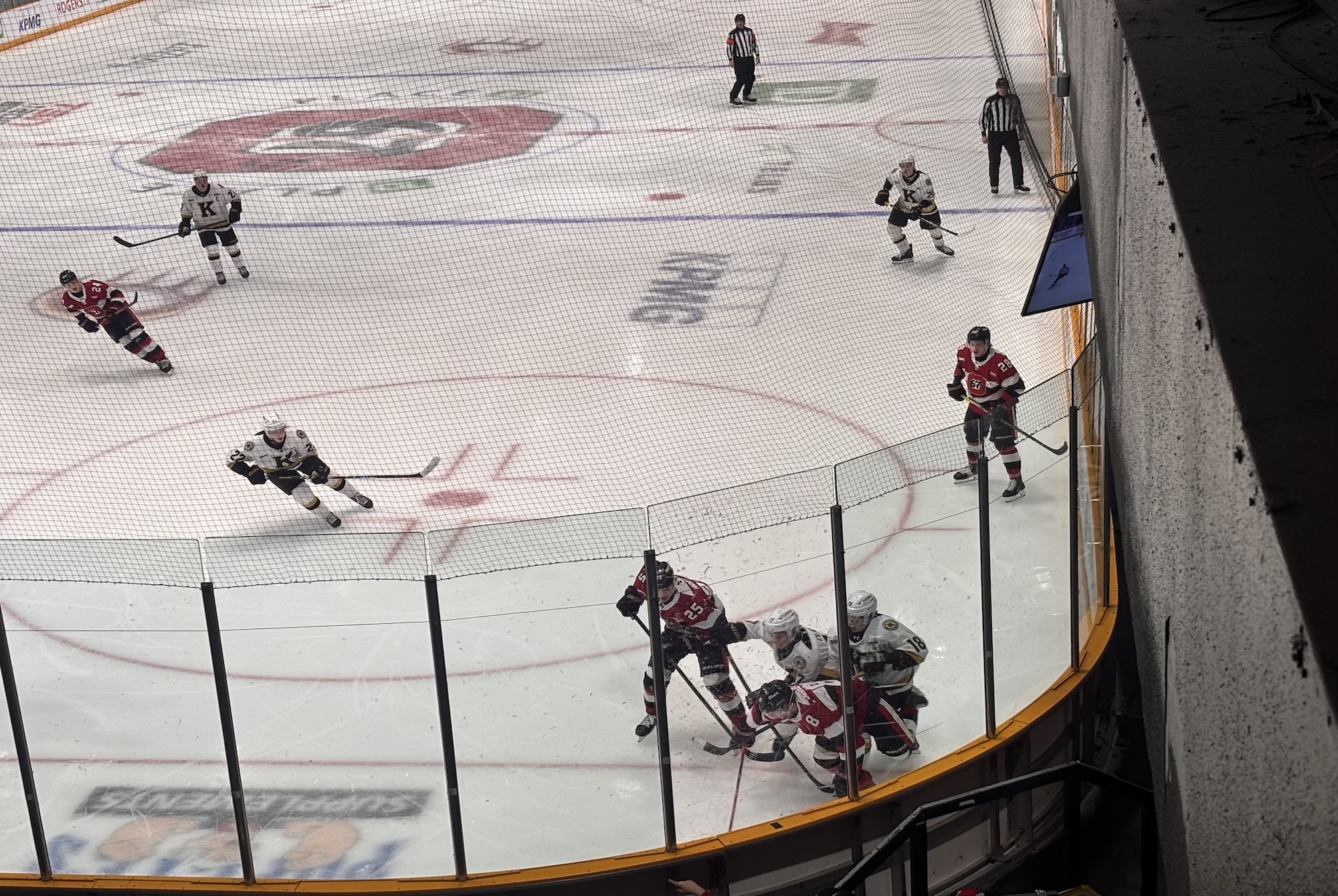
Ottawa 67's ice surface on March 21, 2026 at TD Place.
In a year full of surprises from the rise of rookie goaltender Ryder Fetterolf to cracking the 100 point plateau this season, the Ottawa 67’s are now preparing and gearing up for a playoff run that begins with a familiar and old rival in the Kingston Frontenacs.
The 67’s head into the playoffs with the least amount of goals allowed in the entire OHL between the duo tandem of Jaeden Nelson and Ryder Fetterolf. The two goalies were awarded the Dave Pinkney Trophy, which is awarded annually to the goaltending tandem on the team that allows the fewest goals against during the regular season. It was announced on March 23.
Ottawa 67’s goaltender Ryder Fetterolf was also named the recipient of the 2025–26 F.W. “Dinty” Moore Trophy, which is awarded annually to the first-year goaltender with the lowest goals-against average during the regular season. The team and OHL also announced it on March 23.
This Ottawa 67’s team is filled with the combination of youth and veteran experience that can carry a team far, if every player buys in, chips in and knows that playoff hockey is a whole different beast.
Ottawa 67’s captain Cooper Foster and defenceman Frankie Marrelli have been there and done that when it comes to playoff hockey.
Frankie Marrelli (Ottawa) grinds the puck down in defensive zone at TD Place on March 21. Photo credit: Scott Crowell
Defenceman David Bedkowski heads into his fourth straight year of playoff hockey as he enters his fourth straight year now with 67’s after his previous three were with the Oshawa Generals.
The 67’s defeated Kingston in the season series with a regular season record of 6-1-0-1 and defeated the Frontenacs in the regular season finale by a score of 6-1.
Teddy Spitznagel (Ottawa) spins off attacking Kingston forward at TD Place on March 21. Photo credit: Scott Crowell
67’s forward Thomas Vandenberg spoke on how excited he is to play in the playoffs for his hometown team.
“There’s still kind of a surreal feeling towards it, especially heading towards the playoffs. I got to watch a few playoff games when I was little. It was a great atmosphere and was really good hockey,” said Vandenberg.
The 67’s will have to clean up on the amount of penalties they take as they finished the regular season with 713 PIM (penalties in minutes) which was ranked 15th highest in the OHL of 19 teams.
This is a revived rivalry, 40 years in the making and the first playoff meeting between the two teams since 1981. This will be the fifth playoff series between the 67’s and Frontenacs. Both teams have two series wins against each other, the last two series meetings going to Kingston.
One player to look out for on the Ottawa 67’s is leading goal scorer Jasper Kuhta who is riding a hot streak heading into the playoffs and will enter his first playoff series in the OHL. Kuhta will be looking to translate that regular season scoring over to the playoffs.
For Kingston it will be former Ottawa 67’s forward Jack Dever who was claimed off waivers by the Kingston Frontenacs on Jan. 7. Dever will be out to make a statement and make his former team regret placing him on waivers.
Ryder Fetterolf will have the net more than likely in game one as the starting goalie.
Top stories in your community and around the world noted by Algonquin Times Journalists.
Owen Riendeau
Photos:
March 26, 2026 Revised: March 26, 2026 9:24pm
Local
Ottawa Citizen: A male cyclist was injured in the Alta Vista neighbourhood after a collision with a vehicle Thursday morning.
Emergency crews responded to the intersection of Pleasant Park Road and Haig Drive around 6:15 a.m.
Ottawa Paramedic Services spokesperson Marc-Antoine Deschamps said the man was treated for his injuries at the scene and then transported to hospital in critical condition.
Ottawa police were investigating the collision.
National
CTV News: Border officers seized $4.5 million worth of contraband at the Point Edward crossing.
The Canada Border Services Agency (CBSA) said officers seized illegal tobacco and nicotine vapes over a seven-day period at the port of entry in Sarnia, Ont.
The CBSA says the seizures are a part of growing efforts to disrupt organized crime and prevent illegal products from entering Canada.
International
CTV News: A man armed with a knife stabbed and killed a woman in a Pokemon store in downtown Tokyo, taking his own life shortly after, Japanese police said Thursday.
Officers responded to calls reporting a stabbing at the Pokemon Center Mega Tokyo store. The victim was believed to be a store employee. Both the victim and the suspect were transported to hospital in critical condition and pronounced dead shortly after.
The Pokemon Company posted a statement to social media stating that the store will be closed until further notice and is currently focused on co-operating fully with the police investigation and providing support to shaken employees.