Algonquin College film grad releases new comedy short

"Erich's New Shirt," written and directed by Chris Szabo, is scheduled to be released by the end of June
Photo: Chris Szabo
James Belway acting on set for "Erich's New Shirt."

Chris Szabo, a 22-year-old Algonquin College 2024 film graduate, has written and directed a comedic short film called Erich’s New Shirt, which will be released by the end of the month on YouTube.

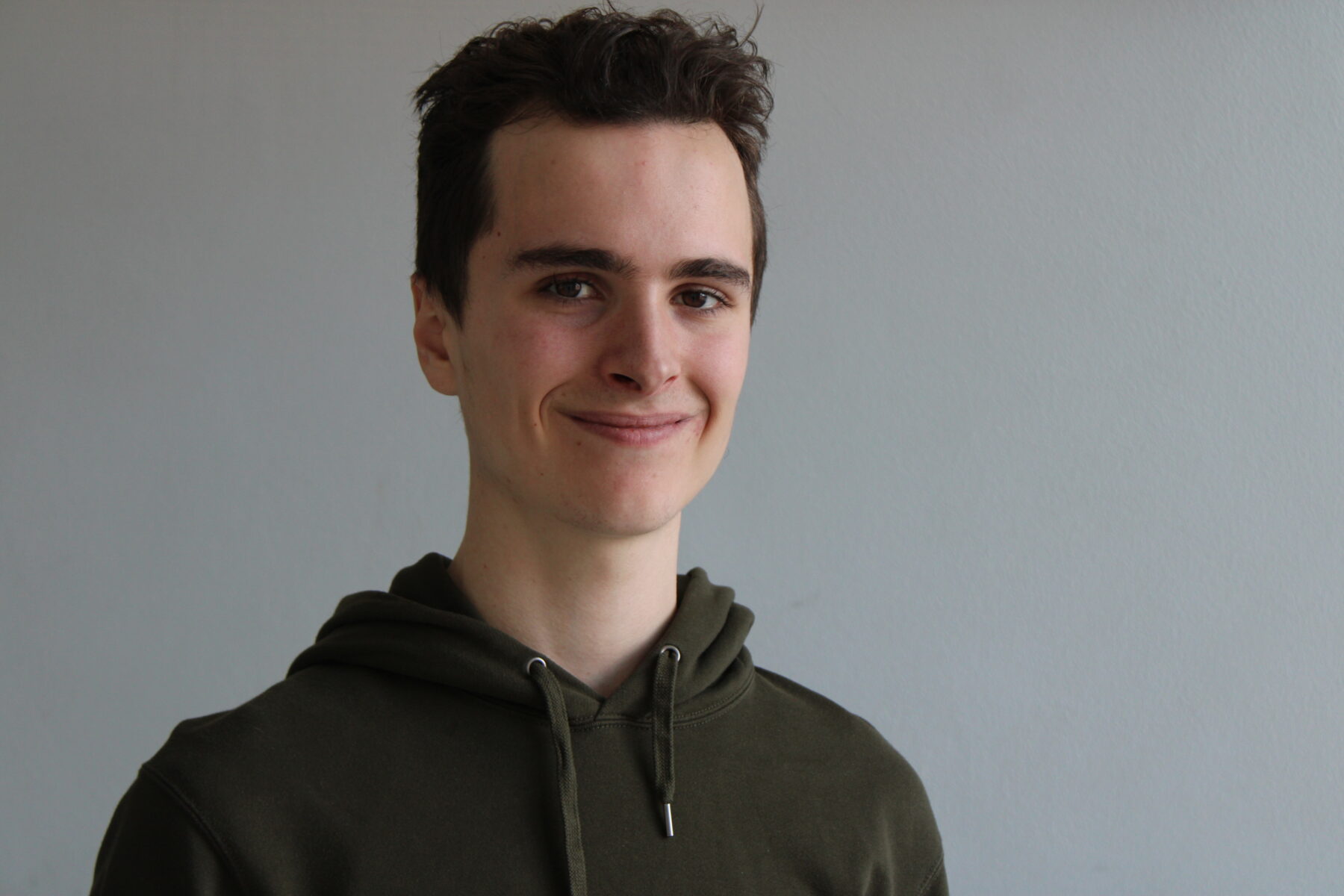
Chris Szabo, writer and director of Erich's New Shirt at the Art of Bean cafe in Orléans.
Chris Szabo, writer and director of "Erich's New Shirt" at the Art of Bean cafe in Orléans. Photo credit: Mila Leclair

“It’s been a long, rocky road getting here but I’m super glad to be done and it’s so satisfying to have something I can show to people,” Szabo said. “It’s nice to freely express myself through the projects I work on.”

Szabo admires the work of Canadian director and actor Matthew Johnson on his web series Nirvanna the Band the Show.

The short film blends Szabo’s signature wit with subtle nods to the cinematic voices that have helped shape his creative identity and vision, such as the British sitcom Peep Show and Tim Robinson’s I Think You Should Leave sketch comedy on Netflix.

“People sort of compare the stuff I do to (I Think You Should Leave), which I take as a compliment,” Szabo said. “In scriptwriting class, I’d try to make all the other students laugh and stuff with my ideas, just make ones that are really ridiculous.”

Originally from the Ottawa suburb of Orléans, Szabo hopes to make a name for himself locally. He has some advice for current film students.

“I wish I did more projects that weren’t assignments. I’d say just do your own projects, nobody is gonna stop you,” Szabo said. “Another thing is be friends with someone who’s going to be in the program when you’re done, so you can use their student privileges to get rental equipment.”

The project would not have been complete without the help of cinematographer Grace Marchington and Matt Kerridge, the first assistant director.

“I really like how warm she made her scenes look. It gave the film a cozy vibe, which I didn’t expect but I really like,” Szabo said. “Matt Kerridge was great because he did a lot of the planning involved with making the shoot possible, and on set he essentially bullied me into doing my job.”

Szabo also credits Rama Al-Zu’bi and Dean Matthew Cruz for helping achieve the nighttime exterior shot near the end of the film.

“Rama is someone I owe a lot too because she stepped up into the cinematographer role on our third and final day of shooting.” Szabo said. “It looked absolutely gorgeous thanks to her and Dean Matthew Cruz.”

Szabo’s favourite class at Algonquin College while studying film was scriptwriting with Jeff Ross.

“His class really emphasized the creative aspect of filmmaking, which I quite liked,” Szabo said. “I think what I appreciated most about his class was that it taught me how filmmaking didn’t always have to be a super serious endeavour. You’re allowed to have fun with it.”

Ross is an author who’s worked on video games and TV shows like Goosebumps.

The film crew on set for the short film on May 10.
Actors on set for short film on May 10. Photo credit: Chris Szabo

“The biggest lesson is that you just have to have fun. Like, if you want something to be good, you can’t detest making it,” Szabo said. “I think a lot of people’s projects don’t turn out really nice because they hate the very idea of doing it and just want the finished product. Certainly have a little bit of fun because it shows.”

For future projects, Szabo hopes to film a miniseries mockumentary on a fictional local band to explore the Ottawa music scene.


AC students say patriotism is ‘skyrocketing’ in the wake of Trump’s threats

In the lead up to Canada Day, students say Canada is a great nation though there's work to be done
Photo: Mickey Banks
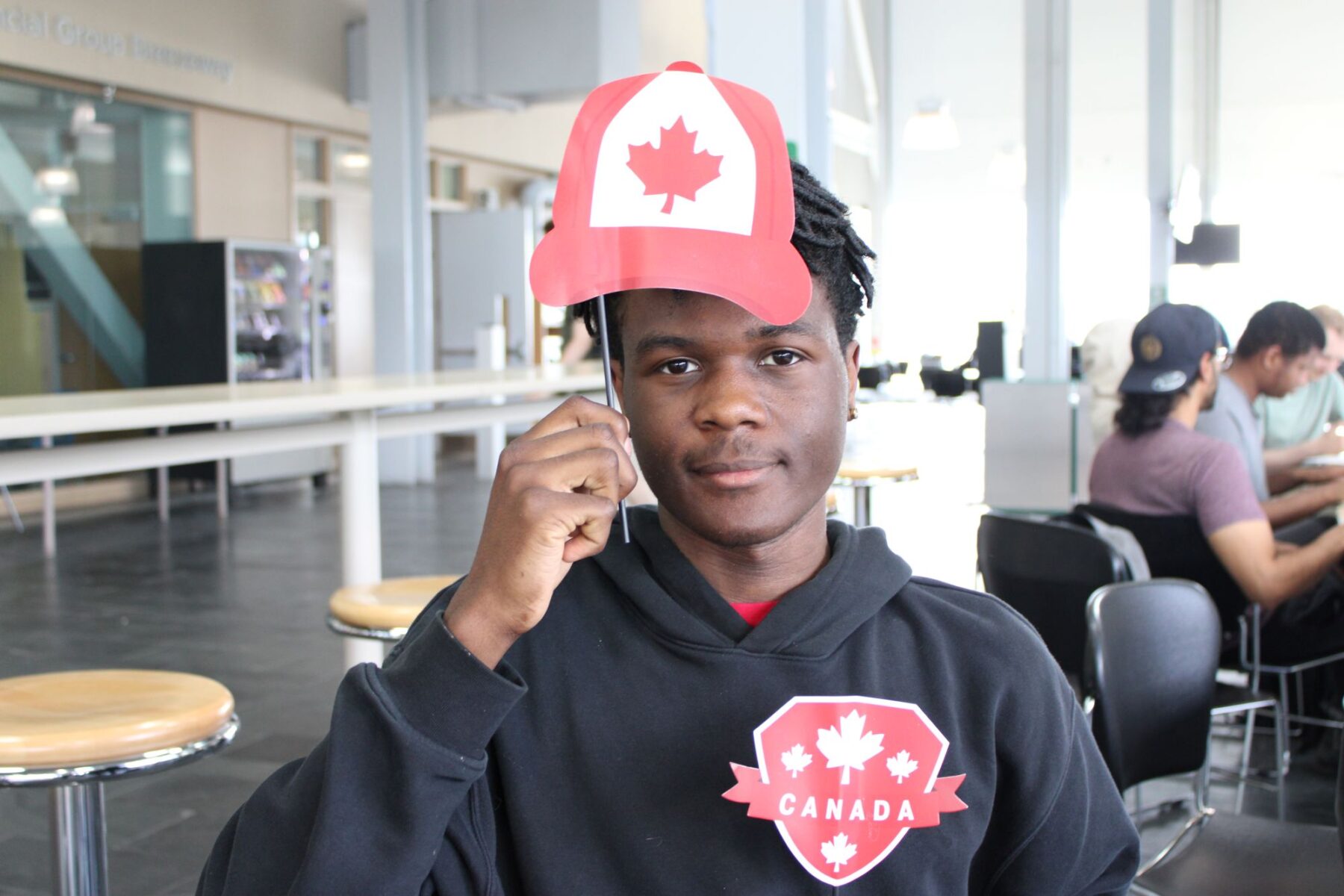
From left to right, Alexis Kuper, Chelsey Orchard and Amelia Greco are all in the paralegal program. They're sitting by the Starbucks in E-building.

Algonquin College students see a rise in Canadian patriotism in response to U.S. President Donald Trump’s threats.

A poll by the Angus Reid Institute in February showed a 10 per cent increase in Canadians who said they are very proud to be Canadian. This coincided with Trump’s remarks on tariffs and annexation.

Caleb Fomatatissong, who’s in the plumbing program at the college, believes Trump’s actions have given Canada a “common enemy.”

“I feel like I stand more with Canada, we’re more together, more united. I feel like what (Trump’s) doing is gonna in turn bring Canada together,” Fomatatissong said.

Caleb Fomatatissong in the ACCE building. He says Canada is one of the best countries in the world.
Caleb Fomatatissong in the ACCE building. He says Canada feels more united in wake of Trump's threats. Photo credit: Mickey Banks

The Four Nations Face-Off, an international ice hockey tournament featuring players from the NHL, was held from Feb. 12 to Feb. 20. Canada beat the United States in the final. Dagan Mohamed, who is in the dental hygiene program, said she noticed an increase in national unity during the event.

“A lot of the people that I knew, they were very patriotic and really rooting for Canada, a lot more than usual,” Mohamed said.

Although she doesn’t follow hockey, Mohamed said she felt more patriotic during the tournament.

Chelsey Orchard, who’s in the paralegal program, is also feeling a rising pro-Canada sentiment.

“I would definitely say that the patriotism has really skyrocketed. So many of my circle are only buying Canadian, not even European, not American, just Canadian,” Orchard said.

However, Orchard says she has mixed feelings about Canada. She was born in Canada, but her family immigrated from Italy.

“I feel like there’s this façade of nice people, and there’s this façade of free healthcare, this beautiful utopia of opportunity. And then when you get here, like when my grandparents got here, the opportunity was kind of dried up, and he had to work in the mines,” Orchard said.

Alexis Kuper, also in the paralegal program, says that while she loves Canada, she’s also frustrated with the Canadian political system.

“I think, especially in Ontario, a lot of our disenfranchised people fall through the cracks through poor economic funding,” Kuper said.

In March 2024, over two million people visited food banks in Canada with over 700,000 of them being from Ontario, according to a 2024 HungerCount report by Food Banks Canada.

Fomatatissong, who’s been in Canada for about 10 years, thinks it’s easy to take Canada for granted.

“I feel like people that hate on Canada, people that were born here and haven’t really experienced anything outside of Canada, so they think it’s bad ’cause that’s all they’ve known. So they can’t really compare to anything else,” Fomatatissong said.

“But when you come from a worse-off country, Canada is one of the best countries in the world.”

Listen: Algonquin Times podcast

Summer 2025, Episode 1: Reporter Marcos Somarriba joins hosts Janella Milord Ashford and Scott Crowell to discuss his story on recent cannabis vaping research

Hosts: Janella Milord Ashford and Scott Crowell

Audio editing: William Barritt

Guest: Marcos Somarriba

News headlines: Mickey Banks

Algonquin College students showcase innovative tiny home designs

Level 3 architecture technician students have entered a worldwide contest to dream big with their tiny home designs
Photo: Noemie Muller
Orisol by Noemie Muller, a tiny home featuring a four-room floor plan and a central courtyard.

Students from the architecture technician program have designed state-of-the-art tiny homes, aligning with the Canadian government’s plan to invest in prefabricated homes — factory-built houses assembled on-site — to tackle the housing crisis.

On June 10, the students presented their tiny home designs for the Volume Zero Competition, which features entries from all over the world.

Students designed tiny homes that reflected the idea that a home is not just a place you live in, but a place that lives with you, tailoring their builds according to the tastes and needs of their clients, who were mostly friends and family, while also incorporating aspects like sustainability, cost effectiveness and energy efficiency.

Noemie Muller was the architect of Orisol, a tiny home design that was inspired by origami. It featured a four-room floor plan that included an inner courtyard.

Level 3 architecture technician students pose in front of their tiny home designs, with Professor Marjan Ghannad at right-most.
Level 3 architecture technician students pose in front of their tiny home designs with professor Marjan Ghannad (last on right). Photo credit: Vasuman Ravichandran

“My clients wanted a work area which could be hidden away and turned into an entertainment space,” said Muller.

To fulfill the clients’ wishes, Muller designed the living room to become a multipurpose room.

“There’s a bed that descends from the ceiling there, so you can put the room in bed mode. You could also use it as a workspace, or you can use it to entertain people,” said Muller.

To execute the concept, Muller included specific foldable furniture that was appropriate for dining or working, and a retractable projector for entertainment.

“There’s also a shelf that’s built into the kitchen that pulls out, or it’s completely hidden if you want the extra space.” said Muller.

Muller’s classmate, Cullen Roberts, was the mastermind behind a teardrop-shaped tiny home called Capital Oasis.

Front view of Capital Oasis by Cullen Roberts, a teardrop-shaped tiny home with a circular view
Front view of Capital Oasis by Cullen Roberts, a teardrop-shaped tiny home with a circular view. Photo credit: Cullen Roberts

“Originally, I was trying to work with just a circular floor plan,” said Roberts. “I liked the flow from space to space when you’re navigating in there. In my mind, that’s better than having boxes for each space.”

In the end, Roberts decided to square-edge the rear part of the home to accommodate more space.

“It’s better to have a straight-edged section to put in furniture like beds,” said Roberts.

Prefabricated homes seem to be one of the most promising ways to solve the housing crisis, according to Paul Kealey, founder of Ekobuilt, a company that specializes in building cost-effective and energy-efficient homes, including prefab homes.

“While multi-unit buildings have for a long time been the foundation of most affordable housing plans, prefab tiny homes offer a fast, flexible, and lower-cost alternative, while also improving the quality of housing,” said Kealey.

Prefab homes are built off-site in climate-controlled environments and assembled on location, allowing for faster builds and lower costs with designs tailored to groups like young adults, seniors or the unhoused, according to Kealey. Tiny homes, a subset of prefab housing, typically range from 300 to 400 square feet, creatively maximizing space, with multi-floor models reaching up to 600 square feet.

According to Professor Marjan Ghannad, who teaches in the architecture technician program, a tiny home doesn’t come with a six-figure price tag like much of the residential housing market.

“A 300 to 400 square foot tiny home would cost around $50,000,” said Ghannad.

Considering Prime Minister Mark Carney has recently promised $25 billion in loans to the Canadian prefabricated homes industry as part of a plan to solve the housing crisis, tiny homes could become an attractive option for home buyers.

“I think definitely, because it’s a lot more affordable, tiny homes could be a viable option for younger people,” said Ghannad. “Even for older people who want to move to a smaller place, but are not able to afford an apartment. You can pretty much build it anywhere, as long as you have permission for the site.”

Vaping cannabis is more harmful than tobacco, researchers warn

Can vaping weed lead to lung cancer? Is it worse than tobacco? Algonquin College students are sharing mixed views
Photo: Marcos Somarriba
A person smoking a weed vape outside of campus.

A McGill University study published in May found that vaping cannabis is more harmful than tobacco and leads to long-term health risks. Students now have different feelings about using weed pens.

The study, led by Dr. Carolyn Baglole at the Research Institute of the McGill University Health Centre, studied how cannabis vapour affects lung cells. Research found that the vapour contains harmful toxins and carcinogens that damage lung cells, which is linked to cancer, inflammation, asthma and respiratory infections.

Despite the study’s findings being alarming, students at Algonquin College who regularly vape cannabis are having mixed reactions.

Algonquin College student, Isaac Donelly, 19, is a frequent user of cannabis, specifically weed pens. He does not care too much about the study, despite the findings.

Isaac Donelly, 19, outside of N-Building
Isaac Donelly, 19, outside of N-building. Donelly does not feel the urge to quit cannabis. Photo credit: Marcos Somarriba

“I’m not too worried, but I don’t plan on quitting weed just yet,” said Donelly. “I’ve been smoking for a while, so I don’t really care.”

The study has also caught the attention of non-cannabis users. Centrepointe resident and University of Ottawa student, Nour Ben Moussa, 18, found the study alarming but not surprising.

“This study doesn’t change my view on cannabis since I know it has more side effects from the start,” said Ben Moussa. “I’m not surprised cannabis can cause health risks like cancer, but weed literally fries brain cells at some point, so it doesn’t surprise me that it also causes cancer.”

Nour Ben Moussa, 18, at College Square.
Nour Ben Moussa, 18, at College Square, waiting for her boyfriend to purchase a weed vape while she waits outside as she reminds her boyfriend it is their choice. Photo credit: Marcos Somarriba

Ben Moussa goes to College Square, the plaza across the college, at least once a week to spend time with her boyfriend. However, she dislikes going to the plaza because her boyfriend always purchases vaping devices.

“My boyfriend vapes his weed pen almost every day, and it can affect our relationship. When he consumes too much, he starts coughing brown saliva,” said Ben Moussa. “I just hope that he acknowledges this information, but at the end of the day, he’s an adult and he should know the consequences of his own actions.

The “brown mucus” her boyfriend experiences is something called “brown phlegm.” Phlegm is the mucus produced in the human respiratory system.

Savannah Rae, a paramedic student at Algonquin College, says she does not feel the same after quitting cannabis six months ago.

“I’m a little concerned but not surprised (about the study),” said Rae. “I have a little cough, and I noticed a decline in my cognitive function from smoking every night.”

Earlier this year, the University of Colorado conducted the biggest study on marijuana. The study found that frequent use of cannabis can decrease the brain’s cognitive function and reaction time.

As vaping cannabis is now shown to harm cells similar to tobacco products, Health Canada continues to urge the people to monitor themselves for pulmonary symptoms, mainly from illegal unregulated vapes.

News briefs: Israel-Iran conflict intensifies

Top stories in your community and around the world, as noted by Algonquin Times journalists​

Local:

Ottawa Citizen: The Ottawa-Carleton District School Board approved $18.1 million in cuts, eliminating more than 50 full-time positions at Ottawa’s largest school board.

The board approved the budget cuts on June 17.

Roughly $3.8 million in savings will come from special education, $1.8 million from administration and $4.6 million from teaching, according to board staff. An additional $3 million is expected to be saved throughout the school year from areas like unfilled positions.

National:

CBC: Missing Quebec toddler Claire Bell was found alive around St. Albert, Ont., after three days of searching.

A drone spotted the girl by the side of Highway 417.

It was the best-case-scenario to a search that included about 150 officers and trained volunteers, a helicopter and ATVs.

International:


CTV News: Israel’s defence minister issued a direct threat to Iran’s supreme leader Thursday following a missile barrage from Iran that damaged the main hospital in southern Israel and struck several residential buildings.

In response, Israel struck a heavy water reactor that is part of Iran’s nuclear program.

Tensions are rapidly escalating, increasing fears of a broader regional conflict as both sides exchange severe blows.

Students fuel up and connect at AC Hub’s summer breakfast bar

Bagels, coffee and community spirit filled the E-building as Algonquin College hosted a breakfast for all students
Photo: William Barritt
Students enjoying the breakfast bar at the AC Hub on June 11.

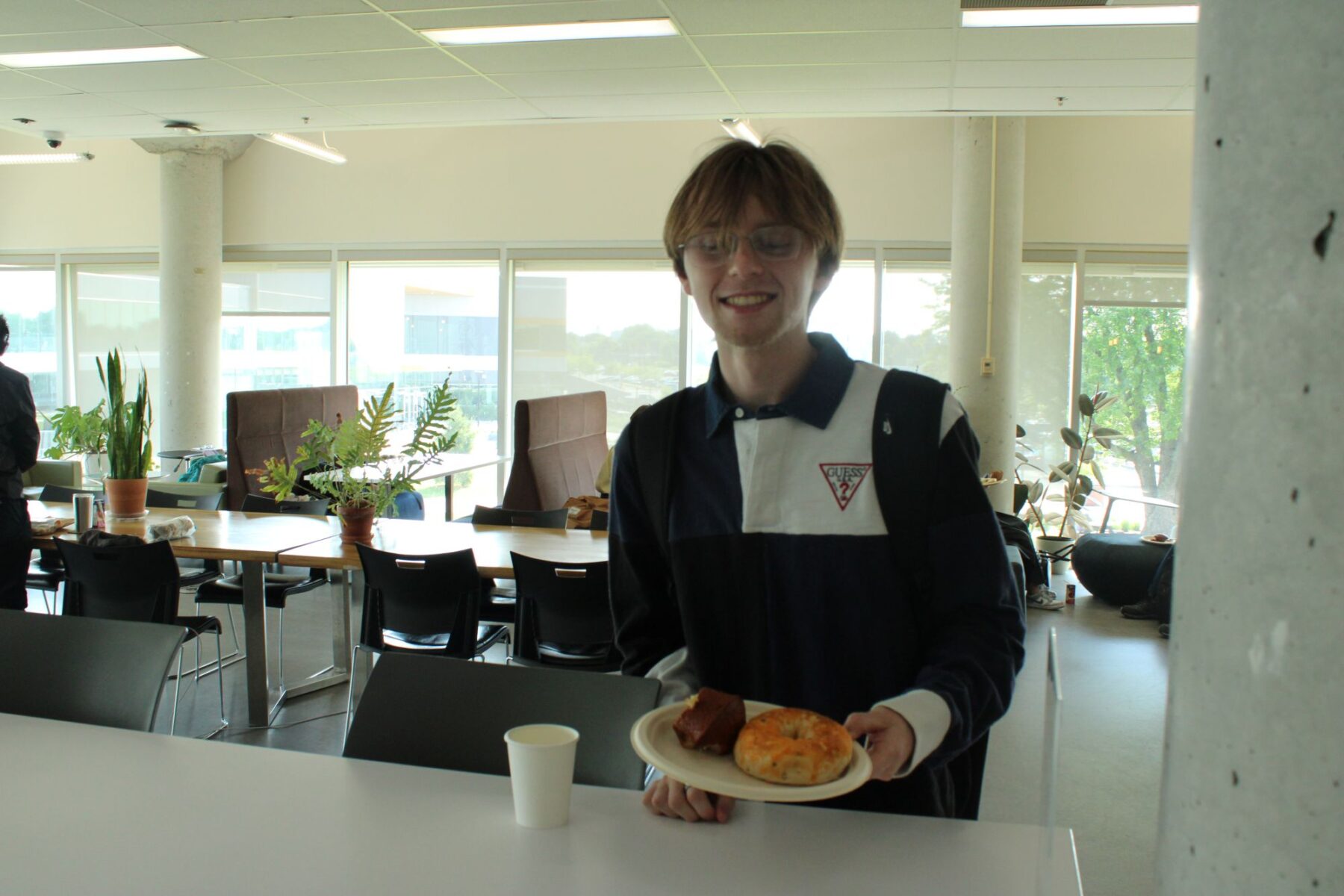
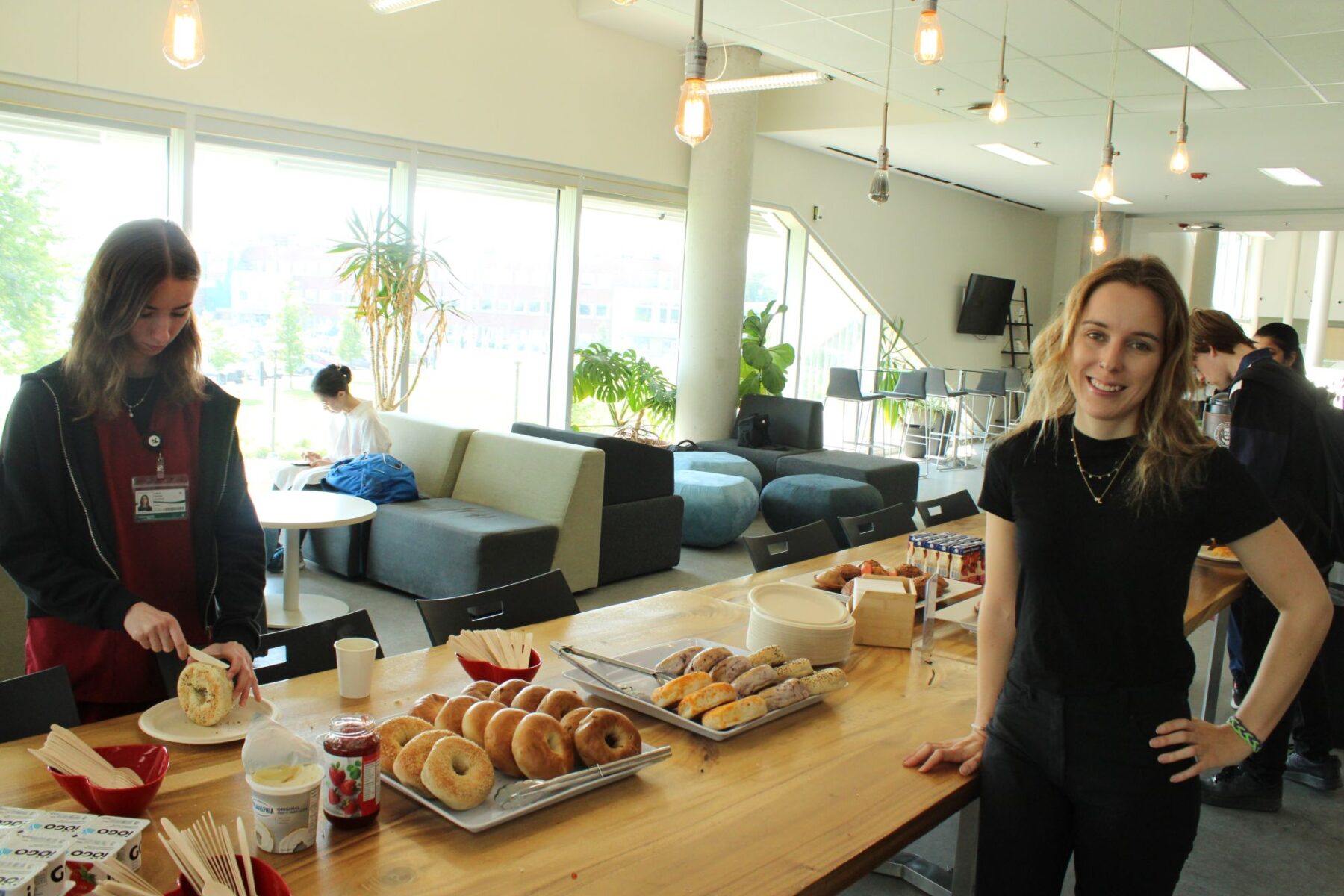
The smell of bagels, muffins and coffee filled the AC Hub on June 11 as the college organized a free breakfast bar for students.

Held each semester, the breakfast bar gives students a chance to grab a free, hearty breakfast and connect with their campus community.

Considering the high cost of living, business entrepreneur student Solomon Beals appreciates the support that events like the breakfast bar provides.

“I don’t have much money right now, so it’s very helpful to have more resources,” Beals said. “My budget goes to cheap groceries, so I think there needs to be more of this.”

Solomon Beals enjoying a bagel, thinks Algonquin should do more events like these.
Solomon Beals enjoying a bagel in the AC Hub. Photo credit: William Barritt

Sofia Aranguren, who was at the event enjoying a meal, said she loves the social opportunities the events bring.

It’s a nice chance to meet new people. It’s hard to socialize lately because no one has free time to do anything, so something like this is great for that,” Aranguren said.

Aranguren loved the event, but she suggested incorporating more activities to improve the social experience.

I’d say the food is great, but maybe some activities to do, like board games, would be fun.” Aranguren said.

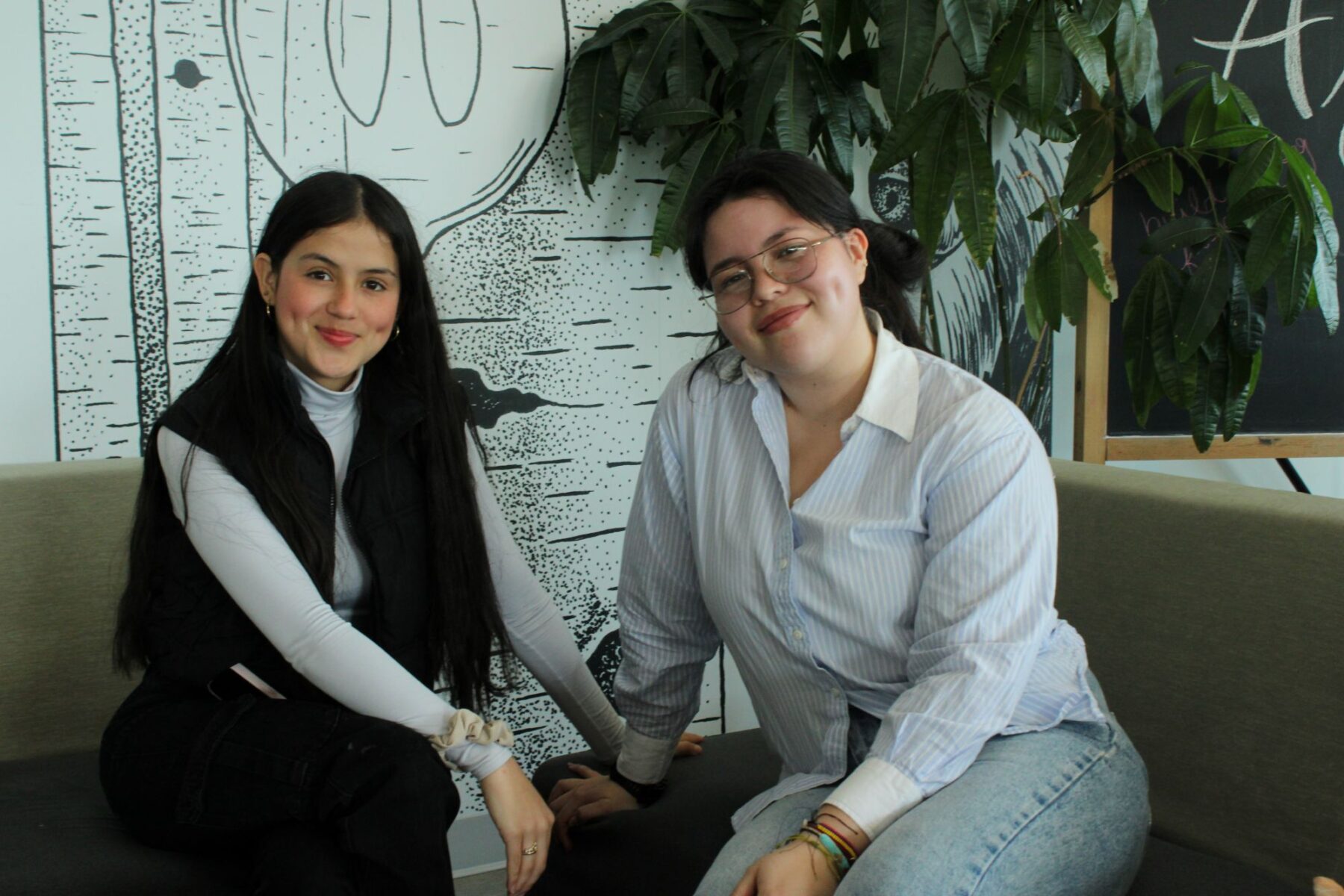
Sara Molina, Sofia Aranguren (Left to right) likes the event because of the social opportunities it brings.
Sara Molina and Sofia Aranguren met for the first time at the breakfast bar on June 11 in the AC Hub. Photo credit: William Barritt

The AC Hub runs student events each semester, giving students a space to gather, unwind and even meet a new friend.

Some lucky friendships were sparked at the event. Aranguren and Sara Molina met and bonded over a good cup of coffee.

The theme for the breakfast bar changes every semester, depending on the season and what students are into at the time.

For this summer semester, the theme was a grab-and-go style of meal to make the event as convenient as possible for students.

According to event officer Lauren Larocque, the AC Hub is paying close attention to what students are facing in deciding which events to hold, and food affordability is at the top of the list.

Event Officer Lauren Larocque, in front of Breakfast Bar in the AC Hub.
Event Officer Lauren Larocque, in front of Breakfast Bar in the AC Hub. Photo credit: William Barritt

“We try to centre our events around what students are going through, and right now the big one is food,” Larocque said.

Whether it’s food insecurity or just wanting a social gathering, the breakfast bar is a great place for students to fuel up, get energy and study for their classes,” Larocque said.

Larocque said they will return next semester with a whole new lineup of fall-inspired foods, such as pancakes or french toast.

To keep up with further AC hub events, visit the college’s website.

College Ward councillor ‘open to exploring’ parks allowing alcohol

The experiment is drawing mixed opinions from students and the public
Photo: Janella Milord Ashford
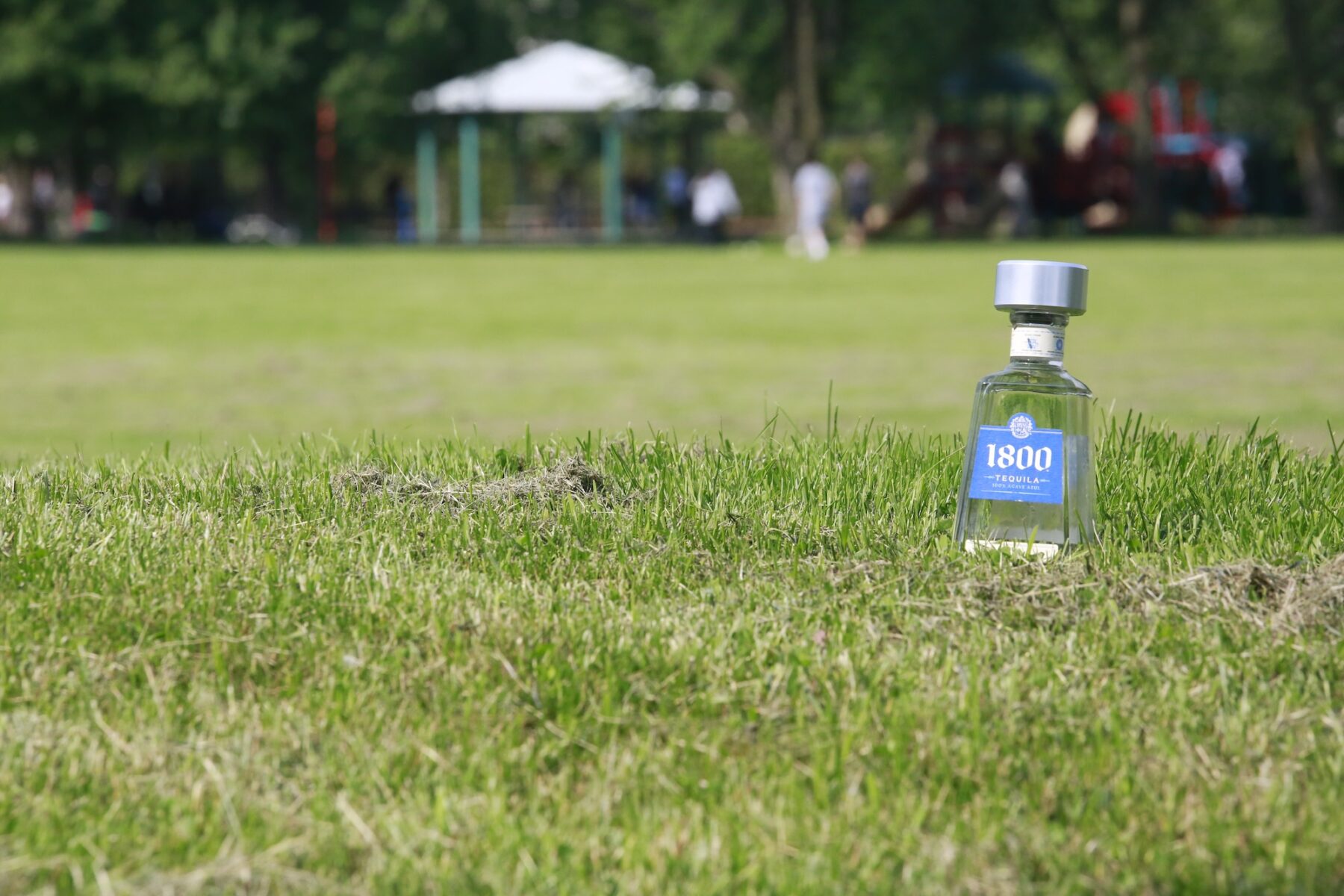
A bottle of tequila standing on the grass in front of a playground. City council has voted to allow alcohol in parks under a pilot project.

Ottawa city council has given the green light to a pilot project allowing drinking in local parks, but College Ward’s councillor says she isn’t sure if any parks in the area will permit booze.

“I am open to exploring this for any parks that community members would like to see permit this,” Johnson says in an email statement. “I would also like to connect with city staff to better understand which parks might be suitable to permit alcohol consumption in our ward, alongside expressed community interest for this to be permitted.”

Council approved the pilot project on June 11. According to a report for council, councillors will work with the general manager of public works to identify which parks could be part of the pilot project, running between July 1 and Oct. 31.

The bylaw comes with restrictions such as no consumption within five metres of beaches, playgrounds, splash pads, pools, skateboard parks, parking lots, ice rinks, sports fields or sanctioned sledding hills. No alcohol consumption will be permitted before 11 a.m. and after 9 p.m. National or federal parks, like Major’s Hill Park, Kìwekì Point and along the Rideau Canal, are not part of the city’s pilot project.

Picture of a playground near a tennis field.
City council has approved a pilot project that will allow alcohol consumption in some parks. Photograph of a playground near a tennis field where drinking won't be allowed. Photo credit: Janella Milord Ashford

Although no decision has been made about parks in College Ward just yet, some students are open to the idea.

Advertising and marketing communications student Mehdi Alaoui originally from the United Kingdom, says drinking in parks was common practice back home. This allowed him to connect with others and helped him appreciate outdoor settings, as opposed to the typical bar hangout.

“I find most indoor spaces either overcrowded, too loud to hold a proper conversation, or too dimly lit to feel welcoming. Allowing responsible drinking outdoors would create a more relaxed, sociable, and inclusive environment,” Alaoui says. “It’s a good start, but the city should look at best practices from around the world to develop a model that works for Ottawa. Every city is different, and a thoughtful trial-and-error approach will help create a balanced and safe policy.”

On the other hand, Wolves Den customer Emery Delaney doesn’t consider city parks as drinking spots.

Emery Delaney posing by the bar at the Wolves Den getting ready to enjoy a beer.
Emery Delaney posing by the bar at the Wolves Den getting ready to enjoy a beer. Photo credit: Janella Milord Ashford

“I bring my nephew to the parks, I feel like it’s more of a time and place thing,” Delaney says. “But as long as the restrictions are followed, I don’t have a problem with that.”

News briefs: Ottawa health unit faces heat for reduced beach water testing

Top stories in your community and around the world as noted by Algonquin Times journalists​

Local

CBC Ottawa: Ottawa Public Health’s decision to reduce daily beach water testing to once a week starting June 21 is facing criticism.

Mooney’s Bay beach faced closures due to elevated E. coli levels in 2020.

Ottawa Riverkeeper Laura Reinsborough said this is “a huge step backwards” for OPH and puts Ottawa swimmers at risk of exposure to bacteria.

National

CBC: G7 country leaders are set to arrive in Kananaskis, Alta. on June 15 to attend meetings on June 16 and 17.

Prime Minister Mark Carney will meet with U.S. President Donald Trump on Canadian soil.

Carney laid out Canada’s core missions for the G7 summit. He’s looking to secure new partnerships to build “stronger infrastructure, create high-paying jobs and open dynamic markets where businesses can compete and succeed.”

International

Globe and Mail: More than 200 people were killed on June 12 in what authorities said is the “world’s worst aviation disaster in decades.”

Air India Flight 171 was headed to London with 242 people on board when the plane crashed only minutes after takeoff.

The plane crashed on to a medical college hostel during lunch hour.

From cocktails to mocktails, Algonquin College students embrace a new era in social sipping

College bartending pros have noticed younger generations are following social and industry trends and are switching to non-alcoholic options
Photo: Jade Louise Greenwood
Ali Albaawadh shows off mixed drink at Algonquin College Wolves Den.

The shaker rattles in rhythm, a symphony of ice and juice, as Ali Albaawadh crafts a mocktail so vibrant it could fool anyone into thinking it carried a kick.

A bartender at Algonquin College’s Wolves Den, Albaawadh has noticed the growing trend of alcohol-free spirits reshaping the cocktail industry.

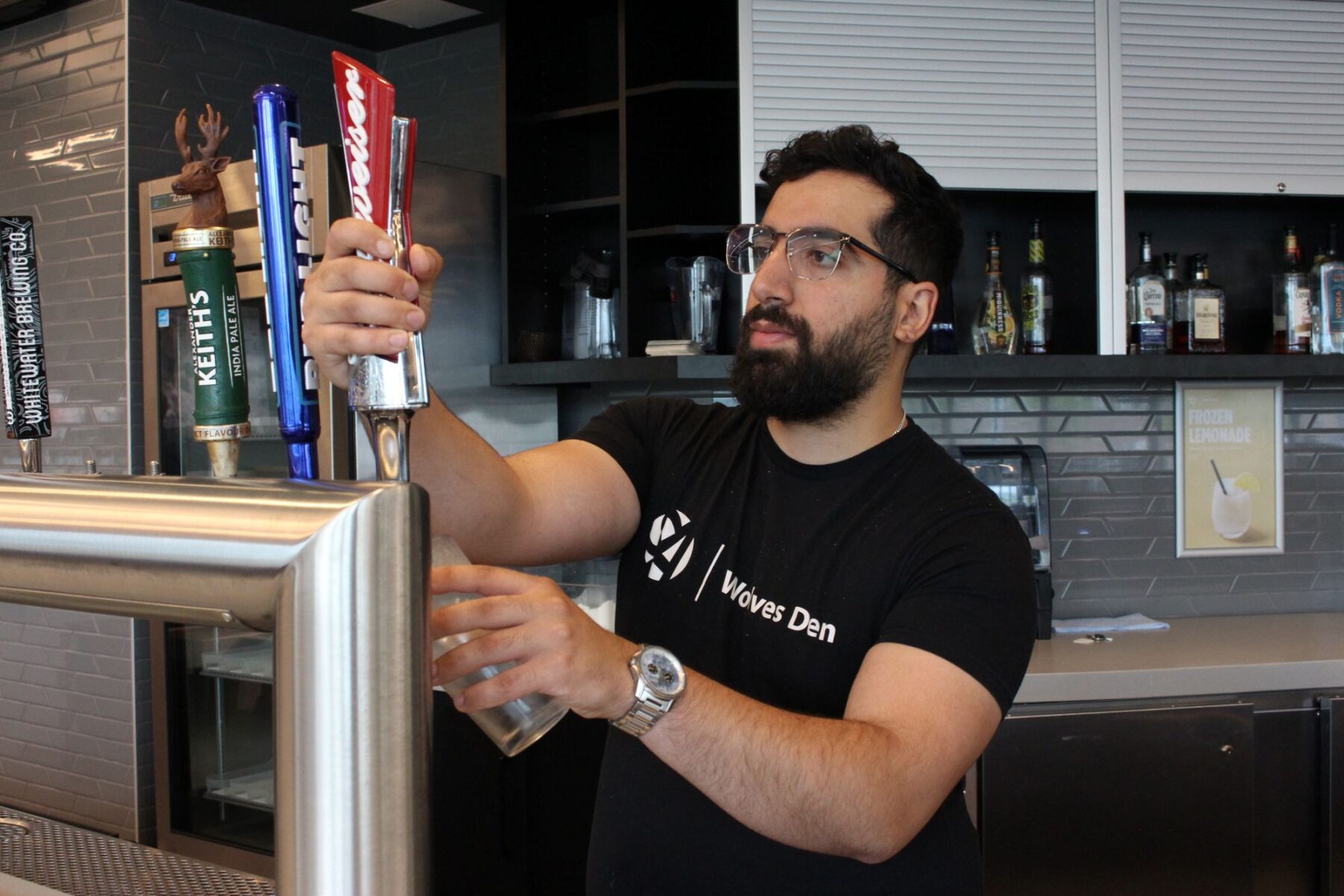
Ali Albaawadh, Algonquin College bartender, pours drink at Wolves Den Bar on June 9.
Ali Albaawadh, Algonquin College bartender, pours drink at Wolves Den Bar on June 9. Photo credit: Jade Louise Greenwood

“Small companies are making alcohol free tequila, alcohol-free gin and alcohol free vodka, so now people can have these cocktails that aren’t alcoholic,” Albaawadh said. “There’s schnapps and whisky and all these very flavourful liqueurs that have recently started to hit the market and are a good alternative for people.”

The shift isn’t just about taste — it’s about health. Mocktails provide benefits like better hydration, improved sleep, and no hangovers, making them a practical choice for many students juggling academics and a social life, according to research by Future Market Insights.

“More kids these days are really into the health grind,” Albaawadh said. “The guys at the gym don’t come over here for drinks.”

Morgan Sandrelli, a 19-year-old Algonquin College student in massage therapy, said that mocktails are a great addition to menus for someone who still wants to enjoy the night with friends.

“It makes you feel like you are part of the group,” Sandrelli said, “so you can have a fun drink like everyone else.”

Lindsay Groleau, a 19-year-old early childhood education student, sees mocktails as an excellent alternative to alcohol.

“I think it’s a good choice for people that maybe want to have that same cutsie moment,” Groleau said.

The Future Markets Insights research shows Gen Z is consuming 20 per cent less alcohol than millennials, driving bars and restaurants to expand their non-alcoholic offerings. The non-alcoholic beverage industry is expanding at an extraordinary pace, with worldwide sales projected to surpass $60 billion by 2034, according to the research.

Marie-France Boudreault-Champagne, a professor and program coordinator of the bartending program at Algonquin College, has watched the rise of the mocktail firsthand.

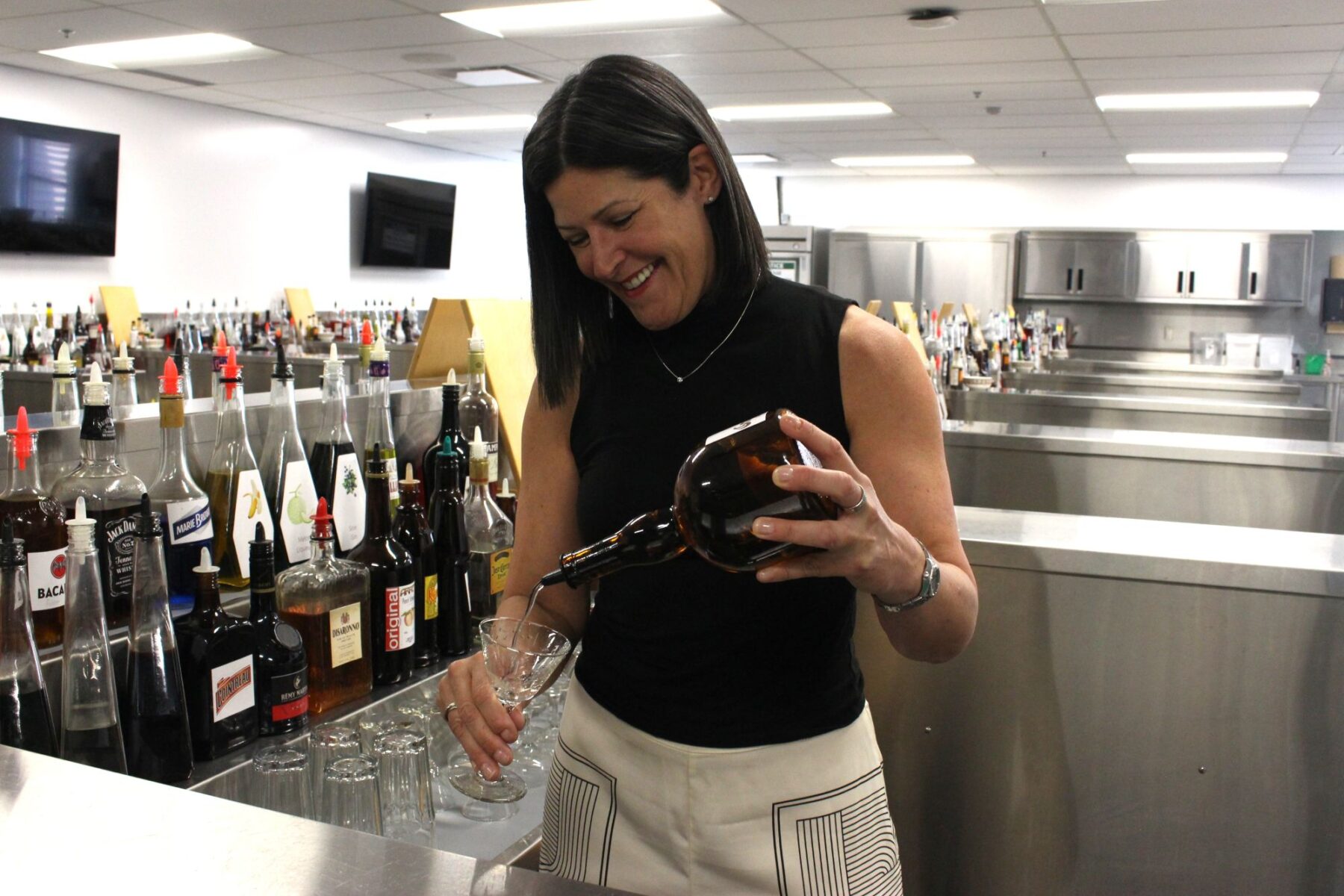
Marie-France Boudreault-Champagne, professor and program coordinator for the bartending program, stands in the practical bartending room for students.
Marie-France Boudreault-Champagne, professor and program coordinator for the bartending program, stands in the practical bartending room for students. Photo credit: Jade Louise Greenwood

Boudreault-Champagne has observed younger generations increasingly shift away from alcohol, embracing mocktails and other non-alcoholic beverages.

“The quality of these products over the past years has grown exponentially,” Boudreault-Champagne said. “We went from Labatt 0.5 per cent to now having craft breweries making beautiful selections of non-alcoholic drinks.”

Boudreault-Champagne said that dehydrated fruit, fresh herbs, and expert balance make mocktails just as enjoyable as traditional cocktails.

She has taught bartending students to craft mocktails for years, with the program also offering workshops and team-building exercises for members of Algonquin College, focused on alcohol-free mixology.

Marie-France Boudreault-Champagne, professor and program coordinator for the bartending program demonstrates pouring liquid into glass in H-building bartending practical room.
Marie-France Boudreault-Champagne demonstrates pouring liquid into glass in the H-building bartending practical room. Photo credit: Jade Louise Greenwood

“It is about hospitality, it’s about getting people together,” Boudreault-Champagne said. “It’s about people having the experience at a restaurant, and you don’t really need alcohol for that. What we are selling now is the experience.”

With mocktail culture booming, Boudreault-Champagne shared two summer mocktail recipes and a perfect food pairing to complement them.

Recipes provided by Boudreault-Champagne. Bloody BBQ Mary and a Maple Espresso Martini.

Recipes provided by Boudreault-Champagne. Bloody BBQ Mary and a Maple Espresso Martini. Photo credit: Jade Louise Greenwood
Algonquin Times horoscopes
Algonquin Times podcast
Follow Algonquin Times on Instagram
Algonquin Times on Instagram
Follow Algonquin Times on Instagram
Algonquin Times podcast
Algonquin Times horoscopes

Stay Informed

Sign up for our newsletter

Subscribe

* indicates required