From greenhouse to green homes
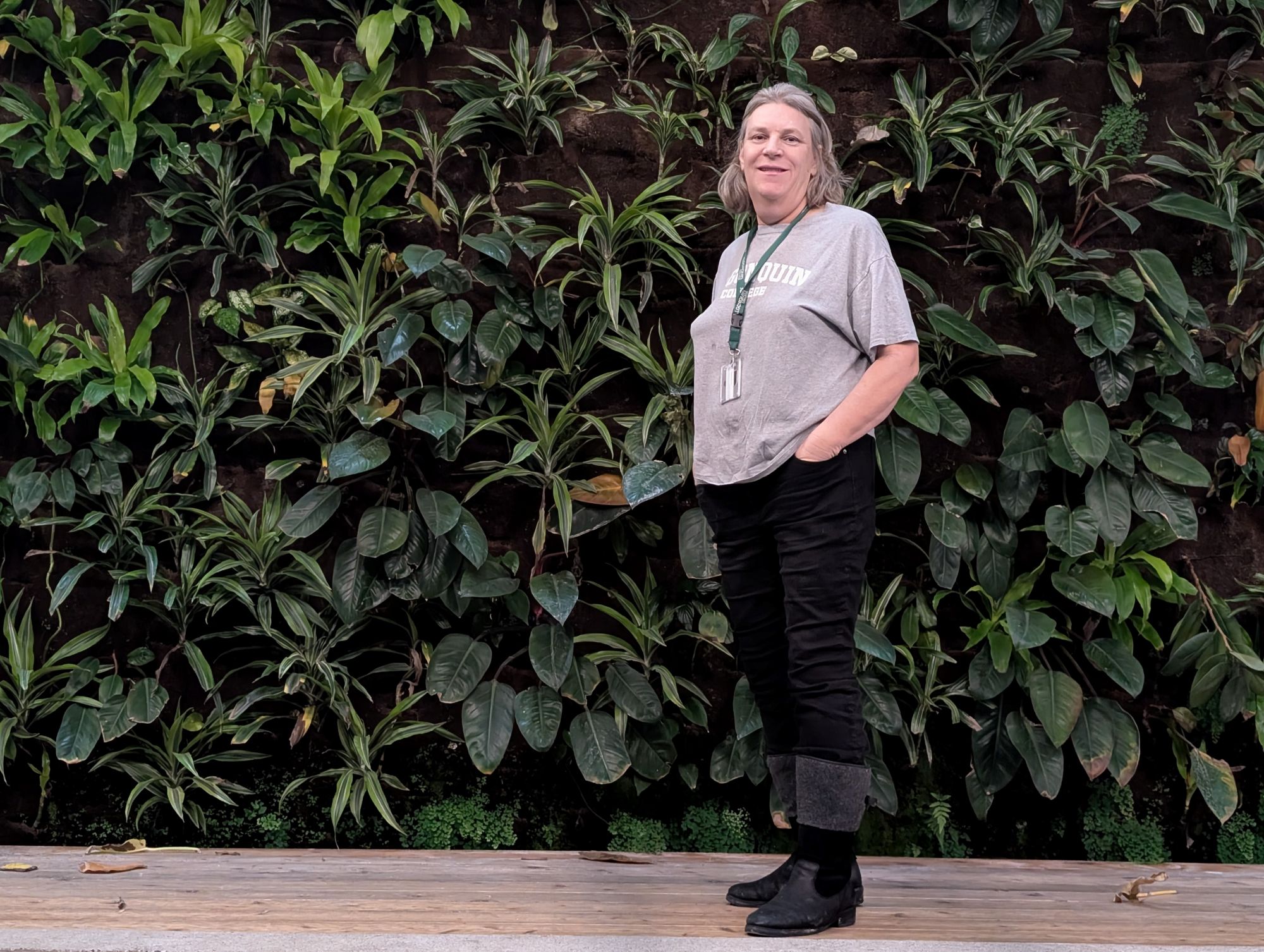
Algonquin College professor Carolyn Lorimer is spearheading an energy-positive home she believes could redefine affordable, low-carbon construction in Canada after her recent return from cancer treatment.
Earlier this year, Carolyn Lorimer, a professor at the Centre for Construction Excellence, led a research team in designing a first-of-its-kind greenhouse tailored to Canadian conditions. The prototype used an aquaponic system that grows fish and plants together in a self-sustaining loop — one that eliminates the need for fertilizer.
After completing 35 rounds of radiation treatment over the summer, Lorimer is focused on a new challenge: building an energy-positive home that will serve as a hands-on learning lab for architecture students. Construction is expected to begin in the summer of 2026.
Despite being diagnosed with cancer in spring, Lorimer said she couldn’t wait to get moving on her idea.
“Cancer didn’t scare me. It scared those around me more. But what they probably weren’t thinking about was that I had other plans,” Lorimer said.
Her goal is to create a proof of concept that demonstrates how affordable, regenerative, carbon-sequestering homes can be built with technology already available today.
“Concrete is one of the largest emitters of carbon dioxide – and it’s a lousy insulator too,” Lorimer said. “This house will use minimal concrete for those reasons.”
The design incorporates heating systems that, she says, cost a fraction of what most homes rely on.
“The in-ground air tube we bought is about $2,200 and has a lifespan of roughly 50 years,” she said. “Compare that to a furnace, which costs around $10,000 plus all the ducting, and needs to be changed every seven years or so.”
The home is designed not only to reduce energy use but to generate more than it consumes.
“It produces one-and-a-half to two times more renewable energy than the home needs,” Lorimer said. “We’re going to use solar panels and possibly a wind turbine for cloudy, windy days.”
Attached to the home will be a mini-greenhouse roughly the size of a two-car garage, again using an aquaponic system.
“The greenhouse can grow enough organic produce and fish to feed half a dozen people throughout the year,” she said.
The building will be equipped with sensors to monitor internal and external conditions over long periods, creating a data stream for both students and researchers.
Lorimer says the project brings together technologies already tested internationally but slow to take hold in Canada.
“These solutions are being used around the world,” she said. “They just haven’t been adopted here on a large scale, largely because the construction industry has resisted change in order to keep selling old technology.”