Community efforts step up in tackling Ottawa’s textile waste
Textiles are the fifth-largest category of plastic waste in Canada, with most ending up in landfills. Approximately 98 per cent of plastic textile waste ends up in landfills, according to Environment and Climate Change Canada.
EcoEquitable, a registered charity dedicated to reducing textile waste, collects fabric and donations from Ottawa for reuse in sewing projects. They also promote women’s empowerment through sewing.
Nana Adu, the communications coordinator at EcoEquitable, said textile waste is a global problem. Around 290 kilotons of synthetic textile products were purchased in Canada in 2020. In that same year, around 280 kilotons were discarded as waste, according to Statistics Canada’s Physical Flow Account for Plastic Material.
Textile waste is defined as any fabric-based material, such as clothing, shoes, upholstery, and other items.
According to the City of Ottawa, between four and six per cent of residential garbage sent to landfills is textiles. This amounts to over 410 tonnes of textile waste annually. EcoEquitable received over 10,000 pounds of donated fabric from Ottawa in 2024, which Adu said is an increase in the amount of fabric over the years.
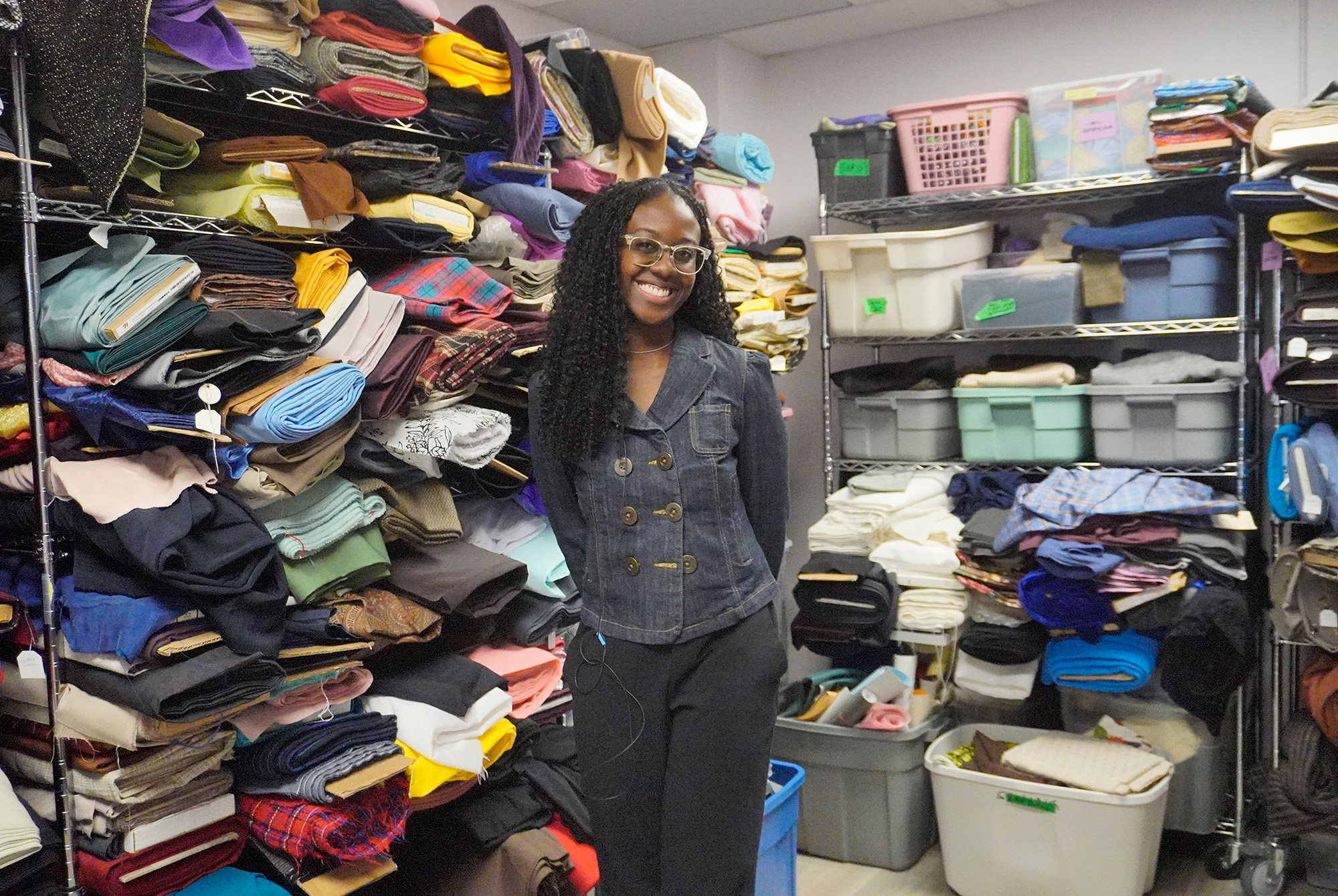
“When you look at the landfills, so many of the textiles didn’t need to end up there. What we do here is make sure those still usable get a second life,” Adu said.
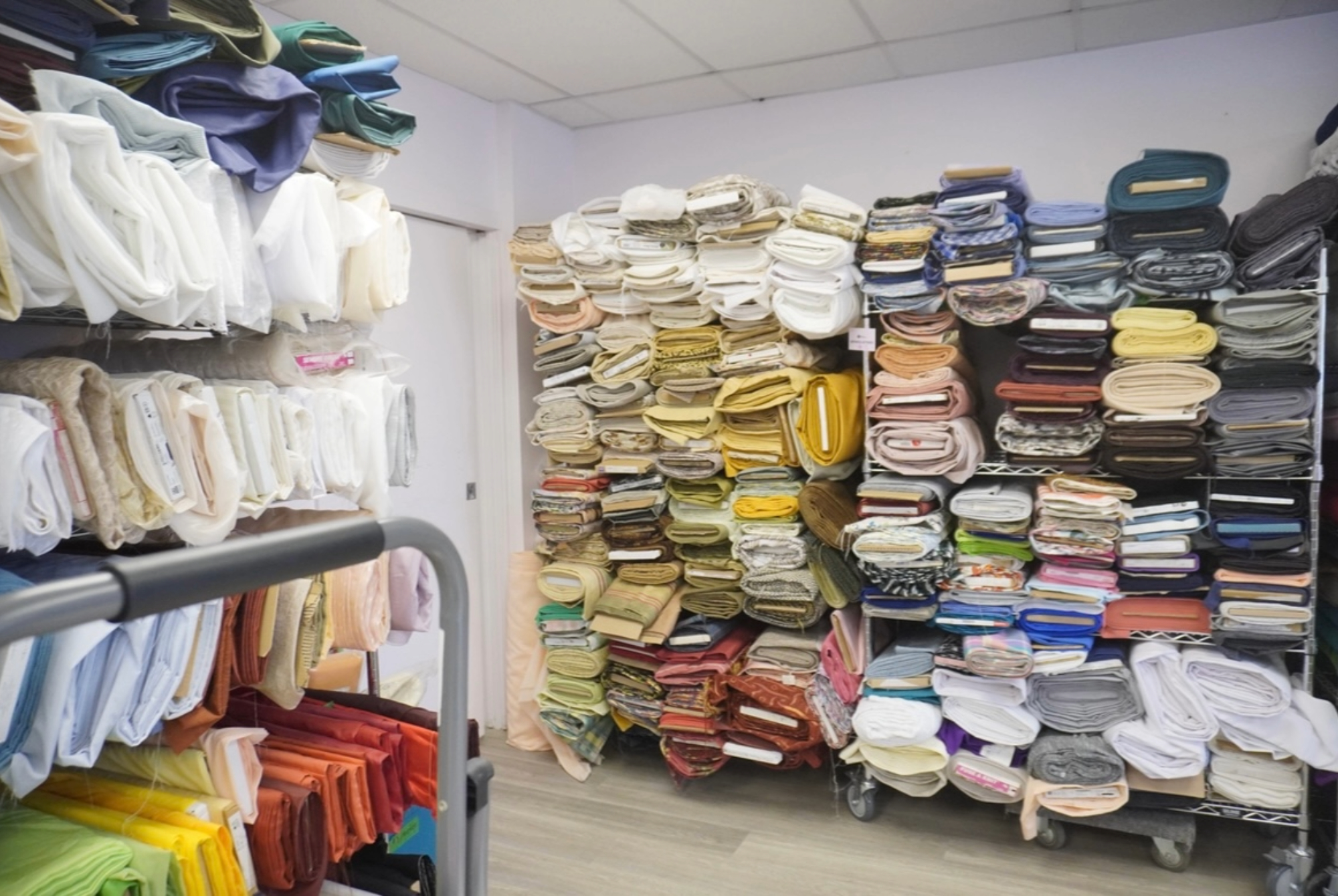
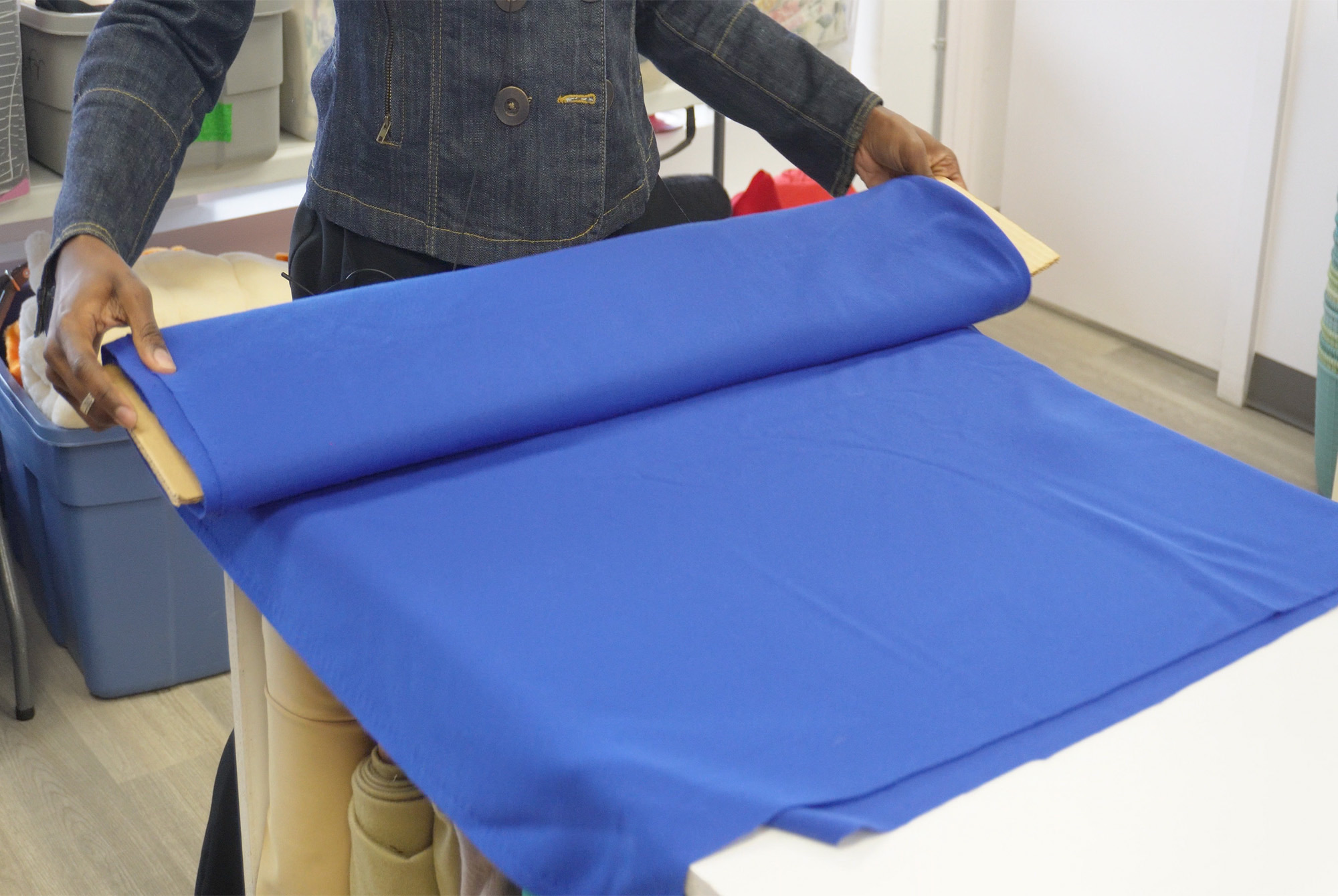
When people come to donate fabric, after a quick check, the donations are weighed and stored. They are then handed off to volunteers who spend the week processing them. Rolling fabric onto bolts, colouring-coding buttons, tagging pieces and preparing everything in the back-of-house.
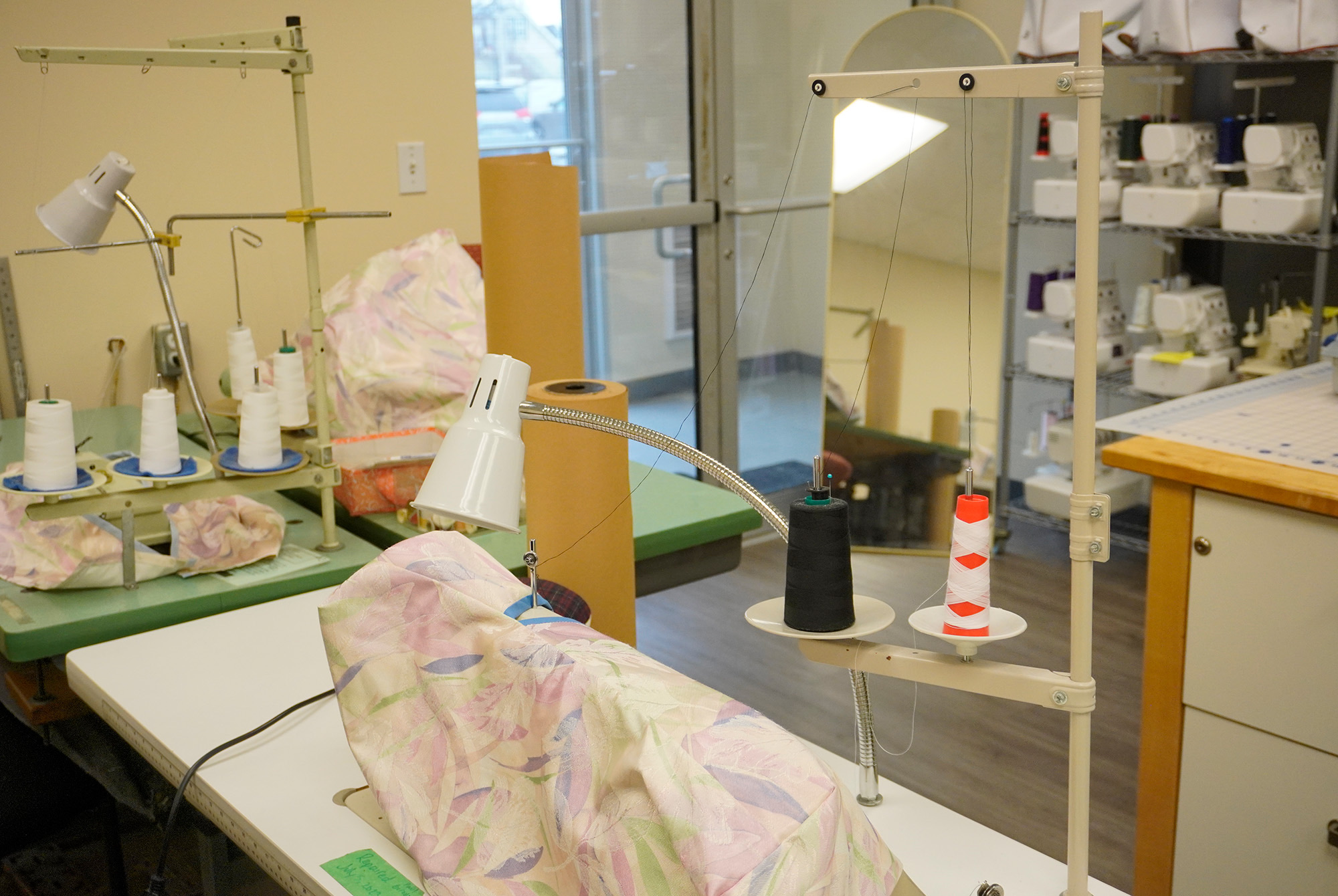
By recycling and reusing fabrics, EcoEquitable gives them a second life as pouches, bags, rompers, and more. They recently finished 500 tote bags made by the women in the EcoEquitable program.
“We pass it back to the community at an affordable price, so it stays out of the landfill and can be used more intentionally by people who care about being even a little more eco-conscious,” Adu said.
Adu said the rise in fabric donations is encouraging, but it also creates pressure on the organization. As a non-profit, EcoEquitable is often stretched for space, resources and storage capacity needed to process the rising volume of materials.
“The more people are aware, the more people are going to come in and donate, but if we cannot accommodate them, then that’s a problem,” Adu said. “We always find a way to make it work, but it’s still a constraint.”
Funding and grants are the primary sources of revenue for most non-profit organizations. Vivian Nguyen, an associate professor at the Institute of Environmental and Interdisciplinary Science at Carleton University, said funding is always a limiting factor for community-based organizations.
“A lot of the provincial governments and the federal government were saying resources are limited, especially when it comes to the environment as well,” Nguyen said.
“Right now, the economy is kind of the big thing. So they’re saying there needs to be more collaboration between the government and local organizations that have similar interests to get to the same goals.”
In March, the Canadian government allocated $662,161 to Fashion Takes Action through the Canadian Circular Textile Consortium. The funding supports collaboration among experts, industry, non-profits and Canadians, helping to reduce resource duplication and foster partnerships toward a circular textile economy in Canada.
Nguyen said local organizations are key champions who can push for change, fill gaps left by limited government resources and play a vital, yet often under-recognized role in advancing environmental stewardship. Nguyen mentioned that policy decisions and funding are closely linked.
“It comes down to where the money is, because policy will decide what programs are running. It’ll choose where money will be put into and what priorities the funds will go to,” Nguyen said.
“If policy decisions don’t align with an organization’s mandate, it’s going to affect their funding or drivers.”
Local organizations are trying to address the broader textile waste problem, but public awareness remains insufficient, even as people are becoming more eco-conscious.
An Ontario-based textile waste study published on ScienceDirect found that most textiles tossed out are still usable — about a quarter are in good condition, and nearly 40 per cent could be reused with only minor repairs or cleaning.
Sixty-five per cent of textile waste is considered reusable and is categorized through grades A to F. Grades A to D are given for waste suitable for reuse but may require repair or refurbishment. Grade E and F, on the other hand, need recycling, contamination treatment, and end-of-life processing.

Reusing fabric by giving it a second life is a common way people handle fabric they no longer need. For example, Mehdi Htite, a student at Algonquin College, cuts unworn clothes into pieces to use as desk wipes.
“If clothes are worn out beyond repair, I cut them into pieces to use as cleaning cloths,” Htite said. “With the economy the way it is, it’s more practical than buying new rags.”
Fabric waste is no longer a hidden environmental issue, and many people are taking action. However, there are still limited options for what to do with clothes they no longer need.
Greetee Mogun, a student at Algonquin College, noted that public awareness of textile waste is still insufficient. For clothes she doesn’t wear often, she stores them in the garage to avoid cluttering her closet. Sometimes, she donates them to people in need instead.
“I think (the) thrift shop is a good way for recycling. Collecting clothes and doing a fundraiser in school could raise more public awareness about the specific issue,” Mogun said.
Addressing Canada’s textile waste requires coordinated action from organizations, individuals, and the government. Adu said EcoEquitable is allocating resources and time to educating the younger generation for the next couple of years.
“A lot of people want to do better and be more eco-conscious, but if you don’t know where to go or what to do, you can’t take action,” Adu said, “but it all comes down to resources; if people don’t know their options, nothing changes.”