Algonquin College women push past body image pressures to reclaim space in the gym
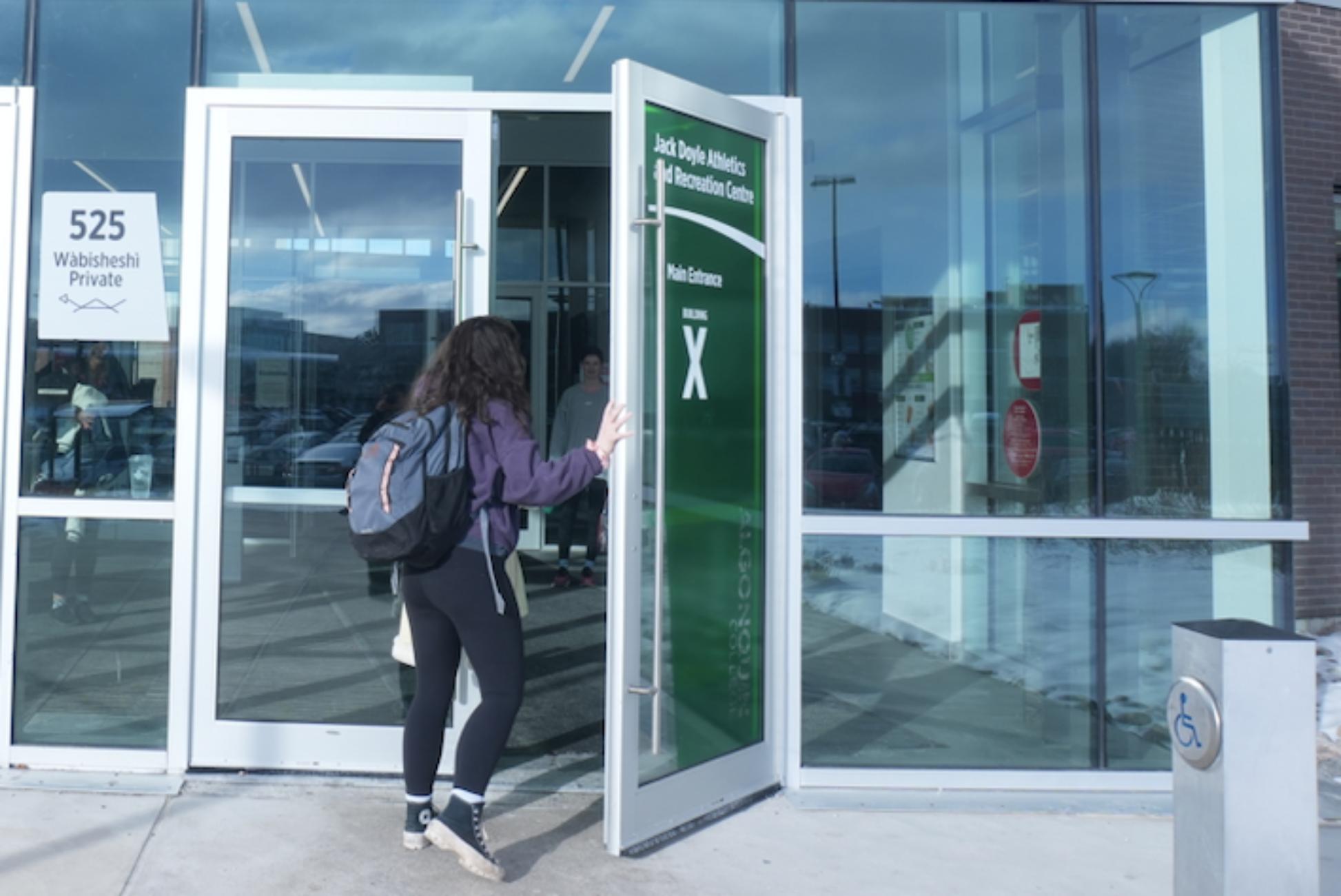
Before the first rep and before the first set there’s a moment of hesitation.
“It was intimidating because I really didn’t know how to start or what to do exactly,” said Constanta Cota, a Level 2 television broadcasting student. “I didn’t really feel like I belonged there because I didn’t look like I would go to the gym.”
For many female students at Algonquin College, stepping into the gym means pushing past the feeling that they don’t fully belong, a doubt shaped not only by the space itself, but also the pressure surrounding body image long before they even walk through the doors.
For these students, going to the gym isn’t just about working out. It’s also about pushing past insecurity, comparison and unrealistic expectations. As more women step into weight rooms and try strength training, they’re slowly changing the culture that surrounds the atmosphere, building confidence and supporting each other along the way.
That pressure often begins online.
Experts warn that social media plays a significant role in shaping body image specifically among young women. A study from the University of Waterloo found that more than half of teens reported being unhappy with their bodies, which was linked to higher screen time creating a greater dissatisfaction. Researchers say constant exposure to curated fitness content can reinforce those unrealistic standards and make environments like the gym feel more intimidating.
For beginners, that pressure can make an already unfamiliar space feel even more intimidating.
Cota said social media contributed to that mindset which reinforced the idea that there is a “right” way to look.
“It affected me in a bad way because it made me believe that I was supposed to look a certain way,” Cota said.
That sense of not measuring up is common among female gym goers. Experts suggest that idealized images online can contribute to body dissatisfaction and even more symptoms of body dysmorphia specifically among young women who are still forming their sense of self.
“I would say social media content I see is kind of like other women’s finished products, so that affects my confidence of being like, ‘Oh, I don’t look like that,’” said Kaitlyn Henderson, a Level 2 pre-health sciences student who has been going to the gym for four months.
She also described how uncomfortable a new space is where others seem experienced.
“I definitely felt like I really didn’t know what I was doing…it was hard to kind of find my way,” she said.
That combination of feeling inexperienced while also feeling judged can discourage some women from returning to the gym. Mental health research on social media and body image, such as findings discussed in Life Lines – The Impact of Social Media on Body Image & Mental Health, a study developed by Homewood Health in collaboration with the University of Alberta’s Human Resources department, suggests that stepping away from the constant comparison and limiting social media use can improve body image in and outside of the gym.
For many students, confidence doesn’t come immediately but rather builds slowly, oftentimes through routine and repetition.

“It’s intimidating…if you don’t know what you’re doing and you walk into a room and you see everyone else seems to know what they’re doing,” said Madi French, a Level 2 television broadcasting student who has been going to the gym for two years.
Over time that feeling began to shift.
“I think it was a safe space…but I was just overthinking it,” French said.
As confidence grows the focus can move away from appearance to how the body feels and performs. That shift can be the key to improving body image.
“I don’t like going and doing the workout but when I’m done the workout I feel great,” French said.
Even for more experienced gym goers body image pressures don’t disappear entirely.
“Social media affected my body image and confidence by a lot,” said Adriana Edmonson’s Borjorquez, a Level 2 police foundations student who has been going to the gym for four years
She remembers feeling out of place when she first started.
“I felt a little out of place but that’s because I was a beginner and felt like I was being watched,” she said.
Despite that, she continued going motivation stemming from her personal goals rather than outside expectations.
As more women enter gym spaces they are also helping reshape gym culture and challenging traditional expectations meanwhile building a more supportive environment.
“I would say more women have been going consistently,” Henderson said.
That growing presence can make a difference especially for beginners who may feel more comfortable seeing others like themselves. Many students describe an unspoken sense of support among women in the gym.
“One time I was doing a tricep exercise, not doing it right, and this woman came up to me and explained how to do it correctly,” Henderson said.
Cota said having a workout partner helped her stay consistent.
“She always pushes me to keep going,” she said.
That sense of encouragement, whether from friends or strangers, can play a key role in helping women return even when their confidence is low.
Parrys Charles, a Level 2 television broadcasting student, spoke about building confidence as an ongoing process especially in a culture shaped by comparison.
“I’ve always been skinny, lanky and tall my whole life…it’s something that I’ve had to work through and figure out how to build my own confidence,” Charles said.
She added that social media might make that process even more difficult.
“I feel like social media is not the best for people’s confidence,” she said.
For many female students, their relationship with the gym improves over time, not because the pressure disappears, but because their mindset changes.
What begins as a space filled with uncertainty and comparison can become something more personal: a place which is focused less on meeting those societal standards and more on individual progress.
And for some that shift is ongoing, but the hesitation that once defined their experience is no longer keeping them away.
“Although I didn’t really feel like I belonged there,” Cota said, “I kept going.”