
Growing pains: Horticulture industry feels scorched by college’s decision to shear program
Sarah Johnston, president and co-founder of Greenlife Nursery, says her “blood has been boiling” since hearing about Algonquin College’s decision to suspend its horticulture programs.
The suspensions will affect both the horticultural industries and the horticulture techniques apprenticeship programs at the college.
“It’s been boiling over this for quite some time,” said Johnston.
“Once you lose a structure like you’ve got at Algonquin, which has been going for, I don’t know how many years… It doesn’t get built up again overnight.”
The suspensions, proposed in January and confirmed in March, are part of the college’s “strategic program planning” which it says responds to changes in government policy and funding. Those changes include new limits on international student enrolment and updates to OSAP funding rules, both of which affect college revenues and program demand.
Thirty programs were included in the latest round of suspensions, following 37 programs cut last year, along with the closure of the Perth campus. The college has called it “a necessary response to rapid and significant shifts in the postsecondary landscape.”
Johnston is concerned not only for her business and the larger industry, but for future students with a passion for plants.
“I’m now being asked by Ontario to sponsor high school students, but with nowhere to send them once I’ve taught them their on-the-job skills,” she said.
Johnston described the industry as transient, meaning it often relies on incentives or “dangling carrots” to retain employees, specifically through apprenticeship pathways like the one previously offered at Algonquin.
“That apprenticeship program runs over two winters for 12 weeks each winter. And the sum accumulation of that program, if the student carries on to the end of the program, is that they will gain their Red Seal in that industry,” said Johnston.
“Not only have I lost the opportunity to gain knowledgeable students who have just graduated, I’ve lost the opportunity to enhance their skill and encourage them to become Red Seal.”
Having a Red Seal in the horticulture space broadens opportunities — many government contracts and large companies require someone on site to be Red Seal qualified. It allows the holder to work across the country and is recognized in countries like Australia, New Zealand and the United Kingdom.
Johnston says the Red Seal could become much more valuable and difficult to receive over the next few years due to removing formal training pathways like the apprenticeship program.
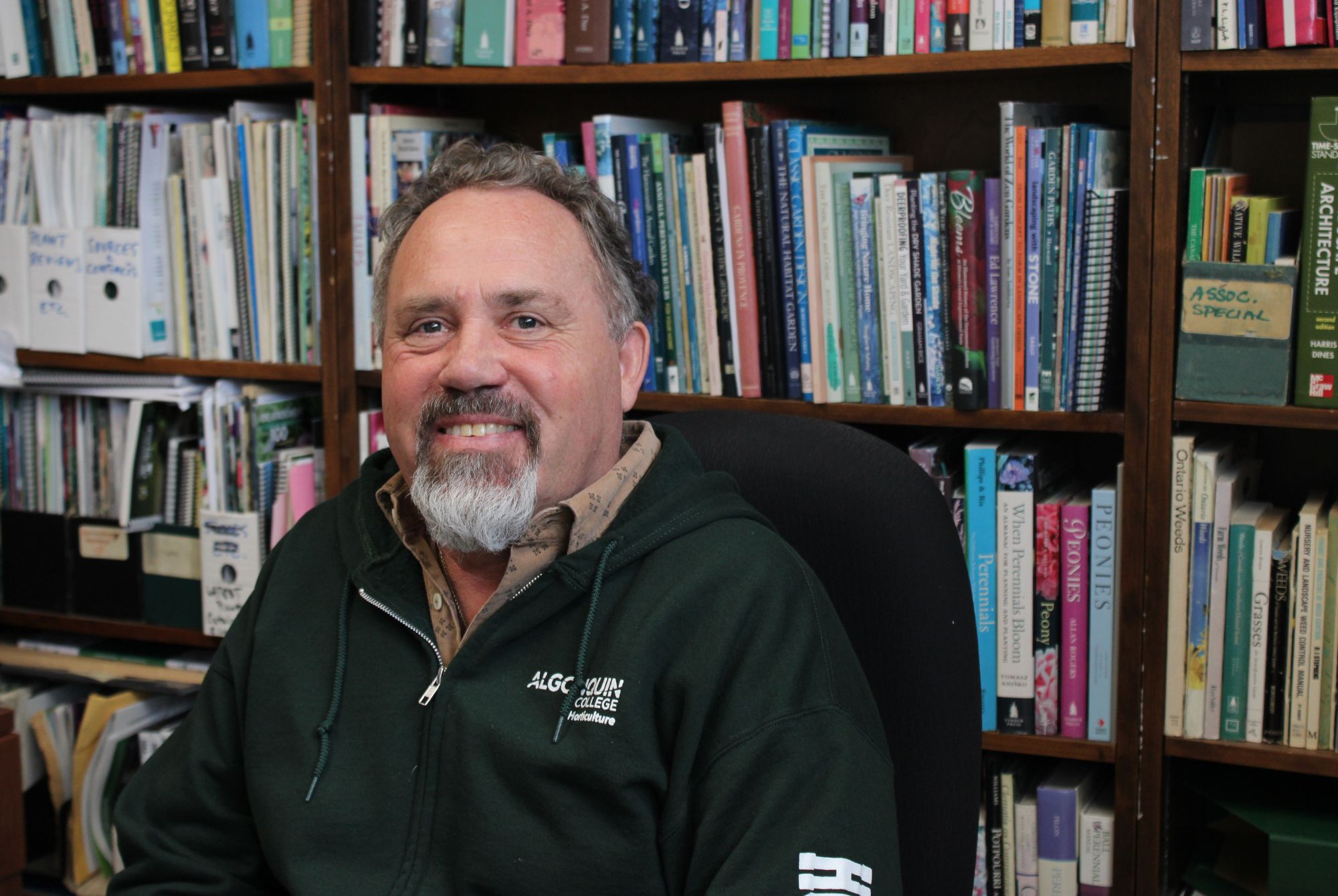
The removal of these pathways is also a concern for Tommy Wingreen, the program coordinator.
“For their local companies, it means that they now have to take people from other construction industries…maybe find people who work in construction or come from the street, but (have) no knowledge of what they are doing and they now have to educate them within the company,” said Wingreen.
“And then that’s a whole other issue.”
Wingreen has been teaching at Algonquin for 18 years. He became the horticulture program coordinator four years later and has been in the position ever since.
Growing up on a farm, Wingreen developed a love for plants working with his mother in their garden.
“The world of plants (is) much bigger than people kind of realize, right? And I like the science part of it as well. Because the more you know about plants, the more questions you have, really. It’s never-ending learning,” said Wingreen.
Wingreen says while the college’s decision wasn’t entirely unexpected, the lack of communication and engagement between the college and the faculty left him frustrated.
“Last fall, we did a program review and I was supposed to change the program to make it more profitable. And then they cancelled the program in the middle of that process. That’s really…I’m hurt, right?”
Wingreen also says there was limited opportunity to challenge some of the financial information used to support the college’s decision.
“I asked for a meeting with the dean to go over some of these numbers as I knew they were wrong,” said Wingreen. “And even on the financial numbers, her comment was that they have some homework to do, because there were things they couldn’t explain to me.
“And when I looked at it, I think the decision was made far earlier…because we are sitting on land, and it may be more profitable to have parking than to have a vegetable garden.”
Wingreen’s words reflect broader uncertainty about the program’s facilities, which have long been central to horticulture training at Algonquin.
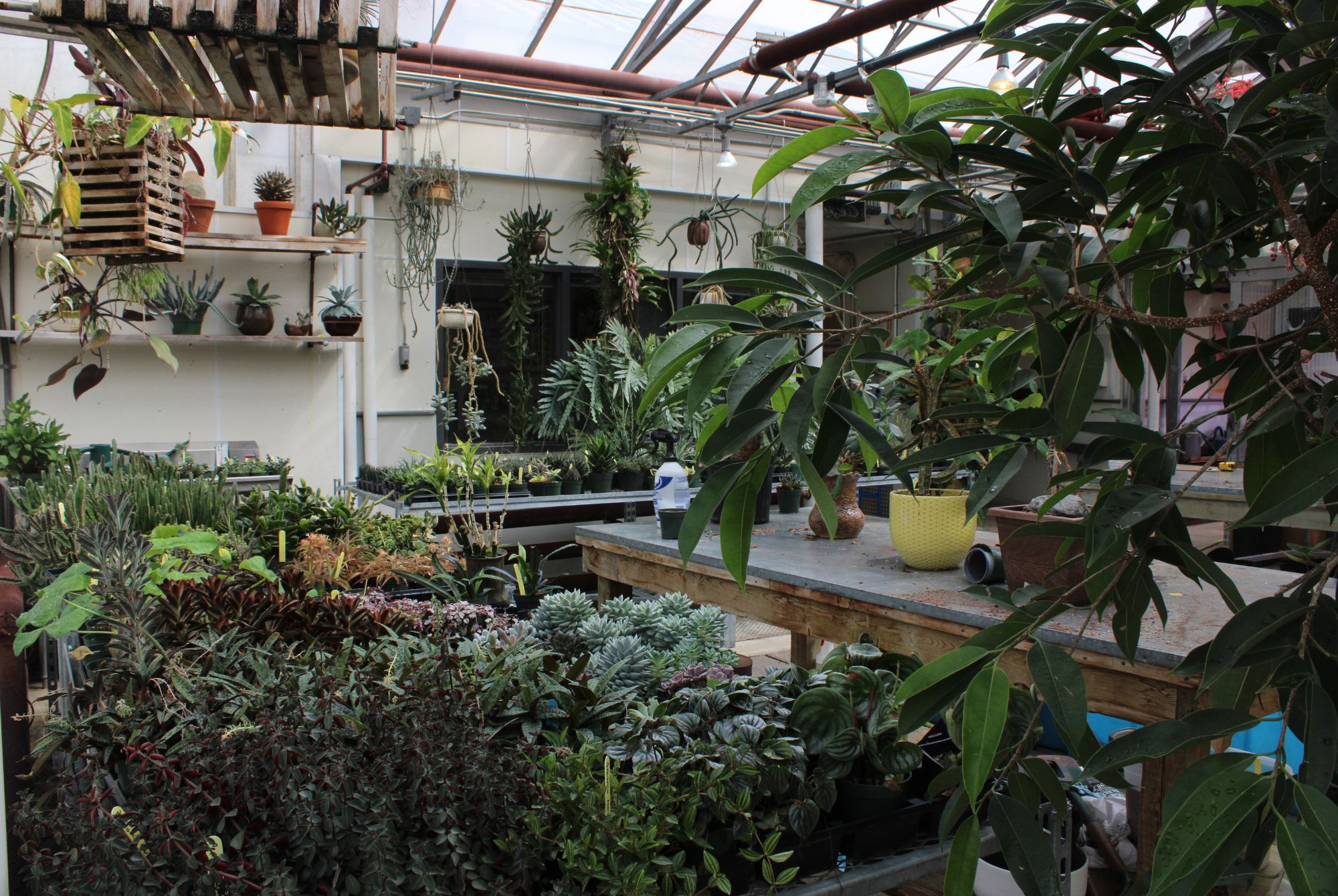
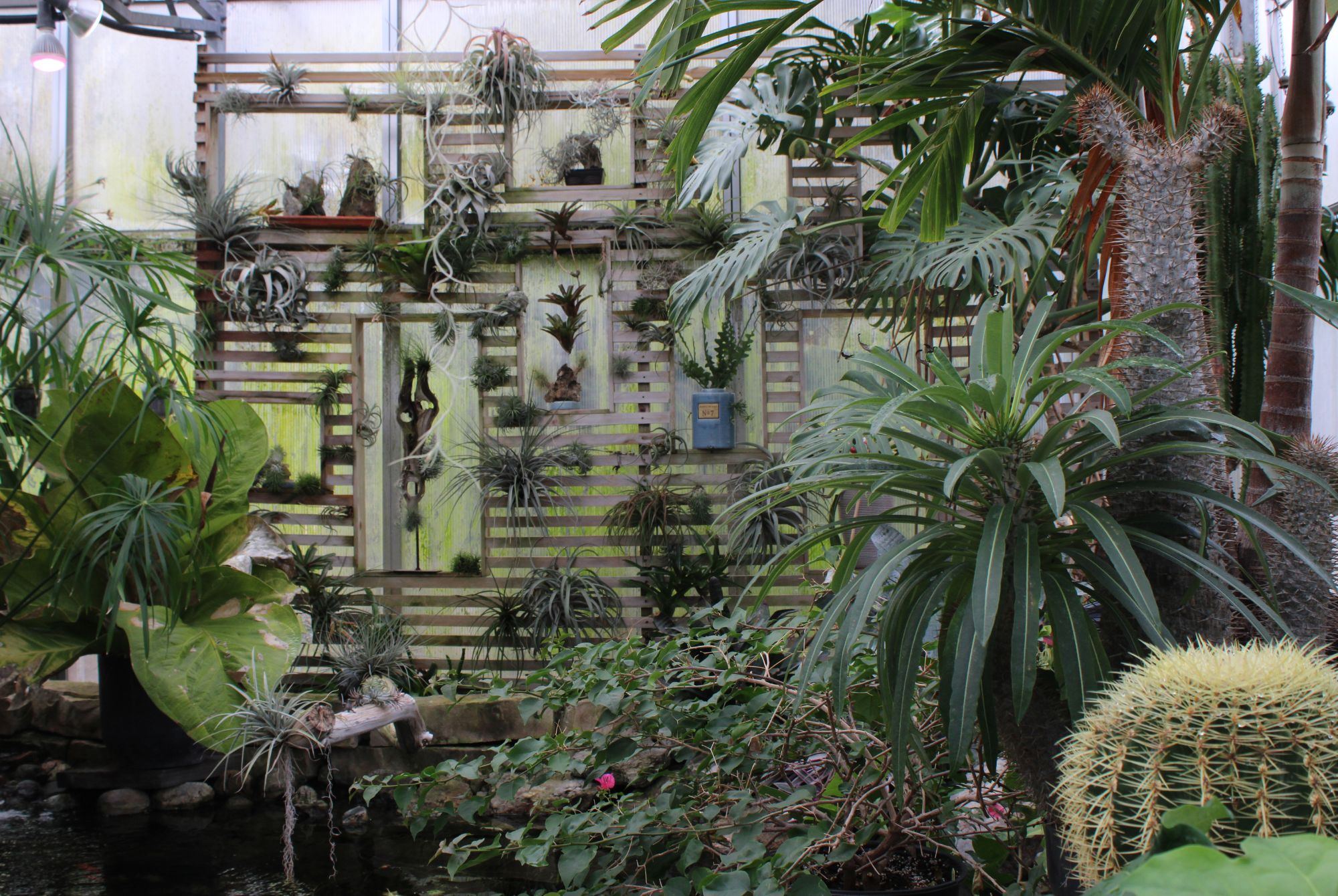
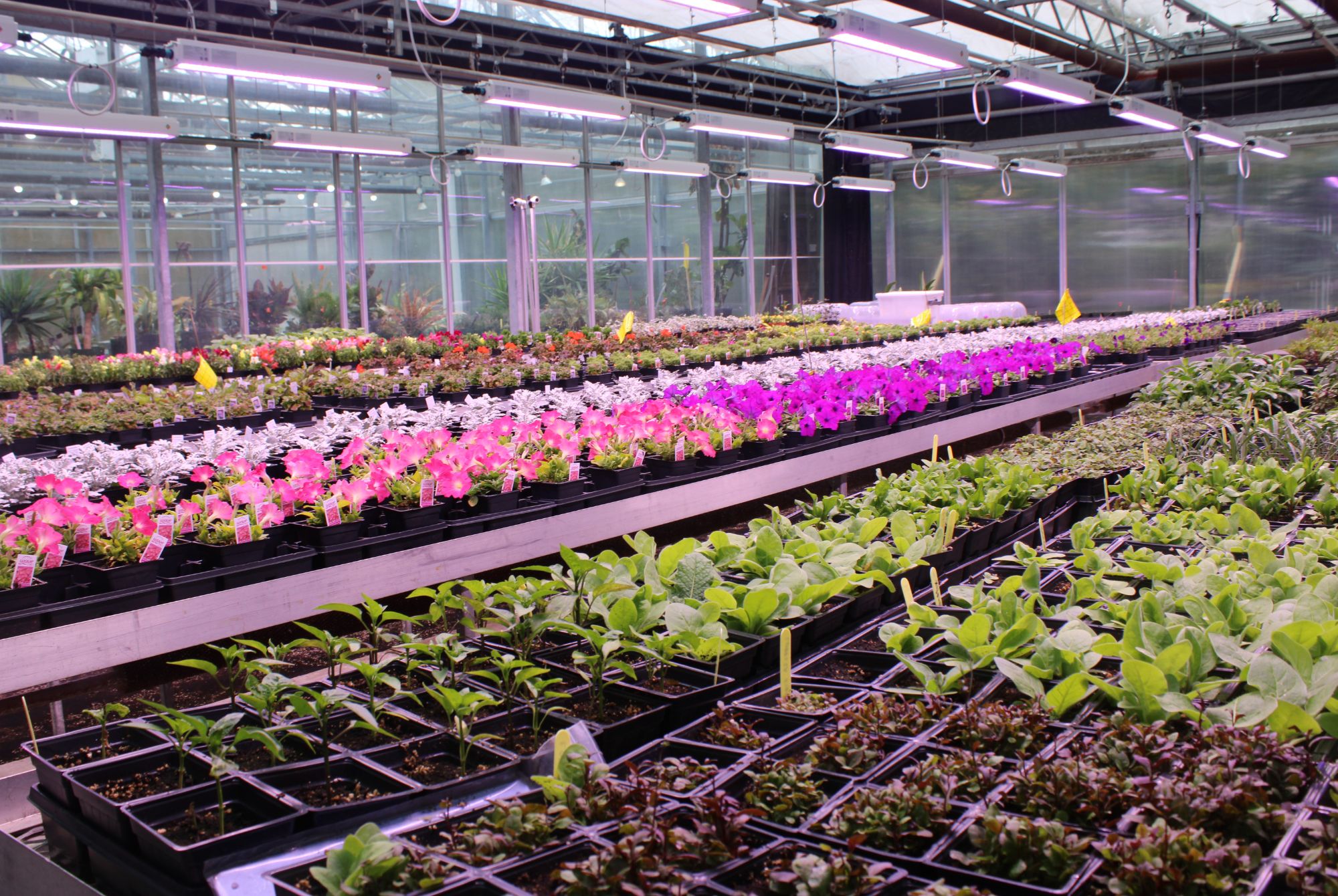
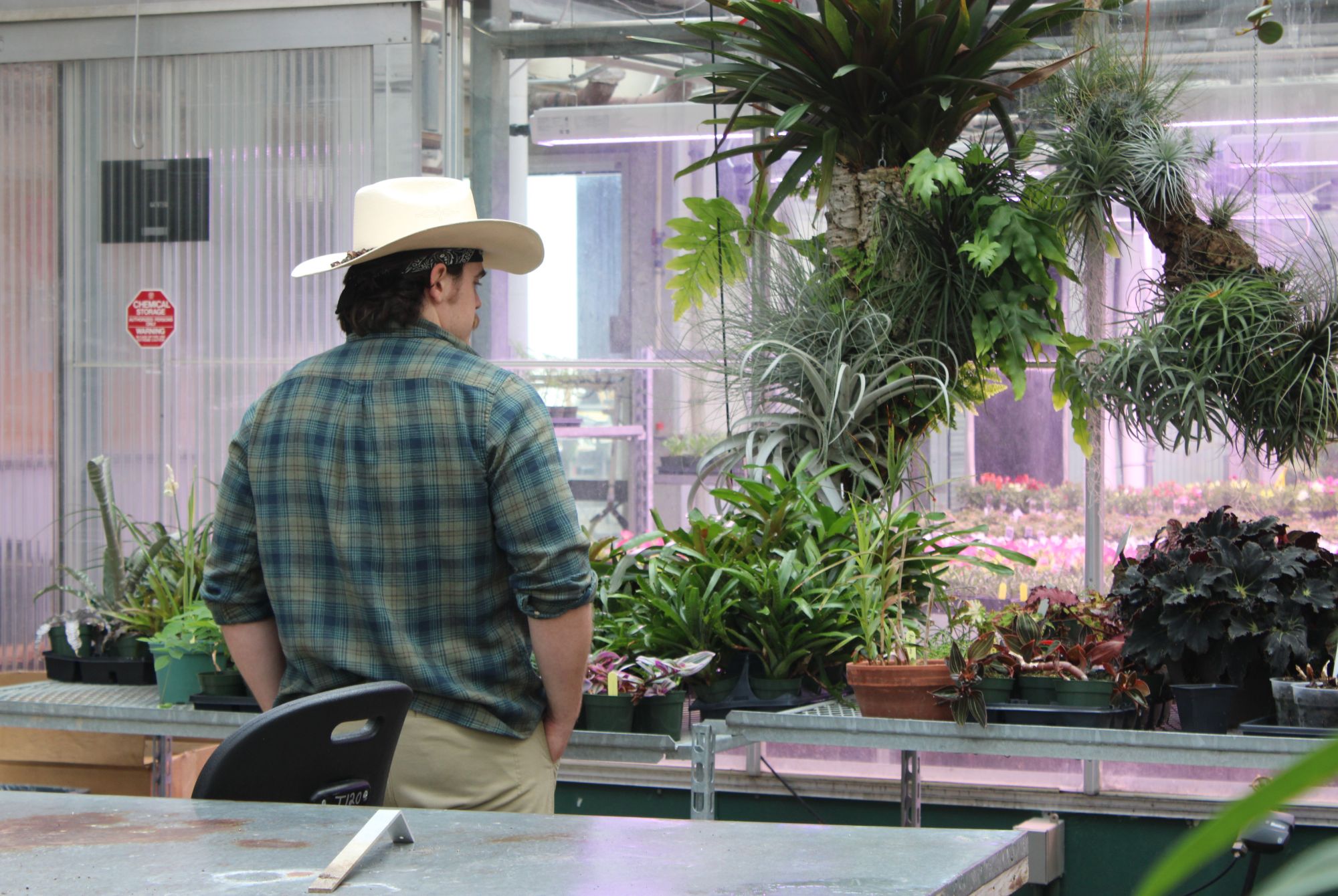
The program has been a part of the college since the 1970s, offering students hands-on experience in a thriving greenhouse to learn propagation and plant care for a diverse group of species.
Outside, the M-building is surrounded by outdoor gardens, which serve not only as a living lab for horticulture students but also as a public greenspace.
It’s full of winding brick paths, water features and landscaped garden beds. Students from other areas of the college use it as a grounding space to study and members of the surrounding community enjoy a place for relaxation and connection through nature.
Jeff Klug, a farmer at Fieldtrip Farm on Moodie Drive with over 20 years of growing experience, has been a guest speaker in horticulture classes.
He recalls being impressed with the greenspaces connected to the program.
“Both the educational capacity of the building in the greenhouse as well as just (the) aesthetic appeal of it as well, just the ability to walk into a greenhouse in the middle of winter and see plants,” said Klug. “There’s sort of an unquantifiable mental health component to that.”
He expressed concern for what the suspension means for these spaces.
“I think we’re losing these public spaces. Specifically, you know, these type of greenhouses that can house sort of both an educational facility and then also this just quite beautiful collection of plants,” said Klug. “That’s unfortunate if that is going to disappear.”
Looking more broadly, horticulture training plays an important role outside of the college. Beyond maintaining gardens and greenhouses, the program feeds into sectors tied into food production, sustainable environmental management and public greenspaces like city parks.
Horticulture student Rhianwen Thibert came to the program looking to contribute in a sustainability aspect. Originally drawn to culinary arts, they became curious about where food actually comes from and how it’s produced.
After speaking with a family friend who completed the program, Thibert decided to apply. From there, they fell in love with it. They believe the suspensions will cause a ripple effect across the industry.

“Right now in the industry, we’re seeing a lot of labour shortage, which is negatively affecting a lot of stuff. Especially labour shortage with people who are knowledgeable about the subject,” said Thibert.
“And with less and less people going into the industry that are knowledgeable, we’re seeing a lot more mess-ups that, on smaller scales, might not be as impactful to the local ecosystem or the biodiversity. But when you’re taking that one and multiplying it by 10 or 20…” they continued.
“You’re now looking at, okay, all of these little instances are now bigger instances, and now we’re looking at whole species potentially dying off because we don’t know how to care for our land anymore.”
Thibert says this can lead to the loss of pollinators, loss of native species and water runoff.
“It’s really just one thing (that) snowballs into a million different things when you’re not taking care of things at your home base.”
It’s clear that the loss of the programs will be felt not only at the college but across the province.
In a statement from Landscape Ontario, executive director Joe Salemi said they were “deeply troubled” about the closures.
“For our industry, and especially for students across Eastern Ontario, this is a real loss,” said Salemi.
“What makes the cuts to the programs particularly serious is that these were the only programs of their kind in Eastern Ontario. This is not a reduction in options. It is the complete elimination of a local pathway into the landscape horticulture trades in this region.”
Salemi mentions the already significant labour shortage and how losing the only local training institution will exacerbate that shortage.
“The impact? Fewer trained graduates, fewer apprenticeship opportunities and fewer young people with a clear way into a career in this industry,” said Salemi.
“Landscape Ontario will keep pushing for investment in landscape horticulture education and apprenticeship training across the province. We want to work with government, colleges and industry to restore these pathways, because right now, in Eastern Ontario, there are none.”
It’s a statement echoed by Canadensis: The Garden of Canada, a local project working on developing a botanical garden space on the grounds of the Experimental Farm.
When the suspensions were proposed, their board of directors mobilized quickly to send a letter to Algonquin College president Claude Brulé and the Board of Governors.
“At a time when climate resilience, biodiversity restoration, and sustainable landscapes matter more than ever, horticultural education is not something that can easily be rebuilt once lost,” said Canadensis board member Gérald Lajeunesse in a statement.
“We recognize that the College is facing difficult pressures and complex decisions. Our intention is not to criticize, but to ensure that the long-term environmental, economic, and community implications are fully considered,” said Lajeunesse.
“Horticulture shapes our cities, our food systems, our biodiversity, and our shared green spaces. It deserves strong and sustained support.”
While it’s still unclear what the future holds for the M-building with its outdoor gardens and greenhouse, what is clear is that this will be the last year of horticulture at Algonquin. The current students will be taught out through April 2027, but no new intakes will be admitted in the 2026 fall semester.
“I’ve just lost a gem. That’s all I can think of. I’ve lost my most precious gem,” said Johnston.
“My business will exist. I will make sure it exists and carries on and proceeds. But it’s going to be challenging.”