In the age of social media and AI, do Algonquin College students trust the news they see online?

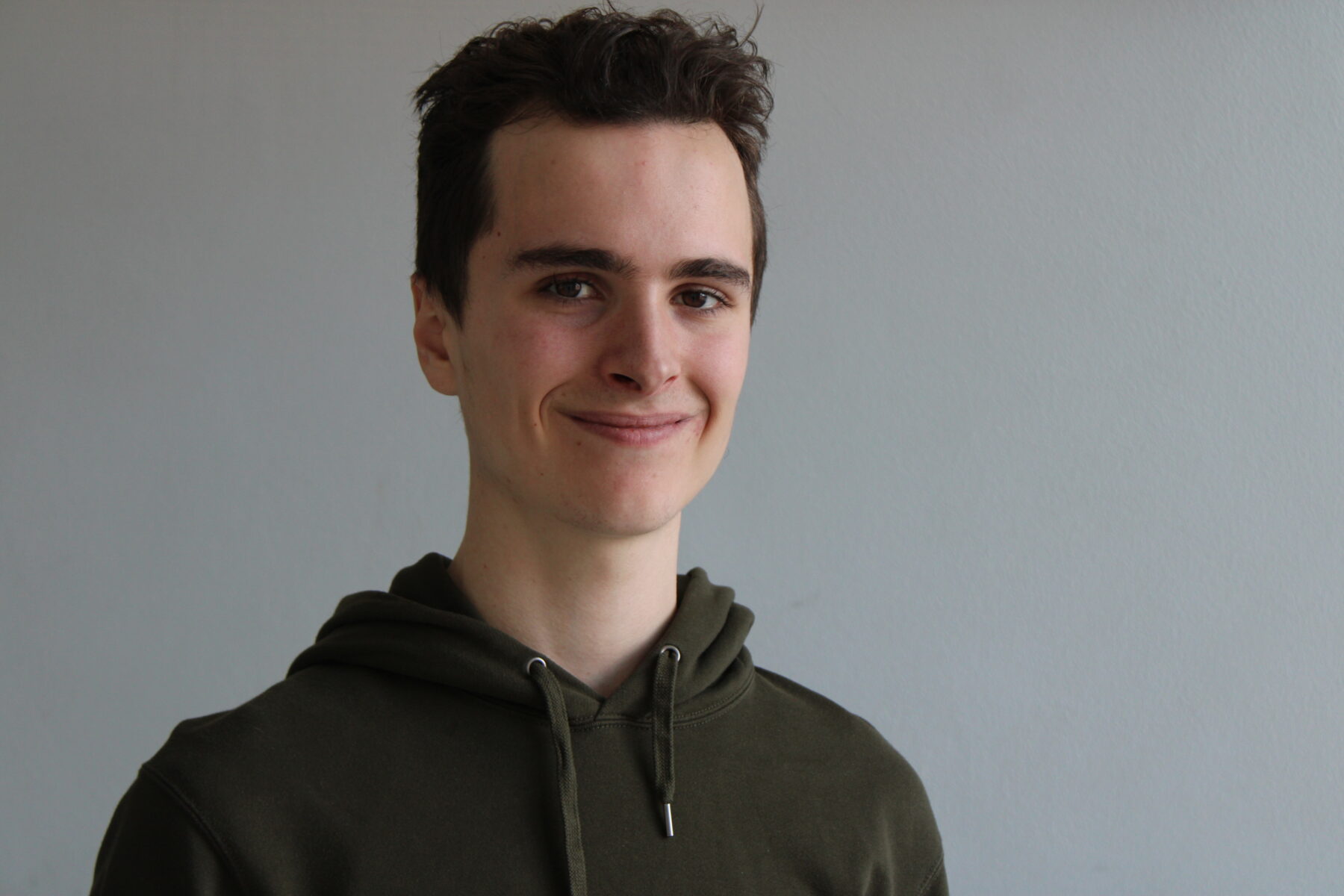
Nolan Berger, a student in early childhood education at Algonquin College, gets his news from social media, mainly TikTok. But he realizes that’s not a reliable source of information.
“You have to be more careful now with AI, there’s a lot of fake news on all social media,” he said.
“You have to be careful on Instagram. I’ll see a lot of stuff on there, like someone died and then people repost it to their stories. I don’t really look for it. It just comes across my feed.
“A whole account can be fake news. That’s all they do. Like people will send it as a joke because it’s obviously fake.”

A new collaborative initiative from the Winnipeg Free Press and the Manitoba government aims to bring journalistic expertise and teach media literacy skills to classrooms across Manitoba through various participatory initiatives that teach students about media and journalistic integrity.
The initiative is more pertinent than ever and not just for Manitoba, given the multitude of pressures bearing down on the media industry.
Those include a changing business environment due to social media and government legislation and the rapid adoption of AI, which encourages the proliferation of false news more than ever.
Students at Algonquin College say that they are seeing those changes themselves when looking at online news.
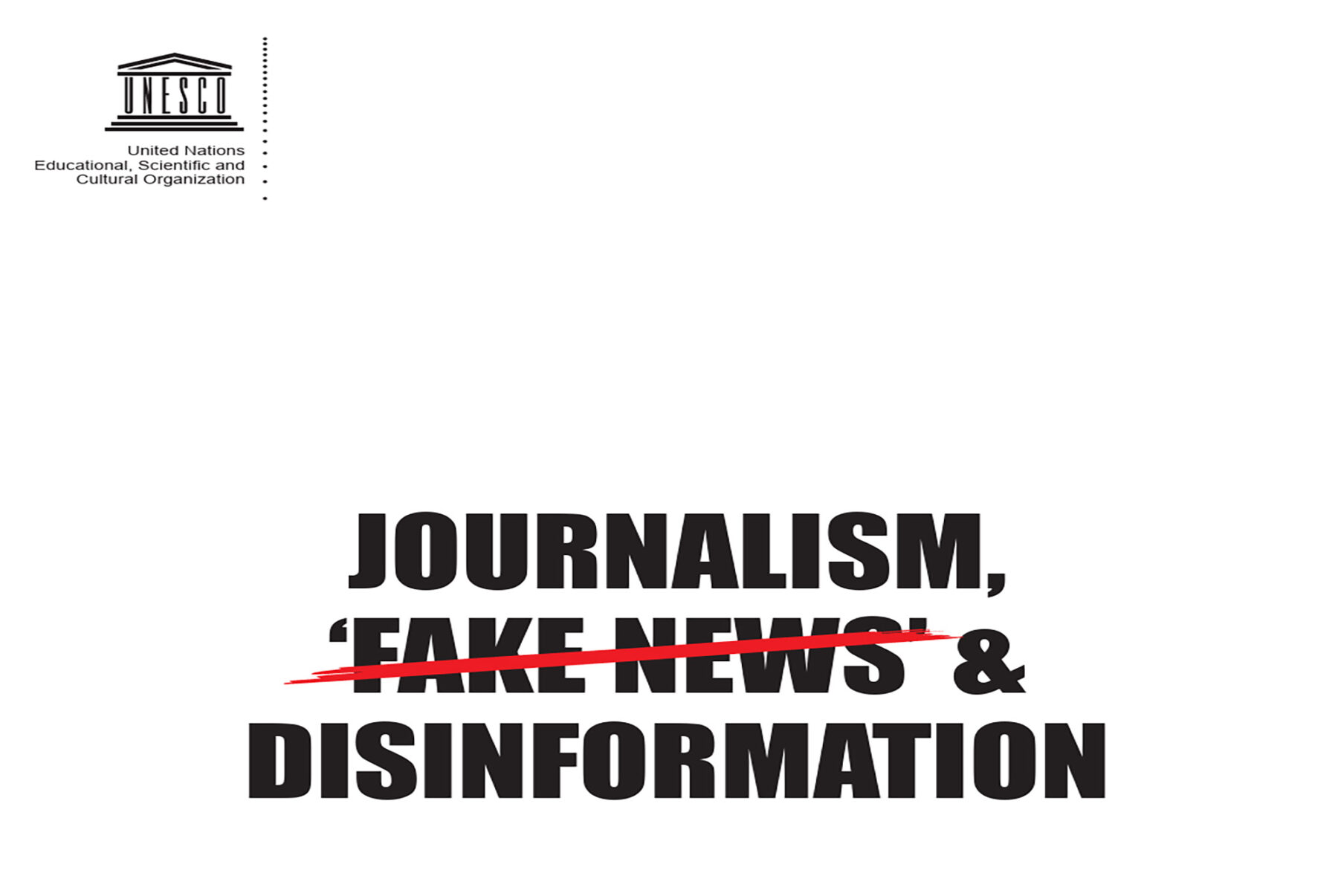
According to the Handbook for Journalism Education and Training, a media literacy resource developed by UNESCO, AI technology is being used to proliferate fake news using bot accounts and “deep fakes,” hyper-realistic videos that feature the likenesses of real people that look and sound real.
While bot accounts are often easily detectable, deepfakes are increasingly harder to single out. According to UNESCO this poses a very high risk of spreading disinformation and fraudulent content made by bad actors to discredit others.
Zack Harous, an Algonquin College student, agrees that AI proliferating fake news is a problem but he believes it blow out of proportion.
“There has always been fake news,” said Harous.
“Everybody blatantly lies online and I think AI is just another step towards that, but at least it’s got more research behind it.”
He admits that there is still some risk to it, however.
“For me, it’s pretty easy to spot, but for older people, they might not be able to tell the difference between a human-written article and an AI-written article,” he said.
“I think AI is okay where it is now, but it could be a bit more regulated.”

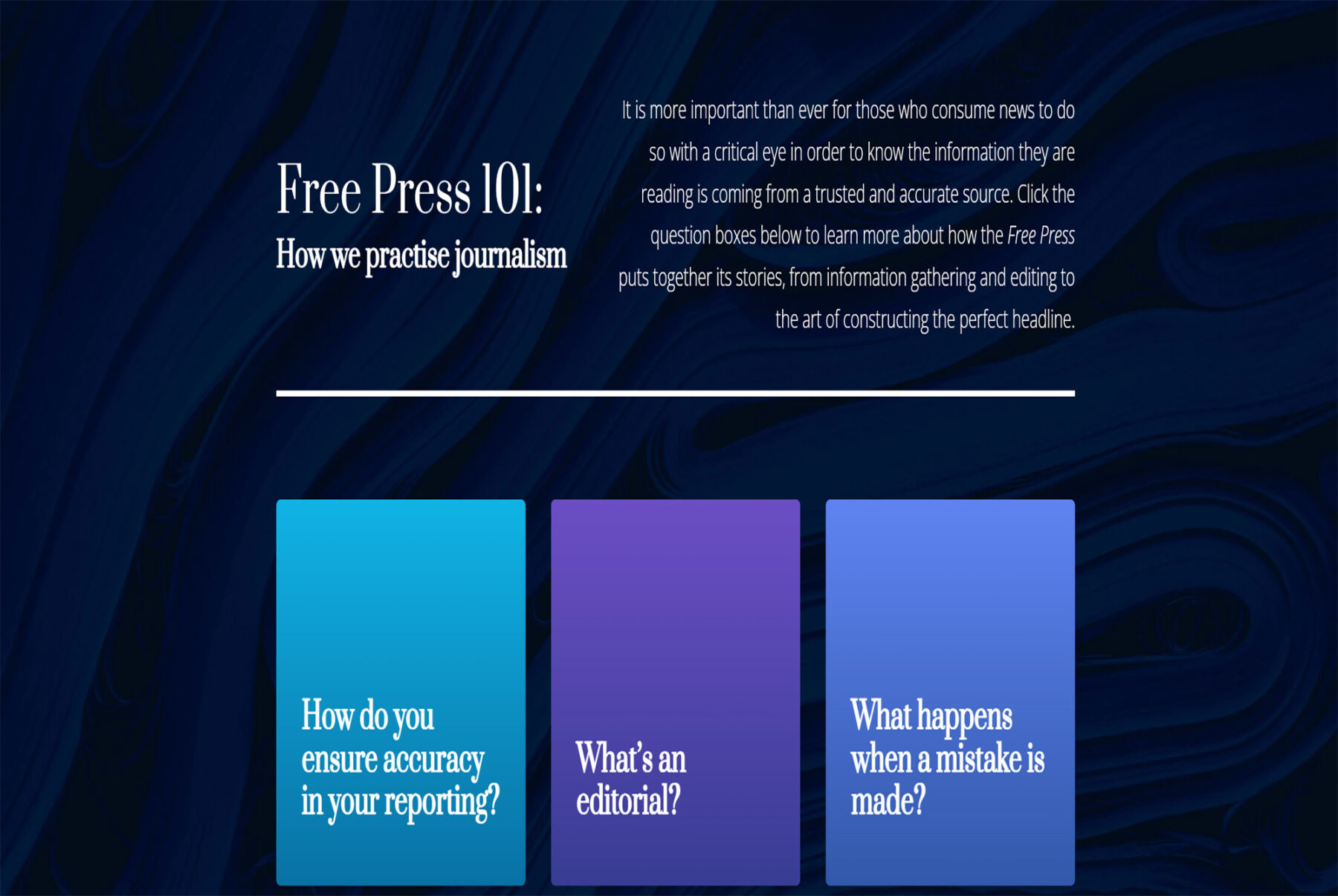
The Free Press project also offers “The Free Press 101,” an online resource that outlines journalism best practices, including accuracy in reporting, how to acquire stories, and how to distinguish between fact-based and opinion journalism.
Nathan Holmes, a paramedicine student at the college, believes he knows how to fact-check news he sees online accurately.
He tries to read articles from authors that he already knows are trustworthy and have a track record of verifiably fact-based reporting.
Reading contradicting facts in two different stories about the same subject will set off Holmes’ alarm bells towards both pieces.
“Maybe if I’ve read something previous that says something different from what I’m reading now, I’m thinking two different things, like okay, one of these things is true, maybe they’re both true,” said Holmes.
“It makes me question both sources.”
Alex Sundaresan, a TV production student, says his trust in mainstream news has been diminished because of the increased use of AI.
“AI has drastically impacted my willingness to trust a lot of mainstream news sources because I would prefer them to be reported upon by actual humans with human interests rather than have like a couple of keywords be shoved into an algorithm that is then reverberated back to me,” he said.

Sundaresan believes that most mainstream news has become much more impersonal and sensationalist, partly due to the emphasis on online platforms. He makes an effort to fact-check whatever he reads.
“I do make an effort to fact-check if I think the headlines are being sensationalist or clickbait-y,” he said.
Holmes believes that young people today would greatly benefit from having more mandatory media literacy education from a young age.
He has benefited from classes where he was taught some basic media literacy skills, like how to read the news objectively and to watch out for bias in reporting.
He believes that others of his Gen Z cohort struggle to apply critical skepticism to what they read and see online.
Sundarasen, who was born in 1994, can’t speak to the younger generation’s media literacy, but he acknowledged observing his class colleagues’ willingness to defer to AI as a concern to him.
“I think a compulsory media education course would be good for high school,” he said.
“All of us could benefit from being more literate about the media we consume, myself included. I’ve never had any formal training myself, I’m just trying to do the best I can with what little resources I have.”