Students become frustrated in the face of support workers’ escalation of solidarity

By Ernest Ko and Jade Louise Greenwood
Cars honked and swerved as students tried to find a way into Algonquin College on Oct. 2., while striking staff worked to guide students away from the picket lines, redirecting some to College Square and off-site parking lots.
The blockade led to a chaotic day, and some students felt it was overkill.
“I supported them. I agree they should be getting more money. They do a lot of stuff, but as soon as they started blocking traffic, that’s when everything fell apart,” said Jack Frederick, a student in the HVAC technician program.
Frederick said he is growing more frustrated by the day with the strike.
It’s been three weeks since full-time support staff started advocating for better job security, when they walked out of their jobs on Sept. 11. As they marked their fourth week, staff gathered at large college campuses on Thursday to make their voices heard across Ontario.
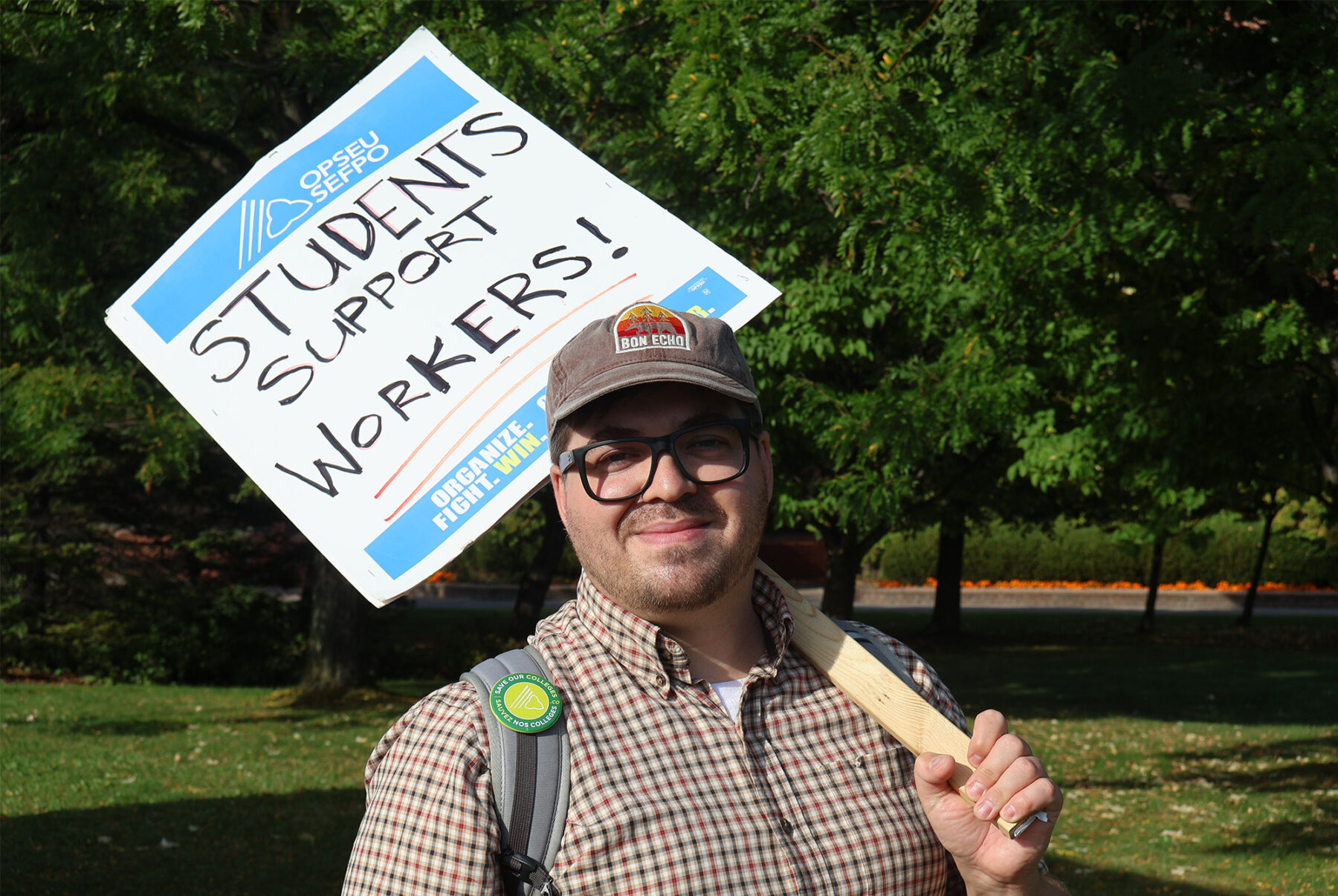
“All of the masses are coming together to one particular college to really show the strength of our numbers and let people know that this isn’t okay,” said Jana Johnson.
For Eastern Ontario, that location was Algonquin. From Belleville to Cornwall, staff gathered to show their support for their profession, which they say is under attack.

Johnson came from Kingston’s St. Lawrence College. She was laid off after 10 years working as a student success facilitator.
She said she was at Algonquin College to ensure that 2025’s 10,000 layoffs in the college sector do not continue.
“What we have been doing hasn’t been working, so we are trying to garner some attention and really connect with students,” said Johnson.
With supportive honks and frustrated insults from passersby heard throughout the day, there’s no doubt staff got students’ attention. But whether they embraced the picketters’ message remains unclear.
Impacted by the blockade herself, Mackenzie Sneid said she did not agree with the strategy.
“I feel like there are way better ways than blocking traffic,” she said.
Sneid felt that the blocked entrances were unnecessary and a hindrance to students trying to get to class.

With all three of the campus’s entrances blocked during the day, striking staff said it was an effort to raise attention and support from students. The tactic got students’ attention, but support did not come as easily.
Efforts have been made to end the job action. Last Friday, OPSEU and the CEC announced that they would be resuming negotiations with the assistance of a government-appointed mediator.
After the weekend, however, negotiations broke down, with both parties remaining at a standstill.
Until an agreement is made, the picket lines will remain.
Students were visually frustrated on Thursday. Some, were crying, scared of being punished for being late or missing an important test. Despite all these intense emotions, Johnson said it was purposeful.
“We want the students to put pressure on (and contact) their college presidents, their employer council, their member of provincial parliament, the minister of colleges and the premier of Ontario that we need proper funding for your colleges and that you need to put staff back in the building,” she said.
Striking staff were handing out pamphlets to students throughout the day, with a QR code attached, inviting them to contact administration.

Sneid herself said that she won’t be emailing the school, but she believes that something good could come out of it. “Maybe the students complaining to the leadership, maybe that’ll do something?” she said.