Support staff continue to march in hopes of reaching collective agreement
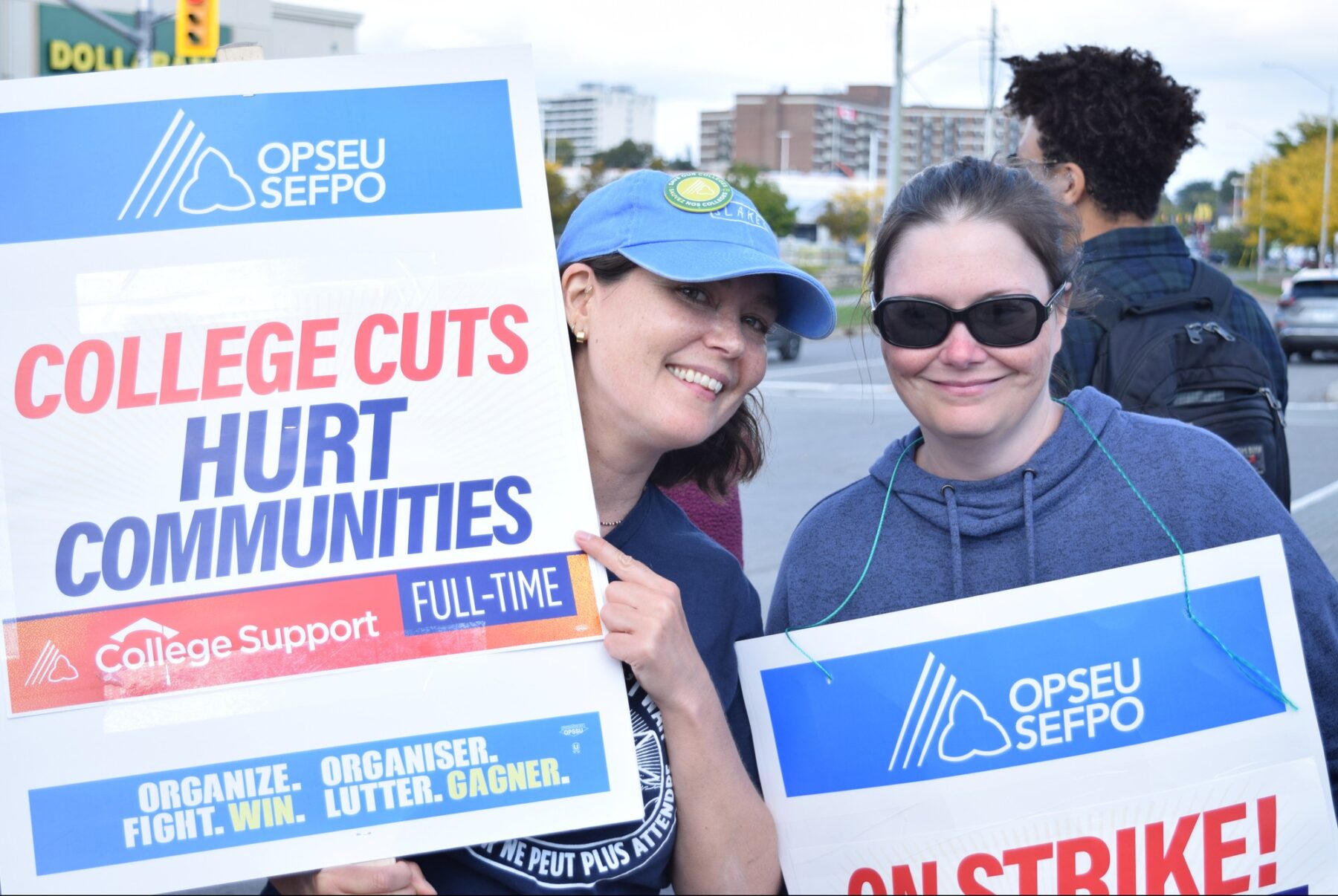
Cinds Chapman stands near the crosswalk with her phone in hand, ready to record anyone who impulsively turns their car into the staff as they hold right-of-way.
Chapman is a strike captain for the Navaho Drive picket line and has been a member of the full-time support staff union for nearly 21 years. She has worked a four-hour shift on the picket line every afternoon since the strike started on Sept. 11, ensuring the safety of support staff.
According to Chapman, the police had to get involved in a few cases where impatient drivers disrespected the group.
“I’m trying to stop people getting hit by aggressive drivers. There’s been a few. We had two guys hit by a car,” she said.
On Sept. 26, the Ontario Public Service Employees Union (OPSEU) bargaining committee met with Ontario college officials in hopes of reaching a collective agreement.
Their first meeting was held for 15 hours where they negotiated with the College Employer Council (CEC) on adequate funding for the colleges. During the meeting, full-time support staff continued to plead their cause on the picket lines, hopeful for a resolution.
The mediation process played out over three days, from Sept. 26 to Sept. 29 but they didn’t reach a deal.
The CEC says it tabled over $155 million toward tech change protections, increasing wages, bereavement leave and on-call pay. Despite these offers, the union refused to settle for an increase in funding for their programs as they felt job security was not fully established.
“None of the employer’s proposals save a single job. True job security looks like protections against the elimination of jobs, not extended notice or streamlining new pathways for layoffs,” the OPSEU bargaining team wrote in a recent bargaining update to members.
The union had presented two ultimatums, which were rejected, ultimately causing conflict between both parties. The CEC calls these proposals “poison pills.”
The union found the CEC’s response declining their requests “insulting,” and refused to stop the strike.
After nearly 40 hours of negotiations with a government appointed mediator, the OPSEU announced in a press release the strike would continue to take place.

Back on the picket lines, a few full-time employees at Algonquin College had hopes for a positive outcome from three days of mediation.
“They’re back to the bargaining tables, the two sides,” said Sharon McAuley on the first day of negotiations.
“I think it’s good that we heard that. We just started week three. We’re fighting for the students. We’re fighting for more funding.”
In general, McAuley felt the atmosphere change on the picket lines and that the union was gaining more support, despite facing occasional backlash from angry students commuting to the college.
“I think the more we’re out here, people are understanding the ‘why’ behind it. And lots of honks and support for our strength, our mission,” said McAuley.

Chapman continues to stand strong for the union’s cause. She believes the colleges should receive more government funding, seeing as a portion of the Skills Development Fund — a $2.5 billion program launched by Doug Ford in 202, to train workers for in-demand jobs — has recently been distributed to privatized schools.
“$2.5 billion. Can you imagine what the colleges could do with that?” said Chapman.
“We’re not saying give it to us for pay. Give it to the colleges so they can fix their buildings. They can pay all their staff properly. They can do more for the students.”
Another full-time worker who hopes to return to work is Erin McCue-Houlahan. She has been coming to the picket line alongside fellow support staff since the very beginning. McCue-Houlahan generally makes timetables for students throughout the year and hopes to return to her tasks soon.
“We’re worried about work that’s piled up. We’re worried about students that haven’t been getting what they need in our absence,” said McCue-Houlahan.
“That’s why we’re here. We love working at the school, we love working with the students and the sooner that we can get back to it, the better.”