main

Opinion: Don’t kill the radio program, fuse it with journalism to future-proof media education

As the media landscape evolves, Algonquin College must adapt by merging its journalism and radio programs into a dynamic multimedia curriculum, argues Mickey Banks
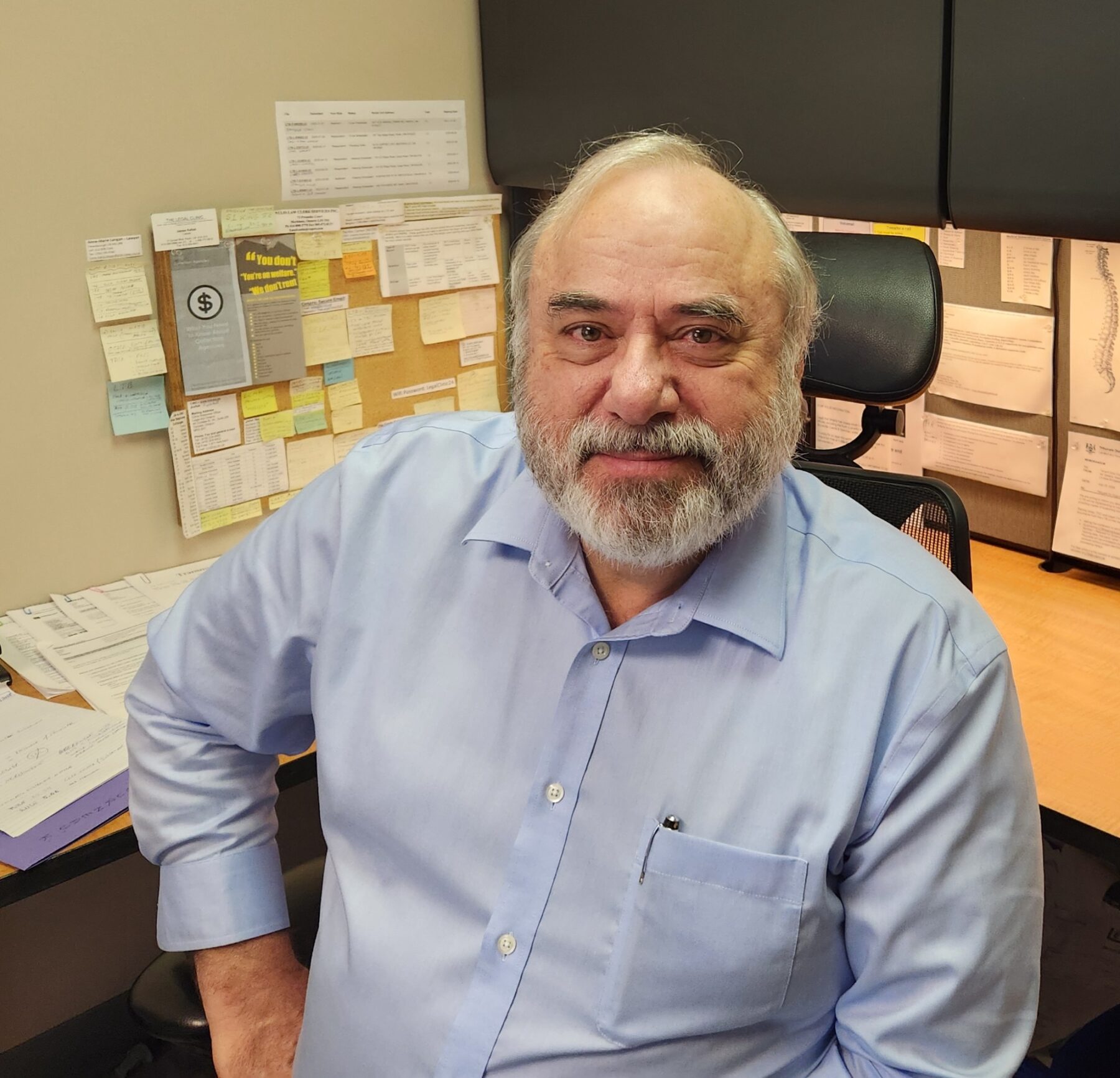
Photo: Mickey Banks
The CKDJ news station which runs out of Algonquin College, has a contract set to last until 2030. It could be ran by volunteers โ€œBut why not give this opportunity to students?โ€ Writes the author.
The CKDJ news station which runs out of Algonquin College, has a contract set to last until 2030. It could be ran by volunteers โ€œBut why not give this opportunity to students?โ€ Writes the author. Photo credit: Mickey Banks

Algonquin College is shooting the messenger. It should combine its radio and podcasting program with journalism instead of executing it in the face of program cuts.

This fall is the radio and podcasting program’s final year, at least for the foreseeable future. It was announced in February the program will be suspended along with 36 others, amounting to 16 per cent of the total programs offered by the college. Current students in the program can finish but the school will not be taking any new enrolments.

Among the reasons the college gave for suspending the programs were retention and graduation rates. Ben Purdy, a radio and podcasting alumni, said his program started with about 30 students in the fall of 2023 and ended with about 17 of them graduating.

Purdy also said he’s the only student to his knowledge to have found a career in radio, being hired by 580 CFRA, an Ottawa radio station.

Ted Simpson, a professor in the journalism program who took radio broadcasting said that while radio is fun, it’s not the best program for preparing students for the working world. Simpson believes this is true for the television and journalism programs as well.

“The whole thing is grounded in a traditional job that just doesn’t really exist anymore or is existing less,” Simpson said.

There are currently two colleges in Ontario offering radio programs and seven colleges offering journalism programs, with Humber and Durham College’s journalism programs offering experience with radio stations, according to ontariocolleges.ca.

In 2023 radio jobs in Canada dropped by over 800 from the previous year, according to IBISWorld, and national journalism outlets such as the CBC are increasingly expecting its reporters to have multimedia knowledge.

The CBC said in an article released March 11 that it would be adding “Up to 30 permanent reporters to work in 23 under served Canadian communities.” And that these roles “will focus on broadening our coverage and ensuring the stories and voices of communities are reflected in our journalism across digital, radio, social, streaming and TV.”

So, if the media world is changing, how can the college change with it?

“The only way that this is gonna survive and work is if we start smashing the walls down and bring stuff together,” Simpson said.

So instead of keeping television, radio and journalism separate, bring them together into one program.

Now this has already been done to a point. All three programs share five classes in their first term. And the only classes journalism students take that radio and television students don’t, are news writing and strangely enough, media law and ethics.

There’s also a two-month class in level four of journalism that has students work at CKDJ.

But would combining these programs be overwhelming for students. David Smith, a professor who teaches audio storytelling and works in the radio industry, says learning radio is not difficult and that you can learn it on the job.

According to the college’s radio broadcasting Facebook page, the CKDJ news station which runs out of Algonquin College, has a contract set to last until 2030.

Now it could be run primarily by volunteers like at CKCU FM 93.1 and CHUO-FM out of Carleton University and the University of Ottawa, respectively. But why not give this opportunity to students?

After all, the benefit of college as opposed to university is that it provides a more hands on education.

Purdy spoke about how this applied to radio.

“It’s one thing to pre-record stuff in a studio and then edit it (and) play it, but it’s another thing to have to do all of that live. And it was a great way of giving us this live radio experience, learning how to properly conduct yourself on air,” Purdy said.

Also, running a radio station, along with writing for the Algonquin Times (the journalism program’s student news website) would give students another opportunity to build their portfolio.

Could this however, take the focus off television and streaming video for students more interested in that component? Possibly.

For students interested in really digging into television media, the program could provide some electives to focus on this. Or the television and streaming video program could remain a separate entity. In the wildest case, a combined multimedia program should contain a robust video component, along with radio and journalism, to make the curriculum well rounded.

Mickey Banks is a level-two journalism student at Algonquin College.

Making medicine for the soul with Indigenous peoples at Algonquin College

On June 12, 2025, the Mamidosewin Centre and the Algonquin Students’ Association held an Indigenous crafts workshop in the AC Hub, with a focus on traditional beading and creating medicine pouches
Photo: Skyla Murray
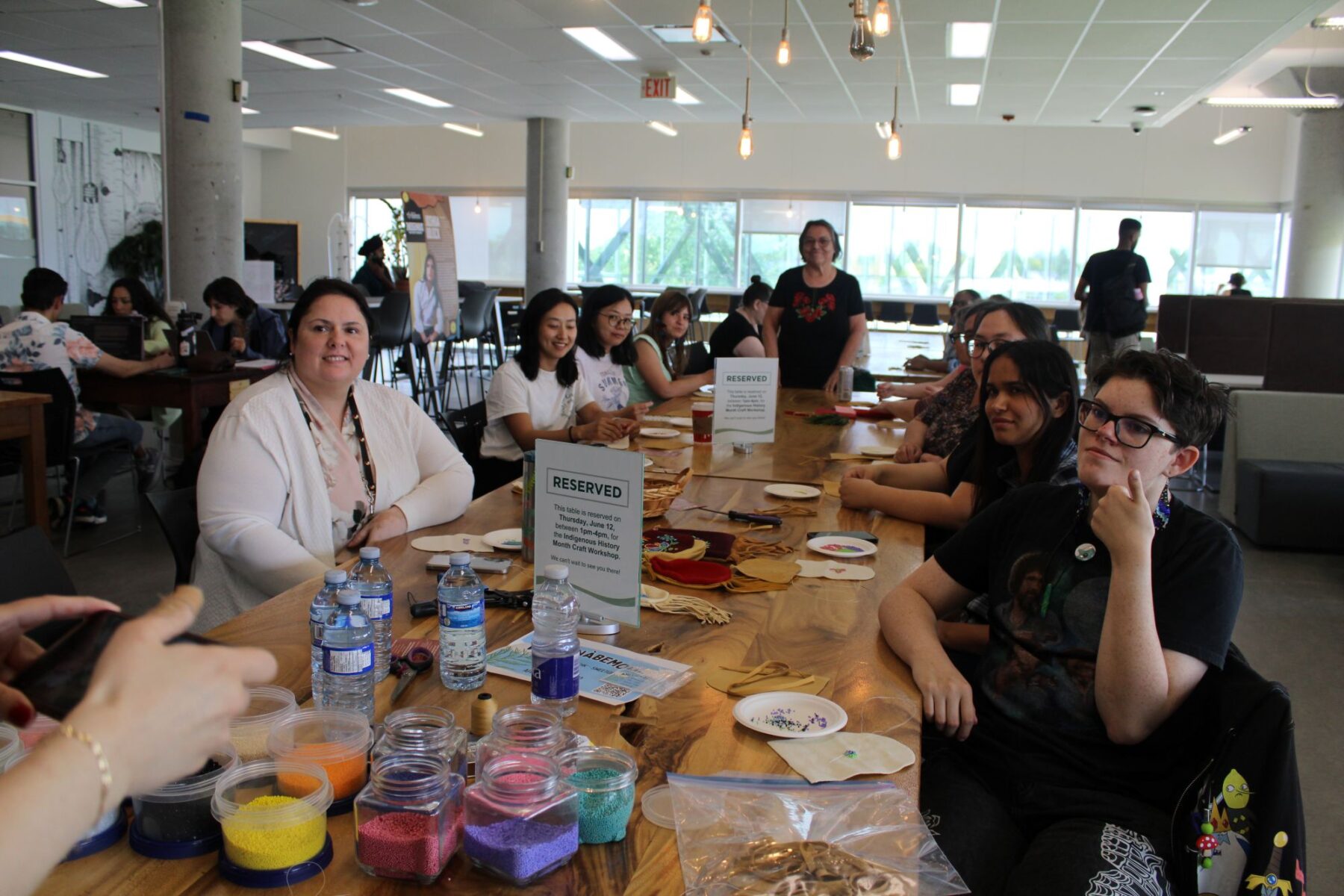
Stephanie Tenasco (far left), Jenny Tenasco (middle), and several students who attended the workshop on June 12.

The workshop was led by Stephanie Tenasco and Jenny Tenasco of Kitigan Zibi First Nation. They showed students how to sew and create the beautiful and intricate beadwork seen on the pouches.

“I’ve been making, I guess, I don’t like to call them crafts per se, but I’ve been making, like, mittens, moccasins, leather work, I guess you can call it,” said Stephanie Tenasco. “I’ve been doing leather work since I was eight years old. Some women in my community, older women in my community, had a workshop when I was eight, and that’s where I learned how to do the stuff that I do now today and I didn’t really want to go to this workshop when I was small. I didn’t understand the importance or didn’t even think I’d like it, but, here I am today at Algonquin College, showing what I learned when I was eight years old, which was many, many years ago.”

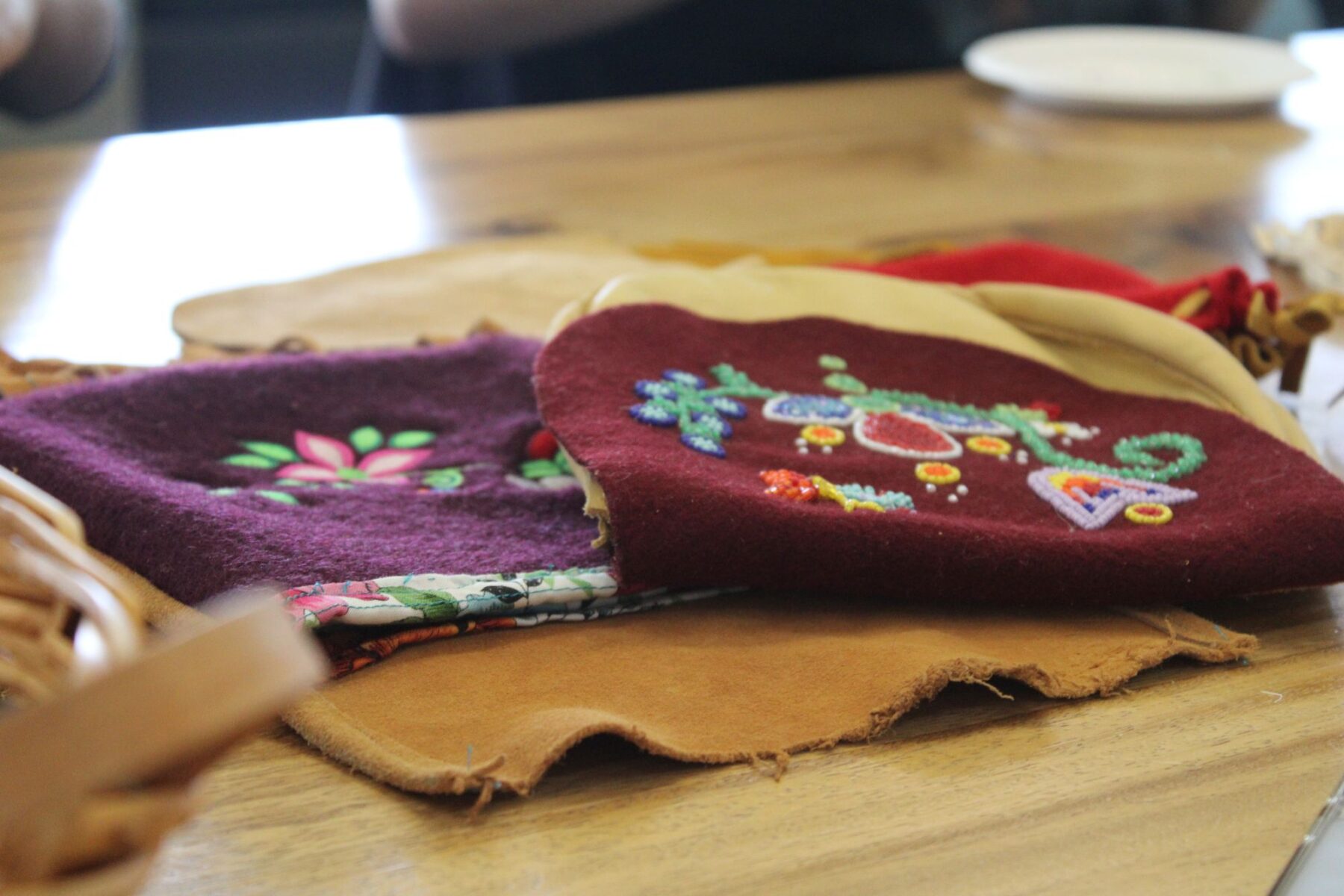
A medicine pouch made by a student during the workshop.
A medicine pouch made by a student during the workshop. Photo credit: Skyla Murray

A medicine pouch is traditionally made from deer or moose hide and worn as a necklace or under the clothing. It traditionally carries sacred medicines and items that hold personal or religious significance to the wearer.

“There’s four sacred medicines that indigenous people generally use, which are sage, tobacco, sweetgrass, and cedar,” said Jenny Tenasco.

The sacred medicines are sage, sweetgrass, cedar and tobacco. These medicines are typically used in smudging ceremonies, where they are placed in a small bowl or shell and burned. The smoke is then used as a means of spiritual cleansing.

Medicine pouches made during the workshop.
Medicine pouches made during the workshop. Photo credit: Skyla Murray

The workshop involved students sewing a piece of deer hide and fabric together, and adding beads to make their own unique designs. Then, the pouches were sealed with string, and students could fill them with the sacred medicines on another table.

June was the month of Indigenous history, and craft events like this help Indigenous people to show that they’re still here, and that their history and traditions are being celebrated and honoured, even today.

“Workshops like this, it’s just a small start to show people that indigenous people are still here. We have been here, and we are still here. And, it’s just a small part, but it’s a start,” said Tenasco.

Bella Donnas in bloom: Milestone changes on horizon for Ottawa punk band

Student members of rising punk band Bella Donna are on the road to rock graduation with new tracks you can finally stream
Thomas Burr performing with his band at House of TARG on May 29.
Leeah Sullivan playing guitar for Bella Donna at House of TARG on May 29.

Local band Bella Donna is quickly carving out their place in the Ottawa live-music scene and says their streamable music is on the way. With an upcoming show at local favourite House of TARG on Aug. 13, the group of five can’t wait to get back on stage at Ottawa’s favourite arcade.

Bella Donna was first formed in 2022 by music industry arts student Thomas Burr and high school friend Oliver Wright. They experimented with different names before landing on Atropa Bella Donna, the poisonous plant rumoured to have killed Roman emperor Augustus.

The band bloomed as they added new members from their high school, Lisgar Collegiate Institute. Today, the band consists of Burr on lead vocals, Leeah Sullivan on guitar and backing vocals, Darian Cassidy on bass and backing vocals, Evan Chamberlin on guitar and Jake Gareau on the drums.

Jake Gareau on the drums at House of TARG on May 29.
Jake Gareau on the drums at House of TARG on May 29. Photo credit: Emma Fazakas

The founding members wanted to present their stance against authoritarianism and used Bella Donna as a platform to write with political intention. Defining their sound by one particular genre is difficult for the band because bending norms is what makes them glow. Songs like Piss Train, Funny Orange Cat and I Hate Cars use humour and outlandish metaphors to express their criticism against authority. Off-Screen Death and Trade dive into personal feelings of love and sacrifice while maintaining the post-punk Bella Donna vibe. “

Together, these create a balance with our raw, chaotic energy and emotional depth, using both satire and sincerity to challenge power structures while expressing the complexities of the human experience,” Burr said.

Whether it’s writing about personal struggles or their frustrations with the world, punk is always in the air around Bella Donna. “Musically, we love punk music for the high energy,” Burr said. “It’s always fun to play fast, loud music, whether in the basement during practice or on stage at a show.”

Thomas Burr performing with his band at House of TARG on May 29.

The band blossoms at creating new music, performing live at venues and playing with new bands. “We plan to continue to work on music and live shows, and we have no plans on changing that whether we’re in school or not,” Chamberlin said.

Bella Donna has found a strong community in the local scene and says they’ve had nothing but positive experiences. “We’re super grateful for all the venues we’ve played at,” Chamberlin said. “One of the best parts of being in a band is playing an original song in front of an audience for the first time, it’s such a rewarding and exciting feeling.”

The band is eager to share raw recordings on major streaming platforms before finished releases. Bella Donna is also planning another show in Ottawa on Aug. 30.

AC student to publish mythology inspired book of political satire

18-year-old Algonquin student is counting down the days until the release of his fiction novel that currently ranks #1 in gay fiction on Amazon
Photo: Mila Leclair
Chapman after a class on Jul. 17.

Barrhaven-raised Alec Chapman jumped right into the music media and film foundations program after high school.

It’s been the perfect “pathway program” for his future career as a writer. Now almost graduated, he’s got an odyssey to share.

Cover art for Bane of The Gods: Tears of the Black Sky by Alec Chapman.
Cover art for Bane of The Gods: Tears of the Black Sky by Alec Chapman. Photo credit: Supplied by Alec Chapman

The fiction novel follows a naive 19-year-old boy, Anastasios, or Anakin for short, who wakes up in an abandoned temple with no memory of who he is or how he got there, and trouble ensues. He discovers he is being hunted by the Greek gods and cannot remember why. A book of survival, escape, love and tragedy, Bane of the Gods: Tears of the Black Sky draws influence from mythologically influenced Percy Jackson and God of War.

Chapman likes to write stories through a video-gaming lens. He’s informal and conversational. The book works in game-like levels and is filled with “boss-fights,” where the gamer is confronted with their most challenging foe. The cover art reveals a boss fight that takes place midway through the story when the crew uses magic to battle a leviathan overseas. The art was created by Cheeze, or @blu3_ch33z3_official on Instagram.

Catrina McBride, Chapman’s mother, is a professor at the Algonquin College School of business and is also the editor of her son’s book. “I tell him the honest truth to ensure that he can believe me when I say that something is great,” she said.

This is the first book McBride has edited. “Alec has always been into Greek mythology from an early age, so I’m not surprised to see him integrate it into his writing,” she said. “The coming-of-age character developments are something Alec has gone through and is certainly a universal experience.”

Former geology professor at Queens University and grandmother to Chapman, Sandra McBride, takes the role of his second editor. After two years and four drafts, Bane of the Gods is finally ready for the public eye, they say.

Chapman always knew he was going to be in the entertainment industry. His imagination and creativity were a helpful outlet in the face of adversity growing up. “I initially decided to start writing because I needed a way to create mental room for me to function. I write because I have to. The way my brain works leaves me no other choice.”

Chapman after a class on Jul. 17.
Chapman after a class on Jul. 17. Photo credit: Mila Leclair

Behind elements of fantasy and fiction, Chapman’s novel, at its core, reflects on an over-reaching government. “This book comes from a very real place of frustration with governmental powers. With out-of-touch people making unilateral decisions about people who have no say in how their lives are run,” he said.

After graduating from the music, media and film foundations program, he plans to study film.

Chapman is currently writing another book called The Royal Apothecary that he plans to make, starting the first of a seven-book series called The Legacy of Vronos. Chapman plans to work other jobs to support himself as he publishes more work and paves his way in the industry. “

Bane of the Gods: Tears of the Black Sky is Chapman’s first published book and will be available in hardcopy and digital on Amazon.

The stories behind the pathway murals on Algonquin College campus

There are five murals on Woodroffe campus that symbolize the teachings of Indigenous Algonquin culture, each in their own unique way
Photo: Vasuman Ravichandran
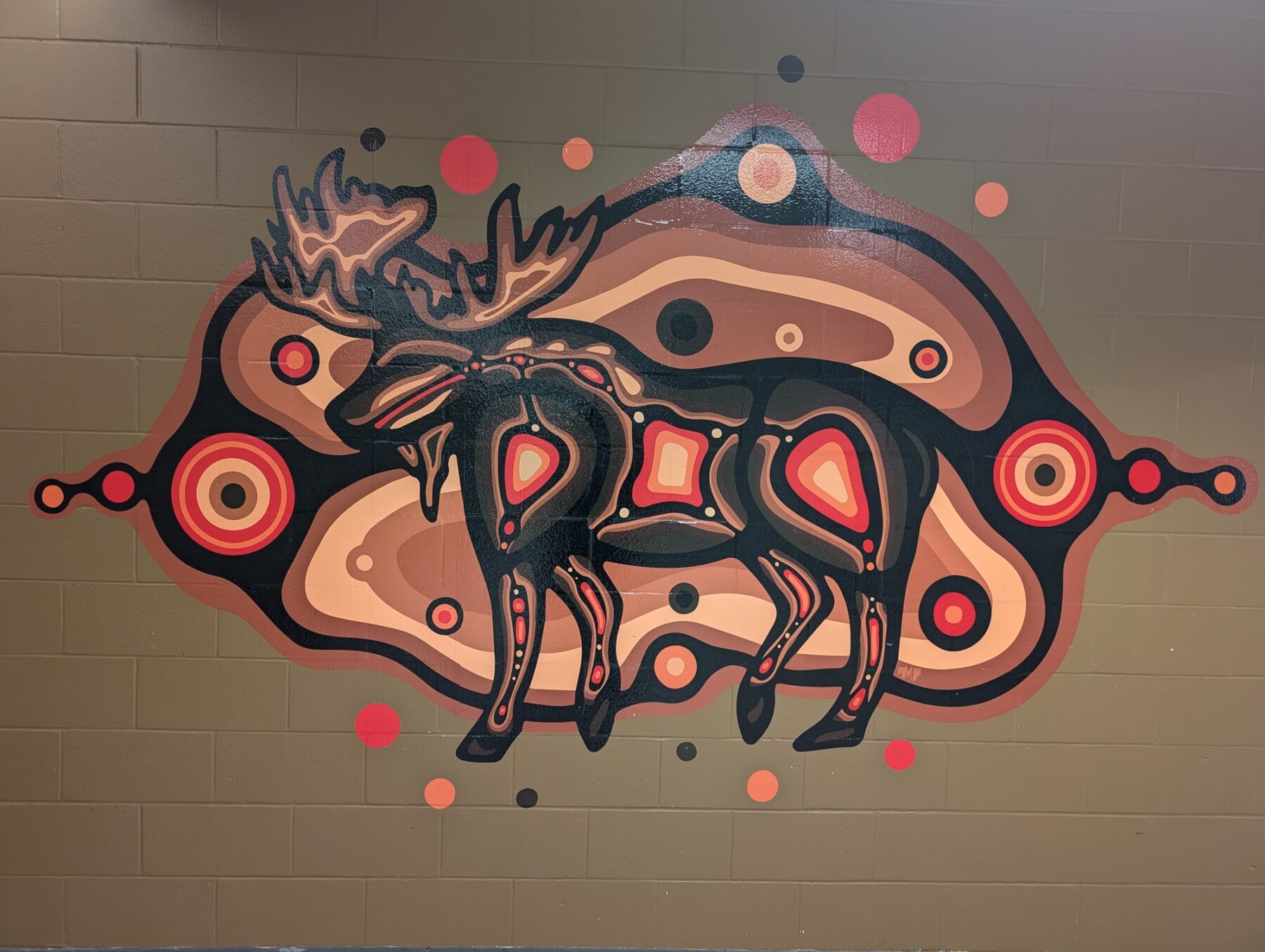
Monz (moose) is located at the Marketplace in the pathway from E-building to D-building.

Exactly three years ago, Miskomin Twenish, an Indigenous Algonquin artist and alumna of the college, created five animal murals to portray the values of Indigenous Algonquin culture in vivid colour.

Her murals are on display across the pathways on campus.

Twenish selected the five animals portrayed in her murals based on their significance in Indigenous Algonquin culture. Makwa (bear), Mahingan (wolf), Tendesi (blue jay), Monz (moose) and Wawaskeshi (deer).

“When I make art, I want it to be uplifting,” said Twenish. “I like colours that are bold, bright, vibrant and alive.”

Makwa(Bear), pathway between A-building and C-building.
Makwa(Bear), pathway between A-building and C-building. Photo credit: Vasuman Ravichandran

Makwa (Bear): The bear mural can be seen on the pathway between A-building and C-building. The bear is a central figure in Algonquin culture. It is considered a guardian, and an animal that embodies spiritual strength.

The bear hibernates. it goes away from the rest of the world. The Algonquin people believe that In order for us to heal, we need to step away from the chaos of life, go within, find ourselves, reflect on our lives, so that we can emerge refreshed and ready to face the world once more, according to Algonquian anthropologist, F.G. Speck.

Mahingan(Wolf), pathway between D-building and A-building.
Mahingan(Wolf), pathway between D-building and A-building. Photo credit: Vasuman Ravichandran

Mahingan (wolf): This mural can be seen on the pathway between D-building and A-building. In Algonquin tradition, the wolf is known to control the flow of animals. He teaches respect for the food chain and humility. The wolf also exemplifies teamwork and cooperative behavior for the greater good, reinforcing its place as a model of community values, according to Algonquin elder, Lionel Whiteduck.

Tendesi(Blue jay), pathway between C-building and B-building
Tendesi(Blue jay), pathway between C-building and B-building Photo credit: Vasuman Ravichandran

Tendesi (blue jay): This mural is visible in the pathway between C-building and B-building. The blue jay is described as kind to those who show kindness, but also as having predatory and fierce qualities, embodying both friendliness and a capacity for assertiveness or aggression.
This dual nature can be seen as reflecting lessons about balance, respect, and the nuanced relationships between beings in Algonquin teachings, according to Indigenous author, Sylvia Ross.

Top: Monz(moose) mural, pathway between E-building and D-building.
Bottom: Wawaskeshi(deer) mural, pathway from C to CA building, second floor
Top: Monz(moose) mural, pathway between E-building and D-building.
Bottom: Wawaskeshi(deer) mural, pathway from C to CA building, second floor Photo credit: Vasuman Ravichandran

Monz (moose): This mural greets passersby of the Marketplace at the pathway from E-building to D-building. The moose is regarded as the leader of the forest. It symbolizes strength and resilience. Its image is used to honour nature and the interdependence of all living things, according to Indigenous Algonquin author, Pat Gatz.

Wawaskeshi(deer): This mural can be seen on the pathway from C-building and CA-building on the second floor. Deer are considered to be kindhearted and compassionate. In Algonquin culture, they are seen as pacifists and as poets, according to Nathalie Bertin, an Indigenous author of the Waawaashkeshi (Deer Clan).

“It was really nice to see Indigenous art while on campus. I hope everyone, and especially Indigenous youth in post-secondary studies see this and feel good mentally, spiritually, inspired and not so isolated” said Twenish.

Amongst many observers of the murals is Naomi Runstedtler, who has studied film and media production.

“The murals remind me of the Indigenous woodland painting style with dark outlines and the blocked colours,” said Runstedtler.

“But I love how the artist has put her own spin on the style with the shapes and colours she has chosen. She has a way of making the shapes flow really well.”

MacKenzie Garon who recently graduated from the photography- content creation program says that looking back at images of the murals brings fond memories.

“I remember when during my first few weeks, the murals in the pathways were like visual cues that helped me find my way around college,” said Garon.
“With time, they became like bookmarks in my memory and they remind me of the college vibe now.”

Algonquin College ‘reviewing’ discretionary funding for graduation parties

Convocation season at Algonquin College saw some programs told funding for graduation parties has been cancelled
Photo: Scott Crowell
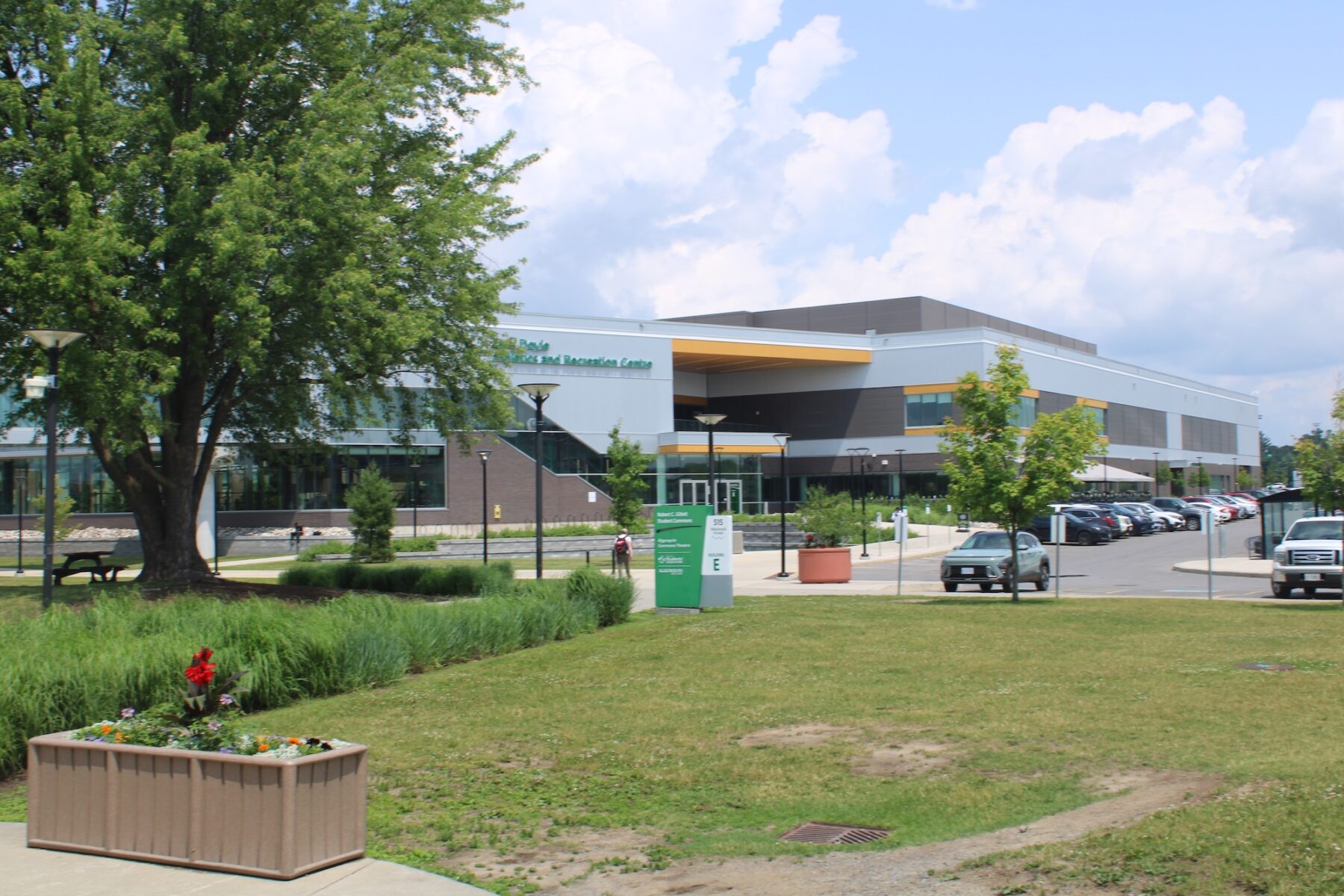
Jack and Doyle building during sunny day on July 3

Algonquin College has made some big decisions this year with the closing of the Perth campus. Now more cuts have been made that affect the full graduation experience for Algonquin College students.

It seems more choices have been made that will affect the graduating experience for graduating students here at Algonquin College.
The Students’ Association has cancelled its special program that saw the school providing money to graduating classes to have parties to celebrate graduation.

Thirty seven program cuts will occur throughout the Pembroke and Ottawa campuses that will take effect after those classes graduate and those programs fade to dust.

The Students’ Association provided around $25 per student in that graduating program who requested to host a party with the help of the Students’ Association.

Chris Lackner, Senior Manager, Communications and Strategy, responded to the Times’s request for a statement on whether this was factual.

“The Algonquin Students’ Association is currently reviewing our model and process for supporting SA graduation funding. Resources have always been limited for this type of funding, and applications were evaluated on a case-by-case basis,” Lackner said in an e-mailed statement.

Graduating students here at Algonquin College are on the fence, but are unsure how to feel with the looming rumours.

Ashlee Earle, a graduating business-marketing student, is disappointed about the funding cuts.

“I am finishing my program this August, and we don’t even get convocation until next summer,” said Earle. “Me and our class rep have been looking forward to our own little grad party with the help of the school, but now we don’t even get that.”

Earle also states that with convocation being next year that the grad party doesn’t hit the same.

“Since our graduation is so far away, it really doesn’t feel the same if we had our convocation this year, along with a school-funded party, and it’s very disappointing,” said Earle.

Amanda Willsher, a graduating photography-content creation student, is frustrated by the potential party funding cuts as well.

“As a graduating student, it’s disappointing to miss out on the experience of a grad party that the school used to help out with,” said Willsher.

Students on Stage at Algonquin College Convocation

Willsher also reiterated that she understands it’s all about financial decisions, but still believes that Algonquin College should not cut party funding for graduation classes.

“Given Algonquin’s current financial challenges as of recently, it’s understandable that this may be something they need to cut; however, it’s disheartening not to have the school’s help to celebrate the journeys we all took together,” said Willsher.

Indigenous youth bring the spirit of northern life to Algonquin College campus

Leg-wrestling, an ancient sea-goddess and seal sculptures -- Indigenous youth from Nunavut and Northwest Territories shared what home means to them
Photo: Vasuman Ravichandran
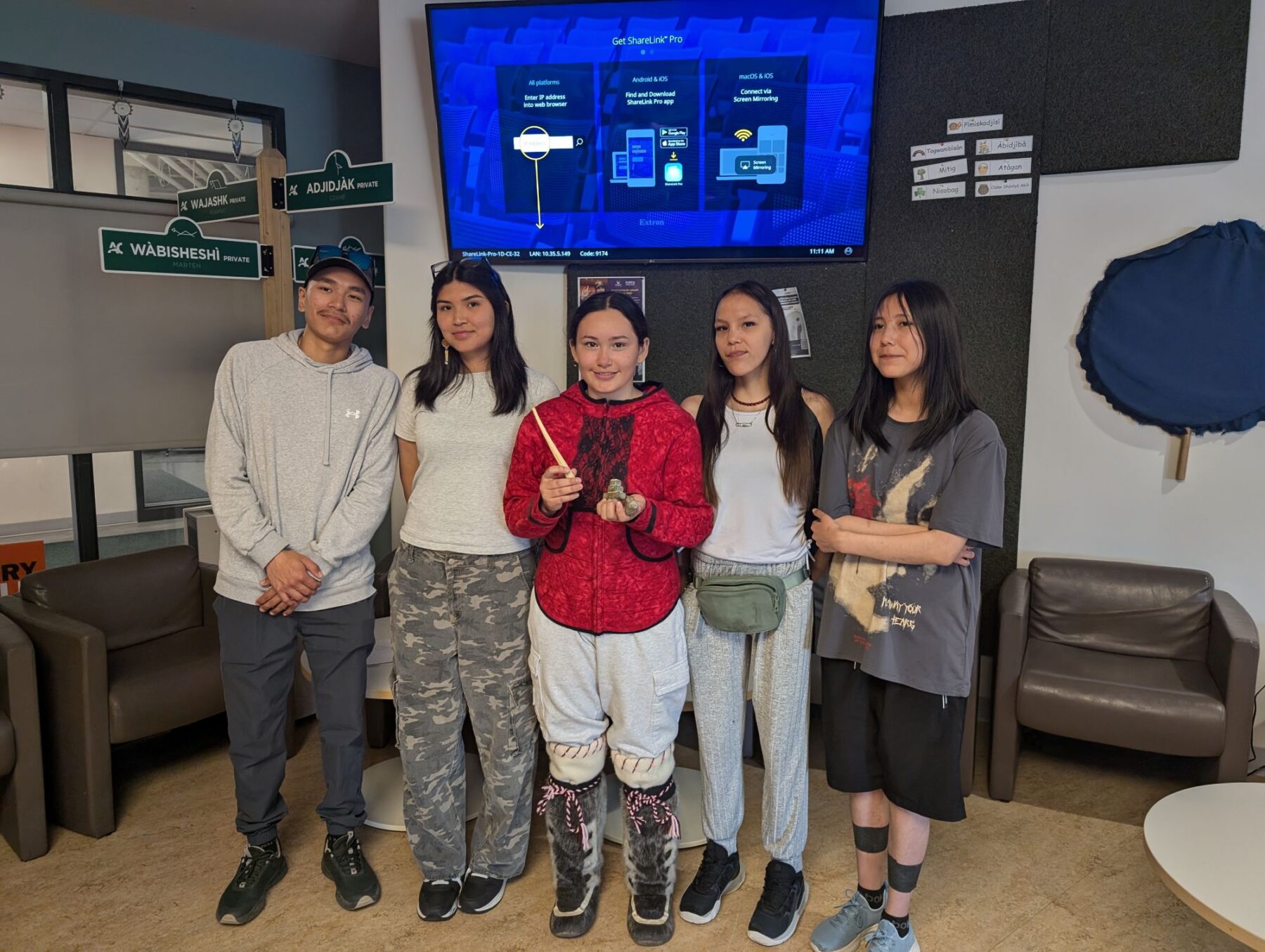
From left to right, Ernie Lyall, Hailey Basil-Grandejambe, Cadence Okalik, Latisha Porter and June Sapariel.

The Mamidosewin Centre hosted a morning of northern folklore, fun and fascination earlier this month, as Indigenous students from Nunavut and Northwest Territories made the trip down to Algonquin College to present a showcase of life in the tundra.

Designed by The Northern Youth Abroad Program, the trip gave them an opportunity to travel, learn and share their stories. Hailey Basil-Grandejambe and June Sanspariel from Northwest Territories, and Ernie Lyall, Latisha Porter and Cadence Okalik from Nunavut spoke about their daily adventures living in their Indigenous communities, accompanied by pictures of the native northern lifestyle.

Lyall, 20, began the presentation describing the animals native to his arctic hometown, Taloyoak, Nvt. His pictures revealed musk oxen, wolves, polar bears, caribou, Canadian geese, beluga whales, bowhead whales and ringed seals.

“My dad and me go hunting for caribou or musk ox, which we eat. Some of us, we hunt wolves too, but we don’t eat them, we just use their fur,” said Lyall.

Hunting in the Arctic requires patience, and that’s where the knowledge from elders in the community is invaluable. Young Inuit like Lyall offer their catch to the elders first, to show gratitude.

“When I go fishing with my dad, we can catch around 200 fish, and that takes about ten hours,” said Lyall. “We use a rifle or a harpoon to catch seals in the winter. But you have to be very quiet and careful. Even the slightest sound of you walking on the snow can scare them.”

Cadence Okalik, a 19-year-old from Whale Cove, Nvt., giggled as she revealed how small her community is – just 470 to 500 people.

“I like to eat beluga whale meat,” Okalik said. “It’s a little chewy. You can eat it raw, bake it, boil it or dry it.”

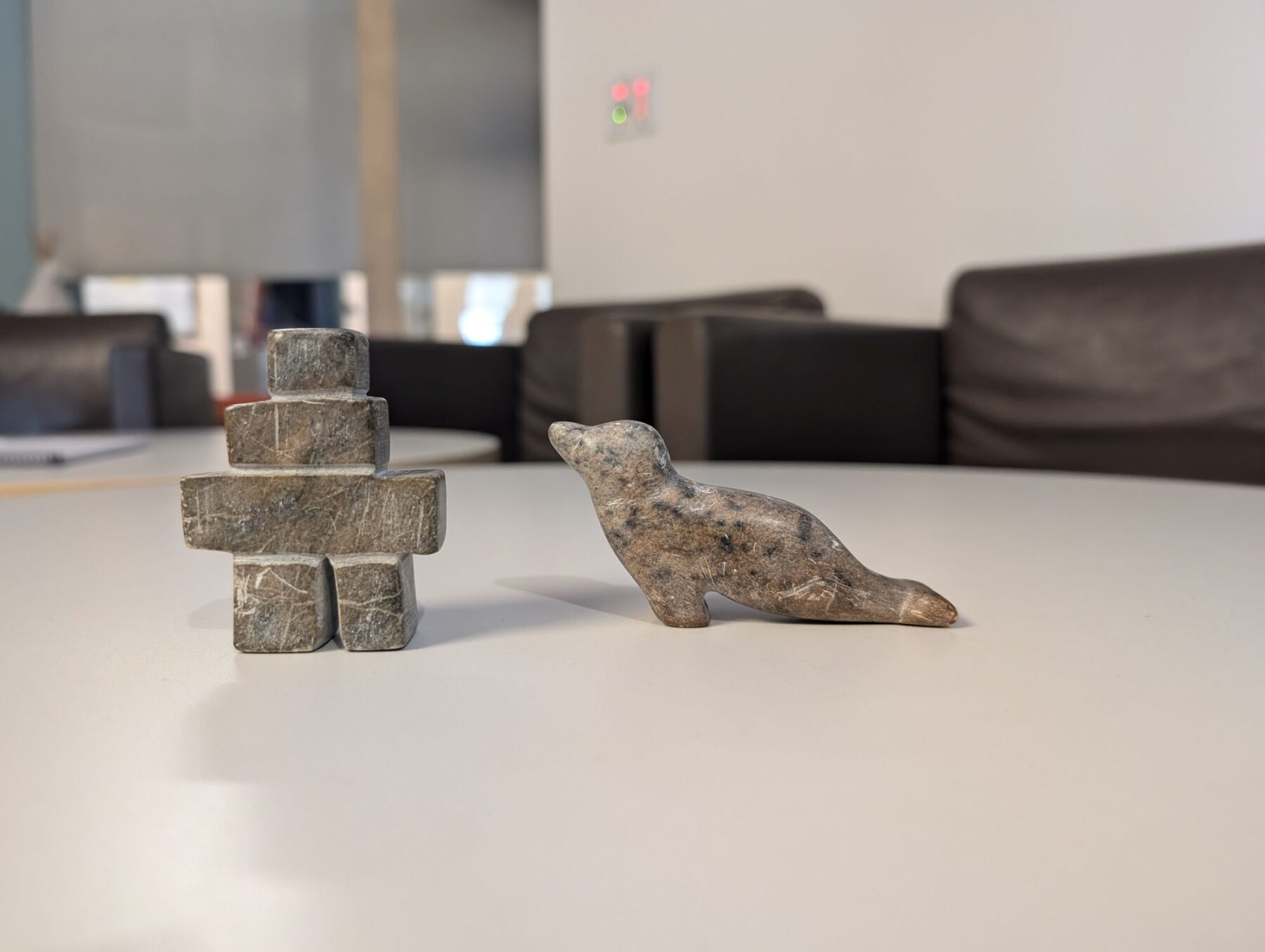
She then passed around artifacts for the audience to get a closer glimpse of Inuit culture- a narwhal tusk and elegant soapstone sculptures of a seal and an Inukshuk that she had crafted in school.

An Inukshuk and a seal sculpture, carved out of soapstone by Cadence Okalik
An Inukshuk and a seal sculpture, carved out of soapstone by Cadence Okalik. Photo credit: Vasuman Ravichandran

“Inukshuk means in the likeness of a human, in English. Inukshuks are used as navigation tools for marking, hunting or for fishing locations. They also indicate places of memorials,” said Okalik.

Following the presentation, everyone gathered at the Mamidosewin Centre had a chance to watch and participate in traditional Inuit games with the team.

One game involved taking a run-up and kicking a ball that was suspended at a height with a rope. With each successful kick, the height of the ball is increased and the highest kicker wins the game. But here’s the catch. The kicker has to land on the same leg they use to kick the ball.

“There’s a man in my hometown who can kick 13 feet!” said Okalik.

Another traditional game, the Inuit leg-wrestle, involved two people lying down, parallel to each other, with their heads on opposite sides. They locked their arms at the elbow for stability. Then, each wrestler lifted one leg to tug at the opponent’s leg and they tried to flip each other over.

Porter and Okalik also went head-to-head in musk ox wrestling as shown in this YouTube video.

An enduring theme that shone throughout the presentation was the connection to the land and the reverence for the forces of nature that are at the core of northern Indigenous cultures.

Lyall spoke about Sedna, the Inuit goddess of the sea, who governs over the animals that are essential for survival in the Arctic.

“In Nunavut, there is a saying that if we are harming our land, she won’t give us animals, but if we’re protecting our land, she’s going to give us more catches,” said Lyall.

Algonquin College’s convocation policies silence students, say experts

Vice President of the Palestinian Canadian Congress and legal clinic lawyer, James Kafieh says  students need to be congratulated on their leadership during this historic event; the genocide in Gaza
Photo: Janella Milord Ashford
Farida El-Sharkawy holding a Palestinian flag in solidarity.

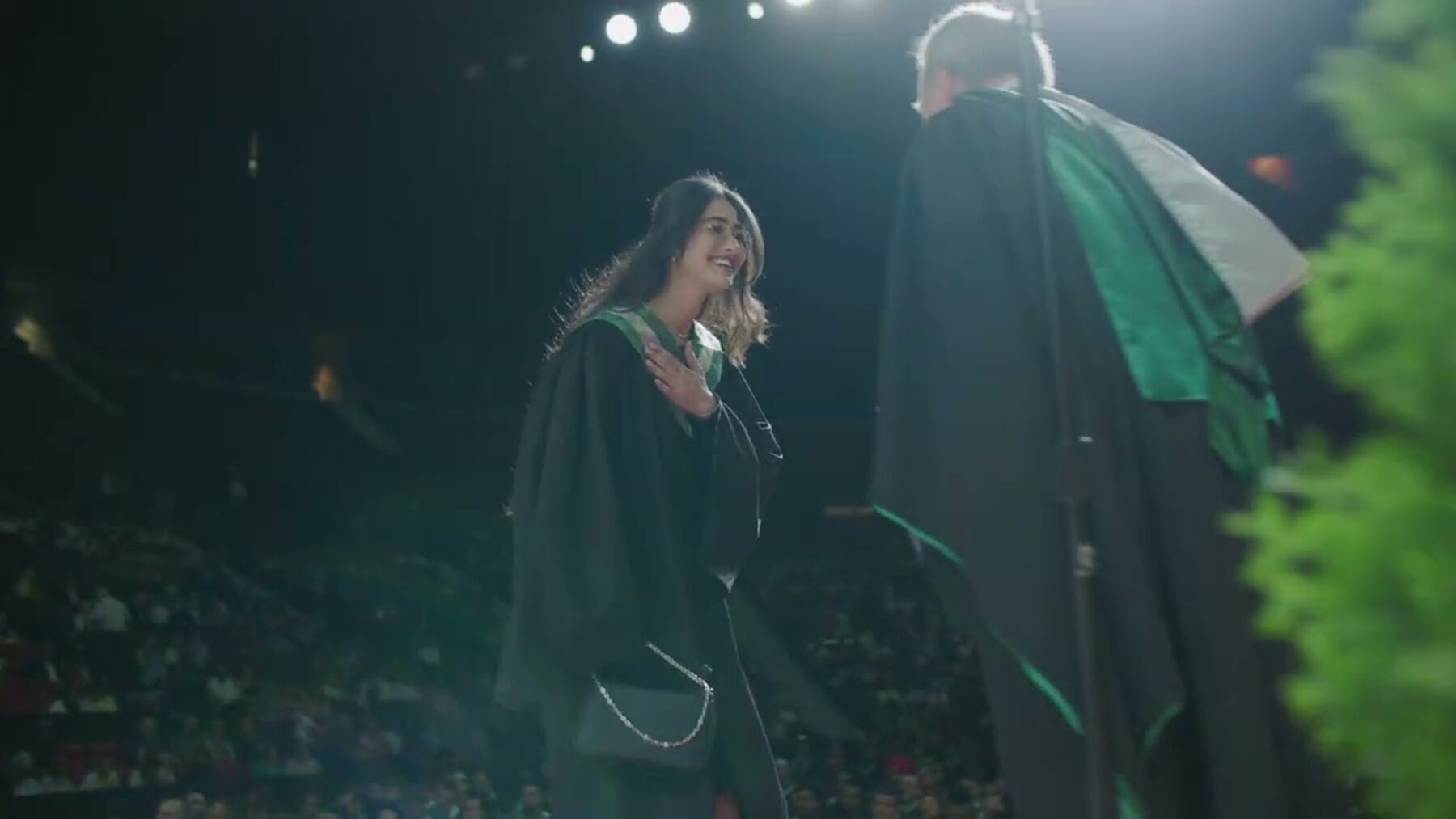
On June 19, a graduate of the film and media production program planned on walking the convocation stage with her Palestinian flag, but before doing so, an Algonquin College staff member tried to rip it out of her hands, according to a video posted on social media.

Rama Al Zu’bi found herself in a confrontation caught on camera, shared on social media and viewed by millions.

Screen grab of the incident taking place at the Canadian Tire Centre during Algonquin College's 2025 convocation.
Screen grab of the incident taking place at the Canadian Tire Centre during Algonquin College's 2025 convocation. Photo credit: Screen grab of video by Rama Al-Zu'bi

Al Zu’bi declined to comment on the incident to the Times, but the policy issues at play affect more than just the one student, say experts.

The college declined an interview but In a statement to the Times, said “Graduates were informed in advance of venue policies — including restrictions on posters, banners, signs, and all flags.”

The college said graduates were allowed to personalize their stoles.

“Convocation is a meaningful celebration, and we asked all attendees to honour the spirit of the event,” the college said. “In keeping with venue rules, flags were not permitted inside.”

The college, however, said “some flags were missed during security screening.”

The statement concluded with the college saying it is proud of all its graduates and regrets “any distress the enforcement of these rules may have caused.”

Palestinian Canadian Congress vice-president and legal aid clinic lawyer, James Kafieh, is not surprised about this incident and says this is what suppressing the Palestinian identity looks like in practice. The PCC is a non-profit organization focused on advocating for the interest of Palestinian Canadians.

Photograph of PCC's VP, James Kafieh.
Photograph of PCC's VP, James Kafieh. Kafieh believes high schools, colleges and universities work towards creating compliant citizens. Photo credit: Picture provided by James Kafieh

“ There is no justification for this. The administration should be ashamed of itself, and that staff member will have to live with his part. I’m glad the Palestinian student showed moral fibre that the administration did not show that day, and retained control of the Palestinian flag in spite of that interference,” said Kafieh. “The attack was on our community as well, at a time where, we’re experiencing a genocide.”

Al Zu’bi isn’t alone. There have been other moments where students or staff members are reprimanded for showing pro-Palestinian support across the country.

During an Ottawa Carleton District School Board meeting on April 8, Trustee Nili Kaplan-Myrth, who has since resigned, stated, that the slight view of a Keffiyeh, the traditional Palestinian scarf, worn by a committee member, was an act of aggression. Students from the Park West School in Halifax, N.S., said they were also told not to wear the Keffiyeh, during the school’s culture day.

Kafieh believes these acts prove that Palestinian history is under attack in our school systems.

Teacher and writer, Michelle Weinroth, who is also a representative for Independent Jewish Voices believes this was an act of aggression and the school should’ve given the student space for conversation instead of escalating the situation.

“Increasingly, many Jews are distancing themselves from the mainstream pro-Israel camp,” said Weinroth. “Given what is transpiring in Gaza, these Jews of conscience feel morally obliged to speak out and show solidarity with their fellow human beings – with Palestinians both here and abroad.”

Farida El-Sharkawy proudly posing with a Palestinian Flag.
Farida El-Sharkawy proudly posing with a Palestinian Flag. Photo credit: Janella Milord Ashford

Algonquin College does have a policy on flying flags on campus (AD22). That policy indicates the college will only fly government flags but no other flags to avoid showing preference to any particular group. AC confirmed that the Canadian Tire Centre, where the convocation was held, also had rules not allowing flags during many events like convocations.

Algonquin College will be launching a real estate salesperson program in the fall

A local realtor shares what it takes to succeed in real estate
Photo: Mickey Banks
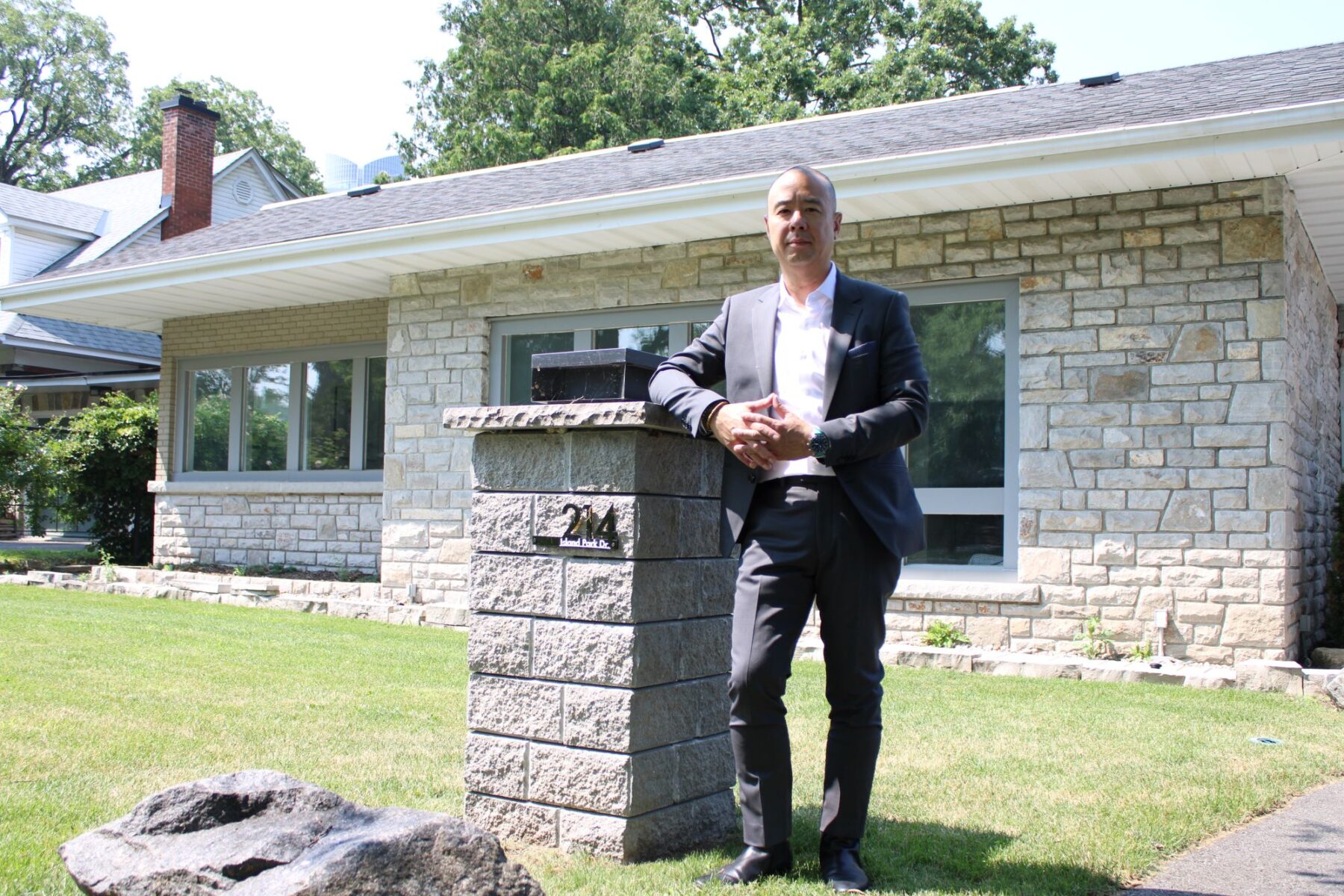
Raymond Chin standing outside a house for sale on Island Park Dr.

Starting this fall, Algonquin College will begin offering a real estate salesperson program, making it just the fourth college in Ontario to do so.

On Mar 6, the Real Estate Council of Ontario, which regulates real estate agents across the province, announced its approval for the college to begin its online course. The program will cover foundational knowledge, real estate essentials, and key legal and ethical responsibilities, according to the college’s website.

Alongside this, the college will also offer a real estate broker program. A real estate broker supervises salespeople, real estate transactions and can run their own brokerage or business.

So, what could this mean for Ottawa?

Raymond Chin, who has more than 19 years of experience in real estate, says this “opens another door,” expanding career options in Ottawa beyond civil service.

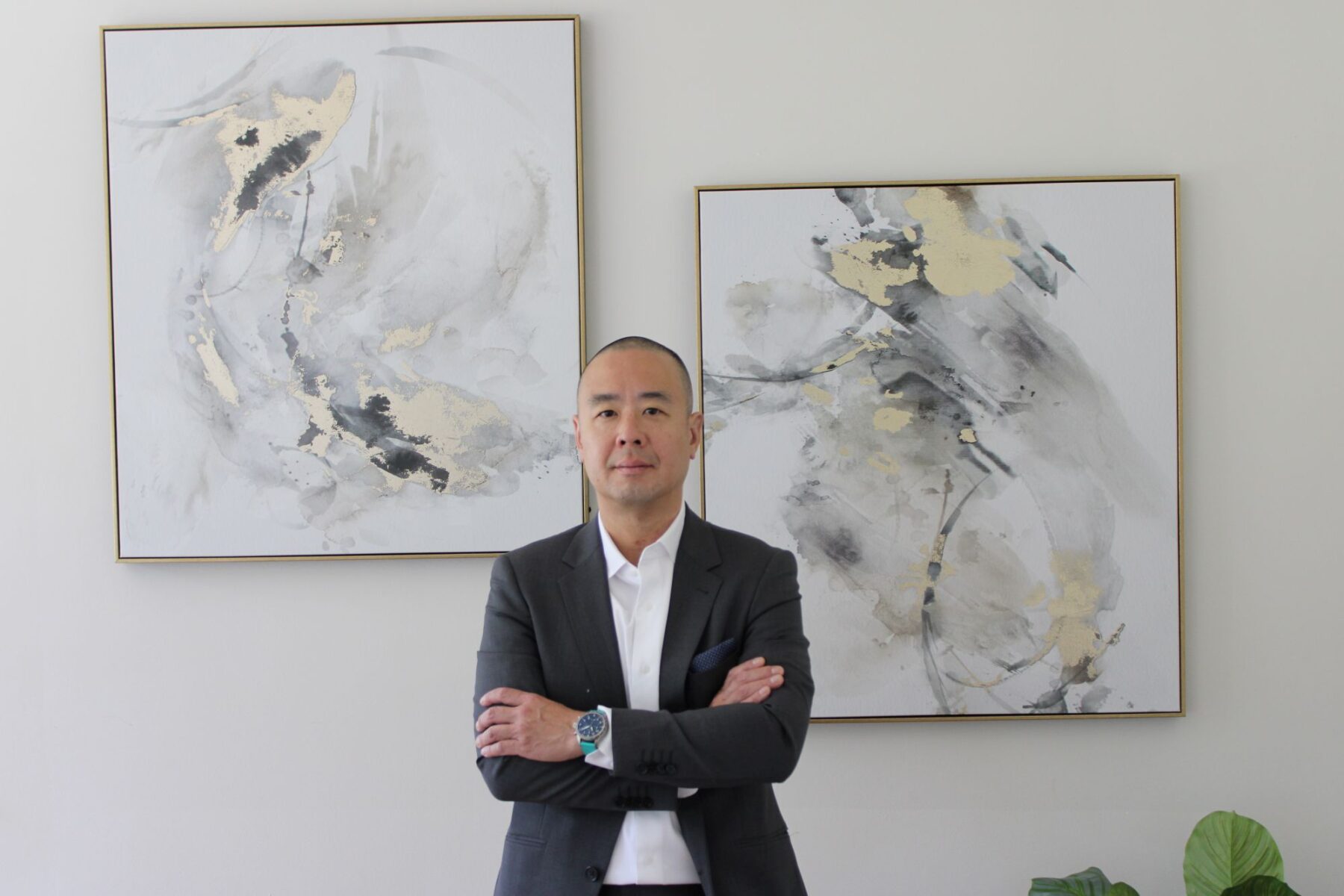
Raymond Chin says succeeding in real estate takes consistency and discipline.
Raymond Chin says succeeding in real estate takes consistency and discipline. Photo credit: Mickey Banks

According to the Government of Canada, as of 2025, there are almost 130,000 civil service workers in the National Capital Region, representing about 10 per cent of the population.

When it comes to finding opportunity in Ottawa, Chin believes anyone willing to put in the work has a chance to thrive.

“When you’re self-employed, there’s always opportunity,” Chin said.

So, what does it take to succeed as a realtor?

For Chin, the core skills required in real estate are listening and people skills, having a solid grasp of the market and knowing how to advise clients.

“Real estate is not rocket science, anyone can do it,” Chin said. “But essentially, if you have those minimum core skills, as I mentioned earlier, anyone can do well. But a lot of people don’t do well in this business because they’re not consistent, they’re not disciplined, or they just have no interest in this kind of business, which is helping people manage their biggest assets in their life, which is real estate.”

Summer solstice event marks traditional start of season

On June 21 and 22, Wesley Clover Park held the Summer Solstice festival for National Indigenous People's Day
Photo: Skyla Murray
Scott Sixkiller Sinquah, a hoop dancer, performed on June 22.

Hundreds of people came together at Wesley Clover Park to celebrate Canada’s rich Indigenous culture and history at the Summer Solstice festival.

The summer solstice is the longest day of the year. It falls on June 21st, which also happens to be when National Indigenous Peoples’ Day is celebrated. It is a day filled with the celebration of First Nation, Inuit, and Metis culture. While Algonquin College was closed that weekend, an event to celebrate National Indigenous Peoples’ Day was held at Wesley Clover Park for the weekend of the solstice.

“The reason why we don’t do a lot in the summer is because our student numbers are a lot lower all across the college. So in the winter, historically for the winter solstice, we’ve done a student feast. In the summer, we have in the past as well, but this year the solstice fell on a Saturday, and so we didn’t have anything for it,” said Summer Wabasse, who attended the event.

Wabasse went on to say that the Summer Solstice is so culturally significant to Indigenous people, and its celebration differs from culture to culture. This significance stems from it being the longest day of the year, and a day for Indigenous people to celebrate their heritage.

Algonquin staff and students attended the event at Wesley Clover Park, which had dancing, vendors, food, and many other unique cultural activities such as drumming and a competition powwow.

This is a video link of the powwow on YouTube.

Wabasse said she attends the Summer Solstice celebration every year and enjoys many of the festivities, such as dancing and crafts.

“It’s such a large-scale event. They always have so much stuff going on. I really like how they do a separate children’s stage. Obviously, a lot of indigenous people have families, so to have puppet shows and traditional crafts and stuff going on at the same time is super cool. Personally, I always go for the vendors. I love looking at all the crafts and all the food,” said Wabasse.

One of the hoop dancers present at the event was Scott Sixkiller Sinquah, an Indigenous hoop dancer from the United States, who spoke about supporting community.

Scott Sixkiller Sinquah, a hoop dancer, performed on June 22.
Scott Sixkiller Sinquah, a hoop dancer, performed on June 22. Photo credit: Skyla Murray

“Look out for one another, be positive, be good to each other. We all need each other to survive. We’re all part of one human family. Take a look around you right now. We don’t all look the same. When we go home, we probably speak a different language, but be proud of who you are. Represent yourself well. Remember where you come from. When you’re out there, you’re not representing just yourself, but your people, as well as your family,” said Sinquah.

Algonquin Times podcast

Stay Informed

Sign up for our newsletter

Subscribe

* indicates required