The stories behind the pathway murals on Algonquin College campus
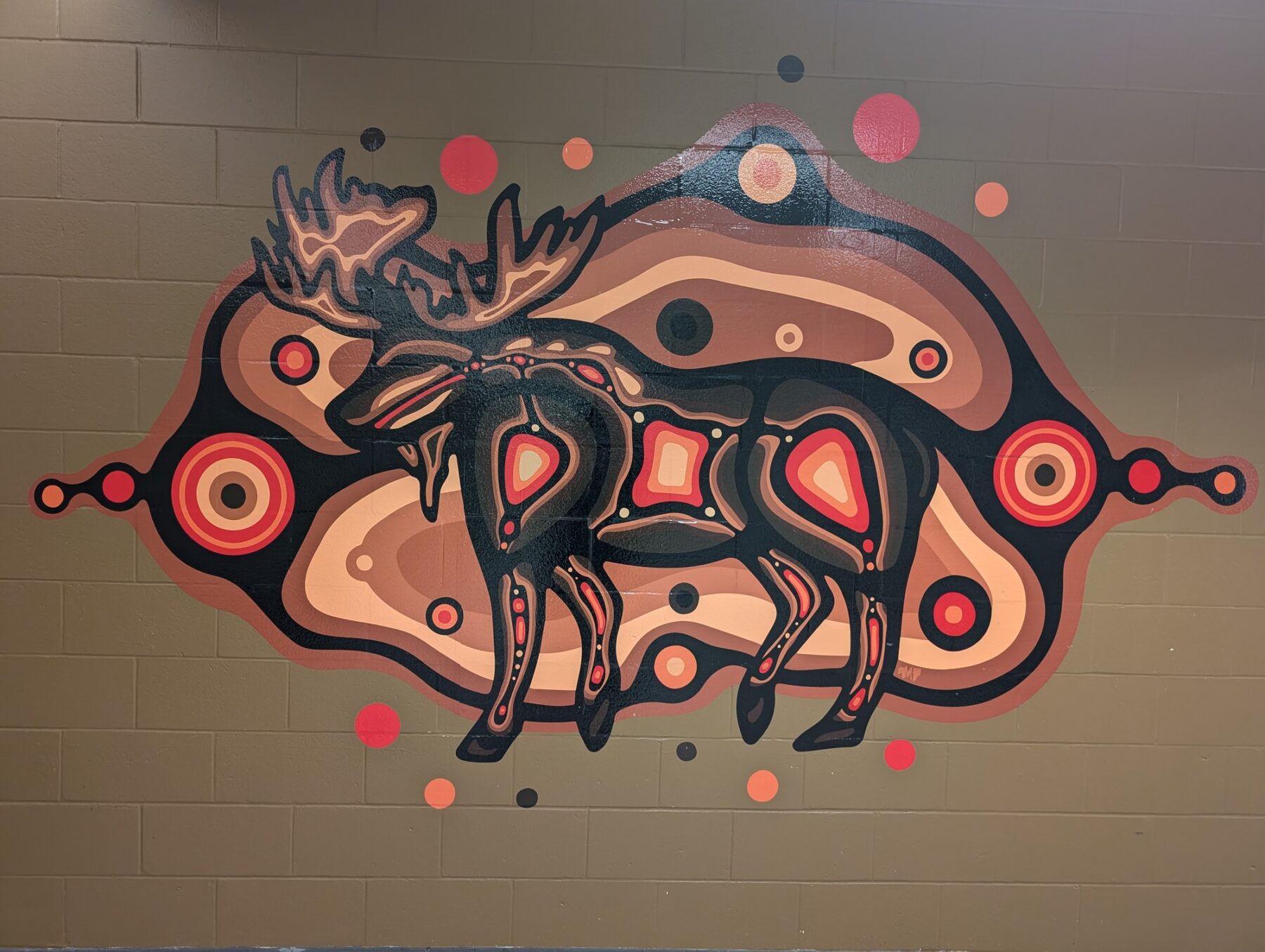
Exactly three years ago, Miskomin Twenish, an Indigenous Algonquin artist and alumna of the college, created five animal murals to portray the values of Indigenous Algonquin culture in vivid colour.
Her murals are on display across the pathways on campus.
Twenish selected the five animals portrayed in her murals based on their significance in Indigenous Algonquin culture. Makwa (bear), Mahingan (wolf), Tendesi (blue jay), Monz (moose) and Wawaskeshi (deer).
“When I make art, I want it to be uplifting,” said Twenish. “I like colours that are bold, bright, vibrant and alive.”

Makwa (Bear): The bear mural can be seen on the pathway between A-building and C-building. The bear is a central figure in Algonquin culture. It is considered a guardian, and an animal that embodies spiritual strength.
The bear hibernates. it goes away from the rest of the world. The Algonquin people believe that In order for us to heal, we need to step away from the chaos of life, go within, find ourselves, reflect on our lives, so that we can emerge refreshed and ready to face the world once more, according to Algonquian anthropologist, F.G. Speck.

Mahingan (wolf): This mural can be seen on the pathway between D-building and A-building. In Algonquin tradition, the wolf is known to control the flow of animals. He teaches respect for the food chain and humility. The wolf also exemplifies teamwork and cooperative behavior for the greater good, reinforcing its place as a model of community values, according to Algonquin elder, Lionel Whiteduck.

Tendesi (blue jay): This mural is visible in the pathway between C-building and B-building. The blue jay is described as kind to those who show kindness, but also as having predatory and fierce qualities, embodying both friendliness and a capacity for assertiveness or aggression.
This dual nature can be seen as reflecting lessons about balance, respect, and the nuanced relationships between beings in Algonquin teachings, according to Indigenous author, Sylvia Ross.

Bottom: Wawaskeshi(deer) mural, pathway from C to CA building, second floor Photo credit: Vasuman Ravichandran
Monz (moose): This mural greets passersby of the Marketplace at the pathway from E-building to D-building. The moose is regarded as the leader of the forest. It symbolizes strength and resilience. Its image is used to honour nature and the interdependence of all living things, according to Indigenous Algonquin author, Pat Gatz.
Wawaskeshi(deer): This mural can be seen on the pathway from C-building and CA-building on the second floor. Deer are considered to be kindhearted and compassionate. In Algonquin culture, they are seen as pacifists and as poets, according to Nathalie Bertin, an Indigenous author of the Waawaashkeshi (Deer Clan).
“It was really nice to see Indigenous art while on campus. I hope everyone, and especially Indigenous youth in post-secondary studies see this and feel good mentally, spiritually, inspired and not so isolated” said Twenish.
Amongst many observers of the murals is Naomi Runstedtler, who has studied film and media production.
“The murals remind me of the Indigenous woodland painting style with dark outlines and the blocked colours,” said Runstedtler.
“But I love how the artist has put her own spin on the style with the shapes and colours she has chosen. She has a way of making the shapes flow really well.”
MacKenzie Garon who recently graduated from the photography- content creation program says that looking back at images of the murals brings fond memories.
“I remember when during my first few weeks, the murals in the pathways were like visual cues that helped me find my way around college,” said Garon.
“With time, they became like bookmarks in my memory and they remind me of the college vibe now.”