Making medicine for the soul with Indigenous peoples at Algonquin College
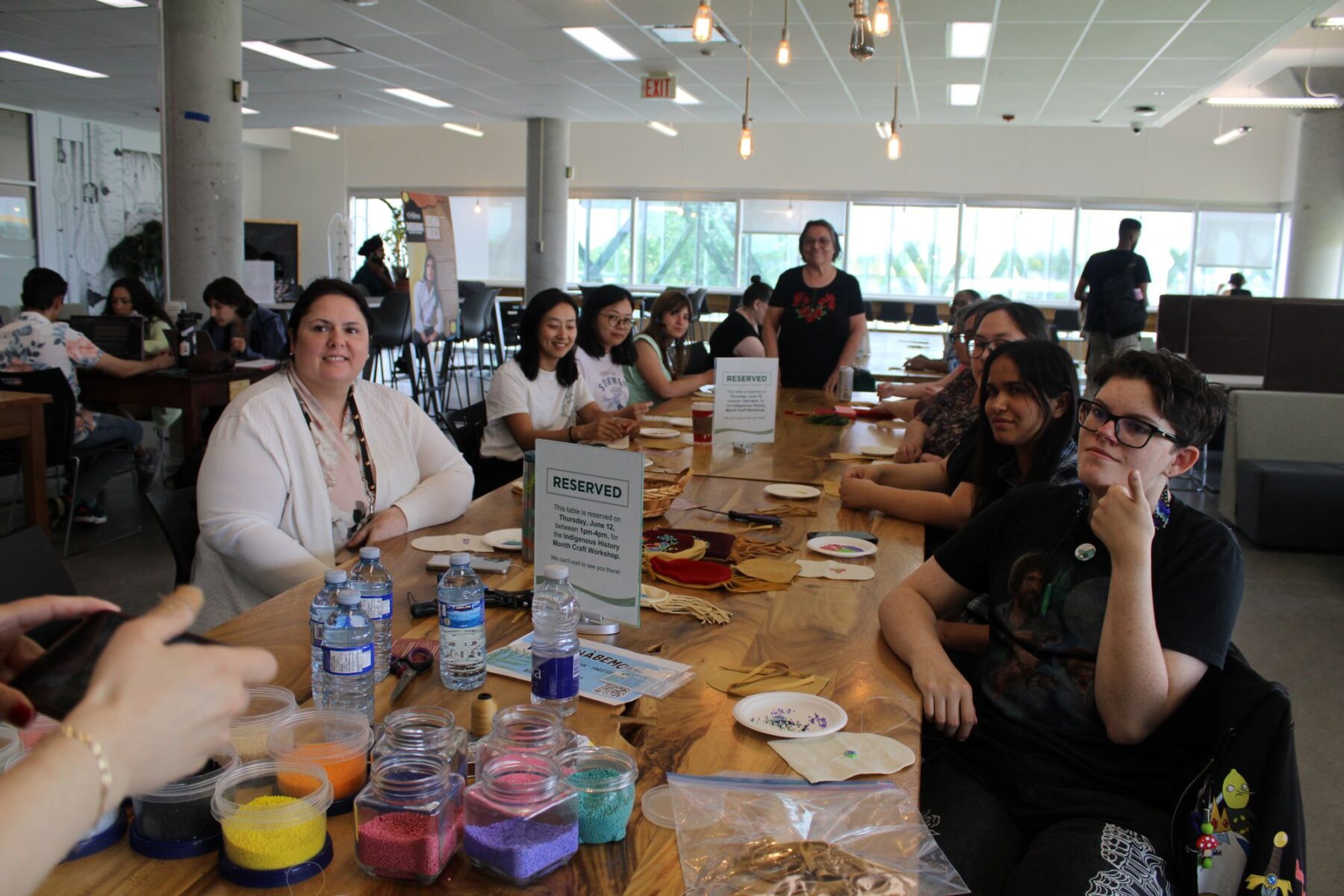
The workshop was led by Stephanie Tenasco and Jenny Tenasco of Kitigan Zibi First Nation. They showed students how to sew and create the beautiful and intricate beadwork seen on the pouches.
“I’ve been making, I guess, I don’t like to call them crafts per se, but I’ve been making, like, mittens, moccasins, leather work, I guess you can call it,” said Stephanie Tenasco. “I’ve been doing leather work since I was eight years old. Some women in my community, older women in my community, had a workshop when I was eight, and that’s where I learned how to do the stuff that I do now today and I didn’t really want to go to this workshop when I was small. I didn’t understand the importance or didn’t even think I’d like it, but, here I am today at Algonquin College, showing what I learned when I was eight years old, which was many, many years ago.”

A medicine pouch is traditionally made from deer or moose hide and worn as a necklace or under the clothing. It traditionally carries sacred medicines and items that hold personal or religious significance to the wearer.
“There’s four sacred medicines that indigenous people generally use, which are sage, tobacco, sweetgrass, and cedar,” said Jenny Tenasco.
The sacred medicines are sage, sweetgrass, cedar and tobacco. These medicines are typically used in smudging ceremonies, where they are placed in a small bowl or shell and burned. The smoke is then used as a means of spiritual cleansing.
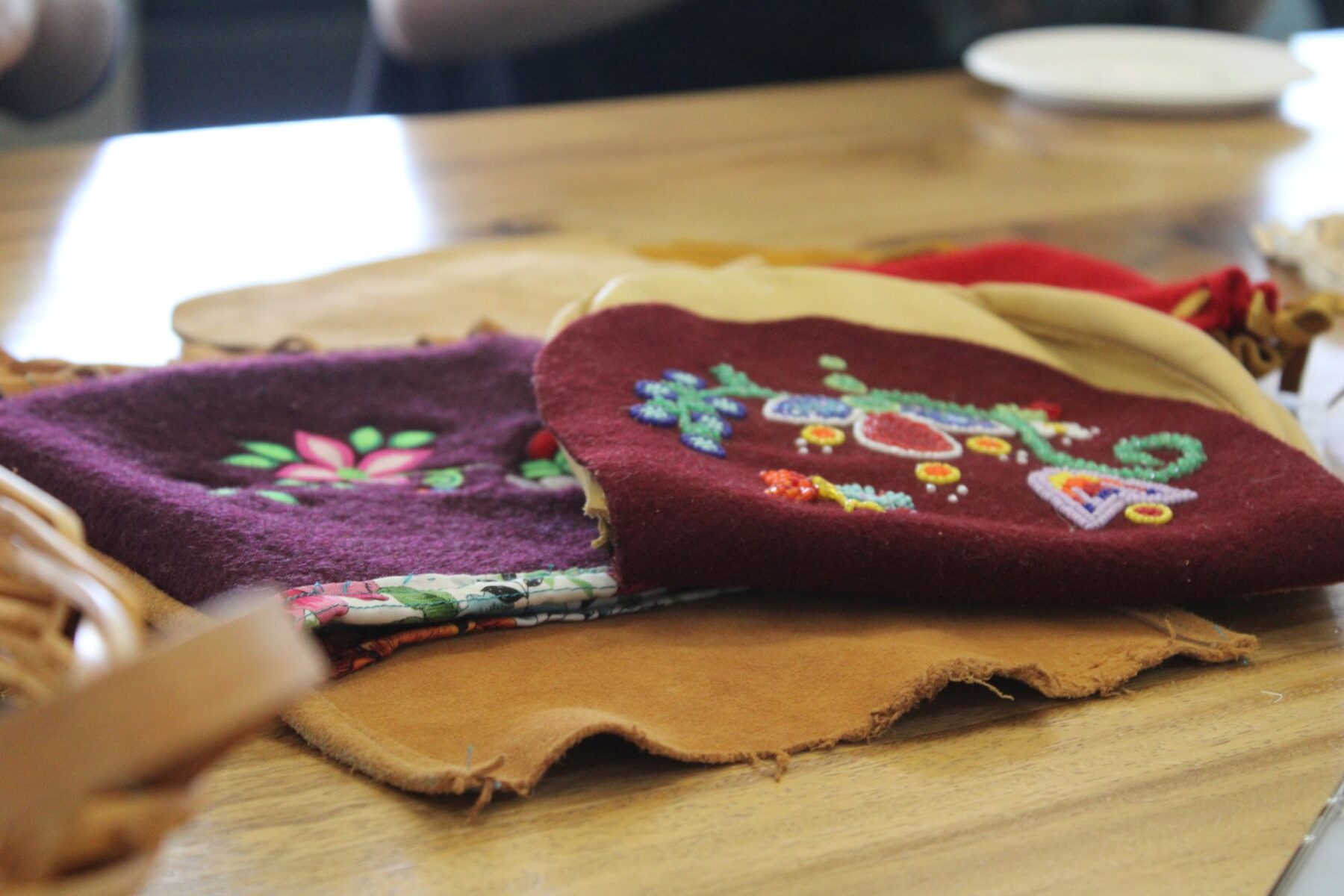
The workshop involved students sewing a piece of deer hide and fabric together, and adding beads to make their own unique designs. Then, the pouches were sealed with string, and students could fill them with the sacred medicines on another table.
June was the month of Indigenous history, and craft events like this help Indigenous people to show that they’re still here, and that their history and traditions are being celebrated and honoured, even today.
“Workshops like this, it’s just a small start to show people that indigenous people are still here. We have been here, and we are still here. And, it’s just a small part, but it’s a start,” said Tenasco.