main

Production company offers Algonquin College students hands-on experience at Bluesfest

AC students volunteer as camera operators with Ably Productions at Bluesfest, gaining practical experience
Photo: Matthew Grieve
Bluesfest main stage, July 16th, bustling with a crowd enjoying the performances.

Algonquin College has partnered with Ably Productions for several years, offering students the opportunity to volunteer at major events like this month’s RBC Bluesfest to gain hands-on experience and fulfill their volunteer hour requirements.

Ably Production is an event production company specializing in audio, video coverage, design, and production. They provide gear, video directors, and camera operators for most of the major music festivals in Ottawa, like FrancoFest, JazzFest, Bluesfest, and CityFolk.

Every spring, Ably Production does a presentation at Algonquin College in hopes of recruiting new members. Usually, they attract 25 to 30 students from the television, broadcasting, and film programs.

Daphnee Perron, a student in Algonquin College’s broadcasting program, volunteered as a camera operator for Bluesfest with Ably Productions.

Daphnee Perron, July 16, at her workstation as a camera operator on the Riverside Stage.
Daphnee Perron, July 16, at her workstation as a camera operator on the Riverside Stage. Photo credit: Matthew Grieve

“I think I would come back, especially for this company, […] working at a festival like this is honestly the most fun experience you can have,” said Perron when asked if she would come back after her volunteer hours were done. “Some shoots can be boring, like a talk show about something you’re not interested in, like politics, for example. But at a music festival, it’s different. Anyone could have fun here. It’s definitely the most exciting way to get hands-on experience.”

Jordan Mills, another broadcasting student volunteering as a camera operator at Bluesfest, said she was learning a lot.
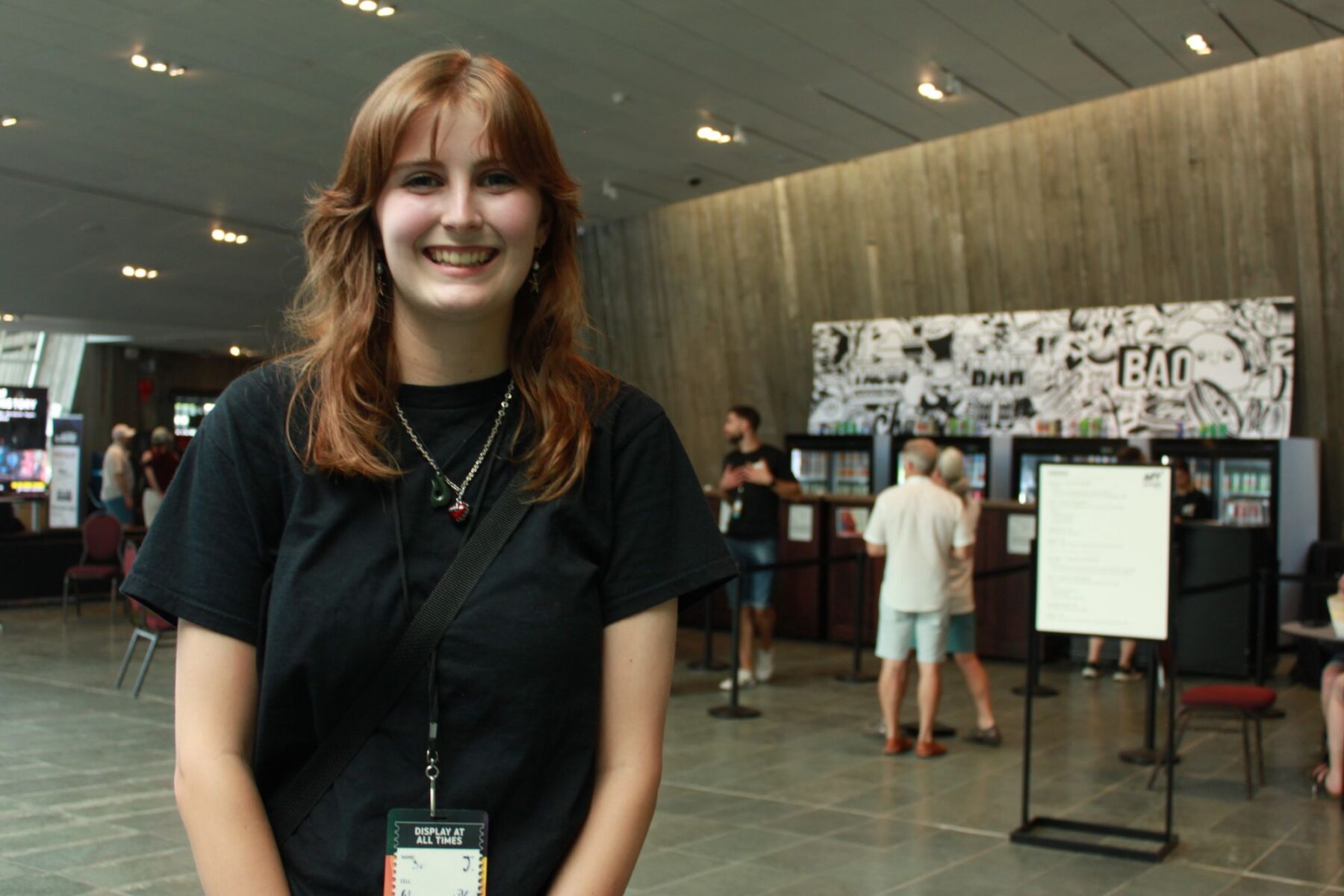
Jordan Mills at the War Museum on July 16, with her Bluesfest volunteer pass.
Jordan Mills at the War Museum on July 16, with her Bluesfest volunteer pass. Photo credit: Matthew Grieve

“It’s so much more hands-on,” said Mills. “I don’t learn well from reading a book or just setting up a tripod. I have to get in there and work at it, and this is the perfect experience to do that, especially before our second-year co-ops.”

Steve Johnston, the creator and owner of Ably Productions, shared that students appreciate their time with the company.

“We make it a fun and exciting time for the students,” said Johnston. “They always leave with stories from their time with us that they share with their friends and family. We keep student relationships for a long time, even hiring some students to work our paid opportunities in future years.”

Spencer Johnston, an Algonquin College graduate who works alongside his father, Steve Johnston, at Ably Productions, explained how their company supports students seeking hands-on learning opportunities.
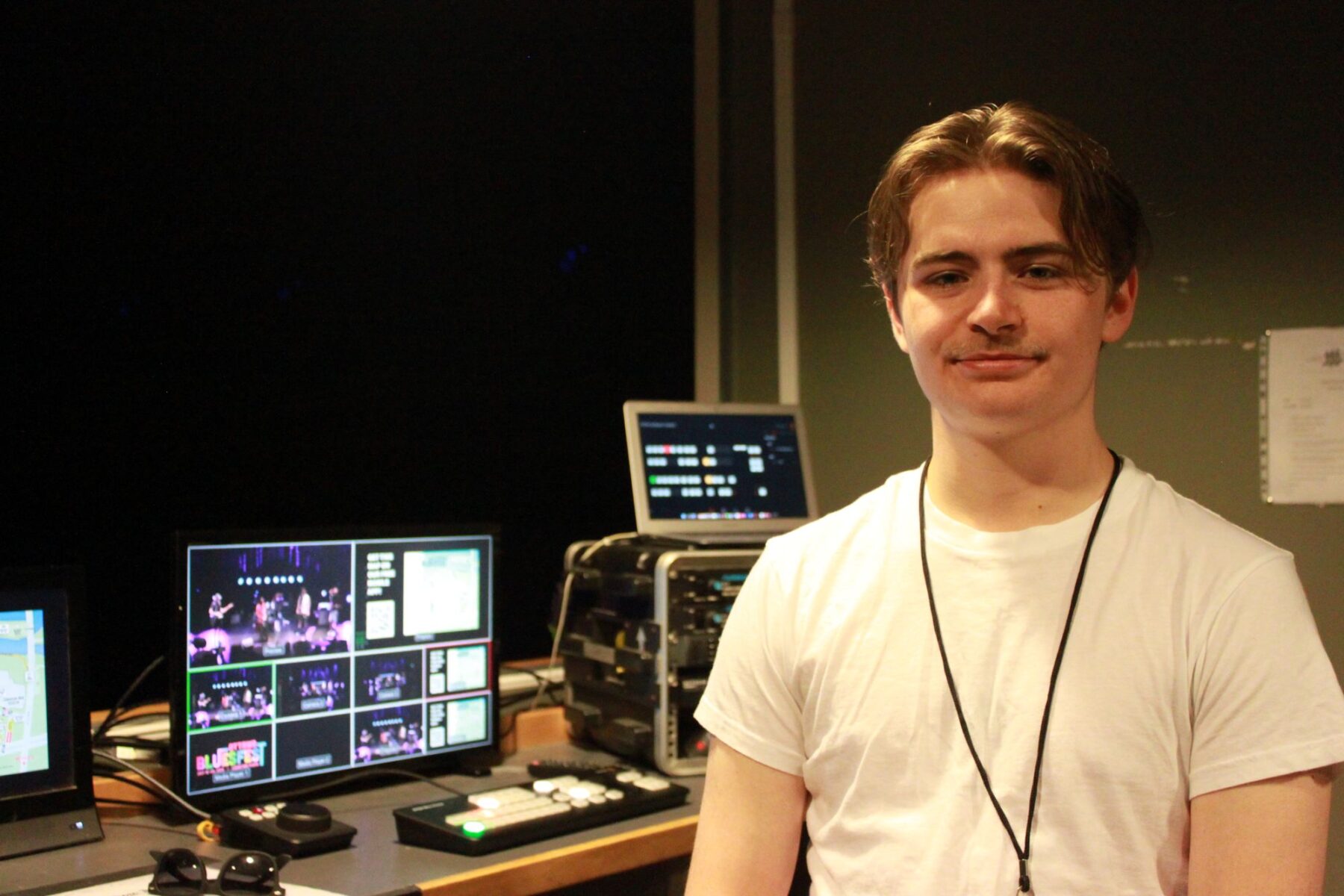
Spencer Johnson, son of Steve Johnson posing in front of the directorโ€™s control panel on July 16.
Spencer Johnston, son of Steve Johnston posing in front of the directorโ€™s control panel on July 16. Photo credit: Matthew Grieve

“The biggest thing is experience. When you apply for a job, they want two years of it, but where do you get that when you’re young? Volunteering,” said Spencer. “In my experience, most volunteer spots either give you nothing to do or dump the worst work on you. It’s not fair. With our organization, we have you do the real job.”


Paul Taylor packs Algonquin Commons Theatre with sharp, bilingual comedy

Stand-up comedy sensation, Paul Taylor delivered an evening of intelligent cultural humor
Photo: William Barritt
Paul Taylor takes the stage on June 4.

Comedian Paul Taylor brought his show “F**k Me I’m French” to over 500 fans at the Algonquin Commons Theatre, on July 4, exploring the humor behind bilingual identity.

The event was hosted by the Algonquin Students’ Association, (ASA) which regularly brings comedy acts and other live performances to the venue. The performance struck a chord with both longtime fans and first-time attendees.

Paul Taylor performing to crowd of 500 at the Algonquin Commons Theatre.
Paul Taylor performing to crowd of 500 at the Algonquin Commons Theatre. Photo credit: William Barritt

Daphnee Dicette, who saw Taylor live for the first time, said the show exceeded her expectations.

“For me, it was my first time,” Dicette said. “I think it was very funny—he made a lot of relevant cultural jokes, so for a first impression, it was great.”

Cloe Podage, who attended the show with Dicette, was already familiar with Taylor’s work through social media.

“I know him from France, I’m from there originally, so I was watching his show beforehand on YouTube, and he’s such a funny guy. It was a great moment to see him live,” Podage said.

Chloe Podage and Daphnee Dicette outside theatre after show.
Chloe Podage and Daphnee Dicette outside theatre after show. Photo credit: William Barritt

Taylor, Is a British comedian living in France who rose to fame through his bilingual sketches and stand-up routines, has recently shifted toward performing primarily in English. While his material still draws heavily from his life in France, the move reflects a desire to connect more directly with international audiences.

When asked how he would describe his comedy to someone unfamiliar with his work, Taylor didn’t hold back.

“I’m angry, I shout a lot, and most of it is because the French annoy me,” Taylor said. “I make fun of myself, and I make fun of the French because I live over there, and I get angry at the stupid things I see.”

Mathieu Gauthier, a longtime fan who bought his ticket after seeing an Instagram ad, said he supports Taylor’s shift away from bilingual comedy.

Mathieu Gauthier outside theatre before show.
Mathieu Gauthier outside theatre before show. Photo credit: William Barritt

“I love it. He does great bilingual work, but he’s much more comfortable with English, so I understand why he switched,” Gauthier said.

Taylor credits much of his success to his online presence, something he says is now essential for comedians trying to build an audience.

“For people starting out in comedy, it’s the only way to get anything done,” Taylor said. “Whether you’re an LGBTQ comedian or an English comedian doing shows about France, you’ve got your own niche, and there are people all over the world who can relate. Social media helps you find that audience, and that’s the reason I’m here in front of 500 people.”

Men’s mental health awareness month at Algonquin College: Did it get the attention it deserved?

Support without spotlight: Despite recognizing men’s mental health awareness month, Algonquin College had no major events planned to raise awareness
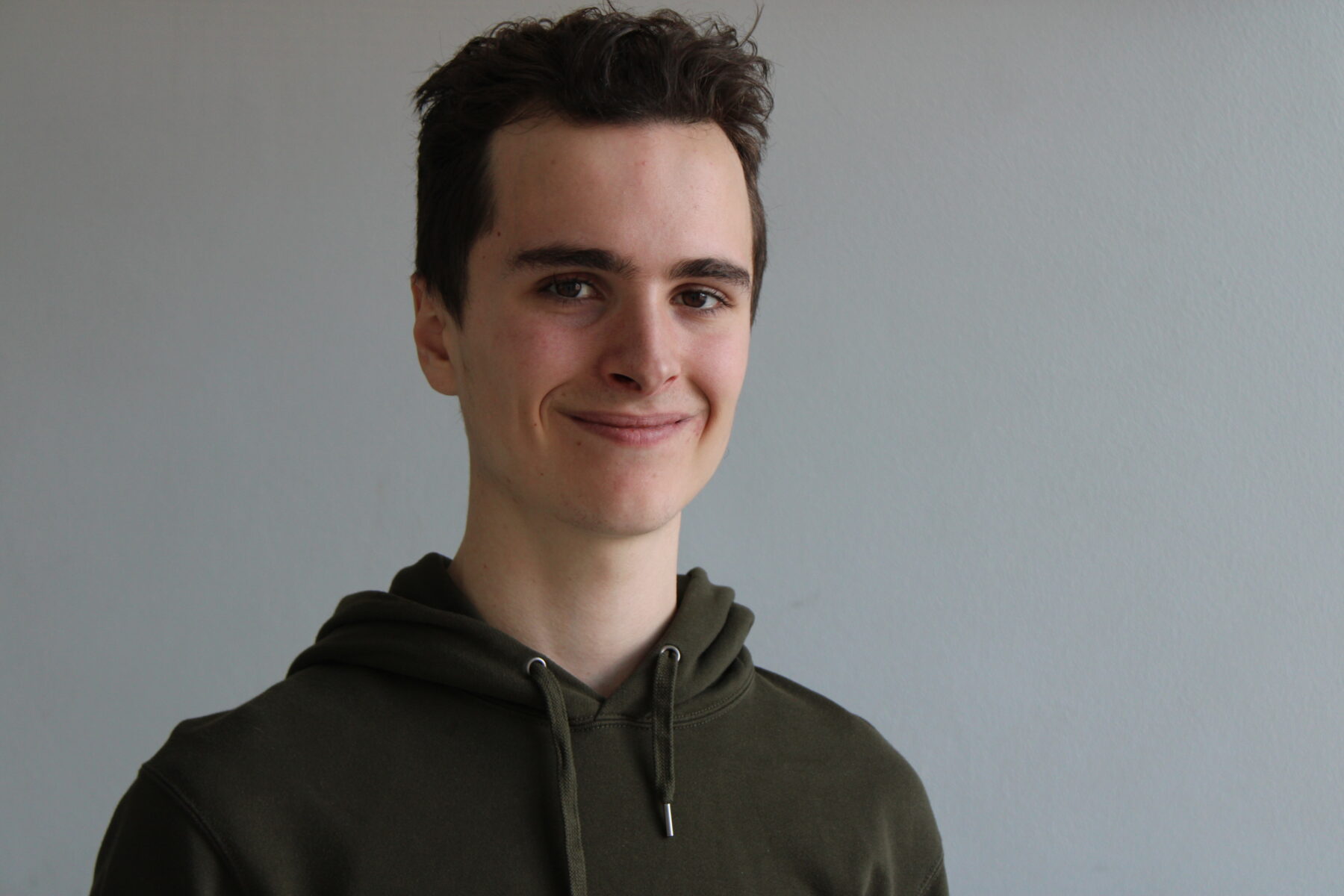
Photo: Matthew Grieve
A student engages with an edition of the Algonquin Times spotlighting mental health.

Men’s mental health awareness month came and went in June, but some students at Algonquin College didn’t even know it was happening.

The college had no dedicated events for men’s mental health, but the topic remains important, students say.

Yiji Fan, an Algonquin College student studying early childhood education, said he was unaware that June was an awareness month for this cause.

“I know friends who are going through some harder times […] they’re seeking help,” said Fan. “We already have the resources in place, but people just don’t know they exist […] I never knew we had those counsellors until last semester. Just make the support more visible, whether it’s on Instagram, bulletin boards, or through fun activities. Just focus on raising awareness will be enough.”

When asked, another early childhood education, Supreme Chimariya, didn’t know the importance of June for men. He mentioned that he hadn’t seen much discussion about men’s mental health and wondered if the information might not be visible or easily noticeable to people at the college.

“The more people see, the more people think and learn about that particular thing. I feel like men don’t really have the space or opportunity to speak up about their mental health,” said Chimariya. “If there were a good environment where they could express their emotions or share ideas, maybe even through small events or group meetings, that could really help.”

The month of June encourages men to have open conversations about mental health. The global awareness campaign aims to break down societal stigmas and biases, inspire people to seek help, and challenge harmful expectations placed on men.

Although the college may not have had any events to mark the month, students do have access to resources through campus counselling, the Student Association, or residence services.

“At counselling services, we provide short-term, goal-oriented, individual counselling for students,” said Doug Blad, Counselling Services at Algonquin College. ”We offer a variety of groups, some of which are counsellor-led and some are led by peer facilitators. We also offer workshops on mental health and wellbeing that are presented in classes and through the Student Learning Centre.”

These services are essential for supporting men, especially given the statistics on men’s mental health in Canada.

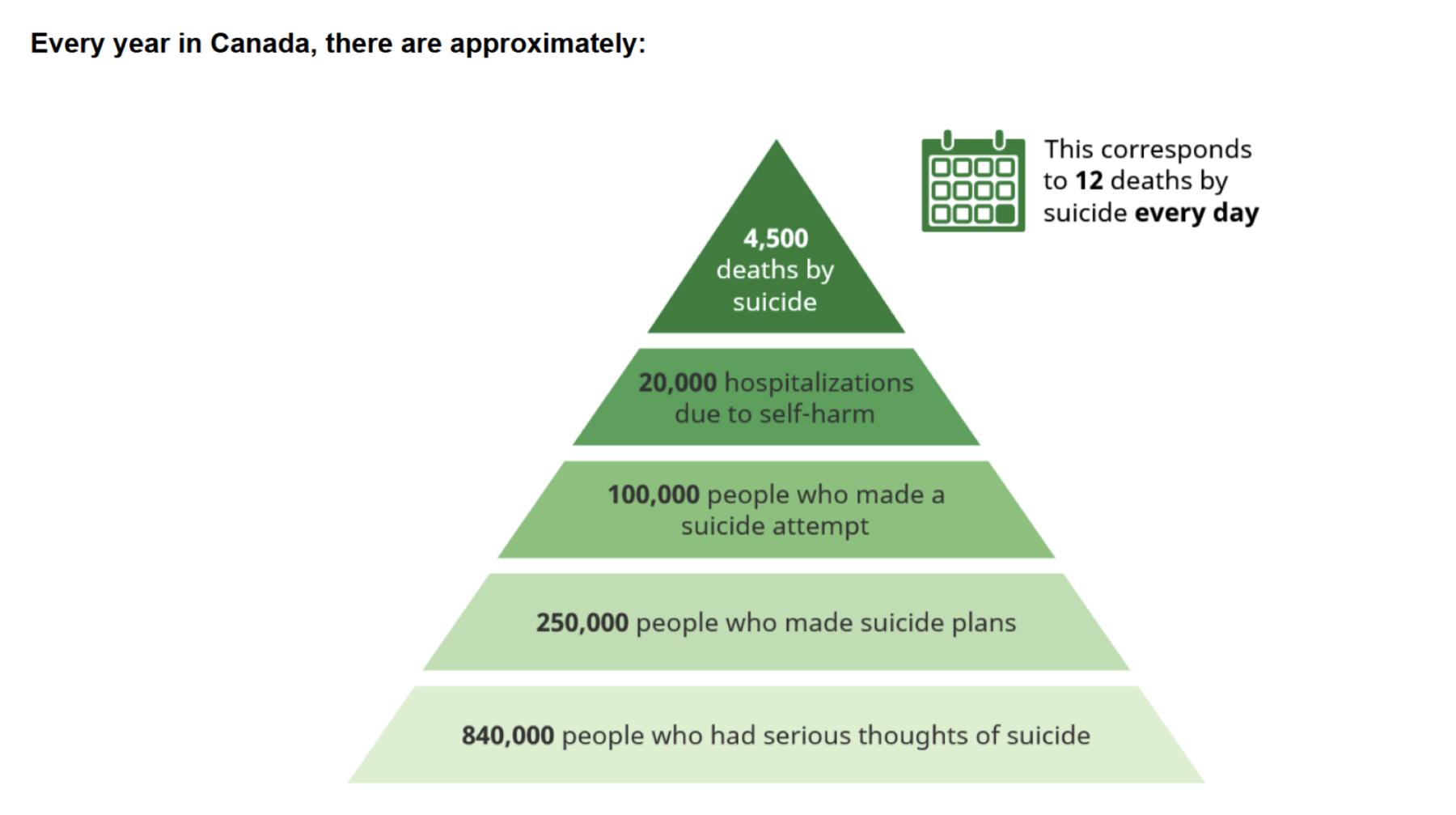
According to the Government of Canada, there are approximately 4,500 deaths by suicide per year, with 12 people dying by suicide each day. Of those deaths, men take their own lives at a rate nearly three times higher than women.

Suicide, self-harm, and suicide-related behaviours in Canada, according to the Government of Canada.
Suicide, self-harm, and suicide-related behaviours in Canada, according to the Government of Canada. Photo credit: Matthew Grieve

Blad also shared he runs a group for men called Elevate, which focuses on topics affecting men, such as substance use. The group is set to return for the 2025 to 2026 school year, and the goal is to take every opportunity to provide men with the support they need.

In residence, mental health is supported through a connection-based approach led by residence advisors

William Logan, Residence Life Manager at Algonquin College, confirmed that no events were planned in June to mark men’s mental health awareness month. However, the residence continues to offer support for students’ mental well-being.

“We do not provide clinical (or) therapeutic support; instead, we focus on building connections and making referrals,” said Logan. “After we make a connection, we focus on identifying what on-campus and off-campus supports might be beneficial to residents and help connect them to those resources. We often make referrals to Counselling and Health Services.”

A card from Algonquin Collegeโ€™s Student Support Services.โ€œHow are you feeling today?โ€โ€”highlighting ongoing efforts to encourage mental health awareness and peer connection on campus.
A card from Algonquin Collegeโ€™s Student Support Services.โ€œHow are you feeling today?โ€โ€”highlighting ongoing efforts to encourage mental health awareness and peer connection on campus. Photo credit: Matthew Grieve

Chris Lackner, Senior Manager, Communications and Strategy for the Algonquin College Students Association, said the organization doesn’t have events specifically for men’s mental health awareness in June. Nonetheless, he emphasized that the association recognizes the importance of supporting mental wellness for all students.

“Our approach is to provide awareness of the mental health supports available through the Algonquin College and the Student Health Plan, which is provided through the Student Association. Students have access to mental health professionals, peer support, and wellness resources that are inclusive of all gender identities,” said Lackner.

As men’s mental health awareness month comes to a close, Algonquin College is reminding students that they are not alone and that support is available.

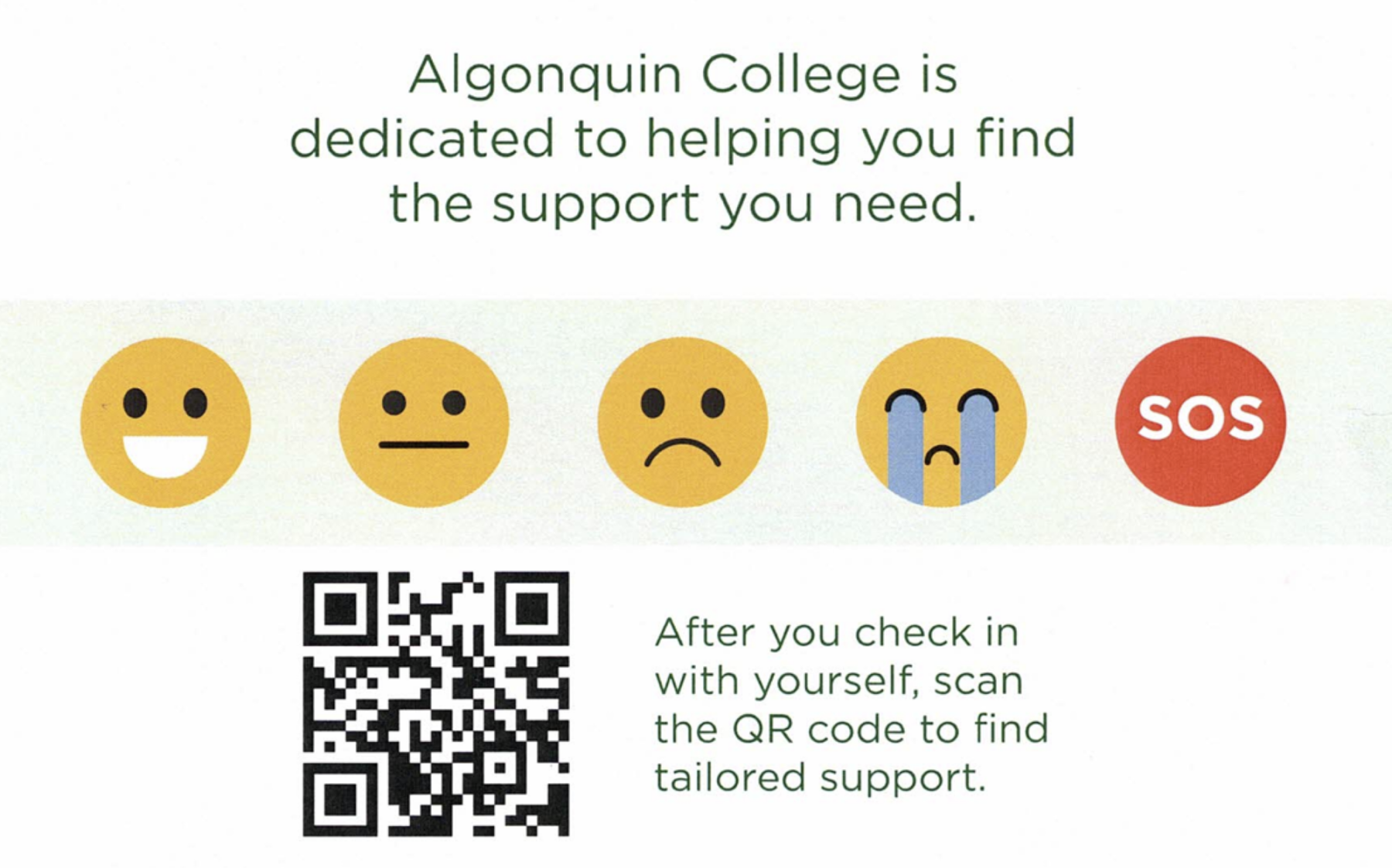
Algonquin College encourages students to asses their mental health with a QR code linking them to tailored support resources.
Algonquin College encourages students to asses their mental health with a QR code linking them to tailored support resources. Photo credit: Matthew Grieve

Algonquin College alum co-authors book about Canadian punk rock scene

A graduate of Algonquin College’s journalism program, Adam Feibel marked a major milestone by co-authoring his first book with longtime friend Matt Bobkin about pop-punk music
Photo: Jade Louise Greenwood
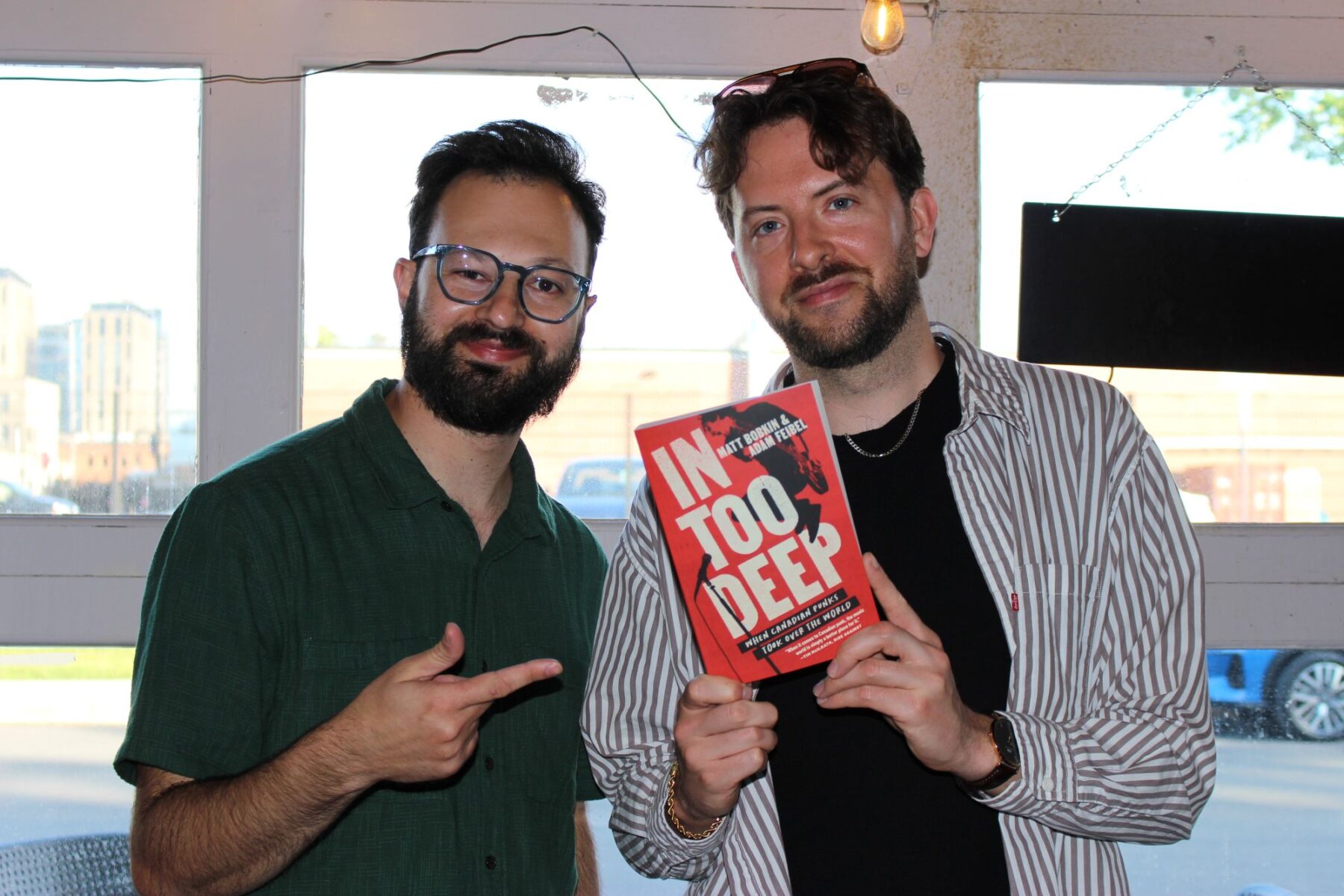
Matt Bobkin and Adam Feibel (left to right) show their book at their book launch at Happy Goat Coffee Co. on June 28.

Matt Bobkin and Adam Feibel step up to the stage with relaxed smiles, their voices warm as they welcome the audience to their book launch.

Adam Feibel and Matt Bobkin (left to right), standing together before going on stage to talk about their book In Too Deep.
Adam Feibel and Matt Bobkin (left to right), standing together before going on stage to talk about their book In Too Deep. Photo credit: Jade Louise Greenwood

In Too Deep captures a pivotal seven-year surge, from 2000 to 2007, when punk broke into the mainstream, and how Canadian artists played a central role in that cultural breakthrough.

“What this book proves is that there is world-changing art in our own towns and our own provinces,” Bobkin said. “All of these artists had to go through the States in order to get the attention they desereve from their own country and I think that’s bullshit, and I think that should change.”

After building years of experience, Bobkin and Feibel earned the trust and access needed to speak directly with big-name artists. Most reporters start at the performer, but Feibel and Bobkin dug deeper and gained trust through the grapevine.

“It’s a point of pride for it because, yeah, we did do a lot of interviews for it,” Feibel said. “I think that’s a strength of it, we’re not amateur writers fanning out over these artists that we love—we did the work.”

The book referenced many artists, including Sum 41, Avril Lavigne, Billy Talent, and Marianas Trench and how they had an impact on the early 2000s.

“We have nine big chapters on the nine big punk exports—that’s insane,” Bobkin said. “There’s no other genre where you can get that many from the same country, that all at some level—that’s not the (United States) —where you can get some level of global notoriety.”

The book, In Too Deep, by Matt Bobkin and Adam Feibel, displayed at their book launch at Happy Goat Coffee Co. on June 28.
The book, In Too Deep, by Matt Bobkin and Adam Feibel, displayed at their book launch at Happy Goat Coffee Co. on June 28. Photo credit: Jade Louise Greenwood

Their voices carried through the room, with both excitement and humility as they spoke about the journey that brought their book to life; years of late nights, deep research and a deep love for the music that helped shape their generation.

“We wanted to showcase just how difficult it is for Canadian artists to break through internationally,” Bobkin said. “All nine of those chapters deal with, in some way, the struggle of breaking into the States and being Canadian, and we really wanted to show that it is weird that it happened. Why did it happen with pop-punk of all genres? Of all movements?”

Through exclusive interviews and behind-the-scenes stories from managers, producers and friends of the artists, Bobkin and Feibel show how these performers brought a new spotlight to the music scene.

“We can stretch it out and tell the whole story,” Feibel said. “We get to do the interviews that no one’s done before and find out things that no one’s, you know, the stories that people haven’t told before. All that’s in the book.”

Kaitlyn Filip, Feibel’s partner, talked about In Too Deep with care and shared the dedication and work these men have spent years on, while keeping up with their day jobs.

Kaitlyn Filip, Feibelโ€™s partner, joined the launch of In Too Deep on June 28.
Kaitlyn Filip, Feibelโ€™s partner, joined the launch of In Too Deep on June 28. Photo credit: Jade Louise Greenwood

“I am so proud. It’s been four years in the making, they started working on this book forever ago, it feels like,” Filip said. “It’s so exciting to finally have the book out, and then to be able to celebrate it with all his friends and family. We are so excited.”

Mardi Weltman, Bobkin’s aunt, also attended the book launch and shared the reasoning for Bobkin’s dedication, which was written for her parents, Harry and Sally Weltman, Bobkin’s grandparents.

Mardi Weltman, Bobkin's aunt, came to the book launch and spoke highly of her nephew.
Mardi Weltman, Bobkin's aunt, came to the book launch and spoke highly of her nephew. Photo credit: Jade Louise Greenwood

“I’m here to celebrate my nephew and his friend and their work documenting Canadian music,” Weltman said.

As they wrapped up their speech, Bobkin nailed home the importance of their work.

“If you find a cool local band, share it on social media, tell your friends about it, tell your American friends about it,” Bobkin said. “They should start with us—the love of Canadian music has got to start at home.”

AC students belt favourites at Patio Karaoke Night

Students at Algonquin College scream and shout and let it out at karaoke night, patio edition
Photo: Scott Crowell
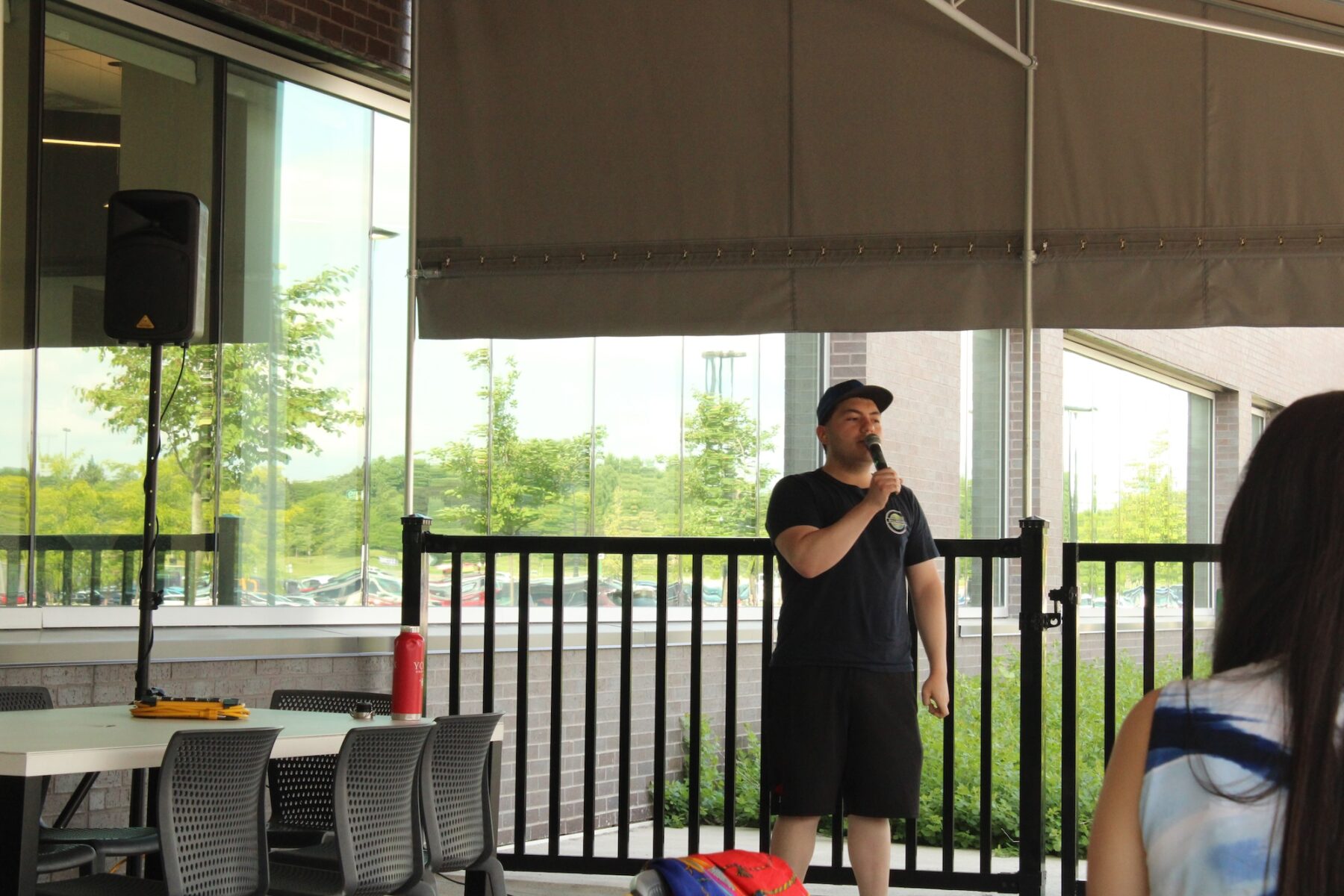
Start of karaoke night at the wolves den patio on June 19.

As midterms were in full swing at Algonquin College, the Wolves Den and Algonquin College staff hosted a karaoke night on the Wolves Den patio at the Jack Doyle Athletics and Recreation building on June 18.

The patio was full of nervous students, but also excited students, who had the opportunity to get away from all the thoughts of looming exams. Karaoke night had many surprises from a young girl singing her heart and rocking out, to staff at the school getting involved.

Students at Algonquin College were excited to use their vocal cords and let out some energy during a hot summer day.

Adam Hadad, a web development and internet applications student, kicked off karaoke night with Under the Bridge by the Red Hot Chilli Peppers.

Adam Hadad kicks off karaoke night on the patio on June 19.
Adam Hadad kicks off karaoke night on the patio on June 19. Photo credit: Scott Crowell

“I enjoy karaoke nights so I’ve done a few in the past, and I wanted to check tonight, and it was so worth it for sure. I wasn’t nervous at all especially since I was one of the first to queue up and sing. If anything I was more amped to get up there,” said Hadad.

Gonzalo Davila, who sang In The Air Tonight by Phil Collins, said it was his first time as a student to get involved in an event.

Gonzalo Davila sings in front of friends on June 18, Karaoke night.
Gonzalo Davila sings in front of friends on June 18, Karaoke night. Photo credit: Scott Crowell

“My friends convinced me to come tonight, but it was for sure worth it, absolute blast with everyone who came out tonight,” said Davila.

Alex Larochette, a computer science student at the University of Ottawa, and Jessica Dao, a public relations student at Algonquin College, who duetted together, were enthusiastic about karaoke night.

Jessica Dao (left) and Jessica Dao (right) sing at June 19, Karaoke night
Jessica Dao (left) and Alex Larochette (right) sing at June 19, Karaoke night Photo credit: Scott Crowell

“We’ve been to a few other karaoke nights in the past, here at Algonquin and at Ottawa U, and we will definitely be back again to other karaoke nights and other events,” said Larochette.

Larochette said Take My Breath Away by Berlin was his choice. He pushed hard for Dao to go up and sing with him.

“At first Jessica said no chance you will get me up there, however I think what won her over was the song choice. I actually heard this song on the radio the day prior and she loves Top Gun I can say it was a factor on why I was able to really convince her to sing with me,” said Larochette.

Dao, who overcame her nervousness to sing, has a message for students on future karaoke nights.

“Honestly, no one cares if you suck at singing or not, I didn’t want to sing but I still did and I don’t regret it one bit,” said Dao. “It was so much fun and I encourage others to come out to other events, especially karaoke nights down the road and even in the fall term.”

Sai Benedicto, manager at the Wolves Den, was pleased with the outcome on the patio as the afternoon went on. She estimated the turnout to be around 40-50 people on the patio along with students who walked by stop to listen to karaoke night.

“I wasn’t expecting the turnout to be anywhere near the amount of students and staff that actually showed up. Everyone crowded the patio and even got up willingly and sang in front of others, which shocked me,” said Benedicto.

Wolves Den staff member Danny Subia was impressed with just how many students decided to show up and flip the switch from school to fun.

“It’s a nice change for students who are so stressed with midterms and finals, to get out and just have fun and relieve that tension,” said Subia.

Algonquin College film grad releases new comedy short

"Erich's New Shirt," written and directed by Chris Szabo, is scheduled to be released by the end of June
Photo: Chris Szabo
James Belway acting on set for "Erich's New Shirt."

Chris Szabo, a 22-year-old Algonquin College 2024 film graduate, has written and directed a comedic short film called Erich’s New Shirt, which will be released by the end of the month on YouTube.

Chris Szabo, writer and director of Erich's New Shirt at the Art of Bean cafe in Orlรฉans.
Chris Szabo, writer and director of "Erich's New Shirt" at the Art of Bean cafe in Orlรฉans. Photo credit: Mila Leclair

“It’s been a long, rocky road getting here but I’m super glad to be done and it’s so satisfying to have something I can show to people,” Szabo said. “It’s nice to freely express myself through the projects I work on.”

Szabo admires the work of Canadian director and actor Matthew Johnson on his web series Nirvanna the Band the Show.

The short film blends Szabo’s signature wit with subtle nods to the cinematic voices that have helped shape his creative identity and vision, such as the British sitcom Peep Show and Tim Robinson’s I Think You Should Leave sketch comedy on Netflix.

“People sort of compare the stuff I do to (I Think You Should Leave), which I take as a compliment,” Szabo said. “In scriptwriting class, I’d try to make all the other students laugh and stuff with my ideas, just make ones that are really ridiculous.”

Originally from the Ottawa suburb of Orléans, Szabo hopes to make a name for himself locally. He has some advice for current film students.

“I wish I did more projects that weren’t assignments. I’d say just do your own projects, nobody is gonna stop you,” Szabo said. “Another thing is be friends with someone who’s going to be in the program when you’re done, so you can use their student privileges to get rental equipment.”

The project would not have been complete without the help of cinematographer Grace Marchington and Matt Kerridge, the first assistant director.

“I really like how warm she made her scenes look. It gave the film a cozy vibe, which I didn’t expect but I really like,” Szabo said. “Matt Kerridge was great because he did a lot of the planning involved with making the shoot possible, and on set he essentially bullied me into doing my job.”

Szabo also credits Rama Al-Zu’bi and Dean Matthew Cruz for helping achieve the nighttime exterior shot near the end of the film.

“Rama is someone I owe a lot too because she stepped up into the cinematographer role on our third and final day of shooting.” Szabo said. “It looked absolutely gorgeous thanks to her and Dean Matthew Cruz.”

Szabo’s favourite class at Algonquin College while studying film was scriptwriting with Jeff Ross.

“His class really emphasized the creative aspect of filmmaking, which I quite liked,” Szabo said. “I think what I appreciated most about his class was that it taught me how filmmaking didn’t always have to be a super serious endeavour. You’re allowed to have fun with it.”

Ross is an author who’s worked on video games and TV shows like Goosebumps.

The film crew on set for the short film on May 10.
Actors on set for short film on May 10. Photo credit: Chris Szabo

“The biggest lesson is that you just have to have fun. Like, if you want something to be good, you can’t detest making it,” Szabo said. “I think a lot of people’s projects don’t turn out really nice because they hate the very idea of doing it and just want the finished product. Certainly have a little bit of fun because it shows.”

For future projects, Szabo hopes to film a miniseries mockumentary on a fictional local band to explore the Ottawa music scene.

AC students say patriotism is ‘skyrocketing’ in the wake of Trump’s threats

In the lead up to Canada Day, students say Canada is a great nation though there's work to be done
Photo: Mickey Banks
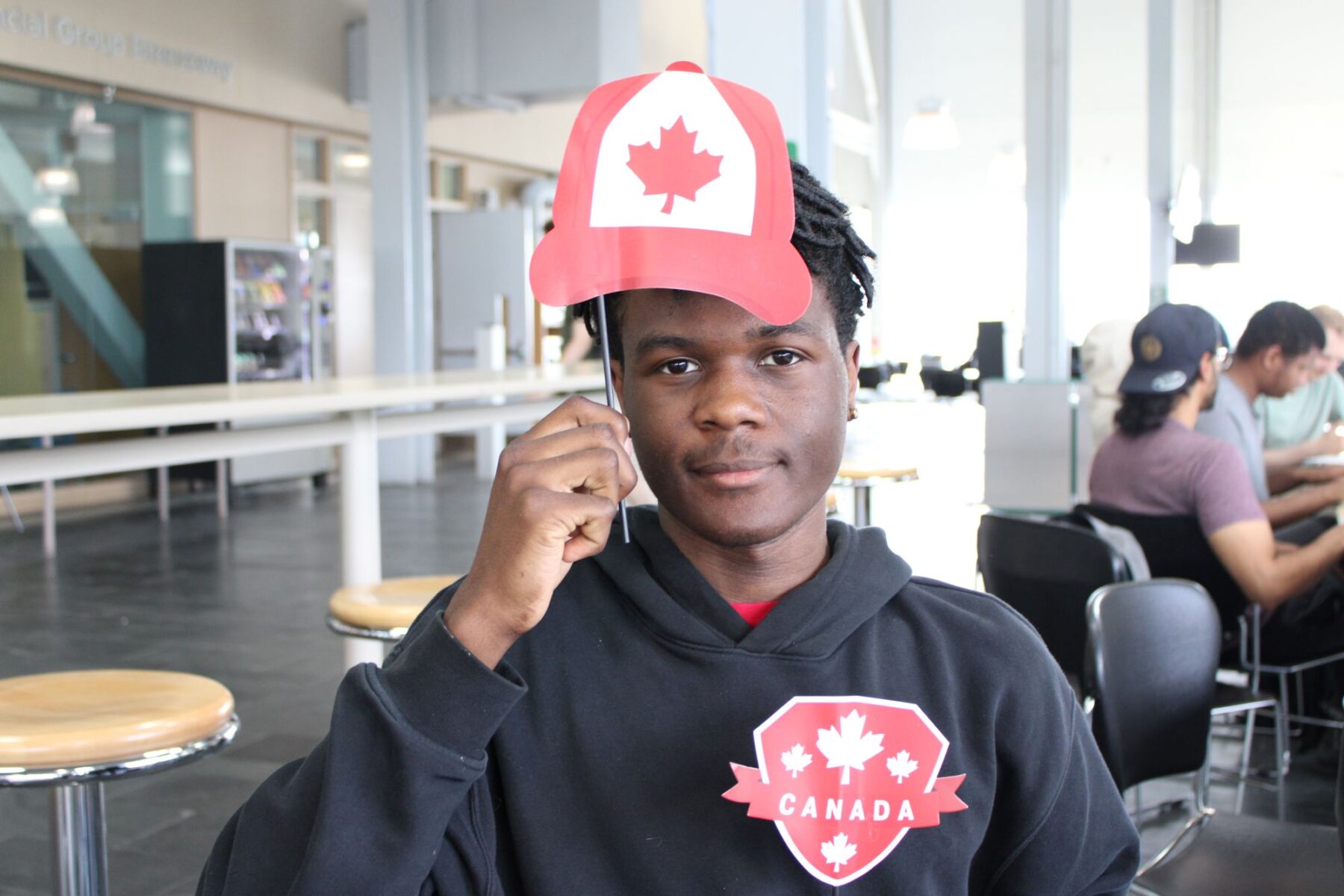
From left to right, Alexis Kuper, Chelsey Orchard and Amelia Greco are all in the paralegal program. They're sitting by the Starbucks in E-building.

Algonquin College students see a rise in Canadian patriotism in response to U.S. President Donald Trump’s threats.

A poll by the Angus Reid Institute in February showed a 10 per cent increase in Canadians who said they are very proud to be Canadian. This coincided with Trump’s remarks on tariffs and annexation.

Caleb Fomatatissong, who’s in the plumbing program at the college, believes Trump’s actions have given Canada a “common enemy.”

“I feel like I stand more with Canada, we’re more together, more united. I feel like what (Trump’s) doing is gonna in turn bring Canada together,” Fomatatissong said.

Caleb Fomatatissong in the ACCE building. He says Canada is one of the best countries in the world.
Caleb Fomatatissong in the ACCE building. He says Canada feels more united in wake of Trump's threats. Photo credit: Mickey Banks

The Four Nations Face-Off, an international ice hockey tournament featuring players from the NHL, was held from Feb. 12 to Feb. 20. Canada beat the United States in the final. Dagan Mohamed, who is in the dental hygiene program, said she noticed an increase in national unity during the event.

“A lot of the people that I knew, they were very patriotic and really rooting for Canada, a lot more than usual,” Mohamed said.

Although she doesn’t follow hockey, Mohamed said she felt more patriotic during the tournament.

Chelsey Orchard, who’s in the paralegal program, is also feeling a rising pro-Canada sentiment.

“I would definitely say that the patriotism has really skyrocketed. So many of my circle are only buying Canadian, not even European, not American, just Canadian,” Orchard said.

However, Orchard says she has mixed feelings about Canada. She was born in Canada, but her family immigrated from Italy.

“I feel like there’s this façade of nice people, and there’s this façade of free healthcare, this beautiful utopia of opportunity. And then when you get here, like when my grandparents got here, the opportunity was kind of dried up, and he had to work in the mines,” Orchard said.

Alexis Kuper, also in the paralegal program, says that while she loves Canada, she’s also frustrated with the Canadian political system.

“I think, especially in Ontario, a lot of our disenfranchised people fall through the cracks through poor economic funding,” Kuper said.

In March 2024, over two million people visited food banks in Canada with over 700,000 of them being from Ontario, according to a 2024 HungerCount report by Food Banks Canada.

Fomatatissong, who’s been in Canada for about 10 years, thinks it’s easy to take Canada for granted.

“I feel like people that hate on Canada, people that were born here and haven’t really experienced anything outside of Canada, so they think it’s bad ’cause that’s all they’ve known. So they can’t really compare to anything else,” Fomatatissong said.

“But when you come from a worse-off country, Canada is one of the best countries in the world.”

Listen: Algonquin Times podcast

Summer 2025, Episode 1: Reporter Marcos Somarriba joins hosts Janella Milord Ashford and Scott Crowell to discuss his story on recent cannabis vaping research

Hosts: Janella Milord Ashford and Scott Crowell

Audio editing: William Barritt

Guest: Marcos Somarriba

News headlines: Mickey Banks

Algonquin College students showcase innovative tiny home designs

Level 3 architecture technician students have entered a worldwide contest to dream big with their tiny home designs
Photo: Noemie Muller
Orisol by Noemie Muller, a tiny home featuring a four-room floor plan and a central courtyard.

Students from the architecture technician program have designed state-of-the-art tiny homes, aligning with the Canadian government’s plan to invest in prefabricated homes — factory-built houses assembled on-site — to tackle the housing crisis.

On June 10, the students presented their tiny home designs for the Volume Zero Competition, which features entries from all over the world.

Students designed tiny homes that reflected the idea that a home is not just a place you live in, but a place that lives with you, tailoring their builds according to the tastes and needs of their clients, who were mostly friends and family, while also incorporating aspects like sustainability, cost effectiveness and energy efficiency.

Noemie Muller was the architect of Orisol, a tiny home design that was inspired by origami. It featured a four-room floor plan that included an inner courtyard.

Level 3 architecture technician students pose in front of their tiny home designs, with Professor Marjan Ghannad at right-most.
Level 3 architecture technician students pose in front of their tiny home designs with professor Marjan Ghannad (last on right). Photo credit: Vasuman Ravichandran

“My clients wanted a work area which could be hidden away and turned into an entertainment space,” said Muller.

To fulfill the clients’ wishes, Muller designed the living room to become a multipurpose room.

“There’s a bed that descends from the ceiling there, so you can put the room in bed mode. You could also use it as a workspace, or you can use it to entertain people,” said Muller.

To execute the concept, Muller included specific foldable furniture that was appropriate for dining or working, and a retractable projector for entertainment.

“There’s also a shelf that’s built into the kitchen that pulls out, or it’s completely hidden if you want the extra space.” said Muller.

Muller’s classmate, Cullen Roberts, was the mastermind behind a teardrop-shaped tiny home called Capital Oasis.

Front view of Capital Oasis by Cullen Roberts, a teardrop-shaped tiny home with a circular view
Front view of Capital Oasis by Cullen Roberts, a teardrop-shaped tiny home with a circular view. Photo credit: Cullen Roberts

“Originally, I was trying to work with just a circular floor plan,” said Roberts. “I liked the flow from space to space when you’re navigating in there. In my mind, that’s better than having boxes for each space.”

In the end, Roberts decided to square-edge the rear part of the home to accommodate more space.

“It’s better to have a straight-edged section to put in furniture like beds,” said Roberts.

Prefabricated homes seem to be one of the most promising ways to solve the housing crisis, according to Paul Kealey, founder of Ekobuilt, a company that specializes in building cost-effective and energy-efficient homes, including prefab homes.

“While multi-unit buildings have for a long time been the foundation of most affordable housing plans, prefab tiny homes offer a fast, flexible, and lower-cost alternative, while also improving the quality of housing,” said Kealey.

Prefab homes are built off-site in climate-controlled environments and assembled on location, allowing for faster builds and lower costs with designs tailored to groups like young adults, seniors or the unhoused, according to Kealey. Tiny homes, a subset of prefab housing, typically range from 300 to 400 square feet, creatively maximizing space, with multi-floor models reaching up to 600 square feet.

According to Professor Marjan Ghannad, who teaches in the architecture technician program, a tiny home doesn’t come with a six-figure price tag like much of the residential housing market.

“A 300 to 400 square foot tiny home would cost around $50,000,” said Ghannad.

Considering Prime Minister Mark Carney has recently promised $25 billion in loans to the Canadian prefabricated homes industry as part of a plan to solve the housing crisis, tiny homes could become an attractive option for home buyers.

“I think definitely, because it’s a lot more affordable, tiny homes could be a viable option for younger people,” said Ghannad. “Even for older people who want to move to a smaller place, but are not able to afford an apartment. You can pretty much build it anywhere, as long as you have permission for the site.”

Vaping cannabis is more harmful than tobacco, researchers warn

Can vaping weed lead to lung cancer? Is it worse than tobacco? Algonquin College students are sharing mixed views
Photo: Marcos Somarriba
A person smoking a weed vape outside of campus.

A McGill University study published in May found that vaping cannabis is more harmful than tobacco and leads to long-term health risks. Students now have different feelings about using weed pens.

The study, led by Dr. Carolyn Baglole at the Research Institute of the McGill University Health Centre, studied how cannabis vapour affects lung cells. Research found that the vapour contains harmful toxins and carcinogens that damage lung cells, which is linked to cancer, inflammation, asthma and respiratory infections.

Despite the study’s findings being alarming, students at Algonquin College who regularly vape cannabis are having mixed reactions.

Algonquin College student, Isaac Donelly, 19, is a frequent user of cannabis, specifically weed pens. He does not care too much about the study, despite the findings.

Isaac Donelly, 19, outside of N-Building
Isaac Donelly, 19, outside of N-building. Donelly does not feel the urge to quit cannabis. Photo credit: Marcos Somarriba

“I’m not too worried, but I don’t plan on quitting weed just yet,” said Donelly. “I’ve been smoking for a while, so I don’t really care.”

The study has also caught the attention of non-cannabis users. Centrepointe resident and University of Ottawa student, Nour Ben Moussa, 18, found the study alarming but not surprising.

“This study doesn’t change my view on cannabis since I know it has more side effects from the start,” said Ben Moussa. “I’m not surprised cannabis can cause health risks like cancer, but weed literally fries brain cells at some point, so it doesn’t surprise me that it also causes cancer.”

Nour Ben Moussa, 18, at College Square.
Nour Ben Moussa, 18, at College Square, waiting for her boyfriend to purchase a weed vape while she waits outside as she reminds her boyfriend it is their choice. Photo credit: Marcos Somarriba

Ben Moussa goes to College Square, the plaza across the college, at least once a week to spend time with her boyfriend. However, she dislikes going to the plaza because her boyfriend always purchases vaping devices.

“My boyfriend vapes his weed pen almost every day, and it can affect our relationship. When he consumes too much, he starts coughing brown saliva,” said Ben Moussa. “I just hope that he acknowledges this information, but at the end of the day, he’s an adult and he should know the consequences of his own actions.

The “brown mucus” her boyfriend experiences is something called “brown phlegm.” Phlegm is the mucus produced in the human respiratory system.

Savannah Rae, a paramedic student at Algonquin College, says she does not feel the same after quitting cannabis six months ago.

“I’m a little concerned but not surprised (about the study),” said Rae. “I have a little cough, and I noticed a decline in my cognitive function from smoking every night.”

Earlier this year, the University of Colorado conducted the biggest study on marijuana. The study found that frequent use of cannabis can decrease the brain’s cognitive function and reaction time.

As vaping cannabis is now shown to harm cells similar to tobacco products, Health Canada continues to urge the people to monitor themselves for pulmonary symptoms, mainly from illegal unregulated vapes.

Algonquin Times podcast

Stay Informed

Sign up for our newsletter

Subscribe

* indicates required