Jays fever has hit the college and students aren’t shy about showing their team pride
Nicklaus Korim
Photos: Nicklaus Korim
October 18, 2025 Revised: October 18, 2025 12:25pm
Photo: Nicklaus Korim
Toronto Blue Jays hats outside of the E-building at Algonquin College on Oct. 17.
Toronto Blue Jays fans at Algonquin College are buzzing with excitement as their team battles for a spot in the World Series.
Gavin McLean, a graduate of the electrical apprenticeship program and a lifelong Toronto Blue Jays fan, could not be more excited about the Jays having a shot at making it to the World Series if they win the American League Championship Series.
“It means a lot to me and my family to see the boys in the ALCS,” said McLean.
McLean became a Jays fan after his mother, who went to Ryerson University (now Toronto Metropolitan University), had season tickets to the Blue Jays in her youth.
“The Jays are always on in my house,” said McLean.
McLean said he’s extremely excited about the Jays right now and optimistic about the team’s future. Naturally, he was also over the moon after the Jays eliminated the New York Yankees in four games in a best-of-five series.
“As a Canadian, you gotta dislike the Yankees,” said McLean. “Nothing more patriotic than beating the Yankees.”
Along with his lingering excitement about the Jays beating the Yankees, McLean said there are a couple of Jays players this season making him more excited than ever.
“Vlad’s got to be my favourite player right now. He’s the leader of the team, and his bat’s hot right now,” said McLean. “Trey Yesavage has got to be the rookie of the year.”
Vladimir Guerrero Jr. has been the star of this Toronto Blue Jays lineup. In the regular season, he batted .292 with 23 home runs, 84 RBIs and an OPS of .848. If he hadn’t already won the hearts of Toronto fans, this season’s World Series run has done it. Whether it’s him showing off his power at the plate or his friendly demeanour on and off the diamond, he’s an electric player to watch.
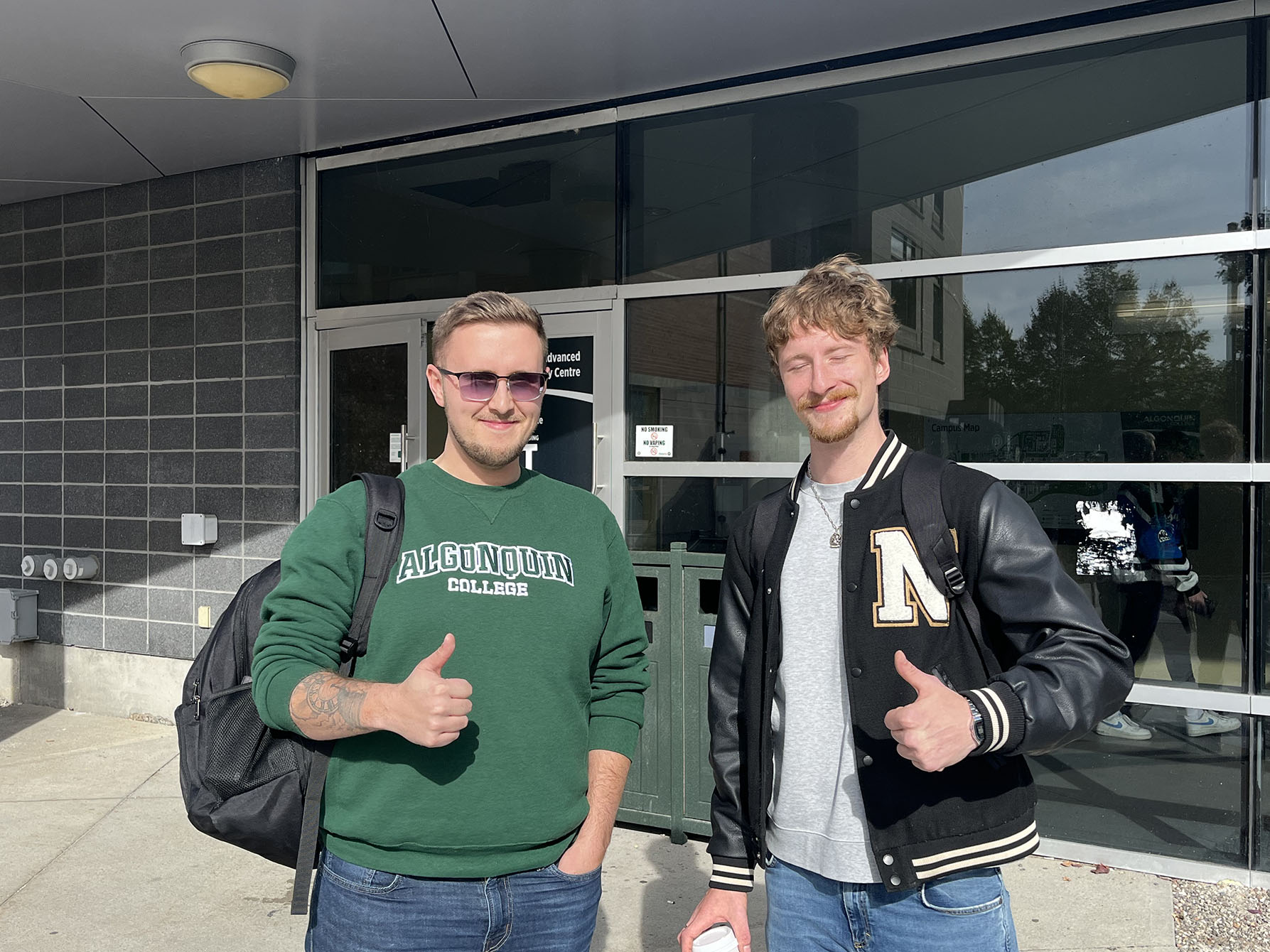
Addison Adams and Cody Townend, both in the computer systems technician networking program, share the same sentiment most fans do about Vladdy and his bat.
“Good ol’ Guerrero Jr.,” said Townend when asked who his favourite player was.
Cody Townend and Addison Adams outside on the Algonquin College Campus Oct. 17. Photo credit: Nicklaus Korim
Adams was anticipating seeing the Jays make a run right from the beginning of the season.
“We’ve put on a great show, with that nine-game win streak this year,” said Adams.
The win streak was a huge factor in the Jays finishing the season with 94 wins and 68 losses in the regular season, winning their division in the American League East.
From outstanding performances at the plate to dominant outings on the mound, the Toronto Blue Jays have hung on long enough to take the team to the ALCS — and potentially beyond to the World Series.
During their qualifying match, the Wolves scored all the goals, including one on themselves
Mickey Banks
Photos: Mickey Banks
October 18, 2025 Revised: October 18, 2025 8:32am
Photo: Mickey Banks
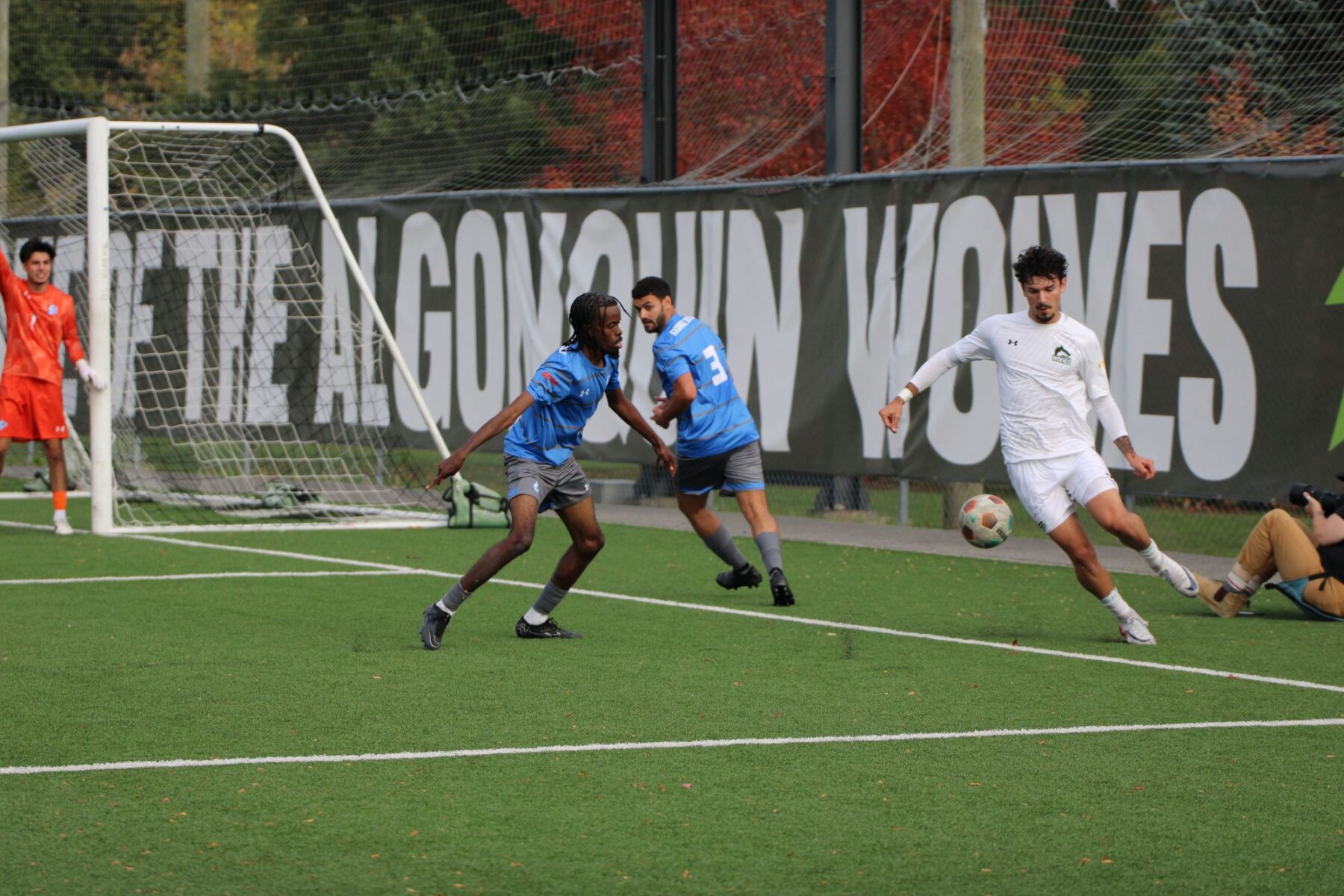
Wolves captain, Cristian Aviles-Molina, believes the Wolves adapted well to the Falcons' defensive strategy.
The Algonquin Wolves men’s soccer team defeated the Fanshawe Falcons 4-1 at home on Oct. 15 to advance to the quarterfinals.
With this win, the Wolves were scheduled to face Sheridan Bruins on Oct. 18 at the Algonquin Sports Field.
Gershom Dupuy opened the scoring 26 minutes in on an assist from Alix Basa. It was the only goal scored in the first half.
Falcons’ head coach Rob Pereira said they tried to change strategies.
“I thought we did a really good job of that, limited their high danger scoring chances,” Pereira said. “But unfortunately, they got the one in the first half, and then we needed to open up a little bit, and then it hurt us when we switched.”
The change did not go unnoticed by the Wolves.
“We had to adapt, obviously, because we saw how they dropped deep really quick and gave us a lot of the ball,” Wolves captain Cristian Aviles-Molina said.
Aviles-Molina compared their strategy to that of the George Brown Huskies in their game on Oct. 11 and thought the Wolves adapted quicker this time around.
Basa scored 20 minutes into the second half, assisted by Alaa Mahfouz. Three minutes later, Mohammed Mecheri booted it in on an assist from Basa, giving Basa a four-point night.
Alessandro Vivolo scored with just a few minutes to spare, ending the game on a high note. Photo credit: Mickey Banks
Then about 87 minutes in, there was a mishap when Wolves goalie Nick Parry scored on his own net, fumbling a pass from a Wolves player.
“Obviously, (Parry is) going to be a bit annoyed with himself,” Aviles-Molina said. “But we as a team, we don’t feel (that) way about it at all. We know that Nick’s a quality goalie, and he hopefully bounces back quick, but I know he will.”
Then about a minute later, Alessandro Vivolo ended the game on a high note, scoring with an assist from Alaa Mahfouz.
Vivolo, who had the most points in the regular season with 38, had some chances earlier in the game, including a penalty kick.
“I feel like I should have had a couple,” Vivolo said. “Then I missed the pen, and then my head was gone. But I just had to take some deep breaths and just get back into the game. And luckily, I got one at the end.”
The women’s soccer Wolves also had a successful night, beating the Fanshawe Falcons 4-0 to advance to the quarterfinals. They were scheduled to face the Humber Hawks on Oct. 18 at the Algonquin Sports Field, with the women’s game at 12 p.m. and the men’s game at 3 p.m.
Featured Hero | Featured Story | Home Feature | Sports & Recreation
The long-standing tradition marks the nurses' induction into the world of health care
Bradley Richards
Photos: Bradley Richards
October 17, 2025 Revised: October 17, 2025 3:41pm
Photo: Bradley Richards
Alexander McCaffrey (left), a graduating student of the practical nursing program, receiving his pin at the ceremony.
Studying in the practical nursing program often comes with a stressful workload and sleepless nights. Students and professors at Algonquin College say it can be intense.
But all the hard work pays off in that long-awaited pinning ceremony where students receive their practical nursing pin in front of their fellow graduates, friends and family.
On Oct. 15, practical nursing graduates took to the stage at the Algonquin Commons Theatre (ACT) to receive this symbolic pin, marking the transition from a student to a member of the wider nursing community.
“It’s a lot of hard work,” graduating student Anjali Chandel said. “We deserve to celebrate that hard work, the success, and the stress we took on over the two years.”
Chandel was the organizer for the pinning ceremony this year. She opened and closed the ceremony with inspiring words for her new nursing colleagues.
“As we leave this ceremony and take our first steps as professional nurses, let us go forward with courage, empathy and with an unwavering commitment to be the best nurses we can be,” Chandel said.
Anjali Chandel standing next to a sign she helped design that many graduating students were seen taking their own pictures next to before the ceremony. Photo credit: Bradley Richards
More than just a chance to celebrate graduation, the pinning ceremony was a moment to finally relax for graduates like Isabella Crowne.
“I feel relieved, honestly. It was hard, but I feel very accomplished,” Crowne said.
Describing the pressures as a student in the practical nursing program, Crowne said with a laugh, “my will to live dwindled several times, but I loved every minute of it.”
A poignant moment of the ceremony was when the new nurses receive their pins from another nurse of their choosing.
Many students chose to have their professors pin them during the ceremony; some chose nurses they worked with during their placements.
According to Kim Gray, an instructor in the practical nursing program, there have been cases of grandmothers pinning granddaughters and welcoming them into the field of nursing, one familial generation of nurses welcoming the next.
Kim Gray, an instructor in the practical nursing program, speaking at the pinning ceremony. Photo credit: Bradley Richards
The ceremony also has a rich history that began with Florence Nightingale, the founder of modern nursing, who provided specialized pins to her hardest-working students in honour of their dedication to the program.
By 1916, it became standard practice to provide pins to all nursing graduates.
This was a big moment for the 2025 graduates of the practical nursing program and the audience made sure they knew it with the sound of clapping and cheering filling the theatre when each graduate stepped onto the stage.
“It feels like, not so much the end of a race, but the next part of a relay,” Alexander McCaffrey said about receiving his pin.
“This is the initiation into a profession, one that I hope I will be in for the rest of my life.”
Featured Hero | Featured Story | Home Feature | Home Hero | News
After five weeks of job action, both parties reached a tentative agreement
Ernest Ko
Photos: Ernest Ko
October 17, 2025 Revised: October 17, 2025 12:29pm
Photo: Ernest Ko
With the agreement announced early Wednesday morning, entrances and strike trailers were left vacant.
The Ontario Public Service Employees Union (OPSEU), representing the province’s full-time college support workers, reached a tentative three-year agreement with the province on Oct. 15, ending the five-week-long strike.
The details were presented to union members that afternoon, with picket lines closing across the province’s 24 colleges. The 10,000 striking employees have since returned to work.
Students at the college expressed relief after learning the news.
Alek Desjardins and Ethan Cleveland, both in the bachelor of event, sport and entertainment management program, drive to school every day. They said they’re happy it’s over and they no longer have to “struggle entering the parking lot.”
“Coming in at 8 a.m. was the worst, because everyone had class and nobody could get onto campus. So it’s nice to know we can now, and I don’t have to leave earlier,” Desjardins said.
“I understood the cause, but saying you’re helping students and then making them late for class, I felt their actions were going against their motives,” he said.
Fortunately, traffic was the worst of their troubles during the strike. Cleveland said he was not affected by the suspended operations due to the job action, but his patience was tested.
All entrances to the college were blocked on Oct. 2, causing confusion and frustration among many students. Photo credit: Ernest Ko
“I was supportive at the beginning,” Cleveland said. “But making it hard to get to school, for me, it was getting old.”
Grace Ellis, another Algonquin College student, had a different tone. She said she’s “happy” the staff found an agreement.
“The teacher’s aides need to be paid a good wage and have the right benefits. They’re the foundation of what we do and why we’re here, so it’s definitely fair for them to get what they deserve,” she said.
The strike, OPSEU says, was to advocate for public postsecondary education, alleging that the province was severely underfunding it. Photo credit: Ernest Ko
The deal was negotiated after weeks of bargaining, eventually with the help of mediator William Kaplan.
In a statement released by OPSEU, the union declared it had successfully negotiated wage and benefit increases, “enhanced job protections against technological changes,” and other significant gains.
Christine Kelsey, chair of OPSEU’s bargaining team, considered the agreement a success.
“We’ve won more than a contract,” she said. “The public now understands that our college system is being deliberately defunded as part of the collateral of (Premier Doug) Ford’s devastating privatization agenda.”
The tentative agreement will require ratification from union members before Nov. 4.
In a message to students, Algonquin College senior vice president academic Julie Beauchamp thanked everyone for their “patience and understanding over the past few weeks, and for the care and respect you’ve shown to one another and our community.”
“As we transition back to regular operations, some areas may take a bit of time to return to full capacity,” Beauchamp said. “We appreciate your continued understanding and encourage you to monitor your email for updates.”
Many of the college's operations, like the Centre for Accessible Learning, will resume normal operations now that its full-time employees have returned. Photo credit: Ernest Ko
This agreement may not completely mark the end of college strikes this year, however. Part-time college support staff recently held their own strike vote.
Should 50 per cent of members vote for a strike mandate, the part-time workers’ “bargaining team can call for a strike” if negotiations with the province remain unsuccessful. The union says it’s unsure when that point may be.
Featured Hero | Featured Story | Home Feature | Home Hero | News
Charae Degrow has reached a milestone, performing her first-ever stage show at LIVE on Elgin on Oct. 18
Matthew Grieve
Photos: Truthpix
October 17, 2025 Revised: October 17, 2025 12:07pm
Photo: Truthpix
Charae Alexandra opening for Active Mirror at the Rainbow Bistro.
Charae Degrow has turned her passion into a reality, all with the help of Algonquin College.
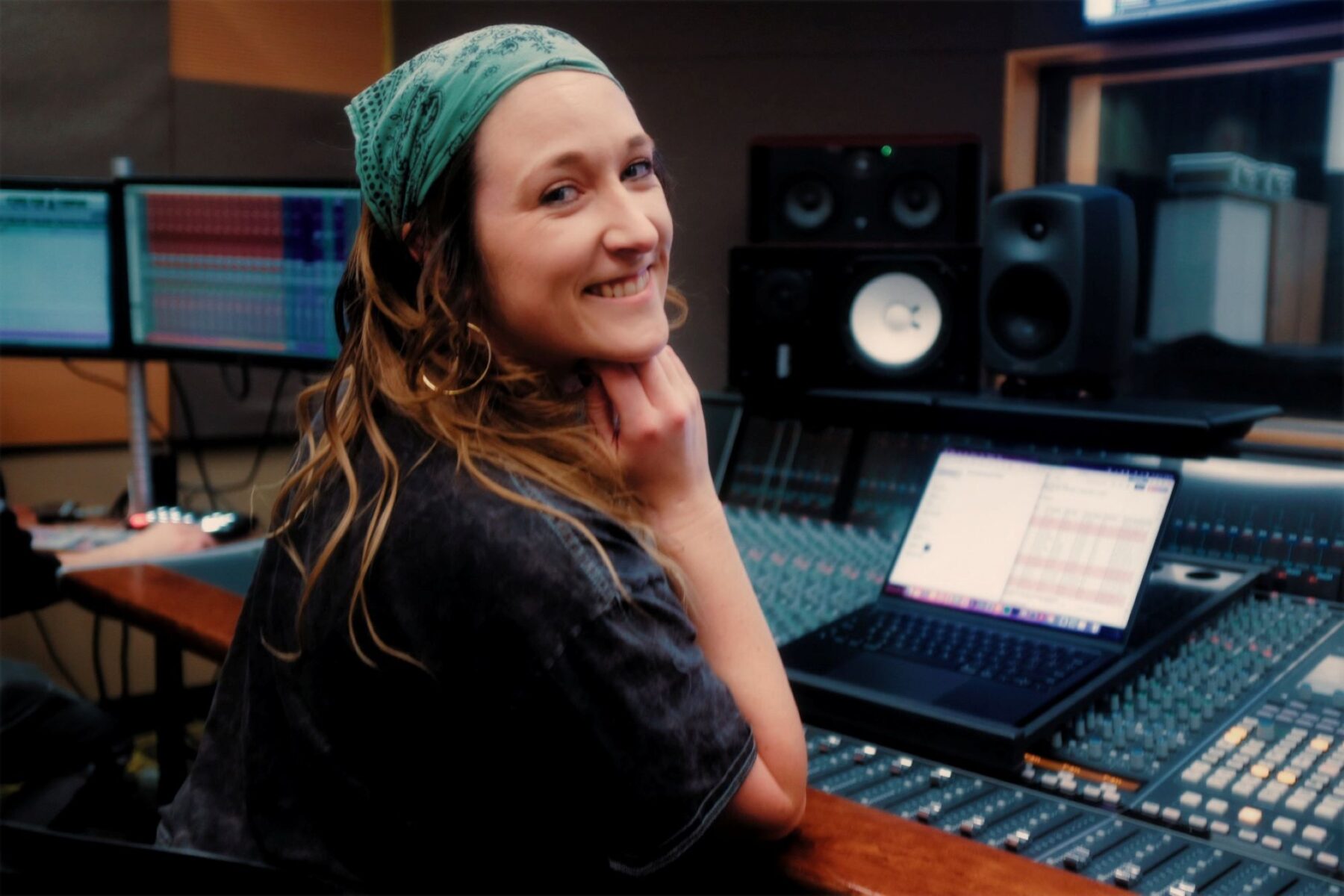
Once a psychology graduate, Degrow shifted her path to follow her true calling in music. Now, she has transferred her life-long passion to the stage, performing in her own self-made show.
Charae Degrow poses in front of a building. Photo credit: Ben Joldersma
It wasn’t until after earning her degree from McMaster University in 2017 that Degrow admitted she felt something was missing.
“In my family, going to college wasn’t really an option, you were expected to go the academic route, get a university degree, and find an academic job,” said Degrow. “But I’d always wanted to pursue a career in music. After finishing my undergrad, I worked for a couple of years in mental health, but I didn’t feel fulfilled. I started asking myself, ‘What is it I actually want to do?‘ I reflected back to high school, before people started telling me what I should do and realized it had always been music. So I decided to take a chance on it.”
After spending seven years in her previous career, Degrow decided to take a leap of faith and go back to school at the age of 29.
She is now a recent grad of the music industry arts program and has found immense success. Her achievements range from working live shows at venues like Club Saw, Dominion Tavern and the Bronson Music Centre, to shadowing radio frequency coordinator Wayne Hawthorne on the main stage at Bluesfest.
After supporting many successful performances, it’s now Degrow’s turn to put on a show.
For one night only, on Oct 18, at LIVE! on Elgin, she will be performing Dual Worlds, an original play featuring ten rock-opera songs, most of which are original. The songs intertwine Greek myth and metaphor to reflect her lived experiences. The story is a battle between the world she grew up in and the one she discovered through love. She will be accompanied by local rock group Polarized and world-renowned cellist Raphael Weinroth-Browne to bring her story to life on stage.
Not only is she having success, she’s redefining the odds.
“It’s tough, especially being a woman in the music industry. It’s very male-dominated. Less than five per cent of non-artist roles in the music industry are held by women or gender-diverse people,” said Degrow.
“Here in Ottawa, I currently only know one other female audio technician. While I was working last week at a new workplace, there was a colleague that said, ‘I have never seen a woman pushing stage boxes before. I thought you were the client. I didn’t know that you were going to work with us.’ It can be really intimidating, but at the same time, it’s kind of exciting.”
When looking back at her time at Algonquin, Degrow knows the college added a feather to her wings.
Charae Degrow at Algonquin College's music industry arts studio in the N-building. Photo credit: Supplied by Charae Degrow
“I would say that the teachers in the program played a massive role. It felt like the teachers really wanted to be here. And in our program, all of the teachers have full careers happening in the industry actively. The majority of them are part-time, and so they’re choosing to be here teaching on the side.”
This is only the beginning for Degrow as she builds her achievements. Reflecting on her journey, she shared words of encouragement for others.
“You’re driving the car now, and the car is your career, and you have to make all the decisions as to where you want to turn, how fast you want to go,” said Degrow. “It takes a lot of work and persistence, and you must be comfortable with noes. You must be comfortable with rejection. There were festivals that said no. There were people who weren’t interested. There were interviews that didn’t choose me. And you just must keep pushing through that until you get those yeses.”
Arts & Entertainment | Featured Hero | Featured Story | Home Feature
Why these television broadcasting students think AI actors are a mistake
Robyn Lanktree
Photos: Robyn Lanktree
October 16, 2025 Revised: October 16, 2025 4:21pm
Photo: Robyn Lanktree
Isabela Arbache instructing classmates before a live broadcast on Oct. 8, 2025
For Isabela Arbache, a great movie doesn’t need a huge budget, dozens of cast members or famous actors. In some cases, an award-winning film can be shot with just three iPhone 5 cameras, an $8 editing software and people who have a story to tell.
Arbache was referring to Tangerine, a 2015 film by Sean Baker, the Oscar-winning director of Anora. The movie followed a prostitute’s mission to confront her cheating pimp-boyfriend and won 24 awards, all without studio equipment, millions of dollars or AI.
Isabela Arbache directing a live broadcast on the Algonquin College campus on Oct. 8, 2025. Photo credit: Robyn Lanktree
“The actors weren’t even graduated actors,” Arbache said. “They were trans women who used to work in prostitution. The whole concept of the movie was to enlighten people.”
Tangerine’s allure came from its gritty reality, a human story told and portrayed by people who lived that life.
But what about stories that aren’t told by real writers or human actors?
Tilly Norwood, an AI actress developed by Xiocia, is at the forefront of new media that isn’t produced by or featuring real people.
Eline Van der Velden created Xiocia, an AI production company, with the intention of building a talent agency representing over 40 distinct AI personas. Tilly Norwood is just the first to be introduced.
Van der Velden plans to debut her stars across film, video games, YouTube, brand deals and social media.
“We believe the next generation of cultural icons will be synthetic – stars that never tire, never age and can interact with fans,” Van der Veldon said in an article by Deadline.
So far, Tilly Norwood has only been featured in a YouTube sketch video that Van der Veldon created with ChatGPT and generated actors.
The sketch video promoted a media future run by AI, claiming AI to be a better writer, budgeter and performer than real people.
Arbache, a student in the broadcasting television and streaming video program at Algonquin College, disagreed.
“Absolutely not. I don’t think anything could beat a human being’s mind,” Arbache asserted.
Arbache’s classmate, Alice Martin, abhorrently shared the same sentiment. They believe some people turn to AI due to a lack of confidence in their own skills. However, to Martin, art doesn’t need to be perfect to have value; it just needs to be human.
“I’d rather have a variety of people from different skill levels and read through that than anything that AI generates,” Martin said. “It takes sources from everywhere, and it makes the most derivative slop because it generates to the most common denominator.”
Although AI attempts to appeal to the majority, it can inadvertently erase diversity.
“AI is very homogenized, and a lot of big media focuses on white people; white, cis, guys and women,” they said. “They’re going to prioritize depicting more white people rather than people of colour (and) queer people because they’re not as often depicted.”
Not only does Martin fear the burial of marginalized perspectives, but they are also concerned about how Xiocia sources the material to train Norwood.
Since Norwood has no life experience or emotion to inspire her work, she was developed through the performances and likeness of real actors, without their consent.
“They’re literally scraping from their hard work and then using their hard work to replace them,” Martin said.
The Screen Actors Guild and American Federation of Television and Radio Artists (SAG-AFTA), the union representing actors in the United States, refuses to acknowledge Norwood as an actress for this reason.
Kearstin Reckzin working on a live broadcast on the Algonquin College campus on Oct. 8, 2025. Photo credit: Robyn Lanktree
“If you’re an actor, your body is like your work tool,” Arbache said.
“You are giving literally your soul, your blood, to your work. To grab that and enrich something that will take your job away from you; it’s absolutely madness to me.”
However, consent is not just a concern for actors. It also poses questions on what AI can be prompted to do without any objections.
Van der Veldon’s skit, written and spoken by the video’s programmed characters, foreshadowed the flaws of an entertainment industry that lacks a human touch.
“It (the AI movie promoted in the skit) cast and budgeted itself. Only bit it struggled with was consent in romantic scenes,” an AI character said in the sketch. “We just ignored that.”
Another character impersonating Norwood’s programmer added to this sentiment. “She’ll do anything I say,” he laughed. “I’m already in love.”
With Norwood at the whim of each prompt she’s given, opportunities to exploit her image and likeness are all too easy.
AI has already been used online to create deepfakes, or doctored images of users, often editing women’s photos to make them appear naked.
Arbache said that her friend had experienced this online as people used AI to remove her bathing suit from photos she had posted.
“Everything that goes into the internet, it’s not like it’s going away,” Arbache said. “So you have a full-body nude of yourself somewhere on the internet that you didn’t even consent to.”
Although Norwood isn’t a real person, the impact of having an easily exploitable tool in the image of a woman can convey dangerous messages to human audiences.
Unlike real women, Norwood doesn’t have the insight or autonomy to refuse roles or portrayals that actresses and intimacy coordinators would instinctively know are inappropriate.
However, replacing people working in media doesn’t just dilute the quality of the content out there, but can be discouraging to the students going into the field.
Alex Ramos, a classmate of Arbache and Martin, believes that art stems from humanity, and removing the human element from art endangers the field.
“Art is a social commentary,” he said. “I don’t see how AI can do that or why they should do that.”
Arts & Entertainment | Featured Hero | Featured Story | Home Feature
As Ontario moves to eliminate speed cameras, students and residents near Algonquin College weigh in on what it means for road safety
William Barritt
Photos: William Barritt
October 16, 2025 Revised: October 16, 2025 2:35pm
Photo: William Barritt
Ben Taylor, who drives daily along Woodroffe, believes the location of photo radar is what really matters.
Premier Doug Ford announced on Sept. 25 that his government will move to abolish speed cameras across Ontario, calling them a “cash grab” by municipalities. The legislation is expected to be introduced this fall and, if passed, cities like Ottawa will be forced to remove automated radar cameras from all school zones and community safety areas.
One of those cameras is at Woodroffe Avenue and Georgiana Drive, only a few blocks from Algonquin’s Woodroffe campus. For students heading to class and homeowners living nearby, it’s become a familiar sight and one that could soon be gone.
The announcement has sparked debate on campus and in the surrounding neighbourhood, with some saying the cameras are unfair to drivers, while others believe they are one of the few tools that keep people safe.
Brayden Carabinos, a graphic design student, is not a fan of the hefty fines but believes speed cameras still serve a valuable purpose.
“It’s a money grab, but if they’re gone for good, there’s going to have to be something to replace them because they do keep people safe at the end of the day,” Carabinos said.
While Carabinos pointed to safety as the main reason for keeping cameras, others said placement matters just as much as principle.
Benjamin Taylor, who studies HVAC at the college, said cameras belong near schools but not on major commuter routes like Woodroffe.
“Putting them in front of schools is a good choice, both economically and safety-wise,” Taylor said. “But putting them on main roads is almost entrapment. That’s just the government trying to grab money.”
Similarly,Alesandro Maiolo, an automotive student, said the cameras can be frustrating when limits drop suddenly, but he supports them in areas where children are present.
“It sucks having to slam on the brakes when it drops from 60 to 40 out of nowhere,” he said. “But in school zones, without a doubt, I think they should stay.”
Alessandro Miaolo, a Algonquin student studying automotive, says the cameras should stay, especially in areas where children cross. Photo credit: William Barritt
Beyond the campus, some people living in the area say the cameras are one of the few things that keep drivers in check. Steacy Ludlow, who lives just off Woodroffe Avenue, said drivers are unlikely to slow down without the threat of a ticket.
“I hate when I get dinged from a speed camera, but you need them or else people won’t pay attention,” Ludlow said.
Steacy Ludlow stands outside her Woodroffe home, where she says speed cameras helped calm traffic near the college. Photo credit: William Barritt
Whether Ford’s plan means safer streets or just faster ones is a question drivers, students and homeowners will soon find out.
Featured Hero | Featured Story | Home Feature | Home Hero | News
While the game was tightly contested, Huskies coach John Williams says “the better team won”
Mickey Banks
Photos: Mickey Banks
October 15, 2025 Revised: October 15, 2025 10:31am
Photo: Mickey Banks
The Wolves finished first place in the East Division for the second straight year.
The Algonquin Wolves men’s soccer team won 2-1 at home against the George Brown Huskies on Oct. 11 to clinch the OCAA East Division Championship.
This is the second year in a row the Wolves have won the division championship. Not only did they place first again, they improved their record from 7-1-2 last year to 9-1 this year.
In the first half of the game, Daniel Parisotto opened the scoring for the Huskies with his first goal of the season.
Then, 10 minutes into the second half, the Wolves would answered back with a goal from Alix Basa to tie it up.
“We expected a better start,” Wolves coach Angus Wong said. “But we got a good response in the second half, and so we’re happy with that. But yeah, we definitely wish it was a bit more comfortable than it was.”
The game remained tied until the 85th minute when Basa struck again, giving the Wolves a hard-fought victory.
“All the emotions ran through me, I almost felt like crying, I almost felt like tears about to roll down my eyes,” Basa said of his game-winning goal.
The Wolves narrowly beat the Huskies 2-1 at the Algonquin Sports Field. Photo credit: Mickey Banks
Basa had an impressive season with 23 points, including eight goals and seven assists, the second most for the Wolves and currently the third most in the league.
For the Huskies, this loss means they break even with a 5-5 record, finishing in fifth place in the East Division.
Huskies coach John Williams said they did not look like a fifth-place team, noting that it took the Wolves until the final moments to secure the win. But added that “the better team won the game.”
“I believe the difference is they’ve got a few quality players in the right positions that can put the ball in the net, where we lack that,” Williams said.
Going into the game, the Huskies’ focus was getting ready for the playoffs.
“We were trying to avoid coming all the way back to Algonquin,” Williams said.
Despite their best efforts, the Huskies will return to the college should they both win their qualifying matches. The Huskies were scheduled to face the Sheridan Bruins and the Wolves were to face the Fanshawe Falcons. Both games were scheduled to be held on Oct. 15.
Featured Hero | Featured Story | Home Feature | Sports & Recreation
The Canadian comedian from The Kids in the Hall ran an improv-to-sketch session in the Algonquin Commons Theatre on Oct. 10
Hau Ting Ng
Photos: Hau Ting Ng
October 15, 2025 Revised: October 15, 2025 8:58am
Photo: Hau Ting Ng
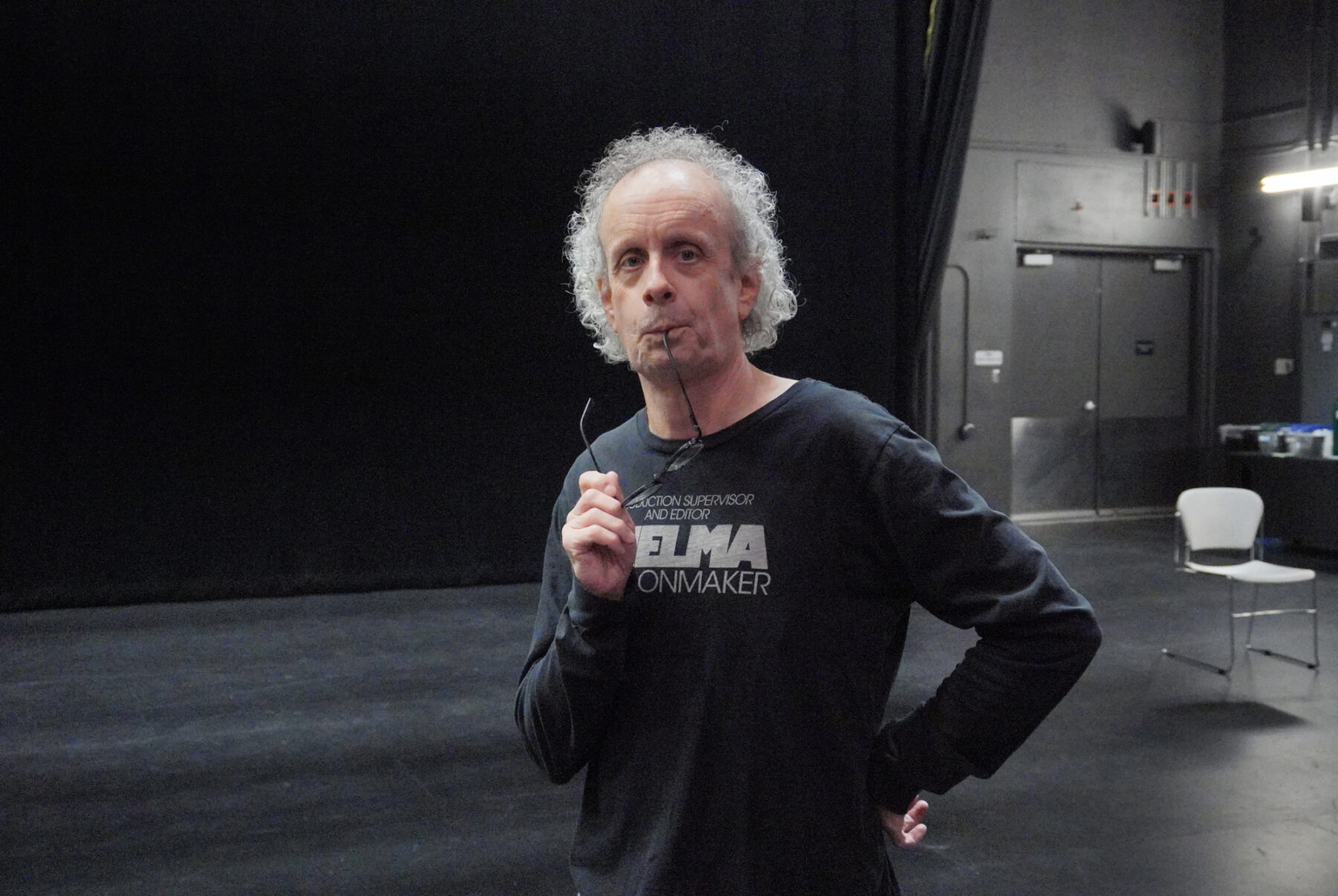
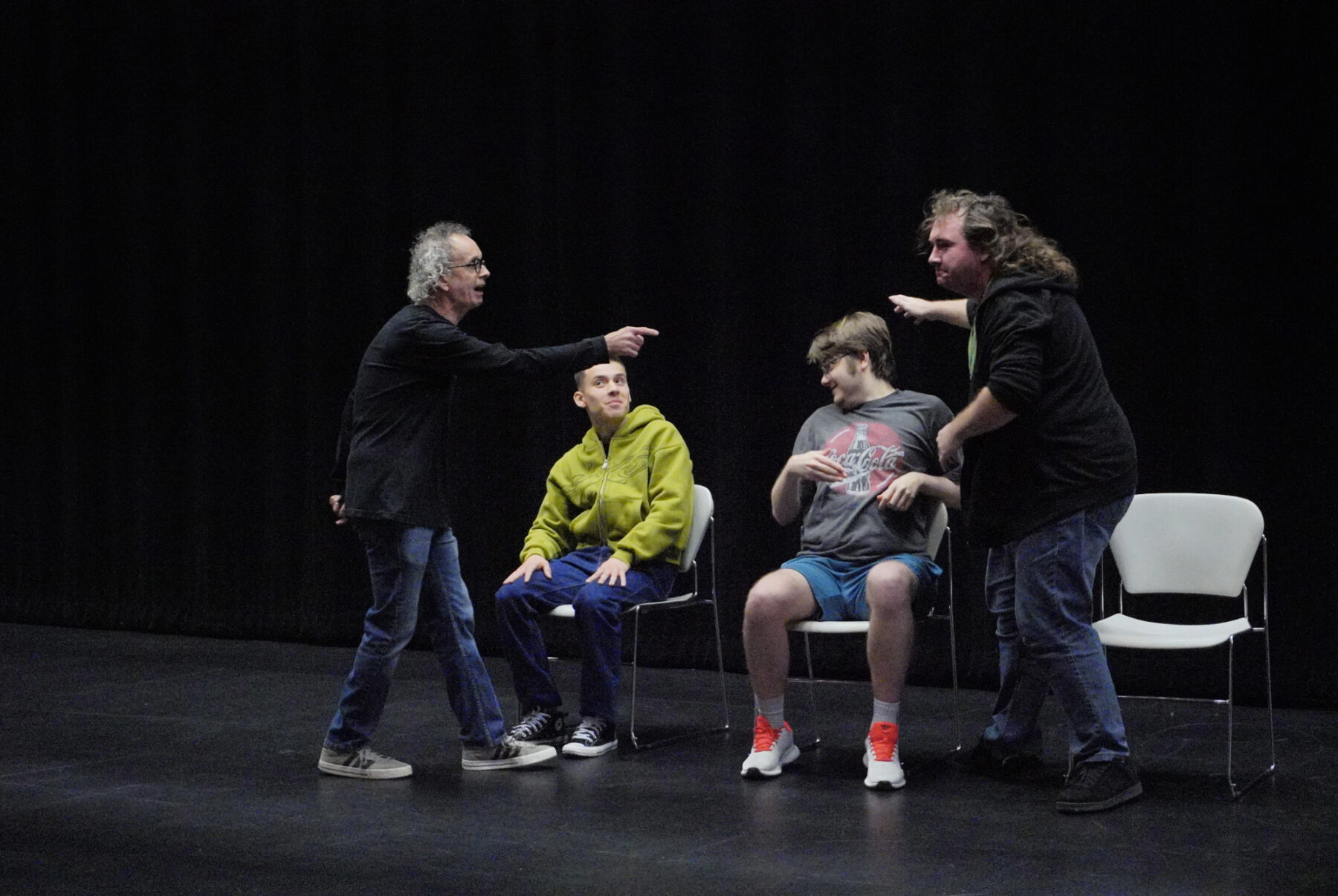
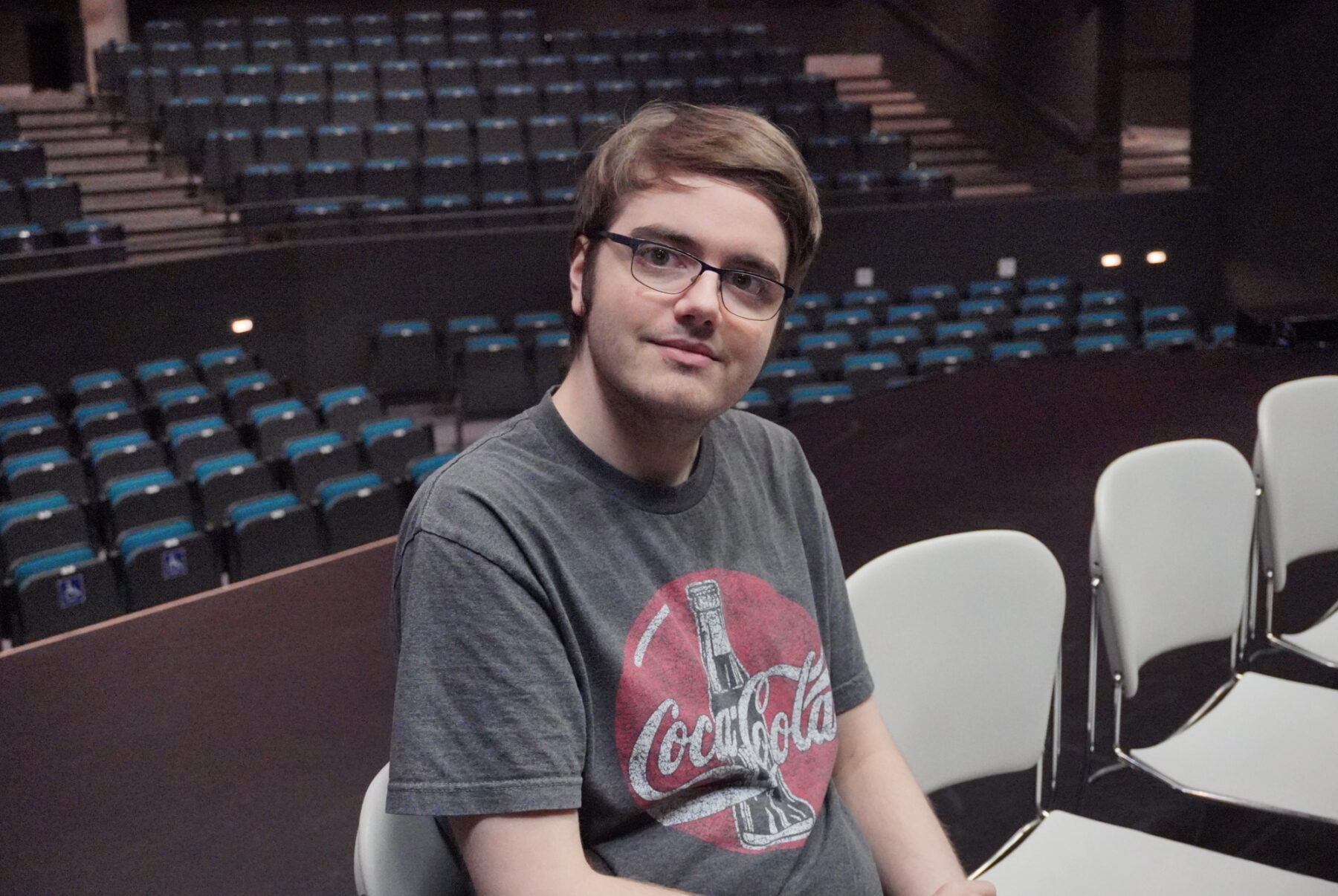
Kevin McDonald leads students through an improv exercise during his Improv to Sketch workshop at Algonquin College on Oct. 10.
Laughter echoed across the Algonquin Commons Theatre as a group of students tried to turn their improvised chaos into comedy gold. Standing in the middle of it all was Kevin McDonald, a legend from The Kids in the Hall, pacing with energy and warmth, tossing out lines like, “Biggest secret of the world: everything is funny.”
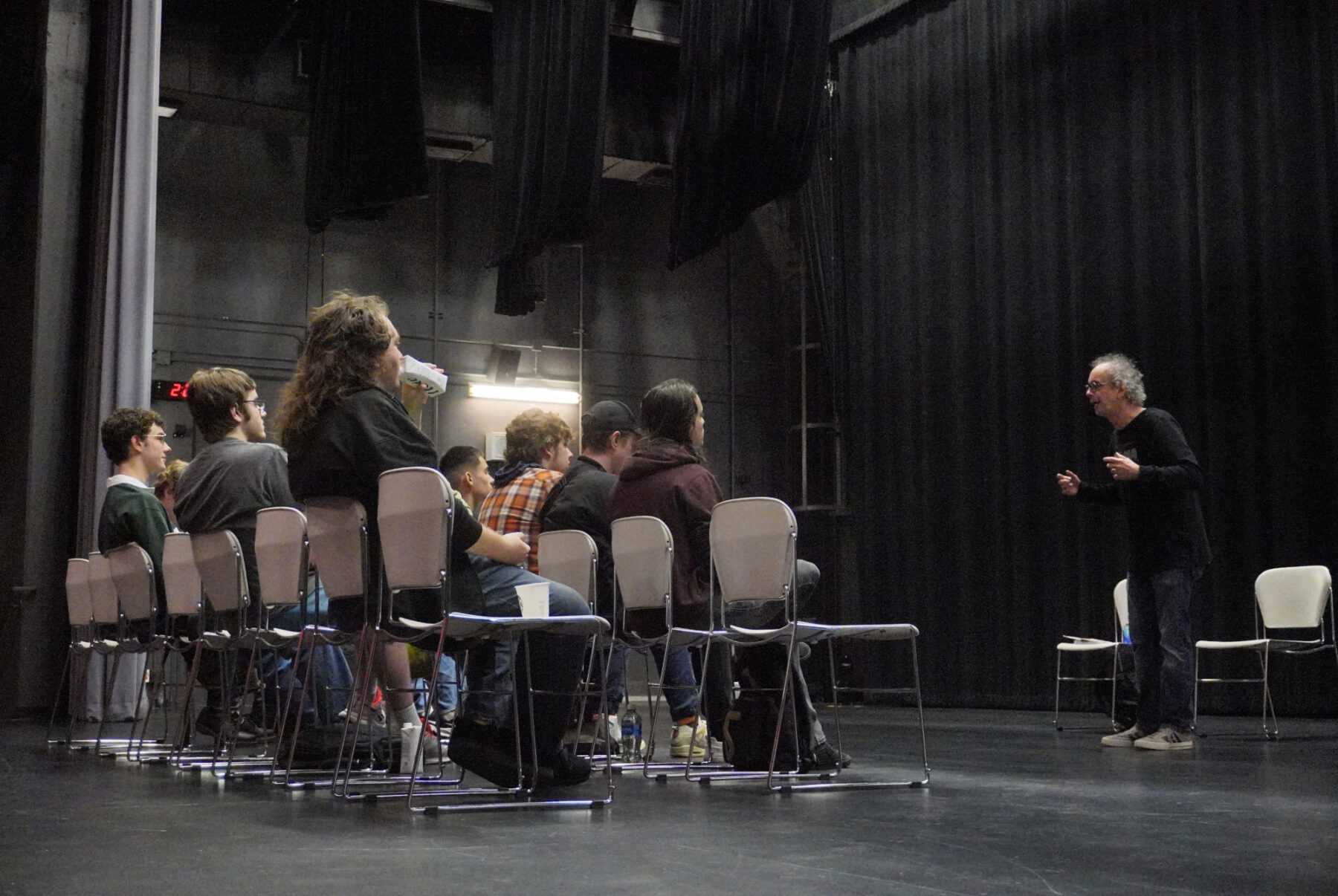
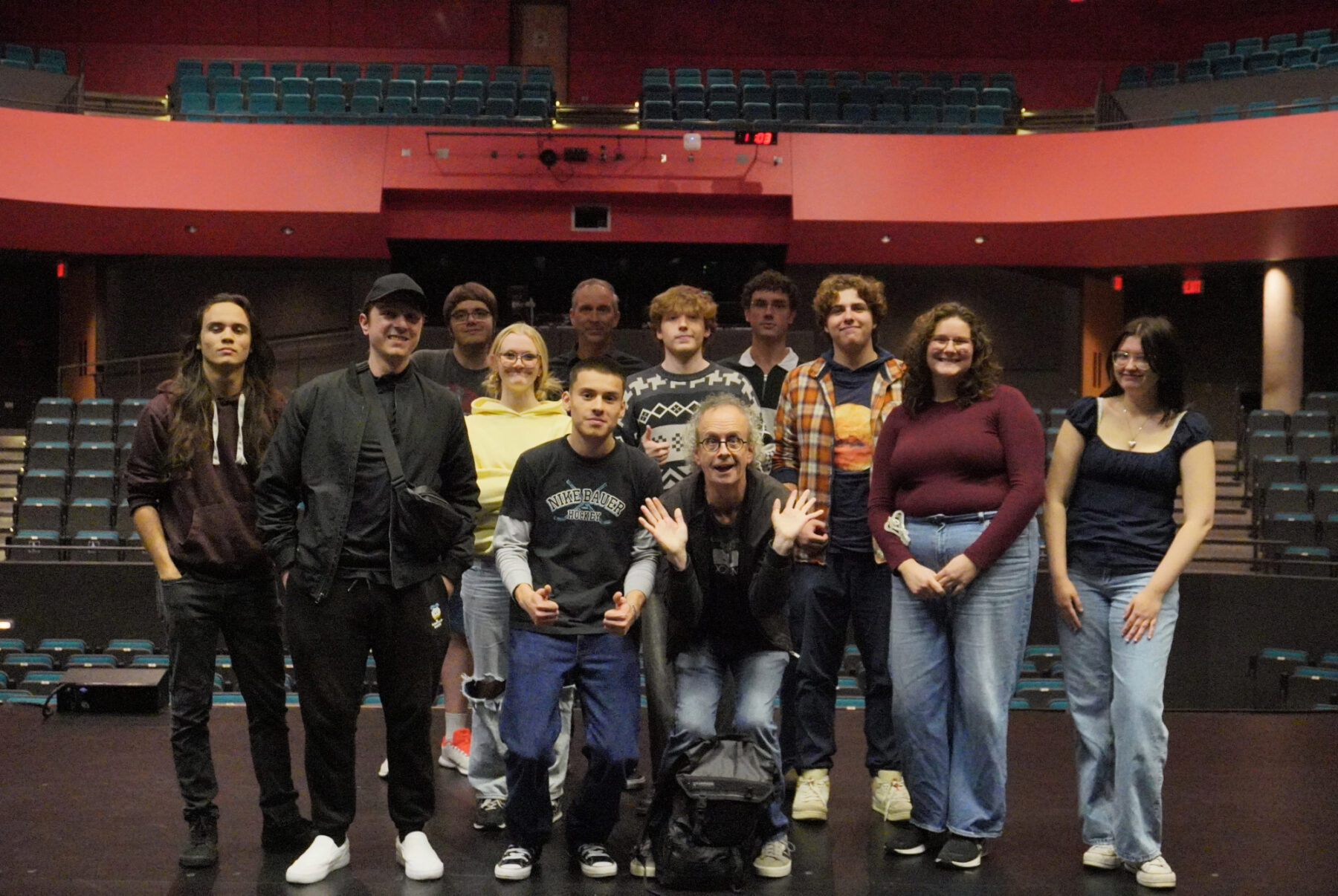
Sixteen students were seated in chairs on a wide stage, enjoying the mentorship from a Canadian actor, comedian and writer who has appeared in several stage productions, television shows and films.
“I’m excited about students’ excitement about their energy,” McDonald said.
The Improv to Sketch with Kevin McDonald workshop was a four-hour sketch-writing class that guided participants in transforming scenes by developing their characters and comedy into complete sketches.
“Students may not want to be a comedian, especially since this is a writing class. But who knows,” McDonald said, “Maybe I like to look for talent, and I think my talent is knowing when someone’s talented.
“But even if your talents aren’t the same, it’s just fun to have everyone together. And the younger you are, the more creative you are, and we get less creative as we get older, unless you’re like me.”
Kevin McDonald gives advice to students on improv. Photo credit: Hau Ting Ng
McDonald has spent over 30 years in the comedy industry. To some students, he’s considered an icon of Canadian comedy or even a household name across Canada. The workshop is inspiring students like Nessa Hopkin.
Hopkin, a Level 1 student in the film and media production program, has focused on drama and theatre since her time in arts high school. She is particularly interested in script writing and exploring comedy writing.
“I feel like comedy is something you can easily just go to and get a laugh out of or have a good time, especially if you’re not happy in the moment. Comedy is something that brings joy,” Hopkin said.
“The workshop is very funny and entertaining, because he’s random. He’s just all over the place. I enjoy that a lot.”
Kevin McDonald leads students through an improv exercise during his Improv to Sketch workshop at Algonquin College on Oct. 10. Photo credit: Hau Ting Ng
Josh Mackay, a film and media production program Level 1 student, loves improv and wants to learn more about it.
“Comedy is not one of my strongest suits, so I think I’m here to improve,” Mackay said.
“It’s really good to have someone who actually knows the ins and outs of the way that these things get produced and made that’s coming out,” Mackay said.
“Because that’s one of the biggest hurdles for a student, is actually getting into the industry.”
Algonquin College students enjoyed the workshop with Kevin McDonald. Photo credit: Hau Ting Ng
By the time the class reached the improv stage, students were performing in groups, and the theatre echoed with laughter, claps and cheerful humming.
At first, students seemed hesitant and unsure of themselves, but as they set up their improv scenarios and McDonald offered his guidance, the atmosphere grew increasingly energetic and vibrant.
Mackay had experience in improv, which he said wasn’t new to him, but he hadn’t done it in a while. He enjoyed getting back into the improv shoes.
“Kevin has got good advice, he knows what he’s talking about. It’s good to see,” Mackay said.
Algonquin College students enjoyed the workshop with Kevin McDonald. Photo credit: Hau Ting Ng
Groups of students were scattered across the stage on both sides and in the middle, discussing their improv and rehearsal.
The theatre seats were empty, but laughter filled the room as everyone enjoyed their own performance.
“Every scene and every improv is different. You may ask, ‘What’s the secret of learning?’ I say, by improvising all the time,” McDonald said.
Arts & Entertainment | Featured Hero | Featured Story | Home Feature | Home Hero
With the midterm week arriving at Algonquin College, stress levels on campus are climbing
Hau Ting Ng
Photos: Hau Ting Ng
October 14, 2025 Revised: October 14, 2025 8:07pm
Photo: Hau Ting Ng
Students write positive messages on sticky notes to support their peers on the Kindness Wall.
For many college students, Week 7 before the midterm break marks a peak in workload, as midterms and assignment deadlines converge. Students might face a lot of pressure when all these tasks come at once.
According to the Centre for Addiction and Mental Health’s 2023 Ontario Student Drug Use and Health Survey released on Aug. 21, 2024, 38 per cent of students rate their mental health as fair or poor. And 51 per cent experience moderate to severe psychological distress — double the rate from 10 years ago.
Debi Maniloff, a learning strategist at the Centre for Accessible Learning, said students often feel stressed, especially first-semester students who face a very steep learning curve.
“Most students come for help in the first two or three weeks and then there’s another spike after they get their midterm results. Sometimes they think, ‘I’ve got this,’ but the results show them they need to improve their study,” Maniloff said.
“Time management can be very overwhelming for everyone, but especially for those students,” Maniloff said. “I think people don’t expect to have such a heavy workload outside of the classroom. I think that’s something they’re not used to. So they feel very stressed.”
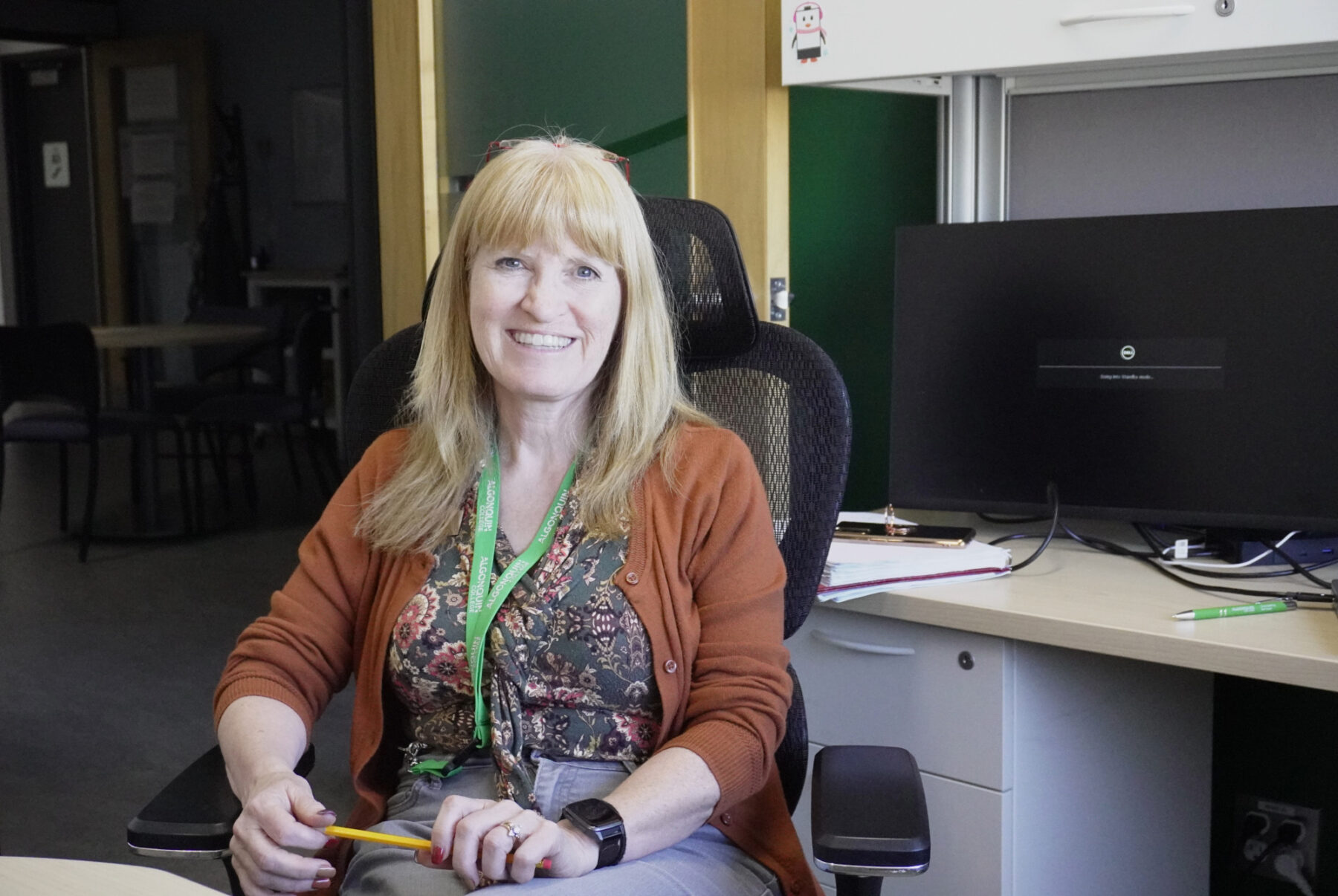
Debi Maniolff, a learning strategist at the Centre for Accessible Learning, talked about student academic pressure. Photo credit: Hau Ting Ng
Rylee Denny, in her second year of the child and youth care program, is currently taking the semester off to attend outpatient treatment at a hospital program for an eating disorder.
“We have so many assignments to do all at once. It makes me overwhelmed and anxious because I don’t think I’m gonna get them all done, and without being at school all day, I can’t get things done at home,” Denny said.
“My mental health has been up and down. I’ve had lots of anxiety, but I feel like it’s kind of manageable some days, but some days it’s not,” she said.
Denny has used different ways to cope with the stresses and being overwhelmed, such as journaling, colouring and using the counselling service offered in school.
“It was a really good experience,” Denny said. “The counsellor I saw was really knowledgeable in mental health, and she was really helpful in providing strategies to help.”
Rylee Denny does colouring to reduce pressure at the Mental Health and Wellness Centre. Photo credit: Hau Ting Ng
Deirdre MacDonald, manager of Student Counselling and Wellness Supports, said stress, anxiety and academic pressure are more common around this time, but their impact depends on each student’s life circumstances.
“Some students might also be struggling with things like food insecurity or housing insecurity, and so for those folks, it’s going to be a bigger impact from the stress from exams than it might be for others,” MacDonald said.
“At the beginning of the school year, we had a lot of people register for our counselling groups, and as the semester goes on, we have seen fewer students attend the groups, as academic pressures have mounted, and as we’ve gotten into the busyness of the term,” MacDonald said.
“It’s likely been harder for students to commit to and make space to attend the groups, so we’ve had fewer students benefiting from those supports.
“I think it’s probably the same sometimes for individual counselling, that there’s not space for everything, and so students have to prioritize what things they’re going to focus on, what they can make space or time for.”
Deirdre MacDonald discusses how schools support students in managing stress and mental health issues. Photo credit: Hau Ting Ng
The Student Mental Health and Wellbeing Centre offers various workshops to help students develop skills for managing mental health concerns and enhancing their mental wellness.
Counselling services provide free, confidential, professional help for personal and mental health concerns like anxiety, depression, emotional distress and adapting to college. Students can be registered on the website, by calling, or by visiting the Welcome Centre on the third floor of Student Commons.
“Counselling services for students still have drop-in groups and still have some availability. We welcome students to check those out,” MacDonald said.