Students feeling the pressure: How Algonquin College supports mental health during midterms
For many college students, Week 7 before the midterm break marks a peak in workload, as midterms and assignment deadlines converge. Students might face a lot of pressure when all these tasks come at once.
According to the Centre for Addiction and Mental Health’s 2023 Ontario Student Drug Use and Health Survey released on Aug. 21, 2024, 38 per cent of students rate their mental health as fair or poor. And 51 per cent experience moderate to severe psychological distress — double the rate from 10 years ago.
Debi Maniloff, a learning strategist at the Centre for Accessible Learning, said students often feel stressed, especially first-semester students who face a very steep learning curve.
“Most students come for help in the first two or three weeks and then there’s another spike after they get their midterm results. Sometimes they think, ‘I’ve got this,’ but the results show them they need to improve their study,” Maniloff said.
“Time management can be very overwhelming for everyone, but especially for those students,” Maniloff said. “I think people don’t expect to have such a heavy workload outside of the classroom. I think that’s something they’re not used to. So they feel very stressed.”
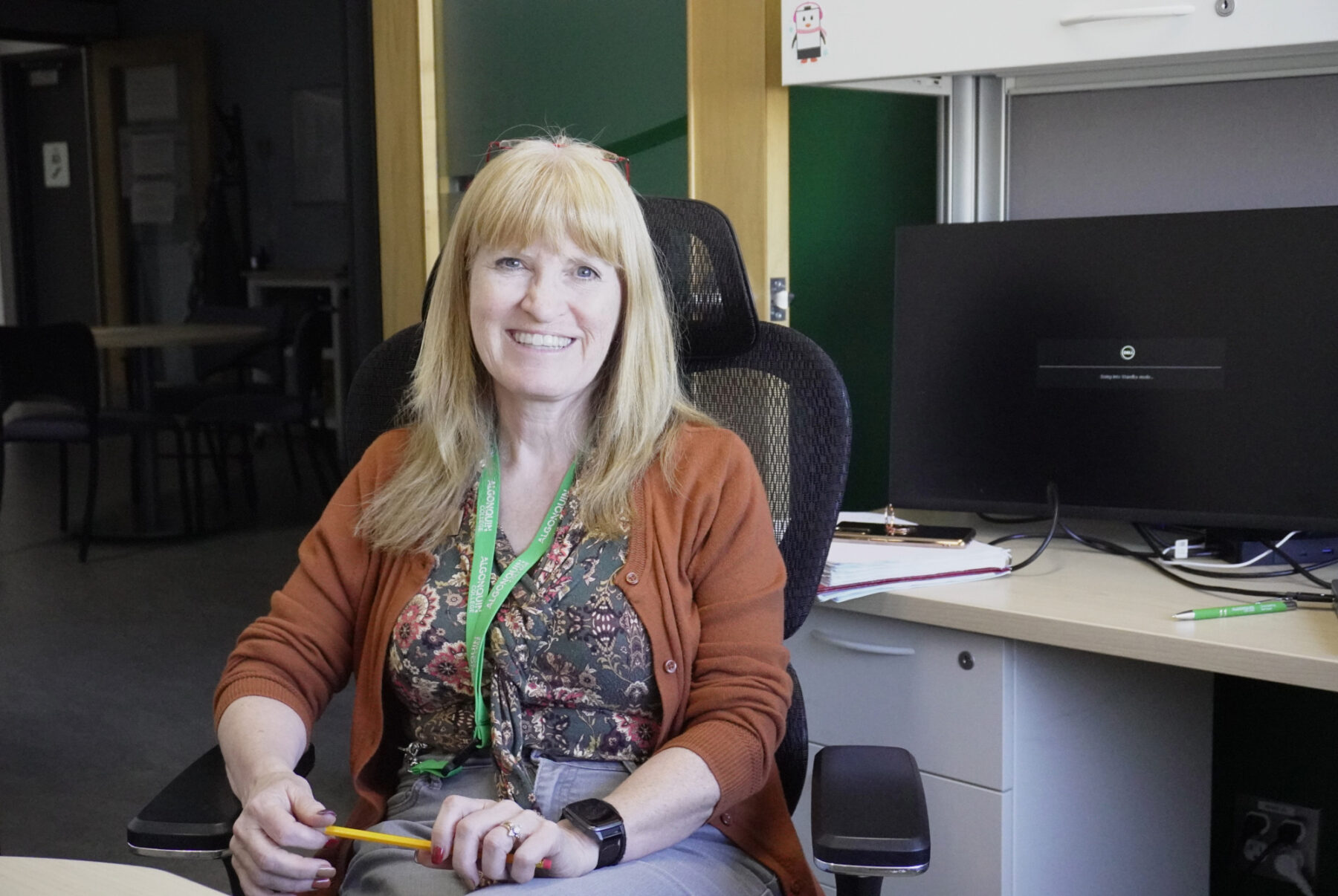
Rylee Denny, in her second year of the child and youth care program, is currently taking the semester off to attend outpatient treatment at a hospital program for an eating disorder.
“We have so many assignments to do all at once. It makes me overwhelmed and anxious because I don’t think I’m gonna get them all done, and without being at school all day, I can’t get things done at home,” Denny said.
“My mental health has been up and down. I’ve had lots of anxiety, but I feel like it’s kind of manageable some days, but some days it’s not,” she said.
Denny has used different ways to cope with the stresses and being overwhelmed, such as journaling, colouring and using the counselling service offered in school.
“It was a really good experience,” Denny said. “The counsellor I saw was really knowledgeable in mental health, and she was really helpful in providing strategies to help.”

Deirdre MacDonald, manager of Student Counselling and Wellness Supports, said stress, anxiety and academic pressure are more common around this time, but their impact depends on each student’s life circumstances.
“Some students might also be struggling with things like food insecurity or housing insecurity, and so for those folks, it’s going to be a bigger impact from the stress from exams than it might be for others,” MacDonald said.
“At the beginning of the school year, we had a lot of people register for our counselling groups, and as the semester goes on, we have seen fewer students attend the groups, as academic pressures have mounted, and as we’ve gotten into the busyness of the term,” MacDonald said.
“It’s likely been harder for students to commit to and make space to attend the groups, so we’ve had fewer students benefiting from those supports.
“I think it’s probably the same sometimes for individual counselling, that there’s not space for everything, and so students have to prioritize what things they’re going to focus on, what they can make space or time for.”

The Student Mental Health and Wellbeing Centre offers various workshops to help students develop skills for managing mental health concerns and enhancing their mental wellness.
Counselling services provide free, confidential, professional help for personal and mental health concerns like anxiety, depression, emotional distress and adapting to college. Students can be registered on the website, by calling, or by visiting the Welcome Centre on the third floor of Student Commons.
“Counselling services for students still have drop-in groups and still have some availability. We welcome students to check those out,” MacDonald said.
For more information on workshops, drop-in groups and counselling services, visit the Student Mental Health and Wellbeing Centre.