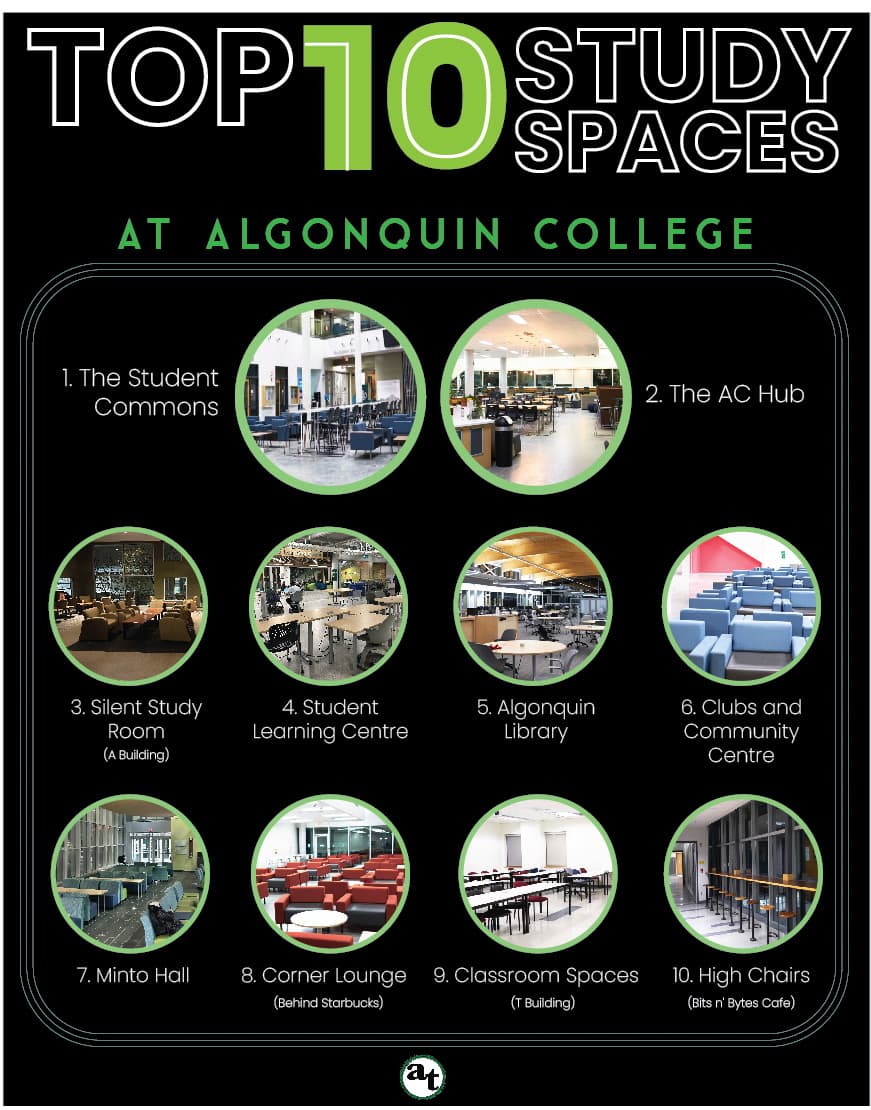
As exam season approaches, students are scouring the halls for the best study spots. Here are the top ten study spots on campus to help you stay productive and ace […]
Emma Stronge
Photos:
December 6, 2023 Revised: December 6, 2023 9:29am
As exam season approaches, students are scouring the halls for the best study spots. Here are the top ten study spots on campus to help you stay productive and ace those exams:
Smoke, strobe lights and a packed theatre of fans wearing camo, plaid and cowboy boots gave the Hunter Brothers concert at the Algonquin Commons Theatre on Dec. 2 a country […]
Rebekah Houter
Photos: Rebekah Houter
December 5, 2023 Revised: January 30, 2024 3:36pm
Photo: Rebekah Houter
The Hunter Brothers bring their best to the Algonquin's Commons Theatre on Dec. 2.
Smoke, strobe lights and a packed theatre of fans wearing camo, plaid and cowboy boots gave the Hunter Brothers concert at the Algonquin Commons Theatre on Dec. 2 a country feel to a city venue.
The concert was one stop on the band’s cross-country Canadian tour to promote its new album Burning Down the Barn.
All ages came out, with 11-year-old Julie Rickard saying it was her first time at a concert.
“Probably Born and Raised,” she said about her favourite song. “Or Lost. I really like Lost.”
A long line formed even before the doors opened at the apparel booth, lined with sweaters, baseball caps, toques, t-shirts with “Hunter Brothers” on them and even baby onesies reading “Born and raised.”
The night began with Jake Vaadeland and the Sturgeon River Boys opening the show with an arrangement of original bluegrass songs and getting the crowd on their feet with the fast-paced tunes.
Vaadeland, a recent winner of the Roots or Folk Artist of the Year for 2023 from the Saskatchewan Music Awards, said he faced no small amounts of criticism growing up but learned how to stay true to himself and take his passion and unique style and make a career.
“Follow your heart and do what you are good at. Education is good and I’m only 20, but don’t let it hinder what you are good at,” said Vaadeland. “We don’t need to be cookie cutters. Everyone needs to have their own unique part to make the world a real special place.”
The Hunter Brothers opened their set with Long Way Home and Northern Lights, with some people waving posters, and one young fan holding up a sign reading, “Why’d the chicken cross the road? To get to this party,” lyrics from the hit song Burn Down the Barn.
The energetic brothers from Saskatchewan brought people to their feet, with fans dancing and singing along and some audience members getting involved with the act.
Alberta-born-and-raised Mackenzie Salmon and her boyfriend of six years, Brett Young, came up from Montreal to take a break from school and enjoy the evening together, but became part of the act when lead singer Ty Hunter got Young to sing an opening line of Salmon’s favourite song Northern Lights.
“A little nerve-wracking,” said Young about how he felt about singing for the crowd. “There’s nothing else you can do other than sing on the spot.”
Young added while he would prefer to see a country show out west in the open air, country music is good wherever you end up.
“The outside venues are always a little bit better to get the atmosphere, but it’s always good. Wherever you go it’s always good,” said Young.
“We love the Hunter Brothers, they are honestly my favourite band of all time,” said Salmon. “We’ve seen them a couple of times and I was excited when I heard they were doing a tour across Canada and this was the closest place. I was like, we have to go.”
Salmon said she is in the middle of her final exams in her dentistry program in Montreal and the concert was a nice break from exam studying.
“I would recommend a Hunter Brothers concert to anyone, no matter what you’re going through. It’s a good thing to stress relief and live in the moment,” said Salmon.
“It’s like a piece of home listening to their music.”
In a lively and colourful celebration of culture and creativity, the African Student Association (ASA) organized its first-ever paint-and-sip event on Nov. 24, with students creating their own paintings and […]
Naomie Twagirumukiza
Photos: Naomie Twagirumukiza
December 5, 2023 Revised: January 30, 2024 3:36pm
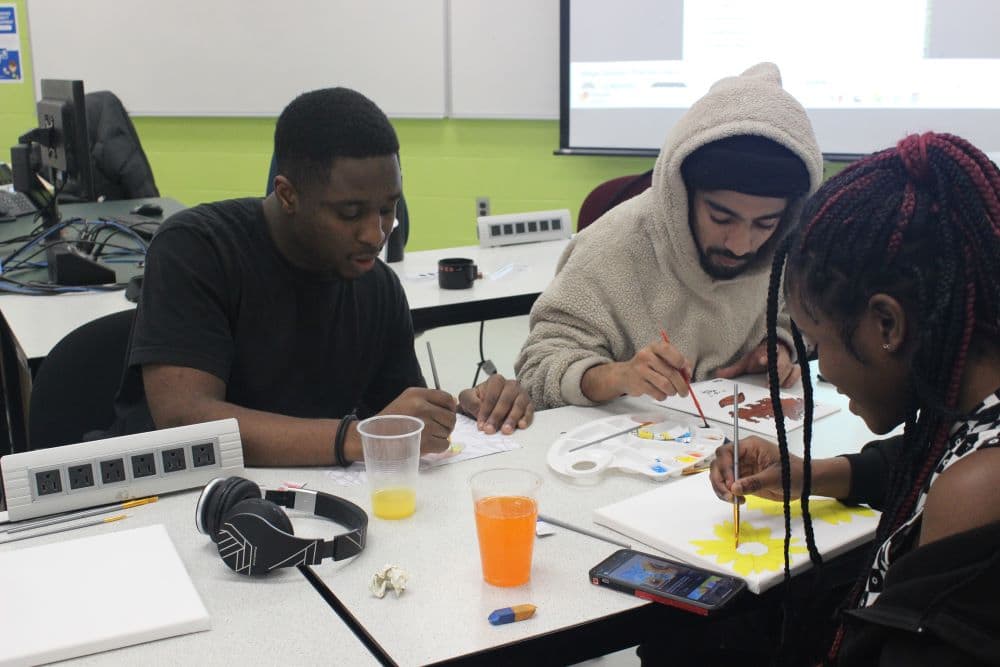
Photo: Naomie Twagirumukiza
The paint-and-sip event not only showcased the artistic talents within the ASA community, but it also served as a reminder of the importance of fostering connections and providing support for international students
In a lively and colourful celebration of culture and creativity, the African Student Association (ASA) organized its first-ever paint-and-sip event on Nov. 24, with students creating their own paintings and having drinks in the B-Building.
The event aimed to bring students together for an evening of artistic expression and community building.
“This is the first time organizing an arts and crafts type of event,” said Elsie Mukomeza Akuzwe, the vice-president of the ASA. The initiative was part of ASA’s ongoing efforts to create a sense of community among African students.
Despite the lower turnout, the atmosphere was vibrant, with attendees expressing enthusiasm for the unique event.
“The turn-up was not as much as we expected, but I also think the choice of the day was what affected it the most,” Akuzwe said about the attendance.
Assumpta Nwokorie, a business management and entrepreneurship student who has been attending ASA events for some time, expressed her appreciation for the community and the connections she has formed.
“It was better than I expected. I loved the people I met there,” Nwokorie said of the event.
The paint-and-sip event not only showcased the artistic talents within the ASA community, but it also served as a reminder of the importance of fostering connections and providing support for international students.
“ASA is a community, and we mostly hang out and have fun. We also focus on helping newcomers if they have any questions about Canada. There are a lot of international students from Africa, and it is good for them to have support and a community to go to,” Akuzwe said, shedding light on the broader mission of ASA beyond just organizing events.
The Canadian Radio-Television and Telecommunications Commission adopted 988 as the new mental health crisis and suicide prevention hotline as of Nov. 30, 2023. Those who call or text 988 will […]
Mathew Dicsi
Photos: Melinda La Riccia, Oniqua Kanmaka, Victoria Fancy and Mehdia Htibe sat in the college's Mental Health Resource Centre on the third floor of Student Commons. Photo credit
December 4, 2023 Revised: January 30, 2024 3:36pm
Photo: Melinda La Riccia, Oniqua Kanmaka, Victoria Fancy and Mehdia Htibe sat in the college's Mental Health Resource Centre on the third floor of Student Commons. Photo credit
Left to right
The Canadian Radio-Television and Telecommunications Commission adopted 988 as the new mental health crisis and suicide prevention hotline as of Nov. 30, 2023.
Those who call or text 988 will be redirected to one of several mental health crisis services based on the caller’s area code and availability of services.
“Right now, unless you are suicidal and they know that, you won’t be getting help – you’ll be on a waitlist for like three years,” said Melinda La Riccia, an early childhood education student speaking about the mental health crisis service providers who answer the phone. “They just don’t have the resources to deal with the people in distress.”
However, the federal government is trying to rectify this.
The Canadian government will be investing $156 million to the Centre of Addiction and Mental Health over the next three years in support of the 988 change. All calls and texts to 988 are free of charge, with long-distance charges being settled at the cost of the service provider.
Service for 988 will be available 24/7 including culturally appropriate care for certain groups and Indigenous communities across Canada.
“It’s important because mental illness doesn’t work on a set schedule,” said La Riccia, of the 24/7 service.
“I come from an immigrant background and back there it was seen as like, if you seek help, you’re deemed one level shy of Joker-like insanity,” said Mehdia Htibe who is interested in apply to computer engineering technology. “Now, even though Canada lets you be as open as you can, you still have those scars of the handcuffs from back then.”
With the decline of Canadian mental health since 2018, new mental health services are needed more and more every day. Photo credit: Mathew Dicsi
“It’s good to seek support right away, as soon as you can,” said Victoria Fancy, a bachelor of early learning and community development student. “It doesn’t have to be a professional at first. It could be a friend or maybe a family member, but it is always good to have support systems where you can talk to someone.”
“Holding it in will cause an eruption,” said Ahmed Elbadri, a student success specialist for media and design. “Having someone to talk to is a good thing. whether it’s a professional, a friend, or a support line like 988.”
The Canadian 988 number implementation is following America’s 2022 creation of the 988 mental health hotline. The Canadian and American 988 mental health hotlines will function separately, however.
While the Public Health Agency of Canada and the Centre of Addiction and Mental Health have been “onboarding a large cohort of organizations to the 988 network,” according to a press release published on the CAMH website, no official list of partnered organizations has been provided.
During the Second World War, the Canadian government detained approximately 22,000 Japanese-Canadians for security concerns. These individuals were forcibly relocated, suffering a loss of property and civil rights. “Because of […]
Stephen Priel
Photos: Stephen Priel
December 4, 2023 Revised: January 30, 2024 3:36pm
Photo: Stephen Priel
Artist Norman Takeuchi used his own past as the source of his inspiration to create art and tell his story.
During the Second World War, the Canadian government detained approximately 22,000 Japanese-Canadians for security concerns. These individuals were forcibly relocated, suffering a loss of property and civil rights.
“Because of the nature of Japanese culture, people have not talked about this history a lot,” said Catherine Sinclair, one of three curators of Shapes In Between, an exhibit at the Ottawa Art Gallery showcasing work by Japanese-Canadian Norman Takeuchi. “Even young Japanese-Canadians don’t even know a lot about this history, because their parents or grandparents don’t talk about.”
The exhibit showcases Takeuchi’s remarkable works of art and is a place for his story and other social injustices to be told.
“It’s because it’s shameful still,” said Sinclair. “Art is a cool way to get into a topic people just should know about. “
Takeuchi has been painting since his time as a young artist attending the Vancouver School of Art in 1957 and has put an increasing emphasis over the course of his career to really engage with his own heritage and to accept the legacy of his ancestors. He has created various types of art pieces ranging from graphic art to abstract art and everything in between to convey his message.
“Norman was part of the founding group of artists to create the Ottawa Art Gallery,” said Sinclair. “He never had a retrospective exhibition, so it was an absolute pleasure to be able to finally work with him so that we could bring it all together to really tell his story and the story of his art. It’s very well deserved after a long career and contribution to Ottawa.”
The abstract style of painting is one that strongly appeals to Takeuchi. In Takeuchi’s mind, the abstraction represents him. The title of this show comes from this style of painting and is at the crux of this exhibit.
“The title of the show actually came from the abstraction,” said Sinclair.
Bryce Kanbara, one of the other curators of the show along with Sachiko Okuda, asked Takeuchi in the studio about his artistic style with regard toa specific painting, explained Sinclair.
When he was asked “Where do you find yourself in this painting?” Takeuchi replied, “In the shapes in between,” she said.
After careful consideration from curators in trying to pick which art pieces of nearly 300 artworks should be displayed and collaboration with Takeuchi himself, this exhibit was finally opened on April 1, 2023. Why should you visit?
1. Shapes In Betweenis an exhibit that cultivates deep philosophical thinking.
It compiles all of Takeuchi’s best work – approximately 60 years worth of art pieces – and is curated by people who have strong knowledge of his artistic vision and the story he wants his work to tell.
2. It offers the chance to learn about Canada’s history through an artistic lens.
The Shapes In Between offers a way to learn about a significant part of Canada’s history in an interactive and engaging way.
“I think art is a very powerful way to show histories that people are not as aware of,” said Sinclair.
It will show you components of the Japanese-Canadian internment in a way that paints a vivid picture in your mind almost as if you were there at that time.
3. It’s a cost-Free exhibit.
This exhibit is completely free and available to visit Tuesday to Sunday and will remain on show until March 2024.
4. The exhibit unveils many eras and a multitude of themes that symbolize Takeuchi’s works over the course of his career.
There are seven distinct themes to explore including abstraction, depictions of global violence, reflections on Japanese heritage, narratives related to the Japanese internment during World War II, graphic art and more.
5.The art is very thought-provoking and forces you to analyze the attention to detail put into each piece of art.
This exhibit naturally stimulates a thought-provoking experience. Each artwork demands analysis both on the elements of its creation and connecting with the message of the artist.
6. The exhibit has drawn a lot of public interest and caters to any age demographic.
This exhibit has drawn a lot of positive feedback and commendations and has become a popular exhibit at the OAG.
“We’ve had some amazing responses to this show, particularly from people of colour especially people from the younger generation,” said Sinclair.
Food waste and insecurity have been rising steadily over the past few years. Canada alone creates 50 million tonnes of food waste a year, with one in eight households being […]
Kit Gervais
Photos: Alex Lambert
December 4, 2023 Revised: January 30, 2024 3:36pm
Photo: Alex Lambert
Francis Valentine Omotayo of Uplands Afri & Caribbean Store standing in front of products he brought from Nigeria.
Food waste and insecurity have been rising steadily over the past few years. Canada alone creates 50 million tonnes of food waste a year, with one in eight households being food-insecure, according to an article by Made in CA.
Danish-made app, Too Good To Go, is fighting food waste one paper bag at a time. With the help of partners across Canada like Tim Hortons and Metro, Ottawa residents can enjoy a reduced waste lifestyle on a budget.
App-users can order “surprise bags” filled with unsold food at partnered stores for pick-up, kind of like Uber Eats but for a lesser price. The food consists of items that are just about to expire, while still being edible or fruits and veggies with aesthetic defects.
“I think it’s a great way to reduce food waste, but also address some of the symptoms of food insecurity, which would be really great,” said Abby Muir, coordinator of the food cupboard at Algonquin College. “From what I hear and what I’ve seen and experienced (food insecurity is) at an all-time high right now, with the cost of food and everything else.”
The app was founded as a start-up eight years ago and has since saved around 78.8 million meals according to their 2022 annual impact report, with 80,000 new store partners. It launched in Canada in July 2021.
One of those partners is an Ottawa bakery called Keepin’ it Vegan. They say they’ve sold around six or ten surprise bags a week since joining the app about a year ago, adding up to over 300 meals sold.
“We’re not in it to really make money. It reduces a lot of waste, which is what we appreciate,” said Eva Laflamme, co-owner of Keepin’ it Vegan. “It’s also nice to be able to just cut down on the losses rather than throwing it out or giving it away.”
She says the app also helps bring people into their business. “A lot of people who come in will either buy something else or they’ll come back and say, ‘I tried your stuff’ because it’s kind of expensive, so people are hesitant to try it.”
But, it could use some tweaks. “It’s just the management app’s a little bit slow (to load). That’s the really big deal,” Laflamme said.
Another Ottawa partnered store owner Francis Valentine Omotayo of Uplands Afri & Caribbean Store spoke about how the app has changed business.
“Instead of wasting food, it all has the growth and benefit of the public at large,” said Omotayo.
He also said the app helps to cut costs of food waste for his business, just like Keepin’ it Vegan.
“Instead of losing out on the products, at least it gets something back, which it covers the cost.”
Omotayo explains the way Too Good to Go has helped promote his business through their app. “They put the store on the site, which creates an awareness for people to know about this store.”
Too Good To Go was founded in 2016 and saved 479,424 meals in their first active year. With 80,000 additional store partners, they’ve had a 16351% increase since then. Photo credit: Alex Lambert
While the app saves meals to cut down on food waste, they also provide statistics on how much of a carbon footprint they produce. According to their 2022 impact report, the company reported 6564.5 metric tonnes of CO2 and equivalent greenhouse gases or tCO2e.
This number is further broken down into direct emissions, indirect owned emissions and indirect unowned emissions. Company owned facilities and services only take up around 333.19 tCO2e or around 5.1 per-cent of these emissions and the rest come from indirect unowned sources like employee commutes and purchased goods and services.
However, the app still has a long way to go.
Too Good To Go is only currently available in 17 countries: Denmark, France, Germany Spain, the US, the UK and Canada, to name a few. It’s only available in two continents: Europe and North America.
The app still plans to continue and develop over the coming years. Their plan is to contribute to the UN’s Sustainable Development goal reducing food waste by 50 per-cent by 2030, as outlined in their 2022 impact report.
A home is many things. A place of belonging where friends or family welcome you in and ask, “how was your day?” A place where you can walk through the […]
Meg Wall
Photos: Meg Wall
December 4, 2023 Revised: January 30, 2024 3:36pm
Photo: Meg Wall
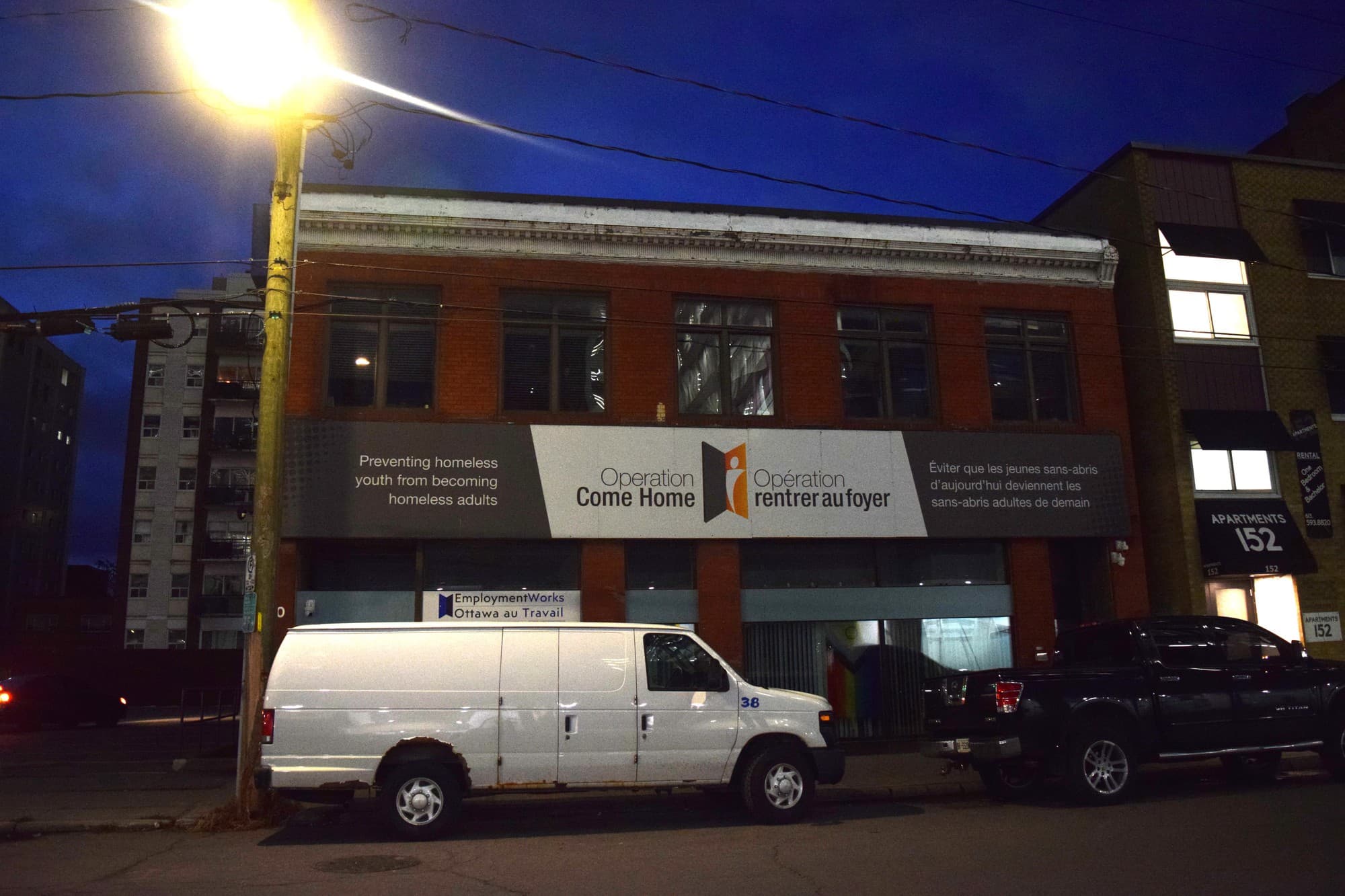
Operation Come Home launched a new program called HousingWorks in October 2022. It works as a master leasing arrangement to provide a home for homeless and at-risk youth in Ottawa.
A home is many things.
A place of belonging where friends or family welcome you in and ask, “how was your day?” A place where you can walk through the door and not notice its unique scent. A place that brings instant safety and security.
But where do you go, when there is no home to come home to?
In October 2022, local youth social services organization Operation Come Home launched a new program titled HousingWorks to help combat youth homelessness.
The program works as a master leasing – also known as “block leasing” – arrangement to provide a home for homeless and at-risk youth in Ottawa. While normal rental agreements are between the landlord and the tenant, OCH becomes a “middleman” and sublets the units out to vulnerable local youth between the ages of 16 and 24 who are facing or experiencing homelessness.
Alicia Martinez, the master lease administrator for OCH who oversees the master lease agreements between the private market landlords and the clients, said the program has proved to be effective.
“Within the first year of being housed, six of 11 clients have registered for secondary or post-secondary education independently, requested access to mental health and harm reduction support and otherwise stabilized into housing with a goal of improving their future,” said Martinez.
In addition to building their education, some clients have won scholarships.
While this program benefits the community long-term by helping maintain the supply of affordable housing, OCH recognizes the need for affordable housing is still very great.
“The largest barrier we face is a lack of affordable rental rates,” said Martinez. “Our occupants are eligible to access a housing allowance from the City of Ottawa, however, there is a maximum rent that units must fall within. That maximum rent is not in line with current market rates.”
Since its launch a little over a year ago, HousingWorks has worked with 12 different landlords within Ottawa and is continuing to expand its operations. Currently, they have 11 units, all occupied by clients of OCH.
“Our lease terms are for three years, with the intention of being able to house clients at that affordable rate for a period of up to three years. Our hope is we can continue to keep our rents affordable in perpetuity,” said Martinez.
With homeless rates in Ottawa and across the country increasing, facing homelessness is an experience not too far from reality for many Canadian youth and young adults.
Unsheltered homelessness refers to "those who, at some point in their life, have lived in a homeless shelter, on the street or in parks, in a makeshift shelter or an abandoned building." Photo credit: Guillaume Laflamme
This is a situation Algonquin College music industry arts student Ally McDonald has lived.
“A lot of times when people say they’re homeless, people think ‘well, you don’t have money’ or ‘you’re addicted to drugs,'” said McDonald in an audio interview with reporter Elizabeth Gallant. “But a lot of the time, it is just really misfortunate situation after misfortunate situation and not enough resources for people to get ahold of. Our system kind of fails with that.”
McDonald first became independent when she left the foster care system a month before finishing Grade 11. Between subletting various apartments to staying with friends and acquaintances, staying in a safe place long-term has proved difficult due to varying factors, such as not having a parent or guardian to co-sign a lease, despite having the financial means to afford rent.
“As time went on and, like, life happened, I think I ended up moving in with a boyfriend, and that did not go well,” said McDonald. “I had to leave right away.”
McDonald further explained that once you leave the foster care system, you can’t go back in. At the time, she was receiving financial support from the Voluntary Youth Services Agreement (VYSA) program, but it wasn’t enough to cover both the first and last months’ rent.
Receiving this financial support also made her ineligible to receive additional financial support from other government programs.
“Every single time I have been at the risk of homelessness, I have called shelters,” said McDonald. “But our resources are so full, and unless you are fleeing domestic violence… (being) human trafficked, or some insane bad situation, you’re being put on a list for about two to three years. That is two to three years where you are left out on your own.”
Now in her early twenties, she has struggled to maintain stable housing, bouncing between homes across eastern Ontario. Though she currently has a place to call home, McDonald was forced to sleep outside her first week of school this year.
Collecting data for the homeless population can be challenging, as homelessness is not always apparent or chronic.
In March 2022, Statistics Canada released a study titled A portrait of Canadians who have been homelessto examine rates of homelessness within various demographic groups and which group was more likely to experience homelessness.
The study separated the state of homelessness into two camps: unsheltered and hidden.
Unsheltered homelessness refers to “those who, at some point in their life, have lived in a homeless shelter, on the street or in parks, in a makeshift shelter or an abandoned building.”
Hidden homelessness refers to “those who had to temporarily live with family or friends, or anywhere else because they had nowhere else to live.”
It found that two per cent of individuals between the ages of 15 and 29 were reported to be unsheltered, and 18.3 per cent of those in the same age group were hidden.
Similar to the program offered at OCH, another local organization is working to provide housing for those facing homelessness, but for those who are fleeing violent situations from across Canada.
Matthew House provides transitional housing and refugee settlement assistance within the Ottawa area for refugee claimants who have come to Canada without any form of assistance from family, friends or the government.
Matthew House provides transitional housing and refugee settlement assistance within the Ottawa area for refugee claimants who have come to Canada without any form of assistance from family, friends or the government. Photo credit: Guillaume Laflamme
“Our clients with the Refugee Services program are only the refugees who are coming into Canada with no other sponsorship,” fundraising and communications coordinator of Matthew House Brynn Brieda told the Algonquin Times in September.
“They don’t have a sponsorship family who’s helping them set up here. They basically cross the border with absolutely nothing, and are most of the time homeless.”
As the HousingWorks program keeps expanding and reaching more people, McDonald hopes less youth and young adults will have to go through similar situations as her.
“Someone like me, who, in my brain, was doing everything right – like, I had a job, I was getting money, I was doing everything right – I didn’t understand why I wasn’t getting a house, why it was so hard,” said McDonald. “I think for a lot of people, it is really discouraging.”
For some homeowners, the accessibility of clean energy retrofits for homes is a source of frustration and confusion. “I heard about (grants),” said Sun Jie, an Ottawa homeowner. “But if […]
Brahim Ait Ouzineb
Photos: Tyler Griffin (team lead), Yasir Elamin, Ksenia Chornokondratenko, Jasreet Kaur, Jay Jao and Charan Sai Photo credit
December 4, 2023 Revised: January 30, 2024 3:36pm
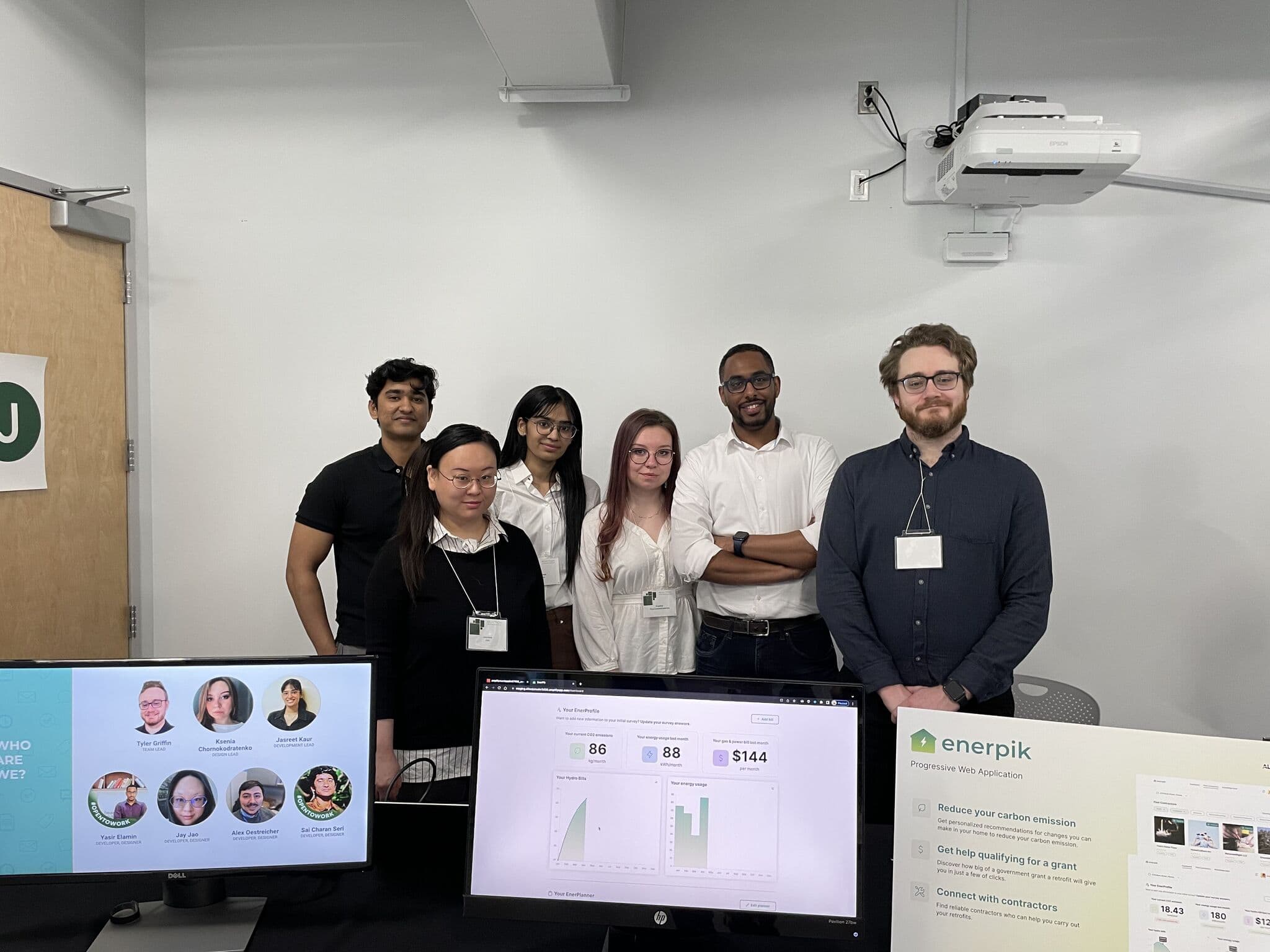
Photo: Tyler Griffin (team lead), Yasir Elamin, Ksenia Chornokondratenko, Jasreet Kaur, Jay Jao and Charan Sai Photo credit
Stack Labs posing during the final presentation for the Enerpik app project. Right to left
For some homeowners, the accessibility of clean energy retrofits for homes is a source of frustration and confusion.
“I heard about (grants),” said Sun Jie, an Ottawa homeowner. “But if they really want people to be interested in it, they have to simplify the application process, as well as the compliance requirements.”
Jie is not alone. Pratigga Chowdhury, the communications and events organizer for Ecology Ottawa, shares Jie’s frustrations and said that the process to access these green energy grants is not affordable.
“Having to wait a year for funding, people can’t afford that,” Pratigga said. “For these big changes, say you want to switch to a heat pump, that’s a lot of money. And especially when we are facing a cost of living crisis, it is hard for most people to maintain a household. How can we really say that we are encouraging people to make the right choice when they have to wait a year for funding?”
In June 2021, the federal government launched the Canada Greener Homes Grant. The grant aims to help homeowners across Canada make their homes more energy-efficient and lower their energy bills. Thegovernment says it will help reduce energy waste, create goodjobs and foster a green economic recovery.
Canadians seem to be taking advantage of this opportunity.
As of January 2022, over 184,000 applications have been registered.
However, there are issues surrounding access to the grant. There is often a long wait period to hear back from the government after applying and homeowners can discover that their retrofits are not covered under the grant.
Students at Algonquin College helped develop a possible solution to tackle this issue.
EnerPik is a web appthat helps homeowners determine eligibility for clean energy grants. According to the EnerPik website, the app helps guide “homeowners through the retrofit process, so they can feel confident in their decisions and track their progress along the way.” It also details how much carbon emissions a home is producing and gives tips on how to reduce it.
A screenshot of the EnerProfile of a homeowner.
The app also aims to help homeowners through the process of finding reputable contractors to conduct the work.
Tyler Griffin, a graduate of the mobile application design and development program, led a team of five students to develop the app based on the client’s desires in the winter 2023 semester.
“We met weekly with our client,” Griffin said. “Our design lead and designers went back and forth with him for the vision, checking what they wanted and delivering what they wanted.”
The client for this project is Shakir Ismail, a senior project manager and sustainability advisor for WSP Canada. He pitched his vision of an accessible, minimalistic cross-platform mobile application to the faculty at Algonquin College. Shakir wanted an app not only to connect both homeowners and contractors, but guide homeowners through its knowledge base to qualify for eligible grants.
“That idea (app) would be something the government would jump upon because it is unique in the market,” said Ismail.
Ismail said that while the barrier to entry is greater, the retrofits can help consumers save money in the long run.
“The switch to electricity is a bit more expensive, from a utility cost standpoint. But it also means that you’re saving up because you’re paying less money for gas,” said Ismail.
The app details how much carbon emissions a home is producing and gives tips on how to reduce it.
The app itself has its challenges. For starters, it hasn’tactually been tested yet with real homeowners. The limited development time for the app meant that the development team had to cut some corners to complete the app on time for Ismail.
“This project is way too big to get it done in a semester,” Griffin said. “It is essentially two apps, one for users and one for contractors. So we faked the contractors with ten to twenty dummy contractors.”
According to Ismail, the app from the technical side is a good starting point but operations-wise, it needs a lot of upgrades.
“I wasn’t entirely confident in the sampling size nor the quality of data. To be honest, I think a lot of it was just them trying to get done with things. I don’t think it had its full extent of like academic analysis. From a market research standpoint, there’s a bit more to do there. This really affects the business case for the project itself,” said Ismail.
However, Ismail trusts the proof of concept is usable with improvements. He still expects the government to request proposals like his that build upon the work of projects like EnerPik.
While waiting for the government’s action, Ismail reached out to local community leaders but found that they are interested in other solutions and not the app itself.
“They were looking for hands-on solutions to reduce energy which is not the business case of EnerPik,” said Ismail.
While warm summer breezes blew and city dwellers hugged their air conditioning units, while wildfires raged in the west and war continued to rage in Ukraine, 13 Algonquin College students […]
Kerry Slack
Photos: Submitted by Caleigh Ward
December 4, 2023 Revised: January 30, 2024 3:36pm
Photo: Submitted by Caleigh Ward
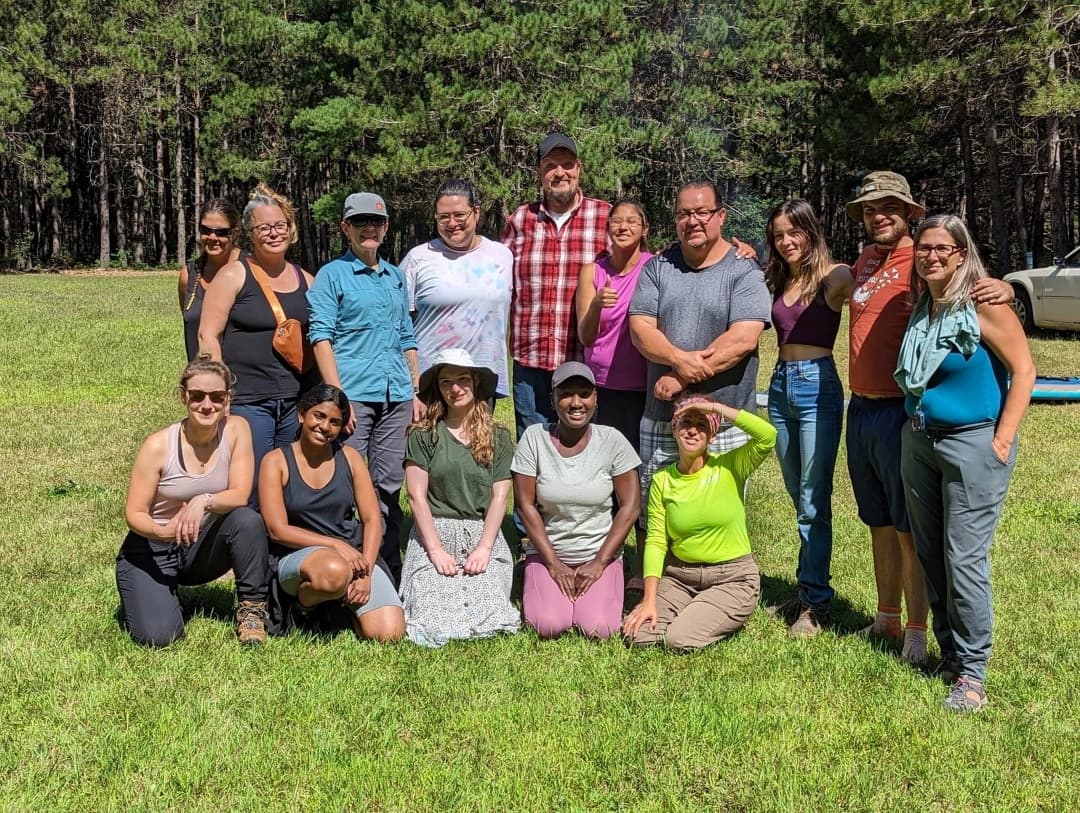
Algonquin College's Pembroke campus hosted its first Indigenous Education Camp, from Aug. 22 to 27. Thirteen students embarked on a life-changing adventure.
Pictured back row, right side, Brenda Slomka, Dawson Lemaire and Caleigh Ward, with 12 others in attendance at Pikwakanagan First Nation.
While warm summer breezes blew and city dwellers hugged their air conditioning units, while wildfires raged in the west and war continued to rage in Ukraine, 13 Algonquin College students embarked on a life-changing adventure.
While they’d been strangers up until that point, they would soon become family.
From Aug. 22 to 27, Algonquin College’s Pembroke campus hosted its first Indigenous Education Camp, allowing students to engage in transformative activities that deepened their understanding of Indigenous histories and provided emotional and spiritual fulfillment.
Areas of learning centered around residential schools & Sixties Scoop, the Seven Grandfather Teachings, the clan system, self-governance, forestry management and the Truth and Reconciliation Commission’s Calls to Action.
The camp, organized as part of the Mamiwi Maadaadizi Project, aimed to advance Indigenization efforts at the campus and foster reconciliation among all students and community members.
Over the course of six days, participants moved from the Pembroke campus to Pikwakanagan First Nation to Foy Provincial Park, where they immersed themselves in a diverse range of activities.
These included artistic expression through painting and journaling, sharing talents, partaking in ceremonial practices, sitting in circles, gathering around bonfires and participating in the Kairos Blanket Exercise.
Through these experiences, students were able to learn truths about Indigenous communities and their rich histories.
Caleigh Ward, a public relations student who attended the camp, expressed her heartfelt attachment to the experience. “It was so tough to leave,” she said. “I would go back every year – more than once a year.”
Ward highlighted the well-prepared nature of the camp, which provided ample food, gear and engaging activities.
The Mamiwi Maadaadizi Project, a collaborative effort between Algonquin College, the Circle of Turtle Lodge, Pikwakanagan First Nation, Mashkiwizii Manido Foundation, Ontario Parks and Queen’s University’s Health, Communications and Environments Research Lab (HEC Lab), played a crucial role in conceptualizing the camp.
The initiative aimed to embed Indigenous knowledge across the Pembroke campus, identify best practices for Indigenization, and foster reconciliation for all community members.
Murray Sinclair, former Canadian senator and commissioner of the TRC, emphasized the critical role education plays in reconciliation during a Zoom discussion with college students and staff on Jan. 30, 2023.
“Education got us into this mess. Education will get us out,” said Sinclair. “I said that on the final day of the Truth and Reconciliation Commission. Education is not about being in school. Education is about learning what it means to be a human being.”
This project aligns with the Ottawa campus’ efforts to integrate Indigenous ways of knowing into campus life, as seen through the installation of murals and the naming of streets after historically significant Indigenous names.
The funding for the Mamiwi Maadaadizi Project was provided through a three-year grant from the Government of Canada’s Social Sciences and Humanities Research Council (SSHRC).
The COVID-19 pandemic, however, meant that the camp was only able to be held once during the three-year grant period.
Brenda Slomka, program manager of applied research, innovation & entrepreneurship at the Pembroke campus, remains optimistic about the future of the camp.
“Finding future accommodations may be challenging but I want to stress the importance of finding a home that preserves the camp’s essence and maintains the meaningful partnerships and community relationships it has cultivated,” said Slomka.
For the participants, the highlight of the camp was the sense of community, where individuals formed deep connections with one another.
When Ward first arrived at the camp, she only knew one other person, Dawson Lemaire, an Aboriginal studies student.
“Dawson was the only person I knew going into it, but I came out with a whole family” she said. “We hope to all go camping together again this summer.”
She emphasized the genuine and judgment-free environment that allowed for open sharing among strangers.
Dawson Lemaire echoes Ward’s sentiment. “Everyone had something to bring to the table, and we really formed a family when we were there,” said Lemaire.
The camp’s impact resonated in the participants’ experiences with nature, where they encountered extraordinary moments filled with awe and wonder.
Lemaire recounted an episode when they all sang The Eagle song, and an eagle circled directly above their group, disappearing into the clouds.
Lemaire (in orange) and Ward (in purple) watch in amazement as the eagle circles the camp after singing The Eagle Song.
“We were all doing The Eagle song, and as we finished our final circle, the eagle came down and started circling exactly over our group before disappearing into the sky,” said Lemaire. “It solidified that we were supposed to be doing this. We were meant to be there, together. Like a fulfillment of prophecy. It was really emotional.”
Such experiences exemplified the powerful connection between the participants and the land.
While uncertainty remains surrounding the future of the camp, Slomka believes the groundwork has been established for ongoing progress.
Ward, too, remains hopeful, accentuating that as long as the program can provide a location and accommodations, she is ready to participate again.
The Wolves men’s basketball team came out swinging against La Cité Coyotes on Dec. 1, scoring a 90-65 win after enduring a heartbreaking loss against their Ottawa rivals last month. […]
Andrew Sorokan
Photos: Andrew Sorokan
December 4, 2023 Revised: January 30, 2024 3:36pm
Photo: Andrew Sorokan
Carter Normand jumps to save a ball going out of bounds. Normand finished the game with eight points, three rebounds and two assists.
The Wolves men’s basketball team came out swinging against La Cité Coyotes on Dec. 1, scoring a 90-65 win after enduring a heartbreaking loss against their Ottawa rivals last month.
“That last game really took a piece out of us,” said Wolves guard Riley Partington about their Nov. 10 loss to La Cité. “Coming back we were just like, we gotta get them this time.”
And the Wolves sure did.
They beat La Cité by 25 points in the Dec. 1 rematch, their second-biggest winning margin of the season.
“We came into this game knowing it was a must-win game because we’ve been on a little bit of a losing streak,” said Wolves guard Eddie Laurent.
Opening tip-off for the Wolves and Coyotes. Riley Partington took the tip for the Wolves. Photo credit: Andrew Sorokan
The Wolves’ win mostly came from their two biggest runs in the first and fourth quarters.
La Cité came out strong midway through the first quarter and took a 17-11 lead over the Wolves. But the Wolves didn’t take long to get going. Algonquin went on an 18-2 run late in the first to take a commanding 29-19 lead into the second quarter.
The Wolves continued their hot streak early in the second quarter. They went on a 6-0 run out of the gate, extending their lead to 16 points and their run to 24-2.
The fourth quarter was also all Wolves. They played lockdown defence and held La Cité to only five points, outscoring them 21-5.
“We’ve been working all week on D, preaching D, preaching rebounds,” said Wolves head coach Trevor Costello. “Guys were dogs and they played hard.”
The Wolves struggled midway through the game and allowed La Cité back into it with only a six-point lead at the half. La Cité outscored the Wolves in the second quarter 23-19 despite the Wolves coming out hot.
“It’s the veteran guys on our team. We have guys like Simon (Desta), CJ (Gallaza)., Carter (Normand). All of those guys, they are talking to us. They are keeping our heads on straight. They are letting us know we still have this game,” said Laurent.
Wolves guard Sydney Abdedi Okongo takes a free throw. Abdedi Okongo finished the game second in points for the Wolves with 14. Photo credit: Andrew Sorokan
The Wolves also beat La Cité in shooting percentage. They shot an efficient 44.4 per cent from three, compared to La Cité’s 18.8 per cent. The Wolves also shot nine points higher from the field, at 46.9 per cent.
The Wolves are done for the 2023 portion of their schedule. They will be back in action at home after the new year on Jan. 12 at 8 p.m.
“We have a month after this and we are happy we got to come out with a W. It’s a great feeling,” said Partington.