Travelling home to New Brunswick during the pandemic
Times reporter, Katelin Belliveau, takes us through her sudden decision to make a long trip home to New Brunswick during the COVID-19 pandemic.
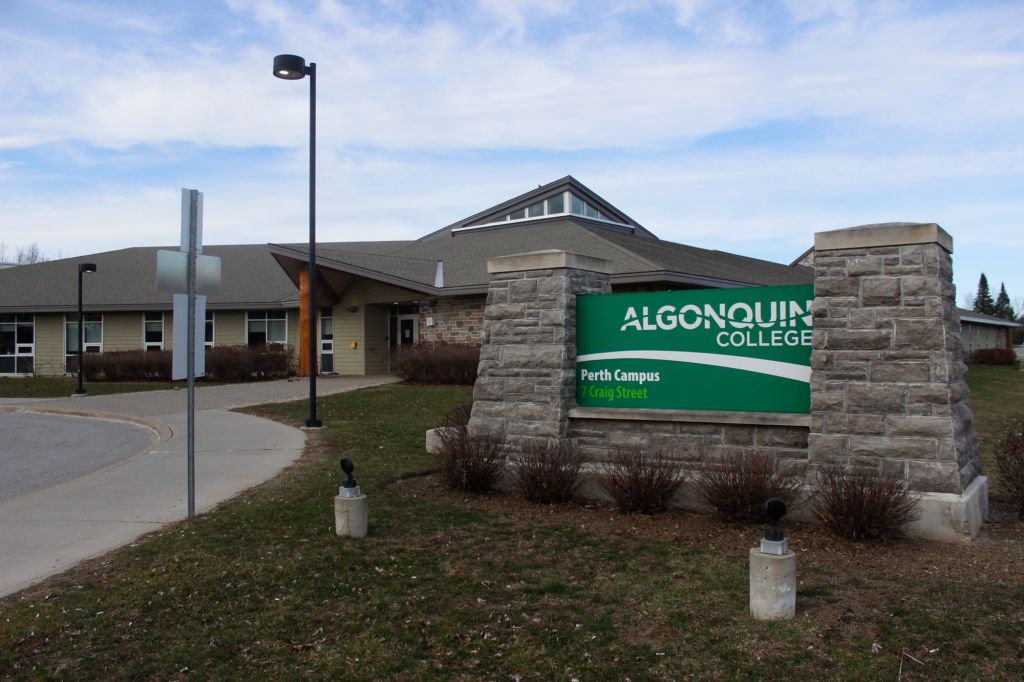
Algonquin College’s campuses across the region have stepped forward to donate much needed personal protective equipment and supplies during the continuing COVID-19 crisis.
“Our Perth and Pembroke campuses also worked with their local community and reached out to their neighbouring hospitals,” said college spokesperson Chris Lackner in an email on April 8.
Details were announced on the AC Perth Twitter page. The campus was able to “donate 2,000 gloves, 100 N95 respirators and 50 face masks,” the statement said.
The donations didn’t go unnoticed by others in the community.
“What we are is a community college,” said Shaun Barr, acting academic chair of the Perth campus. “The smaller satellite campuses are deeply ingrained in our communities. They rely on the campus and the campus relies on the community.”
According to Barr, Dr. Barry Guppy, president and CEO of the Perth and Smith Falls District Hospital, reached out to the college.
“We put a little plan in action,” Barr said.
Three specific programs were able to donate PPE to the hospital: the personal support worker program, heritage carpentry and the brick and stone masonry program.
On April 7, 2020, Premier Doug Ford thanked universities and colleges for their contributions. In his briefing, he specifically mentioned the work Algonquin was doing. Although he got the number of masks Algonquin had donated wrong in his statement – he said 75,000 when it was actually over 7,000 – the college quickly confirmed the accurate number.
“Algonquin College lives by its values of Caring, Learning, Integrity and Respect,” said Lackner in the email. “The College wanted to give back to the community and share its resources in support of ongoing health care efforts.”
In addition to various PPE, the Ottawa campus was also able to loan nine ventilators to the Ottawa Hospital.
Barr is proud the Perth campus has been able to contribute. “It is a small gesture, but it is an important gesture,” said Barr.
-with files from Laura Nelson
I have the nickname Smiley which I’ve had all my life. The reason why I’m always smiling is because of my love for music. I love to listen rock, pop, country and acoustic covers. Plus I love playing the guitar and clarinet as my hobby.
Ever since the COVID-19 period started, everyone has been stressed out, worried and even paranoid. The situation does worry me too, of course. I work full-time at Tim Hortons and need to be extra careful. I do still go out for walks daily to get my exercise and take photos for school assignments or even for fun, but I keep my distance. But none of this stops me from being my normal happy self.
With me, I continue to have have this adorable smile on my face that everyone has loved seeing through my working, high school and now college life. The reason: music.
When I was on campus before all this happened in mid-March, I would walk across the street with my guitar or clarinet and play to help release all the stress. Even if I was having a bad day in class, music would bring me my happiness.
Just by listening to music with my headphones on, I can focus on getting my assignments completed on time. When I was in high school, my teachers and friends put me on to the idea. “The way to get work done with no distractions or interruptions is to put headphones on and listen to your music,” they’d say. They were right.
I first started playing music with the clarinet and guitar in grade 9, my first year in high school. I wasn’t into art or drama and I needed an art credit to graduate. So I signed up for music band class.
That’s when I first fell in love with my musical hobby. When I played in front of people at the annual winter and spring concerts, coffee houses and even at Canada’s Wonderland, my smile got even bigger.
When I got to grade 11, I wanted the challenge of a new instrument. So I took a guitar class. I loved it even more because I’m a fast learner when I try new things.
Now, during these self-quarantine days, when I’m playing my guitar to either write songs or play covers, I can feel as relaxed, distressed and calm as I did when life was normal and I was back living in residence.
The college’s vice president of finance and administration released a statement on April 7 regarding refunds for the winter and spring terms.
In it, Duane McNair says that following instructions from the Ontario Ministry of Colleges and Universities, the college has put together a list of student fees that are eligible for refund for each term.
There will be no tuition refunds or rebates available as long as course delivery continues.
“Tuition fees contribute toward costs for academic program delivery and the general operations of the College,” he said. “Tuition is not specific to location or mode of delivery (in-person or online). It is primarily for the instruction, assessment and administration of program delivery. These are costs that persist during this time and are ineligible for refund.”
The fees eligible for rebate or refund for the winter term are:
The refunds are applied automatically to college students’ accounts. For students relying on OSAP, if the balance remaining is more than $100, the refund will go to the National Student Loan Service Centre.
For the spring term, course delivery will begin online on May 19 until the midterm break at the beginning of July. In-class course delivery is set to begin on July 6, if permitted by provincial order.
Ancillary fees will also be reduced by 50 per cent, meaning a savings of $154.51 per student.
All other fees remain the same for the spring term, as course delivery will continue.
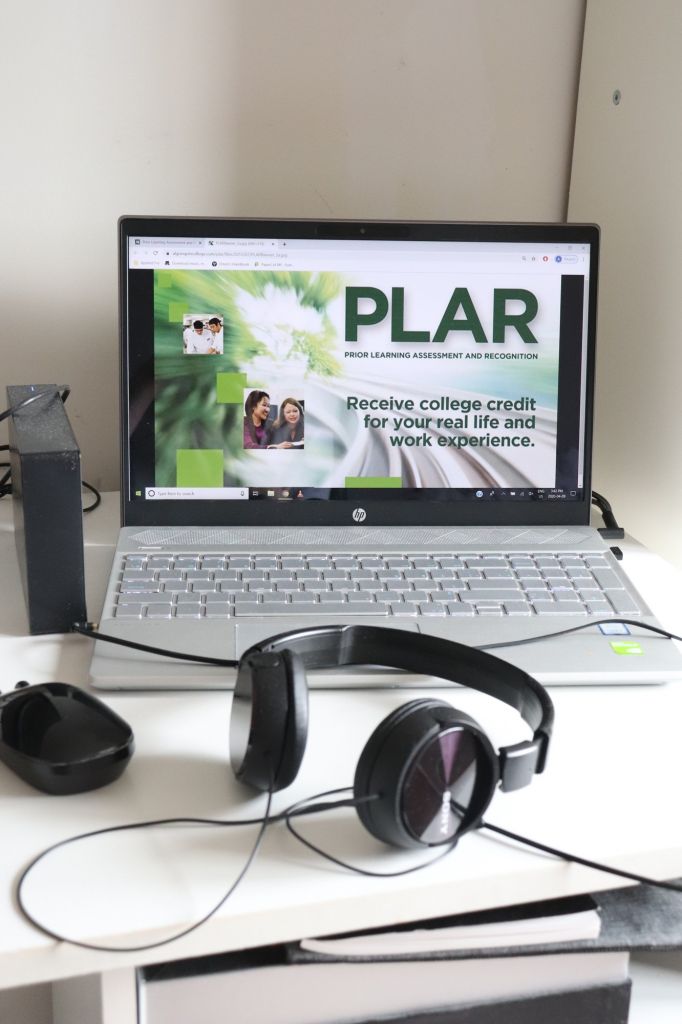
Algonquin College’s Prior Learning Assessment and Recognition (PLAR) services are taking an empathetic approach to the COVID-19 pandemic.
The office loosened its processing timelines to be more flexible to students and faculty.
“We’re doing our best to process PLARs as normally as possible during this time,” said Tessa Foster, PLAR Coordinator, on April 1. “We understand that PLARs may take a bit longer than usual for students to complete, which we’re addressing on a case-by-case basis, with a flexible, empathetic approach.”
In light of the recent developments surrounding COVID-19, faculties are shifting their course modality online and adjusting to teaching remotely. Given this pressure, assessment officers are taking time to modify assessment guidelines as they see fit. The responsibility will fall to student applicants to adapt and accomplish all outcomes in the assessor’s new, modified guidelines.
PLAR services, however, want applicants to rest assured that they will not be asked to complete in-person exams, presentations or interviews at this time.
When asked about changes to office operations, Foster said that PLAR services have always functioned largely through email.
“Our operations are not much different than usual,” she said. “One of the most major changes to our operations is that I’m no longer able to offer face-to-face drop-in hours; however, I’m happy to set up virtual meetings with students as needed.”
Regular drop-in hours are discontinued, but PLAR services are available via email to answer inquiries relating to the general PLAR process and how individual cases may be impacted.
No new applications will be actioned until further notice.
The COVID-19 pandemic has brought everyone to stay home, and school is no longer in person. We thought we’d share what some people are doing during their time in quarantine. Algonquin Times reporter Camryn Majuary shares her life now.
Cory Whippler, a 2017 graduate of the television broadcasting program, works for the Ottawa Senators filming hockey games at the Canadian Tire Centre.
When he found out the NHL season would be postponed, he knew he would be out of more than just an income.
“I need to find a way to make up for the income and extra camera work I was going to be missing out on,” he says about his first thoughts after finding out there would be no work for the remainder of the hockey season.
The National Hockey League announced the 2019-2020 season would be paused starting March 12 in a statement from Gary Bettman. The decision came after the news of an NBA player testing positive for COVID-19. Since the leagues share facilities the chance of a NHL community member testing positive was likely.
“From the time I started the program at Algonquin, I knew I wanted to work in live broadcasting and sports,” said Whippler. “As a kid, playing sports, hockey was my favourite.”
Whippler has worked as a part of the in house camera crew for the Ottawa Senators for four years. This involves everything from videoing the hockey game to the fans in the crowd.
“Getting to see kids so excited by being on the big screen, seeing how they react and light up, is a really satisfying part of the job,” said Whippler.
Since the season being postponed happened in March, there were still home games scheduled Whippler would have been working.
“I lost working those games and money. But aside from the financial aspect of it, I’m losing work experience not getting those games,” said Whippler. “Experience is so important in broadcasting and media, the more practice the better.”
Broadcasting employers look for experience when hiring for jobs. Having more experience helps when trying to find a more permanent broadcasting job.

“With not working the games, I can’t get the experience that other jobs are looking for,” said Whippler. “It’s not only impacting my current state of life, but could also be making life harder down the road.”
Whippler is hoping to be working with a national broadcast crew for sports in the future.
“That’s not to say I don’t enjoy my job now but I would much rather have it on a big scale,” he said. “I feel it has more of an impact, more people would see my work.” he said.
“Being in the moment and live, you never know what’s going to happen,” said Whipper. “You have to follow the puck and if something goes wrong you have to fix it on the fly or your program is messed up. The extra pressure is what draws me back to it.”
Ah humans. We are curious creatures. We put bubbles in our baths. We share things most of our family wouldn’t care to know about on the world-wide web. We put ourselves through sometimes painful procedures to remove hair from our bodies.
We also give too many f*cks.
We care if that bubble bath is well-scented, we want everyone to know how absolutely AMAzing our lives are (even when they suck) and we care about what we look like. Even when we apparently don’t.
That is why Mark Manson wrote his book, The Subtle Art of Not giving a F*ck.
Now, typically I would stay away from self-help books for the simple reason being that I find many of them vastly contradicting even within themselves. Also, I find people read them to just feel better about themselves without actually following any of the advice – skipping through to the bits that validate the opinions and thoughts that they already have.
Mark Manson’s take – however, is different.
It is nearly impossible to twist Manson’s words into your own narrative because they are so unapologetically and bluntly spoken, they may as well be a punch in your face.
“The truth is that there are no such things as a personal problem,” he writes. “If you’ve got a problem, chances are millions of other people have had it in the past, have it now, and are going to have it in the future. Likely people you know too. That doesn’t minimize the problem or mean that it shouldn’t hurt. It doesn’t mean you aren’t legitimately a victim in some circumstances. It just means that you’re not special.”
Good luck justifying that you treat people like crap because of your oh-so-sad past with logic like that.
Of course, some people will still justify themselves, and Manson is excellent at calling them out while also acknowledging that some of what he says he might later discover is complete crap. Manson also points out many of his past, and current short-comings
“Just as Present Mark can look back on Past Mark’s every flaw and mistake, one day Future Mark will look back on Present Mark’s assumptions (including the contents of this book) and notice similar flaws. And that will be a good thing. Because that would mean I have grown.”
It’s not often you find a self-help book that acknowledges that some of its content might not be helpful in the future. It’s even rarer to find an author who admits that they are still on a journey of self-improvement that will hopefully continue for the rest of their lives.
Because, in reality, there is no fix-it button you can press or a list that you can follow to make everything better. You gotta do it yourself. That’s why this book is a must read in my opinion.
Moving homes is always a stressful process. Between packing, the cost of a moving truck, the aches that come from loading and unloading boxes and the work it takes to make your new home a liveable space, it’s never easy
It becomes even more stressful when you factor in COVID-19.
Along with the need for people to remain isolated from each other, in my case I was also moving into an apartment that is unfinished because the contractors couldn’t finish the job due to the virus’s risks.
I had no choice but to move into a new apartment on March 28. While I was lucky enough that my family was willing to make the nearly six-hour drive from southern Ontario to assist me with it, the stress was far from eliminated by having the extra hands.
Two days before moving in I was told that the contractors doing renovations on my new apartment had walked out on the job. This left me with no kitchen counters, no taps in my bathroom and no way to access running water. I still had no choice but to move in.
With two cars, a temporary apartment and a storage unit full of boxes and furniture, it took hours of back and forth trips to get my things moved in. The day was spent moving around an emergency plumber who came to finish my bathroom and restore my access to water.
While that may seem like the worst of it over, it was just getting started.
The furniture ordered for my new apartment ended up getting lost in transit, which left me with no couch or chairs. I had to eat quick meals that didn’t require countertops. And my bare living room echoed with each step I took across it.
More significantly, I had to learn to adjust to living alone for the first time in my life. This at a time when our world that doesn’t allow human contact outside of our homes.
Spending your first days in your first apartment with no roommates or family is already a lonely time. During normal times, this problem would be lessened by spending time with friends. They would be there to help you celebrate your new independence.
But in a world where you can’t get within two metres of another person, that loneliness is amplified.
In my case, it echoes through the empty rooms of my new home.
During a time when there is already so much uncertainty, adding the extra stress of an unfinished apartment and the isolation during an already solitary time, has brought me an extra challenge in an already difficult situation.
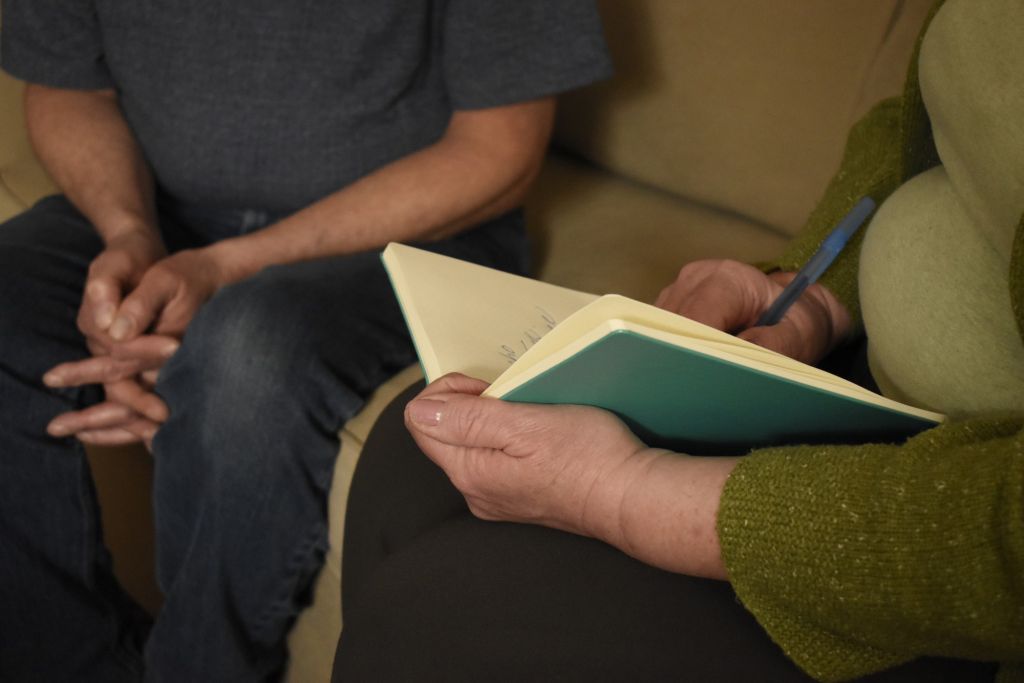
Counselling services has moved online, according to a statement issued by college president Claude Brulé on Friday, March 27.
Because of the ongoing COVID-19 pandemic, only staff considered essential to college operations are allowed on the premises, said the statement. In lieu of face-to-face counselling, Algonquin is offering a variety of supports online.
Friday’s statement included a link to a Coronavirus information page, which contains an FAQ listing counselling resources students can access through telephone or online.
Doug Stringer, manager of counselling services, the Spiritual Centre and student support services, says it’s important for students to maintain a routine while in isolation.
“Going to bed and getting up at the same time each day,” Stringer said. “Eating well and having a routine that includes eating. Exercise is another one – and that’s going to be one that’s going to be more difficult, but find a way to move that complies with physical distancing requirements. Find ways to connect socially. That would all be a really good start.”
Stringer says that students in isolation who feel they are in need of counselling should reach out by email or phone, although he believes some will lean on the supports they have at home.
The Mamidosewin Centre has been working in collaboration with counselling services to counsel Indigenous learners online. They’re offering virtual outreach to students by posting frequent updates on their Facebook page and hosting daily beading sessions from 11 a.m. to 12 p.m. via Zoom.
Students currently registered with the Centre for Accessible Learning can email their disabilities counsellor, learning strategist or assistive technologist for questions or to set up a virtual appointment. Anyone not registered with CAL but seeking their services can direct their questions to calmessages@algonquincollege.com. Additional CAL resources can be found here.
Algonquin’s International Education Centre is working with students on a case-by-case basis. They have helped students who have been displaced with finding new accommodations. The IEC is also offering appointments via Zoom and offering peer mentorship for international students. Additionally, the IEC is launching a campaign on Instagram using the hashtag #weareinthistogether which encourages students to send photos of how they are spending their time in isolation.
Stringer offered some words of advice for members of the Algonquin community now learning from home.
“We’ll get through this,” he said. “This will end and we’ll come out the other side and hopefully – not to sound cliché – we’ll come out stronger.”