Although much of 2020 was spent in isolation, the dawning of a new school year has sparked hope for Algonquin students. Since March, students have abided by social-distancing protocols, limited their interactions with friends and family outside of their households and struggled with the loss of community. Despite the pandemic, students reflect on some of […]
Meara Belanger
Photos: Meara Belanger
October 5, 2020 Revised: October 27, 2020 12:22pm
Photo: Meara Belanger
Students take a moment to reflect on the positive memories from the past year and the ones they hope to make going forward.
Although much of 2020 was spent in isolation, the dawning of a new school year has sparked hope for Algonquin students.
Since March, students have abided by social-distancing protocols, limited their interactions with friends and family outside of their households and struggled with the loss of community. Despite the pandemic, students reflect on some of their best memories from last year.
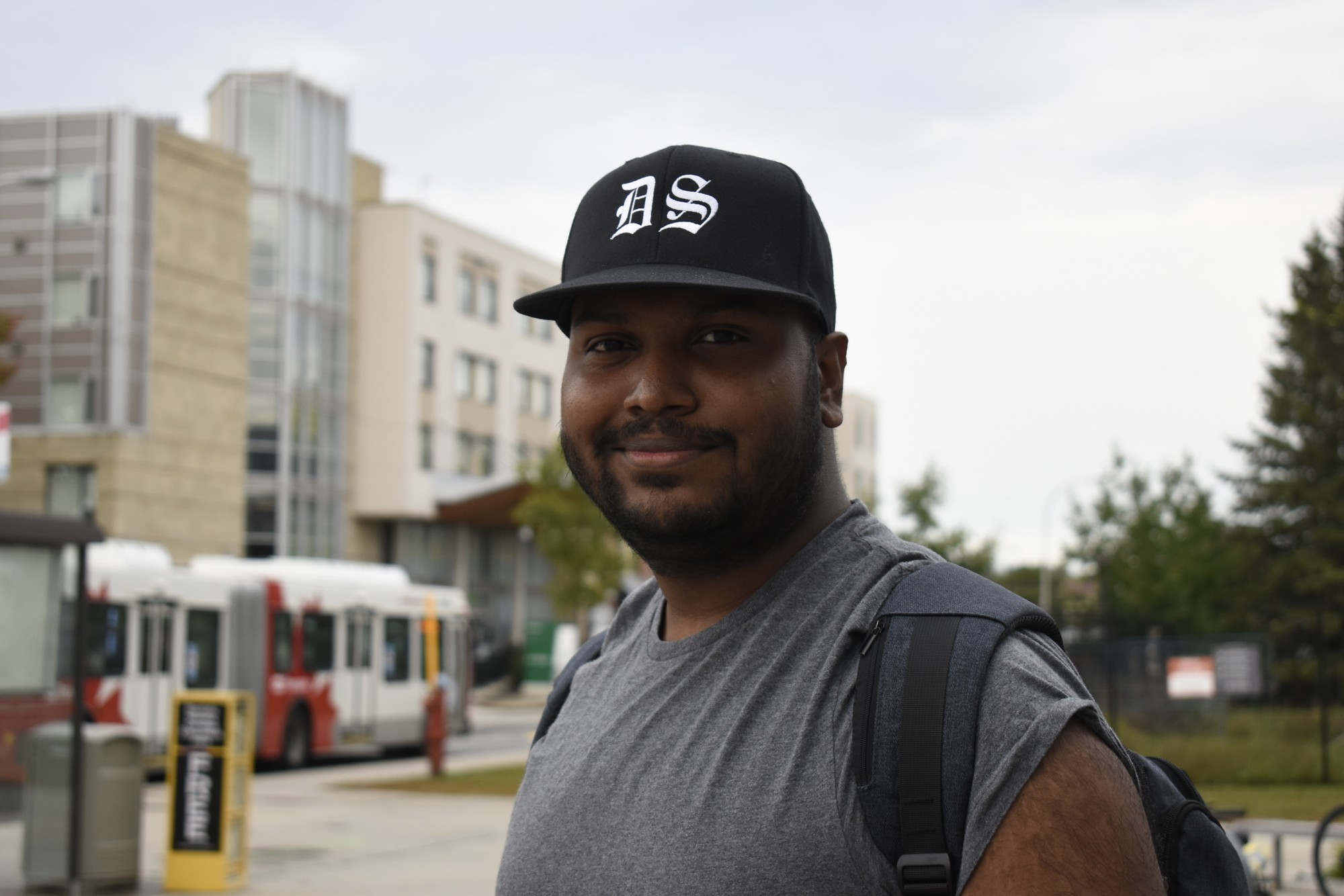
Mikayla Johnson will be starting her first semester of computer engineering technology this winter. Last year, she met the people she now calls her most cherished friends.
“I don’t know where I would be or what I would have done if it wasn’t for their support,” said Johnson.
Mairead Morrison is a first-year student in the business administration program. Fragments of a forgotten reality rise to the surface when she hears music she used to listen to.
“Falling in love throughout the summer nights, as corny as that sounds, it just seems surreal now,” Morrison reflected. “Sometimes when I hear songs I listened to at that time, it brings me back.”
The loss of so many things at once can weigh on people. Still, a new school year can feel like a fresh start with the potential for endless possibilities.
Currently, Morrison is adjusting to a new home in Ottawa and is looking forward to “crushing” her goals.
Johnson, on the other hand, can’t wait for the holiday season. “That time of year always feels a little more magical,” she said. “It’s that feeling I’m excited for. Cozying up with a hot drink during a storm and a twinkling Christmas tree is my favourite.”
The last seven months haven’t been easy, and the return to school is sure to be a bumpy road for many. Even so, it’s important to hold on to the good memories throughout the hard times to come.
When Amy Spears thinks about one of the first times she had dinner at her in-laws’, she thinks about a certain bottle of wine. It was a Barolo, a red wine produced in Italy. Her father-in-law, Guy Dubois, had brought it out during dinner, he loved it. Trying to impress him, Spears went to LCBO […]
Katelin Belliveau
Photos: Madalyn Howitt
October 4, 2020 Revised: October 29, 2020 1:05pm
Photo: Madalyn Howitt
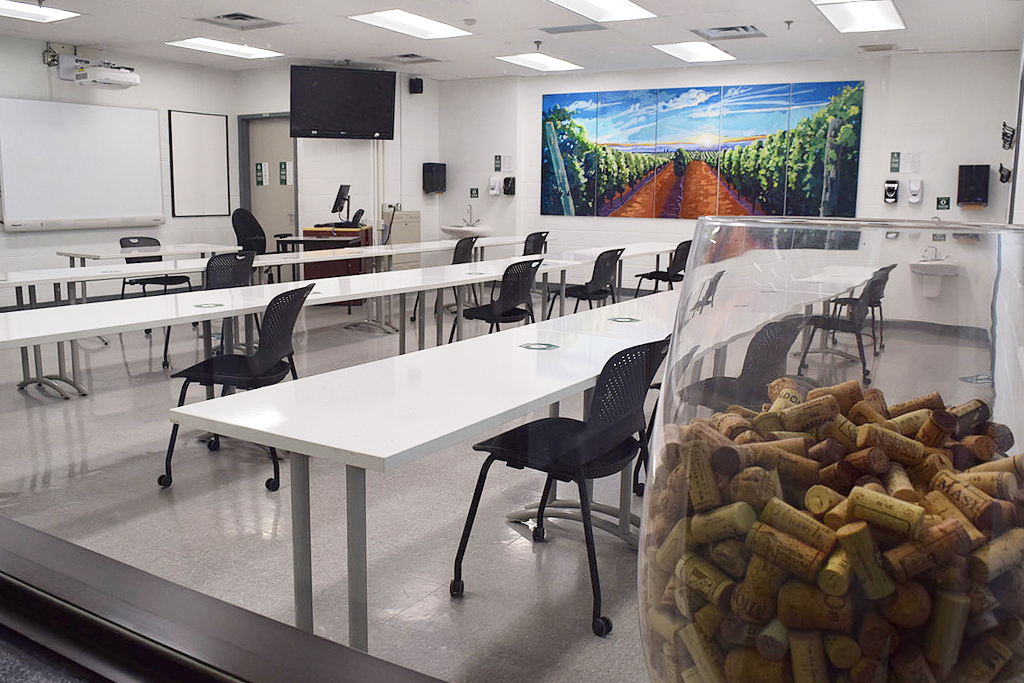
The Wine Lab, used mostly for wine tasting in the Sommelier program, will hold half the students it normally does if students return to campus for face-to-face learning.
When Amy Spears thinks about one of the first times she had dinner at her in-laws’, she thinks about a certain bottle of wine.
It was a Barolo, a red wine produced in Italy.
Her father-in-law, Guy Dubois, had brought it out during dinner, he loved it.
Trying to impress him, Spears went to LCBO before their next dinner and got him a bottle. They ran at least $40 each – a stretch from her usual $12 choice – but it would be worth it to see the look on his face.
At dinner, she gave it to him. He thanked her and said he would add it to his collection – a case of the wine he kept in the basement.
Spears laughs about this today. She insists he is still one of the toughest people to buy wine for.
That’s one of the reasons she told Dubois that he would be a fantastic sommelier – an expert in wines.
“Every time we go over for dinner, he’s always pulled out a nice bottle of wine and told us about the wine, why he loves it and why it’s going to go well with our dinner,” she said. “He’s kind of a natural, I think.”
Sommelier student Guy Dubois (right) said he owes a lot to his family for their support during his careers. His father, Paul Emile Dubois (left), his son, Daniel Dubois (center) and his grandson, Emerik Dubois are part of his support system. Photo credit: Provided by Guy Dubois
Dubois took her advice and decided it was time to chase what he loves again by enrolling in the Fall 2020 sommelier program at Algonquin.
Semi-retired, Dubois chose to pursue wine after careers in areas of work he would say are “a pretty big jump,” from one another.
Even though he would go on to earn a degree in chemistry from McMaster’s University in 1986, it was not exactly a straight shot to the finish line. He faced what many experience in school: uncertainty.
“Science was not even in the realm of possibilities,” he said, reflecting on his time in high school. “I still remember in Grade 9 and Grade 10 science, I was horrible.”
In Grade 11, his chemistry teacher gave him his lightbulb moment. “He turned me onto sciences,” Dubois explained. “Just the way he was teaching and how much fun he was having. And I’m thinking, ‘Wow! This is awesome.’”
He knew he was headed into science. Then, after a trip to the chiropractor to treat a hockey injury, he thought he had it figured out. He was told he could be a great chiropractor, so he gave it a shot.
His degree in McMaster’s actually started in biology. “I tried biology,” he smiled. “Unfortunately, I could not pass biology if my life depended on it.”
Rolling with the punches and determined to pursue what he loved, Dubois met with a counsellor who told him the next decade was going to be all about chemistry. Ready to jump at a chance, he responded, “Well, I have no idea what I want to do. So, let’s do this.”
Today, he would tell you he was glad he did. He would also suggest you take the big chances in school – if it’s what you want.
“You have to follow your dreams, you have to have fun,” he said with a smile. “Life is too short. If you find, all of a sudden, that you have to do something different, then you have to do it.”
Flash forward to having worked for two chemical sales companies over the span of 25 years, he said the best part of his job was the extensive travel. “My territory was pretty much this side of the world,” he explained. “We spent some time in Chile, we spent some time in Brazil, Canada and the U.S.”
He described his work as a sales representative for Alchem, the international laboratories incorporation, with a glow you only get when you love what you do. He raved about his work in paper mills, improving the paper and figuring out how cardboard could be a better recyclable.
“That really pushed my buttons. I really, really did enjoy that a lot.”
In 2011, the company was bought-out and decided to let go of Dubois’ department. He was faced with a barrier, over which he took quite a jump.
For the following six years, he worked as a business development manager at a Canadian bank.
During that time, he worked alongside financial advisors that would later lead him in yet another career change.
In 2016, he became a financial advisor himself, earning his life insurance and security certificate online. Though Dubois was feeling good about where he was, he was not feeling great.
“I have to admit that I liked the financial advisor’s position, but I didn’t love it,” he explained. “It was more of a means to an end.” And according to Dubois, if he is not loving what he is doing, then he should not be doing it.
“I decided I was done doing the rat race,” he laughed.
Today, he is the newly elected class representative of the sommelier program, making the best out of a changing situation.
Due to restrictive access to campus, the sommelier program re-organized its fall semester schedule. The first seven weeks are being delivered online, focusing on the theory aspect of subjects normally filled with practical learning. After the Fall break, students will be able to attend on-campus labs to taste wine – a crucial part of the program.
Marie-France Champagne, the program’s coordinator, said she is pleased with the amount of participation on Zoom so far.
“I think people have had enough of the confinement and being at home,” she added. “They are looking to pursue their passion.”
Dubois is doing exactly that. Doing what he loves has been his guiding principle throughout his different careers.
“I’ve always done the work that I am really passionate about,” he said. “It’s not just the paycheck.”
As he heads into the uncertain remainder of the term, Dubois said it is important for students to keep thriving towards their passion, no matter what it is.
And for students worried about being stuck in the first career path they have chosen; Dubois gives the same advice he was once told.
“Do not kid yourself, this is not going to be your last job. You’re going to change – people do,” he explained.
Dubois thinks that as long as students are not afraid to take that jump as he did, they will succeed.
“And I’m living proof,” he said, breaking into laughter.
Sam Murdock – Game Master at Lockdown Ottawa and participant at Algonquin College’s Arduino workshop on Sept. 24 – has coded before. If you attended a workshop with him, you might think he knew exactly what he was doing. But Murdock was at the workshop, hosted by ARIE, because he had never coded with an […]
Kristy Jones
Photos: Jack Casselman
October 1, 2020 Revised: January 30, 2024 3:37pm
Photo: Jack Casselman
With the demand for people with the ability to code on the rise, it's becoming a much more attractive skill to learn.
Sam Murdock – Game Master at Lockdown Ottawa and participant at Algonquin College’s Arduino workshop on Sept. 24 – has coded before. If you attended a workshop with him, you might think he knew exactly what he was doing.
But Murdock was at the workshop, hosted by ARIE, because he had never coded with an Arduino, the low-powered mini-computer used in so many prototypes in the Applied Research Innovation and Entrepreneurship Lab.
Murdock equated the coding to puzzle-solving.
“You don’t know what the puzzle is supposed to look like. You’re both making it, and putting the pieces together at the same time.”
Darren Taubman, a carpentry professor from Algonquin’s Perth campus, was in attendance for more personal reasons.
“I appreciate that ARIE has been offering these courses,” Taubman said. “It expands our knowledge. I hear my kids talking about it all the time.”
Ontario’s math curriculum in elementary schools was updated in June 2020. According to the Ministry of Education, beginning in September 2020, children in the first grade will be learning to code.
The beginner’s workshop, was led by Stephen Gagne, a professor in the School of Business at the college. According to Gagne, “coding is more than just inputs and outputs. Being able to code teaches you how to think properly.”
“As it stands right now, coding is the number one most employable skill. If you have coding as part of your skillset, you are in demand in just about every industry.”
What was once a single-session workshop is now a four-part event. As the demand for basic knowledge in coding increases, ARIE is looking at expanding their events to cover the basics in every programming language.
Algonquin is hosting its virtual graduation which will feature all of the traditional aspects of previous ceremonies, including the opportunity to connect with peers and faculty, guest speakers and music. With students unable to attend their convocation in June, the college has come up with new ways for graduates to gather and commemorate their successes […]
Phaedra Hamer
Photos: Phaedra Hamer
September 30, 2020 Revised: January 30, 2024 3:37pm
Photo: Phaedra Hamer
Graduates of 2020 will have a virtual ceremony where they can connect with the community, friends and family to celebrate their achievements.
Algonquin is hosting its virtual graduation which will feature all of the traditional aspects of previous ceremonies, including the opportunity to connect with peers and faculty, guest speakers and music.
With students unable to attend their convocation in June, the college has come up with new ways for graduates to gather and commemorate their successes on Oct. 28.
After missing her convocation in July, Abigail Crispin, a summer graduate from the practical nursing program at Algonquin, found other ways to celebrate.
“It was definitely disappointing to miss out on that opportunity,” said Crispin. “But, my friends and I got together and did our own little photo shoot.”
The ceremonies will be hosted on the college’s brand-new convocation website and available for viewing any time after each ceremonies’ dedicated start time.
Students who are registered will receive access to two links; one for their specific ceremony and one for their post-reception breakout room on Zoom.
Events manager Sophia Bouris recognizes how important community is for students on their graduation day.
“We are shifting the way we do things to make sure students feel connected to their college, peers and faculty,” said Bouris. “These connection points were all at the forefront of our decision-making process.”
Another way for students to be connected during the ceremony is on the live tag board where students can watch live tweets from their community.
“We want the community to be pumped about the convocation,” said Bonnie Chan, convocation officer, with excitement. “Ceremonies can be shared with friends and family so everyone can safely watch and celebrate together, even if we’re apart.”
SA President Emily Ferguson says that the college is trying to make convocation feel “as normal as possible.”
All speeches and music will be pre-recorded to be put into the virtual celebration.
“These traditions are so important to keep, and they’re not going anywhere,” said Bouris.
Featured Story | News
Community | Convocation | Graduation | Online | Students | Virtual event,
Students have until Oct. 2, 2020 to either sign up for the health plan or opt-out, but how much do students know about this service? Algonquin offers a private health-care plan to full-time domestic students as part of the cost of their tuition. In Ontario, public health insurance (OHIP) partially covers a range of services […]
Meara Belanger
Photos: Meara Belanger
September 30, 2020 Revised: September 30, 2020 3:42pm
Photo: Meara Belanger
William Dean, a second-year child and youth care student, hasn't taken advantage of AC's health plan even though he's used campus health services.
Students have until Oct. 2, 2020 to either sign up for the health plan or opt-out, but how much do students know about this service?
Algonquin offers a private health-care plan to full-time domestic students as part of the cost of their tuition. In Ontario, public health insurance (OHIP) partially covers a range of services from doctors’ visits to birth control. But there are certain restrictions — OHIP won’t cover everything, and that’s where private insurance comes in handy.
Availability is one thing, but awareness is another.
William Dean, a child and youth care student in his second year who has never used the college’s health plan, tries to explain what he remembers about the insurance policy from his first year.
Madeleine Thompson, a second-year tourism and travel student, says the health plan is just “another college cash grab.” She’s frustrated with the program’s accessibility.
“In my experience, nothing was ever explained thoroughly,” said Thompson. “I’ve had to contact them multiple times for clarification and so far I’ve found it useless and had to pay for everything because it takes so long to find out what’s covered and what’s not.”
To alleviate some of the confusion, the Times has broken down the health plan, how to access it and the various benefits included with different plans.
There are two basic options.
The Flex plan is the default health care option, which provides benefits to the student. This option is ideal for students who are single without any dependents. The family plan provides benefits to both students and their families. This option is great for students who want to add one or more family members to their plan, including spouses and children.
Depending on what you need, there are four plans to choose from.
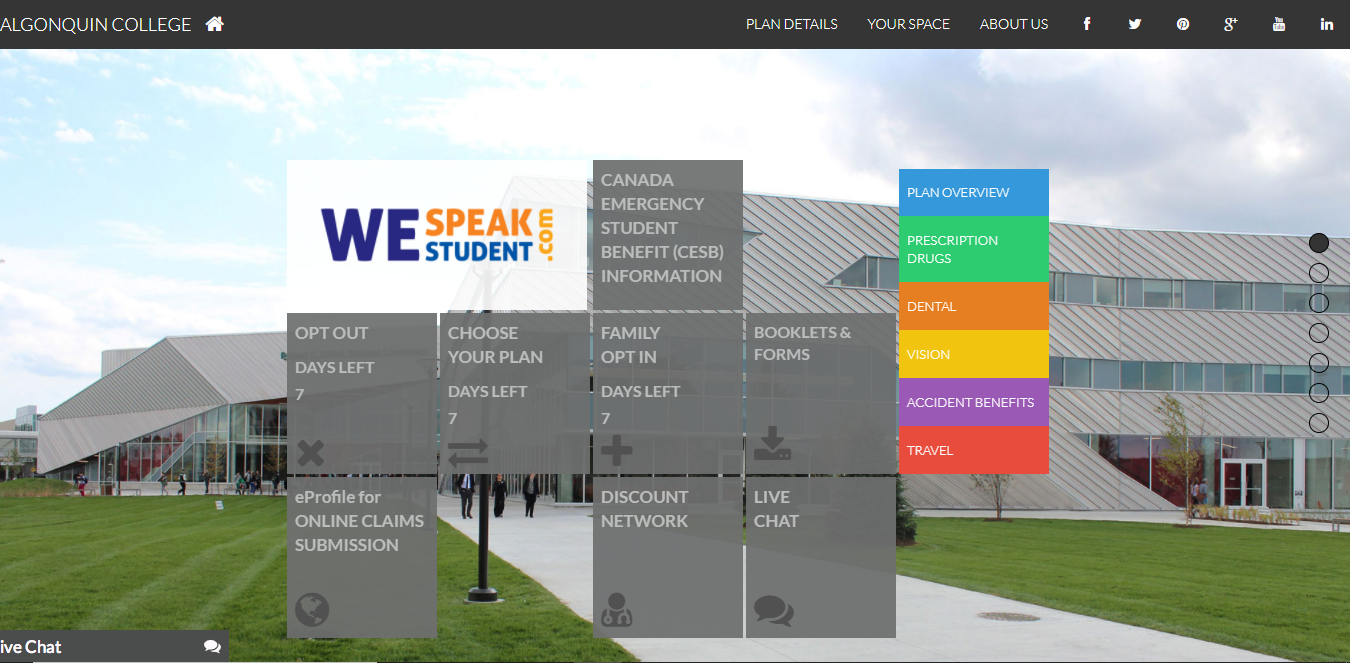
On the WeSpeak website, click the white box at the bottom of the text boxes and type “Algonquin College”, and it will redirect you to a page that looks like this.
Students have until October 2 to click the “choose your plan” box. If they do, they can choose from one of four plans.
The balanced plan is the default benefit students are afforded if they don’t choose themselves. It has $3,000 maximum annual coverage for prescription drugs and 80 per cent coverage for most prescription drugs, $500 maximum annual coverage for dental, and 100 per cent coverage to a maximum of $50 for a general eye exam and $100 for prescribed contact lenses and frames.
The enhanced drug plan focuses on pharmaceutical care with $5,000 maximum drug coverage per year and 90 per cent coverage for most drugs. Dental coverage is reduced to a $300 annual maximum, while vision coverage remains identical to the balanced plan.
The dental focused plan allows $2,000 annual maximum drug coverage and 70 per cent coverage for most drugs, with a rise to $750 maximum basic dental coverage, as well as 100 per cent coverage of minor restorative work and 80 per cent coverage of extractions and oral surgery. Again, this plan offers the same vision coverage as the balanced plan.
The vision focused plan offers $2,000 maximum drug coverage annually and 70 per cent coverage for most drugs, with $300 maximum dental coverage per year. This plan offers 100 per cent coverage to a maximum of $50 for a general eye exam and $150 for prescribed contact lenses and frames every 24 consecutive months.
How can a student make a claim online?
From the WeSpeak website, click the box that says “eProfile for online claims submission”. This will redirect students to a page that will ask them to create a profile if they are first-time users. They will be asked to present the information provided to them via their health plan card. If you never received a health plan card via email, don’t panic. The information for all students is similar: the group number is 513970, the provider is ClaimSecure, and your student ID is “A” followed by your student number. After entering this information, students will be asked to login and fill out a claims form to submit online.
How can students opt-out?
Students can opt-out of the health plan by October 2, however, full-time students are not eligible for a refund of fees even if they’ve never used the health plan, and all other students will need to provide proof of an existing health insurance provider. Students can opt-out by clicking the box that says “opt-out” on the main page and following the instructions.
For students like Dean, more communication on the administration’s part is key.
“I’ve used the clinics before to get a concussion checked,” said Dean. “Now because of this interview maybe I’ll do some more research to see what’s covered. I feel like most people don’t even know that they’re paying for it.”
In a Zoom meeting with journalism students last week, Student’s Association president Emily Ferguson commented on the situation, revealing the high volume of inquiries the SA has been receiving regarding the health plan.
“We’re getting a lot of questions about the health plan,” says Ferguson. She further explained that frontline service associate Monica Saud handles most of the questions concerning the insurance policy.
The board of directors will be reviewing the health plan in “the next month or so,” according to Ferguson.
First, let me share a warm welcome to new Algonquin College students, and a warm welcome back to all of those returning! If this is your first time seeing me, my name is Emily Ferguson. I’m a full-time student in business administration, and last spring, I was elected President of the Algonquin Students’ Association. Through […]
SA President
Photos:
September 30, 2020 Revised: January 30, 2024 3:37pm
First, let me share a warm welcome to new Algonquin College students, and a warm welcome back to all of those returning! If this is your first time seeing me, my name is Emily Ferguson. I’m a full-time student in business administration, and last spring, I was elected President of the Algonquin Students’ Association.
Through the Algonquin Times, I am lucky to have a platform to speak freely and share my thoughts with you all once per month in this president’s column. This month, I want to share one of the essential services provided to students by the SA.
The Food Cupboard is located on the Ottawa campus in C033 and is operated by the Students’ Association. Since December of 2014, it has been a discreet and confidential service for students experiencing financial difficulty and cannot purchase food for their households.
Students can access the Food Cupboard once per month for a three-day supply of food and supplies.
If you require food but are in isolation or are not comfortable visiting in person, virtual options are available. The SA, and our Food Cupboard, are dedicated to continuing to help students. Now, more than ever, we need the support of the Algonquin College community.
We are seeing more students than ever who are struggling to find work because of the COVID-19 pandemic, and sometimes they find themselves having to decide between paying their rent over purchasing food.
On October 2, between 10:00 a.m. and 4:00 p.m., we will be hosting a contactless food drive outside of C building. We are looking for the support of our strong and resilient community. If you’d like to contribute but cannot attend the food drive in person, you can donate online through Canada Helps. You can find the information on our website at www.AlgonquinSA.com/food-cupboard.
Some of the most in-demand items are peanut butter, canned vegetables, canned fish, cereal, canned chickpeas, lentils, and beans.
I’ve seen how wonderful the Algonquin College community is, and we are at our best when we’re supporting each other.
The SA continues to support students, both in-person on campus, and online. Over the last seven months, we have worked hard to provide our services virtually and continue to adapt to the situation we are all finding ourselves in.
If you or a classmate are experiencing food insecurity, please reach out to the SA for support.
As Carl Clergé, a 2016 Algonquin graduate, scrolled through his social media feeds over the summer, he noticed a lot of posts aiming to educate people on racial injustices towards Black people. Clergé, however, wanted to do more than just educate his personal social circle. When he contacted Algonquin College’s advancement office, he assumed there […]
Jocelyn Galloway
Photos: Chanelle Pinard
September 29, 2020 Revised: January 30, 2024 3:37pm
Photo: Chanelle Pinard
William Street downtown Byward Market features Black Lives Matter art.
As Carl Clergé, a 2016 Algonquin graduate, scrolled through his social media feeds over the summer, he noticed a lot of posts aiming to educate people on racial injustices towards Black people. Clergé, however, wanted to do more than just educate his personal social circle.
When he contacted Algonquin College’s advancement office, he assumed there would already be a bursary in place supporting Black students so he could make a donation. However, this was not the case.
“It would be a good time to start one,” said Clergé. “If there was time, it would be right now.”
The Empowering Black Students Bursary he founded has been available to receive donations since Aug.12. Clergé’s goal is to raise $15,000 for the account so it will be eligible as an endowment fund. In this type of account, the interest collected on the principle amount will be distributed to students who meet the criteria of the bursary.
“If we have $15,000, it can stay there forever and for me that was a no brainer,” said Clergé.
Funds could be distributed to students as early as this coming winter semester but this will depend on how quickly the money is donated in order to reach the $15,000 minimum threshold. Clergé hopes funds will be available to be distributed by fall 2021.
The criteria to be eligible for the bursary is to identify as a Black student in the school of business at Algonquin College.
Clergé, 25, graduated from the business administration program with a major in finance in 2016 . He currently works as a risk analyst for Export Development Canada.
The desire to create a bursary was not only in response to racial injustice but was also a very personal decision.
Clergé’s mother moved to Canada from Haiti in 1989. As an immigrant, she did not have the opportunity to go to school as she needed to work right away to support their family financially.
His goal is to help support those who are pursuing education but may not have the financial means to do so entirely. After five years of post-secondary schooling, Clergé said he feels fortunate to have been able to attend Algonquin College and University of Ottawa after for economics.
“I just feel like everyone should have that opportunity,” said Clergé.
He is not the only person who thinks so. Clergé has received support from his current employer Export Development Canada. They have been matching 100 per cent of all employee donations since the bursary went live on Aug. 12.
In addition to Export Development Canada, Algonquin’s Jeremy McQuigge, manager of Course Material Services and former business professor, has also offered to match donations dollar for dollar up to $2,500 till Sept. 30.
“If you are someone who is able to contribute $30 that is actually going to translate to $60 right now,” said Kristen McCloskey stakeholder relations officer. “It is great to know your money will be doubled right now. “
Clergé met McQuigge during his first semester at college.
According to Clergé, McQuigge was a really good professor. He offered students who made a certain average in his class the opportunity to put him down as a character reference when applying for jobs. Clergé said it helped him start school off on the right foot and was able to use McQuigge’s reference on his resume.
As of Friday, Sept. 25, the bursary account was sitting at $11,000 which does not include the amount of money McQuigge is matching.
Since COVID-19’s arrival in the community, Marketplace Food Court and Savoir Fare bakery have had to change how they operate for students and staff. The college’s main food court in D-Building and the 35th Street Market Cafe in residence are the only two of food service’s seven locations open this fall. “Most of the changes […]
Camryn Majuary
Photos: Akira Cooper
September 28, 2020 Revised: January 30, 2024 3:37pm
Photo: Akira Cooper
Marketplace Food Court is still open to serve students and staff.
Since COVID-19’s arrival in the community, Marketplace Food Court and Savoir Fare bakery have had to change how they operate for students and staff.
The college’s main food court in D-Building and the 35th Street Market Cafe in residence are the only two of food service’s seven locations open this fall.
“Most of the changes in the Marketplace Food Court are physical and operational changes,” said Mary Baxter, the general manager of food and conference services at Algonquin. “We have implemented barriers and flow of traffic with a dedicated entrance and exit.”
While Marketplace’s hours have remained the same, many other things are different.
“Everything has changed since last semester,” said Maryanne Murphy, a Savoir Fare bakery employee. “We don’t have the same amount of products like we used to but those students are still providing and doing their curriculum.”
The restaurants are experiencing a financial impact due to fewer students being present at the college. “Our revenue has been significantly reduced,” Baxter said. “Our catering, conference, and banquet business have also been impacted as there are currently no events on campus.”
Activity on campus is as minimal as possible, but those who are on campus are using the services to their advantage.
For some, they still like to visit the food services when they’re on campus. “We’ll come occasionally,” said Emma McKenna, 21, a first-year applied museum studies student, gesturing to her friend, first-year professional writing student, Megan Paul, 19. “Probably less than your average student.”
“The health and safety of our community is our top priority,” Baxter said. “Some of the measures put in place to support physical distancing include plexiglass partitions, signage, and floor decals, and tables in from of service counters.”
Algonquin is following the Public Health guidelines and has made sure the food services they offer areas needed to keep everyone safe.
“We have adjusted our self-serve models for our hot bars and salad bars to full-serve or grab and go models,” Baxter said. “Our menus have been adjusted to accommodate this. Certain areas are also not currently open however, our focus remains on providing a variety of freshly prepared, high-quality food offerings.”
Menus are available online and can be accessed through a QR code found on signs in the Marketplace. Seating has been rearranged to support physical distancing and contactless payments are encouraged.
Featured Story | Focus
Covid-19 | Food | Marketplace Food Court | Savoir Fare
Some residents in Ottawa saw a hazy sky Sept. 15 caused by the forest fires burning over the West Coast of the United States. Smoke travelled from California, Washington and Oregon across North America from fires started in August. “Fire is a natural process of a forest,” said Cole Angeconeb, a 2020 forestry technician Algonquin […]
Charlotte Riethman
Photos: Charlotte Riethman
September 28, 2020 Revised: September 28, 2020 12:58pm
Photo: Charlotte Riethman
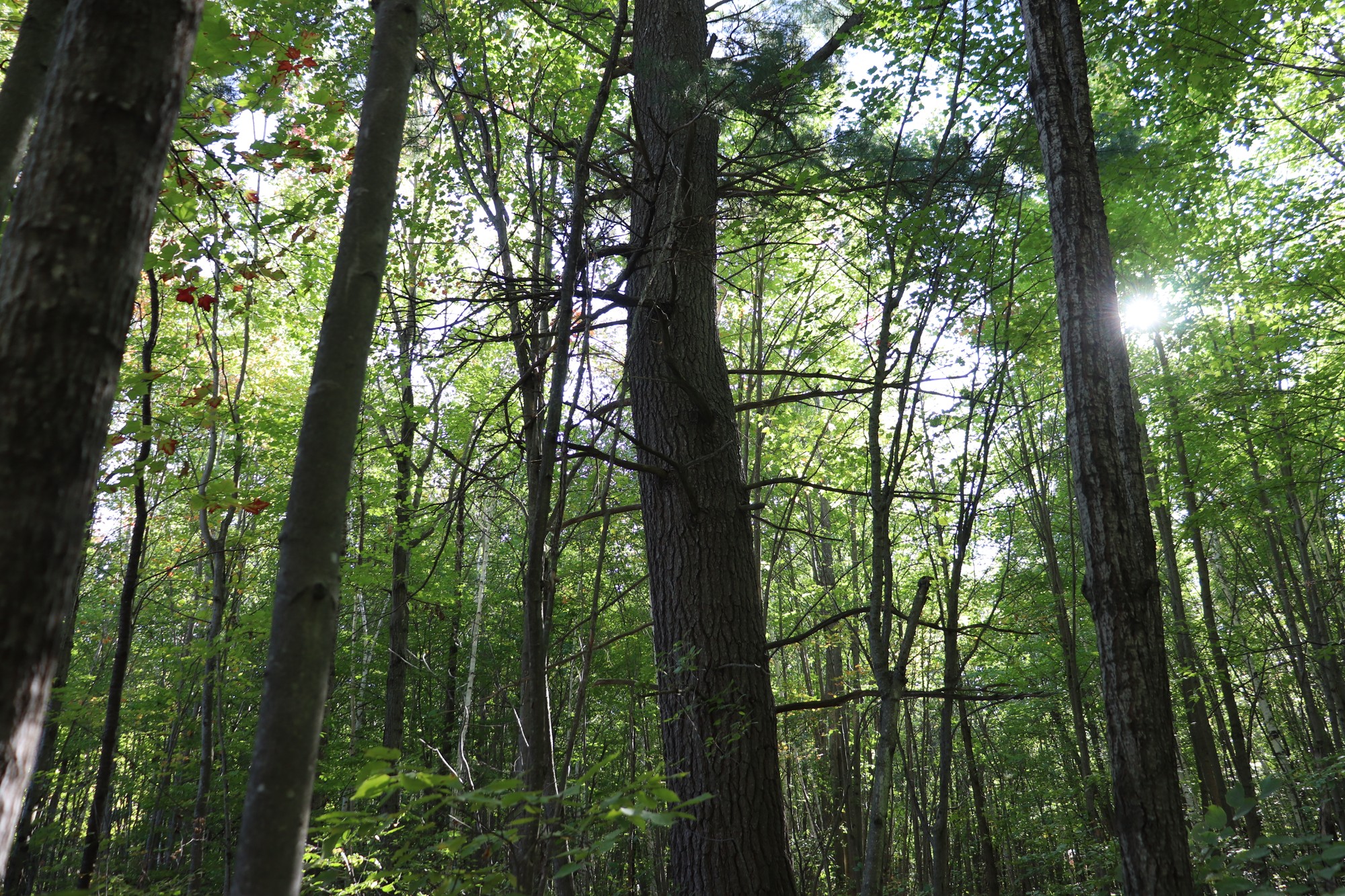
Trees stand tall at the Bill Mason Centre in Ottawa.
Some residents in Ottawa saw a hazy sky Sept. 15 caused by the forest fires burning over the West Coast of the United States.
Smoke travelled from California, Washington and Oregon across North America from fires started in August.
“Fire is a natural process of a forest,” said Cole Angeconeb, a 2020 forestry technician Algonquin Pembroke graduate. “It becomes bad with urban sprawl, and people moving into wildlands.”
“In southern California it’s all grasslands, so there’s not many trees burnt, it’s mostly shrubs that are six feet tall and are more prone to spreading,” said Angeconeb.
More fires are being started by humans not practicing safe fire handling while camping.
“They can pick up intensity quickly,” said Julia Charles, 23, a wildland firefighter crew boss with Red Lake Fire Management Headquarters. “There’s not always time to escape.”
Depending on the size of the fire, Charles could work up to two weeks trying to contain the fire before switching crews.
“It’s exhilarating, especially as a rookie it’s a lot to take in, you’re just looking at a wall of flames,” said Charles. “You really rely on your crew to help you through it.”
While fires in Ontario are fought with ground crews and aircraft, the lack of water in California leaves the crews to rely on hand tools for digging trenches to make fuel breaks.
“It all depends on management and the region,” said Angeconeb. “Places have prescribed burns to emulate a fire, if there are no prescribed burns more trees end up on the ground which leads to a more intense fire with no fuel breaks.”
Angeconeb says forest fires have always happened but a lot of people think it’s new with more media attention.
“Two hundred years ago it wouldn’t be affecting as much,” he said. “But people moving further into the wilderness doesn’t work out that way with fires.”
“Some trees are dependent on fire to spread seeds,” he said. “It can spark life again, and be a new beginning.”