Students continue to grasp remote learning environments
As remote learning continues throughout various programs at Algonquin College, students are continuing to get in touch with the new reality, which is the fall term being delivered through Zoom, for the most part. While some programs require students to be present for limited face-to-face interaction, many programs have taken the online learning route. For […]
Photo: Julien St-Jean

As remote learning continues throughout various programs at Algonquin College, students are continuing to get in touch with the new reality, which is the fall term being delivered through Zoom, for the most part.

While some programs require students to be present for limited face-to-face interaction, many programs have taken the online learning route.

For 21-year-old Roni Mathew, a level-four computer programming student, the reality of learning over Zoom is sitting just fine with him three weeks into the program.

“For the most part it’s been convenient,” said Mathew. “Programming is something you don’t have to be there for.”

With our current life seeming different from a few months ago, Mathew explained that communication with professors has been clear, and deadlines for assignments have been extended in most cases.

“As of now, all the professors are doing really great,” he said. “They’re extending the deadlines and they’re doing a really good job right now.”

In Mathew’s case, the remote learning aspect might help with assignment due dates, but it has brought other changes too.

Chinnu Thampi, 24, also a student of computer programming enjoys the time-saving she gets out of remote learning this term.

“We don’t have to travel,” said Thampi. “That’s the main advantage. We don’t have to go to campus, which is nice.”

Unlike Mathew, Thampi explained that getting a hold of professors can sometimes be more difficult in the times that we’re facing.

“If we have any doubt, it takes at least 24 hours to get a response from some professors,” said Thampi. “It’s a little hard to follow the instructions and so on, at times.”

In Mathew’s case, the concept of working from home has been an easier aspect to adapt to, as students of the program only need their computers for their studies.

Programs that usually had time allocated for lab-oriented work, that time now has been cut for some of their courses because of remote learning.

“If we were at the college, we would have two or three hours for our lab sections,” said Thampi. “Now, if the lab is supposed to be two hours, they give us the time slot to present the lab only. We need to learn by ourselves and do the lab, unlike before where we had in-class instructions.”

As the fall academic year continues on, students will keep on learning from the comfort of their own home until Algonquin College and President Brulé say it’s safe to return to in-class learning.


Virtual drag show brings people together

When you think about getting involved in Pride Month, you might think about raising rainbow flags or participating in a peaceful protest.
Ready or not, here we come.

When you think about getting involved in Pride Month, you might think about raising rainbow flags or participating in a peaceful protest. Continue reading “Virtual drag show brings people together”

Campus clubs are going virtual this fall

Although Algonquin’s clubs will all be virtual like so many other parts of college life this term, Hien Ly, a biotechnology-advanced student, went ahead and co-founded a club called STEAMed this fall. “We can’t believe we actually made it during the pandemic, it’s all uncharted territory,” said Hien. “We don’t know what we are up […]
Photo: Madalyn Howitt
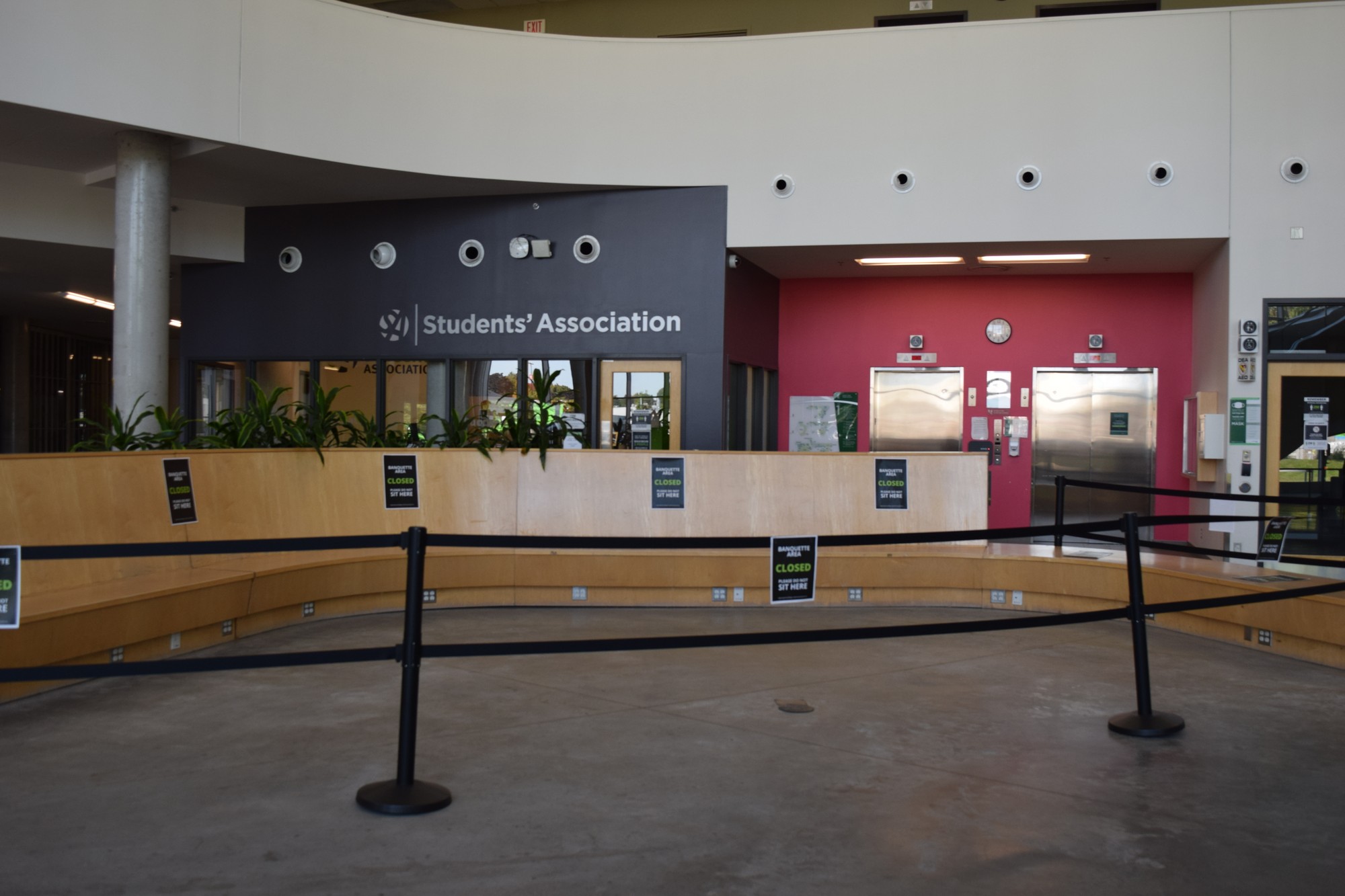
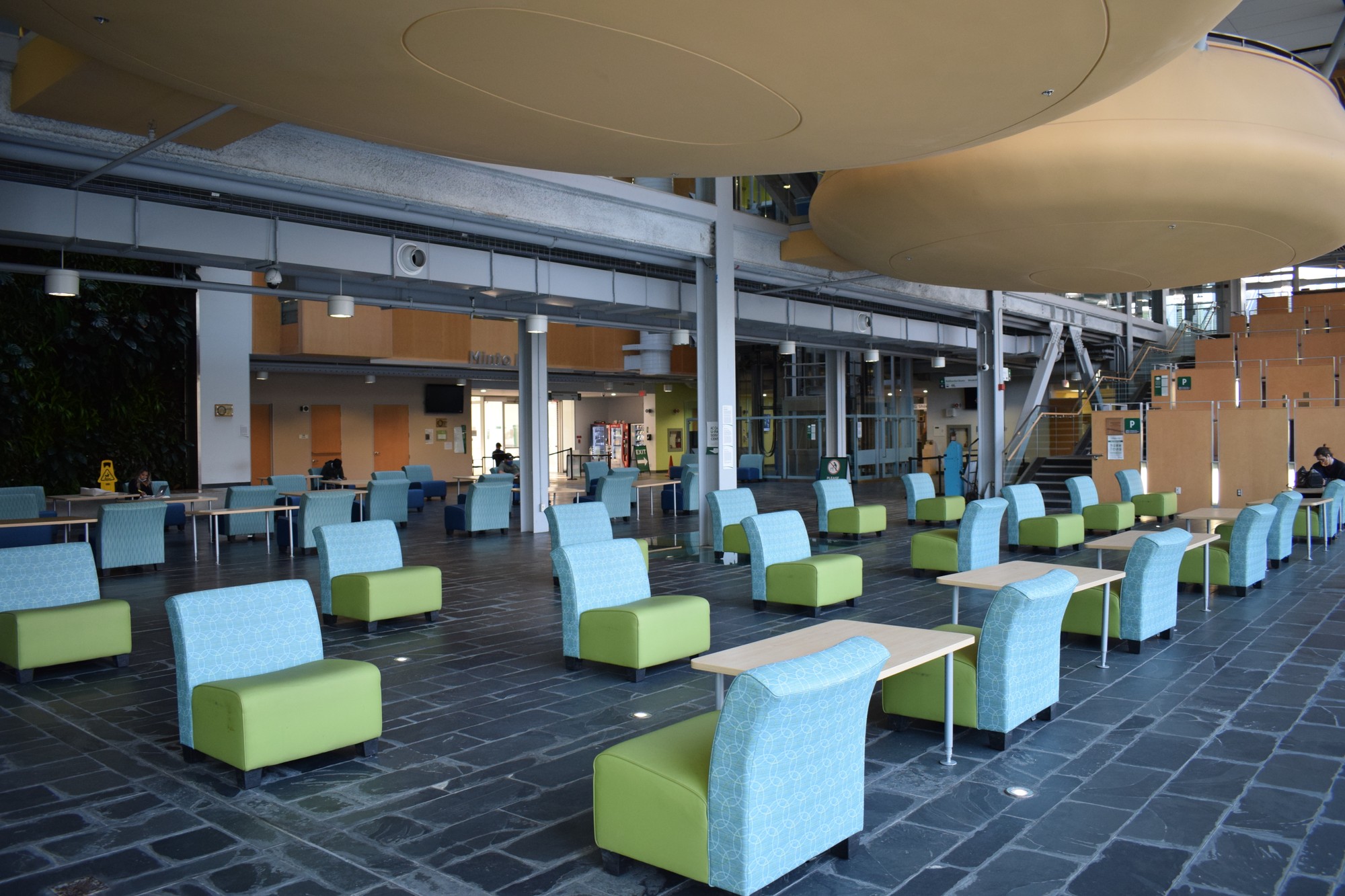
In past years, Student Commons played host to Clubsfest events. This year, its blocked-off seating gives the once-busy area an eerie feeling.

Although Algonquin’s clubs will all be virtual like so many other parts of college life this term, Hien Ly, a biotechnology-advanced student, went ahead and co-founded a club called STEAMed this fall.

“We can’t believe we actually made it during the pandemic, it’s all uncharted territory,” said Hien. “We don’t know what we are up against.”

Hien joined 16 other clubs on Sept. 24 for Clubsfest’s completely virtual event. While club leaders had to change the structure and their approach to signing new members, the Zoom event was set up to allow students to move in and out of club meetings without feeling constrained or obligated to sit through all of them.

The event’s organizer, Sienna Benson, the clubs and communities coordinator, says that even with all the uncertainty, club members and club leaders have shown that there is a shared desire to build spaces to connect.

“The collaboration portion of it is way more than I ever dreamed of,” said Benson. “I wanted it to feel more like a coffee shop feel.”

Students could attend as many or as little online club meets as they wanted. When comparing the 2019 and 2020 Fall semester there was a major downsize when looking at all three campuses. Algonquin College had 50 clubs operating in Fall 2019 compared to only 16 clubs this Fall.

Wi-Fi connection was one of the main concerns Sienna and the other club leaders had. “With anything going virtual there will always be technical difficulties,” said Benson. Another major concern was the fact that students just wouldn’t show up via Zoom given that students were online all day.

For Ari Kamal, an occcupational therapist assistant / physiotherapist assistant student the co-president of Algonquin College Esports, the downside of his club going virtual extends beyond just the Clubfest event. Kamal says he will miss the sense of community on campus he relied on.

“Ever since I joined Esports I had a second home for every single day of my college life,” said Kamal. The club was a way to meet new people and create long-lasting friendships.

“I loved seeing 50 people in a whole room watch a tournament,” he said. “It was one of the best things I could have ever hosted.”

Although a lot of the clubs did not return, Sienna explained “the interest has definitely shifted to more virtual [options]…this has definitely sparked new ideas, new creativity, new wants and needs from students.”

For some of the new clubs, the decision came about for a need to find new ways to connect with students who share similar interests and continue to build a strong social scene when there isn’t an opportunity to share physical spaces.

This is what happened in Hien’s case. And other students want to be a part of it too. STEAMed now has a little over 30 members.

“We hope to keep that number and have people as interested as they were on day one,” said Hien.

Student fees for fall are largely unchanged

Full-time Algonquin College students will have $28.05 reduced from their their Students’ Association fees this fall because of the campus closures for most students due to COVID-19 restrictions. The Student Board of Directors have made cuts to the ancillary and administrative fees because of the health restrictions being imposed on all institutions. These restrictions prevent […]
Photo: Chanelle Pinard
Deep Patel, a second-year manufacturing student, makes use of his printing allowance.

Full-time Algonquin College students will have $28.05 reduced from their their Students’ Association fees this fall because of the campus closures for most students due to COVID-19 restrictions.

The Student Board of Directors have made cuts to the ancillary and administrative fees because of the health restrictions being imposed on all institutions. These restrictions prevent gathering on campus and the cancellation of all varsity sports events. A full-time student will be paying $922.87 this year.

Despite the reduction in cost, there are still fees associated with studying on campus being applied to the tuition of remote learners.

“We had to look at what were necessary fees,” said Emily Ferguson, president of the Students’ Association. “With students being at home, we needed to find a good balance, knowing there would be services students do still need.”

While some costs offer the option to opt out of, like U-pass, health and dental plans, these could be important to students currently navigating the landscape of a pandemic while potentially living away from the support systems of home.

The SA has provided services to students and continue to do so with the use of the collected fees. Some services could be crucial, like access to the food cupboard.

At a total of $159.62, the technology fee covers essential services to remote learning, like access to college email and online storage. However, a $10 printing allowance, access to internet and unlimited use of access labs are services students will not be able to use while remote learning.

“There are some who need these services so there is still that fee,” said Ferguson. “A lot of the internet and printing is happening at home, so we are still looking at fees throughout this semester.”

The SA’s board of directors have made some cuts to the fees associated with the first term back during a pandemic, but there are still many questions that have no precedented answers.

Ferguson says that the board will continue to examine the fee situation throughout the term and students could potentially see more opt out options next semester.

Increasing need for Food Cupboard persists from summer months

There are students at Algonquin who struggle to afford groceries, so they have to find alternative ways to get what they need. The Students’ Association Food Cupboard helped 60 students during the month of September alone, according to the service’s coordinator, Jessica Clark. “This is still a significant amount for the first month considering not […]
Photo: Katelin Belliveau
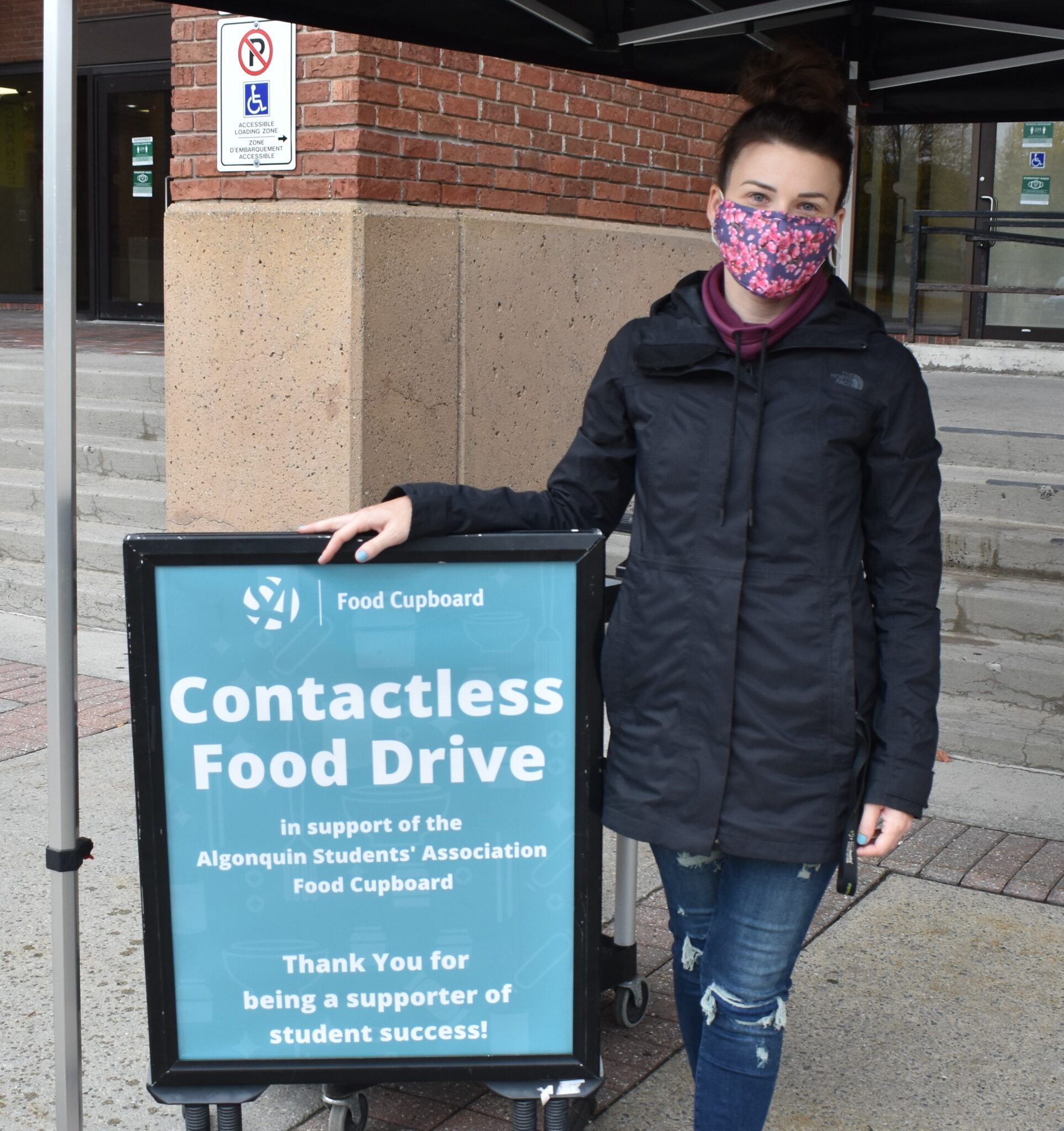
Jessica Clark, coordinator of the Food Cupboard organized the October food drive. It brought in 147 non-perishable food products to help towards its rising cases of students in need.

There are students at Algonquin who struggle to afford groceries, so they have to find alternative ways to get what they need.

The Students’ Association Food Cupboard helped 60 students during the month of September alone, according to the service’s coordinator, Jessica Clark.

“This is still a significant amount for the first month considering not all students are aware the service is available since they are not able to come to campus,” Clark said.

The Food Cupboard is a confidential service available to current, on-campus students. By applying for support, students can receive food and hygiene items once a month or on an emergency basis.

“There are so many students that are reaching out right now and a lot of them lost their jobs, were laid-off or can’t find a job,” Clark said. “They are stuck.”

Roger Crosby, a business management and entrepreneurship student, is one of the students coming forward for help. He has received support from the Food Cupboard since he started his studies at Algonquin in 2018.

“I’ve lived in poverty all my life,” he explained. “I’ve lived on food banks all my life both as a customer and as a volunteer. Going to the food bank at school was a natural extension of that.”

Since Crosby is not attending classes on campus, he receives a $50 Walmart gift card once a month, which allows him to get fresh produce. “That alone keeps me in potatoes, onions and vegetables. I have potatoes for the whole month now.”

Due to the pandemic, Crosby has had to spend money on personal protective equipment, making support from the Food Cupboard even more important for him. “Like everybody else, I’ve had to buy PPEs and there is a lot of price gauging going on.” He described checking Amazon regularly to avoid paying anywhere from $350 to $400 for a case of gloves.

The damaging effects of the pandemic are not the only thing playing a role in the increase of students having trouble accessing food.

According to Canada’s Food Price Report 2020, overall food prices were predicted to have increased by two to four per cent over the year. For the average family, the annual cost of food is $12,667, a $487 increase from 2019.

The SA's October food drive brought in 147 non-perishable food products to help towards its rising cases of students in need.
The SA's October food drive brought in 147 non-perishable food products to help towards its rising cases of students in need. Photo credit: Provided by Jessica Clark

To increase donations, the Food Cupboard organized the service’s first contactless food drive outside of C-Building on Oct. 1. The event brought in 147 non-perishable food items and $450 in monetary donations both at the event and through their online donation portal.

Clark explained that with the number of COVID-19 cases rising locally and the possibility of fewer people coming out to donate face-to-face, the goal is to gain exposure. “It’s more to kind of just get us out there, and I guess more visible to people,” she said.

Clark explained that the rise in demand from students is not a new issue.

Over the summer months, the Food Cupboard saw twice the number of students needing food supplies than usual.

“We would see, on average, 60 students this summer,” Clark explained about monthly demands. “Usually, I may see 30.”

Although there is a much lower percentage of students physically on campus, the SA said its commitment to the service remains.

In her September address, SA President Emily Ferguson spoke at length about the essential nature of the service.

“If you require food but are in isolation or are not comfortable visiting in person, virtual options are available,” Ferguson wrote. “The SA, and our Food Cupboard, are dedicated to continuing to help students. Now, more than ever, we need the support of the Algonquin College community.”

Crosby’s advice for students in need is to contact the Food Cupboard and talk to its helpful staff. “Jessica is amazing,” he added. “You can tell she cares; she tries really hard. Just go down and talk to her.”

The Food Cupboard is available to students by appointment only on Mondays and Wednesdays.

The service offers referrals to community food banks for off-campus students.

Film and media production makes its debut

The switch from on-campus to remote learning at Algonquin was a sudden change for many programs last spring, but there was one program that hadn’t even begun in-person classes. Film and media production, Algonquin’s newest program, was preparing to welcome its first-ever group of students in the fall when the pandemic made the future of […]
Photo: Madalyn Howitt
Karl Roeder teaches cinematography to students in the film and media production program.

The switch from on-campus to remote learning at Algonquin was a sudden change for many programs last spring, but there was one program that hadn’t even begun in-person classes.

Film and media production, Algonquin’s newest program, was preparing to welcome its first-ever group of students in the fall when the pandemic made the future of the program uncertain.

“We wondered whether we could even deliver it,” said Dan Pihlainen, chair of Media Studies, when the campus was shut down.

“We had no point of reference since this is the first year of the program,” said Jeremy Atherton, the program coordinator. “Frankly, I was disappointed when our plans for the program had to change.”

After identifying the need for a program to equip students with specific skills needed for the film industry, Atherton began developing the program five years ago.

His efforts began to pay off when registration for the program opened last February. Atherton explained that registration was so competitive that coordinators “had to close the portal that same day” after spots filled up almost immediately.

Sammy Lewis, 30, was excited to join the program after looking for an opportunity to study motion graphics for film. “When the lockdown started, I thought, ‘Is this even going to happen?’” he said.

Like Lewis, Lindsey Belanger, 18, was happy to find a program that focused on preparing students for a career in the film industry. “It was a bittersweet feeling,” Belanger said of the shift to remote learning. “Everyone wants a real college experience.”

Julie Montreuil, 23, takes a look at lighting equipment in her cinematography class.
Julie Montreuil, 23, takes a look at lighting equipment in her cinematography class. Photo credit: Madalyn Howitt

“We want to be more cautious in the first go-round,” said Pihlainen about the new program. After ruling-out going completely remote, coordinators decided that cinematography and production classes would be held on-campus, following both the college’s safety guidelines and industry protocols.

“We’re listening to comments and adjusting as we go along, but students so far seem enthusiastic,” added Pihlainen.

Now that classes have started, students say they are feeling optimistic about the program. “No one is discouraged,” said Belanger. “No one is saying, ‘COVID is ruining the program.’”

Students are also noticing the advantages of social distancing on campus. “The silver lining is that now we’re working in super small groups, so we get more attention from instructors,” said Lewis.

An unexpected benefit of the program’s new delivery method is that new opportunities have been created for students to showcase their work.

Instead of a film screening, which would have been limited to mostly friends and family, Atherton said, “Students this year will have the chance to screen a half-hour documentary on PBS.”

“The program is well-timed,” he said, adding that students will be “well-prepared for Ottawa’s growing film industry when they graduate.”

Atherton also said that since students are working around COVID safety regulations in the program, they’ll be ready for what’s ahead in their film and media careers. “In some ways, the program has exceeded my expectations. More collaboration is happening in post-production, and in a way, students will be more prepared for the industry this way.”

Algonquin urging students to clean out lockers

Students who rented lockers for the spring and summer terms have until Oct. 7 to remove all of their items before Algonquin empties them out. “Normally lockers are emptied at the end of each term in preparation for the coming term locker rentals,” said Roch Lafond, the manager of parking, lockers and card services. “With […]
Photo: Chance Hawthorn
Many students are returning to the college and will request lockers.

Students who rented lockers for the spring and summer terms have until Oct. 7 to remove all of their items before Algonquin empties them out.

“Normally lockers are emptied at the end of each term in preparation for the coming term locker rentals,” said Roch Lafond, the manager of parking, lockers and card services. “With the campus closure during the winter and spring 2020 terms, many students were unable to access their lockers to obtain their belongings.”

The curbside locker pick-up service was able to confirm that a large number of students did use the curbside pickup, but not all registered locker owners responded. From May to July, around 4,517 students were contacted regarding their lockers, while only 1,995 responded, which is less than half.

“I used the locker pickup service, it was fast and easy, but I almost missed it as I hardly checked my email during the summer,” said Allison Cox, an architect student at Algonquin.

When asked about the current status of the lockers that were already emptied, Lafond said, “Many students did use the Curbside Locker pick-up service in the Spring, vacating lockers for the Fall term – many of which have already been rented in September.”

Even though many lockers have been claimed or cleaned, locker services stated that some occupied lockers from the winter 2020 term will soon be available for students who still want a locker.

Because of the pandemic, lockers are now being cleaned more thoroughly than before.

“Every open locker is given a quick clean every term, and specifically during the summer months, locker services performs a deep clean of all vacant lockers,” Lafond said. “However, given the current circumstances, the deep cleaning process will commence with unoccupied lockers later this month.”

Opt-out or not? The U-Pass discussion at Algonquin College

While the fall term is already rolling at Algonquin College, the option to opt-out of a U-Pass for the term remains available to students. The U-Pass is automatically factored into a student’s tuition fee breakdown for the 2020-21 academic year. Per term, the U-Pass will cost $218.03 this year. With the majority of programs being […]
Photo: Kened Sadiku
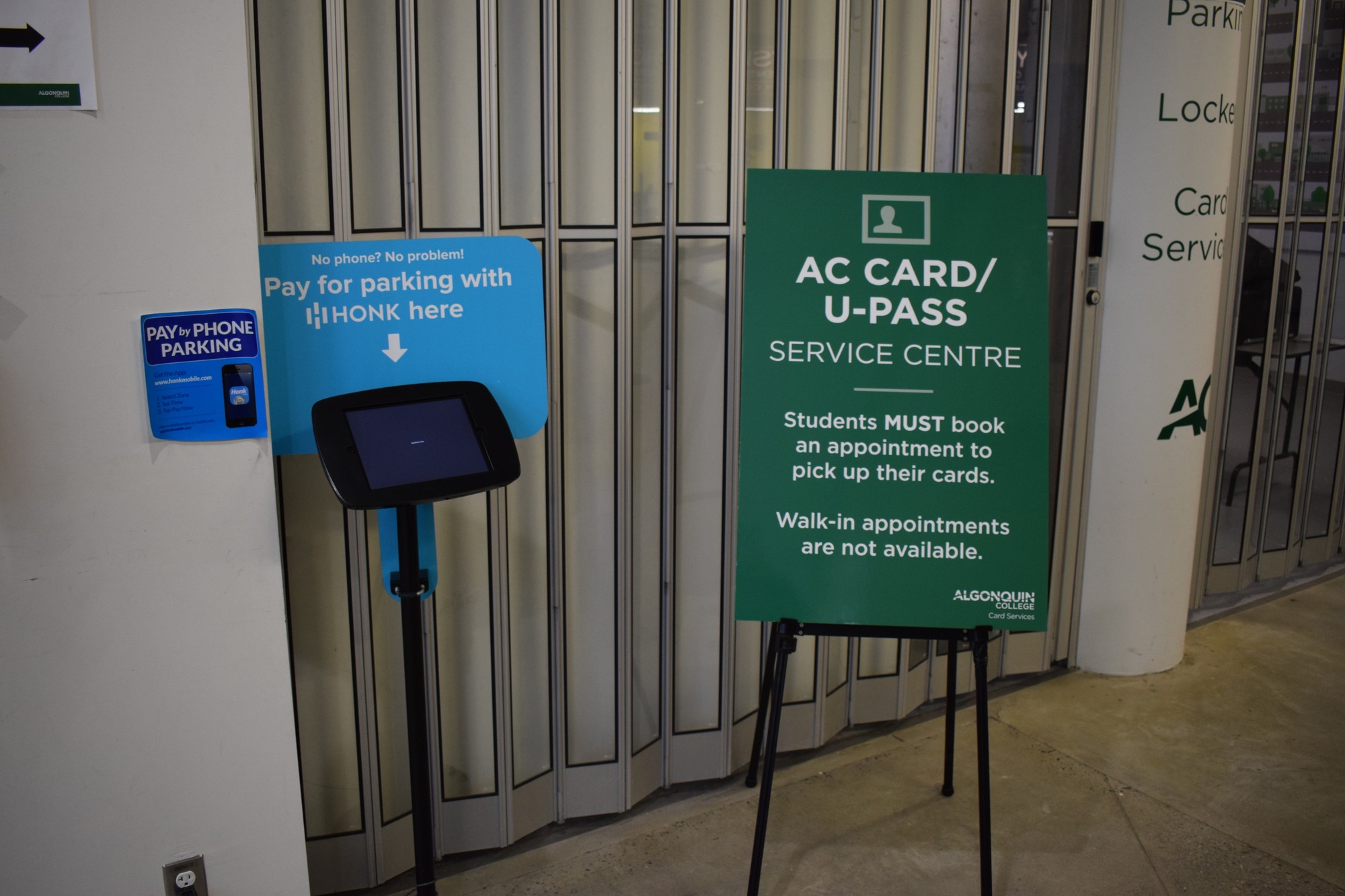
A sign outside the U-Pass service centre explains students must book an appointment in order to pick up their cards

While the fall term is already rolling at Algonquin College, the option to opt-out of a U-Pass for the term remains available to students.

The U-Pass is automatically factored into a student’s tuition fee breakdown for the 2020-21 academic year. Per term, the U-Pass will cost $218.03 this year.

With the majority of programs being taught remotely due to the COVID-19 pandemic, the U-Pass could be an option that students may not need, due to them not having to travel to campus for the fall term.

Keelan McHale, a second-year business marketing student says he’s happy to see the college giving students the option to opt-out of something they might not need this term.

“I think it’s great of the school to allow students to opt-out of the U-Pass this fall,” said McHale. “I personally am not affected by the opt-out as I live outside any bus routes but I’m happy to see other students getting their money back for something they won’t use.”

Unlike McHale, some students might need to depend on the U-Pass to still get around the city even if it means they won’t be attending the campus.

Patrick Yammine, a second-year police foundations student says he never knew the option of the opt-out was there and wishes he had found out about the advantage earlier on.

“I didn’t even get the chance to take it out of my tuition,” says Yammine. “Now I’m stuck with a useless U-Pass which I will never use.”

While the option to opt-out is still available today, Yammine said he wishes students had got an announcement regarding the fall term and how the U-Pass was still tied into the final tuition costs.

“The least they can do is tell us it’s an option to get it removed, but no,” said Yammine. “They knew students weren’t going back to school this fall but they still decided to put our tuition into a U-Pass.”

Virtual session on student health opt-out plans

Four representatives with Algonquin College’s Students’ Association held a virtual informational meeting to discuss the student health plan opt-out options. Throughout the presentation, they guided viewers through the entirety of the health plan opt-out for students, showing the easy-to-use wespeakstudent website. This organization is responsible for the health benefits provided by Algonquin College which is […]
Photo: Madalyn Howitt
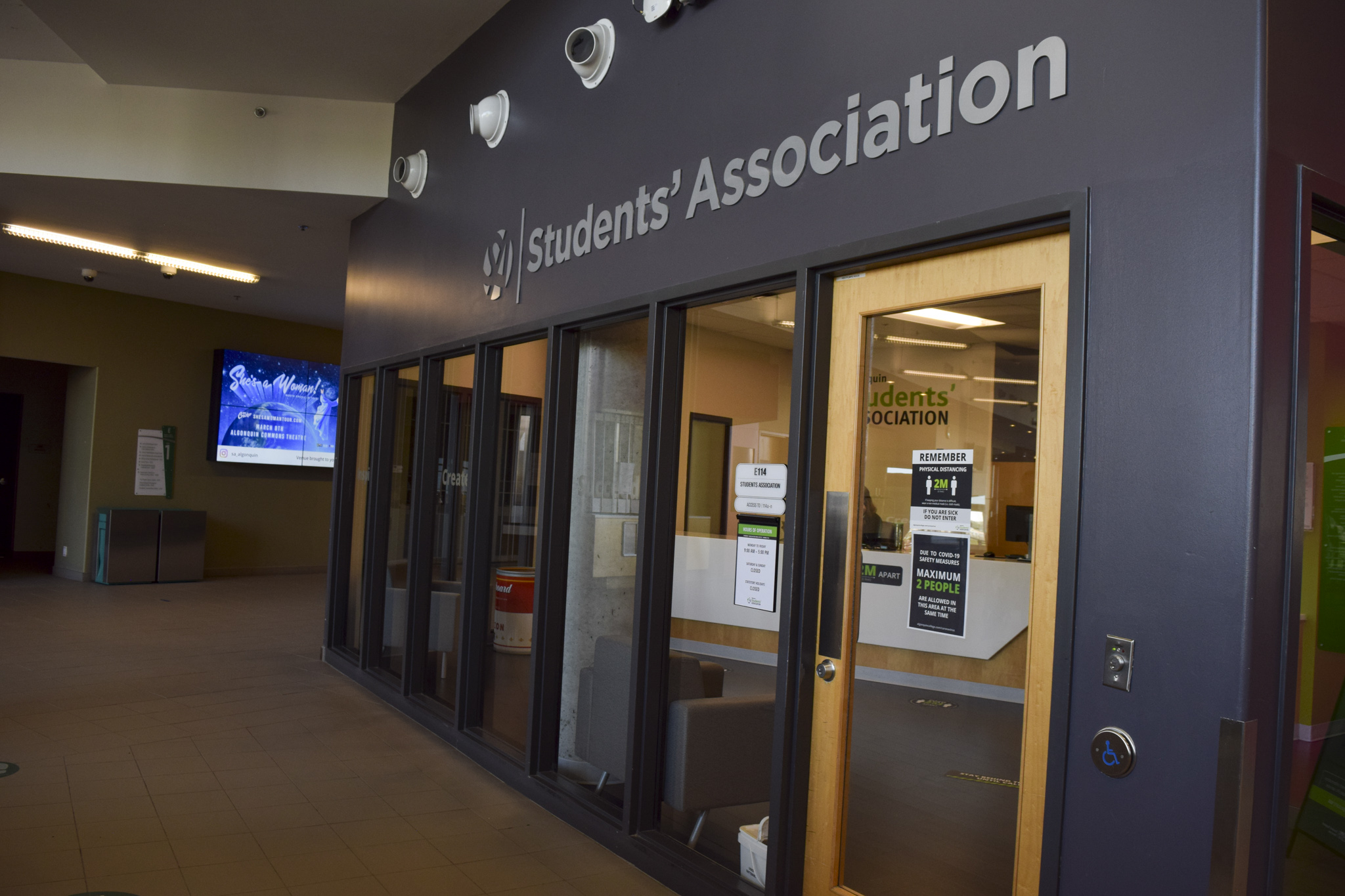
Students' Association office at Woodroffe campus.

Four representatives with Algonquin College’s Students’ Association held a virtual informational meeting to discuss the student health plan opt-out options.

Throughout the presentation, they guided viewers through the entirety of the health plan opt-out for students, showing the easy-to-use wespeakstudent website. This organization is responsible for the health benefits provided by Algonquin College which is included in students’ annual tuition.

Skye Sullivan, a front-line service associate at the Woodroffe campus, walked the viewers through a detailed demonstration of the required tools and tips needed to fill out whichever form students may need in regards to the health plan in general. The forms that were discussed included the opt-out, opt-in, opt-in family plan, booklets and forms, and the websites discount network.

The health plan insurance was implemented by the SA Board of Directors in 2009 and has been a useful utility for students across all campuses.

“Students wanting to opt-in need to be campus activity fee-paying, so students who are on campus or even online (due to COVID), are charged the activity fees provided on campus in order to be a part of that plan,” said Sullivan. “Since the beginning of this health plan students have had the option to opt-out; the one condition is that they do have an alternative insurance plan in order to be able to opt-out.”

This health plan was taken out of the tuition for students not on campus, who are paying the activity fee.

The policy was put in place to ensure that every student at Algonquin is covered for the care they need, whether that be through the college or on their own terms.

“Historically, there had been some situations where students had rising healthcare costs and that prevented them from finishing their academic studies, so that policy is in place to make sure all students have some sort of health plan,” said Connor Benson, senior manager for the SA at the Pembroke campus.

Zoom Life Hacks to Stay Motivated

Your alarm clock rings and you hit the snooze button. It rings again but now you are fumbling out of bed and searching for the Zoom link buried somewhere in Brightspace. Mornings for this year’s students have been unusual. Moving to remote learning may lead to students staying in their pyjamas and lying in bed […]
Photo: Zainab Almehdar
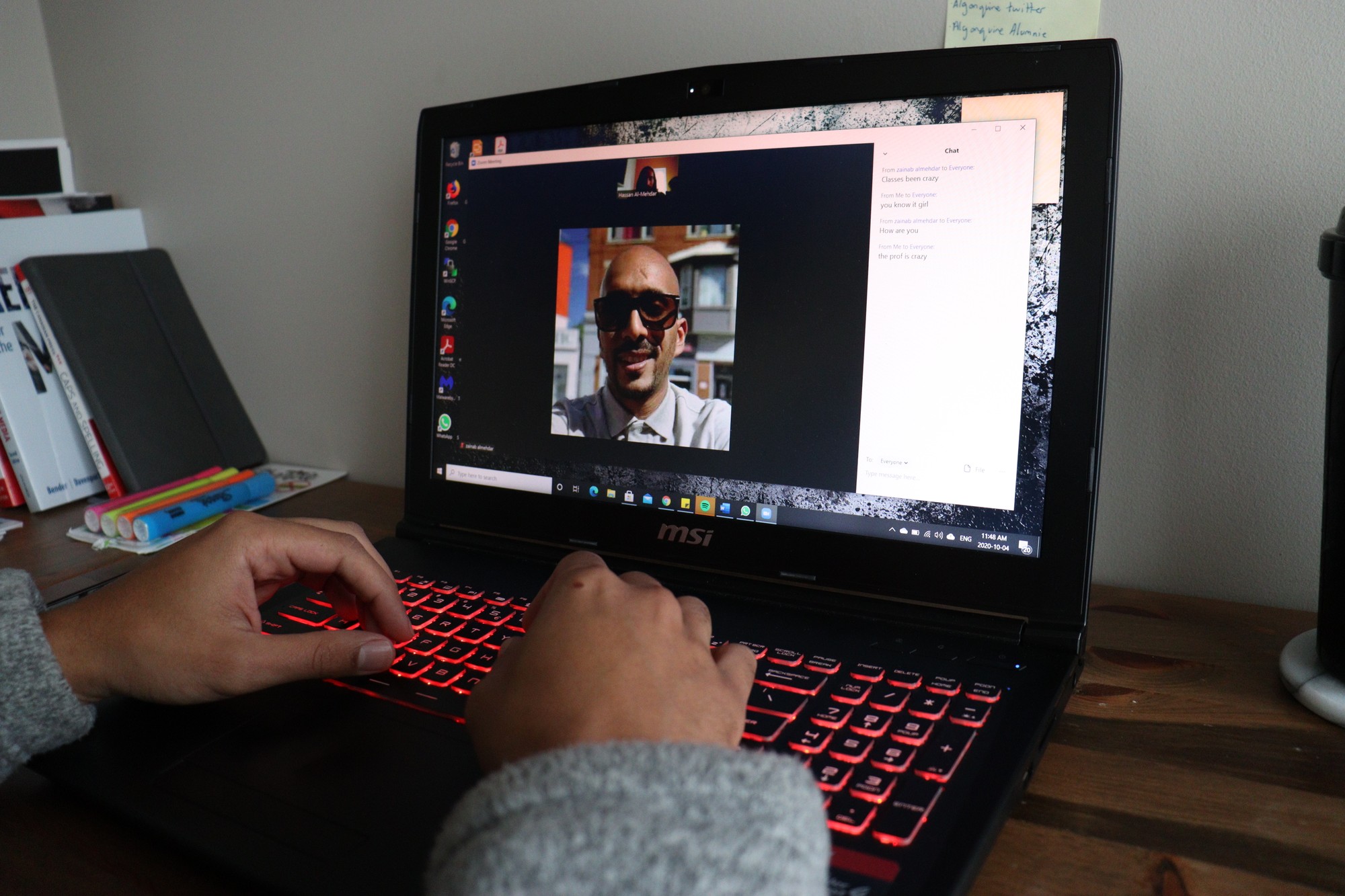
Zoom life can be difficult when you're sitting behind the computer all day.

Your alarm clock rings and you hit the snooze button. It rings again but now you are fumbling out of bed and searching for the Zoom link buried somewhere in Brightspace.

Mornings for this year’s students have been unusual. Moving to remote learning may lead to students staying in their pyjamas and lying in bed as they listen to their professors through their Zoom class.

The silver lining is, you are not alone. Here are some Algonquin students who are doing their best to break these cycles by creating hacks for better creativity.

Rame Kader, an animation student said, “I realized changing out of my pyjamas actually puts my mind into work mode. That instantly makes me feel like, ‘Okay, it’s not sleep time, it’s work time.’”

Kader focused on her mindset, to be mentally present for her classes and to be able to pay full attention. “Having a good set up helps; being ready and being organized in the office helps me focus in the zoom,” said Kader.

Not only changing out of your clothes and creating an organized space can help, but also, “wake up 30 minutes before class, have your coffee, wash your face then enter your zoom class,” said Cherlinta Cher-Aime, a business administration core student. “Don’t go back to bed, it’s a trap.”

The trick to help you stay productive is to eliminate distractions. One way of doing that, said Cher-Amie is to, “set a timer for 25 minutes and in those 25 minutes you’re not allowed to touch your phone and you have to study.” With practice, you will be less inclined to check your phone.

With the hustle and bustle of classes, students may forget to take time off for themselves. Cher-Amie suggests, “Self-care for mental health; set aside one day. It can be having your favourite tea that night or doing a skincare routine or watching a favourite movie.”

Zoom etiquette goes a long way to help your classmates. Paying attention, staying muted, and respecting others when they speak are just some of the ways you can do that. However, Cher-Amie jokingly adds, “If you know your camera is going to be on, warn your whole house before you get on it.”

Follow Algonquin Times on Instagram
Algonquin Times podcast
Algonquin Times on Instagram
Algonquin Times horoscopes
Algonquin Times on Instagram
Algonquin Times horoscopes
Follow Algonquin Times on Instagram
Algonquin Times podcast

Stay Informed

Sign up for our newsletter

Subscribe

* indicates required