Pride Week, an annual celebration filled with events, kicked off on Sept. 28 with its first event: raising the pride flag in front of the main entrance of the college. Due to the pandemic and to ensure the safety of the students, the Students’ Association needed to shift everything online, by streaming the event on […]
Alfred Carreon
Photos:
October 13, 2020 Revised: October 13, 2020 8:49pm
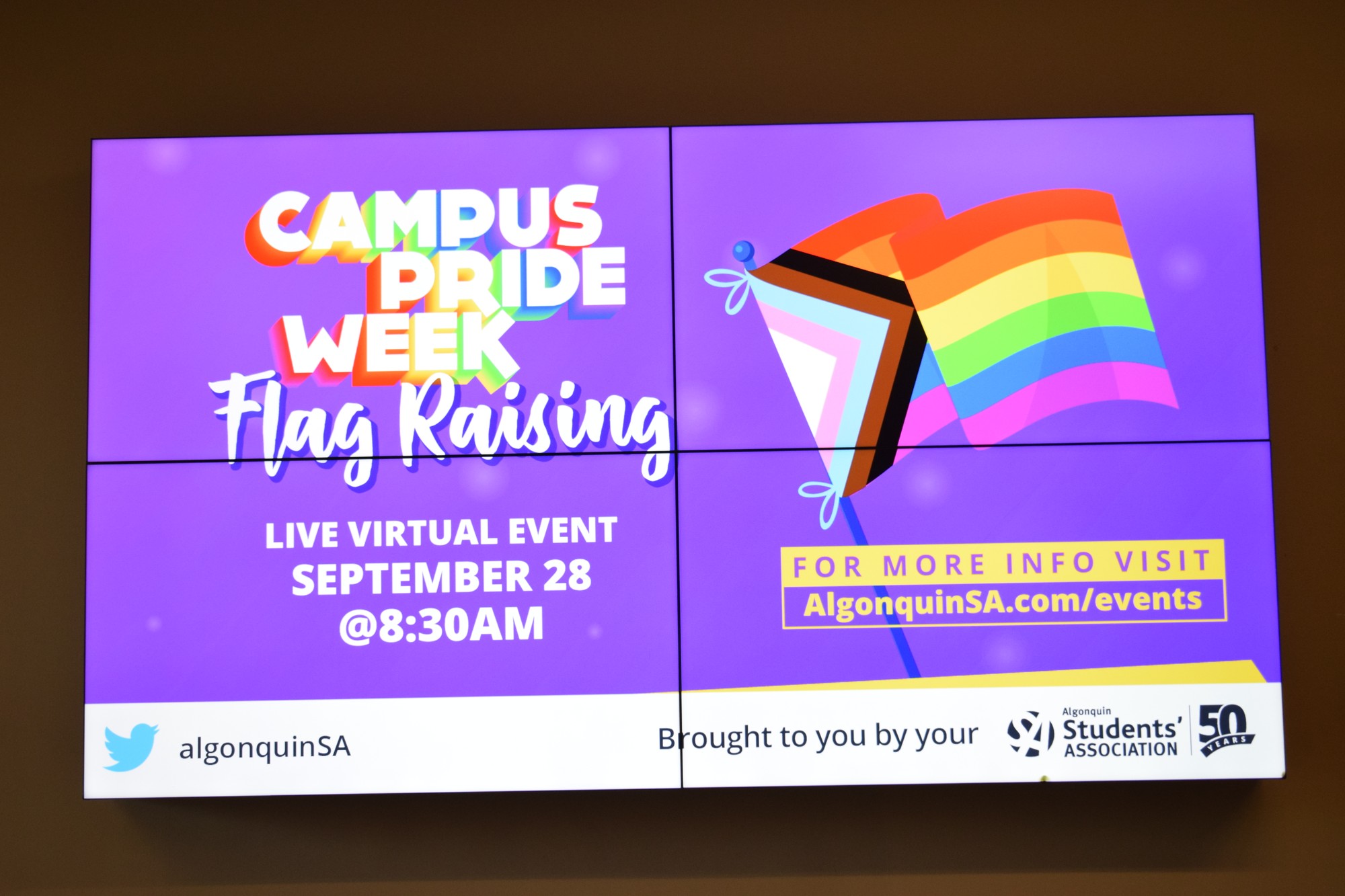
As part of Campus Pride Week, the Students' Association celebrated the flag-raising event virtually.
Pride Week, an annual celebration filled with events, kicked off on Sept. 28 with its first event: raising the pride flag in front of the main entrance of the college.
Due to the pandemic and to ensure the safety of the students, the Students’ Association needed to shift everything online, by streaming the event on their Instagram page.
The SA thought it would have been more effective than any other social media, due to the bigger follower count on their Instagram platform.
Being able to do it virtually meant that the flag-raising event could be broadcasted to all three Algonquin campuses.
“It took months of planning,” said Quinn Blue, one of the events coordinators at the wellness and equity centre. “We started to plan way back in April to get approval with the College, but there have never been any complications. We also had to change a couple of things due to COVID.”
For over four years, the SA has been raising the well-known six-coloured rainbow flag, however, they decided to switch it up.
“It’s called the ‘Progression Flag’. It’s a redesign by Daniel Quasar, a graphic designer,” said Blue. “It has the usual six colours, but on the left side, it has a chevron that has black, brown, light blue, pink and white. It’s to signify the acceptance of people of colour and trans individuals into the community.”
The flag-raising event on campus was a way for the SA to show its support for the LGBTQ+ community online.
To find more about upcoming online pride events, visit the Students’ Association’s website.
“I was expecting to be in class and super excited to get to work with the live animals we have access to,” said Faith Conway, first-year veterinary technician student who was anticipating a different start to the program when she first got accepted. On June 11, Christopher Janzen, senior vice president academic, sent an email […]
Charlotte Riethman
Photos: Charlotte Riethman
October 13, 2020 Revised: January 30, 2024 3:37pm
Photo: Charlotte Riethman
“I was expecting to be in class and super excited to get to work with the live animals we have access to,” said Faith Conway, first-year veterinary technician student who was anticipating a different start to the program when she first got accepted.
On June 11, Christopher Janzen, senior vice president academic, sent an email to staff and students, explaining the remote delivery plan for programs being offered during the fall 2020 term.
“In May we received an email saying we would be partially in class,” said Conway. “But that changed.”
The veterinary technician program was one of the many programs to be delivered virtually.
“All classes are being run through Zoom,” said Elodie Addesso Gareau, second-year veterinary technician student. “It’s 21 hours of online a week. It’s extremely difficult to stay focused, especially when we have two, (four-hour long) classes back-to-back.”
Not being on campus means veterinary technician students won’t have the hands-on experience working with live animals they had in previous years.
Instead, students are having online lectures this term, followed by the lab portion next term.
“The only thing I hope to get out of this semester is passing grades, as I’m not getting hands-on experience,” said Addesso Gareau. “This is only lectures. What is really important; I will learn again in the lab portion next semester, hopefully.”
Dr. Vera Etches, Ottawa’s medical officer of health, has warned about a second wave of cases.
Because of the surge in COVID cases, restrictions were announced for Ottawa, (Toronto and the Peel Region) to follow modified Stage 2 measures.
“While much could change in the coming months,” said Janzen, in an email to staff. “It has become apparent that it is highly unlikely that we will be able to return to pre-pandemic approaches by the winter term.”
Featured Story | News
#news | Algonquin college | Off-campus | Veterinary technician program
Tania Silletta, a therapeutic recreation professor at Algonquin, received a Minister’s Award of Excellence for her work in creating an original virtual placement project for students in the program. “Tania jumped in with both feet on this project,” said Patricia Robson, program coordinator and Silletta’s nominator. “I’m so happy for her. She was dedicated to […]
Madalyn Howitt
Photos: Madalyn Howitt
October 12, 2020 Revised: January 30, 2024 3:37pm
Photo: Madalyn Howitt
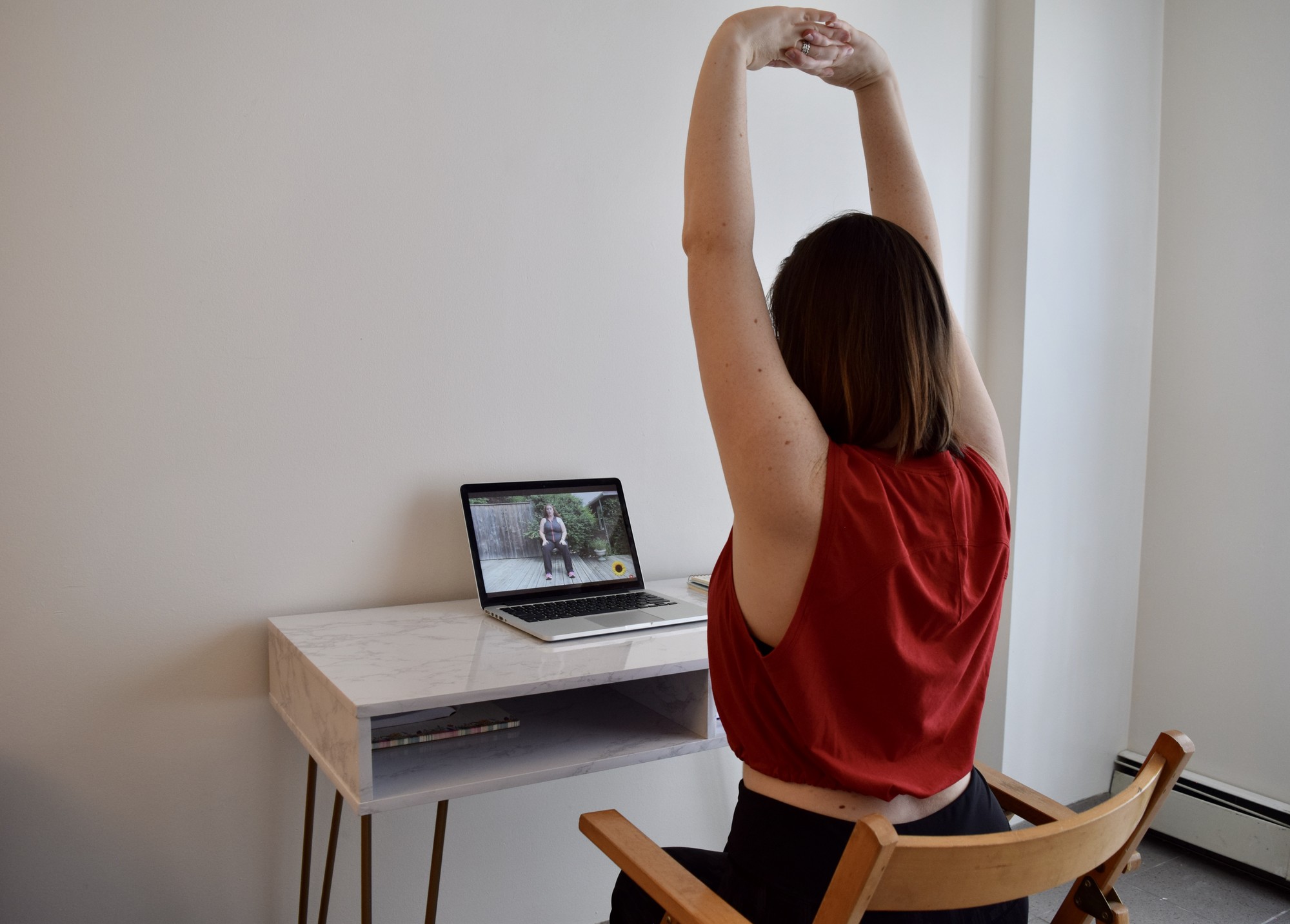
Chair yoga is a popular activity for participants in therapeutic recreation's virtual placement project.
Tania Silletta, a therapeutic recreation professor at Algonquin, received a Minister’s Award of Excellence for her work in creating an original virtual placement project for students in the program.
“Tania jumped in with both feet on this project,” said Patricia Robson, program coordinator and Silletta’s nominator. “I’m so happy for her. She was dedicated to making it work.”
The announcement was made on Sept. 28 by the Minister of Training, Colleges and Universities, Ross Romano, according to myAC News.
“The goal of therapeutic recreation is to enable all individuals to achieve quality of life and optimal health,” explained Robson. It uses recreation and leisure activities to improve patients’ cognitive abilities, maintain community connection, and help people feel happy and healthy.
Students in the program are required to complete a 14-week placement before graduating. “Typically students would be placed in long-term care homes, rehabilitation centres, or mental health centres,” said Silletta.
When the lockdown happened in March though, Silletta had to find a new way to help students complete their work experience. This resulted in a highly successful pilot placement project that called on volunteers to register for virtual therapeutic recreation sessions.
“About eighty participants signed on right away, so we had to extend it to a hundred potential participants,” said Silletta.
With social isolation being an increasing concern for many during the pandemic, Silletta noted how the project addressed a need in the community for human interaction.
“Having a routine and setting goals is really important during isolation. It brings comfort,” said Silletta.
Professor Tania Silletta has received a Minister’s Award for her work in creating a virtual placement project for students in the therapeutic recreation program.
Feedback from participants was overwhelmingly positive. “For me the program was a life line to my old life. It restored a weekly context, purpose, and provided tasks to work on with support,” said one participant.
It was also a comforting experience for students, who led participants in activities like chair yoga, dance and visual arts.
Natalie Fraser, a graduate of the program, was nervous before starting her virtual placement. “I was worried I would miss physical cues like body language working in front of a screen,” she said, “but I had a lot of fun. I found myself genuinely smiling and really loved the connections with participants.”
Robson and Silletta agree that the success of the project had a positive impact on the program. “I think it shows we’re very innovative and willing to try new things,” said Robson.
“It opened up the minds of students who are used to working a certain way with human connection. Now we know how to work with people in virtual environments,” added Silletta.
When asked how it feels to receive an award for her work, Silletta was modest. “It’s very flattering and exciting, but I wouldn’t have been able to do it on my own.”
Fraser however thinks Silletta is very deserving of the award. “It’s so clear that this is her passion. She gives nothing less than 110 percent.”
We’re calling it “the new normal,” but we’re doing it ironically — there’s nothing normal about the way we live now. Before the pandemic hit seven months ago, we had classrooms to gather in. Now, we’re all just talking boxes on screens. Most of us only get dressed above the waist to sit in makeshift […]
Meara Belanger
Photos: Angeleah Brazeau-Emmerson
October 12, 2020 Revised: January 30, 2024 3:37pm
Photo: Angeleah Brazeau-Emmerson
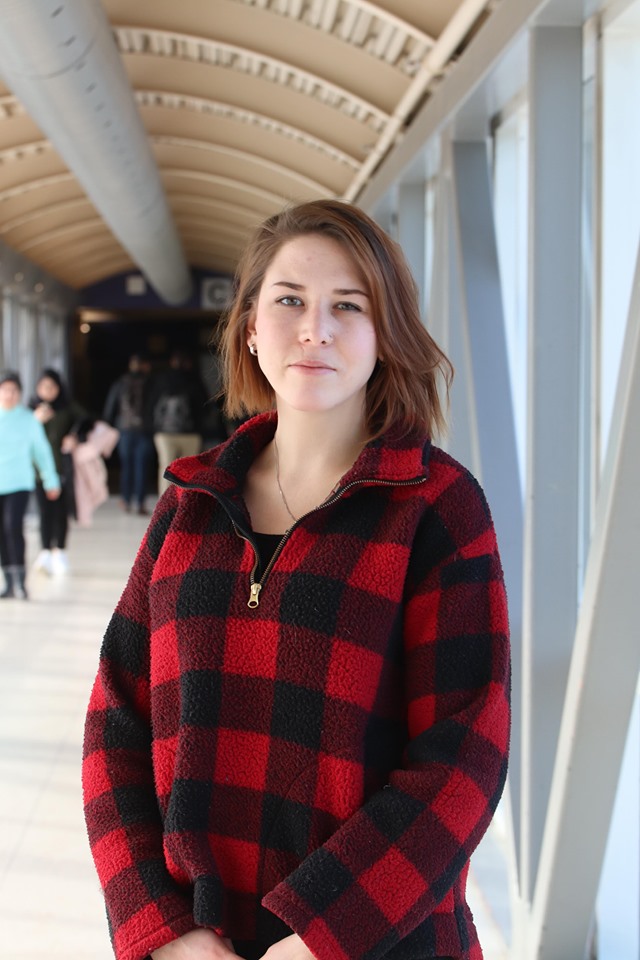
Students are stuck at home, and remote learning has taken a toll on their mental health.
We’re calling it “the new normal,” but we’re doing it ironically — there’s nothing normal about the way we live now.
Before the pandemic hit seven months ago, we had classrooms to gather in. Now, we’re all just talking boxes on screens. Most of us only get dressed above the waist to sit in makeshift home offices making consecutive Zoom calls.
I can remember the excitement I felt the first time I stepped into my homeroom last fall. Meeting new people was only half of it. The atmosphere of being in a place of learning, the buzz of activity all around me — these are the things that gave me the motivation to wake up for class every morning. These days I feel a lack of focus like I’ve never experienced, and I’m not alone.
According to an Aug. 21, 2020 study from FlexJobs and Mental Health America, remote learning has been harmful to our mental health. A survey of 1,500 Americans working remotely due to COVID-19 revealed 75 per cent of respondents experienced ”burnout” at work before the pandemic, and 40 per cent said they experienced increased burnout after they started working remotely.
Burnout is a syndrome triggered by extreme workplace stress and characterized by exhaustion, negative feelings about a job, and reduced productivity at work.
As the pandemic has persisted, teachers have adapted to the wonderful world of technology available to us.
Slack, Facebook, Twitter, Zoom — it’s all at our fingertips. But according to a 2019 study from cloud hosting company DigitalOcean, 61 per cent of remote workers said they felt excluded from their team’s offline communications. Forty-nine per cent felt a lack of integration into a company’s culture, and four percent felt unable to communicate with their team.
The data is even more grim for students, a study from April shows. College students have been significantly more depressed since the onset of the pandemic. The nonprofit organization Active Minds surveyed 2,086 students participating in remote learning and found that one in five said their mental health had worsened since the start of the pandemic, with 80 per cent saying COVID-19 has negatively impacted their mental health.
These statistics speak to a loss of community when work is shifted online. Remember when we could raise our hands when we had a question? The era of COVID-19 is here, and thus typing “hand raise” into the chat box is a frequent device in our netiquette toolkit.
When we’d break between classes, I always made a beeline for Bits ‘N’ Bytes — the closest provider of sustenance in the vicinity — for coffee or a snack with a friend. We’d stay and chat too long before scurrying back to barely make it in time for the lecture.
As we mingled in the hallways, I can remember greeting colleagues and embracing friends in quick succession without a second thought — these are things we’ve had to sacrifice to keep one another safe.
But if keeping apart to keep each other healthy really is our new normal, how can we live in it?
The answer is: we can’t. Not forever, anyway. Humans are inherently social, so we can’t adopt the idea that any of this is normal. We have to believe there’s a light at the end of this dark, sad tunnel. There has to be a future when we can again assemble without fear or anxiety.
Featured Story | Opinions
Depression, Anxiety, Social Distancing, Captivity | Pandemic
“Imagine a box with a lid beside your bed,” said the narrator of the guided sleep meditation playing after the event’s hosts introduce themselves. “See yourself opening this box placing any worries, busy thoughts, to-do lists, emails into the box. And now closing the lid and sliding it under the bed where it will stay […]
Phaedra Hamer
Photos: Phaedra Hamer
October 12, 2020 Revised: January 30, 2024 3:37pm
Photo: Phaedra Hamer
Steep & Sleep, an event hosted each Tuesday by the Spiritual Centre and Health Services, wants to help students form healthy sleeping habits.
“Imagine a box with a lid beside your bed,” said the narrator of the guided sleep meditation playing after the event’s hosts introduce themselves. “See yourself opening this box placing any worries, busy thoughts, to-do lists, emails into the box. And now closing the lid and sliding it under the bed where it will stay safe until the morning.”
This exercise was just one of the many things the Steep & Sleep event has to offer for Algonquin students.
The Spiritual Centre and Health Services have joined together to provide weekly workshops on healthy sleeping habits through Student Support Services. These workshops include: tips on sleep, mindfulness and taking care of the body.
“It’s important to take negative energy and transform it into something positive and harmonious,” said Yuriy Derkach, spiritual counsellor with Spiritual Services.
The event is hosted each Tuesday on the Algonquin Student Services Facebook page. There is an opportunity to watch the event live with other viewers when the video premieres at 8 p.m. and it is available to watch anytime afterwards.
Each week there is a new tea feature. This week on Oct. 6 it was peppermint tea which can help with digestion, relieve headaches and promote better sleep and fresh breath.
Viewers are invited to a guided sleep meditation provided by Youtube channel Relax for Awhile. The meditation features visualizations, sleep-promoting music and the soothing voice of a narrator, leading the viewer to a calm, relaxed and meditative state.
“It was nice to be able to relax and meditate all my worries away,” said an attendee of the event.
To help encourage better sleeping patterns, a handout is available for download on the Student Support Services website. The handout gives users the opportunity to track their progress and set goals.
“We’re not just a body,” said Derkach. “We have a mind, spirit and soul. It’s important to find time to stop and reflect.”
Featured Story | Life
Algonquin college | Event | Health and wellness | Health services | Meditation | Sleep | Spiritual center | Student support services | Virtual event,
After being laid off from their jobs at Fairmont Chateau Laurier back in March, two Algonquin College School of Hospitality and Tourism grads decided to make the best out of a bad situation. Amy Aubertin, 25, and Angèle Prevost, 26, graduated from the travel services program earlier this year. “We both had very different trips […]
Breanna St-Jean
Photos:
October 12, 2020 Revised: January 30, 2024 3:37pm
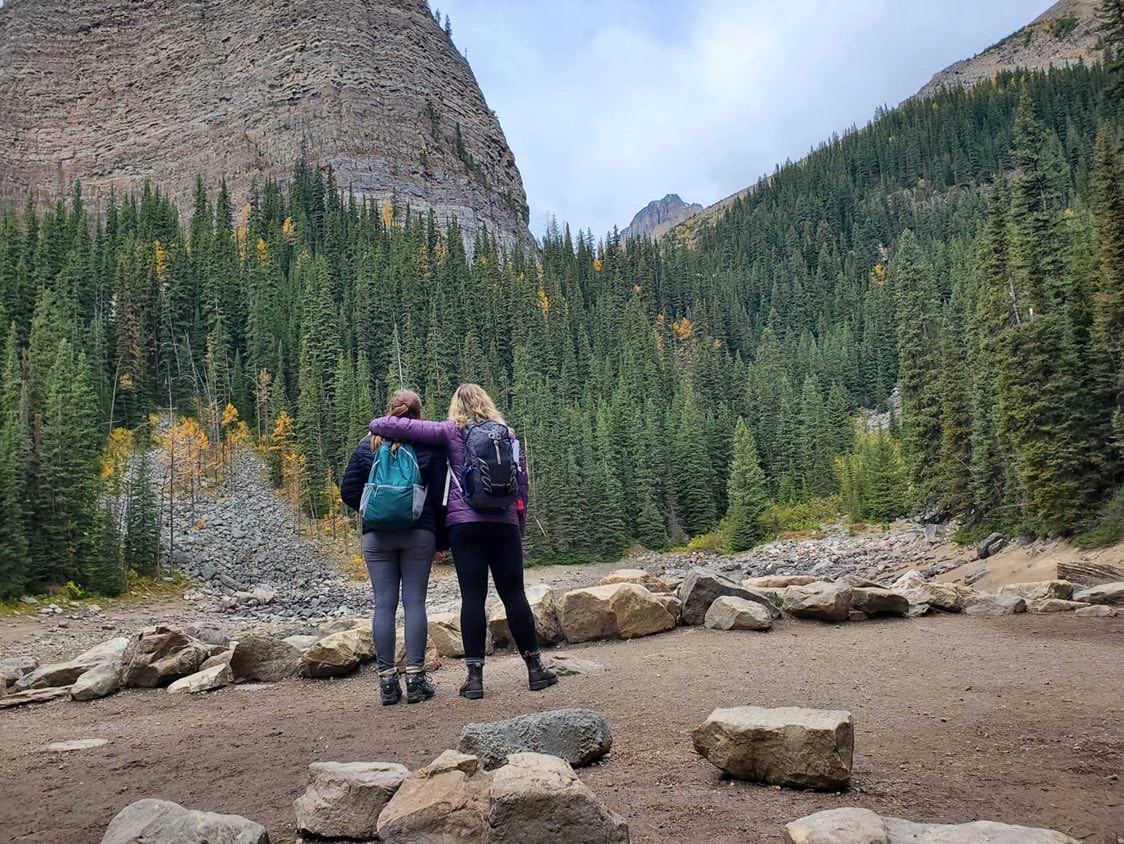
Amy Aubertin and Angèle Prevost, school of hospitality and tourism grads, visiting the Canadian rockies during the COVID-19 pandemic.
After being laid off from their jobs at Fairmont Chateau Laurier back in March, two Algonquin College School of Hospitality and Tourism grads decided to make the best out of a bad situation. Amy Aubertin, 25, and Angèle Prevost, 26, graduated from the travel services program earlier this year. “We both had very different trips planned to celebrate graduating and putting our travel services diploma to good use,” said Aubertin. “Angèle was supposed to go to Peru for two weeks in May and I was supposed to go on an Indo-China tour in September.” That’s when they came to the realization that the pandemic was not only going to affect the tourism industry but force people to travel domestically for a while.
“Knowledge and experience are power in this industry,” Prevost said. The women packed up Aubertin’s lime green 2014 Hyundai Accent on September 17, and set off on a cross-Canada road trip to explore their own country.
“We want to see and do as much as we can before we start selling Canada as a destination,” explained Aubertin.
For Aubertin, the journey started in her hometown of Welland, Ont. “I picked up Angèle in Ottawa and we set off with almost no plan other than heading out West,” said Aubertin. “Every day, we drove and stopped wherever was convenient. We kept our eyes peeled for signs marking any tourist attraction, trail, or picnic area we wanted to go to.”
Map of Aubertin and Prevost's route to western Canada. Photo credit: Breanna St-Jean
The women stopped inSudbury, then visited Lake Superior Provincial Park where they set up camp for a night. The temperature dropped to minus two, making it the coldest night of their trip so far.
“We then visitedKakabeka Fallsnear Thunder Bay,” said Prevost. “We stayed in Kenora for one night before crossing Manitoba and then relaxing at Moose Mountain Provincial Park in Saskatchewan for two nights.”
The women kept heading west towards Canmore, Alta. “Canmore served as our gateway for Lake Louise, Moraine, and Lake Agnes,” said Prevost. “We drove west and stopped at Emerald Lake and Takakkaw Falls in Yoho National Park, drove the scenic highway through Glacier National Park and walked the boardwalk in Revelstoke National Park before arriving in Kelowna.” Kelowna was their turnaround point before they head east, to Jasper, Alberta. Their month-long journey was filled with adventures, from parasailing and hiking canyons to visiting Kangaroo CreekFarm in Kelowna. “My main goal was to see the mountains,” Aubertin said. “I wanted to explore them, soak it all in and I think we’ve done exactly that, with some amazing bonuses on top.”
Amy Aubertin at Kangaroo Creek Farm in Kelowna, British Columbia. For Prevost, who is culinary trained, cooking has been a highlight of her trip.
“We have all the tools, all the seasonings and oils to make anything delicious, like classic beans and wieners,” she explained.“We even made garlic confit over a fire one night and have been putting it on everything.” Aubertin did all the driving while Prevost made the accommodation reservations and searched for nearby points of interest. “I got pretty good at dodging cattle on the prairie roads,” said Aubertin.
“I can’t even count how many times we cried from laughing too hard,” added Prevost. Although the pandemic has affected the tourism industry, the women are convinced that itwill bounce back and tourism students should not be discouraged.
“The people who love to travel and want to travel will as soon as they can safely,” said Prevost. “The jobs will come in due time. For now, watch your favourite travel videos and read all the books. Explore as much as you feasibly can. It never hurts to start planning future adventures.” The women were well-prepared with masks and hand sanitizer for their trip, as these practices have become engrained in their daily habits. “The down-sides of the pandemic during this trip revolve mostly around closures and unavailable amenities, and higher prices for some things,” said Prevost. Prevost believes travelling your own country has many benefits: you don’t have to worry about passports, currency or language. “I can say wholeheartedly that Canada has more to offer than anyone is looking for in a single trip,” she said.” “There is so much landscape, friendly locals, wildlife, adventure tourism, fantastic restaurants, and that’s just scratching the surface.”
Aubertin exploring a Canadian National Park.
Andrea Dixon, a professor of hospitality and tourism at Algonquin College, had the pleasure to work with Prevost as she was selected as a finalist for the Baxter Student Ambassador Program. In their last semester, Dixon was Aubertin and Prevost’s teacher for two classes.
“These are both high-achieving, professional students who will be an asset for our industry when it recovers,” said Dixon. “I have no doubt that with their newfound practical experience gained from travelling across Canada, they will be ready to jump into a position of their choice as the economy recovers and lead our industry back to prosperity.”
Ryan Bonacci, hospitality and tourism professor at Algonquin College, had both women in the travel simulation services course in Winter of 2020. “One of the silver linings of the COVID-19 pandemic is that it’s gotten people to support local, especially when it comes to travelling,” he said. “Tourism will bounce back and people will be looking to experts to help them in their planning. I think travelling the country is a great idea.”
Martin Taller, professor of hospitality and tourism and coordinator of the tourism and travel program, had both women as students but was not aware of their travel plans. “These students reflect the spirit of travel and the learning opportunities it presents,” Taller said when informed on Prevost and Aubertin’s cross-Canada road trip. “We wish them well and wish them a safe and worry-free journey throughout their travels.”
Aubertin and Prevost will spend their Thanksgiving weekend ordering room service: one night in Edmonton, one night in Saskatoon and one night in Winnipeg.
“From there we’ll be heading back through Northern Ontario on Highway 11,” said Prevost. “We will hang out in Smooth Rock Falls where I grew up for a few days with my family before making our longest drive of eight-and-a-half hours before arriving back in Ottawa.”
To follow the rest of their journey, find them on Instagram: @amyyaub, @traveledanddiscovered, @cookeatandwine.
In March, when the pandemic started, many thought it was not going to last this long. Today, Algonquin students at all three campuses are coping with the changes of remote or modified in-person education and learning how to adjust to these unusual times. On Thursday, Sept. 30, Algonquin Times reporters set out to do a […]
Zainab Almehdar
Photos:
October 12, 2020 Revised: January 30, 2024 3:37pm
In March, when the pandemic started, many thought it was not going to last this long. Today, Algonquin students at all three campuses are coping with the changes of remote or modified in-person education and learning how to adjust to these unusual times.
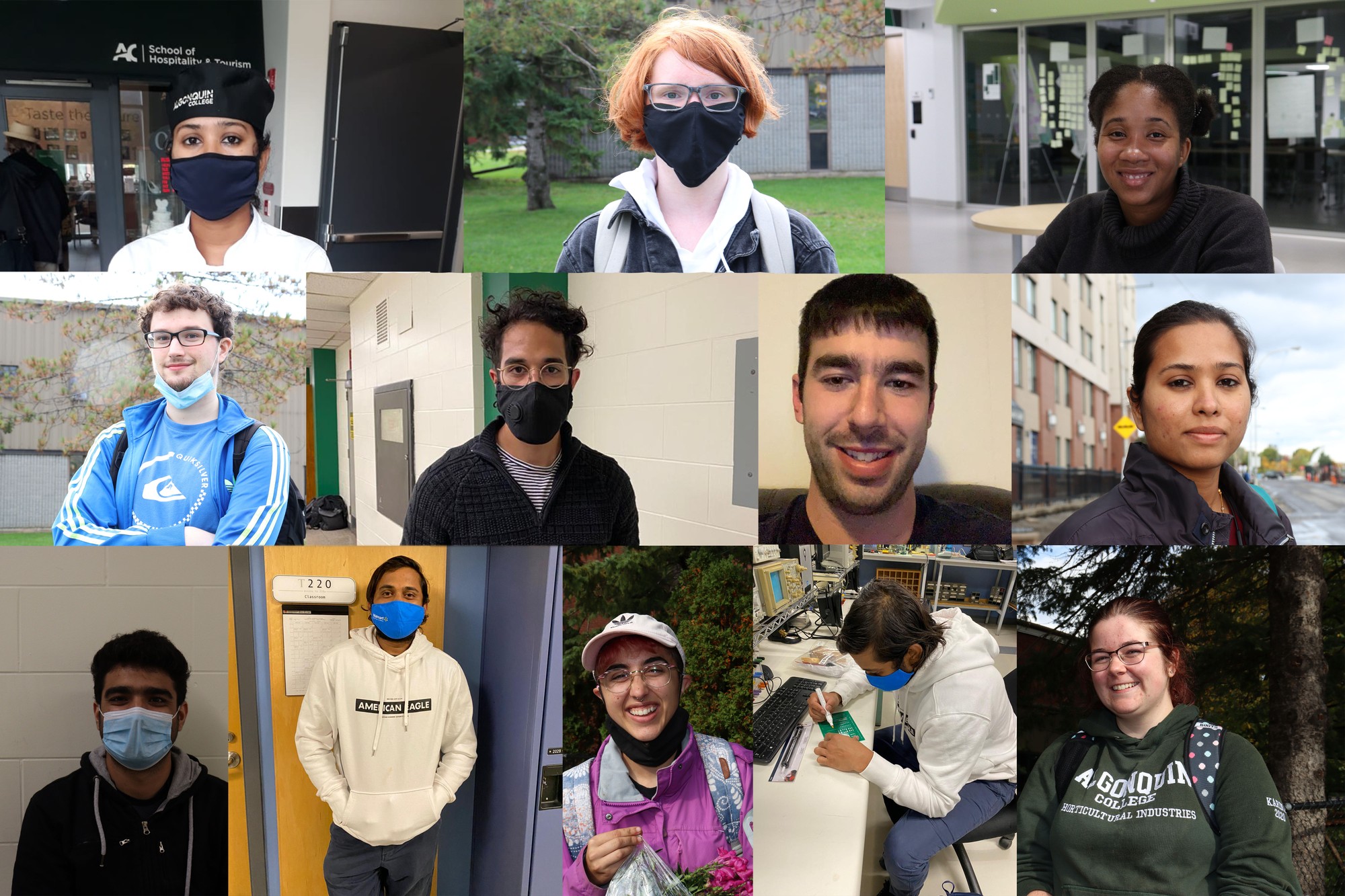
On Thursday, Sept. 30, Algonquin Times reporters set out to do a mood check of students in the Algonquin community who were on the predominantly empty Woodroffe campus in the lounge and study spaces. Some expressed excitement about being there, but also shared their teeny-tiny flutters of anxiety with us.
Reporters asked: How does it feel to be back on campus? How are you handling the situation? How are you creating friendships and connecting through Zoom?
This is what they had to say.
The oh-so-lucky on-campus students
Filipe Arisancar, electromechanical engineering technician student Photo credit: Kavya Nair
Name: Filipe Arisancar
Course: Electromechanical engineering technician
Thoughts: “Working alone at home got a bit boring, coming to college for practical labs feels like a break from monotony. While it feels different, there’s a lot of control and a constant battle with masks, the best thing about being in class is that I’m finally getting the practical knowledge that is mandatory for the course. I think the college has adapted well to the situation. I’m liking the less crowded hallways.”
Thoughts: “I’m having mixed feelings lately- I’m both, excited and nervous. Being back means getting to interact with friends and classmates, which is good, but it also means extra precautions. I think twice before sitting on a chair and sanitize my hands immediately after touching anything. I just hope everything gets back to normal soon. I need a break from the constant anxiety and consciousness.”
Course: Heating refrigeration air conditioning technician (HRAC)
Thoughts: “I’m happy that my course is back on track with in-person learning – I’m one step closer to graduating and working in my field. There are days when I’m confused about which subject is online and which is offline but I’m trying to make the best of the facility that the college is providing. Sometimes I also feel a bit uncomfortable at school, knowing that there have been some positive COVID-19 cases, but I strictly follow the social-distancing and hygiene parameters.”
Denish Patel, an electro-mechanical engineering student
Name: Denish Patel
Course: Electromechanical engineering technician
Thoughts: “Being an international student, who came to Canada at the beginning of a pandemic was depressing. And then, my course got suspended. At first, everything felt like a mistake but with the college reopening, I feel better. The staff is taking good care and things are going smoothly. Attending labs and seeing my classmates are the highlights of my week.”
The ones stuck on Zoom
Tara Thomas, a baking and pastry arts student didn’t mind a little change and not having to commute daily. Photo credit: Zainab Almehdar
Name: Tara Thomas
Course: Baking and pastry arts
Thoughts: “I’ve gotten used to it since the college closed in March. I’m getting more used to it and getting more comfortable and I’m somewhat liking the change, for now, not to commute every day because I live in Blair.”
Karina McIsaac, a horticultural industries student walks around campus with flowers in her hand. Photo credit: Zainab Almehdar
Name: Karina McIsaac
Course: Horticultural industries
Thoughts: “Our professors are choosing to just give us slide shows, and we study it. So, it’s been kind of hard staying in contact with our classmates online just because we haven’t really been using Zoom.”
Taylor Haugh, a horticultural industries student was all smiles as she walked on campus with a bag full of flowers. Photo credit: Zainab Almehdar
Name: Taylor Haugh
Course: Horticultural industries
Thoughts: “We basically text each other, we aren’t using Zoom as much. We just connect with each other on campus.”
Mario Lumaj, a business administration student found comfort in finding a community he can connect with through clubs. Photo credit: Zainab Almehdar
Name: Mario Lumaj,
Course: Business administration
Thoughts: “I actually looked on the SA website, and they have a bunch of clubs and stuff. I did notice one, the Algonquin college E-sports club which has a giant community that I really fit in with, that’s where I was vibing with people.”
Shivam Bhandari, shared his woes about the lack of socialization and communication during these unusual times. Photo credit: Zainab Almehdar
Name: Shivam Bhandari
Course: Manufacturing engineering technician
Thoughts: “Everything is new, we used to come to college and attend the classes, but now we have to like open our laptops and only see the teacher …. there is not that much communication and socialization that used to happen before the COVID.”
Emma Eastlake was able to adjust to this semester by relying on social media to connect to her peers. Photo credit: Zainab Almehdar
Name: Emma Eastlake
Course: Illustration and concept art
Thoughts: “It’s been challenging over the past few weeks, but it’s not been as bad as I thought because of Discord, Facebook and social media keeping us connected.”
One of the most basic edicts of interpersonal relationships is touch: expression through physical contact and the exchange of tidings, pleasantries, affection and trust. Matthew Hertenstein, a psychologist at DePauw University of Indiana conducted studies in 2009 that found the value of touch went beyond a simple extension of body language. He described it as […]
Cody Byrne
Photos: Cody Byrne
October 12, 2020 Revised: January 30, 2024 3:37pm
Photo: Cody Byrne
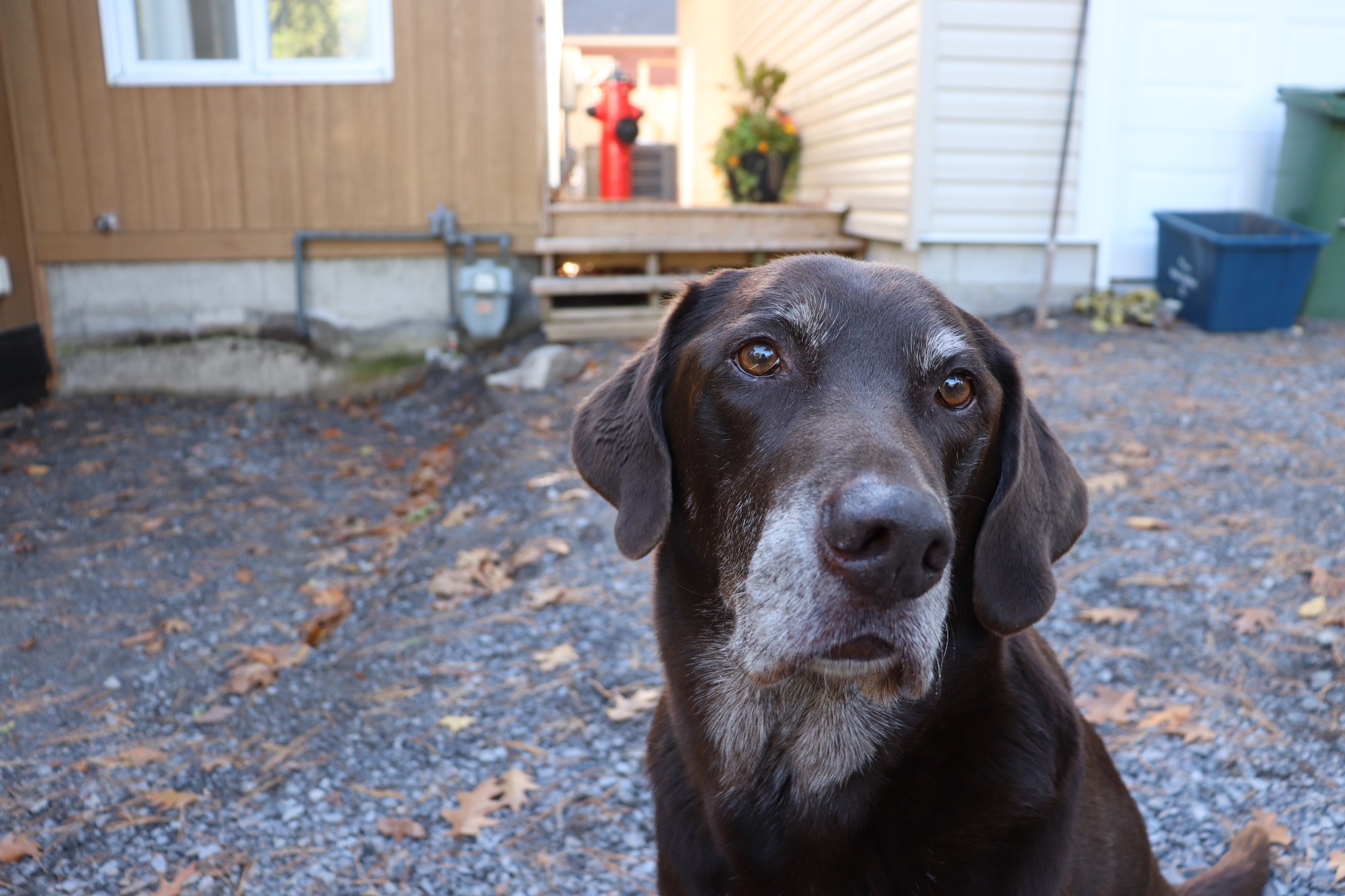
"Talk to your friends, hug your families or partners and keep pets close and cared for. Anything to preserve a sense of compassion and warmth."
One of the most basic edicts of interpersonal relationships is touch: expression through physical contact and the exchange of tidings, pleasantries, affection and trust.
Matthew Hertenstein, a psychologist at DePauw University of Indiana conducted studies in 2009 that found the value of touch went beyond a simple extension of body language. He described it as a “nuanced, sophisticated, and precise way to communicate emotions.”
During the pandemic we have seen the shifting of almost every social paradigm we have come to know. Under the protocols of social distancing, we have begun to trade intimacy for security out of fear and uncertainty. Signs of affection have simplified to insure minimum contact. Instead of a pat on the back or a handshake, we settle for waves and elbow bumps.
Our desire to keep ourselves and others safe can lead us to unwittingly sacrifice the support of friends, colleagues and loved ones. As Zoom, Facetime and social media slowly replace physical encounters, we begin to understand the necessity of the human connection.
Let’s take a hug, for instance. The simple act of hugging is scientifically proven to alleviate stress, anxiety, depression and even high-risk factors of heart disease such as high blood pressure.
According to a study published by Harvard Health in 2014, affectionate physical contact can boost the body’s production of beneficial chemicals such as oxytocin – a hormone that can effectively reduce pain, relax muscles and stabilize mood; among other benefits.
An article by Scientific America shows that even the World Health Organization identifies social networks as a primary determinant of health. The lack of these connections opens us up to threats to our overall well-being.
Without regular opportunities to be people, our production of beneficial chemicals slows, we begin to feel isolated, trapped and even confused. Autonomic functions are affected, eating and sleeping habits change. Our desire to explore and discover narrows through the restrictions of our shared confinement.
As the pandemic rolls on, we must be able to look forward to a return to trust and togetherness.
But how will we get back?
First and foremost, we have to stay in touch with people now using all the tools we can. Talk to your friends, hug your families or partners and keep pets close and cared for. Anything to preserve a sense of compassion and warmth.
It’s also important to remember that despite the lack of physicality, we still have people behind us. Our nature as humans is to support and nurture others in times of need.
We must also keep in mind that this is only temporary, despite all the feelings otherwise. When the world opens like the first flower from the depths of a long winter, we will have our time in the sun again. We can be certain that the morning will be brighter for each day we spend in darkness.
Do not be discouraged or ruled by fear – instead, find the depths of your inner strength and push with all your might against the coming tide. If you have an ear, a hand, or a thought to lend, never hesitate to do so with the confidence that you have made a difference in the lives of others.
As we enter a new school year unlike any other, the Mamidosewin Centre is preparing for a semester filled with events, activities and support to help aid all new and returning students this fall. The Mamidosewin Centre, typically located in the E-building at Algonquin can now be virtually visited through their Facebook page or the […]
Angeleah Brazeau-Emmerson
Photos: Madalyn Howitt
October 9, 2020 Revised: October 9, 2020 6:27pm
Photo: Madalyn Howitt
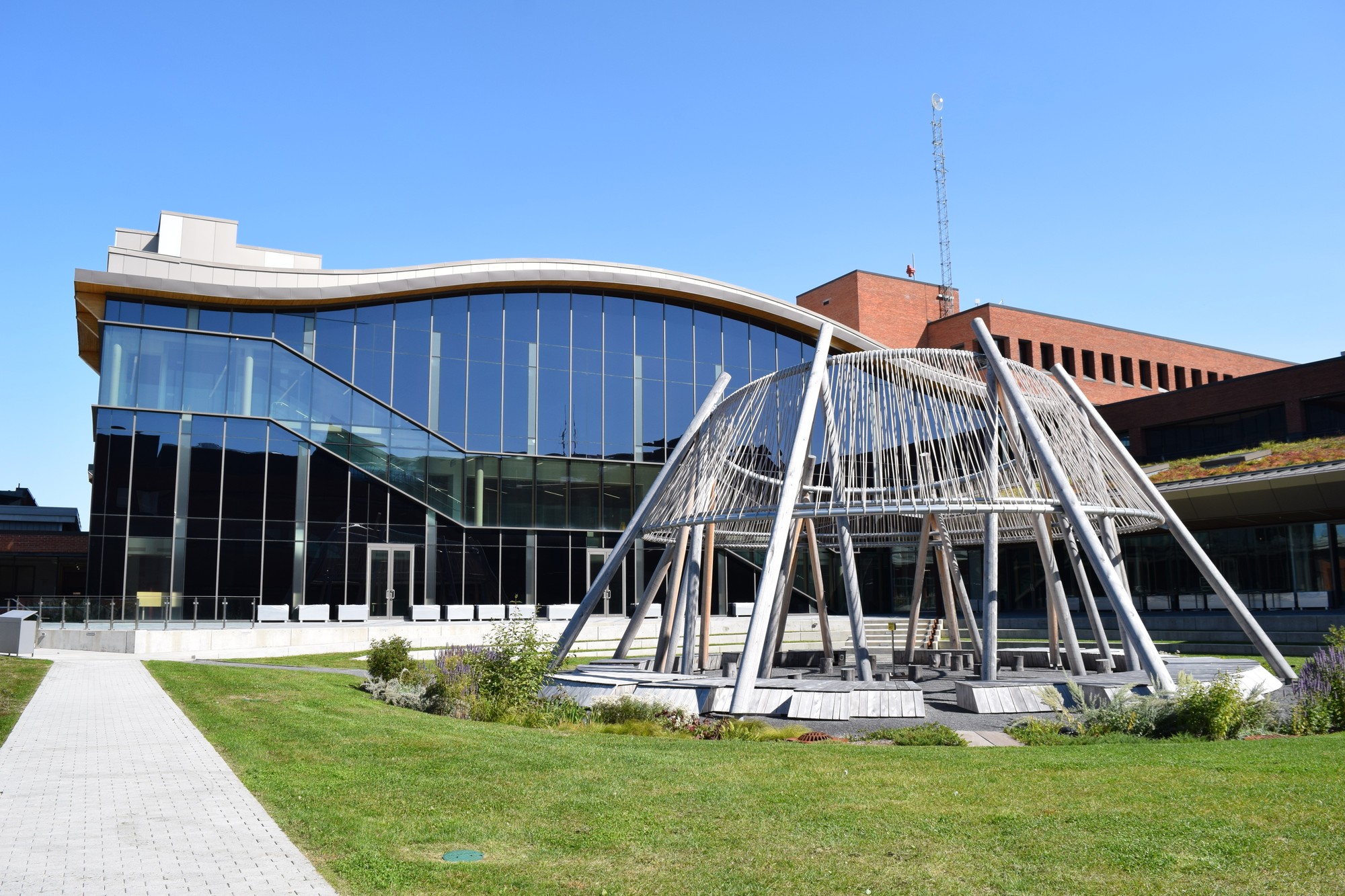
The Indigenous-inspired courtyard outside the DARE District at Algonquin College'sOttawa campus.
As we enter a new school year unlike any other, the Mamidosewin Centre is preparing for a semester filled with events, activities and support to help aid all new and returning students this fall.
The Mamidosewin Centre, typically located in the E-building at Algonquin can now be virtually visited through their Facebook page or the Algonquin College website.
Throughout the week, a variety of events are currently being offered to allow students to learn, experience and engage with one another. Some of these events include virtual daily smudging, hand drumming and craft-making over Zoom, followed by a variety of different workshops and ceremonies.
Jackie Tenute, an Aboriginal councillor and therapist at the Mamidosewin Centre, has been working there for about 10 years. She is currently the host of the virtual smudging event that takes place every morning from 9:30 a.m. to 10:00 a.m. on Facebook Live. “Smudging is one of the big things that I am trying to do to connect with the Indigenous students,” said Tenute.
Tenute is currently back in her community of Neyaashiinigmiing – Home to Chippewas of Nawash unceded and unsurrendered traditional territories – a reserve located in Bruce County, Ontario.
Tenute’s virtual smudging event has had an outreach of over 900 viewers which continues to grow every day. She hopes this event can be as interactive as the Mamidosewin Centre’s other events and activities. “I just want it to be a real and genuine experience for the people joining,” said Tenute.
Tenute along with the other members of the Mamidosewin community want to ensure the Indigenous community of Algonquin feels welcomed and connected. In addition, the Centre has also made personalized emails for each Indigenous student attending Algonquin this year. “We want Indigenous students to know, they are supported at Algonquin College,” said Tenute.
In addition, the Centre is also looking to connect Indigenous students, who are in the same programs. “We know that it’s just so difficult right now. People are feeling isolated and alone,” said Tenute. “Part of the college experience is to connect with other people in your program.”
The Mamidosewin Centre wants not only the Indigenous community of Algonquin to feel welcomed and supported, but everyone to feel free to join in on these connecting activities and events.
“It’s our duty to help you as much as we can. You are really important, and you are our future leaders,” said Tenute.
Shortly after withdrawing the LinkedIn Learning contract, eCampusOntario approved an extension to the service for Ontario students and faculty until September 2021. LinkedIn Learning, a platform containing on-demand instructional videos, certifications to help your career, and overall development and course material that can be personalized, was granted to Ontario students by eCampusOntario in 2018. Earlier […]
Kavya Nair
Photos: Kavya Nair
October 8, 2020 Revised: January 30, 2024 3:37pm
Photo: Kavya Nair
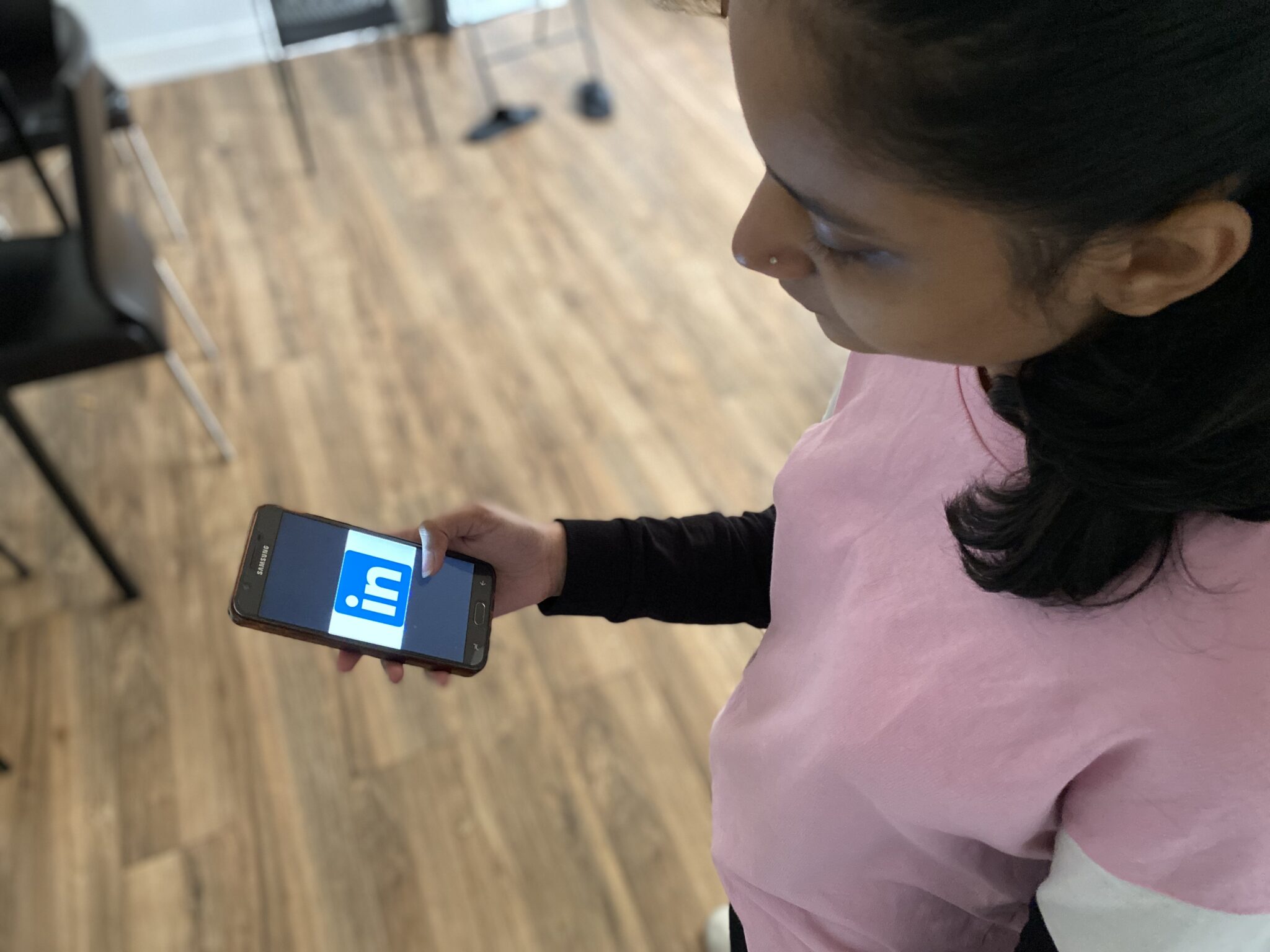
LinkedIn Learning provides students with a range of course material and certifications related to their fields
Shortly after withdrawing the LinkedIn Learning contract, eCampusOntario approved an extension to the service for Ontario students and faculty until September 2021.
LinkedIn Learning, a platform containing on-demand instructional videos, certifications to help your career, and overall development and course material that can be personalized, was granted to Ontario students by eCampusOntario in 2018.
Earlier this year, a decision to discontinue the contract was made by the organization. While Algonquin College has several resources to help students develop their skills, the news was a major setback for several students.
“It’s very hard to understand some concepts, especially now, when everything is online,” said Kinshuk Singh, a marketing management student. “LinkedIn Learning helped a lot in understanding some topics more simply.”
Another user and electromechanical engineering technician student at Algonquin, Vrushank Shah, has already completed three certifications on LinkedIn Learning. He said the facility is beneficial for technical programs like his.
Shah calls the extension “good news” for students.
“I’m happy that the service is extended,” he said. “I’ve completed certificate courses in IoT, Java and C. I was studying marketing and business management subjects on the tool when I received an email about the discontinuation but I’m glad that it’s back.”
The joint initiative by eCampusOntario, Ontario’s Ministry of Advanced Education and Skills Development (MAESD) and LinkedIn helped 44 universities and colleges across Ontario to access their data, aiming towards modernizing education.
“By working in partnership with both eCampusOntario and Lynda.com, we are excited to offer flexible online learning that will build Ontario’s talent advantage and help postsecondary students prepare for successful careers in this changing economy,” said Mitzie Hunter, Minister of Advanced Education and Skills Development in a press release on the LinkedIn website.
“It is a very convenient tool to use daily,” said Nicole Khoury, a marketing management graduate from Algonquin College. “Everything is presented so elaborately.”
The service is not just limited to students, faculty can also use the facility to obtain training on the latest IT topics including networking and software development.
Users can also connect their LinkedIn accounts to access personalized recommendations to display achievements and certifications on their profile, a feature valuable while applying for jobs.
“I connected my LinkedIn profile with LinkedIn Learning and it helped me get personalized data related to my field,” said Yash Khatavkar, a project management graduate from Lambton College, Toronto.
“Once signed up, it designs a graph of course material and certificates suitable for you. The certifications are authentic and all the videos have trained professionals- experts in their field. It was a strong addition to my resume,” he said.
“Although it is unclear if the licence will be renewed again. The facility is available to all students and faculty until Sept. 30, 2021,” wrote Margaret Cusson, dean of Academic Development in an email chain.
A guide to using the service is available at Algonquin’s library website.