The following is an excerpt from the President Claude Brulé’s October 28 address at the 2020 Convocation; learn more about Algonquin College first virtual convocation here. As your President, I […]
Office of the President
Photos:
November 4, 2020 Revised: November 4, 2020 10:37am
The following is an excerpt from the President Claude Brulé’s October 28 address at the 2020 Convocation; learn more about Algonquin College first virtual convocation here.
As your President, I am both humbled and honoured to have this opportunity to celebrate your resilience and success.
Amidst the events reshaping our global reality, be they the pandemic, climate change, the fight for social justice and equality, or automation and the world of Artificial Intelligence, we come together to celebrate your incredible achievement, which is all the more remarkable given these extraordinary times.
In this age of great uncertainty, I can be certain of one thing…. The steadfast determination you have displayed will serve you well in the new environment being shaped so rapidly before us.
The world you are entering, upon graduation, looks nothing like the world from even a year ago. Yet, along with the challenges that lay ahead, the future holds promise and opportunities the likes of which have not been presented to any generation for a long time.
The door is open for you to really change the world, and not in a clichéd sense, but in real and tangible ways, emboldened with fresh ideas and new perspectives.
It also stands ready for your generation’s champions of social justice, to address issues of inequity, and the lack of diversity and inclusion that recent events have brought to the forefront in ways that can no longer be ignored.
Whatever your path forward, you will have the opportunity to help lead a true transformation –
to recalibrate the socio-economic inequities for Black, Indigenous and People of Colour on a scale never seen before. And to reshape the modern workforce and break new ground in your chosen field.
Embracing our community will hopefully be one of the enduring legacies to emerge from these times, and you will be the ones to pass this on to the next generation.
Education, in its many forms, is a significant touchstone. It helps form the solid ground beneath our feet. It allows us to adapt, pivot and anticipate rather than merely react when change inevitably challenges our lives.
The knowledge and skills you have acquired here at Algonquin College are now part of your “tool kit”, helping to “future-proof” your career.
I want to borrow now from my colleague, Ron (Deganadus) McLester, Algonquin’s Vice President – Truth, Reconciliation & Indigenization. He often uses the metaphor of arrows in a
quiver. An arrow on its own will snap easily, however when they are bundled together, they are strong and resilient. Having many arrows in your quiver provides strength, and will enhance your confidence when faced with the many challenges set to come your way.
So … going forward … be inspired to learn new things and develop new skills. Fill your quiver with more arrows and make your mark.
Everything of value starts with an idea. What ideas are you preparing to share with the world? What script are you about to write?
It’s no secret that I am a huge fan of the author, Neil Gaiman, and I’d like to borrow what I think is an appropriate quote from his book, Art Matters: “It is easy to pretend that nobody can change anything, that society is huge and the individual is less than nothing. But the truth is, individuals make the future, and they do it by imagining that things can be different.”
So, when you think about your future, where does your imagination take you? The world needs your creativity, your energy and your resiliency more than ever before. It needs you to dream big dreams, and to go forward and be fearless.
Be unafraid to fail and to learn from your missteps. To borrow again from Neil Gaiman: “Now go, and make interesting mistakes…Make glorious and fantastic mistakes. Break rules. Leave the world more interesting for you being here.” History is filled with the stories of entrepreneurs and leaders in every field whose ideas met with initial dismissal, failure, and seemingly insurmountable odds before they achieved success.
So let opportunity be what defines you. I know you already possess the determination, imagination and innovative spirit to overcome any obstacles in your path.
The Fall term has always been a time of excitement – but also of increased responsibility and stress within our College community. Amidst the pandemic, I know many of us […]
Office of the President
Photos:
October 14, 2020 Revised: October 15, 2020 6:54pm
The Fall term has always been a time of excitement – but also of increased responsibility and stress within our College community. Amidst the pandemic, I know many of us are struggling with additional feelings of anxiety and isolation this year.
That’s why I call on each and every one of you to make mental health your top priority.
Six years ago, the Mental Health Commission of Canada released a report highlighting how post-secondary student populations across the country are at a higher risk of mental health issues.
The report detailed how half of all lifetime cases of diagnosable mental illness start by 14 years-of-age, and 75 per cent by the age of 24. Half of all Canadians will have, or will have had, a mental illness by the age of 40.
In the intervening years since that report, Algonquin College has taken many steps to enhance its support networks and resources to help our learners and employees look after their mental health.
That work continues with an even greater sense of purpose today, as we now face new personal challenges brought upon us by the COVID-19 pandemic. With a return to normal still on the horizon, taking care of ourselves has become even more critical.
Algonquin College takes pride in being an inclusive, caring community. We strive each day to support and respect one another – to show kindness and empathy. By doing this, we break down the old and harmful stigmas around mental health.
Building awareness is crucial, and I encourage every learner and employee to take the time to reflect on how they are feeling and coping during these unprecedented times. Part of being aware is accepting that it is okay to be vulnerable. Asking for help is a sign of strength not weakness. Never hesitate to reach out when in need. In addition to the resources referenced above, there are also many apps and online tools available to you, and excellent resources offered by Ottawa Public Health.
One of the recent developments in our continuing efforts around mental health is the expanded partnership Algonquin College has with The Royal. This summer, thanks to a $250,000 contribution from RBC Foundation, more of our learners in need will be able to meet online with a psychiatrist from The Royal and get the support they need through a customized treatment plan.
We also offer a complete range of counselling services and general supports in an effort to cater to the individual needs of every learner, understanding the broad range of challenges and lived experiences across our student population. These services are provided by professionals who can accommodate you virtually from the comfort of your own home.
Like everyone, I am looking forward to the time when we can all safely be together again, enjoying the vibrancy and energy of being on campus. Until then, please know you are not alone. We want you to turn your dreams into lifelong success and are committed to helping you on the journey.
Female students are challenging unrealistic body standards and overcoming intimidation in fitness spaces as growing numbers of women reshape gym culture through confidence, community and support
Kindra Paul
Photos: Kindra Paul
May 5, 2026 Revised: May 5, 2026 3:09pm
Photo: Kindra Paul
Female student walks in the Jack Doyle Athletics and Recreation Centre to do her workout..
Before the first rep and before the first set there’s a moment of hesitation.
“It was intimidating because I really didn’t know how to start or what to do exactly,” said Constanta Cota, a Level 2 television broadcasting student. “I didn’t really feel like I belonged there because I didn’t look like I would go to the gym.”
For many female students at Algonquin College, stepping into the gym means pushing past the feeling that they don’t fully belong, a doubt shaped not only by the space itself, but also the pressure surrounding body image long before they even walk through the doors.
For these students, going to the gym isn’t just about working out. It’s also about pushing past insecurity, comparison and unrealistic expectations. As more women step into weight rooms and try strength training, they’re slowly changing the culture that surrounds the atmosphere, building confidence and supporting each other along the way.
That pressure often begins online.
Experts warn that social media plays a significant role in shaping body image specifically among young women. A study from the University of Waterloo found that more than half of teens reported being unhappy with their bodies, which was linked to higher screen time creating a greater dissatisfaction. Researchers say constant exposure to curated fitness content can reinforce those unrealistic standards and make environments like the gym feel more intimidating.
For beginners, that pressure can make an already unfamiliar space feel even more intimidating.
Cota said social media contributed to that mindset which reinforced the idea that there is a “right” way to look.
“It affected me in a bad way because it made me believe that I was supposed to look a certain way,” Cota said.
That sense of not measuring up is common among female gym goers. Experts suggest that idealized images online can contribute to body dissatisfaction and even more symptoms of body dysmorphia specifically among young women who are still forming their sense of self.
“I would say social media content I see is kind of like other women’s finished products, so that affects my confidence of being like, ‘Oh, I don’t look like that,’” said Kaitlyn Henderson, a Level 2 pre-health sciences student who has been going to the gym for four months.
She also described how uncomfortable a new space is where others seem experienced.
“I definitely felt like I really didn’t know what I was doing…it was hard to kind of find my way,” she said.
That combination of feeling inexperienced while also feeling judged can discourage some women from returning to the gym. Mental health research on social media and body image, such as findings discussed in Life Lines – The Impact of Social Media on Body Image & Mental Health, a study developed by Homewood Health in collaboration with the University of Alberta’s Human Resources department, suggests that stepping away from the constant comparison and limiting social media use can improve body image in and outside of the gym.
For many students, confidence doesn’t come immediately but rather builds slowly, oftentimes through routine and repetition.
Jack Doyle Athletics Recreation Centre where many women come to workout and reshape traditional gym culture. Photo credit: Kindra Paul
“It’s intimidating…if you don’t know what you’re doing and you walk into a room and you see everyone else seems to know what they’re doing,” said Madi French, a Level 2 television broadcasting student who has been going to the gym for two years.
Over time that feeling began to shift.
“I think it was a safe space…but I was just overthinking it,” French said.
As confidence grows the focus can move away from appearance to how the body feels and performs. That shift can be the key to improving body image.
“I don’t like going and doing the workout but when I’m done the workout I feel great,” French said.
Even for more experienced gym goers body image pressures don’t disappear entirely.
“Social media affected my body image and confidence by a lot,” said Adriana Edmonson’s Borjorquez, a Level 2 police foundations student who has been going to the gym for four years
She remembers feeling out of place when she first started.
“I felt a little out of place but that’s because I was a beginner and felt like I was being watched,” she said.
Despite that, she continued going motivation stemming from her personal goals rather than outside expectations.
As more women enter gym spaces they are also helping reshape gym culture and challenging traditional expectations meanwhile building a more supportive environment.
“I would say more women have been going consistently,” Henderson said.
That growing presence can make a difference especially for beginners who may feel more comfortable seeing others like themselves. Many students describe an unspoken sense of support among women in the gym.
“One time I was doing a tricep exercise, not doing it right, and this woman came up to me and explained how to do it correctly,” Henderson said.
Cota said having a workout partner helped her stay consistent.
“She always pushes me to keep going,” she said.
That sense of encouragement, whether from friends or strangers, can play a key role in helping women return even when their confidence is low.
Parrys Charles, a Level 2 television broadcasting student, spoke about building confidence as an ongoing process especially in a culture shaped by comparison.
“I’ve always been skinny, lanky and tall my whole life…it’s something that I’ve had to work through and figure out how to build my own confidence,” Charles said.
She added that social media might make that process even more difficult.
“I feel like social media is not the best for people’s confidence,” she said.
For many female students, their relationship with the gym improves over time, not because the pressure disappears, but because their mindset changes.
What begins as a space filled with uncertainty and comparison can become something more personal: a place which is focused less on meeting those societal standards and more on individual progress.
And for some that shift is ongoing, but the hesitation that once defined their experience is no longer keeping them away.
“Although I didn’t really feel like I belonged there,” Cota said, “I kept going.”
Featured Hero | Featured Story | Features | Home Feature | Home Hero
As the college begins to phase out its horticulture pathways, students and industry experts are wary of long-term consequences
Reilly Armstrong
Photos: Reilly Armstrong
May 1, 2026 Revised: May 1, 2026 9:25am
Photo: Reilly Armstrong
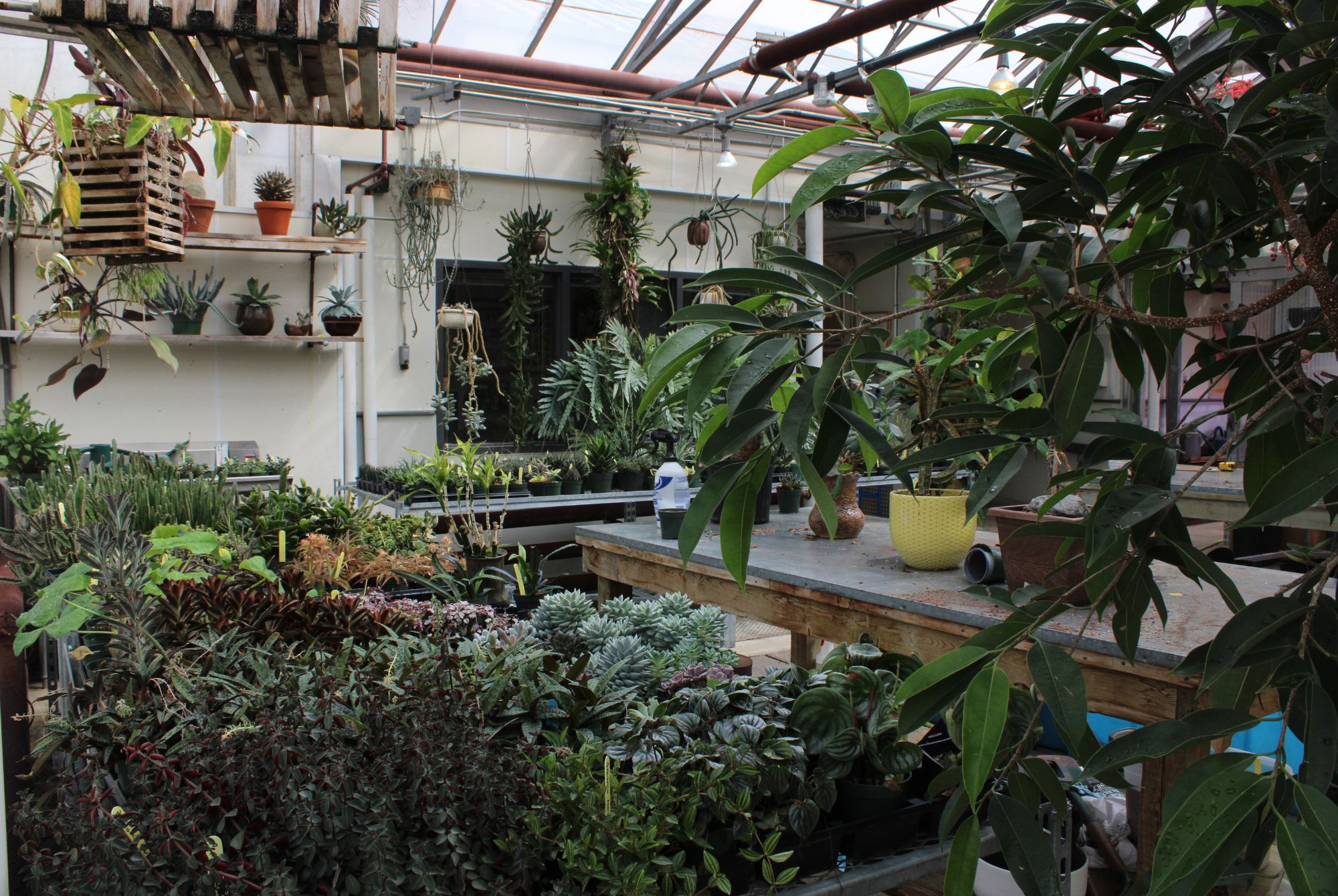
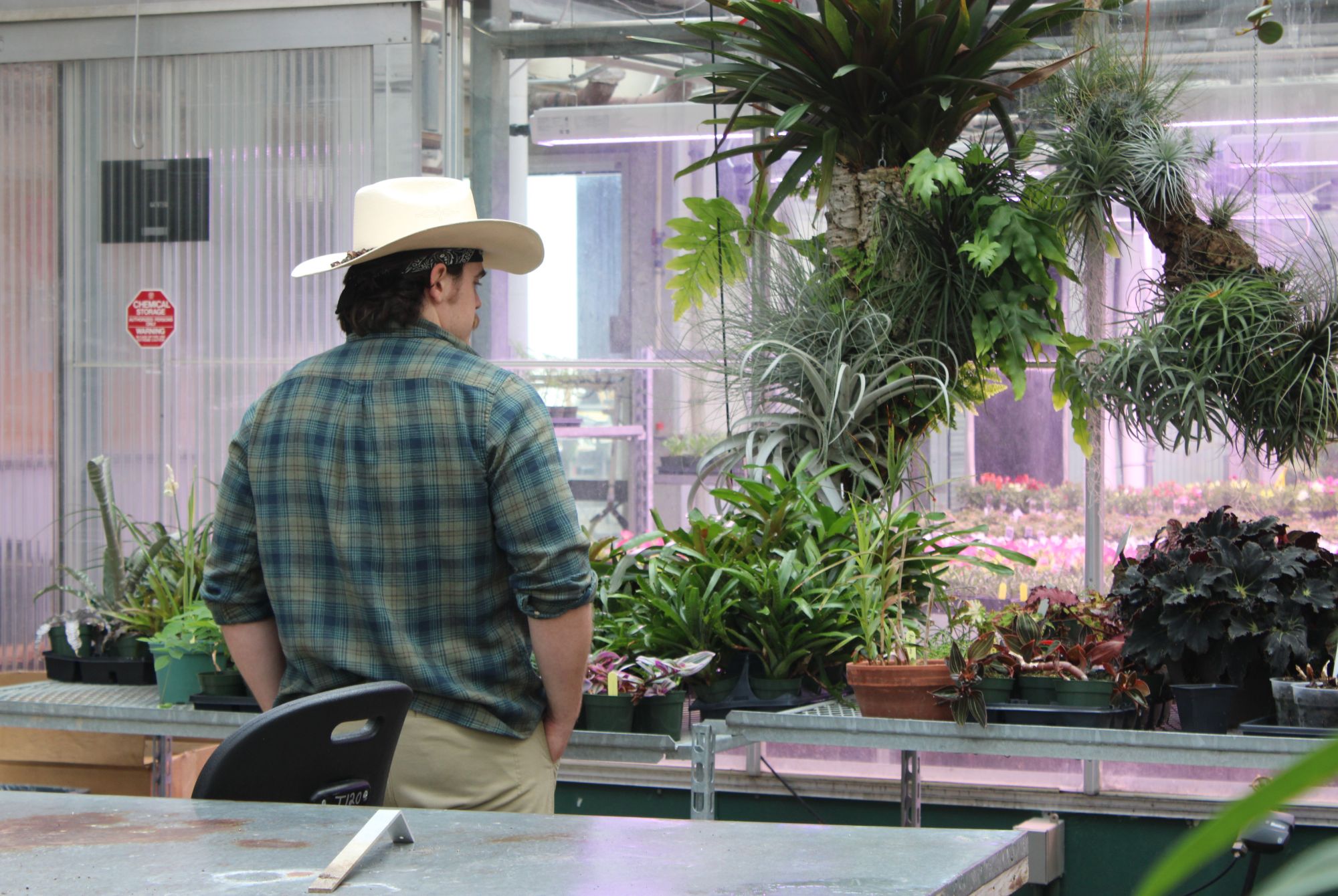
An inside look at the M-building's greenhouse.
Sarah Johnston, president and co-founder of Greenlife Nursery, says her “blood has been boiling” since hearing about Algonquin College’s decision to suspend its horticulture programs.
The suspensions will affect both the horticultural industries and the horticulture techniques apprenticeship programs at the college.
“It’s been boiling over this for quite some time,” said Johnston.
“Once you lose a structure like you’ve got at Algonquin, which has been going for, I don’t know how many years… It doesn’t get built up again overnight.”
The suspensions, proposed in January and confirmed in March, are part of the college’s “strategic program planning” which it says responds to changes in government policy and funding. Those changes include new limits on international student enrolment and updates to OSAP funding rules, both of which affect college revenues and program demand.
Thirty programs were included in the latest round of suspensions, following 37 programs cut last year, along with the closure of the Perth campus. The college has called it “a necessary response to rapid and significant shifts in the postsecondary landscape.”
Johnston is concerned not only for her business and the larger industry, but for future students with a passion for plants.
“I’m now being asked by Ontario to sponsor high school students, but with nowhere to send them once I’ve taught them their on-the-job skills,” she said.
Johnston described the industry as transient, meaning it often relies on incentives or “dangling carrots” to retain employees, specifically through apprenticeship pathways like the one previously offered at Algonquin.
A gallery wall in the greenhouse. Photo credit: Reilly Armstrong
“That apprenticeship program runs over two winters for 12 weeks each winter. And the sum accumulation of that program, if the student carries on to the end of the program, is that they will gain their Red Seal in that industry,” said Johnston.
“Not only have I lost the opportunity to gain knowledgeable students who have just graduated, I’ve lost the opportunity to enhance their skill and encourage them to become Red Seal.”
Having a Red Seal in the horticulture space broadens opportunities — many government contracts and large companies require someone on site to be Red Seal qualified. It allows the holder to work across the country and is recognized in countries like Australia, New Zealand and the United Kingdom.
Johnston says the Red Seal could become much more valuable and difficult to receive over the next few years due to removing formal training pathways like the apprenticeship program.
The removal of these pathways is also a concern for Tommy Wingreen, the program coordinator.
“For their local companies, it means that they now have to take people from other construction industries…maybe find people who work in construction or come from the street, but (have) no knowledge of what they are doing and they now have to educate them within the company,” said Wingreen.
“And then that’s a whole other issue.”
Wingreen has been teaching at Algonquin for 18 years. He became the horticulture program coordinator four years later and has been in the position ever since.
Growing up on a farm, Wingreen developed a love for plants working with his mother in their garden.
“The world of plants (is) much bigger than people kind of realize, right? And I like the science part of it as well. Because the more you know about plants, the more questions you have, really. It’s never-ending learning,” said Wingreen.
Wingreen says while the college’s decision wasn’t entirely unexpected, the lack of communication and engagement between the college and the faculty left him frustrated.
“Last fall, we did a program review and I was supposed to change the program to make it more profitable. And then they cancelled the program in the middle of that process. That’s really…I’m hurt, right?”
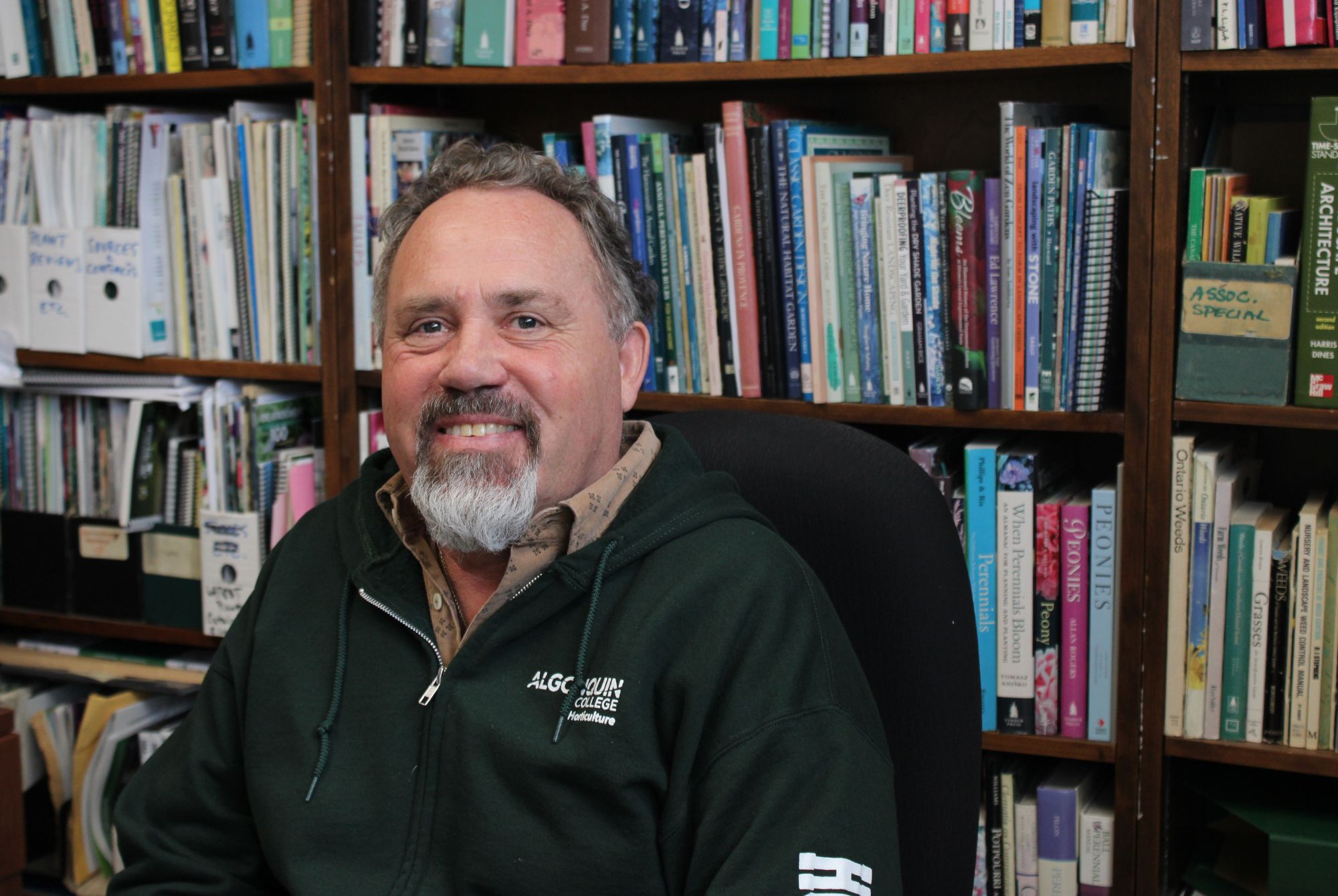
Horticulture program coordinator since 2012, Tommy Wingreen sits in his office. Wingreen worries about the loss of spaces like the greenhouse. Photo credit: Reilly Armstrong
Wingreen also says there was limited opportunity to challenge some of the financial information used to support the college’s decision.
“I asked for a meeting with the dean to go over some of these numbers as I knew they were wrong,” said Wingreen. “And even on the financial numbers, her comment was that they have some homework to do, because there were things they couldn’t explain to me.
“And when I looked at it, I think the decision was made far earlier…because we are sitting on land, and it may be more profitable to have parking than to have a vegetable garden.”
Wingreen’s words reflect broader uncertainty about the program’s facilities, which have long been central to horticulture training at Algonquin.
The program has been a part of the college since the 1970s, offering students hands-on experience in a thriving greenhouse to learn propagation and plant care for a diverse group of species.
Outside, the M-building is surrounded by outdoor gardens, which serve not only as a living lab for horticulture students but also as a public greenspace.
It’s full of winding brick paths, water features and landscaped garden beds. Students from other areas of the college use it as a grounding space to study and members of the surrounding community enjoy a place for relaxation and connection through nature.
Jeff Klug, a farmer at Fieldtrip Farm on Moodie Drive with over 20 years of growing experience, has been a guest speaker in horticulture classes.
He recalls being impressed with the greenspaces connected to the program.
“Both the educational capacity of the building in the greenhouse as well as just (the) aesthetic appeal of it as well, just the ability to walk into a greenhouse in the middle of winter and see plants,” said Klug. “There’s sort of an unquantifiable mental health component to that.”
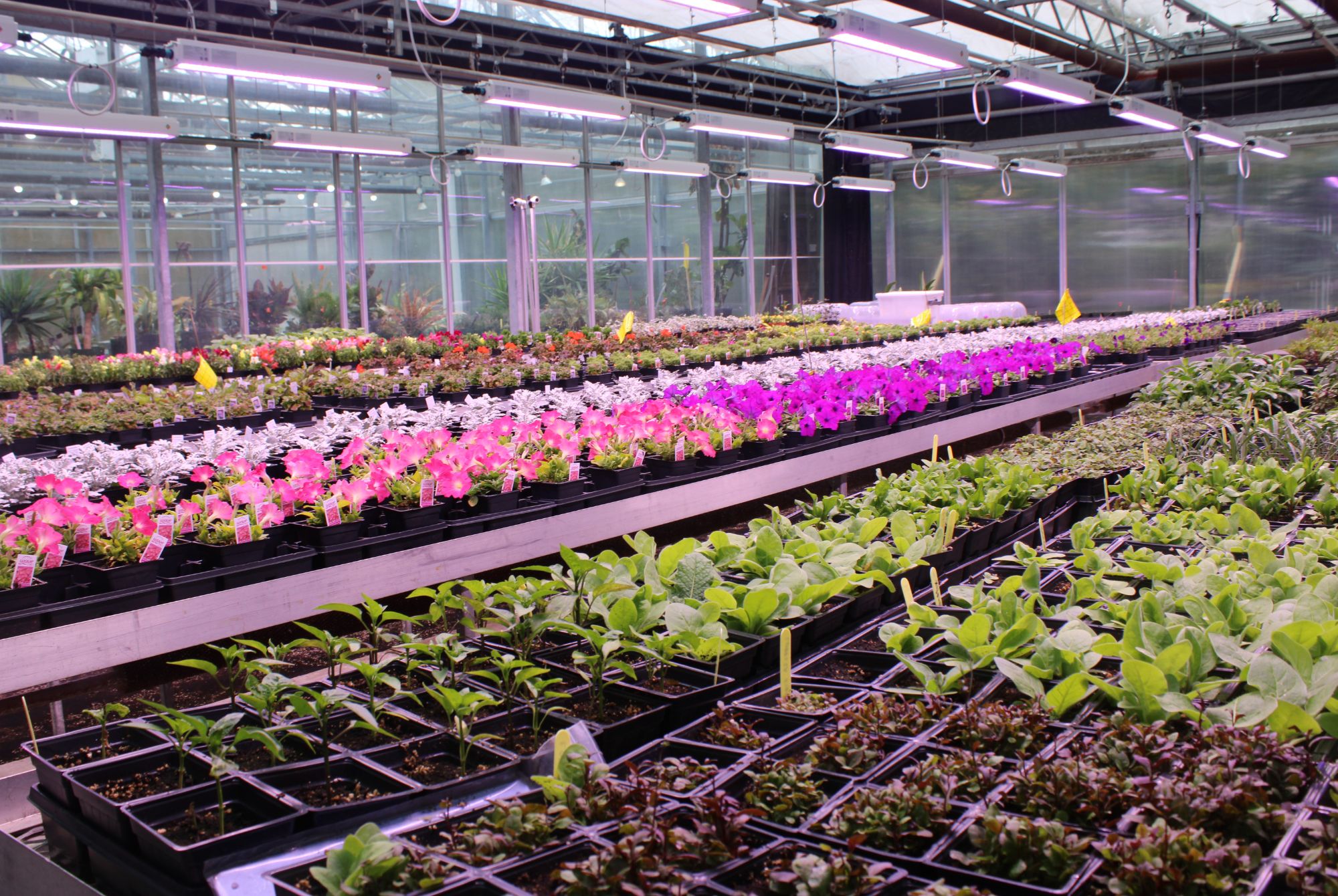
Rows of plants and flowers inside the greenhouse. Photo credit: Reilly Armstrong
He expressed concern for what the suspension means for these spaces.
“I think we’re losing these public spaces. Specifically, you know, these type of greenhouses that can house sort of both an educational facility and then also this just quite beautiful collection of plants,” said Klug. “That’s unfortunate if that is going to disappear.”
Looking more broadly, horticulture training plays an important role outside of the college. Beyond maintaining gardens and greenhouses, the program feeds into sectors tied into food production, sustainable environmental management and public greenspaces like city parks.
Horticulture student Rhianwen Thibert came to the program looking to contribute in a sustainability aspect. Originally drawn to culinary arts, they became curious about where food actually comes from and how it’s produced.
After speaking with a family friend who completed the program, Thibert decided to apply. From there, they fell in love with it. They believe the suspensions will cause a ripple effect across the industry.
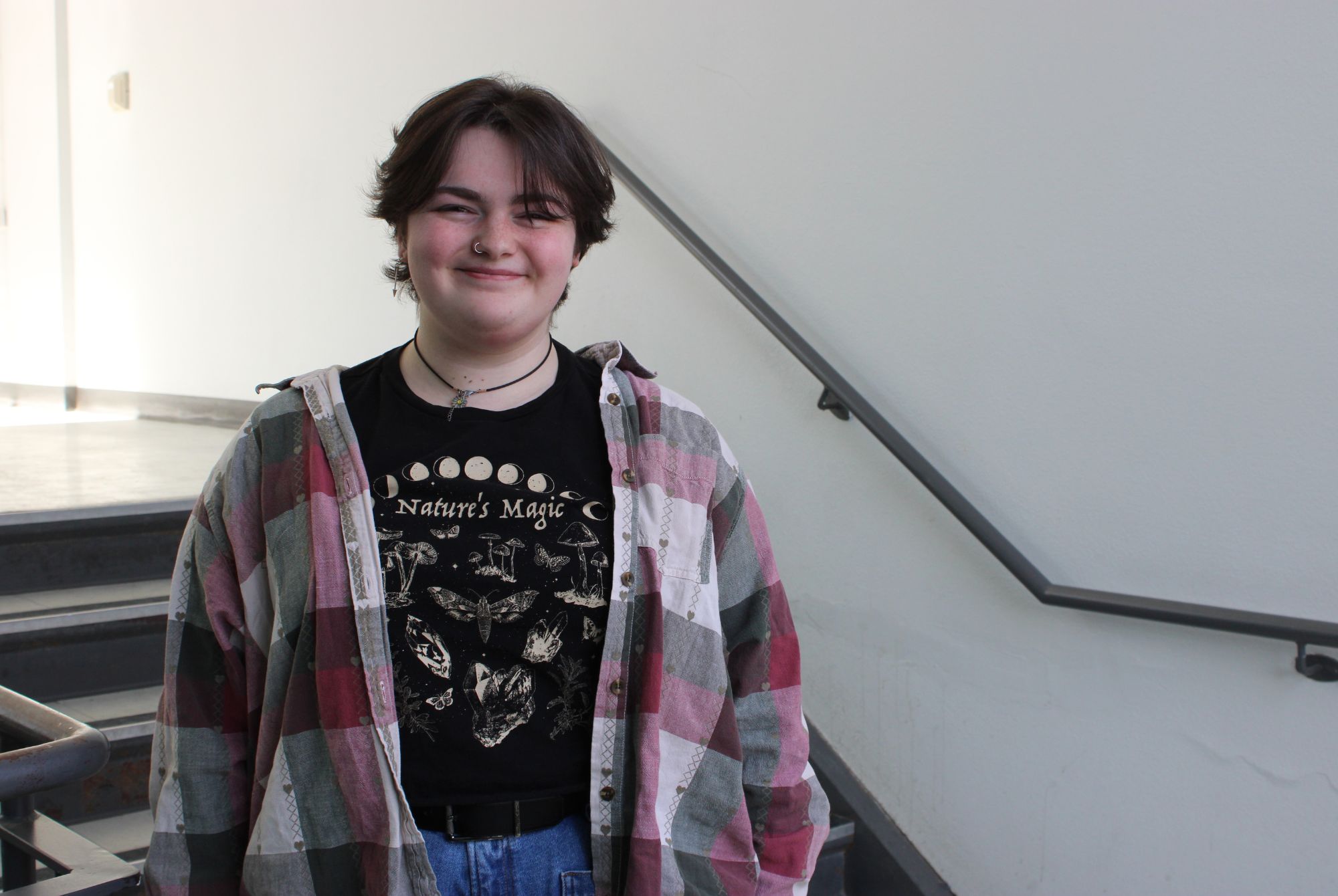
Horticulture student Rhianwen Thibert is concerned for broader environmental impacts the program closure could cause. Photo credit: Reilly Armstrong
“Right now in the industry, we’re seeing a lot of labour shortage, which is negatively affecting a lot of stuff. Especially labour shortage with people who are knowledgeable about the subject,” said Thibert.
“And with less and less people going into the industry that are knowledgeable, we’re seeing a lot more mess-ups that, on smaller scales, might not be as impactful to the local ecosystem or the biodiversity. But when you’re taking that one and multiplying it by 10 or 20…” they continued.
“You’re now looking at, okay, all of these little instances are now bigger instances, and now we’re looking at whole species potentially dying off because we don’t know how to care for our land anymore.”
Thibert says this can lead to the loss of pollinators, loss of native species and water runoff.
“It’s really just one thing (that) snowballs into a million different things when you’re not taking care of things at your home base.”
It’s clear that the loss of the programs will be felt not only at the college but across the province.
In a statement from Landscape Ontario, executive director Joe Salemi said they were “deeply troubled” about the closures.
“For our industry, and especially for students across Eastern Ontario, this is a real loss,” said Salemi.
“What makes the cuts to the programs particularly serious is that these were the only programs of their kind in Eastern Ontario. This is not a reduction in options. It is the complete elimination of a local pathway into the landscape horticulture trades in this region.”
Salemi mentions the already significant labour shortage and how losing the only local training institution will exacerbate that shortage.
“The impact? Fewer trained graduates, fewer apprenticeship opportunities and fewer young people with a clear way into a career in this industry,” said Salemi.
“Landscape Ontario will keep pushing for investment in landscape horticulture education and apprenticeship training across the province. We want to work with government, colleges and industry to restore these pathways, because right now, in Eastern Ontario, there are none.”
Horticulture student Eric Forero-Visbal looking out over the plants in the greenhouse. Photo credit: Reilly Armstrong
It’s a statement echoed by Canadensis: The Garden of Canada, a local project working on developing a botanical garden space on the grounds of the Experimental Farm.
When the suspensions were proposed, their board of directors mobilized quickly to send a letter to Algonquin College president Claude Brulé and the Board of Governors.
“At a time when climate resilience, biodiversity restoration, and sustainable landscapes matter more than ever, horticultural education is not something that can easily be rebuilt once lost,” said Canadensis board member Gérald Lajeunesse in a statement.
“We recognize that the College is facing difficult pressures and complex decisions. Our intention is not to criticize, but to ensure that the long-term environmental, economic, and community implications are fully considered,” said Lajeunesse.
“Horticulture shapes our cities, our food systems, our biodiversity, and our shared green spaces. It deserves strong and sustained support.”
While it’s still unclear what the future holds for the M-building with its outdoor gardens and greenhouse, what is clear is that this will be the last year of horticulture at Algonquin. The current students will be taught out through April 2027, but no new intakes will be admitted in the 2026 fall semester.
“I’ve just lost a gem. That’s all I can think of. I’ve lost my most precious gem,” said Johnston.
“My business will exist. I will make sure it exists and carries on and proceeds. But it’s going to be challenging.”
Featured Hero | Featured Story | Features | Home Feature | Home Hero
The students have spent the entirety of their program's final year creating their own video games
Tyson Purvis
Photos: Phoenix. Photo credit
April 29, 2026 Revised: April 29, 2026 9:30am
Photo: Phoenix. Photo credit
A person at the Minto Hall event extinguishes fires in the game Operation
Many programs end the school year with a barrage of assignments. Even more with tests. Some programs end the year with a showcase of the work students have accomplished.
Only a select number of programs end the year with a bang: releasing something made from the ground upby students alonefor the public to enjoy.
Inspiration came from all kinds of places for the students of the video game development program: from the simple desire to make a fun game to a frequently remembered childhood memory inside a Montreal museum.
“There’s a museum in Montreal (the Montreal Museum of Archaeology and History) that had this room with 50 people playing this game at the same time,” said Martin Lemieuxcodere, lead artist for the team behind Operation: Phoenix.“I remember there was a dinosaur game. As a kid I loved it, of course. It was just a game about aquatic reptiles; you could evolve into a bigger dinosaur and all that.
“I remember that really gave me a super immersive, super interesting experience.”
Martin Lemieuxcodere poses with the virtual reality treadmill in the room which he and his team spent many hours working on Operation: Phoenix. Photo credit: Tyson Purvis
For the whole school year, third-year students of the video game development program at Algonquin College have been planning, designing, programming and now publishing their very own games.
No matter how a program ends, each is meant to set students up for success.
“We learned a lot of C++, C# and JavaScript which are essential programming languages,” said Dawson Racine, a third-year game development student. “We’ve been set up for a potential programming career in general, not just game development.”
Racine was a member of the team behind Hustle on High— a fast-paced rogue-like game encouraging quick but fun “runs” through the game.
For the past eight months, Racine and the team behind Hustle on Highhave been hard at work on all aspects of their game, beginning the process with one goal in mind.
“We decided day one that our number one task when designing this game was fun above everything else,” Racine said. “A lot of the other teams wanted something easier to feature at a showcase. We wanted to focus on getting anyone coming up to our game to just have fun.”
Attendees at the Minto Hall event were able to try out the student-made games such as Hustle on High to see what the students had been working on all year. Photo credit: Tyson Purvis
Racine said the whole first half of the eight-month development cycle was spent on programming the framework for the skill system featured in the game. The other half was dedicated to coming up with ideas for — and creating — the skills themselves.
Any project begins with a brainstorming stage. It’s a time where all ideas are welcome to set a course for the final product. Game development is no different.
While the development process often causes changes in the end goal of a product, Azzy Pope, a third-year game development student,didn’t expect to discover the process had alsochanged them.
Azzy Pope stands beside the Going Once! station at the Minto Hall event held April 10. Photo credit: Tyson Purvis
“I expected myself to be considered more of a technical artist,” Pope said. “I thought I’d be more on the programming side of things, but going through the art side of this, shifting my focus from the 2D art to 3D models, helped me realize that I enjoy doing 3D models a lot more than I enjoyed the concept art and illustration stuff.”
Pope was a member of the team behind Going Once, a management simulator in which players run an auction house selling pieces of art to the highest bidder.
Gameplay is largely in the tools the player uses to determine the true worth of each painting, making for an interesting loop of trying to maximize the amount of money gained for each positive trait a painting has.
Game development isn’t all sunshine and rainbows, though. Sometimes developers have an idea they want to pursue but must eventually back away from, disappointed as they may be.
Pope said their team initially wanted to make a game based around art appraisal, with the player’s goal being not to sell paintings, but to spot clues and do detective work to spot forged pieces amongst legitimate ones.
“As we went on, we realized the challenges that would come with that system,” Pope said. “We realized it just wasn’t something in line with our vision for the game.”
Tristan Anglin, another student developer, faced a similar challenge during the planning process for his team’s game.
“In the very beginning we had three or four different main ideas for our game,” Anglin said. “At first, we wanted a party game; then we wanted a survival horror game. Eventually, we finally settled on making a role-playing game. This is what we came up with.”
Anglin was a member of the development team creating Blood and Lineage, a role-playing game set in the ancient Greek pantheon.Players control a lone demigod attempting to make their way to Hades to regain their powers.
A judge for the Minto Hall event at Algonquin College tries out Blood and Lineage for the first time. Photo credit: Tyson Purvis
Anglin said most of the team’s inspiration behind the art and gameplay came from other well known “musuo” (hack-and-slash) games such as Hyrule Warriorspublished by Nintendo.
While many teams looked outward for inspiration, some like Lemieuxcodere’s chose a more introspective approach to coming up with their creative vision, falling back on the museum game experience from his childhood.
Operation: Phoenixis a game which was designed to provide more than just a fun experience for players.Through its real-time strategy–based gameplay centred around controlling a fire-extinguishing fleet of drones, Lemieuxcodere and his team wanted to make a change in the world.
Martin Lemieuxcodere demonstrates the realistic burning mechanics in Operation: Phoenix. Photo credit: Tyson Purvis
“One of our goals with this game was to look to the future and see what fire prevention might look like in 10 or so years,” Lemieuxcodere said. “If everything gets greenlit, if the governmentdoesn’t stop funding, what would it look like?”
Operation: Phoenixis set in a countryside sized at roughly four square kilometres. Forest fires start periodically over the course of time — it’s up to the player to stop them using a fleet of drones.
In all, 20,000 trees can be found across the map. They weren’t placed by hand, something Lemieuxcodere was relieved to say.
The team had to go through several rounds of “rapid prototyping” to find the right way to place the foliage.
The easiest way the team tried to solve the problem was with a simple paintbrush. By “drawing” the trees in certain areas, they would be automatically placed down exactly where the team wanted them.
The team encountered an unexpected problem, though.
“With that type though, you can’t really set them on fire — there’s no interaction,” Lemieuxcodere said.
The team eventually settled on a chunk-based solution.
Chunks communicate with one another to see what needs to happen over the course of time. Lemieuxcodere said this method made interactions easier for the team to program and gave the game the realistic gameplay they wanted it to have.
With the game’s focus on the realistic destruction of a forest during a fire, lots of work had to go into the appearance each type of plant took on at each stage of destruction.
Some parts — especially the programming — proved to be a challenge, one whichLemieuxcodere looks back on fondly.
“My favourite moment of the team working together was with the foliage,” Lemieuxcodere said. “For the final implementation of that, we had three people — half the team — working together on one feature.
“We were all sitting at one computer taking turns programming one after the other. That was a really unique experience that I appreciate.”
Lemieuxcodere said the most important part of the journey for him was showing off his team’s work.
“We went to the Canada Aviation and Space Museum twice a week and showcased our game to the public there,” Lemieuxcodere said. “That was a pretty big deal for us. At the start, I was nervous, but I think I really appreciate the opportunities that gave us, the people we got to talk to.”
“It felt a lot more legitimate.”
Even before its release, Operation: Phoenixhas seen great success.
“Our game is actually reaching the industry experts,” Lemieuxcodere said. “Apparently, they’re liking what they’re seeing. They see the potential in our game. That was very validating, for sure.”
For other students, the most important part of their journeys as fledgling game developers has been the experience of working together in teams.
“These are people we’ve known for a few years now. We’re friends,” said Félix Turgeon, a third-year student and leader of the team behind Honk! Ranger Rush. “It was really fun to deepen our friendships while making something that’struly unique.
“Things didn’t always go according to plans but looking at where we started versus where we are now, I’m really proud of what we did.”
Turgeon is pleasantly surprised with how far the games have come since their inception, his team’sespecially.
“As a passion project made in about eight months,” Turgeon said, “I’m really proud of all that my team has done.”
Félix Turgeon (left) stands with the rest of the team behind Honk! Ranger Rush at the Minto Hall event. Photo credit: Tyson Purvis
A full list of each team of student developers in addition to their games can be found here.
Featured Hero | Featured Story | Features | Home Feature | Home Hero
The Charge will officially be heading to the 2026 PWHL Walter Cup Playoffs
Rory Haley
Photos: Rory Haley
April 25, 2026 Revised: April 25, 2026 11:20pm
Photo: Rory Haley
Ottawa Charge fans celebrate the team's playoff-clinching win after the game on April 25 at TD Place.
The Ottawa Charge beat the Toronto Sceptres 3-0 on Saturday afternoon at TD Place, securing their spot in the playoffs.
The Ontario rivals met in the final regular season game for the third consecutive time, competing yet again to clinch the fourth and final 2026 PWHL Walter Cup Playoff spot.
Last year, Ottawa won its spot over Toronto 2-1 with an overtime goal from Kateřina Mrázová. In 2024, Toronto took the spot from Ottawa after defeating them 5-2.
This time, Ottawa only needed one point to confirm their spot, while Toronto needed a win in regulation.
The sold-out arena buzzed with a crowd of 8,306 fans, dressed in blue or red.
“Kudos to Toronto,” said Charge captain Brianne Jenner after the game. “It was a really back-and-forth game, but to get that done in front of our fans is really, really special.”
Ottawa Charge goalie Gwyneth Philips and captain Brianne Jenner speak with reporters following a 3-0 playoff-clinching win against Toronto Sceptres on April 25 at TD Place. Photo credit: Rory Haley
Heading into the game, Ottawa already had a three-game win streak, most recently emerging victorious with a score of 2-1 in overtime against the Boston Fleet. Saturday’s game was Toronto’s third consecutive loss.
It was a fierce first period, however both teams failed to score. Shots were almost even by the end of the first, sitting at 11-10 for Toronto.
The game really started to heat up in the second, with Ottawa’s Fanuza Kadirova earning the first goal of the game at 15:52, assisted by Michela Cava.
Ottawa saw two penalties in the second period, while Toronto managed to stay out of trouble.
At 14:39, Alexa Vasko was sent to the box for bodychecking. On the power-play, Toronto was unable to score, but managed to tie up the shots 13 each.
Taylor House found her way to the box later in the period at 8:10 for boarding. Toronto managed to make a few more shots, but was again unable to take advantage of the power-play.
By the end of the second period, Ottawa held a 1-0 lead, while Toronto outshot them 30-25.
Pressure was high on the Sceptres going into the third, knowing that they would need at least two goals to beat the Charge. Ottawa wasn’t off the hook yet; they still had to maintain their lead to officially clinch their spot.
The Charge’s Sarah Wozniewicz scored at 18:37, early into the third period, assisted by Jenner.
“We want playoffs,” chanted the crowd as Ottawa led 2-0.
Ottawa’s Emma Greco was sent to the box for hooking at 13:51, but Toronto missed scoring on their third and final power-play of the evening.
After the Sceptres pulled goalie Raygan Kirk, Vasko was able to slide the puck into the empty net, bringing the final score of the game to 3-0.
Charge goalie Gwyneth Philips saved 41 shots, achieving her third shutout of the season. On April 11, she secured a 42-save shutout against the Sceptres.
The Ottawa Charge huddle up before their final regular season game on April 25 at TD Place. Photo credit: Rory Haley
“Just seeing my teammates working so hard just kind of pushes me to keep working hard too,” Philips said following the game.
“It gives us so much confidence,” said Jenner about Philips. “We know, regardless of what the score is, we have a chance in every single game.”
The Boston Fleet will open the 2026 PWHL Walter Cup Playoffs on April 30 at home in Tsongas Centre at 7 p.m.
Ottawa will be facing either the Montréal Victoire or Boston Fleet in the semifinals. Under the PWHL playoff rules, the first-place finisher will have 24 hours from the end of the regular season to choose its opponent, either the Minnesota Frost or Ottawa Charge.
Featured Hero | Featured Story | Home Feature | Sports & Recreation
The former players are heartbroken about losing a source of community and the college losing the sport they love
Owen Riendeau
Photos: Owen Riendeau
April 23, 2026 Revised: April 23, 2026 12:16pm
Photo: Owen Riendeau
The outside of the Algonquin Students' Association office.
The Algonquin Students’ Association’s decision to suspend the rugby program has been attributed to financial issues, leaving former players devastated.
“Due to ongoing financial challenges in the post-secondary education sector, the Algonquin Students’ Association (SA) has made the difficult decision to suspend the Algonquin Wolves Varsity Rugby program as of Fall 2026. As an organization, the SA remains dedicated to Varsity athletics and supporting our Wolves teams, players, coaches, and fans,” wrote the SA in a statement posted online March 31.
Rugby’s cancellation happened despite efforts from students and supporters to save the program. A petition to save the program collected thousands of signatures.
Players are left feeling distraught. It’s a sport they worked hard to play at the college and they helped build a community within it.
“In just a few days, thousands signed our petition, alumni and coaches reached out, local businesses offered support, and students built fundraising proposals because we wanted to show we were willing to help carry the program forward,” said former player Emma Khaimovich.
There has been frustration that the SA didn’t consider fundraising proposals to keep the rugby program going.
“What has been hardest is feeling like there was very little room for that effort to matter. Communication from the SA often felt limited,” said Khaimovich. “Many of our questions were never properly answered, and our fundraising ideas did not feel seriously considered.”
Khaimovich added: “More than anything, this situation left many of us feeling that students were never truly heard, supported, or given answers in any way.”
Those sentiments were echoed by former teammate Princess Ikeson.
“The fact that the SA let us go months without a heads up on this decision which they apparently knew about since November truly makes me upset,” said Ikeson, “It feels like this decision was made without a thought about the impact on us.”
Other players described how the decision has affected them on a personal level.
“Rugby is the only sport I felt like I truly fell in love with. After my first high school practice I knew I wanted to continue to play as long as I physically could,” said former player Rowan Mckenna.
“It is truly heartbreaking to watch the SA cut something that so many of us are so passionate about. It proves their disregard for our sport and how hard we work to represent the school.”
The rugby program’s suspension by the SA comes after the the college has cut several academic programs, prompting further uncertainty for students.
The SA declined to comment further about the suspension of the rugby program.
This month is about momentum, alignment, and intentional action. After a period ofreflection, you are being asked to move forward with confidence. Focus on what trulysupports your growth and let […]
Lauren Levean-Allard
Photos:
April 21, 2026 Revised: April 21, 2026 3:08pm
This month is about momentum, alignment, and intentional action. After a period of reflection, you are being asked to move forward with confidence. Focus on what truly supports your growth and let go of anything that feels forced or one sided. Trust your instincts because they are sharper than usual.
Communication remains important, but now it is about clarity and follow through. Say what you mean and back it up with action. Opportunities may come through people or situations you did not expect, so stay open but selective. By the end of the month, you will feel more in control, focused, and sure of your direction.
Your reminder this month: Not everything deserves your energy. Choose what chooses you.
Aries March 21 to April 19 You are stepping into a more visible and confident version of yourself. Take initiative but do not rush decisions. The right timing matters just as much as the action.
Taurus April 20 to May 20 Slow down and reset. This is a behind the scenes month for reflection and healing. Protect your peace and prepare for what is next.
Gemini May 21 to June 20 Your social life expands. New connections and collaborations can open doors but make sure they align with your goals.
Cancer June 21 to July 22 Career and responsibilities take priority. Stay disciplined and focused because your efforts are being noticed more than you think.
Leo July 23 to August 22 You are craving expansion. Travel, learning, or new experiences will bring clarity. Say yes to growth even if it feels unfamiliar.
Virgo August 23 to September 22 Deeper emotions and financial matters surface. Be honest with yourself about what needs to change and take control where you can.
Libra September 23 to October 22 Relationships are highlighted. You are learning what balance really looks like so do not ignore your own needs for the sake of peace.
Scorpio October 23 to November 21 Your routines and habits need attention. Small consistent changes will improve your overall stability and mindset.
Sagittarius November 22 to December 21 Creativity and self expression are strong. Lean into what excites you. This is a good time to enjoy yourself without overthinking.
Capricorn December 22 to January 19 Home and personal life come into focus. You may feel pulled to reorganize your space or redefine your sense of stability.
Aquarius January 20 to February 18 Conversations bring clarity. Speak up, ask questions, and do not underestimate the power of honest communication.
Pisces February 19 to March 20 Finances and self worth are highlighted. Know your value and make decisions that reflect it especially when it comes to money and time.
After months of building, test flights and programming, the robotics club's drone project is nearly ready for the next step
Delaney St. Pierre
Photos: Delaney St. Pierre
April 21, 2026 Revised: April 21, 2026 4:20pm
Photo: Delaney St. Pierre
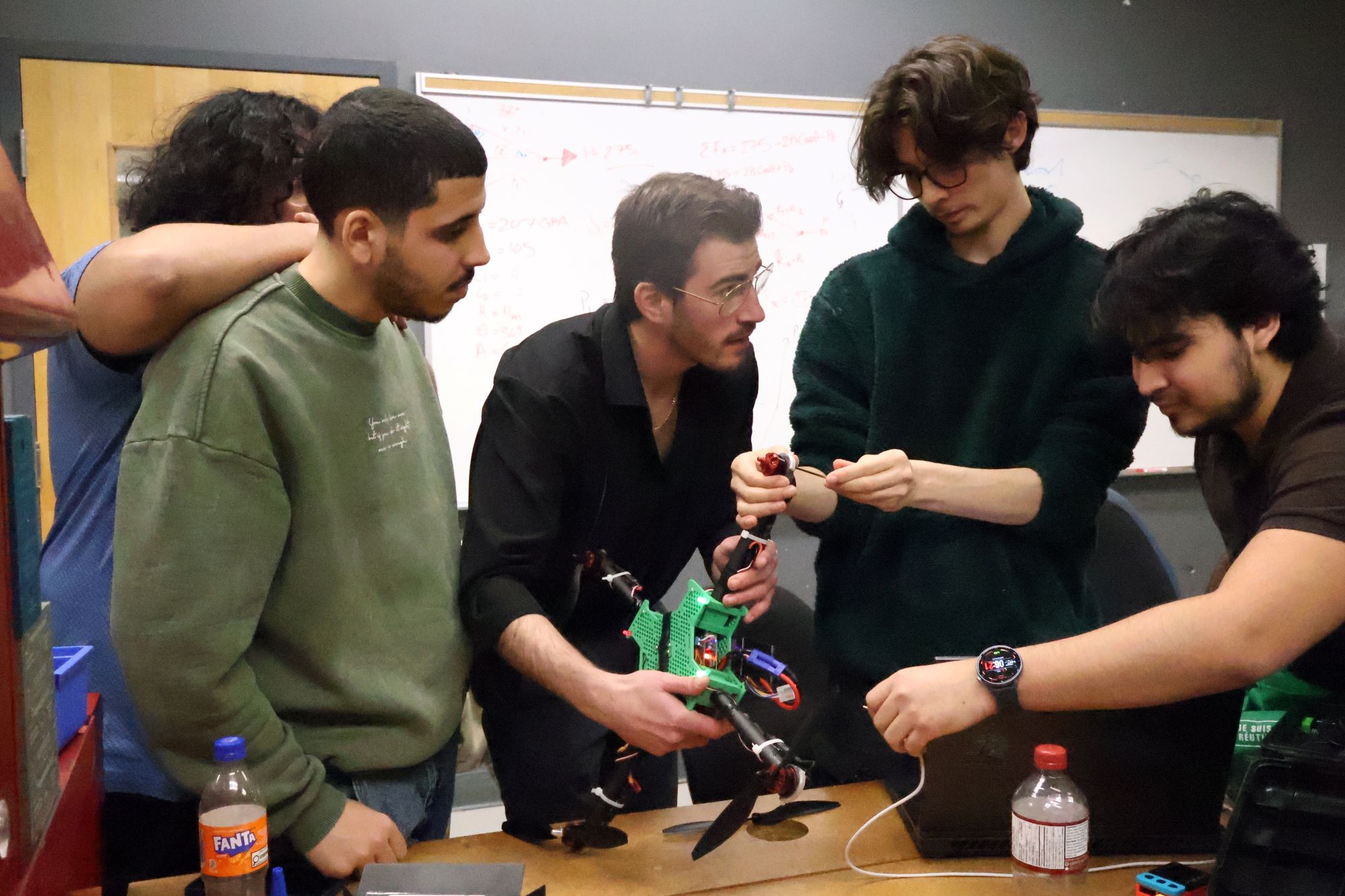
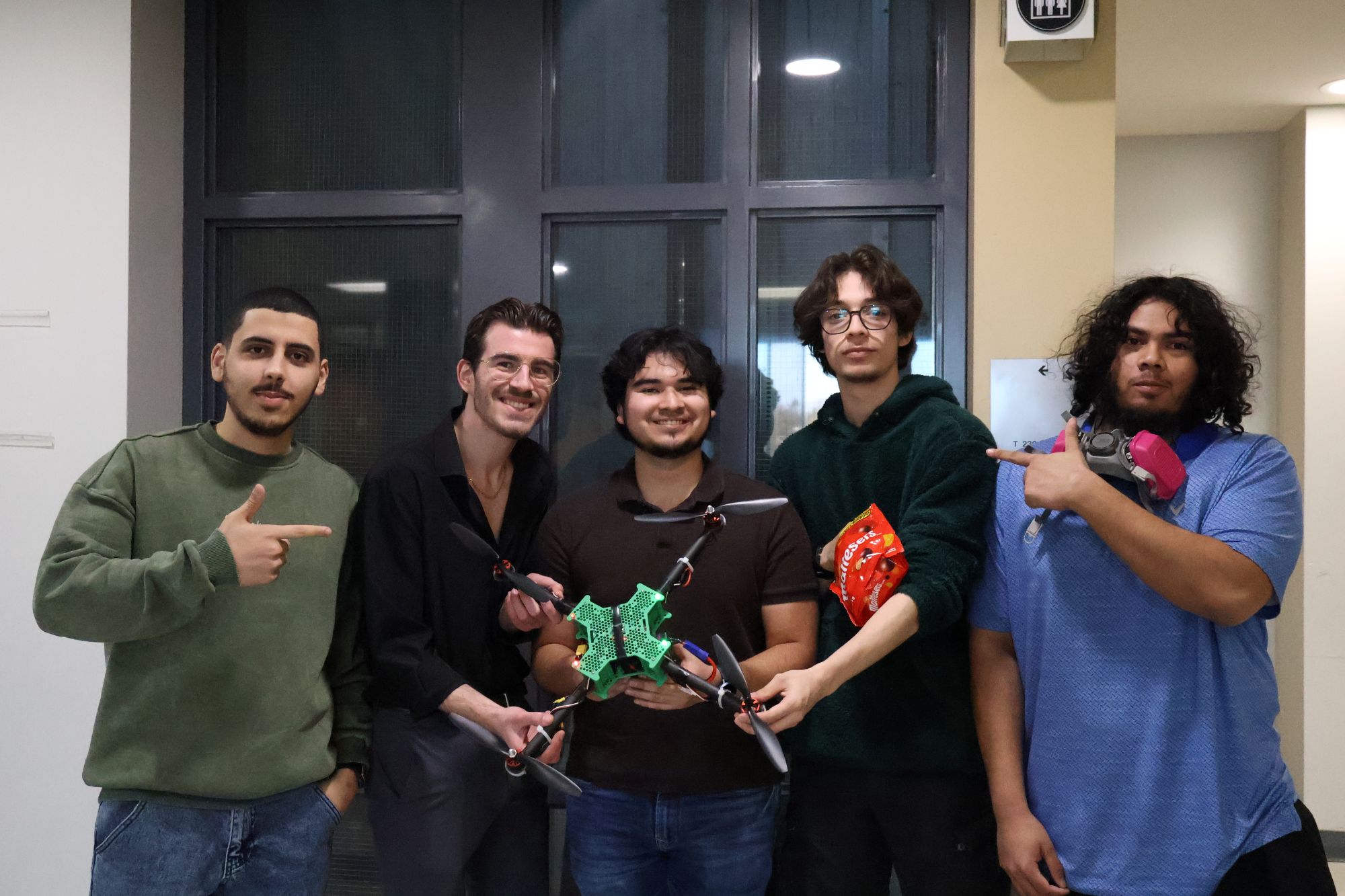
The team working together to make the drone fly again.
Over the last six months, Algonquin College’s robotics club has been working on an exciting new project: building a drone completely from scratch.
Haeden Fethi-Henriquez, a member of the club, came up with the idea to build a drone for their next project. He is the drone’s designated flyer, with experience flying drones as a child.
The team began this project in November 2025. There were a few obstacles the team had to overcome, such as issues with the drone’s balance and some mishandlings, which affected the drone’s ability to fly. Nonetheless, they persevered.
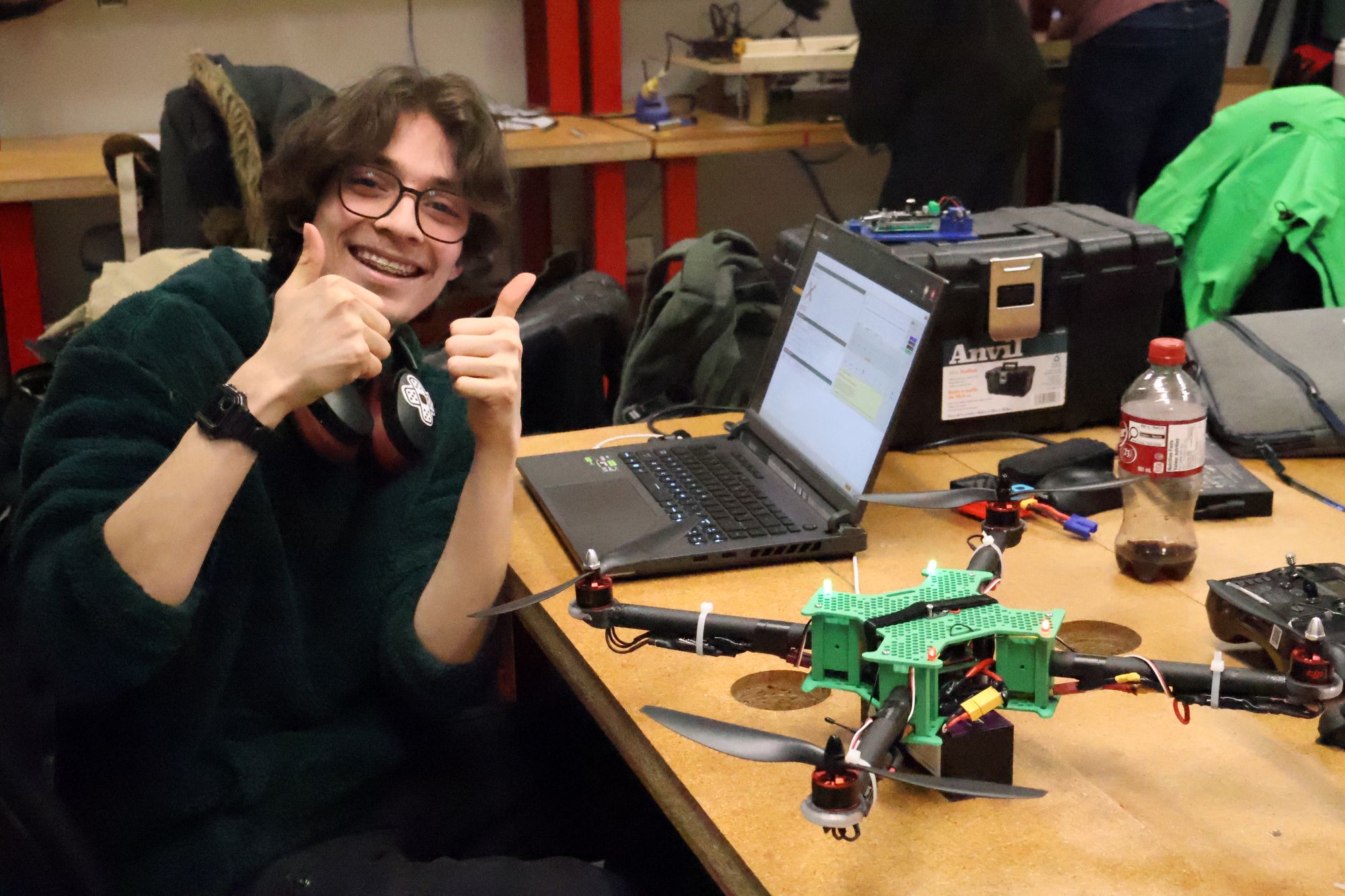
The drone is now fully capable of flight.
Haeden Fethi-Henriquez working on the drone after a failed flight attempt. Photo credit: Delaney St. Pierre
“We had multiple challenges. One of them is for the sensor that we are using, named the MPU with an IMU sensor. That is the one that detects the balance of the drone,” said Miguel Fausto, one of the club’s founders.
“For that one, we had it originally on the PCB of the drone, which is the board that we use, like all the components. And it was getting a lot of noise from all the cables. Because of that it was not working. And later we moved it at the top part of the drone, and we were able to take out the noise.”
The team posing proudly with their drone. Photo credit: Delaney St. Pierre
The team has been in Stage 1 of the project for some time, and many agree that it is finally time to move forward to Stage 2 — working on the drone’s autonomy and designated functions.
“The plan is to have it be autonomous, and that’s going to be the big part,” said Fethi-Henriquez.
“The plan for autonomy is to have it be not only able to navigate the surroundings, but be able to send the users a 3D map of everything. And, on top of that, it’ll be able to detect things using something called OpenCV, and that means it’ll be able to detect faces or see what a truck is and know what it is.”
Empathy for other students and concern for their own academic path are common feelings on campus
Ryan Harkness
Photos: Ryan Harkness
April 21, 2026 Revised: April 21, 2026 1:45pm
Photo: Ryan Harkness
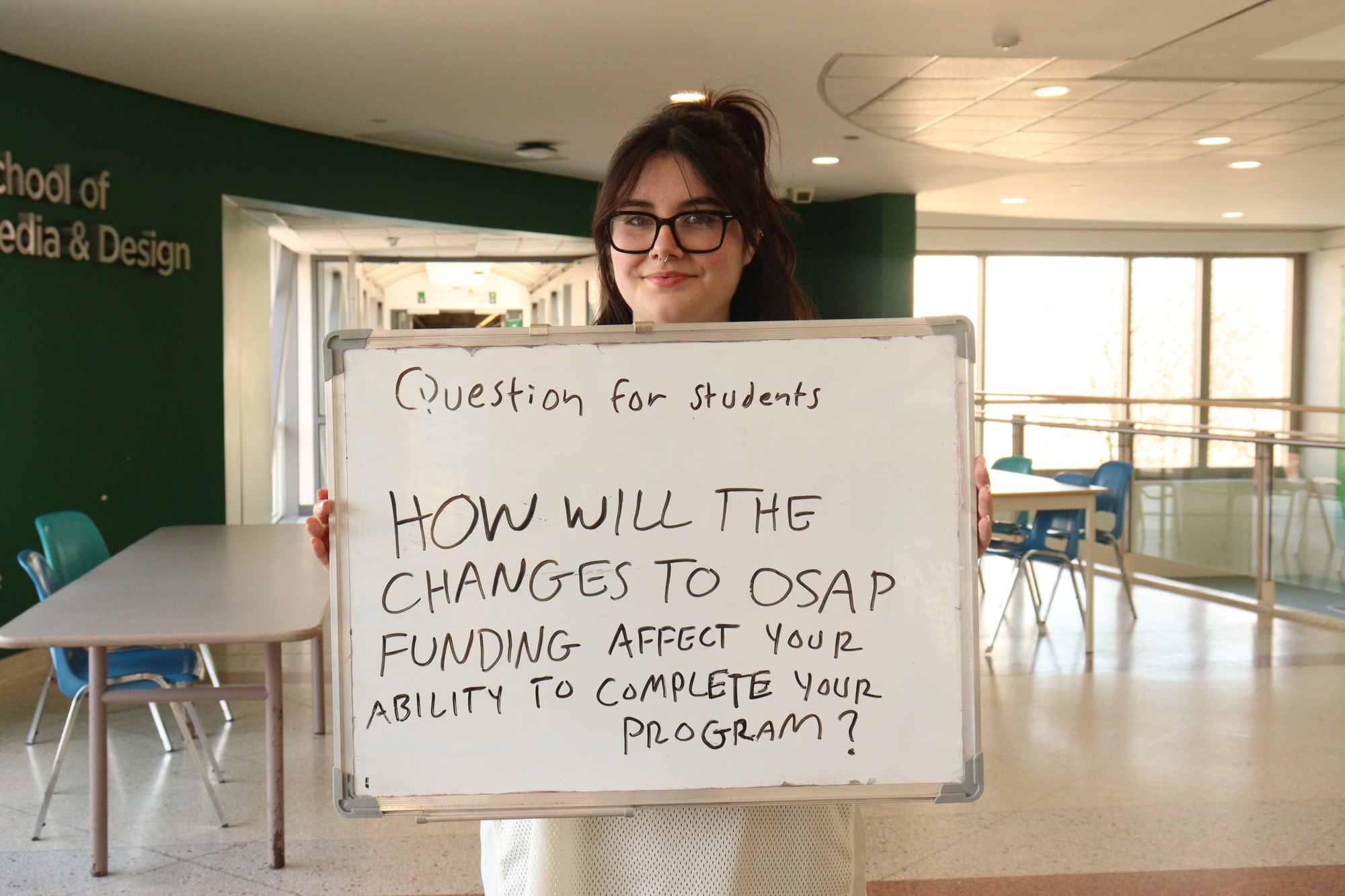
Torrance Vittoria-Nanculef holds a sign that had a question for students who were passing by an Algonquin Times community engagement booth.
Students at Algonquin College continue to be concerned about the Ontario government’s changes to the Ontario Student Assistance Program (OSAP), nearly two months after it was announced.
Starting the next academic year, OSAP users will get a maximum of 25 per cent of funding for grants and a minimum of 75 per cent for loans. The changes have led to protests and rallies across Ontario, including in Ottawa.
During a community engagement event on April 8 on the second floor of the J-building, the Algonquin Times invited students to explain how changes to OSAP funding affect their ability to complete their programs.
Tyreese Saltus is a father of five, a grandfather and an Algonquin College student. The reduction in grants means that he will likely have to return to work soon.
“I was really lucky that for my OSAP funding, double of my funding came from the grants situation. Being capped out at only 25 per cent now significantly reduces the amount of funding I am probably going to be getting,” said Saltus. “I was really reliant on my funding so that I could leave my job and still have time with my family. It feels like that’s going to be gone.”
Nicholas Proulx previously went to college in 2018 and took out a loan. It took Proulx seven years to pay the loan off entirely, making him empathetic to the financial situation that students are currently in. Proulx is in a better spot financially during this round of college.
“I know tons of young people who are stuck in a really unfortunate position right now where the money just is not available,” said Proulx. “I can’t image what it is like for people who have all the funding cut. It’s ridiculous how these things change.”
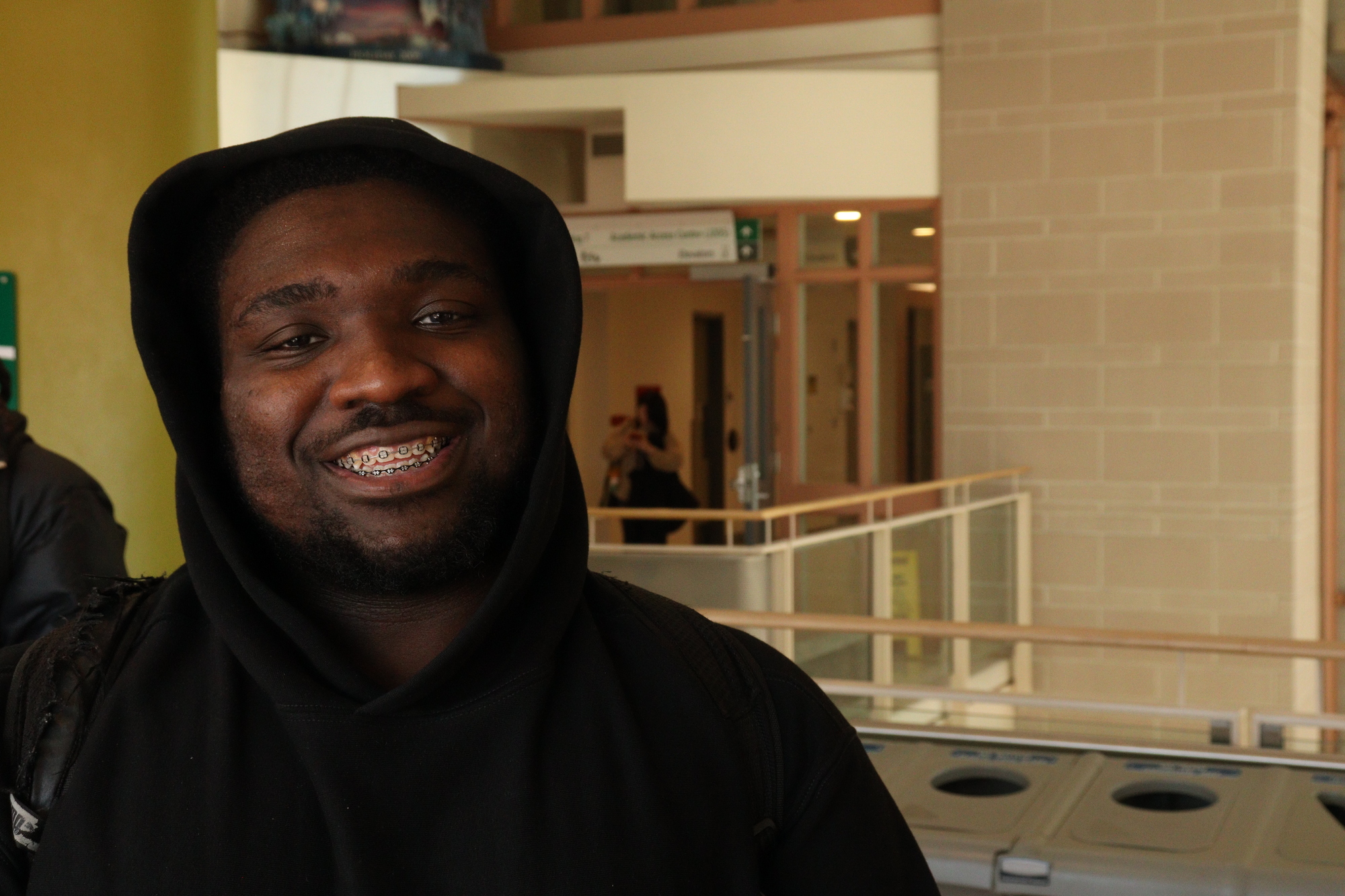
Nicholas Proulx is empathetic to students who have less financial means to go to post secondary. Photo credit: Ryan Harkness
Tyress Cantave relies on OSAP to pay for his Algonquin College program.
“Me having to pay back all that money will be there for a very long time,” said Cantave. “I am changing jobs so money is not really there for me right now, so I don’t know if I will be actually able to complete it if those changes go through.”
Tyress Cantave was running to catch his 88 Hurdman bus. Cantave was willing to express his uncertainty about completing his program with the OSAP changes in effect. Photo credit: Ryan Harkness
Ashton Oosterhof is concerned about the OSAP changes when it comes to youth employment. He said not everyone is fortunate enough to have a parent help pay for their post-secondary education.
“Without saving money or anything, you’re basically not able to come into college. OSAP, in that way, helps a lot,” said Oosterhof.
“I go through OSAP and like, for me to have more debt when I get out of school is detrimental, especially. Just going into life and wanting to have goals and aspirations, right?”
Ashton Oosterhof feels that the job market is unfavourable for young people. Photo credit: Ryan Harkness
Kaitlyn McGillivray is a developmental service worker student at Algonquin College. She needs OSAP to afford housing and her school funding from her bank does not fully pay off her student loans.
“Especially living in middle class and not being able to afford a lot of schooling, especially when I went to a university program for two years before this, I really needed OSAP. Especially with the debts you get, I think it is going to affect us with debts right now for years,” said McGillivray.
Kaitlyn McGillivray knows a lot of people in her developmental service worker program that get grants. She personally does not get any grants for her program. Photo credit: Ryan Harkness
McGillivray would like to see the grants increase again for more programs.
“My dad works part-time, two jobs and my mom works in a school, but she doesn’t make a lot. The grants can help pay off that, help with housing, help with groceries,” said McGillivray.
Featured Hero | Featured Story | Home Feature | Home Hero | News
Students have mixed thoughts on how far the Senators will go in the post-season
Ellie Hazelwood
Photos: Ellie Hazelwood
April 20, 2026 Revised: April 20, 2026 8:52am
Photo: Ellie Hazelwood
Thomas Chabot, Tyler Kleven, Timmy Stützle, Travis Hamonic and Nikolas Matinpalo on the ice at the CTC waiting for O Canada in this file photo.
Algonquin College students have high hopes for the Ottawa Senators in the NHL playoffs.
The Senators pushed their way into a playoff spot on April 11.
They were eighth in the wildcard standings, but they battled hard every game, earning themselves the second-best record in the NHL since Jan. 17.
Starting goalie Linus Ullmark has been rock solid after coming back on Jan. 27, from his one month personal leave. The offence, specifically Drake Batherson, Timmy Stützle, Michael Amadio, Dylan Cozens, and defence, centred around Thomas Chabot, Jake Sanderson, Jordan Spence, Tyler Kleven, Nikolas Matinpalo, and Artem Zub, were strong in front of him, giving their all to this playoff push.
Now that the Senators officially squeaked into a wildcard spot, the question on fans’ minds is, how much hope do they have in going far?
The Senators are playing the Carolina Hurricanes in the first round with the first two games in Carolina. Ottawa has a tough time winning there.
The Senators fans at Algonquin College are still clinging to hope.
“I honestly don’t think they’ll make it much farther,” first-year student Jaime Thomas said. “Just based on how they have been playing recently, and how they barely made it to the playoffs. I still have hope, though, and there is still a possibility for sure.”
Second-year graphic design student Shabana Ahmad has a faith in the Senators and believes they could have a great playoff run.
“Even though they just squeaked into the playoffs, that kind of momentum can actually work in their favour,” Ahmad said. “Teams that get hot at the right time are always dangerous, especially if their goaltending stays strong and their key players step up. I definitely think they have a real shot at making a solid run if they keep that energy going. The fans were super hyped and I’m hoping that will give the team the confidence they need to pull through.”
Ahmad has always been a Senators fan and nothing is going to change that.
“I like the Ottawa Senators because I grew up watching them with my dad, so they’ve always felt like my team,” she said. “Being from the area made it feel even more personal, and going to a game when I was around nine or 10 just made me love them even more. I really respect how passionate and community-focused they are, even in such a competitive league. They play with a lot of heart, and their work ethic and resilience are a big part of why I’ve stuck with them.”