
How are changes to OSAP affecting students? We asked the Algonquin College community to find out
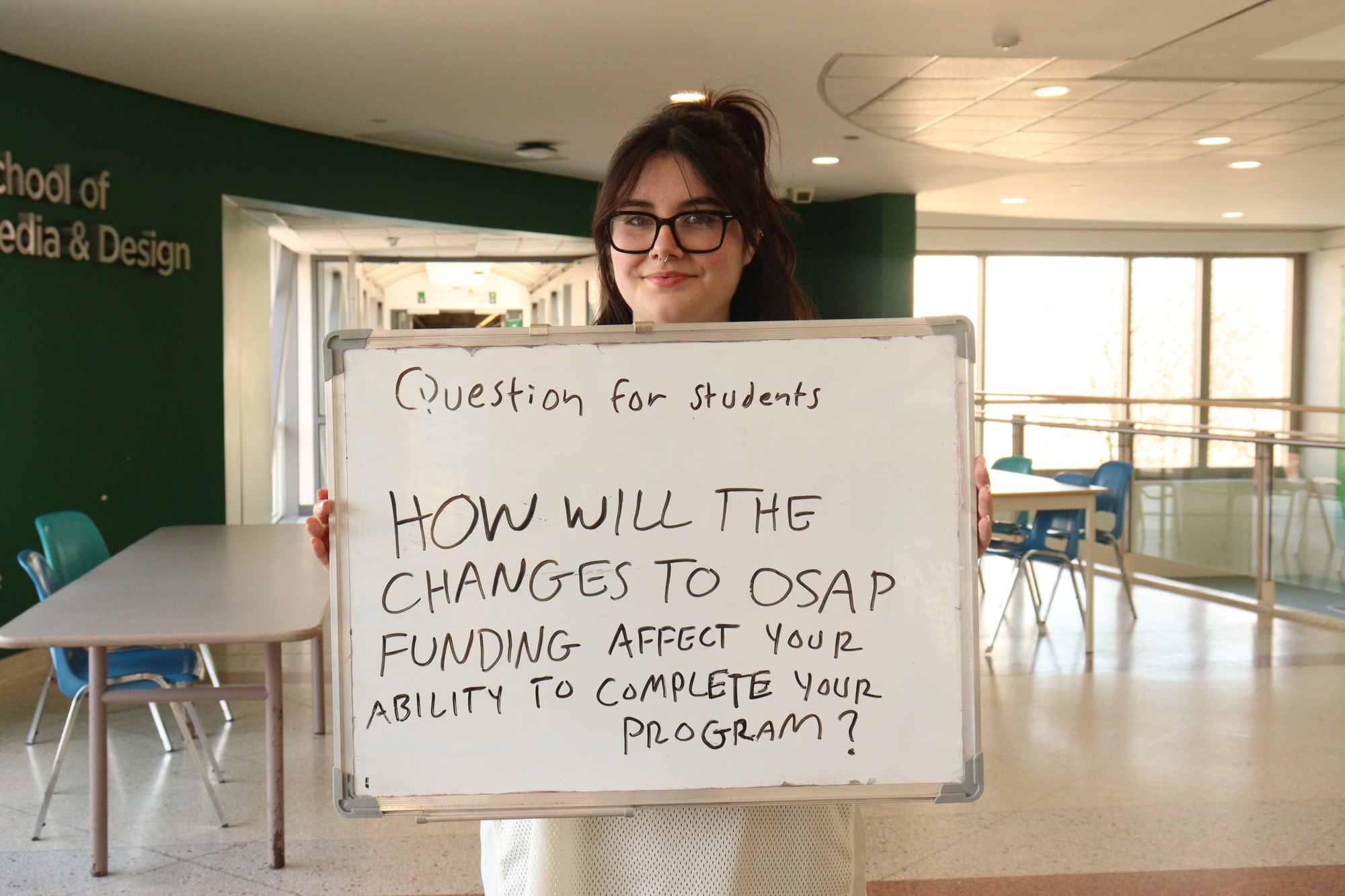
Students at Algonquin College continue to be concerned about the Ontario government’s changes to the Ontario Student Assistance Program (OSAP), nearly two months after it was announced.
Starting the next academic year, OSAP users will get a maximum of 25 per cent of funding for grants and a minimum of 75 per cent for loans. The changes have led to protests and rallies across Ontario, including in Ottawa.
During a community engagement event on April 8 on the second floor of the J-building, the Algonquin Times invited students to explain how changes to OSAP funding affect their ability to complete their programs.
Tyreese Saltus is a father of five, a grandfather and an Algonquin College student. The reduction in grants means that he will likely have to return to work soon.
“I was really lucky that for my OSAP funding, double of my funding came from the grants situation. Being capped out at only 25 per cent now significantly reduces the amount of funding I am probably going to be getting,” said Saltus. “I was really reliant on my funding so that I could leave my job and still have time with my family. It feels like that’s going to be gone.”
Nicholas Proulx previously went to college in 2018 and took out a loan. It took Proulx seven years to pay the loan off entirely, making him empathetic to the financial situation that students are currently in. Proulx is in a better spot financially during this round of college.
“I know tons of young people who are stuck in a really unfortunate position right now where the money just is not available,” said Proulx. “I can’t image what it is like for people who have all the funding cut. It’s ridiculous how these things change.”

Tyress Cantave relies on OSAP to pay for his Algonquin College program.
“Me having to pay back all that money will be there for a very long time,” said Cantave. “I am changing jobs so money is not really there for me right now, so I don’t know if I will be actually able to complete it if those changes go through.”

Ashton Oosterhof is concerned about the OSAP changes when it comes to youth employment. He said not everyone is fortunate enough to have a parent help pay for their post-secondary education.
“Without saving money or anything, you’re basically not able to come into college. OSAP, in that way, helps a lot,” said Oosterhof.
“I go through OSAP and like, for me to have more debt when I get out of school is detrimental, especially. Just going into life and wanting to have goals and aspirations, right?”

Kaitlyn McGillivray is a developmental service worker student at Algonquin College. She needs OSAP to afford housing and her school funding from her bank does not fully pay off her student loans.
“Especially living in middle class and not being able to afford a lot of schooling, especially when I went to a university program for two years before this, I really needed OSAP. Especially with the debts you get, I think it is going to affect us with debts right now for years,” said McGillivray.

McGillivray would like to see the grants increase again for more programs.
“My dad works part-time, two jobs and my mom works in a school, but she doesn’t make a lot. The grants can help pay off that, help with housing, help with groceries,” said McGillivray.