Twenty Twenty-Strive: Students consider their new year’s resolutions and how to achieve them

Goals for 2025 range from injury prevention, to landing a job, to simply feeling optimistic
Photo: Kendra Mendrisky
Students head into the Jack Doyle Athletics and Recreation Centre on a snowy evening.

For many people, the new year presents a fresh start, a chance to set goals and strive for them in the following months.

Alex Lacroix, an Algonquin College student in the welding and fabrication techniques program, has not made any new year’s resolutions, but he has a good feeling about 2025.

“This is my year, I say. I don’t have anything set in stone, but 2025 will be my year,” said Lacroix.

Prior to starting his program in May 2024, Lacroix transitioned from life on a reserve to life in the capital of Canada.

It was hard to make the transition…On my reserve I’m not a minority, nobody considers that at all,” he said. “I guess with everything that I’ve been through, this is where I can see it, like my efforts from trying to go to school and everything.


Alex Lacroix is not working towards a particular goal, but feels positive about the year ahead.

Lacroix will graduate this spring.

Marcus Aiello’s new year’s resolution is also focused on overcoming obstacles in his life.

“I’ve had a few injuries, so it’s mainly just trying to hit a certain weight and strength goal for my athletics,” said the bachelor of commerce student. Aiello is determined to get back into rugby stronger than ever and limit his injuries playing the sport.

Marcus Aiello knows from past experience that actions speak louder than words when it comes to New Year's resolutions.
Marcus Aiello knows from past experience that actions speak louder than words when it comes to new year's resolutions. Photo credit: Kendra Mendrisky


He said he’s “definitely on the right track so far.”

Some people find new year’s resolutions daunting and often give up because they’ve set goals that are unrealistic or too ambitious.

Algonquin College student Marie-Noé Charbonneau recommends taking a large goal and breaking it down into smaller goals.

“Having different goals either for the month or the year itself, and even having shorter goals, so it can be a week,” she said. “Really having different time frames with it helps, so you don’t get overwhelmed with having to finish it by the end of the year.

Her goals for the year are to network within her program — bachelor of event, sport, and entertainment management — and find a balance with her personal life and school life.

Marie-Noé Charbonneau hopes to achieve academic and personal success this year.
Marie-Noé Charbonneau hopes to achieve academic and personal success this year. Photo credit: Kendra Mendrisky

Rebecca Buschman, a student in the same program as Charbonneau, thinks new years resolutions work well for some people, but does not find herself very successful with following through on them.

“I just kind of make goals as I go through my daily life, she said. “A goal for this summer that I’m really hoping to do is make sure I can get a job that aligns (with) something I’m trying to work for, for my co-op next year.

Portrait of Rebecca Buschman smiling.
Rebecca Buschman hopes to work with Ottawa Bluesfest or another music festival this summer. Photo credit: Kendra Mendrisky

How does one go about achieving their goals?

“I do keep an agenda with me to write my goals…for not just the year but also for five years, but what I can do in the year to eventually get to that point in the years to come,” said Charbonneau.

Algonquin College has its own webpage, which features tips for setting and achieving goals, the first of which aligns with Charbonneau’s advice: write it down.

Another one of the school’s tips is to make “SMART” goals: specific, measurable, achievable, results-oriented and time-based.

Although Jan. 1 has come and gone, Emma De Varennes, a student in the dental hygiene program, believes it is not too late to set a goal for the end of the year, the end of the month or even the end of the week.

“It being connected with new year’s, I don’t really see the point, if that makes sense,” said De Varennes.


Emma De Varennes doesn't have a resolution, but sets goals throughout the year.

Alex Lacroix agrees.

“I just find it funny that people wait for a day to do something about it,” said Lacroix.

Wolves women’s volleyball team starts the new year on fire

On the back of a dominant home performance, the Wolves advance to 9-3 for the season with playoffs on the horizon
Photo: Vasileios Tselios
Wolves outside hitter Carys Tenthorey hits a spike against the Canadore Panthers at the Jack Doyle Athletics and Recreation Centre on Jan. 10.

The Wolves women’s volleyball team beat the Canadore Panthers on Jan. 10, sweeping all three sets at the Jack Doyle Athletics and Recreation Centre.

The Wolves’ exceptional serving and play around the net led them to a comfortable victory as they won every set by a minimum of eight points.

“We served really, really well today. We only missed six serves in three sets, so that was great,” said head coach Everton Senior.

Aside from being scarily accurate, the Wolves’ serves were also deadly as the team racked up 16 served aces.

However, this performance was not necessarily surprising as Algonquin’s Grace Pate and Carys Tenthorey are both in the top five players in the OCAA for aces per set.

Wolves outside hitter, Carys Tenthorey hits a spike against the Canadore Panthers at the Jack Doyle Athletics and Recreation Centre on Jan. 10
Wolves outside hitter Carys Tenthorey hits a spike against the Canadore Panthers at the Jack Doyle Athletics and Recreation Centre on Jan. 10 Photo credit: Vasileios Tselios

Algonquin’s middle blocker Jillian Dawson had a particularly good run of serves in the first set, ultimately giving the Wolves the lead.

“We were serving really hard, and really consistently. One of our best serving days today,” said Isabella Tourangeau, the Wolves’ middle hitter.

Tourangeau, who is among the top three in the OCAA for blocks per set, led a very strong effort at the net for the Wolves as well. The team scored 49 kills on 100 attempts, outscoring the Panthers by 22 in that department.

“I preach aggression as much as we possibly can, but you have to be smart aggressively. The girls did well with that. I don’t have any real complaints today,” said Senior.

Natasha Lauzon was a particular standout around the net, as her 17 kills were the most in the game. Speaking on the team’s performance, Lauzon said, “We all connected really well today. I think everyone played really well.”

Wolves opposite hitter, Natasha Lauzon hits a serve against the Canadore Panthers at the Jack Doyle Athletics and Recreation Centre on Jan. 10.
Wolves opposite hitter, Natasha Lauzon hits a serve against the Canadore Panthers at the Jack Doyle Athletics and Recreation Centre on Jan. 10. Photo credit: Vasileios Tselios

Canadore tried to match Algonquin with their own offensive firepower, with Kassidy Dyer and Elise Churman having more than 10 kills each. The Wolves’ defence stood up to the task though, as the team accumulated 35 digs in the game, led by the libero Jordan Faig with 10.

“We communicated well (and) we played in unison. We couldn’t ask for a better game,” said Faig.

“This game, specifically, was important for us because they were a hard game when we played in their gym,” said Dawson. “The crowd brought us a lot more energy, which is something we really need.”

Looking ahead, the Wolves have six more regular season games until the playoffs, and the team spirits are high.

“I can only see us going up from here. We are just getting better every practice, every game. We are meshing better together. The chemistry is there,” said Tourangeau.

“I’ve seen it, we’ve hit another level before,” Lauzon added.

Currently at 9-3, Algonquin is tied with Durham for second place in the eastern conference of the OCAA.

Dawson predicted big things for the Wolves if their stellar play continues.

“I think we could be one of the top teams in the east if we wanted to,” Dawson said.

Wolves men’s basketball team wins a thriller in first contest of the new year

Tesloch Luk puts the team on his back, scoring 21 points in a close 78-75 win against conference counterpart Centennial Colts
Photo: Jack Beeston
Tesloch Luk drives the basket under defensive pressure at the Jack Doyle Athletics and Recreation Centre.

The Algonquin Wolves men’s basketball team began the new year in style with a 78-75 win over divisional opponents the Centennial Colts on Jan. 11 at the Jack Doyle Athletics and Recreation Centre.

The Wolves started guards Jansen Balmacedal and Albert Opena with forwards Ted Braden, Christ Lachapelle and Tesloch Luk.

The Wolves started strong with Braden winning the tip-off and the team taking an early 5-0 lead.

It didn’t take long for the Colts to shake off the post-holiday rust and score seven straight points, taking a 7-5 lead.

The Wolves showed resilience. During the second quarter, they were down by 10 points with four minutes left until halftime.

Wolves head coach Trevor Costello was heard shouting from the sideline between quarters. The shouts were motivational and positive.

Whatever was said worked, as the Wolves and Colts went back and forth with Algonquin trailing by one point entering halftime.

The third quarter was the closest by far. The teams each scored 19 points and the Colts led at the end of the quarter 60-59. If the Wolves had a victory up their sleeve, they would have to pull out all the stops to secure this one.

The Wolves got their first lead since the first quarter, 62-60 with a three-pointer sunk by Simon Desta. A foul saw Devonte Brooks make both his free throws improving the lead by four.

Desta did not stop sinking shots, making another three-pointer to pull the Wolves ahead by seven points. Desta is shooting 42.7 per cent behind the three-point line this season and earned 14 total points this match against the Colts.

The Wolves show off their defensive prowess, blocking the shooting lane of the Centennial Colts' forward.
The Wolves show off their defensive prowess, blocking the shooting lane of the Centennial Colts' forward. Photo credit: Jack Beeston

A 9-0 run by the Wolves to begin the fourth quarter provoked a timeout by the Colts to discuss what went wrong so quickly.

The Colts clawed at the lead, bringing it to a 70-69 score, until the Colts head coach became furious, screaming at the officials for what he believed was a missed foul call.

Two technical fouls in quick succession would see the Colts’ head coach ejected from the match. Applause broke out in the stands as the Colts head coach made his way to the locker rooms.

The Women's Centennial Basketball Team looking in embarrassment at the Men's coach as he gets ejected from that match.
The Women's Centennial Basketball Team looking in embarrassment at the Men's coach as he gets ejected from that match. Photo credit: Jack Beeston

The assistant coach of the Colts took over the head coach’s responsibilities for the rest of the match.

The drama would affect the Colts, seemingly distracted, until the final few minutes, when they began a scoring rampage. Despite this final push, the Wolves were able to hit some clutch shots and secure the win.

The win lifted the Wolves to 8-3 on the season and third place in the OCAA East Conference.

Women’s basketball Wolves dominate Colts in first game after holiday break

Wolves beat the Centennial Colts at home on Jan. 11
Photo: Lara Simard
The Wolves' Dasia McDonald steals the ball from Centennial, making a quick breakaway during a game at the Jack Doyle Athletics and Recreation Centre on Jan. 11.

The Wolves women’s basketball team won 84-42 against the Centennial Colts on Jan. 11 at the Jack Doyle Athletics and Recreation Centre, dominating in the first quarter and finishing strong.

Now on an eight-game winning streak, the Wolves were confident they can keep their game going for the rest of the season.

The Wolves played aggressively on offence in the first quarter, using short, consistent passes.

Wolves head coach Jaime McLean was impressed by his team’s performance in the first game after the holiday break.

“Really good for the first game back. We did well. The girls are starting to get the rhythm going. We got everybody rolling in the game today, which is nice to see. Good intensity, but we’ve got some things we need to fix, and we’ll get those ready for Durham next Friday,” McLean said.

McLean was happy with the eight-game win streak but believes the team can always strive to make a larger point difference each time.

“When we get into the playoffs and play in the west, it’s a stronger division, so we’ve got to be as good as we can be,” McLean said.

The Wolves huddle before the game against Centennial at the Jack Doyle Athletics and Recreation Centre on Jan. 11.
The Wolves huddle before the game against Centennial at the Jack Doyle Athletics and Recreation Centre on Jan. 11. Photo credit: Lara Simard

Dasia McDonald and Sydney Moore showed consistent teamwork throughout the game.

Collectively, Moore and McDonald scored a total of 33 points.

In the first quarter, McDonald made an impressive throw from half court to Moore at the three-point line, where she scored with a swish.

Six seconds later, as the Colts barely regained possession of the ball, McDonald stole it and scored an earth-shattering layup. The home crowd roared, and the Colts called their first timeout of the game.

McDonald has 46 assists this season and she made six of them in the game against Centennial.

Moore also had a great game, scoring 14 points, nine of which were flawless three-pointers scored in the first quarter, all assisted by McDonald.

“We’ve been working on those throughout the year. She’s our best shooter, the best shooter we’ve had. So, her (Moore) having her shot back and getting that confidence back is going to help us throughout the season,” McDonald said.

A young fan poses next to the Wolves mascot during the women's basketball game against Centennial at the Jack Doyle Athletics and Recreation Centre on Jan. 11.
A young fan poses next to the Wolves mascot during the women's basketball game against Centennial at the Jack Doyle Athletics and Recreation Centre on Jan. 11. Photo credit: Lara Simard

Although outnumbered with only nine players on the team, the Colts showed strong defence in the middle two-quarters of the game. However, they committed many fouls, which cost them free throws for the Wolves.

The Colts’ coach was visibly frustrated, yelling at the referee after a foul was called with 21.7 seconds left in the second quarter.

The Wolves’ Cianah Miller scored both free throws after being knocked to the ground twice. Intensity grew in the fourth quarter as the Wolves picked up their offence.

“Our offence was probably one of the best, most consistent we’ve had all season,” McDonald said.

“We just gotta keep working hard, and, like, playing as a team. We didn’t really play as a team, especially on defence today, but it’s the first game back. It’s just improvements from here,” she said.

The Colts tried to distract the opposition by chanting, but the Wolves remained unfazed.

After the game, Moore said the team was a bit slow on defence and didn’t apply as much pressure as they usually do. Both she and McDonald credited the team’s victory to their family-like bond.

“A lot of us have played together for almost four years now, and anytime you add someone to that, they just become like family,” Moore said.

“We’re all capable of playing off each other and reading each other’s roles, which is really helpful,” she said.

Algonquin College students in Perth stunned by campus closure

The campus, which opened in 1970, will be closing after the end of the 2026 spring term
Photo: Ernest Ko
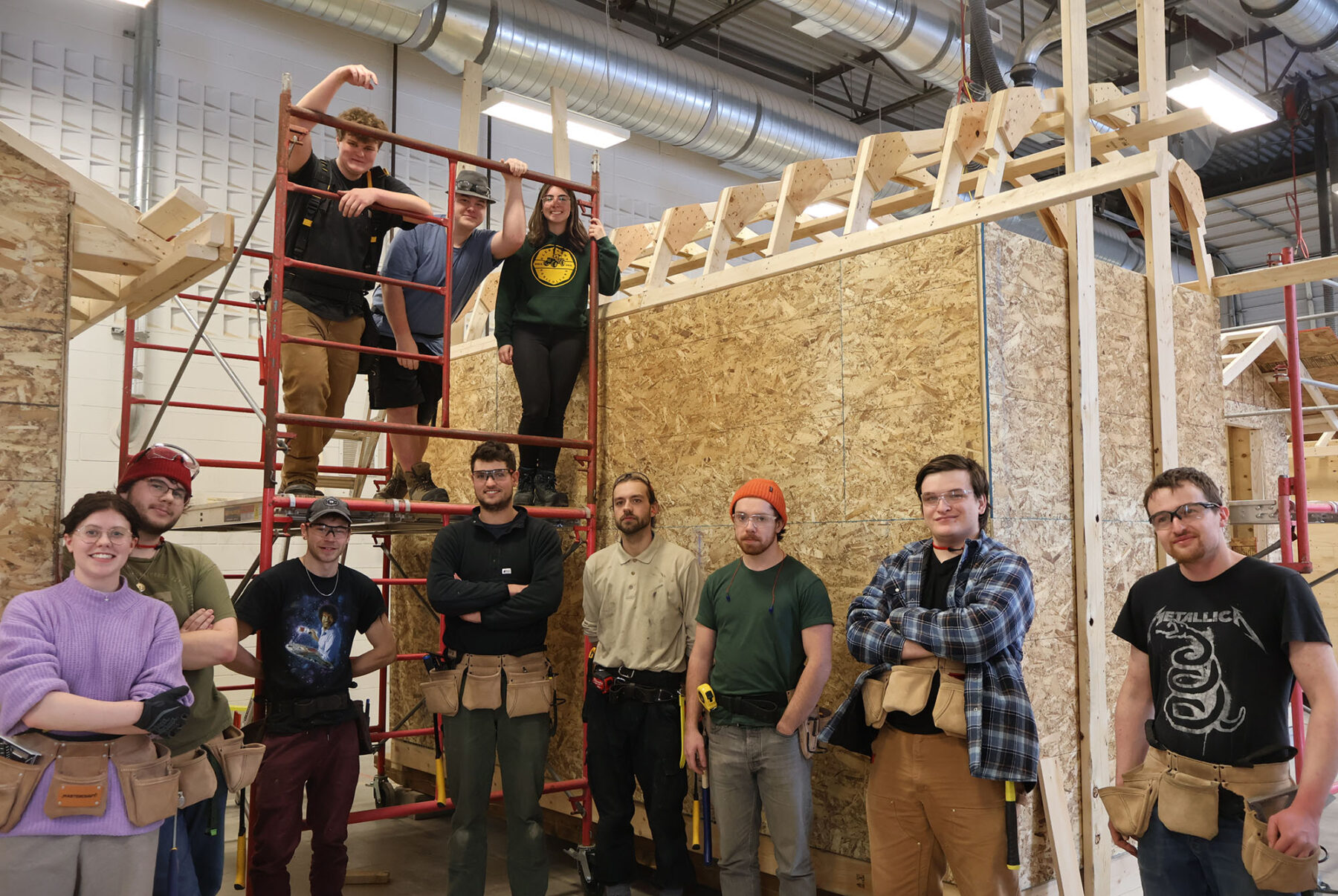
Heritage carpentry and joinery students. They are building sheds as part of their first semester projects.

While Algonquin College students in Ottawa continue to navigate the new semester, those in Perth are still reeling from the news that their campus will be closing.

On Jan. 9, staff and students received an email from Algonquin College president and CEO Claude Brulé, announcing the college’s plans to close the Perth campus in 2026.

In the letter, Brulé attributed the closure to “unprecedented financial challenges for the entire post-secondary sector, including Algonquin College.”

When Perth’s Level 4 heritage carpentry and joinery student Isabelle Dudzinski read the email, she could not believe what she saw.

“It’s surreal,” Dudzinski said. To Perth students, “it came out of the blue.”

Isaac Hugh, one of Dudzinski’s classmates, immediately thought of their program.

Despite living in Gatineau — almost a 90-minute drive away from Perth — the tight-knit, small class sizes and the unique opportunities the program provides make it all worth it for Hugh.

There is not one ounce of doubt in either Hugh or Dudzinski: the campus and the program are everything they could have hoped for.

“(It) has deep connections with alumni and the nearby community,” Hugh said. “It’s special.”

Losing the campus is especially worrying for many in Perth — a town built on carpentry and home to many historical, well-preserved buildings.

Students in the heritage program often have opportunities to collaborate on initiatives from Ontario Parks, the National Capital Commission and other heritage and conservation-focused groups.

Currently, students in Dudzinski and Hugh’s class are creating new shutters for the Bigot House, part of a larger rebuilding project by Parks Canada in Louisburg, N.S.

Perth’s special relationship with the heritage program reflects its proud history in stonemasonry and heritage conservation.

The campus once had a masonry, heritage and traditional program. It was indefinitely suspended in 2018, alongside four other Perth-based programs due to low enrolment and financial challenges.

This time around, the Perth campus and its five remaining programs will continue operating until the end of the 2026 spring term.

“The college is planning to complete this transition and cease operations at the Perth campus by the end of August 2026,” Brulé’s letter said. “Every effort will be made to mitigate impacts on employees and learners during this transition.”

First opened in 1970, the Perth campus currently has 132 full-time students.

The main entrance of Algonquin College's Perth campus on a snowy day in January.
The main entrance of Algonquin College's Perth campus on a snowy day in January. Photo credit: Ernest Ko

Without more details from the college, students, alumni, and staff are left to wonder about the future of their campus — and the programs they hold dear.

Dudzinski and Hugh, who graduate this year, expressed worry that their program will disappear with the closure of the campus.

In such a small community, and an even smaller class, alumni are often present to guide new students. The prospect of not being able to pass his baton disappoints Hugh.

In a statement sent to the Algonquin Times, the college said it’s “committed to exploring ways to preserve the essence of the current program offerings and their critical connections to heritage and craftsmanship when they are transitioned to the Ottawa Campus at the end of the 2026 Spring term.”

Those who live and breathe heritage carpentry, though, remain skeptical.

From the log-splitting fields to the large woodwork projects proudly displayed on the grounds, the acreage needed for this program is substantial.

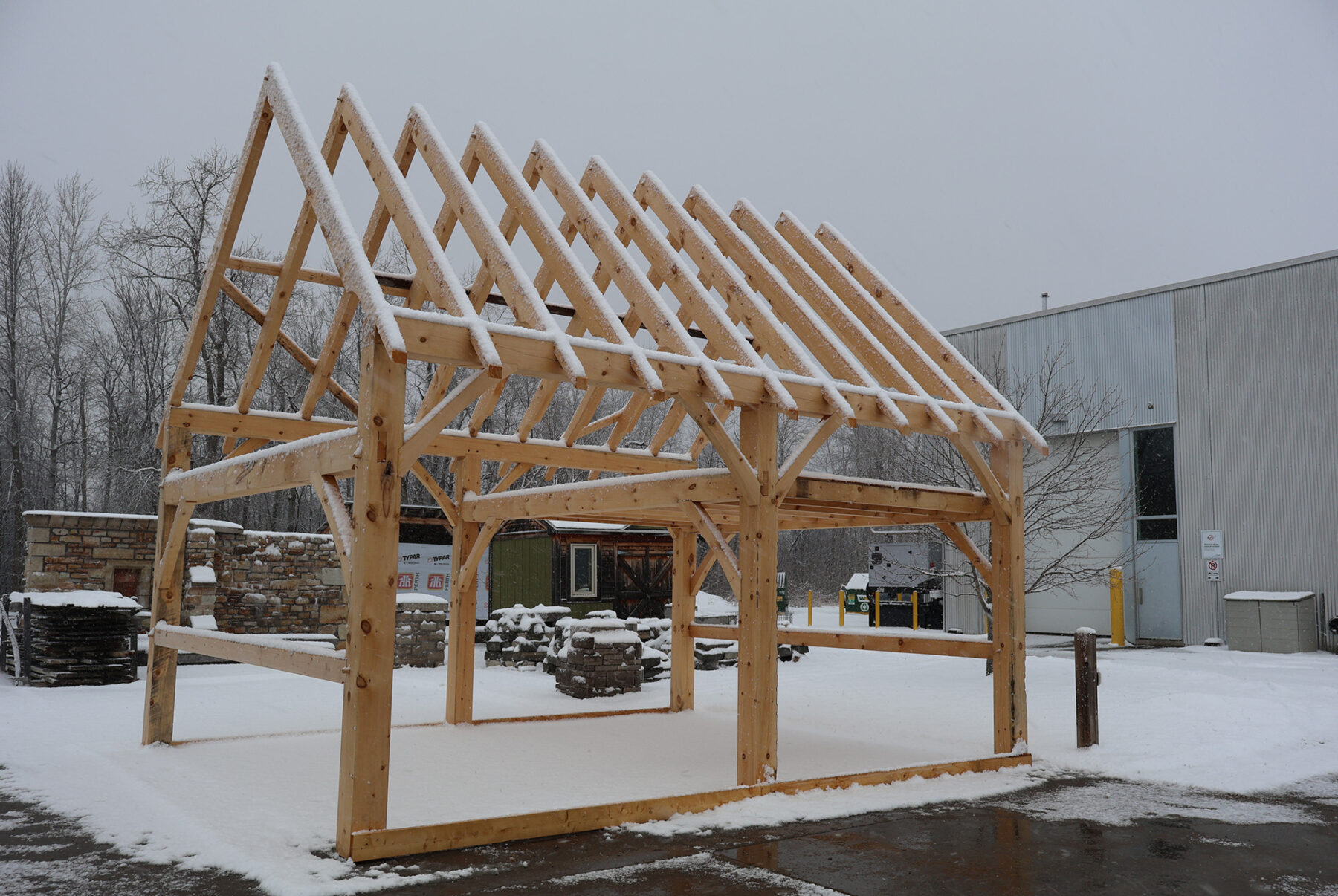
A wooden shed frame outside, at the Algonquin College Perth campus.
Sheds like this one are built by Level 2 heritage carpentry and joinery students. The sheds are eventually sold to businesses, some nearby, others further away. Photo credit: Ernest Ko

“Frankly, I’m just not sure there’s enough space,” Dudzinski said.

Current students like Dudzinski and Hugh are still on track to graduate before the closure, but some aspiring students are forced to reconsider their options.

David Rodriguez, a Level 2 business administration student at the Ottawa campus, was excited to discover Perth’s business agriculture program.

“I was looking forward to it as an exciting chapter of my life,” Rodriguez said, adding that he was hopeful for a new start, new friends, and a chance to live on his own for the first time.

Rodriguez hopes the college will transfer the business agriculture program to Woodroffe.

In the meantime, he plans to apply to one of Pembroke campus’ many environmental programs.

With less projected revenue and a provincial funding shortfall, the college is facing a revenue loss of $32 million in the current fiscal year. That figure is expected to grow to a $60 million deficit for 2025-26, and up to $96 million for 2026-27, Brulé said in his letter.

In November 2024, Brulé warned that reductions made by Immigration, Refugee, and Citizenship Canada to international student study permits and post-graduate work permits would carry “substantial consequences.”

The college would need measures and mitigations to “prioritize the needs of our learners and focus on the College’s financial sustainability,” Brulé said.

Perth resident and Algonquin College alumni Luke Arbuckle fears the campus closure will negatively affect the local community.

Arbuckle said students in the practical nursing program often complete clinical placements at local hospitals, gaining hands-on experience while alleviating staffing shortages.

“(The school) has also been such an important institution to the town by keeping good carpentry skills local, which is a big industry out here,” Arbuckle said.

“Losing the Perth campus,” Arbuckle added, “is going to leave a huge void in our community and our local economy.”

Jelle Kooijman realizes dream as coach of the Wolves men’s volleyball team

“I wake up and I think about volleyball and I think about sport and then I go to bed and I wake up the next day and I do the same thing," Kooijman says
Photo: Ellen Bond
Head Coach Jelle Kooijman at the Algonquin Wolves game against the Loyalist Lancers volleyball game on Nov. 22 at Algonquin College.

Almost a decade ago, volleyball wasn’t yet the centre of Jelle Kooijman’s world. In his hometown of Doetinchem in the Netherlands, soccer dominated his childhood and teenage years, shaping much of his early identity as an athlete. But life has a way of throwing unexpected curveballs or, in Kooijman’s case, volleyballs.

Now, Kooijman is the head coach of the Algonquin Wolves men’s volleyball team. He is also working as the technical and coaching director at Maverick Volleyball.

It all began with a simple suggestion from a roommate during his university years. “Why don’t you just come to volleyball practice with me,” Kooijman’s roommate asked him. “You’re tall, you can probably play,” he said.

Kooijman went to the practice and said that what attracted him to the game besides the game was the environment. “The environment is really friendly,” Kooijman said. “You will compete on the court and then afterward you shake hands, and you can have a good time, and I find that’s really nice.”

Kooijman’s volleyball career as a player was short-lived, just four years, but it gave him clarity about where he truly excelled: coaching.

Arriving in Canada, Kooijman quickly found his place in Ottawa’s volleyball community, joining the Maverick Volleyball Club. The club, one of the largest in Canada, gave him the platform to work with athletes of all levels, from six-year-olds holding a volleyball for the first time to national-level competitors.

Kooijman’s dream was to combine his love for sports and his passion for his studies in sports and exercise psychology and human movement science.

“I think what is interesting about it is that, when you start a career, but especially if you do it in a new country, you apply to so many different positions and so many different things,” Kooijman said.

“I always wrote down that I want to combine my interest and love,” he said. It was a couple of years ago he realised that he had done it.

“I suddenly looked at my schedule and stuff and think to myself that’s what I’ve done,” he said. “I wake up and I think about volleyball and I think about sport and then I go to bed and I wake up the next day and I do the same thing.”

As Maverick’s technical director, Kooijman became a key figure in shaping the club’s programs, ensuring every athlete received quality training and a positive introduction to the sport. His work there has not only cultivated top-tier players but also created a steady pipeline of talent for Algonquin College’s volleyball teams.

Head Coach Jelle Kooijman conducting a practice session with the Wolves.
Head coach Jelle Kooijman conducting a practice session with the Wolves. Photo credit: Agrani Tiwari

Kooijman joined Algonquin in 2019 as the head coach, just before the world turned upside down due to COVID-19.

“We have so many of our current players, on both the men’s and the women’s side, that have come through the club here in Ottawa,” Kooijman said. “They got to play post-secondary here at Algonquin, but also across Ontario and Canada.”

Kooijman is also involved with the men’s national team. He works in so many roles, but he has never let the Wolves feel they aren’t worth his effort.

“He does so much coaching for so many high roles, he works with Team Canada. He works and coordinates for Ottawa Maverick, he coaches with us,” said Ryan Lincoln, an outside on the team.

“He spends so much time watching games and somehow in all of that we never feel like we’re not an option,” he said. “We never feel like we’re being sacrificed for it for another group. It’s always that we know that at the end of the day, he’s going to give us as much as he can.”

Kooijman’s coaching style reflects his view of sports as a means toward personal growth.

“I really care about autonomy. People have to make their own decisions and have to understand why they make decisions, and my job is to show what the right values are and what you should look for,” said Kooijman.

“But I don’t ever want to have to make decisions for people. You are your own person and don’t figure it out. And then if I did my job well, that decision you make will be in line with what I would expect from you. “

The experiences of Kooijman living in Greece, Finland, and Canada have been very influential in his approach. He admired the strong sense of community in Greece, while in Finland, he saw the value placed on individual excellence. These insights have helped him navigate the cultural nuances of coaching a diverse group of athletes in Canada.

“I think what those experiences taught me about coaching is I need to figure out what the cultural background of everyone is that I work with,” said Kooijman. “What’s important to them because, we all say we’re all Canadian, but we all have our own kind of unique backgrounds in terms of parents, friends, school, all that kind of stuff here in Ottawa.”

Kooijman knows what type of encouragement the team needs after tough games.

“I think a lot of that comes down to internally having discussions and getting players to respect others having one-on-ones or team chats,” said Lincoln. “Just like, ‘hey we appreciate what you’re doing’ or ‘we don’t think that this is being handled well’ and very open to making those adjustments.”

Despite this being only his furth year of coaching at the Algonquin College, the Wolves think that he has changed the team a lot and for the better.

“I’ve only ever had him as a coach here,” said Mahmoud Abdelaziz an outside hitter. “I know from the program history that since he’s taken hold of the program, we’ve been extremely successful.”

Kooijman knows that hard work is important but that does not always get success and that’s what he wants his team to always remember.

“If you don’t work hard, you definitely won’t get success,” said Kooijman. “I would want people to know that, ‘Hey, I’m going to work really hard, and I believe that that’s going to give me success, but it might not, and I’m okay with that.’”

Algonquin Wolves men’s volleyball team’s cheer and slogan is “put the work in” and they do just that with the help and guidance of head coach Kooijman.

Environmental tech students build weather station after years of anticipation

Three students embarked on a mission to build a weather station, which at times felt impossible, to learn more about weather trends in the Pembroke area
Photo: Pragnya Singidi
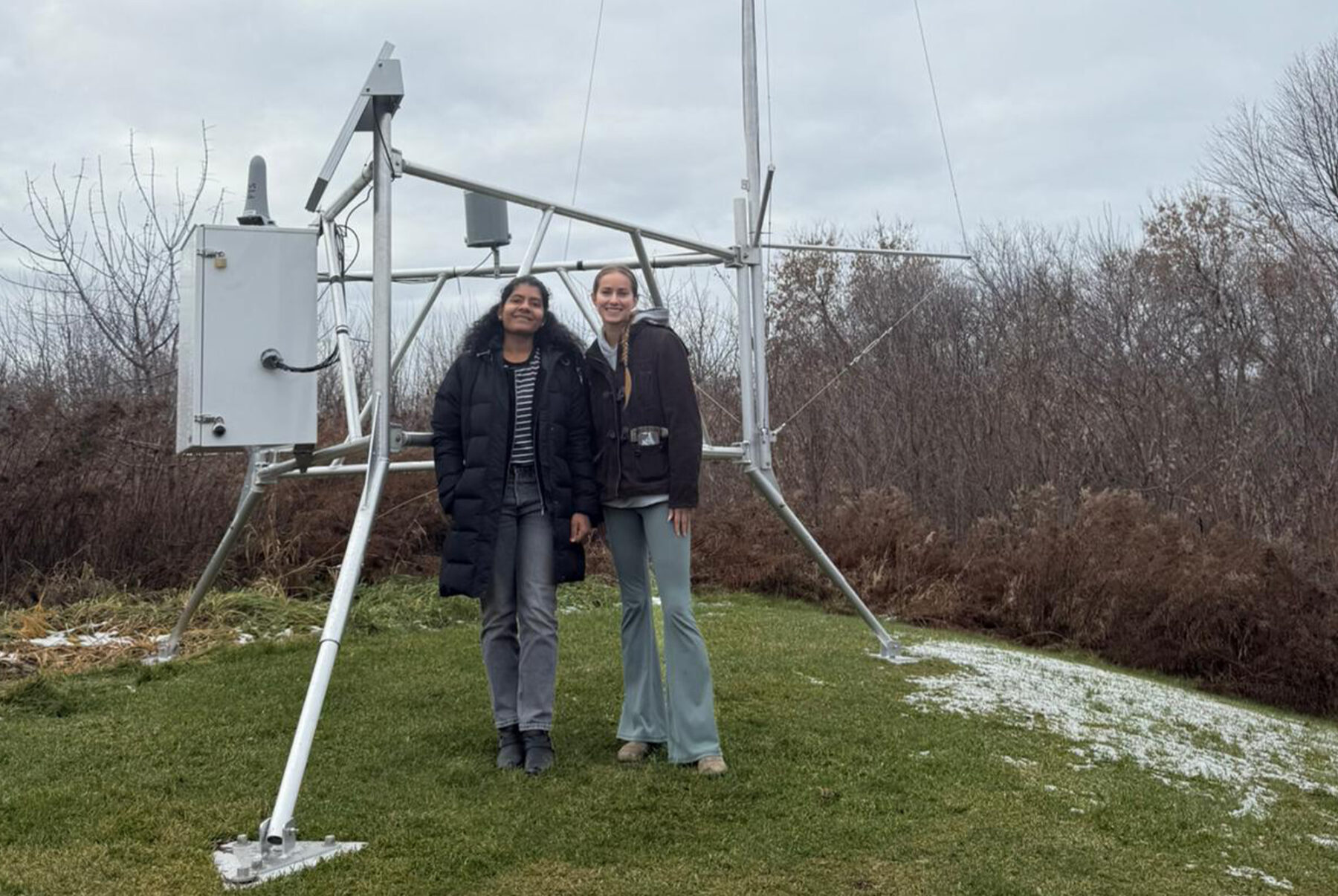
Pragnya Singidi (left) and Jenna Drefke (right) pose in front of the completed weather station on Algonquin College's Pembroke campus in November.

Algonquin College’s Pembroke campus has been dreaming of building a weather station for years. Now, despite certain challenges, the environmental technician program has been able to realize that dream and launch their very own weather station.

After years of inaction due to working out logistical issues such as who would build the weather station and where on campus it should go, the environmental technician program took it on.

As part of a Level 3 course based on land and water stewardship, students are assigned to work on a project that focuses on bettering the college community and collecting environmental data within the region. One of these projects turned into the weather station.

Four students were initially assigned to build and run the station, but one dropped out of the program leaving the project in the hands of three students — Jenna Drefke, Pragnya Singidi and Juniper Galt.

At the start of the fall semester, when the weather station team began their planning, they outlined why their project was important — the weather station will help educate future environmental technician students, high school students and authorities within the region, with the aim of spreading awareness for climate change and keep Pembroke informed on the weather.

“It’s (the weather station) really important for climate change because it covers all the parameters that affect climate change,” said Drefke.

Their mission this semester is to collect as much data as they can. Data is collected through numerous sensors which gathers information on precipitation levels, solar radiation, temperature, humidity and wind patterns. After the data is collected, it is sent to a computer through an EON2 GOES/Meteosat antenna.

“We are working on it to collect data and use it for future students,” said Singidi. “For instance, for measuring the precipitation, we’ll get to know how much rain we had in past weeks.”

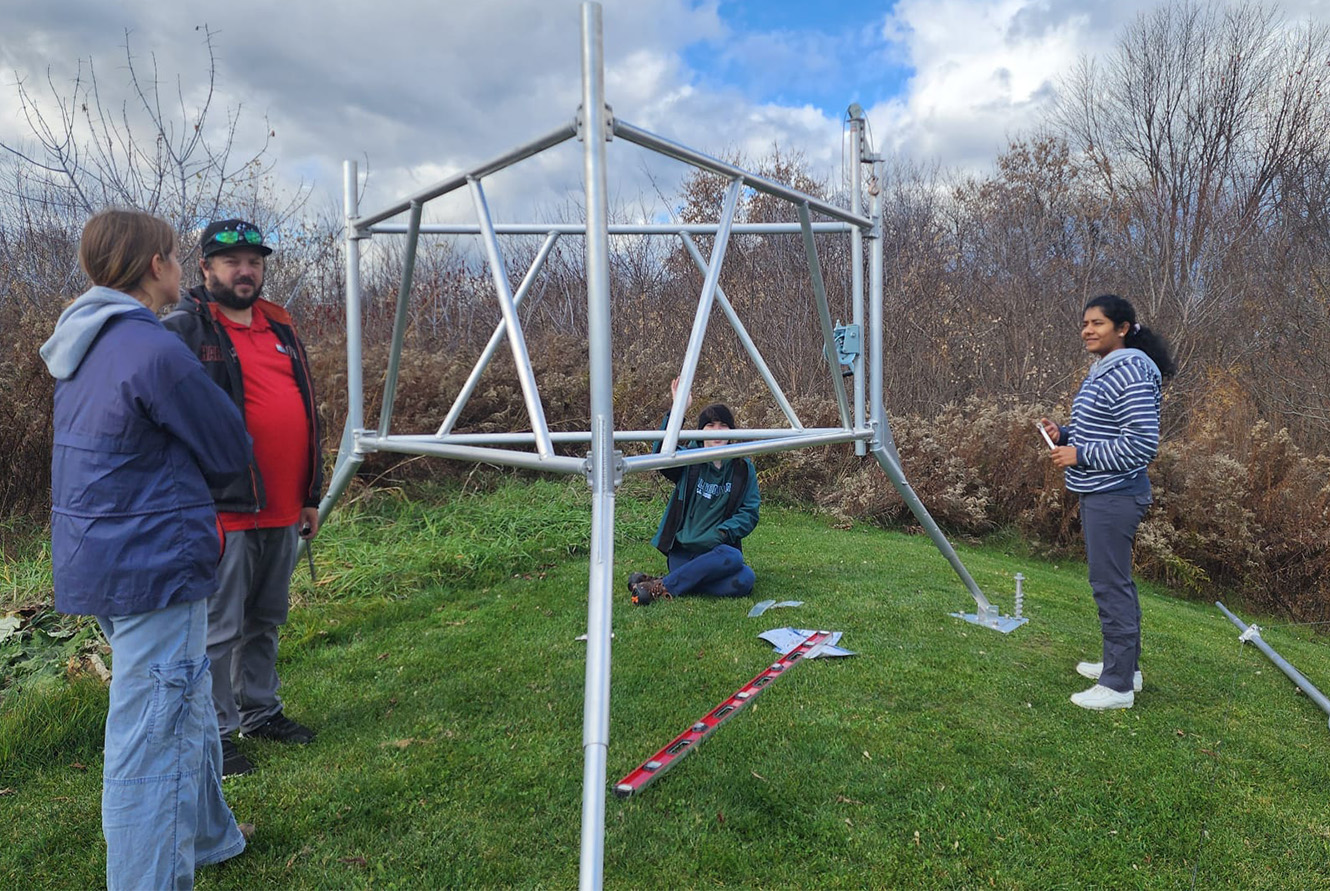
The weather station team and some spare hands working to put together the weather station on Algonquin College's Pembroke campus.
The weather station team and some spare hands work to put together the weather station on Algonquin College's Pembroke campus. Photo credit: Pragnya Singidi

A survey done by Abacus Data found 63 per cent of Canadians are concerned about climate change. Weather stations have always been an important way to track how climate is changing and inform the public of the same.

According to Environmental XPRT, weather stations are significant because of the information they provide. Meteorologists use weather stations to help predict weather trends and forecast natural disasters, as well as study climate trends. Farmers use weather stations to make decisions about their crops.

Not only is the weather station helpful for the public, but it is also helpful for the students in the environmental technician program. All the projects in the land and water stewardship course are designed to give students hands-on learning. Since the weather station team was building the station from the ground up, they faced several challenges over the semester.

One challenge the team faced was programming the equipment for the weather station. The team said their programming “involved a lot of trial and error,” resulting in the team wondering if the station could even be installed by the end of the year. However, to ensure success, the team decided to focus only on the weather-specific equipment – scrapping the original plan to install soil and water monitoring as well as the weather monitoring.

Despite these challenges, the team was able to come out on top, with the weather station becoming functional on Nov. 8. The team said the experience was great and really helped their learning.

“We didn’t have experience (using) mechanical tools and fixing these things,” said Singidi. “We don’t know the actual tools, how it works, how they (the weather station equipment) collect data.”

But now, Singidi and her team do know. And, with the stress of building the weather station out of the way, the team is able to learn from their creation.

“It’s certainly an achievement,” said Galt. “It was one that came with a lot of stress and frustration. I’m mostly just glad it’s done.”

This “achievement,” Galt said, is one that has “immense potential as a classroom resource.”

Singidi agrees with this sentiment and said the weather station provides useful information for students’ learning.

“Climate change means a sudden wind change, sudden rain, or like the wind direction or radiation change,” said Singidi. “That’s what we can measure. And by collecting the data from months, we can estimate what is going to happen next year or month.”

This is just the beginning for the weather station. Plans for next year include adding the soil and water monitoring sensors that were scrapped this year. As the years go by and the station collects more data, students will be able to analyze any trends found in the data. Galt said the data the station collects could also lead to future projects for the environmental technician students.

As the weather station team finish their final semester of the environmental technician program, they reflected on what led them to the program in the first place.

Galt said she has always loved the outdoors and grew up reading non-fiction novels about nature. This love for nature is what led her to the program as she wanted to help the environment.

“There’s something about it that feels like a duty, but I also enjoy learning about the subject matter,” said Galt.

Drefke feels the same as Galt.

“I have a strong passion for protecting the environment and there are a lot of environmental issues locally around the world,” said Drefke. “To be able to help fix those issues, I believe a better understanding of the environment itself would be the first step. This program provides that information.”

Singidi has a biotechnology degree, but knew she wanted to do more hands-on work. The environmental technician program and her experience working on the weather station has given her the experience she wanted.

“It’s about using my background in science to contribute to meaningful change and to help create a healthier, more sustainable world,” said Singidi. “We hope this project will benefit students and professors.”

Perth campus buzzing with anticipation for Bee Club

The newly created club unites people with the passion for pollinators
Photo: Itel Sapozhnikov
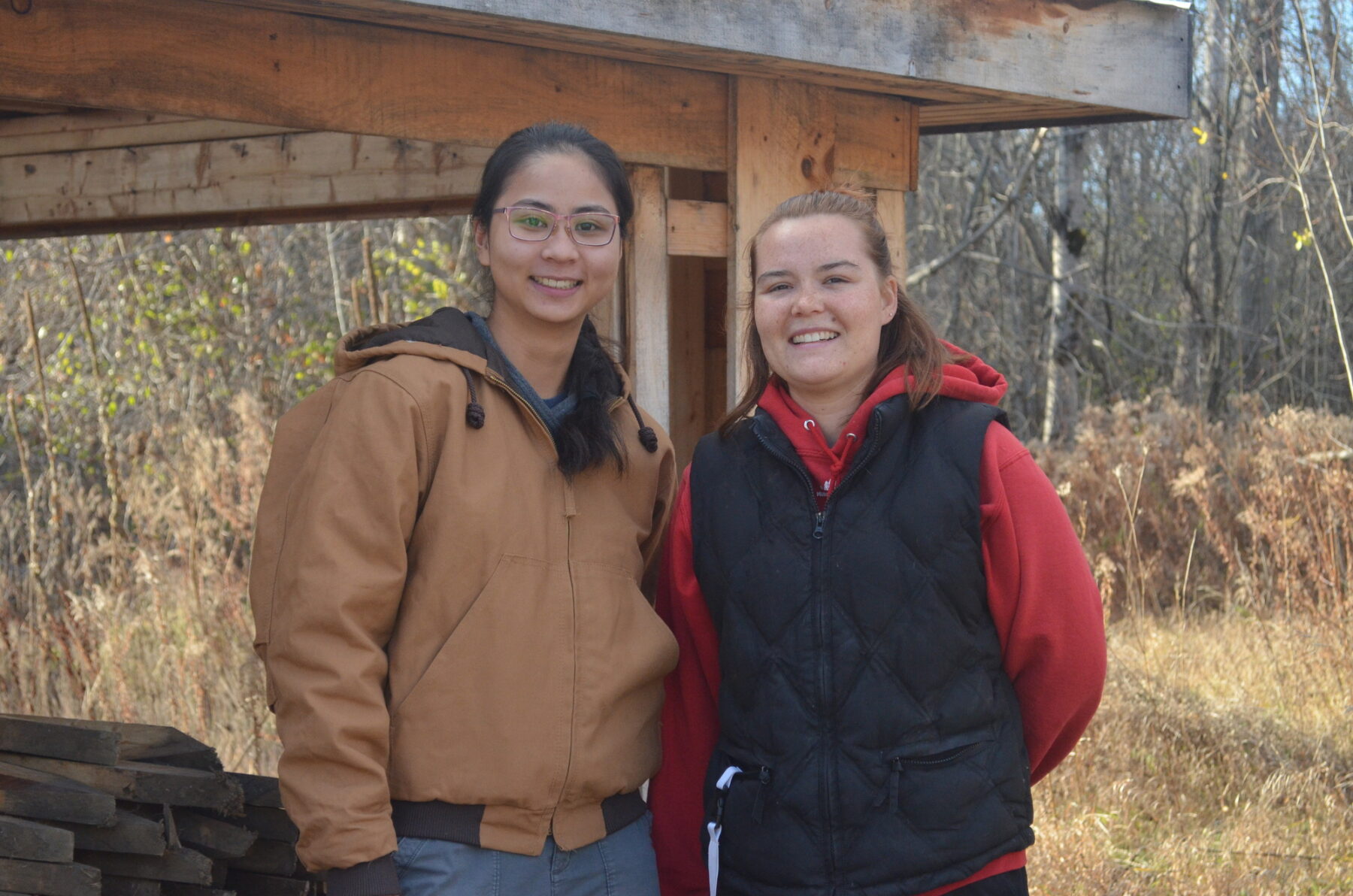
Miriam Musca (left) and Lauren Clemenger (right) on Perth's campus in the location where the hives are expected to be stored.

When two business agriculture students at Algonquin College’s Perth campus used their knowledge and skills to create Bee Club, it turned out to be the sweetest combination. Their goal is to give back to the community and educate on the art of beekeeping.

During the fall semester, club leader Lauren Clemenger and co-leader Judd Andrew Ada used a blueprint created by graduated business-agriculture students to start Bee Club.

“We are now building on their foundation, continuing their dream to benefit future students,” said Ada.

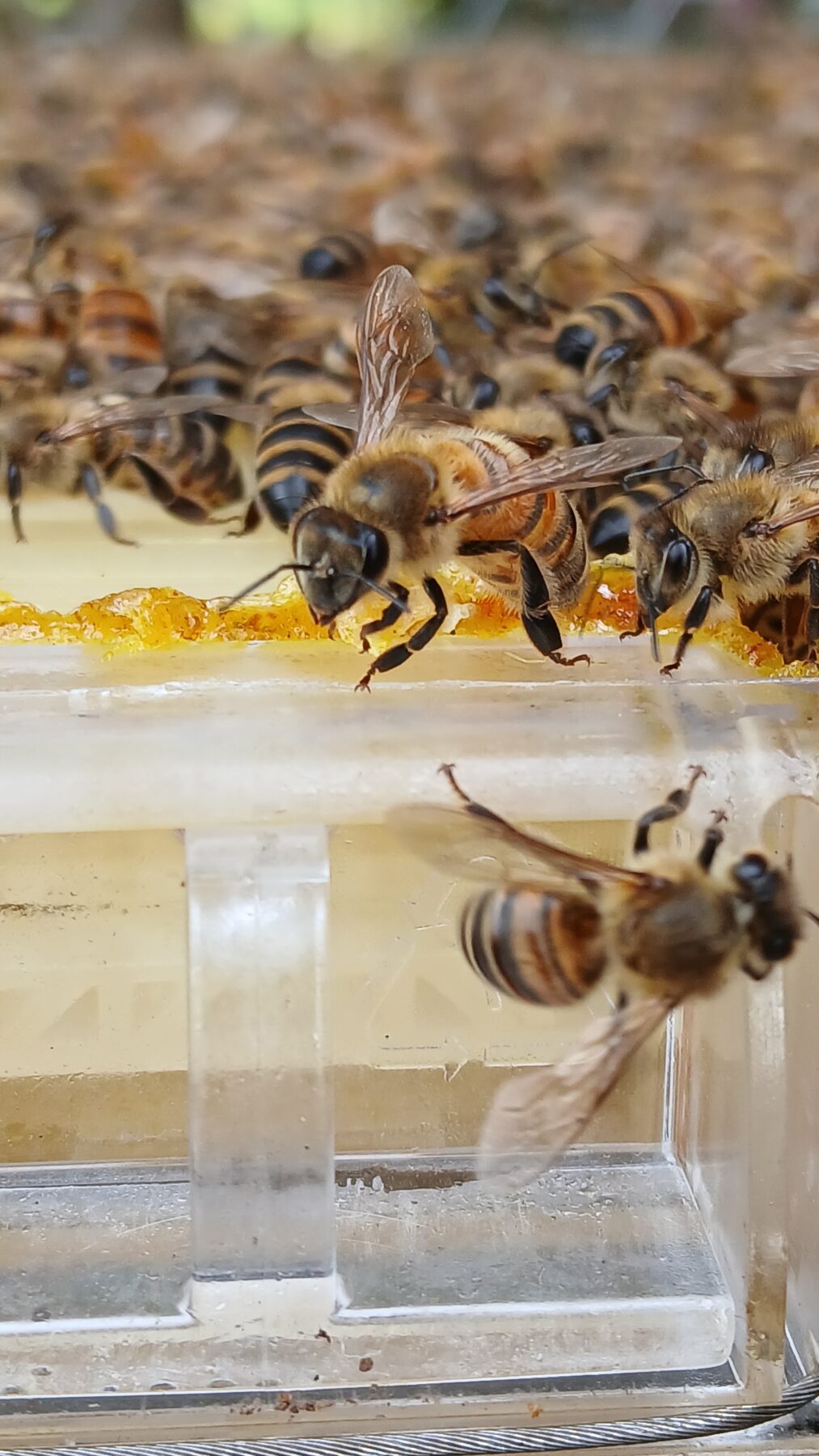
Clemenger is an experienced beekeeper. She owns hives, tends to her bees and harvests their honey. The breed she currently works with is Ontario domestic bees, these honeybees are sourced from Perth County, Ont. and are known to be docile.

A close up of Lauren Clemenger's honeybees.
A close up of Lauren Clemenger's honeybees. Photo credit: Lauren Clemenger

Ada has a degree in entomology, his knowledge of different insects is beneficial to the newly created club. According to Clemenger, Ada created a system similar to Brightspace containing visuals with information to educate members on the basics of bees and beekeeping.

“Most of beekeeping is knowing the education of the bee,” said Clemenger. “We need to educate our students before they go into the hive and endanger themselves.”

Thirty students have signed up since the creation of the club, which is six times the amount required to start a club on Perth’s campus.

“Given that most of our members are enrolled in the Business-Agriculture program, we decided to focus our club’s efforts on supporting students in this field, while also fostering appreciation for bees and agriculture among those with little to no prior knowledge,” said Ada.

The club charter breaks down the yearly process the club leaders aim to follow. During the winter, club members will learn, reflect and hone their skills while the bees hibernate. From spring to summertime, members will get the hands-on experience which involves working with bees and selling their honey at markets.

Majority of the club members are students in the same program as Clemenger and Ada, which inspired them to incorporate the club into their coursework to enrich the program.

“We’re also planning on doing a business plan for it so that our club can continue to go on and possibly turn into something that’s a tool the professors in the business-agriculture program can use,” said Clemenger. “Maybe create a course on bees, or they can use it for student jobs, or co-ops for the summer.”

The Bee Club’s ambitions are more than just spreading the knowledge of bees, they hope to create some buzz in the Perth community by planting flowers on campus to include those who aren’t fully intrigued in working with hives.

“We want to be able to plant some flowers on the campus so that the bees can pollinate and we can beautify our campus,” said Clemenger. “Judd’s idea is to allow seniors and the public to come in and look at the flower gardens, so if people aren’t interested in the hands-on [harvesting and working with bees], they can work on some horticulture.”

Miriam Musca, a second-year heritage carpentry and joinery student at Algonquin College’s Perth campus, is a member of Bee Club. She joined the club because of a personal interest in beekeeping.

“I live on a small hobby farm, so bees are something that we always wanted to do but it’s kind of hard to get into the knowledge of beekeeping,” said Musca. “I thought it was a great opportunity to learn all about it.”

When she joined the club, Musca was most interested in the production and harvesting process, but may not get the chance to participate in those activities since she is graduating this year.

Clemenger is also graduating this year and hopes to open the club to alumni. She will still be an active member in the club post-graduation, but will pass the leadership to Ada.

Tim Lee, the Perth operations coordinator, is supporting the club and its initiative. Clemenger said he is willing to tend to the flowers during the summer with the nursing students in the club who are enrolled during the off-season.

“It’s a great opportunity for not just the business-agriculture students, but all the students on campus and the staff as well are just interested to see and learn what it’s all about,” said Lee. “I’m here as a resource for them, if any assistance that the club leaders need, I’m helpful to answer any of their questions.”

Clemenger is working on collecting supplies during the winter and prepare for the first season with bees. According to the Ontario Beekeepers’ Association, “anyone who owns or is in possession of honey bees must register annually with the Ontario Ministry of Agriculture, Food and Rural Affairs (OMAFRA).”

Since Clemenger is licensed with the local Lanark Bee Association and Bee Club is a student-led enterprise with the goal to educate others on bees, the association donated supplies that will arrive in the spring.

“They’ll get all the information that they need to be able to then go into the hive, have an understanding of bees, and then we’ll [club leaders] work on getting the supplies and funding that we needed during the winter months, then we’ll set up the hives,” said Clemenger.

The club is hoping to expand for students outside of Perth using online resources such as Zoom. Clemenger said long distance club members can visit the hives on Perth’s campus to their own discretion.

“This initiative will support agri-tourism efforts and enable us to market honeybee by-products at local farmers’ markets,” said Ada. “Ultimately, our goal is to refine the program to ensure its sustainability, allowing the learning materials and the club’s legacy to endure at Algonquin College, even without the involvement of current key members.”

Miyawaki Forest Initiative cultivates hope amid climate despair

An Algonquin College student revitalized local ecosystems with a 50-year-old Japanese reforestation method, hoping to inspire future environmental projects in the Ottawa Valley
Photo: Mckenzie Mitchell
Kristi Beatty (left) and Mckenzie Mitchell standing in the forest patch they, along with their community, worked to restore.

Mckenzie Mitchell is a 28-year-old environmentalist who grew up on a farm in the Greater Toronto Area. Constantly surrounded by nature, he developed a lifelong passion for the outdoors. Unsure of the right career path, he took a leap of faith, enrolling in the environmental technician program at Algonquin College, where he became a part of the Miyawaki Forest Initiative.

The initiative uses a method of planting native species in dense layers to restore ecosystems and accelerate growth, created in the 1970’s by “Keeper of Forests” Professor Akira Miyawaki, a Japanese botanist considered one of the greatest pioneers in the realm of nature conservation.

Mitchell was inspired by the similarities between the origins of the Miyawaki method and the realities of damaged forest area in the Ottawa Valley. He decided using the approach, including its community focus, was the best way to make a difference. So he applied for the “Healthy Habitats” grant, funded by the British Home Invasive Species Council.

Kristi Beatty, the coordinator of the environmental tech program at the college’s Pembroke campus, had introduced the Miyawaki method in her ecology class, but funding was an issue.

Mitchell received just shy of $5,000 from the grant and that, along with community participation, was enough to set the project in motion.

“The funds provided us with 700 trees, 200 shrubs, as well as over 1 ton of mycorrhizal soil,” said Mitchell. “Mycorrhizal fungi are a type of fungus that are linked throughout the forest underground. Kind of like fibre optic internet. Going through the trees and plants, they help promote growth within the soil.”

But before the afforestation efforts could start, Mitchell had to get a comprehensive understanding of the method. It consists of utilizing trees that are native to the area and planting them in a dense but balanced configuration. The trees are chosen to form four structural layers: canopy, sub-canopy, arborescent trees and shrubs.

When Miyawaki was first developing his method, he noticed that in Chinju-no-mori (sacred groves of Japan) natural forests grew steadily. This led him to deduce indigenous species flourished wherever human interference was strictly disallowed, according to Crowd Foresting, an organization that collaborates with the Agriculture and Ecosystem Management Group to promote natural forests.

“We have proved that it is possible to restore quasi-natural multi-stratal forest ecosystems in 20 to 30 years if we take the ecological method,” said Miyawaki, in correspondence with the Japanese Center for International Studies in Ecology and Nagano Nature Conservation Research Institute.

Miyawaki’s method has been used in over 3,000 projects worldwide.

Mitchell said in Pembroke’s case, the forest had many overgrown Himalayan balsams and Manitoba Maples, and the soil was very low in nutrients. By introducing mycorrhizal fungi to the forest, they were able to restore nutrients needed to grow a thriving habitat, and by planting a wide range of native species in the forest, establish a tree canopy of species to support the local wildlife.

Miyawaki’s method helps restore soil health, establish a fungi network and restore the forest’s biodiversity. The method introduces native species into the environment by planting them in a hyper dense layout, creating competition between the species, which has been shown to create accelerated growth rates, according to the Tree Council organization, a registered charity based on the United Kingdom which acts on a range of innovative planting and research initiatives.

“I wanted to get my classmates together and work on a memorable project that would help us all make an impact that lasts hopefully until we’re long gone,” said Mitchell. “‘Think global, act local’ has always been a life motto for me, and this project was no different. Local change, to me, is the best way to make an impact all over the world.”

The project faced a variety of challenges, but the most pressing challenge was time management. Due to the nature of planting season the team had to make sure to plant as soon as possible, to help plant survival rates, but making sure to avoid any frost.

“This tight window left us with only a few days to prepare and plant before students would be leaving town for the summer,” said Mitchell. “It was a tight squeeze, but we were able to account for this and planting day went without a hitch.”

Now armed with supplies, knowledge and the support of professors, community members and classmates, they were finally able to plant the seed of the Miyawaki Forest Initiative. Once they had cleared the area of waste, the team was able to prepare the soil, add mycorrhizal fungi and plant native species in a single day. And according to Mitchell, the impact is already noticeable.

One of the forest areas in the Algonquin College Pembroke campus the Miyawaki Forestry Initiative restored using the Miyawaki method.
One of the forest areas in the Algonquin College Pembroke campus the Miyawaki Forestry Initiative restored using the Miyawaki method. Photo credit: Mckenzie Mitchell

“We’ve noticed some amazing changes already,” he said. “We’ve noticed some restoration in the soil health thanks to the mycorrhizal fungi. We’ve raised the biodiversity by introducing over 20 species of plants that were not in the area that should have been.”

This biodiversity will serve as support and food source for wildlife native to the Ottawa Valley. Weeds will be be removed from the area for the next three years according to Mitchell, but after that maintenance period, the forest will thrive on its own.

This initiative will also be used in the environmental tech program curriculum, integrated in environmental assessment classes.

While the team reached out to many Pembroke locals who wanted to get involved in the project, some were unable to be present for planting, so they were supplied with a variety of plants and mycorrhizal soil to build their own mini-Miyawaki forests at home.

“Miyawaki was strict with his methodology. It must involve the local community,” said Mitchell. “He believed strongly that children should be educated to appreciate the environment around them. Thankfully, we had a great team of local citizens, students and horticultural society members willing to help the forest come to life.”

The Miyawaki Forest Initiative was recognized by the college and led Mitchell to winning the 2024 Changemaker award, presented during a Board of Governors meeting at the Ottawa campus. Mitchell was also awarded a $1,500 Colleges and Institutes Canada (CICan) ImpAct Climate Challenge bursary for his efforts as a student climate leader.

“Mckenzie is a true changemaker. He has embodied the values of the college,” said Julie Beauchamp, senior vice-president academic at Algonquin College.

When Mitchell graduates this winter, the project will continue to be overseen by Beatty, who hopes to potentially expand the forest onto municipal land, and for the method to be used in both the environmental tech and urban forestry programs at the college.

“I had an amazing time working on this project,” said Mitchell. “I hope to return to Pembroke in the future to a thriving forest.”

ABBA Experience Christmas show was exciting and triumphant

Tribute band dazzled a dancing crowd at the Algonquin Commons Theatre
Photo: Linda Verreault
Andrea Valois (Frida) and Christine Irons (Agnetha), tribute show performers.

If you needed a fun time out dancing, listening to music and relieving stress, then this event was made for you. The Algonquin Commons Theatre was rocking to the tunes of ABBA on Dec. 7 during the ABBA Holly Jolly Christmas show.

People enjoyed a variety of their favourite ABBA tunes and got to get up and dance.

“We get together with our daughter every year to watch movie (Mamma Mia) at Christmas,” said Elenor Hodgson, 68.

Hodgson said her favourite song is Dancing Queen.

ABBA’s music has remained popular generation after generation.

“You can dance to any song, it has upbeat music and a great message in them,” said Keira Greig, 23.

Bonnie Levesque came out with a group of friends. The ladies are part of the Nordic walking club in Carleton Place.

“I got these ladies together and tonight we’re coming to see ABBA. We are going to dance and have too much fun together,” said Levesque.

They were unanimous on their favourite song: Mamma Mia.

Chris Eveland on lead guitar and John Wiberforce on bass.
Chris Eveland on lead guitar and John Wiberforce on bass. Photo credit: Linda Verreault

The lead singers Christine Irons (Agnetha) and Andrea Valois (Frida) got together five years ago.

“I got a phone call from Christine asking me if I wanted to form an ABBA tribute band. Christine and Kevin (who plays Benny in the band) came up with the brainstorm idea, and the rest is history,” said Valois.

They were inspired to focus on ABBA music.

“I think ABBA is the great equalizer,” Valois said. “You have little kids and there are those in their 90s. They all love it. It is celebratory music everybody can relate to it, and they just have a good time. “

Recreating the famous fashion was no easy task — they spent a lot of money having custom costumes.

“I think one of our favourites is the blue and white dresses that we wear that has tails. Another is our gold and white dresses,” said Irons.

They select most of their songs from the gold album and add on a few lesser-known songs in each show. They have been doing well and have even toured with the Tribute show.

“We took our show on tour, we just went to the Maritimes, and upstate New York. We are going to B.C. next year. We have done a lot of Ontario and some shows in Quebec,” said Valois.

When performing a vast array of music there is always one that stands out as a favourite.

“My favorite song to perform is Winner Takes it All,” said Irons.

Both of the women are amazing vocalists and put on a top-notch show. Valois had an early start in her musical career.

“I actually studied music at University of Ottawa, and I have been singing professionally since I was eight,” said Valois.

She met Irons back in high school and they sang and performed many times over the years.

It was a natural transition to being together on this project. It is something that unites them.

“We just did it because we loved the music and we love performing and we love being together we’re all great friends in the band,” said Valois.

Algonquin Times podcast

Stay Informed

Sign up for our newsletter

Subscribe

* indicates required