Two days in the Algonquin College spa

The college's estheticians are weeks from graduating the program, and there's lots they want you to know about their job
Photo: Claire Donnan
Izzy Leblond Robert, Sophie's daughter, poses with her brand-new, Christmas themed nails. She wants to make sure people notice the heart decal painted onto her thumb.

It’s 1:45 p.m. on Thursday, Nov. 14. The air smells sweet, with the cloying scent of acetone lingering underneath. Soft music plays over speakers in the corners of the room. A dozen students sit at chairs and stations around a spa, while their instructor Evey Ross-Linton speaks, taking attendance and gesturing to a schedule projected at the front of the room.

It’s another busy day for the students of the Algonquin College esthetician program, participating in their spa operations class to meet their graduation requirements. However, these students may be some of the last to take this course.

Students and professors know the program has limited time left. The Board of Governors first suggested suspending the program in February, and the last intake of students will be graduating in August 2025.

But it’s not August yet. Today, these Level 3s are weeks from graduating. They have patrons to service, quotas to meet and plans to make.

The esthetician program consists of theory and lab classes, taught by a variety of professors. Sylvie Canonico, the esthetician program coordinator, says learning in a program like Algonquin’s is key for entering her industry.

“The consumer, they want professionalism, and this is what our program gives,” says Canonico. “We train beyond the actual service. We train as far as presentation, attitude, friendliness, compassion, empathy, listening skills, communication skills.”

A white woman's hand with a bracelet tattoo is held by a hand wearing blue gloves, who is giving her a manicure. Both are estheticians
Algonquin College aestheticians practise on one another. This class of level 3's are about to graduate, and excited to step into their careers. Photo credit: Claire Donnan

The day continues, and students’ work is never done. They clean stations, restock product, sweep floors, cut foils and practise services on each other to meet their quota. Eve Welbourne completes a manicure on fellow student Magda Serageldin.

“I’ve enjoyed the nails aspect of the program. It’s just an artsy thing that I like doing,” says Welbourne as she files Serageldin’s nails.

That’s not the only service students enjoy. Saloni Thakkar is particularly fond of makeup.

“I wanted to do it professionally. I realized I love it so much,” says Thakkar. “It’s very therapeutic for me. So I got into this program only because of makeup application.”

Thakkar shares this passion with her instructor Mariève Siracusa, who recently invited her to work at a photoshoot event.

“I created an event which was a photoshoot with models and photographers, and I chose Saloni [Thakkar] to assist me on the photoshoot,” says Siracusa. “Two models, she did the full makeup. Designed the look, did the makeup look, and the photographers loved her and she made connections out of it.”

An esthetician in blue gloves uses a pink buffer on a white woman's toenails. Her pant legs are rolled up and she sits over a silver basin.
Tasha Hickey gives Sophie Leblond Robert a pedicure. While Sophie warns Hickey that her foot has a tendency to move, Hickey just smiles and insists Sophie is fine. Photo credit: Claire Donnan

As the day winds down, students need things to do after their clients leave. Zayra Pose Aguilar applies purple polish with meticulous precision as students filter back in and begin packing up their things, saying goodbye to clients and tidying up their stations.

“I love the labs. I love how we have practicals [courses] as well,” she says as she works. “We get to take clients and get real world experience, somewhat.”

It’s Friday, Nov. 15, and the spa is immediately packed with people.

By 1:46 p.m. almost every student is occupied with a client, like Sophie Leblond Robert and her daughter Izzy. Leblond Robert recently began coming to the spa again after experiencing a stroke, and is getting a pedicure from Tasha Hickey.

“It’s great to be able to teach people at the same time,” says Leblond Robert. “Poor girl [Hickey] has to deal with my foot because it twitches a lot, and I don’t feel [the other] side as much. So she definitely has to learn to manipulate my foot and stuff like that a lot more.”

While she says this, Hickey shakes her head and insists Leblond Robert is fine, continuing to buff out her nails.

It’s on this day that Dianne Williamson, a full-time professor and one of the instructors that first developed the full-time program in 2009, pops in to see how things are going. Williamson recalls with pride some milestones from early in the program’s existence.

“The first time I went to one of the graduation ceremonies,” says Williamson, “sitting up on the stage and watching your students walk by, oh my gosh. You just want to go and hug them, and you’re so proud of everything because you saw them from day one onwards.”

Williamson also remembers the first crop of students welcomed into the A-building labs, after spending years teaching the program in an old science lab in Confederation High School.

As the sun sets outside the window again, students gather as they’re finishing services. With instructor Ross-Linton they reflect on the state of the industry they’re about to enter: How to make money, the severity of the work they do, and the rising popularity of injectables like Botox.

Among the almost 20 people interviewed for this story, a shockingly similar feeling on the esthetics industry emerged.

It’s more than an industry. The work they do is difficult. This isn’t basic, it’s hard, it’s not superficial. It’s more than painting nails, doing facials, and applying makeup. The job is demanding, physical, emotionally taxing. Estheticians are therapists. They help with self-confidence. They are knowledgeable on science, communication, socialization. Every student and every professor agreed – they are more than people may think.

This mindset is evident through every interaction in the A-building spa. As students make idle chatter with their clients, guide them through consultations on their health and cap and cure gel nails, a feeling of care and passion ripples through the air.

“Everybody here comes to work with that same passion,” says Ross-Linton. “Everybody that works here and teaches these students wants to impart all that passion for our industry on the students that are leaving here, so that our industry stays as good as it is.”

It’s true there may not be too many days like this left, at least for now. When the program is suspended in August there’s no way to say for sure if or when it will return. Professors and students know this.

But it’s not August yet. Today, another day of spa operations is just beginning. The esthetician students are sitting at their stations, studying the schedule and prepping for clients.

Today, at least, they are here.
Behind the tent with Kyla Kennaley

Great Canadian Baking Show's Kyla Kennaley opens up about her past, present and future
Photo: Photo supplied by Kyla Kennaley
Bruno Feldeisen (left) and Kyla Kennaley (middle) are the judges in the Great Canadian Baking Show, which has been airing since 2017.

As CBC’s Great Canadian Baking Show opens contestant auditions for season 9, Algonquin College graduate Kyla Kennaley will be returning to judge the next batch of baked goods.

The Great Canadian Baking Show is a reality competition series where amateur bakers across Canada showcase their skills through a variety of challenges in an attempt to impress the judges and win the title of Canada’s best baker.

Season eight recently ended on Nov. 24, with Elora Khanom crowned as the winner.

“Every season is unique due to the organic nature of the show. Each baker brings their unique experience and style which shapes the way the season unfolded,” said Kennaley in an interview with the Algonquin Times. “In season 8, we had an extremely talented mix of bakers who rose to every challenge with grace and brought delicious flavour combinations to the tent, along with brilliant skills.”

Kennaley is a pastry chef who graduated from the culinary management program at Algonquin College in 1994 with knowledge in classic skills of European cuisine. She also completed a bachelor’s degree from the University of Ottawa.

“This foundation has allowed me to explore global cuisines and find common factors in flavour profiles and techniques,” said Kennaley. “Without a strong foundation, I would not be able to judge effectively.”

Photo supplied by Kyla Kennaley
"Culinary math is the most delicious pursuit of ratios, fractions and percentages," said Kyla Kennaley. Photo credit: Photo supplied by Kyla Kennaley

Kennaley said she is constantly inspired to try new recipes that are featured on the show in hopes to provide a similar experience for her friends and family.

The two-year program equips students with the fundamentals of cooking, advanced culinary techniques and management skills. Although baking and pastry is a separate program, culinary management students get a small taste of both worlds.

“It’s important that cooks know how to bake bread and know how to make some simple desserts,” said Daniel Halden, the culinary management program coordinator and a chef in Ottawa.So we add a little component of baking in both the one and two-year programs.”

Norah Kinny, a second-year culinary management student, said she was inspired to start her culinary journey and develop her baking skills because culinary shows, including the Great Canadian Baking Show, made her see that it’s possible.

“I don’t do much baking, but I feel like I can after watching the show,” said Kinny.

Kinny occasionally catches episodes of the baking show alongside other culinary competitions, but she wouldn’t join a televised culinary show due to the amount of stress that competitors may face.

“She (Kennaley) understands it from a different perspective where she’s not criticizing, but she’s helping to further yourself in either the competition or the future,” said Kinny, referring to Kennaley’s judging on the show. “It’s nice to see there is somebody who’s taking that approach, especially with what people believe the culinary field is like.”

For students with similar ambitions as Kennaley, she advised them to “travel, eat everything and show up.” She said every opportunity she experienced was due to coming prepared and showing up early.

“When I was starting out a chef said to me ‘peel carrots with your eyes up,’ meaning that if you don’t look around at what others are doing and learn from them, you will find yourself stuck in one job for your whole career,” said Kennaley.

Halden said for cooking to be a fulfilling career, there must be passion in order to be able to make a living out of it and to excel.

“We get satisfaction out of satisfying people by cooking food that they love,” said Halden. “That I really enjoyed about what I did, the satisfaction I gave to people by sharing or nurturing them with food and good dining experiences.”

When away from the kitchen, Kennaley enjoys to travel and explore parks, gardens and neighbourhoods.

“I find it both peaceful and energizing at the same time,” said Kennaley. “I am guilty of working too many hours and often have multiple projects on the go. It is my goal to become better at balancing time off.”

The next step for her is following her dream, which is to open a small cookery school inside an old chateau in Europe.

First Person: Martial arts training can help body and mind get in sync

Juggling the weight of assignments and Muay Thai training, I've discovered that proper focus isn't found in perfect balance. It's in the fight to stay present
Photo: Korbin Amaya
"The gym is a shared space of effort and grit where every person has their own story," writes the author.

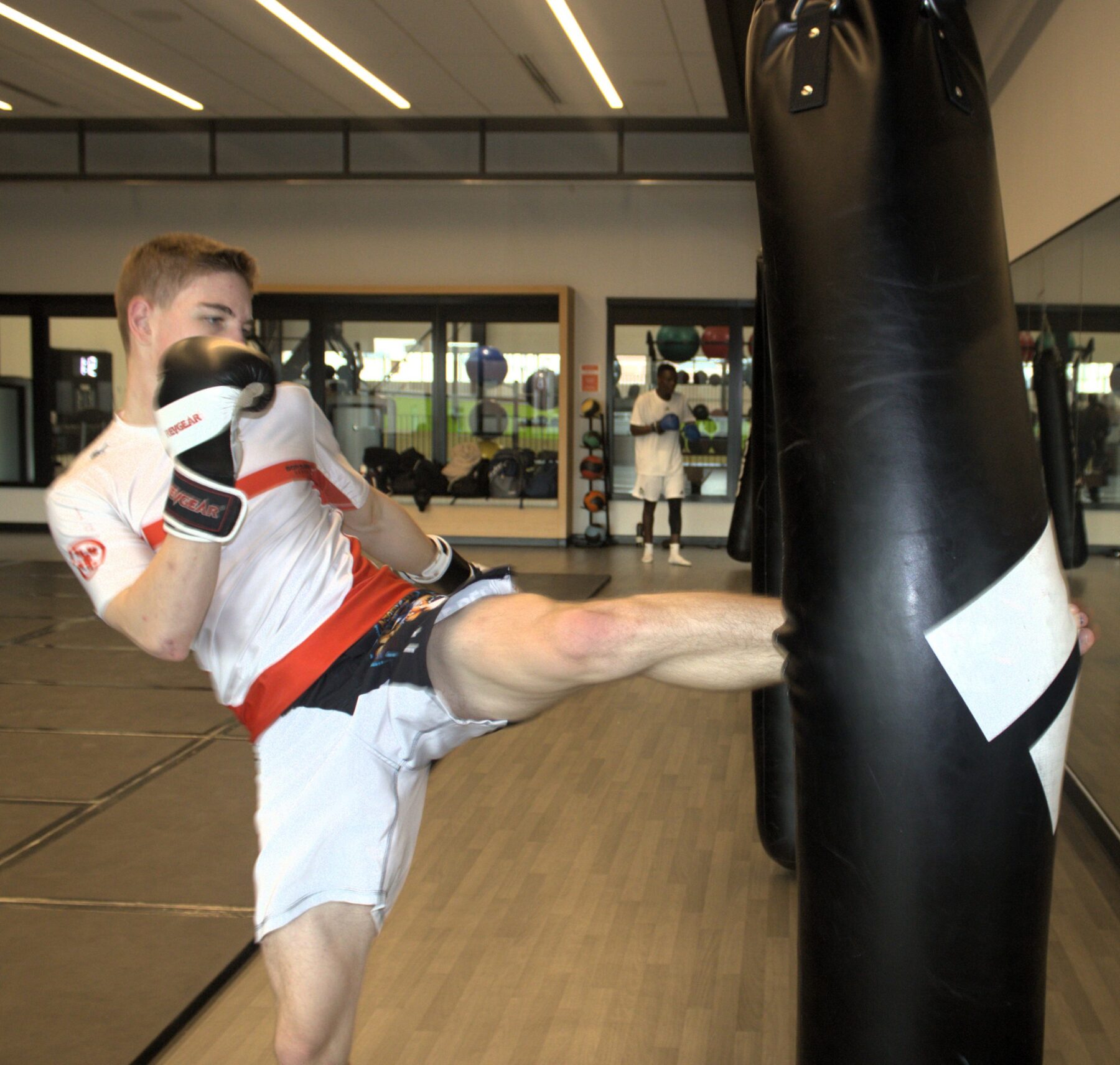
Studio A in the Jack Doyle Athletics and Recreation Centre gym hums with a muted intensity, the air thick with the scent of sweat and determination. I focus on the crackle of gloves striking bags and the rhythmic bounce of skipping ropes. My fists connect with the heavy bag, each strike deliberate, each thud echoing a dialogue I’m having with myself.

Under the fluorescent lights bathing the room in a cold glow, I’m hit with a moment of clarity. After a full day of dissecting interviews and story drafts as a journalism student, I come to the gym not just to train but to find a sense of balance that writing cannot entirely give me.

Muay Thai – an art that marries precision and power – strips away all pretense. It is a brutal and honest style that demands discipline from every fibre of your being. I have practiced for eight years now, on and off, and it’s almost enough to know this is not just about the fight but the fight within.

As I plant my feet, pivoting slightly, I unleash a jab-cross combination. My motions are sharp and measured swiftly as I recall my jab back to guard my head, resetting my stance with a steady breath.

These motions mirror how I navigate the push and pull of my days: the hours spent chasing deadlines and nights crafting the art that matters to me. Each punch feels like I’m carving out space to get in sync with my body and mind.

The gym is a shared space of effort and grit where every person has their own story. Like me, they are not just here for the physicality. The room pulses with something that eats doubt: a quiet, collective understanding that what we do here feeds the rest of our lives.

For some, like Wren Doucette, a police foundations student and rugby player, martial arts became a way to channel emotions.

“I started wrestling in high school to improve my rugby performance,” said Doucette.
What initially began as a way to get better at another sport quickly became a passion that contributed to her personal growth.

“I use it a lot because I’m a pretty angry person, and tough sports really help me calm down,” said Doucette.

For Doucette, martial arts do not just build physical endurance. They strengthen her mental perseverance and prepare her for her future career in law enforcement.

There’s also Nathan Rolland, another Algonquin student who recently started training in jiu-jitsu. For Rolland, martial arts became a key to maintaining a sense of balance amid the pressures of school.

His jiu-jitsu classes lined up perfectly with his academic schedule, allowing him to dive deep into training without compromising his schoolwork. Rolland’s approach to balance comes down to time management.

“I pay attention to class, take all my notes, and study quickly after class so I don’t have to spend much time outside school on this,” he said. This focused approach enables him to train hard while keeping up with his studies.

"
Owen Armit believes "commitment is the key to balancing martial arts and academics." Photo credit: Korbin Amaya

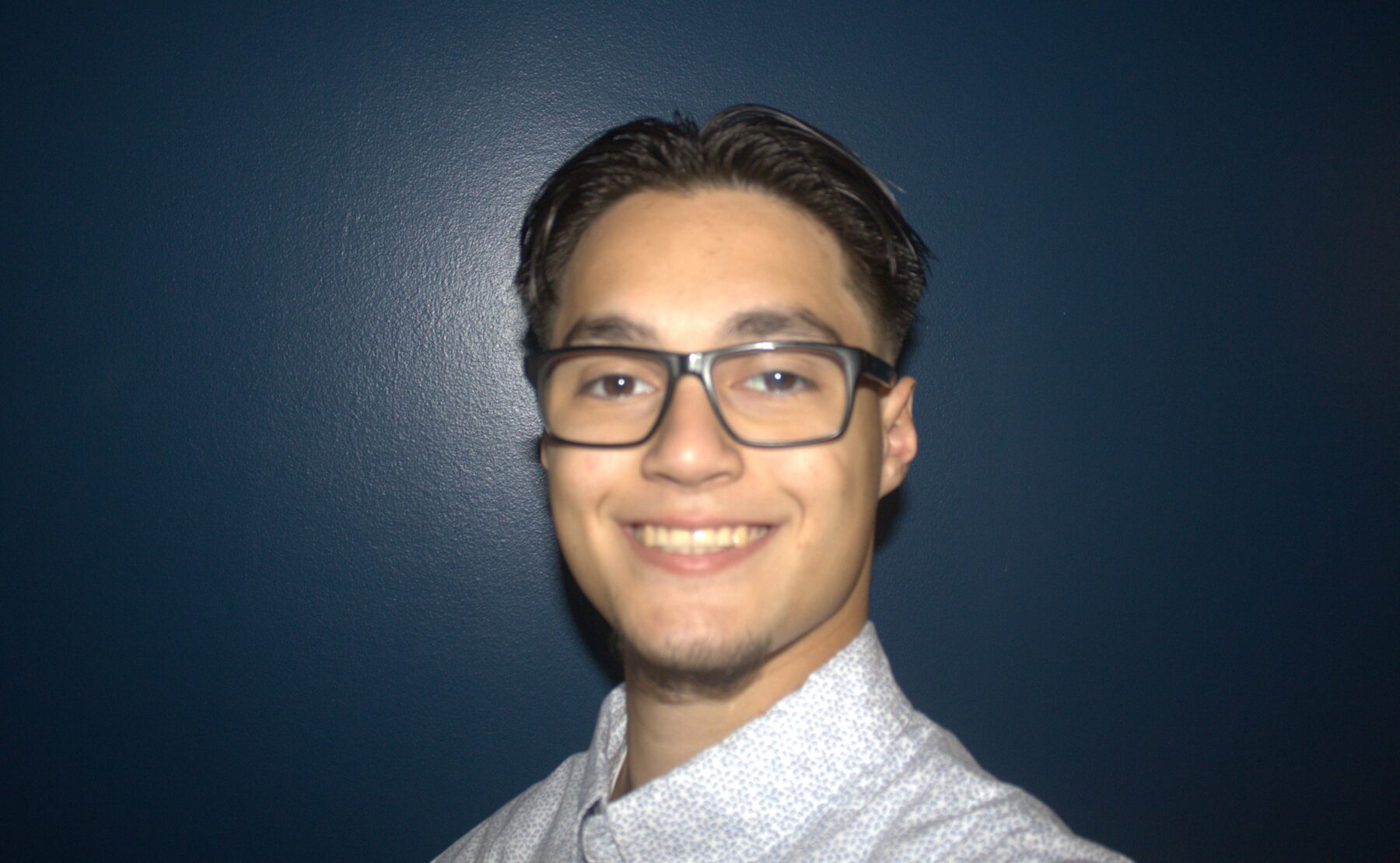
Another student of the craft is Owen Armit, a jiu-jitsu enthusiast who believes commitment is the key to balancing martial arts and academics.

For him, the structure provided by regular training sessions creates a discipline that carries over into his schoolwork. “It’s all about finding that rhythm,” said Armit.

Armit’s passion for martial arts helps him stay grounded and focused in both arenas.

Keshan Hou, a dedicated Muay Thai student, says martial arts taught him patience and long-term vision.

“Muay Thai showed me that growth comes in phases,” said Hou.

The physical demands of the sport taught him to embrace the process, a mindset that extends to his academic pursuits.

“It’s not just about mastering a skill quickly but staying consistent, and that’s something I’ve applied to my studies,” said Hou.

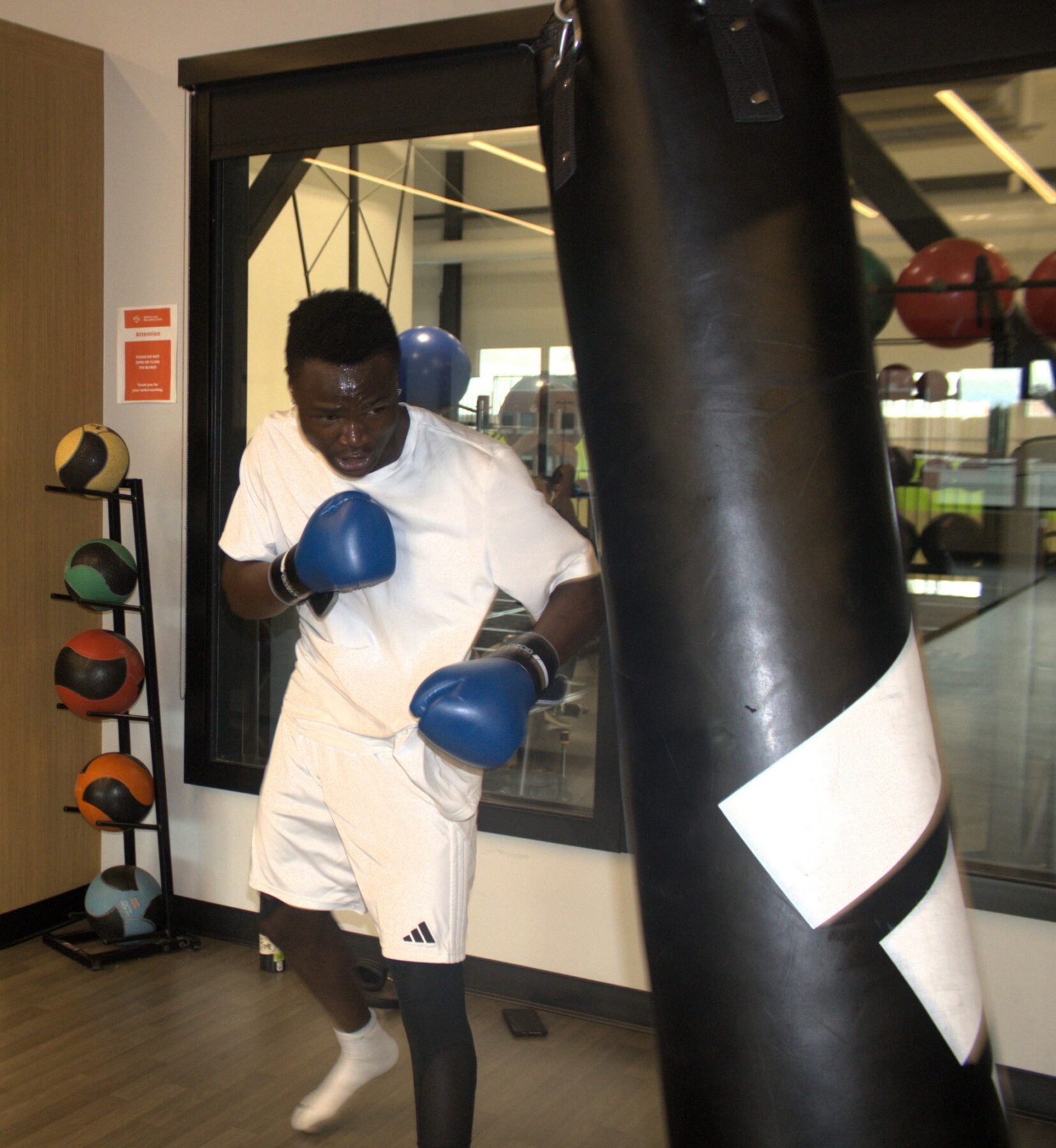
"Joseph Ilunga balances boxing with playing varsity football for the Wolves."
Joseph Ilunga believes "discipline is the main thing in sports." Photo credit: Korbin Amaya

For Joseph Ilunga, he balances boxing with playing varsity soccer for the Wolves.
“Discipline is the main thing in sports,” said Ilunga. “You’ve got to keep going. You can’t stop.”

Ilunga’s dedication to the sport also stems from a deep personal motivation: making his mom proud.

“My main goal is to put a smile on my mom’s face,” said Ilunga. Martial arts can offer emotional purpose far beyond the physical realm.

For many of us, as we lift weights at the gym—it’s not just dumbbells. It’s the burdens of responsibility, ambition and identity. I think about my Salvadoran father, who immigrated in the ’90s with a drive that’s become a cornerstone of my resilience and ambition, and my stepmom, whose roots trace back to Italy. Together with my Canadian-born mother, they form a patchwork of cultures and cultivate stories that I carry daily. Their sacrifices echo in my drive to succeed—not just academically but in all the ways that matter to me: as a journalist, an artist and a person trying to build something lasting.

Muay Thai fits into my frame like something I need, not want. I have always been someone juggling multiple worlds. By day, I’m a journalism student at Algonquin, practicing interviews, research and storytelling.

By night, I pour my energy into music and visual art, chasing the bravest ideas that have always been my way of processing the world.

When I strike the bag, I’m not just releasing stress from a day of studying. I’m proving to myself that I can manage the weight of everything I’ve taken on.

SA president reflects on student leadership and personal growth

Maria Silveira offered insights to future leaders about living with purpose and overcoming challenges
Photo: Korbin Amaya
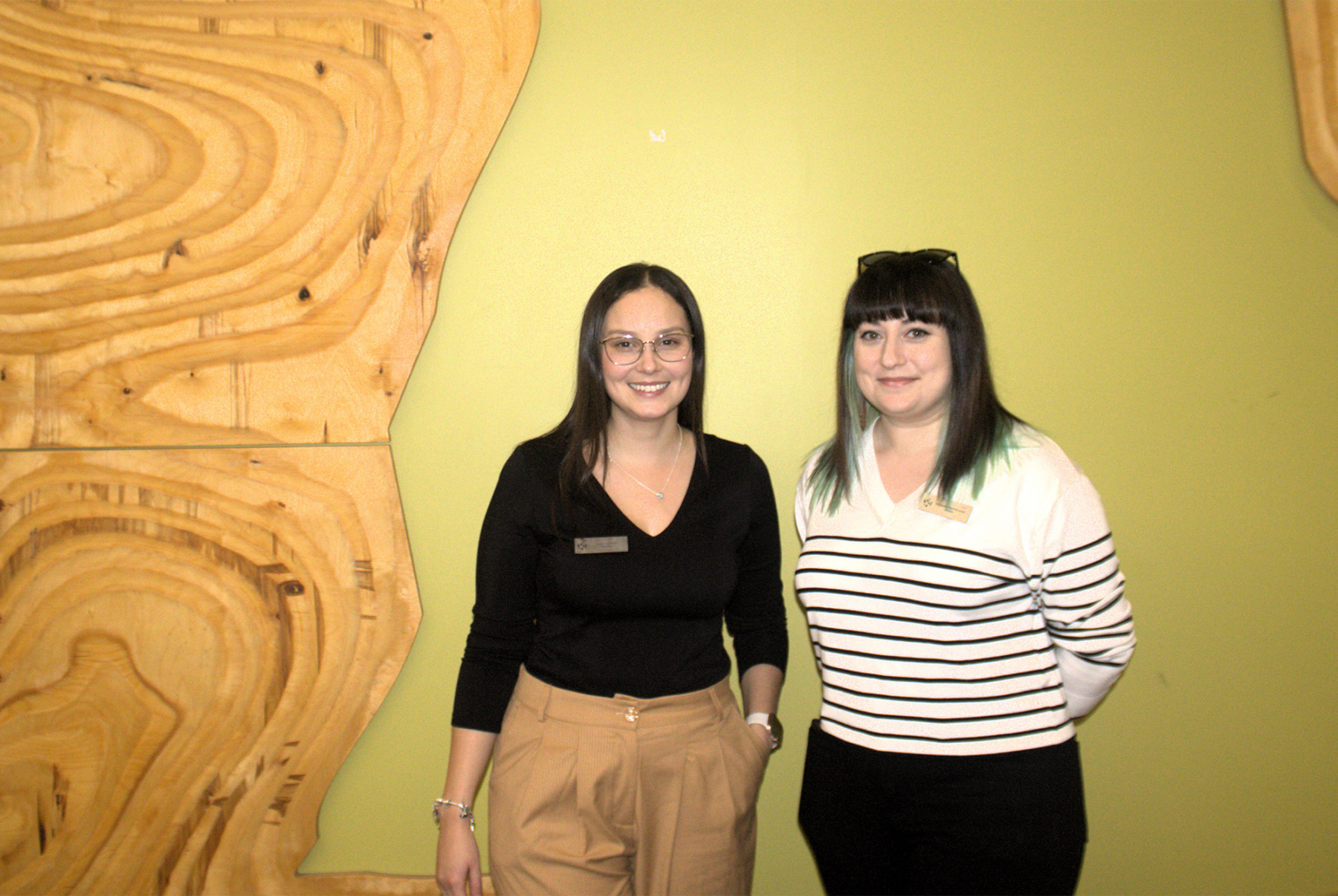
SA president Maria Silveira with director and election officer Marilena Postolache.

The Nawapon buzzed with anticipation on Nov. 19 as a room full of eager students gathered to their seats, ready to hear from a leader whose journey had traced the path they were beginning to navigate.

Maria Silveira, president of the Algonquin Students’ Association, was a guest speaker at the latest Student Leadership Program event. She shared her journey and reflections on leadership with the next generation of student leaders.

Silveira outlined three fundamental lessons she had learned along her path to leadership.

Learn About Yourself: The Foundation of Leadership

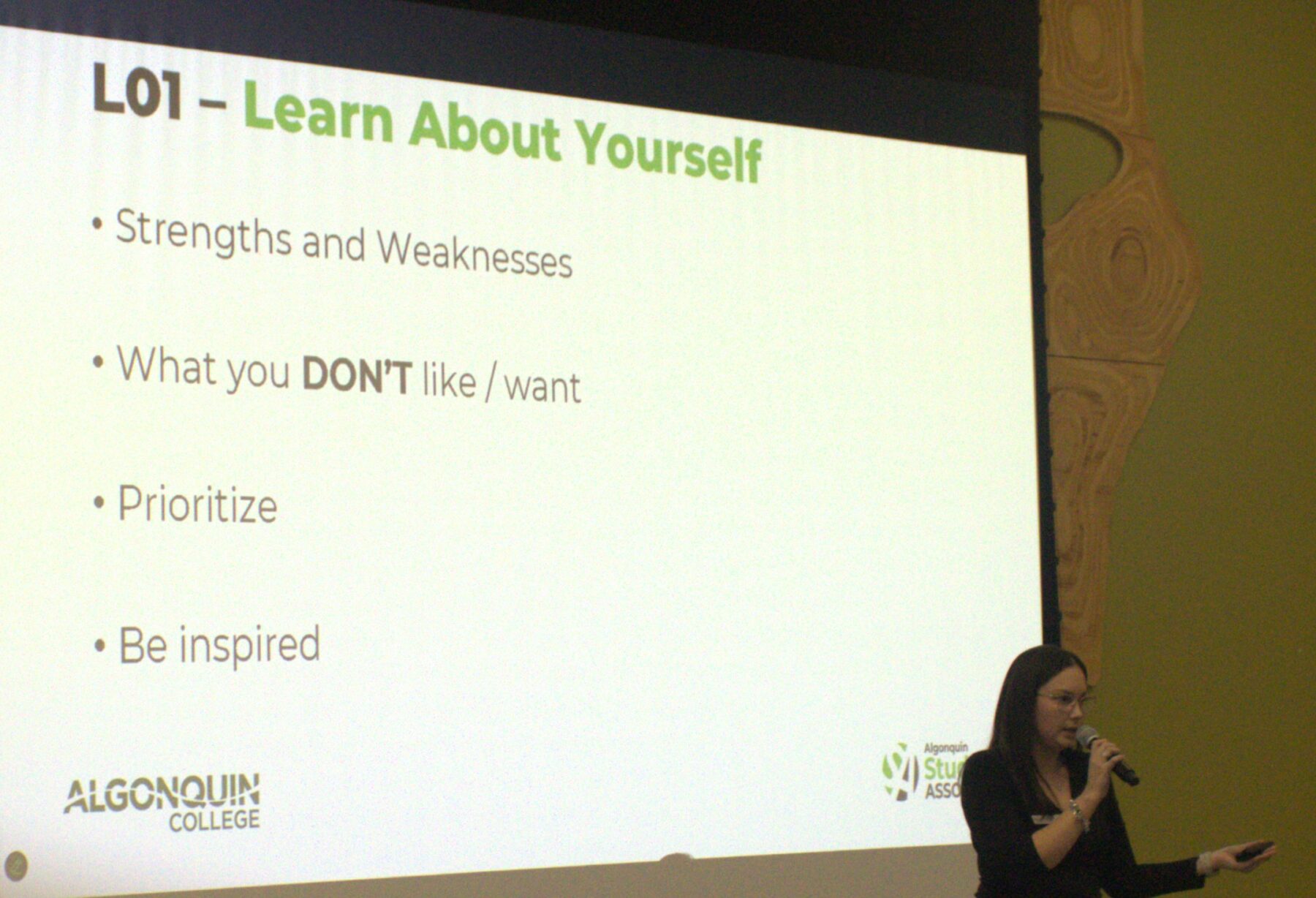
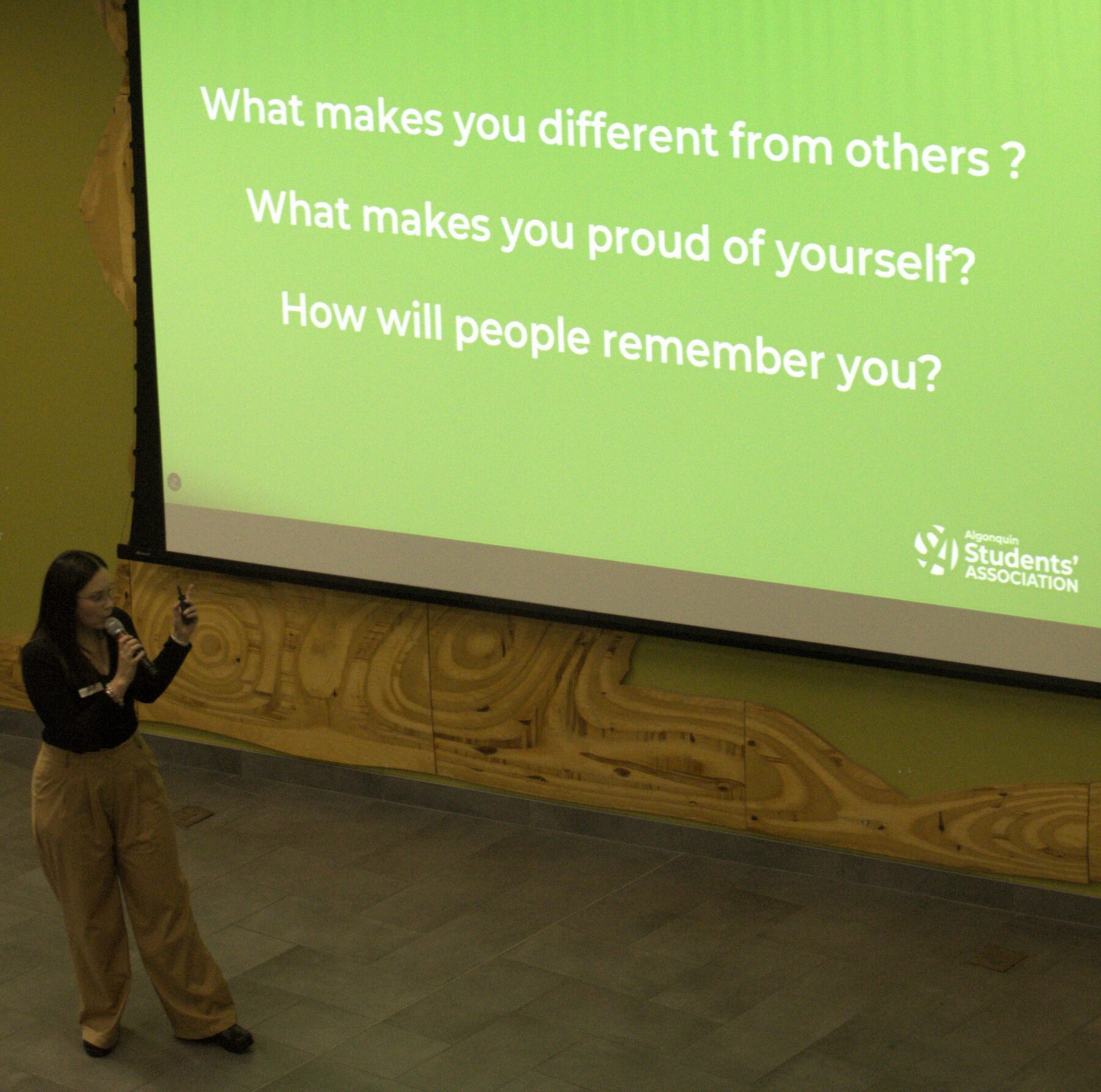
Maria Silveira is talking to the audience of SLP students; she is on lesson one, learning about ourselves.
Maria Silveira is talking to the audience of SLP students; she is on lesson one, learning about ourselves. Photo credit: Korbin Amaya

The first lesson she described was centred around learning about oneself. Drawing from Silveira’s professional measures, she explained how understanding your strengths, weaknesses and desires is the foundation of becoming an effective leader.

“Knowing yourself is the beginning of all wisdom,” said Silveira, emphasizing that navigating the complexities of leadership without self-awareness is challenging.

Taking the time to assess who, what and where she was in her professional life guided her to make decisions that were both purposeful and aligned with her core values.

“If we want to be better leaders, we need to first look to ourselves,” said Silveira, stressing the significance of personal growth before leading others.

Take Risks: Growth Comes from Stepping Outside Your Comfort Zone

Silveira challenged the students to embrace the unknown and take risks.

She quoted Eleanor Roosevelt to start her discussion: “Do one thing every day that scares you.”

Silveira said taking risks becomes easier when you understand why you are taking them. She urged others to embrace the importance of knowing what they truly want — and what they do not.

Silveira shared an example from her experience as an international student in Canada growing through overwhelming discomfort.

Still, to see the rainbow over the stormy clouds, she emphasized that taking that initial leap of faith — putting oneself out there — often leads to rewarding opportunities to connect with others and build meaningful relationships within the community.

“The risks we take today shape the leaders we become tomorrow,” said Silveira.

She suggested a novel that mirrors her approach and philosophy in Greg McKeown’s book Essentialism, highlighting the power of focus and the necessity of saying no to anything that does not serve a greater purpose.

Be a Lifelong Learner: Curiosity Fuels Leadership

Silveira repeatedly said that the learning process never stops, whether through formal education, meeting new people or exploring new ideas.

“Ideas come from curiosity,” Silveira said.

Silveira discussed embracing new experiences, cultures and perspectives to become well-rounded leaders. She also suggested volunteering as another excellent way to grow, providing opportunities to give back, learn from other leaders in the community and enrich personal growth.

Silveira then reflected on the responsibility of the time we have to learn, create and evolve.

“Time will pass anyway, so make the most of it,” said Silveira.

“Make the most of your time here at Algonquin. Do not just attend classes — explore opportunities, meet new people and grow,” said Silveira.

Silveira said leadership is not about titles or awards but about making aware, intentional decisions to learn, grow and impact others.

“Think about who you want to be, what makes you proud and how people will remember you. In the world of leadership, it is not just about the paths we take but the legacy we leave behind,” said Silveira.

Maria Silveira is giving concluding advice to leave buzzing in the SLP students' minds.
Maria Silveira is giving concluding advice to leave buzzing in the SLP students' minds. Photo credit: Korbin Amaya

Silveira left students to consider three questions: What makes you different from others, what makes you proud of yourself, and how will people remember you?

“What I like most about my position as president is connecting with students personally. I am here to listen, guide and support students however I can,” said Silveira in an interview with the Algonquin Times after her presentation.

When asked what led her to pursue a leadership role, Silveira highlighted one of her dreams, studying abroad, which she fulfilled upon arriving in Canada last year.

“I decided for myself that I would make the most of my time here,” said Silveira.

She described that her values are rooted in her experiences in her hometown, São Paulo, Brazil.

“Coming from Brazil, where I did a lot of volunteer work with NGOs (non-governmental organizations), I always believed in the power of people coming together to make a difference.”

Silveira’s one-year term as SA president has centred around on governing through policy development, a process she described as a deliberate and collaborative effort.

“We represent all students, and our priorities reflect their needs,” said Silveira.

This year, the board focused on academics, transportation, and mental health, critical areas identified through extensive student feedback and data collection.

“When students see that we are addressing what matters to them, they feel heard, and that is what leadership is about—listening and taking action,” said Silveira.

Beyond formal speeches, she values personal connections with students, often meeting them over coffee or walks to discuss their concerns and ideas.

“It is in these one-on-one conversations where you understand what people need and how you can help,” said Silveira.

Students sip, learn and play with Mocktails and Trivia

The Umbrella Project connected students through an event at the AC Hub focused on mental health and substance use
Photo: Aicha Chamor
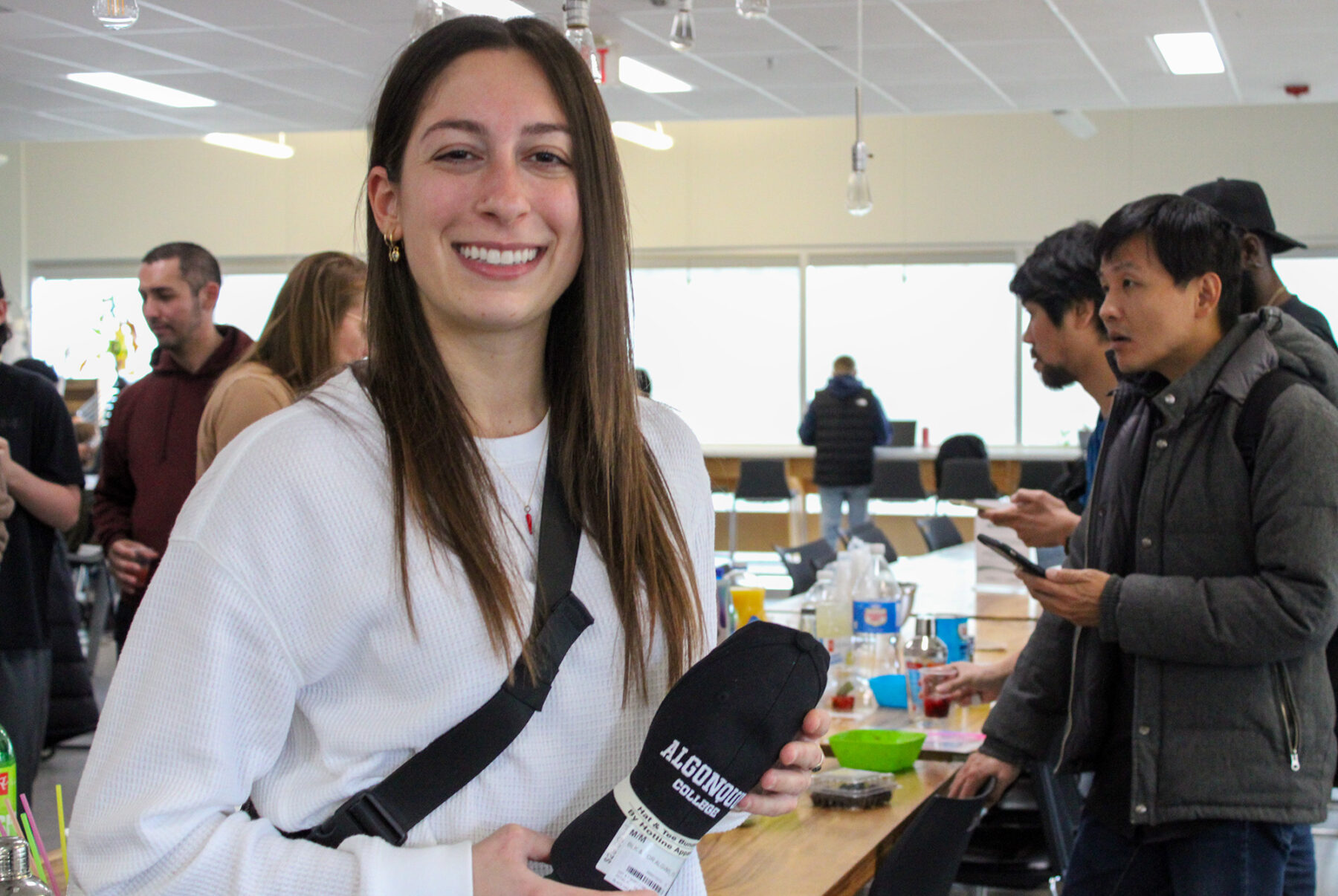
Sera Lolli holds her Algonquin College T-shirt and cap after winning the Kahoot game.

The rate of alcohol use among students is notably high. According to the Ontario Student Drug Use and Health Survey, 35.6 per cent of students in Grades 7 to 12 reported using alcohol in 2023. The Umbrella Project hopes to help students promote healthier choices.

“I have family members who deal with mental health issues, like my grandmother, who has depression. I even deal with a bit of anxiety myself,” said Sera Lolli, a former student at Algonquin College and a winner of the “Kahoot” game that took place at the Umbrella Project Mocktails and Trivia event.

The AC Umbrella Project is funded by the Ministry of Advanced Education and Skills Development’s Mental Health Innovation Fund, which focuses on increasing awareness, providing education and building a healthy campus community.

Lolli’s journey helping friends who are dealing with mental health and addiction issues has equipped her with the knowledge needed to win the game.

The winners chose their prize: either a cap and an Algonquin T-shirt or a well-designed food container.

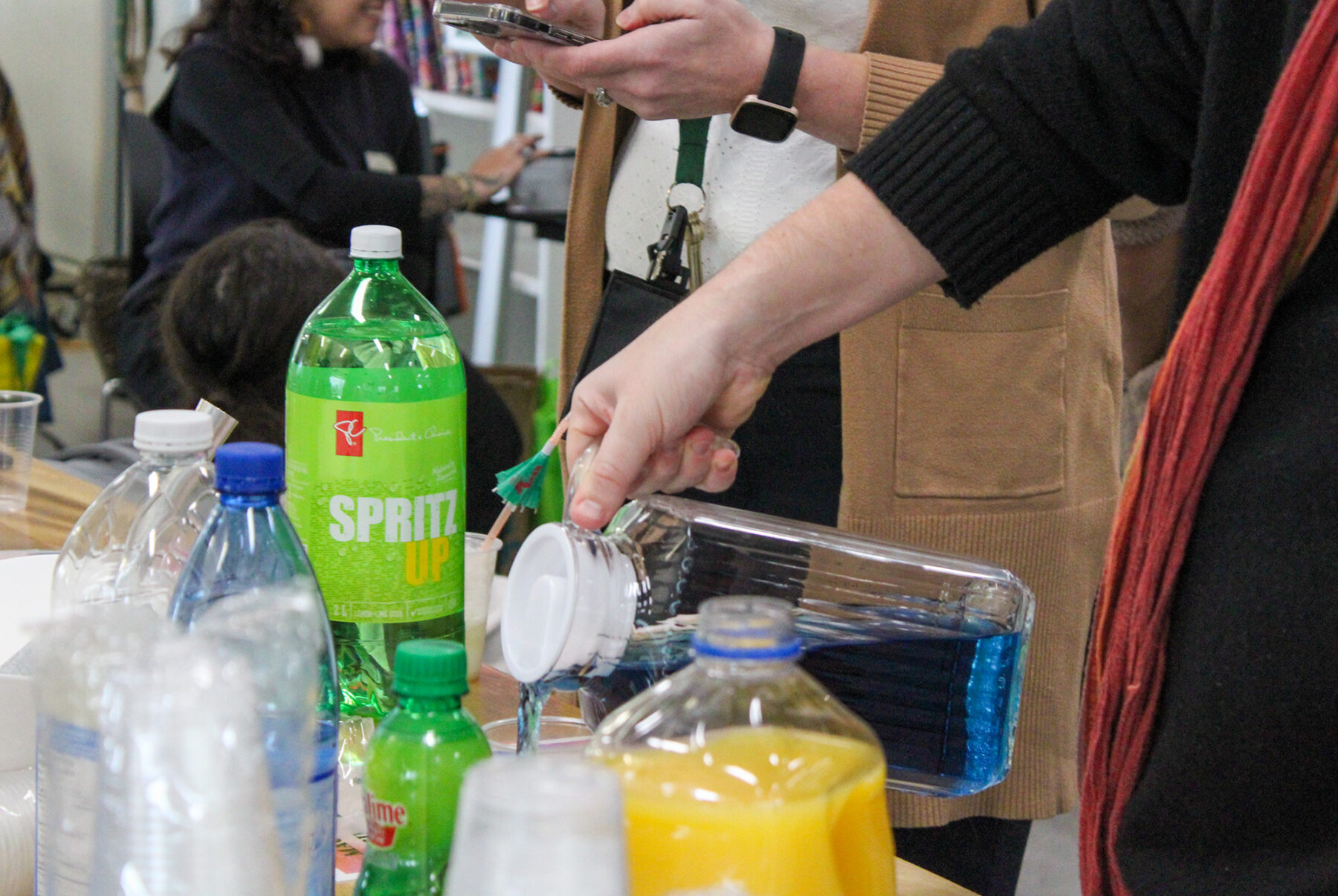
An Umbrella Project staff member is making drinks for attendees
An Umbrella Project staff member makes drinks for attendees. Photo credit: Aicha Chamor

There were scientific questions included in the game like, “What is the area of the brain that deals with memory?” which made it challenging for Tom Truong, a first-year paralegal student, who has no experience with alcohol or drugs.

“I started out pretty well with the true or false questions, but then I started failing because they were asking about blood alcohol, which I have no idea about,” Truong said.

Truong believes that consuming alcohol is a waste of money and destructive to health. He said that the motives behind substance use may be related to culture or stress relief. He blogs and draws as productive ways to ease his stress.

In addition to trivia, the event featured a mocktail workshop and offered three drink recipes: Pineapple Coconut Frizz, Magic Colour, Changing Lemonade and Berry Basil Smash.

Students could use these recipes or invent one from their imagination.

“I feel like a scientist in a lab. I tried to mix many ingredients at once but it didn’t taste good,” said Sophie Brown, a business management student.

Mocktails and Trivia was the final event in the four-part series for National Addiction Awareness Week.

Algonquin College lease with Ottawa Police Service may end in 2026

Students are concerned they may lose access to important role models and learning tools as OPS exit draws near
Photo: Nathalia Lencioni
Police and Public Safety Institute sign located in P-building, where OPS currently has its training facility

A non-renewal notice has been sent to Ottawa Police Services for the use of the P-building. The future of the shooting range in the building remains uncertain, with potential changes likely, according to a report for the Board of Governors released ahead of its Dec. 9 meeting.

Algonquin College’s police foundations students, whose program is known for its collaboration with the Ottawa Police Service, are bracing for a significant disruption as the termination of the lease agreement, set to take effect in 2026, will not only impact OPS but also limit valuable learning opportunities for students.

Elise Nizio, a Level 2 student in the police foundations program, said students are already having a difficult time accessing the OPS-run simulation lab, which exposes them to hands-on scenarios before going into the field.

“I’ve found the sim lab to be very helpful. It’s given me a good feel of what to expect in standard situations, but high stress situations as well,” said Nizio. “Without the sim lab, I’d probably be uncertain on whether or not I would want to be a police officer, as I would not know what to expect.”

Nizio added that being in the same building as OPS officers was important to her as a student.

“Having done the program thus far, I’ve been able to see the new officers train and use it as motivation,” she said. “The idea that I would be in their shoes eventually almost felt like motivation, and having that disappear might cause future students not to take the program as seriously.”

The Ottawa Police Service has relied on the college’s professional development centre for over 20 years. The facility has been an essential hub for police recruits and officers, featuring classrooms, a firing range, a defensive tactics studio and a simulation lab. OPS uses the space for everything from firearms training to critical use-of-force qualifications for its officers.

Olivia Fuoco, a program alumna, said she wasn’t aware of the change and regrets that future students won’t be able to have the same opportunities.

“I had not heard about them leaving,” said Fuoco. “We got a few pretty awesome experiences. We got to meet officers and have them speak at our classes. We practiced mock interviews with them as well to help prepare us for our actual interviews. We also got to experience how to do our fitness testing with officers who were still on the force, which was awesome.”

Jill Reeves, program coordinator for the Police and Public Safety Institute at Algonquin College, provided a statement about the program’s view on the change.

“The Police Foundations program has been independent and strong since its beginnings. We foresee that it will continue to be valuable and recognized. No further comments at this time,” said Reeves.

Deputy Chief Steve Bell expressed surprise at the college’s decision in an interview with CBC, stating that the OPS has relied heavily on the facility for the past two decades.

“This is a very big focal point for the Ottawa Police Service,” Bell said in the CBC interview. “We heavily rely on that area.”

While OPS officials are currently negotiating with the college to secure continued access to the firing range beyond 2026, the future of the entire training facility remains in flux. One of the more immediate concerns is the lack of suitable alternatives for the OPS’s specialized training needs. According to Bell in his interview with CBC, other ranges around the city could not meet the high demand of OPS recruits and officers.

Bruce Hickey, the college’s communications manager, said the college has no comment at this time.

Monkey Buziness Productions shakes up Ottawa’s indie film scene

Four visionary filmmakers are redefining Ottawa’s indie film landscape by creating space for voices often unheard and inspiring the next generation of creatives
Photo: Agrani Tiwari
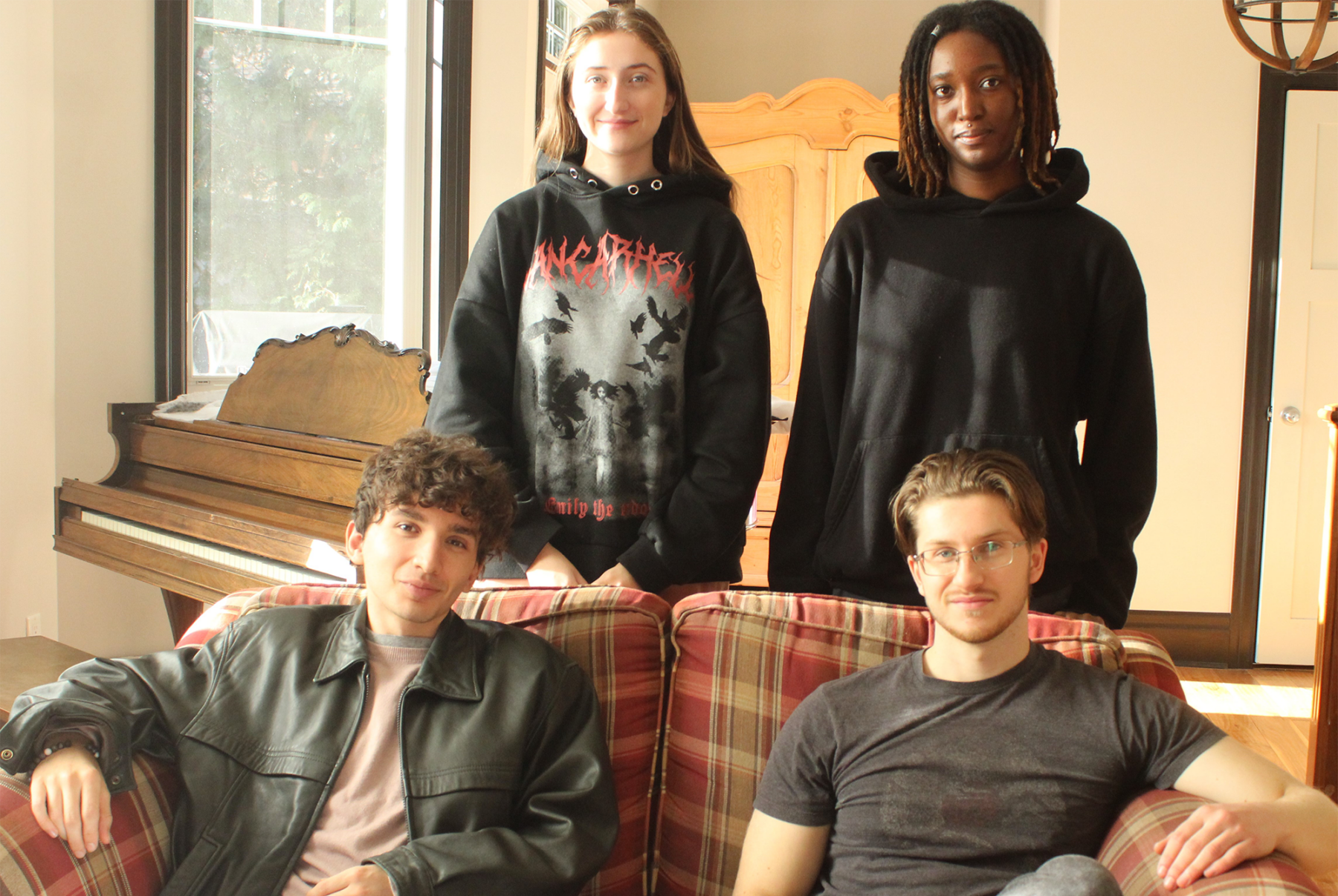
Tom Peters (front left), Christian Guerin (front right), Gigi Packer (back left) and Tchahyé. B (back right), the masterminds behind the Monkey Buizness Productions.

Two Algonquin College graduates are part of a collective hoping to shake up Ottawa’s filmmaking scene. Monkey Buziness Productions is a group of passionate indie filmmakers committed to making authentic and boundary-pushing cinema.

Made up of four creatives, Tom Peters, Christian Guerin, Tchahyé. B and Gigi Packer, they represent a mix of experiences, backgrounds and talents that have come together to push Ottawa’s indie scene forward.

Peters and Guerin are graduates of Algonquin College’s film and media program and have honed their skills through Algonquin’s hands-on training. Tchahyé has experience in videography while Packer comes from a theatre background.

“We each bring something unique to the table,” Packer said. “This diversity in experience helps us look at filmmaking from multiple angles. It makes our work that much richer and more dynamic.”

Individual projects to collective vision

Before coming together as Monkey Buziness Productions, the members had already been working on projects.

“We realized there was a void in Ottawa for truly independent, art-first filmmaking,” said Peters. “The city has opportunities, but a lot of them lean towards corporate or commercial projects. We wanted to create a space for bold, authentic storytelling.”

This comes with a name that indeed has attached to it both their playfulness as creators and respect for film heritage. “There’s a black-and-white film from the 1930s called Monkey Business that I saw as a kid,” said Peters. “It made me think about the longevity of cinema and what kind of legacy we want to leave behind.”

Breaking barriers in independent art

The mission of the group is clear: to create groundbreaking films and give a voice to the voiceless. The themes of their projects often delve into social issues, identity and diversity.

“For me, it’s about showcasing stories that are rarely told,” said Tchahyé. “I feel like as a filmmaker, what I really want to do is also showcase or highlight queer people and also people of colour.”

Coming up are Daddy’s Boy directed by Peters and Velvet Dream by Tchahyé, both premiering at the on Dec. 7, at DigiFilm60 Filmmakers’ Festival. Then there is Waiting for Love, a film directed by Guerin, which will screen at the Mayfair Theatre on Dec. 15 with other independent films.

Velvet Dream
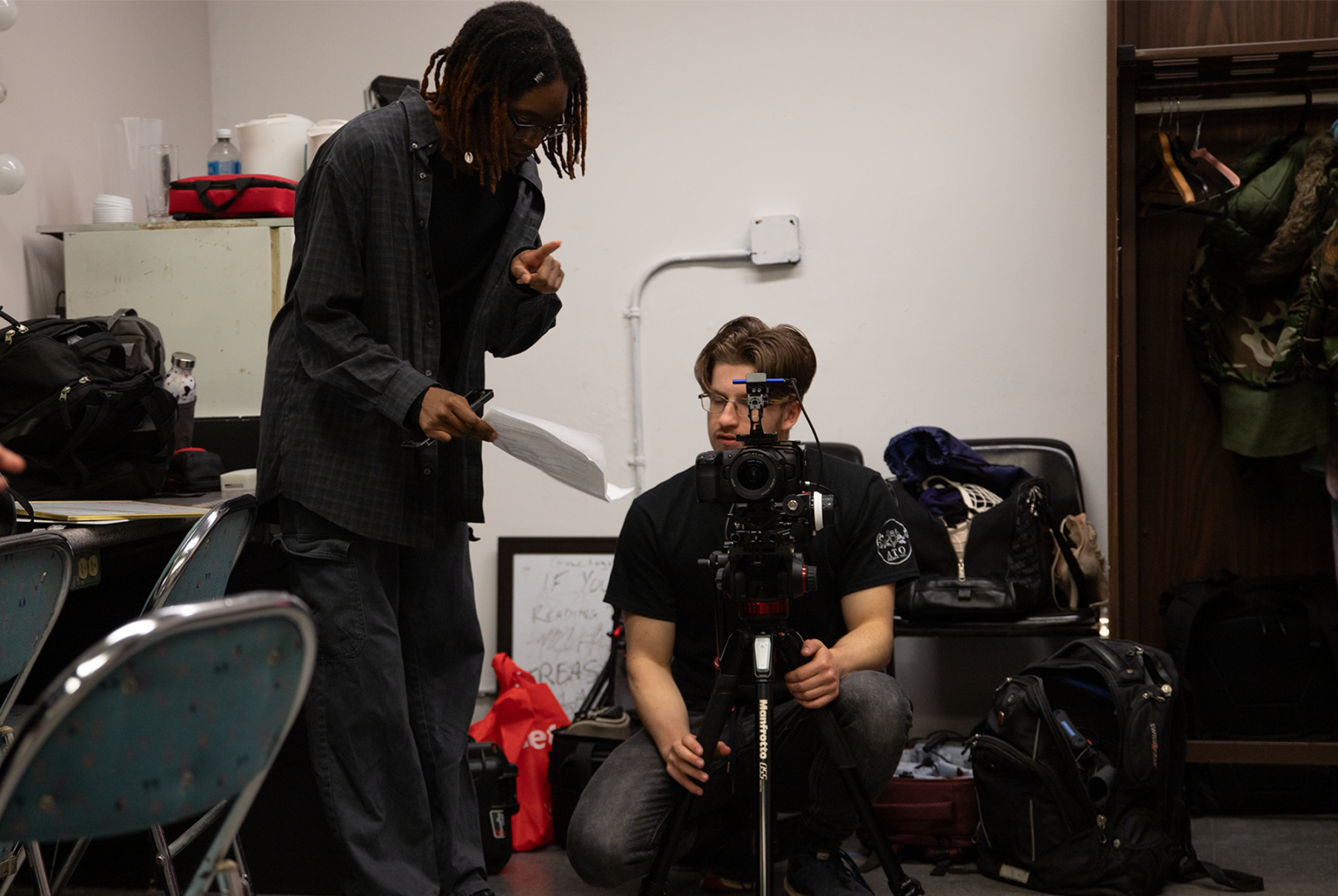
Christian Guerin (right) and Tchahyé. B (left) on the set of Velvet Dream. Photo credit: Monkey Buizness

Algonquin College’s role

Not all of the members are Algonquin graduates, but for Peters and Guerin, the college was a pivotal part of their filmmaking journey. Both credit Algonquin’s film and media program for giving them some pretty unbeatable connections, hands-on training and industry-standard equipment.

“Algonquin gave us a solid foundation,” said Guerin. “The program’s hands-on approach, mixed with its internship opportunities, really opened so many doors for me.”

Peters agreed but emphasized that taking initiative is key: “You pay to learn filmmaking, so make movies while you’re there. Use the gear, connect with classmates and build something you’re proud of.”

Collaboration and creative problem-solving

At the core of Monkey Buziness Productions is their dedication to collaboration. The team takes a democratic approach to dividing tasks, ensuring everyone has a voice in the decision-making process.

“We all have areas we’re more comfortable in,” said Packer. “For example, those two (Guerin and Tchahyé) are more on the DOP side, [which is] director of photography, working with the camera and such. We all have some directing experience… Tom and I fall into more often these scanning and producing roles,” she said.

This collaborative approach helps them overcome the inevitable challenges that come with independent filmmaking. Whether it’s finding affordable locations or managing complex shots, the group works together to solve problems creatively.

“Every project is like a puzzle,” said Peters. “With the right prep and support, you can piece it together.”

Building Ottawa’s film future

While the creation of films stands at the centre of their focus, Monkey Buziness Productions is also keen to see Ottawa’s indie scene grow.

“What we’re really trying to do is produce independent art,” said Peters. “We want to be able to have full autonomy on our stuff. We write, we direct, we produce from the ground up completely so that we’re going to be able to have a big enough portfolio to apply for bigger grants like Telefilm, talk to kind of funders and be able to essentially grow independently.”

John Palaganas (left) director of photography with Gigi Packer (middle) and Tom Peters (right) on the sets of Road Trip, the movie to be premiered in Jan, 2025.
John Palaganas (left) director of photography with Gigi Packer (middle) and Tom Peters (right) on the sets of Road Trip, the movie to be premiered in January 2025. Photo credit: Monkey Buizness

They hope to lead by example and be a supportive force for other filmmakers desiring to make honest, independent film projects.

“Also I think in the future there is a bit of like a talk of providing that sort of support to other artists as well,” said Peters.

Advice for aspiring filmmakers

For anyone who would like to enter the movie industry, the Monkey Buziness team has plain and simple advice: just do it.

“Write your script, take a camera and make your first project,” said Guerin. “Your first work won’t be perfect, but at least it’s a step in the right direction.”

“Stay humble and respect your team. Filmmaking is a collaborative art, and the relationships you build can make or break your career,” said Packer.

What’s next for Monkey Buziness?

As the group prepares for their December premieres, they’re already looking toward the future. In 2025, they plan to expand their collective and bring on other filmmakers to diversify their storytelling further.

“This is just the beginning,” said Packer. “We’re excited to keep growing, experimenting and contributing to Ottawa’s film culture.”

For now, Monkey Buziness Productions is focused on making films that challenge conventions and leave a lasting legacy.

First person: I changed career directions – and found a different side of myself

Once, I attended university in Spain, in pursuit of becoming a full-time artist. I had my life all mapped out. When it stopped feeling right, however, I let go of my plan and set out to discover a new path
Photo: Itel Sapozhnikov
"Words were another lifelong passion that refused to fade," writes the author, "but I was so focused on becoming an artist, I overlooked it."

From the very first term writing for the Algonquin Times, I watched it happen: my ever-present need to excel academically began turning into a genuine passion for stories. Journalism had somehow captured my heart.

J-school moves a million miles a minute, and at first I resented it a little. Moving forward meant not looking back at what I used to love, or who I used to be. And it meant facing my fear of not knowing where I might end up.

Now, a journalism work placement is right around the corner, and I’ve realized that letting go of one dream has led me to unexpected places.

Just a few years ago, my life looked very different. I was on a beautiful courtyard at the University of Barcelona, hurriedly reading a book about Spanish art history in preparation for the test that would get me into the fine arts program. Everything in my pursuit of becoming a full-time artist had led to that moment.

But while studying art was an incredible, unforgettable experience, I had to confront the fact that something in me had changed. I still loved creating, but putting a price tag on something that I had built my life around made the experience dreadful. So, instead of plodding ahead with a career that no longer felt right, I decided to move to a new country on my own to rediscover what I wanted.

I grew up surrounded by remarkably stubborn, brilliant and creative people who never gave me any idea I couldn’t be whoever I wanted to be and do whatever I wanted to do. Like most people, I spent most of my life planning for someday, and until very recently I was certain I had it all mapped out.

I was aware of the ways my parents had given up parts of what they wanted for stability – my mother fell in love with painting a lifetime before I did, but by the time I was born, she was a judge. My dad is a scientist with an unmistakable talent for observation and research, but he also worked in law for as long as I remember.

The concept of a day job to allow for a hobby is one I was never sheltered from, and yet, my plans were far from pragmatic – I wanted to be an artist.

I had always been a very quiet, bookish kid, and I fell in love with this living, wordless language. With its rules and unruliness, with Rubens and Singer-Sargent. From the first time I got my hands in one of my grandfather’s many gouache paint cases, throughout courses taught by unbelievable professors and decades of learning from my own mistakes, that passion never wavered.

Over constant change, doubt, loss and learning, I understood deeply that art is not only a luxury, but sustenance. It serves as witness to our experiences, our lives in their individuality within the human experience. How many of us are only present now in a portrait or an inscription on the first page of a favourite book?

Creating stayed the same. It moved from journals and sketchbooks to bigger canvases and different mediums, but the feeling stayed. So I built my life around this old friend, under the light of a drawing desk. It wasn’t until I was nearly 23 years old that I revisited that plan. It happened when I was accepted to an amazing art program in the northwestern coast of Spain, and something that would’ve brought me nothing but joy, filled me with uncertainty.

I found myself thinking about a Sylvia Plath quote a lot: “I saw my life branching out before me like the green fig tree in the story. From the tip of every branch, like a fat purple fig, a wonderful future beckoned and winked,” she said.

It was the first time that my future felt completely foreign, the first time I really noticed parts of what I wanted had changed over the years, and furthermore, parts of me changed.

As much as I wanted that to still feel like art was the only path forward, it couldn’t be anymore. Somewhere along the road, I became someone who needed something else.

Rich Lauzon, the program coordinator of Algonquin College’s drawing foundations for animation and illustration program, has worked in the visual arts field since the 1990s but his original plan was different. He wanted to work with music. But he believes people’s interests make their way back into their lives, one way or another.

“You just don’t know how things are going to land, and things throughout your life get discarded and picked back up. And you can’t really see it in a five-year span, or even a 10-year span,” said Lauzon. “But over time, things resurface that you really like. It could be science, it could be reading, it could be writing, it doesn’t matter where it is, it finds a way back into your life.”

Marie Pier Caron, an alumna of the illustration program, said it’s been disappointing trying to fit into the art industry.

“Getting into the industry has been disappointing,” said Caron. “ We were warned about the challenges ahead, but the reality has been tougher than expected.”

When the opportunity of going into journalism appeared through a friend’s recommendation, it seemed entirely obvious. How could it have never occurred to me? Throughout my entire life I had journals, scribbled at the edge of book pages and went through books at a vicious rate. Words were another lifelong passion that refused to fade, but I was so focused on becoming an artist, I overlooked it.

I still love painting, keep art supplies at hand and create as often as possible. But working in journalism, even as a student reporter, has also been extremely fulfilling. Using my words to amplify someone’s voice and tell their story is an enormous privilege.

First Person: Running against myself

Running is hard and I don't always like it. But it's now my lesson for life in general. Running isn't always about the outcome - it’s about pushing through self-doubt and, no matter what, not stopping
Photo: Yuye Jiang
"Every step is a decision that I have to continuously make and argue with myself about stopping or slowing down," writes the author.

I didn’t start running because I loved it. On the contrary, I hated how hard it was. But on a cold September morning in Ottawa, I found myself at the start line of my first half-marathon, chasing the version of myself I wanted to become.

On Sept. 21, 2024, I ran my first official half-marathon and by the end of the race, I felt weak. I trained for months to get where I was and I was ashamed of my performance that day. Running is physically hard, but for me, the real challenge is mental.

Every step is a decision that I have to continuously make and argue with myself about stopping or slowing down. On that day, I lost the argument. I slowed down and stopped so many times that the distance itself did not feel like an accomplishment. But I am learning to accept that it was.

When I started running, I was only doing it because the version of myself I’m aiming to be is doing it. I’ve always looked like I was in great shape. I have solid muscle definition from years of gym training since I was 17 and from playing sports for many years. But looks don’t translate to endurance. I was ready to scratch a half-marathon off my bucket list.

Since I was 17, every year I wrote down that I wanted to run a marathon. But it always felt out of reach. This year, I decided to take it seriously. I signed up for the Army Run’s Commander Challenge: a 5K followed by a half-marathon, with only an hour’s break in between. My friend Michel Akpro, an Algonquin College alumni and ex-track runner, agreed to do it with me. We made it a competition: racing the 5K and running the half-marathon together.

I loved running with Akpro because he was better than me. It was like chasing something I thought was unattainable, which kept me motivated.

In June 2024, I met Farah Fino at my local gym. Fino is a veteran runner with many marathons under his shoes. He loves running so much that he introduced me to his routine so I could train with him. After training with him once a week, my 5K time dropped from 27 minutes to 22:51. Fino, at 44, runs a sub-18-minute 5K, which would have felt impossible to my past self. What blew me away was when his wife gave birth in August, despite being up all night with their newborn, he still ran a sub-18-minute 5K on Thursday.

In my case, a month before the race, I got sick after hitting my best 5K time. For three weeks, the most I could run was 200 metres, and even that didn’t feel easy. One day, I forced myself out of the house despite feeling terrible, telling myself I could handle a short run. But 100 metres in, I felt like I might pass out. I could barely walk, and I thought, If I pass out here, who’s going to find me?

Race day came, and I was ready but not fully recovered. I raced the 5K with everything I had, but Akpro still beat me by 18 seconds. I finished at 23:58, just under a minute slower than my best time. Then, the half-marathon started, and I could feel the toll from the 5K. I told my friend to go ahead without me because I didn’t feel strong enough to keep up.

I finished the half-marathon in 2:34, much slower than my training runs. I crossed the finish line but felt empty. All the hard work felt like it hadn’t paid off. So, I told myself I would do it again on my birthday.

When I told Fino how I felt about my time, he said, “You’re always faster than the version of you who didn’t start.” It sounds corny, I know. He took it from a book, but lately, whenever I go for a run, I repeat those words to myself.

For my 21st birthday, I decided to run a 21K to mark 21 years. This time, I finished in 2:08. I was proud of my improvement, but a part of me still wanted more. Running taught me that it’s not always about the outcome. It’s about pushing through the mental challenges, the self-doubt, and, no matter what, not stopping.

Next year, I’m doing the Army Run again, aiming for a sub-20-minute 5K. Every race, every run, is part of my journey. It’s a reminder that I’m not just chasing a finish line. I’m chasing the person I want to become.

First Person: The similarities between land surveying and journalism

Quantity is great, but if you sacrifice quality of work for it, problems start to pop up. Besides, putting in the extra effort can be extremely satisfying
Photo: Ethan Macleod
"Like a complicated survey job, sometimes the right option is to take an extra day and lose some profit to make sure you're doing the job properly," writes the author.

It was 30 degrees outside, and I was trudging through the bush, fighting off mosquitoes and flies, dressed in blue jeans, a t-shirt and steel-toed work boots. Jeremy Fleguel, my dad, and I were just north of Apsley, Ont. land surveying on a project that could not have gone worse.

Surveying is a lot like journalism. It’s a new story every day, often a new puzzle to solve and the quality of your work is of utmost importance. Someone who isn’t a practicing surveyor likely has no idea what they do and only sees the finished product. Much like in the news world.

Everything is about evidence as a surveyor. Theoretically, there are physical iron bars at nearly every corner or bend in property in the country.

Those bars often go missing. Most people don’t even know they exist, yet a surveyor’s day is doomed to be ruined when one disappears.

After traversing 1000-feet deep into the property, my dad and I arrived at the corner we had been searching for. But there was no iron bar.

Surveying isn’t as simple as walking to a destination. Surveyors use instruments that measure distance using reflective surfaces, and the instrument must know where it is.

Ideally, surveyors start the job with at least one known point, normally an iron bar identified on a survey plan. The instrument is set up on another point, which is usually a nail set by the surveyor and the distance between the two points is measured.

The surveyor will repeat this process throughout the property, setting points ahead and measuring the angle and distance.

That day, we had just done that for most of the day. We were exhausted from carrying equipment and having our blood drained by the various insects of early summer in Ontario. When we found no evidence on the northeast back corner, my dad let off a string of expletives.

“It never goes the way you think it’s going to go. Something always goes wrong,” said my dad. “If you’ve had a perfect day, you probably missed something.”

We had two options. We could calculate the bar’s location based on sketchy evidence we collected, or we could go a thousand feet further down the line to make our calculation tighter.

Some surveyors will choose the easy option because it saves time and money. If you calculate the bar and set it as is, you can cool off and move on to another job.

However, that solution pushes the problem further down the line. When the next surveyor finds a discrepancy, they have to decide whether to lose money or keep the property fabric tight.

Decisions are increasingly favouring expediency over quality, especially at larger companies.

This goes entirely against what my dad and I were taught. He learned from my late grandfather, Jack Fleguel.

“Don’t become a surveyor if you’re trying to get rich,” my grandfather often said.

He did well with his business, but he did not focus on his profit margins for one day.

Survey companies are usually owned by surveyors, but newspapers are often owned by wealthy business people. This leads them to run a newspaper like they would any other company.

Like a complicated survey job, sometimes the right option is to take an extra day and lose some profit to make sure you’re doing the job properly.

When that nightmare job in Apsley was over in done with, we felt great about ourselves as we sat exhausted and sweaty back in the light grey Tacoma work truck. Putting in the extra effort can be extremely satisfying.

I get the same feeling while reporting, spending extra time on one great story and doing a thorough job feels better than pumping out four stories in a week.

Deadlines and timelines are important, but so is enjoying the piece you write.

Algonquin Times podcast

Stay Informed

Sign up for our newsletter

Subscribe

* indicates required