Students reach new heights in rock climbing contest
Students navigate bouldering walls and hang onto high scores as they participate in the Climbing Competition Winter 2025
Photo: Lara Simard
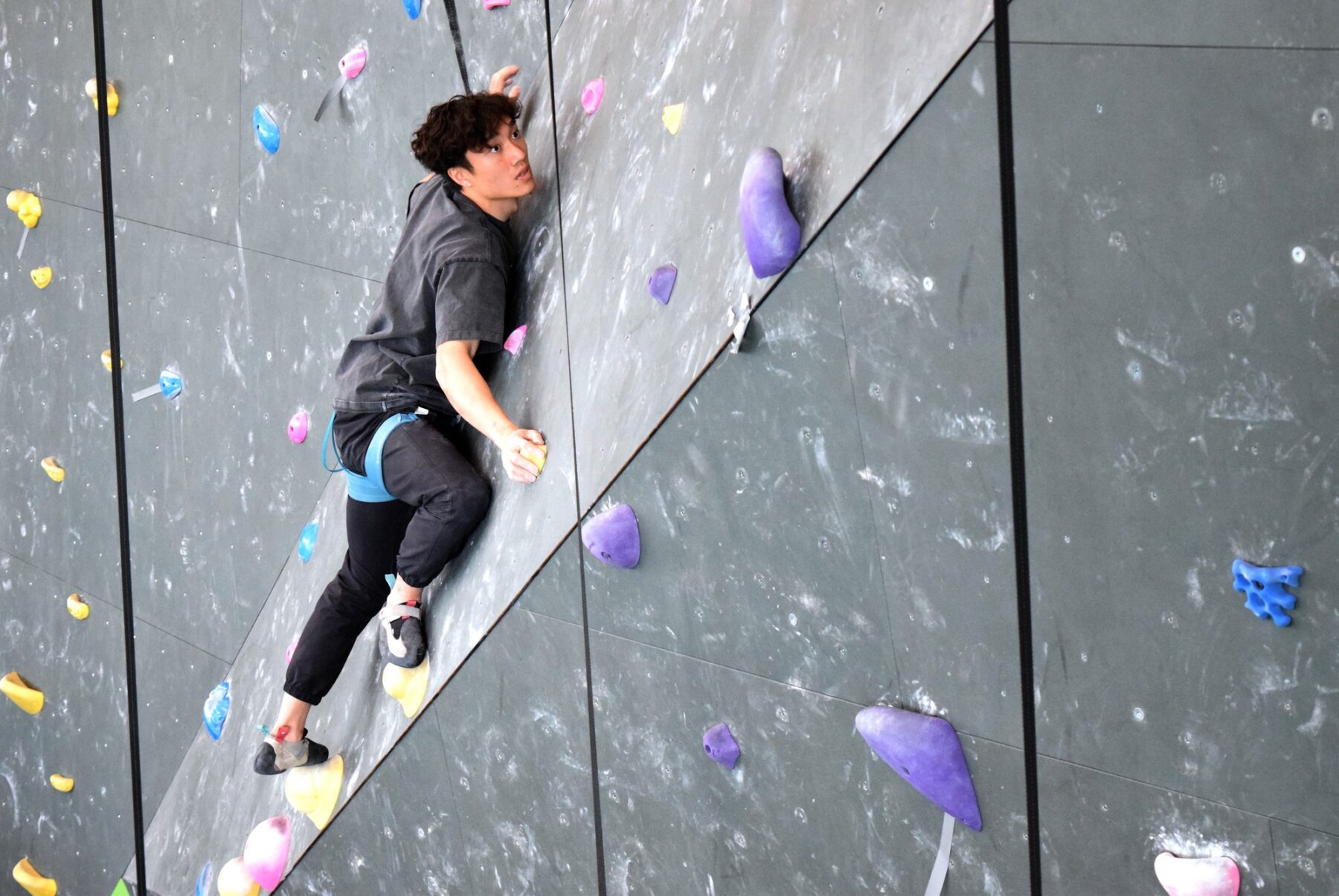
Jason Bui completes the hard-level top-rope wall in hopes to solidify his win during the climbing competition on March 28 in the Jack Doyle Athletics and Recreation Centre.

Helena Porras stares intently at the colourful grips on the wall. She analyzes the different routes she can take, the potential downfalls, the strategic placements. Her score lies firmly beyond the chalk-stained boards, the top of the wall within reach.

It is her third time at the climbing gym this week. She aims to prove herself to one person and one person only: Helena Porras.

The Climbing Competition is held every two years in the Jack Doyle Athletics and Recreation Centre. This year, the competition ran from March 24 to March 28. The walls were completely refreshed with new climbs.

Overall, there were 61 participants in the competition. The competition featured 31 different climbs on the bouldering wall and five on the top-rope wall, which is a harness-assisted climb.

About eight months ago, Porras made her first appearance in a climbing gym. After watching professional climbers on video, she felt inclined to try the sport out for herself.

Adrian Bunner, the competition officiator, recommended she exercise her climbing skills in this year’s competition. Porras did not refuse the opportunity to build her overall strength.

Regardless of her humble motives, Porras ranked an impressive third place on March 27, a day before the competition ended.

“Honestly, it was a surprise. I didn’t expect that, but it’s really motivating to just keep going and (go) wherever it takes me,” Porras said, flashing a proud smile. “It feels good, I’m not going to lie.”
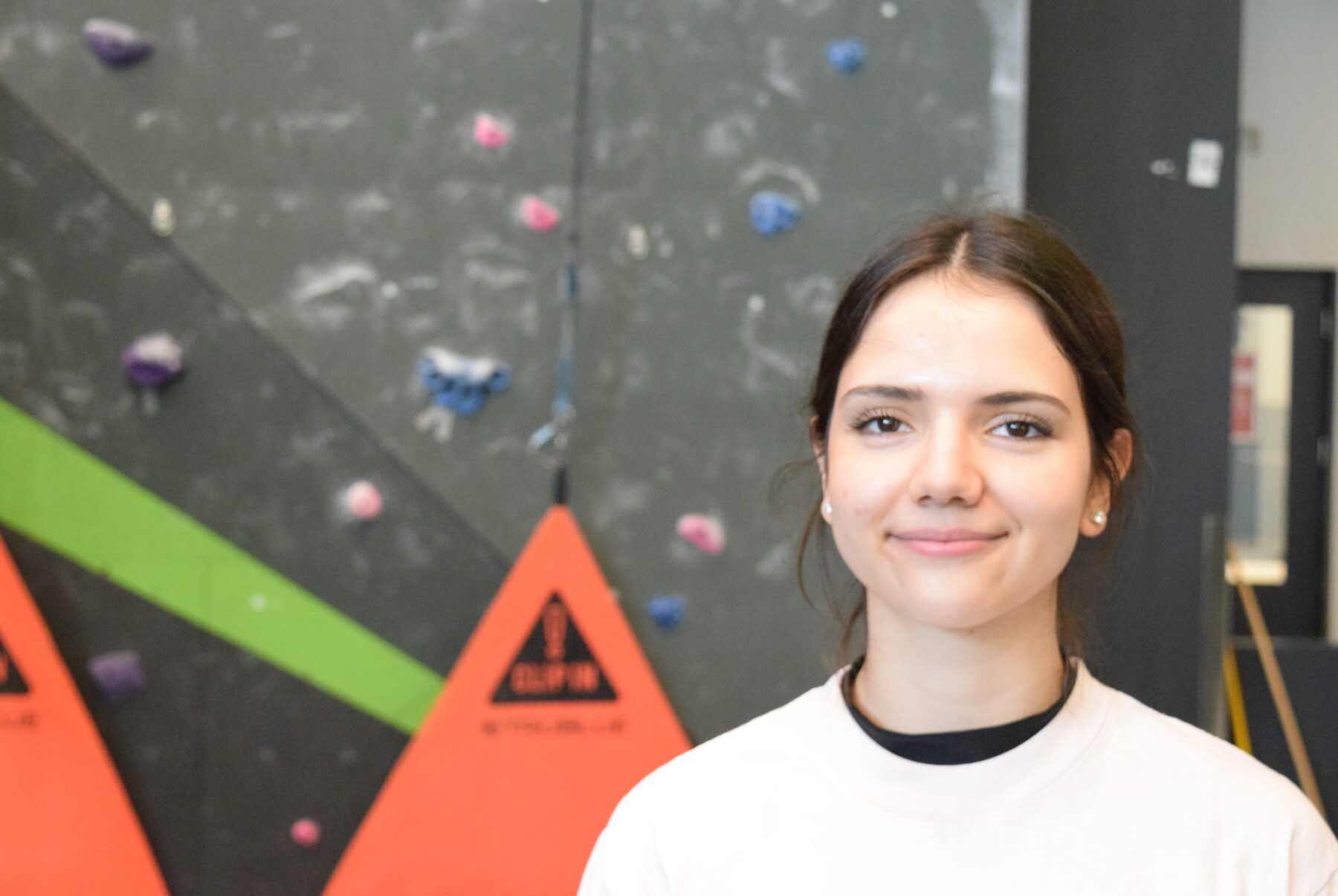
Helena Porras stands triumphantly in front of the rock wall before attempting the competition in the Jack Doyle Athletics and Recreation Centre on March 27.
Helena Porras stands triumphantly in front of the rock wall before attempting the competition in the Jack Doyle Athletics and Recreation Centre on March 27. Photo credit: Lara Simard

On March 28, Porras returned to the wall, continuing to strive for new heights in an attempt to move up a rank. Her motivation successfully brought her up to second place by the competition’s end.

Another natural talent in the competition was Vincent Haley. On his third day on the competition climbing wall, Haley was confident he could get a high score.

“I just like climbing, so I decided to join the competition. It’s competitive, and you try to beat your personal best from previous climbs, so that’s what I enjoy about it,” Haley said.

It is Haley’s second year attempting the competition at the college. This year, he was motivated to surpass his score. Hanging upside down on one of the most challenging bouldering routes was not a huge feat for Haley.

Defying the laws of gravity, Haley propped himself up with his right hand, pulling a Spiderman-like stunt.

Vincent Haley reaches the bouldering wall’s summit in less than two minutes during the rock climbing competition at the Jack Doyle Athletics and Recreation Centre on March 27.
Vincent Haley reaches the bouldering wall’s summit in less than two minutes during the rock climbing competition at the Jack Doyle Athletics and Recreation Centre on March 27. Photo credit: Lara Simard

The most outstanding contestant was Jason Bui, a massage therapy student at Algonquin College, who had the winning score for the men’s devision.

Bui has been rock climbing for just over two years, training every day in an almost “unhealthy amount” for the competition. With extensive experience in fitness, he participates in long-distance runs and body-weight exercises throughout the year, building muscular endurance to support his climbs.

Out of the 31 bouldering routes on the wall, Bui completed 29 flawlessly.

The routes range from 1-31 in terms of difficulty, problem 1 being the easiest and 31 being the most challenging.

A problem, or boulder problem, is a predetermined climbing route on a bouldering wall. It consists of a series of holds and moves that climbers must complete from start to finish. These problems vary in difficulty and are often marked with tape or coloured holds to differentiate them.
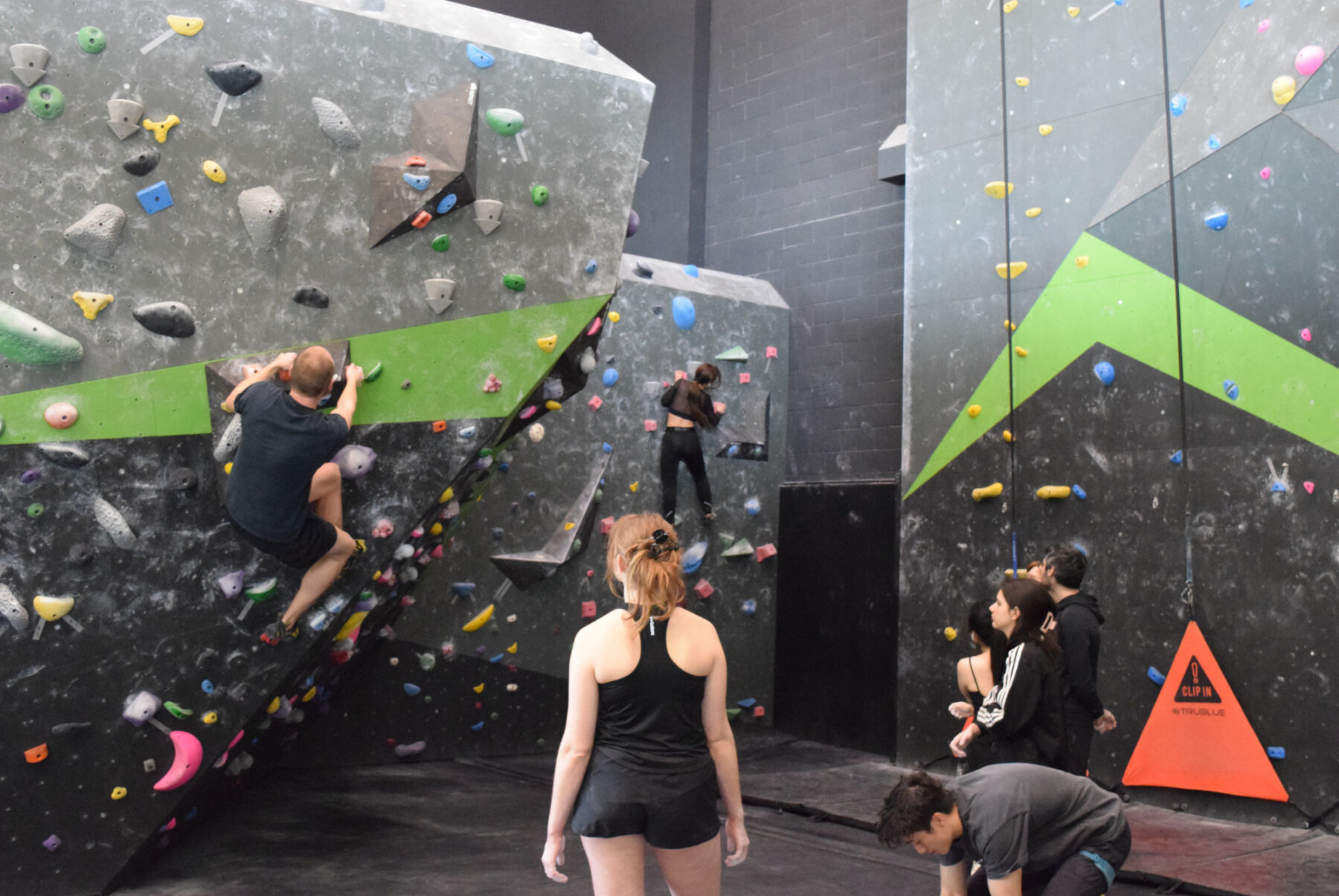
Students gather around to attempt rock climbing problems on March 28 at the Jack Doyle Athletics and Recreation Centre.
Students gather around to attempt rock climbing problems on March 28 at the Jack Doyle Athletics and Recreation Centre. Photo credit: Lara Simard

Problem 29 consists of an overhang climb and few holds to grasp. One wrong hand placement could mean a potential fall.

“The more attempts you take, the more points you lose,” Bui said. “That’s why you want to do it on your first attempt to get the most points. So, I was able to clear all of them on the first attempt.”

But winning the competition was not the only thing Bui achieved from this event. He says rock climbing is one of his favourite ways to relieve the stress from the end of term.

“Around this time, a lot of students are having a lot of stress with their assignments, exams and such, so it’s actually very considerate that they allow us to do a week-long comp rather than a day comp,” he said.

By Friday afternoon, over 15 people stood at the foot of the wall, taking a shot at the competition before the winners were announced.

As Students’ Association staff member Alison Jordan admired the intricate placement holds on the wall, she reflected on the popularity of the competition.

“It just keeps growing,” she said.

Opinion: In renter’s remorse, suffering builds character

Starting yourself with a bottom-of-the-barrel apartment gives you no option but to climb and enjoy the view
Photo: Joshua Peachey-Leigh
A broken drier in an unfinished basement, only for $1.75.

Living in a crappy apartment builds character. The first apartment is a pivotal moment in a college student’s life, a definitive book end to living with your parents and a start to your life alone. For me, a one-bedroom apartment is the dream, unfortunately they’ve also never been more expensive. Apartments in my price range also happen to be apartments in a state of decline or disrepair. So, the ideal spot is a place just bad enough to be cheap, while being just barely good enough not to kill you.

According to a 2024 report from Statistics Canada, one-bedroom units in Ottawa apartment buildings average a rent of $1,533 a month. With prices high and rising higher, the apartments at the cheaper end are there for a reason.

Places that might otherwise require repairs are allowed to skate by because they’re cheaper. Bowed floors, bad location, faulty appliances, missing appliances all contribute to a more affordable location. If you’re smart, the money you save living at this place can be used a few years on for a place a little above your means. Like many things, it’s a choice between expense and convenience.

Moving away from home is always going to be a rough adjustment, even if it’s something you’ve been dreaming about. You’re away from your parents, for better or worse, and you’re thrust into parts of the world they might’ve hidden from you. For the particularly unlucky, this might be the first time you wash your own laundry or cook your own food.

But there is a brighter side. Yes, you’re washing dishes by hand, you hear your neighbours stumble home at three in the morning and the laundry takes a combination of quarters, loonies and toonies devised by a mad man. But if you can endure this, if you can balance your current living arrangements and school or a job, probably both, there’s not much you can’t do. Every new place will be compared to the bottom end of the scale. The first time you get somewhere with laundry in the unit makes you feel like a king. Your first place next to the train station opens the world up to so many more “screw it, why not?” decisions. Starting yourself near the bottom gives you no option but to climb and enjoy the view.

You might be surprised by the amenities a crappy apartment does have, past the state of disrepair. A passable location and a balcony in exchange for a broken washing machine and paper thin walls might be worth it for you. Finding and living in your crappy apartment is an exercise in compromise and good practice for later in life.

There is, it should be said, a fine line between crappy and a clear threat to your health. The best shabby apartment is one that offers little convenience for less money, not one that will kill you and charge rent while it’s doing it.

A crappy apartment now sets you up for a good one in the future. Your expectations are lowered, your savings account gets a chance to grow and you learn how to cope without the amenities, appliances and services you’re used to. Crappy situations, where struggle is required to pass, let alone succeed, build character. When it’s finally time, open your creaky door, go down the death-trap elevator or creaky stairway and step into your future stronger and better prepared for what living on your own really means.

Men’s soccer: Algonquin Wolves head coach Angus Wong to be inducted into OCAA Hall of Fame

From national champion to Head Coach of the Year, Angus Wong has made an impact on Algonquin College soccer both on and off the pitch
Photo: Brahim Ait Ouzineb
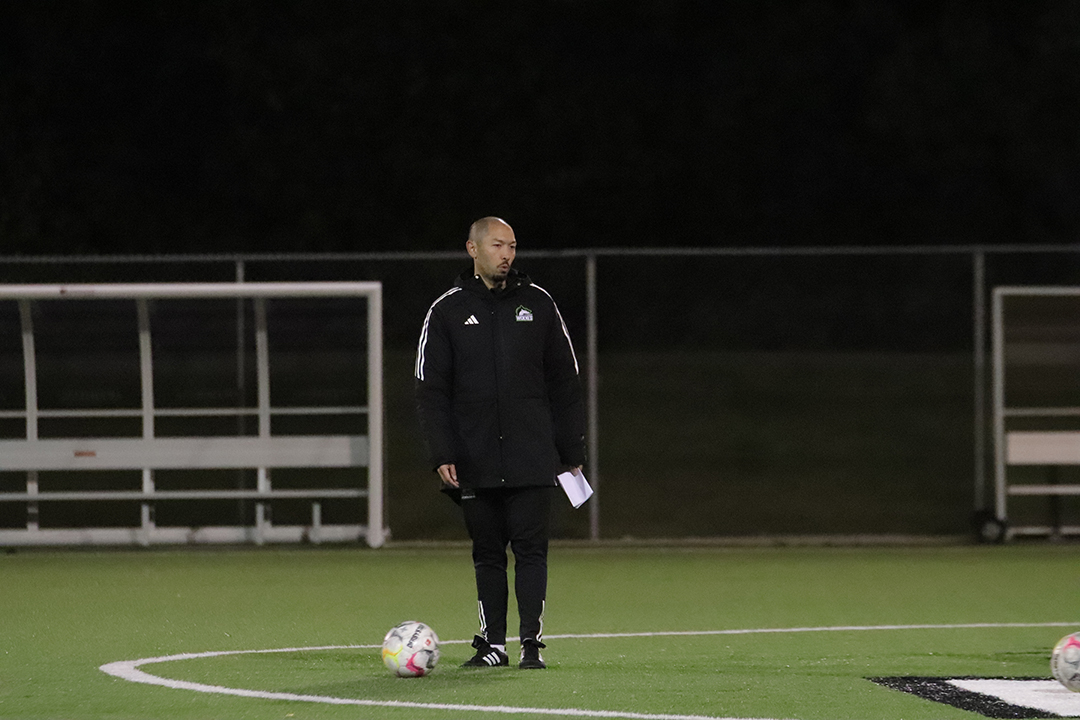
Angus Wong leads a training session during the 2023 season.

Angus Wong, head coach of the Algonquin Wolves men’s soccer team, will be inducted into the Ontario Colleges Athletic Association (OCAA) Hall of Fame in recognition of his impressive three-season career with the Thunder from 2002 to 2004.

In many ways, Wong was the “missing piece” when, as a student, he joined the Thunder as a goalkeeper in 2002. At the time, Algonquin’s sports teams were known as the “Thunder,” not the “Wolves.”

The Thunder were fresh off a defeat in the OCAA finals and a loss in the 1999 Canada Collegiate Athletic Association (CCAA) national championship three years prior.

Wong quickly established himself as a reliable shot-stopper and defensive linchpin, leading the Thunder to a dominant and historic season, winning the CCAA national championship alongside an OCAA title.

The Thunder’s 2002 championship marked the first-ever CCAA gold medal in Algonquin team sports.

By 2004, Wong had risen to the role of captain, becoming a commanding voice in the net.

“I think in my rookie year, I was probably somebody who was a bit more reserved and quiet, but by the time I was captain in 2004, I was more of a vocal leader,” said Wong.

Wong closed out his time with the Thunder by winning a second OCAA trophy in 2004, alongside many individual accolades and awards.

Despite his captaincy and leadership on the field, he never considered transitioning to coaching during his playing days. But in 2017, Wong made the decision to rejoin Algonquin soccer as an assistant coach, eventually becoming head coach in 2022.

“As a goalkeeper, you see the game from behind, which gives you a very good vantage point,” said Wong. “But coaching required me to see the game from the sidelines, which was a bit of an adjustment.”

With Wong in charge, the Wolves have seen a resurgence, returning to the OCAA and CCAA finals last season, being narrowly defeated both times.

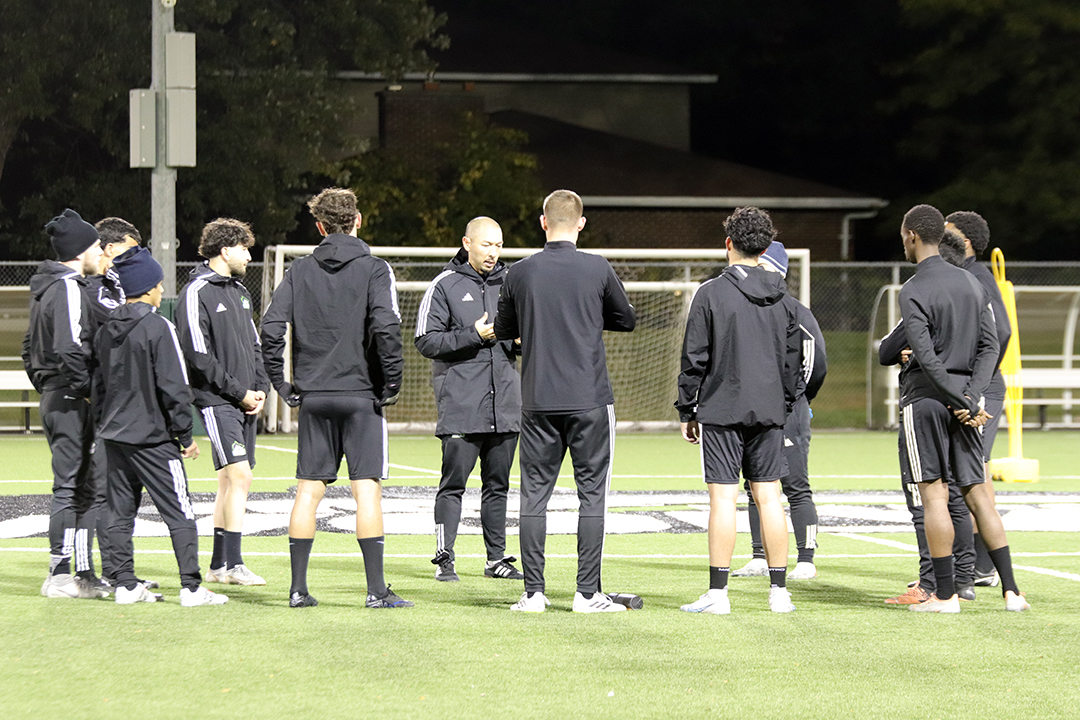
Angus Wong (centre) offers his team guidance during a training session in the 2023 season.
Angus Wong (centre) offers his team guidance during a training session in the 2023 season. Photo credit: Brahim Ait Ouzineb

Wong’s leadership and mentoring continue to motivate his current players. Graduating senior Oscar Forward credited Wong for getting him back into soccer.

“I wasn’t playing soccer when he originally gave me a phone call three years ago to come to his training camp. I had hung up the boots, as one could say,” said Forward. “He convinced me to come out and then, you know, the next three years of my life were blessed to be part of the Algonquin men’s soccer team and share my time with that amazing coach and staff.”

Wong, who was voted Coach of the Year in 2024, remains humble, attributing his success as a player and a coach to his teammates, staff and players.

Reflecting on his favourite moment as a coach so far, Wong recalled the Wolves’ semi-final comeback victory against Vancouver’s Langara College last season.

“Connor David scored the game-tying goal and he also scored the game-winning goal in a short period of time, with his family in the crowd in Fredericton,” said Wong. “That was a special moment to see him accomplish that and to share it with the team and staff. It was a lot of fun.”

The Hall of Fame ceremony will be held on May 5 in Toronto.

Andrew Hyatt’s show at Algonquin College brings out country fans

Andrew Hyatt, Monique Messier and Sully Burrows brought an unforgettable night of country music to the Observatory
Photo: Marcos Somarriba
Andrew Hyatt performing at the Observatory on March 28.

Canadian country singer Andrew Hyatt performed at the Observatory with opening singers Sully Borrows and Monique Messier on March 28.

Shortly after he finished his performance, Hyatt was surrounded by fans asking to take photos with him, one after another.

In an interview with the Algonquin Times, Hyatt said he enjoyed his performance.

“We were here last March and it’s always nice. I really enjoyed the crowd, it was just a different vibe,” he said.

Hyatt’s performance was part of his tour, Andrew Hyatt and The Ten Year War. The concert started at 8 p.m. with a crowd eagerly waiting for the concert to begin with its opening singer, Messier.

Messier, who won this year’s Algonquin’s Got Talent contest, prayed and hugged her family members before going on stage. It did not take long for the crowd to become fans of Messier’s music. (Read the Algonquin Times’ exclusive interview with Messier before her performance).

Audience member Isabelle Vangorder attended the concert with her boyfriend looking forward to seeing Hyatt, but she became a fan of Messier that night.

Monique Messier performing at her first opening show at the Observatory, Ottawa, March 28th.
Monique Messier performing at her first opening show at the Observatory on March 28. Photo credit: Marcos Somarriba

“We’re both from the countryside and fans of Andrew Hyatt but that girl (Messier) is really talented,” said Vangorder. “It’s awesome that someone from Ottawa is chasing their dreams.”

A small crowd from Parry Sound, Ont. began chanting for the next singer: “Sully, Sully, Sully.”

Burrows, who’s from Parry Sound, dominated the stage as the audience began singing along with him and eventually asking for one more song.

For Eric Versluis, a childhood friend of Burrows who was in the audience, seeing Burrows perform was a tear-jerking moment.

Sully Burrows performing at the Observatory, Ottawa, March 28th.
Sully Burrows performing at the Observatory on March 28. Photo credit: Marcos Somarriba

“Last time I saw Sully Burrows in person, he was four years old,” said Versluis. “I love seeing him out here doing his thing. He is going to be a star.”

It was finally time for Hyatt to enter the stage. Throughout his performance, the audience did not miss a moment to sing along with him.

Before starting his performance, Hyatt took a moment to thank the crowd for being here, engaging in conversations with them between songs.

“I recognized people in the crowd who had also attended my concert in Vancouver,” Hyatt told the audience.

Before he began his solo music career, Hyatt was a member of a Christian rock band. He briefly worked as a youth pastor at a church until he worked in a nickel mine in his hometown of Sudbury, Ont.

After his band split, Hyatt began his solo music career in 2015 with his debut EP, Never Back Down. He then released his debut album, Iron & Ashes, in 2017.

In 2022, Hyatt won the Canadian Country Music Association award for Rising Star.

Hyatt has no plans on saying farewell forever to Algonquin College, as he is eager to return for another performance.

“I think it will be a year or so but we are trying to make it back here every 14-18 months,” said Hyatt. “I love it here.”

Faculty Recognition Awards honour remarkable professors of Algonquin College

The event spotlighted professors who have made a positive impact on their students' lives
Photo: Kevin Clasper-Inglis
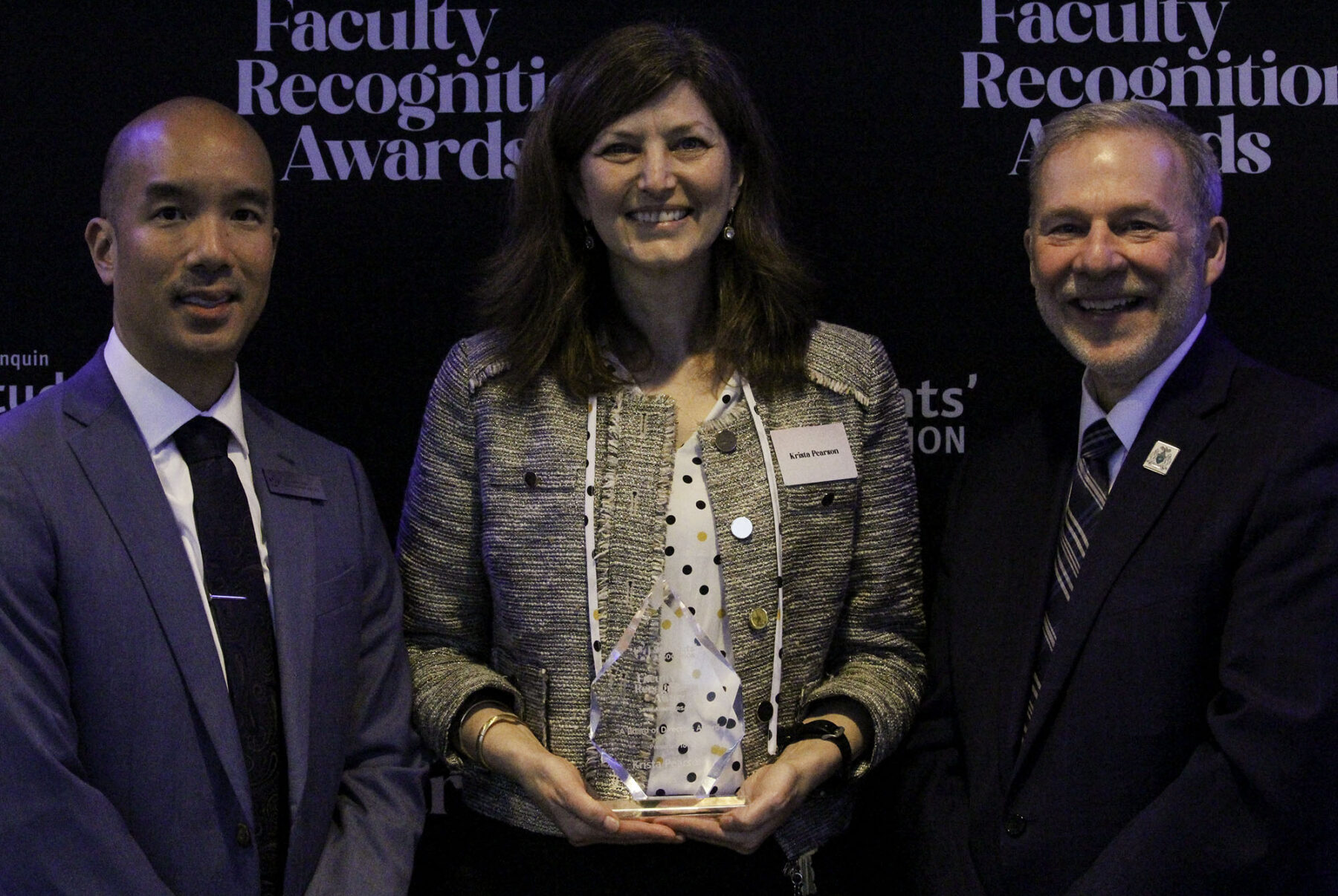
Krista Pearson, winner of the Algonquin Students Association Board of Directors Award alongside President Claude Brulé and Ben Dinh, General Manager and CEO of the Students' Association

Nine faculty members from Algonquin College’s three campuses took to the stage at the Algonquin Commons Theatre to accept awards of recognition on March 25.

There were several awards celebrating beloved faculty members at the college.

One of the recipients of an Excellence in Teaching award was Murray Hillier, professor in respiratory therapy who has taught at the college for 23 years, driving in from Kingston every day.

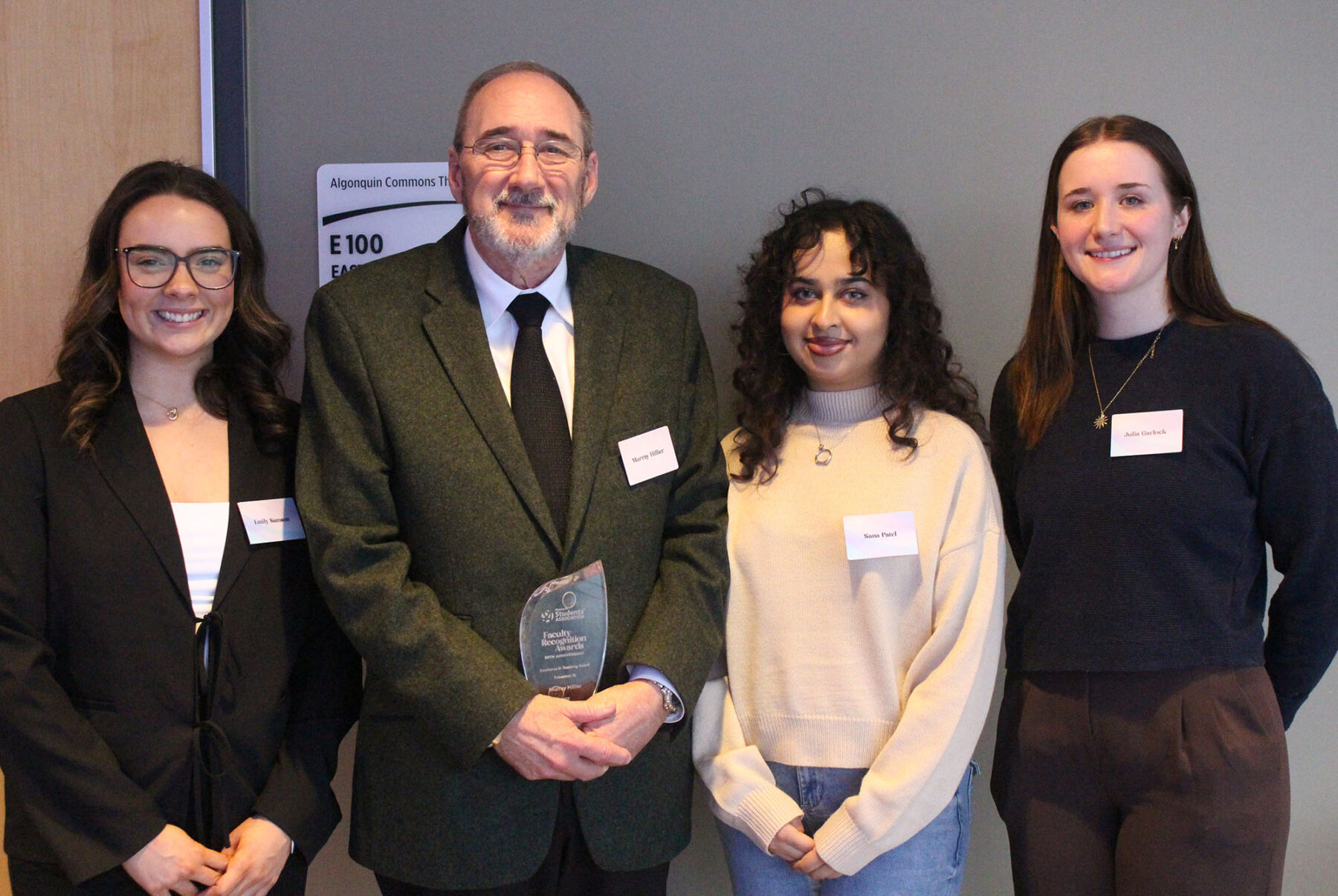
Hillier was joined by three of his students who nominated him for the award: Julia Garlock, Sana Patel and Emily Samson.

“I heard Murray getting a little bit choked up on stage and it started to get to me,” Patel said, speaking of the emotional ceremony where many award winners held back tears.

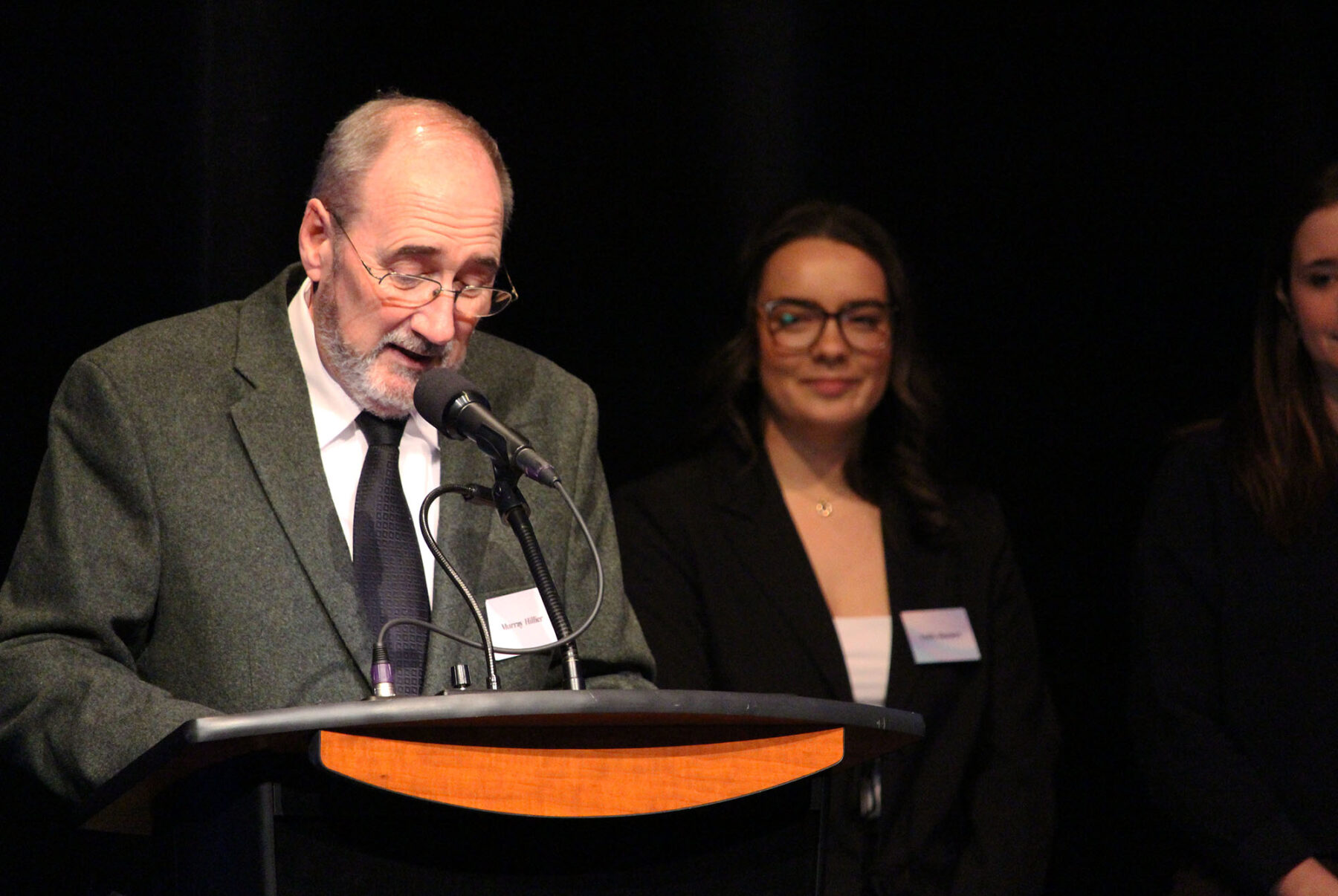
Murray Hiller gives his acceptance speech as his students look on behind him.
Murray Hiller gives his acceptance speech as his students look on behind him. Photo credit: Kevin Clasper-Inglis

“I fully expected Murray to win it because he’s a great professor. He’s made a lasting impact on us here in our classes and even in our regular lives,” she said.
“I’m so excited for Murray,” said Samson. “He has done so much for us in such a short time, and he has so much life experience that he brings to the classroom and it’s such a pleasure to learn from him every week.”

Murray Hillier and his students in the respiratory therapy program, Julia Garlock, Sana Patel and Emily Samson.
Murray Hillier and his students in the respiratory therapy program — Julia Garlock, Sana Patel and Emily Samson — after the award show. Photo credit: Kevin Clasper-Inglis

Hillier was left emotional by the nomination.

“All I can say is that I’m deeply honoured and very humbled,” Hillier said.

“Any professor, if they’re doing their job right, should inspire and motivate. But it’s about more than that, it’s about life and helping them achieve their success, their goals,” he said.

“As clinicians, making sure that the people they’re gonna serve get the best service in the most humane way possible. At the end of the day, that’s what it should be about.”

Peter Arbour, the program coordinator for the forestry technician program at the Pembroke campus, also won an Excellence in Teaching award.

Arbour’s student Chelsea Duncan was among the students supporting him at the ceremony.

“Peter is so passionate about forestry,” Duncan said.

“He’s really good with students. He’s been supportive of me. I broke my leg coming back into school and he called me every week on Zoom to talk.”

Duncan said Arbour always reaches out to students personally to make sure that they’re doing okay when they are late handing in assignments.

“He’s just the best.”

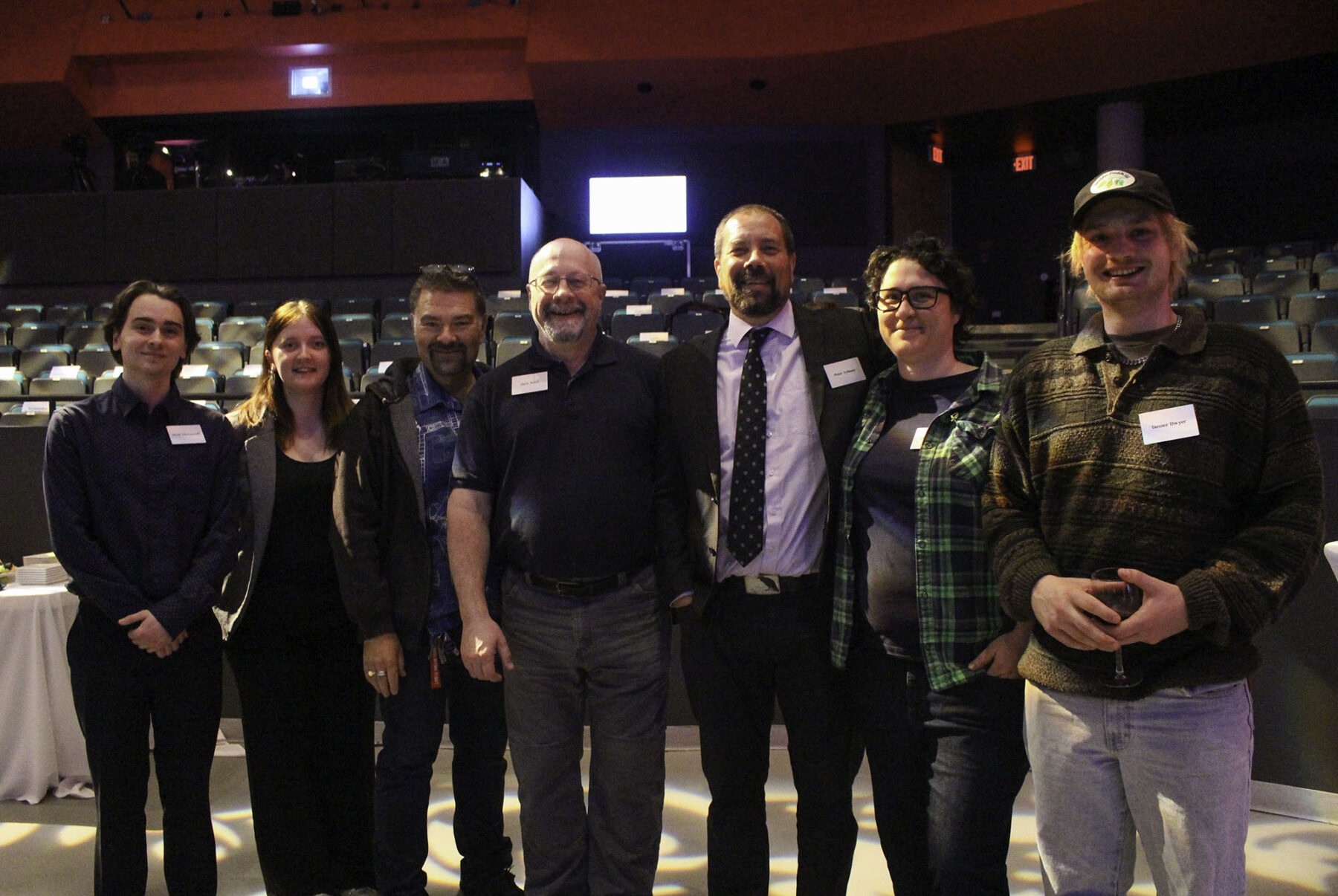
Peter Arbour (third from right) with 2 of his students (right)
Peter Arbour (third from right) with 2 of his students (right) and Mark Ward, another award winner (third from left) with three of his students (left). Photo credit: Kevin Clasper-Inglis

Krista Pearson, vice-president of student services, received the Algonquin Students’ Association Board of Directors Award.

The award was created in 2018 to recognize someone within the college community who has impacted the student experience.

“I’m really in awe of our students’ association and impressed by it. This role has given me such a gift, to prioritize time with our students,” Pearson said in an emotional acceptance speech.

Krista Pearson, director of student services, giving her acceptance speech
Krista Pearson, vice-president of student services, giving her acceptance speech. Photo credit: Kevin Clasper-Inglis

Anita Tenasco, director of Indigenous initiatives, won the Chris Warburton Award for excellence.

“I feel tremendously lucky to be able to support the leadership of Algonquin College, the Students’ Association and our incredible students on this journey of learning about truth and reconciliation,” Tenasco said during her acceptance speech.

“When I engage with students, I learn and I become energized. Algonquin’s students are a blend of amazing cultures, strength and brilliance.”

Anita Tenasco, winner of the Chris Warburton Award of Excellence, giving her acceptance speech.
Anita Tenasco, winner of the Chris Warburton Award of Excellence, giving her acceptance speech. Photo credit: Kevin Clasper-Inglis

Claude Brulé, president of Algonquin College, called the annual awards ceremony “tremendous.”

“It comes from the students; it comes from the learners; as the teachers have said, it doesn’t get better than this,” Brulé said. “It’s a recognition from the heart, and the teachers recognize that, so it’s wonderful. It’s a tremendous recognition for our faculty.”

Singing along with Monique Messier

Algonquin College's most talented student gives insight into her music, influences and performances before opening for Andrew Hyatt
Photo: Robyn Lanktree
Monique Messier performs at Ontario's Got Talent on March 7.

After winning the most recent Algonquin’s Got Talent and placing third in Ontario’s Got Talent, Monique Messier opened for Andrew Hyatt on March 28 at the Observatory.

Growing up in Brazil, Messier’s sound has become a melting pot of her biggest influences, from Brazilian music to Western folk artists. With all the momentum behind her, Messier is only beginning her career in the music scene.

A day before taking the stage, the singer sat down with the Algonquin Times for an exclusive interview.

How are you feeling after these last two months of talent show successes and performances?

Honestly, it feels like a dream. I love performing so much and I’m so happy I’m tapping into it again.

The greatest thing about being a performer, artist and songwriter is the ability to see the power of music actually happening.

When I step off the stage, people come up to say how they connected to my lyrics and how they felt the same way. It is so fulfilling and gratifying. It’s a great vessel for emotion.

How did this collaboration with Andrew Hyatt come about?

After performing at Algonquin’s Got Talent and Ontario’s Got Talent, the Students’ Association reached out with this opportunity and asked if I’d be interested in opening for his show.

Of course, I said yes immediately. I was so excited!

I really admire Andrew’s ability to tell a story through his music. I’m beyond grateful for the chance to not only perform but also to watch and learn from him up close.

Is there a difference performing for a talent show compared to a concert?

With a talent show, my main goal is to showcase my skills. I’m being judged on technical ability, performance and stage presence. There’s a structure to it, and I’m performing with the mindset of earning a spot or a title.

Opening for a concert is a whole different energy. It’s about setting the mood for the night, getting the audience engaged and creating an experience that flows into the main act. There’s more freedom to connect with the crowd in a natural way.

With talent shows, I’m providing entertainment. With concerts, I’m living in the moment, feeling what the audience feels and building a more intimate bond.

For people who may not have seen you perform, how would you describe yourself as an artist?

I make music that feeds the heart and soul. My sound blends pop, rock and folk with acoustic influences and emotional lyrics.

I like to think of it as music for the over-thinkers, the ones who feel deeply and anyone who has ever been told they’re too sensitive.

Was music something that immediately spoke to you as a kid?

It immediately spoke to me. I just felt like music had something so special and it called to me from a very early age. Ever since I could talk, I started singing.

Performing and being on stage has been a part of my life forever. Also, having a mom who’s a singer and I could watch her perform on stage was super fulfilling for me.

I love everything that has to do with performing arts and music.

Is it special performing at Algonquin College for you as a student of the school?

Performing in front of friends and family is so comforting to me. I love it when I’m on stage and I can see my people there. I’m able to connect more with the audience when there is someone I love, someone I know and someone who knows me on a deeper level.

Every time I’m on stage, I see my mom, my dad, my brother and my friends and it makes my heart feel happy.

What can the fans expect this time?

This time, the audience can expect a mix of original songs and some covers of songs that I love dearly. My goal is to get everyone’s emotion engines going so that by the time Sully Burrows and Andrew Hyatt take the stage, the energy is already flowing.

I’ve been putting a lot of thought into making this set feel special, not just in the music, but in the way it’s presented. I want it to feel like stepping into a moment of growth and renewal, almost like watching a flower bloom.

Muslim students bring culture to Algonquin College during Islamic Awareness Week

What do calligraphy, henna, Qur'ans and charity all have in common? They were all part of this year’s Islamic Awareness Week
Photo: Marcos Somarriba
Abdiraman Osman (left) with Yusuf Snyder in E-building.

The Algonquin College Muslim Student Alliance hosted an event in E-building on March 17 and March 18 to celebrate Islamic Awareness Week.

For their annual event, the MSA set up tables with a variety of activities in which people could have conversations, donate to charity, do henna or simply learn more about Islam.

Khalid Saoud, 20, an Algonquin College student taking a bachelor of engineering program, set up his table with Qur’ans and brochures with Islamic information for anyone wanting to learn more about Islam.

Qur'ans and brochures displayed at Saoud's table.
Qur'ans and brochures displayed at Saoud's table. Photo credit: Marcos Somarriba

“Every year we have this event called IAW, which stands for Islamic Awareness Week,” said Saoud. “People come in, they look around, read the posters and people have questions, but others just walk around.”

Posters containing information about Islam and the teachings of their Prophet, Muhammad, were set up near the entrance of E-building.

Islamic Calligraphies on display at E-Building.
Islamic calligraphies on display at E-building. Photo credit: Marcos Somarriba

Posters featuring award-winning Islamic calligraphy were on displayed. The calligraphies had verses from the Qu’ran, the most sacred book in Islam. Several of the calligraphies are from Turkey and Egypt.

“We also have a henna table and a hijab table set up for the girls,” said Saoud.

One of the tables at the event was hosted by Yusuf Snyder and Abdiraman Osman, both Algonquin College students and members of the International Development and Relief Foundation.

Brochures containing more information about the IDRF, including ways to donate, were displayed along with a donation box.

“The IDRF is a very transparent organization,” said Snyder. “For every one dollar donated, 91 cents will go to aid in places such as Gaza, Syria and Afghanistan for example.”

“The rest of the nine cents goes to administration costs,” said Osman. “Even if somebody gives three dollars, almost all of that money is going to aid.”

Brochures containing information about the IDRF on Osman's and Yusuf's table.
Brochures containing information about the IDRF on Osman's and Yusuf's table. Photo credit: Marcos Somarriba

The IDRF is a Canadian Muslim charity organization that opened in 1984. Over the decades, its influence has increased.

“The IDRF recently opened a new headquarters here in Ottawa. The organization is based in Toronto,” said Snyder. “The IDRF has been operating since 1984 and now it is one of the top 100 charitable organizations in Canada.”

The IDRF operates in more than 40 countries on all continents across the globe.

The MSA hosted another event in the Observatory offering a free meal for Iftar, the time when Muslims break their fast to eat during Ramadan.

The MSA said they have more events planned, even after Islamic Awareness Week.

Students find creative ways to dodge high parking costs at Algonquin College

Students are feeling the pinch of rising parking fees
Photo: Nicklaus Korim
The pay to park sign in lot eight at Algonquin College March 27.

Abbey Treanor, a fourth-year interior design student at Algonquin College, believes that parking prices have risen too high for the average student trying to pay their tuition.

“I can’t afford to spend money all the time. I already pay for tuition,” said Treanor.

With rising costs of tuition, external costs of her program and the lack of time she has to work because of class scheduling, Treanor is adamant that the steep parking prices should drop. The average price of tuition has increased 28 per cent across Ontario in the last five years, according to the Canadian Federation of Students. Ontario now has the highest tuition cost across Canada.

“Ottawa is expensive,” said Treanor.

However, Treanor may have found a workaround for some students who are trying to avoid the daunting parking lot price tag. She split the costs of a single parking pass between friends last year, since the college allows motorists to register multiple licence plates under the same pass.

“We were only overlapped for 14 minutes,” said Treanor when asked if she had received any tickets from overlapping, when two different vehicles were parked at the same time using the same single parking pass.

Abbey Treanor in her car looking at her parking ticket from March 23.
Abbey Treanor in her car looking at her parking ticket from March 23. Photo credit: Nicklaus Korim

According to Treanor another method she uses is more of a risk-or-reward approach — not paying at all. While the campus does have security issuing tickets, according to Treanor, sometimes they don’t catch you.

Treanor said she doesn’t pay for daily parking at the college “more times than not.”

Treanor said she’s only received three parking tickets for around $80 each in the last four years she spent at Algonquin and doesn’t plan on paying for a parking pass in the future. She said it’s worth paying a couple of tickets compared to the parking pass fees.

The yearly parking pass at the college ranges from $799 to nearly $1,100, monthly passes range from $129 to $192, weekly passes are $34 to $43 and daily passes are from $4 to $18. The prices depend on the lot, the time of day and the day of the week.

Parking lot 12 at Algonquin College with open spaces March 27.
Parking lot 12 at Algonquin College with open spaces March 27. Photo credit: Nicklaus Korim

Grace Miller, a former Algonquin College student from the police foundations program, found a creative way to dodge the college’s parking police.

Miller decided to get a job at Kettlemans in College Square right beside campus. She would park her car out front of her work and walk over to campus. Regularly students are given fines if caught parking in College Square.

“A good chunk of the reason I worked at Kettlemans was to avoid the parking fees and to pay for small things around school,” said Miller.

“Even after I was done working there, I would still park at Kettlemans.”

Miller could not afford the high prices of parking and she believes it is completely unjust that students must pay to park.

“Kind of ridiculous,” Miller said.

“People spend so much on courses that they shouldn’t have to worry about parking.”

Rylee Reid, an advertising and marketing student in her first year at Algonquin College, has decided to bite the bullet and pay for parking. She pays $14 each day to park on campus and wishes she bought an annual pass at the beginning of the term.

“Yeah, after being caught a couple times with parking tickets I had no choice but to just buy the yearly pass,” Reid said.

“It’s insane how much the college charges, even with the amount of open spaces there are.”

Federal election: 15 things you need to know about the upcoming vote

The Algonquin Times answered students' pressing questions as the April vote nears
Photo: Elections Canada
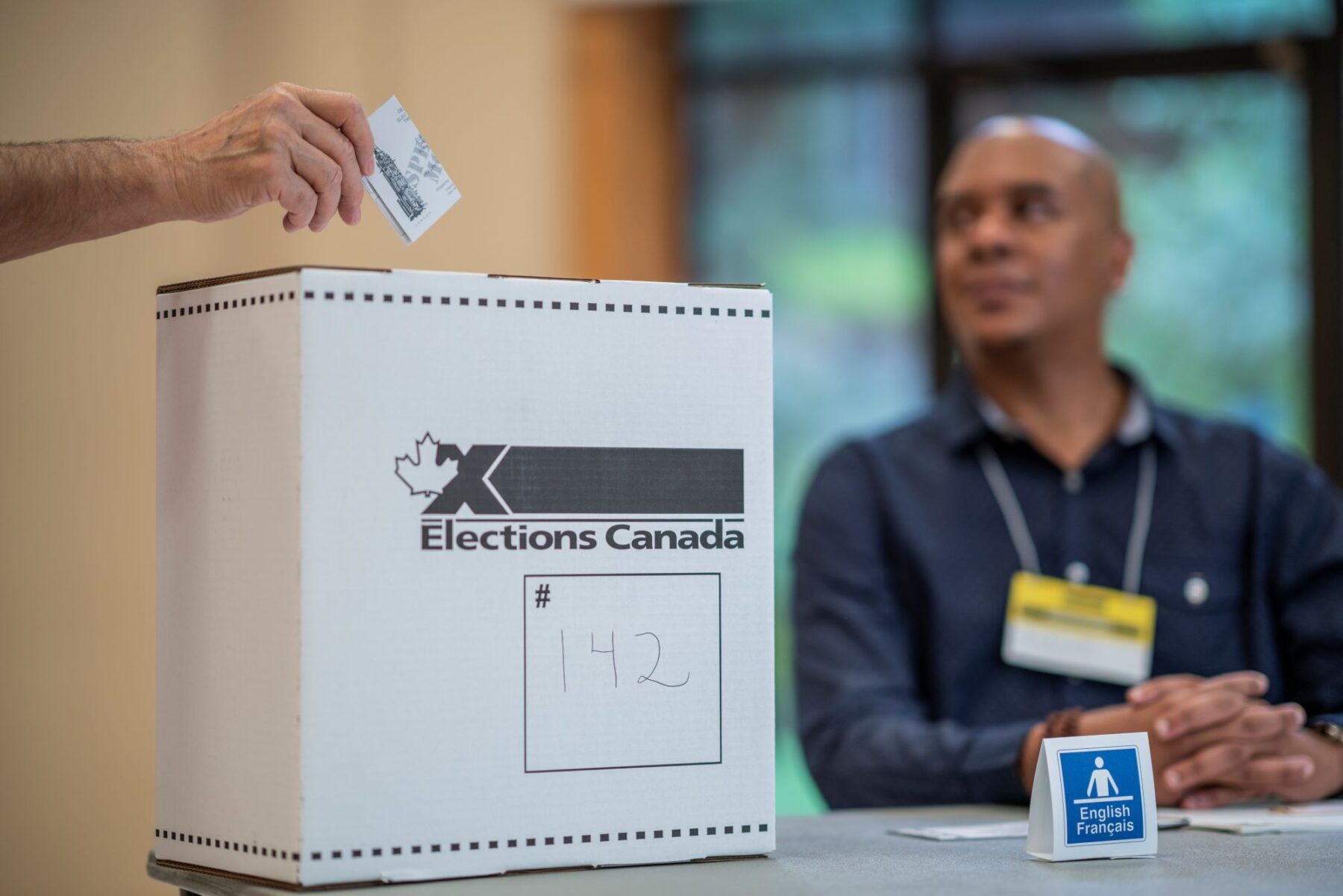
A voter casts a ballot.

With the 45th federal election around the corner, Algonquin Times reporters compiled answers to some questions you might have before casting your vote.

When is the federal election?

Election day is April 28, 2025. Check your local polling stations to know when polls open and close that day.

How long is the election campaign?

According to election law, election campaigns must be at least 37 days long and not surpass 51 days.

This time around, the campaign is the shortest allowed — 37 days.

Who can vote?

According to Elections Canada, you can vote if you are: 18 years and older, a Canadian citizen and can prove your identity and address.

How can I vote and what important dates should I know?

There are multiple ways to vote:

  • On election day on April 28 at your local polling station
  • On advance polling days at your local polling station from April 18 to April 21 from 9 a.m. to 9 p.m.
  • Early voting at the 500 Elections Canada offices around the country by April 22 at 6 p.m. The offices are open seven days a week at various hours.
  • Voters can mail their votes by applying for a mail-in kit on Elections Canada’s website by April 26, 6 p.m. EDT. Voters will receive their ballots by around April 11. The mail-in ballots must be received by Elections Canada by April 28, election day.
  • The deadline to register to vote is April 22.

What do I need to vote?

When going to vote in-person, you must prove your identity and address through one of four options:

  • Bringing your voter registration card
  • Any piece of government-issued ID including your photo, address and name
  • Two pieces of government-issued ID including either photo, address or name
  • For voters with no ID, you can vote if you declare your identity and address in writing and have a voucher who is assigned to the same polling station. The voucher must be able to prove their identity and address.

How do I register to vote?

You can register to vote through the Online Voter Registration Service by April 22 or in person at your local Elections Canada office by April 22, or at your assigned polling station on election day or advance polling days.

What if I didn’t register in time?

You can still vote if you are not registered to vote. Simply arrive at the polling station with two pieces of identification with your name and address.

Who are the leaders of Canada’s main federal political parties?

  • Liberal Party of Canada — Mark Carney
  • Progressive Conservative Party of Canada — Pierre Poilievre
  • New Democratic Party of Canada — Jagmeet Singh
  • Bloc Québécois — Yves-François Blanchet
  • Green Party of Canada — Elizabeth May and Jonathan Pedneault
  • People’s Party of Canada — Maxime Bernier

Where can I find more information about my riding in Ottawa?

The Algonquin Times has information on every Ottawa riding. Read more here.

What riding is Algonquin College in?

Algonquin College’s Ottawa campus is located in Ottawa West-Nepean.

When are the leadership debates?

As of writing, there are two debates scheduled, one in French and one in English. Both debates are held at the Maison de Radio-Canada in Montreal. The French debate will be aired on April 16 at 9 p.m. EDT. The English debate will be aired on April 17 at 7 p.m. The debates will be aired across the country. Omni TV will be translating both debates in Mandarin, Cantonese, Punjabi, Tagalog, Arabic and Italian.

Why are we having an election?

By law, Canada was required to have a federal election no later than Oct. 20 of this year.

Justin Trudeau stepped down as prime minister after Liberals elected Mark Carney as their new party leader in March. Carney asked Governor General Mary Simon to dissolve Parliament on March 23, kicking off the snap election campaign.

How are votes counted?

After polling stations close on voting day, election officers begin opening ballot boxes and counting the votes. All ballots are then returned to the returning officer, where a riding will announce a winner.

In cases where votes are too close to call, the ballots will be recounted and supervised by a judge.

Results will be publicly released by Elections Canada.

What is the federal government responsible for?

Canada’s federal and provincial governments have separate responsibilities.

Federal responsibilities include national security, the economy, trade, citizenship, Indigenous affairs, criminal law and other federal legislation.

Provincial governments may be responsible for transportation, health, provincial taxes and municipalities.

What are the ballot box questions?

According to a poll by Abacus Data released on March 25, reducing the cost of living, dealing with the U.S. administration and improving Canada’s healthcare system were the most pressing issues to Canadian voters.

Kevin Clasper-Inglis, Ernest Ko and Vasileios Tselios contributed to this story.

Federal election: Here are the ridings at play in Ottawa

Learn about the ridings and candidates ahead of the April 28 vote
Photo: Elections Canada
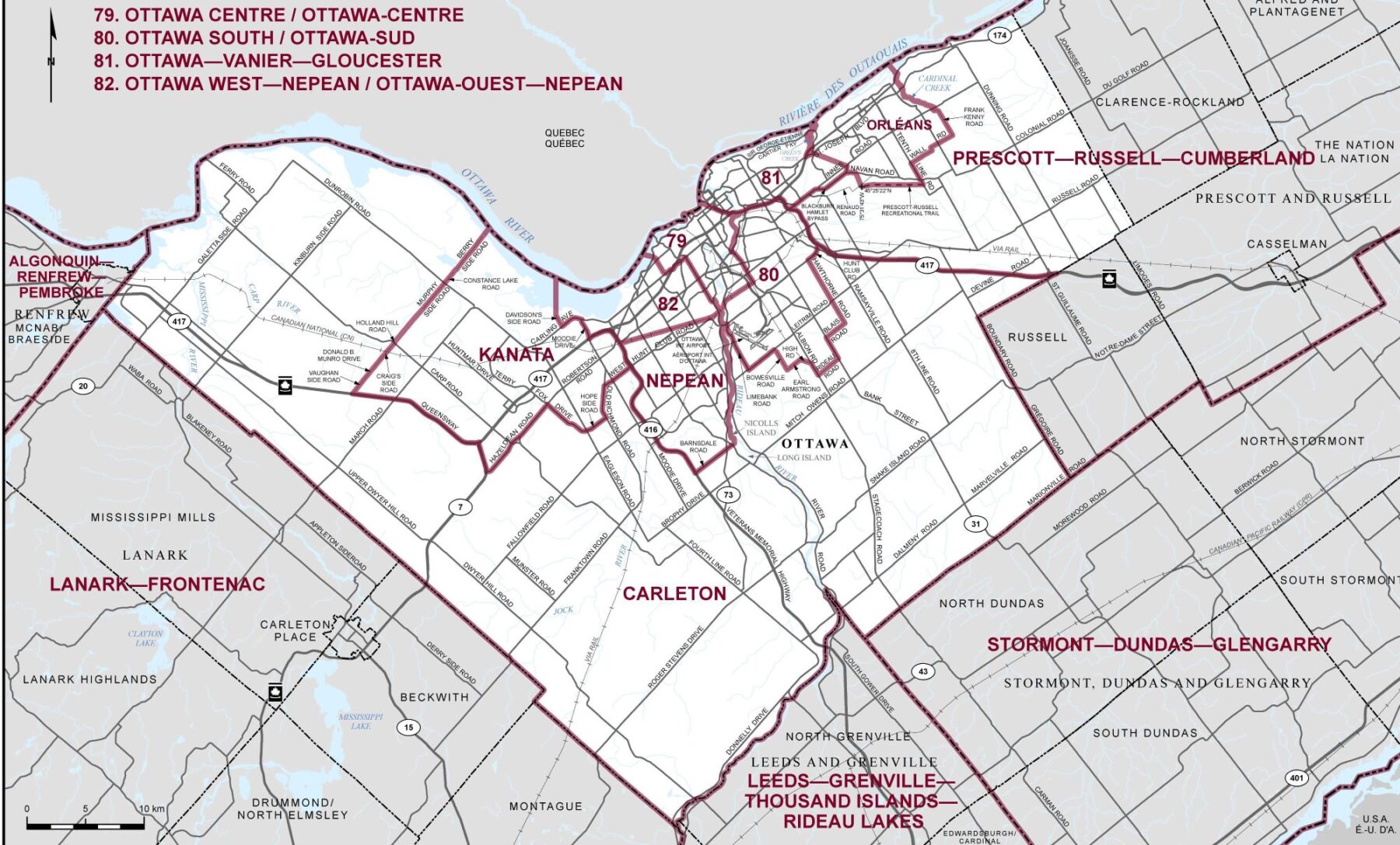
A map of the City of Ottawa showing the federal ridings.

Ottawa West-Nepean

Ottawa West-Nepean boundaries are the Ottawa River to the north, the CN Rail line to the south, Fisher Avenue to the east and Moodie Drive to the west. There are an estimated 92,273 electors.

Candidates:

Ryan Telford, Conservative Party

Anita Vandenbeld, Liberal Party, incumbent

Josh Bizjak, NDP

Glen Armstrong, People’s Party of Canada

Nepean

Nepean riding has a northern boundary of the CP Rail line, a western boundary of Highway 416 and a southern boundary of Barnsdale Road. The eastern boundary runs along the Rideau River. The riding includes Barrhaven

Candidates:

Barbara Bal, Conservative Party

Greg Hopkins, Green Party

Mark Carney, Liberal Party

Eric Fleury, People’s Party of Canada

Carleton

Elections Canada redrew the boundaries of the Carleton riding for the 2025 election. The change came after an independent review following the 2021 census. The riding now stretches from Renfrew County to Prescott-Russell, adding Stittsville, Osgoode, Constance Bay and Fitzroy Harbour to Metcalf to its boundaries.

Based on a 2021 census, the population is 124,416 with an estimated 99,087 electors.

Candidates:

Pierre Poilievre, Conservative Party, incumbent

Bruce Fanjoy, Liberal Party

Chantale Dore, People’s Party of Canada

Kanata

The Kanata riding was established in 2023, replacing the former Kanata-Carleton riding. The riding stretches from Bells Corners in the east to Constance Lake in the west, and extends south toward Carp Road and Highway 7. It has a population of 121,458 and an estimated 90,004 electors.

Candidates:

Greg Kung, Conservative Party

Jenna Sudds, Liberal Party, incumbent

Jennifer Purdy, Green Party

Viktoria Zaniewska, People’s Party of Canada

Ottawa South

Ottawa South is located between Vanier, to the north, Orleans, east, Carleton, south, and Nepean to the west. The boundaries of Ottawa South run along Highway 417, the Rideau River, Hunt Club Road and Limebank Road. There is an estimated 91,836 electors in the riding.

Candidates:

Blair Turner, Conservative Party

David McGuinty, Liberal Party, incumbent

Nira Dookeran, Green Party

Hena Masjedee, NDP

Tony Papadimitriou, People’s Party of Canada

Ottawa Centre

Ottawa Centre has experienced some boundary changes since the previous federal election. The new boundaries expand Ottawa Centre to the west, ending at Golden Avenue, running down to meet Carling Avenue, where it then runs east until the corner of Carling and Fisher, forming the southern border of the riding following the CN Rail line until it meets Bank Street. The eastern boundary runs up Bank street until it meets the Rideau River, following the Rideau Canal until it meets the Ottawa River and the Quebec border. The estimated number of electors is 98,124.

Candidates:

Paul D’Orsonnens, Conservative Party

Amanda Rosenstock, Green Party

Yasir Naqvi, Liberal Party, incumbent

Joel Harden, NDP

Martyn Simms, People’s Party of Canada

Orléans

Orleans is a francophone-dominant suburban area in the east end of Ottawa. The neighborhood is connected to the rest of the city by Ottawa Regional Road 174. The boundary for Orléans stretches from the Ottawa River in the north, then to Navan Road in the south and the start of Highway 174 in the west until reaching Cardinal Creek in the east. There are an estimated 98,463 electors.

Candidates:

Steve Mansour, Conservative Party

Michelle Petersen, Green Party

Marie France-Lalonde, Liberal Party, incumbent

Oulai B. Goue, NDP

Tafiqul Abu Mohammed, People’s Party of Canada

Ottawa-Vanier-Gloucester

Formerly known as Ottawa Vanier, the riding has switched names to Ottawa-Vanier-Gloucester and has had its boundaries changed to bring in Blackburn Hamlet. The boundaries extend through Innes Road, stopping at Montreal Road before turning into St. Joesph Boulevard. It extends through the highway and extends down to the Ottawa River on Nicholas Street.

There are an estimated 94,342 electors.

Candidates:

Dean Wythe, Conservative Party

Sarah Baron, Green Party

Mona Fortier, Liberal Party, incumbent

Tristan Oliff, NDP

Prescott-Russell-Cumberland

Prescott-Russell-Cumberland has an estimated 90,701 electors. The riding includes the City of Clarence-Rockland, Hawkesbury, The Nation, the townships of Alfred and Plantagenet, Champlain, East Hawkesbury and Russell, Casselman and a portion of east Ottawa.

Candidates:

Julie Seguin, Conservative

Thaila Riden, Green Party

Giovanna Mingarelli, Liberal

Deborah Perrier, People’s Party of Canada

For more information on your riding, visit Elections Canada.

Candidates are as of publication on March 27.

Marcos Castillo, Nathan Heatherington, Robyn Lanktree, Jaiden Martin, Joshua Peachey Leigh, Bradley Richards, Duncan Roi and Delaney Smith contributed to this story.

Follow Algonquin Times on Instagram
Algonquin Times horoscopes
Algonquin Times podcast
Algonquin Times on Instagram
Follow Algonquin Times on Instagram
Algonquin Times horoscopes
Algonquin Times on Instagram
Algonquin Times podcast

Stay Informed

Sign up for our newsletter

Subscribe

* indicates required