

The most recent edition of the How to Make Friends event gave international students like Tom Xu, a computer programming student from China, a safe space to build new friendships and find belonging in a new community.
“I think the event was quite helpful. Because someone like me, I’ve been here for less than one month,” said Xu. “I had totally no idea where to make new friends, and I didn’t know any place I can go, so at least I have one place to go and have people to talk [to].”
The event took place in the AC Hub, on the second floor of E-building on Jan. 31 from 12 p.m. to 1 p.m. and urged students to have open conversations and build friendships with their peers in a judgment-free environment.
How to Make Friends is held at the Algonquin College Woodroffe campus at the start of every semester by Project Lighthouse and the International Education Centre.
The event started with brief introductions of both attendees and organizers, followed by questions about international students’ experiences with cultural differences in Canadian social scenarios.
“The biggest difference I felt was that everybody is respected here,” said Vansh Sharma, an esthetics student from India. “Everybody is acknowledged.”

The attendees and organizers engaged in important conversations about topics such as challenges people may encounter entering a new community, how to approach new people in a respectful manner, and personal successes they’ve had entering new environments.
The event organizers suggested apps such as Meetup and clubs as a means to meet people with similar interests, and encouraged making plans with peers, as well as continuing to approach new people, even if friendships don’t happen right away.
“People might be different from you, and that’s okay,” said Sarah Crawford, sexual violence prevention and harm reduction coordinator for Project Lighthouse. “It can be difficult going into a community that already exists.”
Additionally, the group shared tips and tricks that have helped them make friends in the past, such as participating in activities outside of their comfort zone, paying close attention to body language and connecting over a shared learning experience.
The student attendees were encouraged to make use of the last few minutes of the event to speak more closely with each other and exchange contact information; as well as to return to the Student Support Services office on the third floor of E-building for more resources and information on future events.
“I would love to join this event when it happens next time,” said Xu. “It’s a lovely event, the conversations are pretty good, vivid, and everyone is friendly.”


Algonquin College students expressed their creative sides during Project Lighthouse’s second Glitter and Gab event of the winter term.
The event was held on Feb. 1, from 12 p.m. to 1 p.m. in the Student Health and Wellness Zone in E-building.
Created during the COVID-19 pandemic, Glitter and Gab is a weekly event run by student peer workers who provide a new DIY craft idea each week to take home as well the materials needed to make it, and a safe space to relax and chat with other students.
During the pandemic restrictions, students would sign up for the events and get the materials shipped to their home. Now, the event is hosted on campus and open to everyone without registration.
“It’s a surprise every week on which DIY you’re gonna do,” said Kristen Ralph, a student peer worker.
“It’s kind of a self care activity I would say, we’re crafting.” said Ralph.
The recent DIY activity was star-shaped shower steamers made out of baking soda, corn starch, essential oils and water based-substances that dissolve in the shower, creating a pleasant smell similar to a bath bomb. The craft was presented by Shelina Syed, a student peer worker.
“It’s a nice de-stress experience,” said Syed. “Even though we are in the fourth week of school [winter term], students can still be feeling that academic stress as midterms are coming around the corner.”
Students were given a silicone tray with a star imprint, a variety of essential oils to choose from, powdered dye, corn starch, baking soda, water, bowls and utensils to mix with. Syed provided guidance and led the group activity.

Inara Hemani, a first-year early childhood education student, described the texture of the shower steamers as similar to “moon sand,” which is a soft and sensory sand otherwise known as “kinetic sand.”
“It’s a super fun sensory experience,” said Hemani. This was her first time attending a Glitter and Gab event.
Smiles and conversation filled the room as the small group bonded over similar interests and programs.
Glitter and Gab has become a weekly de-stressor for Favour Charles, a practical nursing student.
“I didn’t expect this kind of activity here at school,” said Charles.
Charles opened up about the stress and anxiety she experiences in college. Attending the weekly events and “doing something fun” helps take her mind off of the negative feelings.
“I am so surprised I can do something like this,” said Charles.
The next Glitter and Gab event will be held on Feb. 8 from 12 p.m. to 1 p.m. in the Student Health and Wellness Zone on the third floor of E-building.
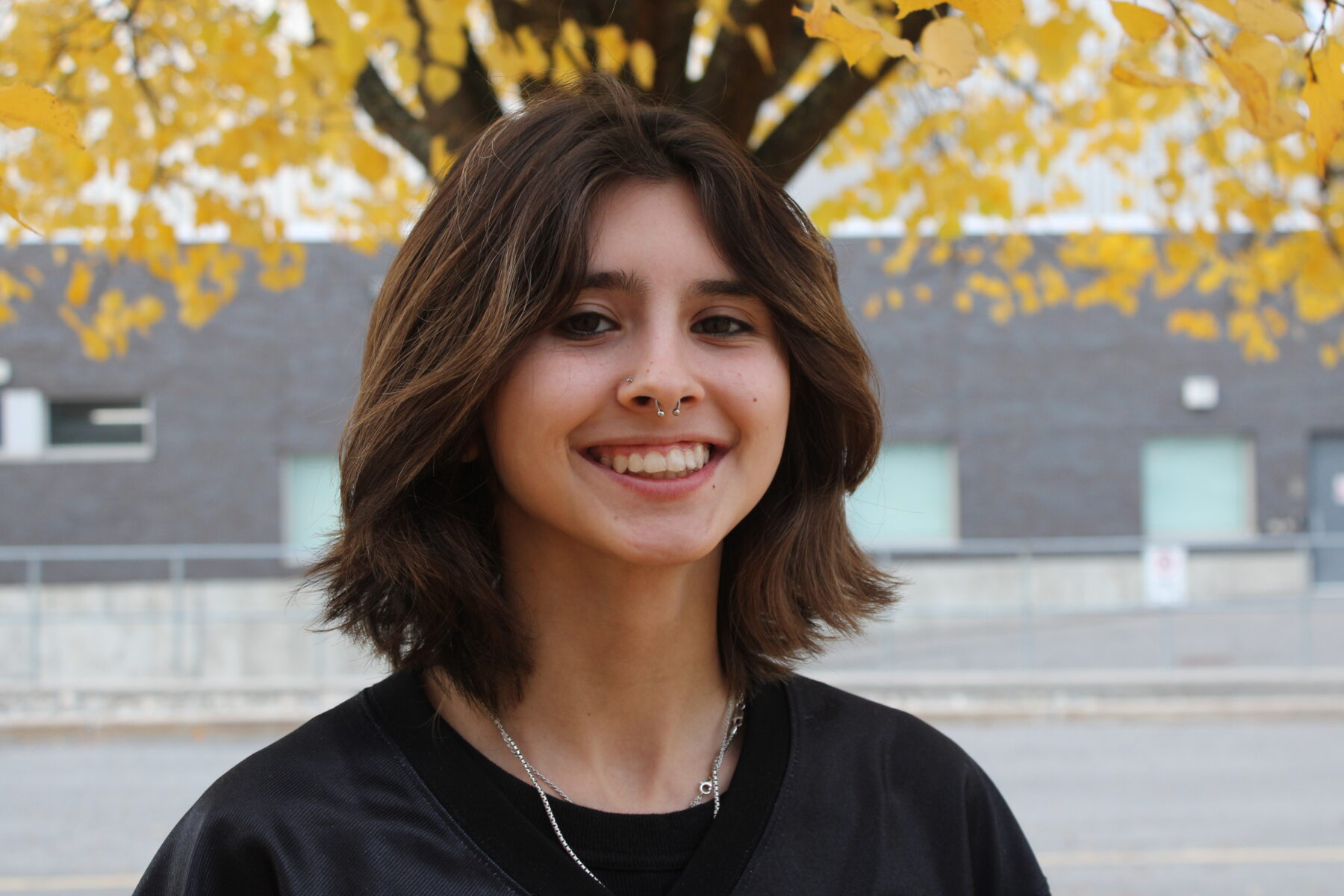

Dee-Tee:
At just 21 years old, Dee-Tee emerges as a multifaceted artist from Windsor, Ontario, with a creative arsenal that includes rap, singing, piano playing, songwriting, and hands-on production. His musical journey began at the age of 16, and since then, he’s been pushing the boundaries of his sound, refusing to confine himself to one genre. Inspired by the likes of Michael Jackson, Logic, Kendrick Lamar, and San Holo, Dee-Tee’s music serves as a defence mechanism, reflecting his innermost thoughts and emotions.
Since debuting on Spotify and other paid platforms in 2018 under the moniker “Dee-Tee,” he has continuously evolved his sound, with his most recent release, “Home – Single Version,” showcasing his singing prowess like never before. Authentically raw and unfiltered, Dee-Tee’s music offers listeners a genuine experience, devoid of pretence or fabrication.
Dee-Tee’s commitment to authenticity extends beyond his music, as evidenced by his honesty and transparency both on and off the stage. With aspirations to reach the stars in the music industry, Dee-Tee recently acquired his own manager, who has wasted no time in crafting an Electronic Press Kit (EPK) to pitch to venues and radio promoters. Additionally, Dee-Tee’s upcoming ventures include a music video shoot in Miami and a lineup of shows scheduled for the first half of the year, signalling his undeniable momentum in the industry.
While Dee-Tee’s journey is marked by numerous achievements, perhaps his most notable moment was a rap battle with Logic at the age of 17, an experience immortalised in a video on his Instagram. Despite his humble beginnings, Dee-Tee’s determination and authenticity shine through, making him a force to be reckoned with in the world of music. As he continues to carve his path, Dee-Tee remains steadfast in his commitment to staying true to himself and his artistry.

Algonquin College’s women’s basketball team won their final home game of the season on Feb. 2 with a nail-biting 54-50 victory over the Georgian Grizzlies.
The teams were neck and neck throughout all four quarters. After the first quarter, the score was 16-10 for the Grizzlies. The Wolves bounced back, strengthening their defence and breaking the Georgian lead.
The second quarter ended 29-29, while the third quarter ended with a 46-40 advantage for the Wolves. In the final quarter, the Grizzlies played fiercely, losing the game by only four points.
“This was their biggest competitor this season,” said Wolves fan Caitlin Pavone. “It was so close.”
The Wolves previously beat Georgian on Nov. 24 with a score of 67-54. In contrast, the Wolves dominated Loyalist 88-44 on Jan. 19 and George Brown 62-26 on Jan. 26.
Although the team stands undefeated this season, coach Jaime McClean said they could play even better.
“There’s definitely stuff from today we have to keep working on,” he said. “Every day when we step into the gym, we’ve got to be better. We’ve got to push each other just a little bit harder and be a little bit better.”
When asked about his pick for player of the game, McClean said, “It was somebody who just defended constantly all game. That was Kate Dahmer. She played with defensive energy the whole way. She set the tone and got the other girls to come play along with her. She’s a very good player.”
Dahmer was also player of the game on Nov. 25, when the Wolves defeated Seneca.
“If we keep working and doing our best,” said Dahmer, “we should be able to take it home at Durham too.”
The Wolves hope to continue their win streak on Feb. 9 when they face the Durham Lords at Durham College’s Campus Recreation & Wellness Centre.


Learners and staff members refreshed their knowledge of online safety at Algonquin College’s data privacy awareness booth on Feb. 1.
The booth was part of Data Privacy Awareness Week, an annual worldwide campaign aimed at teaching internet users how to protect their digital information. The one-day booth was run by AC’s Information Technology Services and a handful of student volunteers.
As soon as the booth opened, steps away from the Marketplace Food Court, it attracted dozens of students and staff. They lined up for data privacy info pamphlets and the opportunity to win AC-branded prizes.
“We have notebooks and hats,” said Victor Ishaya, a second-year web development student who was volunteering for the booth. “You answer questions and you’ll get them. They’re really easy questions. Like what do you do when someone tries to get your password?”
These questions were printed on folded strips of paper, waiting in fishbowls for attendees to pick them up. If an attendee answered a question correctly, the booth staff awarded the attendee one prize of their choice. Attendees were quick to deliver correct answers, displaying their pre-existing knowledge of data privacy.
“Nowadays, our data is always collected,” says Alvin Liauw, a first-year student in the supply chain management program. “It’s getting more important to protect it.”
ITS augmented this event with Gilles Fourchette, an independent privacy consultant who assisted with the booth in previous years.
“Last year’s event was more generic,” Fourchette said. “This year’s focus is on the students. We want students to know their rights. What they can do to protect their data.”
“As learners, your active engagement in responsible online practices and advocacy for privacy-first policies contribute significantly to the creation of a secure, respectful, and trustworthy digital environment,” ITS said, in an email announcement for this event.
The theme of this year’s Data Privacy Awareness Week was Privacy in the Digital Age: Navigating the New Normal. In their email announcement, ITS said, “In this era of heightened connectivity, understanding the dynamics of data privacy is not just important, it’s a necessity for successfully navigating the complexities of the new normal.”
These complexities include digital custodianship, which is responsibility for your online presence, and cyber hygiene, which is effective use of passwords.
This year’s Data Privacy Awareness Week ran from Jan. 28 to Feb. 2 at Algonquin College. For more information on data privacy, AC learners and staff can visit the ITS website or send questions to privacy@algonquincollege.com.

Local:
CBC: A low-rise building in Sandy Hill was on fire Thursday morning, with flames lasting for hours. One person was rescued from the building in the 100 block of Osgoode Street.
One firefighter was injured from falling through the floor of the low rise, according to the Ottawa Fire Services. However, a paramedic spokesperson said no firefighters were taken to the hospital.
Another adult was taken to the hospital to be treated for minor smoke inhalation.
The Ottawa Police and firefighters asked people to avoid the area and closed Sweetland and Osgoode around the fire.
Hundreds of people in the area were out of power, however, Hydro Ottawa’s outage map said those outages were because of a different fire.
National:
National Post: The federal health minister, Mark Holland, says he is bothered by Alberta Premier Danielle Smith’s video posted to X revealing new transgender rules.
Alberta policies would ban gender reassignment surgery and limit access to hormone therapy for children who are under 16 years old. The changes also include new pronoun-related rules for minors.
“The decision that was made by Alberta places kids at risk,” Holland said. “I think it’s extremely dangerous to engage in this kind of thing, which is, I think playing politics when you’re talking about children’s lives.”
Smith posted a seven-minute video to X on Wednesday explaining the new rules. These include the changes in access to gender-affirming care for minors, requiring parents’ consent for children to attend sexual education in school and creating biological female-only sports leagues.
International:
CBC: Farmers are angry at European leaders for change in agriculture rules. The farmers threw eggs and stones and set off fireworks and fires near European Parliament in Brussels on Thursday.
The farmers are reacting to a loosening of the rules that govern agricultural policies, indicating that they are not paid enough.
They are having trouble with environmental restrictions and are seeing issues come from competition with cheap imports from Ukraine.
“Those farmers, they would like to get some form of exemption from that, some form of compensation,” said to Renaud Foucart, senior economics lecturer at Lancaster University in England.

At times students can feel stressed and not really know how to manage it.
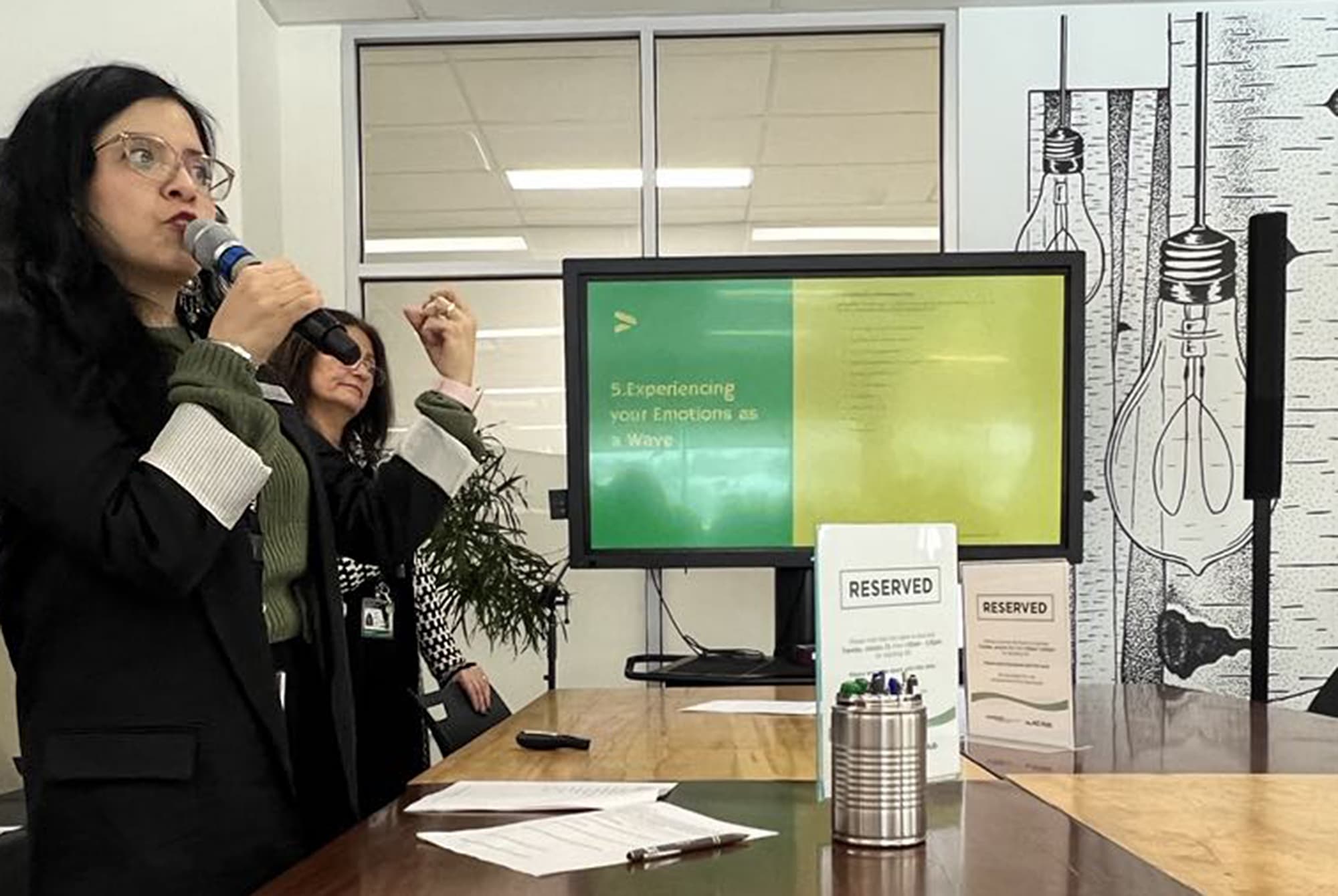
On the second floor in the AC Hub on Jan. 23 at one of the space’s tables, an event called Adulting 101: Emotional Regulation offered tools to help with this issue.
During the event, all eight to ten attendees were given an emotional log and a mood score chart. These can be used as tools to help identify emotions in terms of being able to regulate and control them.
Hosted by Elizabeth Pena Fernandez, the college’s health promotion and education coordinator, Christina Latifi, with counselling services, and Raivyn Halcro, an events programmer, the event covered ways to regulate your emotions and how to do so.
“Emotions give us information, and we need them for safety it’s important to be aware of these,” said Latifi.
The hosts explained that emotions are temporary, but an emotion that persists for days is a mood.
Sadness is an emotion; depression is a mood disorder. Your emotions and thoughts affect you and your behaviour, which is why it is so important to regulate them.
Latifi and Fernandez explained that we can simply do that by trying to name that emotion, and asking ourselves, “why am I feeling this way?”
Self-reflect. Be mindful and aware of how intense is this emotion. Is the emotion valid? Regulate the emotions and correspond to the situation.
“Your thoughts are strongly connected to your emotions,” said Fernandez.
During the event, one of the greatest tips for regulating your emotions participants learned about was is to experience them as waves.
Neither emotion nor waves are constant, they come and go. We should recognize what we feel, experience it, and know it is only temporary, explained the hosts.
Understanding that can be very self-perpetuating, overthinking can be when your thoughts and worries are in an endless loop, which can then make you feel overwhelmed by fear, and set you up for a vicious cycle that is hard to break.
“Emotions aren’t in the driving seat, we are taking control,” said Latifi.


Around the world, wine production has fallen to a 60-year low and experts are saying climate change is to blame.
The International Organization of Vine and Wine (OIV) looks at data from 94 per cent of the world’s wine harvest for the year and found the season of 2023 had the lowest grape production since 1961.
The OIV blames the bad weather of climate change, including frost, heavy rainfall and drought.
Ottawa Valley winemakers are also feeling the impact.
KIN Vineyards stands on a hillside in the Ottawa Valley in the Carp area and grows nine different varieties of grapes for winemaking on-site at the vineyard. Some of those wines include Chardonnay and Pinot Noir, with the latter being notoriously difficult to perfect.
Brian Hamilton is the current winemaker and manager of KIN Vineyards and has been working with grapes and the changing weather for over 20 years across many places and continents, including New Zealand and California.
Hamilton, who teaches part-time at Algonquin College to students pursuing a sommelier college certificate in the New World Wines course, says not a lot of people are aware wine can be made in the Ottawa area.
He adds it is not the easiest job, as growing the right grapes for making wine is a delicate process the changing weather is making it more unpredictable, especially when working with a wine Hamilton and winemakers around the world call “the heartbreaker grape.”
“It’s hard to grow, it’s even more difficult to make wine out of, so when you are a winemaker and you make good Pinot, it’s a badge of honour, so to speak,” says Hamilton.
He says that while more heat and a longer growing season is nice, the other effects of a changing planet are not welcome.
“It’s not all good, it’s not just about heat. When you talk about climate change, it’s about climate extremes,” says Hamilton.
“So, yes, heat units and sunshine might be one benefit to the change in climate, but certainly there are lots of negatives. The intensity of whatever weather you’ve got can be problematic.”
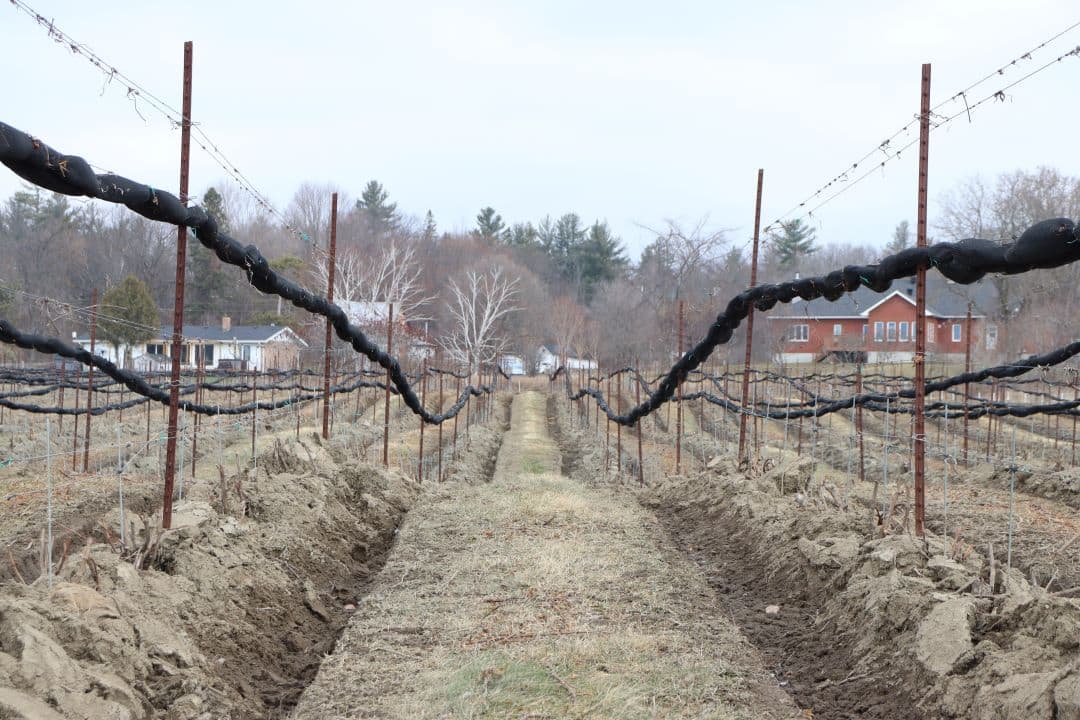
As the winters become milder, the grapes come out of dormancy a little early and begin to flower, becoming at risk for late frost, and if caught in a cold snap or freezing rain, they die and no longer make fruit.
To help protect the plants during the winter, the vines themselves are pruned down every year and covered with soil to protect them from the cold.
“It’s a very time-consuming, very labour-intensive and expensive process,” says Hamilton about the whole winemaking process.
Science advisor Renée-Claude Goulet from the Canada Agriculture and Food Museum says there’s another problem when the weather is poor: bees and other insects stay home and the pollination rates go down, affecting the quality of crops.
“There’s a lot of issues that are coming about with climate change. So one of them is obviously climate variability. So, not so much that it’s getting warmer, but it’s just becoming more unpredictable,” says Goulet.
“This is really affecting a lot of the crops that rely on flowering, like apple trees, grapes, anything that you know has a dormancy, a perennial that lives through winter, comes out of dormancy in the spring makes flowers and the whole crop is reliant on that one, like those 10 days where the crop is in flower.”
Climate change is both increasing the likeliness of extreme weather around the world, such as tornados and wildfires, and the subtle shifting of seasons, according to Agriculture Canada.

“Just as the vine starts to grow, the shoots can maybe be six inches long. They’re still extremely fragile and the wind can blow the shoots right off and there goes your crop,” says Hamilton, adding that heavy rain and water events can lead to damage as well, especially when hail falls.
“If you are far enough along in your growing season that the fruit has set and has started to expand and you’ve reached the stage in the vine called veraison,” he says. “This is where the red grapes start to turn from green to red then they start to soft and the sugar starts to build and the fruit starts to expand and the skins get thinner, hail can destroy your crop. They’ve had that in Ontario this year.”
The future of farming has depended on the weather since humanity first began planting seeds in the ground millennia ago, and the changing weather isn’t a new topic, but Goulet says the future of climate change on all types of farming is a major concern.
“It’s in a very critical time period that can really affect the crop for the rest of the season and really affect the harvest,” says Goulet. “Really, it’s the variability and the unpredictability that’s really causing a lot of issues.”
Hamilton says though the weather is shifting, KIN Valley is in a unique location for growing grapes as the hill is made from limestone and holds water even in a dry spell, to the point where the vineyard operates as a dry farm, meaning no irrigation is needed.
The vines then are forced to grow deeper to get water, something Hamilton says will make the plants stronger in the end, both against the wind and as they access more salt and minerals buried deep in the earth.
“That’s one of the age-old understandings about vines, if you want to make fine wine you need to make the vine struggle,” says Hamilton.
“Think of it like people. I think it’s the best analogy. Adversity in our own lives builds character, like what doesn’t kill you makes you stronger and vines are exactly like that.”

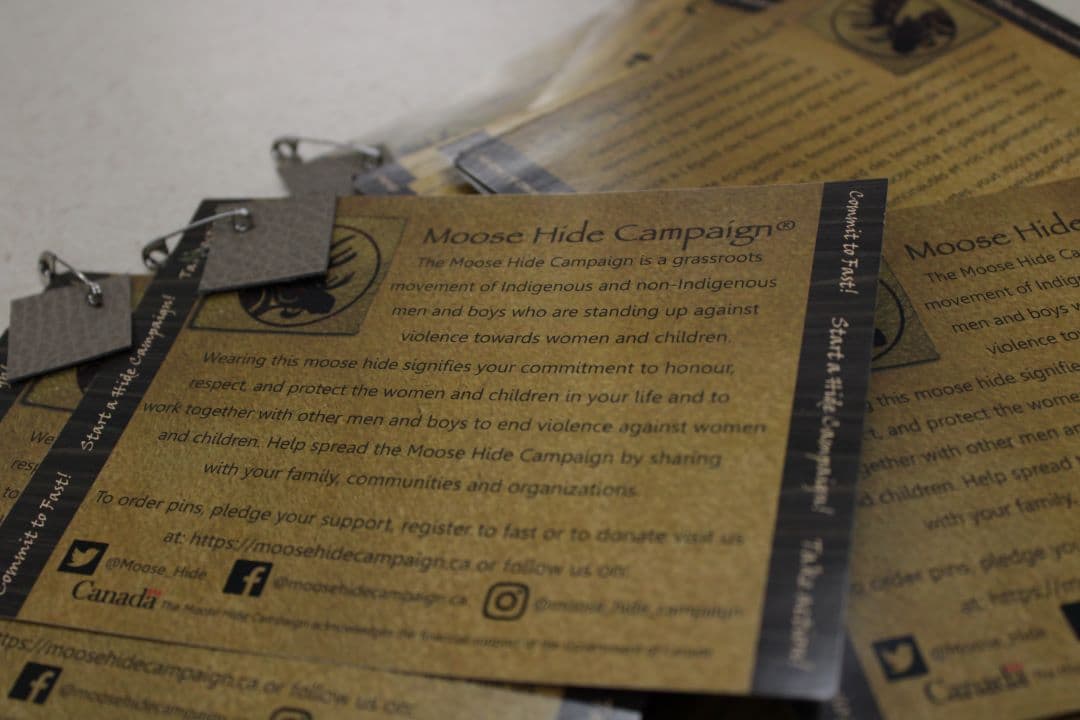
Algonquin College is the first school in Ottawa to be an ambassador for the Moose Hide Campaign for creating safer campus communities.
The Moose Hide Campaign began over 10 years ago in British Columbia when Raven Lacerte and her father Paul Lacerte were hunting moose as part of their Indigenous culture along Highway 16 in the northern part of the province, otherwise known as the Highway of Tears, named after the women (mostly Indigenous) who have gone missing or have been found murdered along the 724-kilometre roadway.
When they caught their first moose, the idea to repurpose the hide into a social innovation has seen over 4 million moose hide patches distributed with a campaign created to engage men and boys in ending the violence affecting women and has grown Canada-wide to both Indigenous and non-Indigenous women and girls.
In a press release from Algonquin College, president and CEO Claude Brulé said the college “remains committed to creating awareness of gender-based violence” after this recognition.
Omar Karim, the national director of post-secondary engagement and initiatives at the Moose Hide Campaign, said while there are no rules to becoming an ambassador, you need to spend effort and time as an organization spreading awareness and participating in or hosting events to educate people.
“We try to just keep it very open and dynamic,” said Karim. “Numbers are great, but really it’s about the relationships and really the awareness and educating as many people on campus about why violence is not okay and what can we be doing and it’s empowering institutions to be creative and innovative, to create their own initiatives that become a legacy in their own campus and then Moose Hide Campaign is here as our post-secondary team to support those legacy initiatives.”
He said the idea is not to call men out but to call them in, to change the behaviour in creating safer and healthier relationships.
“I find it humbling and I find it enriching in terms of the role that we have to play in working collaboration as an allyship in ensuring that we can hold other men accountable and support people through that process and educate people to that process that, you know, violence is not okay and so whether you know, it’s violence in general, is not okay,” said Karim.
“It feels great, honestly,” said Summer Wabasse, an Anishinaabe event co-ordinator at the Mamidosewin Centre.
“I know that I can feel proud of the work that I do here for all of our students, and as an Indigenous woman myself, it makes me feel so safe and just proud that we have a campus that cares so much about this type of thing,” she said.
“I think there are some people who, unfortunately, they are coming to these events and they themselves are family members, have experienced gender-based violence or like they might have a family member that’s part of the missing and murdered Indigenous women,” said Wabasse.
“And then there are some people who come here and they’re like, I didn’t even know that this was a thing.”
Statistics Canada reported 71 per cent of students in 2019, both male and female, have experienced or witnessed unwanted sexual behaviors during their time at a post-secondary school, with 1 in 10 women experiencing sexual assault in the same time frame.
At Algonquin, data collected from the college from 2018-2022 had 114 reported cases of sexual assault.
Across Canada, one in two women have experienced one or more incidents of sexual or physical violence since the age of 16, with a woman murdered every 2.5 days. From those numbers, Indigenous women were six times more likely to be affected than non-Indigenous women, according to the campaign’s website.
The college has worked with the campaign since 2017 to show how these numbers are more than just facts in a database.
“In order to become an ambassador campus, you have to participate in activities and events that work with Moose Hide or are contributing to ending gender-based violence,” said Sarah Crawford, the manager of sexual violence prevention and harm reduction for Algonquin. “So, it’s really just a recognition of the fact that we’ve done all of this work.”
She added there are events planned to continue education about gender-based violence and how it is an issue everywhere in the world and as students exist in this world, violence against women needs to be talked about.
“Education is good. I have a lot of hopes for, you know, the next generation. Every time we talk to students, they seem to be more aware of stuff. And so, I feel positive,” said Crawford.
“It’s an important issue,” said Randy Kakegamic about the Moose Hide Campaign.
“I think the whole issue stems from colonization, it all got mixed up from residential schools.”
Residential schools, which operated between 1874 and 1998, were created when the Canadian government took indigenous children from their families and culture and placed them in schools to educate, convert and assimilate them into Canadian society. An estimated 150,000 children attended these schools, according to the Canadian Encyclopedia.
When Kakegamic’s parents were taken to residential schools as children, the knowledge his grandparents knew and should have taught them was never passed down, and parts of the culture were lost.
“It’s a break in our values, our teaching,” he said.
Kakegamic acknowledged he had been part of the problem in the past, even up to jail time. He has now been sober for the past seven years and is working on getting a pardon and spends his spare time educating others by speaking to groups, singing and dancing.
“I’m taking the right path,” said Kakagamic. His goal in teaching younger men who are heading down the same path as he did is to know that “you don’t need to go down the way I did, there is a better way.”
If you are interested in learning more about the Moose Hide Campaign or how you can help end violence against women, you can order and wear a Moose Hide pin to get involved and support this campaign or register for National Moose Hide Day on May 16.
If you are someone you know who has been affected by violence or needs help, the Moose Hide Campaign’s help button on their website has resources and links, or you reach out to Algonquin’s security office at 613-727-4723, ext. 5010.








