main

First Person: Breaking away from being a people pleaser
Over the years I've mastered the art of morphing into whatever version of myself best fits in. Now, however, I'm going to honour my introverted self and take the time and space I need to find out who I really am
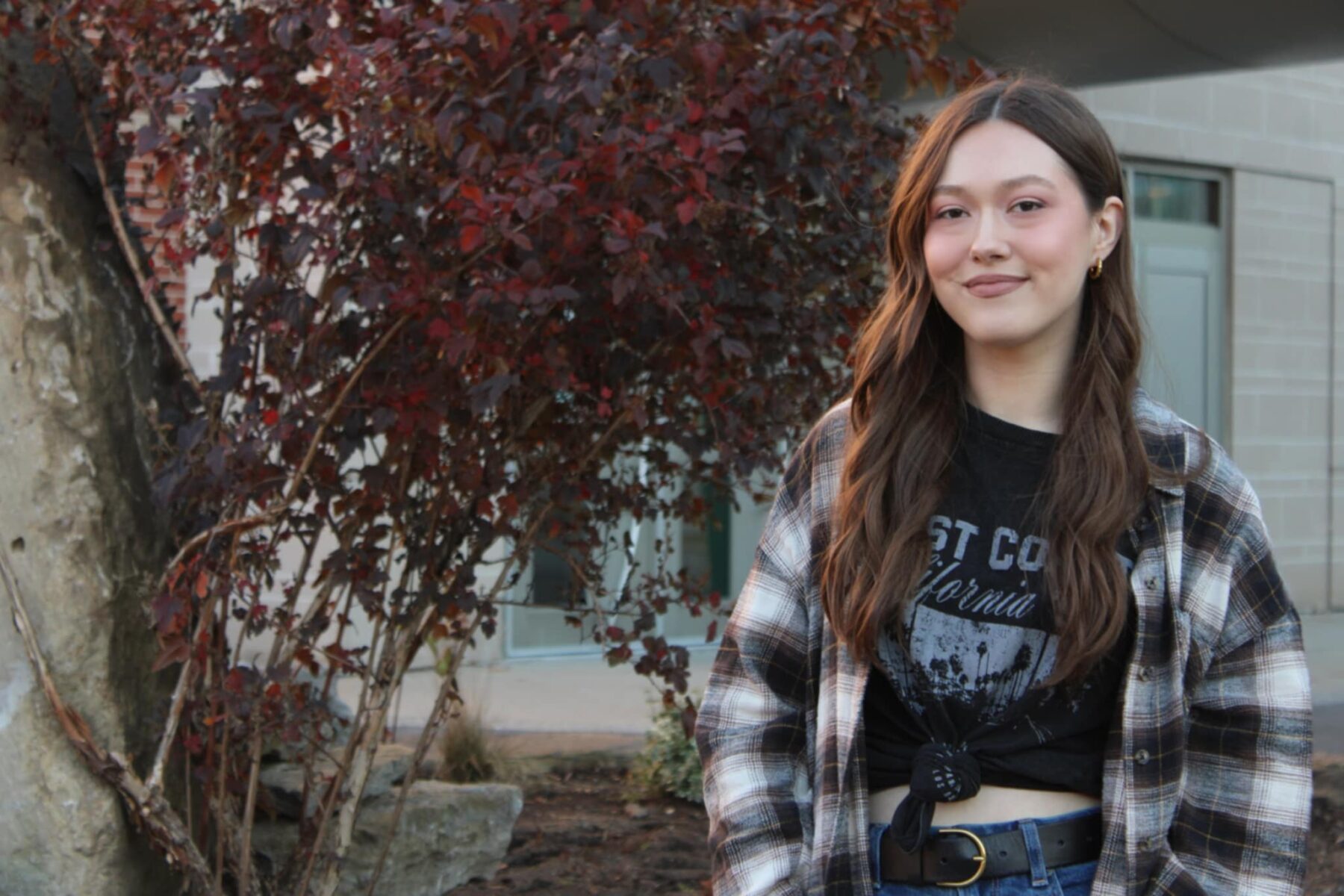
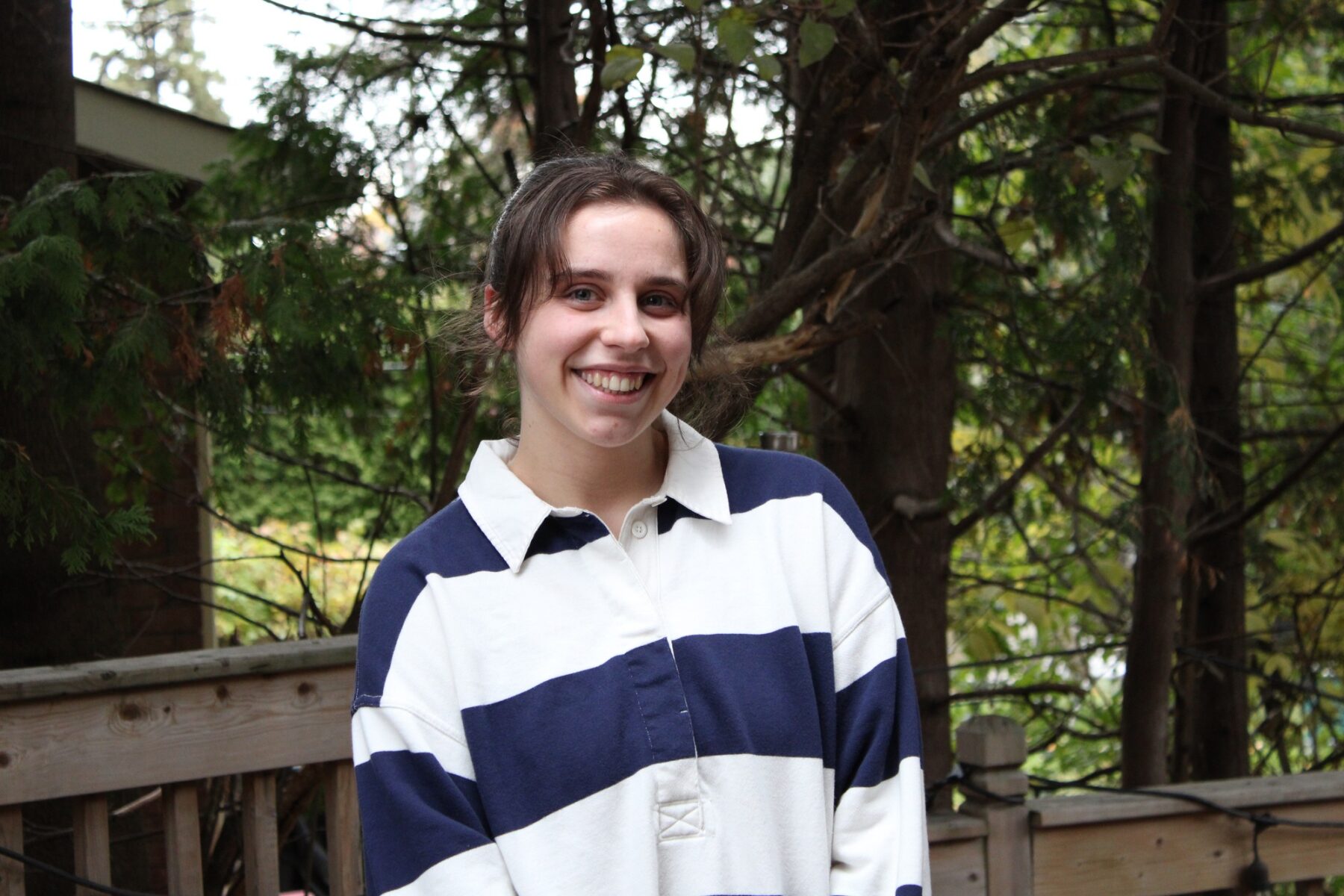
Photo: Sophie Daly
"The simple act of getting an email from the library saying I can pick up my books excites me," writes the author. "I used to think this was a guilty pleasure since most people I hung out with preferred spending their time partying."

I find myself at yet another lunchtime discussion, surrounded by friends who are diving into Harry Potter lore. I sit there, nodding along. I couldn’t care less about the origin of Hogwarts yet my heart races as I realize I have nothing to add into the conversation. But instead of admitting I don’t care and know nothing, I smile and continue nodding like an idiot.

“Don’t you agree Sophie?” one of my friends says to me. I agreed without even hearing what they had asked.

In that moment, I was a chameleon, shifting my colours to match the world around me. While inside, I was a ball of anxiety and self-hatred. I’ve mastered the art of blending in, being able to morph into whatever version of myself to fit in and not be seen.

Throughout my teen years, I believed this made me the worst person since I just lied to everyone I met. I was never being me and mirroring others so they would like me.

Now that I’m 21, the question of “who am I?” looms. I want to peel away the walls I’ve built up, but I often find myself paralyzed by anxiety. What if there’s nothing underneath? What if I’m just a mix of borrowed traits and interests?

I began putting the small remains of myself together. I’ve come to realize I’m a boring person and simple things bring me joy.

The simple act of getting an email from the library saying I can pick up my books excites me. I used to think this was a guilty pleasure since most people I hung out with preferred spending their time partying.

I see now that it truly doesn’t matter, I will find people that have the same interests as me. There was no reason for me to hide parts of myself just to please those around me.

“I used to always want to please others and just follow my friends,” said Sarah McDonald, a first-year student in the law clerk program. “Now, I think differently, and rather than trying to please others, I have accepted that if you want to be happy, you can’t please everyone around you.”

When I moved to Ottawa after high school, I had no friends. I was alone at university and hated every second of it. I jumped into kinesiology because all my friends were going into science, and I didn’t want to be the only one not taking a “smart” program.

After moving, I made the wise decision to stop talking to my high school friends. I tried so hard to act like them, but I was never smart enough for their liking.

I spent two years at uOttawa completely alone, I could go a full day without talking to anyone. This gave me a lot of time to look inward.

“I really had a hard time adjusting when I first came to Ottawa, but I think the most growth I’ve had was being alone and away from my family for two years,” said my co-worker from Knix Stephanie Barrios, a political science student from Carleton College. “I didn’t have my parents to run to and have them help me with paying my bills and stuff. It was a wake-up call in the sense you either sink or swim. It’s been hard but also intensely gratifying since it forced my inner self out of my shell.”

Though I am an introverted person, I have always enjoyed being a part of a friend group, but I have come to realize that being alone is the best for me to find out who I am.

There are still times where I get the question of “what do you want to do after you graduate?” or “what do you do for fun?” and I have no answer. But that’s okay, I’m still figuring myself out.

I’m me and I shouldn’t be ashamed of the things that make me a person or try to change myself to please others.


Algonquin Wolves fail to complete comeback against Seneca Sting

The Wolves fell in a nail-biter to the Sting at home
Photo: Jude Osmond
Tesloch Luk sizing up his defender.

The Algonquin Wolves men’s basketball team fell to the Seneca Sting 79-68 on Nov. 23 at the Jack Doyle Athletics and Recreation Centre. The game started off close with both teams alternating baskets throughout the first quarter.

The score was tied six times and there five lead changes through the entire game.

In the second quarter Seneca started to pull away making three point after three point, shooting five of nine from beyond the arc.

The Wolves picked up some momentum in the fourth quarter, cutting Seneca’s lead to six points with five minutes to go in the game.

Everything changed after Seneca forward Ryan Brooks knocked down a three pointer late in the fourth quarter to end the Wolves’ momentum.

“We dug a hole and couldn’t get out of it and finish the first half not in a good way,” said Wolves head coach Trevor Costello.

The Wolves struggled to space the floor and shoot the ball consistently. They successfully shot the ball an abysmal rate of 32.9 per cent.

“Too much individual play, we didn’t play team basketball today,” said Costello.

Albert Opena going back on defense.
Albert Opena going back on defence. Photo credit: Jude Osmond

The Sting won the physical game with the Wolves. The visiting squad was all over the glass, collecting rebounds and beating the Wolves down low. The Sting out-rebounded the Wolves 47-29. The Wolves were getting dominated near their basket, with the Sting making 40 of its points in the paint.

One of the bright spots for the Wolves came from forward Tesloch Luk who had another 20-point game with 24 points. Luk is now averaging an outstanding 22 points per game.

Another highlight came from the bench.

Guard Simon Desta came off the bench playing 27 minutes, racking up 17 points and making four three pointers. “I felt like I was in the zone a little bit,” said Desta, noting he was “just trying to get into my spots.”

Costello gave his player of the game honour to Wolves big man Ted Braden who had 10 points and made 50 per cent of his shots.. “He played really good on both sides of the court and stood out to me today,” said Costello.

Costello is looking to see his team move the ball better for the next game.

The Wolves look to bounce back as they face their rivals, the 2-6 La Cite Coyotes at the Jack Doyle Athletics and Recreation Centre, on Nov. 27 and at 7 p.m.

First Person: Protecting your mental health sometimes means cutting people off

After dealing with anxiety over the past year, I've learned it's important to put your own oxygen mask on first before you help others
Photo: Stephanie Taylor
"One of the biggest lessons Iโ€™ve learned in adulthood is not everyone wants whatโ€™s best for you," writes the author. "Itโ€™s easy to have boundaries, but itโ€™s hard to enforce them."

This school year, I decided I needed to change how I dealt with my anxiety. Anxiety is something I’ve struggled with since I was 13 and now, at 26, I’m still figuring out how to deal with it in a healthy way. After spending the past year being in a constant state of panic, I started reflecting on my day-to-day life to find the root cause of my anxiety. But, I was having a hard time figuring it out.

Then, my phone rang. It was my older sister calling. Without knowing what she wanted, I already felt drained. It was the fourth time that day she had called me about a problem she had. Days before, she had Facetimed me several times throughout the day. Her problem was something you’d normally go to a therapist for, but she wouldn’t go to therapy. Without even realizing it, I had become her around-the-clock therapist.

What’s something a therapist would say? You can’t help someone unless they’re willing to help themselves. She wasn’t there yet, and I couldn’t handle her dragging me down with her. I was frustrated.

After this last call, my sister and I didn’t talk anymore. Although I wanted to be there for her, I couldn’t be her therapist. She was asking too much of me. I couldn’t be there for her anymore because I needed to be there for me. I needed to learn how to put my own oxygen mask on first before helping others.

That’s when it hit me. I needed to start setting some boundaries with the people in my life.

My friend Megan Konrad and I talk about how hard it is to not put self-care on the back burner when the people in your life need you. She taught me it’s important to have boundaries in your relationships.

“Relationships aren’t black and white,” said Konrad. “You can love someone, want to be there for them… But they need to be giving you just as much as they’re taking from you, otherwise it’s one-sided.”

One of the biggest lessons I’ve learned in adulthood is not everyone wants what’s best for you. It’s easy to have boundaries, but it’s hard to enforce them.

Once I began setting boundaries, I noticed I had less people in my life. I lost another sister and a few friends, all in a couple weeks. People fought back constantly. They told me I became mean. They told me I changed. And I did. My boundaries were protecting my mental health and I was starting to feel better. My heart rate had lowered and I was no longer in a constant state of panic.

My friend Ryleigh Brennan began to notice the change.

“You’ve always been shy about standing up for yourself. People aren’t used to you not being a doormat. I don’t think they were ready for you to actually cut them off if they chose to not respect you,” said Brennan. “When people don’t respect you the first time around, don’t let them have another go at it.”

When I realized what the root cause of my anxiety was, I learned the importance of having boundaries that safeguard your mental health.

I’m not closed off from mending the relationships I’ve recently lost, but I won’t be putting my self-care on the back burner in order keep people in my life.

Tokyo Police Club blasts away the Algonquin Commons Theatre during final tour

Hundreds of tickets were sold for Tokyo Police Club's last show in Ottawa, which included special guest Menno Versteeg of Hollerado
Photo: Ben Seabrook
Lead singer David Monks rocking the guitar at the Algonquin Commons Theatre on Nov. 22.

For nearly two decades, Tokyo Police Club has delivered music from their hearts. From Newmarket, Ont., the indie rock band found success with five studio albums and two nominations for the Juno Awards.

In 2024, band members David Monks, Graham Wright, Josh Hook and Greg Alsop announced their breakup, and that they would do one final tour together to conclude “a f–king epic journey.”

On Nov. 22, Tokyo Police Club performed for hundreds of fans at the Algonquin Commons Theatre for their last show in Ottawa.

They opened with Favourite Food, and went on to play many of their greatest hits, including Centennial, Favourite Colour and Wait Up.

Just before they played Breakneck Speed, a fan was heard shouting, “We’ll miss you!” The band had the audience sing along for that one.

John Schaufer, a Lambton College alumni, was visiting from Chatham and realized the band was playing at the same time, so it worked perfectly for him. He has been a devoted Tokyo Police Club fan since 2010 — the band was one of the first he listened to.

“I bought tickets to Toronto for next week, and then I found out they were already up here so I was like, perfect,” Schaufer said. “I sold those tickets and said, I’m gonna see them up here.”

Tokyo Police Club merchandise was being sold outside the theatre, which many fans lined up for.

This wasn’t the band’s first performance at Algonquin College. According to Wright, they played in the cafeteria back in 2006 and did a show in the Observatory.

Connor Sunderland and Sophie Datt, third-year applied museum studies students from Algonquin College and unexpected Tokyo Police Club fans, went to the show because it was the only chance they had to see them live.

“I heard they were performing here and never really paid attention, but I heard the name before from a friend and really wanted to check them out and then realized I actually had them in some of my Spotify playlists,” Sunderland said.

Menno Versteeg, lead singer of the Ottawa-based band Hollerado, opened the show.

Hollerado broke up in 2019 but they reunited for one show at the college theatre the night before Tokyo Police Club took the stage.

The two bands are close, and Versteeg sees Tokyo Police Club ending as a step forward for that band.

“There’s always things around their (Tokyo Police Club’s) course, change is good,” Versteeg said outside of the theatre. “And they’ll probably come back in five years like we did anyway.”

Monks gave a shoutout to Hollerado and dedicated Hands Reversed to them. They went on to play more hits, including Frankenstein, Argentina (Parts I, II, III) and Bambi.

Toward the end, the band members waved goodbye to fans, who waved back, and gave a heartfelt thank you as they closed out with Your English is Good, which the crowd went wild for.

“We love you so much from the bottom of our hearts,” Monks said. “We love you, thank you, and goodbye.”

As avian influenza hits Canada, students in Algonquin’s vet tech program learn preventative lessons

British Columbia has confirmed Canada’s first human case of H5N1 avian influenza involving a teenager who was in critical condition
Photo: Grinje Randa Bringi
Emma Mackinlay and Emilie Desloges demonstrate their dog examination techniques with Beau Beau at the veterinary clinic.

As health officials in British Columbia monitor the condition of a teen sick with avian influenza, students at Algonquin College are learning how to combat zoonotic diseases in their veterinary technician program.

Second-year veterinary technician students Emma Mackinlay and Emilie Desloges are already well-versed in zoonotic disease prevention measures, which are illnesses that can spread between animals and humans.

Emma Mackinlay and Emilie Desloges examining Beau Beau.
Emma Mackinlay and Emilie Desloges demonstrate their dog examination techniques with Beau Beau at the veterinary clinic. Photo credit: Grinje Randa Bringi

“Hand hygiene is critical,” said Mackinlay. “We’ve been taught to use proper protective equipment, sanitize thoroughly and recognize symptoms early.”

“The program equips us to manage animal-related diseases,” said Desloges. “But the principles, like handwashing, apply to everyone. It’s one of the easiest ways to reduce the spread.”

"Handwashing applies to everyone. Itโ€™s one of the ways to reduce the spread of germs," said Emilie Desloges.
"Handwashing applies to everyone. Itโ€™s one of the ways to reduce the spread of germs," said Emilie Desloges. Photo credit: Grinje Randa Bringi

At Algonquin, these practices are deeply embedded in the curriculum. Veterinary professor and program coordinator Shannon Reid emphasized the importance of biosecurity in managing zoonotic diseases.

“Students learn the mechanisms of these diseases, how they are transmitted, diagnosed and treated, as well as how to prevent their spread,” said Reid. “We teach strict protocols, including wearing gloves, masks and goggles. These practices protect the students and help prevent transmission between animals.”

The H5N1 avian influenza is rare but deadly. It reminds people of how quickly a public health crisis can escalate.

A B.C. a teenager, whose name and gender have not been released, was fighting for survival after contracting the H5N1 strain of avian influenza. It is Canada’s first reported case.

According to Public Health Ontario, avian influenza is a type of flu virus mostly found in wild birds. It can also infect poultry such as chickens and turkeys, as well as mammals like cows. Human infections are rare and typically result from close contact with infected animals or their environments.

According to B.C. health authorities, the teenager’s symptoms began on Nov. 2 with fever, cough and conjunctivitis, escalating to acute respiratory distress. After initially being sent home, the individual was admitted to intensive care days later. Advanced antiviral treatments were being administered, but the patient’s condition remained critical.

“We may never find the exact source,” said Henry Migratory birds are often linked to outbreaks, but in this case, no direct exposure to poultry or infected wild birds has been identified,” she said.

Over 35 contacts of the teen, including family members and healthcare workers, were being monitored and tested according to health authorities. Antiviral prophylaxis, a preventive treatment designed to stop the virus from developing in exposed individuals, has been offered to those at risk.

While public health officials remain confident that the virus does not spread easily between humans, its severity is concerning.

Seasonal influenza typically has a mortality rate of less than one percent, H5N1 has been associated with mortality rates as high as 52 per cent globally.

“Globally, since 1997, we’ve seen as many as 900 cases, but human transmission is extremely rare,” said Henry.

Sundus Farah, a first-year community and justice services student, said she had not heard of the avian flu case but believes Algonquin College has a responsibility to inform students about health risks.

“If there’s another outbreak, I’d follow the procedures to keep myself safe,” said Farah. “But I need to stay informed to protect myself.”

How to Stay Safe

Health officials advise remaining vigilant but not panicking. Stay home if you feel unwell, and get your seasonal flu shot to reduce the risk of severe illness.

If you encounter sick or dead birds, avoid direct contact and report them to wildlife authorities immediately. Signs of a sick bird include unusual tiredness, difficulty breathing, swelling around the eyes or head, or discharge from the beak or eyes.

As Mackinlay and Desloges emphasized, preventive measures like hand hygiene, proper protective equipment and awareness are key to staying safe.

First Person: Soccer helps me feel like myself, far from home

Leaving Mexico for Canada changed everything. But on the soccer field, I found a way to stay connected to home while discovering who I’m becoming.
Photo: Agrani Tiwari
Standing on the Algonquin College soccer field in my Ottawa team jersey, taking in the moment.

When I left my hometown in Mexico a year and a half ago for Canada, I knew life would be different. But I didn’t expect how hard it would be to feel connected to who I used to be.

I’d moved to Canada to chase big dreams, but as time passed, I felt parts of myself slipping away. Here, I’m doing all the things I dreamed of: working a job I love, paying my own bills and learning how to handle life on my own. On the outside, I’m proud of who I’m becoming because I keep growing as a person. But inside, I sometimes feel like I’ve lost pieces of who I was.

For me, soccer has become the thing that keeps me connected to home. Soccer has always been a big part of my life, and playing it here makes me feel close to Mexico. Back in my hometown, soccer looked like getting together with friends, feeling excited as we put on the jerseys of our favorite teams and players.

We’d feel like professional athletes, showing up to have fun and believing we were the main characters in the world. Before every game, I’d get chills lacing up my cleats, like a kid opening a brand-new toy.

Here in Canada, those feelings haven’t changed. When I step onto a field in Ottawa, the weather is colder, and the faces are different, but the excitement is the same. Before a game, I sit on the bench tying my cleats, already imagining how it’ll go. I think about the moment the ball reaches my feet, that split second when everything else fades away, and I’m just playing.

Even thousands of miles from home, soccer still gives me chills. It’s the bridge that connects Mexico-me with the person I’m becoming here.

In Canada, it’s easy to get swept up in the newness of it all. When I met Rebeca Feria, the leader of the Latino Club at Algonquin College, her words helped me make sense of what I’d been feeling.

“Just because you’re in a different country doesn’t mean you have to become a different person and forget where you came from,” she said. The Latino Club at Algonquin College exists to help people like me keep our roots alive, to remind us that we don’t have to leave behind the things that matter just because we’re in a new place.

Feria also talked about how some people lose touch with their roots, like it’s just part of “moving on.”

“It’s disheartening to see people ignore the importance of staying connected to something that was once so meaningful to them,” she said. Those words hit home because, in many ways, I was one of those people. I’d been so focused on adjusting to my new life that I didn’t even realize how far I’d drifted from who I used to be.

Talking with others who felt the same way, like Meryem Hasdou, an international student at Algonquin College, gave me even more perspective.

“Arriving to a new country almost makes you feel completely lost with yourself, which can be terrifying at the beginning,” Hasdou said. “When you find something that connects you to your actual home, there’s a sense of relief and happiness with yourself.”

Her experience mirrored my own, reminding me that I wasn’t alone in this feeling and that many other international students go through the same.

For a long time, I thought that moving forward meant letting go of everything that came before. But I’m learning that you never have to give up parts of yourself to grow.

Soccer is that constant thread for me, reminding me of where I come from and why that matters. Now, each time I lace up my cleats and put on my jersey, I’m playing for more than just the game. I’m playing to keep Mexico close to me, to hold on to the memories that shaped me, even as I keep building a new life here.

Like me, many people are out here trying to find their way while holding on to pieces of their past. For anyone trying to figure out who they are after leaving home, I hope my story reminds them that growth and staying connected can go hand in hand. You don’t have to lose your roots to find yourself.

And for me, that’s what the soccer field, the excitement before playing and the touches with the ball are all about.

For these students, decorating their dorm rooms is about more than following a trend

Students are turning living spaces into personalized retreats creating a true sense of home
Photo: Yikun Liu
Yikun Liu's little nail salon table that takes up about half of her dorm room at Algonquin College.

Decorating living spaces has exploded in popularity, especially on social media. But is it just another fleeting trend, or is it something deeper? For many, it is less about following trends and more about creating a space that truly feels like home.

Social media platforms like Instagram, Pinterest and TikTok are buzzing with dorm-room transformation videos, showcasing everything from cozy string lights to color-coordinated bedding and intricate gallery walls.

The trend has evolved far beyond throwing up a few posters or settling for basic furniture, it’s now about crafting a curated aesthetic that reflects personality and individuality.

For some, it’s an art form. For others, it’s a necessity to feel at ease in an unfamiliar environment.

Students want their living spaces to feel like a retreat, a place of comfort and a reflection of their identities.

To explore how students bring a sense of home to their living spaces, the Algonquin Times spoke with three students about their personal approaches to room decor.

Yikun Liu, 18, Algonquin College student

Program: Early childhood education, Level 3

For Liu, when it came to a colour scheme, decorating her dorm at Algonquin College campus was easy.

“Because my favourite colour is blue, most of my decorations when choosing something are in the colour blue, including my bed and bed sheets,” said Liu.

According to Mental Health America, when the colour blue is used in living spaces it helps people relax, unwind, find peace and become more comfortable in their environment.

Liu also includes accents of yellow in her room, primarily in the colour of her lights.

“I picked warm yellowing lighting so that way it looks like a warm and cozy atmosphere,” she said

However, when she first started decorating her dorm, she didn’t think of a theme and didn’t care to have one.

“I don’t have a specific theme, I just wanted to make my room look comfortable and cozy,” Liu said. “And it’s really helpful for my mental health.”

Liu also transformed her room into a functional space by incorporating a unique feature that adds both purpose and personality to her decor.

“I became a big fan of polished nails, so I DIY half of my room into a little nail studio, so I made lots of decorations for that,” she said.

Liu's nail table she created in her bedroom dorm.
Yikun Liu's little nail salon table that takes up about half of her dorm room at Algonquin College. Photo credit: Yikun Liu

She bought and created the main table, some storage shelves, nail oils and created a little area at the table where she takes photos for people after she’s done their nails.

“I don’t like that creating your space has become a social media trend. For me this is just my space and comforting to me.”

Phoenix Gray, 19, Humber College Toronto North Campus student

Program: Culinary Arts, first year

“I would describe the decorations in my room as more sporadic and less stylized,” said Gray.

“A lot of my decorations remind me of important memories in my life or have something to do with one of my hobbies.”

Money was not a significant issue for Gray since most of his decorations came directly from home or were made by him.

However, he did spend some money at the campus poster event.

“A lot of my decorations are little keepsakes and trinkets I had from home so that helped me save money,” he said.

“I also enjoy displaying some of my own art to decorate my space. I did however spend a fair bit of money on posters at my school’s poster sale, but I feel that it was worth it.”

Gray said the best and one of the most interesting pieces that he owns is a butt poster. Yes, a poster with different items that have butts on them.

Image of poster with items having butts on them.
Phoenix Gray's butt on things poster with signatures of friends on each item. Photo credit: Phoenix Gray

“Everyone who comes into my room gets to sign their name next to their favorite butt,” said Gray. “I really like it because it makes me laugh and I feel that it will be a great keepsake in the future.”

Sarah de Lina, 21, University of Ottawa student and residence assistant for Stanton residence

Program: Health Sciences, fourth year

When de Lina first moved from Toronto to Ottawa, she said she felt nervous and decided to bring items from home to her dorm.

“I wanted to decorate my room with things that made me happy,” said de Lina.

She’s now living in the fourth different dorm room since starting at the university.

Her original plan was to always have things in her room that brought her comfort when she was away from home.

“I love the colour pink, so you’ll notice in my room I have lots of pink stuff.”

Along with her pink pillows and flowers, she has event posters she has made during her time as an RA for Stanton. One of her favourite items is a colonial-style map of Canada, right above her bed.

de Lina said she loves maps and thinks her map is particularly interesting because she can see the different industries showing what is produced across different provinces and cities in Canada.

Lina's posters of her events as an RA and her colonial Canadian poster.
Sarah de Lina's posters from events as being an RA and her colonial style Canada poster, right above her bed. Photo credit: Caroline Kirkey

“It’s cool to see how that’s spread out over Canada, and I love the style of art and the smaller posters were all left over from work, and they are all events that I ran, so those didn’t cost me anything,” said de Lina.

But one of coolest objects de Lina has in her room is a small piano, placed under her bedroom window like a little gem.

She’s been playing piano since she was six years old.

“I love to play, and it really hit me in high school that I loved playing piano, so when I’m having a bad night sometimes, you’ll hear me turn on the piano and my roommates are like ‘Oh it’s River Flows in You or some really pretty beats’, or I’ll just play for fun,” she said.

First Person: A healthy weight-loss journey skips the shortcuts

After two years of struggle, exploration and persistence, I now stand in front of the mirror and smile at myself. Tears gather in my eyes—I can finally see the results of my efforts
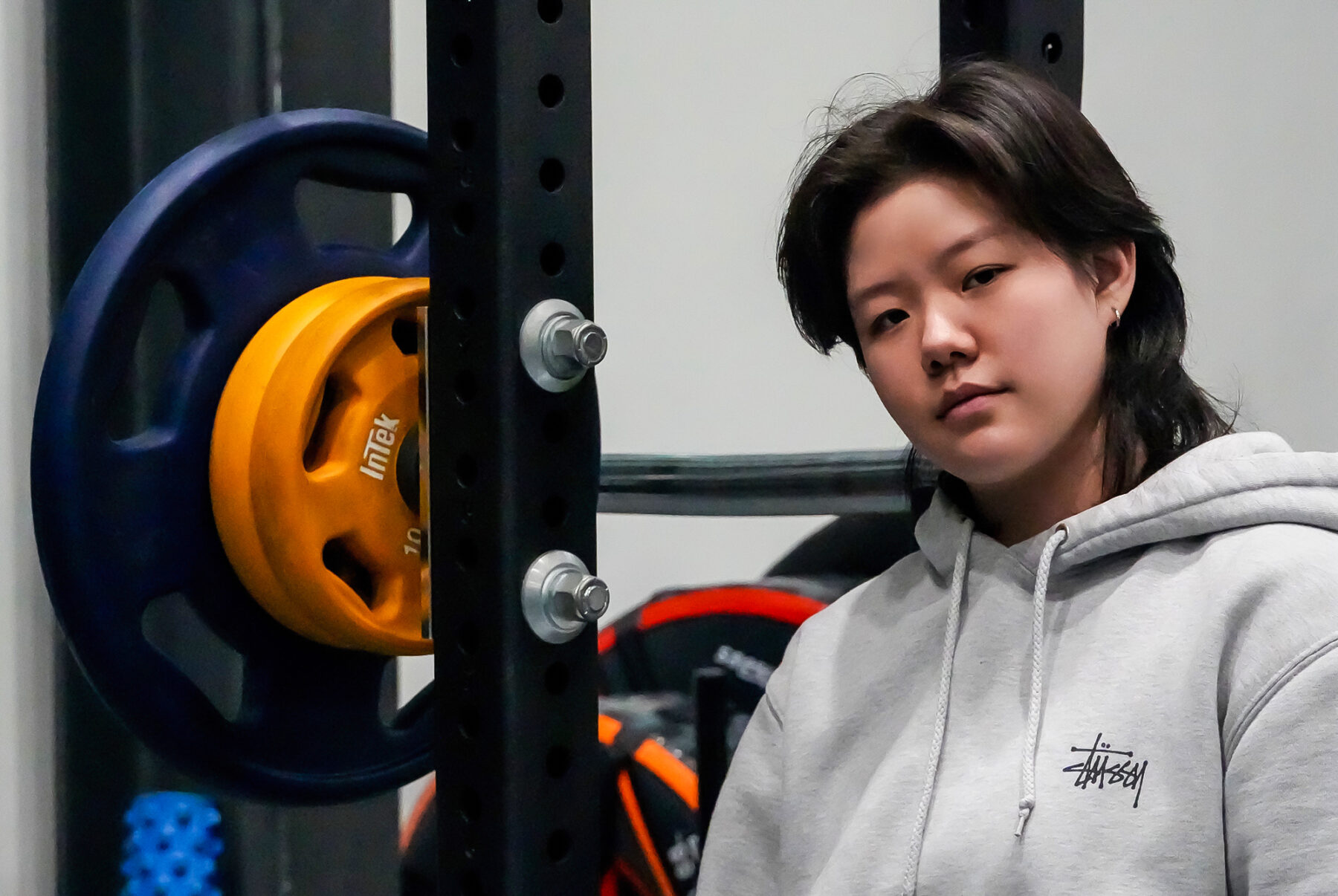
Photo: Caroline Kirkey
"I no longer look for any shortcuts, feel hungry because of dieting and panic about any physical problems that a diet brings to me," writes the author.

I remember a dark moment five years ago. I had just knocked over a pot of vegetables I was about to cook. The brown glass pot shattered on the floor, scattering boiling water and vegetables across the kitchen—much like my fractured dieter’s resolve. Kneeling in the shards of glass and spilled food, I sobbed. My mouth was still numbly chewing on a piece of broccoli.

Losing weight felt as impossible as trying to catch the moon’s reflection in water for me. I have constantly been anxious and struggled with body image.

All of this changed, however in my tiny bedroom in the southern part of China three years ago. Scrolling through TikTok on my phone, a video by TikTok influencer and bodybuilder Nikita appeared. It was about achieving your ideal body. I scoffed and was ready to swipe away—until it started to play.

“You may have tried every popular weight-loss plan on social media,” Nikita said. “But have you ever thought about what nutrients your body actually needs? The body you’re not happy with didn’t come from a week or a month of eating—it took time. And reaching your goal will also take time.”

“Boom…” It was as if a wall in my mind about weight loss had just collapsed. “Facing your body changes positively is the first step to losing weight,” he continued. “Stop looking for shortcuts. The only thing you need is the right diet that suits you.”

In that moment, I learned that accepting the changes in my body is the first step to losing weight. In the next hour, I learned about counting calories, the three major nutrients that the body needs, muscle content and other knowledge that I had never heard before. I even made a fitness and diet plan for myself. All I need is the right diet that suits me and stop looking for shortcuts.

Up until this point, that had not been what I’d been doing. When I turned 20, I became overwhelmed by excessive anxiety due to changes in my body. I resorted to extreme weight-loss methods.

This period of losing weight was chaotic and crazy. I failed because I was always hungry from dieting. I’d opened the refrigerator in the middle of the night to stuff my stomach with frozen pizza. I failed because I lost control of my emotions while trying the carnivore diet. I failed because I cut out carbohydrates, which led to severe hair loss that clogged the shower drain. I failed because I lost consciousness and was rushed to the hospital after trying an all-liquid diet.

I was officially diagnosed with depression and anxiety from the relentless pain of extreme dieting. The doctor showed no sympathy or emotion to me during the examination about my symptoms. Instead of asking me what happened, she gave me two options to choose: transcranial magnetic stimulation (TMS) or taking pills.

During that time, I felt like I was stranded on a deserted island of confusion and helplessness.

Terry Lin, a personal fitness trainer I met after learning how to lose weight correctly, said his members usually had physical and emotional problems due to the extreme diet in the beginning.

“Many of the people I work with have tried diets that go completely against our body’s natural needs,” he said. “They start without understanding the basics, and often, they either revert back to old habits or just give up.”

As a child, I was affectionately called “chubby” by family and friends. My grandparents, whom I lovingly refer to as “five-star chefs,” played a big role in that. My grandfather often brought all my favourite foods home, and my grandmother was known in our community for her incredible cooking. Their way of showing love was to have steaming, delicious meals on the table every day.

At the time, I thought of it as a blessing. In this warm, food-filled environment, I started to grow rounder, much like an inflating balloon.

“Ady, you look like Baymax!” my mother joked one day when I was 18. With a gentle smile, she added, “Maybe it’s time to lose a little weight? It doesn’t look very healthy.”

My mom is a kind, but firm woman who sometimes teases a little too much. I wasn’t hurt by her words, but they stayed with me. Her comments echoed in my mind, especially during moments when I felt my body’s weight while walking or exercising.

“Sometimes you really can’t control your mouth,” said Chuyan Peng, the first friend I met in the gym. “It’s like your emotions push you to eat just to relieve the mental pressure.”

However, starting over was not easy. Years of disordered eating had left my body weak. It is difficult for me to adapt to any form of exercise. I almost bite through my lip to lift a 10-pound dumbbell. made my body unable to adapt to any exercise. I almost bite through my lip to lift a 10-pound dumbbell.

In the next two years, I spent tons of time on social media to learn how to exercise and repeated heavy-weight strength training every day. I was wandering between two emotions every day: the edge of emotional breakdown and soaking in the dopamine brought by strength training. But this time my emotions did not actually collapse, I finally got on the right path and saw the results.

I no longer look for any shortcuts, feel hungry because of dieting, and panic about any physical problems that a diet brings to me. I began to learn the nutritional elements of each ingredient, I began to learn how to exercise each part of the body, and I began to know how to achieve my goals.

My emotions began to stabilize as the results of my weight loss became noticeable. Although my mental health challenges haven’t been completely resolved, I believe the next step is to seek ways to address them actively.

Now, I am still on my journey of fitness and emotional healing, and a new goal set for my future. But this time I am no longer scared or confused because I know that it’s common to make mistakes, and you will always get back on the right path.

First Person: College is for smart people too

I used to think of university as the goal, and college as a back-up option. High school taught me that if you didn’t qualify as 'intelligent' you went to college. Little did I know applied learning can be for everyone
Photo: Nathalia Lencioni
The author has more school work in her college program than she'd ever had during her three years at university. "The difference is, this time I have hope," she writes.

Sitting in front of my colour-coded semester plan and my scattered notes, I’m trying to plan my course of action through all of my upcoming deadlines. Dates highlighted in red and terrifying to-do lists stare up at me from the pages of my agenda. I don’t know how I’ll be able to complete all of this.

Then, it hits me: college is just as hard – and just as valuable – as university.

If I had told my high school self that, however, she would have laughed in my face. Growing up, all I’d ever heard regarding the two post-secondary options is that university is the goal, and college is a back-up option. Yet here I am, enrolled in my third term at Algonquin College, with probably more school work than I’d ever had during my three years at university, and enough stress to share. But the difference is this time I have hope.

I always knew university would be the path I’d follow. In high school I got academic credits and I kept a good GPA. I even started emailing universities in grade nine because I was so anxious about making the right choice. Other options were never on the table. It would be high school graduation right into a four-year bachelor’s degree right into a career I would then work at for the rest of my life. My future was completely mapped out.

Like me, Adam Hassan, a human services foundations student at Algonquin College, shares a similar story.

“I went to university because, well, I thought that was just what I was supposed to do,” said Hassan. “I guess, I was just drawn to the prestige of studying at a nice institution.”

Students are confronted with the choice of university, college or trade school from the moment they walk off that eighth grade graduation stage. The decision must be made when building your class schedule: will you be taking academic or applied courses? If you had academic credits, you could attend college and university. If you had applied credits, you could only attend college.

With the idea that applied classes would limit my opportunities,They were never an option. This made me completely omit college as an educational path. If I did the work for the higher level, why would I go down to a lower one?

So, I attended the mandatory university seminars and ignored the voluntary college seminars that took time away from my sacred lunch period. I decided I was going to the University of Ottawa for a bachelor’s degree in communications.

Matthew McCooeye, a professor in the broadcasting-television program at Algonquin College, sees the influence of the pressures put on students graduating grade 12.

“High schools unquestionably lead people to university, and I believe that it doesn’t serve most of the people in the classrooms that they have,” McCooeye said. “High schools need to do a better job of making their students know that a college diploma is achievable.”

At university, I found myself in sitting in large lecture halls with 100 students and felt myself slowly turning into a number. The classes focused on theoretical knowledge and only tested my retention through exams worth 50 per cent of my grade and vague essays that will never again see the light of day once read by a TA.

With impersonal learning environments, and no real support anywhere to be found, I struggled to fully engage and ultimately failed my final year of my program.

It crushed me.

That year, I found myself at my lowest and a crippling fear of failure burned into my brain. I convinced myself I wasn’t smart enough, that the reason I was unable to excel, or even succeed in university, was because I wasn’t intelligent.

“A lot of the students come into our program thinking that they’re not good students because they’ve been told from kindergarten to grade 12 that they’re not,” said McCooeye. “I feel like high schools need to do a better job of building the confidence of their students as opposed to telling them what they can’t achieve.”

I sought out to switch to a college because I thought it would be easier, a better fit for my newfound academic incompetence. It’s odd to say, but I used to think of university as a place for smart people, and if you didn’t qualify as “smart enough,” you went to college instead. I had to go to the back-up plan.

Little did I know college isn’t easier, it just operates in a different way.

School has always been a hidden struggle for me. ADHD runs rampant in my brain which makes it considerably harder to stay on track. I relied on street smarts and many tear-filled nights to get me through my early school days. Those techniques, however, didn’t transition well into the type of learning environment at UOttawa.

I am now one semester away from graduating with my journalism diploma at Algonquin College. This time, my education is built to help me instead of built to test me.

Hassan has also found his feet at Algonquin College.

“It’s been wonderful,” Hassan said. “The amount of support that I get offered is great and as well as being able to access those supports are much easier.”

Small classes allow me to get the support I need to succeed, and the personal environment created by most professors made me see that my only failure in university was not being able to utilize my own learning style.

Feeling like just a number in a lecture hall of 300 people, Hassan also noticed the difference a more intimate class setting can make. “At university, I had such a hard time being able to really connect with my classmates,” he said.

I found university is aimed at a certain type of student. Someone who is very type A, who learns audibly, who is independent, driven and can excel in theoretical institutions like universities. But not every student is the same, and that’s where college comes in.

McCooeye said that college is built to support students and different learning abilities. “Students need to be more confident because [they] learn in a lot of different ways,” he said. “The college system affords us the ability to be a little bit nimble, too, with how we teach and the equipment that we use and that’s ultimately good for students.”

Applied learning can be for the smartest of students and simply getting good grades shouldn’t and doesn’t define which post-secondary institution (if any) you should go to.

I don’t regret my time at the University of Ottawa. It led me to become the person I am today and it led me to journalism at Algonquin College. I just can’t help thinking about how much money and time I could’ve saved if only college had a better PR team.

First Person: Perfect teeth are nearly impossible, but I don’t regret the effort

Sometimes good enough is good enough. My dental journey helped me realize this
Photo: Kaitlyn Lemay
I still struggle insecurities with smiling on camera, but I learned to accept the things I can't change.

I’d been sitting in the same orthodontist chair for the last six years of my life. But that morning in May, I knew I was going to leave with a new identity. After wearing braces for four years, the experience of running my tongue across my naked teeth without slicing it felt euphoric.

That high was short lived. It turns out, I had become fixated on perfecting my teeth. I started to notice smaller issues. For instance my gums are uneven, a certain tooth is more exposed. While I finally achieved a longtime dream of straight teeth, I kept chasing dental perfection that is impossible to naturally achieve.

Before undergoing dental treatment, I assumed braces’ purpose was to make teeth look pleasing, I was unaware of the pain that I would experience.

When my dentist first mentioned that my crooked teeth would need braces, elementary school me was excited to choose the colour of my elastics. I thought I needed braces for cosmetic reasons, but it turned out to be for functional reasons as well.

I was cursed with a small jaw, very stubborn teeth and an overbite. My front teeth fell out on their own when I was around six years old, but the rest wouldn’t budge. I faced my first dental challenge in middle school: the expander and retainer.

My mother said it was obvious since I was a little girl that my teeth would need extensive fixing, looking back... she was right.
My mother said it was obvious since I was a little girl that my teeth would need extensive fixing. Looking back... she was right. Photo credit: Itel Sapozhnikov

The constant pressure of the metal expander pushing on opposite sides of my jaw was very uncomfortable. Every time they were tightened, I was unable to eat solid food for a while.

My biggest regret was being irresponsible with my retainer. I forgot that it existed and would rarely wear it, which delayed the process.

When I was 14 years old, I had my first procedure. Like a true dental nightmare, I got seven baby teeth manually extracted, and I was awake the entire time.

Toothless and tired, I accepted defeat. When I was 16 years old, I had my full set of braces. I never got to choose the colour of my elastics because I had self litigating braces. There were clips on each bracket holding the wire instead of the elastics.

I was unaware of the insecurity I would experience because of my train tracks. I stopped smiling with my teeth because I hated attracting attention to them, and I hated how they looked in pictures.

Kiana Lovegrove, a 2024 graduate from the dental assistant program at Algonquin College is familiar with dental struggles from a personal and professional perspective.

“I believe I was around eight, I was first consulted by an orthodontist, and they said I would need braces, an expander, and double jaw surgery,” said Lovegrove.

Lovegrove had her braces since 2021, she is in the waiting process for the double jaw surgery and genioplasty.

“In July of 2023, I got my Surgically Assisted Rapid Palatal Expansion. (SARPE), So they cut my palate in half, and put the whole expander in,” said Lovegrove.

As if my mouth wasn’t already dysfunctional, my jaw started to click when I did daily tasks like talking, eating and yawning. One of my worst fears happened not long after, I wasn’t able to fully open my mouth.

I attended physiotherapy for a few weeks. Spoiler alert, it didn’t work so I gave up.

“Jaw issues happens most often in young people because their bodies are still growing,” said Ihor Kurilchenko, a dentist from Ukraine with 10 years of experience. “The lower jaw, continues to grow throughout life, but the most active phase is from 18-21 years old.”

Kurilchenko is completing a NDEB equivalency process as a dental assistant so he could get his dental license to practice in Canada.

“When teeth change their position, they begin to overlap each other and the bite changes significantly in that moment,” said Kurilchenko. “This problem will go away on its own when the teeth are in the correct position.”

My jaw unlocked on its own a week before I was scheduled for another fully conscious surgery.

My left canine tooth was incorrectly positioned inside my gums. I knew there was a second procedure awaiting me, the surgery to expose the buried tooth.I became well acquainted with needles and numbing gel because most procedures required my teeth to be drastically and painfully shifted.

Some torturous years later, all of my teeth were reunited and I was starting to see the light at the end of the tunnel. That light disappeared the moment I started wearing elastics.

With a similar fate as my retainer, I barely wore my elastics and it was never a part of my routine.

“One thing people don’t realize is having any kind of orthodontic treatment is a lifelong commitment,” said Lovegrove “Your teeth are going to want to shift back to their original state, they have muscle memory.”

Elastics were preventing me from achieving my goal, so I forced myself to wear them. Ten days before my 20th birthday, I got my braces removed, I feared that I wouldn’t recognize myself.

After wearing braces for the last fifth of my life, I felt like an imposter in my own body without them. It took me a week to become used to my new teeth, and I learned how to smile again…with teeth.

Like a full circle moment, I have to wear retainers to keep my teeth from shifting back to their original formation. So far, it has been half a year since I started wearing them, and I am proud to consistent.

Even with all the procedures and appliances, my teeth aren’t perfect. My gums are messed up, I’ve had cavities fixed and I feel nervous in the dentist’s chair.

“It is impossible to cure a person 100 per cent,” said Kurilchenko. “According to statistics, the best correctly administered treatment is endodontics, with approximately 92-95 per cent success rate.”

This process taught me that my teeth need more attention and care compared to other people. They are a part of me and I accept it, my teeth are good enough for me.

Algonquin Times podcast

Stay Informed

Sign up for our newsletter

Subscribe

* indicates required