main

Paramedic student hopes to build a RAV4 community through rubber ducks
Can a paramedic student unite Toyota RAV4 drivers by copying a popular Jeep trend of leaving them rubber ducks?
Photo: Stephanie Taylor
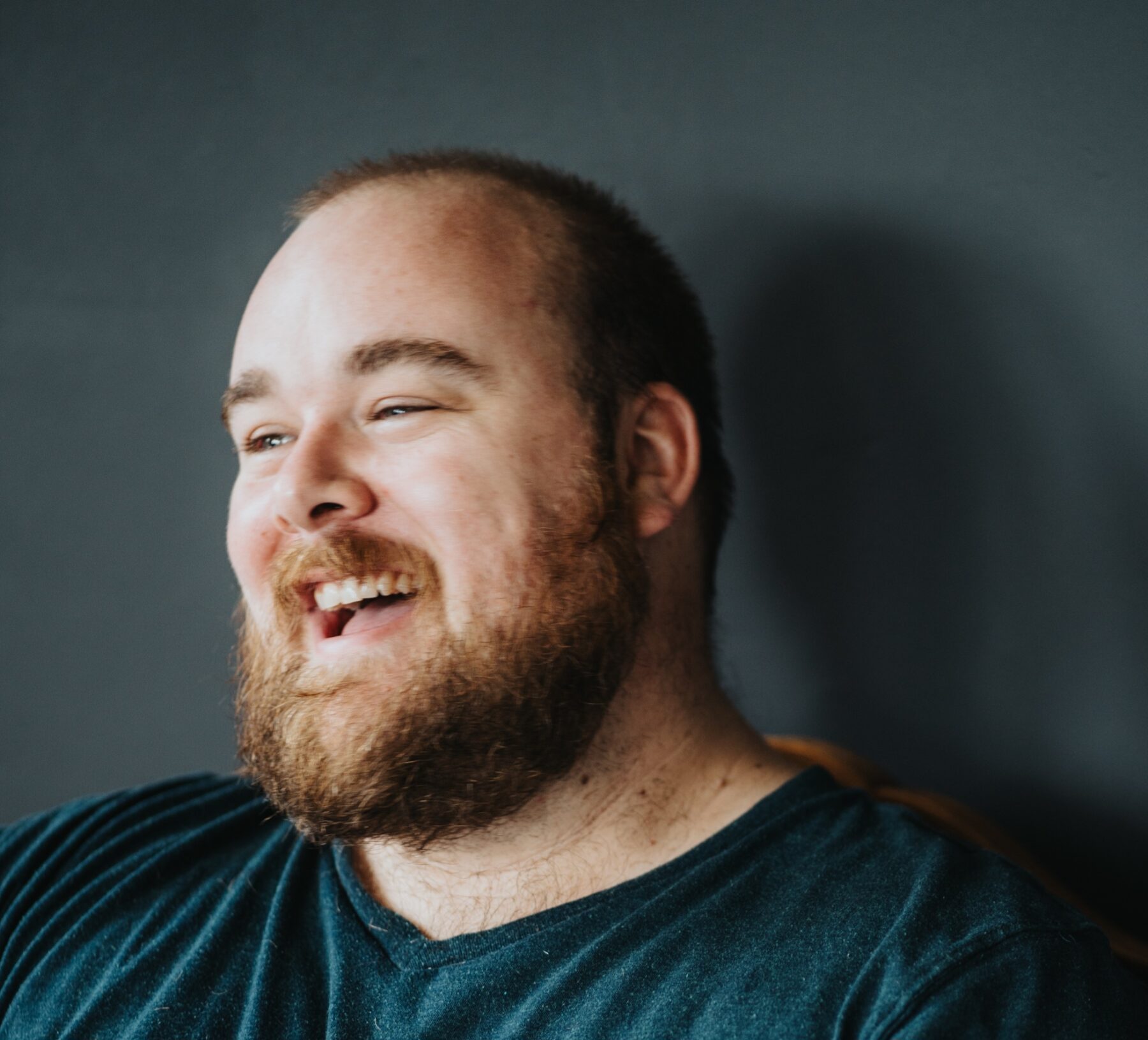
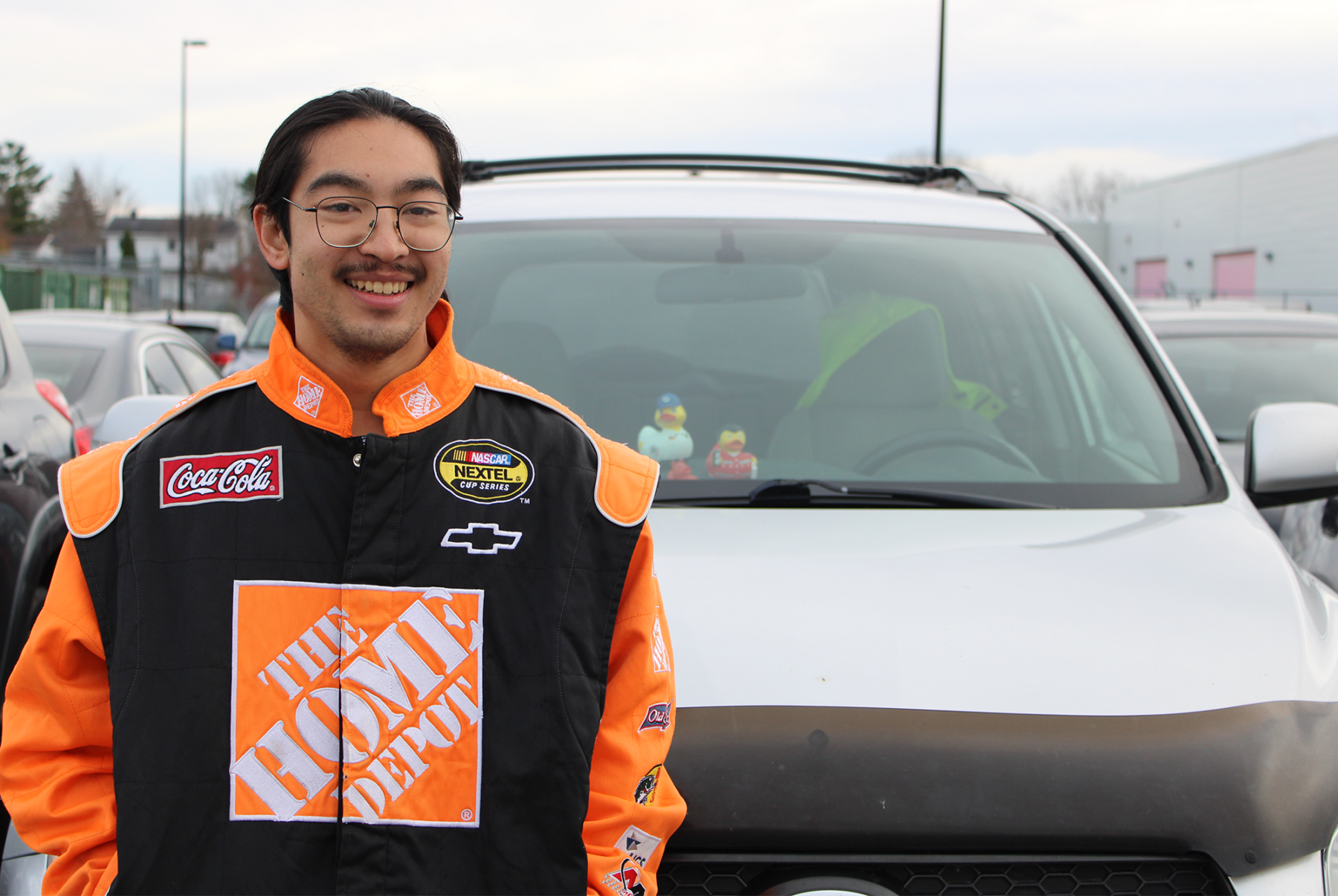
Matthew Young, a second-year paramedic student, has embarked on a mission to build a community of RAV4 drivers. He enjoys spending his time driving around the parking lots at Algonquin College Woodroffe's campus ducking other RAV4 drivers.

Matthew Young, a second-year paramedic student, has always loved Jeeps. Unfortunately, by the time Young was 17 and starting to drive, he couldn’t afford one, leading to him purchase a Toyota RAV4 instead. Young doesn’t regret this decision, he loves his RAV4. However, he found RAV4s to be missing one key thing Jeeps do have: a community.

“So you’ll always see Jeep people waving at each other,” said Young. “I learned really soon after getting my car that RAV4 people do not wave at each other. I’m really trying to change the culture though. So I’ll start with the school and then I want to grow from there.”

To “change the culture,” Young has decided to do what Jeep drivers do, and leave rubber ducks in the door handles of RAV4s he sees on campus.

In between classes, Young will drive his RAV4 around the parking lots on campus, searching for other RAV4s.

“If I see one with an empty spot next to it, I’ll park next to it with all my ducks laid out on my windshield, and then I’ll duck them,” said Young. “So, when they come and see their car, they’ll see my car next to theirs and a little present on their RAV4.”

One of the first people Young ducked was his friend Damrong Saynorath, a fellow paramedic student. Saynorath drives everywhere with his rubber duck.

“My friend gave me my first rubber ducky for my car, and it has been my mascot ever since,” said Saynorath. “It watches my back when I’m ripping down the road in my RAV4 and keeps me safe, even when it comes flying off my dashboard.”

Saynorath said it makes him happy to see his duck “quacking along as he drives.”

The ducks Young gives out aren’t all the generic yellow. Colour and accessories on the RAV4 can determine the kind of rubber duck Young gives out. But, where does Young get these ducks? The answer is claw machines.

Whenever Young goes out – he particularly likes mini putt and arcades – he tries and finds a claw machine with rubber ducks in it. Young said he has found claw machines with ducks in them in Toronto, the Niagara Region and just outside Kingston.

“I spent like $10 on just throwing in coins, collecting as many ducks as I could from somewhere not Ottawa,” said Young.
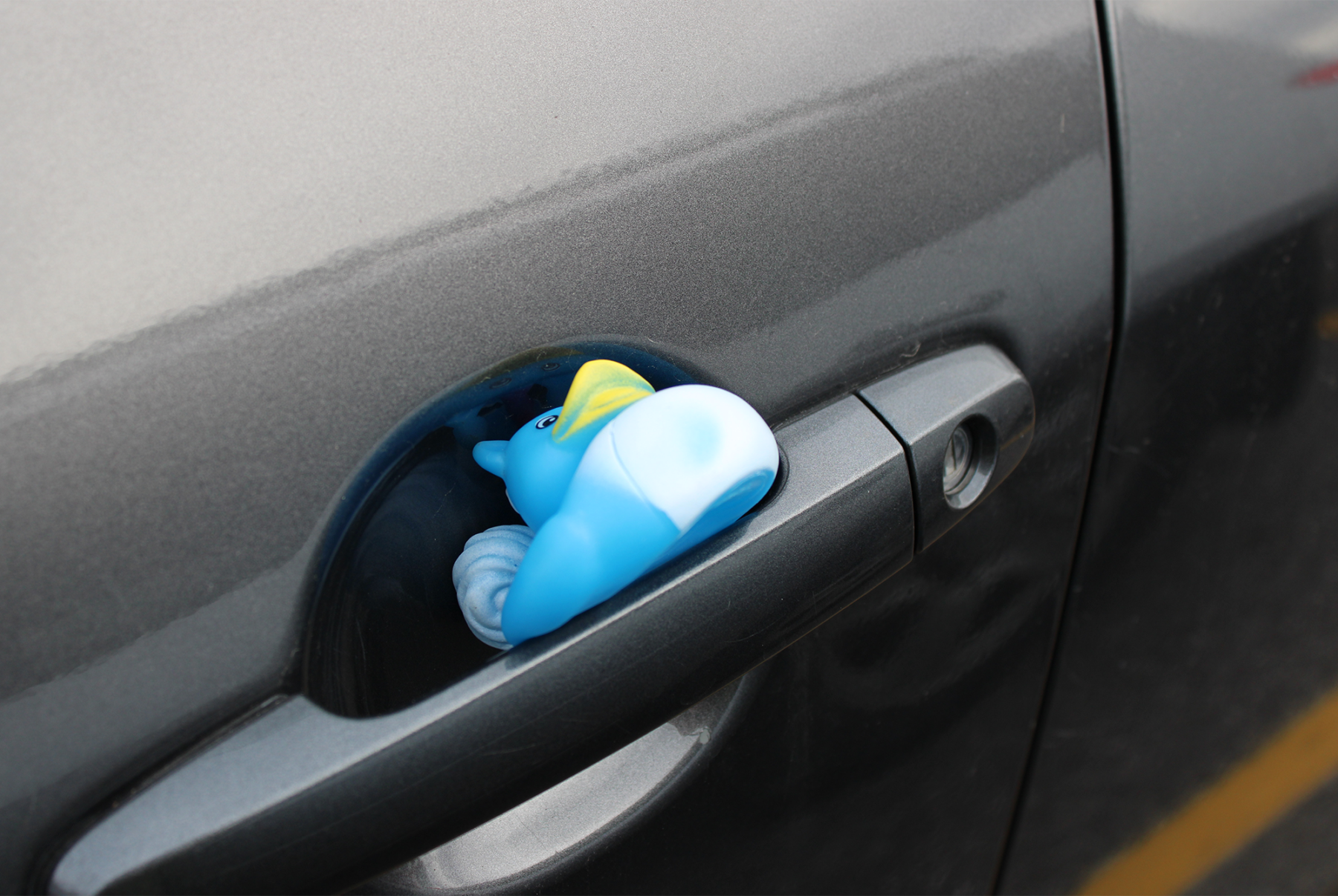
Matthew Young, second-year paramedic student, will leave ducks in the door handle of RAV4s.
Matthew Young, second-year paramedic student, will leave ducks in the door handle of RAV4s. Photo credit: Stephanie Taylor

He has made small progress towards his mission, having ducked fewer than 10 RAV4s.

Oleksandr Gerasymov, a first-year welding student and long-time RAV4 owner, has not – so far – been one of the lucky recipients. He is excited about the possibility of being ducked.

“I would love if someone leaves a rubber duck on my car,” said Gerasymov. “It brings people together, and I think it’s a fun way to make someone’s day just a little bit better by doing small things like leaving a duck.”

Young graduates from Algonquin College in April, but hopes to continue ducking people after his time at the school ends.

First Person: While my policing dream died, I’ve learned a lot along the way

Maybe you won’t reach your goals. However, what determines who you are is your ability to get back up and keep going
Photo: Linda Verreault
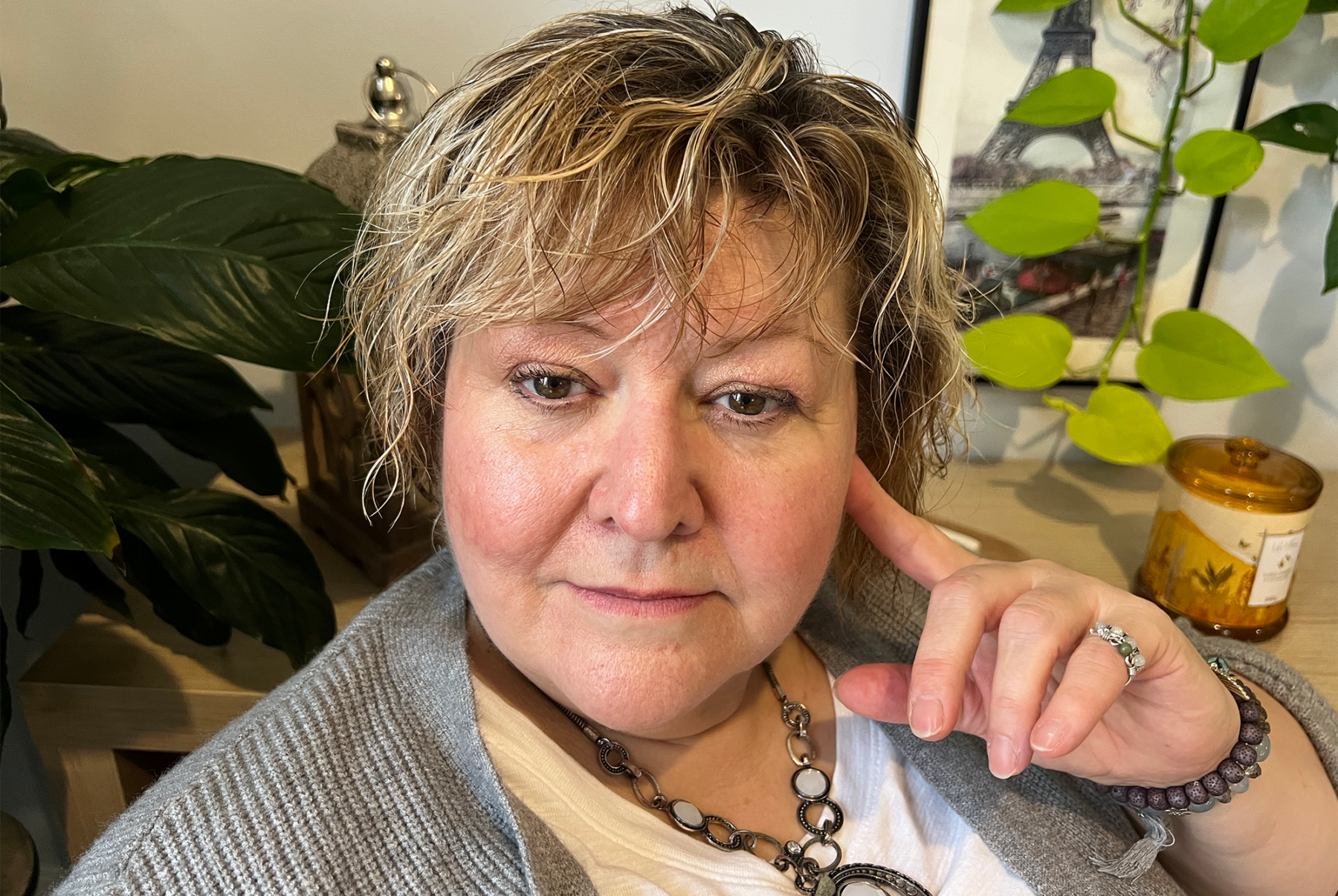
The author's new goal is to become a professional freelance writer.

I took a deep breath and dived into the pool’s cold waters at the Orleans Recreation Complex. I was learning to swim and to overcome my fear of water, having almost drowned as a child. After months of training, I could now meet the prerequisite of swimming two lengths of a pool dragging a weighted dummy in order to try out for the Royal Canadian Mounted Police.

At 23, I was a single parent of two kids under two and I ambitiously set out to become an RCMP police officer. Growing up police officers were an integral part of my life, and I admired them and looked up to them.

My journey took me eight years and included returning to high school and then going to the University of Ottawa for a bachelor of social science, criminology and women’s studies. The journey, however, was not a smooth one.

I took the entrance exam for the RCMP and failed. The recruiting officer suggested I write the Ottawa Police exam as a practice run. I was not stressed and aced it, scoring one of the highest scores of all the applicants.

After I was called in to an interview with Ottawa Police. I showed up with my long hair cut shoulder length, wearing a sleek black pencil skirt, a black tailored jacket, a crisp white shirt and three-inch heels. I was dressed for success.

After the interview I was asked to participate in Ottawa Police Service’s Thomas G. Flanagan S.C. Scholarship. I had to write a formal paper on race relations within the Ottawa Police.

I won and received the award at a ceremony on Dec. 8, 1994. It remains one of the proudest moments of my life.

All that was required now was the physical obstacle course. As I was determined to become an RCMP officer, however, I turned down the offer from the Ottawa Police.

I still had one more obstacle to overcome. In order to attend the RCMP Regina Academy, I had to find a care provider for my kids. I naturally turned to their father, but he refused and hindered my process by placing court restrictions on allowing me to leave the province with the kids.

I had been training for years, running 1.5 miles in nine minutes; surpassing all physical requirements. I was fit and strong and ready. So, at that point I reconsidered the Ottawa Police offer and booked my physical testing.

But it was just not meant to be. Two weeks before the testing I fractured my tibia and the bones in my ankle, a permanent lifelong debilitating injury.

I would never become a police officer. My goal would never be realized. I was defeated after years of following the stepping stones to reach my objective.

Even today it still hurts and remains a defeat I have never fully been able to accept.

“Linda is an honest, trustworthy, loyal individual. I have known her for 32 years, and her character has never faltered,” said, Francois Richer retired Canadian Security Intelligence Services personnel. “If she had become a police officer it would have been an asset to their organization.”

I took what I learned and worked for Justice Canada, for Odawa Native Friendship as a criminal court worker, Children’s Aid and as security personnel for Prime Minister Justin Trudeau at the Governor General’s estate. I formed friendships and worked with many RCMP members.

“I am confident Linda would rise to the challenge of whatever is placed before her. I wish her luck in any endeavor she may choose,” said Lt. Gene Kikcio, former RCMP member and trainer at the Reginal Academy, depot division.

Today, I find myself back at school with the goal of being a writer to advocate for underrepresented voices. I want to give them a platform to share stories that deserve to be heard.

When we are young, we all have dreams and goals. Mine was to become a police officer. I failed in obtaining that goal. However, what determines who you are, and is your strength, is your ability to get back up and keep going. Sometimes your destiny still lies in front of you.

Recently I was approached by human resources for the RCMP and asked to apply to work as a civilian member. Who knows, maybe in a roundabout way my dreams will come true after all.

Project management students host successful networking event with zero budget

The graduating class transformed the Observatory into a vibrant hub of learning, connection and inspiration
Photo: Grinje Randa Bringi
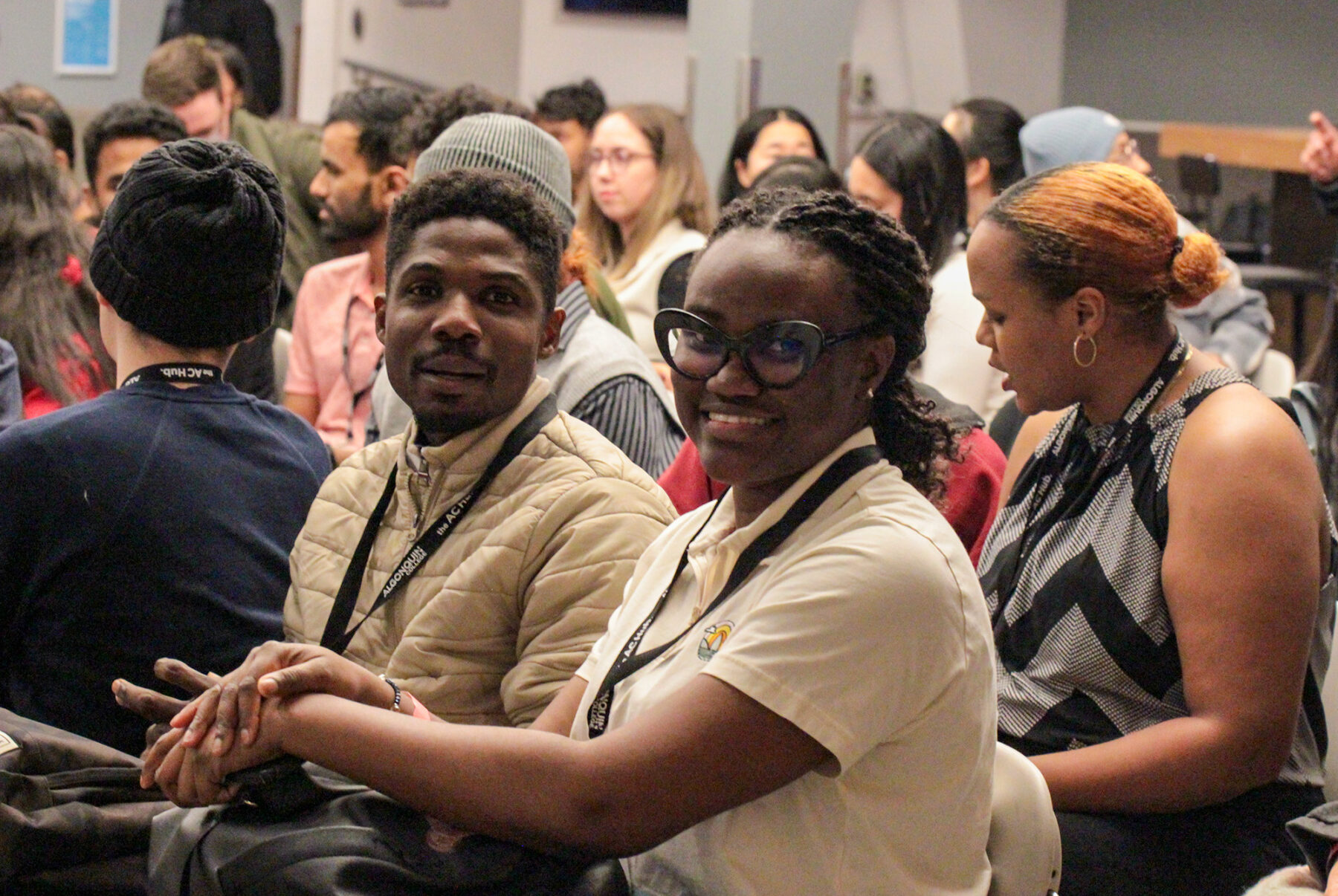
Level 1 project management students Olutayo Oladosu and Comfort Abla Nkegbe.

Students and professionals shared laughter and meaningful conversations in the Observatory during a project management networking event on Nov. 21.

The event was a triumph and a testament to the grind, resourcefulness and professionalism of the Project Management Connect organizing team, which pulled off an inspiring and high-impact evening without spending a single dollar.

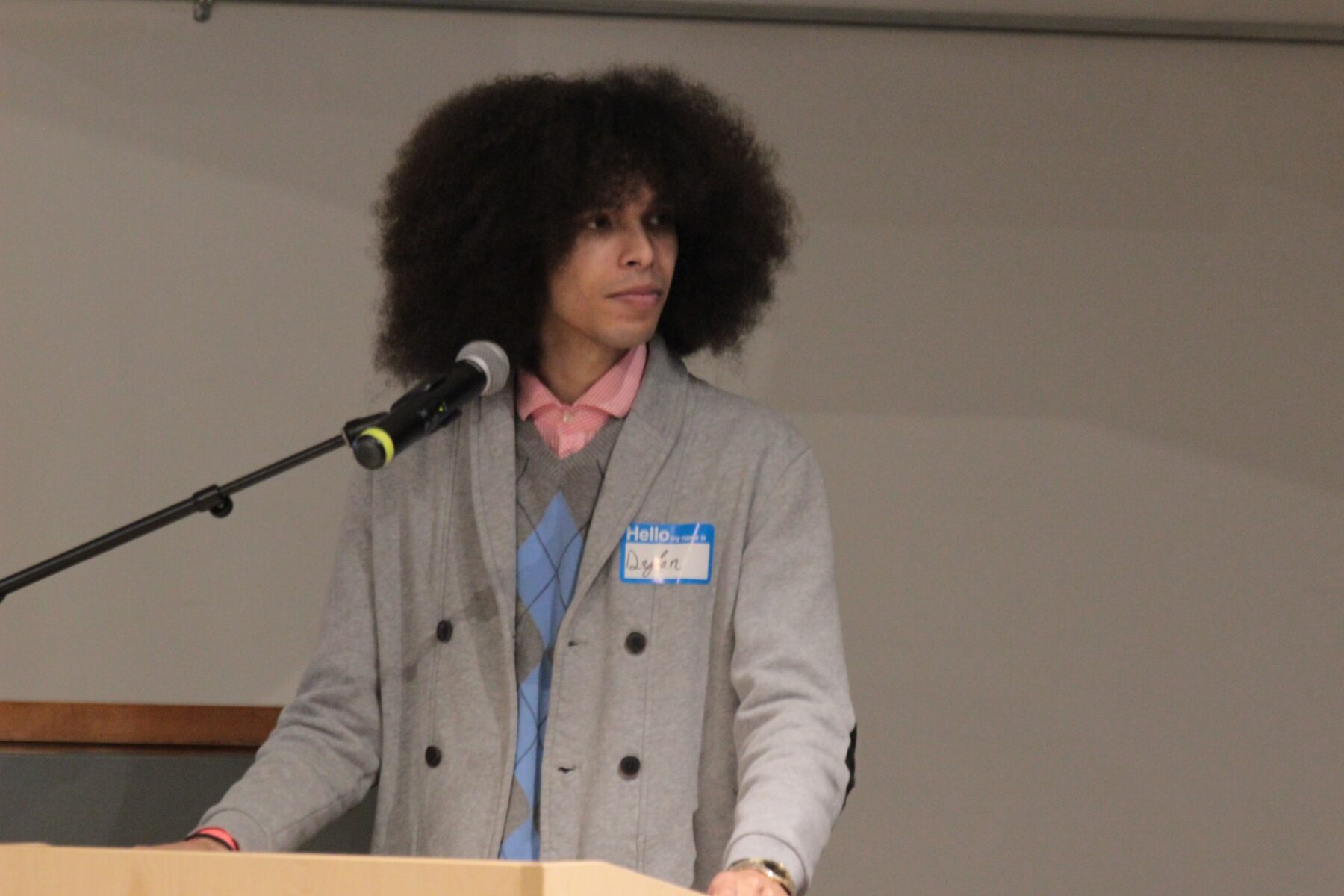
“Our main objective is to ensure that students gain valuable experience and knowledge in project management,” said Dylan Dixon, an organizing team member and event host.

Despite operating on a zero-dollar budget, the team leveraged volunteer efforts, creative problem-solving and teamwork to create an event that surpassed expectations. For three hours, attendees engaged in an evening of networking and dialogue featuring a panel of six industry experts who shared valuable insight.

Dylan Dixon, a Project Management student, member of the organizing team, and host of the networking event.
Dylan Dixon, a Project Management student, member of the organizing team and host of the networking event. Photo credit: Grinje Randa Bringi

“We had to rely on volunteer efforts and creative problem-solving to pull this off,” said Dixon. “It was really much about teamwork.”

The panel shared stories of their successes and challenges while highlighting that soft skills are just as important as technical expertise in excelling as a project manager.

Attendees left the event feeling motivated and informed, with many praising the seamless professionalism of the evening.

What made the event truly remarkable was not just the expert panel or the engaging discussions, but how the organizing team, operating with no financial resources, orchestrated an experience that felt polished and purposeful.

From assembling an expert panel to managing logistics, the team demonstrated the essence of project management: achieving meaningful results with limited resources.

The event’s impact resonated deeply with attendees such as Comfort Abla Nkegbe, an international student from Ghana, and Olutayo Oladosu, a student from Nigeria, who both reflected on the evening’s key takeaways.

Nkegbe, a Level 1 project management student with a background in logistics and management in Ghana, said the event reshaped her understanding of her existing skills.

“I came to Canada from Ghana to study project management, and this event has been an eye-opener,” said Nkegbe. “There are many things I’ve been doing and didn’t expect or perceive to be project management skills. So now I know that I was already doing project management before this course.”

Oladosu, also a Level 1 project management student from Nigeria, left the event energized and eager to implement the panelists’ advice.

“I took away two key things,” said Oladosu. “The first is volunteering. That’s something that’s going to stick with me. I’m going to start volunteering, whether it’s with the Project Management Institute at Algonquin College or even at the public library. I’m going to jump right into that.”

He also reflected on the adaptability of project management skills.

“The second thing I learned is that it doesn’t really matter what I’m doing, I can always apply my skills,” he said.

This theme of resourcefulness and adaptability echoed throughout the evening, amplified by the advice of panelist Temisan Sagay, a senior corporate project manager.

“If you only have one hour per week to volunteer, make it the best hour,” said Sagay. “Volunteering doesn’t have to take up all your time, but it’s a critical step in setting yourself apart.”

Project Management Connect 2024 wasn’t just a networking event — it was a blueprint for future cohorts to follow. The graduating class not only showcased their skills but also set a high standard for event management and professionalism.

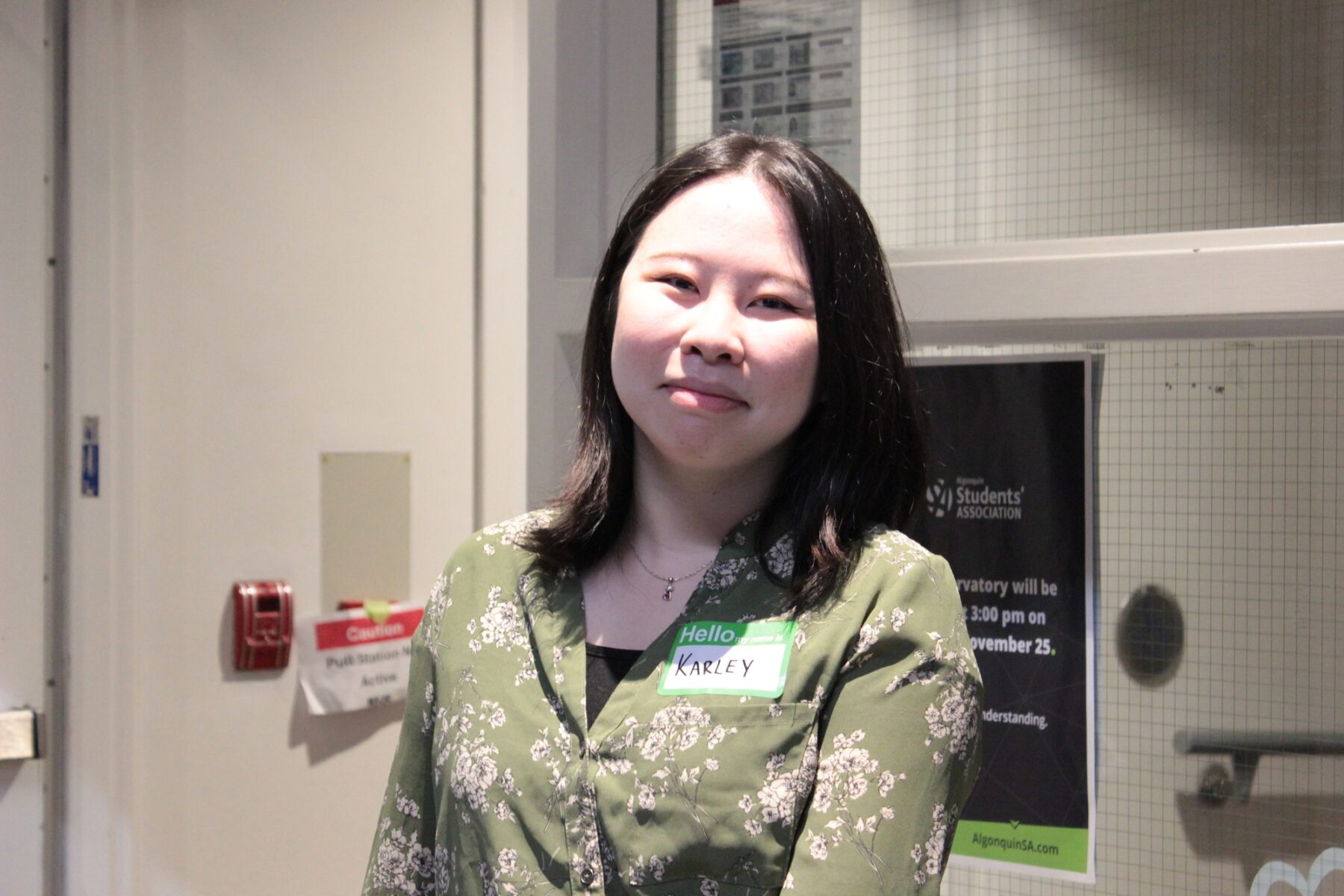
Karely Lam, graduating Project Management student and Project Management Connect team member.
Karely Lam, graduating Project Management student and Project Management Connect team member. Photo credit: Grinje Randa Bringi

“I absolutely loved working with this group,” said Karley Lam. “We all have the same drive and the same objectives. It was never a question of, are we going to do it? It’s how we’re going to get it done.”

The Project Management Connect team created a blueprint for success, proving that with resourcefulness and teamwork, exceptional results don’t require exceptional budgets, just exceptional people.

Swifties experience the magic of Taylor Swift at tribute show

Katy Ellis delivered an unforgettable tribute performance, complete with surprise moments and the energy of a real Taylor concert
Photo: Agrani Tiwari
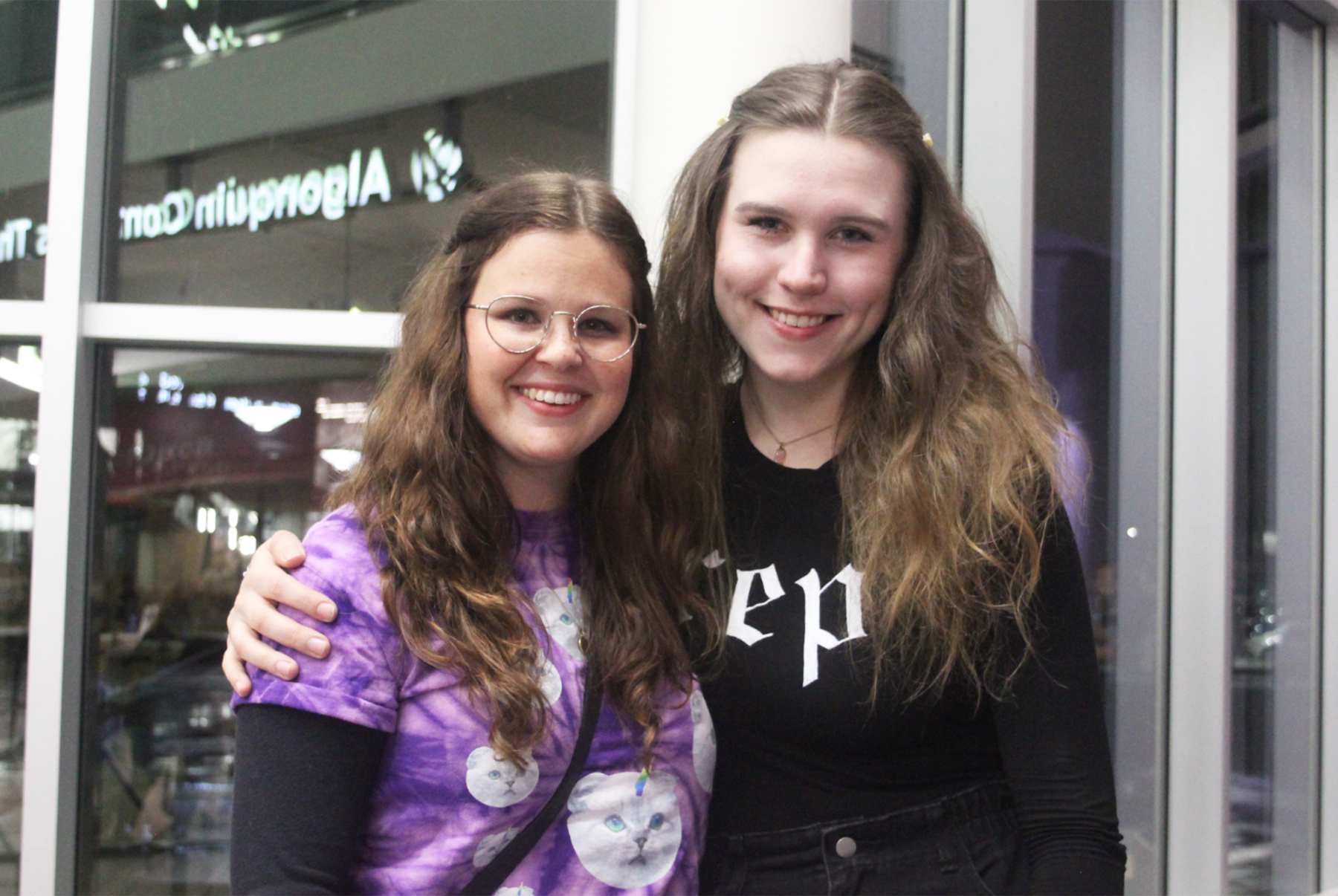
Katy Ellis making a heart at the audience after the Lovers song.

People who couldn’t go to Taylor Swift’s Eras Tour went to the Algonquin Commons Theatre on Nov. 23 and got the thrill of of a live show performed by a tribute artist.

“I got us tickets because we’ve both been trying to get to Eras, but couldn’t,” said Autumn Tarabocchiq at the Katy Ellis tribute show.

Tarabocchiq came across it on Instagram and decided to get tickets for herself and her friend who is from the U.S.

Ellis, a seasoned performer with a deep love for Taylor Swift’s music, captivated the audience with her flawless renditions of some of Swift’s biggest hits, spanning from Fearless to Midnights.

Ellis, who has been performing as a tribute act for over a decade, said that her journey began when people started telling her she sounded like the superstar. As a trained musical theatre performer, Ellis brought a unique blend of acting through song, a quality that resonated with her audience throughout the evening.

“I’ve been doing this for 10 years now, and it all started from those early performances in musicals, and then cruise ships,” said Ellis during an interview after the show. “But Taylor, she’s always been the one for me. Her music, her energy it’s all so relatable.”

Katy Elis performing Enchanted which she says is one of the harder ones to perform.
Katy Ellis performing Enchanted which she says is one of the harder ones to perform. Photo credit: Agrani Tiwari

From You Belong With Me to Shake It Off, the setlist was a perfect mix of Swift’s chart-toppers, and the crowd responded with enthusiasm. The show’s immersive experience didn’t just rely on musical talent; it was Ellis’ dedication to capturing the essence of Taylor’s Swift’s stage presence. From her signature outfits to her energetic dance moves, Ellis truly embodied the spirit of the star, making it an unforgettable experience for the audience.

“The fans are everything,” said Ellis. “The Swifties are so nice. There’s such a wholesome energy in the room when I perform. It’s one of the best parts of this job —connecting with people who love Taylor just as much as I do.”

Fans loved how she put so much effort into everything, including costumes and set recreation.

“This is the closest I’ll get to seeing Taylor live, and it’s been an incredible experience. The energy, the outfits — everything was spot on,” said Diane Colley. “I’ve never been to a tribute show before, but this was amazing. Even though it’s not the real thing, the performance made it feel like we were there.”

Diane Colley (left) and Autumn Tarabocchiq (right) at the intermission of the show.
Diane Colley (left) and Autumn Tarabocchiq (right) at the intermission of the show. Photo credit: Agrani Tiwari

But people who have seen Taylor Swift live also said this was a nice experience and a lot like the real thing.

“It was so good,” said Tegan Bondi, a hotel and restaurant operations student at the college. “We travelled to Amsterdam for the Eras show and this was just as good.”

As the night ended, the crowd left with smiles, knowing they’d experienced a piece of the magic of Taylor Swift, thanks to Ellis’ incredible tribute. For the Swifties, it was a night to remember, filled with music, memories and the undeniable bond of fandom.

AC Hub organizes a practical kitchen workshop for kitchen novices

From overnight oats to salad dressing, each dish is simple to make yet full of flavour
Photo: Yuye Jiang
Tremblay demonstrates the proper technique for chopping onions, guides students through the process and offers tips and tricks to make meal prep easier and more efficient.

AC Hub hosted its first Kitchen Skills 101 workshop at Algonquin College on Nov. 12. Under the guidance of Chef Chris Tremblay, students learned how to prepare quick and healthy meals, including overnight oats, a Greek salad with homemade dressing and guacamole.

Tremblay made the workshop’s goal clear from the start. “Students have busy lives, and we want them to be able to prepare quick and healthy meals with a nice cutting board, spoons and a few simple ingredients,” he said.

This emphasis on convenience, speed and health drew many students to the workshop.

With Tremblay’s lively demonstrations and explanations, students gradually found their rhythm in the kitchen, starting with chopping onions and mashing avocados.

Katrina Bernasor, a Level 1 student in medical device reprocessing at Algonquin College, was especially engaged in the front row. As a student living away from home for the first time, she admitted she knew almost nothing about cooking.

“I signed up out of curiosity because I’m really bad at kitchen skills,” she said. “This workshop was really interesting, especially making the salad dressing and couscous. It made me feel interested in developing my own cooking skills now.”

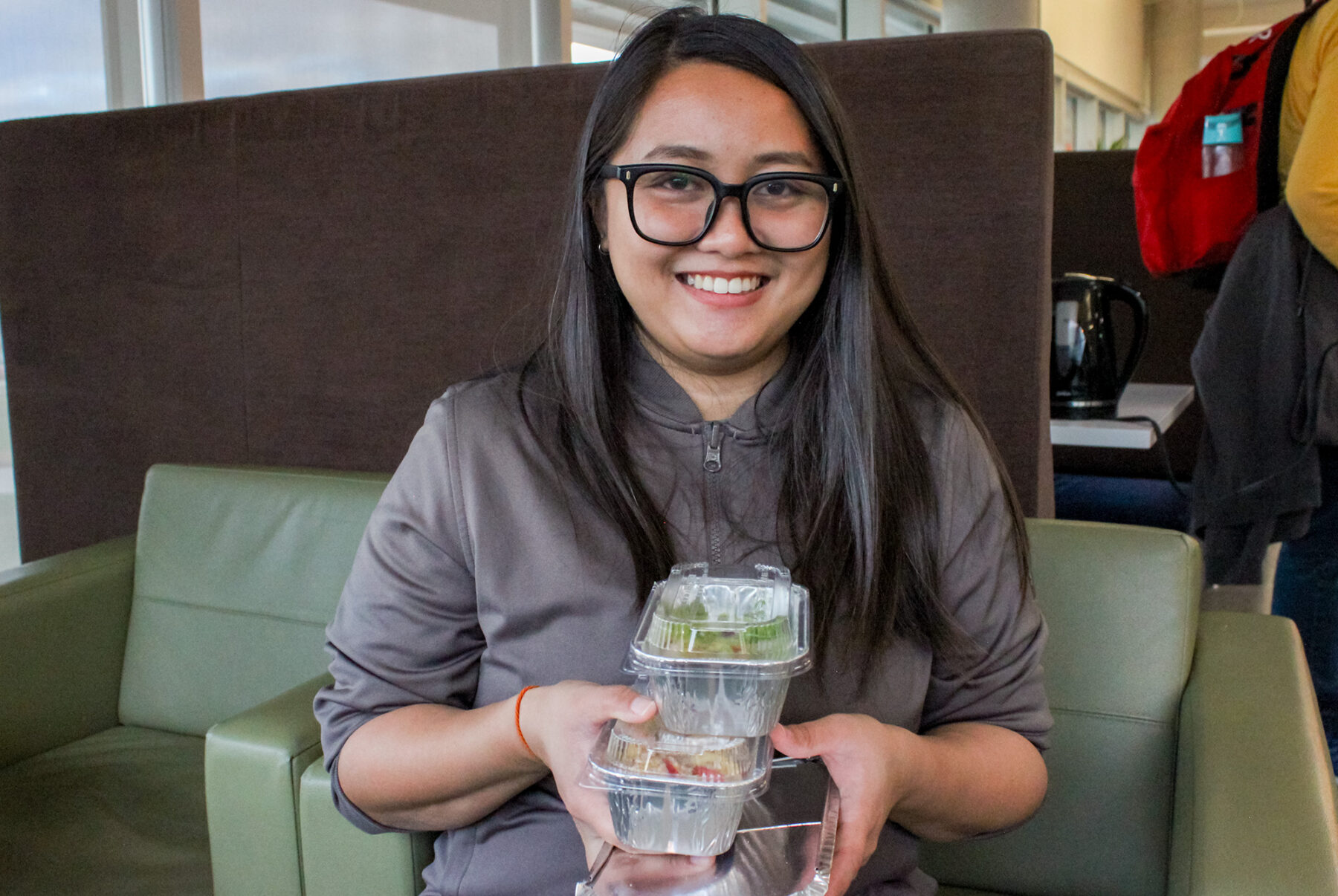
Katrina Bernasor holds up her creations from the workshop: Overnight Oats, Greek Salad with Homemade Dressing, and Guacamole, showcasing her newfound cooking skills.
Katrina Bernasor holds up her creations from the workshop: overnight oats, Greek salad with homemade dressing, and guacamole, showcasing her newfound cooking skills. Photo credit: Yuye Jiang

Duc Anh Huynh, a Level 1 game development student at the college, learned how to cook with basic ingredients at home from daily cooking experience. However, his kitchen style has always been simple, with limited ingredients and basic cooking methods.

“At first, I thought today would be a workshop focused more on chopping veggies and preparing food,” he said. “But I didn’t expect the chef to share more about the recipes and his cooking techniques.”

The kitchen workshop left him feeling especially fulfilled, particularly during the segment on making homemade salad dressing, which seemed to spark a newfound interest in cooking.

“Although I make salads at home, I just buy the dressing sauce from the supermarket,” Huynh said. “Today’s workshop taught me how to make my own salad dressing, and I believe I’ll be using it a lot in the future.”

Tremblay studied culinary management at Algonquin College back in 2007. After founding his own brand and restaurant, he returned to campus as an event instructor through some connections.

“The campus is vastly different from what I remember from 18 years ago, and I don’t even recognize where it is,” he said. “But as far as a life skill goes, I can’t think of another life skill that would be more important than cooking.”

Tremblay hopes to help the kitchen beginners overcome their fear of cooking through simple recipes and practical tips.

“In reality, there’s no problem with life, only solutions,” he said. “If you’re cooking something, it’s good, it’s safe and it is clean, and as long as you like it, there’s no problem. It’s just a solution.”

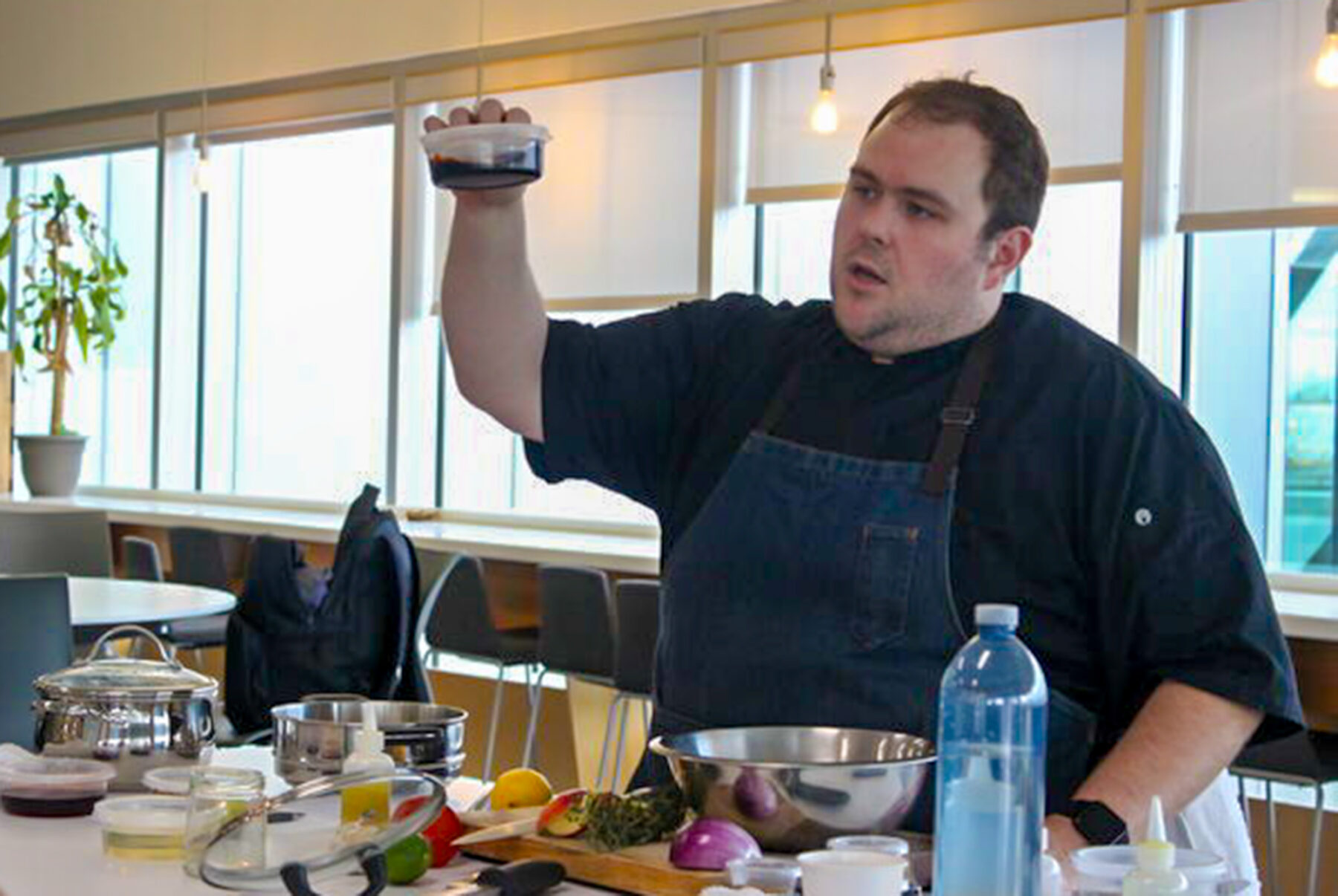
Chef Chris Tremblay presents his homemade salad dressing, as he shares his culinary tips with students at the Kitchen Skills 101 workshop.
Tremblay presents his homemade salad dressing, as he shares his culinary tips with students at the Kitchen Skills 101 workshop. Photo credit: Yuye Jiang

Rebecca Lafontaine, the event programmer at the AC Hub, was the key facilitator behind this collaboration with Tremblay. She explained that the inspiration for the hands-on kitchen workshop came from student feedback.

“We found that students really enjoy hands-on and creative activities,” she said. “We thought not only could we bring cooking skills in the class, we could also teach meal prep, chopping techniques and quick, easy snacks — skills that students can bring back to campus with them.”

For other students with no cooking experience, Huynh also offered his own advice.

“If you don’t have much cooking experience and want to start with something really simple, you should come to events like this,” he said. “You can get some easy and healthy recipes and actually make them yourself.”

Although there are no immediate future plans to hold similar events, Lafontaine said that the AC Hub has already distributed surveys to participants to gather more feedback in order to expand hands-on activities.

First Person: Fit, fat and figuring it out

At one point, like many of us, I was in excellent shape. Then, also like many of us, I wasn't. A week-long fitness challenge showed me that a healthy, sustainable lifestyle takes more than just one week
Photo: Agrani Tiwari
"It turns out that fitness journeys don't happen overnight," writes the author. "Sometimes life has other plans in store for you."

At 20 I was a high-school wrestler with a trophy shelf as big as I was. I was also a former high-school football champion and a university athlete with a rugby scholarship. At just over 200 pounds I could deadlift and squat more than twice my weight, run a charity 10k on the weekend without training and take some of the least charming mirror selfies 2016 had ever seen.

Here I am now, eight years older and nearly a hundred pounds heavier.

It didn’t happen overnight, I didn’t get into a freak accident, I didn’t suffer a career ending injury or contract a life-altering disease. I simply got older. The days seemed to be filled with more things to do, bills, a job, school, stuff got in the way. Life, got in the way.

I’m not the first person to struggle with their health and weight, and I’m certainly not the first to look for a more sustainable way to live a healthy and active lifestyle. On and off again, I’ve tried the gym, a place I once loved going to, with no sustained success.

This fall, it was time for a change. I wanted to take back control, I wanted to do something worth writing about, I wanted to do something for me.

“When getting back into working out, or for anyone starting out, it’s really important to find something you enjoy doing,” says personal trainer Lucas Michaelis. “At the end of the day, if you’re not going to have fun doing something, you’re probably not going to end up doing it for long.”

With that advice in mind, I challenged myself to do something new. In fact, I challenged myself to do a few somethings new. To push myself out of my comfort zone every day. My plan: I was going to go to the ARC and take not just one fitness class, I was going to take all of them.

I was going to complete what I called The Tour D’ARC, to prove to myself once and for all that I was still the athlete I once was. I wanted to prove to myself that I could try new things and succeed, that with stick-to-itiveness and willpower, anyone can fix their bad habits. Fitness is a lifestyle, and I’m Ophrah baby! YOU get a six pack! YOU get a six pack! You reading this? Look under your chair, that’s right, it’s a six pack!

I was ready to kick this challenge’s ass and fix all my problems overnight. In one fell swoop I was going to fix my health, AND write an incredible article about it all the while. Here’s how it went.

Monday

I didn’t go.

Tuesday

I also didn’t go.

It turns out that fitness journeys don’t happen overnight. Sometimes life has other plans in store for you. Sometimes that plan is a potent flu bug your partner brings home from teaching a bunch of snot nosed fourth graders. Sometimes that plan leaves you praying to a porcelain God, and not one of those prayer involves asking for the opportunity to do a damn burpee.

“Being realistic is an important part for anyone trying to get back into fitness,” said Michaelis. “You’re expecting to come back off the couch and commit to seven days of hard working out a week, well, good luck to you but 99 times out of 100 it doesn’t work out.” He must have seen this type of predictable failure a million times with his clients.

“Expecting yourself to go from zero hours of activity a week to even 10 is a large jump for most people,” he said. Baby steps often are more sustainable in the long run.”

With that advice in mind, I packed my gym bag Tuesday night ready to take on Wednesday’s challenges. Determined to not make the same mistakes, I booked myself in for a Wednesday afternoon spin class.

Wednesday

Life 3, Tyler, 0.

For a fitness challenge, there sure has been a dearth of fitness.

With my packed bag in tow, my interview subject decided to let me know that Wednesday afternoon was the only time that worked for her to come into studio and record our podcast. With the deadline fast approaching, my Wednesday afternoon of spin was replaced with stationary time in the studio.

Knowing that Thursday was a wash, as I had three hours of class, followed by eight hours of work, and plenty of time on the bus, I was determined to make something of my day, and decided to run a quick 5k with my dog, Harvey, when I got home.

“Well, you got out there and did something, isn’t that what matters,” said Kimberley Nicholls, my lovely and supportive partner.

Friday

The final day of my week long fitness challenge was already here, and all I had to show for it was one lousy run. My final test was staring me down, circled on my print out of the class schedule: Zumba.

It was a task so monumental, so challenging I knew that if I could get through it alive I would be changed. A better man, stronger, faster, fitter. If I could just conquer this mountain, my week wouldn’t be wasted. If I could just get over this last hurdle, it would all be worth it. The article, the stress, the deadline. Here it was.

Zumba.

Finally, I had made it. How was Zumba? It rocked me, it socked me, it took me out for dinner and never called me back. Zumba was the type of new challenge I needed to shake up my routine. Would I be back?

No.

Am I grateful for the experience?

Absolutely.

At the end of the day, progress isn’t linear. I know that. I think I could’ve done more, but that doesn’t mean I’m not proud of what I’ve done. I’ve learned to accept that a healthy lifestyle isn’t a sprint, it’s a marathon, and I’ve learned to have some fun along the way.

In the words of my supportive Zumba instructor Casey Williams, “You certainly gave it your all out there.”

First Person: I have an avoidant attachment style but I’m trying to evolve

The more I tried to shield myself from past pain, the less I actually felt connected to anyone. I now see: the more I allow myself to love, the less I’ll need to hide
Photo: Yuye Jiang
The author, Zixuan Li, was stressed about intimacy. Now, she has learned to build a meaningful connection with people she cares.

After many dates with Fred over the summer, I knew we liked each other and that he was a great guy. But when he asked, “What are we?” I panicked.

We were sitting in the Notre Dame Cathedral Basilica, where people were quietly walking around and praying. Holding hands, we rested on a pew at the back. Suddenly, he asked, “Are we officially together now?” I instinctively denied it.

“But in my heart, you’re already my girlfriend,” he said.

I felt a bit awkward and didn’t know what to say. I like Fred, but I didn’t know why confirming our relationship felt so disconcerting. It’s as if the moment we label what we have, everything will suddenly change.

I hadn’t been in a relationship for three years. And none of my serious romantic relationships ever lasted more than four months. Casual relationships were even shorter—usually no more than two months.

Most of the time, I ended things by ghosting. When I felt any discomfort in a relationship or we had an argument, I’d hide. If I didn’t like how they did something, I’d go silent.

One day, I came across a video explaining avoidant attachment while aimlessly scrolling through TikTok. The more I learned about the avoidant attachment style, the more I saw the pattern in my own relationships: the fear of being too close, the tendency to pull back when things started to get real, and the overwhelming need to protect myself from getting hurt.

Everyone has an attachment style. It refers to how people behave and interact in relationships. “The way we attach is formed early on as a result of how primary caregivers behaved toward meeting their child’s needs,” write Michael Mongo, a licensed psychoanalyst in an article titled What Avoidant Attachment Looks Like in a Relationship on Verywell Mind.

There are primarily four attachment styles: secure, anxious, avoidant, and disorganized. People with avoidant attachment, as the name suggests, avoid emotional closeness and value independence in relationships.

I began to realize that this fear of closeness wasn’t just about Fred. It was about me, about my deep-rooted fear of vulnerability and of losing myself to someone else. I had spent my whole life keeping that part of me hidden, that part of me that could be hurt.

I know that expressing your feelings and needs to the one you love is important. But expressing my emotions feels like exposing my vulnerability, as if I’m running naked.

What if people turn feelings I’ve shared against me? After all, they’d know exactly how to make me feel embarrassed or hurt.

I was so afraid of getting hurt, so scared of being the one left behind, that I became hypersensitive to any hint of doubt or hesitation from my partners, no matter how small.

Instead of expressing my needs and feelings, I kept score. I would secretly dock points from them in my mind whenever they did something I didn’t like. And as the score lowered, I’d begin to prepare for my exit.

I was often told I was too independent in my relationships, that I didn’t seem fully invested—too distant, too self-sufficient. I thought my independence was a strength, something to be admired. But to them, it felt like I didn’t need them at all.

Thinking back to my childhood, my parents always focused more on my older brother. I don’t really remember feeling close to them.

Since second grade, I became a well-behaved and sensible girl in the eyes of my teacher and parents. “I remember when we were little, whenever I wanted to do something, all I had to say was that you would be there, and then my parents would let me go,” said Tong Zhang, a friend I grew up with.

Whenever teachers praised me for being independent, responsible or smart, my parents would give me a bit more attention. They’d love me just a little more.

Growing up, love felt like something that could be taken away without warning. I learned to rely on myself, to keep a part of me hidden, unreachable. But now, I’m starting to realize that maybe that wall doesn’t just keep others out; maybe it keeps me trapped, too.

But how could I change? How could I stop running from love?

The more I tried to control my emotions, to shield myself from pain, the less I actually felt connected to anyone. And it hit me—if I didn’t let go of my fear, I’d never be able to have a truly meaningful relationship.

In the past, I’d used independence as a shield, thinking it would protect me. But now I understood that it wasn’t real protection. It was a defense against intimacy, against the very thing I wanted: connection.

The relationship isn’t a battle to win or lose. It’s a journey to understand, a process of unlearning old patterns and embracing new ways of connecting.

I began to lean into the discomfort. I started to recognize that expressing my needs and fears wasn’t a sign of weakness. It was the path to real connection. I began to open up, slowly but surely.

Now, Fred and I have been together for almost half a year. You might be surprised to hear this, as a 22-year-old, this is the longest relationship I’ve ever been in. We still have a long way to go. But at least I know now that true love is not about avoiding pain. It was about being willing to experience it, to learn and grow together.

First Person: As a worker, I am not a robot

Empowering employees to speak up has never been more important. In my case, the only power I have is to change jobs and walk away
Photo: Angel Belair-Poirier
"Tell me, what happens when someone is emotionally detached from their job?" writes the author.

They offered me a full-time job and I accepted. I had finally landed my dream job. I was incorporated in a team of highly skilled professionals and they all had over 10 years of working experience. They didn’t talk very much but I could tell that their knowledge far exceeded mine.

With the immense layers to this position, I skated through the years by listening, observing, learning and just doing my job to the best of my abilities. Where I saw and heard the most controversy was after meetings.

Staff stomped their feet of anger and mumbled to themselves out of frustration after these meetings. Once a month, the meetings would take place in the same boardroom, with navy blue cushioned chairs that were placed around the room and around a large table.

Everyone sat in the same place every month, the agenda was the same every month and down the list my manager would read through. The only time we could truly speak during theses meetings was during this section called “Initiatives.”

This section was dedicated to sharing with others in the department what you had accomplished outside of your regular duties. Otherwise, you kept quiet and listened. No one ever said anything or rarely did. I noticed who got along and who didn’t.

The government announced cuts. People in our department were going to lose their jobs. We lost four full-time permanent jobs that year and we were left to improvise to fill in the gaps. The workload got heavier.

Occasionally, the “head of office” would provide help from a casual staff, but they were just thrown into a new job for a few days and mostly didn’t know how to help. Everyone knew this was not helpful to our team, but nothing was being said.

One day I finally muscle up the courage to say it in the meeting out loud. Out of frustration, I just spit it out and said, “could you give us the same substitute every time, otherwise they don’t know what to do!”

I had never complained about anything before and after approximately eight years I figured I had built a good enough reputation to speak up. Well apparently, it was not a good idea. After the meeting I was called into my manager’s office and I was told that what I had said could have offended the replacement. And that I should be careful next time when I decide to speak up.

After a solid number of years working and getting nothing but excellent performance reviews, my suggestion was worth nothing. I realized at that point why it was consequently quiet in our meetings. The fear of getting reprimanded.

Staff have bills to pay and mouths to feed, people don’t want to lose their jobs. Staff kept quiet and stayed emotionally detached to avoid deception or furthermore frustrations.

This goes without mentioning all the everyday trauma from our regular workday that we endure.

Tell me, what happens when someone is emotionally detached from their job?

Being able to share our feelings about different situations can only help our departments and our souls. Being able to communicate is crucial for an effective workplace. We cannot all live in silence. Not being supported when speaking up can prevent everything and anything from happening, good or bad.

Over time it was eroding from my sense of self-worth and it took me further away from my core values of empathy and compassion.

Empowering employees to speak up has never been more important. The only power I have is to change jobs and walk away from this ugly mess. My fear of encountering rejection during this process is tremendous.

“Most people feel like other employers won’t want them, or can’t visualize how to transfer skills to a new job, or absolutely dislike the instabilities you can encounter with a change of employment,” said Philip Davidson, co-op student advisor and student talent development.

I would like to say that most people change jobs for their own pleasure but the reality is when you get a good salary with a pension and benefits you don’t want to leave your job and the people that are leaving is because they are truly and highly unhappy.

“I work for the government in my country as a psychologist, I am here changing careers, and I am studying business, I can’t do this work anymore,” said Gabriela Vindas, 42-year-old level-1 business management student.

In the last year, I have seen a lot of people quit their jobs, and these are top salary jobs. I have never seen so many people quit.

I feel like, I am not a robot, and I feel like I am not alone.

Community shows warm reception to newcomer centres

A rally in support of newcomer reception centres was held by Refugee 613 on Nov. 17
A protestor with a sign.

A peaceful rally was held Nov. 17 at the Ben Franklin Place plaza in Centrepointe in solidarity with local refugee and asylum-seeking communities.

The City of Ottawa has proposed two newcomer reception centres, with the first and primary location being constructed at 1645 Woodroffe Ave., adjacent to the Nepean Sportsplex. A second centre may be located at 40 Hearst Way, beside the Eagleson Park and Ride transit station.

Both reception centres will have a combined total occupancy of 300 people, who will be granted stay for up to 90 days before finding long-term housing.

Before the rally began, volunteers with Refugee 613 organized information booths and distributed tea and coffee.

The rally was organized by Louisa Taylor, executive director of Refugee 613 and Camille Kamanzi, who provided a French translation. The event started with Taylor and Kamanzi delivering a land acknowledgement and powerful opening words.

“It’s not typical for community organizations to be cheering for the city. But in this case, the city is actually making a thoughtful, innovative, brave choice to really stand by our welcoming values and invest in a system where there is none,” said Taylor.

Taylor and Kamanzi finished their opening by leading a chant, which continued sportily throughout the rally.

Liv Bolton, a Rabbi from Nepean, spoke in support of refugees and newcomer reception centres. This was then followed by Bolton leading attendees in chant.

“I am a Rabbi, I am a queer woman, I am a mother. Most of all, I am human,” said Bolton. “Canada’s pride is everlasting like a tree. The borders don’t matter to the root of the tree.”

In between speeches, live dance performances were performed by members of RJM-CW Dance Team, formed by a local youth group of current and former refugees.

Thomas Ndayiragije spoke about his experience being a refugee in Ottawa.

“If you are wondering who is a refugee and who is an asylum seeker, you have one before you,” said Ndayiragije. “I hope I’m not intimidating. I respond to love and I respond to smiles.”

Ndayiragije, a former refugee from Burundi who arrived in Ottawa in 2018, said he was persecuted back in Burundi.

“I had to flee. The only crime I committed was standing up for human rights,” said Ndayiragije.

Mark Sutcliffe, mayor of Ottawa, was also invited as a guest speaker at the rally. Sutcliffe told a story about his family coming to Canada after fleeing the Chinese civil war, and he provided words of encouragement to rally participants and refugees.

“Everyone who’s been involved in building our community are either Indigenous, an immigrant or a descendant of immigrants. That’s it. That’s all of us,” said Sutcliffe. “I love this city, I truly love this city. We are so lucky to live in Ottawa.”

Sean Devine, city counsellor of Ward 9, attended the rally with his wife Margaret Devine. Both said they support the development.

“I am here today just like you. I support refugees. I have seen a very different side of humanity over the last couple weeks. I’m very grateful to see the other side here today,” said Devine.

As the rally drew to a close, Taylor and Kamanzi thanked attendees for their unwavering support, emphasizing that their presence sent a powerful message of solidarity to Ottawa’s refugee communities.

FC 25 and Smash Bros. tournaments thrill gamers at Algonquin College

Games take over Student Commons as students clash for podium placement at We Got Game
Photo: Steven Dalloo
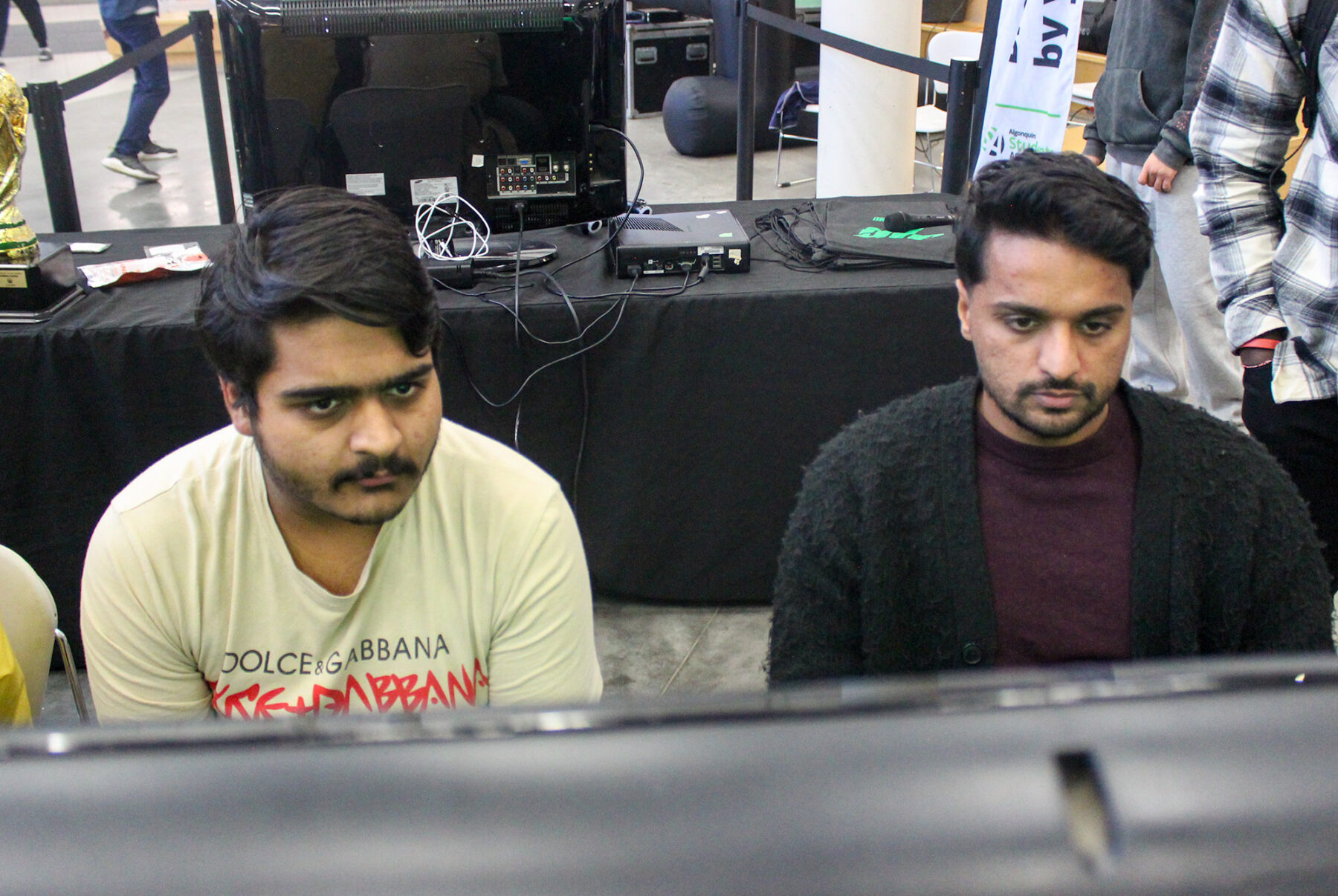
Shrenik Gupta, a Level 3 Mobile app design and development student, and Sahil Yadav, a Level 3 hairstyling student, playing a match.

Gaming took over Algonquin College on Nov. 20 as the highly anticipated We Got Game FC 25 and Smash Bros. tournaments brought students and e-sports enthusiasts together for an evening of excitement.

Held in the Student Commons, the mid-week bash attracted gamers, dancers and spectators. The spectacle created an atmosphere filled with cheers, focused gameplay and camaraderie.

“Honestly, I feel like this brings a lot of people who have a passion for the games and for the sport of soccer together in an inclusive environment,” said Pedro Mendez, a Level 1 early childhood education student.

The FC 25 tournament, featuring EA Sports’ FIFA franchise, gave players the chance to prove their skills on the virtual field.

On the other side of the floor, Super Smash Bros. Ultimate attracted its own legion of fans. The popular Nintendo brawler featured singles and doubles brackets, with matches projected on large screens for the crowd to enjoy.

Overview of the We Got Games event
Overview of the We Got Games event. Photo credit: Steven Dalloo

Cianah Miller, whose father hosted the event, was surprised about the level of play shown at the FC 25 tournament.

“I have some of my friends in the FIFA tournament who thought they were good but are playing against people that I have been playing for a while and are losing so the competition is high, so it is always exciting to see,” Miller said.

The tournament was not just for seasoned gamers. First timers and intermediate players were welcome to try their hands at a myriad of activities, ranging from Just Dance, Mario Kart and bowling.

Students were encouraged to participate in the spectacle by volunteers. The main organizer, Dave Miller of We Got Game, bounded around the Student Commons engaging in conversations with students and offering advice.

“This event is for student to have a smile on their face, to enjoy having fun, just collaborating with each other,” said Dave Miller. “You can see here we have men and women, people from diverse cultures all playing with each other.”

Dave Miller and Shrenik Gupta Level 3 Mobile app design and development student before a group stage game
Dave Miller and Shrenik Gupta Level 3 Mobile app design and development student before a group stage game Photo credit: Steven Dalloo

The air was light, but the competition was fierce as students clashed with either Bayern Munich and Arsenal on FC 25, or across the room with Mario and Link on Final Destination.

“I am surprised with the level of competition. Some people have been okay, others good. The trash talks and celebrations have been surprising, but I am just trying to stay humble and chill,” said Sahil Yadav, a Level 3 hairstyling student.

Yadav would finish in the top four of the FC 25 tournaments and left the We Got Game event with some new friends.

“We got things for everybody, so you don’t have to be a hard-core gamer to enjoy,” said Miller.

Trophies, gift cards and bragging rights were awarded to the winners of both tournaments as they were lauded by peers and organizers.

Algonquin Times podcast

Stay Informed

Sign up for our newsletter

Subscribe

* indicates required