main

How are Gen Z, Millennials and Gen X getting along at work?

Are workplace generational divides real or part of a recurring cycle? Explore what the Algonquin College community has to say and join the conversation
Photo: Grinje Randa Bringi
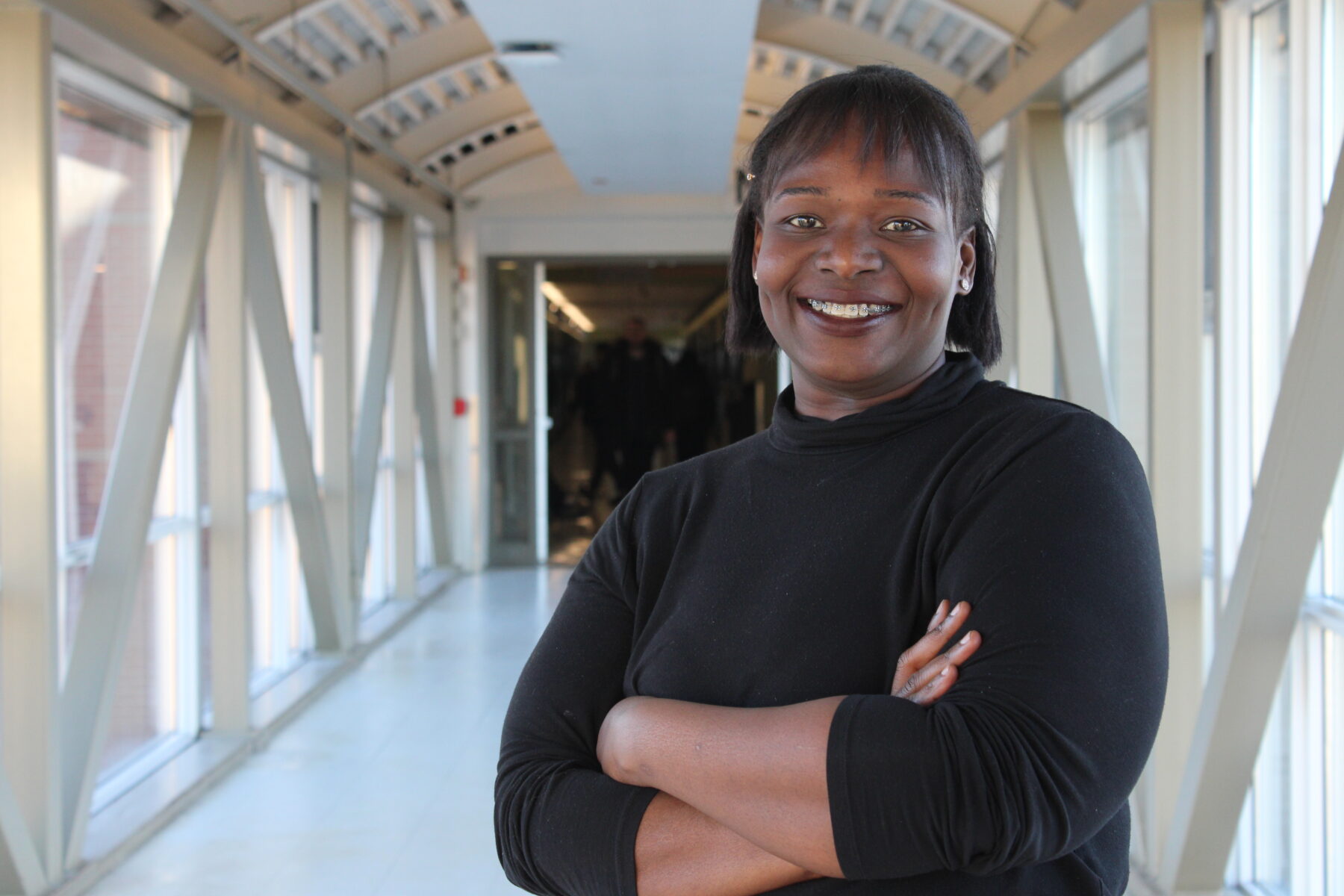
Alison Elias, a personal organizer, shares her thoughts on generational divides in the workplace at College Square.

When Stephanie Berglas, a level 3 advertising and marketing communications student, reflects on her place in the workforce as a member of Gen Z, she grapples with questions that may feel familiar to others like her.

“As a Gen Z-er, I often wonder if I’m fitting the entitled stereotype or simply asking for basic self-respect,” said Berglas.

Her internal struggle mirrors a broader debate in workplaces today, where generational stereotypes clash with shifting workplace boundaries.

Generational stereotypes often frame workplace dynamics as a clash of values, but beneath the surface, it’s a story of evolving expectations for balance, fairness and mutual respect in modern workplaces.

Work-life balance and fairness are not new struggles. For over a century, workers have fought against demanding schedules and inequitable conditions.

Today’s generational divides between Gen Z, Millennials and Gen X are often portrayed as new conflicts. But as history shows, these are recurring workplace battles shaped by cultural norms and shifting definitions of fairness.

In 1872, the Nine-Hour Movement demanded shorter workdays, leading to Labour Day as a national holiday. Decades later, the Winnipeg General Strike of 1919 mobilized 30,000 workers to fight for better wages and working conditions. By 1965, the 40-hour work week became the standard in Canada, setting the stage for future conversations about work-life balance.

Fast forward to today, Gen Z’s focus on flexibility and mental health echoes these historical efforts. The pandemic accelerated remote work, but the desire for fairness and balance has been a constant across generations.

To understand how the generational debate is unfolding, the Algonquin Times spoke with students about three key issues shared by Gen Z, Millennials and Gen X: generational stereotypes, burnout and work-life boundaries.

When it comes to generational stereotypes, who has a stronger work ethic, Gen Z, Millennials or Gen X?


Name, program and generation: Hassan Safaoui, level 3 advertising and marketing student, Gen Z.

Thoughts: Safaoui says experiences with technologies and financial pressures shape perceptions of work ethic. “Gen X probably had a better work ethic,” said Safaoui. “They didn’t have distractions like phones.” However, Safaoui acknowledged that millennials may be the hardest-working generation today, given their independence.

Name, program and generation: Emma Stronge, level 3 advertising and marketing student, Gen Z.

Thoughts: “Since a lot of us [Gen Z] can stay at home longer and it’s harder to move out, maybe we don’t feel as much pressure to work super hard,” she said.

Names, program and generation: Maxime Thibault and Joé Chénier, level 2 sheet metal and welding techniques apprenticeship students, Millenials.

Thoughts: As a millennial Thibault questioned the value of generational labels altogether. “People in the same generation don’t always share the same values and It’s more about how workplaces treat their employees,” he said.

Chénier rejected the notion of the lazy generation stereotypes outright. “People used to say the same thing about millennials, I refuse to do that, it just makes me sound old,” said Chénier.

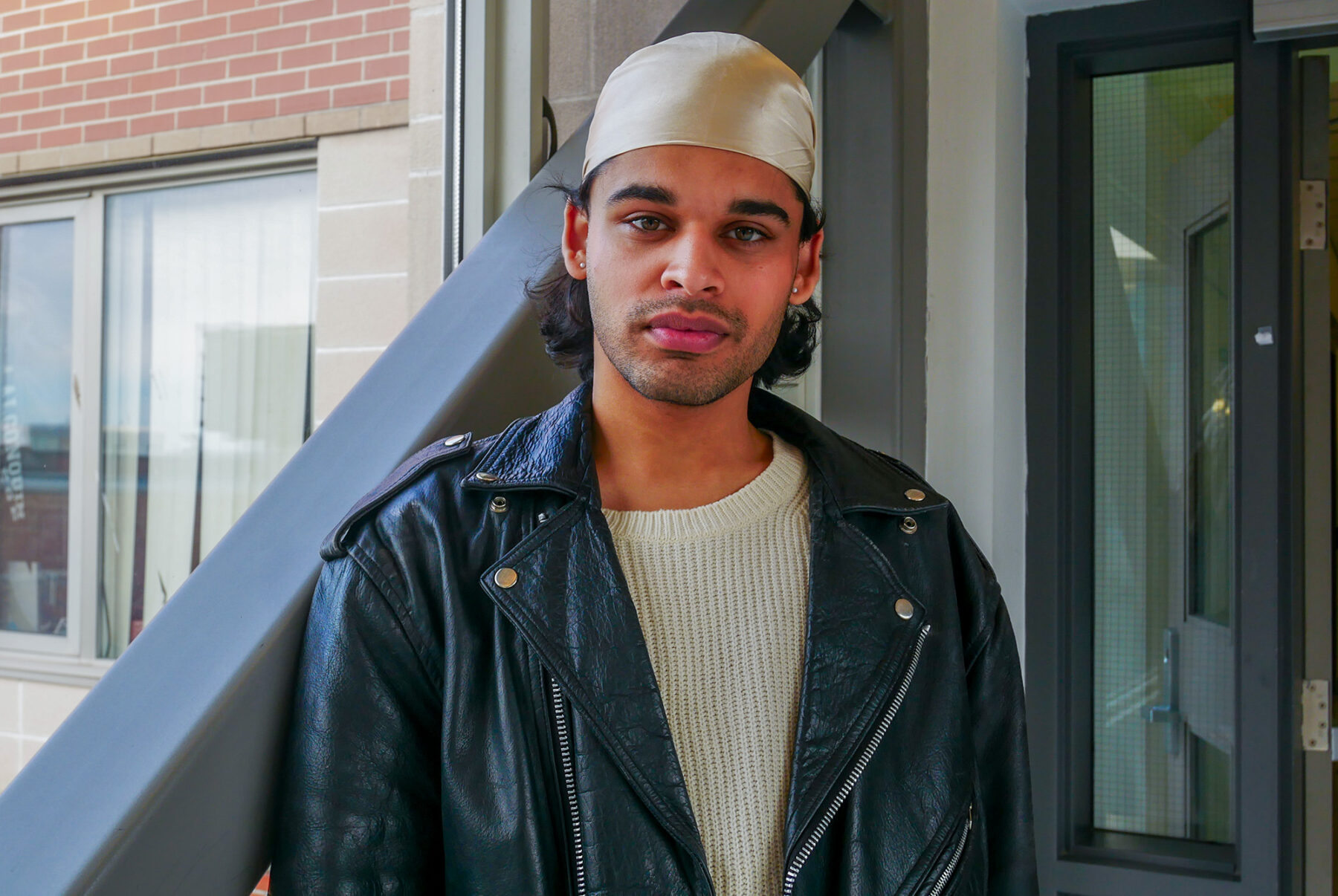
Bhavarth Parikh, a Level 1 regulatory affairs sciences student from India, Gen Z
Bhavarth Parikh, a level 1 regulatory affairs sciences student is a member of Gen Z. Photo credit: Grinje Randa Bringi

Name, program and generation: Bhavarth Parikh, a level 1 regulatory affairs sciences student from India, Gen Z.

Thoughts: For international students like Parikh, the stakes are different. “If I’m given a project or an assignment, I must stay and finish it,” he said. Parikh exemplifies a Gen Z with a strong work ethic rooted in self-sufficiency. He believes in completing all tasks assigned by your employer, even if it requires working additional hours without pay. Unlike many of his peers, Parikh’s urgency is driven by financial independence as a newcomer. His story reflects how personal circumstances can shape workplace attitudes.

Do you believe burnout is a significant issue in today’s workplace culture?

Leah Brennan, a Level 3 advertising and marketing student, Gen Z
Leah Brennan, a level 3 advertising and marketing student,. is on team Gen Z. Photo credit: Grinje Randa Bringi

Name, program, generation: Leah Brennan, a level 3 advertising and marketing student, Gen Z.

Thoughts: Burnout is a real issue for workers of all generations. “If you push yourself too hard, eventually you just won’t want to do anything,” she said and noted that strategies like scheduling work and breaks can help prevent burnout.

Name, program, generation: Joé Chénier, level 2 sheet metal and welding techniques apprenticeship student, a Millennial.

Thoughts: For Chénier, financial incentives often outweigh the need to say no. “If it’s dangerous, I’d say no, but in our field, they pay well, so I guess I’ll do what I have to do,” he said.

Burnout is not unique to any generation, but each group addresses it differently. Gen Z prioritizes mental health and boundaries, while older generations are more accustomed to pushing through.

When it comes to work-life balance and setting boundaries, would you feel comfortable saying no if your boss called you after hours to request an extra shift?

Name, program, generation: Stephanie Berglas, a level 3 advertising and marketing communications student, Gen Z.

Thoughts: Setting boundaries is a hallmark of Gen Z’s workplace approach. “Our age group is very aware of mental health practices, so we’re better at managing burnout,” she said. “We’ve helped workplaces evolve to focus on employee satisfaction and respect.”

Alison Elias, a personal organizer, shares her thoughts on generational divides in the workplace at College Square
Alison Elias, a personal organizer, shares her thoughts on generational divides in the workplace at College Square. Photo credit: Grinje Randa Bringi

Name, title, generation: Alison Elias, a personal organizer in Ottawa, Gen X.

Thoughts: Elias applauds the younger generations for setting boundaries in ways her generation never considered. “The older generations are willing to put up with more nonsense, Gen Z’s and Millennials are less willing to,” said Elias. “It’s not wrong; it’s just different and it’s the lack of adequate guidance that contributes to the generational divide.” Though she believes there is a generational gap between Gen Z, Millennials and Gen X, the gap is primarily due to differences in expectations and attitudes toward work.

The generational work clash isn’t a divide; it’s a sign of an evolving dialogue. Every generation has fought for workplace balance in its own way and this moment is no different. By understanding and respecting each other’s struggles, we can build workplaces that prioritize fairness and collaboration for everyone.

Grad’s documentary highlights Ottawa’s broken transit system

“I wanted to show that this isn’t just about a missed bus,” said Gio Petti, a local documentary producer
"Dude, Where's My Bus" poster created for Gio Petti's documentary

After graduating from Algonquin College’s broadcasting program in 2020, Gio Petti entered the world of media design and podcasting. His creativity and passion led to the production of the transit documentary Dude, Where’s My Bus.

It began with the realization that public transit was more than just an inconvenience Petti struggled with: it affected everyone’s lives.

“I’d wake up at 6 a.m., get ready and head out for the bus, but it never showed up,” said Petti. “It wasn’t just me, there were dozens of people around me, depending on the same system. It just didn’t make sense. I thought, why isn’t anyone talking about this?”

Though Petti wasn’t a trained journalist, he had a media design and podcasting background. He also wasn’t just looking to talk about the troubled transit situation like a reporter, Petti wanted to capture the human elements: the struggle, frustration and consequence of a broken system.

Provided headshot of Gio Petti
Gio Petti, the documentary's creator, realized that public transit was more than just an inconvenience for him: it touched everyone’s lives. Photo credit: Supplied

Research

The first step was diving into the history of Ottawa’s transit issues. Petti began researching everything from the 2006 LRT cancellation to the recent breakdowns of the LRT system.

“I was shocked by what I found. We were supposed to have this big LRT project back in 2006, and instead, we ended up paying millions in legal fees,” said Petti

Public knowledge surrounding this was minimal. Many people didn’t know about the 2006 LRT cancellation. Petti decided in his documentary to feature these key pieces of information to educate viewers about how Ottawa got to where it is today and how deeply rooted the program is.

Interviews

Petti reached out to city officials and local politicians for his documentary, and he had the opportunity to interview local councillors.

“I thought I’d just get some canned answers, but I was impressed by how open some of these councillors were,” said Petti.

A big problem with the transit was the unreliability of when buses would come. Petti said sometimes he didn’t know if a bus was late or early due to how off the time was. This led to speaking with people about the performance versus the reliability statistics.

“Performance means the route actually went out; the reliability statistics means within certain acceptable time range,” said Riley Brockington, transit chair board member and city councillor of Ward 16 in the documentary. So, you could have a bus that’s an hour late but still goes out that meets the performance stat, but if it’s an hour late it doesn’t meet the reliability stat. So, performance stats are actually high in the City of Ottawa, it’s the reliability data that is not acceptable.”

Documentary message

As Petti finished the documentary, it was clear that it was about more than just buses. It was about the systemic failure and the human tolls that are overlooked by the city.

“It’s like planting a tree,” said Brigette Pellerin, an Ottawa author and journalist, in an interview with Petti. “The best time to do it was 20 years ago. The second-best time to do it is right now.”

The documentary is a call to action, a way to get people talking, questioning and demanding accountability for those in power.

“I wanted to show that this isn’t just about a missed bus,” said Petti. “It’s about people’s lives being disrupted, people losing jobs, missing appointments or just not having the freedom to get where they need to go.”

Algonquin College celebrates touchdowns and U.S. Thanksgiving

Thanksgiving and American football go together like peanut butter and jelly
Photo: John Hopper
A photo of Algonquin College students enjoying themselves while waiting for their turkey orders

Algonquin College celebrated an All-American Thanksgiving at the Wolves Den on Nov. 28.

Starting at 11 a.m. and continuing throughout the day, the Wolves Den welcomed Algonquin College students to enjoy the Thanksgiving football match between the Detroit Lions and the Chicago Bears.

The Wolves Den fully embraced the long-standing American tradition that is NFL on Thanksgiving Day, a tradition that has been happening for nearly a century.

While Algonquin College has hosted events for both Canadian and American Thanksgivings in the past, the All-American Thanksgiving At the Den is the first time the Wolves Den hosted a Thanksgiving-themed event.

Seanna Derouard, a bartender at the Wolves Den, said the Wolves Den was excited to host the event.

“We’ve done special events before, and we’re super excited for our Thanksgiving event. We’re looking forward to seeing all the fun and smiles,” said Derouard.

Joe St. Amand, kitchen manager at the Wolves Den, said the purpose of the event was to give back to the Algonquin College community.

“The community always shows up for the Wolves team, we got to give a little back,” said St. Amand.

To promote the event, the Wolves Den released a specialty menu catered specifically for the event. A turkey dinner, served with mashed potatoes, gravy, broccoli and stuffing, was served as the entrée for $14.99. The Wolves Den also had a special offer where guests could enjoy $3 off chicken wings or nachos.

“Our chef thought it would be a cool idea to do a turkey dinner. We’re a sports bar, football is on the TV and it’s also Thanksgiving. It just made a lot of sense,” said St. Amand. “It’s not a football game without wings and nachos, so we also decided to do a promo on those items.”

Sebastien O’Connor, a second-year police foundations student, said the food service at the event was great.

“Honestly, the turkey dinner was pretty good, especially considering the price. The mashed potatoes and stuffing were also pretty solid,” said O’Connor. “I’m more than sure that the nachos and wings were also great.”

A photo of Sebastien O'Connor
A photo of Sebastien O'Connor Photo credit: John Hopper

The Wolves Den hosted a raffle during the event, where each attendee received a ticket with the purchase of a menu item. The winner received a Josh Allen jersey.

Museum Studies Craft Market gathers funds for graduation

Students in the museum studies program were fundraising for an end-of-year showcase to help them get noticed by professionals
Applied museum studies Audrey Todd, Veronica Lavoi, Elizabeth Henshaw and Esten Szwalek)

The Museum Studies Craft Market on Nov. 25 in the E-building raised money to support a showcase by graduating students at the Ottawa Art Gallery

“We want to be able to deliver a good experience for the people that show up,” said Esten Szwalek, a third-year student from the museum studies program.

The showcase is also a way to help students network and a chance for the grads to show their projects and speak to professionals in the museum fields.

“We’re essentially put to work all the skills we learned throughout the program,” said Emeraude Mukikala, a Level 5 class representative for the museum studies program.

Mukikala said students hoped to raise $1,000.

The table was full with a variety of different little souvenirs including stickers, ornaments, bandanas, crocheted items and many more fun items for people to buy and collect.

They chose to create handmade gifts instead of baking pastries because their program has a lot of creative people. “It came from the fact our program is really crafty and artsy people,” said Mukikala.

The gifts were all made from scratch by the graduating museum studies students, everything was priced between five dollars $5 and the highest priced item was $30 which was a reversible tank top. The most popular items sold were the stickers at $5 each.

Third-year student Elizabeth Henshaw, who creates stickers on the side as a “personal business,” made some of the stickers for the fundraiser.

“Everything on the table was made by someone from our graduating class,” said Szwalek.

Last year they could not pay for catering, so this year their goal is to make more than they did last year. “The goal is to pay for catering and be able to afford tables,” said Henshaw.

The event ended at around 5 p.m. and the students made about $650 at the end of the event, just $350 short of their goal, according to Szwalek.

Five study tips to get you through exam season

Whether you're a seasoned scholar or a budding freshman, end-of-semester exams and projects can get the best of you. Here are five tips to keep you sane during a stressful academic season
Photo: Tyler Reis-Sanford
Ashley Hurst, right, enjoys studying with her friends, and finds that they can help keep each other accountable.

As the end of the fall semester approaches and deadlines get closer and closer, students are trying to learn how to face a demanding workload.

Managing a healthy work life balance while staying on top of challenging academics may be difficult, but these five tips from experts and Algonquin College students should help even the most caffeine-addicted academic.

Tip 1: Understand what kind of learner you are

“We do a lot of work just to understand which students learn in what kind of way,” said Joshua McMillan, an Ottawa Carleton District School Board teacher. “If college students want a leg up without stressing themselves to the bone, learning what style of study best fits them will help.”

Identifying learning styles like auditory, visual and kinesthetic allows students to tailor their individual needs, and can help make studying more engaging and effective. Consider taking a learning quiz to identify what style of learner you are.

The Student Learning Centre (SLC) provides resources for Algonquin students to study, work, and prepare for exams.
The Student Learning Centre (SLC) provides resources for Algonquin students to study, work, and prepare for exams. Photo credit: Tyler Reis-Sanford

Tip 2: Change your scenery

Changing your environment can help you consider things from a new perspective, and allows your body and mind to reset.

A report from Human Spaces Global, a design and research company that focuses on creating “human centered spaces,” found that workplaces that include natural sunlight and greenery are significantly more productive and creative than those who don’t. If you’re stuck on a final project, hitting a wall, or just out of energy, consider moving to another workspace, or even changing who you’re working with.

“It’s more fun to study with people,” said Ashley Hurst, a Level-3 early learning and community development student. “But take breaks in between, get up and move around.”

Ashley Hurst enjoys studying with her friends, and finds that they can help keep each other accountable.
Ashley Hurst, right, enjoys studying with her friends, and finds that they can help keep each other accountable. Photo credit: Tyler Reis-Sanford

Tip 3: Take a break

Although taking a break may seem counterproductive to getting more work done, a study by researchers at Cornell University has shown that “brain buster” study breaks allow the mind to reset.

“I set my alarm every 45 minutes, and take a break for 15 minutes,” said Emily Thomas-Moore, a Level 1 paramedic student. “It’s something a friend told me in high school. If I didn’t take breaks I would literally go insane.”

Tip 4: Prioritize your tasks

Making sure you have a firm grasp on what is due when is extremely important, especially in a program like paramedic studies, which has seven exams for Level 1 students like Emily Thomas-Moore.

“I sit down, get my list together, plan it out all in advance,” said Thomas-Moore. “When I set a schedule, and just use the time I set aside to actually study or work instead of scrolling I usually do well.”

Try using a physical calendar to keep track of due dates, schedules, study times and lists. Prioritization tools like the Eisenhower Matrix and the ABCDE method can help flustered students decide which tasks need to be done first.

Tip 5: Remember the big picture

At the end of the day, college is just a handful of years in your life. There are plenty of successful people who failed classes, dropped out of entire courses, or never went to college at all.

Remember to prioritize your own well being, Algonquin College offers a number of support services for students going through any number of issues.

Celebrating Hindu Heritage month while navigating modern issues

November is a time to celebrate the Hindu community's contributions while addressing incidents of hate
Photo: Emmet Paradis
Vansh Sharma, a third-level esthetician student at Algonquin College.

For Vansh Sharma, a level 3 student in the esthetician program, November’s Hindu Heritage Month is an opportunity to learn more deeply about the spiritual and cultural aspects of Hindu culture.

“I was born in a Hindu family so I believe that having spiritual knowledge is more important than having contemporary education,” said Sharma. “It’s a representation of our culture and the knowledge that great saints and our ancestors have provided us from past generations.”

While November’s Hindu Heritage Month in Canada is a time to celebrate and recognize the contributions of Hindu Canadians to our diverse society, it also comes at a time when the community has faced distressing incidents.

“Since January 2022, over 20 incidents of reported vandalism, desecration and/or break-ins at Hindu Temples or places in Canada with hate or bias-motivated graffiti,” according to Vishwa Hindu Parishad Canada. “Six Temple break-ins happened within the last few weeks.”

“There have been instances where Hindu students have faced bullying and been exposed to Hindu phobic content in schools and educational institutions – under various pretenses influenced by anti-Hindu organized elements,” according to VHPCanada.

This year is significant as it marks the third annual Hindu Heritage Month, according to the statement from the Minister of diversity, inclusion and persons with disabilities of Canada, Kamal Khera on Nov 1.

Hinduism, with roots dating back over 5000 years, is the world’s oldest belief system and third-largest religion. Canada is home to nearly 830,000 Hindus.

The Hindu community in Canada is diverse, with roots in different countries including India, Pakistan, Bangladesh, East Africa and Mauritius, according to Minister Khera’s statement. This diversity is reflected in the many languages spoken within the community, with Hindi, Bengali and Marathi being among the most widespread.

Hindu Heritage Month was first officially recognized in Ontario in 2016 through Bill 56, the Hindu Heritage Month Act. The act states that November was chosen partly because it often aligns with Diwali, one of the most significant Hindu celebrations.

Diwali, also known as Deepawali, typically falls in either November or October, depending on the lunar calendar. As described in the Hindu Heritage Month Act, Diwali commemorates the victory of good over evil.

Sharma highlighted why this month is important.

“This month helps educate others by telling them how Indian traditions are celebrated and worship deities and every single element in our nature,” he said.

Minister Khera highlighted the government’s commitment to safeguarding the right of communities to worship safely. She mentioned the recent launch of Canada’s first-ever Action Plan on Combatting Hate, which includes the Canada Community Security Program to support communities at risk of hate-motivated crime.

This belief extends to many aspects of life. “I love and I am proud of how in my family we’ve been worshipping animals, rivers, holy spirits, plants, planets, stars and even a piece of land before building a house on it,” said Sharma.

What’s happening at the campus Food Cupboard in the lead up to the holidays?

Connections, the campus store, launched a holiday fundraiser to support the Students' Association's Food Cupboard
Photo: Yuye Jiang
Anywhere from five to 20 students will visit the Food Cupboard each day to pick up necessities, says Abigail Harrison.

While many are immersed in the festive spirit as the holidays approach and the semester draws to a close, for some Algonquin College students food insecurity has become a greater challenge.

To address this, the campus store, Connections, first introduced a new initiative during its annual “Family & Friend Holiday Sale” on Nov 20. During the event, customers voluntarily donated at the checkout to support the Food Cupboard, helping students who faced food insecurity on campus.

“Since it’s the first time we’re doing it, I don’t really have a specific amount that I’m looking for,” Abby Muir, the Food Cupboard coordinator said. “But I walked by the Connections store the other day and I saw that it was super busy, which made me very excited, because any contribution to the Food Cupboard is valuable.”

The entrance of the Connection store, featured a large digital sign announcing the start of the holiday event, with a display of arranged products.
The entrance of the Connection store, featured a large digital sign announcing the start of the holiday event, with a display of arranged products. Photo credit: Yuye Jiang

The Need Behind the Holiday Fundraiser

The Food Cupboard has provided crucial support to countless students facing food insecurity in recent years, but Muir said that one of their current challenges is balancing student awareness of the service with ensuring resources reach those who truly need assistance.

“Usually we see a big rush of students at the very beginning of the semester, and now we’re kind of in a little bit of a slower period right now, but it’s still increasing. Like crazy,” Muir said. “So I would hope we try to balance it so that, you know, there is enough awareness for people that need it, but not so much awareness.”

At the Food Cupboard, popular items are often basic essentials that are indispensable but can be costly in grocery stores.

“Most popular items are always the fresh items like fresh milk, eggs, meat, fresh fruits and vegetables,” Muir said. “Beans and canned vegetables and canned meat are really popular as well, because they are good for students who are looking for a sort of quick meal, if they’re rushing between classes or going to work.”

How Do Students View the Food Cupboard?

Although the Food Cupboard provides timely assistance to students, many still hold misconceptions about using the service.

“I’ve never heard any friends of mine are using the Food Cupboard, and yes, I understand people might feel embarrassed about that,” said Alexandria Milne, a Level-3 business marketing student. “But actually, everyone has a really busy schedule and some people can really hard to find a job these days.”

Milne compares this phenomenon to the growing trend of thrifting, which has become popular across generations.

“I know thrifting used to be for people who can’t afford pricey clothing, but now it’s a trend,” Milne said. “So maybe we also need to change that stereotype.”

The Future of the Fundraising Initiative

The Connections store’s fundraising initiative has also provided new resource support for the Food Cupboard. While there is no clear fundraising goal or amount yet, this effort opens the door for more extensive fundraising opportunities in the future.

Chadwick Brennan, a Level-1 project management student at the college, believes that broader promotion is needed to encourage more participation.

“People typically don’t tend to donate at checkout, so this isn’t the best way to get people to do it,” Brennan said. “Maybe setting up donation stations around campus, like other food banks. You’d see donation baskets around the campus, and if you have something extra from home, you could drop it in there.”

Muir also mentioned that, in addition to material donations, many departments and student organizations on campus are working together to raise resources for the Food Cupboard.

“As you’ve heard, we have connections with the college, and we’re trying to get creative with our collaborations and with our food drives and stuff like that,” Muir said.

If you would like to learn more or support the work of the Food Cupboard, please visit the AC food security fund page. If you are facing challenges with food or winter essentials, don’t hesitate to reach out to them.

First Person: Battling anxiety with magic

One day this summer, seemingly everyone around me started playing Magic: the Gathering. I don't know what it was, but something about it instantly clicked for me
Photo: Michael Lam
The exhilaration the author feels while playing against others is enormous. "It’s become a hobby that I’ve greatly grown to appreciate," Hopper writes.

It was a mid-August evening, and I’d just gotten off OC Transpo’s infamous 88 Terry Fox bus. The heat was debilitating and the anxiety-inducing finals in my life were increasing my stress levels tenfold. None of this mattered to me, however, because I was going to play Magic: the Gathering.

Over the summer, I was laid off from a job I had been working at for nearly five years. It stung bad. The lack of secure income on top of stress from summer classes led me to become the most stressed I’ve ever been. It was as if I were Atlas holding the world, but it was the relentless weight of my anxiety. I was in desperate need to find a healthy way to alleviate my mental burden.

I’m not religious by any means, but it was as if a higher being answered a prayer I never dared to vocalize. One day, seemingly everyone I was close to picked up the same hobby at the same time. Friends from secondary school, colleagues from work or acquaintances from previous co-op placements: everyone I knew started playing this card game called Magic: the Gathering.

Magic: the Gathering is a trading card game that was first launched in 1993. The game features a variety of different formats to play, with the main goal to reduce your opponent’s life total from 20 to zero. The game is incredibly influential in the card game industry, and greatly increases in popularity every year.

I don’t know what it was, but something about Magic: the Gathering instantly clicked for me. Was it the enticing artwork? Was it the wall of text on every card? Or was it an ignorant outsider’s perspective comparing the game to Pokémon cards? In hindsight it was definitely the latter.

Getting into the game was much easier than anticipated, as my hand was essentially held the entire time by the one friend who did know how to play the game. My friend Jacob Uras let us borrow old decks he constructed when he was much younger, which shielded us from the game’s largest barrier of entry: its cost.

“Magic: The Gathering is super fun, and a great escape from reality. I use the game as an excuse to go outside and socialize. I feel most people who play the game feel this way,” said Uras, a biology graduate from Carleton University. “It can be hard to put yourself out there, so I thank Magic for that.”

Magic: the Gathering is a hobby that requires one to spend money. My previous experience with card games made me assume that the game was going to be an expensive endeavor. While the hobby can be expensive for those who are heavily invested, it was actually pretty digestible price-wise as a new player.

The card games parent company, Wizards of the Coast, has been committed to making the game as accessible to newcomers as possible. Starter decks can be purchased at any major retailer at an affordable cost. This was pleasant to hear as someone who has recently become unemployed.

“The constant release of new cards and the amount of rules can be overwhelming to new players. It’s great that Wizard of the Coast promotes these starter decks because it really bridges the barrier of entry,” said Michael Barber, an employee at local card store Wizards Tower in Barrhaven. “Many people who haven’t touched a card game in their life will come in because they’re curious and leave with a starter deck because it’s the cheapest and easiest way to get into the game.”

While I didn’t really understand the game at first, and arguable still don’t, Magic: the Gathering is an incredibly enjoyable game. The exhilaration I felt playing against others was indescribable. It’s become a hobby that I’ve greatly grown to appreciate. Even if I find myself falling out of it, I will continue to appreciate the game for help bringing me back to reality.

Algonquin College students ring in the season at the Ottawa Christmas market

Students kicked off the holiday season with a magical tree lighting at Lansdowne Park
Photo: Grinje Randa Bringi
Shivangi Ambbaliya, Shagunpreet Kaur, Gurpreet Kaur, and Mansi Modgil pose inside the Aberdeen Pavilion, enjoying their first Canadian Christmas market

The holiday spirit officially arrived for a group of Algonquin College students on Nov. 22 as they ventured to the opening night of the Ottawa Christmas Market at Lansdowne Park.

Held at the historic Aberdeen Pavilion, the event was filled with bright lights, festive food and a warm sense of community.

For international students like Shivangi Ambbaliya, Shagunpreet Kaur, Gurpreet Kaur and Mansi Modgil this was a cultural introduction to Canadian Christmas traditions.

“Back home, Christmas isn’t celebrated on this scale, there are huge celebrations going on here,” said Ambbaliya. “It’s kind of like our Diwali, so we’re finding our festival in this Christmas.”

Crowds gather at Lansdowne Park for the Ottawa Christmas Market's grand tree lighting ceremony, set against the festive backdrop of the historic Aberdeen Pavilion.
Crowds gather at Lansdowne Park for the Ottawa Christmas Market's grand tree lighting ceremony, set against the festive backdrop of the historic Aberdeen Pavilion. Photo credit: Grinje Randa Bringi

As all first-year developmental services worker students, the group was experiencing the Christmas market for the first time.

“We are looking to explore a new culture and try new things, and of course, clicking lots of photos,” said Shagunpreet.

Stepping into the market you’re met with the smell of warm apple cider and gingerbread cookies wafting through the air and the sound of carolers singing near the giant Christmas tree. Vendors lined the indoor and outdoor spaces, offering handcrafted ornaments, holiday treats and seasonal drinks.

Families huddled around fire pits to stay warm and children posed for photos with Santa Claus.

The highlight of the evening was the countdown to the lighting of the massive Christmas tree. Ottawa Mayor Mark Sutcliffe addressed attendees with a short speech, thanking public servants for their dedication and wishing everyone a Merry Christmas.

At the end of the countdown, the crowd erupted into cheers as the tree lit up.

Marketing student Mercy Ejeye poses in front of the glowing Christmas tree
Marketing student Mercy Ejeye poses in front of the glowing Christmas tree Photo credit: Grinje Randa Bringi

“It took a long time to see the tree be lit, but the anticipation made it fun,” said marketing student Mercy Ejeye, who came dressed for the occasion in a festive sweater that read “HOHOHO” and tailored pants from her favourite brand, Atelier.

The Ottawa Christmas Market runs until Dec. 31, giving locals and visitors ample opportunity to soak in the holiday cheer.

“Christmas is the most festive period of the year, where you actually get to see people be the happiest and we’re celebrating the love of Christ, and I love that,” said Ejeye.

For more information about the Ottawa Christmas Market, visit ottawachristmasmarket.com

Travelling by train? Five simple tips to make sure others have a pleasant ride this Christmas

Five people share their train experiences and offer tips on how to behave well on the train
Photo: Laiyiady Lam
Do you know how to be a polite and considerate traveller when taking the train during the holiday season?

The bells of Christmas are about to ring and the streets are filling with festive cheer. Buildings, trees and shop displays are being adorned with colourful lights.

After a semester of intense study, you may be planning to travel by train to explore cities around Ottawa and soak in the enchanting Christmas atmosphere during the holiday season.

But beware — sometimes, small, thoughtless actions during your journey can turn things sour. Do you know what not to do on the train?

Here are five tips from frequent train travellers to ensure you and other people have a pleasant and smooth journey on VIA Rail this holiday season:

1. Keep your shoes on

Train journeys sometimes can be long, and your feet might feel uncomfortable. However, for the sake of others — and their noses — please keep your shoes on.

Mitchell Fong, a Level 3 radio and podcasting student, shared his experience on a VIA Rail trip from Montreal to Ottawa three years ago.

“The person sitting behind me would put their foot up and take their shoes off,” he said. “That’s like a pretty crappy thing to do because no one wants to smell stinky feet on a two-hour train ride.”

Andrea Sofia Potente, a student from the same program, agreed with Fong.

“I find it uncomfortable,” she said. “These behaviours show a lack of respect for fellow passengers.”

2. Mute your phone

Headphones exist for a reason. Playing music or videos without headphones on a train can disrupt the peace of those around you.

Alice Fournier, another radio program student, shared her experience with noise on the train.

“One time someone was right behind me, and they kept watching the same TikTok over and over and over,” she said. “It was like a really high-pitched version of the song and just cutting through my headphones.”

The noise lasted for 50 minutes. If she had another chance, Fournier said she would have turned around to address the person directly.

“I don’t think other people want to hear someone else’s music,” Fournier said. “It’s not always to your taste.”

A signpost at the Fallowfield VIA Rail station featuring their branding. Below the sign is a banner displaying the slogan 'Love the Way.' The background reveals a blue sky with soft clouds illuminated by the warm glow of sunset.
Avoiding the behaviours mentioned in this article will help you enjoy your trip! Photo credit: Laiyiady Lam

3. Clean as you go

Keeping the space tidy is essential for a pleasant travel experience and shows consideration for others.

Potente recalled her experience riding the Shinkansen (bullet train) from Osaka to Tokyo six years ago.

She said the trains in Japan were always spotless. However, she noticed that public transportation in Canada sometimes had trash left behind.

“I just find that sad,” Potente said. “We need to be considerate to others.”

4. Keep your volume down

Nobody wants their train ride to double as your personal podcast. Keeping your voice low is key to a peaceful shared travel experience.

Cameron Kirkey, a former master’s student at Trent University who frequently travelled around cities near Ottawa, said it is important to speak quietly on trains.

“Try to use inside voices as much as possible,” he said. “You never know where people are coming from, they might just want to sleep after a long ride.”

5. Don’t be so cold

Sometimes, a little kindness can go a long way during train travel.

Martin Taller, the program coordinator of the tourism and travel program at Algonquin College, encourages young people to lend a helping hand during their journeys.

“Luggage is often a big issue, especially during peak travel seasons,” said Taller. “It can be exhausting for a lot of older people, so it’s always good to offer help.”

What should you do if you encounter a situation similar to those shared in these tips?

“If you have a problem, let the conductor know — they’ll help you,” Taller said.

If nothing happens to you, sit back, relax and enjoy your trip!

Algonquin Times podcast

Stay Informed

Sign up for our newsletter

Subscribe

* indicates required