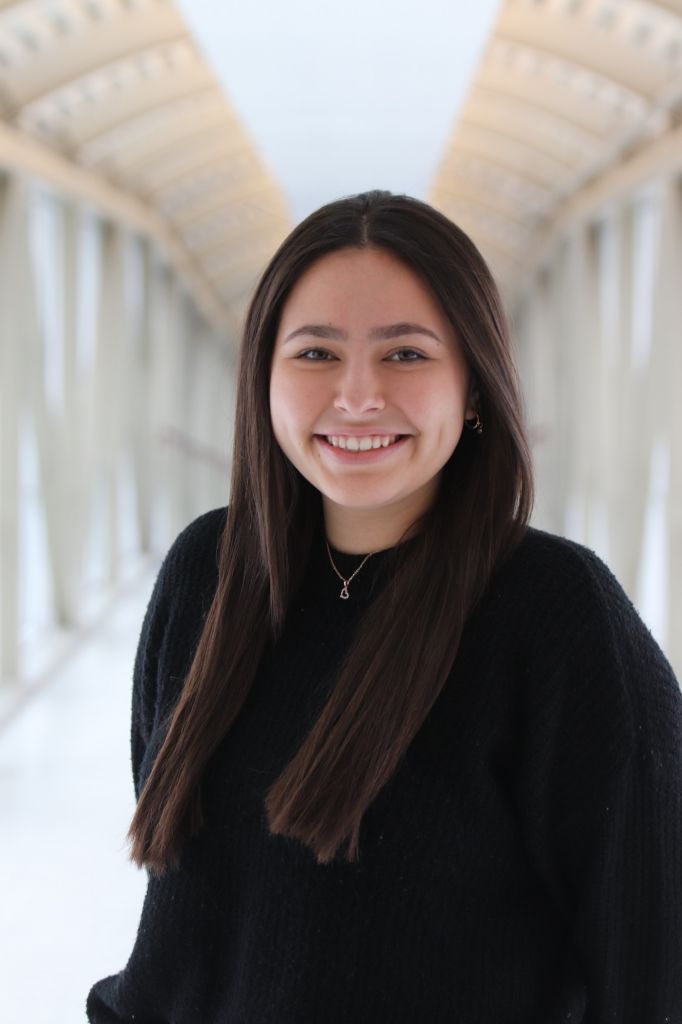
I have the nickname Smiley which I’ve had all my life. The reason why I’m always smiling is because of my love for music. I love to listen rock, pop, […]
Sarah Herrington
Photos: Sarah Herrington
April 15, 2020 Revised: April 15, 2020 1:51pm
Photo: Sarah Herrington
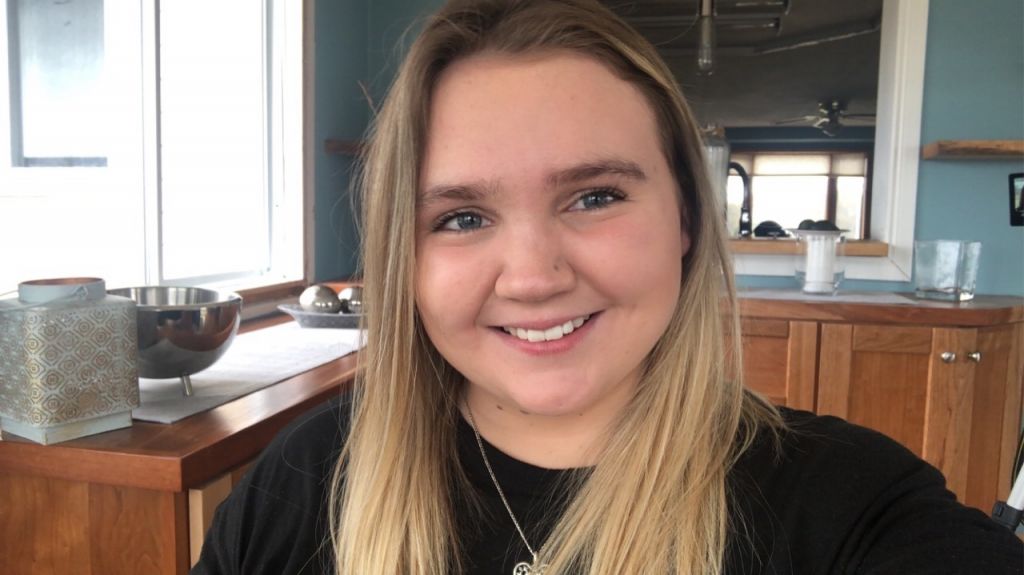
I have the nickname Smiley which I’ve had all my life. The reason why I’m always smiling is because of my love for music. I love to listen rock, pop, country and acoustic covers. Plus I love playing the guitar and clarinet as my hobby.
Ever since the COVID-19 period started, everyone has been stressed out, worried and even paranoid. The situation does worry me too, of course. I work full-time at Tim Hortons and need to be extra careful. I do still go out for walks daily to get my exercise and take photos for school assignments or even for fun, but I keep my distance. But none of this stops me from being my normal happy self.
With me, I continue to have have this adorable smile on my face that everyone has loved seeing through my working, high school and now college life. The reason: music.
When I was on campus before all this happened in mid-March, I would walk across the street with my guitar or clarinet and play to help release all the stress. Even if I was having a bad day in class, music would bring me my happiness.
Just by listening to music with my headphones on, I can focus on getting my assignments completed on time. When I was in high school, my teachers and friends put me on to the idea. “The way to get work done with no distractions or interruptions is to put headphones on and listen to your music,” they’d say. They were right.
I first started playing music with the clarinet and guitar in grade 9, my first year in high school. I wasn’t into art or drama and I needed an art credit to graduate. So I signed up for music band class.
That’s when I first fell in love with my musical hobby. When I played in front of people at the annual winter and spring concerts, coffee houses and even at Canada’s Wonderland, my smile got even bigger.
When I got to grade 11, I wanted the challenge of a new instrument. So I took a guitar class. I loved it even more because I’m a fast learner when I try new things.
Now, during these self-quarantine days, when I’m playing my guitar to either write songs or play covers, I can feel as relaxed, distressed and calm as I did when life was normal and I was back living in residence.
The college’s vice president of finance and administration released a statement on April 7 regarding refunds for the winter and spring terms. In it, Duane McNair says that following instructions […]
Robbie Smith
Photos:
April 14, 2020 Revised: April 14, 2020 4:01pm
The college’s vice president of finance and administration released a statement on April 7 regarding refunds for the winter and spring terms.
In it, Duane McNair says that following instructions from the Ontario Ministry of Colleges and Universities, the college has put together a list of student fees that are eligible for refund for each term.
There will be no tuition refunds or rebates available as long as course delivery continues.
“Tuition fees contribute toward costs for academic program delivery and the general operations of the College,” he said. “Tuition is not specific to location or mode of delivery (in-person or online). It is primarily for the instruction, assessment and administration of program delivery. These are costs that persist during this time and are ineligible for refund.”
The fees eligible for rebate or refund for the winter term are:
Pro rated refunds for students in residence who moved out before March 22
Remaining meal plan balances to students who moved out
One-time rebate on parking passes
Pro-rated refunds for Students’ Association Fitness Zone memberships
The refunds are applied automatically to college students’ accounts. For students relying on OSAP, if the balance remaining is more than $100, the refund will go to the National Student Loan Service Centre.
For the spring term, course delivery will begin online on May 19 until the midterm break at the beginning of July. In-class course delivery is set to begin on July 6, if permitted by provincial order.
Ancillary fees will also be reduced by 50 per cent, meaning a savings of $154.51 per student.
All other fees remain the same for the spring term, as course delivery will continue.
Algonquin College’s Prior Learning Assessment and Recognition (PLAR) services are taking an empathetic approach to the COVID-19 pandemic. The office loosened its processing timelines to be more flexible to students […]
Alvin Tsang
Photos: Alvin Tsang
April 14, 2020 Revised: April 14, 2020 3:21pm
Photo: Alvin Tsang
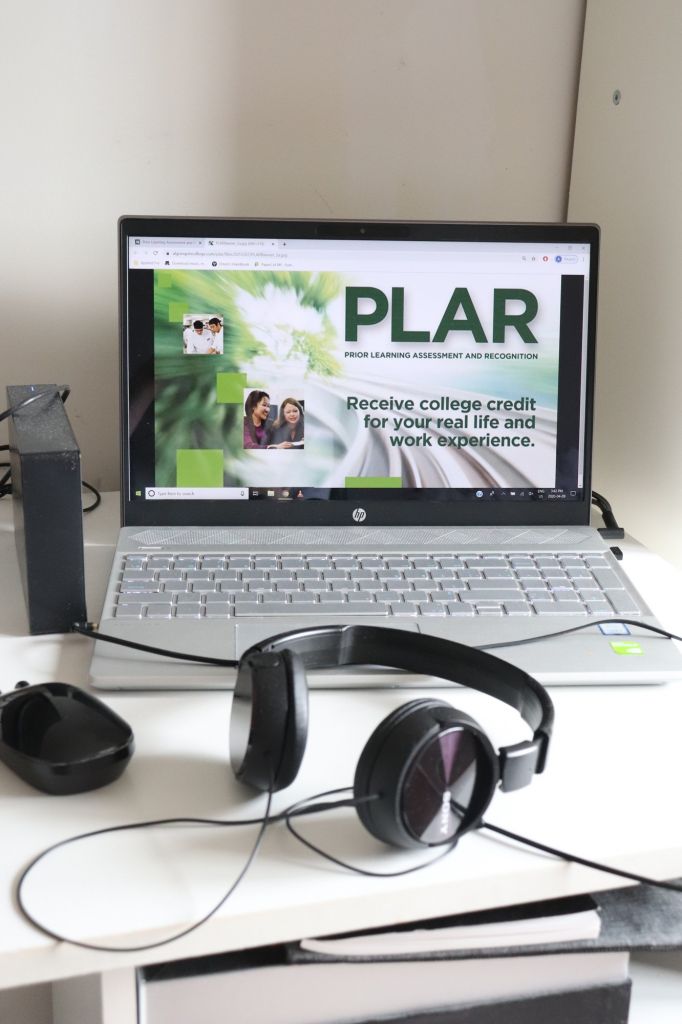
PLAR assessment done from home.
Algonquin College’s Prior Learning Assessment and Recognition (PLAR) services are taking an empathetic approach to the COVID-19 pandemic.
The office loosened its processing timelines to be more flexible to students and faculty.
“We’re doing our best to process PLARs as normally as possible during this time,” said Tessa Foster, PLAR Coordinator, on April 1. “We understand that PLARs may take a bit longer than usual for students to complete, which we’re addressing on a case-by-case basis, with a flexible, empathetic approach.”
In light of the recent developments surrounding COVID-19, faculties are shifting their course modality online and adjusting to teaching remotely. Given this pressure, assessment officers are taking time to modify assessment guidelines as they see fit. The responsibility will fall to student applicants to adapt and accomplish all outcomes in the assessor’s new, modified guidelines.
PLAR services, however, want applicants to rest assured that they will not be asked to complete in-person exams, presentations or interviews at this time.
When asked about changes to office operations, Foster said that PLAR services have always functioned largely through email.
“Our operations are not much different than usual,” she said. “One of the most major changes to our operations is that I’m no longer able to offer face-to-face drop-in hours; however, I’m happy to set up virtual meetings with students as needed.”
Regular drop-in hours are discontinued, but PLAR services are available via email to answer inquiries relating to the general PLAR process and how individual cases may be impacted.
No new applications will be actioned until further notice.
The COVID-19 pandemic has brought everyone to stay home, and school is no longer in person. We thought we’d share what some people are doing during their time in quarantine. […]
Camryn Majuary
Photos: Camryn Majuary
April 13, 2020 Revised: April 16, 2020 5:36pm
Photo: Camryn Majuary
The COVID-19 pandemic has brought everyone to stay home, and school is no longer in person. We thought we’d share what some people are doing during their time in quarantine. Algonquin Times reporter Camryn Majuary shares her life now.
Cory Whippler, a 2017 graduate of the television broadcasting program, works for the Ottawa Senators filming hockey games at the Canadian Tire Centre. When he found out the NHL season […]
Charlotte Riethman
Photos:
April 9, 2020 Revised: April 9, 2020 6:45pm
Cory Whippler, an in-house camera crew person for the Ottawa Senators, knew he wanted to work in sports broadcasting right from his earliest days at Algonquin.
Cory Whippler, a 2017 graduate of the television broadcasting program, works for the Ottawa Senators filming hockey games at the Canadian Tire Centre.
When he found out the NHL season would be postponed, he knew he would be out of more than just an income.
“I need to find a way to make up for the income and extra camera work I was going to be missing out on,” he says about his first thoughts after finding out there would be no work for the remainder of the hockey season.
The National Hockey League announced the 2019-2020 season would be paused starting March 12 in a statement from Gary Bettman. The decision came after the news of an NBA player testing positive for COVID-19. Since the leagues share facilities the chance of a NHL community member testing positive was likely.
“From the time I started the program at Algonquin, I knew I wanted to work in live broadcasting and sports,” said Whippler. “As a kid, playing sports, hockey was my favourite.”
Whippler has worked as a part of the in house camera crew for the Ottawa Senators for four years. This involves everything from videoing the hockey game to the fans in the crowd.
“Getting to see kids so excited by being on the big screen, seeing how they react and light up, is a really satisfying part of the job,” said Whippler.
Since the season being postponed happened in March, there were still home games scheduled Whippler would have been working.
“I lost working those games and money. But aside from the financial aspect of it, I’m losing work experience not getting those games,” said Whippler. “Experience is so important in broadcasting and media, the more practice the better.”
Broadcasting employers look for experience when hiring for jobs. Having more experience helps when trying to find a more permanent broadcasting job.
“With not working the games, I can’t get the experience that other jobs are looking for,” said Whippler. “It’s not only impacting my current state of life, but could also be making life harder down the road.”
Whippler is hoping to be working with a national broadcast crew for sports in the future.
“That’s not to say I don’t enjoy my job now but I would much rather have it on a big scale,” he said. “I feel it has more of an impact, more people would see my work.” he said.
“Being in the moment and live, you never know what’s going to happen,” said Whipper. “You have to follow the puck and if something goes wrong you have to fix it on the fly or your program is messed up. The extra pressure is what draws me back to it.”
Life
Covid-19 | Ottawa Senators | Television broadcasting
Ah humans. We are curious creatures. We put bubbles in our baths. We share things most of our family wouldn’t care to know about on the world-wide web. We put […]
Vanessa Myre
Photos:
April 9, 2020 Revised: April 9, 2020 6:03pm
Ah humans. We are curious creatures. We put bubbles in our baths. We share things most of our family wouldn’t care to know about on the world-wide web. We put ourselves through sometimes painful procedures to remove hair from our bodies.
We also give too many f*cks.
We care if that bubble bath is well-scented, we want everyone to know how absolutely AMAzing our lives are (even when they suck) and we care about what we look like. Even when we apparently don’t.
That is why Mark Manson wrote his book, The Subtle Art of Not giving a F*ck.
Now, typically I would stay away from self-help books for the simple reason being that I find many of them vastly contradicting even within themselves. Also, I find people read them to just feel better about themselves without actually following any of the advice – skipping through to the bits that validate the opinions and thoughts that they already have.
Mark Manson’s take – however, is different.
It is nearly impossible to twist Manson’s words into your own narrative because they are so unapologetically and bluntly spoken, they may as well be a punch in your face.
“The truth is that there are no such things as a personal problem,” he writes. “If you’ve got a problem, chances are millions of other people have had it in the past, have it now, and are going to have it in the future. Likely people you know too. That doesn’t minimize the problem or mean that it shouldn’t hurt. It doesn’t mean you aren’t legitimately a victim in some circumstances. It just means that you’re not special.”
Good luck justifying that you treat people like crap because of your oh-so-sad past with logic like that.
Of course, some people will still justify themselves, and Manson is excellent at calling them out while also acknowledging that some of what he says he might later discover is complete crap. Manson also points out many of his past, and current short-comings
“Just as Present Mark can look back on Past Mark’s every flaw and mistake, one day Future Mark will look back on Present Mark’s assumptions (including the contents of this book) and notice similar flaws. And that will be a good thing. Because that would mean I have grown.”
It’s not often you find a self-help book that acknowledges that some of its content might not be helpful in the future. It’s even rarer to find an author who admits that they are still on a journey of self-improvement that will hopefully continue for the rest of their lives.
Because, in reality, there is no fix-it button you can press or a list that you can follow to make everything better. You gotta do it yourself. That’s why this book is a must read in my opinion.
Moving homes is always a stressful process. Between packing, the cost of a moving truck, the aches that come from loading and unloading boxes and the work it takes to […]
Arielle Hughes
Photos:
April 9, 2020 Revised: April 9, 2020 3:37pm
Moving homes is always a stressful process. Between packing, the cost of a moving truck, the aches that come from loading and unloading boxes and the work it takes to make your new home a liveable space, it’s never easy
It becomes even more stressful when you factor in COVID-19.
Along with the need for people to remain isolated from each other, in my case I was also moving into an apartment that is unfinished because the contractors couldn’t finish the job due to the virus’s risks.
I had no choice but to move into a new apartment on March 28. While I was lucky enough that my family was willing to make the nearly six-hour drive from southern Ontario to assist me with it, the stress was far from eliminated by having the extra hands.
Two days before moving in I was told that the contractors doing renovations on my new apartment had walked out on the job. This left me with no kitchen counters, no taps in my bathroom and no way to access running water. I still had no choice but to move in.
With two cars, a temporary apartment and a storage unit full of boxes and furniture, it took hours of back and forth trips to get my things moved in. The day was spent moving around an emergency plumber who came to finish my bathroom and restore my access to water.
While that may seem like the worst of it over, it was just getting started.
The furniture ordered for my new apartment ended up getting lost in transit, which left me with no couch or chairs. I had to eat quick meals that didn’t require countertops. And my bare living room echoed with each step I took across it.
More significantly, I had to learn to adjust to living alone for the first time in my life. This at a time when our world that doesn’t allow human contact outside of our homes.
Spending your first days in your first apartment with no roommates or family is already a lonely time. During normal times, this problem would be lessened by spending time with friends. They would be there to help you celebrate your new independence.
But in a world where you can’t get within two metres of another person, that loneliness is amplified.
In my case, it echoes through the empty rooms of my new home.
During a time when there is already so much uncertainty, adding the extra stress of an unfinished apartment and the isolation during an already solitary time, has brought me an extra challenge in an already difficult situation.
Counselling services has moved online, according to a statement issued by college president Claude Brulé on Friday, March 27. Because of the ongoing COVID-19 pandemic, only staff considered essential to […]
Meara Belanger
Photos: Meara Belanger
April 9, 2020 Revised: April 9, 2020 2:05pm
Photo: Meara Belanger
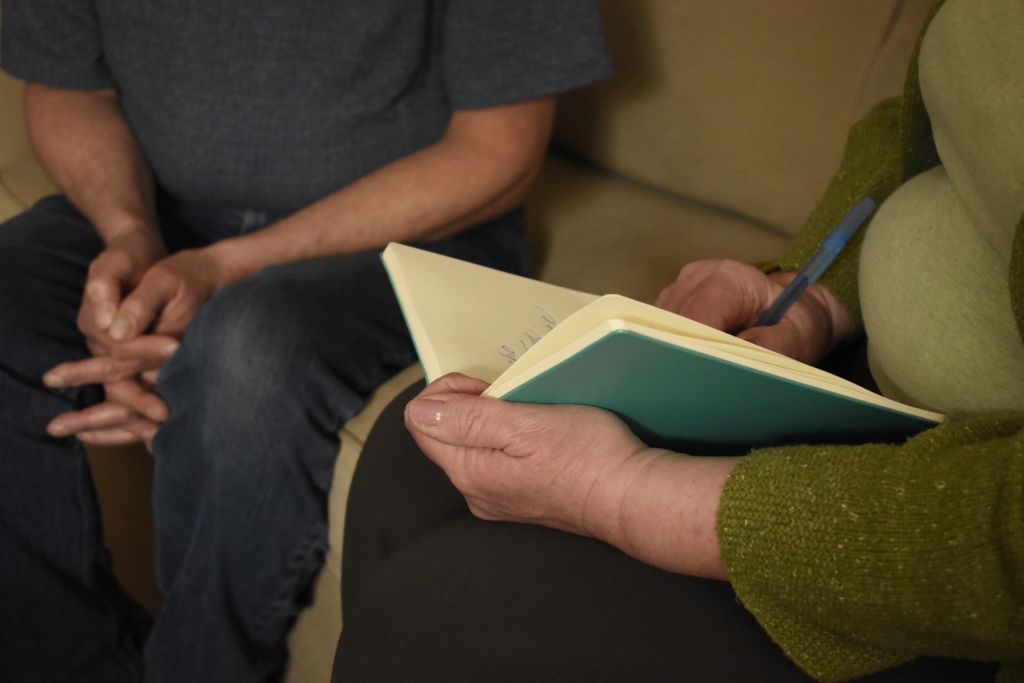
Counselling services has moved online, according to a statement issued by college president Claude Brulé on Friday, March 27.
Because of the ongoing COVID-19 pandemic, only staff considered essential to college operations are allowed on the premises, said the statement. In lieu of face-to-face counselling, Algonquin is offering a variety of supports online.
Friday’s statement included a link to a Coronavirus information page, which contains an FAQ listing counselling resources students can access through telephone or online.
Doug Stringer, manager of counselling services, the Spiritual Centre and student support services, says it’s important for students to maintain a routine while in isolation.
“Going to bed and getting up at the same time each day,” Stringer said. “Eating well and having a routine that includes eating. Exercise is another one – and that’s going to be one that’s going to be more difficult, but find a way to move that complies with physical distancing requirements. Find ways to connect socially. That would all be a really good start.”
Stringer says that students in isolation who feel they are in need of counselling should reach out by email or phone, although he believes some will lean on the supports they have at home.
The Mamidosewin Centre has been working in collaboration with counselling services to counsel Indigenous learners online. They’re offering virtual outreach to students by posting frequent updates on their Facebook page and hosting daily beading sessions from 11 a.m. to 12 p.m. via Zoom.
Students currently registered with the Centre for Accessible Learning can email their disabilities counsellor, learning strategist or assistive technologist for questions or to set up a virtual appointment. Anyone not registered with CAL but seeking their services can direct their questions to calmessages@algonquincollege.com. Additional CAL resources can be found here.
Algonquin’s International Education Centre is working with students on a case-by-case basis. They have helped students who have been displaced with finding new accommodations. The IEC is also offering appointments via Zoom and offering peer mentorship for international students. Additionally, the IEC is launching a campaign on Instagram using the hashtag #weareinthistogether which encourages students to send photos of how they are spending their time in isolation.
Stringer offered some words of advice for members of the Algonquin community now learning from home.
“We’ll get through this,” he said. “This will end and we’ll come out the other side and hopefully – not to sound cliché – we’ll come out stronger.”
News
Centre for Accessible Learning | Counselling services | Covid-19 | Mamidosewin center | Online
Four weeks ago, as I browsed Facebook, I saw something amazing. People in my community here at home in Kitigan Zibi were sharing pictures and stories about their days out […]
Angeleah Brazeau-Emmerson
Photos: Katelin Belliveau
April 9, 2020 Revised: April 9, 2020 4:37pm
Photo: Katelin Belliveau
Four weeks ago, as I browsed Facebook, I saw something amazing. People in my community here at home in Kitigan Zibi were sharing pictures and stories about their days out on the land collecting traditional medicines for their family, friends and community members in need. These pictures followed with comments from other members of my community wanting to also help and share what they could.
The second I arrived back home from school on March 13 when the term was moved online, I felt safer. Maybe it’s because my community feels like a completely different world unto itself. Or maybe it was just the whole idea of being back in my “home sweet home.” But from the first moment I brought my bags inside my house, I was okay.
For hundreds of years, Indigenous people have been relying on a source of natural remedies to help mend and heal all physical, mental, emotional and spiritual pain. These natural remedies, better known as traditional medicines, hold a significant place in our culture.
Chaga, tamarack, spruce stems, cedar lemon, and oranges are ingredients one community member chose to create their medicine (mushkiki) tea. Photo credit: Juanita Dumont
Before modern medicine was introduced, my people looked towards the land for help. It not only gave us ways of healing, but it also gave us a source of food, resource and protection. My people understood the land’s beautiful powers. They also learned how different plants and animals could give them what they needed.
A day spent on the land collecting and gathering traditional medicines reminds us of its beautiful powers. Photo credit: Angeleah Brazeau-Emmerson
Growing up, I attended Kitigan Zibi Kikinamadinan, which in the Algonquin language means Kitigan Zibi school. Here is where I had the opportunity to learn about my culture and the importance of its teachings by attending an Algonquin immersion class every afternoon throughout my elementary years.
This is what I thought about that day while scrolling through my Facebook feed: my people were looking towards our ancestors’ ways of living in order to overcome and provide a sense of safety through this unique time. In other words, I was seeing my community practicing what I learned about during my classes every afternoon.
My community was practicing our culture and families were together out on the land collecting and gathering medicines while being given the opportunity to share their traditional knowledge, on how to do so, with their families.
One community member created medicine (mushkiki) water using land based ingrediants including, cedar, spruce, tamarack, white birch, peppermint, labrador, chaga and wejina (beaver castor). Photo credit: Mona Tolley
The posts I scrolled upon on didn’t make me fear everything that was happening any less, but they did make me feel hopeful. This hopefulness didn’t just come from the fact that I grew up in a place where I was surrounded by my culture and traditional practices, like having the knowledge of traditional medicines. Or from the fact that I come from an area away from a large city.
Instead, my hopefulness came from knowing how truly lucky I am to come from a community where everyone is working together to keep each other safe, healthy and at the end of the day feeling okay. We are going back to our traditional roots, uniting as one during this time of crisis and panic, just as our ancestors use to do.
Today, as we all face this global pandemic, it’s important to understand a couple of things. Although we are forced to be physically apart, that doesn’t mean we all can’t be there for each other. This virus is affecting everyone, it doesn’t care who you are, how old you are or where you come from. If coming home has taught me anything, it’s that being there for one another can make a whole lot of a difference.
One community member created medicine (mushkiki) water using land based ingredients including, cedar, spruce, tamarack, white birch, peppermint, labrador, chaga and wejina (beaver castor).
My community is turning to our traditional ways of living to help fight against this fear we are all carrying. While I know not everyone is able to do exactly this, it is important that everyone tries to live in unity as my people have always been taught to.
No words can really explain the feelings and time we are all dealing with, but together, we can get through this.
Together is the only way we will be able to overcome it.
When Daniel Harris talks about how to make polyamorous relationships work, he sometimes likes to joke that the requirements are a shared Netflix account and a Google calendar. “I don’t […]
Julien St-Jean
Photos:
April 9, 2020 Revised: December 4, 2020 2:44pm
Daniel Harris and his partner Brendan. Image supplied by Daniel Harris.
When Daniel Harris talks about how to make polyamorous relationships work, he sometimes likes to joke that the requirements are a shared Netflix account and a Google calendar.
“I don’t believe in a way of living for everyone,” said Daniel Harris, 36, who has considered himself polyamorous for 12 years now. “You have to find what makes you want to be better, be more caring and be stronger. And for me, that’s polyamory.”
Harris is a life coach with LiveWorkPlay, a powerlifter who is a regular at Algonquin’s Fitness Zone, an aspiring writer, a rugby player with the Ottawa Wolves and is in three separate relationships.
But what is polyamory?
“Oh that’s easy, it means multiple relationships,” said Harris with a laugh.
At its roots, polyamory means having multiple relationships with multiple consenting partners at the same time. But polyamory isn’t that simple.
“And while it’s easy to think of polyamory as a lifestyle – as though there’s one way to do it, one common set of assumptions that underlie it – those relationships take a staggering number of forms,” writes Franklin Veaux in his 2012 piece “What is Polyamory,” published to morethantwo.com.
Different people have different styles of polyamory. Some polycules – a group of people participating in a polyamorous relationship – consist of a closed-off group of three or more partners who all date the other people in the relationship. This style is known as trigonal polyamory.
Harris, however, practices the vee form of polyamory. In a vee relationship, one may have two or more partners who are not engaged in relationships with each other. Members of the polycule may have varying levels of interaction depending on that group’s style of polyamory.
“For me, I found that I had a need for polyamory that I had never really understood before,” said Harris. “Each partner I have, I get to experience different parts of myself with them.”
For Harris’ polycule, having multiple partners means that they have more people to love and support while being loved and supported more in turn.
“It almost feels kind of like a second family in that regard,” said Brendan Irwin, 34, one of Harris’ three partners. “It’s like a chosen family aspect. It gives you this sense of belonging and comfort.”
Harris speaks proudly and lovingly about his multiple partners, but he was not always this open about who he was.
During his time at Goulbourn Middle School, Harris struggled to accept that he was gay.
“When I was 14, I kept sort of telling myself ‘if I’m gay,’” said Harris. “For a long time, I really wanted to be normal and struggled to come to terms with the fact that I’m not.”
Harris had previously played a wide variety of sports, such as football and hockey, but he stopped playing around the time that he started discovering his sexuality.
“The feeling that I got from team sports was comradery,” he said. “That’s why I sort of left them when I was 13, I no longer felt that comradery.”
In high school, Harris started to come to terms with the fact that he was attracted to men, but he didn’t yet feel accepted for who he was. He started to spend less time with others and more by himself or on the internet.
“I closed myself off a little bit more and just sort of survived high school,” said Harris. “And it took me a few years to come out of that and really start finding my way again. I was very lonely at that period of my life.”
Harris found himself opening up to others online rather than in person. Through the use of what he affectionately refers to as “google-fu,” – the act of finding facts, communities, information, etc. online, – Harris found communities full of people who he felt understood him.
He made online friends and found communities that felt like home. At one point, he even had an online boyfriend from Australia, which he jokingly recalls as a rite of passage for himself.
“I was definitely getting some love and acceptance for who I was instead of who I was pretending to be,” said Harris. “It was both validating, but also a crutch.”
Online relationships helped Harris start to accept himself for who he was, but he did not feel fulfilled from it. He wanted stronger real-life relationships and did not start to develop them until university.
In 2002, Harris attended University of Ottawa for English and philosophy. There he found people who were open to who he was and what was interested in. He formed different relationships with many different people and started to come to terms with who he was.
“It wasn’t until university that I started coming out of my shell again,” said Harris. “After that, it was a matter of throwing myself into things and seeing what worked for me. That’s the best way to learn and get to know yourself. Just jump into things and make a fool of yourself.”
In 2008, Harris learned about the existence of the Ottawa Wolves, a rugby team made up mostly by gay men. Harris jumped at the chance to play and rediscovered his love for team sports.
Daniel Harris playing rugby with the Ottawa Wolves. Image supplied by Daniel Harris.
Through the wolves, Harris developed a passion for rugby. It forced him to become more decisive and taught him to take action. He credits this as one of the things that made him become more confident in himself and who he is.
“It’s a lot better to go out, try, and just see what happens,” said Harris. “That’s one of the big things with rugby – just do it.”
Through rugby, Harris was introduced to polyamory. “I started meeting people who are polyamorous and felt a kind of jealousy. That feeling kind of surprised me,” said Harris. “I didn’t realize how much it meant to me yet.”
Harris started to explore his newfound interest and learned lots about both himself and polyamory. He made many friends in the community and started to discover what polyamory meant for himself.
Harris feels that embracing polyamory has allowed him to grow as a person and better accept who he is. Polyamory has given him more to love and be strong for.
“I think everyone who knows me has seen me become a lot more fulfilled, happier and all around more developed,” said Harris. “I feel like I can shrug off the slings and arrows of assholes and killjoys.”
Harris finds that there are sometimes misconceptions around polyamory about jealousy.
“Jealousy is a natural human emotion,” said Harris. “Just because you’re polyamorous doesn’t mean you don’t feel it. When you do feel it, you need to see it as ‘how can I work to overcome it?’ You really have to work to develop a lot of compersion, which is the joy you get when you see a loved one succeeding.”
Harris and his polycule find that the best way to help each other succeed and ensure everyone’s needs are being met is to have open, clear communication.
“Communication is vital in any relationship, polyamory especially,” said Irwin. “One of the things I like about Daniel so much is that we are able to communicate so much, so clearly.”
Overall, Harris feels that he has found a lot of joy and fulfillment in polyamory. His partners make him feel stronger, more loved and all around more complete.
“Embracing my weird, gay, nerdy, polyamorous self, it really helped me break down the barriers I put up around myself,” said Harris.
Harris is excited for whatever comes next in the future. He hopes to finish his novel and continue deepening his relationships with each of his partners.
“I feel like I’m more myself than I’ve ever been in my life. And I feel that whatever else I discover, I’ll continue to be supported by all of my partners,” said Harris. “All three of my partners will be there to support me in whatever ways they can, and that makes the future…not terrifying.”