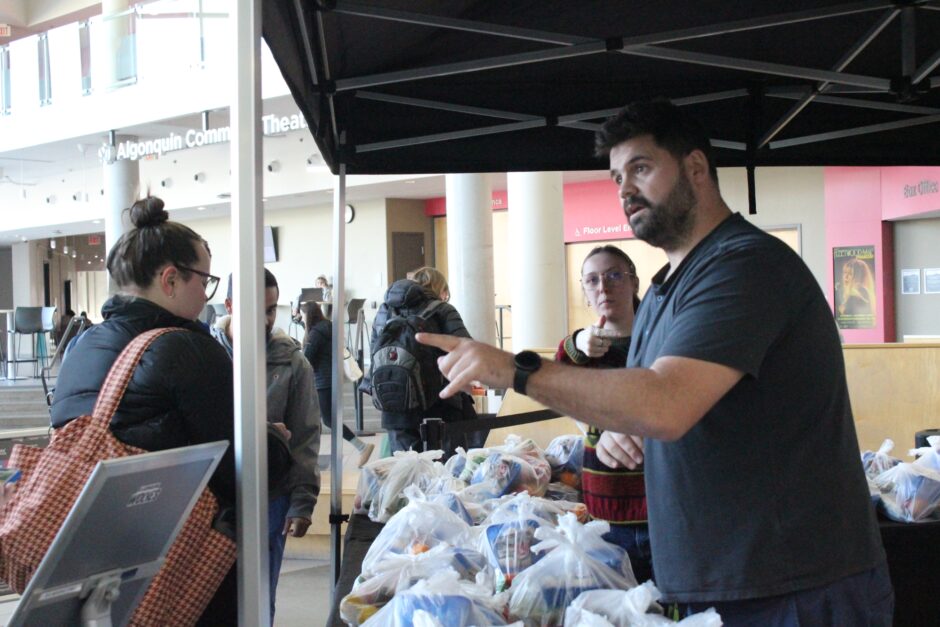
Beyond the flames: Algonquin’s future firefighters put community safety first
From jumping into cold water to exploring the dangers of impaired driving, Algonquin College’s future firefighters took community safety beyond the classroom on Nov. 16.
The annual Community Risk Reduction Show, held at the college’s Police and Public Safety Institute, featured about 11 interactive stations where pre-service firefighter students educated visitors about everyday hazards and emergency preparedness.
The event covered a wide range of topics, including fire prevention, first aid, road safety, mental wellness and water rescue.
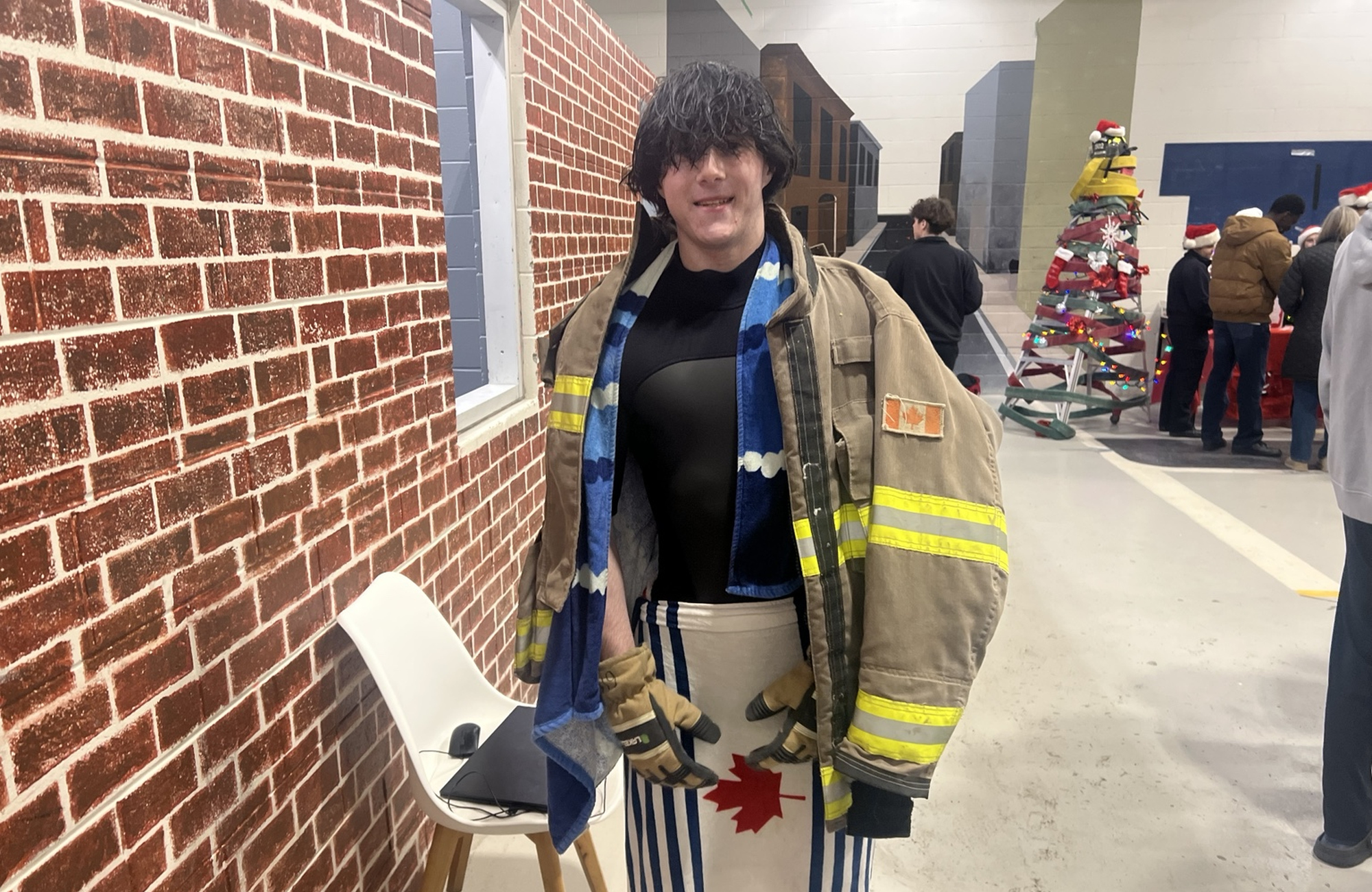
Among the demonstrations was an outdoor activity with A.J. Wilson, who jumped into a pool set up for the live demo as part the event’s practical activities.
“It’s cold,” Wilson said after entering the water.
Inside, students explored the importance of preventing emergencies before they happen.
Pre-service firefighting student Sarah Armstrong highlighted kitchen safety, explaining that cooking is the leading cause of home fires and home fire injuries.
“A lot of people don’t realize that using the wrong method to put out a fire can actually make it worse,” said Armstrong. “Knowing what to do before it happens is really important.”
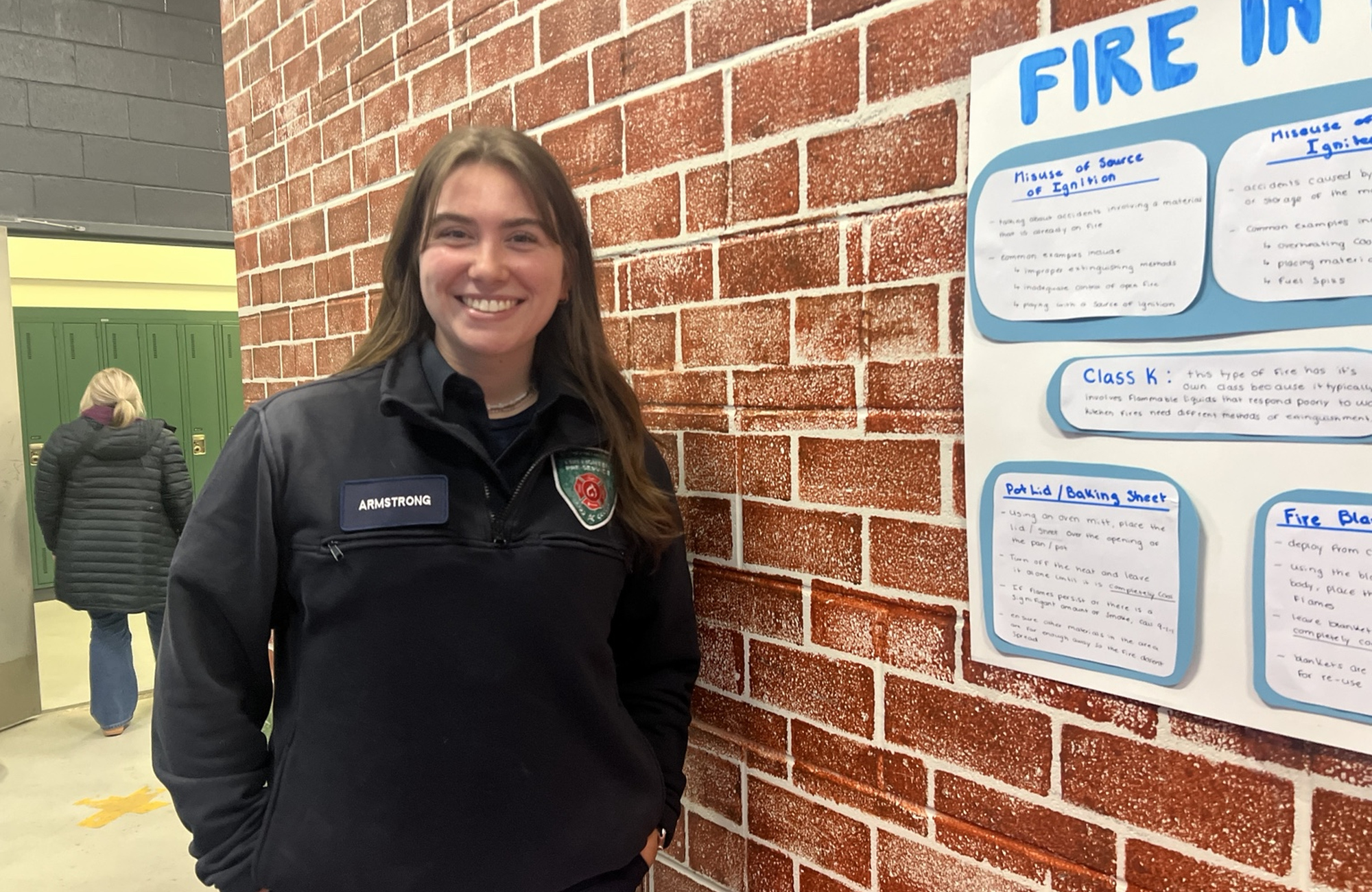
Her presentation demonstrated three methods of extinguishing different types of kitchen fires, including using a metal lid or baking sheet, a fire blanket and an appropriate fire extinguisher.
Armstrong also emphasized the importance of knowing which method to use, particularly when dealing with grease fires. Attempting to extinguish burning oil with water can cause the flames to spread.
While many homeowners regularly clean their kitchens, one potential fire hazard can go unnoticed: the range hood filter above the stove.
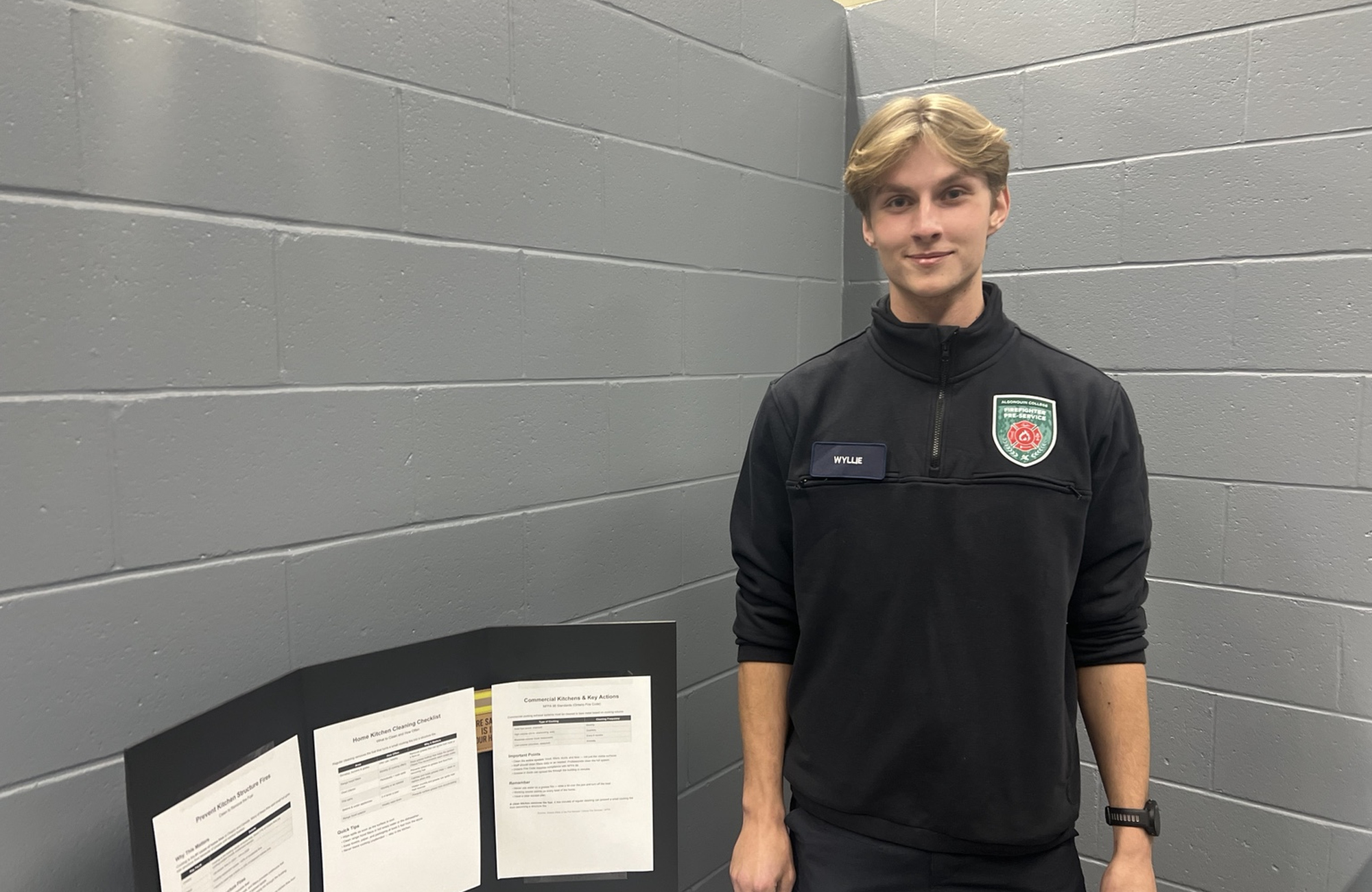
Pre-service firefighting student Dylan Wyllie demonstrated how grease and cooking residue can accumulate in kitchen ventilation systems, increasing the risk of a fire.
His station displayed kitchen exhaust filters to show visitors why regular cleaning matters. Wyllie recommended cleaning range hood filters at least once a month to prevent dangerous grease buildup.
“Better safe than sorry,” Wyllie said, emphasizing that taking a few minutes to clean could prevent more serious consequences.
“Better than risking it all,” he added. “Only has to happen once.”
Other stations encouraged visitors to think about the consequences of everyday decisions.
An impaired-driving activity gave participants an interactive way to explore road safety, while another presentation addressed knife safety and preventing injuries.
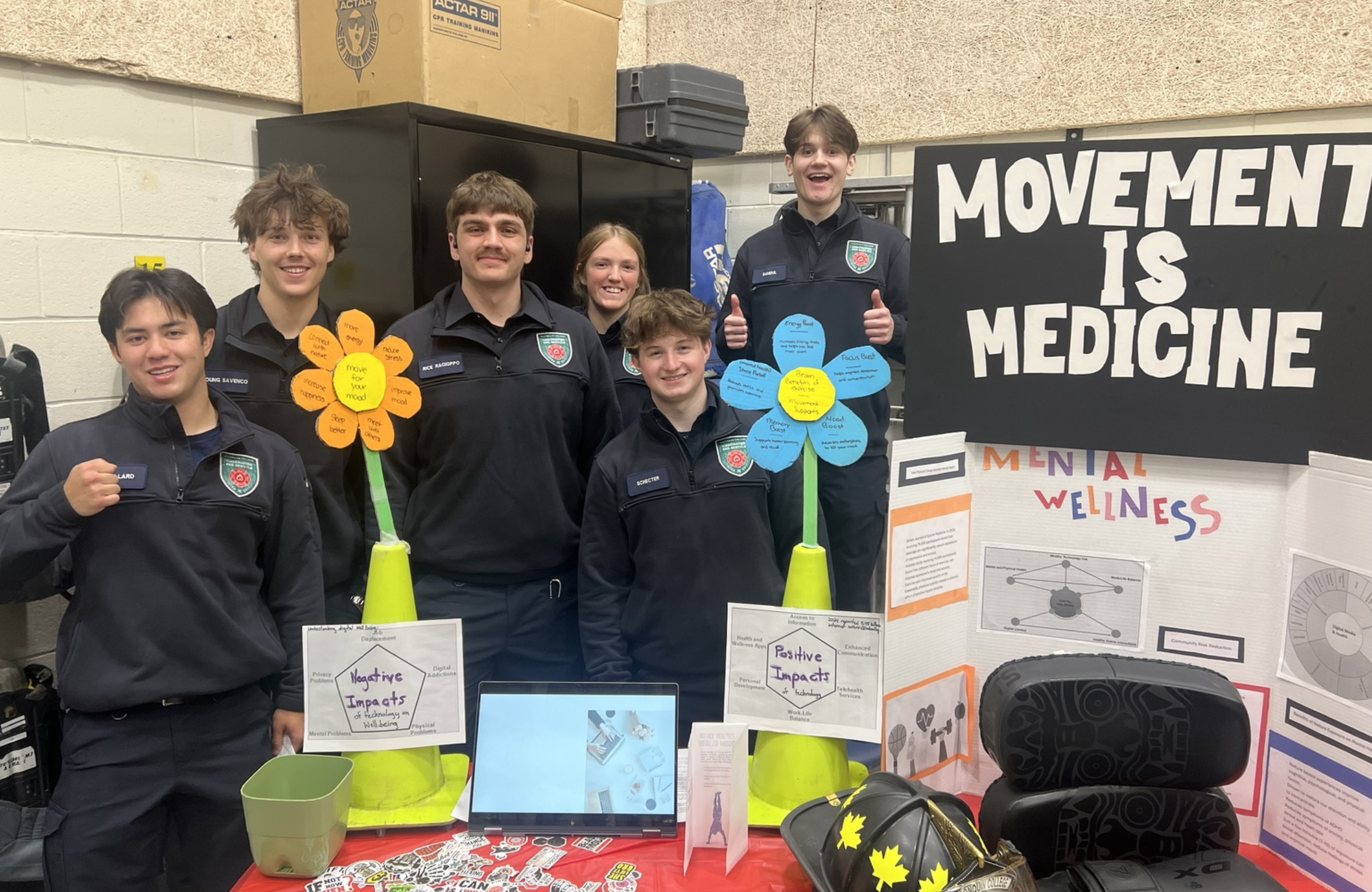
The Movement Is Medicine station encouraged visitors to spend less time on their phones and become more physically active, highlighting how reducing screen time and developing healthier habits can contribute to overall well-being.
Another presentation, Think Before You Do, addressed sexual health, consent and available community resources.
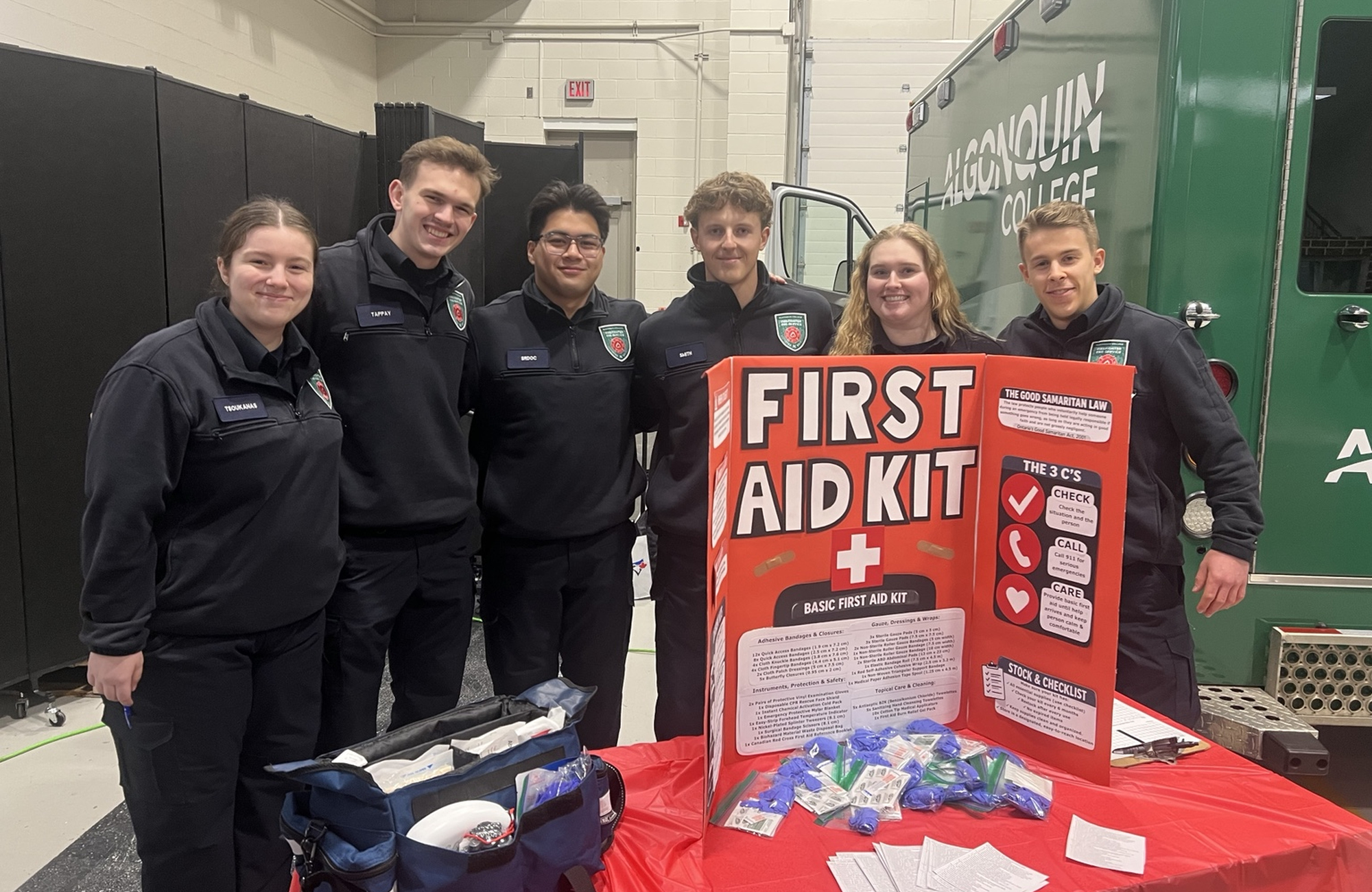
First aid was also a focus, with students displaying emergency medical supplies and information about responding to injuries.
A residential safety station emphasized the importance of working smoke alarms, household escape plans and knowing how to respond during a fire.
Students also explored whitewater rescue, displaying helmets, ropes and other equipment used in water emergencies while sharing information about potential hazards.
With the holiday season approaching, pre-service firefighter student Angelique Di Tillo and her group brought a festive touch to fire prevention.
Their holiday safety station featured decorations, informational displays and a Christmas tree constructed from firefighting hoses.
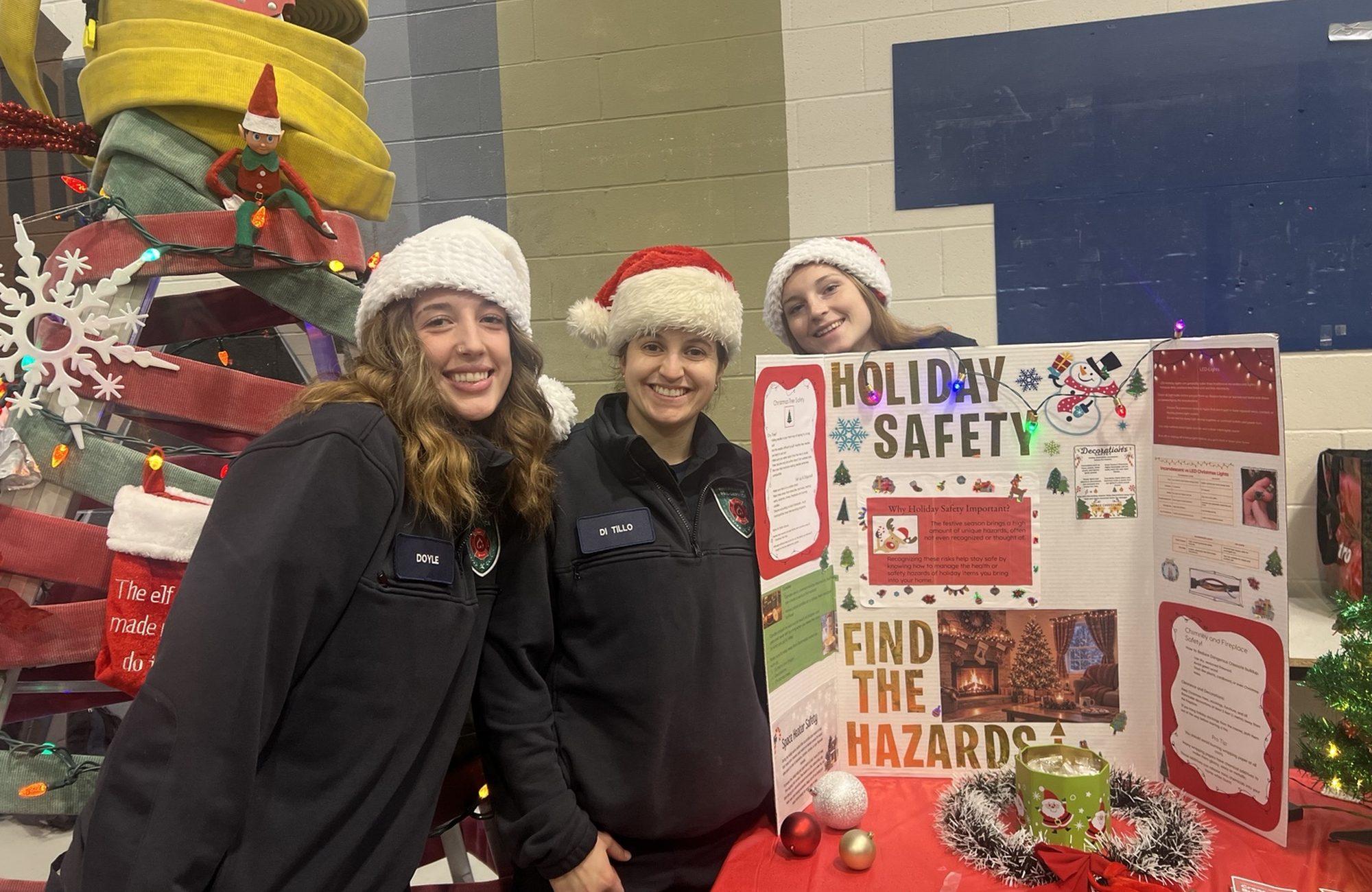
The presentation encouraged visitors to recognize potential hazards associated with holiday activities and decorations. It included an interactive display allowing visitors to feel the difference in heat between traditional incandescent light bulbs and energy-efficient LED bulbs, demonstrating how hot certain decorations can become.
“During the holidays, people get busy and sometimes overlook the little things. It’s important to be aware of potential fire hazards, especially with decorations,” Di Tillo said.
Di Tillo also highlighted the importance of electrical safety during the holidays, when overloaded outlets and improper use of extension cords can increase the risk of overheating and fires.
Professor Cheryl Hardwick of the pre-service firefighter program was also involved in the event, which provided students with an opportunity to apply their classroom knowledge while educating members of the community.