main

New representatives to join board of governors this fall

Rebecca Wakelin has won the election to be academic representative for the Algonquin board of governors, according to results posted on March 12, 2021. Cyan Shields won the position for […]
Rebecca Wakelin, the academic governor-elect of the Algonquin board of governors.

Rebecca Wakelin has won the election to be academic representative for the Algonquin board of governors, according to results posted on March 12, 2021.

Cyan Shields won the position for student representative by acclamation.

Their respective terms on the board start in Fall 2021.

“I am honoured to have been selected to represent the faculty voice on the board of governors,” said Wakelin in an email. “The trust placed in me to serve this important group is not something I take l lightly, and I am excited to continue the work of advocating on behalf of teachers and teaching at the college.”

Wakelin plans to consult with outgoing governor Enrico DeFrancesco and various other former and current governors.

“My next steps are to prepare for the fall by starting as I mean to go on – through conversation and consultation,” Wakelin said.

“I am a strong believer in the importance of immersing oneself in the historical narrative of a group before being able to contribute in any meaningful way and so this is where I intend to start.”

Scriptwriting’s Hothouse seedlings sprouting this spring

For the first time in Algonquin College history, three media programs – performing arts, scriptwriting and television broadcasting – have collaborated to host the first two of three segments of […]
Photo: Shannon Anderson, Carla Braga, Nickolas Bloom, Jonathan Jeffrey, Cassie-Hope Aubin, Shweta Corriea, Marzieh Kamyabi and Ola Hamouda.
Algonquin College scriptwriting students who took part of the first of three 2021 Hothouse events. Pictured from top left row to bottom right

For the first time in Algonquin College history, three media programs – performing arts, scriptwriting and television broadcasting – have collaborated to host the first two of three segments of Hothouse events. Continue reading “Scriptwriting’s Hothouse seedlings sprouting this spring”

A night of remote bingo – but make it dirty

Algonquin’s Students’ Association held its recurring dirty bingo night event where Bonnie Cooper along with seven other students won a $50 gift card to Venus Envy. Cooper, a bookkeeping and […]
Algonquin's event coordinator Allison Barnes with dirty bingo night host Krystal Caring PHOTO BY Allison

Algonquin’s Students’ Association held its recurring dirty bingo night event where Bonnie Cooper along with seven other students won a $50 gift card to Venus Envy.

Cooper, a bookkeeping and accounting practices student, is a regular at this event having attended for the past five years. For her, attending this event was one of the best parts of her month.

“Krystal and Zelda are so much fun and welcoming,” said Cooper. “You feel like you can let loose and be yourself when you’re around them.”

This years virtual bingo night was hosted by Marshall and Caring. The pair have been hosting dirty bingo night at the college’s Observatory for almost 10 years now.

The event, as per usual, was hosted by two well-known drag queens, Krystal Caring and Zelda Marshall. The pair have been hosting dirty bingo night at the college’s Observatory for almost 10 years now.

“I think it’s an escape,” said Caring. “For two hours you can just be free to laugh and have a good time.”

The two first met at a fundraiser for cancer research over 15 years ago. Marshall was first contacted by Algonquin’s event coordinator with a pitch on hosting a dirty bingo night and a couple of years later brought in Caring as a co-host.

The virtual event on March 9, was attended by around 40 students who from the comforts of their homes, played 10 rounds of bingo. But there was a twist. Instead of calling out the numbers and letters (for example: B27, or G55,) Marshall instead would say a dirty word beginning with the letters “b, i, n, g and o.”

The words ranged from different body parts to sexual activities and once you won, instead of yelling the traditional “bingo!” students would scream “I had an orgasm!”

It was a phrase Cooper had the pleasure of saying as she won two early rounds, walking away with two gift cards.

“I’m not sure what I plan to buy myself this time with my gift cards, but I know I will get some non-binary items for my child,” said Cooper.

Cooper is a regular at dirty bingo night having attended games for the past five years and walked out with two prizes on March 9.
Cooper is a regular at dirty bingo night having attended games for the past five years and walked out with two prizes on March 9. Photo credit: Bonnie Cooper

Samuel Thomson, a student in the fitness and health promotion program, also attended the event. Although he didn’t win this time around, he still enjoyed the night and has his “fingers crossed” for next time.

Thomson is another regular at dirty bingo night, having attended the events since September 2019.

“It’s been nice to have a less-than-serious event to go to during COVID-19,” said Thomson. “They held it in person every month, so it was awesome seeing they kept doing it so regularly with the shift to everything being virtual.”

Although getting to host the events virtually was exciting, both Marshall and Caring are eager to head back to the college where they can have a live audience to interact with and entertain.

“One thing I love to do is in games five and 10, where instead of using the ball cage, I move among the audience and get them to draw a card and they have to come up with a dirty, sexy word that starts with the letter that they drew,” said Marshall.

The dynamic drag queen duo are looking forward to hopefully hosting another dirty bingo night in person later this year.

Workshop aims to help employers create LGBTQ2+-inclusive workplaces

Algonquin College community members joined Pride at Work Canada’s Re-thinking LGBTQ2+ Inclusion Training workshop on Feb. 24 with the goal of learning about how to educate employees on LGBTQ2+ training […]
Jade Pichette is determined to implement engaging programs and inclusivity in the workplace

Algonquin College community members joined Pride at Work Canada’s Re-thinking LGBTQ2+ Inclusion Training workshop on Feb. 24 with the goal of learning about how to educate employees on LGBTQ2+ training and pitfalls.

The virtual event was hosted by Jade Pichette, Pride at Work Canada’s manager of programs, and Meike Jourdain, Pride at Work Canada’s programs assistant.

The session is the first in a series Pride at Work Canada is holding. The sessions focus on practical discussions to address partner needs.

The event kicked off with what Pride at Work Canada is about.

“Through dialogue, education and thought leadership, we empower employers to build workplaces that celebrate all employees regardless of gender expression, gender identity, and sexual orientation,” Pichette said. “We create safer, more inclusive workplace.”

Jourdain is a firm believer that education is a key tool when advocating for LGBTQ2+ issues.
Meike Jourdain is a firm believer that education is a key tool when advocating for LGBTQ2+ issues.

Participants learned about the history lesson of inclusion training, activist movements, the origins of LGBTQ2+ training and issues like unconscious bias training.

They were also asked to participate in a poll. It asked about when diversity inclusion training started generally or in your workplaces.

The results varied from the 1960s to 2020.

“The variety of your answers definitely shows the way in which diversity and inclusion training has had distinct phases, and is certainly changed a lot over the years,” said Jourdain.

Pichette recommended participants seek to tie training into the workplace in order to make LGBTQ2+ training a common practice.

“Look to be proactive, so that LGBTQ2+ training is considered normalized, is just considered part of the work environment just like any other training that you would need to go through,” said Pichette.

Pichette and Jourdain addressed the appropriate formatting of the training for the participant’s organization.

“We really need to look at what format are we using, because that also impacts how we can make that training effective,” Pichette said.

Solutions for these formats included in-person, e-learning, allyship training and integration into meetings.

Quinn Blue, Algonquin’s Wellness and Equity Centre coordinator who attended the event, had a positive impression of the session.

“They are very useful events, in a diverse sort of way,” Blue said. ” I think that they are always a good idea if the topics are relevant to different people.”

Several portions of the event resonated with Blue.

“I thought it was really useful that they brought up that training always needs to be linked to structural change,” Blue said. “And that there needs to be follow-ups to any training that is done. We really need to be intentional and careful about how and why we’re doing training.”

At the end of the session, participants were offered resources to help further and strengthen LGBTQ2+ training in their workplace.

Vet tech students enjoy hands-on learning on campus

When classes first went remote at the beginning of the pandemic in March 2020, Caitlin Harmison, a veterinary technician student, found it difficult to self-teach because she didn’t have the […]
Photo: Connor Black
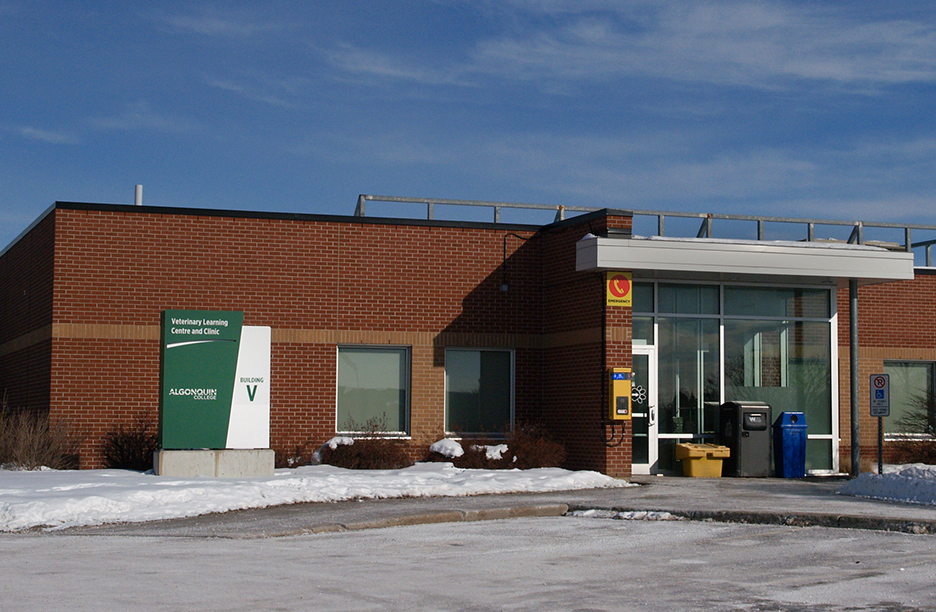
A student card is needed to access V Building and there is usually a security guard at the entrance.

When classes first went remote at the beginning of the pandemic in March 2020, Caitlin Harmison, a veterinary technician student, found it difficult to self-teach because she didn’t have the proper tools at home. She was left having to use her imagination to visualize what she would be doing.

The veterinary technician students returned to campus at the beginning of the winter term in January 2021. Harmison and her classmates are now able to continue with their on-site labs with strict rules implemented.

Harmison, 20, is in her final semester and her long-term goal is to work in rehabilitation after gaining enough job experience. The transition to learning online was hard at first for Harmison, because the program is very hands-on.

Fourth semester theory classes were moved to third semester, leaving Harmison with 12 theory classes to complete that semester.

“Now that we’re back in class it feels really nice again to be doing the hands-on things and actually performing the lab tests and the skills we were learning about last semester,” said Harmison. “It’s really nice to be back in the building. Everything feels a little bit more normal and it’s nice to see my friends again in person.”

Labs are an important part of the program as they are a hands-on learning experience that allows students to take care of animals — mainly cats — from the Ottawa Humane Society, according to Celina Boudreault, a student in the program.

Students learn how to monitor anesthesia, assist with surgery, administer medication and monitor heart rates through these labs.

To make sure in-person learning is conducted safely, students must wear masks, complete pre-screening on the AC Mobile Safety App and show their professor upon entering the classroom their results.

Students then put on a brand-new surgical mask, gloves, a plastic face shield and sanitize their hands. They must be in class 15 minutes early and have a 15-minute buffer period to leave the building after class.

For a little over a semester, all their classes had been theory and taught online.

This winter, being able to learn theory and lab work at the same time means a smoother learning process compared to what students went through last semester.

Chelsea Lackey, 19, a second-year student, is happy to return to hands-on learning.

“I really missed [the labs] last semester,” said Lackey. “I personally find it easier to learn when I have my theory and lab class at the same time.”

In Celina Boudreault’s case, the second-year student doesn’t find campus restrictions stressful, but getting back into a routine has been difficult for her.

“We were out of the lab and practice for almost a year, so getting back into things, the routine of labs and evaluations have been stressful,” said Boudreault, 25. “But our days aren’t too bad.”

As for animals being reintroduced to the program and how that affects the students, Boudreault says a few things have changed.

“Before we were able to have two people in each area,” Boudreault said. “Two people would work on the feeding, two people would do the washing, two people would clean the cages, but now it’s one person per area. I think once we get used to it we should be good.”

Overall, the students are grateful to be back on campus.

“It’s an adjustment, as is everything this past year. You kind of have to adapt and overcome,” said Boudreault. “We’re definitely looking forward to getting more lab practice time and working towards graduation.”

Researchers hope to survey over 600,000 Canadians who have received the Health Canada approved vaccine

Local News Ottawa Citizen: A virus targeting horses has affected a stable in Luskville. The first symptoms appeared at the beginning of the month. Eddie, a five-year-old quarter horse, was […]

Local News

Ottawa Citizen: A virus targeting horses has affected a stable in Luskville. The first symptoms appeared at the beginning of the month. Eddie, a five-year-old quarter horse, was the first one to show symptoms. Out of the 20 horses which live in the stable, it has infected 18, and two, including Eddie, have died. This virus is comparable to COVID-19, but as the co-owner said, horses cannot wear masks to protect themselves.

National News

CTV: The Canadian National Vaccine Safety Network is launching a survey to find out about any adverse reactions to the COVID-19 vaccine. Researchers hope to survey over 600,000 Canadians who have received the Health Canada approved vaccine. Participants will be asked to fill out three surveys with the last one being six months after their second dose and detailing any problems they experienced. Researchers will conduct a second survey on 50,000 participants who will not receive the vaccine and compare the data. The goal of this research is to provide assurance that the vaccine is working as expected.

International News

CTV: A U.S airstrike took place in Syria on Friday as a way for the Biden administration to send a message to Tehran. The airstrike targeted one of the most powerful Iran-backed militias in the Middle East known as Kataeb Hezbollah, or the Hezbollah Brigades. The attack sends a message that President Joe Biden will be tough on Iran, while leaving the door open for talks. Another purpose of the attack is to prove the U.S will protect and defend their soldiers in the Middle East. It is unlikely that this attack will trigger a wider escalation.

Culinary management grad’s restaurant grows during pandemic

A class assignment on traditional Jamaican patties ignited a light for Jacob Henry, a culinary management grad, who now successfully runs a restaurant in Ottawa’s west end. “I brought a […]
Photo: Gabrielle Nadeau
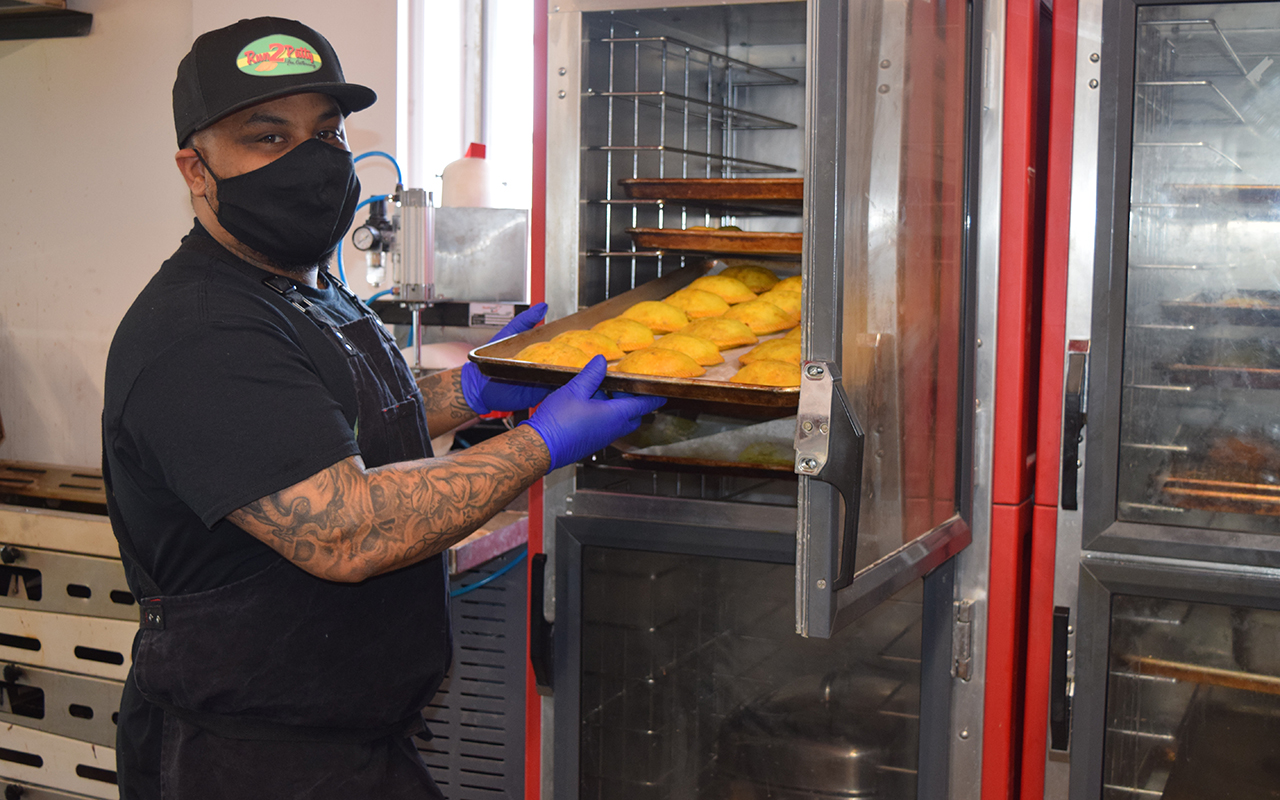
โ€œI come here and whether I make a dollar or not I am just happy to be doing what I love," said Jacob Henry.

A class assignment on traditional Jamaican patties ignited a light for Jacob Henry, a culinary management grad, who now successfully runs a restaurant in Ottawa’s west end.

“I brought a handmade batch into class for everyone to try,” Henry said. “After that, they were a huge hit.”

Henry, 35, started his business, Run2Patty, while he was ending his studies. Since receiving his diploma in 2019, the business has only continued to grow.

Henry always knew he was good at cooking, but was never sure what it might become. With the push of friends and family, he decided to pursue his dreams.

Henry is of Jamaican descent and grew up eating Jamaican-style cuisine, thus inspiring the theme of his restaurant today.

What began as a small pop-up shop and catering business out of Henry’s home is now a successful local restaurant located in Westboro offering take-out services.

“During my third semester, I started doing pop-up stands here and there, and catering events for friends and family selling my Jamaican patties,” said Henry. “I did the weekly pop-ups every Thursday and the product sales started getting out of control. We had huge lineups of people every week.”

The successful business Henry runs today wasn’t the original plan of pursuit while in culinary management. Never did he think the Jamaican patty business would have taken him this far.

“In one of the course programs, they have international guest chefs come in to teach their classes, and I was one of them, while still being in the program,” he said.

“By third semester I had already been on CBC news and Algonquin was buying the patties off of me,” he said. “By my fourth semester, I had taught a few classes—one at La Cité and a few at Algonquin.”

Run2Patty is a Jamaican-style restaurant that offers a variety of handmade dishes from Jamaican patties, oxtail platters and fried chicken, to lobster, shrimp, calamari and more.

“A lot of love goes into the cooking process,” said Henry. “All the Caribbean dishes are popular, but the jerk chicken dish is the top seller.”

With the transition from a student to chef—although the college had prepared him—there was still growing to be done as a business owner.

While many businesses have struggled through COVID-19, Henry has the lockdown to thank for leaving him with no choice but to open a take-out business.

“Originally I didn’t plan on becoming a restaurant,” he said. “I enjoyed just catering, but once COVID-19 hit all of my catering events were cancelled. The lockdown helped our sales grow, since we offer takeout and other businesses had to close, we saw a rise in our numbers.”

Henry had always enjoyed cooking and Algonquin College helped guide him onto the right track.

“Algonquin gave me the motivation and the inspiration to start my business,” said Henry. “Just being in there and learning pushed me to want to do what I’m doing even more than I thought possible.”

“There are hard days where you worry that your business won’t succeed, but you just have to keep pushing, if this is what you truly want, don’t let anything stop you.”

Mood Check: how do you feel about midterms and the midterm break?

With midterm break and many midterm assignments now in the rearview mirror, this can either be a time of great stress or great relaxation for Algonquin students. On Friday, Feb. […]
Photo: Connor Black
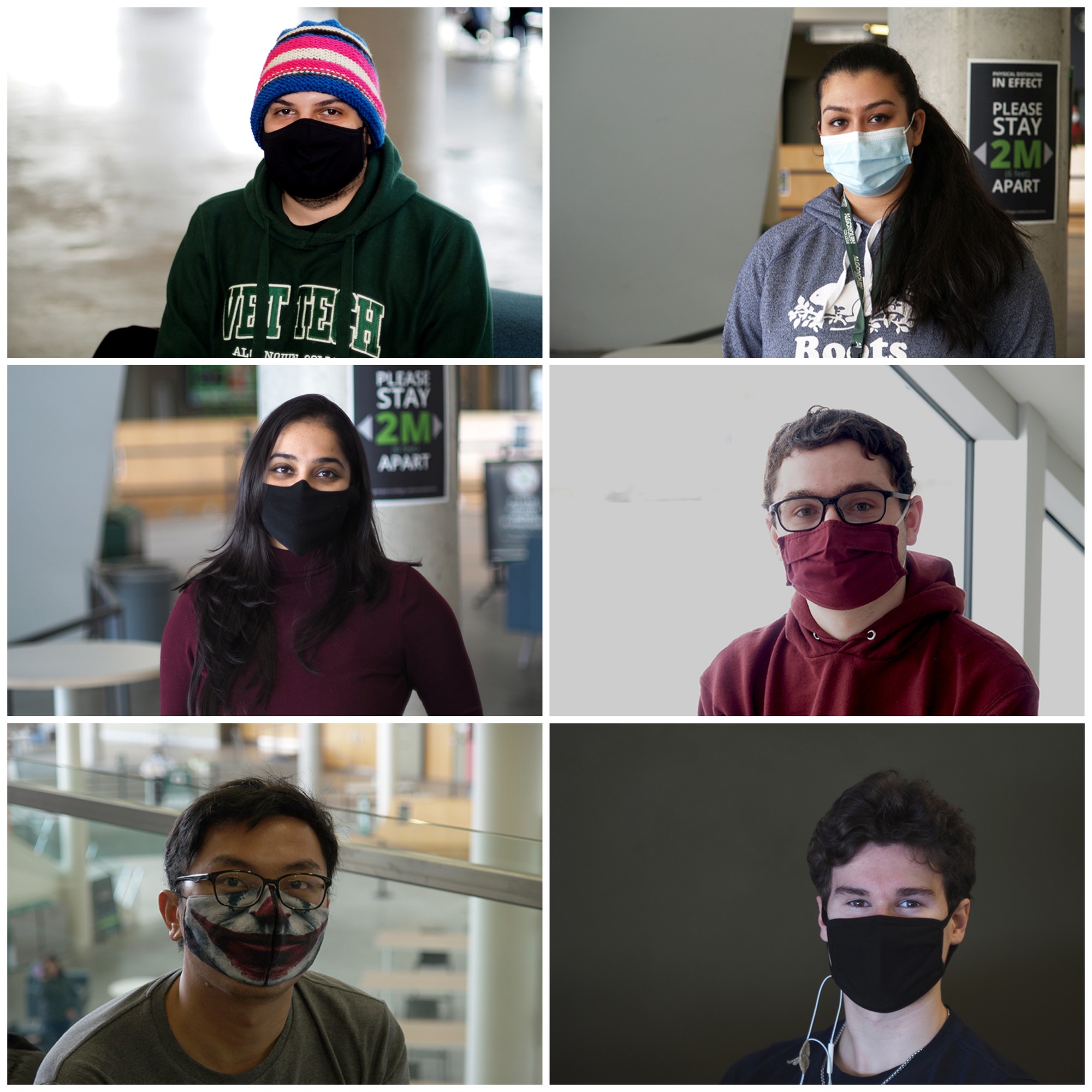
How are Algonquin students feeling about midterms?

With midterm break and many midterm assignments now in the rearview mirror, this can either be a time of great stress or great relaxation for Algonquin students.

On Friday, Feb. 26, the Algonquin Times asked students on the Woodroffe campus how they felt about their midterm assignments and about their plans for the midterm break.

Here’s what students had to say.

Photo credit: Connor Black

Name: Brandon Saikali

Program: Veterinary technician program, second semester

Thoughts on midterms: “They were not too bad. They were a bit of a mess but not too bad. I have two done and two after the break. I’m not too stressed.”

Plans for the break: “I plan to stay at home and relax. I don’t want to leave the house if I don’t have to.”

Photo credit: Connor Black

Name: Nureet Nureet

Program: Dental hygiene program, third semester

Thoughts on midterms: “They are very overwhelming. Way more stressful than they were before COVID. We have less time on our tests and it’s just harder to catch up.”

Plans for the break: “I’ll be studying for the entire break. Right now for me there is no such thing as a midterm break.”

Photo credit: Connor Black

Name: Smridhh Kaur

Program: Pastry arts management program, fourth semester

Thoughts on Midterms: “They weren’t as hard as they were before but they were definitely more stressful.”

Plans for the break: “I’m definitely trying to relax. I’m also going to Waterloo for the week.”

Photo credit: Connor Black

Name: Tyson Djan

Program: Construction engineering technician program, third semester

Thoughts on midterms: “I am incredibly stressed. I have had lots of assignments and tests. I find that online school is harder because it’s harder to talk to the prof to ask them specific questions.”

Plans for the break: “Lots of studying and working on assignments.”

Photo credit: Connor Black

Name: Michael Glass

Program: Paramedic program, fourth semester

Thoughts on midterms: “I don’t have any midterms right now because all of our classes are self-directed. Normally fourth semester would be mostly in-field work but the start of that was pushed back with COVID-19.”

Plans for the break: “Because my classes are self directed I don’t really get a midterm break either. I have some case study assignments I’ll be working on and I have a hiring test with Ottawa Paramedic Service next week.”

Name: Tristan Maude

Program: Tourism – travel Services program, fourth semester

Thoughts on midterms: “I got pretty lucky, none of my classes this semester have midterms.”

Plans for the break: “I just want to relax and take a break from working.”

Supportive culture helped Algonquin College win top employer award, staff say

When film and media production professor and program coordinator Jeremy Atherton heard the news of Algonquin College being named a National Capital Region’s Top Employer for the eighth year in […]

Photo: Connor Black
Algonquin College currently employs 1,387 full time and 2,714 part time people.

When film and media production professor and program coordinator Jeremy Atherton heard the news of Algonquin College being named a National Capital Region’s Top Employer for the eighth year in a row he wasn’t surprised.

“We’re a creative bunch,” Atherton said. “We don’t always take a straight line to the finish and the school has always been supportive of us.”

Although it’s been just over a month since the college was awarded on Feb. 2 in a special magazine feature in the Ottawa Citizen, the feelings of good cheer about the news continue.

Canada’s Top 100 Employers is an annual competition organized by Mediacorp Canada Inc. which awards exceptional workplaces on both a national and regional basis.

Established in 2006, the National Capital Region’s Top Employers 16th annual award recognizes employers in the Ottawa-Gatineau metropolitan area that led their industries in offering exceptional places to work.

“This is an exciting and meaningful achievement for Algonquin,” said Diane McCutcheon, vice president of human resources. “One of the foundational goals in the College’s strategic plan is to be recognized as an exceptional place to work by our employees – and that is precisely what this award is about.”

Employers are evaluated using the same eight criteria as the national level: physical workplace; work atmosphere and social; health, financial, and family benefits; vacation and time off; employee communications; performance management; training and skills development; and community involvement.

“The team here is amazing, they trust their teachers and give them the independence to deliver their courses how they see fit, but also provide support when needed,” said Alex Hadjisophocleous, a part-time personal finance teacher in the business administration program. “Overall, I think that the organizational culture plays a big part in making Algonquin College a top employer.”

Reasons for Algonquin College’s recognition include the various campaigns it participates in such as its Myself Today campaign, offering a mental health practitioner benefit of $2,000. In 2020 Algonquin expanded the Dog Squad, allowing employees to bring their furry friends to campus to alleviate student and staff stress.

“They’re required to meet very strict standards, then they get to be part of the Dog Squad and they can come in and really help with the mental health and wellbeing of our employees,” said McCutcheon.

Other reasons for the win include the college’s family benefits and its employee retirement planning.

Algonquin’s family benefits include a full year of paid leave for new mothers and parental leave ranging from 35 to 37 weeks for fathers and adoptive parents. Algonquin also offers parental leave extensions through unpaid leaves of absence, and onsite childcare upon return.

The college offers phased-in work hours for employees nearing retirement, on top of retirement planning assistance and a defined benefit pension plan.

In response to the COVID-19 pandemic, while unemployment plagues our region, Algonquin introduced an employee toolkit to provide resources and support to staff while adjusting to remote delivery.

“Everyone worked together to make the transition as smooth as possible,” said Hadjisophocleous. “The employee toolkit has been very helpful and continues to evolve over time.”

Algonquin College will undoubtedly be in the running for a ninth consecutive National Capital Region’s Top Employer award come next year.

“Algonquin truly helps its people reach their potential,” said McCutcheon. “I have experienced that firsthand.”

College still facing a $19-million deficit due to COVID-19

The college continues to project a $19-million financial deficit, according to the most recent meeting of the Algonquin College board of governors. Based on discussions at the board meeting, which […]
Photo: Andrea Sternberg
The college's financial situation and its response to COVID-19 were the most prominent subjects discussed at the meeting.

The college continues to project a $19-million financial deficit, according to the most recent meeting of the Algonquin College board of governors.

Based on discussions at the board meeting, which took place on Feb. 22, 2021, the college expects to increasingly rely on international students to solve its troubled financial situation caused by the pandemic.

The main cause of the financial woes is the decline in student enrolment since the start of the pandemic.

There are currently 14,577 domestic students and 3,367 international students registered at Algonquin College, totalling 17,944 according to the numbers presented by the registrar’s office at the board meeting.

To put that into perspective, in February 2020, the college had 19,759 students according to the minutes of February 2020’s board meeting.

This is compounded by the fact that the college is unable to raise tuition on domestic students, as there is a province-wide tuition freeze that will remain in effect for another year. It is expected that this freeze will end next year, enabling college authorities to increase tuition for domestic students by three per cent between 2022 and 2023.

The board expects the only source of revenue growth to stem from a growth in international student enrolment. The Canadian government’s decision to continue to offer work permits to students learning remotely from outside of Canada means the college expects growth in international enrolment to be greater than expected.

The premium paid by international students is going to grow by one per cent this year, an equivalent of $56.83 per student according to Krista Pearson, the registrar at Algonquin College.

Financial difficulty has affected other sections of the college as well, according to the appendixes of the board meeting’s minutes.

The Food and Conference Services food sales revenue has declined by $3.3 million since the advent of the pandemic.

Residence revenue has declined by $3.2 million due to the decrease in student residence occupancy. The Algonquin College residence is currently only at 45 per cent of its normal capacity.

The Algonquin College bookstore revenue declined by $387,000 has a result of the loss of sales of things that aren’t books.

The print shop revenue declined by $263,000.

College executives tentatively expect campus to return to normal operations by the winter term in 2022, according to the meeting. However, it’s far too early to make any concrete plans due to the unpredictable nature of the pandemic.

Algonquin Times podcast

Stay Informed

Sign up for our newsletter

Subscribe

* indicates required