main

Public relations program launches campaign for youth mental health

Chloe Cleroux, 26, knows adversity. For several long years she was almost swallowed up in the bowels of an eating disorder along with its side dishes, depression and anxiety. The […]
Photo: Supplied by Chloe Cleroux
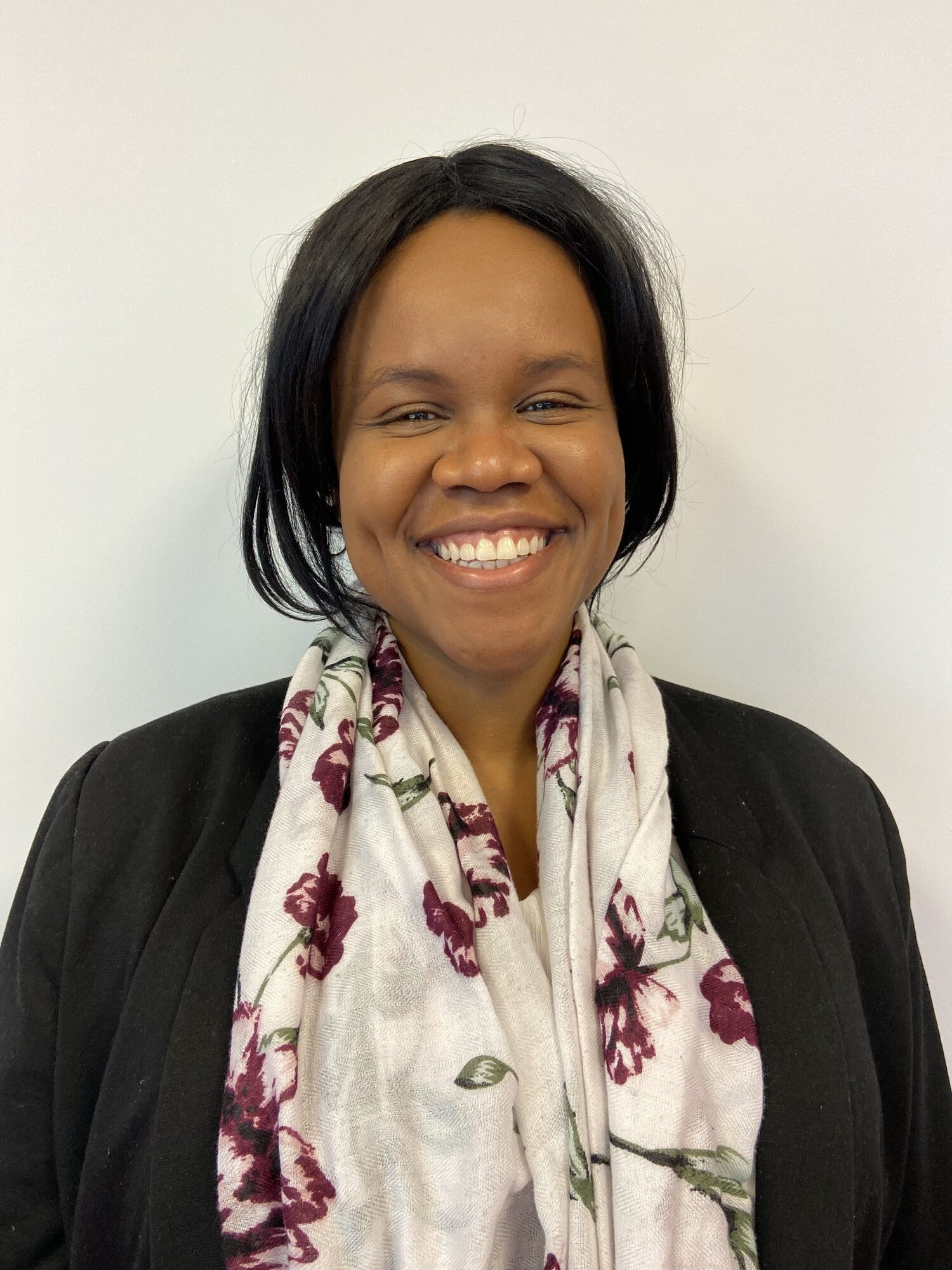
Chloe Cleroux, 26, is a first-year student in the public relations program. She says self-compassion is a key to healing.

Chloe Cleroux, 26, knows adversity.

For several long years she was almost swallowed up in the bowels of an eating disorder along with its side dishes, depression and anxiety.

The all-consuming need to be a size zero and the link she had made between being thin and having friends insidiously overtook her.

“I was in very poor health,” she said. “I was so desperate to get help, but nothing was available.”

Affordable support resources were scarce. The wait time for an Ottawa treatment centre was one-and-a-half years. The only private residential facility in Ontario at that time was out of her reach financially.

These experiences all feed into why Cleroux feels so moved to support her public relations classmates’ bid to raise money in support of youth mental health.

“People don’t have the time to sit with being suicidal or being sick,” she said.

The goal of the 2021 ACPR campaign Brighter Days: Investing in mental health together “is to end the stigma around mental health and pave the way toward a better future for youth,” said their website.

Specifically, students hope to raise $20,000 this month for the Dave Smith Youth Treatment Centre, which offers free residential and out-patient support to youth experiencing mental health challenges and substance abuse as well as to their families.

“They don’t have a long wait list or any wait list at all,” said Cleroux.

Their hard work culminates in a combination of virtual and in-person events launching March 20 and running throughout the month of April.

The offerings are diverse – from a 100-hour twitch stream featuring live music and e-sports, to art, workouts, yoga, cooking, an escape room and a beer and golf tournament.

Cleroux’s team is hosting An Evening Among the Stars. Its kick-off event on March 24, will offer information about tarot and horoscope readings and include a horoscope, birth chart and tarot card reading for “one lucky participant.” They will invite participants to purchase tickets and book appointments throughout the month of April 2021 for personal, couple or group readings with a professional.

Chloe Cleroux knows resilience too.

“I’m at a very good point in my life right now,” she said. “I am on medication. I’m completely symptom-free. I’m in a very good headspace.”

She said a key to her healing was self-compassion no matter what else was going on at any given moment.

Cleroux knows there’s no quick fix to healing from an eating disorder, or any other mental health concern. When asked what advice she would give to others she replied without hesitation.

“If I had any take-away with mental illness and what I went through, it’s that it gets better,” she said. “It really does. Just keep going.”

The ACPR program has been involved with charity campaigns for over 30 years and has raised over $400,000 for local and national charities.

Student is a viral TikTok star who has mastered her Tinder game

Public relations student Kennedy Calwell is rising to fame through TikTok with over 600,000 views on a single video. At the end of February, Calwell decided to make a unique […]
Photo: supplied by Kennedy Calwell
In addition to her TikToks, Kennedy Calwell has dabbled in comedic YouTube videos with her brother.

Public relations student Kennedy Calwell is rising to fame through TikTok with over 600,000 views on a single video.

At the end of February, Calwell decided to make a unique Google form to send out to her dating app matches, with specific questions to elicit more personal connections.

“The conversation on dating apps is so boring, I wanted to make a Google form with information that I think is most important,” said Calwell. “Asking people ‘what do you do for work?’ and ‘where do you go to school?’ doesn’t show your true personality, but my Google form, that’s where the good stuff is.”

In her first video posted March 1 she explains the questions she chose to include in her survey. These questions range from inquiring about her matches’ favourite Taylor Swift songs to asking about their preference of puffy or crunchy Cheetos.

Calwell came up with the idea after seeing other people on TikTok send out personalized forms to their dating app matches.

When she received 100 responses to the form, she decided to share the experience on her TikTok.

The video went viral and sent many people to her comments to request a second part where she could show some of the answers from people who responded.

“I thought it was crazy how many views I was getting and people were begging for me to show the responses,” said Calwell.

Her videos were popular enough to receive attention from the UK Sun which wrote an article about Calwell.

“I got a DM on TikTok from a friend saying they saw the article about me in the Sun,” said Calwell. “And I said, ‘you saw the what?’”

Calwell has been sharing her TikTok fame with one of her professors, Stephen Heckbert, who says he is proud of her achievements and the article written about her, along with her school and work ethic.

Heckbert has expertise in the social media and communications field.

As Calwell is currently completing her field placement in the music industry, Heckbert said she has a bright future ahead.

“Kennedy is super funny, she’s entertaining, she’s a character,” said Heckbert. “I think she could do something with it [the TikTok’s] but I also know that she’s incredibly intelligent and I suspect she’ll want to do more than simply being a TikTok personality.”

For her second video, Calwell organized all of the responses she received into a spreadsheet and categorized the responses into three categories.

“If I liked their answers and think I would want to date them I would make them green. If I wanted to un-match them and never talk to them again, I would make them red,” said Calwell. “And then yellow they could be fun for a while — they could be dangerous but maybe good.”

Calwell decided to test out her theory in person by accepting a date.

“I wanted to go on a date with someone from each colour to see if I was right in my judge of character. I’ve only been on one date, which was with someone in the yellow category,” said Calwell. “The form helped so much because we immediately had stuff to talk about — there was no weird awkwardness.”

Going forward, Calwell has plans on how she could continue the series.

“I might make another TikTok because I keep thinking of more questions I could put on the form,” said Calwell. “I kind of want to document the process. I was filming the date I went on, so I think I might sneakily film some stuff from each one of the dates I go on and maybe make that into a TikTok.”

Kennedy Calwell’s TikToks can be found on her page @kennedyallegedly

Students react to the Meghan and Harry interview

People around the world got to peer into the lives of the royal family on March 7 when Oprah Winfrey interviewed Megan Markle and Prince Harry to air dirty laundry […]
Algonquin College students had diverse views on what Meghan and Harry had to say during their TV interview.

People around the world got to peer into the lives of the royal family on March 7 when Oprah Winfrey interviewed Megan Markle and Prince Harry to air dirty laundry about the royal family.

Markle accused the royal family of several things, including racist behaviour towards their son Archie. She also claimed that at times she “just didn’t want to be alive anymore,” and she felt “trapped.”

In light of this interview, Algonquin Times reporters asked Algonquin College community members on March 12 about the interview.

Names: Alex Adams, left and Daniel Osborne, right

Program: Film and media production

Adams: “I believe in what Meghan said in her interview. There’s no way she would just make stuff up and royal family does seem kind of shady. Prince Harry did the right thing with moving out of a house where his wife was being disrespected.”

Osborne: “I think Prince Charles could have done a better job. I mean at the end of the day they are a family and cutting ties and communication with his son is not the best move. Putting money and prestige aside, if Harry wasn’t feeling happy in his own house, I think it was a good decision of moving out. At least now the couple can actually enjoy their freedom and do what they want.”


Name: Yoshabel Decime

Program: Mechanical engineering

“I don’t think she was speaking against the Royal family — it was more like her [Meghan] sharing her experience in that family. I think it was a good move from Meghan and Harry to leave the family and it seems like they are crying out for help like they don’t have any allies or anybody to help them and that too publicly.”


Name: Carter Johnson

Program: Film and media production

“I actually read an article by an analyst and it says that her [Meghan’s] body language indicated that she was mostly telling the truth. I don’t see a point why she would be lying about her mental health and what goes on behind the closed doors of royal family.”

Name: Thomas Duffy

Program: Culinary skills

“Honestly, I think it is completely correct. She has the right to talk about them however she wants. If it bashes them, good on her. As for Harry, he was just doing what he should do.”


Name: Michaela Barron

Program: Nursing (BCSM)

“It was a right and bold move on their part. She deserves to have her voice heard and people should know what’s actually going on in the institution. I think the Royal family has a high level of control over the media in England and if they want something to be kept quiet, it will never reach to people. The entire monarchy was a firm believer of colonialism, so it’s hard to believe that there were no comments on Archie’s skin colour. Harry made a right move by leaving his family to protect his wife — it was the only ethical move.”


Fall term update from the college’s president

Many post-secondary schools in Ottawa are already deciding on whether their students will return to real-life classes this fall, even if the Ontario Ministry of Education hasn’t yet released any […]
Photo: Connor Black
Students will return to on-campus learning in the fall term of 2021 depending on their program.

Many post-secondary schools in Ottawa are already deciding on whether their students will return to real-life classes this fall, even if the Ontario Ministry of Education hasn’t yet released any statements.

On March 11, Claude Brulé, president and CEO of Algonquin College, sent an email announcing the college will continue to follow the Fall 2021 planning.

This means that depending on their program, students will either have all their courses virtually or will have learning activities on-campus.

University of Ottawa students will return to campus for the fall term “with an increased number of courses to be delivered in person or using hybrid formats,” wrote a university spokesperson. They issued an update on March 11, on their website.

The university will add equipment in their classrooms to give students the choice of either attending in person or via videoconferencing.

La Cité has not announced its plans for the fall.

Carleton University will have a “gradual and safe” return to campus this fall, according to a letter posted to the community on March 2.

“In all likelihood, large classes will continue online for fall 2021, but we anticipate that it will be possible to offer a significant proportion of smaller classes, labs and tutorials in person or in a blended format,” said Benoit-Antoine Bacon, president and vice-chancellor, in the post.

At Algonquin College, Brulé also mentions in the email the indefinite closing of the food services at the Ottawa campus on May 1, 2021. However, food will be accessible at Student’s Association locations.

Brulé says in his email that in between the three campuses, the college has three active COVID-19 cases (not transmitted on campus) which are currently isolated.

“Of course, the impact of COVID-19 goes far beyond any one individual or institution—it has changed the way we live and work, our families and friendships, our personal and professional lives, our mental and physical health,” wrote Brulé. “As we recognize the year behind us, we can also cautiously look ahead to a future time when in-person connections and group activity are again common—and where we can all play a role in the reconnection and rejuvenation of our campuses and communities.”

Sports and fitness activities continue on campus – safely

Although the city is experiencing another three-week lockdown, implemented on March 19, the sports facilities on Woodroffe’s campus will continue with some minor changes.
Photo: Mohit Kumar
Rhutvik Katam polishes his badminton skills in Algonquin's gym.

Although the city is experiencing another three-week lockdown, implemented on March 19, the sports facilities on Woodroffe’s campus will continue with some minor changes. Continue reading “Sports and fitness activities continue on campus – safely”

Accelerated personal support worker program fully funded by province

The new accelerated personal support worker program (PSW) announced for the Ottawa campus of Algonquin College and fully funded by the Ontario government is already proving to be popular. At […]
Photo: NOMO Films
Jennifer Muñoz, coordinator of the personal support worker program, has been busy fielding potential student questions since Algonquin opened registration for the accelerated PSW program.

The new accelerated personal support worker program (PSW) announced for the Ottawa campus of Algonquin College and fully funded by the Ontario government is already proving to be popular.

At this time there are two start dates both with a maximum capacity of 100 students.

As of the date of publishing, the May 10 start date so far has 253 applicants, and the June 14 date has 187, according to the registrar’s office.

Jennifer Muñoz, RPN, is the PSW program coordinator at the Ottawa campus. She has been busy fielding questions about the accelerated program since registration opened March 8.

“The pandemic has highlighted the roles of a PSW,” she said. “PSWs are essential for the quality of care of our residents.

“I just want our students to know that they are so essential to the team in general,” she said. “To the family members, to the residents. Honestly, I don’t know where we would be without them.”

She said PSWs should feel proud of their role.

“It’s so demanding physically, emotionally and I completely admire PSWs from the bottom of my heart,” she said.

Algonquin College and all 24 public colleges in Ontario are offering this program – part of the province’s initiative, A better place to live, a better place to work: Ontario’s long-term care staffing plan.

The overarching intention of the plan is to “modernize” the long-term care sector by hiring and retaining more staff, improving working conditions and enhancing leadership, according to the report on the ministry of health and long-term care’s (MOHLTC) website.

“At the centre of this plan is the government’s commitment to increase the hours of direct care for residents to an average of four hours per day over four years,” said the report.

To reach this goal, the sector will need to fill more than 27,000 “full-time equivalent” jobs. Partly, this includes “fast-tracking PSW education,” said the report.

Enter Algonquin College and all public colleges in Ontario.

The accelerated program allows participants to graduate with full credentials within six months, according to a Feb. 24 press release by the college.

The program is free for participants. Expenses covered include tuition, ancillary fees and other program-related costs.

To give a sense of what that means, the college’s online tuition and fees estimator calculates the Fall 2021 cost of tuition for the PSW program to be $3,901.34.

“Funds will also be available for required incidental fees, including electronic devices for online learning, textbooks, transportation, child-care and costs related to clinical placements such as uniform, care-setting-compliant footwear, immunizations and vulnerable sector police checks,” said a spokesperson for the MOHLTC in an email.

“The number one reason why I love my job and to work with the geriatric population is because of my upbringing,” said Muñoz. “My grandparents lived with me for 20 years while I was growing up. They are originally from the Philippines. They raised me for a good 20 years.

“I grew up in a household where you respect your elders. They taught me a lot about values and what it means to take care of each other. Not just as a family but as a community.”

Event management students host virtual fundraiser for Candlelighters

The event management program wants you to catch a flight with them as they explore craft beer during an airline-themed fundraiser online March 20. The fundraiser is benefiting the Candlelighters, […]
“We were thinking about what we were passionate about and what are things we would do in our daily lives in a non-COVID place,” says Middlé Lemoine.

The event management program wants you to catch a flight with them as they explore craft beer during an airline-themed fundraiser online March 20.

The fundraiser is benefiting the Candlelighters, a childhood cancer support program.

The students decided on an airline theme to play on the flights of craft beer you would sample if you were at a brewery.

Middlé Lemoine, 33, a student in the event management program, has already completed post-grad work and was looking to develop her skill set in events.

“We were thinking about what we were passionate about and what are things we would do in our daily lives in a non-COVID place,” said Lemoine. “We would be going out with our friends, we would be going to pubs, we would be experiencing new things around the city.”

Once the drink theme was chosen, the team quickly came up with a full itinerary of remote activities for participants to enjoy from the comfort of their own homes.

The event will start with a masterclass taught by a cicerone, a second-level beer expert, who will teach attendees about the different components of beer.

Geneviève McAllister
One of the ways the charity supports families is by offering to pay for parking passes when patients are having appointments, explains Geneviève McAllister.

“After that we have two breweries coming in to tell you about each beer that they are showing,” said Geneviève McAllister, 24. “Then we have a chef component who will tell you how to pair the breweries beer with what types of food.”

Be prepared to test your memory at the end of the evening.

“Then we tie it all together with some pop culture trivia, to put your knowledge to the test and see how much you learned throughout the night,” said McAllister.

Cristina Mondragón oversees the social media for the event and is amazed at how well fundraising has kicked off with their silent auction.

Cristina Mondragón

“I’m very excited because we’re getting a lot of traction during the past few weeks,” said Mondragón. “We’ve already started collecting money for Candlelighters. In the model of giving to people who need it most, Candlelighters have not been able to host all the events they regularly would. This kind of event is helping them raise money for the cause.”

One of the ways the charity supports families is by offering to pay for parking passes when patients are having appointments.

“It sounds sad to talk about, but it’s a thing that not a lot of people know about,” said McAllister. “It goes so far past a cancer diagnosis. There are extra things that families have to take on. Of course they try to connect them with counselling and other things. It’s not as obvious unless you’ve been through the situation.”

During the event there will be videos featuring families who have benefited from the support of the charity.

The goal is to raise $1000 for the charity through a silent auction offering prizes like gift cards, his-and her-watches and merchandise from breweries.

The event takes place March 20 at 6:30 p.m. and the silent auction closes at 9:30 p.m. the same night.

Mood Check: What have you learned from the pandemic?

Thursday, March 11 marked exactly one year since the UN declared a pandemic. It was a monumental moment not one of us could escape. Anniversaries can be a good time […]
Anniversaries can be a good time for reflection.

Thursday, March 11 marked exactly one year since the UN declared a pandemic. It was a monumental moment not one of us could escape.

Anniversaries can be a good time for reflection.

In this spirit, on Tuesday, March 16, the Algonquin Times asked students at the Woodroffe campus what the pandemic has taught them.

Here is what they had to say.

Michelle MacGillivray arriving to C-building for a class in the horticultural technician program. All but one of her classes are currently on campus.
Michelle MacGillivray arriving to C-building for a class in the horticultural technician program. All but one of her classes are currently on campus. Photo credit: Andrea Sternberg

Name: Michelle MacGillivray

Program: horticultural technician program, second year

Where she was when she learned about the pandemic: “Me and my classmates left our class on Friday afternoon, and I got a phone call from my sister who’s an elementary school teacher up in North Bay. She said ‘oh, the schools are closing ’cause of this COVID thing.’ Then we heard that everything was shutting down and the rest of our program was going to have to get figured out online.”

What she learned this past year: “How important in-person relationships are and how much you miss it and interacting with people. My roommate happened to move out right at the beginning of COVID so I had a three-bedroom that I lived in by myself for six months. So, I’m lucky in the industry I’m in, construction, I was allowed to get back to work faster, so I didn’t feel the full effects the way some of my friends have.

“A lot of people are making an effort to connect in different ways.”

Kerry Meyer is a mature student who is passionate about the field she has chosen to study.
Kerry Meyer is a mature student who is passionate about the field she has chosen to study. Photo credit: Andrea Sternberg

Name: Kerry Meyer

Program: occupational therapy assistant and physiotherapy assistant program, first year

Where she was when she learned about the pandemic: “I was working at Goodlife Fitness as a personal trainer and I remember, just before Christmas, clients were starting to disappear saying they had this awful flu. I have to admit, I’m not really a germaphobe so I just thought it’s just another flu and everyone will be fine. But when they actually shut down the gym and they started to shut down everything, obviously it became apparent that something serious was going on. That’s affected me in many different ways.

“It was a message like, ‘just go Kerry, there is something better for you.’”

What she learned this past year: “This is going to sound morbid. So, awful things have come with this illness – it’s very much disrupted peoples’ lives and they’ve lost loved ones or their job. But on the flip side, if you can find anything positive, it’s just really shown us how important people are and how we kind of forget to make that balance between work and home life.

“It’s really brought to light how important our health is – physical, mental, emotional and then how important people in our lives are. So, I think that’s what has really hit me the most in this whole ordeal.

“A wake-up call as to how important we are as individuals and our families and to step back and take care of ourselves.”

Reed King is new to Ottawa and looks forward to the day he can go downtown and see our "beautiful city".
Reed King is new to Ottawa and looks forward to the day he can go downtown and see our "beautiful city." Photo credit: Andrea Sternberg

Name: Reed King

Program: electrical engineering technician, first year

Where he was when he learned about the pandemic: “I’m not too sure. I remember taking March break off and in the middle of it that’s when we had that extra two weeks. Me and my friends were all excited about that. It’s a lot longer than two weeks. But yeah, I was just doing a co-op at my school in Manicouagan so that’s the last thing I remember doing.

“I think I heard about it, but I just wasn’t too worried about it.”

What he learned this past year: “I learned that I can’t take my time for granted. I’ve been wishing I can go and do all of these things that I could have done earlier but I never did. But now that I can’t do it, I want to do it even more. Like going downtown – that’s a main reason I came here. Ottawa is a beautiful city. Even watching movies. I love going to the theatre and that’s been closed for a while now.”

Xu Leng was shooting hoops when approached for this mood check.
Xu Leng was shooting hoops when approached for this mood check. Photo credit: Andrea Sternberg

Name: Xu Leng

Program: computer programming, fourth year

Where he was when he learned about the pandemic: “I was starting my work placement in April. I came from China and I heard from my parents and my brother and they did very good in China. They just put on a mask and actually are not worried. It’s normal. Actually, I just do what I should do just stay at home and when I go out put on a mask. It’s normal.”

What he learned this past year: “When I stayed at home I learned piano, guitar and writing calligraphy. So, I just did what was interesting, my hobbies. Actually, I had time to do it and study. Computer programming is very hard.”

Wipada Panphum says esthetician students have had to learn different techniques and protocols since they can't treat the entire face now.
Wipada Panphum says esthetician students have had to learn different techniques and protocols since they can't treat the entire face now. Photo credit: Andrea Sternberg

Name: Wipada Panphum

Program: esthetician program, first year

Where she was when she learned about the pandemic: “I was pretty shocked about it. I was in high school and it was kind of stressful because a lot of things got taken away because of COVID. So, we didn’t get prom or field trips and we didn’t have a proper graduation either. So it kind of sucks, but it is what it is.”

What she learned this past year: “How to adapt to things differently and how to have connections to others in different ways. Now we can’t really see each other, so we have to contact each other online.”

Centre helps the community stay spiritual during COVID-19

Algonquin College students and staff gathered virtually on March 8 to close their eyes and breathe deeply, meditating in what Aayushi Agarwal, host of the event referred to as a […]
Photo: Gabrielle Nadeau
“The center is an area where individuals can feel like they are connected to something greater than ourselves,” said Shelley Neilson

Algonquin College students and staff gathered virtually on March 8 to close their eyes and breathe deeply, meditating in what Aayushi Agarwal, host of the event referred to as a “spiritual cleansing.”

The meditation sessions occur twice weekly—Mondays at 3:30 p.m. and Thursdays at 9 a.m.— and are one of the many events hosted by the spiritual centre.

Although gatherings and events are prohibited in person at this time, the centre is doing everything they can to offer these services remotely.

The centre is a place to connect. A place where all students and staff, regardless of spiritual background are welcome to connect with their spiritual being.

“The centre unifies people of different backgrounds, cultures, traditions, languages, and different beliefs and allows us to have an opportunity to connect to who we are as spiritual beings,” said Yuriy Derkach, spiritual counsellor at Algonquin College.

At a time where a global pandemic has affected the lives of students and faculty, with the Black Lives Matter movement and other movements in the works, they’ve left people asking big questions about our communities.

Although it isn’t open for in-person visits, the spiritual centre’s staff aims to create a place of serenity for students.

“We aim to be that place where you can find people, beliefs or just things that you can connect with,” said Shelley Neilson, coordinator of the spiritual centre.

Through the many events hosted by the centre, Algonquin College aims to help students to slow down and connect with their spirituality.

“It’s quite beautiful to see that even though we live in these unprecedented times, we are realizing now more than ever that we each have spiritual needs,” said Derkach. “We were challenged to stop, to slow down, and to realize ‘What is my purpose? What is my meaning?’”

In challenging these thoughts, the spiritual centre welcomes students who seek guidance through heartfulness meditation, lunch time yoga, cleansings, bible study groups and more.

“We offer various programs, events, and activities that allow students to take part in and explore spirituality,” said Neilson.

With hopes of guiding students to connect with the spiritual being inside oneself, Algonquin has opened its doors to anyone, being the first of its kind to assure equal resources are provided to all students.

“Algonquin was the first centre of its kind in the Ottawa capital region to open to all spiritualities,” said Derkach. “We work with larger communities in Ottawa, and depending on your faith background, we can help you to connect to all of the resources available in our community.”

The centre is also space for students and staff to pray, meditate, read or sit in silence. It is a space for students to de-stress and to connect to their inner-self.

Spiritual counselling is also offered through the centre, it is a form of counselling that allows individuals to explore one’s spiritual being, solidify spiritual beliefs or bring spiritual perspective upon a conflict.

“It’s a physical space where students can come and explore different types of spirituality, and receive spiritual support, however they may perceive it,” said Neilson.

“People perceive spirituality in many different ways. For some it can be a religious thing, while for others it may not be,” she said.

The centre hosts weekly online events, workshops, yoga and meditation sessions which can be found through the online schedule.

The spiritual centre is located in E-building on the second floor (E211). It is accessible to all students and staff Monday to Thursday from 12 p.m. to 4 p.m. following COVID-19 protocol.

The world’s largest democracy is currently not very democratic

In 2014, Manmohan Singh, an Indian economist, academic and politician was succeeded by a near illiterate tea-vendor. This successor, Narendra Modi, had been associating with a right-wing Hindu nationalist group […]
Photo: Dave Green
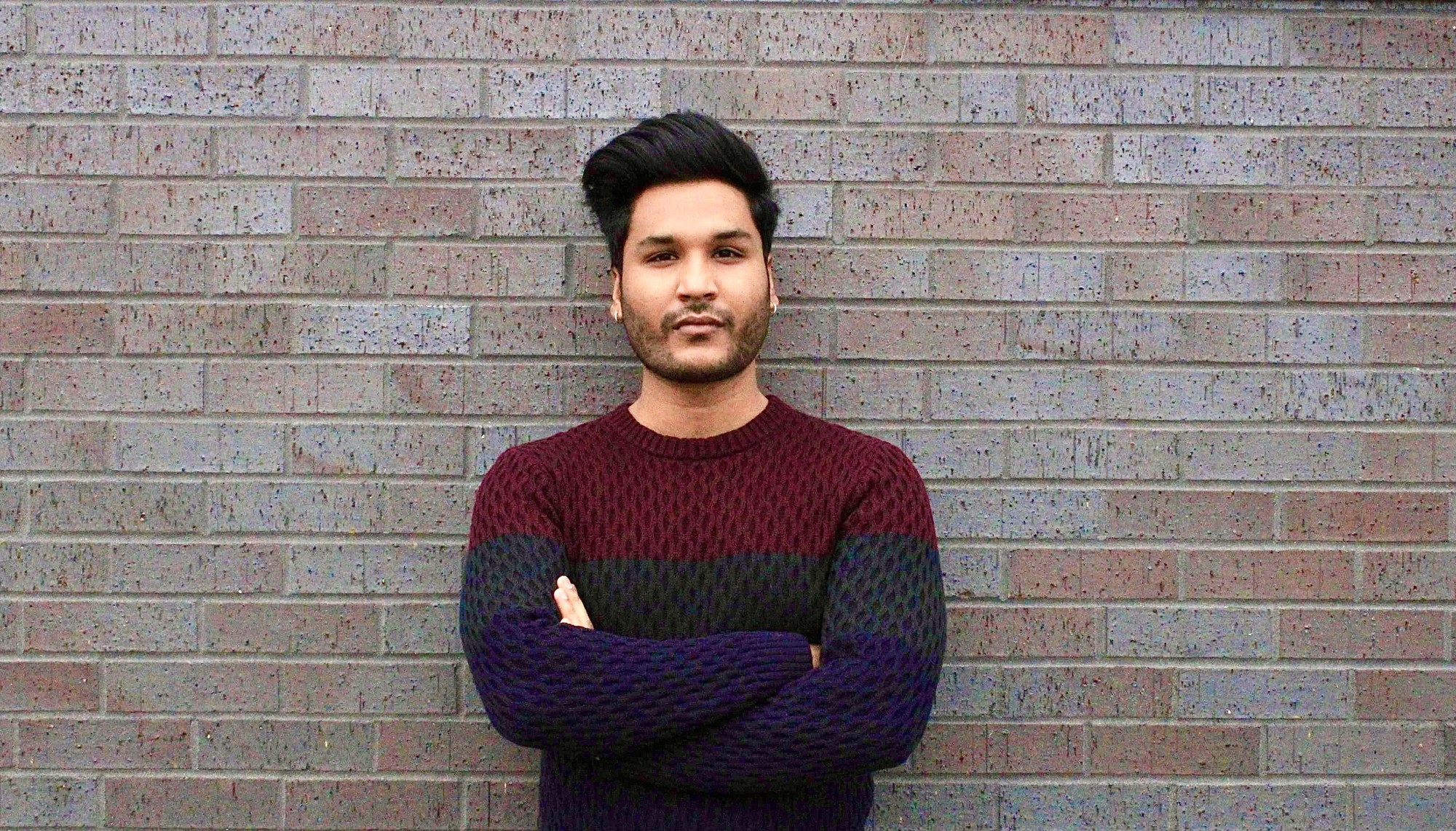
"As a 22-year-old, Indian-born journalism student at Algonquin College, I have seen Modi’s vague policies to 'make India better' fail time and again," writes the author.

In 2014, Manmohan Singh, an Indian economist, academic and politician was succeeded by a near illiterate tea-vendor. This successor, Narendra Modi, had been associating with a right-wing Hindu nationalist group called Rashtriya Swayamsevak Sangh (RSS) since he was eight.

Modi, now the 14th Prime minister of India, is currently serving his second term after being re-elected in 2019.

As a 22-year-old, Indian-born journalism student at Algonquin College, I have seen Modi’s vague policies to “make India better” fail time and again.

The economy is going down, unemployment is at its peak and reports of sexual assaults are increasing like never before. After trying to disrupt the peace of mostly the “Muslim community” by introducing the citizenship amendment act in 2019, Modi and his party BJP, are trying to make the current farmer protest into a Hindu versus Sikh civil war.

This is a country that is supposed to be a secular nation.

While many news outlets and Influential celebrities in my home country have clearly sold out and talk nothing about the protest and police brutality towards the peaceful protesters, I’d like to shed some light on what’s going on in the world’s second most populated country.

Ever since Modi took charge of world’s largest democracy, he has tried to take some immensely bold steps by claiming them for amelioration of the country. Unfortunately, almost all of his plans flunked.

Whether it was the demonetization of high-denomination banknotes in 2016, the citizenship amendment Act in 2019 or the Indian agriculture acts of 2020 – AKA, the farm bill – all of them have had unfavourable outcomes.

In September 2020, the Parliament of India initiated three acts in the farm bill that will have grievous effect on the livelihood and well being of the farmers. The bill is said to be seizing some basic rights of farmers towards their own harvested crops.

The act faced denunciation from farmers across the nation, especially from farmers from Punjab and Haryana; states responsible for the Green Revolution in 1960s.

The Green Revolution within India commenced in 1966 and lead to an increase in food grain production, especially in Punjab, Haryana and Uttar Pradesh.

During this time agriculture was converted into an industrial system due to the adoption of modern methods and technology, such as the use of high-yielding variety (HYV) seeds, tractors, irrigation facilities, pesticides and fertilizers. Wheat was the crop of focus during the revolution.

More than 50 per cent of the population in India is engaged in farming, that’s about 450 million people. When the farm bills were introduced, almost every farmer in the country and various opposition parties alleged that they completely disregarded parliamentary norms and were anti-farmer, corporate-friendly and a step towards privatization of agricultural produce.

The farmers’ protest in New Delhi has been going on now for more than 100 days. Farmers across the nation have come together to express their sorrow and disapproval of the new farming bills.

The protest so far has resulted in loss of over 280 innocent lives, 122 illegal detentions by the police and around 150 missing from the protest and nowhere to be found.

The protest has somewhat affected the daily life of people in New Delhi, which includes some international students, who couldn’t fly to the countries where their colleges and universities are, due to the COVID-19 outbreak.

Another major problem was faced by the students was the internet shut down on Feb. 3, 2021, around New Delhi and other 14 districts, which made them miss their online classes. Some students in India are also experiencing some difficulty in boarding flights as the major international airport of North-India is in New Delhi and the protesters have blocked the major roads and highways that lead to New Delhi.

Peaceful protests took place in Ottawa, in which many Algonquin College students took an active part and expressed their support in favour of the farmers.

A shot from the peaceful rally organized in Ottawa to express the support for farmers in India
Peaceful rallies organized in Ottawa this winter expressed support for farmers in India. Photo credit: Mohit Kumar

I’m still keeping myself updated with what’s going on at the ground level of this protest in New Delhi. It’s a shame, however, that I have to look upon Instagram pages and Twitter accounts to follow the news regarding the protest since the news platforms in India are not presenting any truth and updates on protest.

I hope that the farmers get what they deserve and its high time that the people of my country understand the real motive of the BJP government.

Algonquin Times podcast

Stay Informed

Sign up for our newsletter

Subscribe

* indicates required