Students say OSAP changes are shutting the door on their futures
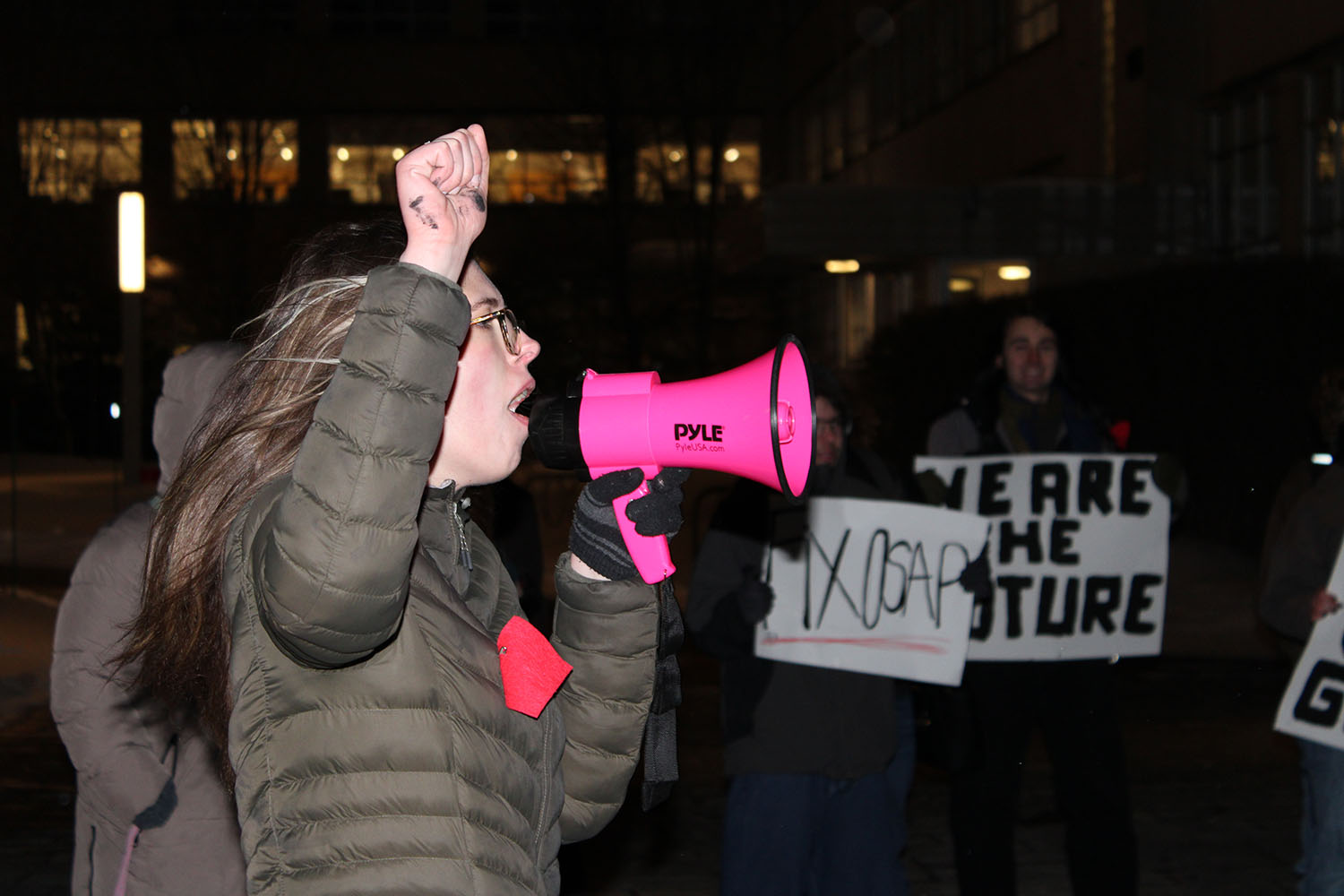
Chanting “Fix OSAP ASAP,” a small but vocal group of students gathered at the University of Ottawa on Feb. 23 to protest recent changes to the Ontario Student Assistance Program (OSAP), saying the cuts threaten access to post-secondary education for low-income, disabled and marginalized students.
The crowd, made up of current and future of uOttawa and Algonquin, marched through campus with signs and chants, describing a growing fear that financial aid reforms will prevent many from entering higher education.
The Ontario government says it will overhaul OSAP starting in the fall of 2026, reducing the maximum share of non-repayable grants from about 85 per cent to 25 per cent.
Under the changes, at least 75 per cent of student aid will come in the form of repayable loans. The province is also ending a seven-year tuition freeze, allowing colleges and universities to raise fees annually.
Among the protesters was Cyrus Andromeda Harper, 18, who plans to study museum studies at Algonquin College. Harper said their family’s financial situation recently changed after their mother lost her job, eliminating two-thirds of their household income.
“I’m disabled and would have likely been eligible for a higher percentage of grants before the changes,” Harper said. “Now I’m going to be forced further and further into debt. Combined with the fact that getting a job is near impossible right now, I may genuinely not be able to afford to go to school despite having wanted this my whole life.”
Harper also warned that education cuts extend beyond funding.
“I’m actively watching programs be cut,” they said. “My biggest fear is that it won’t just be so-called ‘useless’ programs, but the arts, language, literature, philosophy, history. We will watch the state of education and quality of life in Ontario plummet.”
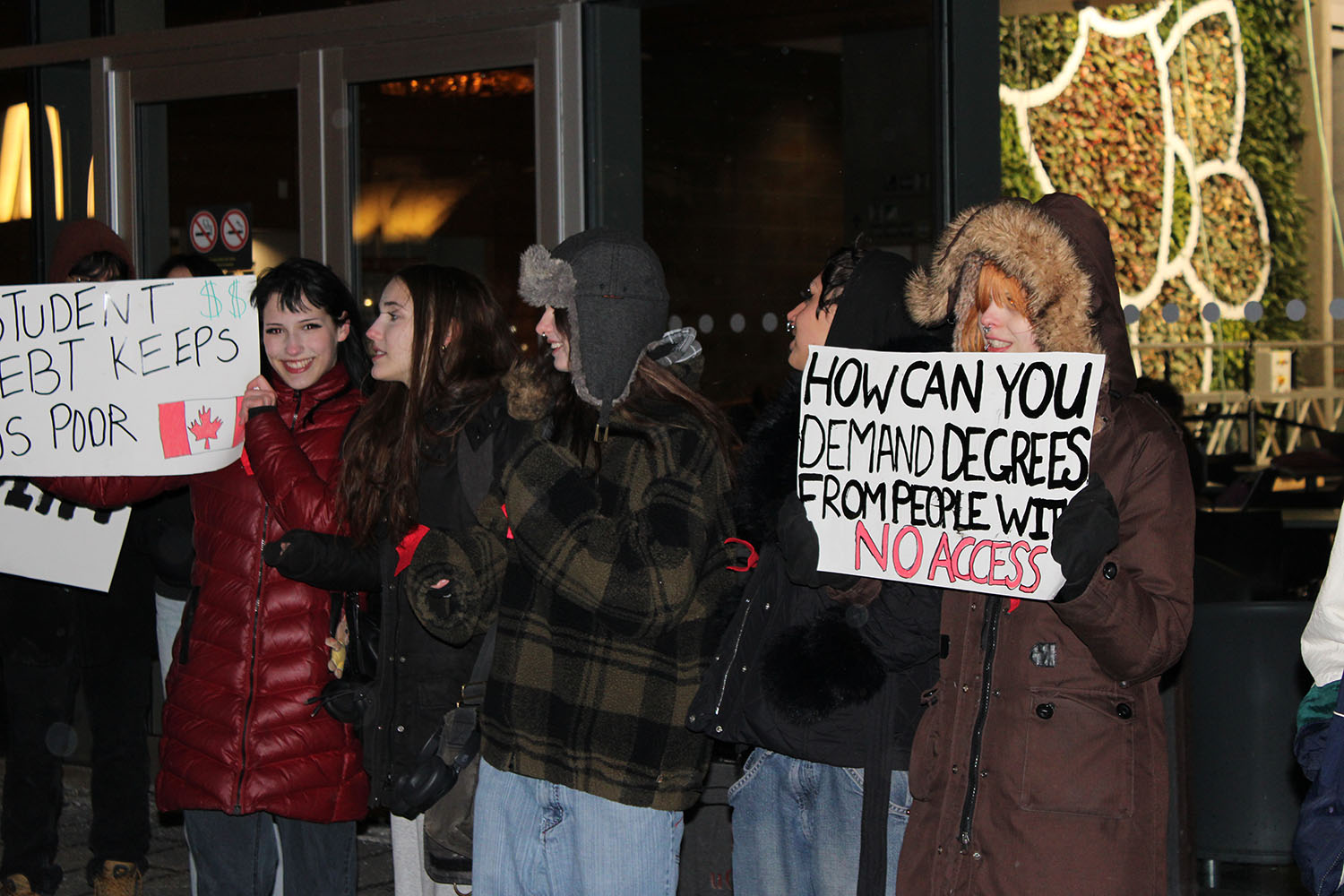
Adrianna Levigne, 19, currently in Algonquin’s social work program, said students were not consulted before the changes.
“First it was program cuts, then OSAP cuts, then grants were taken away, and now tuition increases,” Levigne said. “Students just can’t afford to go to school anymore. People are giving up on becoming doctors, teachers, scientists, not because they lack ability, but because they can’t afford the debt.”
Gabrielle Arnatsiaq Jean-Pierre, 17, who plans to start graphic design at Algonquin next fall, said financial aid is the only path forward for her family.
“I come from a home with a single mother raising two kids,” she said. “She can’t afford my tuition alone, even with my part-time job. I need financial aid, and now the only option is debt.”
Protesters repeatedly emphasized the changes disproportionately affect marginalized communities, including low-income families, Indigenous students, first-generation Canadians, disabled students and young parents.
“This will absolutely hurt low-income and marginalized students the most,” Harper said. “This is a targeted attack on the communities that already struggle to access education.”
Students also criticized Premier Doug Ford, accusing the provincial government of widening wealth inequality.
“Low-income people are being barred from post-secondary education,” Harper said. “This is an attack on everyday people that widens the wealth gap in this province.”
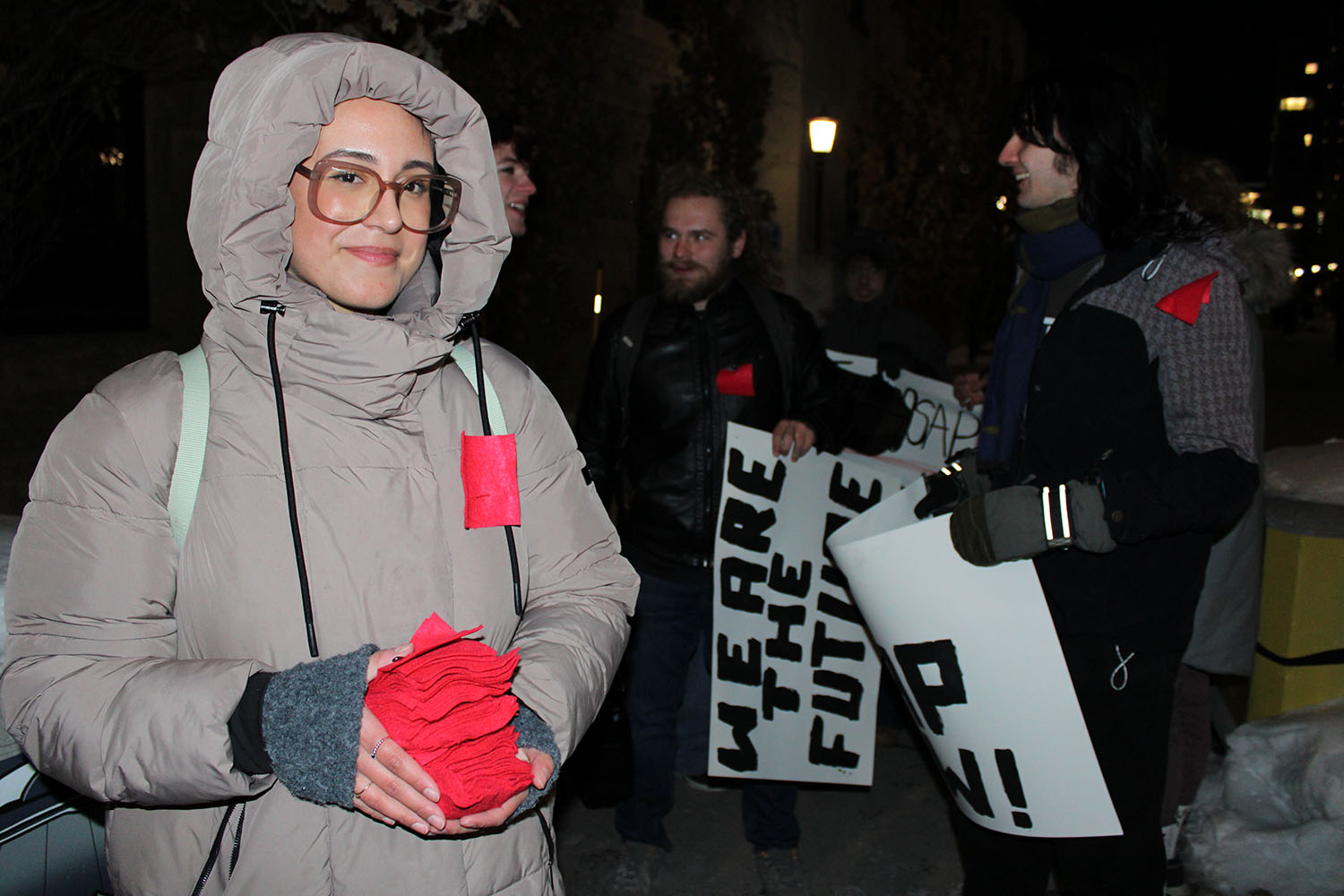
Throughout the protest, students wore and distributed red belt fabric squares pinned to jacket pockets and chests. The squares represent solidarity, visibility and resistance, a visual marker showing support for accessible education and collective action. Students described them as a way to identify allies in the movement and signal commitment to the cause.
Organizers say more protests are planned throughout the week, coordinated through social media platforms, including Instagram and Reddit.