People at Truth and Reconciliation ceremony say day means more than wearing orange
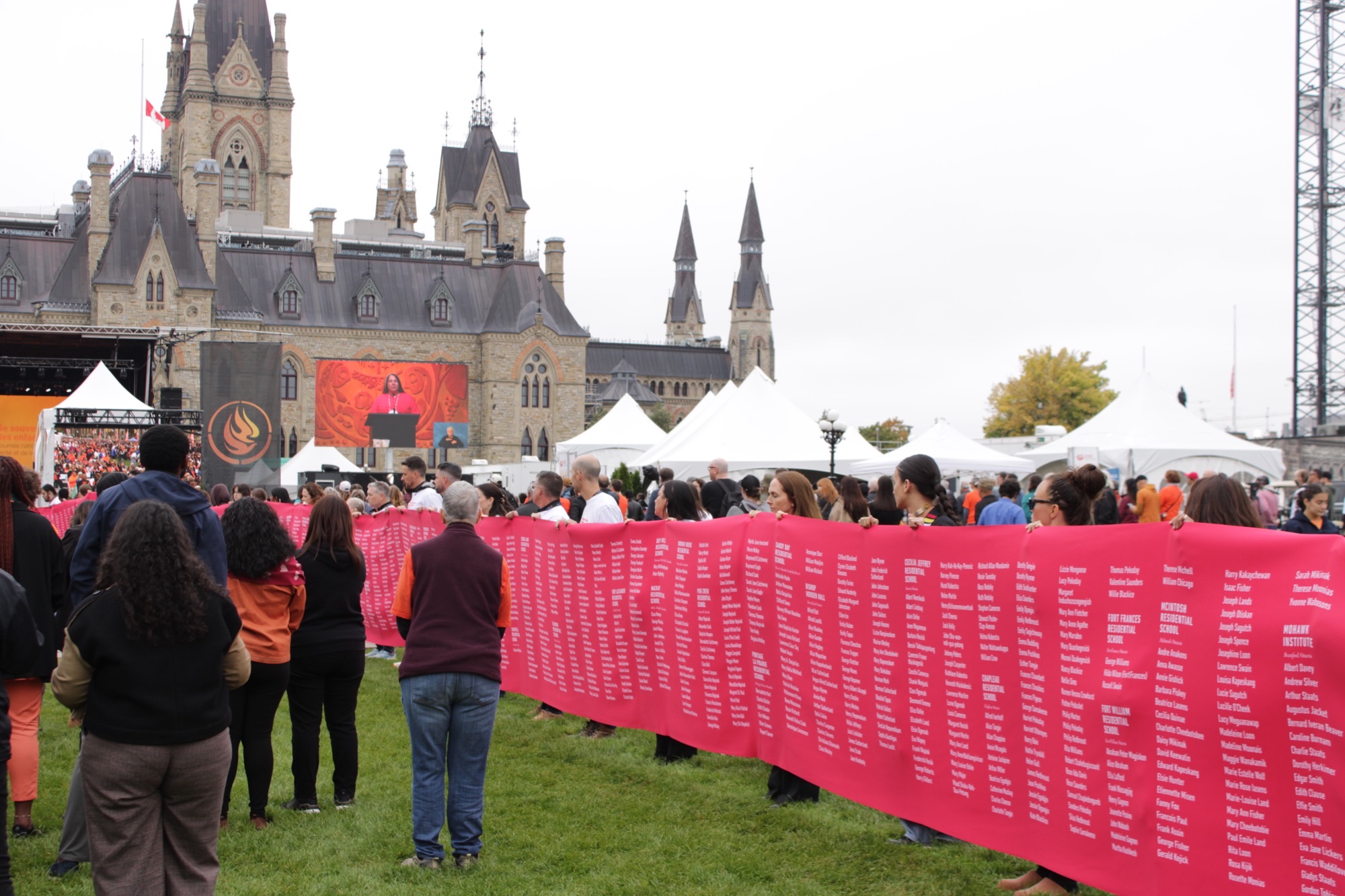
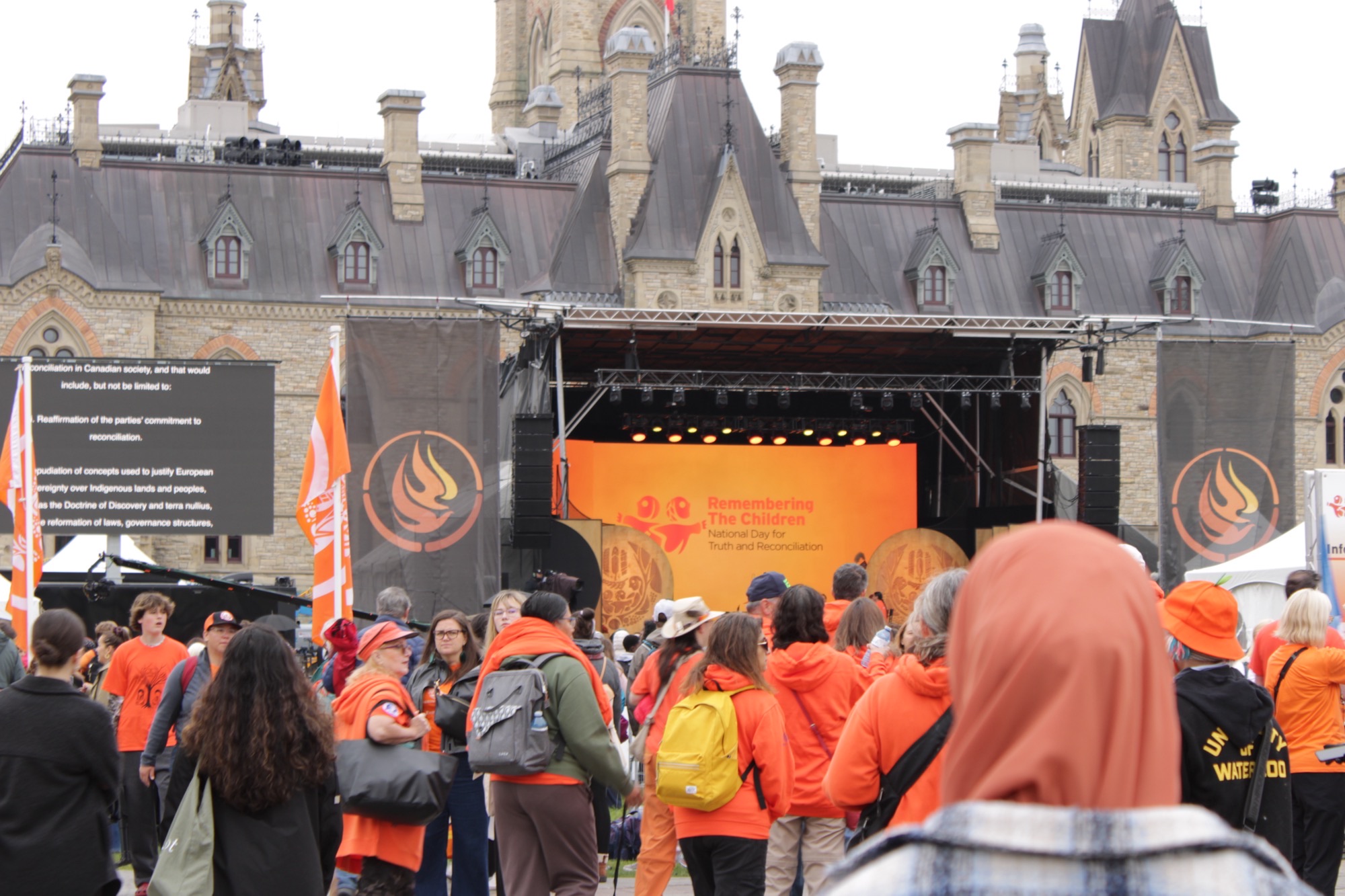
Traditional music from the Eagle River Singers opened the National Day for Truth and Reconciliation gathering at Parliament Hill on Wednesday as attendees gathered to remember the children who never returned home from residential schools.
The multilingual ceremony brought together residential school survivors, elders, students and community members. The atmosphere shifted between pride, reflection and grief as speaker Claudette Commanda opened by thanking attendees and inviting survivors on stage to tell their stories.
Earl Wood, a Cree broadcaster, and Melissa Mollen Dupuis, an Innu activist and broadcaster, later joined the ceremony, speaking about residential schools, stolen land, forced adoptions, loss of identity and intergenerational trauma. Their main message was simple: “We are still here today and every day.”
For Ann Jeni, the day is very personal.
“My dad was in a residential school and my mom was part of the Sixties Scoop,” Jeni said. “I don’t have grandparents because we never grew up with them.”
Jeni’s mother was removed from her family as a child as part of the Sixties Scoop, a period when thousands of Indigenous children were separated from their families and placed in foster care or adopted, often by non-Indigenous families. The practice resulted in many children losing connections to their families, communities and cultures.
For Jeni, remembering the experiences of previous generations is part of breaking the cycle of generational trauma.
“My son, at least he has his grandma now,” she said. “Maybe he doesn’t have a great grandma because of it, but he has his grandma.”
For residential school survivor Dallas Sutton-Taylor, remembrance also means learning about the experiences of people affected by the residential school system.
“Just knowing you’re leaving with more awareness too, hearing everybody and what people have been through should cause reflection” Sutton-Taylor said.
Sutton-Taylor said reconnecting with Indigenous culture has also been part of his journey after growing up without knowing his identity or learning traditional practices.
“I didn’t grow up learning how to do so many things that I wished I would have learned,” he said.
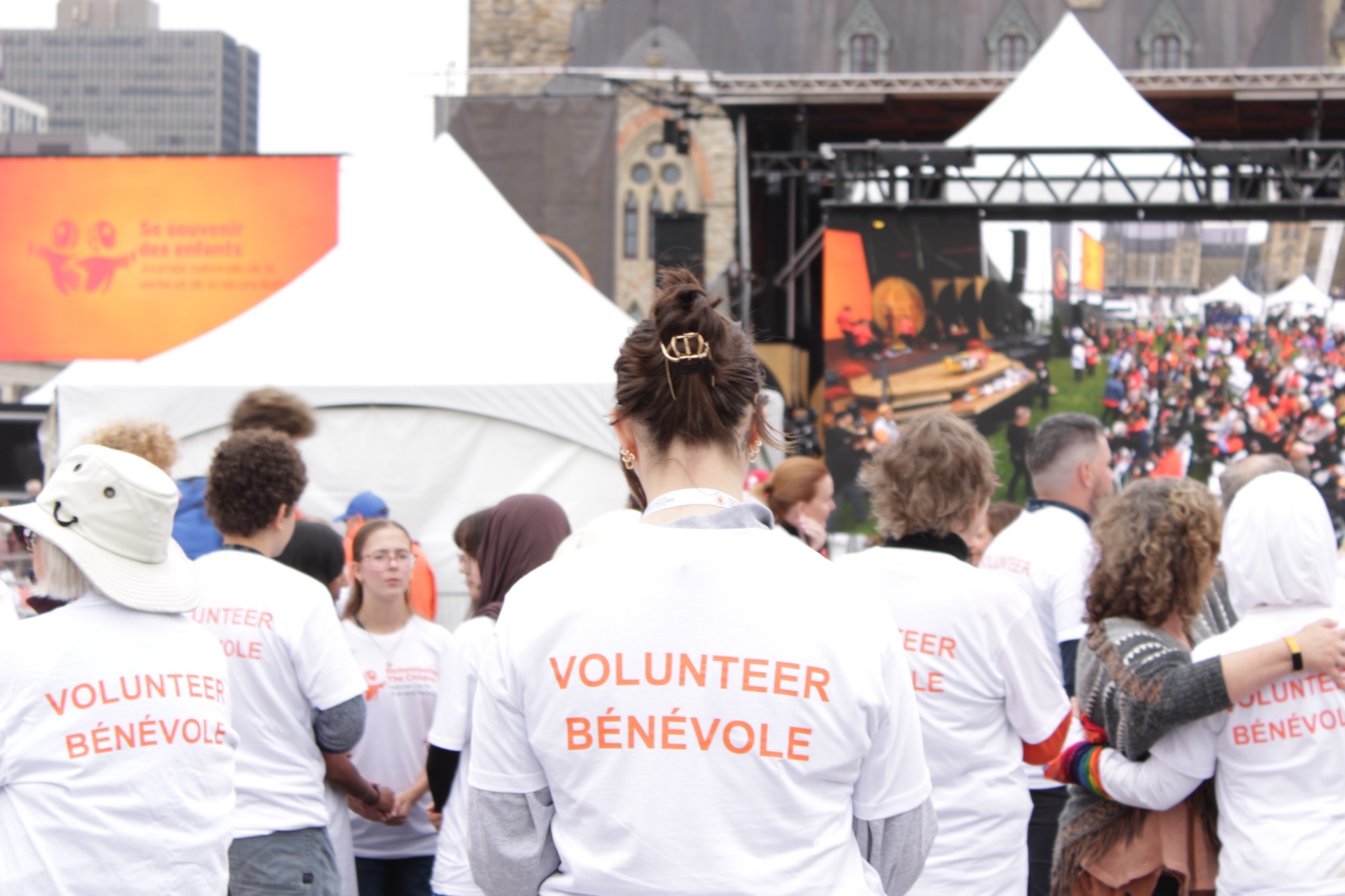
Maya Garnell, a volunteer, says reconciliation should go farther than wearing an orange short or attending an event.
“Remembering the children means making sure their stories are not reduced to statistics. I hope that after today, the stories of these children don’t go unrecognized and aren’t just seen as numbers,” Garnell said. “Indigenous people are still facing hardships to this day and it’s important to continuously educate ourselves on the atrocities that took place.”
As the ceremony wrapped up, the crowd left with tears and heavy hearts. While emotional support booths were available, the day was a reminder that reconciliation does not end when the orange shirts come off.
Jeni said remembering should happen every day.
“I know it’s just one day a year we gather to remember, but you know, it’s everyday for me almost,” she said.