
Cowboys and Angels

Closure doesn’t need to mean certainty.
Photo: Matias Di Meglio
The Manhattan skyline highlighted by light and dark tones.

by Angie Mosher

A Cowboy walked into a bar.

He was late. He was always late. Being on time was embarrassing, being early—unthinkable. He didn’t like Manhattan. His contempt made him even later than usual. Tourists stopped him everywhere, took in his spurs and boots, his belt, his cow-hide jacket and asked, Can we take a picture with you? He never did. He pulled his hat down over his forehead and said, no can do. I ain’t from here neither. Sometimes they laughed. Other times they’d get angry. He would just walk away.

It was raining miserably. Water dripped from the brim of his hat, soaked the fringe of his coat. He took it off, gave it a shake, and put it back on. The Angel was already there, in the corner booth, perched on the velvet cushion, drinking a gin and tonic. She was aglow, as usual; the dim lighting of the bar was nothing compared to her. The Cowboy saw her at once. He went over to the bartender and ordered a bourbon, neat. When he turned to join Angel in her booth, she was there, on the stool beside him. He offered her a smile, tipping his hat to her in greeting.

“Do you remember when we met?” the Angel asked in her melodic voice.

“Couldn’t forget that, darlin’.”

He’d been bleeding out in a dirt patch of a ditch, in the dead nowhere of Wyoming. That had been a year ago.

“This is a better place, then,” the Angel said.

It sounded like a question, so he answered it like one.

“Maybe.”

She nodded at that and took a sip of her drink. The bartender returned and placed the bourbon in front of him. He picked it up and took a small sip.

He looked better in some ways and worse in others, she thought. His clothes were cleaner, his boots were shinier, but his shoulders sagged. His pistol was missing. The scar on his face divided him in two, a jagged line cutting from his left eyebrow, marring the eyelid, clouding the eye, sinking down through the bridge of his nose to settle just above the right corner of his lip. She had sewn the wound shut herself. He was still so beautiful. He was still hers.

“Been busy lately?” he asked, his voice gruff, deeper than it was when they first met.

She had been. She was busy in Manhattan. Hell’s Kitchen especially. Not so many angels out there. That’s why she’d left L.A. She stopped in Wyoming, not really sure where she was going. She stopped in small towns and found lost souls, hoping she’d find a place worth staying. Meeting people at the end of their lives was wearing on her. She had been losing her light for a long time. Then she found her Cowboy.

She was tired of helping souls to Heaven and he was tired of the Wild West. They fell in love, and fled together to the big city. He became a butcher in Brooklyn, and she stood on street corners and rooftops, saving souls. They shared a small apartment in the bottom of a brownstone. They didn’t see each other as much as they wanted to. He understood. She was important. Sometimes, he’d stand on street corners with her and play guitar. He worried about her in the city, by herself. Not everyone cared about angels. He knew she’d been hurt before. Sometimes a dark mood would take her, and there was nothing that he could do. He knew then she was remembering past lives and past pain, things that were beyond him. Sometimes she wouldn’t come home for days. He’d slice into raw flesh all day, only to come home to nobody, and wait for her all night. Sometimes, he’d pray and imagined she could hear him, wherever she was.

So they met in the same bar every Sunday. It was almost a date, a way to see each other outside of crawling into bed, or a quick kiss on the cheek before they left to go where they needed to be. He’d make his way over from Brooklyn and she would be there, glowing, waiting, her head bowed over a drink as if deep in prayer.

“What have you been doing?” she asked. He took another sip of his bourbon.

“Workin’. Walkin’. Not much else to do.”

“In a city like this?”

He nodded. She understood. He was a man of the land. Not concrete. Not trains and subways. Not for the first time, she felt guilty for bringing him there.

“You hate it here.”

He brought the glass of bourbon to his mouth and poured it back, slamming the glass down on the bar, harder than he’d meant to, so hard that the bottom of the glass splintered out with cracks. She didn’t flinch. She was used to his darker moods, too.

“You want to leave.” She said it simply. She’d known for a while. She’d been pressed down into the shape of a woman, for more than a few decades. Longer than he’d been alive, longer than she had cared to be. She’d known every kind of heartbreak. This one felt new.

“You want to leave the city. You want to leave me.”

He did not look at her. He stared into the cracks of his glass, like he could will the splintering into smoothness. She had always looked at him like he wasn’t a broken thing—not half a man, not a weak lover, like he was something whole. It was a sacred thing, but he could not help shattering under her holy gaze.

For a while, neither of them spoke. She finished her drink, he ordered another. He glowered; she glowed. After finishing his second bourbon, he found his voice.

“Why didn’t you leave me there? To die?”

Whatever she had been expecting him to say, it wasn’t that. He looked at her then, really looked at her. He sounded angry, resigned. He suddenly felt his age. It was hard to feel old in her spectral company, but he felt very old then. It occurred to him, when he took in the sad look upon her face, that she must have felt the same way.

“Why did you come with me? To this city?” Her voice rang out clear like a bell.

“It ain’t fair to answer a question with another question.”

“What is fair?”

He didn’t know. That day in the ditch, he thought that he’d known. He’d made his peace with dying, that had seemed fair. Then, there she was.

“I didn’t want to be alone anymore,” he said, finally. She stared up at him, waiting. He didn’t know what else to say. That was the simple truth of it. He’d decided that he’d met his fate and she had appeared and tore him away from it. When he first saw her, he understood what all the songs were about, why he’d said every prayer as a boy, bent on that wooden pew in the church his Ma had dragged him to. He squinted through the blood with his one good eye and saw her glistening face. She’d given him a reason to live. He loved her for it, but now, he thought maybe he hated her for it.

“Tell me. Why couldn’t you just let me die?”

She’d seen many men die. Greater men than him. She watched their eyes roll into the back of their heads, seen the snap of bones and heard the final beats of their hearts. She brought them from this world to the next. Not once had she intervened. Not once did she feel like she had to. But even God’s love left a lot to be desired. She wanted someone to love her because they chose to.

“I didn’t want to be alone anymore, either.”

“Well, shit.”

He wanted her to say that it was God’s Plan—that he hadn’t been meant to die and was destined for greater things. That was the only reason an angel would tear up the dirt road in a Silverado and stitch him back together in the back seat. No more ranching, no more fighting, no more shooting. God’s damn plan.

She sighed and waved the bartender down for another gin and tonic. He ordered another bourbon. She usually only had one drink. She never used to drink at all. She usually left men to their own devices. She usually didn’t take lovers. She had fallen in love with him. He had asked her once, when they were laying in bed, if she had done that often. She’d answered honestly, that she hadn’t, and couldn’t puzzle out if he was relieved or not. Her Cowboy was only a man. She wouldn’t ask him to be more.

“Remember when you taught me the two-step?”

He laughed. To his surprise, she was a terrible dancer. They were hiding out in a barn, still in Wyoming. Dolly Parton sang through the truck radio and he tried teaching her how to two-step. She had no rhythm, no sense of her feet or how to move them. He thought she could do anything, but watching her trip over herself made her seem just as human as he was. He teased her, what, they don’t teach you to dance in heaven? She laughed, radiating light and said, not like this. It was the first time he could remember being so happy, watching an angel fall over her own feet. When she gave up, they held each other and just swayed to whatever the radio played.

“That was the best night of my life,” he said, smiling at the memory. She smiled at him, and felt a wistful tug at her heart. Her eyes watered, but no tears fell.

“Mine, too.”

She never learned to use her feet like that, didn’t think she’d ever need to. Her Cowboy taught her a lot of new things that she didn’t think she’d ever do. Sometimes, he’d shock her with just how gentle he could be; the way he had held her that night, so tenderly with calloused hands. Her calm demeanour broke ever-so slightly.

“Where will you go?” she asked. He startled at that, breaking out of the reverie.

“Who said I’m goin’ anywhere?”

“You don’t have to say it. I’ve been a lot of things. I’ve never been a fool.” He sobered at that. He didn’t have the will to fight anymore, or to lie. If anything had died in the ditch, it was that.

“Back to Wyoming,” he said. She knew that, just needed him to say it. Needed to hear it. She might have begged him to stay, but they both had their pride. Just another thing she had learned from him.

“You’ll die there.” It wasn’t an ill-wish, she wasn’t a lover scorned. He didn’t seem shocked or scared by her statement, he only took another sip of his drink. It was expensive stuff, not the kind he was used to. Only she would pick a place like this to say goodbye. His eyes burned with tears, and for once, he didn’t fight them.

“Let me ask you one more thing. When I die, I’ll have loved you forever. Can you say the same?”

The Angel hung her head. Oh, her foolish cowboy. He didn’t know what forever was. That was how long it had been until she’d found him. That’s how long it would be without him. She watched as he stood and paid his tab. He turned to her, sitting on the stool, shining in her white light, weeping softly. She closed her eyes as he laid a gentle kiss on her golden head.

She let herself look at him one last time and thought of that night they danced together. He had loved her, and that was enough.

“I’ll always love you, Cowboy.”

He tipped his hat to her again and walked out the door.

Author Bio:

Angie Mosher is a writer living in Ottawa, Ontario. She’s originally from Halifax, Nova Scotia, and misses the ocean dearly. She has a Bachelor of Arts in Creative Writing from the University of British Columbia and is currently studying Professional Writing at Algonquin College. She’s had her poetry published in the journal That’s What We Said, The Phoenix News and UBC’s Papershell Anthology. “Cowboys and Angels” is her first published short story. When she’s not writing, she’s probably at home with her cats, playing video games, or planning her next tattoo.

“Cowboys and Angels” will be featured in By the Fire: Tales from the Ashes, the upcoming fiction anthology to be published by Algonquin College Professional Writing students in spring 2024. Follow Spine Online on Facebook at facebook.com/ACprofessionalwritingprogram or Twitter/X @ourspineonline for updates on anthology launch dates and ordering information!


Online Editor

The Algonquin Times is a newspaper produced by journalism and advertising students for the Algonquin College community. Follow us on social media! Algonquin Times Twitter Twitter (Events & Promos) Facebook Facebook (Events & Promos) Instagram Snapchat

The Pact

Self-righteous steps lead to unholy grounds.
Photo: Adobe Firefly AI
A burning scroll of withered parchment.

by Garrett Johnson

The king swallowed, a grave lurching of his glistening throat, as he stood at the edge of an ostensibly bottomless abyss. Reaching into his pocket with a trembling hand, he withdrew a silver coin and gave it a toss—down, down, down it tumbled, catching his torchlight’s glow for the first few meters of its descent before it vanished into the blackness.

The king waited. Five seconds, ten seconds, twenty—but the deafening silence remained undisturbed. He held his torch to the left, revealing the path he must take: a spiraling stone stairwell, cracked and chipped despite never being trod, with neither a rail nor an inner wall to prevent one from spilling into the void should they lose their footing.

“My liege…”

So on edge was his majesty that the gentle whisper nearly launched the flambeau from his grasp. He whirled around to behold the ghostly white and sweat-slicked face of his most trusted advisor, whose gaping mouth finally closed a few seconds later, allowing for an anxious wetting of the lips as he peeled his gaze away from the ominous descent to meet the king’s.

“Let it be known, your m-majesty, that I remain entirely op-p-posed to this insane plan—and forgive me for c-calling it so, but there truly is n-no other word for—!”

The king cut him short with a raised hand that he could just barely keep steady.

“Your advice has been duly noted, my friend. Don’t worry, I’ve already taken measures to ensure you won’t be held accountable if I don’t return.”

His counsel flinched and fervently shook his head, physically ridding himself of the thought. “M-my lord, please! Do not joke about such things!”

“You think I would jest at a time like this?” the king said, forcing a weary smile—though no sooner was the facade erected than he felt its curvature begin to tremble.

He stepped past his advisor—whose mouth was moving a mile a minute yet producing no sound—and with a crackling swish of his torch, illuminated the first few steps of God only knew how many.

No, he corrected himself—it was unlikely that even God knew how many steps extended into this stygian pit.

“…”

He looked back at his aid with irrepressible hope.

“Tell me. Tell me of another way, and none will be so glad as I to delay my arrival in Hell.”

Silence was the only, expected answer. All his advisor could do was avert his squeamish gaze to the floor, and the king’s smile folded into a grim line as a single note of hapless laughter pushed its way out his nose.

“We’ve taken the moral high ground for too long—and look where it’s gotten us. Our enemies are one final push away from wiping us out for good. This is the only way,” he assured unequivocally, and by his own words convinced, he found his courage swell.

He returned his attention to the path laid before him…

And took the first step.

***

How long ago had that been? How much time and how many steps had he passed and taken since?

Hours and thousands were as precise an estimate as the king could give. He wished he had taken one of the court mage’s pocket clocks.

He leaked a tremulous breath while tightening his grip on the torch, and against the devouring darkness, he dithered between wanting to hold his paltry flame close for warmth, or at arm’s length to eke out as much of its meager guidance as possible—causing his torch-bearing arm to extend and retract constantly as if he were operating a lever.

Down, down, down…

Step, step, st—

!

A sharp chill arced up his front leg, paralyzing him for an instant before it dulled. He looked down in alarm and found his boot dipped into a cloud of ethereal fog, turned tawny by his torchlight and swirling languidly over the ground; it was so thick that he could not even see the top of his foot. Eerily, he could feel the mist gently curling and prodding around his boot—as if it were sentient and looking for a way inside.

He swallowed, fighting the urge to retract his leg before forcing another tentative step which proved even more surprising than the last.

He blinked incredulously as he found his feet a full stride apart yet on equal ground.

Could it be…?

He turned around, extending the torch behind him—and confirmed that he’d reached the bottom of the stairs.

The king returned his attention forward: a narrow hallway, seemingly as deep as the stairs, stretched before him.

“…”

He let out a breath he didn’t even realize he’d been holding—an intrepid puff of white that drifted past his torch into the inky blackness.

Without giving himself a moment longer to hesitate, the king followed its example.

For the sake of his people. For the sake of Good. He had no other choice. His kingdom was crumbling; its borders were shrinking day by day.

This was his only hope.

He pressed on. The air grew colder with each step, an enervating venom that seeped into every muscle and made them ache.

Farther and farther…

Every ragged breath pricked the lungs, and he could feel the blood in his body, coursing like chilled honey.

Farther and farther…

Was it his imagination, or were the walls and ceiling closing in? Had he been unable to stand up straight from the start?

Farther and farther…

He couldn’t remember; he could barely think at all. By now the fog had swelled and risen to his waist, dissolving his legs into nigh-inoperable lengths of static. He couldn’t even feel them moving anymore, and the tactile assurance of the floor beneath his feet was lost. He swayed and lurched, groping at the walls for support; the thought of his family, and all his loyal subjects’ suffering—which he would gladly offer his own life to relieve—propelled him onward, despite every instinct begging him to turn around and head back.

Farther and far—

!

His tiny flame fell from his clutches, too feeble and trembling to hold on, and time slowed to a crawl as he watched its descent. He reached for it as fast as his sluggish reactions allowed—because he knew that if he let the mist swallow the torch, it would claim him soon after.

His digits grazed its handle in mid-air, managing to interrupt its fall for a fraction of a second, but alas, his fumbling hand only succeeded in knocking it away.

It fell, as did the king’s heart into his stomach, and—

FWOOOOOSH!

The king recoiled and shielded his face against a mighty eruption of flame as the torch’s smoldering tip suddenly blazed to its original glory upon hitting the ground, as bare and mist bereft as it ought to be.

Clatter clatter!

Roll, roll, roll…

Thud.

The king slowly lowered his hands, and his breath hitched at the sight of what his adventurous flambeau had settled against.

A great bronze door, barred by a beam of black oak and locked by glowing white chains wrapped sloppily—or hastily—around its crooked handles. An infernal gateway if ever there was one, and the world had changed with its apparition.

The claustrophobic corridor the king had been treading for so long was gone—there were no walls or ceiling in sight, just an otherworldly void of nothingness stretching in every direction that he knew, by some intuition, was genuinely endless. The only thing he could see—the only thing left in existence—was the door, an eight-foot slab of tarnished metal, illuminated in flickers by the crackling dance at its base.

“…”

Perhaps he should’ve been more shocked, but a part of him understood the environment’s transformation, and why his and his torch’s sapped strength had spontaneously returned as if never lost.

It was because he was no longer in the realm of the living. He’d crossed a barrier and reached a space, a juncture, outside of Death’s icy reach…

Now, he stood facing a doorway to Hell, beyond which lurked a demon.

The very same upon whose strength his kingdom’s enemies had relied over half a century ago to turn the tide of war in their favor—that by some miracle, the combined efforts of his grandfather’s court mages and spirit-slayers had managed to seal away in this misbegotten chamber before him.

With a trembling hand, he reached into his robe and took out a scroll of withered parchment, bundled by a string of pulp sourced from the divine tree of life.

It was a pact, a binding authority imbued with protective magic that would allow him to enter a bargain with the hell-spawn, just as his enemies had done all those years ago.

“…”

The contract was set. In exchange for his soul and the demon’s freedom, it would grant him a fraction of its infernal power.

All he needed was its cursed signature.

Clutching the paper close to his body, he inched towards the door and reached for the chain, eliciting a jingle from its links as he gingerly set about its undoing with painstaking delicacy—as if he were removing the sullied wraps from a burned and fractured limb.

The chains were warm, and their soft light throbbed erratically.

A warning he did not heed.

Clink-k-k-k-k-k!

The chain slithered to the floor as soon as the final knot came undone and settled in a coiled pile. Its divine light faded, and a second later, the chunk of wood it had been enveloping crumbled to dust. Something in the air shifted at that moment, ineffable—but it instilled dread within the king as he reached for one of the handles.

He drew in a deep breath and closed his eyes, steeling his resolve and mentally readying himself for what horrid abomination awaited him on the other side.

He opened his eyes, thinking himself prepared.

He stared at his hand, white knuckling the handle.

Open it, he ordered himself.

Ten seconds passed.

Every muscle in the king’s arm was tense; every fiber of his being was on edge.

Twenty seconds passed.

He could hear his heart pounding in his ears and pulsing through his clammy palms.

Thirty seconds passed.

He chewed his bottom lip—a metallic taste flooded his mouth.

Just… open it…!

His whole body started to tremble with strain—still, he could not force his hand to move, for he knew what he was doing was wrong. Consorting with devils—that’s what the enemy did. He and his people were better than that. They were supposed to be better than this…!

But they couldn’t afford to be. Not anymore…!

He had to do this…!

Acrid wetness blurred his vision.

Open it…!

Gritting his teeth, he at last forced himself to turn the handle.

Click!

WHOOSH!

The king staggered back, dodging the door as a violent rush of wind blasted it open from the other side.

And through the open doorway, revealed, was a room tinted midnight blue and laden with sparkling streaks of stardust—and at its center, there it was! Suspended in mid-air by thick black chains around its wrists and ankles!

The demon that had sided with the enemy and nearly brought his kingdom to ruin…!

Ten seconds passed.

Thirty.

A minute.

The scroll slipped from the king’s clutches and into the fire at his feet as he stood in the open doorway, frozen and unblinking, beholding neither horns, nor fangs, nor claws…

But rather wings of niveous plumage, and a crown of aureate light.

A complete betrayal of his grandfather’s adamant descriptions, this radiant being was clearly no demon, or any other manner of hell-born for that matter.

Quite the opposite, in fact.

The king fell to his knees, his world shattered, and wept.

Author Bio:

Garrett Johnson is an aspiring fantasy writer currently studying at Algonquin College and Carleton University. When he’s not busy devising a million different plots he’ll never get around to actualizing, he likes to work out with friends, play video games, watch anime, sing karaoke, and make funny voice impressions of fictional characters (to varying degrees of success).  

“The Pact” will be featured in By the Fire: Tales from the Ashes, the upcoming fiction anthology to be published by Algonquin College Professional Writing students in spring 2024. Follow Spine Online on Facebook at facebook.com/ACprofessionalwritingprogram or Twitter/X @ourspineonline for updates on anthology launch dates and ordering information.

Online Editor

The Algonquin Times is a newspaper produced by journalism and advertising students for the Algonquin College community. Follow us on social media! Algonquin Times Twitter Twitter (Events & Promos) Facebook Facebook (Events & Promos) Instagram Snapchat

A Date with Destiny

Destiny has no regard for tradition.
Photo: Craig Adderley
Dragon breathing fire on top of building.

by Chris Hodgins

It was the most important day of Amelia’s life, a fact which she resented to no end. Today was her bestand onlychance to win the affections of the eminent Prince Jedrek. He wouldn’t be prince for long though. Jedrek was expected to murder his father and ascend the throne any day now. “Poisoned by his enemies,” he’d no doubt claim. Sure. Every king for the last six generations had been “poisoned by his enemies.” That’s just the way things always went around here. The important thing was that Jedrek was going to be king soon, and Amelia was going to make damn well sure she was along for that ride.

She’d won the beauty contest at the town fair, the prize for which was an opportunity to lunch with his royal highness. Ambitious women had flocked to compete, but all the serious contenders had dropped out due to “mysterious accidents, so Amelia had won pretty much by default. She suspected her mother had something to do with that. She’d been reluctant to enter the running in the first place, but the old bat hadn’t given her much of a choice.

If she was being honest, Amelia wasn’t all that ambitious. She hadn’t originally planned on becoming queen, and Jedrek was a bit too murder-y for her tastes. Her mother didn’t care about that, though. She smelled an opportunity, and Amelia was a means to an end. The knob-nosed crone had hidden her beloved horse Gunter away somewhere, so she had little choice but to play along.

Enter that contest and win fer Tarok’s sake! her mother had shrilled. Yer looks are all ye’re good fer! Now woo that bloody prince, or I’ll turn Gunter into a toad! Yeah. Delightful woman. And people wondered where Amelia got her sparkling personality from.

Amelia got up at the crack of dawn to look for Gunter—and to avoid her mother. No doubt she’d try to feed her a potion of beauty, or prince-charming, or some other crap. Her mother was the town witch and a giant pain in the ass. The townsfolk hated her, but her potions mostly worked and only tasted a little bit like mud, so nobody had burned her at the stake yet. Amelia wouldn’t chance using one of her potions, though. No amount of beauty or charm would matter if she threw up all over the prince’s shoes.

Amelia crept out of her mother’s hut and into the town. It was best to search there before the villagers woke up. Like all peasants, they always had rotten vegetables at the ready to throw at anyone they didn’t like. That meant Amelia. They hated her just because she was the witch’s daughter, and maybe also because her one and only attempt at brewing a potion made everyone’s hair fall out. Becoming queen had been her mother’s idea, sure, but if marrying Jedrek meant all those bald faces would stop looking down on her, well damn it, she’d do it. If she could get Gunter back too, she’d even be able to boss her mother around for once. That’d make it all worth it.

***

Amelia looked up at the sky and her eyes went wide. Crap. She was so busy looking for Gunter she hadn’t realized how high the sun had gotten. She was supposed to meet the prince at noon, and time was running short. Without Gunter, she’d be forced to go on foot, and she needed to leave now.

Amelia dashed across fields and over hills, cursing her mother between ragged breaths. Even as her heart thrummed against her ribs and her legs burned, she found the motivation to keep going by imagining what she’d do to her mother once she was queen. Nothing too horrid, but she’d definitely send her off somewhere she’d be miserable. Maybe Elftown; the singing would drive her nuts.

Because she was running so late, Amelia decided to take a shortcut through the Dark Woods, which turned out to be a pretty terrible idea. She was immediately set upon by a jabbering pack of goblins, which chased her from one end of the forest to the other. Long, spindly branches from dead trees tugged and clawed at her as she ran, ripping her dress and scratching her skin. She eventually managed to shake her pint-sized pursuers by leaping into a fetid swamp that was too deep for the little bastards to wade through. She was filthy from the waist down and smelled almost as bad as the goblins, but at least she wasn’t lunch.

With the monsters well behind her, Amelia stopped to rest. What time was it? She couldn’t see the sun from under the trees. She wondered, was the prince even going to like her? Would she like him? Did it even matter? And was that sweat or blood dripping down her face? She shook her head and tried to focus. She was going to woo the hell out of that stupid prince, become queen, find Gunter, and stick it to her mother. Maybe then everyone would finally show her some goddamn respect—and find somebody else to throw their stinking vegetables at. She collected herself and kept moving.

Castle Town was close now. Amelia cleared the trees and could see it ahead, across a final stretch of field. Was she still on time? She glanced up, but something had blotted out the sun. Before she had a chance to register what it was, a great green blur descended from the sky and landed with an earth-shaking THUD in front of her, kicking up dust and throwing her off her feet. It was the wings she noticed first. Unfurled, they would have been nearly one hundred feet across, easily. The dappled green wings belonged to a massive reptilian frame covered in hardened emerald scales. The beast leered at her from a pair of intelligent yellow eyes.

A dragon?! Now?! Seriously?!

“Greetings.The dragon’s voice resonated with unmatched authority. “I am the one your kind calls Tarok.”

Tarok! She knew that name. Everyone did. He was the mightiest of all dragons in the land, both protector and destroyer, beloved and reviled. Even a king was nothing before such a creature. And now he was here. Amelia knew what she had to do. She began to speak the words of adulation, words everyone knew to recite in the presence of a dragon.

“Oh glorious, illustrious Tarok…” She spoke ceremoniously, reciting each line from memory. “Words cannot convey your majesty, your grandeur, your opulence! I am but a humble servant, for your power is so great…” The speech went on and on. The dragon seemed bored, but he knew the tradition, and waited impatiently for Amelia to finish.

“…The green of your scales shines like one-thousand glimmering… um…” Amelia trailed off. The sun was directly above—noontime. Tarok didn’t seem to notice that she’d stopped.

“…You know what? Forget this.” Amelia rose to her feet. The dragon perked up, suddenly attentive. “What do you want? I’m running really late. Everything keeps going wrong today, and I just need this one thing to work out for me. Okay? So if you’re gonna eat me, just get it over with. If not, get out of my way.”

The dragon’s tail flicked back and forth. Amelia thought it looked strangely catlike. Then the beast laughed with a voice that shook the valley.

“Bold, aren’t you! No, I am not going to eat you. I intend to kidnap you.”

On any other day, Amelia would’ve been terrified. Right now, she was just annoyed. She tapped her foot impatiently. “May I ask why?”

“There aren’t any princesses left,” the dragon said, scratching his chin thoughtfully. “Too many volcano sacrifices. You’re the closest thing there is to a princess now, due to your date with the prince. So I’m going to kidnap you instead. It’s what dragons do, I suppose.”

“Oh, you heard about that.”

“Indeed.”

“Can you at least let me meet him first? I don’t even know if it’s going to go well. You can kidnap me afterwards if you want, but damn it, just let me have this!”

Tarok appraised her with his icy gaze. “There are few among your kind who would dare speak to me in such a way. Do you not fear me, girl?”

“The only thing scaring me is how much of my time you’re wasting,” Amelia snapped back. Her face was hot with adrenaline. “You don’t have any better options. Fine. I get that. Neither do I. So just let me do this one thing. Then you can kidnap me, Jedrek will send his stupid knights to get me back, and you’ll get to play your little game. Okay?”

Something shifted in the dragon’s features. Was he grinning?

“I have not met any others who possess such spirit,” Tarok said. Very well! Do as you please. I’ll await your return. I’m certain the prince will find you worthy. I know I do.”

Amelia felt strangely touched by the dragon’s words. She hadn’t honestly expected him to concede, and she did her best to hide her surprise.

“…Well, uh, good! I’ll, um… I’ll be back soon.” With that, Amelia marched off towards the castle under the dragon’s watchful gaze.

***

Amelia made good time after leaving Tarok. The citizens of Castle Town cleared out of her way as she approached; perhaps they’d seen her exchange with the dragon. Or perhaps it was just the smell. She sighed. There was no time to buy a new dress. This was the best Jedrek was gonna get.

Amelia arrived at the castle courtyard to find Jedrek awaiting her in the garden, seated at a small round table with a bottle of wine and flanked by knights in gleaming steel. His feet, clad in spotless boots, were propped up on the table. About half the wine was already gone. Amelia tried not to seem out of breath as she curtsied, nearly losing her balance as she did.

“You’re late,” the prince said. His nostrils flared. “And you reek. You look like the ass-end of a hag. I thought you won the beauty contest. Did the rest of the contestants die of the plague?”

Sort of, Amelia thought grimly to herself. She supposed she looked a bit dishevelled, but maybe she could still salvage this.

“Milord, true beauty lies with—”

“Nope. No. Just no.” Jedrek waved his hand dismissively. “You disgust me. Begone from my sight, hag.”

Amelia stared daggers at the prince. “That’s it?” she snarled. “That’s all I get? After everything I went through to get here?”

“Watch your tongue, peasant. You’re speaking to Prince Je—”

Amelia snatched the wine off the table before he could finish, and the words caught in his throat. She took a swig as Jedrek watched, mouth agape.

“There. Now I’m not leaving empty-handed,” she said, and then tossed the bottle on the stone floor. As it shattered at Jedrek’s feet the knights moved to seize her, but a looming shadow caused them to falter. Tarok landed with another THUD behind Amelia. Jedrek and the knights fell over themselves as they ran away, screaming all the while. Amelia didn’t flinch.

“Did it go well?” the dragon asked.

“Not really,” Amelia replied as she watched the shrieking prince flee to the safety of his castle. She turned to face Tarok. “Still want to kidnap me?”

“Yes.” His cold yellow eyes assessed her, and he grinned again. “Though it’s not kidnapping if you wish to come.”

It’s better than going back,” she said with a shrug. She didn’t try to conceal her smile. “One condition, though. I want you to help me find a horse named Gunter.”

The dragon nodded without hesitation and lowered its body. Amelia climbed onto his back. It was odd, but for the first time in a long time, she felt happy. She couldn’t wait to see the look on her mother’s face.

Author Bio:

Chris Hodgins was born in Nova Scotia but currently lives in Ontario, and he still misses the smell of the sea. He enjoys video games and D&D, and he loves his wife and furry kids more than anything else. A Date with Destiny is his first short story, and combines his love of fantasy with his sarcastic sense of humour.

A Date with Destiny” will be featured in By the Fire: Tales from the Ashes, the upcoming fiction anthology to be published by Algonquin College Professional Writing students in spring 2024. Follow Spine Online on Facebook at facebook.com/ACprofessionalwritingprogram or Twitter/X @ourspineonline for updates on anthology launch dates and ordering information!

Online Editor

The Algonquin Times is a newspaper produced by journalism and advertising students for the Algonquin College community. Follow us on social media! Algonquin Times Twitter Twitter (Events & Promos) Facebook Facebook (Events & Promos) Instagram Snapchat

Rot

Kindness is the beginning of the end.
Photo: Vlad Kazhan
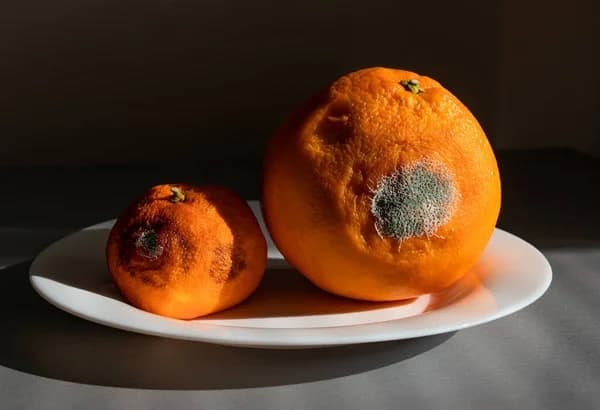
Two tangerines rotting on a plate.

by Jack Dingwall

Elizabeth was walking through the woods on her way home from work when she came across a rotting corpse. It was lying in the shadows of the tree line, just off the forest trail. Elizabeth looked at it with pity, observed its filthy, torn clothes, its matted hair, its blackened teeth. And the corpse spoke to her.

I am in need, it hissed. These bones do not belong here in the mud and the muck. Bugs crawl into my eye sockets, and maggots eat at my flesh. I would like to once again be granted the dignity of resting in a house. Please, this I beg of you.

Elizabeth continued to stare at the poor thing. She thought of her own house, so big and empty, with drafty windows and floorboards that never seemed to settle. Maybe they would both be comfortable this way. She stooped low and scooped the corpse up in both of her arms, carrying it down the path as if it were her bride.

When they arrived at her house, she gently placed it on the front step so she could unlock her door. Inside was Elizabeth’s kitchen, small but well stocked. Beyond the kitchen, the house opened up to a grand living room with tall standing lamps, a plush carpet, and a large cushy armchair sitting by a fireplace. It was in this chair that Elizabeth placed the corpse before bending down to light a fire.

As the warm glow began to fill the room, Elizabeth returned to the corpse, slumped over and slackjawed in its chair. She pushed its torso up, so it sat in a reclining position. She closed its mouth, so it looked a little less ridiculous. Then, as an afterthought, she picked up its right leg, crossed it over the left one, and placed its hands on its lap.

Thank you. Your kindness and understanding have given me peace that I have not known in quite some time. But, now that I am resting in a chair, in a house, I am feeling much as I did when I was alive. I am quite hungry. Might you have some food to spare for this poor old bag of bones?

Elizabeth stopped for a second to consider. She had plenty of food, and she loved to cook, but what’s the use in cooking for a corpse? How could its rotted taste buds enjoy anything they encountered over the taste of death? Eventually, she made her way over to the fridge and dug out of the back a punnet of raspberries that were starting to look a little squishy anyway.

She brought them back to the corpse hesitantly, unsure how to go about it. She slowly reached one hand out to the corpse’s face and opened its jaws once more. Then, she grabbed a handful of berries and gently placed them in the corpse’s mouth. As soon as the berries touched its teeth, it came alive, devouring them with nothing less than unrestrained ferocity.

Elizabeth made to pull her hand away but before she could, the corpse grabbed her wrist tightly. It brought her hand back to its mouth, and its swollen tongue began to lap at her fingers, licking away any remaining juice and pulp from the berries. When it was satisfied, it let go of Elizabeth and dropped its hand to its side, inert once again.

I thank you for the second time. I am quite tired. I will rest now.

And so, it sat there silently.

Elizabeth, feeling rather overwhelmed by it all, climbed the wooden steps that led upstairs and went straight to bed.

The next day, when Elizabeth awoke, she went straight down to check on the corpse. It was sitting in its chair in the same position she had left it in the night before. She eyed it cautiously, as if it might come alive again, but it just sat there. Then she noticed that the chair beneath it had changed; there was a large dark splotch right underneath the corpse, as if the chair was rotting.

She got to work making breakfast, eggs and bacon. No sooner than the food started to bubble and sizzle in the pan, the corpse spoke up again.

Is that food you are making, my dear?

“Yeah,” she called back, “just my breakfast.”

It looks so delicious. Would you mind terribly if I partook as well?

Elizabeth looked down at the eggs and bacon in her pan, made just how she liked them. She sighed. She dumped them out onto a plate and retrieved a fork, walking over to the corpse. This time, she knew what to expect when she put the first bit of egg into its mouth. It chewed so carelessly that it kept crunching down on the fork as well. Once the last piece of bacon was gone, Elizabeth went to make herself more, expecting the corpse to remain idle now that it had eaten.

She had just cracked a new egg into the pan when it spoke again.

More.

“Excuse me?”

More, I need more.

Elizabeth stared at the food. She was hungry. But she served up another round of food anyway. That couldn’t satisfy the corpse either. The corpse kept demanding food until there were no eggs and bacon left at all. It asked what else was in the fridge. Each food item she named, it demanded for itself. Leftover pasta, unopened quarts of yogurt, luncheon meats, a stick of butter. As it ate, the dark rot beneath it began to grow, working its way down the chair and into the floor below it. Once the fridge was empty, it asked about the pantry. Elizabeth’s stomach was growling with hunger, but she knew the corpse had gone without food much longer than she. So, she continued to feed it cans of tuna, tomato soup, a jar of peanut butter. The corpse downed all of it with the same disregard for decorum.

Finally, the corpse had just finished licking the last drops of a jar of honey when it once again wailed more, MORE, and Elizabeth was forced to say, “But there isn’t any more. You ate all of it.” The corpse was silent for a long moment. Elizabeth was beginning to think it had settled down again; maybe it was satisfied. But it had more to ask of her.

Please my dear, after all those days sprawled so uncomfortably across the forest floor, I grew so very sore. I think if I were to simply have a hot bath, I would feel so much more like myself again.

Wearily, Elizabeth pushed her hunger aside and went upstairs to draw a bath with steaming water. She retrieved the corpse and was very careful not to bump its head as she brought it up to the bathroom. Gently, she laid it down in the tub. She turned the spout off and left to give it some privacy.

Back downstairs, Elizabeth spent a second examining the rot coming from the corpse’s chair. It had expanded, surrounding the chair, breaking down the living room carpet. It stank too, the smell of death thick in the air like a relentless fog. As she was examining, it grew even more, expanding outwards right before her eyes. It wouldn’t be long before there was no living room carpet left. Elizabeth didn’t know what to do.

In the kitchen, there were drops and bits of food on the floor from her rush to get it all to the corpse’s mouth. She fished a rag out of the cupboard under her sink and began wiping the food away. She went back to the sink to wash the rag off but, when she turned the water on, the liquid that came out was as black as ink and carried the same rotting stench that the corpse was spreading all over her house.

With an inkling of what the problem might be, Elizabeth ran back upstairs as fast as she was able. She burst into the bathroom to find the corpse sitting in a tub full of the repulsive, black water. Pushing down her nausea, she plunged her arms into the mire and wrapped them around the corpse’s torso. She heaved its now waterlogged body out and slung it over her shoulder.

As she carried it downstairs, she saw the rot that had taken over her living room was now spreading through the pipes, leaving veins of foul grime crisscrossing across her walls, fattening by the second.

She stumbled down the last few steps and dragged the bloated corpse back to the husk of her living room so she could throw it into what was left of the armchair. She stood staring at the corpse, wondering how she could have let it go this far. She was just so lonely. And the corpse had looked so sad. She couldn’t help but give it everything it asked for. And, of course, it asked for more.

Cold. I grow cold. The first night I was here, you so lovingly lit a fire for me. Do you think you would be able to light it once more?

Elizabeth wasn’t even sure she could. All the firewood was rotted, and the fireplace had sunken in on itself, crumpled like a discarded wrapper. But she placed new logs where she could squeeze them in and struck a match. To her surprise, it caught almost instantly. The corpse let out a noise, like a contented sigh, though Elizabeth could feel no heat coming from the fire. Elizabeth collapsed onto the decomposing floor, hungry, exhausted, and soaking wet. She lay there, staring up at her ceiling as her house wasted away around her.

My dear, spoke the corpse, it has been so long since my last meal. I feel hunger gnawing at my stomach even now. If you could spare som

“I don’t have any,” said Elizabeth, sitting up to look the corpse in the eye. “I have no more food.”

Well, in that case, might I have som

“I don’t have anything. There is nothing here for you anymore. You took everything.”

The corpse seemed to consider this. It sat still for a moment. Then, abruptly, it stood up and walked out of the house at a strange, jerking pace. On spindly, shaking limbs it walked back down the path and into the forest, leaving Elizabeth and her house behind. She didn’t have the energy to chase after it, or to call out to it. She didn’t even have the energy to stand up. She just sat there, on her living room floor, and waited for the rot to consume her as well.

Author bio:

Jack Dingwall grew up in Lakeside, Ontario, a town so small it didn’t even have a gas station. A horror lover, Jack has many morbid fascinations. When he was 13, he wrote his first horror short about a family being eaten alive by a demon. He currently attends Algonquin College and resides in Ottawa despite not being able to tolerate cold weather.

Rot” will be featured in By the Fire: Tales from the Ashes, the upcoming fiction anthology to be published by Algonquin College Professional Writing students in spring 2024. Follow Spine Online on Facebook at facebook.com/ACprofessionalwritingprogram or Twitter/X @ourspineonline for updates on anthology launch dates and ordering information!
Online Editor

The Algonquin Times is a newspaper produced by journalism and advertising students for the Algonquin College community. Follow us on social media! Algonquin Times Twitter Twitter (Events & Promos) Facebook Facebook (Events & Promos) Instagram Snapchat

Mid Week Memes

Take a break from the mid week stress, and enjoy these silly memes!

Take a break from the mid week stress, and enjoy these silly memes!

Men’s soccer ‘heartbeat’ Oscar Forward hungry to bring home a championship

The first person who should come to anyone’s mind when thinking about who embodies passion, determination and commitment to achieving a goal is Algonquin Wolves men’s soccer team player Oscar Forward. Forward fell in love with soccer at age 13, partly thanks to his English background on his mom’s side, where soccer is everything. “I […]
Photo: Stephen Priel
Forward is determined to help Algonquin College bring back the success in men’s soccer that they once had.

The first person who should come to anyone’s mind when thinking about who embodies passion, determination and commitment to achieving a goal is Algonquin Wolves men’s soccer team player Oscar Forward.

Forward fell in love with soccer at age 13, partly thanks to his English background on his mom’s side, where soccer is everything.

“I became obsessed with soccer. I quit every other sport and started really getting into it, and once I got into it, I got attached. Before school at 6 a.m. in the morning, I’d go train at Carleton University fields every day,” said Forward.

While he has played for other post-secondary institutions, such as Humber College and Concordia University, Forward finds a special connection to Algonquin College.

“I’ve created a really good relationship with all three of our coaches. I love our physio staff, even the people that work at the front desk (of the Z building). It’s a whole family and community feeling.”

Forward leads by example and was given the role of co-captain this past season for the Wolves. He is considered the heartbeat of the team by many of his teammates.

“He’s always had a drive for himself and his teammates to do everything in their power to win games on the soccer pitch,” said Wolves goalkeeper Nicholas Parry. “As he’s matured as a soccer player at Algonquin, he’s been able to channel that drive to become a leader that everyone on the team can look up to. He’s a dedicated athlete and will always set the tone in terms of hard work and quality on the training pitch and in games.”

Teammate Michael Iliopoulos shared the same feeling, explaining that Forward leads both with his actions and his words.

“He motivates us and keeps us accountable. He’s got all our backs if we were to get into a tackle or get hit. I know he’ll be there to back any one of us up,” said Iliopoulos.

Forward is a very humble, intelligent and, if necessary, fiery person, which makes him not only a terrific teammate but a great player to coach.

“You have to make them (your teammates) understand why you want to push them and why you get upset,” said Forward.

“One time, I had one of our strong players ask me why I’m so hard on him so I pulled him to the side and told him him it’s because I know you shouldn’t be doing that because you’re better than that and I expect you to be better than that every single day. I told him that because I care,” said Forward.

Coach Angus Wong expressed his appreciation for Forward’s character, a quality evident in both game situations and daily interactions. This sentiment is not only shared by him but also resonates throughout the entire staff.

“Oscar is an intelligent player who understands what we’re trying to coach, why, and how to implement it on the pitch. Oscar is personable and is well-liked by the staff,” said Coach Wong.

The Algonquin Wolves finished their regular season with six wins, three losses and one draw, falling short in the playoffs in the quarter-finals against Conestoga College, which went on to win the Ontario Colleges Athletic Association’s championship.

Wong’s evaluation of the season was a positive, saying his team showed it was capable and is heading in the right direction.

“We had moments this season where we played like a team who could compete against and beat anyone in the CCAA. Unfortunately, we didn’t perform well enough in the big games to achieve our goal, ” said Wong.

Forward is determined to ensure next season will be an improvement and more akin to the 2014-15 season when Algonquin men’s soccer team last secured the OCAA championship.

“I can only imagine what it would be like to bring a gold medal back (to Algonquin College). I just want to win for the school, because we haven’t had a good period in soccer, where we normally dominated for years for a while, so I kind of want to bring that back,” said Forward.

Algonquin College celebrates Arabic language with music, food and calligraphy

Arabic calligraphy surrounded the Student Commons, traditional music filled the air and some of the oldest coffee in the world was served for the UNESCO International Day of the Arabic Language on Dec. 7. The event was organized by the Saudi Arabian Cultural Bureau, a part of the Royal Embassy of Saudi Arabia. Ammar Baitalmal, […]
Photo: Roxanne Lamarche-Silmser
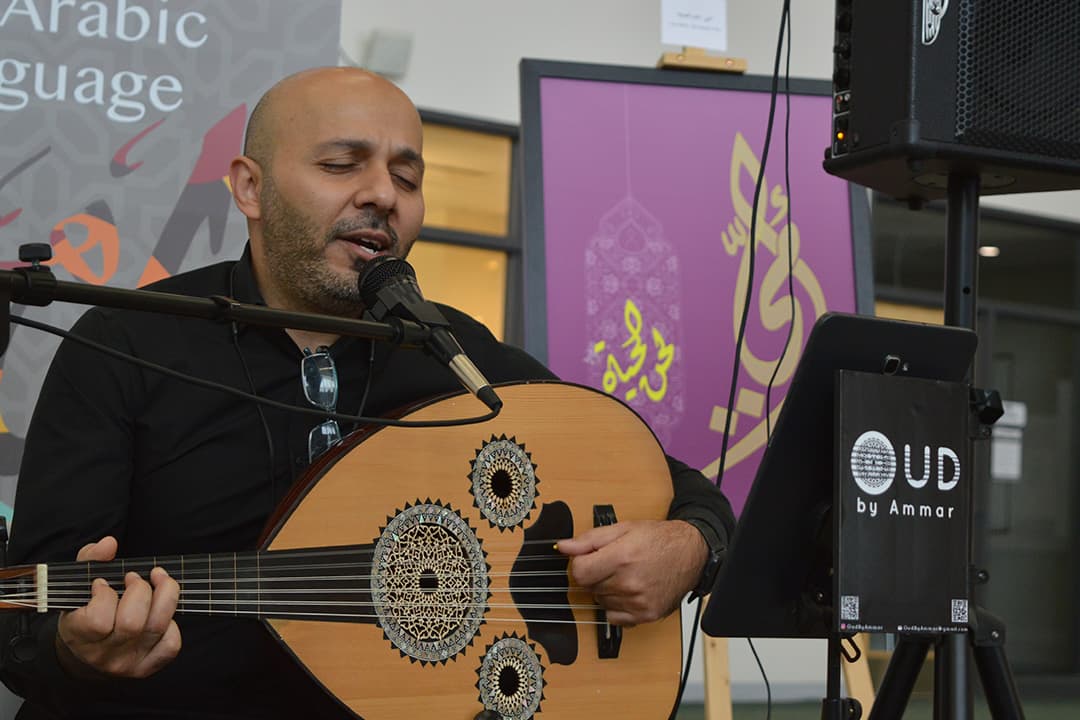
Ammar Baitalmal, a musician at the event, sang and played the traditional oud, an instrument that dates back over 4,000 years.

Arabic calligraphy surrounded the Student Commons, traditional music filled the air and some of the oldest coffee in the world was served for the UNESCO International Day of the Arabic Language on Dec. 7.

The event was organized by the Saudi Arabian Cultural Bureau, a part of the Royal Embassy of Saudi Arabia.

Ammar Baitalmal, a musician, was invited to the event to perform.

“It’s a great opportunity because this is my mother tongue,” said Baitalmal. “I would love to contribute to the event in any way.”

Baitalmal sang in Arabic and played the oud, an instrument dating back over 4,000 years ago to the times of the prophet in Islam.

It’s also been used in traditional music in many parts of the world like the Middle East, North Africa, Turkey and Iran. It made its way to Europe, where in many parts it evolved to become the lute, another string instrument.

Among the food served at the event, the star of the show was Arabic coffee.

The drink originated in the 15th century in modern-day Yemen. It’s recognized today as an Intangible Cultural Heritage of Arab states, which is a title given by UNESCO when it considers something as part of a culture’s heritage.

To balance out the coffee’s bitter taste, it’s served with a small plate of sweet dates.

Sarfraz Khan, a professor of information and communications technologies at Algonquin College, enjoyed the food and music that the event had to offer.

“I lived in the Middle East for three years,” said Khan. “I’m familiar with the taste and culture and it’s beautiful to see it happening at Algonquin College.”

After finishing his dates and coffee, Khan went to a calligraphy table to get his and his wife’s names written in Arabic.

Sarfraz Khan, a professor for Informations and Communications Technology at Algonquin College, wrote down his and his wife's names to get written in Arabic.
Sarfraz Khan, a professor for Information and Communications Technology at Algonquin College, wrote down his and his wife’s names to get written in Arabic. Photo credit: Roxanne Lamarche-Silmser

At the table, the host wrote a customer’s name on a piece of paper and put it in an envelope with a card breaking down Arabic letters, their pronunciations and how they’re used.

Jaden Girard and Matthew Glas, both police foundations students, were humbled by the language’s calligraphy.

“It’s very impressive,” said Glas. “The calligraphy that surrounds us is much more advanced than Latin calligraphy.”

“My handwriting looks terrible in comparison to these phenomenal artworks,” said Girard.

Men’s Wolves volleyball team ends 2023 with a win

The Algonquin Wolves beat the Canadore Panthers 3-1 on Dec. 2 at Canadore College, putting them tied for first in the east division. In the first set, the Wolves came out strong, winning 25-22. The second set was a different story, with Canadore winning 25-17, tying the game 1-1. Like the Wolves have done on […]
Photo: Marco Ghosn
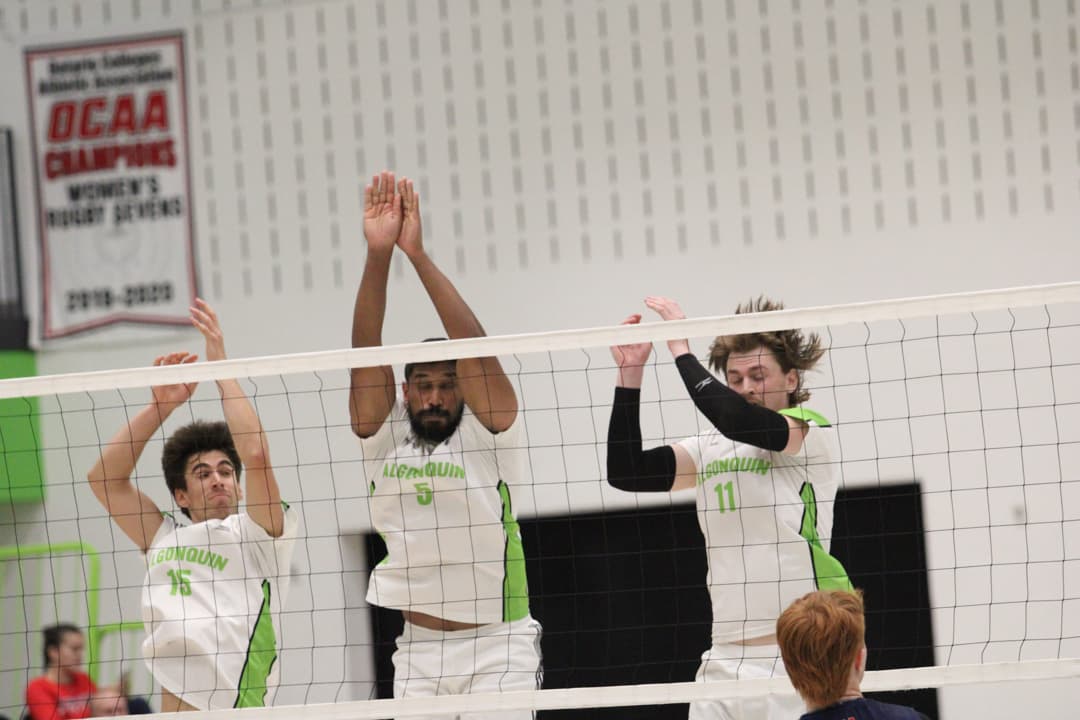
Wolves players block at the net. (File photo)

The Algonquin Wolves beat the Canadore Panthers 3-1 on Dec. 2 at Canadore College, putting them tied for first in the east division.

In the first set, the Wolves came out strong, winning 25-22. The second set was a different story, with Canadore winning 25-17, tying the game 1-1.

Like the Wolves have done on many occasions throughout the season, whenever things are looking down, they find a way to turn it around. They won the next two sets 25-23 in set three and 25-22 in set four to win the last game before the winter break.

“It was a good game, I’m happy with the way we played. I know they wanted to beat us in the rematch after we beat them at home, so it was good to get the win today,” said Jelle Kooijman, head coach of the Wolves.

The MVP of the game, Malcolm Spence, was grateful for how the team can come together during good and bad moments of games this season.

“It was an up-and-down game for us and the reason we do so well is because whenever we are having down moments, we always find a way to bounce back as a group and win together as a team,” said Spence.

The win gave the Wolves a 9-2 record which places them tied with Georgian and Centennial for first place in their division.

“Of course, being first in the division is great but as a wise Kobe Bryant said, ‘Job not finished.’ We’re just looking on from here. It’s a great thing to be first place but we still have half the season left to play so we need to keep playing well and not get distracted,” said Spence.

The Wolves will be back in action in 2024 on Jan. 12 against La Cité.

College alumni Gord Wilson honoured on Nepean Wall of Fame for broadcast career

Gord Wilson, an Algonquin College alumni and radio announcer for the Ottawa Senators, has been recognized on the Nepean Wall of Fame. After 30 years covering the Ottawa Senators as a broadcaster, Wilson has been recognized for his many years of hard work and dedication in radio. “I feel very humbled and very honoured, I […]
Photo: Gord Wilson
Gord Wilson at the Canadian Tire Centre in the broadcasting booth.

Gord Wilson, an Algonquin College alumni and radio announcer for the Ottawa Senators, has been recognized on the Nepean Wall of Fame.

After 30 years covering the Ottawa Senators as a broadcaster, Wilson has been recognized for his many years of hard work and dedication in radio.

“I feel very humbled and very honoured, I grew up in Nepean, and oddly enough, I worked there from the time I was 16 to 22 years old. The Sportsplex was the place where I was able to earn enough money to get myself into the broadcasting program at Algonquin,” said Wilson.

Dan Mellon, program co-ordinator of the radio broadcasting at Algonquin College, had the opportunity to interview Wilson an alumni when Mellon was a student in the program.

“He is a really nice guy and fun to talk to,” said Mellon.

At a young age, Wilson had a passion for hockey and would always listen to it on the radio in his bedroom at night.

“Starting at the age of 12, I fell in love with the medium itself as well as the radio,” said Wilson. “It was an awesome form of entertainment. It is always there and that was the start of the love affair between me and radio.”

Wilson’s first radio job was with CKOB in Renfrew, Ont. During his time at CKOB, he did many different jobs, such as selling, writing, and producing commercials.

While working at CKOB, Wilson decided to put together some demo tapes to give to CKBY in Ottawa, now known as the 101.1 FM country radio station.

“I brought a tape recorder in the booth with me and I was reading news, sports, weather and farm reports, it was about a 20 minute cast,” said Wilson. “Once the recording was done, I pressed stop and put the tape in an envelope with my resume and sent it off to CKBY, I then got a job in Ottawa and worked there for three years.”

In 1992, Wilson was working for CFRA as a part of the sports team and was the voice of sports in Ottawa. When the Ottawa Senators team was born, Wilson and his now broadcasting partner Dean Brown were both in the running for the broadcasting jobs available.

“We went to Montreal and took our tape recorders and broadcast games from Montreal. There would be exhibition games, regular season games and the Canadiens would be kind enough to let us in a broadcast booth,” said Wilson. “From there, we got hired with the radio to broadcast Senators games.”

Wilson and his partner put about eight to 10 hours into preparing for a Senators game. They pulled together game sheets, preparation sheets and depth charts with notes and statistics on each player from both teams.

Wilson said radio broadcasting students should take any opportunity that comes available.

“Be a sponge. Take in all the information you can get when you are a student, be prepared to do whatever it takes. Never go into any situation where you will say no, that’s not for me. Say yes to everything,” said Wilson.

Santa delights children young and old in the Student Commons

Outside, the late afternoon air was crisp. Inside the warmth of the Student Commons, the stage was set for a magical celebration with the 12th annual Christmas tree lighting ceremony. The Students’ Association and the AC Hub provided a wide range of activities, from gingerbread house-making to photos with Santa. The event attracted about 250 […]
Photo: Kerry Slack
Santa delights children at the 12th annual Christmas Tree Lighting Ceremony in the Student Commons on Dec. 4.

Outside, the late afternoon air was crisp.

Inside the warmth of the Student Commons, the stage was set for a magical celebration with the 12th annual Christmas tree lighting ceremony.

The Students’ Association and the AC Hub provided a wide range of activities, from gingerbread house-making to photos with Santa. The event attracted about 250 enthusiastic people of all ages.

Days in advance, Santa’s little helpers arrived with the towering tree. Through a lot of teamwork, some interesting tools and equipment and an Ingenious light-hanging technique, the giant tree didn’t take long to assemble.

On the day of the tree lighting, Santa led story time.

Children gathered in anticipation, their eyes sparkling with wonder, eager to hear their beloved Santa.

Santa created a mesmerizing atmosphere, weaving tales of love, kindness and the magic of Christmas.

“My two-year-old is Christmas-obsessed this year, so the best part was seeing her so fixated on Santa,” said Matt Regnier, manager of board communications and stakeholder relations with the Algonquin Students’ Association

At the gingerbread house-making station, children and adults showcased their creativity by decorating pre-assembled gingerbread houses with colourful candies and frosting.

Graphic design students and friends Cassidy Dingham and Alison Morin worked together on a gingerbread house.

“We will each be going home for the holidays, so this is a nice way to connect before we don’t see each other for a while,” said Dingham.

The sense of camaraderie encircled the entirety of the assembly tables as friends and families worked together to create unique houses.

Jackie Leroux, a developmental services student, delighted in planning and constructing a gingerbread house with the help of her co-worker, Bao Bao.

Developmental services student Jackie Leroux and her co-worker, Bao Bao make a gingerbread house while enjoying the happy energy.
Developmental services student Jackie Leroux and her co-worker, Bao Bao make a gingerbread house while enjoying the happy energy. Photo credit: Kerry Slack

“Doing the gingerbread house with my friends is a nice way to spend some time,” said Leroux.

“Look at how happy all these kids are,” she said. “You can’t help but get in the spirit.”

Adjacent to the gingerbread house-making area, an expert face painter transformed children into whimsical characters, animals and holiday-inspired designs with her skilled brushstrokes.

A constant stream of hot chocolate was available for everyone, providing a comforting treat. Students and families clutched their warm beverages while mingling with friends as they waited in line to see Santa.

“I’m so happy to be here,” said Santa. “Look at all these nice people. Not a sign of the Grinch anywhere.”

“That guy is always on the naughty list,” he said.

Children eagerly lined up, dressed in their festive best and Santa listened attentively to their wishes and shared precious moments.

The resulting photos captured the joy in each person’s eyes, becoming cherished mementos for families to treasure for years to come.

“She (daughter) loved every minute, and since getting the photos, she loves to look at it. It makes her so happy,” said Regnier.

“My seven-year-old is very skeptical of Santa, but I think seeing so many people (and adults) taking photos with Santa gave him a boost of Christmas cheer,” he said.

Accompanying the festivities was a talented and energetic band, filling the air with festive sounds. The lively performance inspired spontaneous singing and dancing, including an impromptu toddler breakdance session which topped off the party with smiles.

The Christmas tree was lit with happy cheers from all.

From gingerbread house-making and face painting to warming hot chocolate, inspiring story time and the joyful presence of Santa, the event left attendees with lasting memories and a sense of holiday enchantment.

Algonquin Times on Instagram
Follow Algonquin Times on Instagram
Algonquin Times horoscopes
Algonquin Times podcast
Follow Algonquin Times on Instagram
Algonquin Times horoscopes
Algonquin Times on Instagram
Algonquin Times podcast

Stay Informed

Sign up for our newsletter

Subscribe

* indicates required