As an athlete with a lost season, I’m cheered by my sports family

Sitting alone at my house, my phone buzzed with a message from one of my cheerleading teammates to our team group chat. It was a video she made filled with moments from our season, with our song, The Climb by Miley Cyrus. Watching all the memories play out filled me with sadness as tears flooded […]
Photo: Angeleah Brazeau-Emmerson

Sitting alone at my house, my phone buzzed with a message from one of my cheerleading teammates to our team group chat. It was a video she made filled with moments from our season, with our song, The Climb by Miley Cyrus. Watching all the memories play out filled me with sadness as tears flooded my eyes. I remembered all the times we stood together, side by side, singing this song before competitions.

Now, we can only communicate online.

This is the longest break from cheerleading I have had since joining the sport in 2018. I’m not used to not being able to see my teammates. No one is. Our only way of being together safely now is through virtual practices and chat messages.

Like many other athletes right now, my season has been cut short. Major league sports seasons have been cancelled and the IOC has postponed the 2020 Tokyo Olympics to take place summer 2021.

I never thought a world-wide pandemic, COVID-19, would be the cause of me not being able to be in the cheer gym with my team. Like many other businesses, the gym I cheer at has closed among the outbreak. Our end-of season events have been postponed and we can’t go to practice.

In the cheer community, March 15, was the day we received the news we were dreading. It was confirmed that the Cheerleading Worlds, held in Orlando, Florida, would be postponed. While this was expected, the message from my coach still brought tears to my eyes. It brought out many emotions for all the athletes who have put everything they have into the sport.

As of now, there are no new dates set. Options are still being explored by organizers who are closely following guidance from the CDC and WHO.

But this strange time has reminded me how lucky I am to be healthy and able enough to be a part of this sports family.

We bond as a team and become a second family. Sometimes family members get frustrated with each other and that is not foreign to cheer either.

We are all equally determined to achieve greatness, driven to be the best we can. When practices don’t go as smoothly as we would like, it’s easy to let emotions consume us but it can also pull us together. Right now, there is nothing I want more than to be back in the gym with my sisters – even for those hard practices.

I understand the importance of the situation of course. Being physically distanced is what needs to be done for the health and safety of everyone. But knowing this doesn’t make it hurt any less.

Cheer is a way I take my mind off stresses in my life. It is a safe place for me and many other athletes. Not having this outlet has been hard to deal with especially in a time of uncertainty.

No matter what we go through, every athlete I step on the mat with, and my coaches, have my back. If I was hanging from the edge of a cliff, with only a rope holding me from falling, they would be there to hold the rope, no matter how painful.

But just because we aren’t in the gym, doesn’t mean we aren’t together. I am used to seeing my team twice a week and four times a week during competitions. There are times when I see them more than I see my biological family. At this point we’re not sure when we might see each other again and we don’t know what the rest of our season will look like.

When our coach messaged us to tell us about competitions being postponed, she told us how proud she was of us. Telling us she hopes we will remember the memories and achievements we have had as a team.

“The season isn’t over. We have two options, to let this ruin you, or to let this fuel you. To become a stronger team and better athletes,” she wrote in her message. “When faced with a difficult situation, you always have a choice.”

While nothing is certain at the moment, in cheer and in life, I have seen my cheer family come together to lift each other up. We all have the same goal, to get back in the gym even if it’s only for one last practice.

One thing I have been told over and over is, anything can happen in cheer. It’s not over until it’s over.


Page Escapes: I am the Messenger is a great read for shut-in days

In this time of isolation and global uncertainty because of the COVID-19 crisis, the need for entertainment to keep us occupied has never been more urgent. This is why over the next couple of weeks I will be sharing some of my favourite books. These are books that have been sources of comfort during some […]

In this time of isolation and global uncertainty because of the COVID-19 crisis, the need for entertainment to keep us occupied has never been more urgent.

This is why over the next couple of weeks I will be sharing some of my favourite books. These are books that have been sources of comfort during some of my own personal student-angst moments over the years. I’ll also include some new ones that I will finally be able to read with all the available time on my hands.

Before we get into the first book however, I’d like to assure that I know what I’m talking about. I have been a steady reader since the age of 10 when I decided books were no longer icky due to learning the Harry Potter movies were actually based on books. This proved to me that books were not just an adult’s way of sucking the fun out of anything. I later eventually had to accept that 9/10 times, yes, the book is better than the movie.

Assured? Good! Let’s get into the first one.

I Am The Messenger is a nice 357-page novel by Markus Zusak, who is also the author of critically acclaimed The Book Thief.

For those of you who are frightened by large tomes, don’t be: this one goes down easy.

The story follows Ed Kennedy, an underage cab driver who is pretty much your average loser. He’s stuck in the same crappy part of town he grew up in, is desperately in love with his best friend, Audrey, equally devoted to his dog, the Doorman, and has no clue in hell what he wants in life. All that changes after he stops a seemingly pathetic attempt at a bank robbery when the first ace arrives in the mail.

Armed with only his cab, a vague idea of where to go and questionable intuition, Ed makes his way through town to send a message to every person that shows up on those aces of Diamonds, Clubs, Spades and Hearts. Some are brutal, others heart-lifting – all of them life changing.

Almost every moment is illuminated by Zusak’s brilliant, but not overly flowery use of words. Even just a simple description of the Doorman lying in the sun by Ed’s door makes me feel something. “He’s happy when the sun throws warmth on through the flyscreen door. He’s happy to sleep there and move on a forward slant when I try to shut the wooden door at night. At times like that, I love the hell out of that dog. I love the hell out of him anyway. But Christ, he stinks.”

I think in large that’s because I’ve seen many first-person narratives that seem almost more like a third-person telling with how detached or overdone they can be. In I Am The Messenger, Zusak manages to use simple language that feels like Ed, which makes it easier to relate to this already very relatable character on an even deeper level. For example: “That was when the world wasn’t so big and I could see everywhere. It was when my father was a hero and not a human.” The author knows how to use simple language to make the most impact. This way, the things important to Ed become important to us.

There are also plenty of twists throughout the novel to keep the reader on their toes in the quest of trying to figure out who sent Ed the cards, as well as in the messages themselves. I honestly, did not see quite a few of them coming, and I am notorious among my friends for guessing the big twist in books and films.

Perhaps the most memorable thing about this book though, is that every time I get to the end of the novel, when Ed barely recognizes the man in the mirror, my own reflection seems a little brightened. The hopeful joy this book brought to me managed to lighten even the dark circles under my eyes from reading too late.

Algonquin’s spring term set to begin online May 19

The first six weeks of the spring 2020 term will run online beginning on May 19, Algonquin president Claude Brulé said in a statement issued to staff and students on March 27. There will be a one-week break after online classes conclude, followed by an additional six weeks of face-to-face learning, provided it has been […]

The first six weeks of the spring 2020 term will run online beginning on May 19, Algonquin president Claude Brulé said in a statement issued to staff and students on March 27.

There will be a one-week break after online classes conclude, followed by an additional six weeks of face-to-face learning, provided it has been deemed safe to do so. This applies to all existing and returning students.

New intakes will be limited to existing programs with fully online curriculum, and any highly skill-based dependent programs will be deferred to the coming fall term.

Based on this, any 2020 Winter term skill-based academic studies or placements set to occur after April 17 will be planned for the end of June. Information on rescheduling will be available to students from their respective program coordinators via email and Brightspace.

The letter also mentioned the postponement of the 2020 spring convocation ceremony, which will be rescheduled for some time in the fall. Changes to any of these announcements will be updated as details of the situation unfold.

Brulé asks that students resolve to return to their studies with “renewed energy, passion and appreciation for everything, big and small, that makes Algonquin such an incredible place.”

When a pandemic happens during placement

When my professor asked me to call her, my body filled with nervous energy. I knew in the back of my mind what she would say, but my head was filled with denial. The last two years of school was a buildup to the real-world experience. For me, that was working at a big Canadian […]

When my professor asked me to call her, my body filled with nervous energy. I knew in the back of my mind what she would say, but my head was filled with denial.

The last two years of school was a buildup to the real-world experience. For me, that was working at a big Canadian media company. All the years of learning journalism, reading and watching politics had brought me to this moment.

But like many students at Algonquin, my placement ended early because of the novel-coronavirus outbreak. It was hard not to feel selfish for being upset when people are sick and dying around the world.

I could not turn off the news all week — watching intently as I hoped things would turn around and I could go back. That never happened.

Nothing at school had prepared me to deal with a pandemic during placement. There was not a class or lesson on what to do in this situation.

But I could not help but wonder how Algonquin was planning to replicate the experience I could gain from placement — an invaluable experience that would allow me to make connections in the field and gain new skills.

Working at my placement would also have helped me to potentially gain employment after graduation. The Higher Education Quality Council of Ontario, which is a government agency that researches ways to continuously improve Ontario’s postsecondary education system, even said so in a 2012 report. In that report, titled Integrated Learning and Post Secondary Graduates: The Perspective of Ontario Employers, the council says participation in placements is associated with a greater likelihood of securing full-time employment.

According to the World Health Organization, there are 416,686 confirmed cases of the virus and 18,589 confirmed deaths. When I put those numbers into perspective, the decision by Algonquin to suspend my placement is not the end of the world. Families have had to say goodbye to loved ones, while others work to recover from the virus.

As sad as I am not to be on placement, though, it has given me time to reflect on a few things, like the important role journalism plays when faced with something like the novel-coronavirus. We are a source for the public to find out what is going on, and not having my placement anymore does not mean I still cannot do my job as a journalist and be that conduit of critical information to the public.

My current placement has brought me back to where it all started with the Algonquin Times. This alternative has still allowed to serve my duty as a journalist, and that is all I could ever ask for.

One part of my life might be on hold for now, but at least I still have my health and my family — and for that I am grateful. As I try to see the positive in dark times, I remind myself that this is not the end of my career. It is only temporary.

When a pandemic happens during placement

When my professor asked me to call her, my body filled with nervous energy. I knew in the back of my mind what she would say, but my head was filled with denial. The last two years of school was a buildup to the real-world experience. For me, that was working at a big Canadian […]

When my professor asked me to call her, my body filled with nervous energy. I knew in the back of my mind what she would say, but my head was filled with denial.

The last two years of school was a buildup to the real-world experience. For me, that was working at a big Canadian media company. All the years of learning journalism, reading and watching politics had brought me to this moment.

But like many students at Algonquin, my placement ended early because of the novel-coronavirus outbreak. It was hard not to feel selfish for being upset when people are sick and dying around the world.

I could not turn off the news all week — watching intently as I hoped things would turn around and I could back. That never happened.

Nothing at school had prepared me to deal with a pandemic during placement. There was not a class or lesson on what to do in this situation.

But I could not help but wonder how Algonquin was planning to replicate the experience I could gain from placement — an invaluable experience that would allow me to make connections in the field and gain new skills.

Working at my placement would also have helped me to potentially gain employment after graduation. The Higher Education Quality Council of Ontario, which is a government agency that researches ways to continuously improve Ontario’s postsecondary education system, even said so in a 2012 report. In that report, titled Integrated Learning and Post Secondary Graduates: The Perspective of Ontario Employers, the council says participation in placements is associated with a greater likelihood of securing full-time employment.

According to the World Health Organization, there are 416,686 confirmed cases of the virus and 18,589 confirmed deaths. When I put those numbers into perspective, the decision by Algonquin to suspend my placement is not the end of the world. Families have had to say goodbye to loved ones, while others work to recover from the virus.

As sad as I am not to be on placement, though, it has given me time to reflect on a few things, like the important role journalism plays when faced with something like the novel-coronavirus. We are a source for the public to find out what is going on, and not having my placement anymore does not mean I still cannot do my job as a journalist and be that conduit of critical information to the public.

My current placement has brought me back to where it all started with the Algonquin Times. This alternative has still allowed to serve my duty as a journalist, and that is all I could ever ask for.

One part of my life might be on hold for now, but at least I still have my health and my family — and for that I am grateful. As I try to see the positive in dark times, I remind myself that this is not the end of my career. It is only temporary.

What the $82-billion COVID-19 federal aid package means for students

Prime Minister Justin Trudeau announced an $82-billion aid package on March 18, to provide support to Canadian during the coronavirus pandemic. The package includes $27 billion in direct assistance. Student loan pause: Starting March 30 until Sept. 30, anyone repaying their student loan will automatically get a six-month interest-free pause on repayment on the federal […]

Prime Minister Justin Trudeau announced an $82-billion aid package on March 18, to provide support to Canadian during the coronavirus pandemic. The package includes $27 billion in direct assistance.

Student loan pause:

  • Starting March 30 until Sept. 30, anyone repaying their student loan will automatically get a six-month interest-free pause on repayment on the federal debt portion of your loan.

Financial support:

  • The one-week waiting period for employment insurance has been waved for individuals in quarantine who claim EI. You are not required to provide a medical certificate to get EI sickness benefits.
  • The Canada Revenue Agency will administer the emergency care benefit giving up to $900 bi-weekly for up to 15 weeks. Applications for the emergency care benefits will be available on the CRA website starting in early April.

The emergency care benefit:

  • It will provide support to self-employed workers, who are quarantined or sick with COVID-19, but who do not qualify for EI benefits. For people who are taking care of a family member who is sick with the virus or an elderly parent, this benefit will help too.
  • It will help parents with children who need care because of school closures and cannot earn income during that time. (This will help even if they do not qualify for EI.)

Tax credits:

  • Families with children will receive a boost to the Canada Child Benefit by $300 per child starting in May.
  • The government will provide a one-time payment in May 2020 to double the maximum annual Goods and Services Tax credit payment. This will provide close to $400 for single people and close to $600 for couples.

Extending the deadline for taxes:

  • The deadline to submit your taxes has been extended to June 1. If you owe money on your taxes, you now have until Aug. 31 to pay.

Campus Services working towards refunds for parking passes

Campus services at Algonquin is still working on how to help parking permit holders who no longer need to park on campus due to the shut down. “We are currently discussing parking permit refund details and processes,” said Mara Lowrey, marketing and communications manager for Campus Services in an email. “This situation is rapidly changing […]
Photo: Douglas Boyle
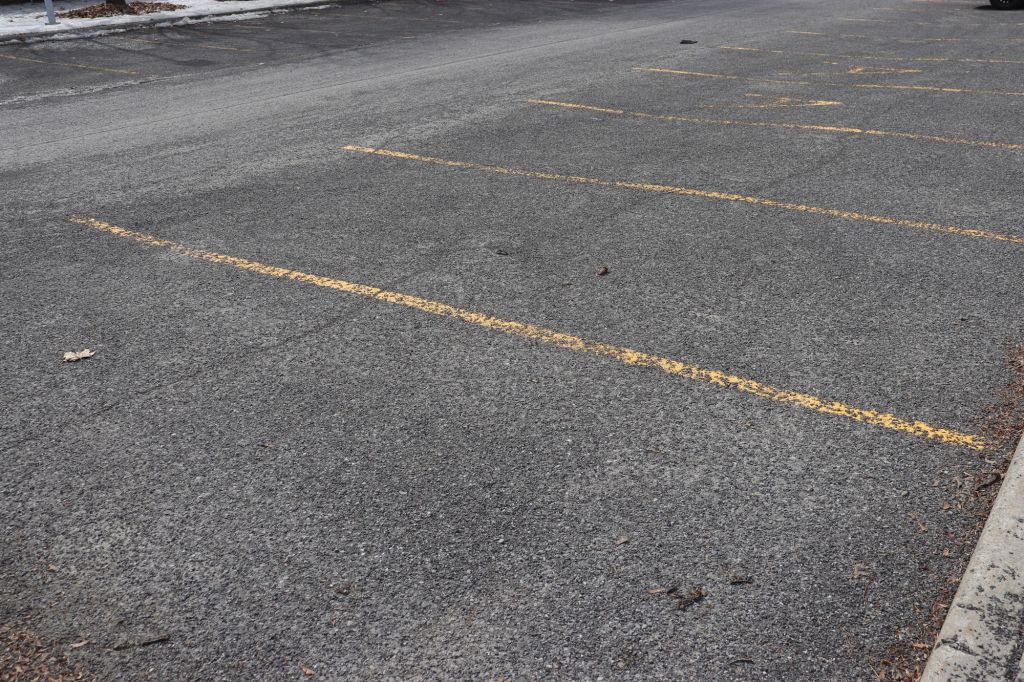
One of many empty parking lots outside of schools in Ontario

Campus services at Algonquin is still working on how to help parking permit holders who no longer need to park on campus due to the shut down.

“We are currently discussing parking permit refund details and processes,” said Mara Lowrey, marketing and communications manager for Campus Services in an email. “This situation is rapidly changing and we are working hard to respond to the needs of our community.”

In the March 17 email from president Claude Brulé, he mentioned refunds in other areas like meal plans and residences, but there was no mention of parking passes.

Parking services office located at room E120 is currently closed until further notice, but staff can be reached by email at parking@algonquincollege.com or by phone 613-727-4723 x7187.

Students who prepaid for parking will be able to reach out to Campus Services for a refund. However, under these circumstances, it is important to be patient due to limited staff.

As of March 16, programs at Algonquin College were suspended for the week with the remainder of classes being moved to an online format for the rest of the term.

These actions were taken in a province-wide effort to slow the spread of COVID-19. However, there are still unanswered issues, concerns and questions.

In an email to the institution, Claude Brulé, president of the college, addressed a few more key points about Algonquin College’s plan moving forward. This included asking students to move out of residence by the end of the week if possible, offering refunds on a case-by-case basis.

The most recent information will continue to be posted on Algonquin College’s announcement page as concerns and issues are addressed.

Algonquin College classes suspended, will move online in response to COVID-19

Algonquin College confirmed classes in all locations will be suspended the week of March 16 to March 22, until it moves to mostly online learning due to concerns about COVID-19. In an email statement to students on March 13, Claude Brulé, the college’s president, explained that faculty will continue to work and will use the […]

Algonquin College confirmed classes in all locations will be suspended the week of March 16 to March 22, until it moves to mostly online learning due to concerns about COVID-19.

In an email statement to students on March 13, Claude Brulé, the college’s president, explained that faculty will continue to work and will use the upcoming week to prepare.

“Classes will resume on Monday, March 23, 2020 but many will be delivered using alternative instruction methods, primarily online, for the remainder of the term.”

Due to the college’s dependence on hands-on learning for many of its programs, students are instructed to stay updated on the plans for each of their classes as professors will use unique learning tools to meet specific course requirements.

“We are dealing with unprecedented circumstances and trying to find the best solutions for everyone who works, studies and lives at Algonquin College,” explained Brulé in his statement.

During the suspension week, health and food services will remain open and students will still be able to access the campus’s library and common spaces. According to the statement, all group events planned before April 30, 2020 are to be postponed.

For students in co-op or on work placements, the college recommends continuing their work as long as the host employer remains a safe environment.

“I want to acknowledge that this is creating many challenges for everyone and emphasize that the mental and physical health of our college community is our priority,” wrote Brulé.

The decision comes a day after the Ontario government announced that all publicly funded schools will shut down for two weeks after March break.

On the morning of March 13, Carleton University tweeted their plan to cancel Monday and Tuesday’s classes of next week as they prepare to move classes online as of Wednesday, March 18. During this time, their campus will remain open, maintaining their commitment to students to supply food services. The University of Ottawa has mirrored this plan, with an update being tweeted out Friday afternoon.

While there are currently no confirmed cases of COVID-19 on Algonquin’s campus, a third case of the virus was identified in Ottawa as Sophie Gregoire Trudeau, the prime minister’s wife, tested positive March 12.

The college reminds students to stay up to date on the development of COVID-19 and how to stay safe by checking its information page at www.algonquincollege.com/coronavirus.

“The next few weeks will be challenging,” Brulé wrote. “We will continue to keep you informed about any new developments as they arise.”

Mood Check: What do Algonquin College students have to say about COVID-19?

As COVID-19 becomes an official pandemic, Algonquin Times reporters set out to do a mood check of students and staff in the Algonquin community. On Thursday, March 12, reporters fanned out to lounge and study spaces all over the Woodroffe campus to hear what students have to say. Reporters asked: What are your biggest practical […]
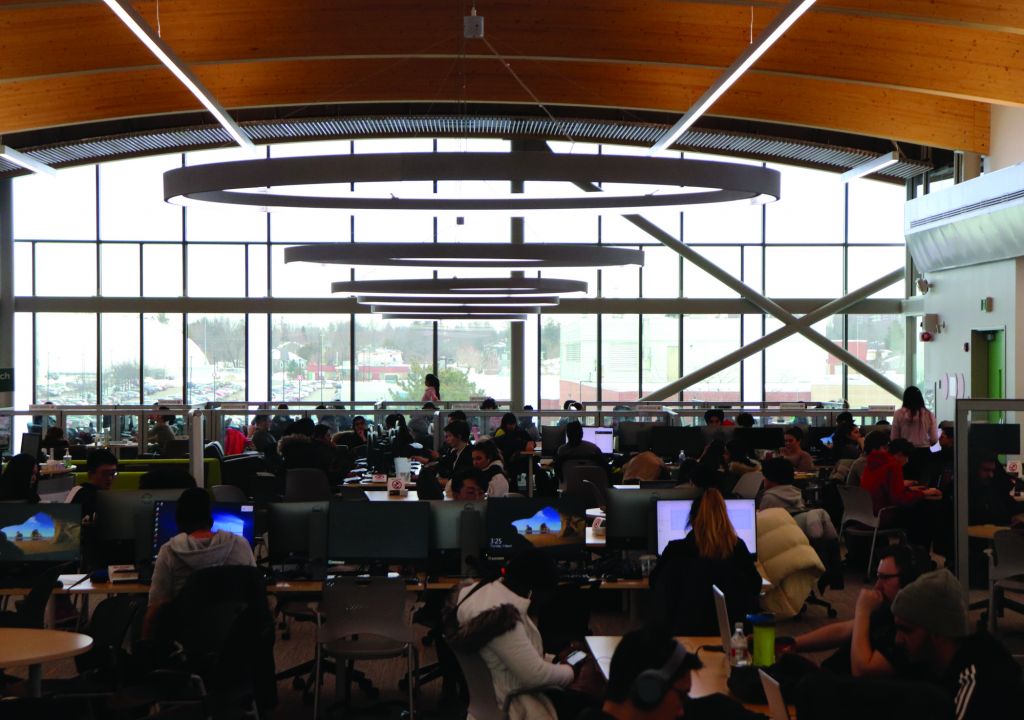
Photo: Angeleah Brazeau-Emmerson
Students work away in the campus library in early March.

As COVID-19 becomes an official pandemic, Algonquin Times reporters set out to do a mood check of students and staff in the Algonquin community.

On Thursday, March 12, reporters fanned out to lounge and study spaces all over the Woodroffe campus to hear what students have to say.

Reporters asked: What are your biggest practical concerns just now? What are your most significant bigger-picture worries? What has this experience taught you so far?

This is what we heard.

https://twitter.com/sam_mcgowan12/status/1238168865328283648

https://twitter.com/alfred_carreon/status/1238170590357458944

https://twitter.com/Cam_m150/status/1238172143982120961

https://twitter.com/KenedSadiku/status/1238174224889581570

https://twitter.com/KBelliveau_/status/1238174906996658178

https://twitter.com/breannareports/status/1238175148458610688

https://twitter.com/KBelliveau_/status/1238176703677153288

Queer Eye’s Antoni Porowski visits Student Commons Theatre

An excited crowd filled the Student Commons Theatre with cheers and applause as Antoni Porowski made his way on stage. The 35-year-old TV personality from the Emmy award winning Netflix show Queer Eye stopped at Algonquin College to talk food, his cookbook, representation and what it’s like working with his co-stars. Melina Kokkinos, a graduate […]
Photo: Douglas Boyle
Midg McKee hugs Antoni Porowski during the Evening with Antoni event at the Student Commons Theatre.

An excited crowd filled the Student Commons Theatre with cheers and applause as Antoni Porowski made his way on stage.

The 35-year-old TV personality from the Emmy award winning Netflix show Queer Eye stopped at Algonquin College to talk food, his cookbook, representation and what it’s like working with his co-stars.

Melina Kokkinos, a graduate of the public relations program, made sure to return to campus to see the reality TV star.

“I love queer eye,” said Kokkinos, “I would’ve showed up for any one of them.”

Porowski began the show by talking about the importance of representation as a member of the LGBTQ community. Referencing a quote from Oprah, he stated it is so important for people who feel like outsiders to see themselves in media. Something he didn’t have when he was younger.

“I think we all need to remember to be kind,” Porowski said, “Never underestimate the power of kindness.”

The show quickly turned to his true passion in life, cooking.

After talking with the host for an hour about the recipes in his best-selling cookbook and the process of picking what recipes he wanted to publish, Porowski moved a table with everything he needed mis en place to prepare a carrot ribbon salad. Something he didn’t want to do alone.

Midg McKee, a second-year hairstyling student, got the chance to go up on stage and help Porowski prepare the dish.

“It was amazing,” said McKee, “he was very sweet, personable and inspiring.”

Porowski keeps a cooking demo light hearted with student guest Midg McKee.
Porowski keeps a cooking demo light hearted with student guest Midg McKee. Photo credit: Douglas Boyle

Porowski didn’t only talk about food during his time at Algonquin. Continuing a persistent theme of positivity and kindness he went on to explain that his personal mantra involves assuring himself that he is enough, and he has enough.

When asked if he has any advice outside of cooking that he likes to use in his everyday life, Porowski took a moment to think about it.

“When I was nervous about auditioning for Queer Eye, a friend told me to just be cool. Not like, yeah bro, but be yourself. This is your chance for them to want to see more of you.”

Algonquin Times horoscopes
Algonquin Times podcast
Algonquin Times on Instagram
Follow Algonquin Times on Instagram
Algonquin Times horoscopes
Algonquin Times on Instagram
Algonquin Times podcast
Follow Algonquin Times on Instagram

Stay Informed

Sign up for our newsletter

Subscribe

* indicates required