February 2021 Horoscope

Aries (March 21st โ€“ April 19th)February may present some changes in your life, whether it be work, school or your love life. It’s time to find your identity and find out what will truly make you happy in the long term. Be sure to reach out to those closest to you to help with guidance; […]

Aries (March 21st โ€“ April 19th)
February may present some changes in your life, whether it be work, school or your love life. It’s time to find your identity and find out what will truly make you happy in the long term. Be sure to reach out to those closest to you to help with guidance; listen to their wisdom, but don’t let their advice overshadow your goals. Be sure to take time for yourself this month to improve your well-being by eating healthy, staying active and enjoying the outdoors.

Taurus (April 20th โ€“ May 20th)
The beginning of this year may have started a bit rocky for you, but try not to focus too much on the negative aspects as things will steadily improve towards the end of the month. The positive improvements will lead you to feel more enthusiastic about the coming months and give you the energy you need in accomplishing your projects or long term ventures.

Gemini (May 21st โ€“ June 20th)
February will be the month of opportunities for you, leading to exciting changes that you should embrace. Your adaptability and outgoing nature will help guide you through these changes, as others will be extra attentive to your creative abilities and inventive ideas, giving you that extra boost of confidence you may require. Creativity is at an all-time high, be sure to utilize it as much as possible as it will increase your chances of success.

Cancer (June 21st โ€“ July 22nd)
Your energy levels may be low right now, but your positive attitudes and competitive spirit will help steer you through this time. You have a lot on your plate right now, but staying away from confrontation and maintaining a calm temperament will help you get through it. Try not to be so critical of yourself during this time as it will only lead to stress; to help with unsettling emotions having an outlet such as writing in a journal can help tremendously.

Leo (July 23rd โ€“ August 22nd)
Social distancing has been especially hard for you for the last few months as you love basking in the company of others, leading to feeling disconnected from yourself. Taking time to focus on yourself, apart from others, will help with these feelings. This month you need to be especially careful with your spending habits as February may be a carefree period for you. Prioritizing your work can help curb boredom and unnecessary spending this month.

Virgo (August 23rd โ€“ September 22nd)
This month is all about fitness and health for you as you gain insights into your well-being. Try to stray away from negative individuals and drama as it may hinder your focus. With your journey of self-improvement, try not to be too critical to those around you, as their lifestyle may not meet your high expectations and only lead to tension at home.

Libra (September 23rd โ€“ October 22nd)
This month you will be getting back to your roots and taking care of yourself. Try to keep your mental health in balance along with your physical self. It has been a tough year, and your family is a top priority this month, along with emotional security. By focusing on yourself, others will come to you and inspire you but remember never to pass up any good opportunity as they donโ€™t come twice.

Scorpio (October 23rd โ€“ November 21st)
February is going to be a tough month for you as there will be disturbances that will come up but try your best to face them with an open mind. Try your best to change your focus from yourself and more on others and their actions. It is to be expected that there will be a compromise in a relationship you have this month, and it will be for the better of the relationship.

Sagittarius (November 22nd โ€“ December 21st)
This month is looking very well for you as you have others that will come into your life that may end up being great friends or even companions. You are great with your money but may regret the unplanned abandoned purchase you didnโ€™t make. You have been working on yourself, and it shows. Your fitness goals are on the rise.

Capricorn (December 22nd โ€“ January 19th)
Changes are coming to you that may change your life; this could be a good change or a bad one. Try not to get involved with family conflict that may come up, as you may need to think it through thoroughly. Things are moving to a more positive note for you but try not to miss out on the moments that will pass by.

Aquarius (January 20th โ€“ February 18th)
Now is your chance to change your life drastically related to either work, your financial situation, or a new relationship. Try to refrain from spending too much money at a restaurant or your cafe, as it can put a dent in your wallet quickly. This month will have many small, unpleasant things that happen and require a lot of attention but wonโ€™t bring harm to yourself.

Pisces (February 19th โ€“ March 20th)
You have nothing to worry about this month as your financial situation is stable and will even strengthen as the month goes on. Your career is flourishing as you should professionally represent yourself. No health issues are arising, but that doesn’t mean you shouldnโ€™t work out or slow down your workout sessions.

Find Bernie

Please print and enjoy! Answer:

Please print and enjoy!

Answer:

TV broadcasting grad to share story of how she overcame a traumatic brain injury

Caroline Marchand, an Algonquin College grad and currently an associate director for the Ottawa-based CBC show Power and Politics has faced adversity in the past. Shortly after Marchand graduated the TV broadcasting program in 2013, she found herself with multiple freelancing jobs. However, Marchand’s career came to a halt in 2015 when she got into […]
Photo: Tamara Condie
Caroline Marchand is a Algonquin TV broadcasting graduate and associate director for CBC Power and Politics.

Caroline Marchand, an Algonquin College grad and currently an associate director for the Ottawa-based CBC show Power and Politics has faced adversity in the past.

Shortly after Marchand graduated the TV broadcasting program in 2013, she found herself with multiple freelancing jobs. However, Marchand’s career came to a halt in 2015 when she got into a life-altering car accident in Toronto.

“Because of the severity, I don’t actually remember anything,” said Marchand. “The point of getting my story out to the community is to focus on my recovery and how I got back into the field.”

Marchand will tell her story on Jan. 29 during her her talk on resilience for Mental Health Awareness week, when students and staff at Algonquin College join Canadians across the country in conversations about mental health.

The purpose of Marchand’s upcoming presentation is to share her experience with students at the college grappling with mental, emotional and physical obstacles, in hopes that some of the lessons she learned can help others with their personal struggles.

In 2015, Marchand suffered an open head traumatic brain injury in her accident, which is a condition that comes with many unknown variables. For a planner like Marchand, the burden of recovery was doubled by not knowing when she would be back to thriving in her field.

“When I got to the hospital, I remember doctors saying ‘Listen, you don’t have a timeline for recovery,'” Marchand said. “That was the hardest thing to hear.”

For some, being on the receiving end of a life-threatening brain injury may feel like the end of the road, but Marchand refused to let that obstacle dictate her future.

Jeremy Atherton, program coordinator of the film and media production program at Algonquin College, can attest to Marchand’s tenacity as both a student and individual in the field. Atherton, one of Marchand’s former TV broadcasting professors, sensed her potential very early on in the program.

“She came into our program, and just flourished,” said Atherton. “She was someone we knew we were going to be proud of because she mixed excellently everywhere.”

The arduous journey to recovery was a long and uncertain process for Marchand, but she knew she would eventually get there if she took the right steps forward.

One of these steps included sitting in on broadcasting prep nights at the college for a few hours a week. This helped her to ease her way back into the field of broadcasting.

“The control room can be organized chaos,” said Atherton. “Allowing her to sit in on training was a no brainer—she is a bright light in and outside of the program, so any little thing we could do to help her out, we did.”

Of course, Marchand’s return to the Algonquin College community was mutually beneficial for students.

Having Marchand sit in on classes not only helped her through her learning curve, but “provided broadcasting students with some feedback and mentorship inside of the classroom,” according to Atherton.

The process of reintegration and mock training really was a key stepping stone to recovery for Marchand— of course, her drive and ambition helped too. After months of rehabilitation, she began taking on broadcasting jobs in a smaller capacity on her road to recovery.

Today, Marchand is fully recovered and currently works as an associate director on CBC Ottawa Power and Politics. In the past few months, she has continued to expand her broadcasting skills through training on different jobs within the company.

“I never expected to reach my career goals after all of that,” said Marchand. “The industry is hard work, so you really just have to keep on going.”

No change for on-campus students after new stay-at-home order

Ontario’s new stay-at-home order, announced Jan. 14, will not affect Algonquin College’s current COVID-19 health and safety regulations regarding on-campus learning. Ontario went under a stay-at-home order as of Jan. 14, at 12:01 a.m., which increases the lockdown across the province even further. The rules for on-campus learning at Algonquin will remain the same as […]
Photo: Madalyn Howitt
The rules for on-campus learning at Algonquin will remain the same as they were after the lockdown announced on Dec. 26, 2020.

Ontario’s new stay-at-home order, announced Jan. 14, will not affect Algonquin College’s current COVID-19 health and safety regulations regarding on-campus learning.

Ontario went under a stay-at-home order as of Jan. 14, at 12:01 a.m., which increases the lockdown across the province even further. The rules for on-campus learning at Algonquin will remain the same as they were after the lockdown announced on Dec. 26, 2020.

“The announcement does, however, underscore the importance of only students participating in hands-on instruction attending campuses and only the authorized employees attending campuses to support these activities,” said Claude Brulé, president of Algonquin College, in a Wednesday afternoon email. “Any students or employees not required to attend campuses should be following the provincial direction to stay home and only go out for allowable reasons.”

To enter the campus, students must have completed the COVID-19 mobile screening prior to arriving and must enter through the access point specified by their program.

“I know the constant adjustments related to the pandemic can feel exhausting,” wrote Brulé. “But it is vital that we continue to adhere to the latest health and safety guidelines from our governments and public health authorities. As always, I appreciate your ongoing cooperation, accommodation and patience.”

Finding my way in my new Canadian life

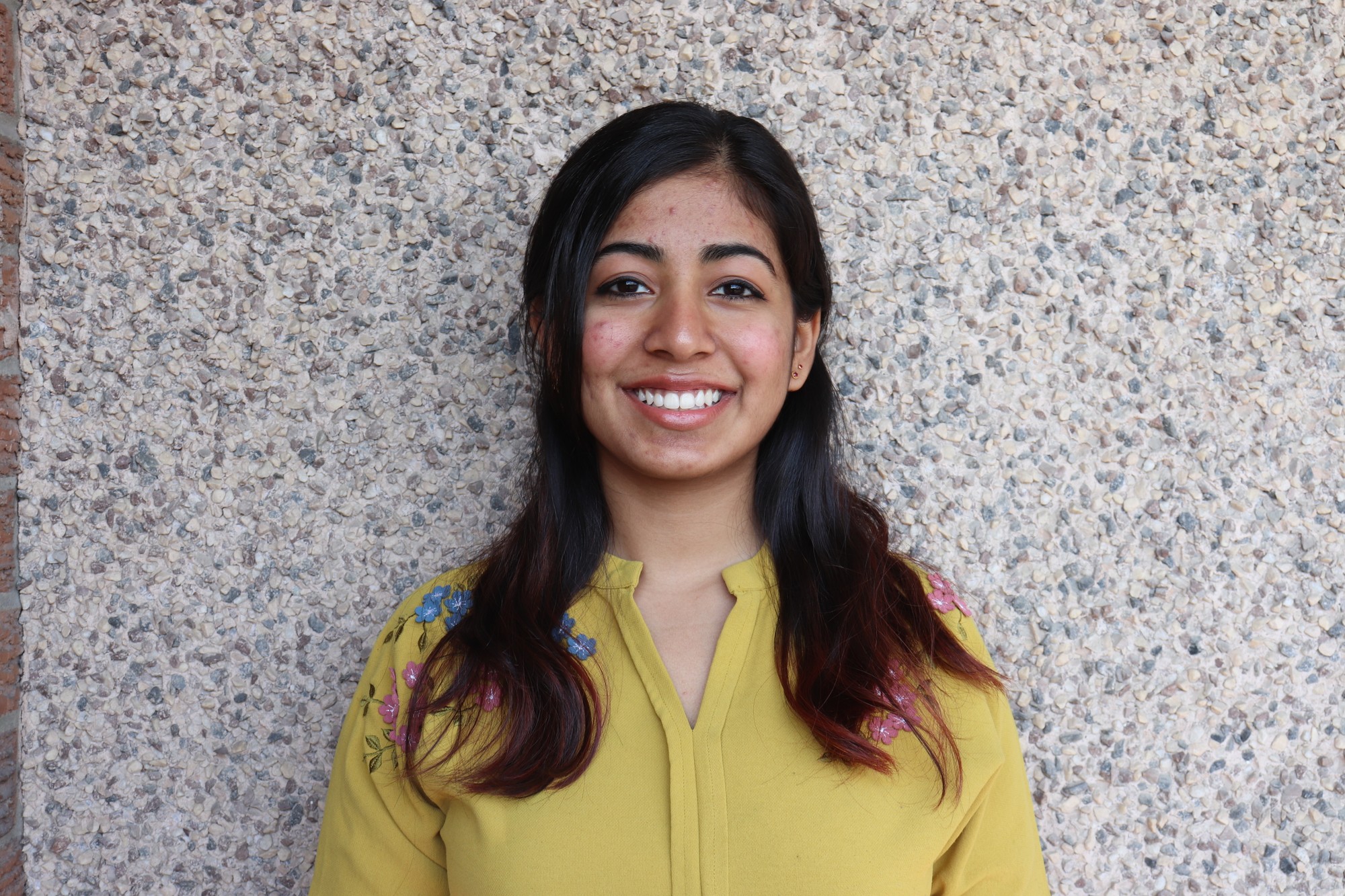
A few months ago, my favourite Bollywood actress, Deepika Padukone, was caught in a drug-scandal involving cannabis and I, to my surprise, shrugged it off. Cannabis is illegal in India, my country of birth, so why had that not been a bigger deal to me? Was I too “Canadian” to bother? With a distance of […]
"I had gone from saying 'what?' to 'pardon?' and from 'please' to 'excuse me,'" writes the author, Hritika Jimmy.

A few months ago, my favourite Bollywood actress, Deepika Padukone, was caught in a drug-scandal involving cannabis and I, to my surprise, shrugged it off.

Cannabis is illegal in India, my country of birth, so why had that not been a bigger deal to me? Was I too “Canadian” to bother?

With a distance of over 11,000 km between me and New Delhi, I was bound to a rollercoaster of changes. I had gone from saying “what?” to “pardon?” and from “please” to “excuse me.” I now even throw in the occasional – and the most odd for me – “sorry.”

I came to Ottawa 15 months ago when I was 17 to pursue post-secondary education. I had never seen such a calm place and yet felt such an inner storm simultaneously. So many things surprised me, for instance, students have part-time jobs while they study, children have licenses at 16 and people here are far too polite.

I’m not alone in finding different aspects of Canadian life surprising. Ashmi Mary Shajan, 20, a student from Kerala, India, has been surprised by things too.

“I got a lot of freedom,” she said. “I started working here and the level of independence that it gave me is unparalleled.” Shajan came from India in 2018 to study fitness and health promotion and she is going to pursue her second course in at Algonquin College in radiology.

Onam is a harvest festival in Kerala, India. We prepare and eat rice with over eight side dishes on a banana leaf.

One of the things that made me independent was food. I had never cooked to survive before in my life, and McDonald’s and Tim Hortons could only go so far to feed me. YouTube became my most-used app and I started cooking. It felt good to eat home cooked food once again. It felt good to send pictures of my meal to family’s group chat.

But I also discovered aroma, the aroma of caramelized onion with spices and curry leaves. As a new cook, I also discovered that my cooking efforts had other consequences. Once while travelling on the bus, I noticed that an elderly woman sitting beside me had covered her nose her until I got up to leave. Snapping out of my initial confusion I found out that my jacket smelled like butter chicken.

I was hurt by her actions but no one was at fault. She was polite in her own way like most Canadians are said to be. But the problem with politeness is that any disapproval of hard feelings are only passively expressed.

After thinking a lot about her gesture, the aroma, how to change, if I should change, I concluded: if we go to someone’s home and they expect us to remove our shoes before entering, we do so. So when we come to someone else’s country we learn to respect their views and values. We observe their norm and comply with respect.

Adapting does not mean succumbing. It meant to learn new things to add to our pre-existing beliefs. So when we embrace a new culture, we adjoin it to our own and it results in our growth.

Contactless food drive connects to the Algonquin community

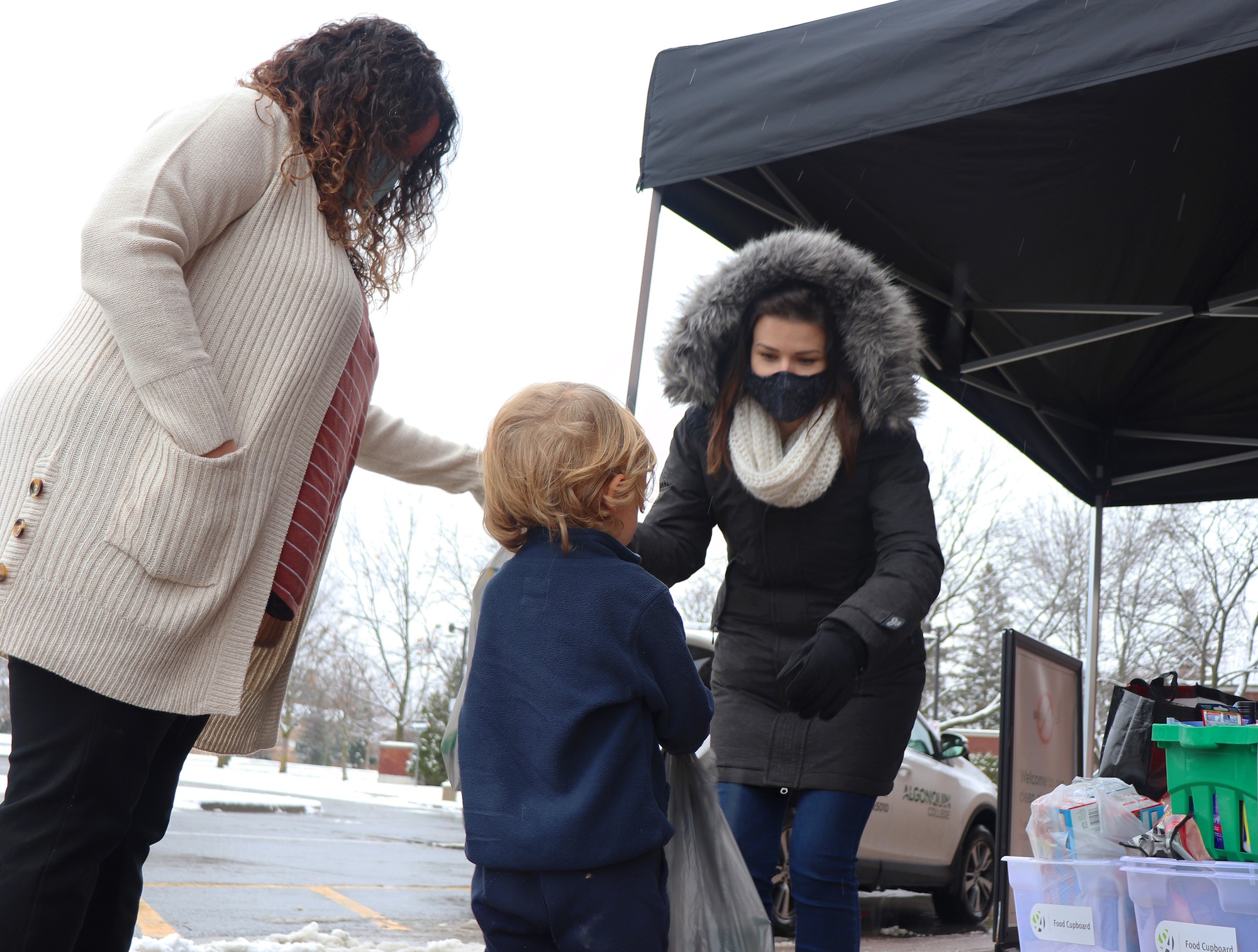
The Students’ Association Food Cupboard hosted their second drive-thru donation outside of C-Building on Wednesday, Dec. 9. This time around, the Food Cupboard saw twice as many participants’ and received double the amount of food donations than they did at the first contactless drive in October. Jessica Clark, coordinator of the Food Cupboard organized this […]
Photo: Chanelle Pinard
Donors dropped off food at the contactless food drive on Dec. 9 to help support students in need during this time.

The Students’ Association Food Cupboard hosted their second drive-thru donation outside of C-Building on Wednesday, Dec. 9.

This time around, the Food Cupboard saw twice as many participants’ and received double the amount of food donations than they did at the first contactless drive in October.

Jessica Clark, coordinator of the Food Cupboard organized this event to help Algonquin students who are struggling financially and need assistance.

The event in October was their first contactless donation drive. “This is, by far, so amazing,” she said about the December event. “The first one was still successful, but we didn’t see as many people. I think that people are learning this is a thing that is happening, more people are showing up.”

The event was open to the general public and accepted monetary donations, non-perishable food items and basic hygiene supplies.

“You’d be surprised, sometimes people think they’re donating odd items but then it’s items that students really need,” said Patrick Newell, senior manager of Student Life at the SA.

Clark said items like toothpaste, toothbrushes and toilet paper are always helpful. People bring in things like diapers, feminine hygiene products and even cat food that always seem to benefit students’ needs.

Sometimes she has international students come in and are surprised by some of the foods offered.

“Some people come and donate because they have an international student in mind,” said Newell.

A donated bottle of sauce.
Donors drop off items that satisfy international students’ taste buds. Photo credit: Chanelle Pinard

Nine donors dropped off 517 items in total. One in which also donated two months ago to assist Algonquin students.

“One person came and donated these three boxes,” Newell said, pointing to the filled boxes of donations waiting to be brought into the college. “The first person came and donated probably $600 worth of food, so the people that are coming are donating large quantities.”

Statistics Canada published an overview of a six-month update on social, economic and justice impacts of COVID-19 on Oct. 20. This overview analyzes Canadians’ response the virus and shifting health concerns.

A postsecondary crowdsourcing survey conducted by Statistics Canada earlier in the pandemic said that students are extremely concerned about their finances. This stress continues even with the assistance of the Canada Emergency Student Benefit last summer.

Students’ three main worries according to Statistics Canada include: Using up their savings, paying for tuition next term and taking on more student debt.

“The government announced today that the normal grocery bill for a family of four is going to go up five per cent which is up $700 per year,” said Newell. “Which is a lot of money for low-income families.”

Newell said it’s handy when people donate single-usage items, so Clark doesn’t have to divide the quantities. Sometimes Clark has to divide tubs of detergent or olive oil so she can help 20 students instead of one for example.

“They have the choice of either requesting a gift card if they’re not near campus or able to get to campus or not comfortable coming,” she said. “I can email them a gift card that allows them to go to a grocery store near where they live, or some would prefer the food and supplies and are on campus anyways or near, so they would just come.”

Students could either drop in at the Food Cupboard on campus or book an appointment in a normal semester. Going forward because of COVID, they have to book an appointment online prior. This confidential service connects people from the community to help support students’ needs.

Every player is equal in ringette

While the NHL is on pause for now until mid-January 2021 at the earliest, I feel this is a good opportunity to consider the merit of another ice sport: ringette. One of the most important rules in ringette is passing the ring over the blue line. With this rule in place, you have to pass […]
Sam McGowan in her Ottawa Ice uniform.

While the NHL is on pause for now until mid-January 2021 at the earliest, I feel this is a good opportunity to consider the merit of another ice sport: ringette.

One of the most important rules in ringette is passing the ring over the blue line. With this rule in place, you have to pass it over to one of your teammates, unlike hockey where one person can go from one end of the ice to the other and carry the team. With ringette, it’s the whole team that is involved. Every player is equal.

But ringette isn’t equal when it comes to its reputation. I should have know since I’ve been playing the sport for 14 years. People would always say, “Ringette isn’t a real sport” or ask me, “If ringette is a real sport, how come it’s not in the Olympics?”

I’ve always wondered about this too. Internationally, ringette is played in a number of countries around the world, including Finland, Sweden, the United States, France, Slovakia, Russia, the Czech Republic and Abu Dhabi.

As Algonquin doesn’t have a hockey team, I’m prepared to accept that it doesn’t have a ringette team either. However, what I won’t accept is that people seem to diss ringette over hockey. As fellow ice-sport athletes, we’re all in the same boat here: we want to play as a team and compete.

Throughout my years of playing ringette, playing on many different teams, raising money, travelling across Ontario for tournaments, I’ve made new friendships and countless memories, I’ve earned many medals and I’ve worked my ass off to get to the top.

And for five years, I’ve also played spring hockey too. Did the people on the hockey side think a ringette player could play competitive hockey? They did not.

I am proud of the accomplishments I’ve made to make me the person that I am today. Quitting ringette in March of last year to focus on school was the hardest thing for me. Knowing that I’ll never get that physical feeling of winning or losing a game with my team is unexplainable. I do want to get back on the ice and play again but due to COVID-19, I don’t think that will be possible a while and it may not feel the same.

Ringette has taught me that no matter how small or big you are, the colour of your skin or your age, every girl and woman on the team is equal. Even though ringette isn’t in the Winter Olympics, girls and woman are playing for the love of the sport and the sport itself is still growing.

Ringette has made it to the Canada winter games our next step is to make it into the Winter Olympic Games.

Algonquin College leads federal program to provide training to Indigenous youth

The college is leading a $2.5 million program to provide Indigenous youth with job training and skills in response to the COVID-19 pandemic. The COVID-19 Rapid Response Initiative, is funded by the federal government as part of Phase 2 of the COVID-19 Support Fund. The program is expected to run until the end of March […]
Photo: Julien St-Jean
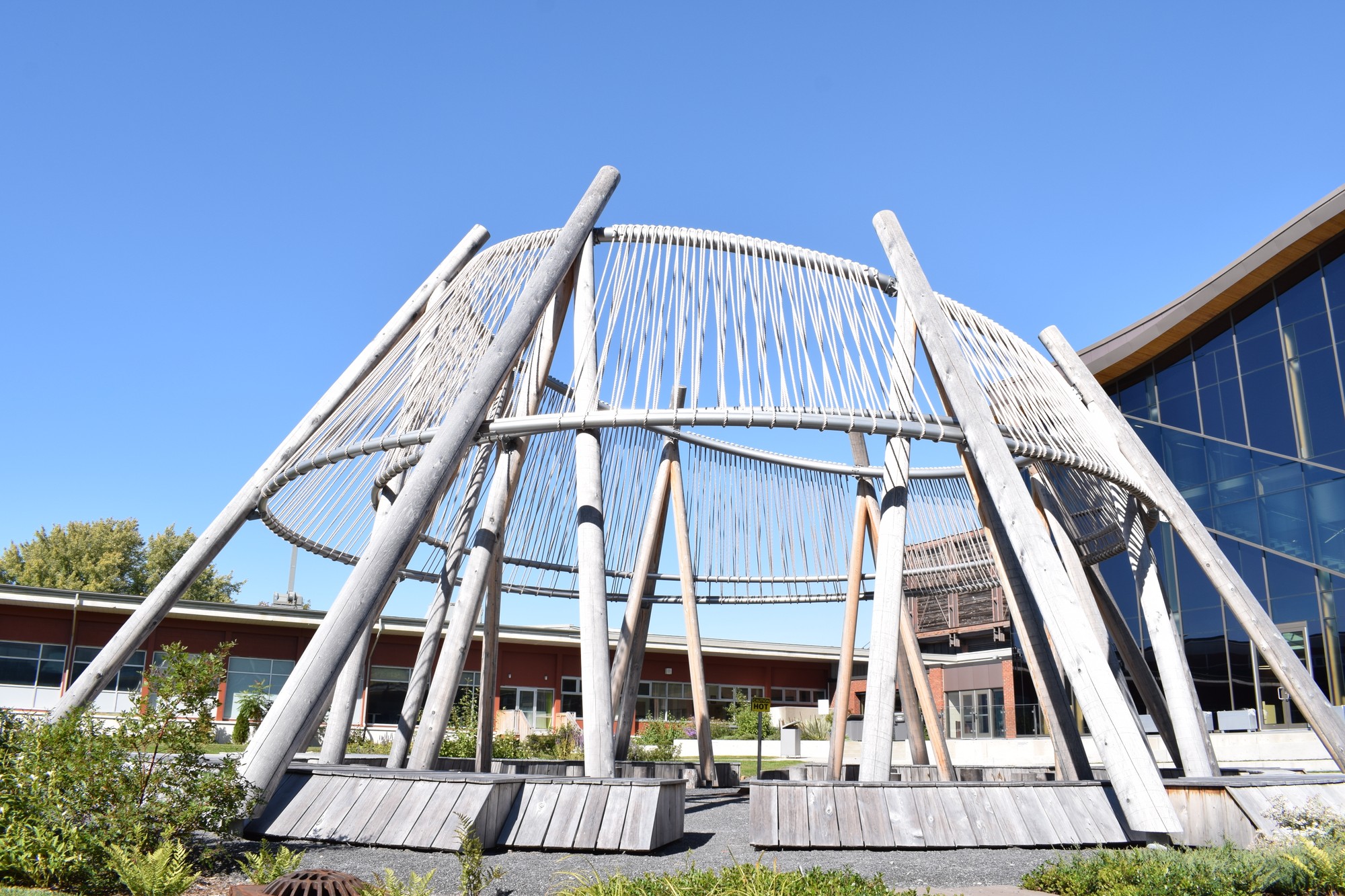
Algonquin College is leading a $2.5 million federal program to provide Indigenous youth with training related to the impacts of COVID-19. The college was selected for their prior connections and work with First Nations communities across Canada.

The college is leading a $2.5 million program to provide Indigenous youth with job training and skills in response to the COVID-19 pandemic.

The COVID-19 Rapid Response Initiative, is funded by the federal government as part of Phase 2 of the COVID-19 Support Fund. The program is expected to run until the end of March of 2021, and will provide between 250 to 275 Indigenous youth across Canada with training based on their community’s experience in the pandemic.

Training is decided upon and administered within the communities with funding received through the college.

So far, training has covered skills such as COVID-19 screening, horticulture, soil management and food production processes. However, training varies from case to case based upon the community’s needs.

“Almost half of the partners are doing something related to food security,” said Jeff Turner, Algonquin’s partnership development specialist. “Food security has been an issue on First Nations for quite some time. But it was really highlighted during COVID because trucks were arriving empty or very with very little food on it.”

“And in Akwesasne – one of our other partners closer to us – they’re focusing on greenhouse nutrition, plant material growth and cultivation,” said Turner. “They’re incorporating a delivery truck to take food to elders and vulnerable people on their First Nation that had trouble getting food during the lockdown we experienced in March.”

Algonquin’s role in the project has mainly been to find partners through prior relationships with Indigenous communities and then providing them with funding. However, nine of the communities involved in the program had no prior relationship with Algonquin until recently.

“There’s the exposure to elders and Indigenous knowledge sharing that’s really quite vital and quite important,” said Turner. “They’ll get the benefit of hands-on experience, coaching and mentoring.”

Turner stressed how communities have been hit hard by the pandemic, and that many Indigenous youth have been out of work since March. “And the whole purpose is to give these youth exposure to work experiences, to gain some skill sets by actually working and not just reading about it,” he said.

Youth participating in the program will receive a wage during the training while also getting the opportunity to work within their community.

“One of the communities that is participating, the unemployment rate is 80 per cent in their First Nation,” said Turner. “So now, they’re going to have 20 youth there, at least till the end of March, that are all getting paid, learning, growing, developing, all because of this.”

Turner explained how he had received “letters of thanks” and phone calls from communities because of the impact the initiative will have on the youth

“COVID has been tough on everybody and this program is providing some hope,” said Turner. “I think that’s really special.”

More information on the initiative can be found in the college’s Dec. 9 announcement.

Remaining flu shots are for students going on winter field placements

Students readying to do winter field placements have begun to get their flu shots. Trina Budd, manager of health services, would like to encourage students to help stop the spread of the flu this winter. They can do this by getting vaccinated before going on their winter internships. “Up to and including Dec. 4, we […]
Photo: Alvin Tsang
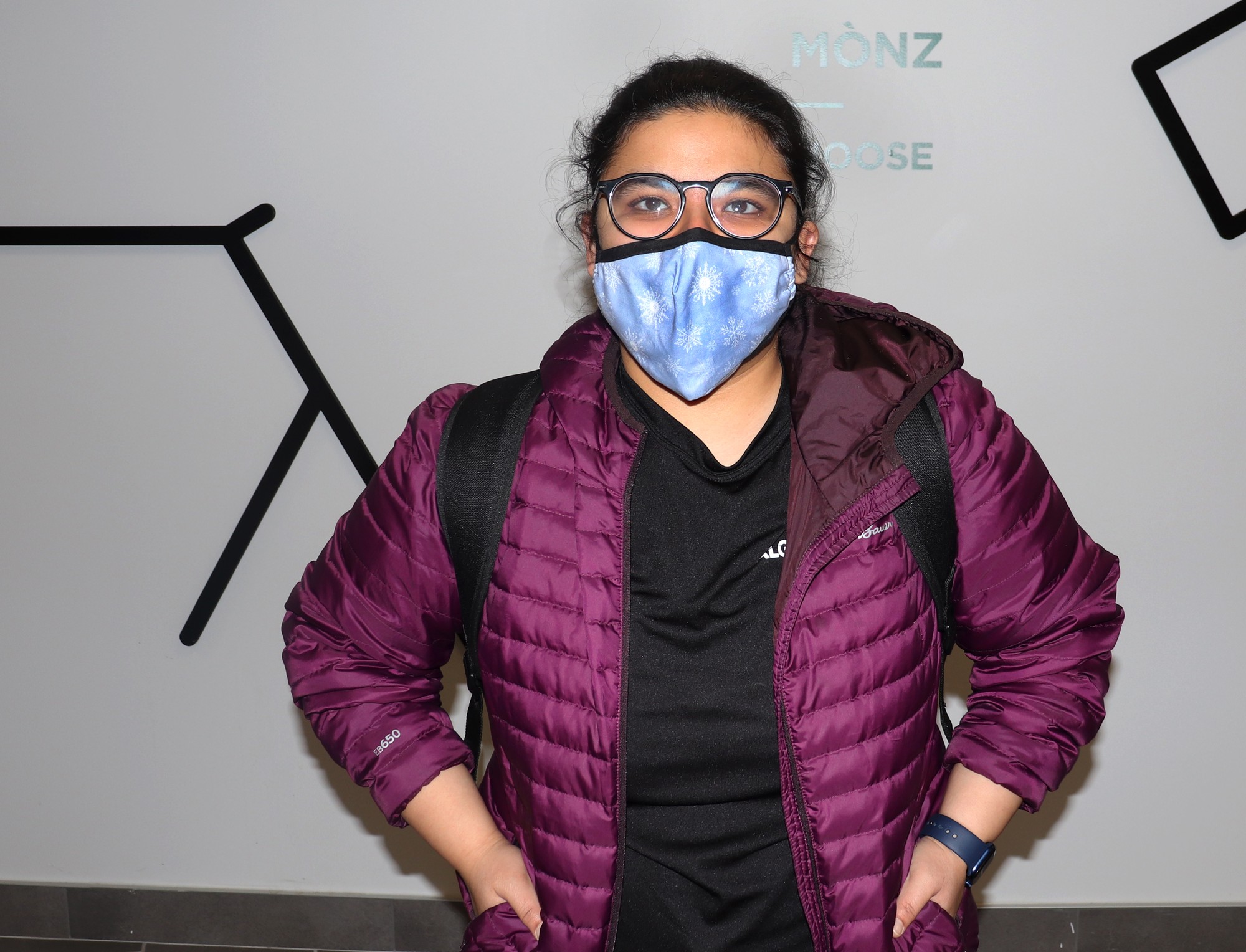
Garvishtha Arya, a student in interactive media design, waiting for her appointment with Health Services.

Students readying to do winter field placements have begun to get their flu shots.

Trina Budd, manager of health services, would like to encourage students to help stop the spread of the flu this winter. They can do this by getting vaccinated before going on their winter internships.

“Up to and including Dec. 4, we have provided 388 flu shots,” Budd said.

The first shipment of vaccines was enough to give 332 flu shots to students and campus staff.

The second shipment of flu vaccines arrived on campus sometime after Nov. 23.

“We still have a limited supply, but we continue to be able to offer the flu vaccine to students and employees approved to be on campus,” Budd said. “We are also definitely able to offer it to students who require it along with their immunizations for program placements.”

Programs that still require students to complete in-person field placements include child and youth care, community and justice services, early childhood education and more.

“We are not expecting a third shipment at this time,” Budd said.

Garvishtha Arya, a student in interactive media design, was standing outside the flu vaccination clinic on Friday, Dec. 11 at around noon.

“I tried to get a flu shot last month, but my program wasn’t eligible,” Arya said. “It’s actually a co-op program, but I guess others need it more than me. I know how it is, and I’m not upset by it. I’m waiting here to do blood test work today. I’m eligible for that.”

The blood work clinic operated across the hallway from the flu vaccination clinic.

The last day for flu shot appointments was Saturday, Dec. 12.

“It’s my understanding that the community flu shot clinics run by Ottawa Public Health are still open and have availability,” Budd said.

When we don’t learn together on campus, we miss out on student life

Upon starting the journalism program, you quickly realize your job is not to break the biggest story of the century. Your job at the Algonquin Times is to publish a community newspaper. To bring an entire school together with relatable news. People at college often stick with people in their program. You might have a […]
Photo: Charlotte Riethman

Upon starting the journalism program, you quickly realize your job is not to break the biggest story of the century.

Your job at the Algonquin Times is to publish a community newspaper. To bring an entire school together with relatable news.

People at college often stick with people in their program. You might have a friend in a different program that you cross paths with, but most times, we each stick to ourselves. That is where the Times comes in. We try to tell stories that offer you insight into what people in other programs are doing.

However, our recent stories have been told under the looming shadow of a global pandemic. The last thing we wanted was to be the constant reminder of the pain we are all feeling, but as reporters, we are mandated to bring you that news.

This pandemic has affected us all in many different ways, we would be remiss in ignoring that.

It has been a difficult year for everyone, and there is a growing sense of feeling like an imposter. We can wear our Algonquin College swag and tell our friends and family we are in college, but it certainly doesn’t feel like it.

For many of you, including the first-level journalism students who are about to take over this paper, your entire post-secondary educational lives have been strictly online. And as announced by President Brulé in an email on Nov. 17, next year’s fall-term would be strictly online except for those programs that absolutely require face-to-face learning.

You can’t help but ask, what are you missing?

College, university, graduating high-school: these events are supposed to mark the beginning of your adult life. Our culture is built around it. So many movies start with that first day at college or that inspiring world trotting gap year. We’re all familiar with these coming of age stories.

You are meant to form friendships that will last you the rest of your life, expand your mind and be introduced to new ideas and ways of thinking or just finally get out of that shitty little town you grew up in.

But in Fall 2020, many of us are stuck. We are still at home. Sure, we might be learning new things, but the friends we are supposed to make, the parties, the reckless behaviour, none of that is happening.

The good news is, a vaccine is coming, this crisis will have an end and it’s on the horizon. There is a good chance you’ll make it to campus for in-class learning, eventually.

The biggest story in the world was once the fall of the Berlin Wall, until the next biggest story happened. No one ever thought an event would match the devastation of 9/11, until a pandemic ravaged the world. There is no doubt that this time will fundamentally mark this generation.

We are at a turning point; marked but alive. We will use what we have learned to improve the brave new world that is about to unfold before us, and we are stronger for it.

Follow Algonquin Times on Instagram
Algonquin Times podcast
Algonquin Times on Instagram
Algonquin Times horoscopes
Algonquin Times podcast
Algonquin Times on Instagram
Algonquin Times horoscopes
Follow Algonquin Times on Instagram

Stay Informed

Sign up for our newsletter

Subscribe

* indicates required