Culinary management grad’s restaurant grows during pandemic

A class assignment on traditional Jamaican patties ignited a light for Jacob Henry, a culinary management grad, who now successfully runs a restaurant in Ottawa’s west end. “I brought a handmade batch into class for everyone to try,” Henry said. “After that, they were a huge hit.” Henry, 35, started his business, Run2Patty, while he […]
Photo: Gabrielle Nadeau
“I come here and whether I make a dollar or not I am just happy to be doing what I love," said Jacob Henry.

A class assignment on traditional Jamaican patties ignited a light for Jacob Henry, a culinary management grad, who now successfully runs a restaurant in Ottawa’s west end.

“I brought a handmade batch into class for everyone to try,” Henry said. “After that, they were a huge hit.”

Henry, 35, started his business, Run2Patty, while he was ending his studies. Since receiving his diploma in 2019, the business has only continued to grow.

Henry always knew he was good at cooking, but was never sure what it might become. With the push of friends and family, he decided to pursue his dreams.

Henry is of Jamaican descent and grew up eating Jamaican-style cuisine, thus inspiring the theme of his restaurant today.

What began as a small pop-up shop and catering business out of Henry’s home is now a successful local restaurant located in Westboro offering take-out services.

“During my third semester, I started doing pop-up stands here and there, and catering events for friends and family selling my Jamaican patties,” said Henry. “I did the weekly pop-ups every Thursday and the product sales started getting out of control. We had huge lineups of people every week.”

The successful business Henry runs today wasn’t the original plan of pursuit while in culinary management. Never did he think the Jamaican patty business would have taken him this far.

“In one of the course programs, they have international guest chefs come in to teach their classes, and I was one of them, while still being in the program,” he said.

“By third semester I had already been on CBC news and Algonquin was buying the patties off of me,” he said. “By my fourth semester, I had taught a few classes—one at La Cité and a few at Algonquin.”

Run2Patty is a Jamaican-style restaurant that offers a variety of handmade dishes from Jamaican patties, oxtail platters and fried chicken, to lobster, shrimp, calamari and more.

“A lot of love goes into the cooking process,” said Henry. “All the Caribbean dishes are popular, but the jerk chicken dish is the top seller.”

With the transition from a student to chef—although the college had prepared him—there was still growing to be done as a business owner.

While many businesses have struggled through COVID-19, Henry has the lockdown to thank for leaving him with no choice but to open a take-out business.

“Originally I didn’t plan on becoming a restaurant,” he said. “I enjoyed just catering, but once COVID-19 hit all of my catering events were cancelled. The lockdown helped our sales grow, since we offer takeout and other businesses had to close, we saw a rise in our numbers.”

Henry had always enjoyed cooking and Algonquin College helped guide him onto the right track.

“Algonquin gave me the motivation and the inspiration to start my business,” said Henry. “Just being in there and learning pushed me to want to do what I’m doing even more than I thought possible.”

“There are hard days where you worry that your business won’t succeed, but you just have to keep pushing, if this is what you truly want, don’t let anything stop you.”

Mood Check: how do you feel about midterms and the midterm break?

With midterm break and many midterm assignments now in the rearview mirror, this can either be a time of great stress or great relaxation for Algonquin students. On Friday, Feb. 26, the Algonquin Times asked students on the Woodroffe campus how they felt about their midterm assignments and about their plans for the midterm break. […]
Photo: Connor Black
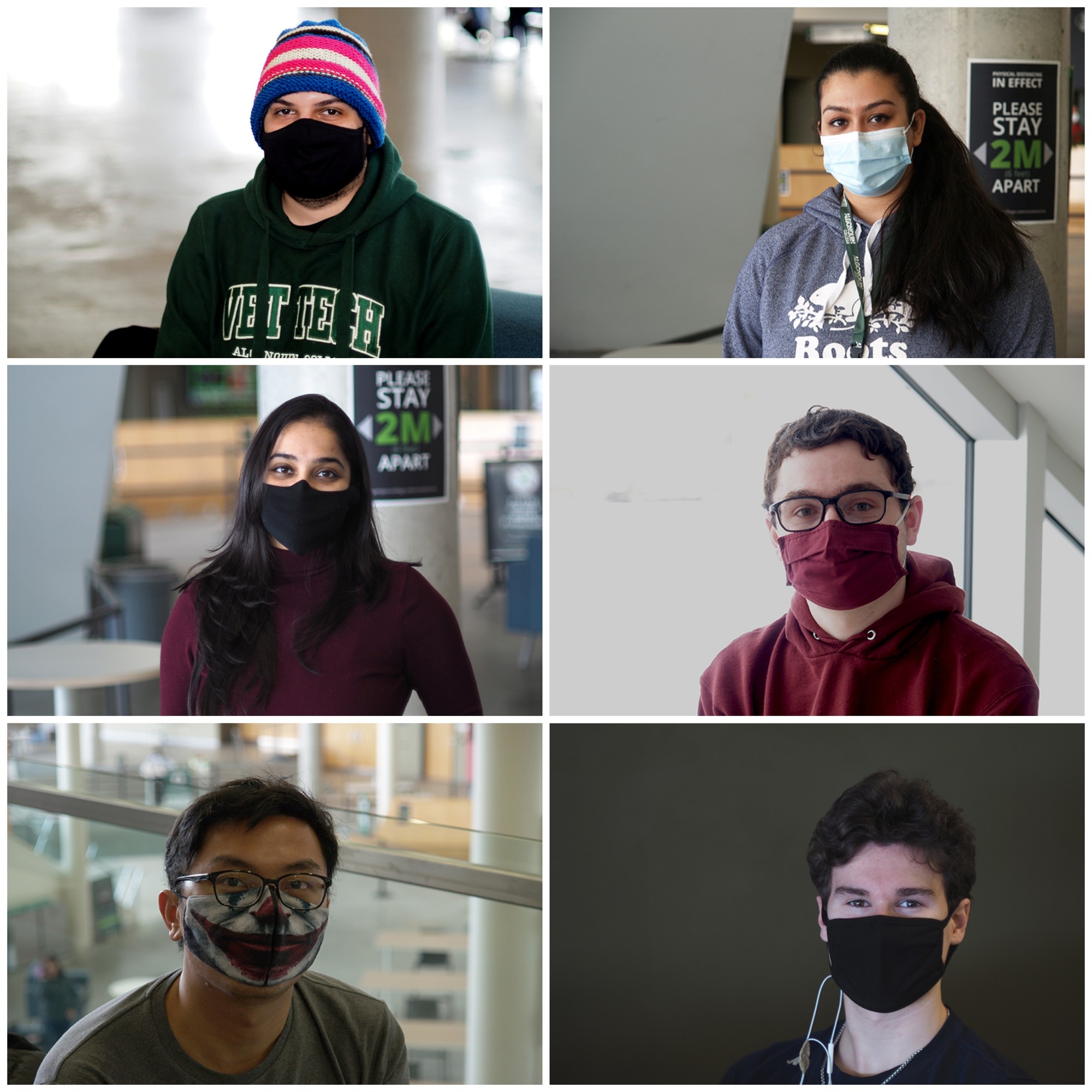
How are Algonquin students feeling about midterms?

With midterm break and many midterm assignments now in the rearview mirror, this can either be a time of great stress or great relaxation for Algonquin students.

On Friday, Feb. 26, the Algonquin Times asked students on the Woodroffe campus how they felt about their midterm assignments and about their plans for the midterm break.

Here’s what students had to say.

Photo credit: Connor Black

Name: Brandon Saikali

Program: Veterinary technician program, second semester

Thoughts on midterms: “They were not too bad. They were a bit of a mess but not too bad. I have two done and two after the break. I’m not too stressed.”

Plans for the break: “I plan to stay at home and relax. I don’t want to leave the house if I don’t have to.”

Photo credit: Connor Black

Name: Nureet Nureet

Program: Dental hygiene program, third semester

Thoughts on midterms: “They are very overwhelming. Way more stressful than they were before COVID. We have less time on our tests and it’s just harder to catch up.”

Plans for the break: “I’ll be studying for the entire break. Right now for me there is no such thing as a midterm break.”

Photo credit: Connor Black

Name: Smridhh Kaur

Program: Pastry arts management program, fourth semester

Thoughts on Midterms: “They weren’t as hard as they were before but they were definitely more stressful.”

Plans for the break: “I’m definitely trying to relax. I’m also going to Waterloo for the week.”

Photo credit: Connor Black

Name: Tyson Djan

Program: Construction engineering technician program, third semester

Thoughts on midterms: “I am incredibly stressed. I have had lots of assignments and tests. I find that online school is harder because it’s harder to talk to the prof to ask them specific questions.”

Plans for the break: “Lots of studying and working on assignments.”

Photo credit: Connor Black

Name: Michael Glass

Program: Paramedic program, fourth semester

Thoughts on midterms: “I don’t have any midterms right now because all of our classes are self-directed. Normally fourth semester would be mostly in-field work but the start of that was pushed back with COVID-19.”

Plans for the break: “Because my classes are self directed I don’t really get a midterm break either. I have some case study assignments I’ll be working on and I have a hiring test with Ottawa Paramedic Service next week.”

Name: Tristan Maude

Program: Tourism – travel Services program, fourth semester

Thoughts on midterms: “I got pretty lucky, none of my classes this semester have midterms.”

Plans for the break: “I just want to relax and take a break from working.”

Supportive culture helped Algonquin College win top employer award, staff say

When film and media production professor and program coordinator Jeremy Atherton heard the news of Algonquin College being named a National Capital Region’s Top Employer for the eighth year in a row he wasn’t surprised. “We’re a creative bunch,” Atherton said. “We don’t always take a straight line to the finish and the school has […]
Photo: Connor Black
Algonquin College currently employs 1,387 full time and 2,714 part time people.

When film and media production professor and program coordinator Jeremy Atherton heard the news of Algonquin College being named a National Capital Region’s Top Employer for the eighth year in a row he wasn’t surprised.

“We’re a creative bunch,” Atherton said. “We don’t always take a straight line to the finish and the school has always been supportive of us.”

Although it’s been just over a month since the college was awarded on Feb. 2 in a special magazine feature in the Ottawa Citizen, the feelings of good cheer about the news continue.

Canada’s Top 100 Employers is an annual competition organized by Mediacorp Canada Inc. which awards exceptional workplaces on both a national and regional basis.

Established in 2006, the National Capital Region’s Top Employers 16th annual award recognizes employers in the Ottawa-Gatineau metropolitan area that led their industries in offering exceptional places to work.

“This is an exciting and meaningful achievement for Algonquin,” said Diane McCutcheon, vice president of human resources. “One of the foundational goals in the College’s strategic plan is to be recognized as an exceptional place to work by our employees – and that is precisely what this award is about.”

Employers are evaluated using the same eight criteria as the national level: physical workplace; work atmosphere and social; health, financial, and family benefits; vacation and time off; employee communications; performance management; training and skills development; and community involvement.

“The team here is amazing, they trust their teachers and give them the independence to deliver their courses how they see fit, but also provide support when needed,” said Alex Hadjisophocleous, a part-time personal finance teacher in the business administration program. “Overall, I think that the organizational culture plays a big part in making Algonquin College a top employer.”

Reasons for Algonquin College’s recognition include the various campaigns it participates in such as its Myself Today campaign, offering a mental health practitioner benefit of $2,000. In 2020 Algonquin expanded the Dog Squad, allowing employees to bring their furry friends to campus to alleviate student and staff stress.

“They’re required to meet very strict standards, then they get to be part of the Dog Squad and they can come in and really help with the mental health and wellbeing of our employees,” said McCutcheon.

Other reasons for the win include the college’s family benefits and its employee retirement planning.

Algonquin’s family benefits include a full year of paid leave for new mothers and parental leave ranging from 35 to 37 weeks for fathers and adoptive parents. Algonquin also offers parental leave extensions through unpaid leaves of absence, and onsite childcare upon return.

The college offers phased-in work hours for employees nearing retirement, on top of retirement planning assistance and a defined benefit pension plan.

In response to the COVID-19 pandemic, while unemployment plagues our region, Algonquin introduced an employee toolkit to provide resources and support to staff while adjusting to remote delivery.

“Everyone worked together to make the transition as smooth as possible,” said Hadjisophocleous. “The employee toolkit has been very helpful and continues to evolve over time.”

Algonquin College will undoubtedly be in the running for a ninth consecutive National Capital Region’s Top Employer award come next year.

“Algonquin truly helps its people reach their potential,” said McCutcheon. “I have experienced that firsthand.”

College still facing a $19-million deficit due to COVID-19

The college continues to project a $19-million financial deficit, according to the most recent meeting of the Algonquin College board of governors. Based on discussions at the board meeting, which took place on Feb. 22, 2021, the college expects to increasingly rely on international students to solve its troubled financial situation caused by the pandemic. […]
Photo: Andrea Sternberg
The college's financial situation and its response to COVID-19 were the most prominent subjects discussed at the meeting.

The college continues to project a $19-million financial deficit, according to the most recent meeting of the Algonquin College board of governors.

Based on discussions at the board meeting, which took place on Feb. 22, 2021, the college expects to increasingly rely on international students to solve its troubled financial situation caused by the pandemic.

The main cause of the financial woes is the decline in student enrolment since the start of the pandemic.

There are currently 14,577 domestic students and 3,367 international students registered at Algonquin College, totalling 17,944 according to the numbers presented by the registrar’s office at the board meeting.

To put that into perspective, in February 2020, the college had 19,759 students according to the minutes of February 2020’s board meeting.

This is compounded by the fact that the college is unable to raise tuition on domestic students, as there is a province-wide tuition freeze that will remain in effect for another year. It is expected that this freeze will end next year, enabling college authorities to increase tuition for domestic students by three per cent between 2022 and 2023.

The board expects the only source of revenue growth to stem from a growth in international student enrolment. The Canadian government’s decision to continue to offer work permits to students learning remotely from outside of Canada means the college expects growth in international enrolment to be greater than expected.

The premium paid by international students is going to grow by one per cent this year, an equivalent of $56.83 per student according to Krista Pearson, the registrar at Algonquin College.

Financial difficulty has affected other sections of the college as well, according to the appendixes of the board meeting’s minutes.

The Food and Conference Services food sales revenue has declined by $3.3 million since the advent of the pandemic.

Residence revenue has declined by $3.2 million due to the decrease in student residence occupancy. The Algonquin College residence is currently only at 45 per cent of its normal capacity.

The Algonquin College bookstore revenue declined by $387,000 has a result of the loss of sales of things that aren’t books.

The print shop revenue declined by $263,000.

College executives tentatively expect campus to return to normal operations by the winter term in 2022, according to the meeting. However, it’s far too early to make any concrete plans due to the unpredictable nature of the pandemic.

What Algonquin College students should know about the Indian farmer protests

For months now, thousands of peaceful protesters have been spotted at large intersections around Ottawa to oppose the Indian agricultural acts that received parliamentary assent this past fall. Among them are members of the Algonquin College community. “On weekends there are different intersections where people stand with banners in their hands — mostly at Greenbank […]
Photo: Tamara Condie
Guru Boparai, right, an Algonquin College graduate, and fellow protesters across from the High Commission of India on Springfield Road.

For months now, thousands of peaceful protesters have been spotted at large intersections around Ottawa to oppose the Indian agricultural acts that received parliamentary assent this past fall.

Among them are members of the Algonquin College community.

“On weekends there are different intersections where people stand with banners in their hands — mostly at Greenbank and Strandherd, and the High Commission of India,” said 26-year-old Gehargeet Grewal who is completing his paralegal graduate certificate at Algonquin College.

What has protesters upset, explains Grewal, is that for the past half-century India has had a marketplace system in place called a “mandi,” where farmers went to buy and sell crops as a Minimum Support Price (MSP). Now, privatization will change this agrarian economy and leave Indian farmers at a disadvantage.

“Farmers won’t be getting their set price for the growing of the crop they have invested so much into and the government isn’t doing anything about it,” said Grewal.

The three new farming bills affecting this change were passed through the lower and upper parliamentary houses of India on Sept. 20, 2020 — the former house is called the Lok Sabha and the latter house is called the Rajya Sabha.

These bills have created a watershed moment for the agricultural sales landscape in India. They consist of the three sections. The first, the Farmers’ Produce Trade and Commerce Act, expands the scope of farmers’ trading and levies market fees from the government. The second, the Farmers’ Agreement on Price Assurance and Farm Services Act, highlights the legal framework for farmers entering into contracts with private companies. And the third, the Essential Commodities Act, allows the government to regulate the price of essential commodities in the case of a state emergency.

According to Rishabh Verma, an 18-year-old level one business administration student at Algonquin College, the main concern for farmers is that these new bills scrapped the MSP that provided especially smaller farmers with some degree of financial security under the mandi system.

“The Indian government is giving all of the power to industry houses so that they can own more profits and it will ultimately hurt the common public of India,” said Verma.

Verma is completing his Algonquin College diploma remotely from his hometown, Khanna, in Punjab amid the largest hub of protesting action in India.

“I got involved, along with many youth, in the protests for almost two days,” said Verma. “The protests are happening on our main national highway — Grand Trunk Road — which connects all the parts of the country to Delhi, where people can protest near politicians and Prime Minister Modi.”

According to Verma, these protests are far from wrapping up. The government, he explains, has yet to respond to the demands of the protesters and the contentious relationship between the government and protesters continues to elevate.

Here in Canada, Grewal is watching the events unfold from afar.

“The government is asking the police to fire tear gas and water cannons on the protesters to try and evacuate them,” said Grewal. “The situation keeps getting worse and worse in order to put the blame on the farmers.”

In light of the worsening situation in India, many international students and other protesters located in Ottawa have shown their support to Indian farmers from abroad.

International support, Grewal and Verma both explained, is at the heart of the success of these protests and that participating Canadians should continue to do what they’re doing to help raise awareness for this significant human rights demonstration.

“Silence is the best weapon,” said Grewal. “If a person is silently sitting and protesting and not causing harm you can’t use force on them.”

Verma believes that Canada has the potential to be a huge asset for affecting change in India.

“Canada is the main hub for this rally right now,” said Verma. “It is very difficult for Indian protesters here to live on the roads in 2 C weather — if the laws are not abolished, then the farming industry in India will be finished.”

No decisions yet about mandatory vaccines for healthcare staff and students

Medical students studying and working in high-risk areas of hospitals and long-term health care have been included in Phase One of the vaccine rollout, however a decision to make vaccinations mandatory remains unclear. Currently this term Algonquin College has 461 practical nursing students and 420 Bachelor of Science Nursing students enrolled in placements. Karen Ball, […]
Photo: Roberto Iraheta
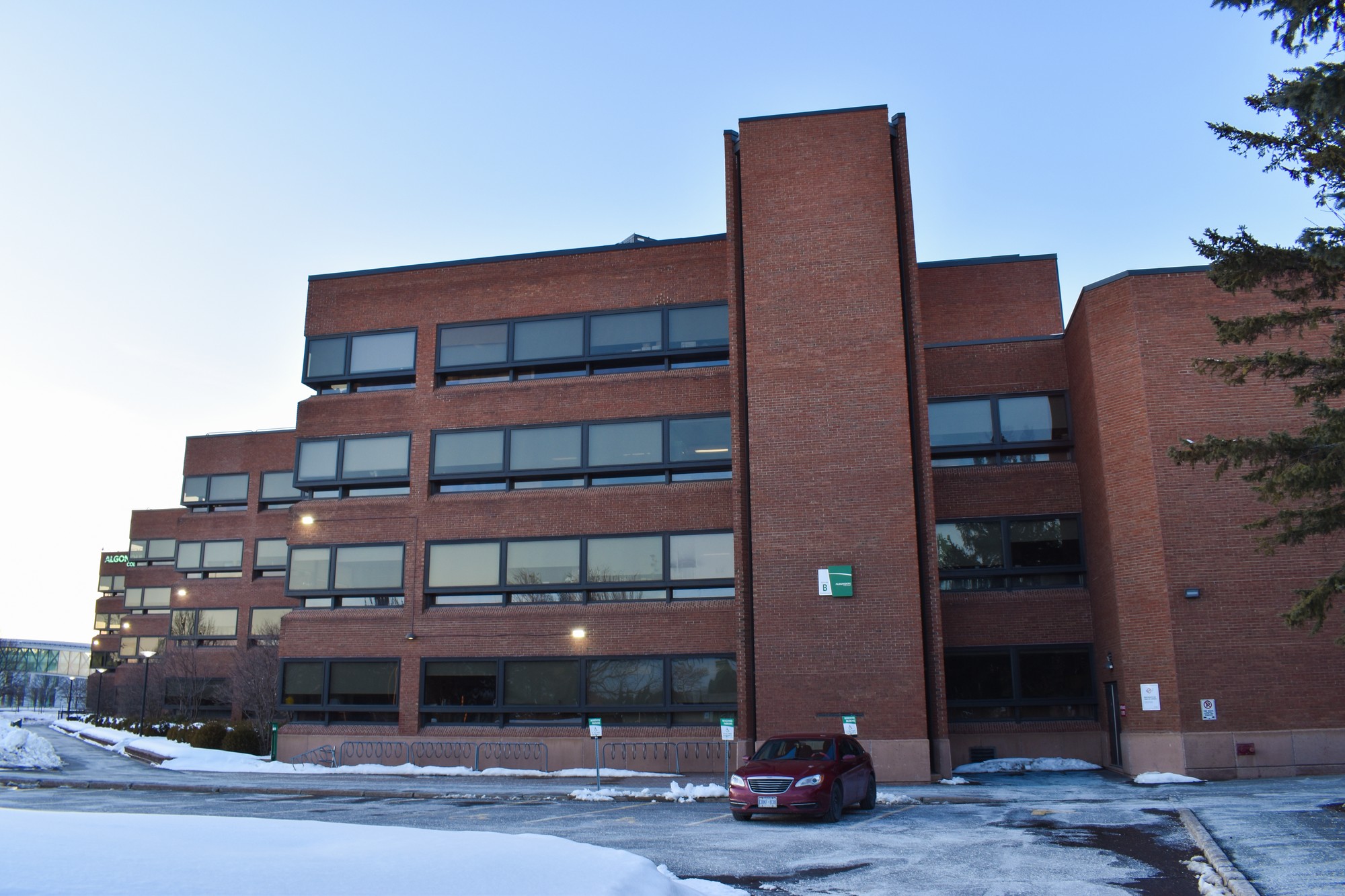
The B-building is where many nursing students study and prepare for their future careers.

Medical students studying and working in high-risk areas of hospitals and long-term health care have been included in Phase One of the vaccine rollout, however a decision to make vaccinations mandatory remains unclear.

Currently this term Algonquin College has 461 practical nursing students and 420 Bachelor of Science Nursing students enrolled in placements.

Karen Ball, chair of nursing at Algonquin College, and member of the Eastern Ontario Academic Health Sciences Network Task Force, said health officials have begun to discuss whether this will be something to consider in the future for all healthcare workers.

“They haven’t decided if it’s going to be if you work in long-term care you’re required to have it like they do for the flu shot or if it’s going to be something that you don’t have to have,” said Ball. “But if you don’t have it then you can’t work in certain places. They haven’t figured that out yet.”

The Ottawa Hospital following guidance from the Ministry of Health and Ottawa Public Health, currently oversee the rolling out of vaccinations and administer shots to any medical students who fall under the high-risk category.

The rollout will continue to remain focused towards those considered at highest risk of exposure to COVID-19 until Phase Two, which is set to begin in April 2021.

Those who are currently considered to be high-risk are those in critical care units, emergency departments, COVID-19 medical units, rapid response teams, general internal medicine, and all patient-facing health care workers involved in the COVID-19 response.

“The prioritization is based on risk to the individual,” said Dr. Regis Vaillancourt, director of pharmacy at CHEO and a member of the COVID-19 Task Force.

“They have put the very high-risk units – which are the units that will receive COVID positive patients and everybody who works in that unit to be on high priority to get the vaccine,” said Vaillancourt.

There is also the issue of privacy – another aspect that will need to be reviewed and considered when discussing vaccinations, said Ball.

“There are a lot of legal issues around that and people’s right to refuse. I’m sure there are a lot of very highly paid people right now trying to sort that out,” said Ball.

Currently the Ministry of Health has mapped out a ethical framework for the COVID-19 vaccine distribution following five different principles: Minimizing harm and maximizing benefits, equity, fairness, transparency and legitimacy.

As second-year nursing students prepare for the real world through placement, some feel that vaccines should be mandatory.

“We’re working with the same people that full-time staff are, said Chris Hammar, 27, a second-year nursing student. “Obviously we aren’t there the same amount, but viruses don’t care how long you’re somewhere.”

And as the warmer months approach, many students will spend even more time in health care settings.

“As summer approaches and for us to continue to train and to be the best nurse that we can be and provide our skill set to a vulnerable population – I think the faster we can get vaccinated the better off it’s going to be,” said Hammar.

Ottawa Public Health has received 69,187 doses with 80,540 shots administered to date.

Three candidates in the running for academic staff position on board

Community members will have the opportunity to vote for one of three candidates running for the position of academic staff representative to the Algonquin board of governors between March 10 and March 11. In order to help the community get to know Anna Labelle, Jonathan Parker and Rebecca Wakelin, the candidates running for the position, […]
There are three candidates for academic representative for the Algonquin board of governors.

Community members will have the opportunity to vote for one of three candidates running for the position of academic staff representative to the Algonquin board of governors between March 10 and March 11.

In order to help the community get to know Anna Labelle, Jonathan Parker and Rebecca Wakelin, the candidates running for the position, The Algonquin Times interviewed them in late February.

We asked each person why they are running, what issues are important to them and what distinguishes them in the race to be the faculty’s choice as the academic staff representative.

Anna Labelle, professor in the school of Media and Design.  " I want to help fulfill the college’s mission of becoming a global leader in personalized, digitally connected, experiential learning, so that we can keep transforming hopes and dreams into lifelong success."
Anna Labelle, professor in the school of Media and Design. "I want to help fulfill the college’s mission of becoming a global leader in personalized, digitally connected, experiential learning, so that we can keep transforming hopes and dreams into lifelong success."

Anna Labelle, professor

Anna Labelle is running because she wants to be a part of the decision-making process as the college transitions back to face-to-face learning post-pandemic. She says she is suited for the role.

“My greatest strength and my greatest interest in this is that I have this innovative mindset,” Labelle said in an interview over Zoom. “I’m able to see outside the box to find new solutions to problems that we never faced before.”

Her issues of greatest concern:

· Staying afloat through COVID-19

· Maintaining student enrolment and satisfaction

· Having reasonable expectations for Algonquin employees

· Remaining equitable, accessible and diverse

· Balancing the budget

“While it’s hard to make specific promises due to the rapidly evolving nature of our situation, my goal is to help find the innovative win-win solutions that will allow all members of the college community to get through these difficult times,” Labelle said in an email.

What distinguishes her from the other candidates?

The main point of distinction she brings to the race is that she represents the unique perspective of part-time and partial load teachers, as she is a partial-load employee herself.

Jonathan Parker a professor from the media and communication studies program. "People can strong advocates for their position, and I intend to be a strong advocate of my position, but it&squot;s also important to be diplomatic."
Jonathan Parker a professor from the media and communication studies program. "People can strong advocates for their position, and I intend to be a strong advocate of my position, but it's also important to be diplomatic."

Jonathan Parker, professor

Jonathan Parker is running because he believes that serving on the board will give him the opportunity to serve his community, which is a central motivator in his life.

“The next number of years at the college, it’s my belief, are going to be shaped by the strategy to address the challenges presented by the pandemic,” Parker said in a Zoom interview. “I want to make sure that the board of governors understands as much as possible the faculty perspective and the importance of maintaining the integrity of what we do in the classroom.”

His issues of greatest concern:

· Dealing with operational deficit

· Bringing faculty perspectives to the vague language in the college’s learner driven plan

· Advocating that class sizes do not expand due of financial pressure

· Guarding against program elimination due to financial constraints

· Opposition to college privatization

What distinguishes him from the other candidates?

He believes that his experience serving on committees both in academic and in political settings has familiarized him with the work he would doing on the board if elected.

Rebecca Wakelin chair of the Teaching and Learning Advisory Group." I&squot;m living proof of the transformative nature of higher education."
Rebecca Wakelin chair of the Teaching and Learning Advisory Group." I'm living proof of the transformative nature of higher education."

Rebecca Wakelin, chair of the Teaching and Learning Advisory Group

Rebecca Wakelin is strong believer in transformative nature of post-secondary education. Her work in the Ontario college system has given her the opportunity become a professional even though she came from humble beginnings, she says. She also wants to advocate for teachers.

Wakelin feels that teachers are not always listened to, which can cause college leaders to make decisions that harm teaching.

Her issues of greatest concern:

· Refocus on the classroom post-pandemic

· Focus on faculty by advocating for firm commitments to reduce precarious labour among part-time and partial-load teachers, such as a roadmap for how part-time teachers can transition to full-time

· Focus on teaching by advocating for solid plans to improve teaching, such as a concrete plan focusing on the faculty’s professional development

What distinguishes her from the other candidates?

“I’m unique in that I have experience working for a lot of years over two different colleges,” said Wakelin, who has also worked at at Georgian College. “I think that gives me a long view point of the Ontario college system.”

Wakelin says she is also proud of her her established relationships with faculty and management and her experience with Indigenization efforts.

College Supporting Women in Leadership and STEM

On March 8 we celebrated International Women’s Day, with a key theme this year centred around ‘Women in Leadership: Achieving an equal future in a COVID-19 world.’ The occasion provides the opportunity to reflect on where our College community is situated on this important issue. What goals have we set for ourselves? Have we been working […]

On March 8 we celebrated International Women’s Day, with a key theme this year centred around ‘Women in Leadership: Achieving an equal future in a COVID-19 world.’

The occasion provides the opportunity to reflect on where our College community is situated on this important issue. What goals have we set for ourselves? Have we been working hard enough to achieve them? What are our aspirations and are we leading the way forward in the post-secondary sector?

The College is filled with brilliant women leaders at all levels – from our Students’ Association President, Emily Ferguson, to our support, academic, management and executive teams. The College has long endeavoured to be progressive on this front, and on a personal note, I was honoured to have followed in the footsteps of Algonquin’s past President, Cheryl Jensen.

When we look across the current landscape with the added lens of the pandemic, it is clear that there are both unresolved and new challenges to building equality for women in the workplace, the classroom and in leadership roles. 

Recent media reports citing how women’s participation in the workforce has dropped to levels not seen in decades are alarming. Working moms are one of the hardest hit groups. We know from experience that these same trends can translate to mothers who work and learn at post-secondary institutions, and those who aspire to do so. 

Having the perspective of strong women leaders at the College helps us ensure that the issues around equality and access for women are top of mind in our decision-making. We are also striving to enhance our learning environment such that it’s inviting, supportive and provides more space for women learners, and fosters their leadership aspirations.

We have a Leadership Development for Women initiative, including an in-development Future Leaders Award that will recognize and reward a female student who has shown outstanding leadership within her academic studies and/or community. Recently we announced that the Leacross Foundation has donated $60,000 to support women in Science, Technology, Engineering and Mathematics (STEM) programs at Algonquin College.  

We are also beginning to see the results of the We Saved You a Seat pilot we launched in 2018. The program actively recruits women in STEM fields and serves to allocate 30 per cent of available seats for women in five programs: Electrical Engineering Technician, Mechanical Engineering Technology, Electro-Mechanical Engineering Technician, Computer Systems Technician, and Powerline Technician. 

The initiative, which recently expanded to the Pembroke campus for the Computer System Technician program, has been generously supported by Scotiabank, which includes the Scotiabank Women in Tech Award

Society moves forward when it removes barriers and opens doors to different perspectives. Algonquin College is proud to be a place where women thrive in leadership positions and a place that continues to provide pathways for female learners dreaming to make a contribution and achieve lifelong success.

St. Patty’s Activities

Please print and enjoy! Answers:

Please print and enjoy!

Answers:

March Horoscope

Algonquin Times on Instagram
Algonquin Times podcast
Algonquin Times horoscopes
Follow Algonquin Times on Instagram
Algonquin Times horoscopes
Algonquin Times on Instagram
Algonquin Times podcast
Follow Algonquin Times on Instagram

Stay Informed

Sign up for our newsletter

Subscribe

* indicates required