A Beacon of hope for students

Project Lighthouse launched a new student peer support space called The Beacon on March 15, which serves as a confidential, non-judgmental and safe space for students to speak about any […]
Photo: David Rotel
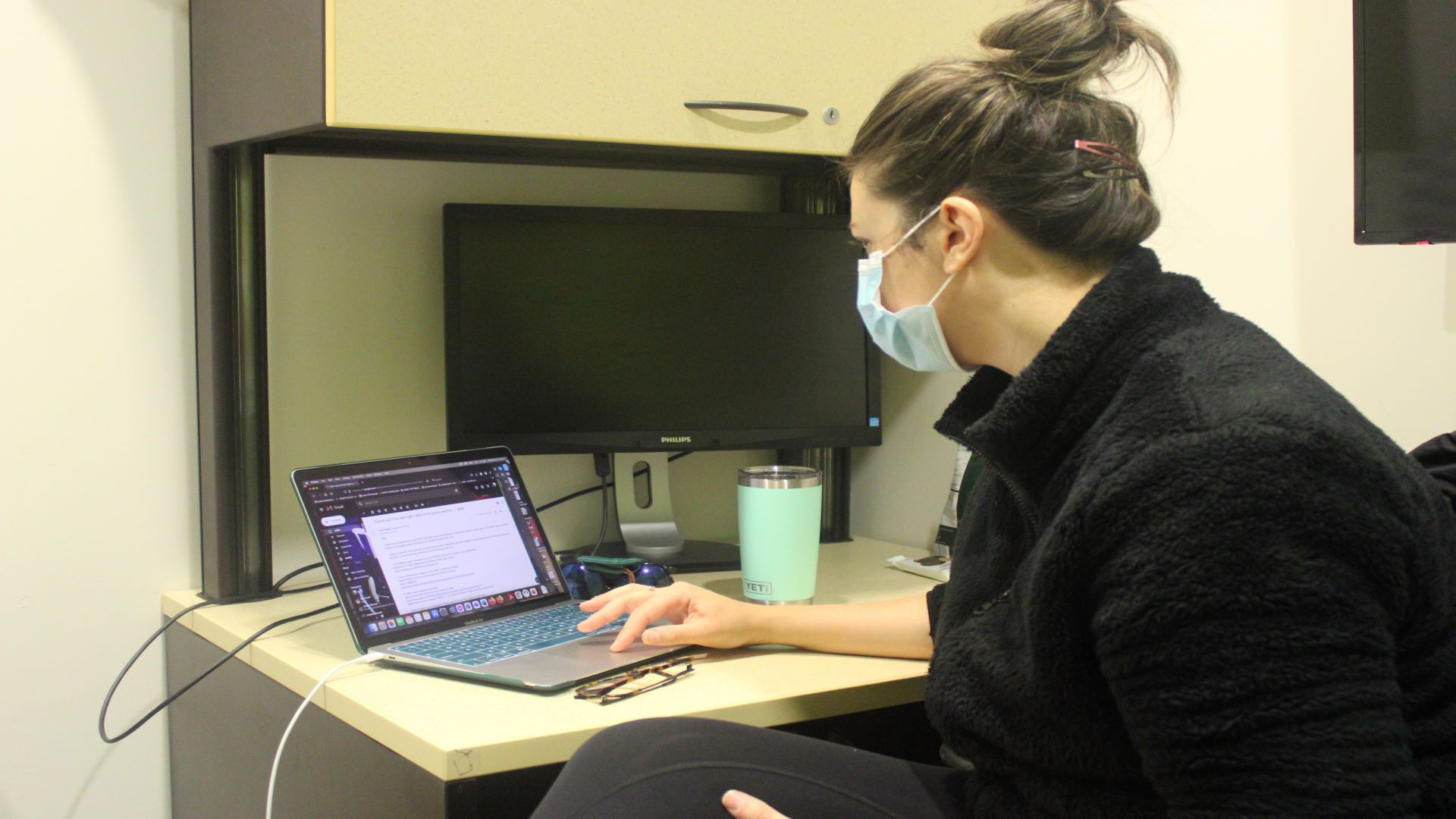
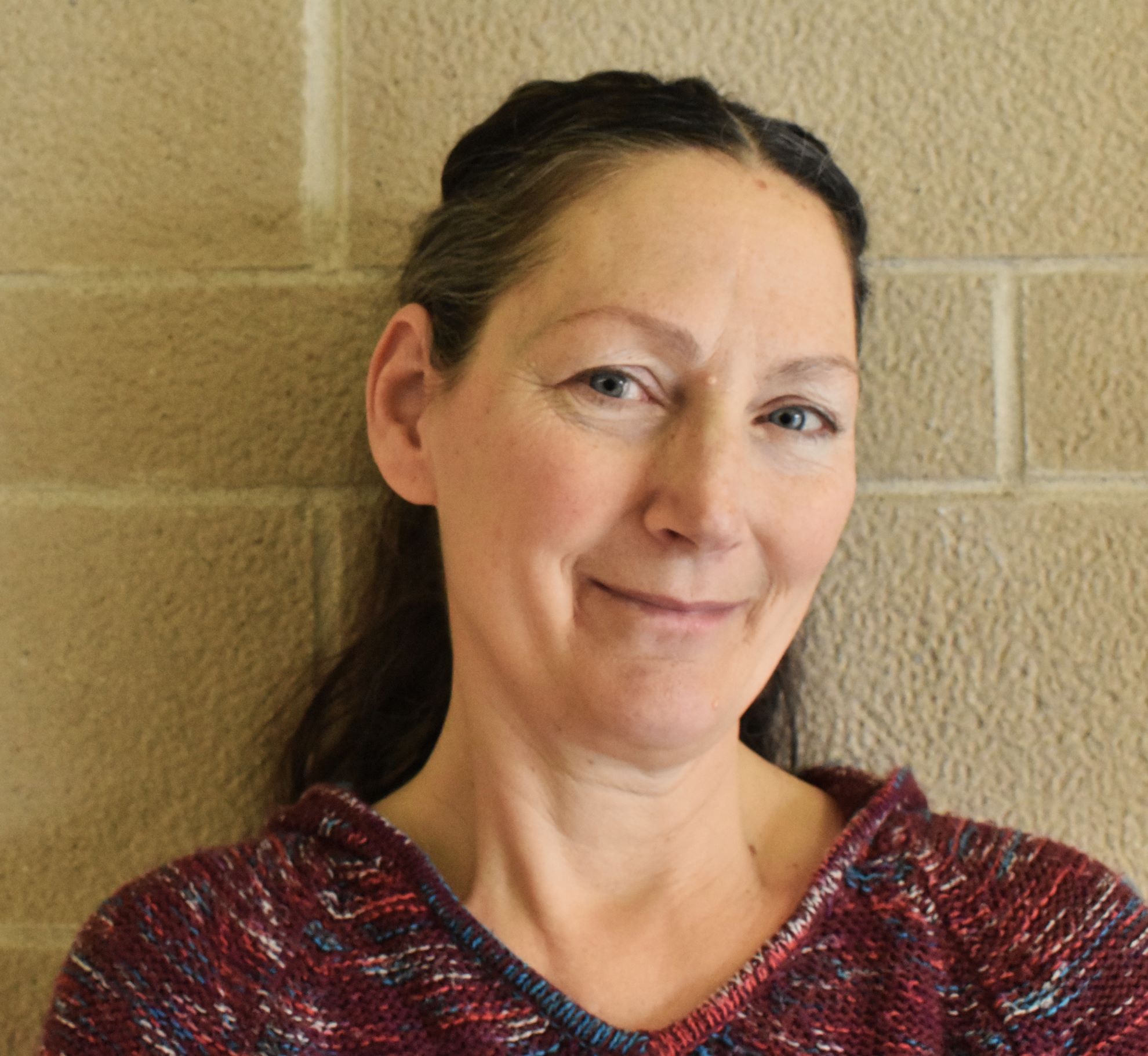
Student peer Ana Vlajkov says The Beacon support space is a way for students to alleviate stress and pressure.

Project Lighthouse launched a new student peer support space called The Beacon on March 15, which serves as a confidential, non-judgmental and safe space for students to speak about any problems they are facing.

“The Beacon is all about peer support. It’s students helping other students,” said Sarah Crawford, the sexual violence prevention and harm reduction co-ordinator of Algonquin College.

“That could be talking to someone about mental health, sexual health, sexual violence, substance use or just getting connected to a service,” Crawford said.

Crawford said the purpose of The Beacon is to make students feel “connected” and have someone to talk to when they feel stressed out.

“We know some of our students might not want to go to counselling, or think it’s a little bit scary. That’s why we’ve created The Beacon. Talking to a student is less of a barrier,” she said.

So far, the majority of students who have accessed The Beacon have mostly been online. Crawford is hoping that changes as the year goes on.

“There’s not a ton of awareness about it. We’ve tried doing stuff, but without everyone being back on campus, it’s harder to promote,” Crawford said.

The idea of a student peer support space was discussed a few years ago, but with the rise of COVID-19, Crawford and her team weren’t able to reach the funding they had hoped for.

Student staff has been hired to help support this project. The three students that run the peer support space are Ana Vlajkov, Oniqua Kamaka and Melissa Marchand.

“They all receive training from myself and one of the counsellors. They’re trained on sexual health, sexual violence disclosures, substance use and harm reduction approach,” Crawford said.

“I think COVID really illustrated that there’s a lot of issues with mental health and being able to access resources. Our current counselling department is pretty overloaded with people trying to access mental health services,” said Ana Vlajkov, a student in the social services worker program.

“I think the peer support space is just a way to help alleviate that pressure and allow students who are going through similar situations to help other students,” Vlajkov added.

The Beacon peer support space is in room E346, located on the third floor of the Student Commons building. The room has a couch and TV to make students feel comfortable.

“We wanted to create a home-like environment for people to come in and have that nice connection,” Crawford said.

It is open on campus Monday to Thursday from 12 p.m. to 5. p.m. and open online Monday to Friday from 12 p.m. to 5 p.m. Students can access The Beacon virtually via Microsoft Teams for face-to-face conversation, use the live chat feature for text-based chatting or text the peer support line at 613-703-8883.

As a country fights for freedom, a new journalist searches for purpose

I am a peace-loving person. I believe in the power of non-violent resistance. I support Canada’s military, but have traditionally avoided the topic of armed defense, preferring to focus on […]
Photo: Stephane Gunner
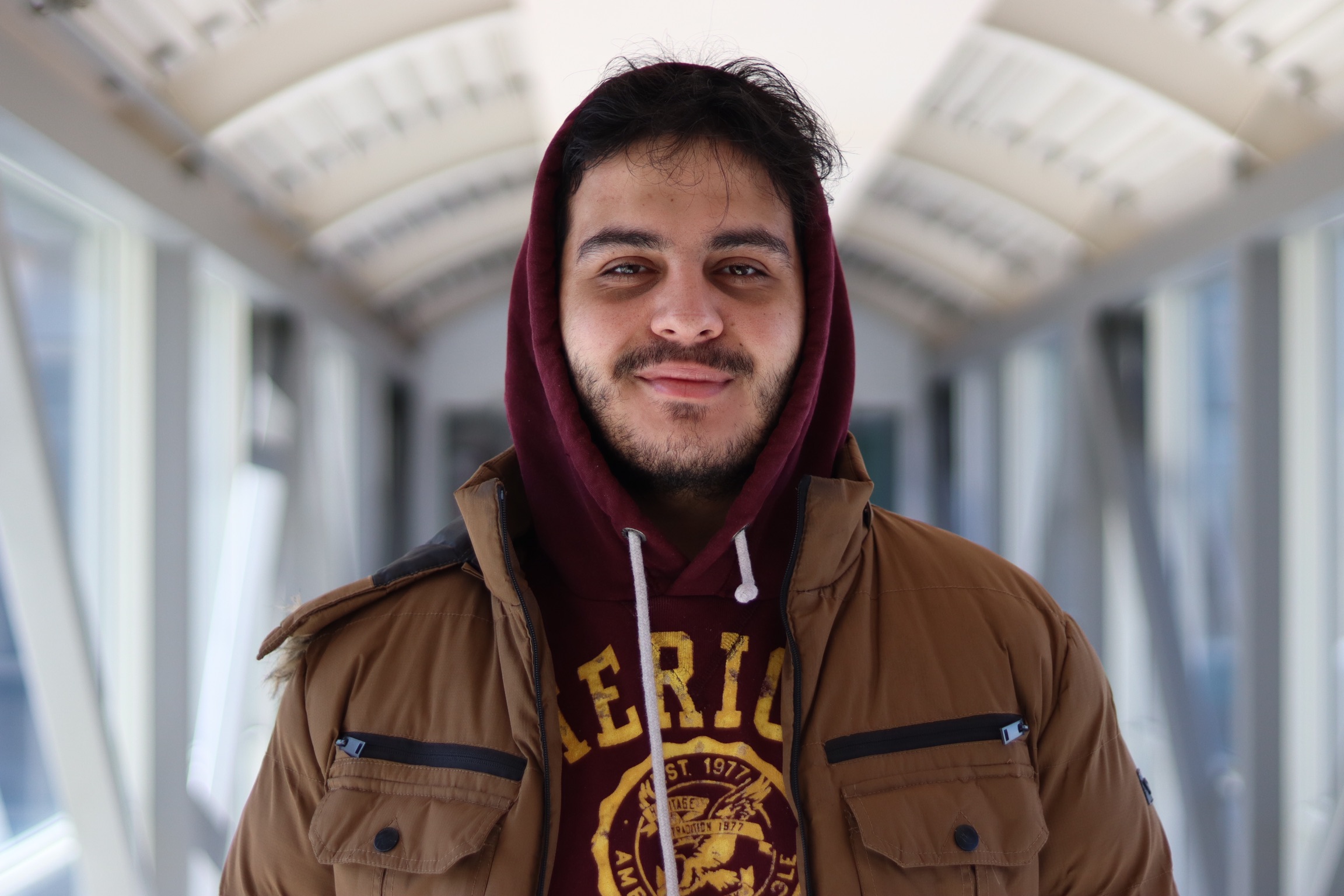
"I was struggling with the idea of being a reporter, and how close I would need to be to the news - the good, the bad and the ugly," writes the author.

I am a peace-loving person. I believe in the power of non-violent resistance. I support Canada’s military, but have traditionally avoided the topic of armed defense, preferring to focus on their humanitarian missions.

The invasion of Ukraine by Russian forces, and their brutal attacks on civilians has shifted my perspective: we need to answer their call for lethal aid.

On Feb. 24, Russia initiated the biggest military attack in Europe since WWII. Troops began moving into Ukraine by land, as air strikes targeted infrastructure and civilian homes. The assault was launched under a false premise – Vladimir Putin wanted to “demiliterise and denazify” Ukraine.

Ukraine’s president, Volodymyr Zelensky, immediately denounced the invasion as a ploy to stretch Russia’s territory. He began telling the world what was happening as the country mobilized its military. A former comedian, Zelensky delivered a series of passionate speeches in which he described the willingness of Ukrainians to stand united in a fight for their country.

Men and women took up arms as families with children started heading to the borders. As battles ensued in the south, journalists began sharing reports and images of civilians being targeted in their homes, and as they were trying to evacuate their cities.

I started following their stories on Twitter and was shocked and saddened by what I read and saw. But I could not turn away – I wanted to know the truth, no matter how hard it was to bear. I know my sentiments are likely felt by many in the Algonquin College community.

By this time, I was regularly listening in on Twitter spaces which are dedicated to discussing the war in Ukraine. Under the banner of OSINT, or Open-Source Intelligence, citizens, analysts and military vets share information from validated and trusted sources. I spent many hours on Twitter, doom-scrolling, which inevitably left me feeling helpless and depressed.

I began to question if I really wanted to work as a journalist – having to keep current with news and report on potentially horrible situations. The stories started to come in of reporters being injured and killed in Ukraine while chasing a story.

I thought back to the “Freedom Convoy” in Ottawa, and the numerous accounts of media personnel being targeted and harassed on the streets. My schoolwork seemed less important than the tragic accounts of Ukrainian refugees, and the families torn apart by war.

I shared my feelings with my classmates – how I was struggling with the idea of being a reporter, and how close I would need to be to the news – the good, the bad and the ugly. I was in this frame of mind for a few weeks, all while parenting a pre-teen and trying to keep up with other life-stuff. But there was a point when I decided to bring more attention to my school program.

I thought, if I quit journalism because I am too upset about the actions of a political dictator, then I am letting the bully win. And that made me angry – I did not want to give up a potential career and my passion for writing because of a warmonger, or because I know that horrible events are taking place in a country I cannot directly help.

But the journalists in-country are making a difference – by reporting the truth to the world, Ukraine is getting the help it needs to triumph over the occupiers. I know I can be effective in this role, covering events close to my home, or wherever life takes me.

And so, I continue work on my assignments, donate to Ukraine’s armed forces and keep in touch with the news on Twitter. Only this time I spend more minutes engaged with a story, versus more page views. And more time for self-care.

Ottawa Public Health implores residents to wear masks indoors

Local News: Due to the possibility of a COVID-19 resurgence, Ottawa Public Health is encouraging residents to wear masks indoors and is launching a third dose campaign. “I am always […]

Local News: Due to the possibility of a COVID-19 resurgence, Ottawa Public Health is encouraging residents to wear masks indoors and is launching a third dose campaign. “I am always reviewing the situation and thinking about what could be done locally, including taking a look at whether this is a time where it would make sense to use a Section 22 order,” said Vera Etches, Ottawa’s medical officer of health. Section 22 of the provincial Health Protection and Promotion Act gives medical officers of health the power to create rules, such as mandating masks. “The pandemic is not over and we are currently experiencing another resurgence,” said Etches. As of now, there are no plans to reintroduce mask mandates.

National News: A union in Toronto says that workers from a Metro and Food Basics distribution warehouse could be going on strike this Friday. According to Unifor, 99 per cent of workers voted to go on strike if a collective agreement can not be reached by April 1. “Metro has profited tremendously during the pandemic but it is the shareholders who have benefited, not the front line workers,” Unifor Ontario Regional Director Naureen Rizvi said in a statement.

International News: Actor Bruce Willis has announced his retirement from acting after being diagnosed with aphasia, a condition that causes loss of the ability to understand or express speech. The caption of an Instagram post of Willis’ eldest daughter, Rumer, reads “As a result of this and with much consideration, Bruce is stepping away from the career that has meant so much to him.” The statement is also signed by Willis’s wife, Emma Heming Willis, his ex-wife Demi Moore, and his five children, Rumer, Scout, Tallulah, Mabel and Evelyn.

Wastewater data shows a spring wave of COVID-19 is possible

Local Ottawa Citizen: A design has been chosen for the new LGBTQ2+ national monument, Canadian Heritage announced Thursday morning. The winning bid came from a Winnipeg-based team whose design is […]

Local

Ottawa Citizen: A design has been chosen for the new LGBTQ2+ national monument, Canadian Heritage announced Thursday morning. The winning bid came from a Winnipeg-based team whose design is called Thunderhead. The design is meant to evoke a cloud which the team says stands for “strength, activism, and hope.” The monument will be built on Wellington Street and is slated to be completed by 2025.

National

CTV News: As COVID-19 restrictions are lifting across the country, experts who have been analyzing wastewater data are warning of a potential uptick in infections. The data suggests that another wave of the virus could be coming in the next few weeks. The scale of this wave is hard to predict but experts are worried about the relaxing of restrictions and the effects this could have on Canadians.

International

BBC World: The leaders of the NATO countries including Canada’s Justin Trudeau, attended an emergency meeting of the organization today in Brussels. They approved the mobilization of 40,000 troops into Slovakia, Hungary, Bulgaria and Romania to buttress against Russian encroachment through Ukraine. Further sanctions and admonishments were issued by both UK Prime Minister Boris Johnson and Joe Biden.

Elections Ontario voting booth being held in the Student Commons

Students now have the opportunity to participate in the provincial voter registration month by registering at the booth, located in the Student Commons here at Algonquin College. The next election […]
Photo: Griffin Waller
Samantha Ranger, a host, sits at the Student Commons voting booth at Algonquin College.

Students now have the opportunity to participate in the provincial voter registration month by registering at the booth, located in the Student Commons here at Algonquin College.

The next election will be held Thursday, June 2, to elect members of the provincial parliament to serve in the forty-third Parliament of Ontario.

Samantha Ranger, a host at the Student Commons booth is participating in a tour that has been active for two weeks, made up of five teams having visited Kingston, Brockville and Cornwall, now landing here in Ottawa.

This week they also visited University of Ottawa and will be at Algonquin College Friday, March 25.

“As for next week, we are still unsure where we’ll go,” said Ranger.

According to Elections Canada, a study in 2019 showed that out of 369,000 eligible 18-year-olds, only 121,000 were registered to vote, covering 33 per cent.

Younger electors were also less likely to say they were registered, 64 per cent, with 25 and older landing at 92 per cent, said Elections Canada.

Andrew Gottschalk, an electrical engineering technician student here at Algonquin College, as well as Aleksei Batrakov, an applied arts and technology student, both intend to vote at the upcoming election.

“Yes, we both hope to vote in the election,” said Gottschalk, being aware of the booth on campus.

You can participate in weekly voting games at settlethedebate.ca. And you can also register to vote online here at Elections Ontario.

More than half of Canadians are worrying about the price of food

Local Ottawa Citizen: Three men were stabbed in the ByWard Market around 2 a.m. on Wednesday morning as they left a bar. The stabbings occurred during a fight between two […]

Local

Ottawa Citizen: Three men were stabbed in the ByWard Market around 2 a.m. on Wednesday morning as they left a bar. The stabbings occurred during a fight between two groups of people. Ottawa Police Services are asking witnesses to contact them.

National

Global News: An Ipsos poll commissioned by Global News found that 60 per cent of Canadians are worried they cannot afford to feed their families amidst rising inflation. CEO of Ipsos Public Affairs, Darrell Bricker, said prices are now the issue Canadians worry about the most, above health care and climate change.

International

CBC: Former US Secretary of State Madelaine Albright died on March 23, 2022, at age 84. Albright was Secretary of State from 1997 to 2001 in the Bill Clinton administration. She was the first woman to serve in the role.

Why I have grown to love the Canadian take on Lebanese food

Nothing brings out that feeling of familiarity like food does. For Lebanese people, food is perhaps the most beloved part of our culture, and one that we indulge ourselves in […]
Photo: Aadil Naik
"By going from restaurant to restaurant, trying each one again and again in search of food that would mentally take me back home, I became more and more attached to what restaurants here are serving," writes the author.

Nothing brings out that feeling of familiarity like food does. For Lebanese people, food is perhaps the most beloved part of our culture, and one that we indulge ourselves in the most.

Since the Lebanese Civil War in the 1980s, many Lebanese people have left the country in search for a better life. A lot of them ended up in Canada, with the idea that it is a country that takes care of its people, and thus, they could establish a new, more peaceful life here.

However, many of them still cling to their traditional ways of living in the hopes of preserving some sense of homeyness.

Thus, as a Lebanese university student who was outrageously homesick when I arrived in Canada in 2017 to study journalism at the University of Ottawa, it was through familiar food that I attempted to quench my thirst for home.

The options were plentiful. There is a shawarma restaurant on what feels like every block and a lot of places serve what we call “Manoush’eh” (men-ou-sheh) but is known as pie here. There is humus in every store and many restaurants serve what is known in Lebanon as “Masheweh” (ma-sha-weh), which is essentially barbecued meats such as kebabs and chicken taouk.

However, before I ever got to discover all that, my first experience with my home’s food happened in the University of Ottawa cafeteria. The experience left me disheartened and discouraged, to say the least.

It was like someone spilled a drink all over a beautiful painting, as I witnessed how they massacred the traditional shawarma right in front of my eyes. A traditional chicken shawarma has the following elements: the chicken, the garlic sauce, the fries and the pickles. That’s all that it needs to create the lovely taste attributed to the sandwich that has seen it reach global acclaim.

So when I saw the chef throw all kinds of different vegetables into the sandwich and a multitude of different sauces, I was quite bewildered. However, the true tragedy was not in the overcompensation of the sandwich, but how underwhelming the taste of it all was.

The shawarma served to me that day lacked key fundamentals in the spicing of the chicken and garlic. It tasted bland when compared to the way it is served back home and left me disappointed. I was still in need of the right food to fill the hole in my heart.

However, I decided to stay optimistic. Perhaps it was just this specific cafeteria that served it to unacceptable standards, and surely other restaurants within Ottawa would do it justice?

Thus, the search for home began. I went on trying every single restaurant that reminded me of home, be it for shawarma or for any other traditionally Lebanese food. However, wherever I went, the feelings of being underwhelmed and disappointed seemed to follow, as it became a common theme with each experience.

They all lacked that kick – that extra bit of flavour that would make the food taste so good back home. However, one thing they did manage to do right, even if I did not realize it right away, was that they were slowly wiping away any feelings of homesickness I’d had at the start.

What took some time to understand was that even if the Lebanese food here was not an exact replica of the food back home, it didn’t need to be. This wasn’t Lebanon, this was Canada. Rather than cling on to the bits of Lebanon I found here, I needed to establish a new sense of familiarity in a new land.

By going from restaurant to restaurant, trying each one again and again in search of food that would mentally take me back home, I became more and more attached to what restaurants here are serving.

Despite them not living up to my expectations initially, I’d still crave the food from these restaurants. What was happening? I came to the conclusion that I had grown to love the Canadian take on Lebanese food.

Now I have specific favourites I often go back to: Food Frenz in Sandy Hill has potentially the best Manoush’eh I have ever had in my life. Fairouz on Clarence Street is like a piece of Lebanon got teleported to Ottawa. And Shawarma House in Kanata makes shawarma the most accurately I’ve seen in Ottawa.

Through my attempt to find familiarity and feel as though I am still back in Lebanon, I created a new sense of comfort with the options available here. In turn, I was able to find my place in my new home.

College students relieved after faculty strike averted

After a week of uncertainty, Algonquin College students were relieved to learn that the faculty bargaining team and the College Employer Council reached an agreement and called off the scheduled […]
Photo: Stephane Gunner
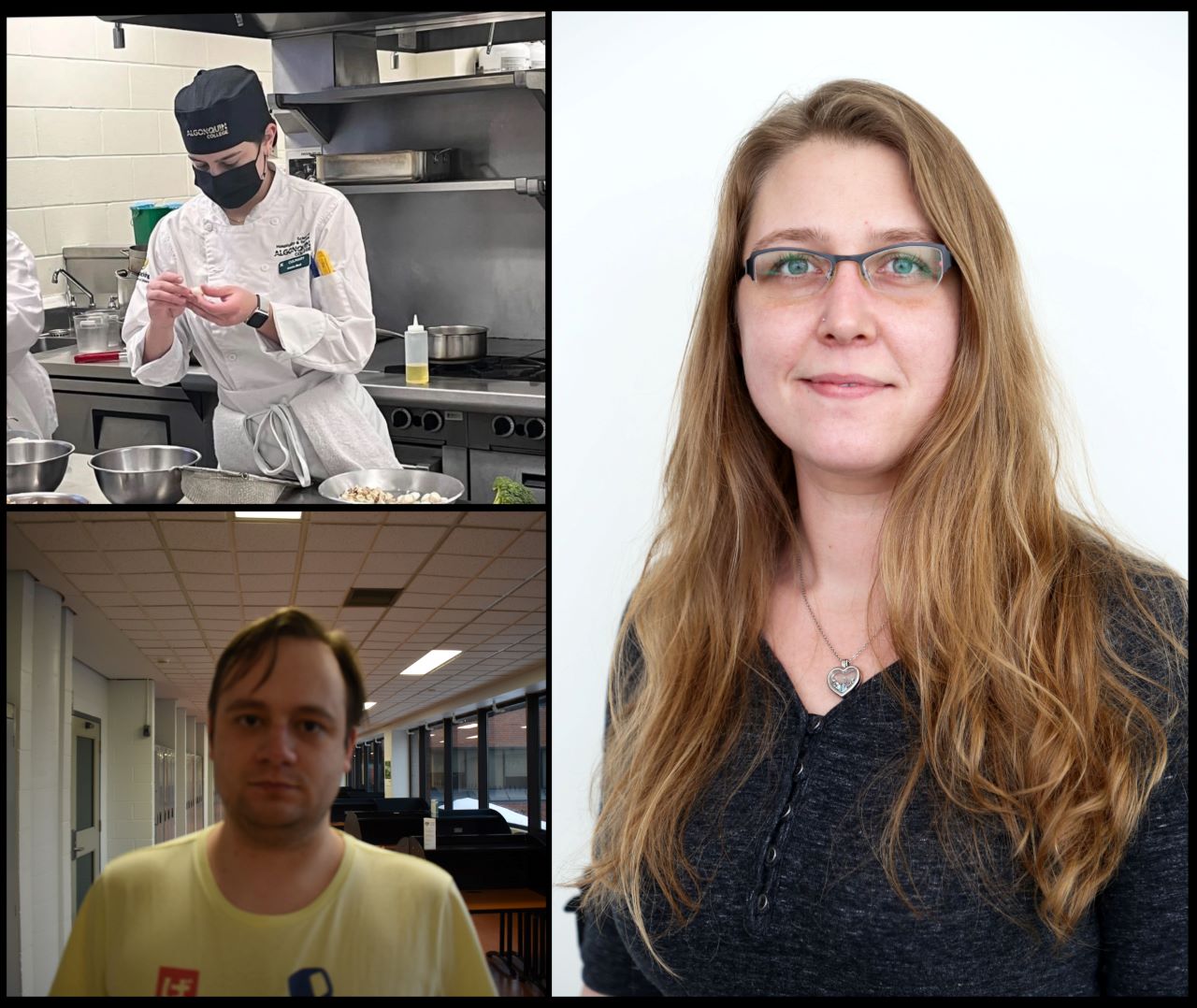
Amelia Medl (top left), Shane Deavy (bottom left) and Laila Doyon (right), are all grateful a strike didn't happen.

After a week of uncertainty, Algonquin College students were relieved to learn that the faculty bargaining team and the College Employer Council reached an agreement and called off the scheduled strike late Thursday night before the 12:01 a.m. deadline.

The Applied Arts and Technology bargaining team representing the college faculty and the CEC issued a joint statement just over an hour before the strike deadline on March 17 announcing they’d agreed to enter binding arbitration interest and end the work-to-rule actions.

In an announcement by Algonquin College, President Claude Brulé wrote that both parties reached an agreement.

“For our learners and our employees, everyone was really anxious about this and we all want to put our students first. The quality of education is important to us all and we did not want to interrupt the learning process,” said Brulé. “It was great news to be able to announce this and all the students were able to return to class.”

Laila Doyon, a student in electrical engineering technology, said the past two years have been very tough.

“Online learning is not ideal for anybody and the mental health aspect was really hard on everyone,” she said.

Doyon, who is in her program’s last semester, says the stress of working on a final project was made more difficult by the uncertainty of a potential strike. As she has a job coming out of the program, she also didn’t know if that might be at risk too. “It was like we were not kept in the loop about anything,” she said.

For Doyon, she felt like the CEC and the union were attacking each other, because of how they were talking.

“It felt like bullying and it doesn’t feel right that we were put in the middle of it. It was like being part of a divorce,” said Doyon. “I don’t know what is going to happen next. I am worried something will happen next because we have now been conditioned that something will happen. So, it has been difficult and still is. It will remain until the year is done until I actually have my graduation.”

Culinary management student Amelia Medl, said that she was so relieved after reading the email on her phone.

“I was smiling and laughing,” said Medl. ” I was so happy because I waited for that email. I stayed up late because I knew there would be an email saying if it would happen. I mean not having classes is obviously super stressful because I have a bit of a schedule that I’m on. I want to graduate and obviously I like what I’m doing.”

Medl said she was anxious the semester would wrap up earlier and the students would have to go.

“I was just kind of stressed out about that, but it was a super big relief that it didn’t happen,” she said.

Business administration student Shane Deavy was a student during the 2017 strike. Last week’s experience gave him a bad feeling he’d felt before from the previous strike.

“I was here in Algonquin for a different program,” he said. “So I was kind of hoping that they wouldn’t have one, but also expecting that they would if that makes sense.”

Deavy said when he heard the news about the potential strike, he felt incredibly disappointed.

“I mean, nobody wants to go on a strike. But if you’re going to strike, at least give us our money back or say something more on the guidelines as to what will happen,” said Deavy. “Get your shit together. We’re already paying a lot of money as is to come here, especially international students.”

Brulé said the college is pleased they were able to reach an agreement and now the matter is being placed before an arbitrator and those next steps will be put in place in the weeks to follow.

“To me, it’s a very positive step forward,” said Brulé. “It allows us to continue what we want to do. Our mission is to transform hopes and dreams into lifelong success. This is the heart of it. We all want our students to be successful. This allows us to complete the winter term uninterrupted and we’re delighted.”

Online Editor

The Algonquin Times is a newspaper produced by journalism and advertising students for the Algonquin College community. Follow us on social media! Algonquin Times Twitter Twitter (Events & Promos) Facebook Facebook (Events & Promos) Instagram Snapchat

Putin threatens to cleanse Russia of ‘scum and traitors’

Local Ottawa Citizen: Dr. Brent Moloughney, the deputy medical health officer for Ottawa Public Health, says that they are wary about signs of a rise in transmission of COVID-19 as […]

Local

Ottawa Citizen: Dr. Brent Moloughney, the deputy medical health officer for Ottawa Public Health, says that they are wary about signs of a rise in transmission of COVID-19 as cases begin to slowly rise. Moloughney says that they are watching the situation closely and advise those who are prone to severe illness to remain cautious amid masking requirements being lifted soon.

National

CBC: The federal government will abolish the COVID-19 testing requirements for fully vaccinated travellers starting April 1. According to experts, the spread of Omicron has made the practice useless. However, vaccine mandates for travel through air, ship and rail will remain in effect.

International

National Post: Vladimir Putin has threatened to get rid of Russians who are working against Russia in favour of the United States and its allies, calling them “scum and traitors.” Three weeks into the war with Ukraine, Russia is suffering economically due to international sanctions. Putin stated that Russians living abroad are traitors to the motherland as well.

Public relations students launch charity campaign

The room in the N building was filled with keen, well-dressed public relations students on the afternoon of Wednesday, March 17. Level 2 students were waiting for their turn to […]
Photo: Leslie Bader
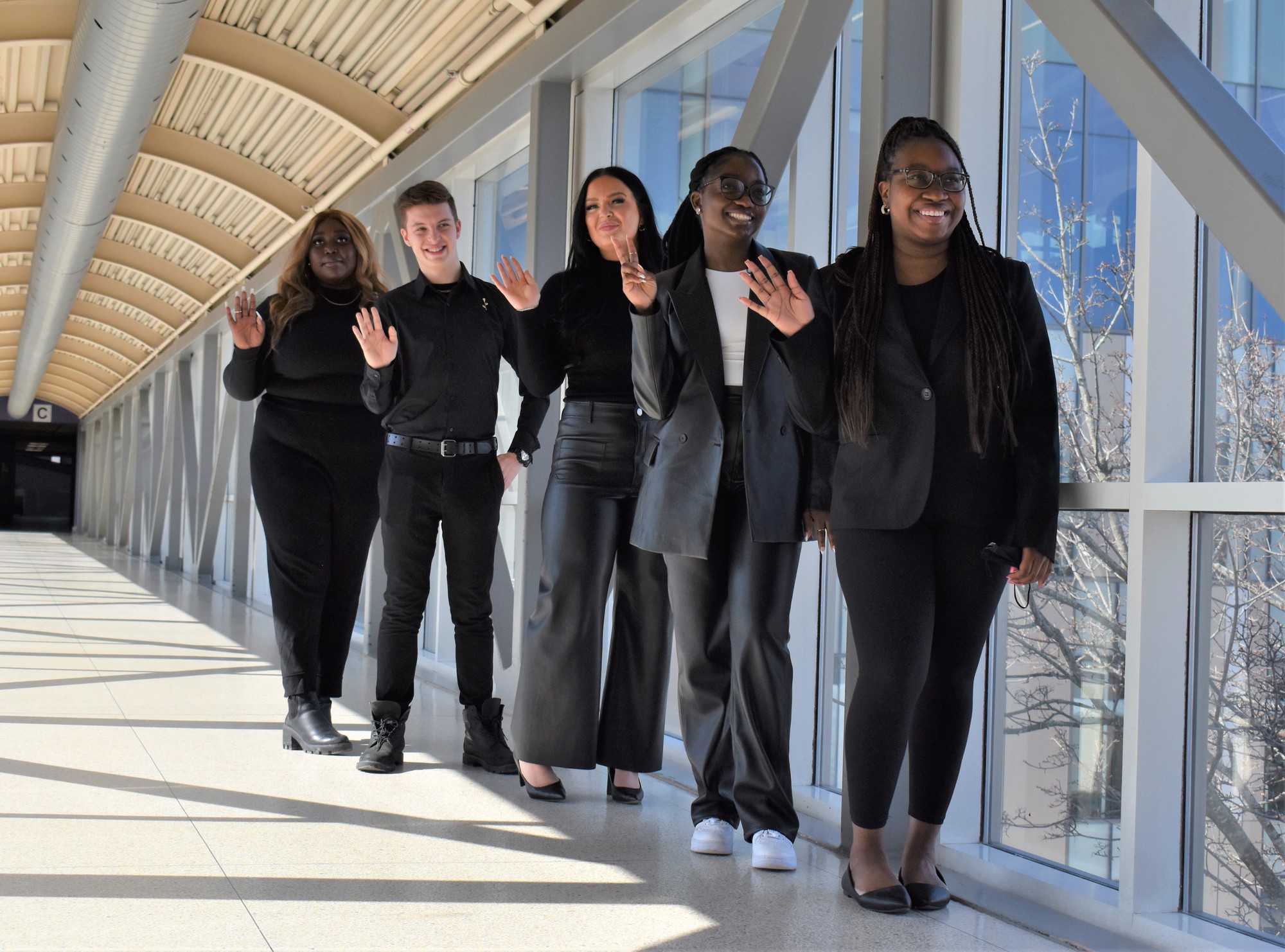
“We chose this charity because it was close to home, because many of us have used their resources,” said Bolu Olutunda, team lead for the "Sparkling Portraits" event.

The room in the N building was filled with keen, well-dressed public relations students on the afternoon of Wednesday, March 17. Level 2 students were waiting for their turn to host their first, professional news conference for their colleagues, teachers and students in the radio and journalism programs.

Every year, the class holds an awareness and fundraising campaign to support a local charity.

This year, teams have organized seven events under the banner “Hear to Hear You,” which will support the Sexual Assault Support Center of Ottawa.

“We chose this charity because it was close to home, because many of us have used their resources,” said Bolu Olutunda, team lead for the “Sparkling Portraits” event.

Olutunda and four of her colleagues have organized a paint and wine night, which will take place on April 6 at the Barley Mow Orleans. (The official date will be announced when more is known about the faculty strike.)

According to Astria Mabwoto, the team’s spokesperson, two local artists will lead painting tutorials and host discussions on art and mental health. “Friends, colleagues and family members can get together to paint, while enjoying food and refreshments,” said Mabwoto.

Tickets are available on Eventbrite for $25 individual, $45 couple and $65 for a group of three. There will be a raffle for three prizes and a painting competition at the end of the evening.

Sarah Ouellet, logistics lead, told attendees that research from Statistics Canada suggests that 75 percent of post-secondary students either witness or experience sexualized behaviour.

“We are extremely proud to be representing a charity that has been supporting survivors for almost 40 years,” said Ouellet.

The Sexual Assault Support Centre Ottawa offers help via phone, groups and individual sessions. Grounded in feminist theory and action, SASC is dedicated to social justice and political action. It is a highly inclusive and diverse organization.

Algonquin Times podcast

Stay Informed

Sign up for our newsletter

Subscribe

* indicates required