Time to leave winter behind for the sun

After what can be described as a tumultuous college year, students are strapped-in for the final stretch of the 2022 winter term. Staff and students’ efforts and time have shifted […]
Photo: Tyler Major-Mcnicol
Tyler Cyr, a first-year radio broadcasting student at the college, editing audio files sporting his Blue Jays jersey with thoughts of attending baseball games this summer.

After what can be described as a tumultuous college year, students are strapped-in for the final stretch of the 2022 winter term.

Staff and students’ efforts and time have shifted to final assignments and tests, with the thoughts of summer break just ahead, which brings thoughts of hot sun, cold drinks and no studying.

Well, for almost everybody, explained Tyler Cyr, a first-year radio broadcasting student at Algonquin College.

“Us radio students do not have a summer break, we actually have a third semester during the summer, but we will have a three week break before . . . To sort of have the relaxing break, honestly, I just take school out of the picture,” said Cyr.

While Cyr doesn’t get to enjoy a full summer off to himself to unwind, he does use the time he has off to the best of his ability.

“I like to treat summer as a training time for hockey, but it’s all the season of baseball. So, the thoughts of going down to Toronto to see the Jays play has come in and out of my mind. As well as the warm weather; Ottawa is just too cold in the winter,” he said.

Relaxing and resting, are both synonymous with summer and the same sentiment goes for Martin Munoz, a first-year public relations student at the college.

“My best method for total relaxation is a warm day at the beach with a cold beer. That is what I plan to do with my free time during the summer. After such a long winter I just want to go out and enjoy every second of the nice weather,” said Munoz.

While Munoz looks forward to days spent at the beach, he is aware of the debts which come along with the life of a college student.

“First thing I want to do during my summer break is start working full-time. It is a bit hard to pay for everything I owe during the school year because I do not have enough time to work as much as I would like to,” he said.

The final stretch of the term can invoke anxiety for students.

Professors are familiar with stress induced by finals which prompts them to offer advice, according to Dave Eibner, professor in the massage therapy program.

“Keep on keeping on. The last stretch is the time to gear down, not up (of course no one drives manual anymore – so this reference may be lost) don’t spend time on content you know, isolate the content you’re unclear about, organize and prioritize learning it based on how it’s weighted in your summative evaluations,” he said.

Once exams and final assignments switch to the rear-view, vacation planning and relaxation comes to the fore and personal time becomes priority, according to Joseph Ieradi, a police foundations professor.

“Relaxing, spending time at the cottage and fishing,” said Ieradi. “Jumping in the pool on the hottest summer days.” These are the methods Ieradi uses to disconnect from school.

Studio Time

While The Algonquin Times is run by journalism and advertising programs, those are only two of the amazing programs at Algonquin College. This series consists of Times students sitting in […]

While The Algonquin Times is run by journalism and advertising programs, those are only two of the amazing programs at Algonquin College. This series consists of Times students sitting in on other programs to highlight them and some of the awesome opportunities Algonquin College has to offer. We are starting with Studio Time, a highlight of the Music Industry Arts program.

2022: The sucker punch we didn’t deserve

Older generations leave no opportunity to remind us that the decades prior were harder. There was more struggle and effort in everything, and the current era is easy. A walk […]
Photo: Liam Fox
The severity of the truckers protest in late January hit unexpectedly and set the tone for the emotional rollercoaster the rest of the term would hold.

Older generations leave no opportunity to remind us that the decades prior were harder. There was more struggle and effort in everything, and the current era is easy. A walk in the park. But the last two years proved them woefully wrong.

Since COVID-19 surfaced in late 2019, the world has seen over 490 million confirmed cases. Over six million of those have been fatal. Relentlessly, the virus pummelled humankind. What used to be a breath of fresh air became an inhalation of fear and uncertainty.

But by the end of 2021, things had started to look better. In early December – just as we were wrapping up a semester online – cases were down, and vaccination numbers were up. Travel restrictions were starting to lift, and Christmas was around the corner. Algonquin College – like many other educational institutes in Canada – intended to go back to a mainly in-person teaching model for the upcoming winter term. The calls informing of sudden demises, and the constant depressing news cycles had tapered.

There was hope and positivity in the air. The Rideau Canal Skateway would be thrown open to the public, soon. Businesses were getting back on their feet. And people were starting to step out in as safe a way as possible. A new year was coming and with it good things that would lead us away from the last two years we so badly needed to forget.

So positive were we, that when the first trucks showed up on Thursday, Jan. 27 at Parliament Hill, we barely took notice. COVID-19 mandates were easing up and restaurants were reopening for dine-in. But then the trucks stayed, and the city was once again held at ransom – this time by man-made causes.

We had barely recovered from the compounded dread of the last two years, and here we were once again – fear stricken. Those who stayed downtown faced the brunt of it – abuses and heckling were a daily affair, with the odd beer can chucked at innocents. And while they weren’t common, even a single Nazi flag in a protest is one too many to be acceptable.

It took the brave actions of a 21-year-old Ottawan to bring the incessant honking to a stop, but the feeling of dread stayed. The police needed another three weeks to clear the streets – three weeks of commuting nightmares, cancelled buses and reroutes. And if you lived across the river in Gatineau, you might as well have stayed home. The damage was done, though. We were back to our gloomy, defeated mental states.

But 2022 was just getting started. On Feb. 24, Russian troops invaded neighbouring Ukraine. A narcissistic Putin went after civilians and threatened nuclear retaliation against other nations that interfered. The rest of us watched on in helpless horror, as the stench of death and destruction repopulated our barely healed psyches. As is the case with any violent conflict, collateral damage was immediate. Russian and Ukrainian students at Algonquin felt it, too.

As journalists, this incessant negativity was starting to have a toll on the Algonquin Times staff. Reporting in an accurate and timely manner is our job. Our duty. We do our best to stay updated and true to the facts. But beneath it all, we are human. And humans don’t do well when most of their waking hours are spent doom scrolling.

But we stoically pushed on. Not because we wanted to, but because we had to. We published the Algonquin Times’ first print edition in two years – something we are extremely proud of given the circumstances. And we toiled away at assignments – being occupied is a good way to avoid our worries. It was the only thing that was normal.

Until fate decided that wasn’t bad enough. The Ontario Public Service Employees Union’s negotiations with the College Employer Council suddenly broke down, and they announced they were going on strike March 17. That meant immediate cessation of all faculty activities. No class. No college. And no Algonquin Times.

Once again, the emotional rollercoaster picked up speed. Once again, we were plagued with uncertainty and fatalism ­– waiting with baited breath. Like the universe was plotting against us. How would we complete the term? Would we ever make up lost time in the course? What about international students who had come from across the world, only to sit it out? And most importantly, what else did 2022 have in store before it was done with us?

Fortunately, an agreement was reached, and the strike called off at the eleventh hour (quite literally). And we dared to be skeptically hopeful, again.

The end of the term was in sight, and while it had become academically stressful – procrastination and deadlines were at their peak – it was stress we recognized and understood from decades in an education system. It was familiar territory.

The government of Ontario seemed to be feeling positive, too, as it lifted all mask mandates on March 21. It’s not like COVID-19 was dead; they just felt enough people were vaccinated (or responsible enough) to reopen safely. Some argue it was politically motivated.

Unsurprisingly, what followed was a resurgence in positive cases. Two from the Algonquin Times team fell victim within a week. But COVID-19 is physically draining. The exhaustion lasts for days after recovery. And this time, the world doesn’t stop for the afflicted, anymore. Now, you’re the only one missing out. And you still need to submit those assignments.

And that’s where we are, right now. A year that was supposed to put us back on our feet has been more of an exsanguinating rollercoaster ride, reminding us how we plot and plan, and how truly powerless those plans are.

With two weeks left for the semester to conclude, the uncertainty of the next sucker punch hangs like a sword over our heads. But we want to be hopeful. There are good things that happened, even though our brains work overtime to remember the bad.

The Algonquin Wolves women’s basketball team made it to the semi-finals of the OCAA championship. We published a print edition of the paper. The Jack Doyle Athletics and Recreation Centre was officially inaugurated. And the college has booked the Canadian Tire Centre for convocations.

Looking back, we have had one heck of a start to 2022. It’s like we were in a bubble at the end of 2021, and when it burst the universe poured all its pent-up resentment in one fell swoop. And now with the end in sight, the compounded mental exhaustion is taking its pound of flesh.

But, it has failed to strike a fatal blow. We are hobbling to the end, but our heads are held high. We are skeptical, but continue to hope. Wary about the summer we love so much, but looking forward to it nonetheless. We know another sucker punch is coming – we would be naïve to believe fate left us alone, suddenly. But we will endure.

It is, after all, what makes us human.

April Horoscope

Grand opening of new recreation facility 10 years in the making

The Algonquin College Students’ Association celebrated the official opening of the ARC on Monday, April 4 with speeches by the college and SA’s presidents, a visit by the mayor, a […]
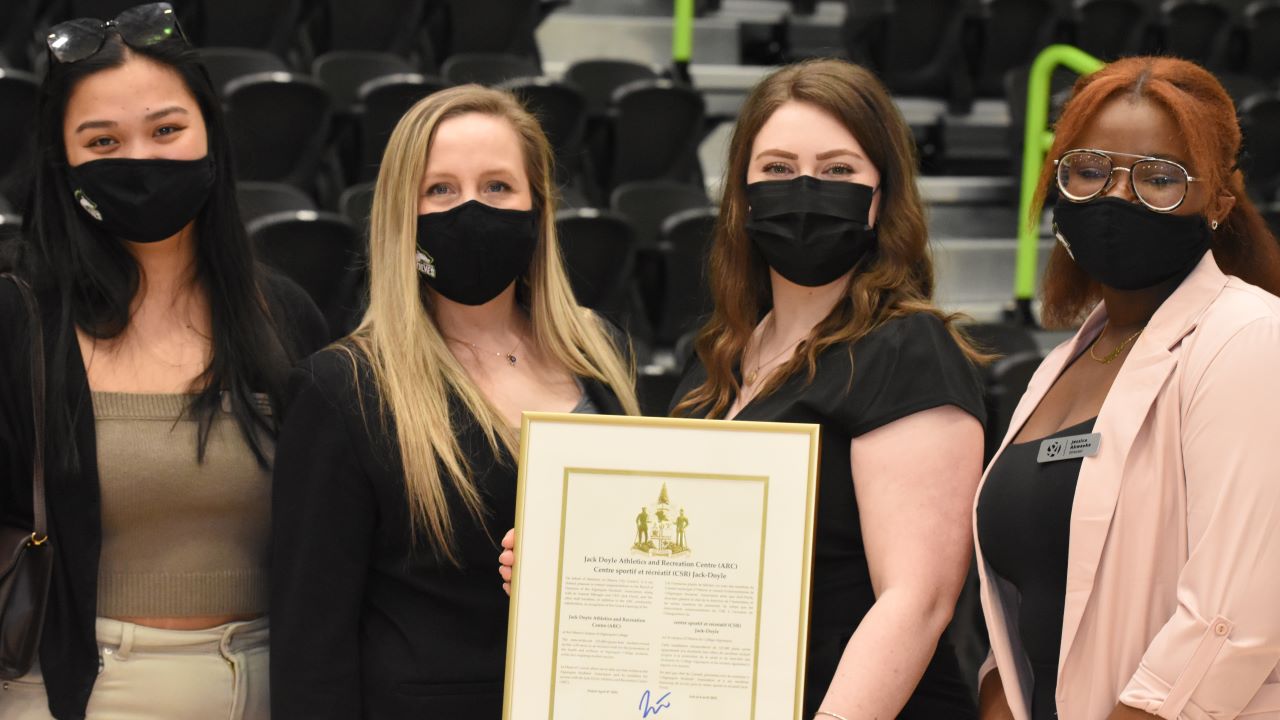
SA board members (left to right) Katrina Medina, Cat Coleman, Emily Ferguson and Jessica Akwaeke, took part in the facility's grand opening event.

The Algonquin College Students’ Association celebrated the official opening of the ARC on Monday, April 4 with speeches by the college and SA’s presidents, a visit by the mayor, a ribbon-cutting ceremony and building tours.

The 125,000 square foot Jack Doyle Athletics and Recreation Centre, located to the northeast of the Student Commons across from the residence building, has been open to students and staff since Sept. 27.

The ARC includes a rock-climbing wall, a turf training area, a 10,000 square foot free weight area, a walking/running track, a fitness area with cardio equipment, three gymnasiums, a golf simulator and bowling lanes, a restaurant and a bar.

It was jointly funded by the Students’ Association, which contributed $49.9 million, and Algonquin College, which gave $5.5 million toward construction and $11.9 million for the pedestrian link, road upgrades and other infrastructure upgrades.

The state-of-the-art facility provides many activity options to students and staff, and is also the home base for the Algonquin Wolves women’s and men’s basketball teams.

Emily Ferguson, president of the Algonquin Students’ Association, said she was there from the start and was able to see it grow throughout the pandemic.

“To have everyone in one place, in one giant building, to see everyone there was emotional,” said Ferguson.

Ferguson said that she was happy to see everything and celebrate all the hard work that was done.

“To actually have students coming in and playing and working out and doing everything here, it’s been incredible to see them walk in and their eyes light up when they see the building,” said Ferguson.

The Students’ Association president said students wanted something for their physical and mental health and this facility has something for everyone.

“If you’re not a huge gym geek, you can bowl or get great food and to just be with friends is wonderful,” said Ferguson. “I think coming out of this pandemic and having a social place that students can go to is healthy and fantastic.”

Jack Doyle, the SA’s general manager and the building’s namesake, said all students can take advantage of the facility.

“[The students] have the right to come here and use all the facilities, the bowling and climbing wall and there are no user fees,” said Doyle. “So that’s designed to make it accessible. We’re just so excited that Algonquin students will have a facility like this for the next 30 or 40 years.”

Claude Brulé, president of Algonquin College, said the facility symbolizes the meaning of collaboration and partnership.

“I want to sincerely congratulate our Students’ Association, the many college departments involved, and our partners for completing this building during a global pandemic,” said Brulé. “You were met with challenges unlike any we have seen before.”

Jim Watson, the mayor of Ottawa, congratulated the student body for the great initiative.

“Funded through student fees, not from the college itself, I think that’s a remarkable achievement in itself,” Watson said. “Getting it built-in during COVID is really quite special. Congratulations to the student leaders and the students who will benefit from this facility for decades to come.”

Watson also congratulated the many people who contributed to making the building possible, including Jack Doyle.

“He was the guiding force to help the Students’ Association transition after every election,” Watson said. “And obviously, his fingerprints are all over this project. Because you need that kind of expertise to take a project of this magnitude and then see it over the finish line.”

Staff from the facility were assigned to do a walking tour around the building.

Timothy Lee, manager, athletic operations – fitness, said that after seeing all the senior management, the board of directors and Jack Doyle can now really celebrate the fruits of their labour.

“They’ve all worked so hard with their planning for several years,” Lee said. “It started 10 years ago with this and then to build it during COVID, with all the challenges faced with that, I really do think that’s a highlight for me and to see them realize this dream.”

Lee encourages students to come and enjoy the facility.

“My team and I welcome you with open arms,” said Lee. “We’ll work hard to make this a very positive experience for you that you’ll remember for the rest of your lifetime.”

Online Editor

The Algonquin Times is a newspaper produced by journalism and advertising students for the Algonquin College community. Follow us on social media! Algonquin Times Twitter Twitter (Events & Promos) Facebook Facebook (Events & Promos) Instagram Snapchat

Spring can bring housing concerns for students

Exams and final assignments are not the only reason students tend to stress out around this time in the second semester. Finding a new place to live is also high […]
Photo: Jantina Huizenga
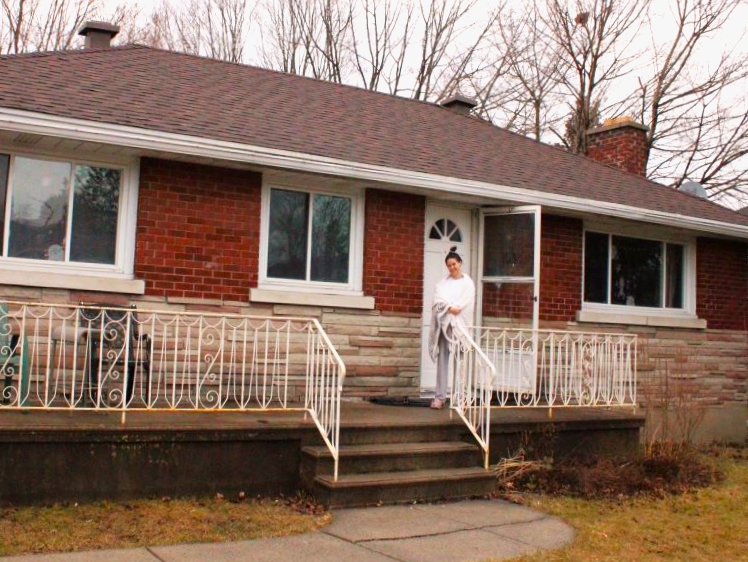
Julia Timewell, a nursing student, can walk to school from her off-campus rented house.

Exams and final assignments are not the only reason students tend to stress out around this time in the second semester. Finding a new place to live is also high on their priority list. Many leases end in April or May and students in residence have to be out soon after their last exam.

For students who want to move out of residence after their first year, they have to find housing typically on their own or with their parents’ help. Finding a place to live that is affordable, safe and practical is only getting harder as the housing market is at an all-time high.

“The housing search was hard when I don’t have a car and still want to be near the college, especially when a lot of renters don’t want students as tenants,” said Gwyneth Jones, an architectural technician student at Algonquin College.

Jones stayed in residence this past year but has since decided to search for off-campus housing. The COVID-19 restrictions that have stayed in place in residence despite the provincial guidelines changing have impacted her decision to leave residence, she wants to make sure she can have her family and friends come to visit her.

Magann Baptiste, a performing arts student at Algonquin College, had help from her mom when looking for a house last year and found a roommate listing on Kijiji. Baptiste chose to not apply for residence this past year because she was able to find a house that would save her money in the long run and she was able to live there during the summer.

Julia Timewell, a nursing student at Algonquin College, lives with Baptiste and three other women in a bungalow that is only a 15-minute walk to the Woodroffe campus. Their lease started on May 1 and is twelve months long. They have both found different off-campus housing for the upcoming year.

While most students aren’t looking to buy houses, that doesn’t mean that the housing market isn’t affecting the rental prices. According to Zumper, a rental website, the average monthly rent in 2022 for a one-bedroom apartment is $1,529 which is a 5 per cent increase from 2021.

According to Canada Mortgage and Housing Corporation, Ottawa’s renting vacancy rate is the highest its been in 25 years but only 15 per cent of rental units are affordable for lower-income individuals. Residence is available for students, although for first-year students a meal plan has to be included, which significantly raises the price of living on residence.

There are resources on the Algonquin College website available to students who are looking for off-campus housing. Kijiji, Zumper, Rentals.ca and housing4students are all websites that have helped students find available rental units.

Comedian Nemr Abou Nassar wins big laughs from live audience

Nemr Abou Nassar performed a stand-up comedy show at the Algonquin Commons Theatre on March 25, 2022 as part of his current tour in Canada. Abou Nassar’s show ran for […]
Photo: Elio Elia
Nemr Abou Nassar performed at the Algonquin Commons Theatre on March 25.

Nemr Abou Nassar performed a stand-up comedy show at the Algonquin Commons Theatre on March 25, 2022 as part of his current tour in Canada.

Abou Nassar’s show ran for about two hours Friday night, as the comic told jokes about a range of topics including parenting, vaccines, the pandemic and the strength of women.

The Lebanese-American comedian has had shows in Toronto and Montreal in the past, but this was his first time performing in Ottawa.

The theatre was packed with people, with only a few empty seats. The majority of the people who attended were Lebanese, indicated by the many enthusiastic hands that were raised when the comedian asked if there were any people from the Middle Eastern country.

“It was fantastic, it was brilliant,” said Oliver Kittan, an Ottawa resident and fan of Abou Nassar who loved the show. “I had high expectations coming in and I can say I was not disappointed.”

The feeling was mutual for many members of the audience, as the comedian was met with cries of laughter each time he made a joke, and was met with a standing ovation at the end of the show.

“I thought the show was quite hilarious. It was so funny, we loved the whole thing,” said Nada El Bouchi, another fan. El Bouchi came to the show with her family of five, all of whom were eagerly waiting for months to see Abou Nassar having been fans for years.

A Lebanese couple who came to the show on a date, Tchjar Aoun and Melissa Boulous, both loved Abou Nessar’s performance as well. “It was amazing, hilarious. He was so relatable,” said Boulous.

“Tears were coming down cause we were laughing so much,” added Aoun. “My only regret was not bringing my whole family.”

When asked what was the best joke of the night, all three interviewees agreed that it was the comedian’s “beating the kids” joke, which out of context may sound silly, but was met with cries of laughter from the crowd.

The joke was about the need for parents to beat their children, as has traditionally been done to discipline some kids in Lebanon, as a way to fix to the entitlement of the people of the United States.

Abou Nassar went on to perform in Montreal the next night, and will take a short break before touring the United States later this summer.

Algonquin students dodge the stigma

A series of dodgeball games took place at the Jack Doyle Athletics and Recreation Centre recently. The event, called dodge the stigma, was organized by the Jack.org club. Jack.org is […]
Photo: Cameron Ryan
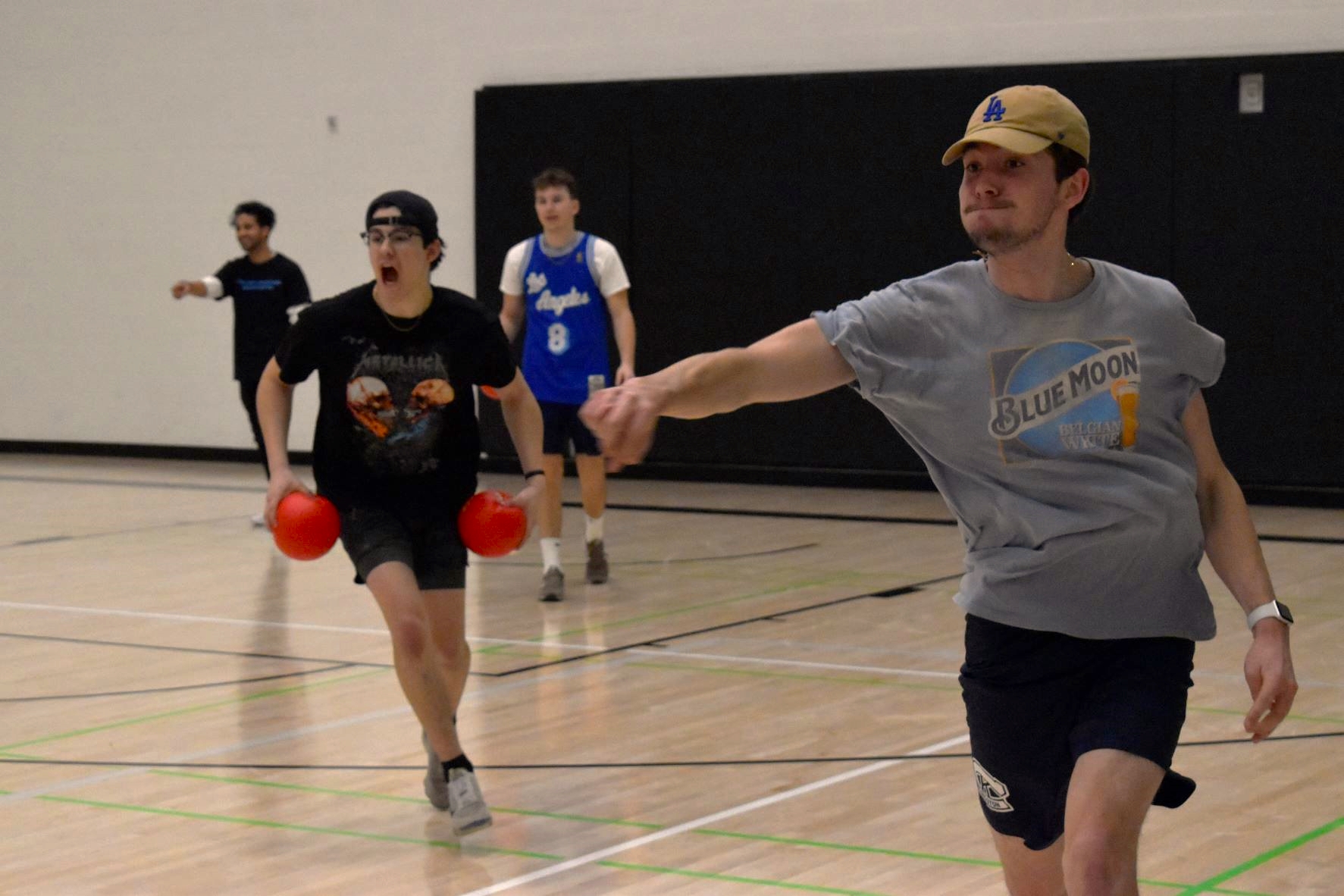
Participant Ethan Fisher used his baseball experience to his advantage.

A series of dodgeball games took place at the Jack Doyle Athletics and Recreation Centre recently.

The event, called dodge the stigma, was organized by the Jack.org club. Jack.org is a nationwide organization with chapters in every province and territory.

Jack.org is a charity aimed at increasing awareness of mental health issues and providing resources for people struggling with their mental health.

The dodgeball game featured 13 participants who competed in a series of highly competitive games of dodgeball for an hour.

“A lot more effort than I thought, to be honest, I wasn’t really feeling today, but I put it in, and it was fun,” said Ethan Fisher, a first-year pre-health sciences student. Fisher benefitted from his experience playing baseball.

Algonquin College’s Jack.org club is organizing events every month to open the conversation about students’ mental health.

“The ultimate message that we are trying to promote is mental wellness and mental well-being should be of prime importance of every individual and we should break the barrier of mental health stigma,” said Yaser Siddiqui, one of the organizers of the event.

This is the first year Algonquin College has had a Jack.org chapter and Siddiqui said it is planning more events in the coming months.

Online program offers workers holistic training in addictions and mental health

When Christine Rothmaier was in her early twenties, she was in a bad accident which left her struggling with PTSD. To cope with her feelings, she started drinking alcohol, which […]
Photo: Leslie Bader
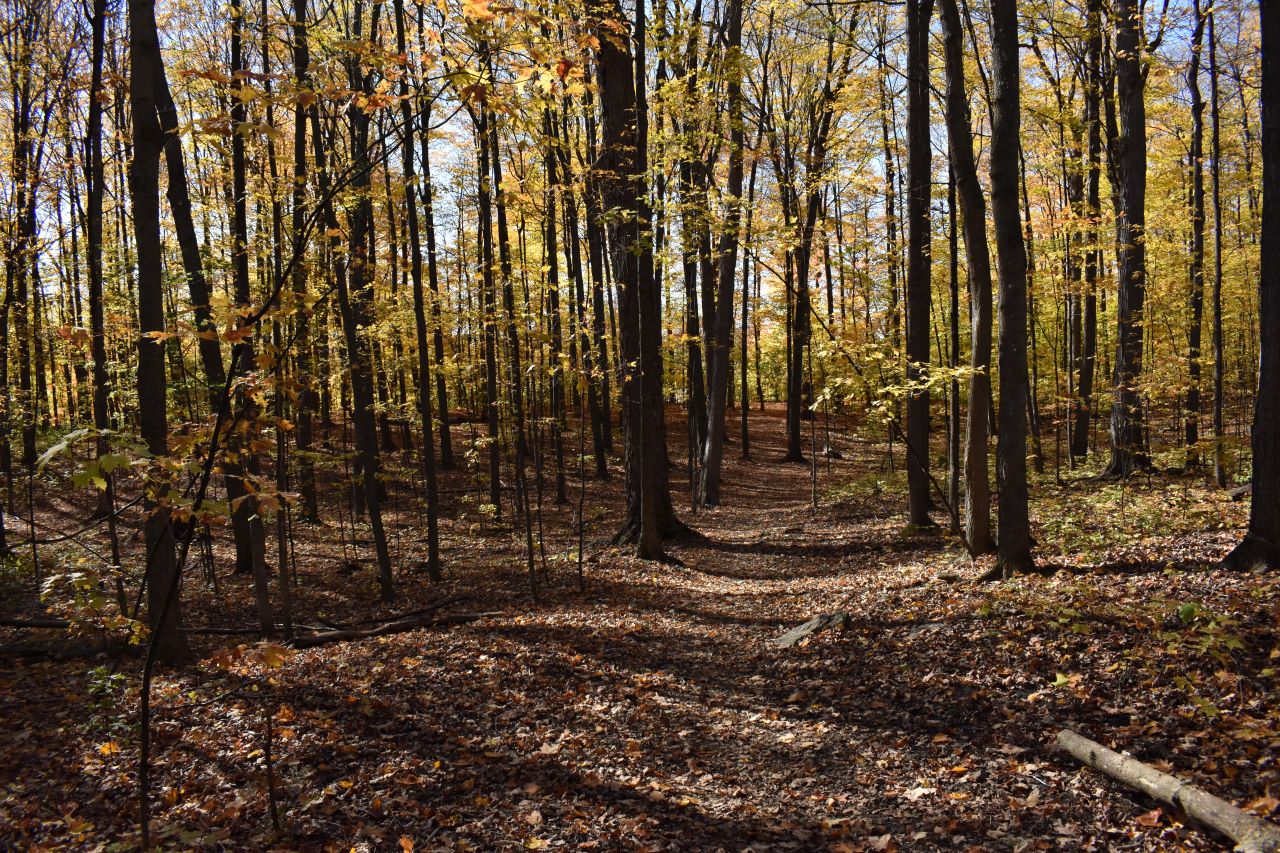
Taking a walk in the woods can improve our mental health, says Christine Rothmaier, a graduate of the addictions and mental health program.

When Christine Rothmaier was in her early twenties, she was in a bad accident which left her struggling with PTSD. To cope with her feelings, she started drinking alcohol, which made her depression worse. Rothmaier began counselling sessions with a therapist, and this helped her recover from past trauma.

After completing a degree in sociology at the University of Windsor, Rothmaier, 25, enrolled in the newly established addictions and mental health graduate certificate program at Algonquin College.

Offered through the AC Online campus, this 42-week program teaches students about concurrent disorders and how to develop appropriate strategies for clinical practice. There were over 400 applications for the inaugural full-time semester in fall 2021, which greatly exceeded the program’s capacity of 35 seats.

Spring 2022 offers 30 seats and there are plans to add 10 more for Fall 2022.

How are addiction and mental health connected? “You have to work on why you are drinking, and the drinking,” said Rothmaier. “Mental health is where my heart is at.”

Her goal is to eventually complete a graduate degree in counselling psychology.

Sabrina Bellefeuille, 35, is a subject matter expert who developed the courses for the addictions and mental health program. Bellefeuille has 14 years of experience working in clinical recovery and is 18 years sober.

The program’s curriculum consists of self-guided modules which include theory, filmed case studies and practicum preparation.

“The pandemic blew up mental health as a sector,” said Bellefeuille.

Students can do the asynchronous courses at their own pace, which helps people who are trying to balance work and school. A final field placement with a community agency is facilitated by a dedicated coordinator. Service settings may include homeless shelters, residential treatment programs and hospices.

The program works with the concept that recovery is on a continuum, from harm reduction to abstinence. Motivational interviewing, relapse prevention, ethics and discharge planning are taught with a client-centred appoach. The student comes to understand the family and community behind them and with them, according to Bellefeuille.

“Before you do this program, ask yourself: ‘Have I done the work myself?” said Bellefeuille. “Am I bringing my authentic and healed self to this work?’”

“You do not need to be perfect,” she said. “But you do need to be there for the person in front of you.”

Ontario government holds firm in re-opening, despite growing COVID cases

Local news CBC News: Minister of Health Christine Elliot stated there are no plans to reintroduce masking mandates or other restrictions if there is a sixth wave of COVID-19. “We […]

Local news

CBC News: Minister of Health Christine Elliot stated there are no plans to reintroduce masking mandates or other restrictions if there is a sixth wave of COVID-19. “We need to get on with our lives and learn to live with COVID as it still exists with us,” said Elliot. There is no current threshold of hospital admissions at which restrictions would be re-introduced. Dr. Kieran Moore, Ontario’s chief medical officer of health, has ceased holding regular press briefings on COVID-19. Elliot says the lack of media scrums is a good sign that “the peak of the pandemic has passed us.”

National news

CTV News: The Quebec Superior Court has ordered the ringleader of Canada’s great maple syrup heist to pay a $9-million fine. Richard Vallières was part of a group of 16 people who stole around $18 million worth of syrup from a warehouse near Quebec City between 2011 and 2012. The theft was discovered during a routine check of inventory, barrels were found to contain water. Vallières made a $1-million profit on the illegal sale of maple syrup. Chief Justice Wagner of the Supreme Court of Canada said he must pay the fine within 10 years or else go to prison for six years.

International News

National Observer: Ukraine President Volodymyr Zelenskyy urged the United States to provide more military aid, saying his country’s defense against the Russians is at a ‘turning point.” Russia had just reneged on its promise to pull back troops from Kyiv and Chernihiv, and was shelling a humanitarian convoy into the latter city. To date, four million refugees have fled the war in Ukraine, half of them children. During Tuesday’s peace talks in Istanbul, there seemed to be some progress when the offer was made for Ukraine to remain a neutral territory, and not seek NATO membership. Shortly after the meeting, new attacks were made on some of Kyiv’s outlying areas.

Algonquin Times podcast

Stay Informed

Sign up for our newsletter

Subscribe

* indicates required