Spring semester enrolment projected to be ‘significantly’ higher than last year

It’s the final week of the school year for many students, but for others, it’s just the beginning with the spring semester kicking off in a couple of weeks. May 8 is when the spring semester officially opens, and according to a statement from the college’s Academic Operations and Planning department, there will be far […]
Photo: Brandon Plant
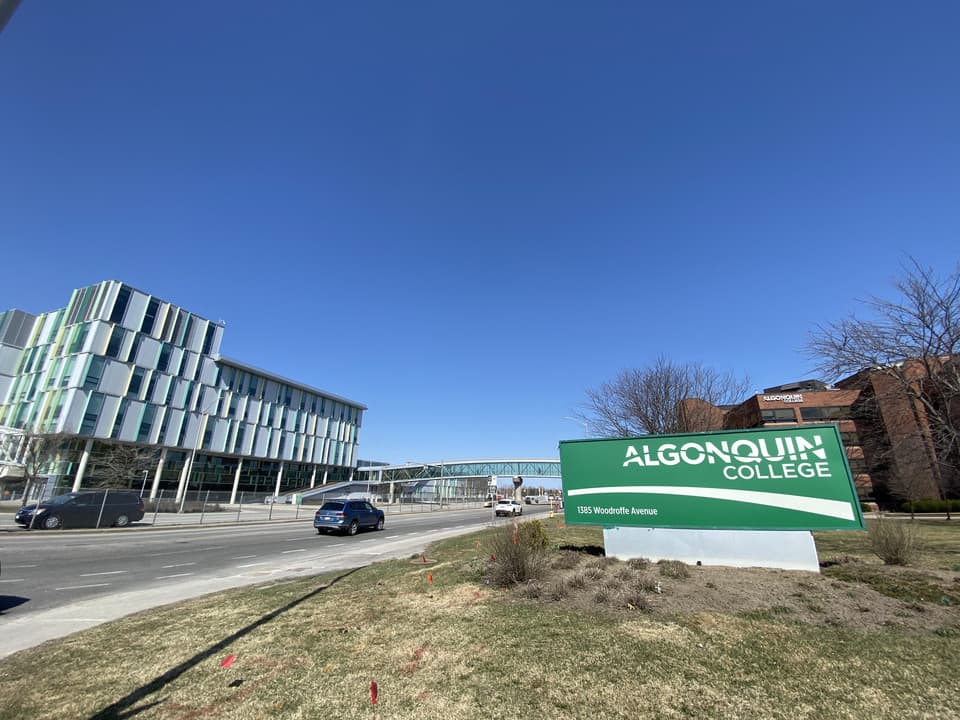
Outside view of the Algonquin College footbridge over Woodroofe Avenue on a sunny April afternoon.

It’s the final week of the school year for many students, but for others, it’s just the beginning with the spring semester kicking off in a couple of weeks.

May 8 is when the spring semester officially opens, and according to a statement from the college’s Academic Operations and Planning department, there will be far more faces on opening day compared to the previous spring.

“Spring 2023 enrolment is projected to be significantly greater than spring 2022,” the statement said.

For Parker Lynds, a health and fitness promotion student, the spring semester is an opportunity to collect extra credits and accelerate his graduation timeline.

“I haven’t decided whether I’m going to enrol in spring courses or not, but I’m definitely open to it,” Lynds said.

“But if there’s a course I like, I’d definitely consider enrolling because if I could advance my graduation timeline, or even earn credits so I don’t have to take as many classes next semester, that’s something I’d be interested in,” Lynds said.

The difference between the spring semester and the other semesters is that in the spring, no program is exclusively offered, as confirmed by the registrar’s office.

“There are no program intakes that are only offered in the spring,” the registrar’s office said.

The check-in at Algonquin College's registrar's office.
The check-in at Algonquin College's registrar's office. Photo credit: Brandon Plant

However, that doesn’t mean there aren’t specific program courses that run through the spring. Sometimes programs have courses only available in the spring, according to the registrar’s office.

“It is dependent on the program intake. Depending on when a learner starts their program, there may be particular courses associated with their specific program level which for them would only be accessible in the spring semester,” the statement said.

The registrar’s office said the spring semester often sees “less new program intakes and less activity scheduled overall when compared to fall and winter semesters.”

U-Pass or no U-Pass, that is the question

The Parking Services webpage shows a joyful girl getting off the backseat of a car. Her nails are done. She is holding a sleek backpack and wearing the Algonquin hoody. It gives the image of an overjoyed customer with a received service. That is not the experience I got dealing with Parking Services. A big […]
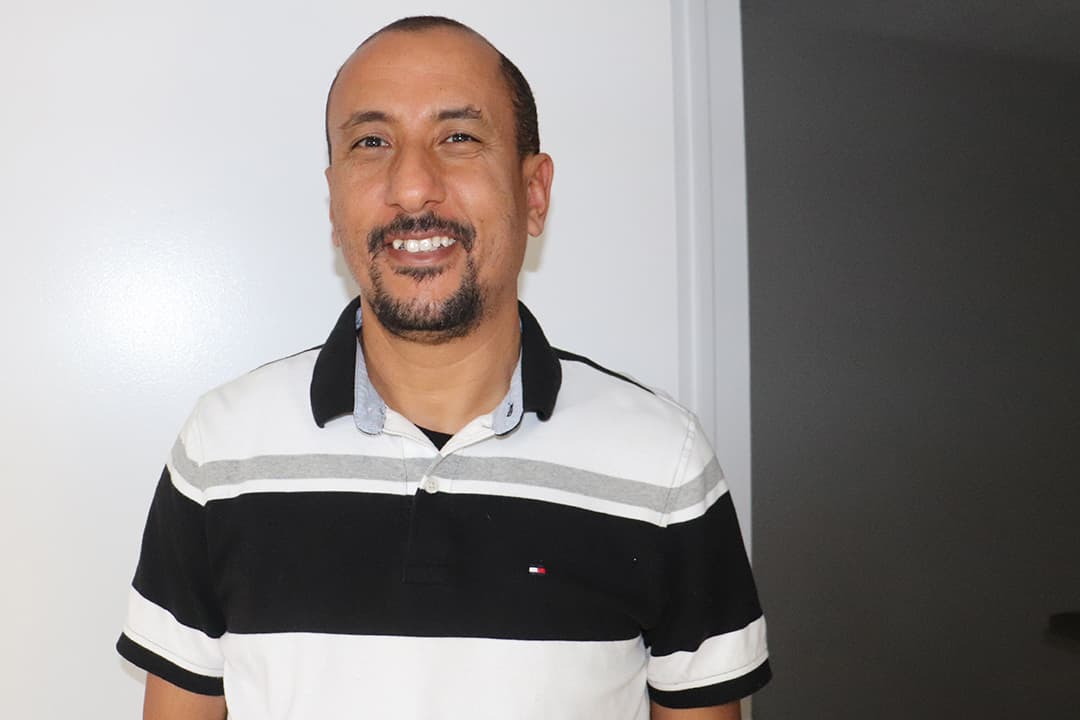
Algonquin Times writer Brahim Ait Ouzineb

The Parking Services webpage shows a joyful girl getting off the backseat of a car. Her nails are done. She is holding a sleek backpack and wearing the Algonquin hoody. It gives the image of an overjoyed customer with a received service. That is not the experience I got dealing with Parking Services.

A big line of students in the commons building swarms the small office handling the lockers and parking inquiries, along with U-Pass. The handling time of inquiries is quick but does not draw smiles on the customers.

My unpleasant experience relates to the U-Pass opt-out. Students pay for parking permits to avoid the hustle of OC Transpo but are obligated to pay $223.48 each term.

I am not here to rant about parking prices or the application, Honk, that does not help me much when needed. I just want to understand why students who buy monthly parking permits do not get an automatic opt-out of the U-Pass.

To opt out of U-Pass, the front desk of the Students’ Association turns me down immediately.

“Sorry, U-Pass is obligatory, and you cannot opt out of it,” said the lady behind the counter.

I called the registrar’s office, and they asked me to fill out the opt-out form and attach the documents to defend my case. I go back to the Commons building to request a record of my trips last term to attach. The receptionist tells me to call OC Transpo.

After waiting in line, I get to the operator who says it is Algonquin College that manages its students’ accounts. I send an email with OC Transpo’s response to Parking Services. They end up confirming that they do not have the info I am looking for. I print out the screenshot of the term’s parking permits via the parking portal.

My argument is clear. I paid for a parking spot and I rode the bus four times. It is inconceivable that four rides would cost $223. The registrar’s office answered my question: “Owning a car or purchasing a parking pass does not make you eligible to opt out of the U-Pass fees. Your request has been denied.”

The response went on: “We recognize that this decision is not what your desired outcome; however, it is the responsibility of Algonquin College to ensure all students are assessed equitably according to the binding agreement with the City of Ottawa, this decision is final, and no further assistance can be provided.”

In the face of this crude explanation, I reached out to the ombudsman’s office, which advised me to give it up.

The U-Pass has been an issue of debate not only here in Canada but even in the U.S. The Students’ Association agreed with the City of Ottawa to have preferential rates in exchange for Algonquin College students’ ridership. In 2015, when it was first introduced at Algonquin College, 16.67 per cent of students were against it. In 2021, I found an article on students’ complaints about paying it despite COVID and the lockdown. I never received any response from the Students’ Association about the complaints handling and the student satisfaction surveys on the U-Pass.

The agreement means “a compulsory ancillary fee introduced through the Students’ Association following a Universal Transit Referendum in 2014,” stated the registrar’s office and Campus Services. This charge grants students unlimited use of OC Transpo, STO and ParaTranspo services. In an email received from Campus Services, it said the college collects the fees and administers the program on behalf of the Students’ Association. The fee partially covers the cost of running the program, with the remaining operating costs offset by the college. The U-Pass program is not profitable for the college, nor is it intended to be.

The new variables at play render such a project obsolete, while it started off to encourage students to use more public transportation. In the last three years, there has been a 48 per cent decrease in ridership for OC Transpo. COVID made the situation worse because more and more people avoid going into crowded places. This adds to the complaints from customers on the service and the constant failures. Students are no exception.

Savoir Fare increases prices on most products to keep up with rising food costs

Rising food costs have hit all corners of the culinary world, including Savoir Fare. The campus store has been forced to mark up its items due to rising fresh produce costs after years of prices remaining stagnant. Maryann Murphy, an employee who has been working at Savoir Fare for 20 years, said prices increased, but […]
Photo: Brandon Plant
Maryann Murphy, cashier at Savoir Fare for 20 years, completes a purchase with a customer.

Rising food costs have hit all corners of the culinary world, including Savoir Fare. The campus store has been forced to mark up its items due to rising fresh produce costs after years of prices remaining stagnant.

Maryann Murphy, an employee who has been working at Savoir Fare for 20 years, said prices increased, but not for every product.

Cashier at checkout desk
Maryann Murphy poses at the Savoir Fare cash. Photo credit: Brandon Plant

“A few items have remained the same price. Some baked items have increased 50 cents to $1. Some ready-to-go meals (beef, chicken, lamb, pork and fish) have increased by $2. However, most of our prices on many items did not have a price increase for years,” Murphy said.

While prices have gone up, Murphy argues the store still offers a cheaper alternative for fresh produce when compared to restaurants or chain grocery stores.

“Our prices are very reasonable. For many students, we’ve become a cheap alternative as food prices everywhere have gone up,” Murphy said.

While prices may have increased slightly, Muhammed Ahmad, an accounting student, still prefers Savoir Fare because he believes it’s more affordable than ordering takeout.

“I haven’t really noticed the prices going up if I’m being honest with you,” Ahmad said. “It’s still way cheaper than ordering takeout online, so if prices have gone up that doesn’t really bother me because it’s still the cheaper option.”

Chef Harsh Singh, the coordinator of the baking and pastry program, says Savoir Fare acts as a way to replenish funding for Algonquin College’s large culinary and baking program.

“In a way, whoever is buying from Savoir Fare is supporting our programs and the students’ learning. If the students don’t get to make more and more products, they won’t be able to practise. For some products, the only way they can practise is if it could be sold to recoup the price for the practice materials.”

salads in savior fare fridge
Fresh salads on display for sale at Savoir Fare. Photo credit: Brandon Plant

Chef Daniel Halden, a full-time culinary professor at the college since 2010, believes the store provides an opportunity for the program to showcase the work its students are doing.

“It gives a bit of exposure to our programs as it shows what we’re doing in our classes. So it’s a nice relationship between the college community at large and our classrooms,” Halden said.

baked products on display that were made by students
Baked goods crafted by students. Photo credit: Brandon Plant

“Savoir Fare has always been an outlet for us to be able to share with the college community what the culinary and baking students are doing in their classes. We have lessons that need to be taught and learning outcomes that need to be achieved. (Savoir Fare) gives us an avenue to be able to do that,” Halden said.

Orthodontist in Peru, barista in Canada. Where are the bridge programs?

If you’ve been to an emergency room lately you know how long the wait can be. We put off taking care of ourselves in certain situations because we’re aware of the wait we face walking through those doors — there for hours, completely uncomfortable, in a cold waiting room. The struggle to find a medical […]
Photo: Kerry Slack
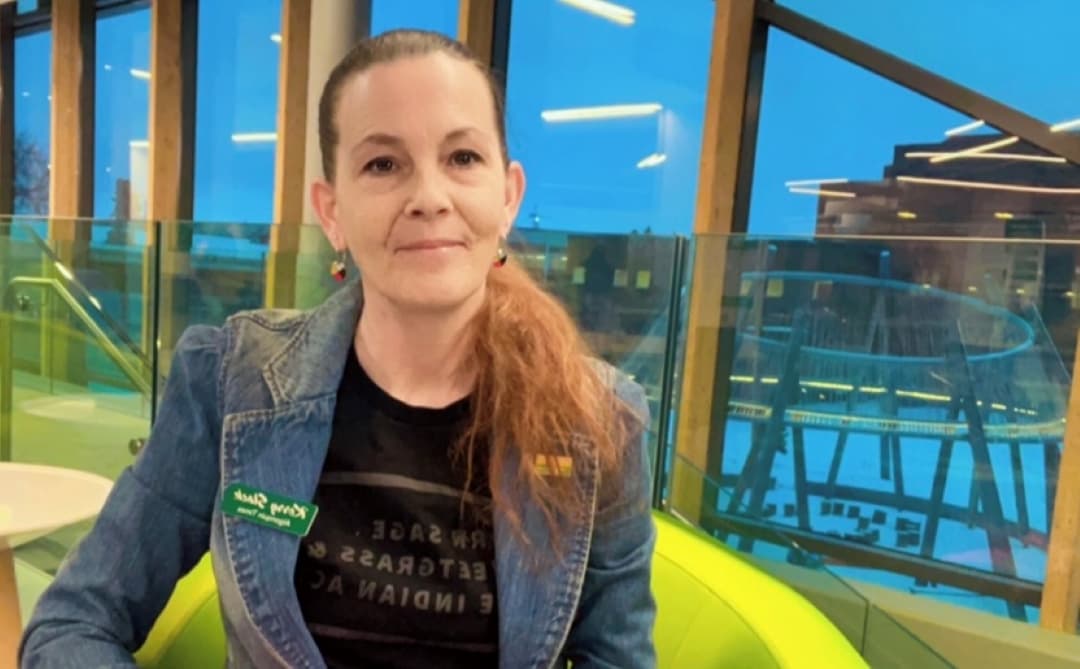
Algonquin Times writer Kerry Slack

If you’ve been to an emergency room lately you know how long the wait can be. We put off taking care of ourselves in certain situations because we’re aware of the wait we face walking through those doors — there for hours, completely uncomfortable, in a cold waiting room.

The struggle to find a medical professional here in Canada is real. The pandemic has negatively impacted the intensity of the issue. Long wait times and doctor and nurse shortages have probably frustrated us all at some point over the past three years.

A few nights back, while volunteering on campus, I got to talk to a young lady from Peru.

Ximena Rodriguez, a certified orthodontist in Peru, came to Canada with high hopes for a new future and is working at a coffee shop as a barista while she pursues her degree in business at Algonquin College. How does this make sense?

Especially given that our Woodroffe campus has dental services, performed by dental students. The dental clinic always has a waiting list. In fact, I’ve been there myself.

This is in no way a criticism of our dental students and program. They are fantastic.

My point is, people who are willing to let a student stick a sharp instrument in their mouths to save money, are just as likely to trust Dr. Rodriguez from Peru.

I didn’t get a chance to hear her full story but none of this made very much sense, so I set off to learn what the qualifications and hurdles are for an international degree to be recognized in Canada.

According to health lawyer Tracey Tremayne-Lloyd in an article she wrote for the Medical Post, at least 3,500 Canadians go abroad to study in medical schools in the U.S., U.K., Ireland, Australia, New Zealand and Switzerland. Most would like to return to Canada, but to practise here, they must usually complete a two-year residency.

Currently, 13,000 foreign-trained physicians are living in Canada but are unable to practise medicine.

There are many hurdles to obtaining a license, such as getting the required 12 months of Canadian experience, which is challenging, as the longer one is not practising, the harder it becomes to be picked up for a residency position.

Another big hurdle is qualifying exams and the wait time involved with those.

In Canada, over 15 per cent of doctors are over age 65.

Eight out of 10 people I talked to don’t even have a family doctor.

According to the Government of Canada’s website: Regulated occupations require a licence or certificate to work in Canada.

  • The
    authority for most regulated occupations in Canada lies with provincial
    and territorial governments. They often delegate this authority to
    regulatory authorities in their jurisdiction.
  • Regulatory
    authorities set the requirements to obtain certification or licensure as a
    condition of employment.

Examples of regulated occupations include:

  • Accountant
  • Architect
  • Carpenter
  • Physician
  • Electrician
  • Nurse
  • Teacher
  • Welders

We need these professionals now more than ever.

Where are the bridge programs? One would presume with the need for medical professionals being what it is in Ontario, we could and should be offering space for this.

Why are we not bridging that gap in Ontario and in turn helping ourselves?

In January, the College of Physicians and Surgeons of Alberta announced a five-year pilot program to fast-track licensing for some international medical graduates.

The pilot condenses the assessment for newcomers with training that is comparable with a Canadian university education.

Some of these graduates are working in jobs elsewhere on the health system, filling roles like receptionists or technicians but others are working minimum wage jobs while supporting a family and trying to save up for required exams or training.

The path to getting certified to work here is not clear which is frustrating to willing, studious, hard-working people.

Some got completely discouraged, like Rodriguez.

My thoughts have drifted back to her several times since we met.

My hope for her is that she finds herself on the path to happiness again, and that these obstacles are leading to her life’s purpose.

Whatever that may be.

Game development students unveil final projects at grad show

Students in Algonquin College’s game development program showcased their final projects at Nawapon on Wednesday afternoon. Seven projects were displayed on tables throughout the room with a diverse selection of games to try out. The students who worked on them are soon-to-be graduates of the game development program. Games shown at the event incorporated the […]
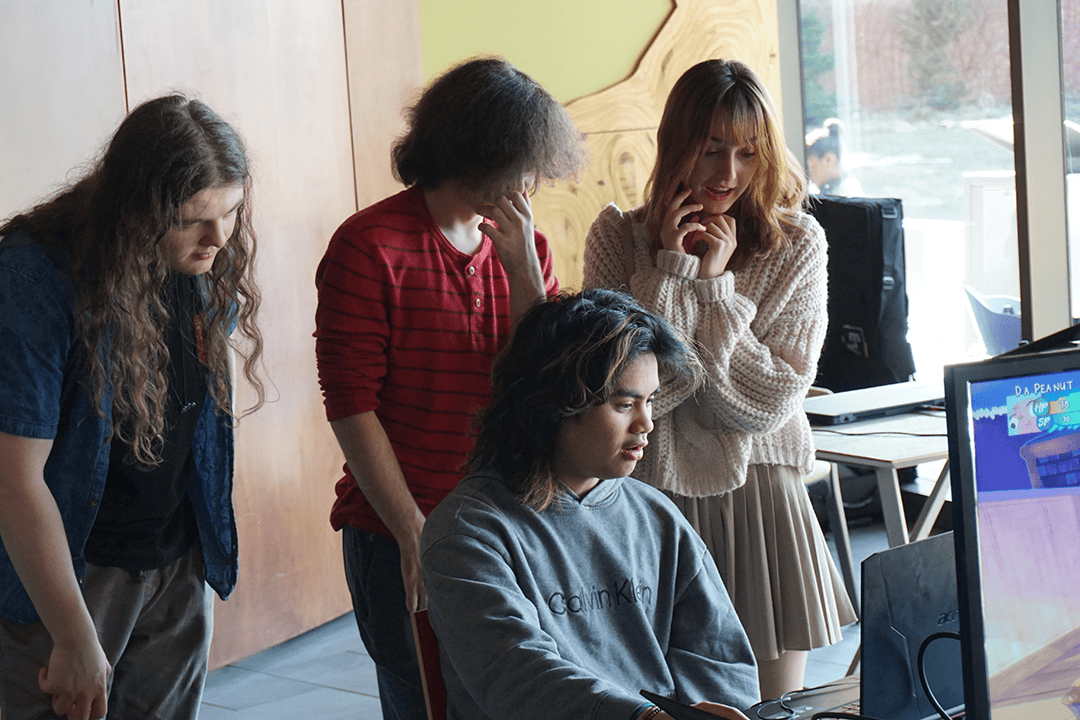
Onlookers watch a student play a video game at the game development grad show at Nawapon on April 12. Game development students were on hand to show players how the games work.

Students in Algonquin College’s game development program showcased their final projects at Nawapon on Wednesday afternoon.

Seven projects were displayed on tables throughout the room with a diverse selection of games to try out. The students who worked on them are soon-to-be graduates of the game development program. Games shown at the event incorporated the use of VR technology, big screen monitors and laptop computers.

Project Artemis is a game developed entirely for use with VR technology. It depicts an immersive simulation of NASA’s upcoming Artemis space program. During the game, players suit up at the International Space Station and board a spacecraft before being sent off to the moon.

Alex Achorn, developer of Project Artemis, discussed what happens in the game.

“You board the ship, do a pre-launch sequence, and (then) you land on the moon,” Achorn said. “We have three different missions you do while you’re on the moon.”

Another video game at the event, Axel ‘n’ Oddol, is a 3D platformer collect-a-thon inspired by the works of Banjo-Kazooie and Super Mario 64. Players carry a character called Axel that can be used as a tool to progress through the game. Axel can be used as a platform when climbing walls, thrown as a boomerang to collect hard-to-reach objects and as a weapon against enemies.

Kayla Grant, a member of the development team, said the final product was different from the group’s original vision.

“We had something very different in mind beforehand,” Grant said. “But as things sort of changed in terms of the members we were going to receive, so too did the design vision.”

Grant said the group experienced significant challenges during the development process.

“I actually ended up having five weeks off due to a combination of surgery and COVID,” Grant said. “We were down a person for a long time. So we ended up having to cut out a lot of content that we had planned to have in.”

Those who missed the event can check out all of the games showcased here.

Student project uses artificial technology to simplify search results

Artificial intelligence and software development student Rafael Moraes hopes to simplify the way people search for information on the internet. His new project, QuestChat, was revealed at the Re/Action Applied Research Showcase in the DARE District at C-building on Friday morning. He developed the program as a way to simplify the process of search queries […]
Photo: TJ Sider
Rafael Moraes, an artificial intelligence software development student, talks with an attendee of the Re/Action Applied Research Showcase at the DARE District on April 14. His project, QuestChat, uses artificial intelligence to simplify search queries.

Artificial intelligence and software development student Rafael Moraes hopes to simplify the way people search for information on the internet.

His new project, QuestChat, was revealed at the Re/Action Applied Research Showcase in the DARE District at C-building on Friday morning. He developed the program as a way to simplify the process of search queries in order to push the most relevant information to the user. The project was inspired by and builds upon the functions of Bing’s AI chatbot and ChatGPT.

Moraes explains how QuestChat works in more detail.

“This project is essentially an automated version of prompt engineering,” Moraes said. “So when you take ChatGPT and you want it to answer a question for you, usually you have to paste all of the information you want it to know and then at the end ask the question. (QuestChat) will look in the internet, try to find the information that answers your question, feed that into something like ChatGPT and then that will provide the answer for you.”

Moraes says the project is open source, meaning that anyone can input their own data into the program for a variety of uses.

“If you compare it with the Bing engine, which does something very similar, they are closed source,” Moraes said. “You can’t actually modify it yourself.”

Moraes envisions QuestChat as a tool in the private sector. He says the open source development of QuestChat will allow companies to input their own proprietary data for employees to ask questions about the company.

“You can use that data instead of using ChatGPT which can leak that data for some reason,” Moraes said. “You can change the system so it behaves the way you want it to behave instead of having this preset behaviour.”

Moraes started working on the project in his free time. He wanted to see how a program would use internet data to answer questions. His development of the program was inspired by difficulties he encountered in the past on search engines trying to find the information he needed.

“The first version took about two weeks,” Moraes said. “It was very barebones kind of thing. As people started using it, I started iterating and it took basically three to four months to become what it is now, which is a more modular kind of approach to this automated prompt engineering.”

New bachelor program in event management sees big demand ahead of fall launch

The bachelor of event, sport and entertainment management honours degree program is officially launching on Sept. 23 with over 80 applications and counting. “We’re very excited with the numbers that are coming in. The demand for this program is interesting, as a first-year degree program in a college, you never know where it’s going to […]
Photo: Marco Ghosn
"We’re very excited with the numbers that are coming in," said chair Michael Tarnowski on the topic of applications.

The bachelor of event, sport and entertainment management honours degree program is officially launching on Sept. 23 with over 80 applications and counting.

“We’re very excited with the numbers that are coming in. The demand for this program is interesting, as a first-year degree program in a college, you never know where it’s going to go, but it’s being received very well at the high schools,” said Michael Tarnowski, academic chair in the School of Business and Hospitality.

Originally, the number of seats available for the program was 20, but because there has been an extraordinary amount of interest, the college extended the number of seats to 40. The college is willing to go up to 50 seats if needed.

“The fact that it’s a bachelor’s degree, typically, a lot of high school students look to universities,” said Tarnowski.

“Normally, it takes a few years for a new degree to get mainstream and get known at the high schools, so for it to get picked up this quickly, I was very surprised,” added Tarnowski.

As the only event, sport & entertainment management program in Ottawa, industries are very happy to see the program implemented as there is a need for workers.

Brian Henry, a former radio and TV broadcasting student at Algonquin College and president of Quality Entertainment, chimed in on the subject.

“This industry has really needed this degree program for a long time, we need more people in our industry than ever before, so excitement would be the word I would use,” said Henry, who has also been awarded an honorary diploma from the college.

“There has been a lot of change in the last three years due to the pandemic. There were a lot of layoffs, lots of changes and lots of growth. So, what has happened is that has created an instant need for qualified people.”

“So, this program becoming available is going to be really good for students who want to get into an exciting industry with a lot of jobs,” added Henry.

Henry encourages people to enter the program because of how the industry has adapted. There are now hybrid models and many different opportunities with flexible schedules and good-paying jobs.

SA wants college to create a designated smoking area

The college enforces a smoke-free policy but there’s no designated smoking spot anywhere on campus. The Students’ Association wants that to change. Matt Regnier, the SA board communications and process manager, said on April 6 during a press conference with the Algonquin Times that the SA is in favour of a designated smoking spot on […]
Photo: Mingan Wang
A student smokes in front of the residence building.

The college enforces a smoke-free policy but there’s no designated smoking spot anywhere on campus.

The Students’ Association wants that to change.

Matt Regnier, the SA board communications and process manager, said on April 6 during a press conference with the Algonquin Times that the SA is in favour of a designated smoking spot on campus.

“Students should have a safe, designated place to smoke that is away from main intersections. That’s our policy. That’s what we envisioned the campus should be, based on that, we talked to thousands of students in 2019 when the college announced the smoke-free policy,” said Regnier.

Some people also doubt the smoke-free policy is working at all.

“It’s nice if the policy actually works, but the truth is, people won’t quit smoking because of this policy, so that left smokers smoke on random places all around campus,” said architecture student Sofia Trinidad, “I really think it would be helpful to set a smoking area on campus where it’s accessible to smokers that’s away from main roads,”

It also bothers smokers.

Anthony Budiman, an animation student, expressed his frustrations over the lack of smoking spots.

“I’ve been smoking for years, and I smoke quite a few times per day, so it’s not realistic for me to quit easily. I support the college’s decision to go smoke-free, and it’s fine during summer or spring when it’s not cold, I can walk outside of campus to smoke, but during winter it’s just impossible. I think having a designated smoking area is good for everybody,” said Budiman.

Psychic fair at attracts eager participants despite long lines

As temperatures rose in Ottawa, excitement grew among attendees at the psychic fair, held in the Student Commons on Tuesday, April 11. Four semi-private spaces enclosed by black curtains attracted long lines of eager students who waited up to half and hour for their turns. The event, which was organized by the Students’ Association and […]
Photo: Huijun Li
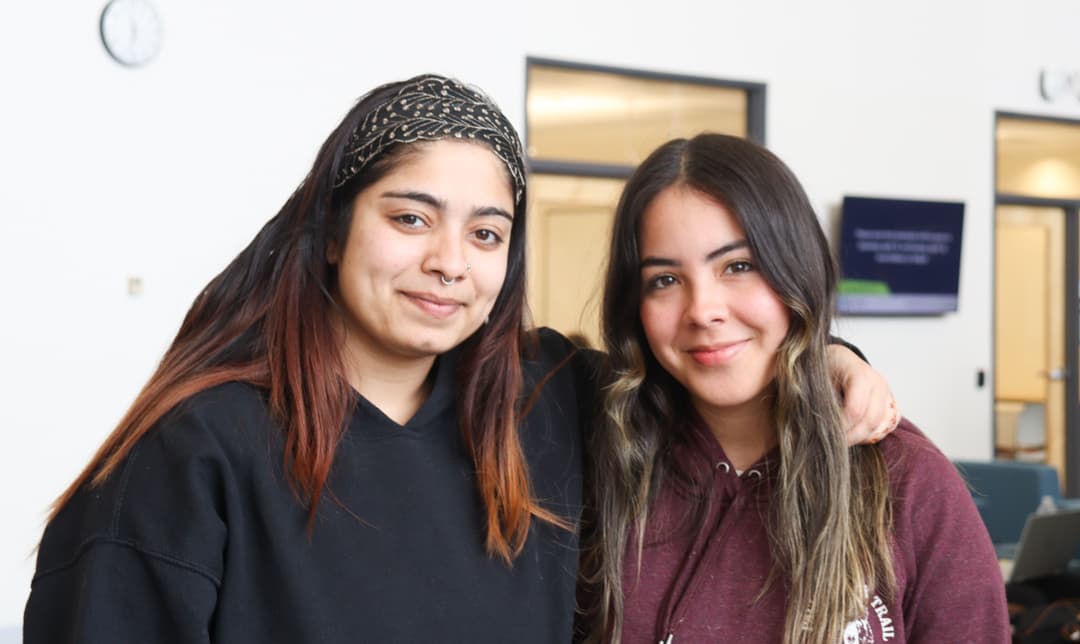
Kareen Koul and Nice Gonzalez, students in bakery and pastry arts management program, were going to the gym when they spotted the long queue and the mysterious black curtain in the Student Commons. "Since we have time, let's have fun," said Koul.

As temperatures rose in Ottawa, excitement grew among attendees at the psychic fair, held in the Student Commons on Tuesday, April 11.

Four semi-private spaces enclosed by black curtains attracted long lines of eager students who waited up to half and hour for their turns.

The event, which was organized by the Students’ Association and ran from 11 a.m. to 2 p.m., aimed to provide students with a unique and engaging experience.

“This isn’t the first time we’ve run this event,” said Amanda Logan, events programmer with the Students’ Association. “We’ve done it three or four times before, once a year. In fact, we recently held a psychic fair on AC Day 1, and the response was so positive. The students were incredibly interested and had so much fun that we thought, why not do it again?”

Individuals curious about psychics and seers could experience a free reading by lining up for a ten-minute session. The fair offered various psychic practices, including tarot card readings, palmistry and clairvoyance.

Tarot cardn fortune teller Darline Foley has the longest and the most popular queue in the psychic fair.
Tarot card reader and fortune teller Darlaine Foley had the longest and the most popular queue at the psychic fair. Photo credit: Huijun Li

Somali Dhruv, a fitness and health promotion student, attended the AC Day 1 psychic fair on Jan. 9.

“I wasn’t really going to ask the psychic anything specific,” she said. “I just really liked the experience. The way they interpreted it and led the session was very interesting. It instantly created an immersive atmosphere when they talked about cosmic energy and similar concepts.”

Kareen Koul and Nice Gonzalez, bakery and pastry arts management students, stumbled upon the event.

“We were going to the gym but we saw that there was a lot of activity over here,” said Gonzalez. “Everyone seemed to be having a good time so we felt curious and came to check it out.”

She found the event’s set up made it easy for students to join in the activities and queue up.

“I’m not a big believer, nor do I completely disbelieve in metaphysics,” Koul said, “but prophecy and fortune-telling are more of a fun thing for me most of the time.”

Police foundations students present surprising data with striking research

On April 6 and April 14, graduating students in the police foundations program presented their capstone thesis projects related to justice, community service and law enforcement. Both events were held in the CA-building and open to Algonquin College students alongside faculty. Roughly 60 fourth-level police foundations students presented the culmination projects they started earlier in […]
Photo: Anthony Peck
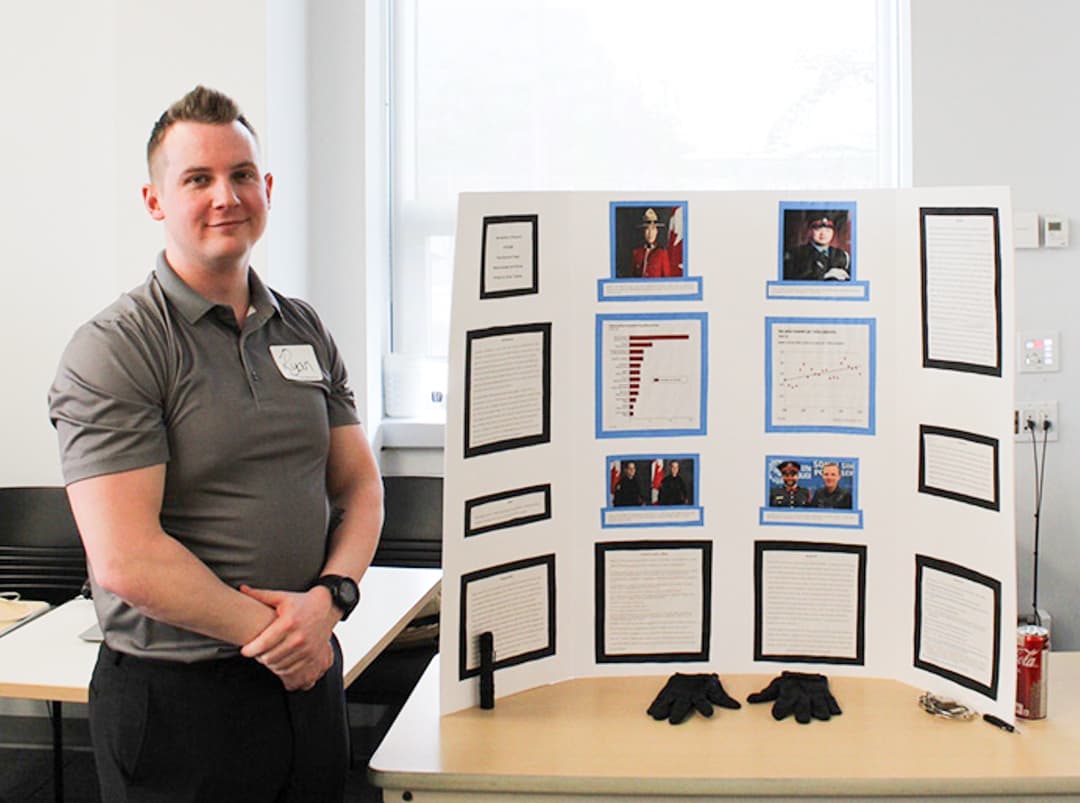
Ryan Topping, 31, used classic bristol board for his presentation on April 6.

On April 6 and April 14, graduating students in the police foundations program presented their capstone thesis projects related to justice, community service and law enforcement.

Both events were held in the CA-building and open to Algonquin College students alongside faculty. Roughly 60 fourth-level police foundations students presented the culmination projects they started earlier in the year.

Ryan Topping, a graduating student, presented his research on the benefits of added mental health training in policing.

“My thesis specifically was that mental health calls have a better outcome when first responders have more training for nonviolent crisis intervention or community outreach programs,” Topping said.

He compiled data on documented instances of police officers dying on the job while responding to mental health calls.

On top of scouring through eight academic studies, Topping also drew upon his own personal knowledge for his thesis.

“Working on the mental health unit at the hospital, we deal with a lot of people in crisis. When they come in on their first day they’re in crisis and sometimes day to day they’ll have breakdowns or they’ll go into crisis,” he said. “Nonviolent crisis intervention is de-escalation through communication, being responsive to the person and addressing their needs but not lying to them about the situation.”

“One in five calls you go to, you’re dealing with someone who’s just had the worst day of their life,” Topping added. “So, you need that training – that empathy – to really help with whatever the situation is.”

Jill Reeves, the police foundations program coordinator, left the April 14 event impressed.

“I was impressed by the knowledge the students shared in terms of the detail. The fact that they previously submitted research papers, and received feedback earlier in the semester, led to being able to deliver a really smooth presentation quite confidently,” Reeves said.

Another student, Josh Eaylin, sought to prove whether football players are likely to commit a crime due to chronic traumatic encephalopathy, a brain condition caused by repeated blows to the head.

“I played football when I was younger, so I thought it’d be a cool thing to relate football back with policing and law,” he said.

Although he didn’t find any direct links between CTE and committing crime, he did uncover possible contributing factors.

“Brain injuries make you more susceptible to anger, poor judgment and impulsivity as well, but there’s no specific link between crime and CTE,” Eaylin added.

Jane Trakalo, the dean of health, public safety and community studies, attended the April 6 event and talked to several students.

“I was very surprised by the wide variety of topics students chose. There were very few duplicates and it just goes to show the level of breadth and depth of their work,” Trakalo said.

The dean also touched on the possibility of next year’s fourth-level students getting a similar event.

“I think I’d like to hear from the students and if they felt it was a worthwhile event. I certainly thought it was and I would definitely like to see it become a yearly event,” she added.

Algonquin Times on Instagram
Algonquin Times horoscopes
Algonquin Times podcast
Follow Algonquin Times on Instagram
Algonquin Times on Instagram
Algonquin Times horoscopes
Algonquin Times podcast
Follow Algonquin Times on Instagram

Stay Informed

Sign up for our newsletter

Subscribe

* indicates required