main

Massive project transforming college’s student systems by 2026 expected to cost up to $71M
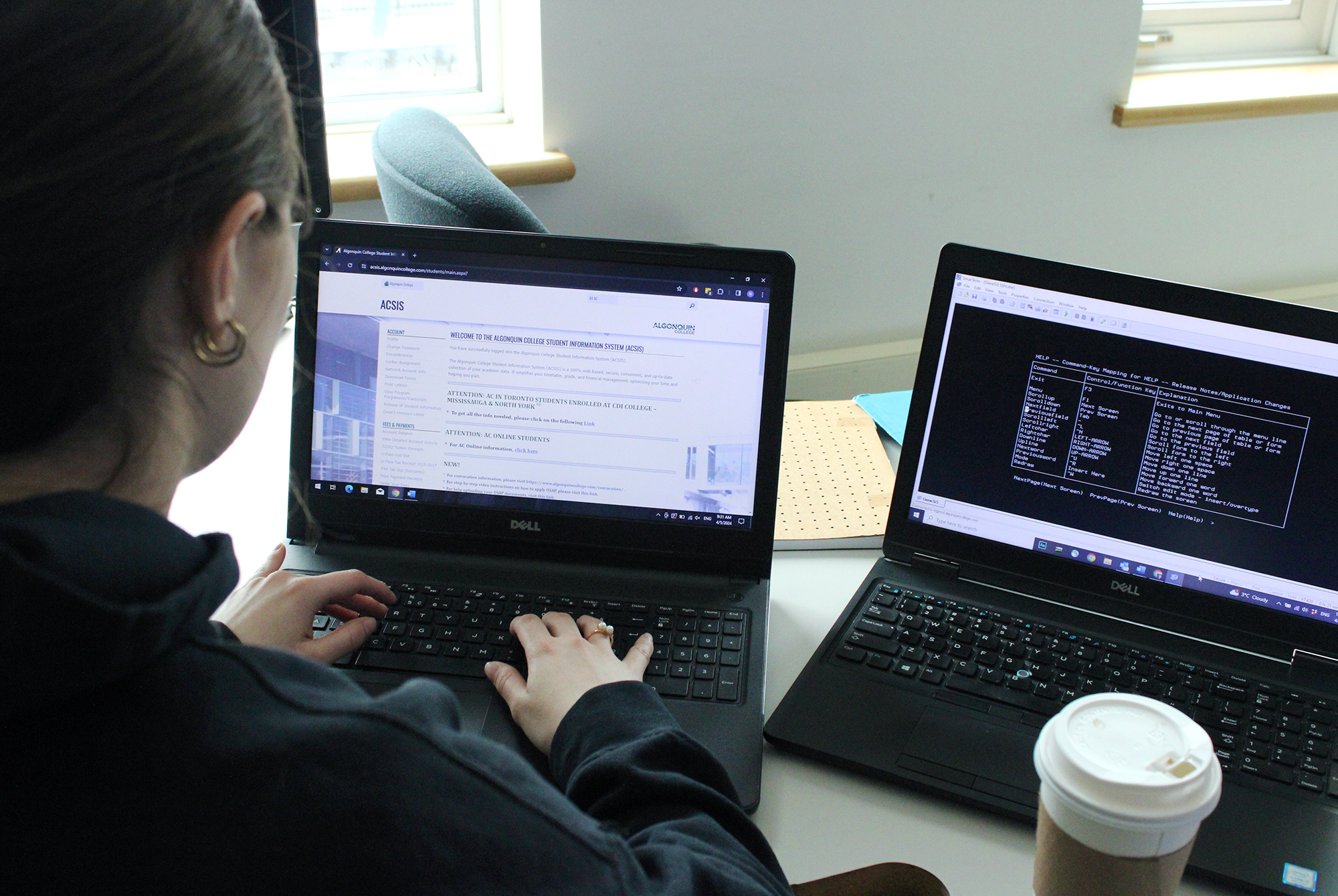
The Thesis system will replace ACSIS and GeneSIS as part of the multi-year R3 Project
Photo: Nathalia Lencioni
The college is transforming its student systems, which include ACSIS and GeneSIS, through a $71-million project.

A project costing up to $71 million and aiming to revolutionize Algonquin College’s student information systems will be completed in 2026, according to Lois Pollock, one of the R3 Project’s business leads.

“In May 2023, the budget range for this multi-year project for fiscal years 2019-2020 to 2025-2026 was adjusted to reflect a total projected spend of $65 million to $71 million,” said Pollock during a budget update at a Board of Governors meeting on Feb. 26.

The current student information system for the college, GeneSIS, was developed decades ago, using a programming language that was common from the 1970s to the 1990s. It serves as a database on all students across the college and is used by faculty.

GeneSIS interacts with ACSIS, which is a website that integrates the college’s existing data systems, allowing students to access information and resources, such as their timetables, tuition fees and elective classes.

Kenny Ratcliffe, a student in the computer engineering technology program, said he’s thought about the ACSIS’s shortcomings for some time and is excited about the prospect of a new system.

“In my opinion, ACSIS is a poor piece of software,” said Ratcliffe. “It’s really showing its age, I think. I think a redesign of the software and a new implementation of it would be very good.”

The R3 Project is currently on its second of five phases and will replace GeneSIS and ACSIS with the Thesis Student Management System.

Alain Paradis, coordinator of the graphic design program, said his main hope for the new Thesis system is that it will streamline and automate managing off-cycle students — students who, for any reason, did not complete a class at the program’s expected time.

“I’m looking forward to seeing it,” said Paradis. “Because right now, at the end of the semester, and at the start of the new semester, there’s a ton of work to go look at all the students who didn’t pass a course for any reason, or didn’t complete a course, and keep track. They automatically get registered. Someone has to manually manage these students.”

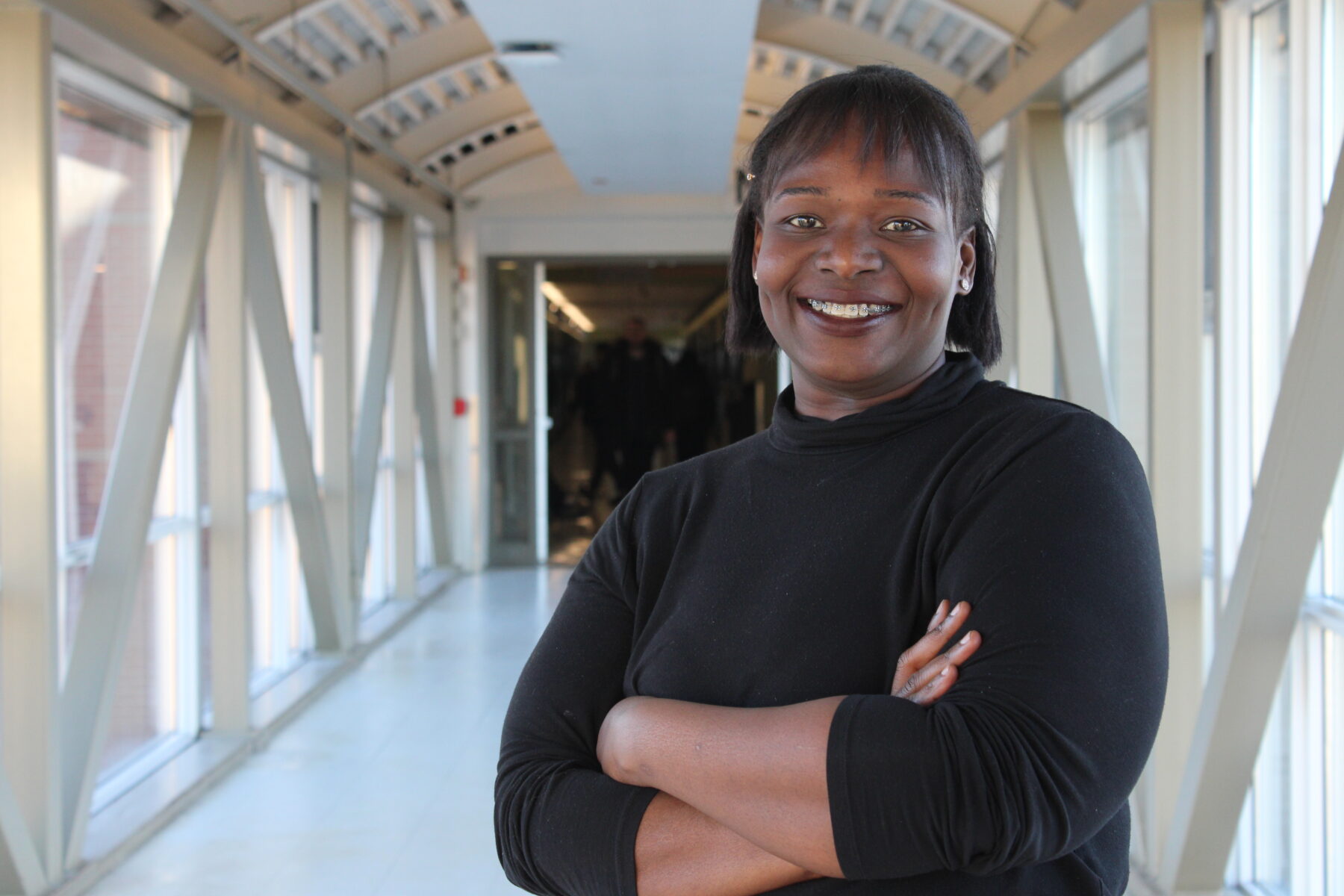
Alain Paradis, coordinator and professor of the graphic design program, smiling outside of his office in N-building on April 4.
Alain Paradis, coordinator and professor of the graphic design program, poses outside of his office in N-building on April 4. Photo credit: Nathalia Lencioni

Paradis keeps spreadsheets individually designed for each off-cycle student, in order to make sure an email is sent to the registrar’s office so those students are in the right classes and not automatically enrolled in the next class for that course.

“At the end of every semester, we have to say, okay, these students didn’t pass, and send an email to the registrar saying, ‘don’t register them in part two of that course, because they didn’t pass part one’,” said Paradis. “Hopefully, it’ll just be easier to manage that. There won’t be so much emailing back and forth between students and the faculty or the coordinators and the registrar’s office.”

Krista Pearson, the R3 Project executive business lead, provided the Algonquin Times with a statement about student and faculty involvement in the new system’s development.

“Student feedback on the Student Portal has been an important part of the project for years,” said Pearson. “From the beginning of the project, there have been co-operative education student placements, which provides regular opportunities for students to access and understand the project while also contributing to the project outcomes and providing real-time feedback.”

“In preparation for future stages, as a part of the current project, there was an extensive learner-focused research effort in winter 2023 involving the human-centred design graduate certificate program,” she added.

The Thesis student portal will allow students to access information and complete tasks similar to ACSIS. It will not require a daily shutdown period as the current portal does, and in some cases, there will be close to real-time information exchange between systems, meaning that students will have more timely updates and access, according to Pearson.

Paradis says he is hopeful that with the implementation of this new system, faculty members and coordinators will have more time to dispense with other responsibilities, and that students will have more agency.

“A new software is overdue,” said Paradis. “A computer should be doing this. Because I can make a mistake too. Imagine how much time all the coordinators across the college are taking to manage this, and how many mistakes are falling through the cracks.”

Taiwan struck by massive earthquake, killing nine and injuring hundreds

Local Global News: Ontario Premier Doug Ford said he only wants to see Ontario citizens in the province’s colleges and universities. Ford claims he’s been told approximately 18 per cent […]

Local

Global News: Ontario Premier Doug Ford said he only wants to see Ontario citizens in the province’s colleges and universities.

Ford claims he’s been told approximately 18 per cent of students attending Ontario’s post-secondary institutions are international.

“In my opinion, and we will continue working with the ministry, get rid of the 18 per cent,” Ford said at an event Wednesday regarding a new medical school at York University. “I’m not being mean, but I’m taking care of our students, our kids first.”

The premier’s office later clarified that Ford was referring specifically to medical schools and not colleges and universities overall.

According to Ford, he’s heard many Ontario students are struggling to get into local schools, therefore being forced to study abroad.

Ontario’s latest budget showed colleges are projected to lose about $3 billion over the next two years due to a decrease of international students allowed.

National

CTV News: Prime Minister Justin Trudeau promised a $15-billion top-up to the federal government’s Apartment Construction Loan Program, bringing the total up to $55 billion.

This announcement relates to the new “Canada Builds” program which aims to help provinces and territories build affordable rental units across Canada.

“It’s not fair that young people who have a good job, can’t afford a place to live, and can’t even imagine being able to buy a home one day. That’s what we’re trying to change around,” Trudeau said at a news conference in Toronto on Wednesday.

Trudeau’s government will hold daily press conferences to make announcements related to its campaign until the 2024 federal budget is tabled on April 16.

International

CBC News: Taiwan’s strongest earthquake in over 25 years hit the country around 8 a.m. on April 3, killing nine people and injuring over 900.

According to Taiwan’s earthquake monitoring agency, the earthquake was 7.2 magnitude while the U.S. Geological Survey said it was 7.4.

“It was very strong. It felt as if the house was going to topple,” said Chang Yu-lin, a 60-year-old worker for a hospital in Taipei.

Fifty people went missing in minibuses on the way to a national park after the earthquake downed phone networks, causing authorities to lose contact with them.

A tsunami warning was triggered for southern Japan and the Philippines as a result of the earthquake, but later lifted.

Tropical Fusion event supports Audrey’s Star fundraiser

The event in the Observatory raised funds and awareness for the Roger Neilson House
Photo: Korbin Amaya
In the middle of a song, guests move to the rhythm of the music on the dance floor.

The atmosphere at a Tropical Fusion fundraiser had a sense of purpose beyond dancing and socializing.

The event supporting the Audrey’s Star campaign was held at the Observatory on March 22, raising money for Roger Neilson House.

Despite facing a rare form of mitochondrial disease, Audrey, at the age of three, touched the lives of many individuals and became the main inspiration for the evening’s charity festivities. This year, the Algonquin College public relations program’s annual campaign took on added significance as students raised funds to pay tribute to Audrey’s legacy and the resilience of families supported by Roger Neilson House.

The lively dance floor, filled with music, represented unity and community support. When the event kicked off at 8 p.m., D.J. UPN’GONE and D.J. MULL3R filled the Observatory with a mix of reggaetón, soca and Afro-beats, setting the stage for a night of dancing. Occasionally, flags representing Jamaica, Trinidad and the Dominican Republic waved proudly in the air, showcasing the backgrounds and unity among guests in the room.

After guests danced to the music, they took breaks to try the options from the $10 buffet. The aroma of elote corn with a squeeze of lime, the crispy fried puff puff (a delight from Nigeria), and the warm Jamaican patties filled the air, satisfying everyone’s taste buds.

Dancers went between bites and dance steps without losing their enthusiasm. Meanwhile, onlookers ate their meals from their seats or booths, creating a unique moment in the Observatory.

Joëlle Benoit, a team member and Level 2 student in public relations, curated a backdrop for photos that captured joyful moments as attendees beamed for snapshots.

Two devoted Algonquin College Latino Club members participated in the event, showcasing the community’s welcoming spirit. Their involvement added energy to the gathering, offering a platform to highlight the club’s projects and attract participants, building connections and cultural exchange for the guests who checked them out.

Throughout the night, laughter, music and shared memories intertwined, creating an atmosphere of camaraderie, joy and memorable moments.

As the evening drew to a close, dancing, singing and feasting in honour of Audrey’s Star warmed the hearts of all who came together to support Roger Neilson House.

Top 10’s

Reading is one of the most beneficial hobbies you can take up. It can be very daunting though. As tempting as it is to hop right into a 800-page Stephen […]

Reading is one of the most beneficial hobbies you can take up. It can be very daunting though. As tempting as it is to hop right into a 800-page Stephen King novel after not reading for a couple of years, a short and sweet read is the best way to get back into the hobby. Here’s 10 easy reads to re-introduce you into the world of reading.ย 

ย ย 

1) On Tyranny by Timothy Snyderย 

2) Notes on Grief by Chimamanda Ngozi Adichieย 

3) An Episode in the Life of a Landscape Painter by Cesar Airaย 

4) Convenience Store Woman by Sayaka Murataย 

5) The Curious Incident of the Dog in The Nighttime by Makr Haddonย 

6) The Sirens of Titan by Kurt Vonnegutย 

7) Binti by Nnedi Okoraforย 

8) Animal Farm by George Orwellย 

9) No Longer Human by Osamu Dazaiย 

10) The Alchemistย  by Paulo Coelhoย 

April Horoscopes

Snowstorm snatches spring from campus

Heavy snowfall hit Ottawa mid-spring, disrupting the lives of Algonquin College students
Photo: Yuye Jiang
A group of students is waiting for the 88 bus under heavy snow in front of E-building at Algonquin College.

A sudden drop in temperatures brought a snowstorm to Ottawa on April 4, making commutes tougher for Algonquin College students.

Many OC Transpo buses were running off schedule. Markya Dorcilhomme, a Level 1 public relations student, said her bus showed up unexpectedly early.

“It kept getting delayed so I thought it was fine, but I ended up having to run,” said Dorcilhomme on campus. “My bus got stuck in the road twice on the way here.”

According to Lilian Ching, a Level 1 mobile application design and development student, a bus on Route 86 didn’t show up at all.

“I had to change the route to go to school,” said Ching.

Even students who don’t bus were delayed by the snow.

Evan Tavnel, a Level 1 student in the welding and fabrication techniques program, drove to class.

“It definitely took longer to get here,” said Tavnel. “I woke up late so I had to wipe off my car and that wasn’t really fun.”

Evan Tavnel a student studying welding and fabrication techniques had difficulty getting on campus.
Evan Tavnel a student studying welding and fabrication techniques had difficulty getting on campus. Photo credit: Caroline Kirkey

Lois Caracas, a Level 1 public relations student, walked to class.

“Walking to College Square was hard,” said Caracas. “All the wind and snow and rain. I know other people had worse delays. Half of my class didn’t show up.”

Lois Caracas, level 1 public relations student, struggles to find the motivation to leave the house in bad weather. "I&squot;m less motivated to come to class and do work or do anything," she said. "I just wanna stay home."
Lois Caracas, level 1 public relations student, struggles to find the motivation to leave the house in bad weather. "I'm less motivated to come to class and do work or do anything," she said. "I just wanna stay home."

The delays created various disruptions in class activities. Greg Keough, a Level 1 business student, was late for an important project.

“I did have a presentation today for my class and this weather affected it,” said Keough. “I was late and I was supposed to go first.”

Evan Keough a business student facing unexpected weather storm.
Greg Keough, a business student, facing an unexpected weather storm. Photo credit: Caroline Kirkey

Benjana Poudel, a Level 1 personal support worker student, nearly had the same experience.

“I waited for the bus like for 45 minutes today,” said Poudel. “It didn’t come, so I had to book a ride because I had a presentation.”

Julia Massey, a Level 4 business marketing student, said, “We didn’t have any classes cancelled, just half of them were not in attendance.”

Julia Massey
Julia Massey, inside the E-building as it snows outside. Photo credit: Zhiqi Zhou

In addition to creating many practical concerns, the storm disappointed students who were hoping for and expecting spring weather.

“I wasn’t looking forward to snow in April because, you know, last week it was beautiful and we were all wearing jackets, but this week, today, I need to get those winter things out,” said Simran Sanga, a Level 2 project management student.

“They really gave us hope [for spring] and then snatched it away,” said Dorcilhomme.

With reporting by Kaitlyn Lemay, Siobhan Rollo, Claire Donnan, Nathalia Lencioni, Chantal Lapierre, Yuye Jiang, Zixuan Li, Zhiqi Zhou, Laiyiady Lam and Caroline Kirkey

Local stolen police cruiser involved in crash in Ottawa’s west end

Local CTV: Two Ottawa police officers were left with serious injuries after their cruiser was struck by a suspected stolen car on Friday evening near Woodfield Drive and Merivale Road […]

Local

CTV: Two Ottawa police officers were left with serious injuries after their cruiser was struck by a suspected stolen car on Friday evening near Woodfield Drive and Merivale Road in Ottawa’s west end.

A statement by police on Tuesday says officers observed a vehicle that was reported stolen at approximately 11:15 p.m.

One youth passenger was charged with possession of property obtained by crime and failure to comply with a release order.

The second youth passenger was charged with possession of property obtained by crime.

National

CBC: Ontario’s premier Doug Ford slammed the new federal carbon tax hike on Tuesday April 2, at a news conference in East Gwillimbury, Ont.

“We stand against the carbon,” said Ford. “We know Ontario businesses can’t afford this costly burden.”

Drivers will pay extra 3.3 cents per litre at the gas pumps.

Prime Minister Justin Trudeau has said that while the price of pollution is rising, so is the Canada Carbon Rebate.

The increase will also mean larger cheques to help families offset the higher cost of fuel.

In Ontario, a single-person household will receive $140 and a family of four will receive $280 every three months, said Trudeau. Families are next set to receive a cheque on April 15.

International

Global News: Bird flu continues its global spread according to World Health Organization, wiping out sea lions and millions of birds.

Concerns remain on a high alert regarding the viruses potential risks to human health.

The latest development Centers for Disease Control and Prevention on Monday reported a human case of avian influenza in a person who had contact with dairy cows in Texas presumed to be infected with the virus.

“So, this highly pathogenic avian influenza has been circulating around the world at a very high rate for a number of years now,” explained Matthew Miller, the director of the Degroote Institute for Infectious Disease Research at McMaster University.

Opinion: Coerced support results in performative activism

Pressuring people into supporting a cause is ineffective, especially as it pertains to issues of war and politics
Genuine support for any cause should come from a place of understanding, says writer Grinje Randa Bringi.

Can the pressure to adopt a political stance lead to real change, or does it merely result in superficial support?

Engaging in discussions, whether for or against a cause, should be open to those who are either capable of or choose to speak on the matter, rather than coercing individuals into adopting a stance.

Being compelled to voice an opinion does not equate to genuine support but rather is a performative action driven by peer pressure.

Advancements in technology have significantly improved access to information. The rise of social media platforms has heightened global awareness of various issues, shifting the landscape of how information is consumed and trusted.

This shift has led to a decline in reliance on legacy media sources, as a growing number of individuals now place their trust in the information disseminated through social networks.

That being said, it’s important to note that not all people are well-informed about global issues or politics, nor are they equipped to discuss said topics.

In recent years, we’ve seen an increase in public pressure to support or take a stance on the war in Ukraine, announce if you’re vaccinated or protest against the occupation in Palestine.

In an article published in the McMaster Undergraduate Journal of Psychology in October 2022, Amira Abdalla found that the fear of cancel culture leads to an increase in online activism.

“More often, those who engage in online activism treat it as a trend and fail to enact real and positive changes in regard to social causes,” said Abdalla.

When people are pressured to take a stand, their support may become performative. It’s a case of going along with the crowd to avoid scrutiny, which doesn’t truly help the cause.

However, public pressure towards for-profit corporations and political entities is necessary as they often finance or are responsible for the atrocities of the world and hold the power to assert change.

As seen during the Black Lives Matter protests and the Free Palestine protests, boycotting brands is impactful. However, it’s not sufficient to just pressure brands to acknowledge social issues without a detailed plan of action.

Melissa Jiménez, digital content coordinator at King’s College, shares that organizations have realized that making empty statements can damage their reputation a necessary plan of action is required.

“Voicing support without meaningful actions to back it up is not wise to do from a reputational standpoint,” said Jiménez. “It causes more harm to the reputation. People are more savvy when it comes to the brands that they support.”

Genuine support for any cause should come from a place of understanding, a personal connection to its values and a voluntary decision to advocate for change.

Superficial support might look good in terms of public perception, but it doesn’t build a strong foundation of advocates who can push for sustainable change.

Opinion: Why we shouldn’t care about cringe culture

Guess what? Everyone is cringey
Photo: Ben Seabrook
Cringe culture has always existed but we have always survived it, writer Siobhan Rollo says.

Cringe culture is a relatively new thing to members of “Gen Z.” We’ve all seen them suggested to us on social media: cringe compilations, try not to cringe challenges, entire meme pages dedicated to those they deem “cringey”. The word eventually makes you, well, cringe. However, I need to ask, why does all of this matter anyway?

Cringe culture is a way of reintroducing shame-guilt-fear culture. Shame-guilt-fear culture is a sociopolitical term which describes the idea of excluding people because you feel that they do shameful things, they do things that they should feel guilty about or they do something that makes others fear them.

While it has its place, shame-guilt–fear culture eventually became a way of vetting out “undesirable” people in the 19th century. It would be an easy way to whistleblow people of colour, queer individuals, neurodivergent people, immigrants, the list goes on.

With the sudden fear of cringe culture further developing, it just creates more outsiders. Do you dare to like a cartoon made for children? That’s cringe! Do you dress differently than our social norm? That’s cringe! It’s another way to ostracize people.

Cringe culture is also an excuse to cyber bully people at large. If you post something that someone deems “cringe,” it puts you at risk of being plastered in a cringe compilation. You become a jester because of your passion. The worst part is that the concept of “cringe” is subjective, as most terms are.

So you — yes, you who dared to post a TikTok about something you are passionate about — can be selected at random by someone who doesn’t enjoy your passion. Just like that, you’re made into a public spectacle. The comments aren’t any better. They take the opportunity of screen anonymity to tear people apart. The more vulnerable a person seems, the better.

I’ll tell you something, a secret some of you may not know. All of us are cringey. If you dare to be an individual, you’re subject to being labelled cringey. There’s always something you do that’s cringey. For some, it’s their interest in anime. For others, it’s the way they get excited to ride a rollercoaster. Everyone is cringey.

The Disney movie Turning Red is a good example of how cringe culture is received by the general public. When the movie came out, there was a lot of controversy surrounding the way the characters acted. Mei, our main character, is your average preteen girl. She likes boy bands. She likes to make silly videos with her friends. She tries her best in school. She’s got weird crushes on grody teenage boys. But this was enough for audiences to get upset. Her crushes are cringe. The way she dances on tape is cringe. The way they talk about her going through puberty is cringe. The way she likes to sing boyband songs with her friends is cringe. That’s right, not even fictional characters are immune to the label of being cringe.

If there was one thing I’d ask you to take away from this, is that cringe culture doesn’t matter. It’s always existed, but we’ve always survived it. I promise you that being cringe isn’t the end of the world. Let yourself be passionate and vulnerable. Disregard those who hate you for it. Because for every bully that calls you cringey, there are lots of people who are cringey just like you. Doing “cringey” things doesn’t make you cringey. It just makes you an individual.

Opinion: Scapegoating international students is a distraction from housing and policy woes

Targeting international students deflects responsibility from those in the position to remedy long-standing national troubles
International students shouldn't be used as scapegoats for nationwide issues, writer Nathalia Lencioni says

In 2023, Canada had over one million international students in all education levels according to the Canadian Bureau for International Education. In the early months of 2024, the Canadian Ministry of Immigration announced a two-year intake cap on international students, crediting their decision to concerns regarding predatory practices by some educational institutions and lack of support for the students. However, the statement also blamed them for some of the biggest and long-standing challenges Canada faces today.

The government’s official news release, along with the media coverage of the announcement, stated that rapid increases in the number of international students arriving in Canada put “pressure on housing, health care and other services.”

I believe this to be neither accurate nor fair, but overly simplistic, untrue, and an unnecessary contribution to already growing xenophobic rhetoric, which will disproportionally affect people of colour.

International students deserve access to the support and services they need to prosper in Canada. The majority of those students cannot financially compete with Canadians for homes or rentals. After graduation, they continue to earn less than domestic students, according to Statistics Canada.

The idea that international students are “ideal immigrants” has been commonly broadcasted when the country requires skilled labour or an economic boost, however, the idea that they contribute to issues such as housing and healthcare access decline has also been commonly spread. I believe given the contrast between these ideas, the rate of recurrence they are exchanged in public opinion fosters an unstable atmosphere that is harmful to students’ mental health.

The ideal immigrant idea was first used in the mid-2000s due to a policy change, according to the Journal of International Migration and Integration.

“Relative to other classes of immigrants, policy makers assume that [international students] are ‘ideal immigrants’ to Canada because their experiences within the Canadian post-secondary education system is assumed to give them the essential skills needed to integrate successfully into the workforce upon graduation,” according to a research paper called International Students as ‘Ideal Immigrants’ in Canada: A disconnect between policy makers’ assumptions and the lived experiences of international students.

Governmental and public discourse that implicitly or explicitly assigns blame for nationwide concerns such as the housing crisis to immigrants and international students shifts the responsibility away from those truly responsible: elected officials with the power to enact change in housing legislature and foreign investors indiscriminately adding to their real estate portfolio.

This tactic also draws attention away from immediate and long-term solutions elected officials could take to increase the housing supply.

The consequences for post-secondary institutions have been the focus of reports since the announcement of the cap. However, the same information sources have been consistently remiss in considering the international students — many of whom struggle to get by in Canada — have been commodified for decades, and are clearly seen as a revenue source in place of weaning or missing provincial investments and grants.

Experts believe the current housing obtainability and affordability crisis Canadians are facing can be sourced back to bailouts and policy changes issued after the global financial crisis and has been in the making for decades, according to the research paper: Canada’s Housing Bubble Story: Mortgage Securitization, the State, and the Global Financial Crisis.

Canada is often selected as a study destination due to its image as a safe and inclusive society, but if international students continue to be used as scapegoats for nationwide issues, I believe that will quickly change. The issue of insufficient resources for the number of international students is an issue entirely manufactured by the Canadian government’s policies and should be spoken of as such.

Algonquin Times podcast

Stay Informed

Sign up for our newsletter

Subscribe

* indicates required