main

Meows, oohs and aahs at the Ottawa Cat Show

It was raining cats at the Nepean Sportsplex
Photo: Isabella Disley
Kim Monkhouse, president and treasurer of the Ottawa Valley Cat Club, holds a kitten at the Ottawa Cat Show in the Curling Rink of the Nepean Sportsplex on Sept. 28.

Sherri Robicheau and her beloved Maine Coons travelled from Cape Breton, N.S. for the recent Ottawa Cat Show.

“They’re everything for me. I absolutely love my cats. They definitely keep me calm and keep me sane,” said Robicheau.

The annual Ottawa Cat Show returned to the Curling Rink at the Nepean Sportsplex on Sept. 28 and 29.

Robicheau has an eye for Maine Coons, a breed in high demand and popular at the show.

“I had been searching for a Maine Coon for many years and we found one. When we got them, they had breeding rights and we spent a lot of time wondering whether we wanted to breed or not. It just kind of happened and I now have 12 Maine Coons,” said Robicheau.

Paul and Sherri Robicheau holding Fen (left) and William (right) at the Ottawa Cat Show in the Curling Rink of the Nepean Sportsplex on Sept. 28.
Paul and Sherri Robicheau holding Fen (left) and William (right) at the Ottawa Cat Show in the Curling Rink of the Nepean Sportsplex on Sept. 28. Photo credit: Isabella Disley

It was the feline frenzy of breeds that boosted the level of serotonin during this two-day event.

Karen Mullin is the owner of K9 Crafts, a business from North Augusta, Ont.

Mullin was at a friend’s house when she stumbled upon stray cats and kittens in the backyard.

“We decided that we would take two of them off their hands. Henry and Archie are eight years old and domestic. They were strays and tabby cats,” said Mullin.

Henry and Archie wormed their way into Mullin’s heart.

“They make life interesting. I used to be a dog person and now I’m a cat person. Ours are inside cats, and they’re just so loving and always there and not too demanding, so it’s nice,” said Mullin.

Melinda Bishara was in town from Montreal when she attended this show.

“We were in the neighbourhood for something else and then we just happened to see this. When you don’t have a cat at home, it’s nice to spend a bit of time with them,” said Bishara.

Kim Monkhouse, President and Treasurer of the Ottawa Valley Cat Club holding a kitten at the Ottawa Cat Show in the Curling Rink of the Nepean Sportsplex on Sept. 28.
Kim Monkhouse, president and treasurer of the Ottawa Valley Cat Club, holds a kitten at the Ottawa Cat Show in the Curling Rink of the Nepean Sportsplex on Sept. 28. Photo credit: Isabella Disley

Kim Monkhouse, president and treasurer of the Ottawa Valley Cat Club, emphasized the positives of having a pet.

“I think any pet, even dogs as well, offer companionship and they make it so that you’re a lot less lonely. It’s very therapeutic to pet a cat or a dog. Just having a pet is nice,” said Monkhouse.

Monkhouse wanted to show off the feline friends to everyone.

“This event is for people to come out and look at different cat breeds. Not necessarily just purebreds, but we’ve got household pets here too. We have 125 cats entered in the show. It’s a mixture of mostly purebred cats, but we’ve got, I think, at least 14 or 15 household pets,” said Monkhouse.

The Ottawa Valley Cat Club, a non-profit volunteer group, hosted over 100 cats, 22 vendors and 23 sponsors at this event.

The countdown is on as the 2025 Ottawa Cat Show is scheduled for Sept. 27 and 28.
AC grad uses MakerSpace to build 3D maps for climate activism

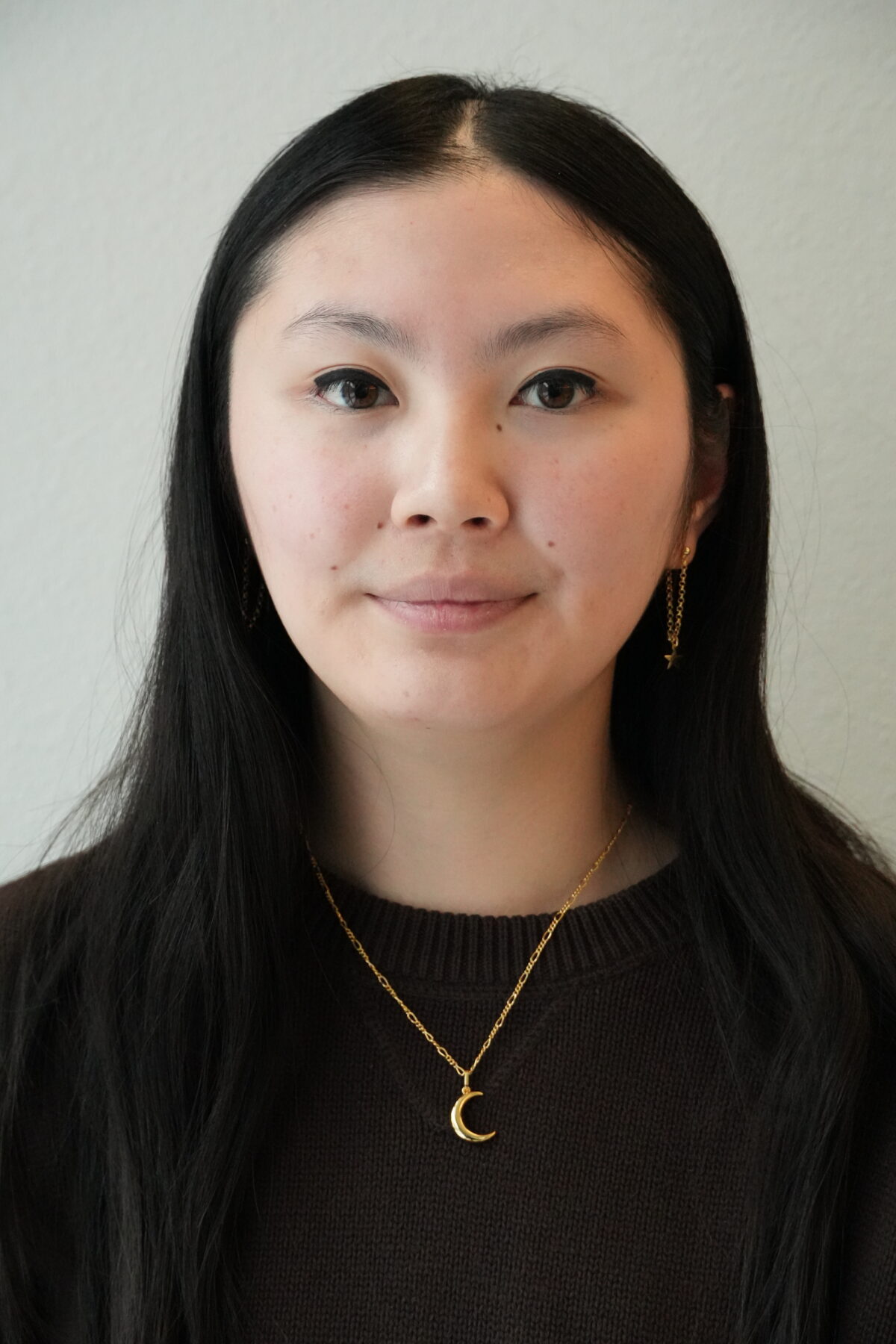
Yussuf Mohamud, a computer programming graduate, has returned to campus with plans to raise awareness for climate change through 3D mapping
Photo: Stephanie Taylor
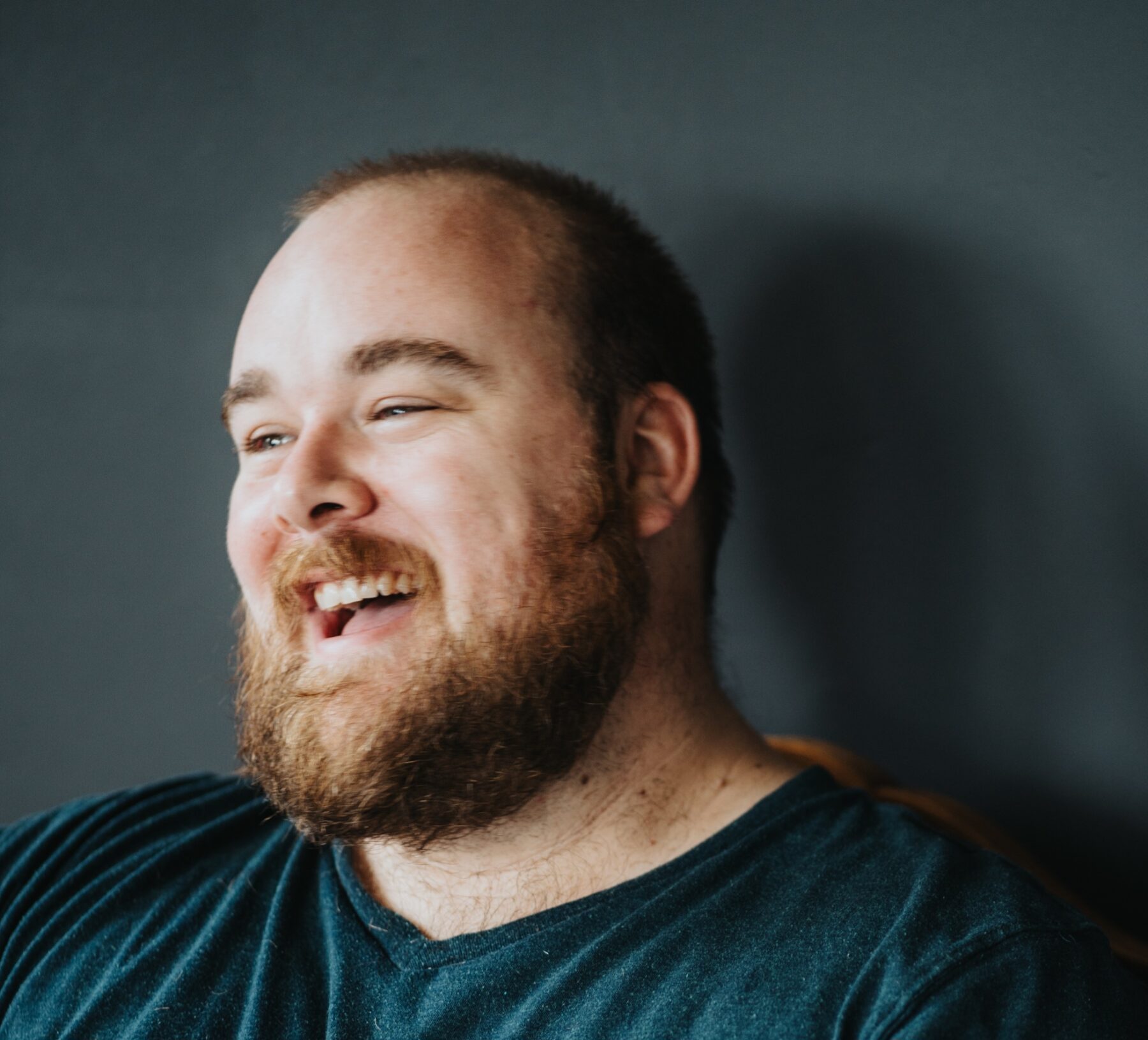
Yussuf Mohamud, an AC graduate, posing outside the library in C-building.

Yussuf Mohamud made his first 3D topographical map after the August 2023 wildfires in Hawaii in the hope of raising awareness about the impacts of climate change.

Mohamud has always loved nature. However, he never thought he would try and make a career out of his passion.

Mohamud graduated from Algonquin College in 2018. He was inspired to pursue computer programming because he has always been good at math.

“I thought I was Steve Jobs,” said Mohamud. “There was a lot of hype behind it in 2013 and I really wanted to get into it.”

Throughout his time at Algonquin, Mohamud landed a job at Amazon. However, during COVID-19 he made a career change and began working as a school bus driver.

“My uncle gave me the job, I needed money,” said Mohamud. “I couldn’t just stay home.”

It was during this time Mohamud discovered his passion for map making.

He hopes to return to Algonquin College next year to study geographic information technology or enrol in the military geomatics technician program.

When the wildfires in Hawaii started, Mohamud started working on his 3D topographical map of Hawaii.

Using his tech experience, Mohamud used software QGIS and Inkscape to design the map. Once he gathered his supplies — recycled wood and glue — he headed over to Algonquin College’s MakerSpace in C-building.

“MakerSpace has been really instrumental in helping me do this,” said Mohamud.

The laser cutter at MakerSpace allowed Mohamud to cut out each level of terrain based on his design. Afterwards, he sat by the Starbucks in E-building to glue all the pieces together.

Matthew Jerabek, the associate manager of innovation and entrepreneurship at MakerSpace, said he loves it when current and former students use MakerSpace.

“People who are passionate about the ideas that they are pursuing are usually the people walking through the door,” said Jerabek. “It proves that students will look for it (a space like MakerSpace), search it out and continue to follow their own sort of dream.”

Since the wildfires in Hawaii, Mohamud has started paying closer attention to other natural disasters, such as Hurricane Francine in Louisiana and the warming of the Rideau Canal in Ottawa. He believes climate change is the root cause both issues.

The laser cutter Yussuf Mohamud used to create his 3D topographical map of Hawaii is located in MakerSpace.
The laser cutter Yussuf Mohamud used to create his 3D topographical map of Hawaii is located in MakerSpace. Photo credit: Stephanie Taylor

Mohamud showed his map of Hawaii to Kevin Crichlow, the program coordinator of the military geomatic technician program at Algonquin College. Mohamud wants to show students how to make their own 3D topographical maps.

“By creating it in a wooden, portable form, it is possible to use it as a team briefing device in the field,” said Crichlow. “Yussuf’s model could be used by a geologist, or a humanitarian disaster assistance coordinator to quickly explain the impact the terrain is going to have on island wide operations.”

Mohamud hopes to use his maps to promote himself as an environmental activist. He wants current Algonquin College students to see a graduate of the school advocating for the environment and making a difference.

“I want to go to the people in charge, the people who make the laws,” said Mohamud. “They (the policy makers) know what to do. They are smart enough to do the right thing.”

The maps are just the beginning for Mohamud. He hopes to one day open his own geomatics business. He wants to provide engineers and architects with 3D renderings of the infrastructures and land they would be working on. He wants to help these engineering and architectural companies make environmentally friendly choices.

“Taking it from a 2D screen and bringing it into the real world, it feels different when you can hold it in your hand,” said Mohamud.

Kwey series takes off as 20 new episodes are released for Truth and Reconciliation day

"This series offers snippets of valuable information, really like little nuggets of gold I see them as, where you can learn from an Anishinaabe-Algonquin person," said Anita Tenasco, director of Indigenous initiatives
Photo: Siobhan Rollo
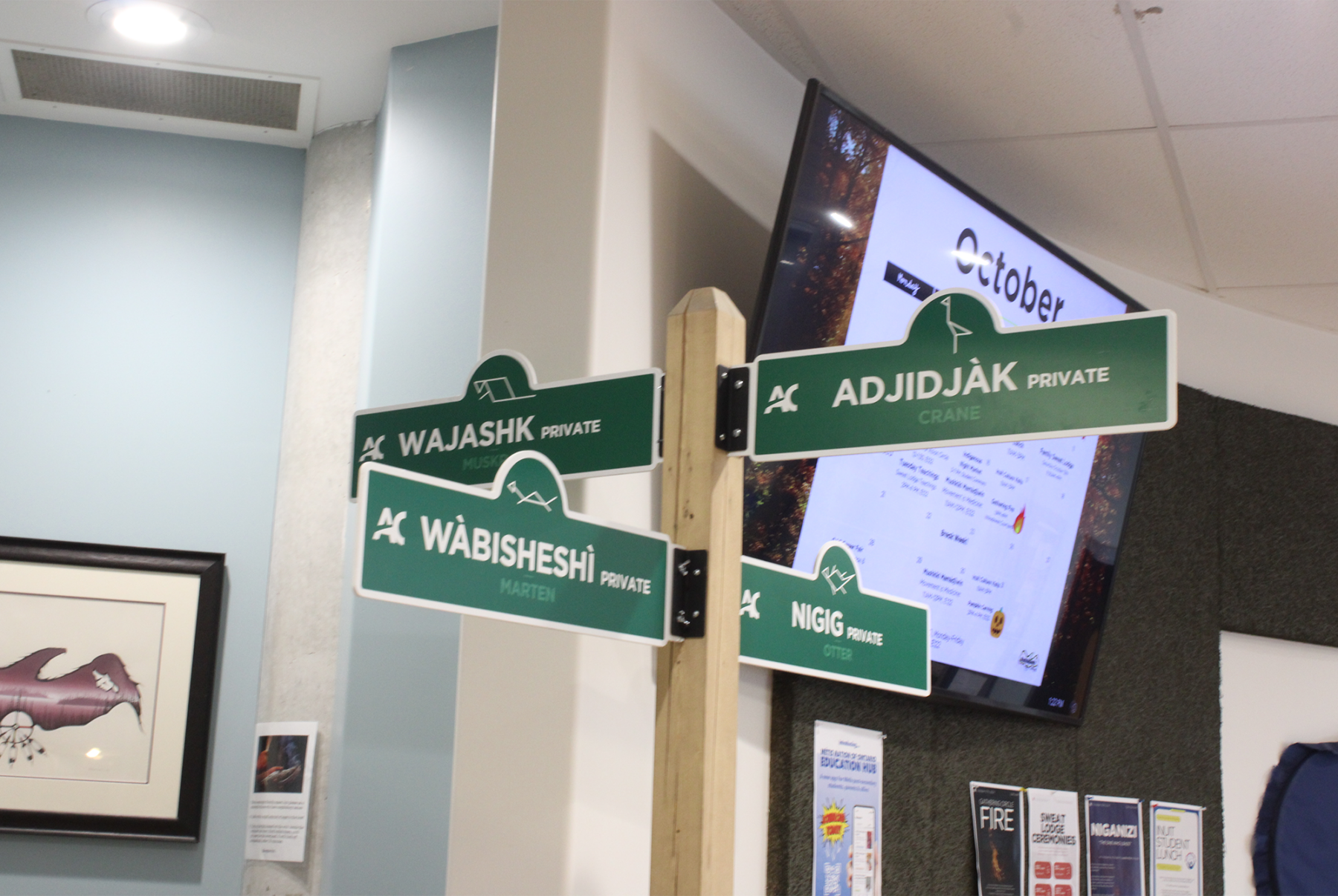
A replica of some of the street names with Anishnaabe names.

Algonquin College’s Mamidosewin Centre plans to release 20 new episodes of its Kwey Anishnaabe language series in honour of Sept. 30, the National Day for Truth and Reconciliation.

The Kwey series started back in June 2024, with its initial debut of 20 episodes discussing common phrases in Anishinaabe, important artifacts that are used by Anishinaabe-Algonquin peoples, stories told by elders and other information related to the Anishinaabe-Algonquin nation. A release date for the new 20 episodes has not been announced.

The series information is gathered from a variety of sources, including elders, credible online language databases and the Kitigan Zibi Anishinabeg Cultural Centre.

The Kwey series is championed by Algonquin College’s director of Indigenous initiatives, Anita Tenasco. Tenasco helps plan each episode’s content and tries to make it resonate with members of the college community.

“The first series included elder Jenny Tenasco, a residential school survivor, and a graduate of Algonquin College,” she said. “The videos engage the college with artifacts from the Anishinaabe-Algonquin nation…(and) have been recorded on campus in an Indigenous space, called the Pidaban space in the DARE district.”

The Pidaban space, featured in Algonquin’s DARE district in the C-building, is named after the Anishnaabe word for “dawn.”

Tenasco said one of the goals for the Kwey series is to create a conversation about language.

“The main goal is to really build the awareness of the Anishinaabe-Algonquin nations within our campuses (and) to build a comfort level within our student body and college’s leadership to speak about Indigenous peoples, to engage in conversations with Indigenous peoples, to become better partners when it comes to Indigenous communities, and to become champions and the allies that are much needed by First Nations, Metis, and Inuit people,” she said.

Tenasco said the Kwey videos provide an easy, accessible way for members of the college community to learn about the Anishinaabe-Algonquin people.

“It’s a quick and easy way for college leaders, for faculty members to connect with Anishinaabe-Algonquin culture and language. The videos are there as a reminder to help individuals use the language on a daily basis, such as in emails,” she said.

Tenasco said that phrases she has started to see appear in emails include “miigwech” meaning “thank you,” and “kwey” meaning “hello.”

The initial debut of the series struggled to find viewership among students. However, Tenasco expressed positive feedback from Algonquin College’s staff members.

“I’ve spoken to a few students and many were like, ‘Oh I didn’t know about this series!’ And so it’s really important that students check out My AC, Good Morning Algonquin, that’s where the videos are promoted and available,” said Tenasco. “I do know that a lot of college leaders are paying attention to the series. I’ve received a lot of positive comments from the other campuses.”

Summer Wabasse, the Mamidosewin Centre’s events and communications officer, has said that staff are starting to use the Anishinaabe language in their correspondences.

The Kwey series has also provided an answer to one of the centre’s most frequently asked questions.

Summer Wabasse is one of the Mamidosewin Centre's staff members, who tends to both students and outsiders of the AC community.
The Mamidosewin's event and communications coordinator Summer Wabasse at her desk. Photo credit: Siobhan Rollo

“One of the most common questions coming from non-Indigenous students is what the words on our signs mean,” Wabasse said. “I’m glad they’re getting their answers. Anything that makes language more accessible.”

Despite this, many students, such as Level 3 police foundations student Emerson Jacobs, are unaware of the series.

“No, I was not (aware of the series)…I think it’s totally beneficial for the students of Algonquin,” said Jacobs.

Jacobs, who has an Ojibwe background, has a basic understanding of Anishinaabe, including greetings, expressing emotion and using common phrases such as phrases relating to animals. Jacobs was taught the Anishinaabe language from kindergarten to high school.

“A lot of elders are getting old and the language is getting lost,” he said. “It’s more important to practice speaking and have youth learning.”

The 20 new episodes feature the same themes as the previous episodes but expand on existing concepts and introduce new ones.

“This series offers snippets of valuable information, really like little nuggets of gold I see them as, where you can learn from an Anishinaabe-Algonquin person. Where you can learn from the director of indigenous initiatives, a leader within the college community. Where you can learn from the Mamidosewin Indigenous Student Centre, and elders and knowledge keepers from their Indigenous communities,” said Tenasco.

‘Indian Horse’ draws diverse crowd for Truth and Reconciliation Day

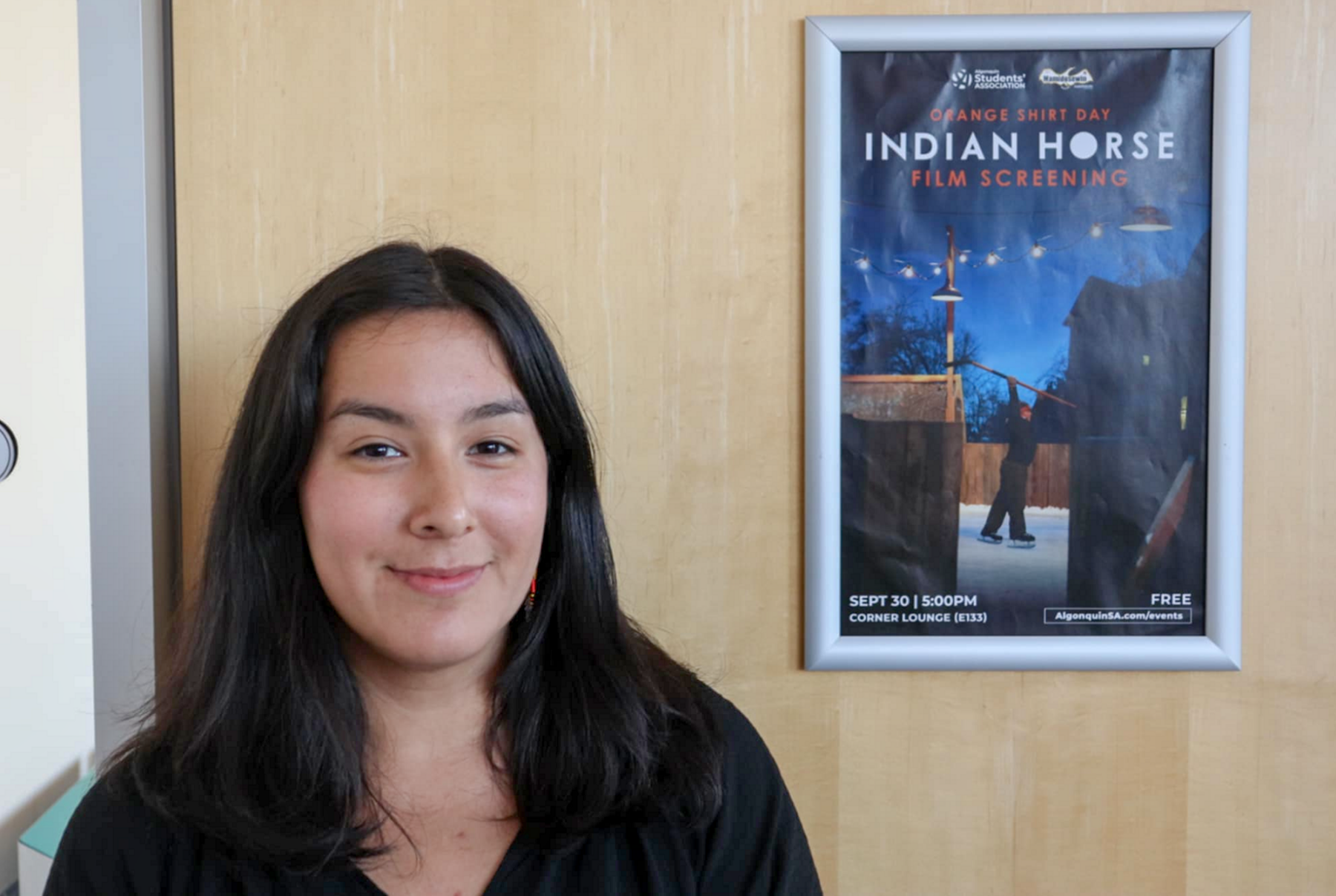
The Mamidosewin Centre and Algonquin Students' Association held a screening and discussion on Sept. 30
Photo: Tyler Reis-Sanford
Summer Wabasse spoke to attendees about Truth and Reconciliation Day, as well as the colonial roots of bannock.

Students, staff and people from all walks of life came together to watch Stephen S. Campanelli’s film Indian Horse on the recent National Day for Truth and Reconciliation. The film follows the life of Saul Indian Horse, an Anishinaabe boy, as he confronts his upbringing in St Joseph’s residential school.

Indian Horse is based on the award-winning novel of the same name by Ojibway writer Richard Wagamese and sheds light on the dark reality of Canadian residential schools.

Level 1 nursing student Kayleigh Moore said she found the event very moving.

“It can be tough to watch,” said Moore. “It’s important, I know it is, but it doesn’t make it any easier to see it on screen.”

The event was held in the Student Commons Corner Lounge and was put on with combined efforts from the Mamidosewin Centre and the Algonquin Students’ Association.

More than 40 people were in attendance, with some attendees being as young as 12, and others in their 70s. Traditional First Nations refreshments were provided, as attendees were treated to bannock and Three Sisters soup. The Student Wellness Centre also had an employee available for viewers to speak with outside if the content of the movie became overwhelming or triggering.

Summer Wabasse, the events and communications officer for the Mamidosewin Centre, said last year staff chose to show a non-fiction film, but felt this year Indian Horse was a great choice.

Summer Wabasee spoke to attendees about Truth and Reconciliation Day, as well as the colonial roots of bannock.
Summer Wabasse spoke to attendees about Truth and Reconciliation Day, as well as the colonial roots of bannock. Photo credit: Tyler Reis-Sanford

“Non-fiction can be so informative, but I think being able to see the story of a residential school survivor can grab the audiences attention,” said Wabasse. “I think for non-Indigenous people getting that gateway to learn, it’s a good stepping stone.”

After the movie, attendees were encouraged to take part in a discussion about the impact of the film, and how it pertains to the National Day for Truth and Reconciliation.

Some attendees took the time to contemplate what it means to understand the impact of residential schools and how the effects are still felt today.

Richard Wagamese is a Canadian Ojibwe author, and his book Indian Horse won the 2013 Burt Award for First Nations, Metis, and Inuit literature.
Richard Wagamese is a Canadian Ojibwe author, and his book Indian Horse won the 2013 Burt Award for First Nations, Metis, and Inuit literature. Photo credit: Tyler Reis-Sanford

“When I was in school it wasn’t something we spoke about,” said Joseph Broussard, who came to watch the movie with his granddaughter. “For a whole generation it was just swept over and forgotten. I don’t know how we as a country can do these things and then not educate people about it. It happened. This stuff really happened. It’s awful.”

LRT change impacts students catching buses to the college

The city reduced train frequency from every five minutes to every 10 minutes during off-peak hours
Photo: Agrani Tiwari
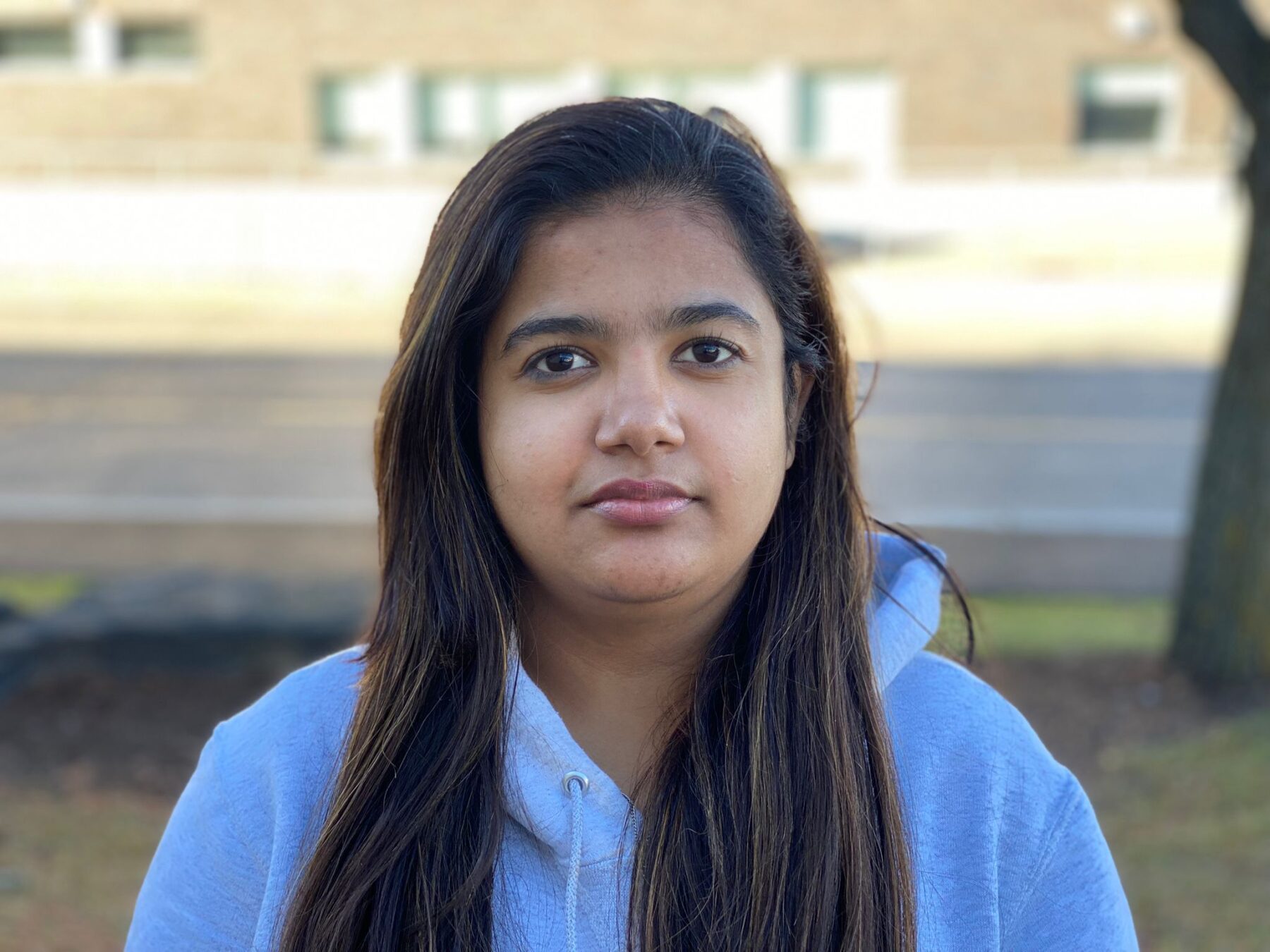
Naureen Kaur, a Level 5 advertising and marketing communications management student, plans to leave home earlier to manage the increased travel time and crowding.

Algonquin College students are feeling the impact of reduced Confederation Line service as they try to catch buses to the campus.

“When I miss the train, then the 88 (bus route from Hurdman to Terry Fox) would already be gone, so I have to wait for the next one,” said Jessica Adriana Bettoni, a Level 2 biotechnology student. “I have to wait 15 or 30 minutes, depending, for the next bus to show up.”

Jessica Adriana Bettoni, a Level 2 biotechnology student, shares how train delays make her bus connection unreliable.
Jessica Adriana Bettoni, a Level 2 biotechnology student, said train delays make her bus connection unreliable. Photo credit: Agrani Tiwari

Delays force students to leave home earlier to make it to class on time.

The LRT service used to run every five minutes during off-peak hours but now it will run every 10 minutes.

The reduced service, introduced to help OC Transpo address a $25-million deficit, was maintained after a 13-12 vote on Sept. 11, with Mayor Mark Sutcliffe casting the tie-breaking vote. The vote followed a debate on increasing off-peak service to seven minutes.

While some students said they hadn’t noticed the specific change in timing. Others said they still face longer, more crowded commutes.

Darrien Trombley, a Level 1 auto body and collision damage repair student said: “It’s crazy. It takes a lot longer to get in every day.”

Darrien Trombley, Level 1 auto 310 student, describes the daily challenge of longer, more crowded trips to campus.
Darrien Trombley, Level 1 auto 310 student, describes the daily challenge of longer, more crowded trips to campus. Photo credit: Agrani Tiwari

“I wasn’t aware of the wait times increase,” said Naureen Kaur, a Level 5 advertising and marketing communications management student. She said she takes the train to work, but because she hasn’t been to work in past two weeks she didn’t know about the changes.

The longer wait times will affect Kaur’s commute, and she might have to leave home earlier and expect trains to be crowded.

What concerns her more is the ongoing construction that has been happening for years, especially beyond Blair towards Orléans, and at Algonquin.

“I don’t know when it’s going to get completed,” said Kaur.

She finds the situation tough.

“I have to change one train and two buses. basically, which is too much.”

Speed-mingling Pride Social closes out pride week

Students' Association holds event aiming to foster connection and bring community together
Photo: Zixuan Li
Kween Mallika, a drag queen and the evening's MC, poses with DJ Roxy Sunset.

As pride week came to a close, the Pride Social brought students together for an evening of celebration and connection on Sept. 27, despite a brief disruption caused by an unexpected fire alarm.

When the Pride Social began at the Observatory, attendance was low. As more students began to arrive, the fire alarm at A-building was triggered, according to kitchen staff.

People were evacuated to the parking lot in front of H-building because of an unexpected fire alarm.
People were evacuated to the parking lot in front of H-building because of an unexpected fire alarm. Photo credit: Zixuan Li

Security quickly evacuated people to the parking lot in front of H-building. Fortunately, the disruption was brief, and after a five-minute wait, students were allowed back inside to rejoin the party.

The party kicked off with a lively performance by Kween Mallika, a drag queen and MC for the evening. After the opening dance, Mallika led the crowd into two circles, where students could rotate and chat with new faces every two minutes. The ice-breaking game set the tone for an evening filled with conversation and camaraderie.

“I think it’s important for students to be able to kind of go to an event where you know for sure that there are people who will understand and accept you,” said Orlando Zhang, an interdisciplinary studies in human-centred design student. “A lot of students don’t like us.”

Like Zhang, many attendees hoped to make new friends and promote inclusivity.

For others, like Yug Patel, a Level 1 television and broadcasting student, the event offered a chance to step out of their comfort zone. Patel said he volunteered at the event “to meet people, to interact with them, you know, be more social with people.”

Pride week is a week-long program offering students the chance to participate in exciting activities celebrating pride.

“We did a pride week in September because it’s the start of the semester. And we want an opportunity for the queer students coming in to be able to connect and find community at the start of the semester,” said Tatanisha Riggan, the equity, diversity and inclusion coordinator at Algonquin College.

“We started off with the cookie decorating event on Monday. Tuesday, we had the 2SLGBTQ+ community resource fair. And then we had bracelet making (on Wednesday). And then yesterday we had a really fun sexy trivia night. And tonight, we’re ending it all, a wonderful week with a Pride Social. So, we get to have a party,” said Riggan.

Though Riggan believes there is strong support within the queer community at Algonquin College, she acknowledged there’s always room for growth.

“There can always be more support,” she said, emphasizing the importance of ongoing efforts to build connections and provide resources.

Algonquin College starts fall with beads and strings, forging new friendships

Students made new bonds in the B-building in the name of pride
Photo: Steven Dalloo
Pattaramethi Phommachan (Gappie) makes bracelets after class.

The Students’ Association hosted a friendship bracelet-making event for students to forge bonds, personalize bracelets and show support for the 2SLGBTQ+ community as they settle into the new semester.

The event Sept. 25 in the B-building was part of a series of pride week activities aiming to foster inclusion and help build a sense of community to start the fall semester.

Students who stopped to take a moment to examine the tables of bright colour beads and pride stickers marvelled at the display of creativity laid out before them.

“An event like this shows students that they matter and are appreciated and give them the feeling of being welcomed. it’s important,” said Joey McGrath, volunteer for the SA.

The simplicity of the activity allowed students to engage without pressure as students flowed in and out of B-building.

“It’s always fun having something to do between classes especially if it helps people feel welcome,” said McGrath when talking about students looking to destress and engage in activities.

Every bracelet made was a testament to the college’s commitment to creating a safe place for all students, regardless of their sexual orientation or gender identity. By showing up and taking part in the event, attendees could visibly show their support and allyship.

“It is a way of showing support and it is not as aggressive or hyper as the pride parade. this is something more chill to show support to the LGBTQ+ community,” said Jefferson Meng, a Level 2 computer programming student, who came to the college to support her friend Jackie Lei and connect with others and share connections.

The atmosphere was light and friendly as students sat down to make bracelets for themselves and friends.

“Students can relax their minds and reduce their stress and burdens,” said Bhupinder Singh, a volunteer for the SA.

The pride bracelet-making event was bright and vibrant and not just about making stylish bracelet accessories. The event was about acceptance and being seen and the unity and solidarity that comes with it.

Those who participated left with new fashion accessories and a sense of belonging and understanding of peers.

Students find hope in new pilot parking initiative

Students can look forward to relief from parking challenges with a new semester-long permit
Photo: Emmet Paradis
Lot 16 at a busy hour.

A discounted student-only permit was released for Lot 16 as a pilot project for fall 2024. The semester-long pass is $399, replacing the monthly passes at $139, tax included.

“This single-term permit is aimed to support students who, after paying for tuition, student fees, and often housing costs, may not have money available at the start of the term to afford an annual permit,” according to the Algonquin College Parking Services website. “This new option will be more cost-effective than purchasing several monthly permits throughout the term, a practice students currently choose.”

Lot 16 was added in 2021 after the Jack Doyle Athletics and Recreation Centre opened. The building occupies space that was part of Lots 8 and 9. Lot 16 was created to accommodate the loss of space, according to Roch Lafond, the manager of parking, lockers, coin-ops and card services.

Lot 16 is south of Lots 9 and 12. To get to buildings west of the student commons, students are required to walk across Lots 12, 9 and 8.

“The location of the lot depends on which building you’re in for convenience,” said Kim Brooks, who’s in the first year of studying for a bachelor of science in nursing. “Even if you’re in building C and parking in 16, it’s still convenient to be able to park on campus without needing to rely on public transit.”

“As someone who attends both uOttawa and Algonquin College, parking at Algonquin is stress-free and easy due to the amount of parking as well as the size of the spots leaving room to park larger vehicles,” said Brooks.

Elise Nizio, a second-year police foundations student, said, “I think the college sees firsthand that the parking situation has become an issue. It’s good to know that they’re aware of its current state and want to take action to address it.”

According to Lafond, as the campus continues to grow, more parking options will be considered, as well as improved parking lots.

The Parking Services team has been working to re-grade Lots 1, 16 and 17. Those with passes for Lots 15 and 17 will receive emails notifying them of changes.

Lot 16 will remain unpaved for the time being. Future paving is being considered to improve traffic flow, drainage, and safety, especially during the winter season, according to Lafond.

In the meantime, students are weighing in on how the existing situation affects them.

“I feel like that isn’t a big problem for some students,” said Annabel Henderson, a second-year child and youth care student. “I’m glad they’re adding more options since the lots can be quite busy at certain times of the day.”

During the winter semester, the snow accumulated from the parking lots will be moved to the southeast field area, away from Lot 16, to keep parking spaces available.

Students chip in to art memorial for Indigenous murder victims

"Artistic library" is part of a national grassroots project The Canadian Library, founded 2021
Photo: James Gray
Each book in the art installation bears the name of a missing or murdered Indigenous woman or two-spirit person.

An artistic tribute to missing and murdered Indigenous women, children and LGBT people is under construction in E-building’s AC Hub. The medium: Books, wrapped in Indigenous-made cloth.

Students were tasked with cleanly wrapping the books and then ironing on gold letters with the names of the victims. Algonquin College said in an Instagram video that “the installation visually represents the lives to be honoured and the collective grief of their loved ones.”

“It’s kinda tedious, but it’s important work,” said Samantha Therrien, who works on the event team, on wrapping the books. “It’s not just their books, it’s a representation of (the missing and murdered Indigenous people). We also have a binder with their stories.”

The binder lists the name of each victim to be honoured, their age, location and manner of disappearance or death. Some of the cases stretch back decades.

The concept is part of The Canadian Library project, which describes itself as a “living memorial to honour Indigenous women, girls and children … to help fellow settlers understand the past, the present and what must be done for the future.”

Four of the organizers pose by the bookshelf early on Sept. 26. L-R: Nina Newman, Joanne Cairns, Anita Tenasco and Lauren Larocque.
Four of the organizers pose by the bookshelf early on Sept. 26. (From left to right): Nina Newman, Joanne Cairns, Anita Tenasco and Lauren Larocque. Photo credit: James Gray

The project aims to collect 8,000 books and Algonquin College’s goal is 300.

But that may be a long ways off. Only 126 books were on the shelf at about 3 p.m. on Sept. 30. The event team gave out materials on two days, Sept. 26 and Sept. 30, which is the National Day for Truth & Reconciliation.

They plan to keep the installation up while accepting self-made contributions. After a few weeks, the installation will move to the Spiritual Centre, and then to an undetermined central collection of The Canadian Library.

And why books?

“I think it’s because these women’s stories haven’t been told,” said Joanne Cairns, events manager for the college. “There’s things we won’t know about them.” Many of the disappearances are still unsolved.

The art installation was the first part of Algonquin’s National Day for Truth and Reconciliation events. It was a collaboration between the student events team, the college’s events team and their Department of Truth, Reconciliation and Indigenization. The supplies and books were contributed by Algonquin staff. They’re mostly children’s books, but the actual words are seen as unimportant. “They had to be a certain size,” Therrien said, “but other than that, whatever.”

The fabric was supplied by The Canadian Library, which buys it from Indigenous businesses using donated money.

The project can be seen in the AC Hub, alongside a sign which explains:

“(This is) a grassroots art installation that will serve as a memory of all Indigenous Women and Children that have been murdered or gone missing and for colonizers to learn the true history of Turtle Island, now known as Canada. TCL’s hope is to help bring about true reconciliation.”

Nonprofit organizations and religious clubs featured at Clubsfest

Students get together to experience the new clubs and organizations at Clubsfest
Photo: Mackenzie Cardinal
Students enjoying the various clubs at Clubsfest.

As students are starting college for the fall 2024 term, many of them are curious as to what’s new and available at Algonquin College. Many new students are also curious as to where to make new friends. That is where Clubsfest comes in.

Clubsfest in the Student Commons on Sept. 25 let students see their options for clubs to join during the fall term.

Charley Hicks, a student in early childhood education, made a musical theater club for Clubsfest. When asked about why a club about musical theatre was made, Hicks said: “I’ve been wanting to make a club about musical theatre ever since I was in musical theatre class in high school.”

Islamic Relief Canada was a part of Clubsfest as well. “We are a non-profit to help people suffering in Lebanon and Palestine,” said Dalia Alhaddad, who is studying in the bachelor of public safety program.

Islamic Relief Canada’s booth sold stickers that read “free Palestine” along with stickers that had watermelons, a common symbol of solidarity for Palestine.

Along with non-profit organizations, there were regular clubs for students to join, including the kali club, D&D tabletop club and musical theatre club.

Signing up for a club was easy. For example, the musical theatre club required students to write their name and Algonquin College email on a piece of paper. Five students were signing up for the club when the Algonquin Times visited the table.

“I’m interested in the D&D tabletop club and we just joined musical theatre club,” Lauren Davies said while she was hanging with her friend. Davies is in the food science and culinary arts program.

While many clubs were about certain niches and fandoms, the majority of clubs at Clubsfest had a religious theme. These clubs were mainly for connecting students with shared beliefs.

Clubs included Hillel Ottawa, Jewish Campus Life, The Feast Ottawa, Tree of Life Bible Academy and the MENA Arab Culture Society.

“We’re here to help students meet other students with similar backgrounds,” said Jamie Sweigman, director of Hillel Ottawa: Jewish Campus Life. “And when it comes to mental health, we offer therapy and therapists to students in need,” Sweigman added.

More than 10 clubs were promoting themselves at Clubsfest.

More information about events like Clubsfest can be found at www.algonquincollege.com/studentsupportservices/events/.

Algonquin Times podcast

Stay Informed

Sign up for our newsletter

Subscribe

* indicates required