main

Thousands of public servants demand fair wages and better conditions

Local Ottawa Citizen: Over 155,000 public servants began striking on Wednesday, marking the largest federal work stoppage since 1991. Members of the Public Service Alliance of Canada are demanding higher […]

Local

Ottawa Citizen: Over 155,000 public servants began striking on Wednesday, marking the largest federal work stoppage since 1991.

Members of the Public Service Alliance of Canada are demanding higher wages and better working conditions.

Negotiations have been ongoing for two-and-a-half years, with picket lines now established at over 250 locations nationwide.

The main issue remains wage increases, as current government offers fail to match inflation.

National

CBC News: Canada’s Jewish community faced a “disturbing and elevated level of violence” in 2022, with 25 violent incidents reported, says B’nai Brith Canada.

While anti-Semitic incidents declined slightly from the all-time high in 2021, online antisemitism remains prevalent.

Calls for legislation targeting social media platforms and addressing online hate gain traction in response to these trends.

International

From CBC News: An 85-year-old Missouri man has been charged with armed assault for shooting Black teen Ralph Yarl, who mistakenly knocked on the wrong door.

Yarl is now recovering at home.

Clay County prosecutor Zachary Thompson stated there was a racial component to the case.

The incident has sparked outrage and renewed scrutiny of “stand your ground” laws, which allow for the use of deadly force in self-defense.

Volunteer appreciation night pays tribute to selfless service

Skylar Dale, a student in the online autism studies and developmental services worker program, did an outstanding 90 hours of volunteering this year. “I started volunteering with an organization called […]
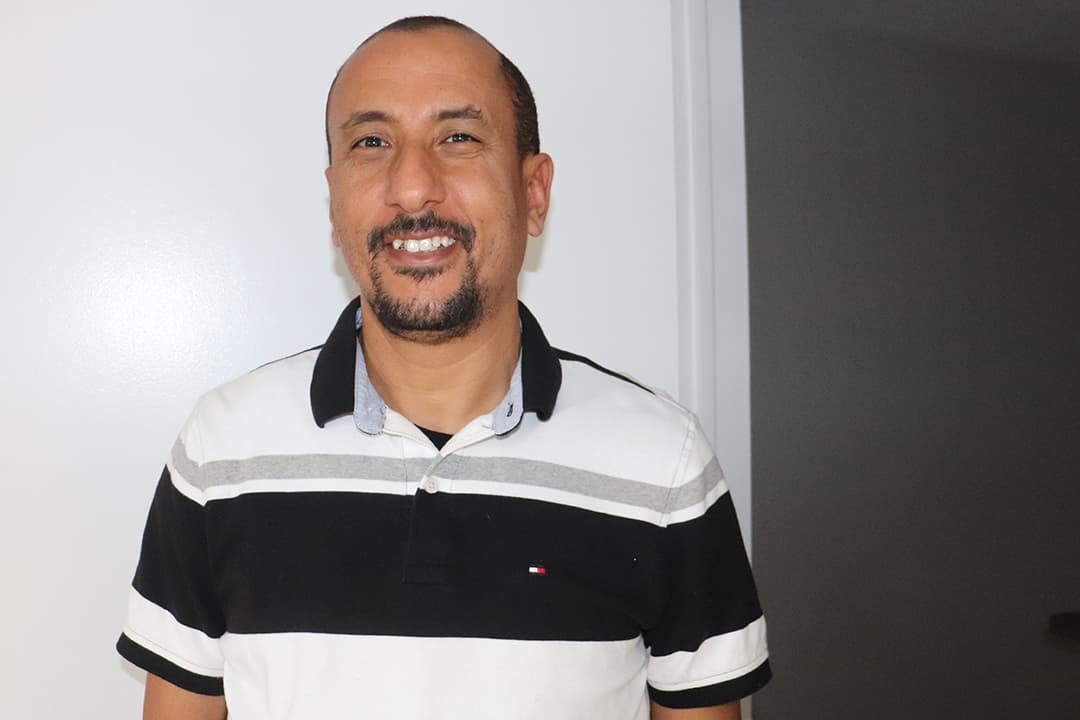
Photo: Brahim Ait Ouzineb
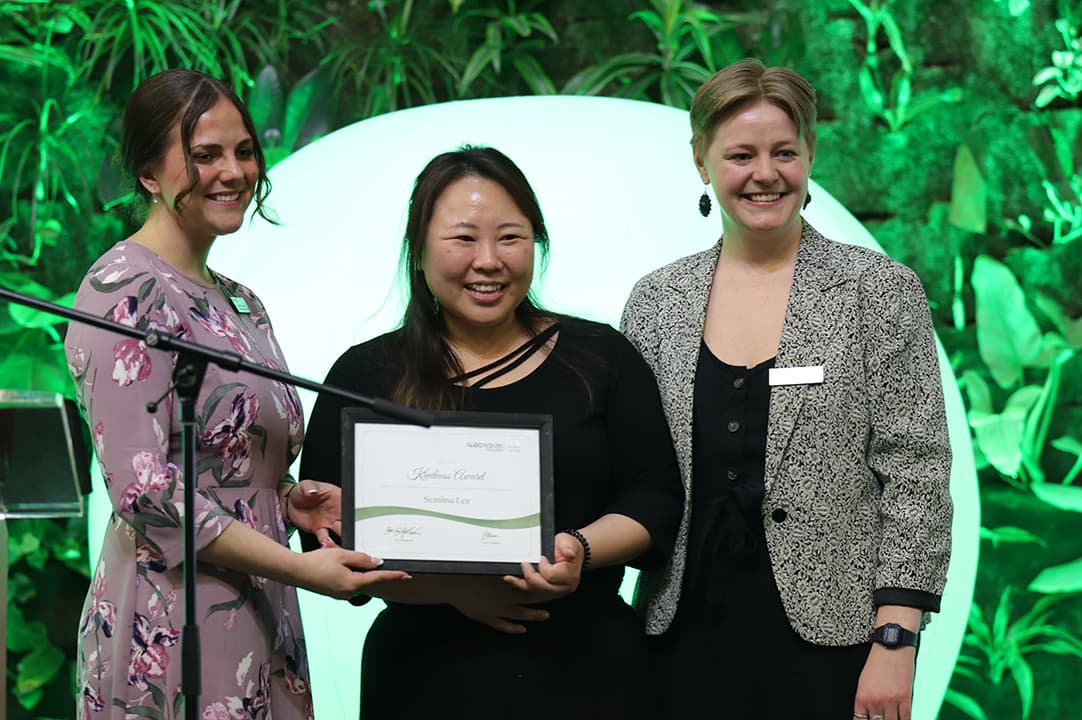
Semina Lee receiving the Kindness Award posing with Elizabeth Holmes and Leah Grimes from Student Support Services. Lee showed up to volunteering events with the biggest smile on her face.

Skylar Dale, a student in the online autism studies and developmental services worker program, did an outstanding 90 hours of volunteering this year.

“I started volunteering with an organization called Rude Nature, ” said Dale. “It made me realize how much I love gardening and being outdoors.”

On April 12 Dale was just one of many students who took to the stage in Minto Hall in the ACCE building’s lower floor to share their experiences with volunteering at the Student Volunteer Appreciation Night.

The event honours and pay respect to volunteers. It’s an event for which the Volunteer Centre devoted around a hundred hours of preparation.

“This year, the event is of a smaller scale, but just as wonderful,” said Lauren Larocque, events officer. “In previous years, it was a volunteer gala but because of the pandemic we had to scale things back.”

Students, loyal to their volunteering habits, showed up on time. Much to the delight of the volunteer center 570 students volunteered in this year’s activities. Five trophies were handed out to the best achievers:

– The Community Impact Award: Valijeta Nuhijaj for participating in Cleaning the Capital and Buskerfest.

– The Commitment Award: Fabiana Ferraresso for her work for Cleaning the Capital, Take Back the Night and Rockcliffe Park Public School Book Fair.

– The Hard Worker Award: Julian Dubois for participating in Cleaning the Capital, Cleaning the Campus, Postcards for Peace and Winter AC Day 1.

– The Kindness Award: Semina Lee for Cleaning the Capital and Cleaning the Campus events.

– The Enthusiasm Award: Devjapunsada Lokuliyana for Cleaning the Capital, Cleaning the Campus, Buskerfest and Winter AC Day 1.

Attendees at the event enjoyed the tunes from musician TJ Morrison’s guitar. Some of the college’s management team attended to show their appreciation for student volunteers.

TJ Morrison, the Ottawa-born artist, performed intimate acoustic songs. He was kind enough to let the guests request any song.
TJ Morrison, the Ottawa-born artist, performed intimate acoustic songs. He was kind enough to let the guests request any song. Photo credit: Brahim Ait Ouzineb

Ben Bridgstock, student support services director in his speech, shared his personal experience with volunteering. For him, volunteering provided new experiences, friendships, new skills and unexpected opportunities.

“We understand that volunteering is not easy for our students,” Bridgstock said. “So tonight we want to recognize each and every student. They try something new and give back to the community the most valuable of their assets, their time.”

Fabiana Ferraresso, a public relations student, opted for volunteering to connect with more people since she was new to Ottawa. Her favourite volunteering experience was for a book fair in her neighbourhood.

“It helps me feel more connected. It also offers networking opportunities which benefits my program too,” said Ferraresso.

Some of the ladies who run the show are in the photo booth at Minto Hall. Just like the student volunteers, they deserved all the spotlights. Left to Right: Elizabeth Holmes, Rebecca Valerio, Lauren Larocque, Joanne Cairns, Amanda Pickerd.
Just like the student volunteers, the women who ran the volunteer event deserved the spotlight too. In the photo booth in Minto Hall, from left to right: Elizabeth Holmes, Rebecca Valerio, Lauren Larocque, Joanne Cairns, Amanda Pickerd. Photo credit: Brahim Ait Ouzineb

Since their work is a marathon, not a sprint, the volunteer center is seeking a few ways to connect with more students next year.

Elizabeth Holmes, the community engagement officer, and her team will reach out to program coordinators that require volunteer hours. Their main concern is to bring back community projects and link student volunteers to their 80 community partners.

Gender-neutral bathrooms are saving the college in ways you might not realize

You’d think there would be more of a push to ensure transgender people can thrive safely in space. Well, for those who identify as transgender, discriminatory laws are being pushed […]
Photo: Annika Schlarb
Algonquin Times writer Justin Hancock-LeFebour

You’d think there would be more of a push to ensure transgender people can thrive safely in space. Well, for those who identify as transgender, discriminatory laws are being pushed at higher rates only to aggravate these negative experiences.

Kentucky and Florida introduced bans on transgender-affirming treatments for transgender minors. We are lucky to have tens of thousands of Canadian activists pushing to give access to international transgender people to seek refuge amidst these discriminatory laws.

Luckily for Algonquin College transgender students who attend the campus in Ottawa, they’ll be pleased to hear that nine buildings have at least one gender-neutral bathroom in the facility, and for those attending the Perth or Pembroke campus, they’ll be pleased to hear at least five rooms have gender-neutral bathrooms.

Those who probably won’t use these gender-neutral bathrooms are probably thinking, “Why is my tuition money going into these new stalls?” But if you think about it, that money is saving lives.

These bathrooms will create a safer use of public bathrooms for all genders. Being able to safely use the bathroom of your choice should be a right, not a privilege. We are failing transgender individuals by not educating the general public as to what being trans is like and how these gender-neutral bathrooms are useful.

I don’t remember ever learning anything about transgender individuals or genders because we never were taught i for some reason. I knew what being transgender was, but I never learned the full extent of all these different genders and why anyone would transition in the first place. Studies have shown it’s healthier for those who suffer from gender dysphoria to transition.

Those with gender dysphoria are prone to having low self-esteem, becoming withdrawn or socially isolated, and having depression or anxiety.

I graduated high school two years ago and only started to read up on it due to the rise of hate crimes against transgender people.

The National Centre for Trans Equality (NCTE) reported that a quarter of transgender people faced bias-driven assaults, with rates being higher for transgender women and transgender people of colour. Reports from UCLA said trans individuals were four-times more likely to face violence than any other demographic.

Up to 70 per cent of transgender people have experienced a negative reaction when using public bathrooms. Fifty-seven per cent of transgender Ontarians have avoided using public washrooms when they have needed to go due to fear of harassment. Avoiding bathroom use can result in a variety of health problems ranging from urinary tract infections to kidney problems.

By the looks of it, it seems we haven’t been trying hard enough to create safe environments for transgender individuals.

It’s why gender-neutral bathrooms are an important step toward creating more inclusive and welcoming spaces for people of all gender identities and expressions and reducing violence transgender people face.

Even if transgender people only count for less than one percent of the Canadian population, it’s still not a reason to think this is a small deal. People who use wheelchairs count for the same amount percent of the population, yet we still add accessibility buttons to as many doors on the college campus. At the end of the day, transgender individuals are still people, and respecting these decisions would be the bare minimum.

And look, even if you still don’t agree with the idea of gender-neutral bathrooms, these bathrooms are at your service as well. Remember, when the bathroom you’re assigned to has a long lineup, you won’t need to wait since there’s an extra bathroom.

Why ask for preferred names? They won’t get used anyway

I’m not comfortable with people knowing my legal name. I changed it for a reason. It didn’t fit me as a person or align with my gender identity. It was […]
Photo: Guillaume Laflamme
Algonquin Times writer Kit Gervais

I’m not comfortable with people knowing my legal name. I changed it for a reason. It didn’t fit me as a person or align with my gender identity. It was something I’ve hated ever since I was a kid.

Now as a college student, I find myself dreading bringing my friends to my dorm, or even just sending an email. I get anxious waiting for them to find out that Kit isn’t written on my birth certificate.

On my Algonquin College email, the display name is my deadname. For those unfamiliar, a deadname is the term used to describe a trans or non-binary person’s legal or given name.

My deadname has been revealed to several of my classmates and colleagues and has been used as if it were the correct name by the director of the Students’ Association and other people I’ve emailed for interviews.

Not to fault them entirely, it is the name displayed above the email’s content, but I always make sure to introduce myself as and sign off as Kit. Please read my whole email. Thank you.

Now, if you’re not familiar with signing guests into residence, you’re given a card the guest has to carry around in case security or a residence advisor (RA) notices they don’t live there. On it is written the name of the visitor, the arrival and departure date, the room number they’ll be staying in, along with the host’s name.

Three times out of five, my guests have been handed a card with my deadname on it.

I’ve tried everything from handing them my school ID that clearly displays Kit Gervais to double or even sometimes triple-signing my emails with the correct name, yet still I manage to get deadnamed.

The small wins I do get when signing guests in only come from specific front desk staff. Sometimes they get my name right and others just write my last name; both are acceptable to me.

A question I’ve been asking myself since the beginning of the year is, why did the college even ask for my preferred name if they’re not going to use it?

Sure, the name appears correctly on Brightspace and on attendance sheets, but I send emails more than any of my professors take attendance out loud.

This isn’t just my problem. Other students struggle with it.

“It pisses me off,” Em Baker, a hairstyling student, said. “I’ve reminded them enough times.”

According to residence life coordinator Raivyn Halcro, students’ preferred names are written in brackets next to their legal name in the computer system. Apparently, most staff are unaware of what those brackets mean.

Those few members of front desk staff who use the correct name seem to be former RAs. Halcro explained that the RA team is more familiar with the layout of the information system used in residence.

Why would this not be common knowledge to the rest of the team? Halcro made sure to call front desk management and relay my concerns about deadnaming, though it didn’t answer the question at hand.

Halcro provided me with a link to a form with instructions on how to get your name changed in the overall school system, like on Brightspace or email. Students can request to switch a preferred name or gender identity on their school documents —transcripts and credentials not included — by filling out the form and submitting it, along with a request to the registrar’s office.

“Request” is a term Halcro used loosely. There hasn’t been an incident, to her knowledge, of a student’s signed form being rejected.

Regardless, this is just another hurdle in the way for trans and non-binary students trying to receive their education relatively stress-free. The application itself seems unnecessary when there’s a specified slot for preferred name and gender identity on the documentation for admissions.

I always return to the question: Why did the college even ask for my preferred name if they’re not going to use it?

It’s something I haven’t had answered. Yet.

The cost of sleeping in is killing students’ mental health

Waking up in the morning and realising you don’t have class until the afternoon is one of the best feelings in the world. Until it’s not. For the better part […]
Photo: Rebekah Houter
Algonquin Times reporter Kate Playfair

Waking up in the morning and realising you don’t have class until the afternoon is one of the best feelings in the world. Until it’s not.

For the better part of the winter semester, curling up in my bed without a worry until my 1 p.m. class was my favourite thing. That is, until I found my mood growing sour, my stress levels peaking at an all-time high and my sleep schedule becoming so erratic that I was losing hours every night to restless tossing and turning.

All of this stemmed from late afternoon and evening classes.

Students who consistently have late classes, particularly those who do not have any morning classes to balance them out, will experience a decline in their quality of sleep, mental stability and physical health. Late classes disrupt students’ circadian rhythms and falter our biological clocks.

Now, not everyone is the same, so not everyone will have the same reaction to late classes. Some students love having the morning to themselves, and function well despite the atypical schedule.

However, if you are like me, then late classes could become a hazard to you.

My typical weekday consists of waking up between 9:30 a.m. and 10 a.m. I get ready at my leisure, sometimes spending several unproductive minutes on my phone in bed, before leaving for school. After my 35-minute drive, mercifully skipping traffic, I attend my classes as normal, leaving school after 5 p.m. on most days. The commute home, as well as any necessary errand I have to run, take up the majority of my evening. Then there is my nightly routine — eat dinner, shower, etc. And finally, there is the homework or assignments I must complete before bed.

With all that work to do after the evening class, time slips away and before I know it, I’m facing a midnight bedtime.

To understand how bad going to bed late truly is, we must examine the opposite.

Waking up early and starting your day as the sun rises is how our bodies were meant to function. In a study by the Marsh McLennan Agency, physiologist and sleep expert Nerina Ramlakhan and neuroscientist Chelsie Rohrscheib say humans are meant to follow the sun’s progression around the earth.

Humans have a biological clock, and light is what sends signals to our brains that tells us when to sleep. It’s called the circadian rhythm. When the sun is shining, our eyes suppress the melatonin — the hormone in our bodies that sends signals to our body to sleep — keeping us awake, and vice versa when the sun sets.

Consistently going to bed late or after midnight disrupts that rhythm. If you go to sleep after midnight and wake up later in the day, you are not getting enough sun exposure to maintain the circadian rhythm. This results in poor mental stability and chronic exhaustion that will affect your daily life.

According to a study done by Centers for Disease Control and Prevention (CDC) published in September 2022, 60 per cent of college students experience poor quality of sleep and 26 per cent suffer from insomnia. The study concluded that students who suffered from poor sleep results in irritability, increased tension, depression, decreased life satisfaction and poor academic performance.

Students who have later classes have a disturbed circadian rhythm that affects their quality of life beyond what is recommended. As a result, their academic performance and overall mental stability is suffering due to later classes.

Prioritizing students’ health and well-being should be a priority for the college, and that starts with their sleep schedule. Many of the problems students face — fatigue, burnout, depression, etc. — can be helped by starting their day earlier and leaving school at a decent time, before the sun sets, to maintain that circadian rhythm and improve quality of life.

Because that’s what it all boils down to. Students’ quality of life is being crushed under a heavy weight, and late classes have a direct involvement with that weight. In order to resolve this issue, we need to go back to the fundamental necessities humans need to live: nutrition, environment and sleep.

Students are people. It’s time to start treating them as such.

Powwow for children and youth returns after the pandemic

The Odawa Native Friendship Centre hosted its annual Children and Youth Pow Wow on March 25 at the Shaw Centre. The event began with a grand opening of elders starting […]
Photo: Itunu Olayiwola
Dancers performed the grass dance during the powwow at the Shaw Center on March 25.

The Odawa Native Friendship Centre hosted its annual Children and Youth Pow Wow on March 25 at the Shaw Centre.

The event began with a grand opening of elders starting the dance at noon along with veterans performing their traditional dance before other dancers took their turn to participate in the dance.

Traditional instruments and dresses were showcased at booths to remind many of how things were exchanged during the earlier years before the concept of money was introduced.

One of the event’s attendees was Randy Kakegamick, an Algonquin College television and broadcasting student. Kakegamick has been attending powwows since birth.

“I was at the powwow singing,” he said. “This is an ongoing thing for me. It is a part of my life, it is a healing tool.”

Bob Crane, a Blackfoot veteran explains that the jingle dresses worn were invented less than a hundred years ago.

”A gentleman’s granddaughter was dying and he had a dream that if in the dream he was told, if he made a dress like that, she would heal. So he did and the granddaughter was healed,” explained Crane. “And so jingle dress dancers are highly, highly regarded because there’s no better, health dance. So whenever anybody has to heal, whether it’s mental or physical, you’ll always see jingle dress dancers.”

Additional Information and sources were provided by booths that had collaborated with the ceremony to those who needed help with housing, health care, daycare services and many more.

Some of these booths included, the Gignul Non-Profit Housing Corporation responsible for subsiding housing, the Inuuqatigiit, a centre for Inuit children, youth, and families and Ottawa Public Health.

Crane explains that traditional dances are taught to the children at a young age, and all are welcomed to learn about their culture and history.

“We are unique,” said Crane. “We are constantly battling to make the government and Indigenous people recognize that.”

Spring semester enrolment projected to be ‘significantly’ higher than last year

It’s the final week of the school year for many students, but for others, it’s just the beginning with the spring semester kicking off in a couple of weeks. May […]
Photo: Brandon Plant
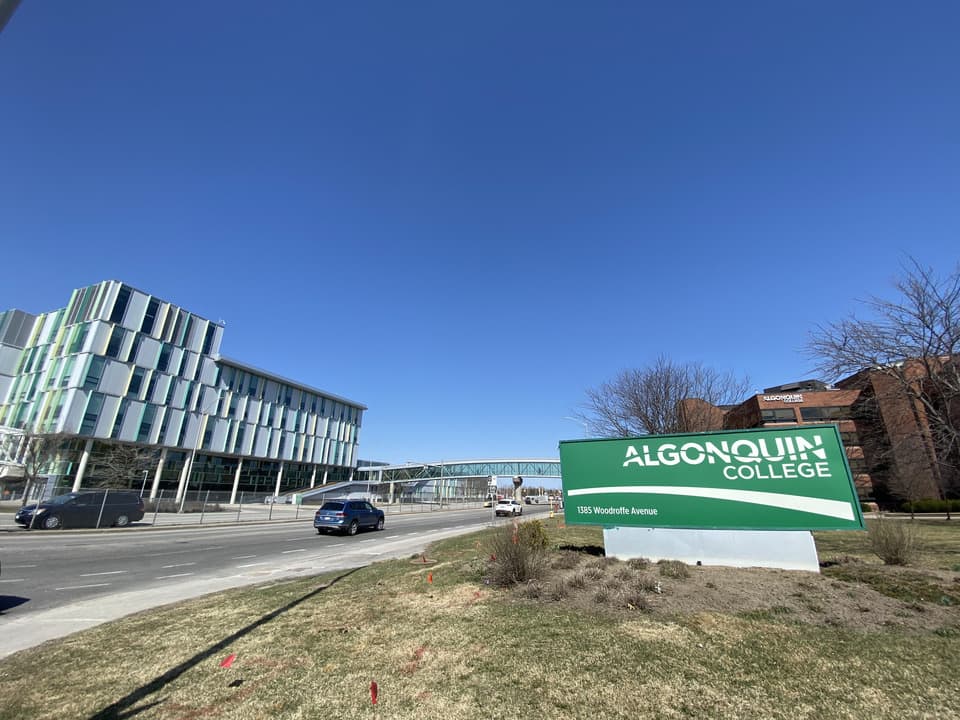
Outside view of the Algonquin College footbridge over Woodroofe Avenue on a sunny April afternoon.

It’s the final week of the school year for many students, but for others, it’s just the beginning with the spring semester kicking off in a couple of weeks.

May 8 is when the spring semester officially opens, and according to a statement from the college’s Academic Operations and Planning department, there will be far more faces on opening day compared to the previous spring.

“Spring 2023 enrolment is projected to be significantly greater than spring 2022,” the statement said.

For Parker Lynds, a health and fitness promotion student, the spring semester is an opportunity to collect extra credits and accelerate his graduation timeline.

“I haven’t decided whether I’m going to enrol in spring courses or not, but I’m definitely open to it,” Lynds said.

“But if there’s a course I like, I’d definitely consider enrolling because if I could advance my graduation timeline, or even earn credits so I don’t have to take as many classes next semester, that’s something I’d be interested in,” Lynds said.

The difference between the spring semester and the other semesters is that in the spring, no program is exclusively offered, as confirmed by the registrar’s office.

“There are no program intakes that are only offered in the spring,” the registrar’s office said.

The check-in at Algonquin College's registrar's office.
The check-in at Algonquin College's registrar's office. Photo credit: Brandon Plant

However, that doesn’t mean there aren’t specific program courses that run through the spring. Sometimes programs have courses only available in the spring, according to the registrar’s office.

“It is dependent on the program intake. Depending on when a learner starts their program, there may be particular courses associated with their specific program level which for them would only be accessible in the spring semester,” the statement said.

The registrar’s office said the spring semester often sees “less new program intakes and less activity scheduled overall when compared to fall and winter semesters.”

U-Pass or no U-Pass, that is the question

The Parking Services webpage shows a joyful girl getting off the backseat of a car. Her nails are done. She is holding a sleek backpack and wearing the Algonquin hoody. […]
Algonquin Times writer Brahim Ait Ouzineb

The Parking Services webpage shows a joyful girl getting off the backseat of a car. Her nails are done. She is holding a sleek backpack and wearing the Algonquin hoody. It gives the image of an overjoyed customer with a received service. That is not the experience I got dealing with Parking Services.

A big line of students in the commons building swarms the small office handling the lockers and parking inquiries, along with U-Pass. The handling time of inquiries is quick but does not draw smiles on the customers.

My unpleasant experience relates to the U-Pass opt-out. Students pay for parking permits to avoid the hustle of OC Transpo but are obligated to pay $223.48 each term.

I am not here to rant about parking prices or the application, Honk, that does not help me much when needed. I just want to understand why students who buy monthly parking permits do not get an automatic opt-out of the U-Pass.

To opt out of U-Pass, the front desk of the Students’ Association turns me down immediately.

“Sorry, U-Pass is obligatory, and you cannot opt out of it,” said the lady behind the counter.

I called the registrar’s office, and they asked me to fill out the opt-out form and attach the documents to defend my case. I go back to the Commons building to request a record of my trips last term to attach. The receptionist tells me to call OC Transpo.

After waiting in line, I get to the operator who says it is Algonquin College that manages its students’ accounts. I send an email with OC Transpo’s response to Parking Services. They end up confirming that they do not have the info I am looking for. I print out the screenshot of the term’s parking permits via the parking portal.

My argument is clear. I paid for a parking spot and I rode the bus four times. It is inconceivable that four rides would cost $223. The registrar’s office answered my question: “Owning a car or purchasing a parking pass does not make you eligible to opt out of the U-Pass fees. Your request has been denied.”

The response went on: “We recognize that this decision is not what your desired outcome; however, it is the responsibility of Algonquin College to ensure all students are assessed equitably according to the binding agreement with the City of Ottawa, this decision is final, and no further assistance can be provided.”

In the face of this crude explanation, I reached out to the ombudsman’s office, which advised me to give it up.

The U-Pass has been an issue of debate not only here in Canada but even in the U.S. The Students’ Association agreed with the City of Ottawa to have preferential rates in exchange for Algonquin College students’ ridership. In 2015, when it was first introduced at Algonquin College, 16.67 per cent of students were against it. In 2021, I found an article on students’ complaints about paying it despite COVID and the lockdown. I never received any response from the Students’ Association about the complaints handling and the student satisfaction surveys on the U-Pass.

The agreement means “a compulsory ancillary fee introduced through the Students’ Association following a Universal Transit Referendum in 2014,” stated the registrar’s office and Campus Services. This charge grants students unlimited use of OC Transpo, STO and ParaTranspo services. In an email received from Campus Services, it said the college collects the fees and administers the program on behalf of the Students’ Association. The fee partially covers the cost of running the program, with the remaining operating costs offset by the college. The U-Pass program is not profitable for the college, nor is it intended to be.

The new variables at play render such a project obsolete, while it started off to encourage students to use more public transportation. In the last three years, there has been a 48 per cent decrease in ridership for OC Transpo. COVID made the situation worse because more and more people avoid going into crowded places. This adds to the complaints from customers on the service and the constant failures. Students are no exception.

Savoir Fare increases prices on most products to keep up with rising food costs

Rising food costs have hit all corners of the culinary world, including Savoir Fare. The campus store has been forced to mark up its items due to rising fresh produce […]
Photo: Brandon Plant
Maryann Murphy, cashier at Savoir Fare for 20 years, completes a purchase with a customer.

Rising food costs have hit all corners of the culinary world, including Savoir Fare. The campus store has been forced to mark up its items due to rising fresh produce costs after years of prices remaining stagnant.

Maryann Murphy, an employee who has been working at Savoir Fare for 20 years, said prices increased, but not for every product.

Cashier at checkout desk
Maryann Murphy poses at the Savoir Fare cash. Photo credit: Brandon Plant

“A few items have remained the same price. Some baked items have increased 50 cents to $1. Some ready-to-go meals (beef, chicken, lamb, pork and fish) have increased by $2. However, most of our prices on many items did not have a price increase for years,” Murphy said.

While prices have gone up, Murphy argues the store still offers a cheaper alternative for fresh produce when compared to restaurants or chain grocery stores.

“Our prices are very reasonable. For many students, we’ve become a cheap alternative as food prices everywhere have gone up,” Murphy said.

While prices may have increased slightly, Muhammed Ahmad, an accounting student, still prefers Savoir Fare because he believes it’s more affordable than ordering takeout.

“I haven’t really noticed the prices going up if I’m being honest with you,” Ahmad said. “It’s still way cheaper than ordering takeout online, so if prices have gone up that doesn’t really bother me because it’s still the cheaper option.”

Chef Harsh Singh, the coordinator of the baking and pastry program, says Savoir Fare acts as a way to replenish funding for Algonquin College’s large culinary and baking program.

“In a way, whoever is buying from Savoir Fare is supporting our programs and the students’ learning. If the students don’t get to make more and more products, they won’t be able to practise. For some products, the only way they can practise is if it could be sold to recoup the price for the practice materials.”

salads in savior fare fridge
Fresh salads on display for sale at Savoir Fare. Photo credit: Brandon Plant

Chef Daniel Halden, a full-time culinary professor at the college since 2010, believes the store provides an opportunity for the program to showcase the work its students are doing.

“It gives a bit of exposure to our programs as it shows what we’re doing in our classes. So it’s a nice relationship between the college community at large and our classrooms,” Halden said.

baked products on display that were made by students
Baked goods crafted by students. Photo credit: Brandon Plant

“Savoir Fare has always been an outlet for us to be able to share with the college community what the culinary and baking students are doing in their classes. We have lessons that need to be taught and learning outcomes that need to be achieved. (Savoir Fare) gives us an avenue to be able to do that,” Halden said.

Orthodontist in Peru, barista in Canada. Where are the bridge programs?

If you’ve been to an emergency room lately you know how long the wait can be. We put off taking care of ourselves in certain situations because we’re aware of […]
Photo: Kerry Slack
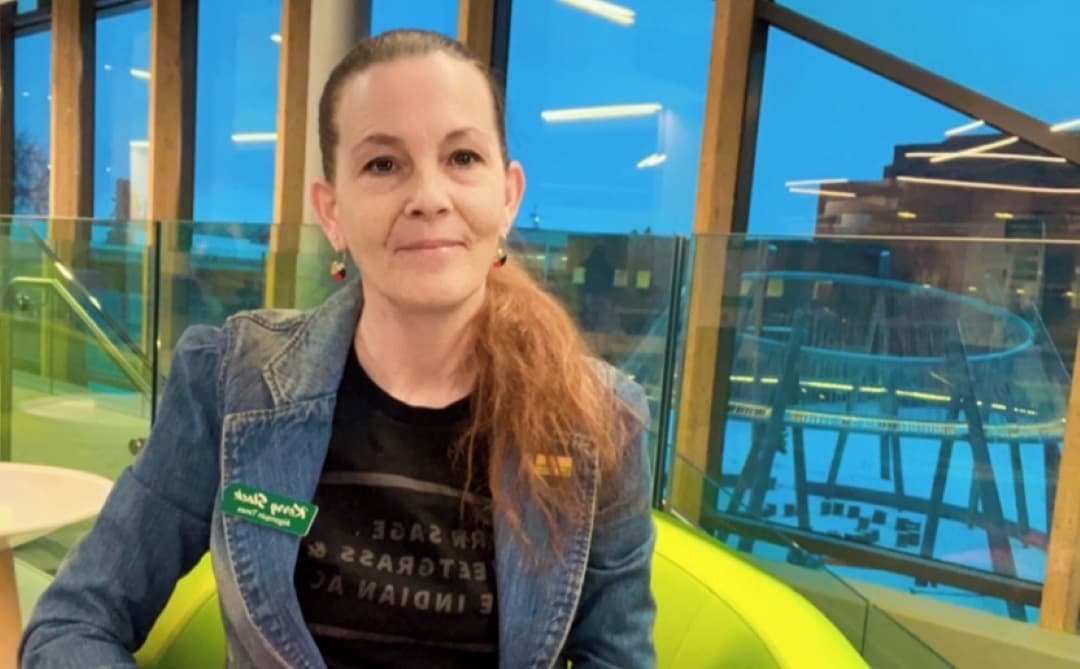
Algonquin Times writer Kerry Slack

If you’ve been to an emergency room lately you know how long the wait can be. We put off taking care of ourselves in certain situations because we’re aware of the wait we face walking through those doors — there for hours, completely uncomfortable, in a cold waiting room.

The struggle to find a medical professional here in Canada is real. The pandemic has negatively impacted the intensity of the issue. Long wait times and doctor and nurse shortages have probably frustrated us all at some point over the past three years.

A few nights back, while volunteering on campus, I got to talk to a young lady from Peru.

Ximena Rodriguez, a certified orthodontist in Peru, came to Canada with high hopes for a new future and is working at a coffee shop as a barista while she pursues her degree in business at Algonquin College. How does this make sense?

Especially given that our Woodroffe campus has dental services, performed by dental students. The dental clinic always has a waiting list. In fact, I’ve been there myself.

This is in no way a criticism of our dental students and program. They are fantastic.

My point is, people who are willing to let a student stick a sharp instrument in their mouths to save money, are just as likely to trust Dr. Rodriguez from Peru.

I didn’t get a chance to hear her full story but none of this made very much sense, so I set off to learn what the qualifications and hurdles are for an international degree to be recognized in Canada.

According to health lawyer Tracey Tremayne-Lloyd in an article she wrote for the Medical Post, at least 3,500 Canadians go abroad to study in medical schools in the U.S., U.K., Ireland, Australia, New Zealand and Switzerland. Most would like to return to Canada, but to practise here, they must usually complete a two-year residency.

Currently, 13,000 foreign-trained physicians are living in Canada but are unable to practise medicine.

There are many hurdles to obtaining a license, such as getting the required 12 months of Canadian experience, which is challenging, as the longer one is not practising, the harder it becomes to be picked up for a residency position.

Another big hurdle is qualifying exams and the wait time involved with those.

In Canada, over 15 per cent of doctors are over age 65.

Eight out of 10 people I talked to don’t even have a family doctor.

According to the Government of Canada’s website: Regulated occupations require a licence or certificate to work in Canada.

  • The
    authority for most regulated occupations in Canada lies with provincial
    and territorial governments. They often delegate this authority to
    regulatory authorities in their jurisdiction.
  • Regulatory
    authorities set the requirements to obtain certification or licensure as a
    condition of employment.

Examples of regulated occupations include:

  • Accountant
  • Architect
  • Carpenter
  • Physician
  • Electrician
  • Nurse
  • Teacher
  • Welders

We need these professionals now more than ever.

Where are the bridge programs? One would presume with the need for medical professionals being what it is in Ontario, we could and should be offering space for this.

Why are we not bridging that gap in Ontario and in turn helping ourselves?

In January, the College of Physicians and Surgeons of Alberta announced a five-year pilot program to fast-track licensing for some international medical graduates.

The pilot condenses the assessment for newcomers with training that is comparable with a Canadian university education.

Some of these graduates are working in jobs elsewhere on the health system, filling roles like receptionists or technicians but others are working minimum wage jobs while supporting a family and trying to save up for required exams or training.

The path to getting certified to work here is not clear which is frustrating to willing, studious, hard-working people.

Some got completely discouraged, like Rodriguez.

My thoughts have drifted back to her several times since we met.

My hope for her is that she finds herself on the path to happiness again, and that these obstacles are leading to her life’s purpose.

Whatever that may be.

Algonquin Times podcast

Stay Informed

Sign up for our newsletter

Subscribe

* indicates required