Firefighting students at Algonquin College light the way in community safety event
Stop, drop and listen.
Did you know that fireworks can hit 150 decibels when exploding — loud enough to cause immediate ear damage if you’re too close?
Or that Narcan is available for free at pharmacies? That’s good to know in case you ever face the nightmare of finding someone unresponsive from an opioid overdose.
But wait — would you recognize the signs of a potential opioid overdose if you saw them?
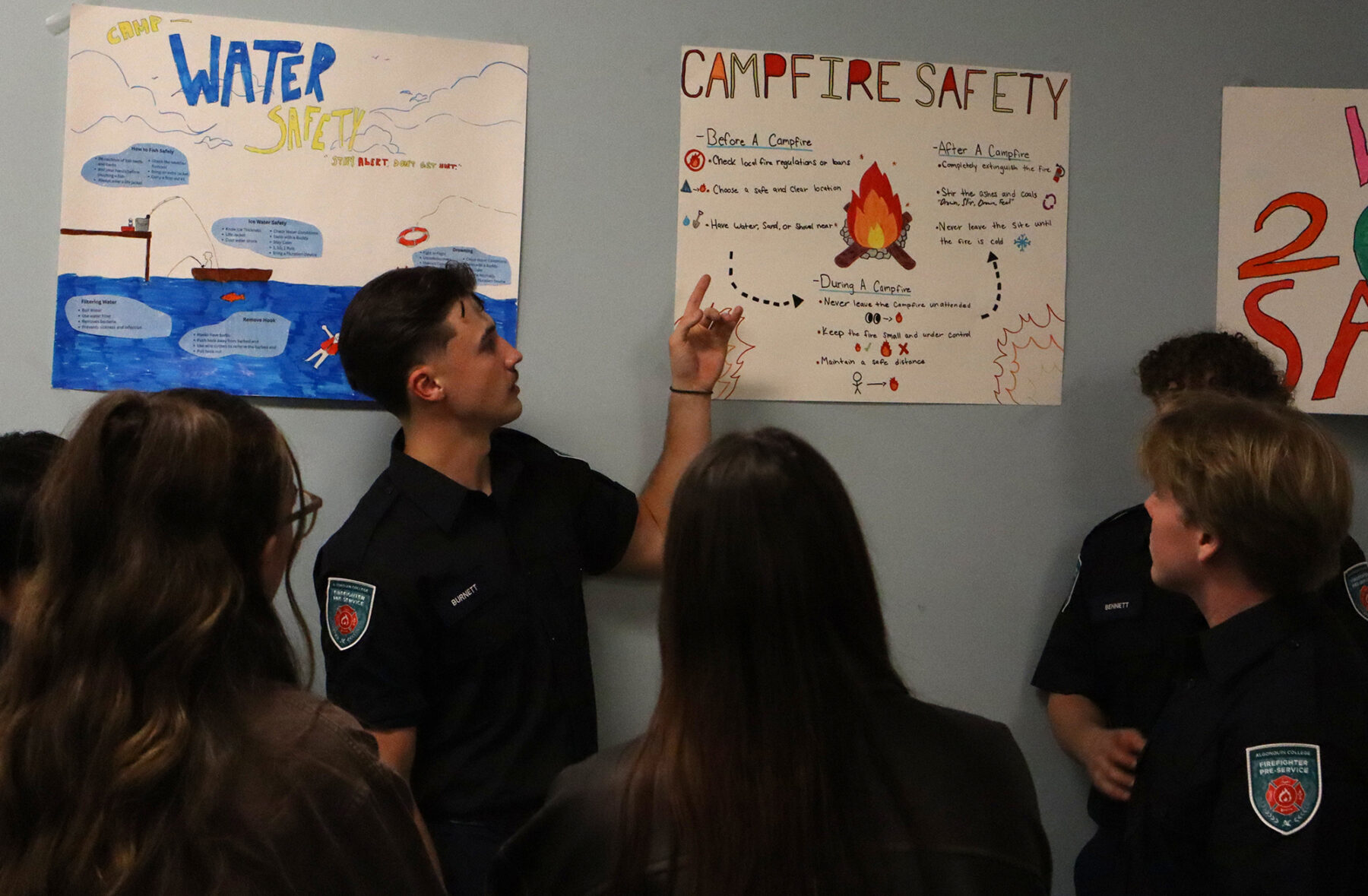
If you attended the Community Risk Reduction Show, hosted by pre-service firefighter education and training students on Nov. 3, you’d know all of this and much more.
The educational event was open to the public and saw a variety of interactive booths covering everything from forest fire prevention and lithium-ion battery safety, to mental health awareness among first responders.
Participants could even win a piece of candy by answering questions about what people learned throughout the night, which transformed the informative event into a safety trivia showdown.

“Lithium-ion batteries are actually the most common rechargeable batteries found in Canadian households,” said Ben Gates, a student at the battery safety booth. “They’re a very dangerous technology because they are so easily damaged by things such as water.”
Although it may not sound like much, lithium-ion batteries can burn at 1,000 degrees Celsius and they are the leading cause of dump fires in North America.
Maybe you already knew that. But how’s your knowledge of personal protective equipment (PPE) in sports?
“It’s better to have more gear than not enough,” said Andy Lighte-blais, one of the students at the PPE booth. “And if you didn’t know, hockey helmets actually have an expiry date on them.”
Sure enough, a small sticker on the back of the helmets will tell you when the trusty bucket should be set aside for good. The helmet on display showed it was only good until 2029.
At another booth, students gave an example of a 72-hour emergency safety kit for natural disasters. Essential items such as water filters, portable batteries and non-perishable food were on the list. But there were other items people might not have expected, like a portable radio.

“You don’t know if the phone lines might go down,” said student Liam Suzuki. “You still need to establish communication. That’s the key.”
And that’s not all. Suzuki and his team also recommended reflective vests for emergencies like ice storms.
“It’s a low visibility situation and you want to be seen so you don’t get hit by a car,” said Suzuki.
The event was a mixture of important safety facts and interactive learning. And while some topics such as fire hazards and addiction were frightening to hear about, the warm atmosphere created by the students transformed safety education into something welcoming to those who attended.
It was more than just teaching others how to stay safe. For the future firefighters, this was a chance to practise what community service is all about.