Demonstrators demand transparency from Algonquin College after more program cuts
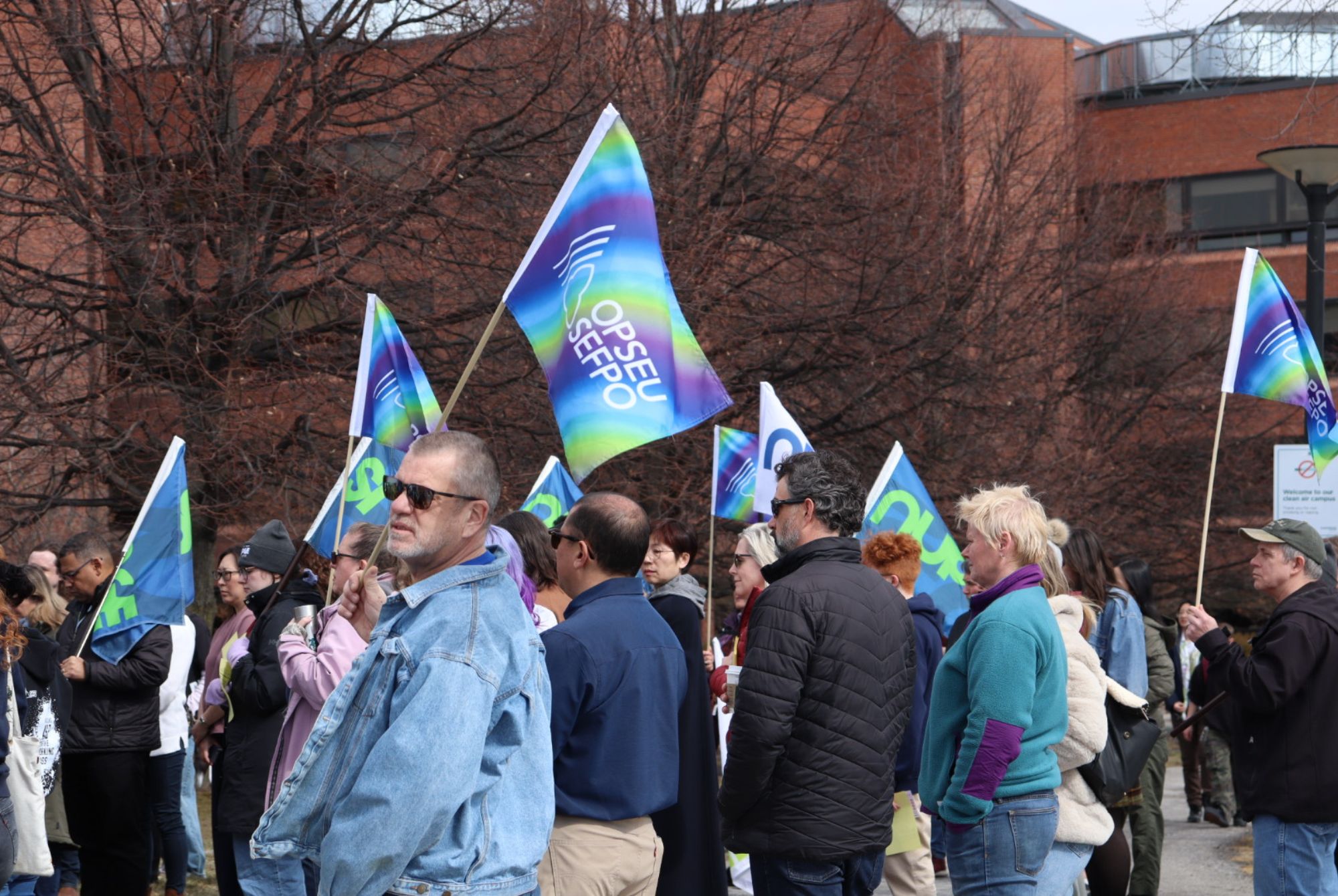
Over 100 demonstrators gathered on Woodroffe Avenue on March 10 demanding more explanations for recent program cuts at Algonquin College.
The rally was sparked by the Board of Governors’ March 2 vote to suspend 30 college programs starting in the fall. These cuts will affect programs such as law clerk, horticulture, music industry arts and journalism.
According to Tracy Henderson, president of the Ontario Public Service Employees Union (OPSEU) Local 415, which represents educators, the ultimate goal of the Show Your Work rally was to draw attention to the college’s lack of transparency regarding major decision-making processes, such as program cuts.
“Show the public the efficiency and accountability report and show us numbers,” she said. “Show your work. We expect it of our students; we cannot ask anything of our students we wouldn’t expect of ourselves.”
These efficiency and accountability reports are expected to include important information such as the college’s sources of funding, revenue, potential liabilities, and student enrolment numbers.

Students who attended the rally wanted to bring attention to the lack of accountability from the college’s Board of Governors.
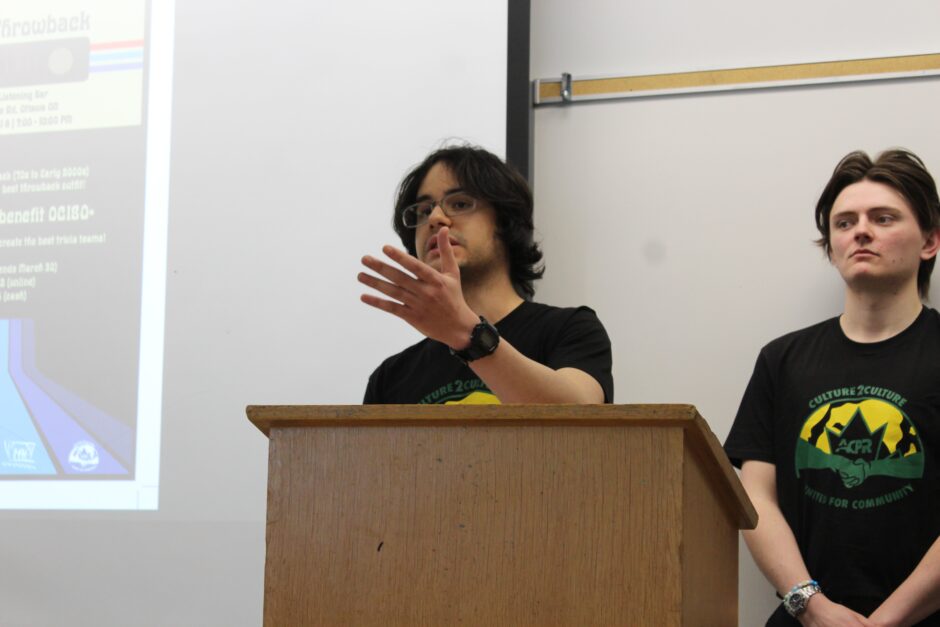
Dustin Larocque, a Level 2 illustration and concept art student and class representative, attended the rally to spread awareness about the cuts.
“Part of what I was trying to do personally as a class rep for my class was to get answers for my peers who were all very confused and scared of what’s happening,” Larocque said. “And even after cuts were made, we still haven’t gotten a single explanation. And so, when I found out about this rally, that is calling for exactly what we, what I, was looking for. “

Sydney Sheftel, also a Level 2 illustration and concept art student, was frustrated with the college’s communication.
“It’s just so disheartening and so disappointing that the school is so unwilling and deliberately doesn’t want to listen,” Sheftel said. “It’s just very frustrating, and hopefully there’s something that we can do by making people aware of this.”
At the rally, speakers urged the college to provide more evidence regarding these cuts.
Colin Mills, co-ordinator of the music industry arts program, shared his concerns about the closure of the program. His program has a 92 per cent employment rate and an 82 per cent graduation rate, according to Mills.
“Those are numbers of a hulky quarter. Those are numbers of a program delivering for its students and employers,” he said. “And yet, in the same budget meeting, we heard a new term we’d never heard before: negative contribution. Hey, look at this, suddenly, a program that had been long considered healthy was being framed as a problem. Cite your sources.”

Henderson also publicly called for the college’s transparency at the rally.
“Major academic changes and decisions should not be made behind closed doors, no,” she said. “They should include students, employees and the community that they are here to serve.”
Algonquin College has attributed a lot of these cuts to the lack of international student tuition. In January 2024, the federal government implemented new caps on international student study permits.
Recently, the Ontario government announced a $6.4-billion investment over the next four years for post-secondary institutions. The province also ended a freeze on tuition fees.
Henderson pointed to the college’s lack of funding in an interview before the rally.
“The post-secondary system in Ontario is dead last in Canada. We have been chronically underfunded for decades,” she said. “As a result, we have had to rely on other creative funding solutions. It’s created overreliance on international tuition, and that makes us really vulnerable to policy changes like we see with IRCC decisions.”
The IRCC, or Immigration, Refugees and Citizenship Canada, is the federal department responsible for issuing study and work permits, as well as other travel, entry and status documents.
The Algonquin Times asked Algonquin College for comment but didn’t hear back before the publishing deadline.