
Algonquin College students are spending strategically on their delivery and takeout orders

Nicolas Paquette, a commerce student at Algonquin, orders takeout five days a week because it’s cheaper than the grocery store.
A recent report by Restaurants Canada, the lobby group representing Canada’s restaurant industry, shows that 75 per cent of Canadians are eating out less due to the rising cost of living.
For those aged 18-34, that stat rises to 81 per cent. However, this demographic leads the pack for ordering delivery, with 79 per cent of Gen Z having ordered takeout in the past 6 months compared to only 49 per cent for baby boomers.
“I’ll buy one meal for the day. So I’ll buy a pizza for the day or I’ll buy a calorie-heavy meal, and then eat that throughout the day,” says Paquette
Paquette mainly orders from fast food joints with calorie-heavy options such as McDonald’s, Milano’s, Pizza Pizza, and A&W.
“Gen Z would have come up, many of them, through the pandemic, where we saw this big shift towards takeout and away from on-premises dining,” says Milena Stanoeva, the senior director of public affairs and communications for Restaurants Canada.
“Whereas baby boomers would have had many adult years of on-premises dining. For them, it’s a bit more of a habit to go to the restaurant,” she says.
Stanoeva says that, despite ordering in more often, young people are still spending strategically to get the best bang for their buck when they order from restaurants.
“A lot of them are forgoing alcohol, for example,” she says.
“Or they might be going for snacks instead of full meals,” she adds, alluding to another stat from the report, which indicates that Gen Z is most likely to forego a meal for a snack instead.

Fiona Fox, a computer programming student at Algonquin, is one of those people. She says that spending on restaurants is a luxury she’s cutting back on.
“It’s challenging to eat out as much if we’re spending so much on groceries and rent and all those other things,” says Fox.
Fox estimates that she orders in maybe once a month.
When she does, she tries to order more economical options while also sticking to the basics.
“We don’t drink,” she says, referring to herself and her partner, “so we just stick to water. And we don’t do dessert either.”
“I’m a light eater, anyway,” she adds.
Arianna Cuglietta, an early learning and community development student, is on a $3,500 meal plan with residence, so she feels compelled to use that for restaurant meals.
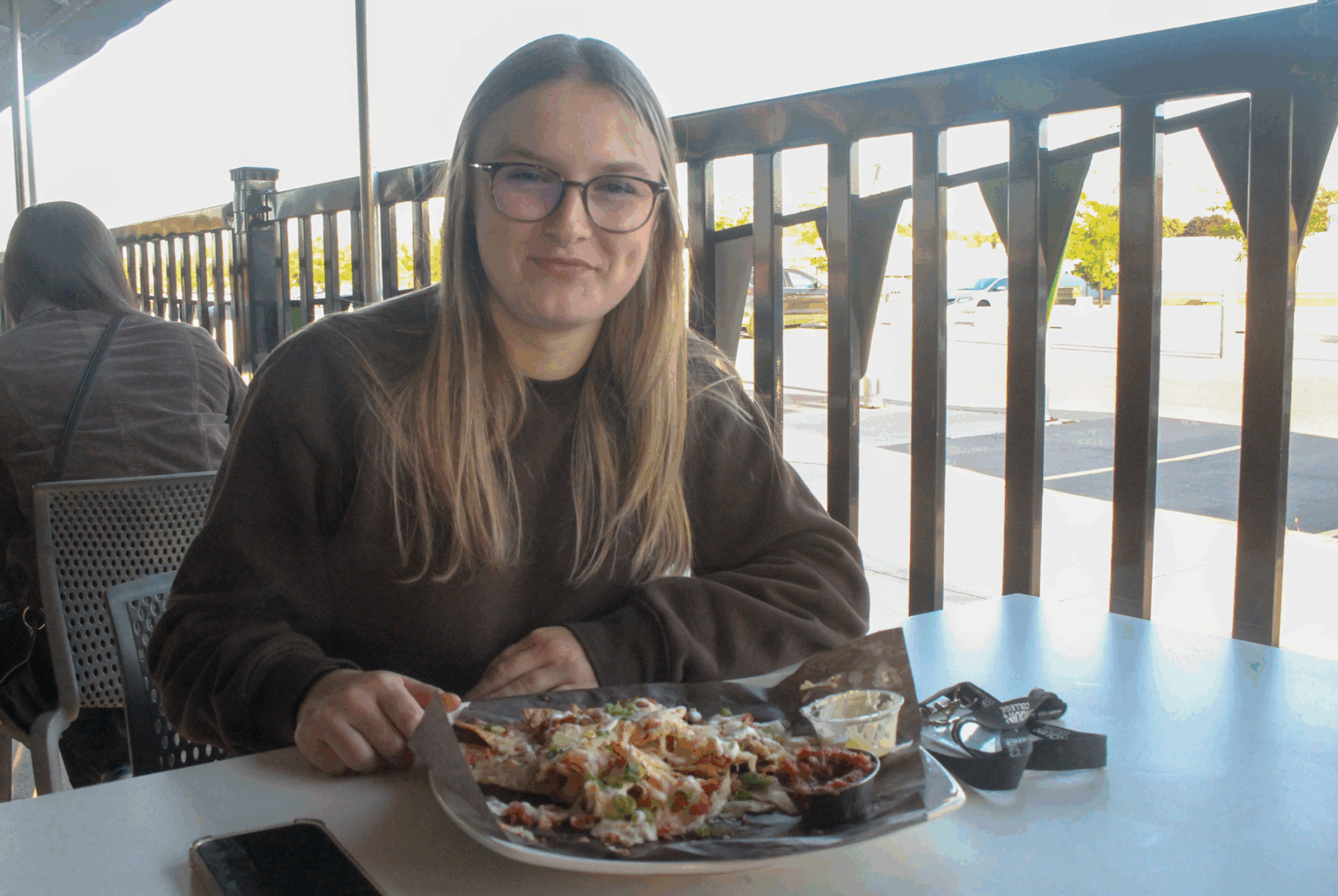
“I’m not working right now, in college with a full course load, so whenever I’m not working, I’m not eating out as much because I don’t have the money,” says Cuglietta.
“These nachos are actually $20,” she says, referring to the plate of Wolves Den nachos in front of her.
“Who can afford that when they’re not working? Sure, I paid for the meal plan, but the meal plan has a maximum.”
Cuglietta admits that she most often tries to order the cheaper and less substantial menu items from the Wolves Den, such as spinach dip, which costs $10.99, to avoid burning through her meal plan.
Stanoeva says that in the current climate of food inflation, all prepared food should be sold untaxed.
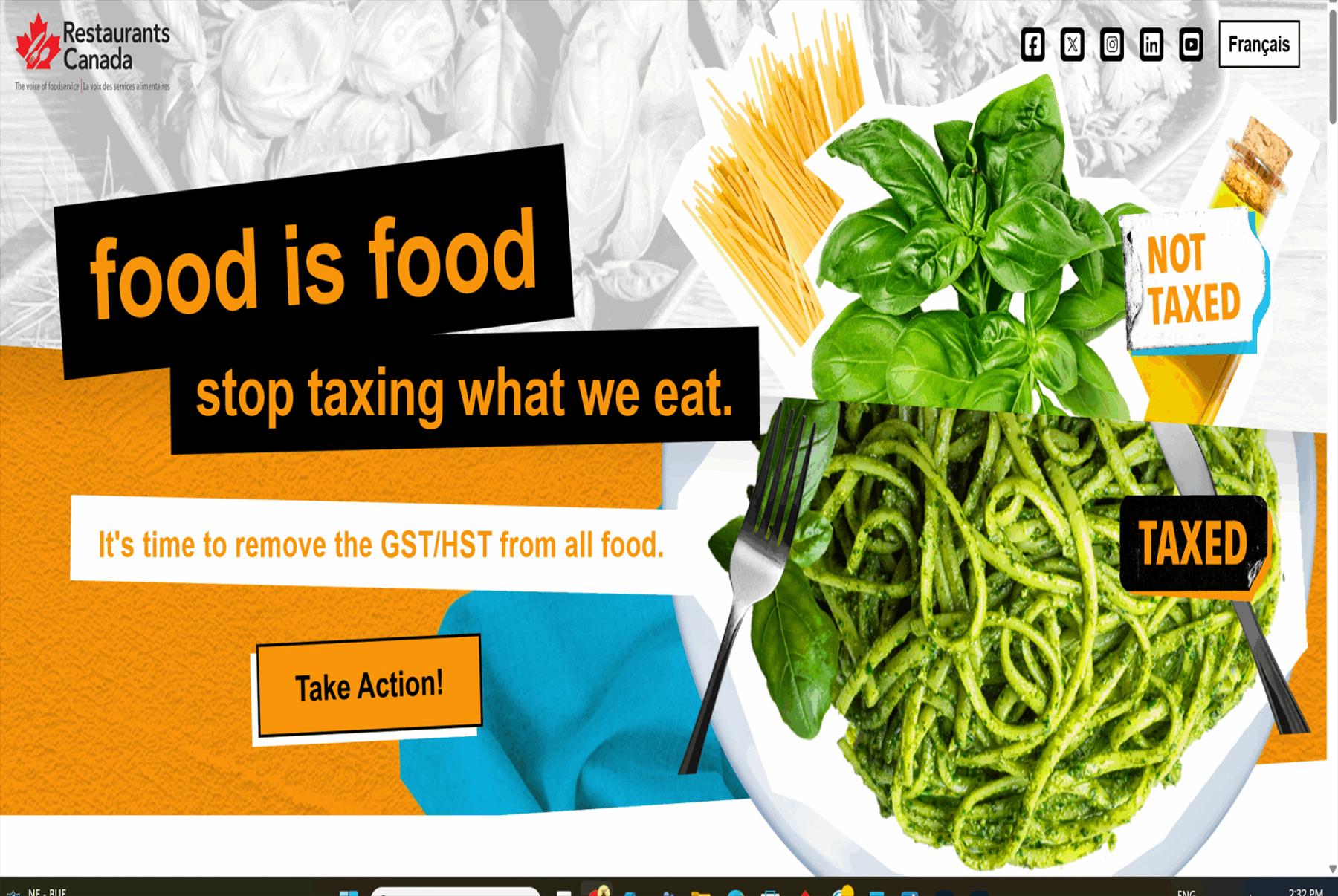
She points out that during the temporary GST holiday earlier this year, Canadians spent 8.6 per cent more on restaurants, indicating that people would go out and order in more often if costs were lower.
Besides the fact that it would lower costs for cash-strapped young people, it could also help create more of the food service jobs that young people, especially students, often work.
“During the tax holiday, we saw the creation of an additional 24,000 restaurant jobs,” says Stanoeva.
“This is during the January-February period, when typically restaurants are laying off staff because, after the holiday rush, it’s the quietest time of the year and sales tend to be lower,” she adds.
“So, to see a 24,000 increase, which is more than the entire 12 months prior, is really telling.”