Convocation Day at Algonquin College

The following is an excerpt from the President Claude Brulé’s October 28 address at the 2020 Convocation; learn more about Algonquin College first virtual convocation here. As your President, I am both humbled and honoured to have this opportunity to celebrate your resilience and success. Amidst the events reshaping our global reality, be they the […]

The following is an excerpt from the President Claude Brulé’s October 28 address at the 2020 Convocation; learn more about Algonquin College first virtual convocation here.

As your President, I am both humbled and honoured to have this opportunity to celebrate your resilience and success.

Amidst the events reshaping our global reality, be they the pandemic, climate change, the fight for social justice and equality, or automation and the world of Artificial Intelligence, we come together to celebrate your incredible achievement, which is all the more remarkable given these extraordinary times.

In this age of great uncertainty, I can be certain of one thing…. The steadfast determination you have displayed will serve you well in the new environment being shaped so rapidly before us.

The world you are entering, upon graduation, looks nothing like the world from even a year ago. Yet, along with the challenges that lay ahead, the future holds promise and opportunities the likes of which have not been presented to any generation for a long time.

The door is open for you to really change the world, and not in a clichéd sense, but in real and tangible ways, emboldened with fresh ideas and new perspectives.

It also stands ready for your generation’s champions of social justice, to address issues of inequity, and the lack of diversity and inclusion that recent events have brought to the forefront in ways that can no longer be ignored.

Whatever your path forward, you will have the opportunity to help lead a true transformation –

to recalibrate the socio-economic inequities for Black, Indigenous and People of Colour on a scale never seen before. And to reshape the modern workforce and break new ground in your chosen field.

Embracing our community will hopefully be one of the enduring legacies to emerge from these times, and you will be the ones to pass this on to the next generation.

Education, in its many forms, is a significant touchstone. It helps form the solid ground beneath our feet. It allows us to adapt, pivot and anticipate rather than merely react when change inevitably challenges our lives.

The knowledge and skills you have acquired here at Algonquin College are now part of your “tool kit”, helping to “future-proof” your career.

I want to borrow now from my colleague, Ron (Deganadus) McLester, Algonquin’s Vice President – Truth, Reconciliation & Indigenization. He often uses the metaphor of arrows in a

quiver. An arrow on its own will snap easily, however when they are bundled together, they are strong and resilient. Having many arrows in your quiver provides strength, and will enhance your confidence when faced with the many challenges set to come your way.

So … going forward … be inspired to learn new things and develop new skills. Fill your quiver with more arrows and make your mark.

Everything of value starts with an idea. What ideas are you preparing to share with the world? What script are you about to write?

It’s no secret that I am a huge fan of the author, Neil Gaiman, and I’d like to borrow what I think is an appropriate quote from his book, Art Matters: “It is easy to pretend that nobody can change anything, that society is huge and the individual is less than nothing. But the truth is, individuals make the future, and they do it by imagining that things can be different.”

So, when you think about your future, where does your imagination take you? The world needs your creativity, your energy and your resiliency more than ever before. It needs you to dream big dreams, and to go forward and be fearless.

Be unafraid to fail and to learn from your missteps. To borrow again from Neil Gaiman: “Now go, and make interesting mistakes…Make glorious and fantastic mistakes. Break rules. Leave the world more interesting for you being here.” History is filled with the stories of entrepreneurs and leaders in every field whose ideas met with initial dismissal, failure, and seemingly insurmountable odds before they achieved success.

So let opportunity be what defines you. I know you already possess the determination, imagination and innovative spirit to overcome any obstacles in your path.


Taking care of one’s own mental health should be top priority

The Fall term has always been a time of excitement – but also of increased responsibility and stress within our College community. Amidst the pandemic, I know many of us are struggling with additional feelings of anxiety and isolation this year. That’s why I call on each and every one of you to make mental […]

The Fall term has always been a time of excitement – but also of increased responsibility and stress within our College community. Amidst the pandemic, I know many of us are struggling with additional feelings of anxiety and isolation this year.

That’s why I call on each and every one of you to make mental health your top priority.

Six years ago, the Mental Health Commission of Canada released a report highlighting how post-secondary student populations across the country are at a higher risk of mental health issues.

The report detailed how half of all lifetime cases of diagnosable mental illness start by 14 years-of-age, and 75 per cent by the age of 24. Half of all Canadians will have, or will have had, a mental illness by the age of 40.

In the intervening years since that report, Algonquin College has taken many steps to enhance its support networks and resources to help our learners and employees look after their mental health.

That work continues with an even greater sense of purpose today, as we now face new personal challenges brought upon us by the COVID-19 pandemic. With a return to normal still on the horizon, taking care of ourselves has become even more critical.

Algonquin College takes pride in being an inclusive, caring community. We strive each day to support and respect one another – to show kindness and empathy. By doing this, we break down the old and harmful stigmas around mental health.

Building awareness is crucial, and I encourage every learner and employee to take the time to reflect on how they are feeling and coping during these unprecedented times. Part of being aware is accepting that it is okay to be vulnerable. Asking for help is a sign of strength not weakness. Never hesitate to reach out when in need. In addition to the resources referenced above, there are also many apps and online tools available to you, and excellent resources offered by Ottawa Public Health.

One of the recent developments in our continuing efforts around mental health is the expanded partnership Algonquin College has with The Royal. This summer, thanks to a $250,000 contribution from RBC Foundation, more of our learners in need will be able to meet online with a psychiatrist from The Royal and get the support they need through  a customized treatment plan.

We also offer a complete range of counselling services and general supports in an effort to cater to the individual needs of every learner, understanding the broad range of challenges and lived experiences across our student population. These services are provided by professionals who can accommodate you virtually from the comfort of your own home.

Like everyone, I am looking forward to the time when we can all safely be together again, enjoying the vibrancy and energy of being on campus. Until then, please know you are not alone. We want you to turn your dreams into lifelong success and are committed to helping you on the journey.

New alt-rock band climbing Ottawa’s live music ladder

AC radio broadcasting alum Beau Santana joined a local band earlier this year. Now they're anticipating the release of their first single.
Photo: Liam Murphy
Beau Santana hyping up the crowd at a House of TARG show on Aug. 7, 2025.

Ottawa-based alt-rock band, Broken By Friday, is making a name for themselves in the live music scene and can hardly wait to release their first single, Empty Little Jars.

Broken By Friday formed in the beginning of 2025, with lead singer Beau Santana joining over the summer. The group’s music combines elements of punk, prog rock, classic rock and thrash metal.

Balancing a band while in school with a side job leaves very little room for deep, intensive recording sessions. Most of the band’s time gets put towards practising for gigs. Still, they try to make sure they bring new originals and covers to their shows.

“We are the pioneers of our generation, of our stage,” said Santana, an Algonquin College radio broadcasting alumni.

Beau Santana hyping up the crowd at a House of TARG show on Aug. 7, 2025.
Beau Santana hyping up the crowd at a House of TARG show on Aug. 7, 2025. Photo credit: Liam Murphy

Santana works in construction during the day, and at night, he brings electric energy to live venues across the city. At every show, he rocks a bold makeup look with a gothic, clown-inspired flair that makes him impossible to ignore.

“I don’t think I’ve had a night where it hasn’t been sweated off completely,” Santana said. “I’m not one for the fancy pants products. I’d rather let the makeup tell a story of what happened, like a footprint can tell you where it’s been.”

Beau Santana pictured with a fan at the Avant-Garde Bar on [date].
Beau Santana pictured with a fan at the Avant-Garde Bar on Oct. 26, 2025. Photo credit: Gabriel McAlpine

Kuba Kaczorek, Broken By Friday’s former drummer and current bassist, writes solo music and practises game development. He has spent the last two months recovering from a leg injury he sustained at a Korn and Gojira concert, an accident that now has him walking with a cane.

“I was in the mosh pit during Gojira, and someone pushed me,” he said. “I tried to land on my leg and ‘snap.’ Next thing I know, two good Samaritans were dragging me over to the security.”

“I got to watch the rest of Gojira from the back of the venue as we tried to figure out the paramedic situation,” Kaczorek said. “I didn’t even see a single song from Korn.”

Broken by Friday playing a show at Berlin Night Club for an event hosted by Frabjous on [date].
Broken by Friday playing a show at Berlin Night Club for an event hosted by Frabjous on Aug. 21, 2025.

Sami Zeng, the band’s lead guitarist and writer of Empty Little Jars, has been surfing the job market since graduating from Carleton University this year with a bachelor of arts in psychology and a minor in design.

“I was working at Tim Hortons over the summer, but that, plus the biweekly shows we were doing, killed my body,” Zeng said.

Zeng also pursues photography recreationally and enjoys attending concerts.

The band has recently resumed practice after taking a short break following their last gig in late October. They have a show coming up at the Rainbow Bistro with Four Eyed Muscle Man and Juventud on Dec. 20, and a New Year’s show on Jan. 2 at LIVE! on Elgin with Shirley and The Burningtree, if your wallet isn’t broken by Christmas.

Broken By Friday thrives on the rush of performing live, treating every gig like a party while helping turn Ottawa into a band city. Each member brings a different musical background to the group. With several ideas in the works and some still on the back burner, the band loves writing together. When they find a break between shows, Broken By Friday plans on returning to the studio to bring some unfinished ideas to life and build on their release of Empty Little Jars.

Community efforts step up in tackling Ottawa’s textile waste

Local organizations in are reducing textile waste by giving unwanted fabrics a second life as the volume of textile waste continues to grow
Photo: Hau Ting Ng
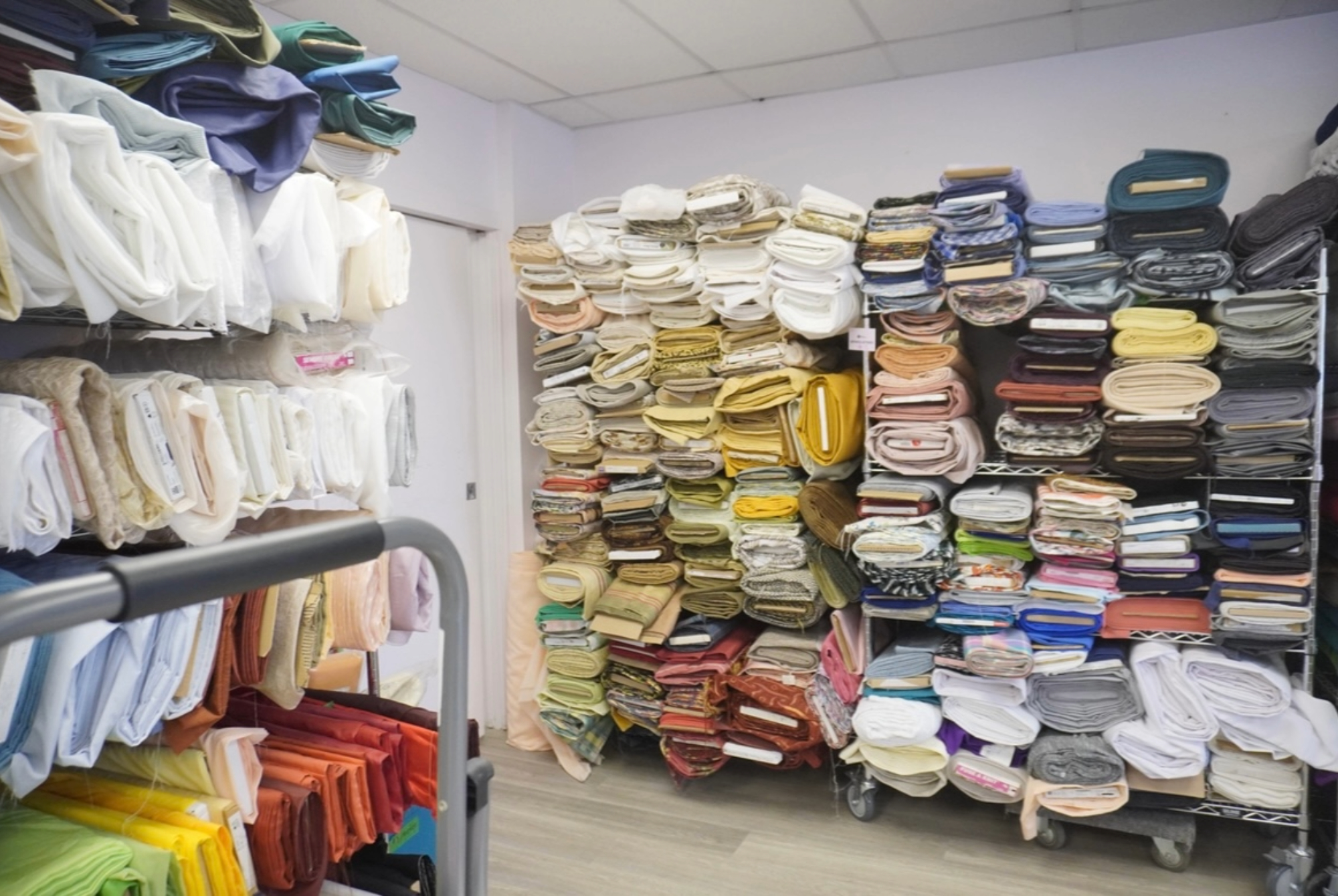
EcoEquitable is a registered charity with a dual purpose of textile waste reduction and women’s empowerment that intersect through the art of sewing.

Textiles are the fifth-largest category of plastic waste in Canada, with most ending up in landfills. Approximately 98 per cent of plastic textile waste ends up in landfills, according to Environment and Climate Change Canada.

EcoEquitable, a registered charity dedicated to reducing textile waste, collects fabric and donations from Ottawa for reuse in sewing projects. They also promote women’s empowerment through sewing.

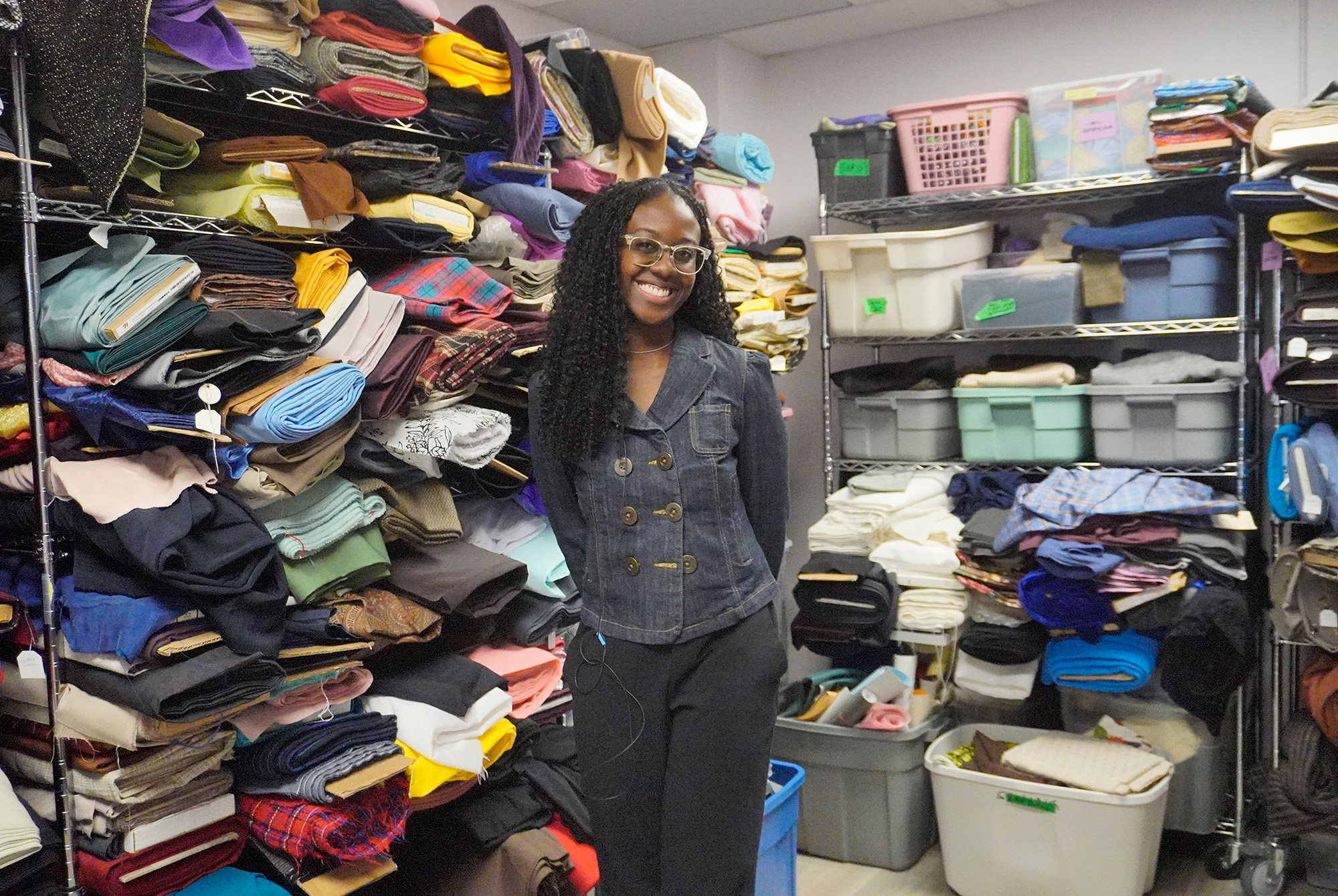
Nana Adu, the communications coordinator at EcoEquitable, said textile waste is a global problem. Around 290 kilotons of synthetic textile products were purchased in Canada in 2020. In that same year, around 280 kilotons were discarded as waste, according to Statistics Canada’s Physical Flow Account for Plastic Material.

Textile waste is defined as any fabric-based material, such as clothing, shoes, upholstery, and other items.

According to the City of Ottawa, between four and six per cent of residential garbage sent to landfills is textiles. This amounts to over 410 tonnes of textile waste annually. EcoEquitable received over 10,000 pounds of donated fabric from Ottawa in 2024, which Adu said is an increase in the amount of fabric over the years.

Nana Adu, the communications coordinator at EcoEquitable, said textile waste is a global problem.
Nana Adu, the communications coordinator at EcoEquitable, said textile waste is a global problem. Photo credit: Hau Ting Ng

“When you look at the landfills, so many of the textiles didn’t need to end up there. What we do here is make sure those still usable get a second life,” Adu said.

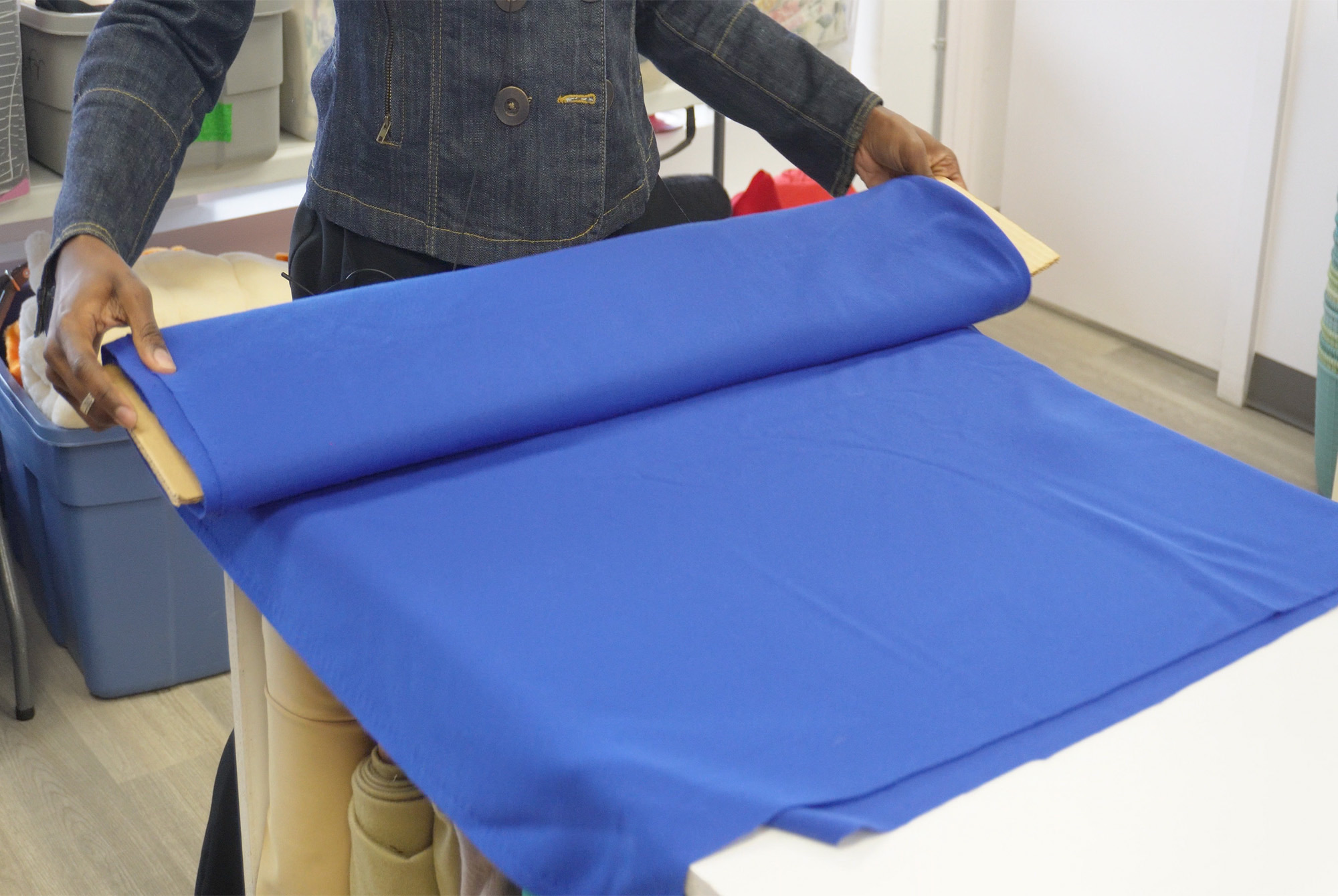
When people come to donate fabric, after a quick check, the donations are weighed and stored. They are then handed off to volunteers who spend the week processing them. Rolling fabric onto bolts, colouring-coding buttons, tagging pieces and preparing everything in the back-of-house.

By recycling and reusing fabrics, EcoEquitable gives them a second life as pouches, bags, rompers, and more. They recently finished 500 tote bags made by the women in the EcoEquitable program.

“We pass it back to the community at an affordable price, so it stays out of the landfill and can be used more intentionally by people who care about being even a little more eco-conscious,” Adu said.

Adu said the rise in fabric donations is encouraging, but it also creates pressure on the organization. As a non-profit, EcoEquitable is often stretched for space, resources and storage capacity needed to process the rising volume of materials.

“The more people are aware, the more people are going to come in and donate, but if we cannot accommodate them, then that’s a problem,” Adu said. “We always find a way to make it work, but it’s still a constraint.”

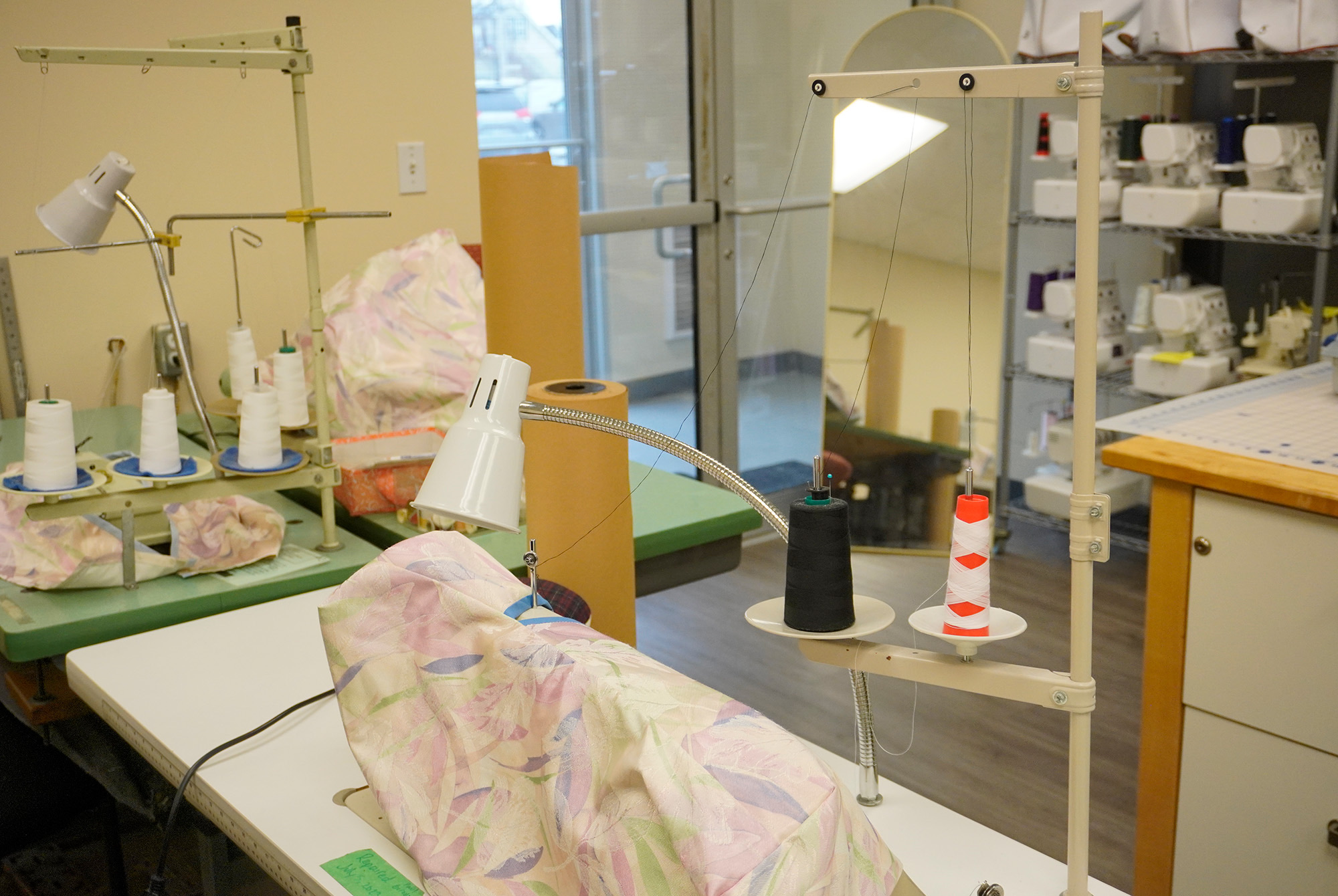
EcoEquitable offers sewing classes that help women build skills, confidence and community through fabric reuse.
EcoEquitable offers sewing classes that help women build skills, confidence and community through fabric reuse. Photo credit: Hau Ting Ng

Funding and grants are the primary sources of revenue for most non-profit organizations. Vivian Nguyen, an associate professor at the Institute of Environmental and Interdisciplinary Science at Carleton University, said funding is always a limiting factor for community-based organizations.

“A lot of the provincial governments and the federal government were saying resources are limited, especially when it comes to the environment as well,” Nguyen said.

“Right now, the economy is kind of the big thing. So they’re saying there needs to be more collaboration between the government and local organizations that have similar interests to get to the same goals.”

In March, the Canadian government allocated $662,161 to Fashion Takes Action through the Canadian Circular Textile Consortium. The funding supports collaboration among experts, industry, non-profits and Canadians, helping to reduce resource duplication and foster partnerships toward a circular textile economy in Canada.

Nguyen said local organizations are key champions who can push for change, fill gaps left by limited government resources and play a vital, yet often under-recognized role in advancing environmental stewardship. Nguyen mentioned that policy decisions and funding are closely linked.

“It comes down to where the money is, because policy will decide what programs are running. It’ll choose where money will be put into and what priorities the funds will go to,” Nguyen said.

“If policy decisions don’t align with an organization’s mandate, it’s going to affect their funding or drivers.”

EcoEquitable is a registered charity with a dual purpose of textile waste reduction and women’s empowerment that intersect through the art of sewing.
EcoEquitable is a registered charity with a dual purpose of textile waste reduction and women’s empowerment that intersect through the art of sewing. Photo credit: Hau Ting Ng

Local organizations are trying to address the broader textile waste problem, but public awareness remains insufficient, even as people are becoming more eco-conscious.

An Ontario-based textile waste study published on ScienceDirect found that most textiles tossed out are still usable — about a quarter are in good condition, and nearly 40 per cent could be reused with only minor repairs or cleaning.

Sixty-five per cent of textile waste is considered reusable and is categorized through grades A to F. Grades A to D are given for waste suitable for reuse but may require repair or refurbishment. Grade E and F, on the other hand, need recycling, contamination treatment, and end-of-life processing.

Data source from Ontario textile waste study published on ScienceDirect. Chart recreated by Hau Ting Ng.
Data source from Ontario textile waste study published on ScienceDirect. Chart recreated by Hau Ting Ng. Photo credit: Hau Ting Ng

Reusing fabric by giving it a second life is a common way people handle fabric they no longer need. For example, Mehdi Htite, a student at Algonquin College, cuts unworn clothes into pieces to use as desk wipes.

“If clothes are worn out beyond repair, I cut them into pieces to use as cleaning cloths,” Htite said. “With the economy the way it is, it’s more practical than buying new rags.”

Fabric waste is no longer a hidden environmental issue, and many people are taking action. However, there are still limited options for what to do with clothes they no longer need.

Greetee Mogun, a student at Algonquin College, noted that public awareness of textile waste is still insufficient. For clothes she doesn’t wear often, she stores them in the garage to avoid cluttering her closet. Sometimes, she donates them to people in need instead.

“I think (the) thrift shop is a good way for recycling. Collecting clothes and doing a fundraiser in school could raise more public awareness about the specific issue,” Mogun said.

Adu shows the process of fabric donation, rolling the fabric onto a bolt.
Adu shows the process of fabric donation, rolling the fabric onto a bolt. Photo credit: Hau Ting Ng

Addressing Canada’s textile waste requires coordinated action from organizations, individuals, and the government. Adu said EcoEquitable is allocating resources and time to educating the younger generation for the next couple of years.

“A lot of people want to do better and be more eco-conscious, but if you don’t know where to go or what to do, you can’t take action,” Adu said, “but it all comes down to resources; if people don’t know their options, nothing changes.”

Teddy toss fever: Black Bears win their first game of the season

The Ottawa Black Bears beat the Saskatchewan Rush 11-8 during the annual teddy bear toss game in support of the Salvation Army’s Toy Mountain
Photo: Greg Mason / NLL
Jeff Teat and Rob Helleyer celebrating after a goal being scored

The Ottawa Black Bears beat the Saskatchewan Rush in an 11-8 lacrosse thriller at the Canadian Tire Centre on Dec. 12 during the Black Bears’ annual teddy bear toss game.

The Black Bears came into the game winless after losing their home opener and first game of the season 16-13 to the San Diego Seals on Nov. 29.

The Saskatchewan Rush started the season off hot with a win against the Calgary Roughnecks 16-13 and looked to continue that momentum in the nation’s capital.

Last year, the Black Bears lost in their only matchup against the Rush.

Ottawa-born-and-raised Sam Firth opened the scoring for the Black Bears from a great behind-the-back feed from Jeff Teat. Balls were not falling in Ottawa’s favour, but the offence was running at high speed and cutting through the middle, leading to opportunities across the floor.

On the defensive end, Zach “Teddy Bear” Higgins was a brick wall, stopping all 12 shots in the quarter, and the defence in front of him was staying structurally sound, playing a wall system.

“To start that first quarter like that, definitely gave everybody some confidence, and we kind of carried that throughout the game,” said Higgins.

Connor Kearnan scored the second goal of the game for the Black Bears and the first goal of the second quarter, which led to fans throwing a rain of teddy bears being onto the floor. The annual teddy bear toss game supports the Salvation Army’s Toy Mountain campaign.

Family prepared to toss the teddy bear on the floor.
Family prepared to toss the teddy bear on the floor. Photo credit: Greg Mason / NLL

The stuffed animals boosted the Black Bears into scoring their third goal of the game and almost their fourth after Black Bears head coach Dan MacRae challenged the referee’s crease violation call on Firth’s “air gait” attempt for his second goal of the game to put Ottawa ahead by four.

Saskatchewan forward Will Manns decided that he had had enough of seeing the zero on the scoreboard and netted two unanswered goals and an assist to tie the game at three heading into halftime.

The National Lacrosse League originally made a pit stop in Ottawa back in 2001 with the Ottawa Rebels until 2003. After a period of being inactive, the club relocated to Edmonton in 2005. Fast forward to 2025 — that team has now moved around cities and ended up in Saskatchewan.

That sparked a flame in the lacrosse community in Ottawa, which led to Julien Belair, Thomas Kiazyk and Mathias Houlahan dreaming of becoming NLL players. Now the three play in the NLL and play in Canada’s premier university field lacrosse league, the Canadian University Field Lacrosse Association. Kiazyk plays for the Carleton Ravens, while Belair and Houlahan play for the Ottawa Gee-Gees.

While it’s Houlahan and Belair’s first appearance in Ottawa for the Rush, they did not suit up for the Rush after the first warm-ups. Kiazyk made his second appearance while manning the door and backing up Frank Scigliano.

Sam Firth on ground after a dunk attempt

The third quarter began with four straight from the Rush jumping out 7-3 lead in just the first five minutes of play. But the Black Bears kept clawing away. Rob Helleyer buried a goal midway through the quarter and Larson Sundown followed with another two and a half minutes later. Manns decided that the run for Ottawa ended there, burying his third goal of the game to extend the Rush’s lead to three goals.

Going into the fourth quarter, the score was 8-5 for the Rush.

The fourth quarter opened with the Black Bears on the power play and Teat capitalized on the man-up opportunity. Three minutes later, Teat added another goal to the stat sheet, cutting the lead to just one goal. Teat wasn’t done there, scoring his third straight goal in five minutes to tie the game up at eight.

A great passing play finished by Larson Sundown boosted the lead by one for the Black Bears with just eight minutes remaining. Helleyer tried to extend the lead by two, but after a challenge flag was thrown by Rush head coach Jimmy Quinlan, the goal was overturned.

Teat went on to score his fourth and final goal of the game, to achieve his 500th point in the NLL. He finished the game with four goals and five assists, tallying nine points on the night. Helleyer sealed the deal for the Black Bears scoring the 11th goal of the game to secure his hat-trick, making the score 11-8 which ended up being the final score of the ball game.

“I’ll get a lot of credit for it, but I’ve been playing with a good chunk of these guys for five years now,” said Teat, talking about how he gets the credit but his offensive line mates like Sundown, Helleyer and Reilley O’Connor do all the dirty work for him.

With the game out of reach for the Rush, they decided that fighting was their way of leaving a mark on Ottawa. In the final two minutes of play, there were 50 minutes of penalty minutes assessed, with 38 of those minutes going to the Rush.

“We want to be smart number one, but protect ourselves and protect our teammates. We’re not trying to go out there and jump anybody and if that happens to one of our guys, I just want to make sure that everybody’s sticking up for the guy that’s on the ground. And I thought that that’s exactly what happened,” said MacRae.

The Black Bears hit the road for their next game on Dec. 20 against the Las Vegas Desert Dogs.

Listen: Algonquin Times podcast

Fall 2025, Episode 5: Times journalist Vasuman Ravichandran joins hosts William Barritt and Mickey Banks to discuss his reporting on an Algonquin College professor leading research into energy-positive homes

https://soundcloud.com/user-289492961/algonquin-times-podcast-dec-12-2025?si=b79708550c2243ad9e3bb98c011a563b&utm_source=clipboard&utm_medium=text&utm_campaign=social_sharing

Listen to podcasts and other audio features produced by the Algonquin Times.

From greenhouse to green homes

Algonquin College professor Carolyn Lorimer's latest plan is an energy-positive learning home for architecture students over the summer
Photo: Vasuman Ravichandran
Professor Carolyn Lorimer is back at Algonquin Centre for Construction Excellence.

Algonquin College professor Carolyn Lorimer is spearheading an energy-positive home she believes could redefine affordable, low-carbon construction in Canada after her recent return from cancer treatment.

Earlier this year, Carolyn Lorimer, a professor at the Centre for Construction Excellence, led a research team in designing a first-of-its-kind greenhouse tailored to Canadian conditions. The prototype used an aquaponic system that grows fish and plants together in a self-sustaining loop — one that eliminates the need for fertilizer.

After completing 35 rounds of radiation treatment over the summer, Lorimer is focused on a new challenge: building an energy-positive home that will serve as a hands-on learning lab for architecture students. Construction is expected to begin in the summer of 2026.

Despite being diagnosed with cancer in spring, Lorimer said she couldn’t wait to get moving on her idea.

“Cancer didn’t scare me. It scared those around me more. But what they probably weren’t thinking about was that I had other plans,” Lorimer said.

Her goal is to create a proof of concept that demonstrates how affordable, regenerative, carbon-sequestering homes can be built with technology already available today.

“Concrete is one of the largest emitters of carbon dioxide – and it’s a lousy insulator too,” Lorimer said. “This house will use minimal concrete for those reasons.”

The design incorporates heating systems that, she says, cost a fraction of what most homes rely on.

“The in-ground air tube we bought is about $2,200 and has a lifespan of roughly 50 years,” she said. “Compare that to a furnace, which costs around $10,000 plus all the ducting, and needs to be changed every seven years or so.”

The home is designed not only to reduce energy use but to generate more than it consumes.

“It produces one-and-a-half to two times more renewable energy than the home needs,” Lorimer said. “We’re going to use solar panels and possibly a wind turbine for cloudy, windy days.”

Attached to the home will be a mini-greenhouse roughly the size of a two-car garage, again using an aquaponic system.

“The greenhouse can grow enough organic produce and fish to feed half a dozen people throughout the year,” she said.

The building will be equipped with sensors to monitor internal and external conditions over long periods, creating a data stream for both students and researchers.

Lorimer says the project brings together technologies already tested internationally but slow to take hold in Canada.

“These solutions are being used around the world,” she said. “They just haven’t been adopted here on a large scale, largely because the construction industry has resisted change in order to keep selling old technology.”

Christmas begins with the 14th annual tree lighting celebration

Santa, selfies and lights bring back Algonquin's holiday magic

Algonquin College ushered in the holiday season on Dec. 1 with its 14th annual tree-lighting celebration, drawing students, staff and families.

Held from 3 p.m. to 6 p.m. in the Student Commons, representatives from Student Services and the Algonquin Students’ Association highlighted the long-standing partnership between the two groups, noting that the tree-lighting has become a beloved tradition on campus.

Vice-President of student services Krista Pearson thanked the Students’ Association, volunteers, staff teams and community partners who made the event possible.

“Our college community is incredibly diverse, and events like this remind us of the importance of togetherness and belonging,” Pearson said.

Once the formal remarks wrapped up, organizers invited the crowd to join in on the countdown.

Voices rang through the building before the tree burst into light, met with applause and cheers.

Santa smiles as the annual christmas tree is brought to life in the E building
Santa smiles as the annual Christmas tree is brought to life.

The celebration then shifted into full swing as attendees lined up for photos with Santa, and of course, a chance to pet his special helper, Ollie.

Ollie, Santas secret workers standing ans looking at a camera for a picture
Santa's secret worker Ollie posing for pictures.

As Santa asked the boys and girls what they wanted for Christmas, staff guided others to the treat table. There, the Students’ Association had hot chocolate, cookies, brownies, cupcakes and mini candy canes.

Among the first to take part were second-year child and youth care students Quinn Gagnon and Hailey Lavergne.

Gagnon said she learned about the celebration through the Students’ Association Instagram page.

“It was great marketing on the school’s part,” Gagnon said.

Gagnon expressed her happiness that college funds are being used to make student life a bit more enjoyable during stressful times.

“I love knowing that our tuition dollars can go towards fun events like this,” Gagnon said.

“Everyone really needed this breather.”

Lavergne agreed that events bring friends closer together.

“We get to make new friends and run into some old ones too,” Gagnon said, noting she unexpectedly ran into a former high-school classmate at the event.

As the afternoon went on, E-building buzzed with holiday spirit.

Cupcakes disappeared quickly, hot chocolate warmed cold hands, and Ollie soaked up all the attention he could get from laughing students waiting to see him.

For some more Christmas cheer and creative events, students are encouraged to check the Students’ Association site.

Ottawa 67’s take down North Bay Battalion in Sunday afternoon win

Ottawa's Ontario Hockey League team picked up a huge 6-3 win as they beat the North Bay Battalion on home ice.
Photo: Scott Crowell
Thomas Vandenberg scores power play goal against North Bay Batallion on November 30, 2025 at TD Place.

The Ottawa 67’s came out of a Sunday home afternoon matchup with the North Bay Battalion, securing two points with a 6-3 win on Nov. 30 at TD Place in a game that had some fiery moments.

The previous and only meeting between the 67’s and Battalion this season came on Sept. 26, when Ottawa won 3-1 in North Bay.

The Ottawa 67's come on to the ice for the first period against the North Bay Battalion at TD Place on November 30.
The Ottawa 67's come on to the ice for the first period against the North Bay Battalion at TD Place on November 30. Photo credit: Scott Crowell

The Battalion started strong, forcing the 67’s to make some crucial mistakes at both ends of the ice.

The Battalion tested 67’s starting goaltender Ryder Fetterolf very early on and forced him to make some key saves. To keep the Battalion off the board early.

However, it was only a matter of time as the Battalion made the 67’s pay at 6:10 of the first period after a failed clearing attempt was thrown on net by Battalion defenceman Adrian Manzo and tipped in by forward Parker Vaughan to make it 1-0 Battalion.

The 67’s responded when 67’s forward Spencer Bowes stayed patient off a juicy giveaway from Battalion goaltender Mike McIvor and buried a backhand.

Spencer Bowes stays patient as he ties the game , 1-1 against the North Bay Battalion
Spencer Bowes stays patient as he ties the game , 1-1 against the North Bay Battalion on November 30, 2025 at TD Place. Photo credit: Tim Austen, Ottawa 67's

The 67’s started off the second period with a huge power-play goal to take their first lead of the game, from forward Thomas Vandenberg for his eight of the season with a re-direction shot from the point that he didn’t give up on.

Thomas Vandenberg scores power play goal against North Bay Batallion on November 30, 2025 at TD Place.
Thomas Vandenberg scores power play goal against North Bay Batallion on November 30, 2025 at TD Place. Photo credit: Tim Austen, Ottawa 67's

Battalion Cam Warren snuck behind the 67’s defence and walked in all alone to burry his fourth of the season past Fetterolf to tie the game up at two.

The 67’s had a couple of good shifts before being awarded another power-play, they did not disappoint as forward Vandenberg scored his second of the game and his ninth goal of the season to put the 67’s back up 3-2.

After Vandenberg scored, Battalion forward Shamar Moses cross checked a celebrating and defenceless Vandenberg near the face and chaos ensued. This resulted in another power play for the 67’s and allowed them to control the first 10 minutes of the second period. North Bay started to become reckless with penalty after penalty.

At the 11:29 mark of the second period, a hard shift paid off as the 67’s took a 4-2 lead. The puck managed to land right on the stick of 67’s defenceman Ondrej Ruml and he wired it past the glove of McIvor.

Ondrej Ruml scores go ahead goal against the North Bay Battalion on November 30, 2025 at TD Place.
Ondrej Ruml scores go ahead goal against the North Bay Battalion on November 30, 2025 at TD Place. Photo credit: Tim Austen, Ottawa 67's

North Bay did not go away at all and managed to cut the 4-2 deficit to 4-3 as Battalion captain Ethan Procyszyn took advantage of a big rebound and roofed the puck upstairs on the diving Fetterolf at 12:42 of the second period.

Just as the second period came to a close, 67’s defenceman Connor Bewick and Battalion forward Nick Wellenreiter were jawing and yapping at each other until they finally agreed to drop the gloves and threw heavy and hard punches.

Bewick had the crowd absolutely fired up as he waved his hands up and headed to the penalty box.

Just 37 seconds into the third period, the 67’s regained their two goal lead as forward Shaan Kingwell went shot top shelf on McIvor to make it 5-3 for the 67’s.

Tempers continued to flare heavily in the third period, as with 8:09 remaining in the third period, a vicious high stick from Battalion captain Ethan Procyszyn led to another fight between Procyszyn and 67’s defenceman Kaleb Dietsch. Dietsch was given a two and 10 minute penalty game miscount for being an instigator in the fight, along with a five minute major for fighting which ended his night.

After the chaos settled down, the 67’s came out of it all with a four minute power play which didn’t take them long as 67’s captain Cooper Foster cashed in on a loose rebound that trickled in past McIvor to make it 6-3 at 12:01 of the third period.

Ottawa closed out the game and secured a hard fought 6-3 win over the Battalion to end the month of November with a win. In the month, with the win over North Bay, they finished the month with a record of 10-2.

67’s defenceman Kohyn Eshkawkogan said he was happy with the way the team ended the month.

“Yeah it’s a great way to have this weekend ending, two games this weekend and two wins. In December we will look to carry that momentum and next weekend, we’re looking to keep that streak going,” said Eshkawkogan.

Eshkawkogan said coach Dave Cameron had a message for the team as tempers increased during the game.

“The message we got from out coaches was to play between the lines and whistles and that’s what we did for the most part. You have to stick up for your teammates sometimes and that’s the way it goes,” said Eshkawkogan.

Pluses and plushies: the 67’s take down the Firebirds on Teddy Bear Toss game

Ryder Fetterolf became the hero of the day, shutting out the Firebirds during the final two periods and the shootout

The Ottawa 67’s defeated the Flint Firebirds in a shootout 3-2 in The Arena at TD Place on Dec. 7.

The matchup was a high-profile clash, with two of the best teams in the OHL meeting for the first time this season. Heading into the game, both teams were equal on 42 points and in third place in their respective conferences.

The 67’s skated out donning teddy bears on their jerseys for the Teddy Bear Toss game. Fans were allowed to bring their own plushies to the game and toss them on the ice after the first 67’s goal. However, the stuffed toys would remain spectators for the entire first period.

The Firebirds came out strong, putting the 67’s on the backfoot. The 67’s net faced a lot of pressure with the Firebirds recording12 shots on goal in the first period.

Ryder Fetterolf, the 67’s goalie who has a fourth-best save percentage of .920 in the OHL, kept the game close during a lopsided first 10 minutes. The Firebirds finally got their breakthrough, with Nathan Aspinall zipping a wrister past Fetterolf. The winger came into the game on fire, with 21 points in his last 10 games, and extended his points streak to 11 games.

The 67’s grew into the first period, until the Firebirds doubled their lead. Ihnat Pazii scored, with seconds to go, assisted by Alex Kostov and Urban Podrekar. Kostov had his own points streak, which extended to 22 in his last 13 games with that assist.

The Firebirds’ offensive stars put them into the lead, however Fetterolf denied them for the rest of the game. He saved the next 24 shots on goal he faced, including four in the shootout.

“We played pretty good after those two goals and my job was (to) keep stopping the pucks and keep (us) in the game,” said Fetterolf. “All I can really do is stop the pucks and try to make a play. That’s what I did.”

The start of the second period was a cause for celebration in the arena. 67’s centre Nic Whitehead put away a golden chance from a rebound to cut the deficit to one. Teddy bears and plushies rained down in celebration and the game had to be paused while the ice was cleared. The goal signified Cooper Foster’s 100th assist in the OHL and the momentum shifting over to the 67’s.

The rest of the period went scoreless, despite the home team having some great chances on power plays to score. Having won all 13 games where they led after two periods this season, the Firebirds held a 2-1 lead going into the third.

During the final period, the Firebirds put pressure on the 67’s goalie. Fetterolf faced 13 shots in the period, saving all of them.

“They definitely have a lot of (bigger) guys in that front. It’s one of the things a goalie my size is typically doubted on, but it’s one of the things I try to work on,” he said.

“When I’m able to succeed like that, it definitely shows that size doesn’t matter too much.”

The 67’s had minimal chances in the final period. Despite seven power plays on the night, they struggled to break down a Firebirds’ penalty kill which has the third-highest percentage in the OHL.

Foster, the 67’s season leader in points, finally capitalized n the man-advantage to tie the game, six minutes into the period. The game ended in a 2-2 tie and went to overtime.

Both teams’ offences struggled as overtime went scoreless. The dry streak continued into the shootout.

Ottawa’s Filip Ekberg buried his chance, after three unsuccessful attempts from Whitehead, Jasper Kuhta and Thomas Vandenberg. Fetterolf denied all four attempts from the Firebirds, with his save on Matthew Wang ensuring the win.

The 67’s improved to 44 points in the season, trying to chase down the OHL-leading Brantford Bulldogs on 47 points.

Rebuilt and ready: Algonquin rocketry team completes first successful launch

Algonquin College’s rocketry team has returned to action and they successfully launched their first rocket, Kratos, in Saint-Camille, Que., a breakthrough for the revived club
Members of Algonquin College Rocketry pose with Kratos after completing their first successful flight at the Ciel d’Octobre event in Saint-Camille, Que.

After three months of rebuilding, Algonquin College’s rocketry team successfully launched their first rocket, Kratos, in Saint-Camille, Que. The flight represents a milestone for a club that existed in name only for the past three years, but never completed a launch.

The new team came together in September to quickly design, manufacture and assemble Kratos with the support of faculty advisors, mentors and Ottawa’s university rocketry community.

The launch served as a test flight and a learning experience for the team as they prepare for larger projects in the future, including the 2026 Launch Canada Challenge.

“The team has been around for about three years and they never ended up launching a rocket,” said Nathaniel Rolland, the team captain, on Nov. 4. “Three months ago a few of my friends and I decided we should get a team going again. That’s when we began work on our first rocket, Kratos. We flew that last weekend in Saint-Camille and it was a successful flight.”

Team captain Nathaniel Rolland holds Kratos as the Algonquin College Rocketry team recovers the rocket after its flight and landing.
Team captain Nathaniel Rolland holds Kratos as the Algonquin College Rocketry team recovers the rocket after its flight and landing at the Ciel d’Octobre event in Saint-Camille, Quebec. Photo credit: Supplied by source

The team built Kratos in just two months, learning new techniques and overcoming tight deadlines along the way. They had to work with epoxy and fibreglass for the first time, machining parts to exact specifications, and troubleshooting problems that arose during assembly.

“That was a huge time constraint,” Rolland said. “We had two months to get this thing built and flown. Everything seems like it would fit perfectly, and then you put it together and realize nothing fits. That was a huge pain.”

Vincent Haley, chief engineer, said the team also had to jerry-rig weights inside the rocket at the last minute to meet safety requirements at the launch site.

“We needed to install weights inside the rocket to ensure it doesn’t go too high,” Haley said. “Putting that together was an absolute pain, but we had to make it work safely. We saw the rocket fall and land safely, that was our first milestone.”

Kratos reached an altitude of 2,410 feet and utilized a student-developed ejection system, which combined a pyrotechnic charge and a carbon dioxide canister to separate the airframe and deploy parachutes. The launch provided the team with valuable lessons in design, testing and recovery systems that will inform future rockets.

Team Captain Nathaniel Rolland prepares Kratos for inspection before flight, assisted by other team members.
Team captain Nathaniel Rolland prepares Kratos for inspection before flight at the Ciel d’Octobre event, assisted by other team members. Photo credit: Supplied by source

“We did find some issues during testing,” Haley said. “For example, if you overfill the black powder in the piston, it would get stuck in the CO2 canister. Now we know how to adjust that for future flights.”

The Algonquin College rocketry team includes nine active members, with close to two dozen more assisting occasionally. While most are engineering students, the team also relies on students in marketing, business and content creation to secure sponsorships, maintain their website and produce social media content.

“There’s a lot more that goes into building a rocket than engineering,” Rolland said. “We need business members to get sponsors and content creators to manage videos and social media. All of this is critical, and we would absolutely love help.”

Haley added that students from any program or background are welcome to join the team.

“If you’re willing to learn, it’s honestly not too difficult,” he said. “It’s a great way to make friends and gain experience that will help you in future careers, whether in engineering, manufacturing, or even journalism and media.”

Kratos will continue to fly as a test platform for recovery systems and components, while the team sets its sights on its next major project: the 2026 Launch Canada Challenge. The competition is Canada’s largest student rocketry challenge, where university and college teams design, build and launch high-powered rockets.

Algonquin College will be the first college team to compete, aiming to break the Canadian single-stage rocket altitude record of 75,000 feet.

“We’re attempting to build a community here,” Rolland said. “It’s not just one team. It’s a team of all the teams together, all the professors and everyone who wants to help us build the best rocket possible.”

For more information or to get involved, visit the Algonquin College Rocketry website.

First Person: Ottawa isn’t just “boring” – its nightlife is actually disappearing

After two years behind the bar, I’m watching Ottawa’s nightlife fade faster than anyone wants to admit

On Halloween of 2025, I was in the weeds behind the bar pouring what seemed to be thousands of vodka cranberries and rum and Cokes. Lights flashed in and out of my gaze, sending me in and out of a state of temporary blindness. The music was so loud I felt every bass note right in the middle of my chest. People packed onto the dance floor, all dressed up as cats or Roman soldiers. Sweat rolled down my neck while I jumped from person to person swarming the bar.

The next weekend I geared up, ready to fight for my life behind that bar. I walked in, set everything up to open and felt prepared for the hordes of people to come.

They never arrived. The dance floor had no more than a couple of scattered groups, and far less vodka was being slung from my hand.

The nightlife scene in Ottawa is not what it once was. I know this because I’m the guy who is at the club every night. I have no choice but to take notice, especially when it’s not busy the weekend after a massive event like Halloween.

Working at a nightclub in the ByWard Market, right in the middle of downtown Ottawa, isn’t the kind of job most college or university students would choose. I didn’t even think about applying to any nightclubs. I’ve never really been the type to enjoy going to one. I was working at a cannabis dispensary on Clarence Street, and one of my co-workers there—who I’d later move in with and who’s now one of my closest friends—worked at a club called Sky Lounge.

He came to me on a Monday after what he called a lucrative weekend at Sky. Once he told me how much money there was to be made, it was a done deal. I applied and got the job.

Now, two years later, I’m the head bartender, and I’ve seen it all. The ups, the downs and everything in between.

Halloween is every bartender’s dream night. Guaranteed to be busy, meaning there’s lots of money to put in our pockets in tips. This most recent Halloween in 2025 was exactly how you would imagine it: people packed into the large venue of Sky, all dressed up and ready to party.

So why is it that the following weekend I go to work and it’s one of the quietest nights I’ve ever experienced, with maybe only 50 to 100 people passing through the venue the entire evening?

I believe the leading reason people—often students—are not going out anymore is because of how expensive simply living costs are now.

Trying to break down the cost of what a student’s expenses are is tough, but I can break it down to a couple of things. In Ottawa, the average rent is $2,149 a month. This is roughly $229 more expensive than the national average, according to Zumper. Another nearly guaranteed expense for the majority of students is tuition. According to Carleton University, you can expect to pay $7,428 to $14,189 for one year of education.

Assuming most students have a roommate, this roughly breaks down to $20,322—using the low end of the scale for tuition. This is before factoring in groceries, Hydro One bills, textbooks, transportation and general spending.

With minimum wage at $38,688 annually if you work 40 hours a week—and no student is—we can assume a student barely makes $20,000 a year.

I can see how hard people are struggling reflected in my tips. Two years ago, on an average night, my end-of-night total tip percentage would often balance out somewhere between 15 and 20 per cent. Now I’ve seen my total dip down to as low as seven per cent. While tipping is optional and I never expect anyone to tip, the majority of people do just as a courtesy. The New York Post published an article in October 2025 highlighting exactly this issue: Gen Z doesn’t tip as much as other generations.

So clearly money is one issue. The next issue I hear in my ear nearly weekly is just how dangerous the ByWard Market is at night, and it is absolutely a fair point. From Jan. 1, 2025, to Nov. 18, 2025, there have been 84 assaults, 11 robberies, 16 break-and-enters, eight motor-vehicle thefts, 45 counts of theft under $5,000 and other forms of criminal activity according to Ottawa Police Service crime maps.

Not only is there real crime, but with a concentration of homeless shelters in the area, a high presence of drug abuse is being observed, and countless women report being harassed by people in ByWard at night.

“Yeah, I was once literally chased through a parking garage at 3 a.m. by a screaming man,” said Diana Gheorma, an ex-co-worker of mine at Sky.

The ByWard Market is certainly different than even what I remember from a couple of years ago. Working late nights has become less and less rewarding and less and less lucrative. Losing hours of sleep to be at a nightclub every weekend to sometimes pocket less than $50 is wildly draining.

Management and I have sat down and tried to think of ways we can get people out and into our nightclub, and more often than not it is in vain or simply not feasible. While staple nights will always remain busy—like Halloween or New Year’s Eve—nothing seems to help during the slow months.

While my job sometimes does pay less than I remember, I can’t help but enjoy what I do. Not everyone could work in such a fun and fast-paced environment. But, as nightlife becomes ever less popular in Ottawa for students, more and more bars and clubs are closing.

The phrase “Ottawa is boring” is playing itself out in the ByWard Market.

Algonquin Times podcast
Algonquin Times horoscopes
Algonquin Times on Instagram
Follow Algonquin Times on Instagram
Algonquin Times podcast
Follow Algonquin Times on Instagram
Algonquin Times on Instagram
Algonquin Times horoscopes

Stay Informed

Sign up for our newsletter

Subscribe

* indicates required