Rebuilt and ready: Algonquin rocketry team completes first successful launch

After three months of rebuilding, Algonquin College’s rocketry team successfully launched their first rocket, Kratos, in Saint-Camille, Que. The flight represents a milestone for a club that existed in name only for the past three years, but never completed a launch.
The new team came together in September to quickly design, manufacture and assemble Kratos with the support of faculty advisors, mentors and Ottawa’s university rocketry community.
The launch served as a test flight and a learning experience for the team as they prepare for larger projects in the future, including the 2026 Launch Canada Challenge.
“The team has been around for about three years and they never ended up launching a rocket,” said Nathaniel Rolland, the team captain, on Nov. 4. “Three months ago a few of my friends and I decided we should get a team going again. That’s when we began work on our first rocket, Kratos. We flew that last weekend in Saint-Camille and it was a successful flight.”
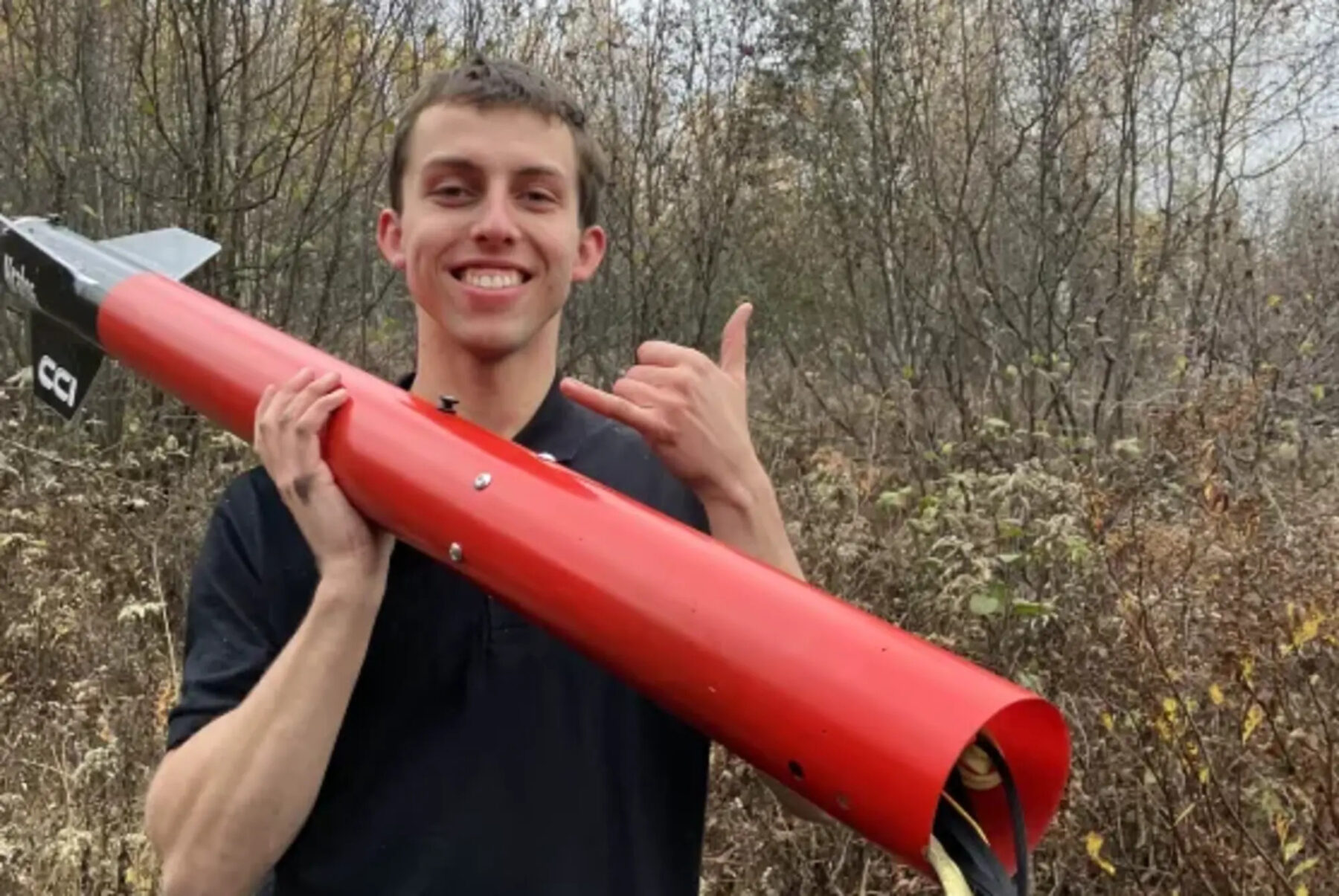
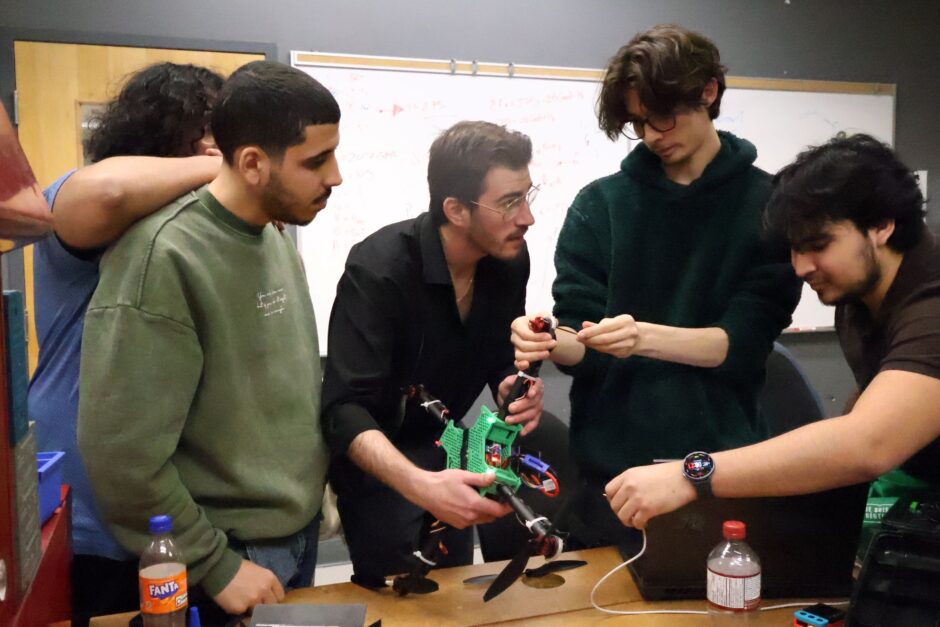
The team built Kratos in just two months, learning new techniques and overcoming tight deadlines along the way. They had to work with epoxy and fibreglass for the first time, machining parts to exact specifications, and troubleshooting problems that arose during assembly.
“That was a huge time constraint,” Rolland said. “We had two months to get this thing built and flown. Everything seems like it would fit perfectly, and then you put it together and realize nothing fits. That was a huge pain.”
Vincent Haley, chief engineer, said the team also had to jerry-rig weights inside the rocket at the last minute to meet safety requirements at the launch site.
“We needed to install weights inside the rocket to ensure it doesn’t go too high,” Haley said. “Putting that together was an absolute pain, but we had to make it work safely. We saw the rocket fall and land safely, that was our first milestone.”
Kratos reached an altitude of 2,410 feet and utilized a student-developed ejection system, which combined a pyrotechnic charge and a carbon dioxide canister to separate the airframe and deploy parachutes. The launch provided the team with valuable lessons in design, testing and recovery systems that will inform future rockets.
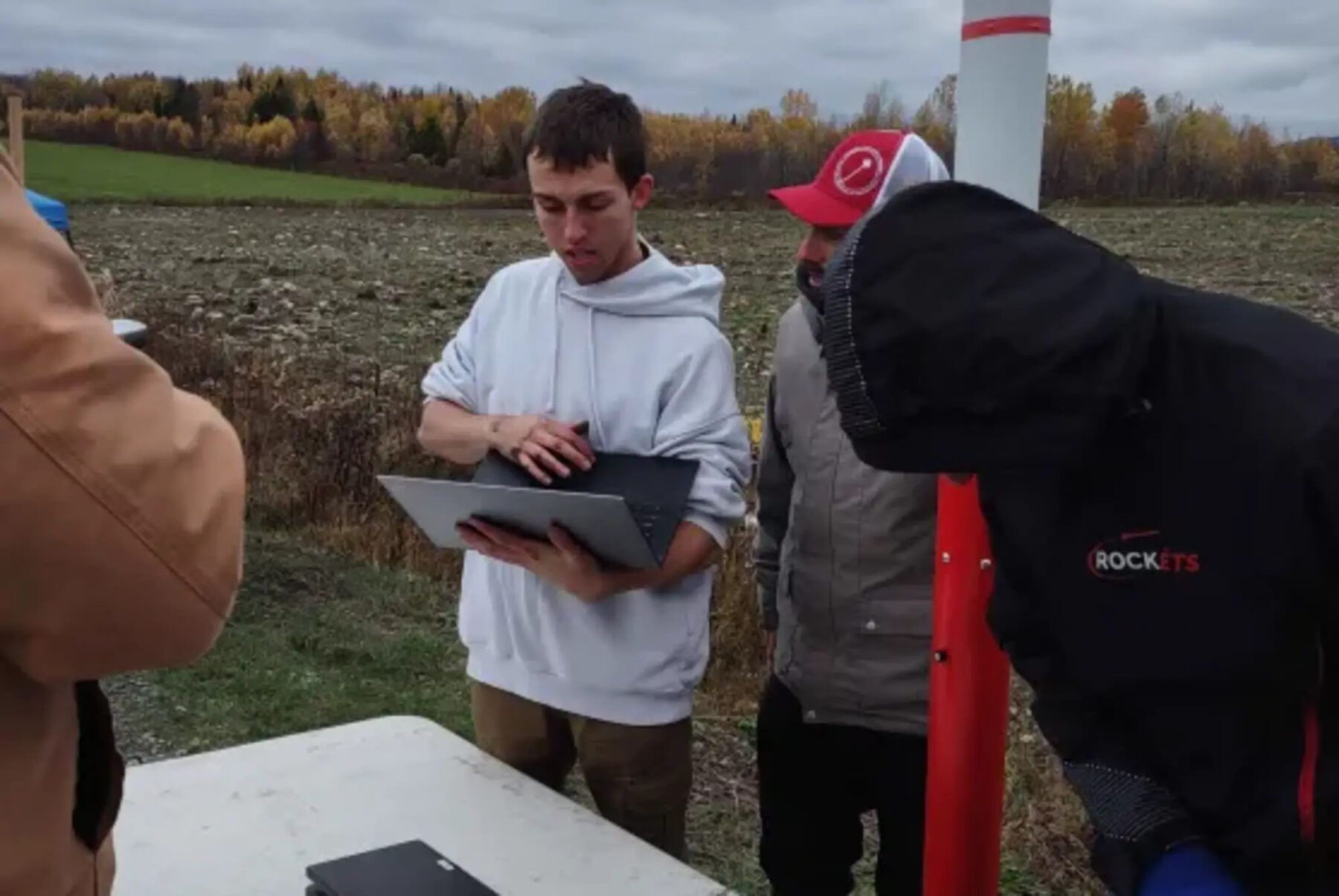
“We did find some issues during testing,” Haley said. “For example, if you overfill the black powder in the piston, it would get stuck in the CO2 canister. Now we know how to adjust that for future flights.”
The Algonquin College rocketry team includes nine active members, with close to two dozen more assisting occasionally. While most are engineering students, the team also relies on students in marketing, business and content creation to secure sponsorships, maintain their website and produce social media content.
“There’s a lot more that goes into building a rocket than engineering,” Rolland said. “We need business members to get sponsors and content creators to manage videos and social media. All of this is critical, and we would absolutely love help.”
Haley added that students from any program or background are welcome to join the team.
“If you’re willing to learn, it’s honestly not too difficult,” he said. “It’s a great way to make friends and gain experience that will help you in future careers, whether in engineering, manufacturing, or even journalism and media.”
Kratos will continue to fly as a test platform for recovery systems and components, while the team sets its sights on its next major project: the 2026 Launch Canada Challenge. The competition is Canada’s largest student rocketry challenge, where university and college teams design, build and launch high-powered rockets.
Algonquin College will be the first college team to compete, aiming to break the Canadian single-stage rocket altitude record of 75,000 feet.
“We’re attempting to build a community here,” Rolland said. “It’s not just one team. It’s a team of all the teams together, all the professors and everyone who wants to help us build the best rocket possible.”
For more information or to get involved, visit the Algonquin College Rocketry website.